70s Living Room Interior: Timeless Retro Style Ideas for a Cozy and Bold Space
Blog > Home > Modern interior > 70s Living Room Interior: Timeless Retro Style Ideas for a Cozy and Bold Space
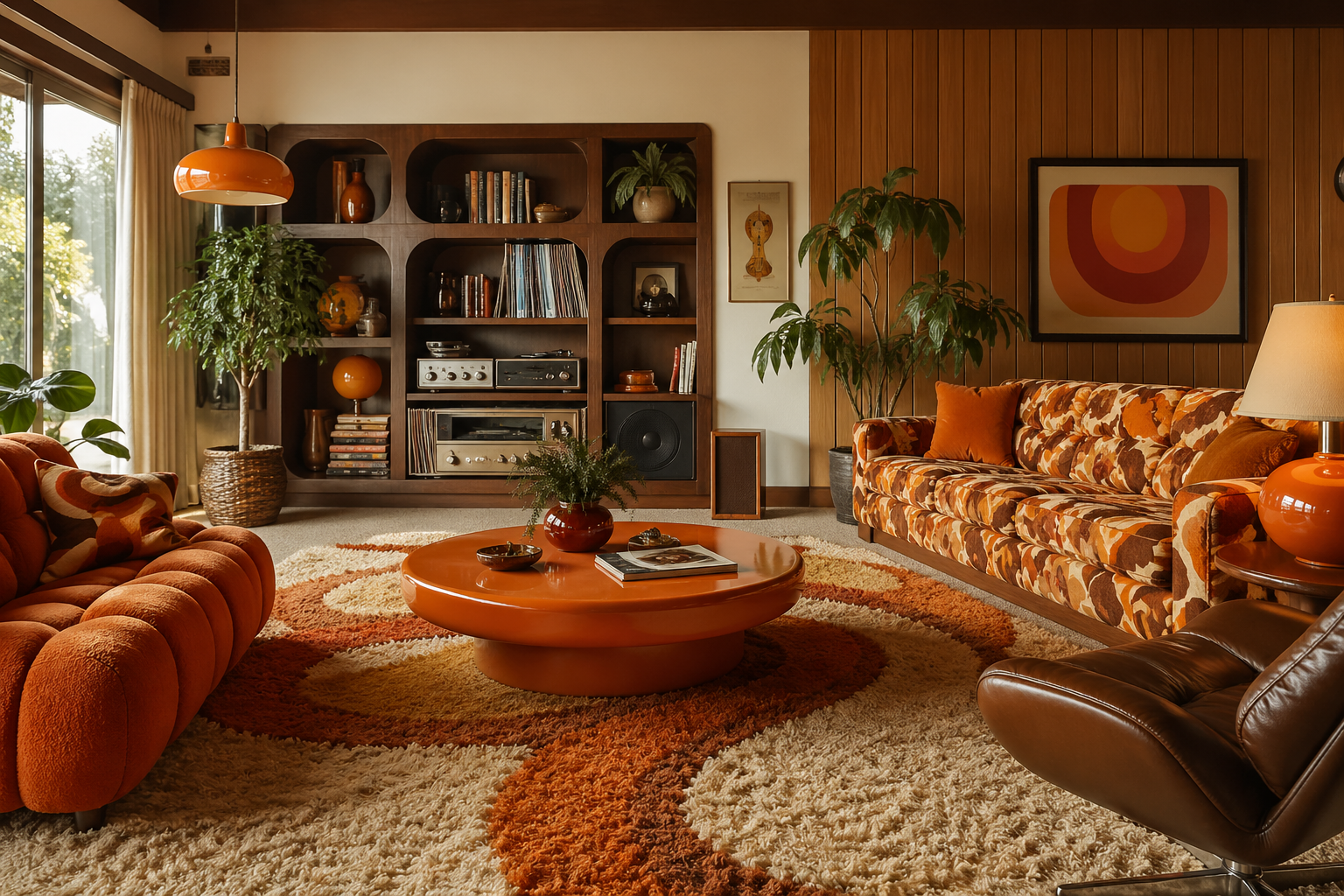
The 1970s living room interior is all about bold expression, warm tones, and a relaxed, lived-in feel that still inspires modern homes today. This iconic design era blends earthy colors, statement furniture, and unique textures to create a space that feels both nostalgic and stylish. Whether you want to fully embrace retro vibes or subtly incorporate vintage elements, the 70s aesthetic offers endless possibilities. From shag rugs to wood-paneled walls, every detail plays a role in shaping this distinctive look. In this guide, you’ll explore 12 creative and fully optimized ideas to design a stunning 70s living room interior.
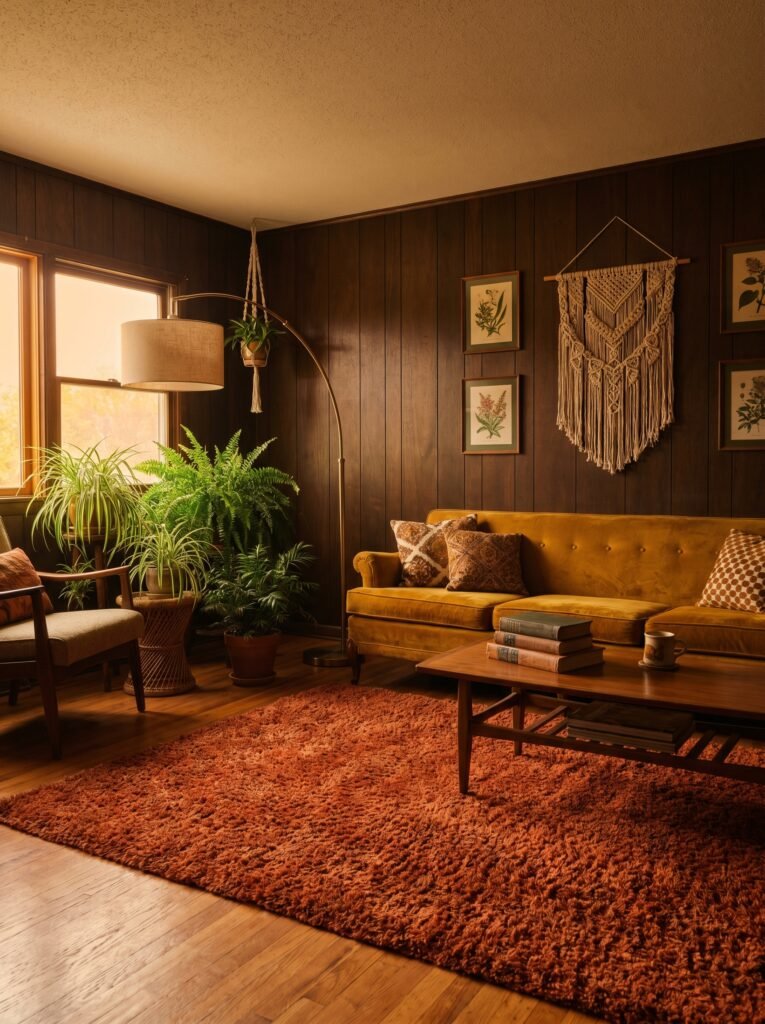
Table Of Content
1. Embrace Earthy Color Palettes
A true 70s living room interior starts with warm and earthy color tones. Shades like burnt orange, mustard yellow, olive green, and deep brown define this era’s aesthetic. These colors create a cozy and inviting atmosphere while adding depth to the space. You can use them on walls, furniture, or decorative accents to build a cohesive look. Combining multiple earthy tones helps achieve that authentic retro vibe without overwhelming the room.
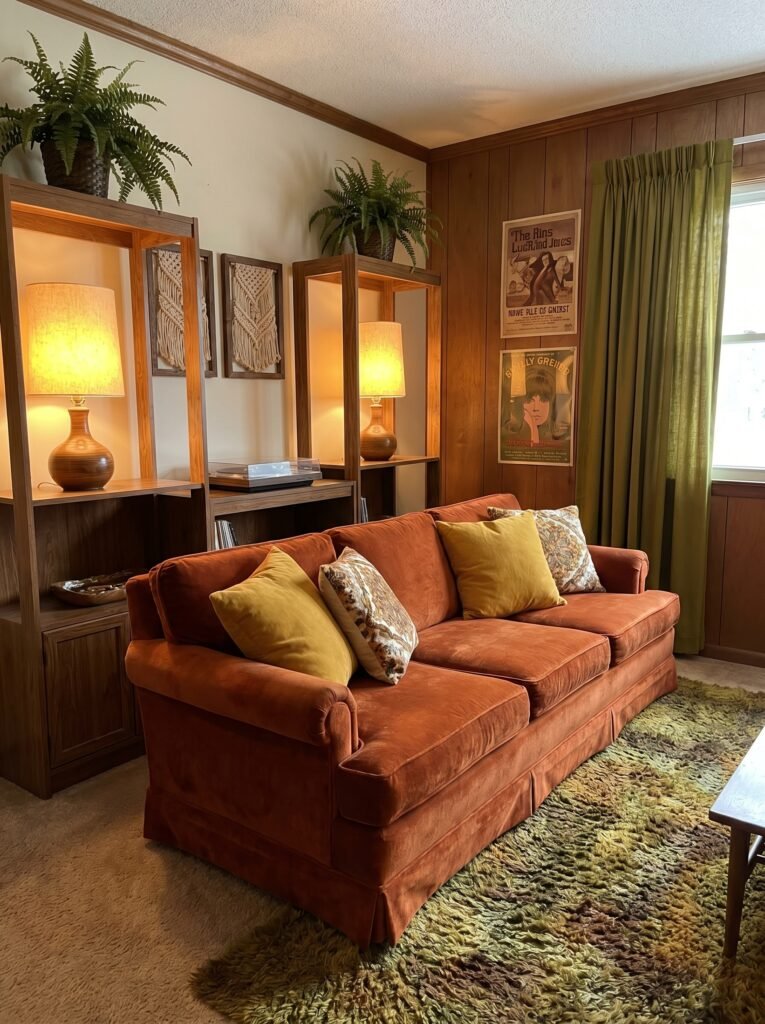
2. Add a Statement Shag Rug
Shag rugs were a defining feature of 1970s interiors and remain a must-have element today. Their soft texture and thick pile instantly add warmth and comfort to any living room. Choose neutral tones for subtle elegance or bold colors for a more dramatic effect. A shag rug works perfectly as a centerpiece, tying together furniture and decor. It also enhances the cozy, relaxed feel that defines the 70s style.
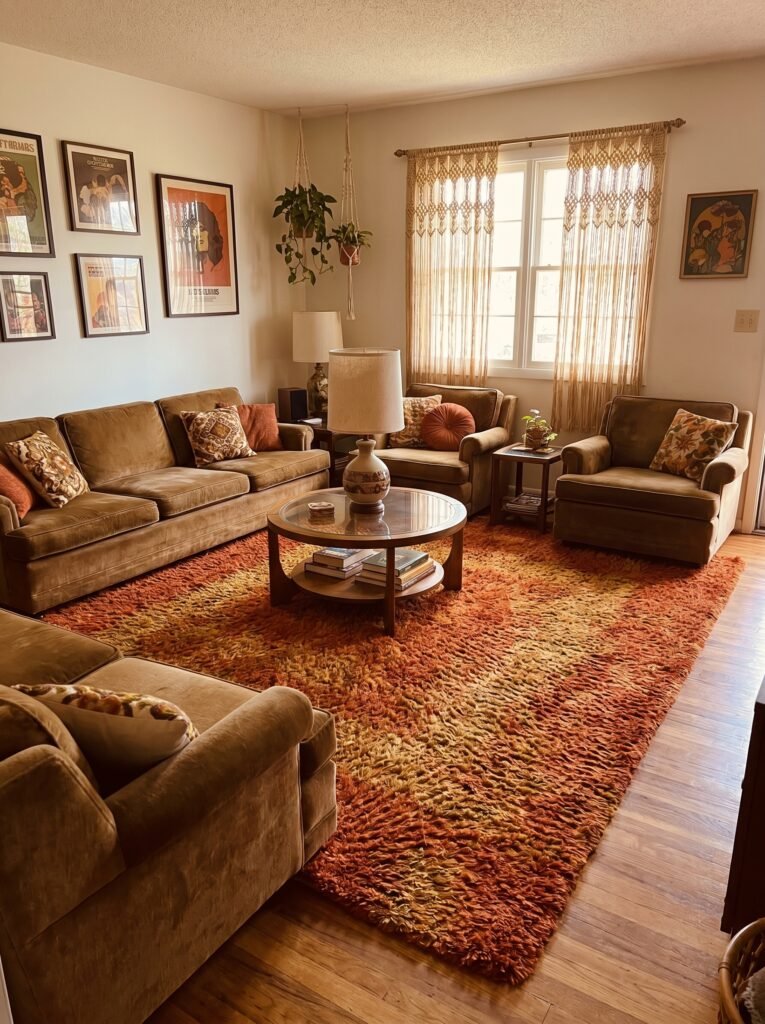
3. Incorporate Low-Profile Furniture
Low-slung furniture is a key characteristic of a 70s living room interior. Sofas, coffee tables, and chairs often sit closer to the ground, creating a laid-back and casual vibe. This style encourages a more open and spacious feel within the room. Opt for wide seating with plush cushions to enhance comfort and aesthetics. Pairing low-profile furniture with bold upholstery can elevate the retro look effortlessly.
4. Use Wood Paneling and Natural Materials
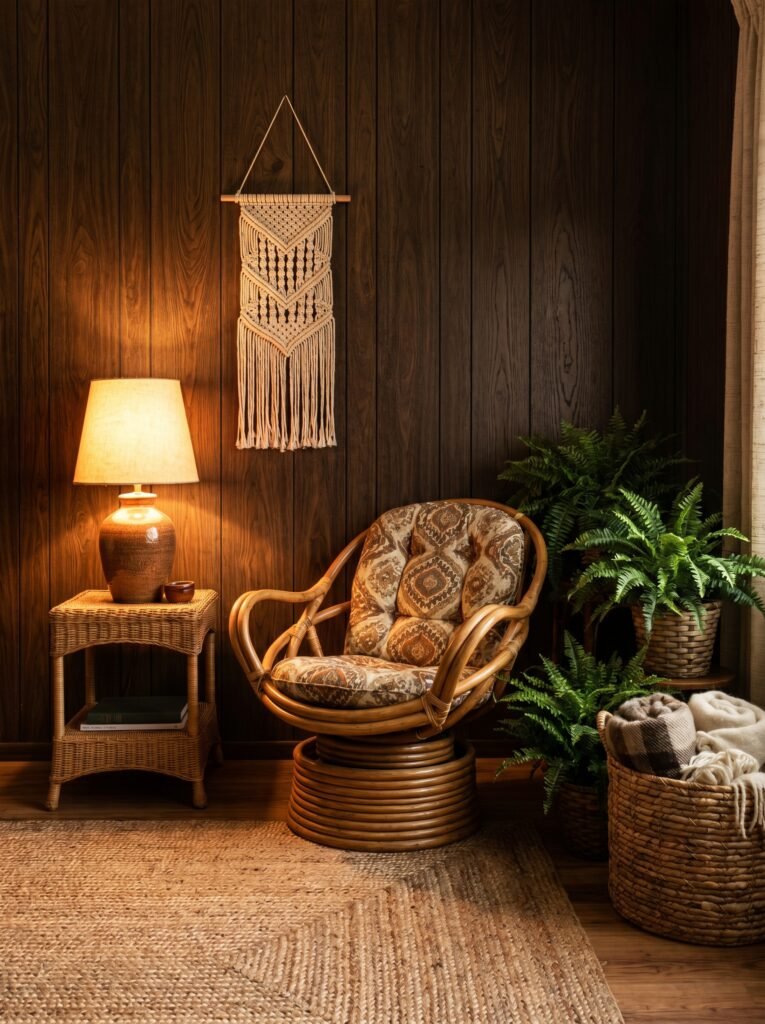
Wood paneling was a staple in 1970s homes and adds instant vintage charm. Whether you cover an entire wall or use it as an accent, it brings warmth and texture to the space. Natural materials like rattan, wicker, and bamboo also complement this design style beautifully. These elements help create a grounded and organic atmosphere. Mixing different textures keeps the room visually interesting and authentic.
5. Experiment with Bold Patterns
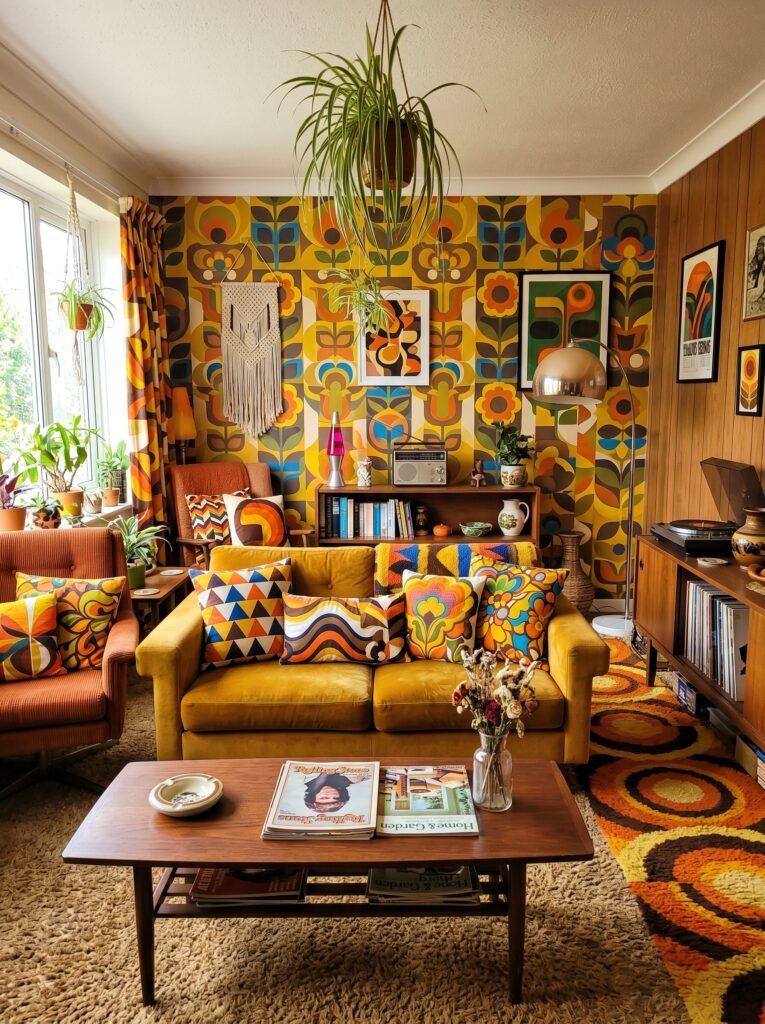
The 70s were known for daring and playful patterns that added personality to interiors. Geometric shapes, florals, and abstract designs were commonly used on wallpapers, cushions, and upholstery. Mixing patterns might seem risky, but it’s essential for achieving a true retro look. The key is to balance bold prints with neutral elements. This approach keeps the space vibrant without feeling chaotic.
6. Install Vintage Lighting Fixtures
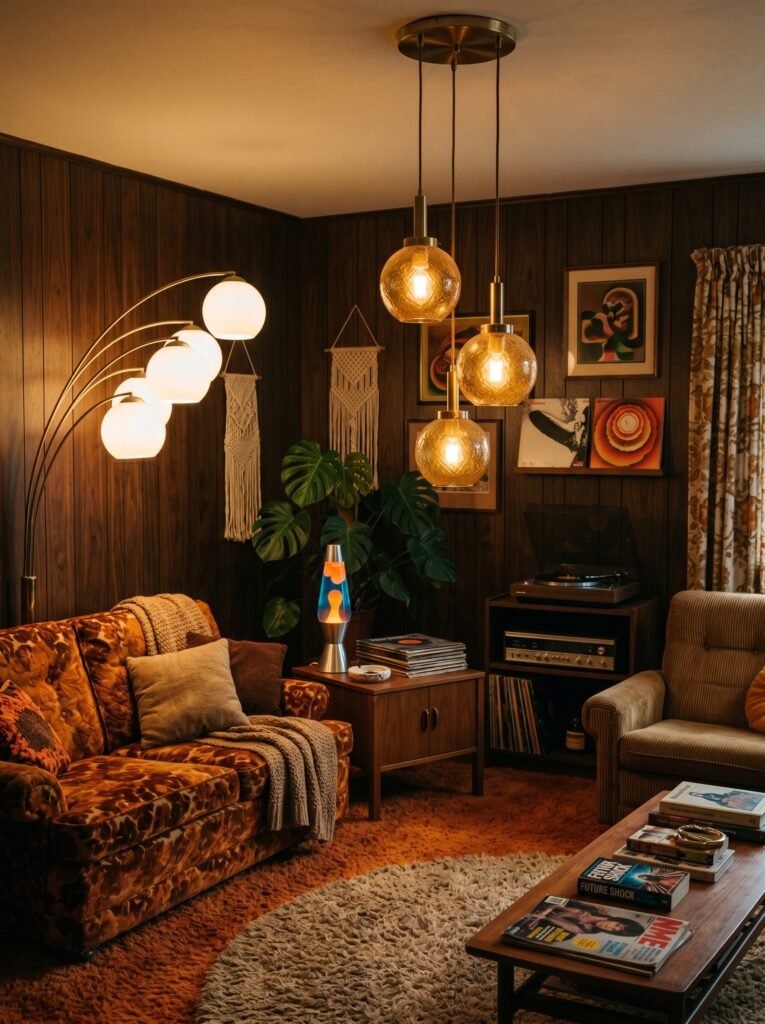
Lighting plays a significant role in setting the mood of a 70s living room interior. Think pendant lights, lava lamps, and globe fixtures that create a warm glow. These lighting options not only illuminate the space but also act as decorative pieces. Soft, ambient lighting enhances the cozy and inviting atmosphere. Choosing unique vintage-style fixtures can instantly transform your living room.
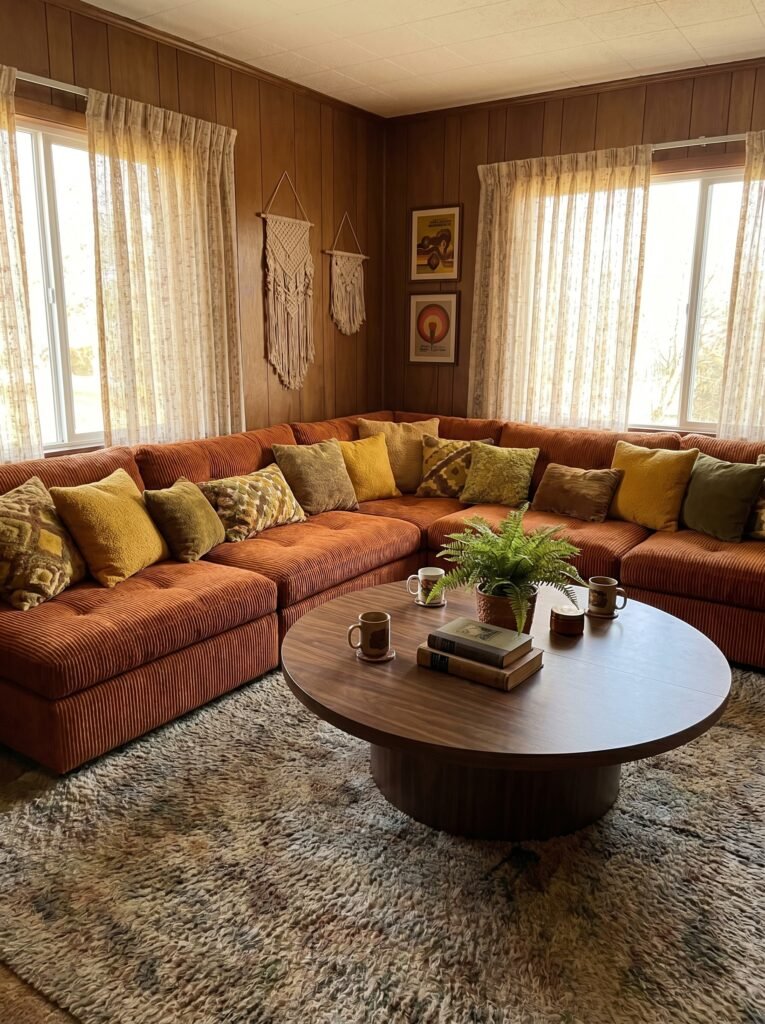
7. Add a Conversation Pit or Cozy Seating Area
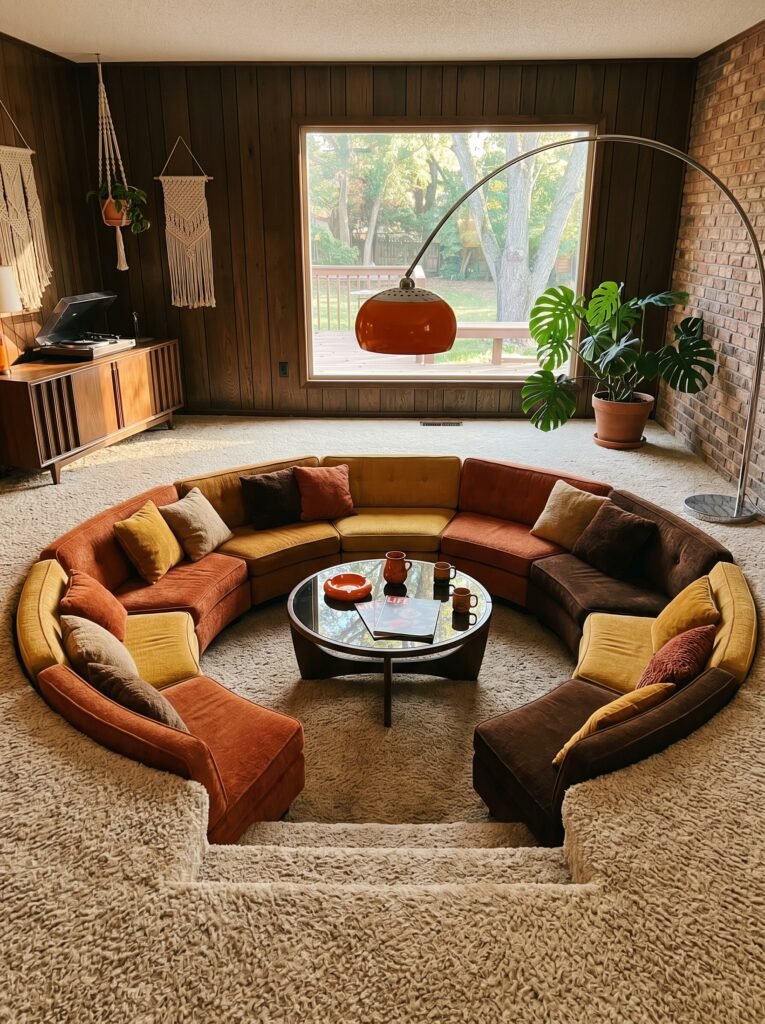
Conversation pits were a popular feature in 1970s homes, designed for socializing and relaxation. While not every home can accommodate a sunken seating area, you can recreate the feel with a cozy arrangement of sofas and floor cushions. Arrange seating in a circular or semi-circular layout to encourage interaction. This setup makes the living room more functional and welcoming. It also reflects the social and relaxed lifestyle of the era.
8. Decorate with Retro Accessories
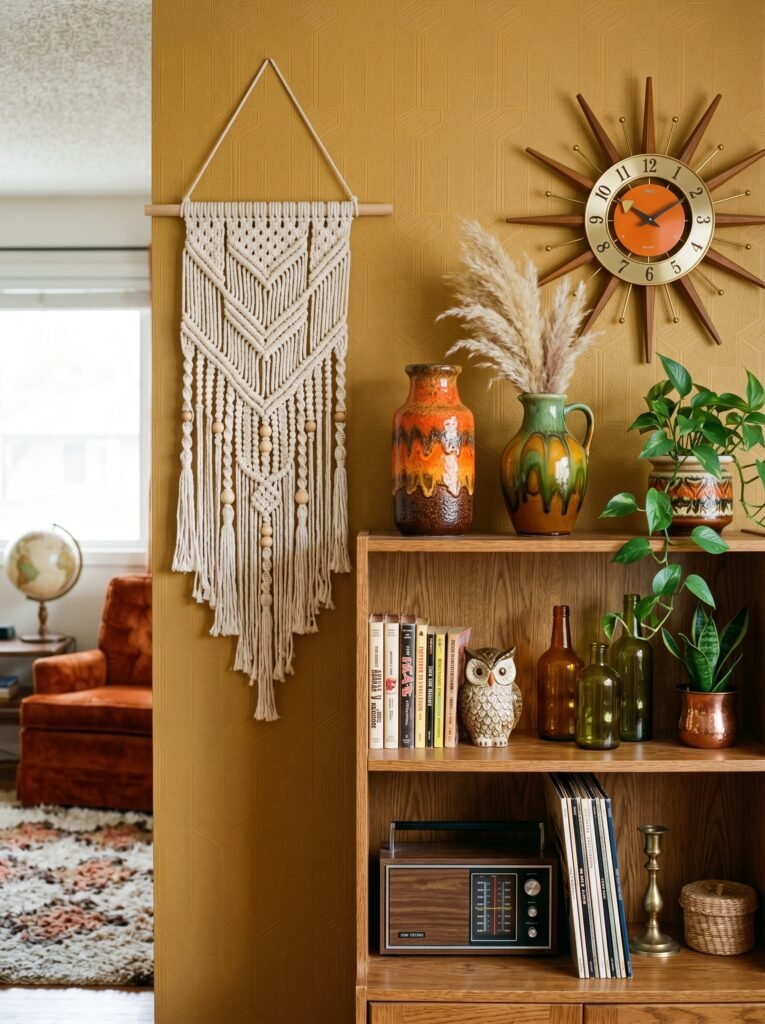
Accessories are essential for bringing a 70s living room interior to life. Items like ceramic vases, macramé wall hangings, and vintage clocks add character and charm. Look for decor pieces with warm tones and natural textures. These small details help complete the overall aesthetic without requiring major changes. Mixing vintage finds with modern pieces can create a balanced and stylish look.
9. Incorporate Indoor Plants
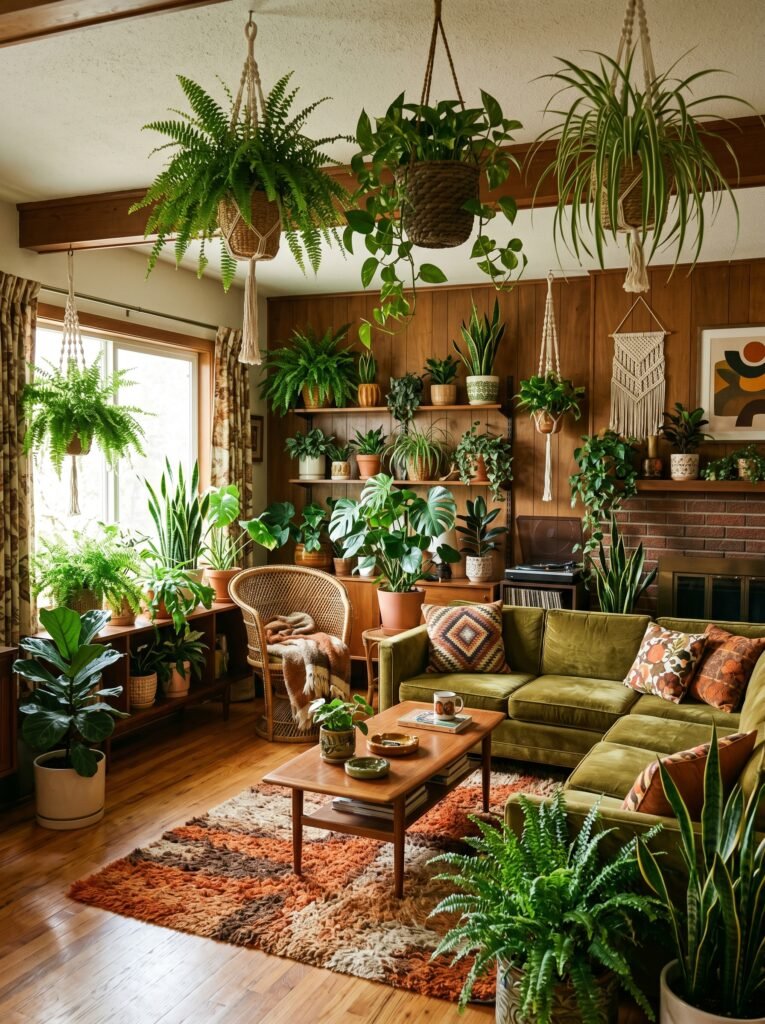
Indoor plants were a huge trend in the 1970s and remain popular today. Plants like ferns, snake plants, and rubber plants add freshness and vibrancy to the space. Use hanging planters or woven baskets to enhance the retro feel. Greenery softens the bold elements of the room and creates a natural balance. It also contributes to a calming and inviting environment.
10. Choose Retro-Inspired Wall Art
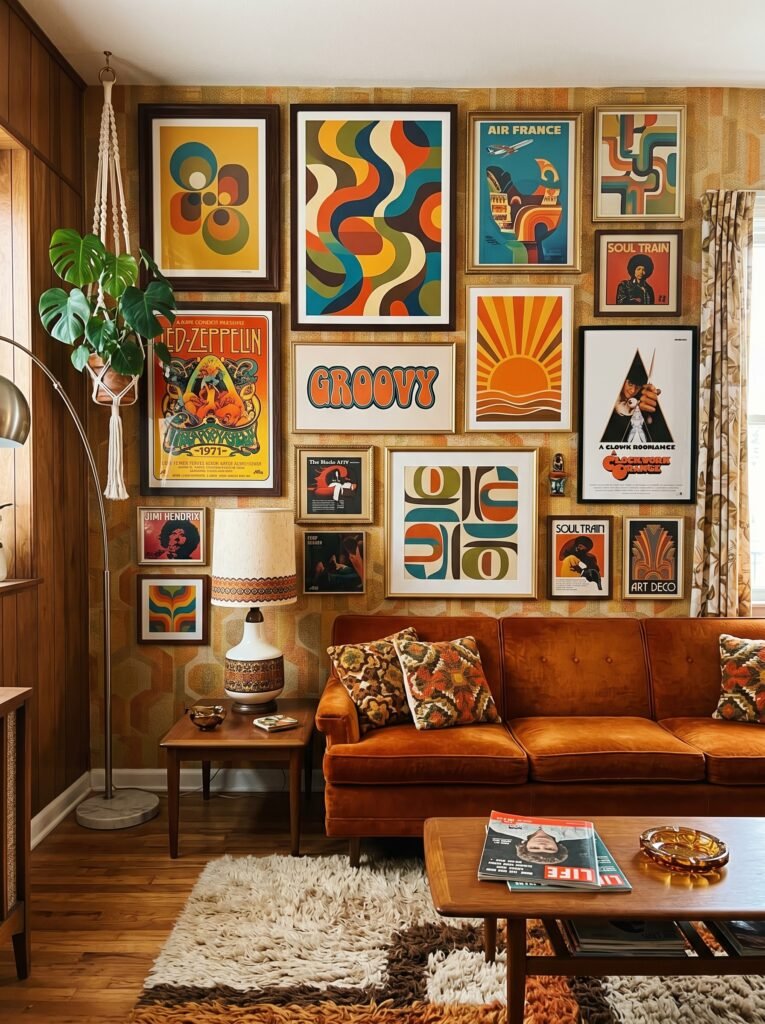
Wall art is another way to express the 70s aesthetic in your living room. Opt for abstract prints, landscape paintings, or vintage posters with bold colors. Large-scale artwork works particularly well as a focal point. You can also create a gallery wall for a more eclectic look. The right wall art ties together the color scheme and enhances the overall theme.
11. Mix Textures for Depth
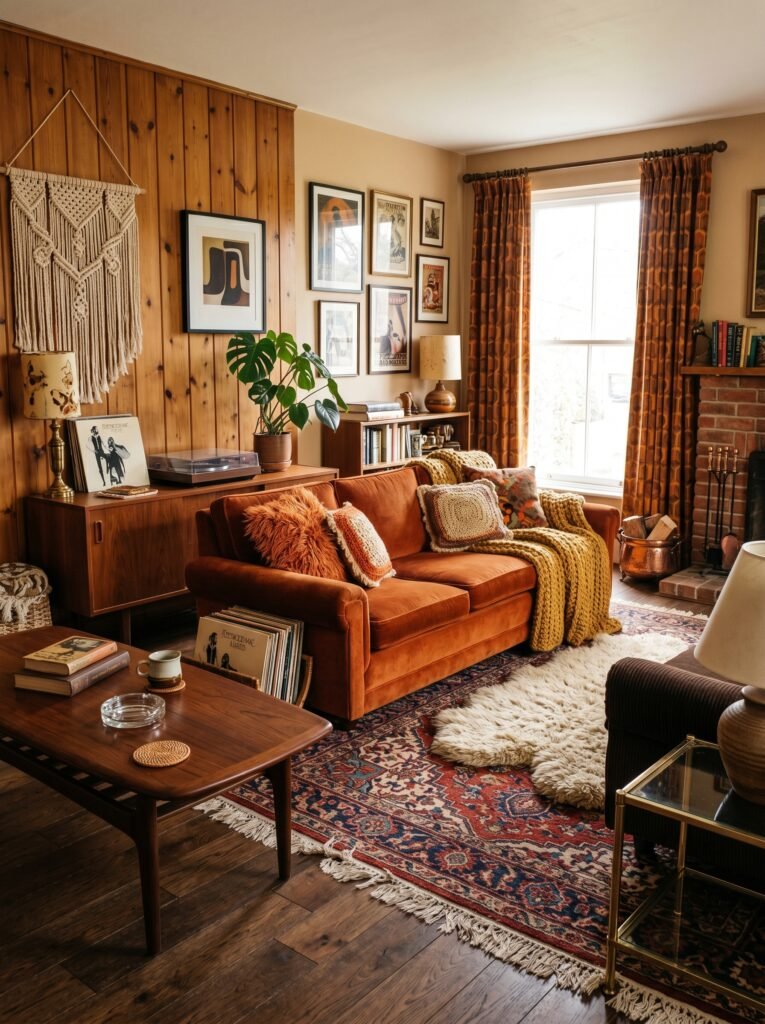
Texture plays a crucial role in achieving an authentic 70s living room interior. Combine materials like velvet, leather, wool, and wood to add depth and dimension. Layering different textures makes the space feel rich and inviting. For example, pair a velvet sofa with a woven rug and wooden furniture. This mix creates a visually appealing and comfortable environment.
12. Add a Retro Entertainment Corner
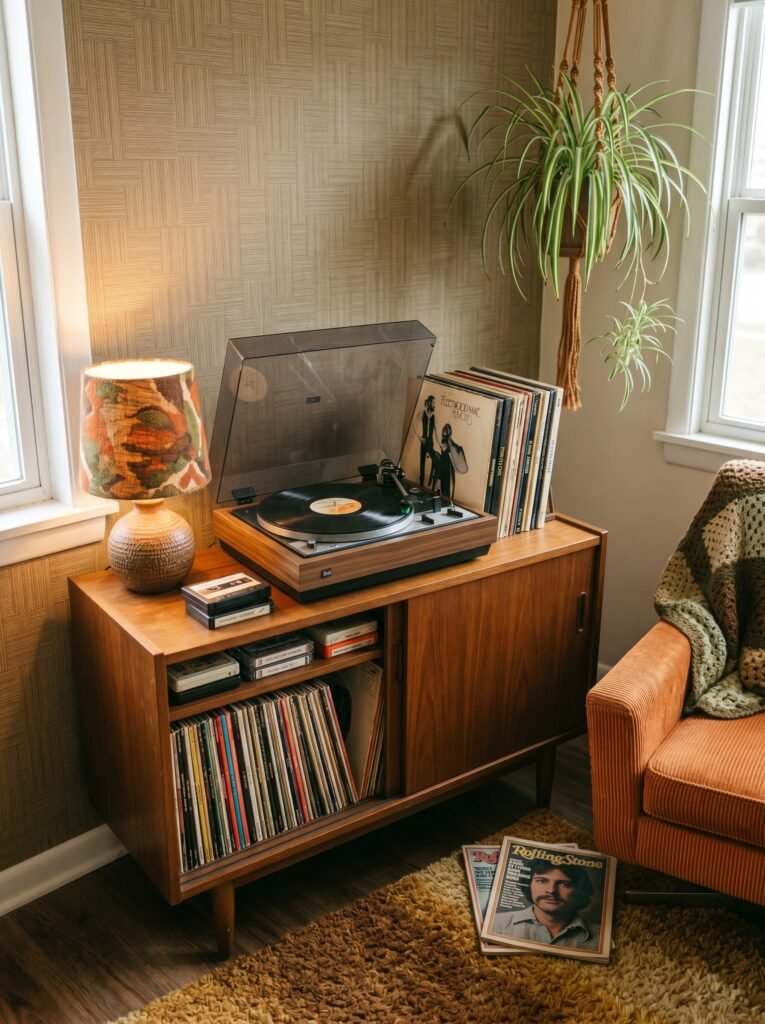
A retro entertainment corner can become a standout feature in your living room. Think vintage record players, cassette decks, or classic-style cabinets. These elements not only serve as functional pieces but also enhance the nostalgic vibe. Displaying vinyl records or retro electronics adds authenticity to the design. This idea is perfect for those who want to fully embrace the 70s lifestyle.
13. How to Care for 70s Living Room Interior
- Keep It Clean – Dust furniture, shelves, and decor to maintain a neat retro look.
- Protect from Sunlight – Avoid fading of bold colors, wood, and fabrics by using curtains.
- Care for Wood Furniture – Polish wooden pieces regularly to keep their shine and texture.
- Maintain Fabrics – Clean cushions, rugs, and curtains to keep patterns fresh and vibrant.
- Refresh the Setup – Rearrange decor and add small retro touches to keep the space stylish.
13.1. FAQ
13.2. What is a 70s living room interior❓
A 70s living room interior is a style inspired by the 1970s, known for its bold colors, unique patterns, and cozy atmosphere. It often includes earthy tones like brown, orange, and mustard yellow, along with vintage furniture and soft lighting. This style creates a warm, relaxed, and slightly retro look that feels both stylish and comfortable.
13.3. Why is 70s living room style popular again❓
The 70s living room style is popular again because people love its warm and nostalgic feel. It brings a mix of comfort and creativity that modern designs sometimes lack. Many homeowners enjoy adding vintage elements to make their space look unique and full of personality.
13.4. What colors are used in 70s living room decor❓
Common colors used in 70s living room decor include orange, brown, yellow, green, and beige. These earthy tones create a cozy and natural feel in the room. Bright accents and bold combinations are also used to add energy and make the space more visually interesting.
14. Final Thoughts
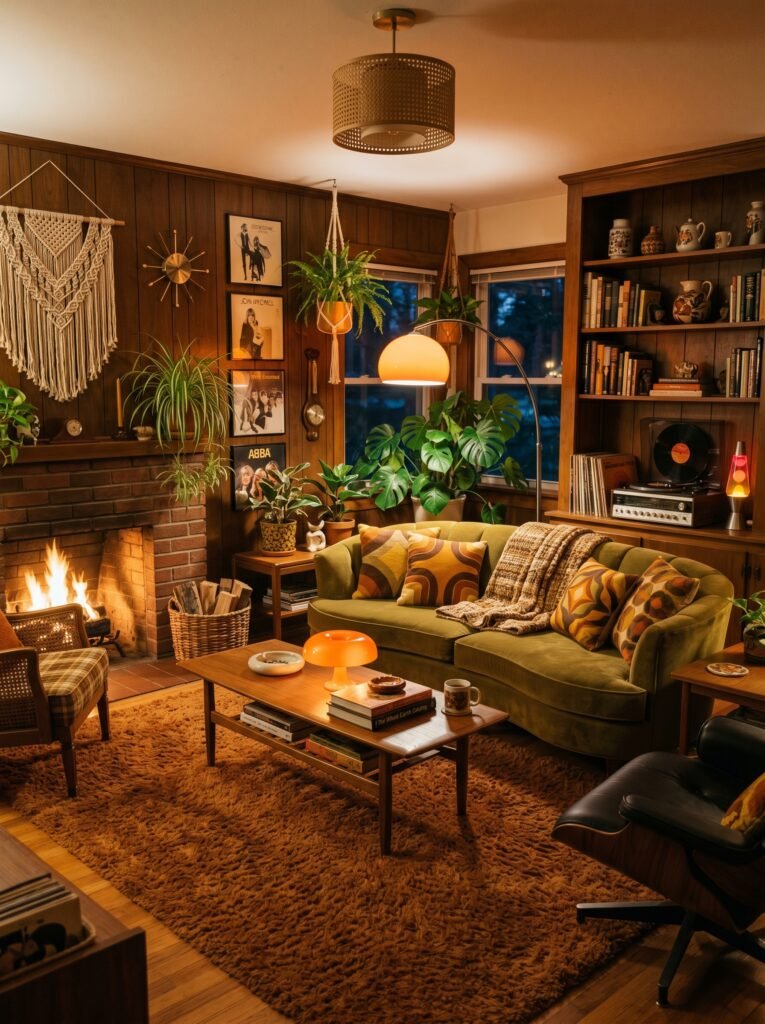
A 70s living room interior is the perfect blend of comfort, creativity, and bold design choices. By incorporating earthy colors, unique textures, and vintage-inspired elements, you can create a space that feels both nostalgic and modern. The beauty of this style lies in its flexibility, allowing you to mix retro pieces with contemporary touches. Whether you go all-in or add subtle accents, the 70s aesthetic brings warmth and personality to any home. With these 12 ideas, you can confidently design a living room that captures the timeless charm of the 1970s while staying stylish and functional.