
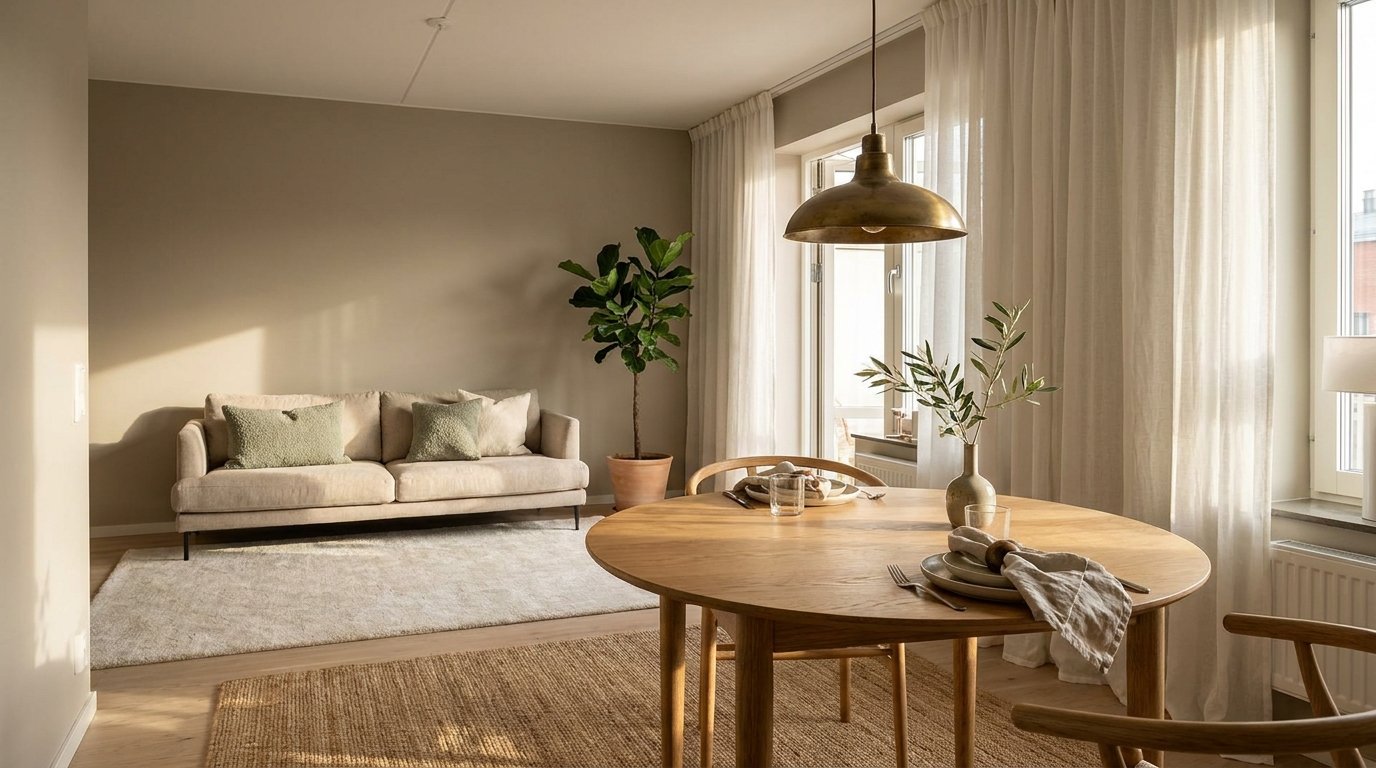
Small Living Room Dining Room Combo: 17 Genius Ideas That Make Every Inch Feel Like Home
There’s something quietly beautiful about a space that has to work twice as hard — a room that holds your morning coffee rituals and your dinner party memories, all within the same four walls. If you’re navigating the beautiful challenge of a small living room dining room combo, you’re not alone, and you’re not limited.
—
1. Why the Combo Room Is Actually a Hidden Design Opportunity
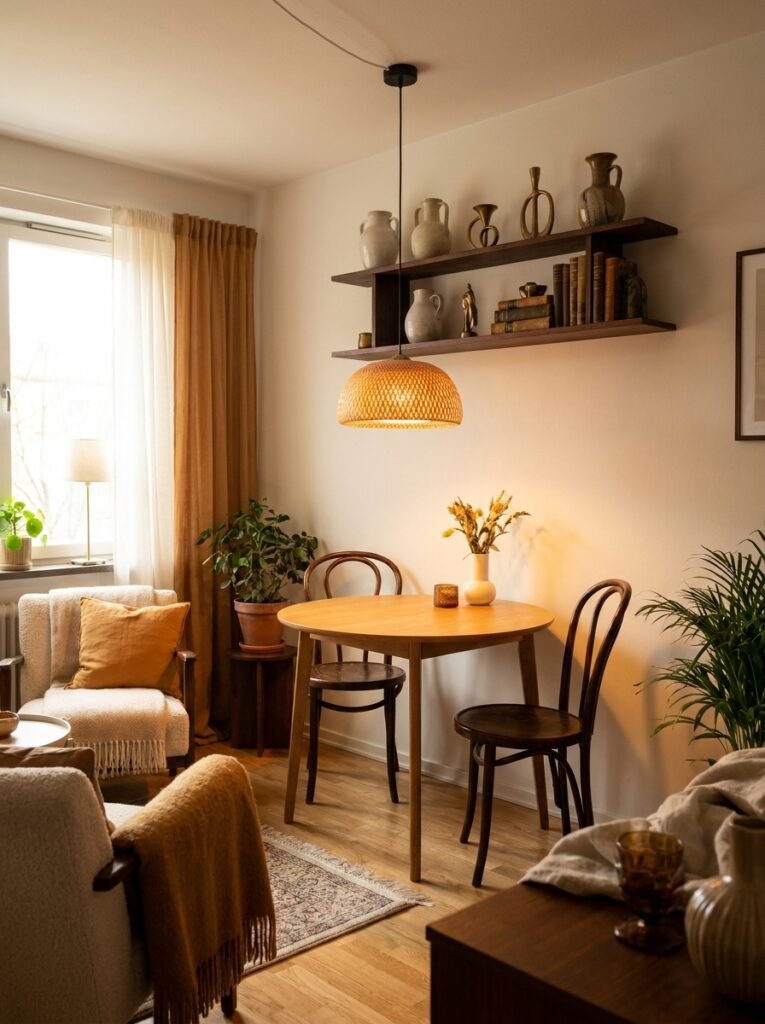
Most people look at a combined living and dining space and immediately feel a pang of disappointment — this is too small, this won’t work, I can’t entertain here. But here’s what experienced interior designers quietly know: constraint is one of the most powerful creative forces in design.
When you have unlimited space, decisions become lazy. When every square foot demands intention, every choice you make becomes deliberate and meaningful. That small combo room you’re working with? It has the potential to become the most curated, most personality-filled space in your entire home — precisely because it requires you to think carefully about what truly matters.
“The rooms we’re forced to think hardest about become the rooms we love most.”
Consider how the coziest restaurants in the world are never the enormous, sprawling ones. They’re the intimate bistros with tables close enough to overhear a neighboring conversation, where the light is warm and the space feels held. Your combo room can feel exactly like that — a place where living and dining don’t compete, but instead create something richer together.
The first mental shift to make is this: stop seeing your room as a living room with a dining problem, or a dining room that’s too small. Start seeing it as a single, unified lifestyle space with two distinct functions and one cohesive soul.
—
2. The One Rule That Changes Everything: Define Your Zones Without Walls
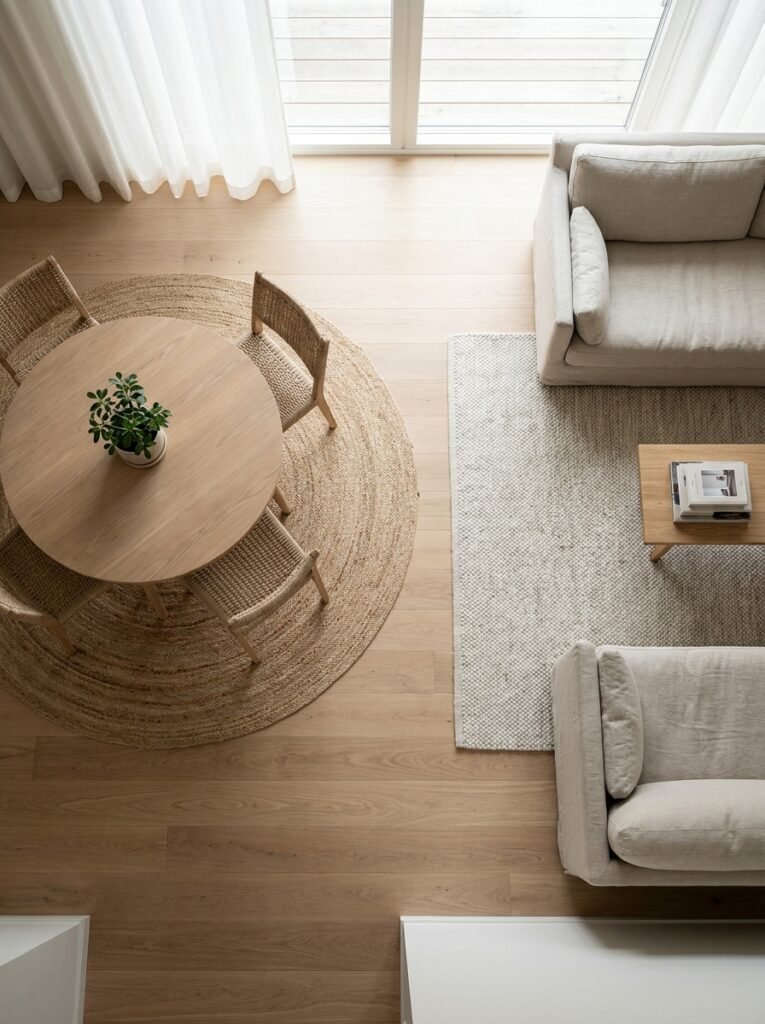
In a small living room dining room combo, the instinct is often to push everything against the walls — dining table against one wall, sofa against another — and hope the room figures itself out. It rarely does. Instead, the space feels scattered, aimless, and somehow even smaller than it actually is.
The principle that transforms combo rooms is called zone definition — and it has nothing to do with building walls or installing room dividers (though those can help, and we’ll get there). Zone definition is about using furniture placement, rugs, and lighting to create two emotionally distinct areas that feel purposeful and separate, even while sharing the same air.
Your dining zone should feel like a place you go to — a destination with its own energy and identity. Your living zone should feel like a place you settle into — softer, lower, more languid. When both zones have a clear sense of purpose, the room stops feeling crowded and starts feeling layered.
Start by sketching your room on paper. Mark where natural light enters. Note where the traffic flows. Then place your dining area closest to the kitchen (if applicable) and your living area anchored around the room’s natural focal point — a window, a fireplace, a gallery wall.
—
3. The Magic of the Right Rug (This Is Not a Small Decision)
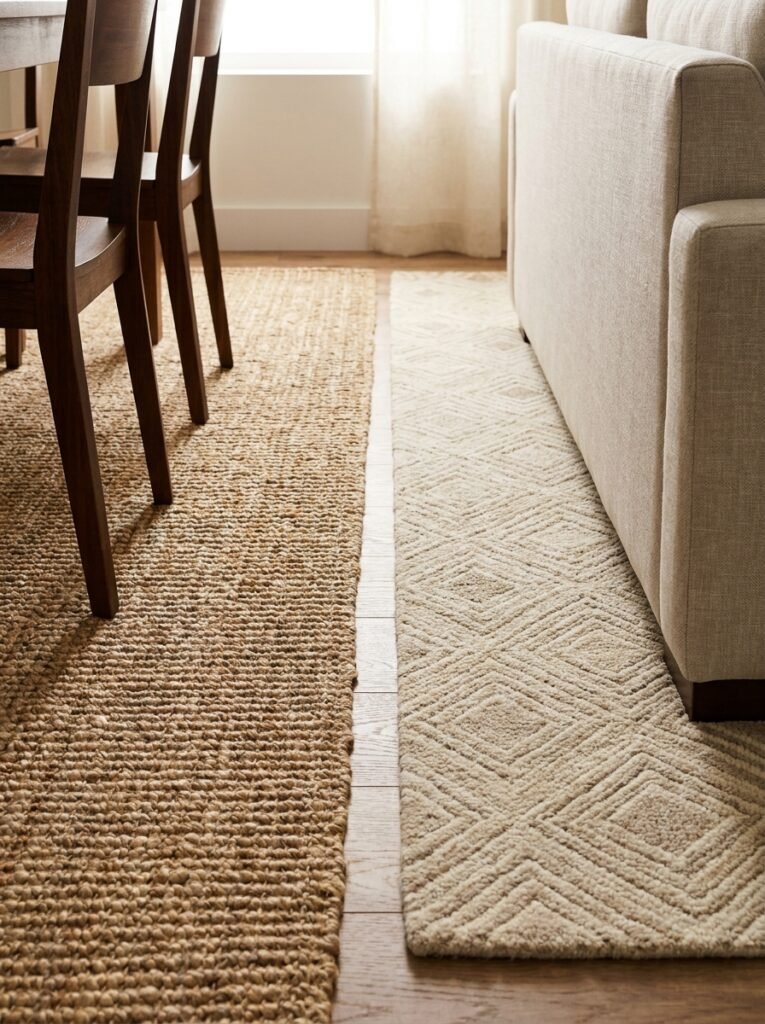
If there is one single purchase that will do more work in your combo room than anything else, it is the rug. A rug does something almost architectural — it draws a boundary on the floor, tells furniture where to gather, and gives each zone a visual “room” of its own, even without any physical separation.
For a living room dining room combo, you have two approaches: use one large, unified rug that ties the entire space together under a shared aesthetic — ideal for very small rooms where separation could feel cramped — or use two distinct rugs, one per zone, to clearly signal the transition between dining and living.
The two-rug approach works beautifully when you have at least 12 feet of combined length to work with. Choose rugs that share a color family but differ in texture or pattern — perhaps a jute rug under the dining table and a soft wool or low-pile patterned rug under the seating area. They’ll feel related but distinct, like two chapters in the same book.
One critical sizing note: your dining rug must be large enough that all chairs remain on the rug even when pulled out. A dining rug that’s too small is one of the most common — and most visually disruptive — mistakes in combo room design.
—
4. Choosing a Dining Table That Pulls Double Duty
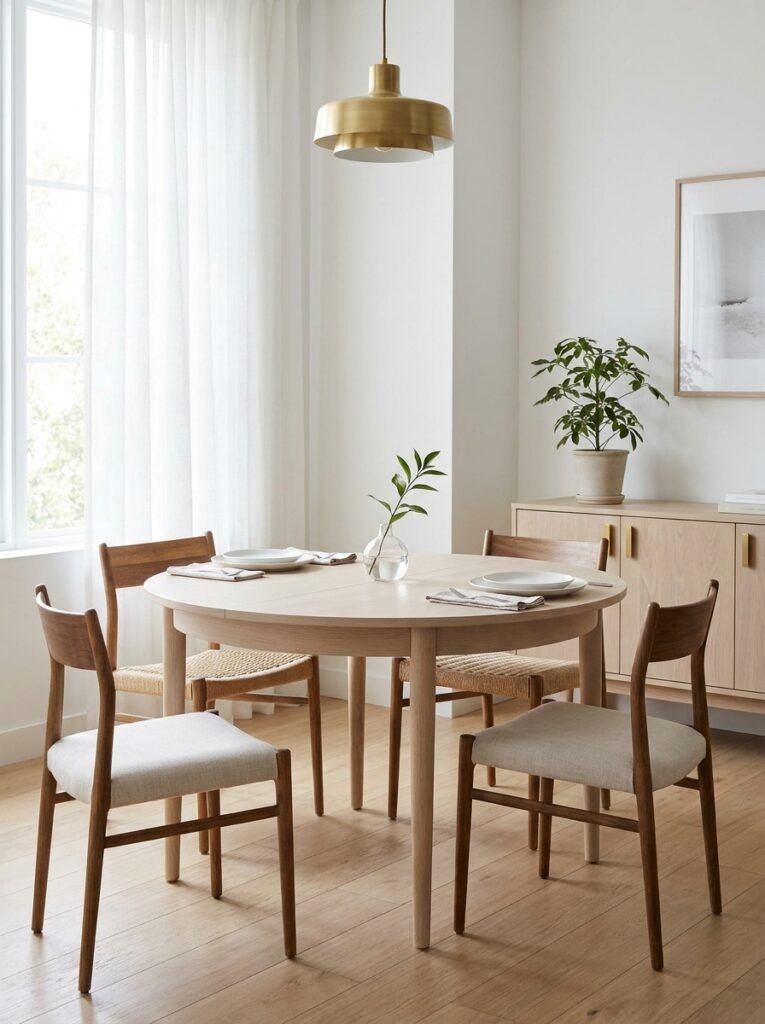
In a small combo space, your dining table cannot afford to just be a dining table. It needs to be a design piece, a workspace, a gathering spot, and a surface that doesn’t visually overwhelm the room. This is a tall order, but the furniture market has never been better equipped to meet it.
Round and oval tables are genuinely superior choices for small combo rooms. They eliminate the harsh corners that make tight spaces feel aggressive, allow easier traffic flow around them, and have a social quality — everyone at a round table is equally close to everyone else, which makes even a meal for two feel intentional and intimate.
Extendable tables are worth every penny in a small space. A table that seats four day-to-day but expands to seat eight for a dinner party means you’re not sacrificing your everyday livability for occasional entertaining needs. Brands across every price point now offer slim, elegant extendable options that don’t look like they’re hiding a leaf.
Consider the table’s visual weight as carefully as its physical footprint. A glass-top dining table, while not for everyone aesthetically, occupies almost no visual space — the eye passes right through it. A light wood or whitewashed table reads as airy and open. A dark, heavy wood table can anchor a room beautifully but requires more surrounding space to breathe.
—
5. The Vertical Space You’re Completely Ignoring
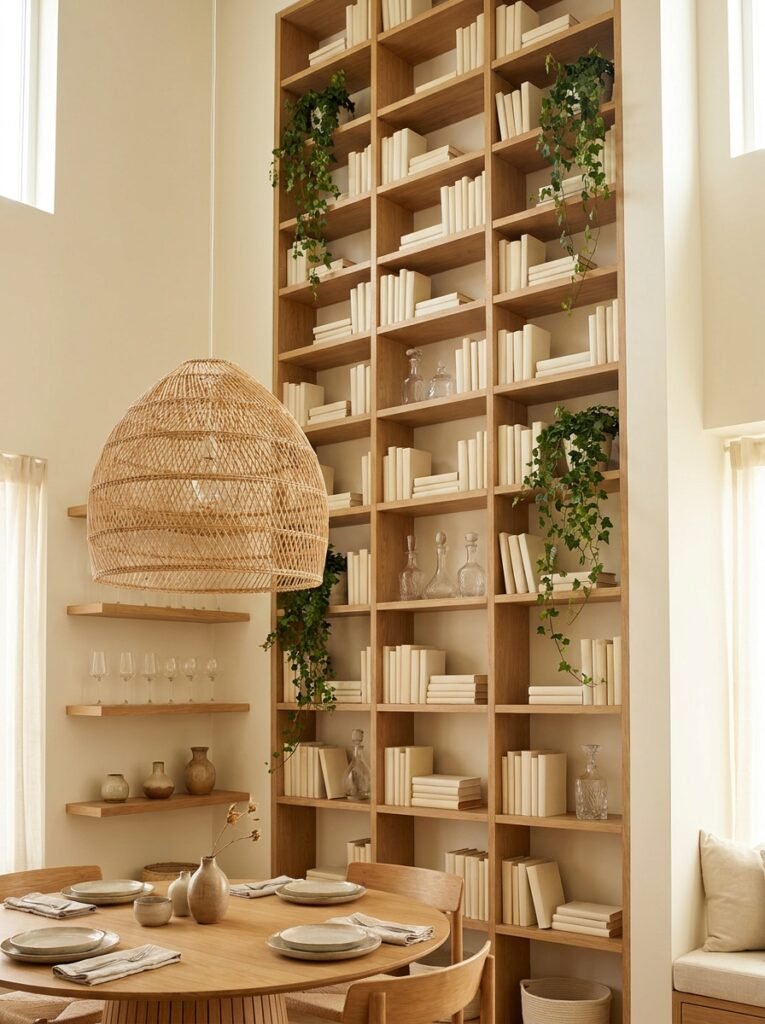
Here is an honest truth about small room design: most people think horizontally. They shuffle furniture around the floor plan, move the sofa two inches to the left, try the table in three different corners — and never once look up.
Vertical space is the most underused real estate in a small living room dining room combo. Tall bookshelves that reach toward the ceiling draw the eye upward and make the entire room feel taller. A statement light fixture over the dining table — hung deliberately low, around 30 to 36 inches above the tabletop — creates an intimate, pendant-lit moment that signals “this is the dining zone” without needing any other boundary.
“When floor space is limited, let your walls and ceiling carry the design.”
Wall-mounted shelving beside the dining area can hold glassware, serve as a bar display, or carry plants and artwork — fulfilling both storage and styling functions without consuming a single square foot of floor space. In the living zone, a tall media console or a floor-to-ceiling gallery wall creates visual height that makes the room feel architecturally generous, regardless of its actual dimensions.
Don’t underestimate the power of hanging art slightly higher than you normally would. Artwork hung at the traditional “eye level” in a small room can feel like it’s pressing down on the space. Raising it by four to six inches subtly lifts the entire room’s perceived ceiling height.
—
6. Color Psychology for Combo Rooms: One Palette, Two Moods
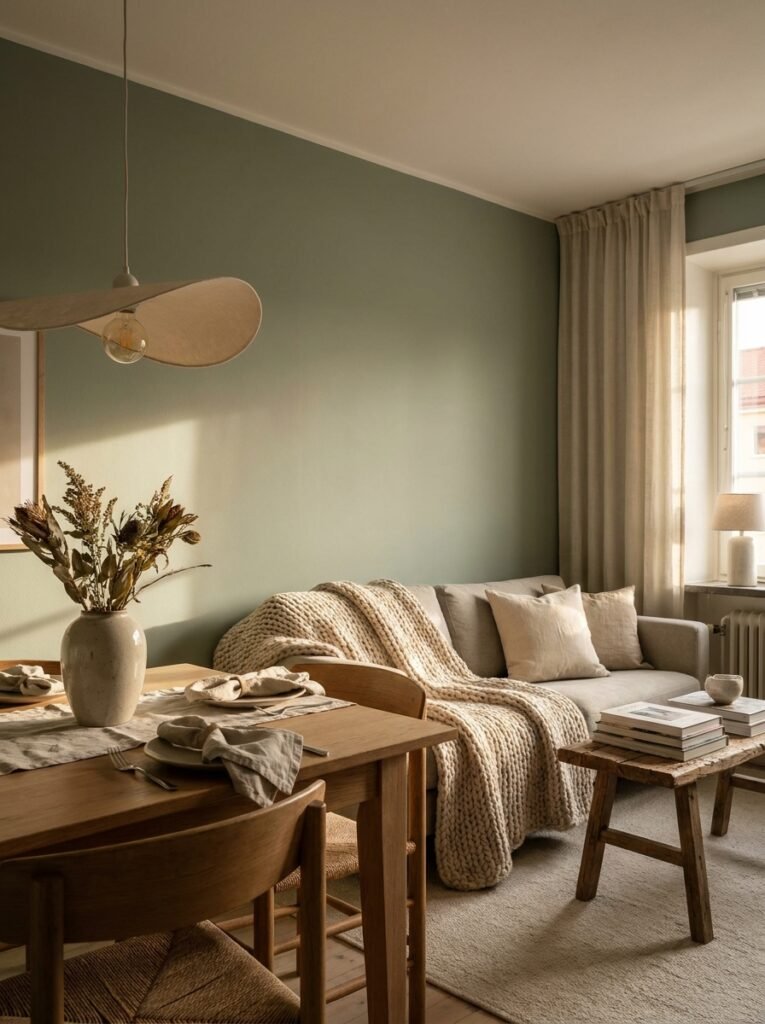
Color is where many combo room designs either soar or quietly fail. The temptation to paint one zone a different color to “separate” the spaces can backfire in a small room, making it feel choppy and even more confined. A single, cohesive color palette applied across both zones — with texture and tone doing the work of differentiation — almost always reads as more sophisticated and spacious.
Choose a base wall color that works for both functions. Soft, warm neutrals like greige, warm white, dusty sage, or muted terracotta tend to perform beautifully because they’re calm enough for relaxed living but warm enough to make a dining table feel inviting. Cool, stark whites can work but require warmer textiles and wood tones to prevent the space from feeling clinical.
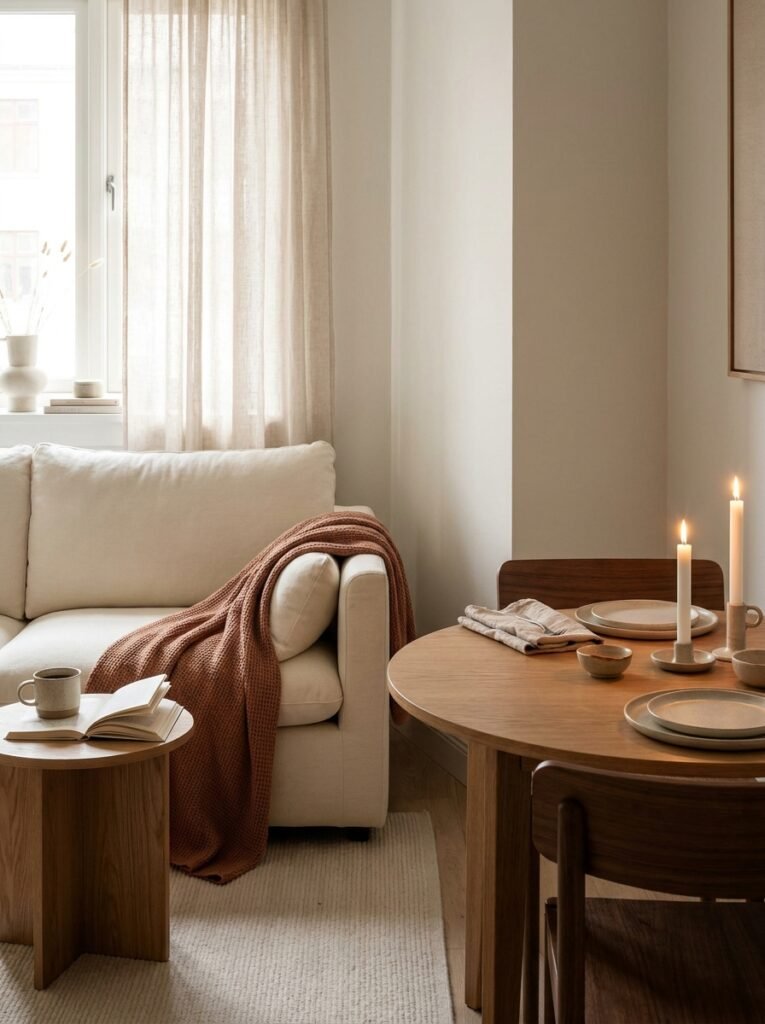
Then use accessories to shift the mood between zones. The dining area might lean into slightly more formal or structured elements — a sculptural pendant light, linen napkins, a small vase of fresh flowers. The living area softens into plush pillows, a throw draped casually over the sofa, books stacked on a coffee table. Same palette, two distinct emotional registers.
—
7. Lighting as the Most Powerful Zone Separator
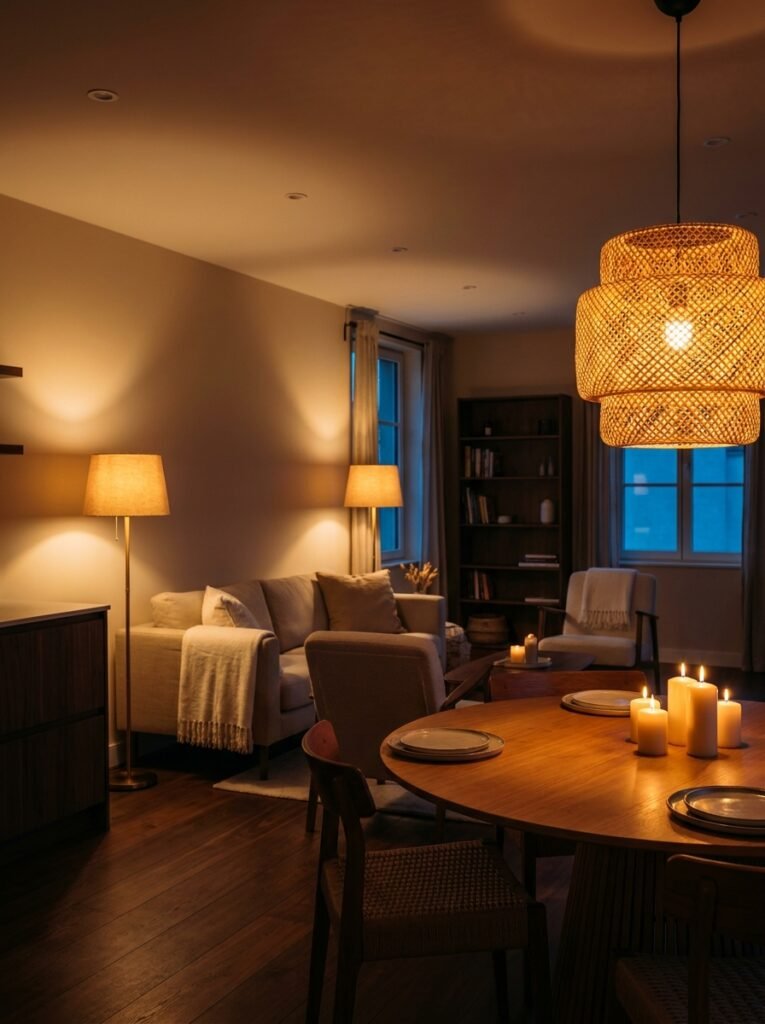
If rugs define zones from the floor, lighting defines them from above — and in a small combo room, thoughtful layered lighting is what separates a space that feels designed from one that simply feels arranged.
Every well-designed room needs three types of light: ambient (the overall room illumination), task (light directed at a specific function), and accent (light that creates mood and highlights beautiful things). In a combo room, this layering does double duty because different zones need different lighting moods at different times.
The dining zone deserves a statement pendant or chandelier hung directly above the table. This single fixture does more design work than almost anything else in the room — it declares the dining area’s identity, creates intimacy during meals, and becomes a focal point during the day even when no one is eating.
The living zone benefits from a mix of floor lamps and table lamps that create warm pools of light at sitting height — the kind of light that makes you want to curl up with a book. Overhead recessed lighting or a ceiling fixture in the living zone should be on a dimmer so you can shift the atmosphere from bright and functional to warm and cinematic with a single adjustment.
—
8. The Bench Seat Strategy That Saves Space and Looks Incredible
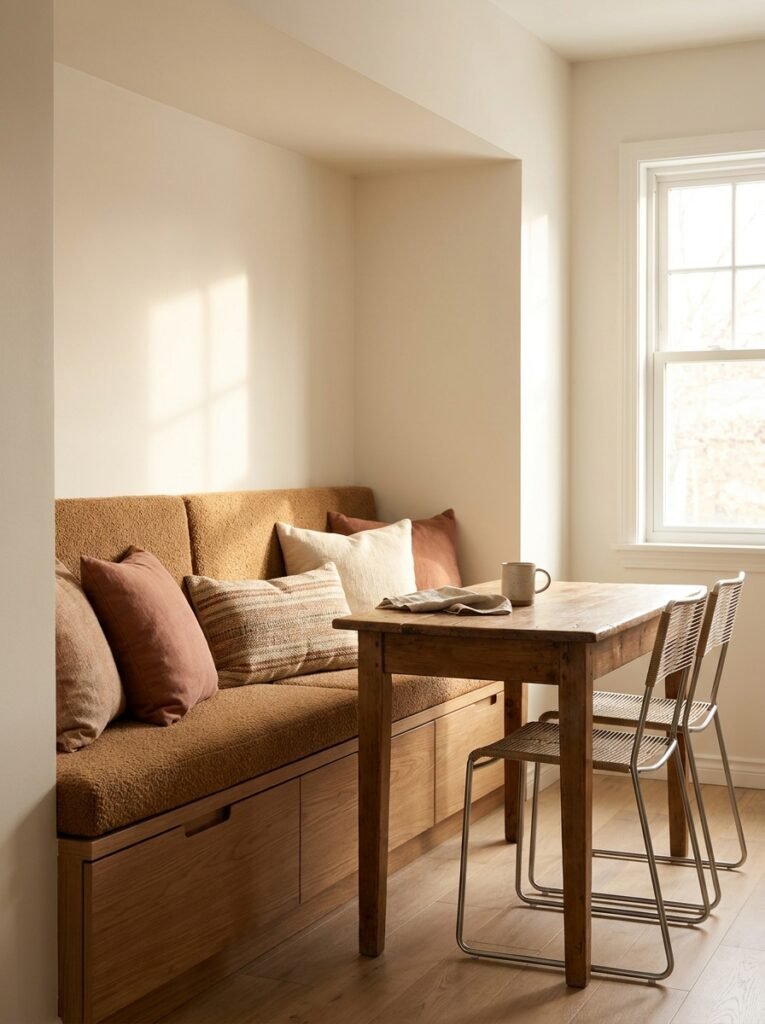
One of the most space-efficient and visually satisfying solutions for a small dining area within a combo room is the bench. Replacing two dining chairs on one side of your table with a bench does several remarkable things simultaneously.
A bench can slide entirely under the table when not in use, reclaiming precious floor space. It can seat more people than individual chairs — helpful when you’re stretching a four-person table to accommodate six. And aesthetically, a bench with a cushion and some throw pillows blurs the line between dining seating and living seating in the most charming way.
A built-in banquette bench along one wall is the ultimate version of this idea. It uses wall space that would otherwise go to waste, provides hidden storage beneath the seat, and creates the kind of cozy, tucked-in dining nook that makes people linger over meals and conversation long after the plates are cleared.
—
9. Mirrors: The Oldest Trick That Still Works Every Single Time
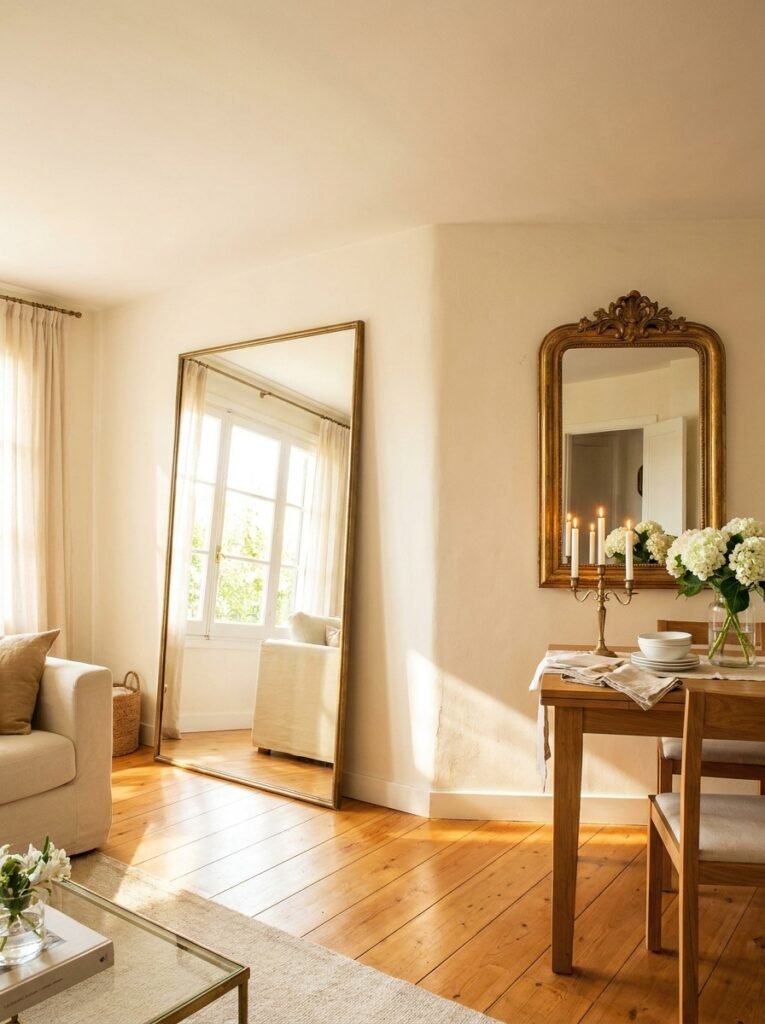
There is a reason interior designers have been using mirrors to expand small spaces for centuries — because it works, unfailingly and beautifully. In a small living room dining room combo, a well-placed mirror can make the room feel almost physically larger, bouncing light around and creating the illusion of depth where none exists.
“A mirror doesn’t just reflect light — it reflects possibility.”
The most impactful placement for a mirror in a combo room is on the wall that receives the least natural light, positioned to reflect either a window or the most beautiful part of the room. A large mirror leaning against the wall in the living zone, rather than hung flat, adds a relaxed, editorial quality that feels current and intentional.
In the dining area, a mirror placed across from the dining table reflects the meal, the candles, the faces of your guests — and creates a warmth and sense of occasion that is completely disproportionate to its cost.
—
10. Plants: The Living Design Element That Does More Than You Think
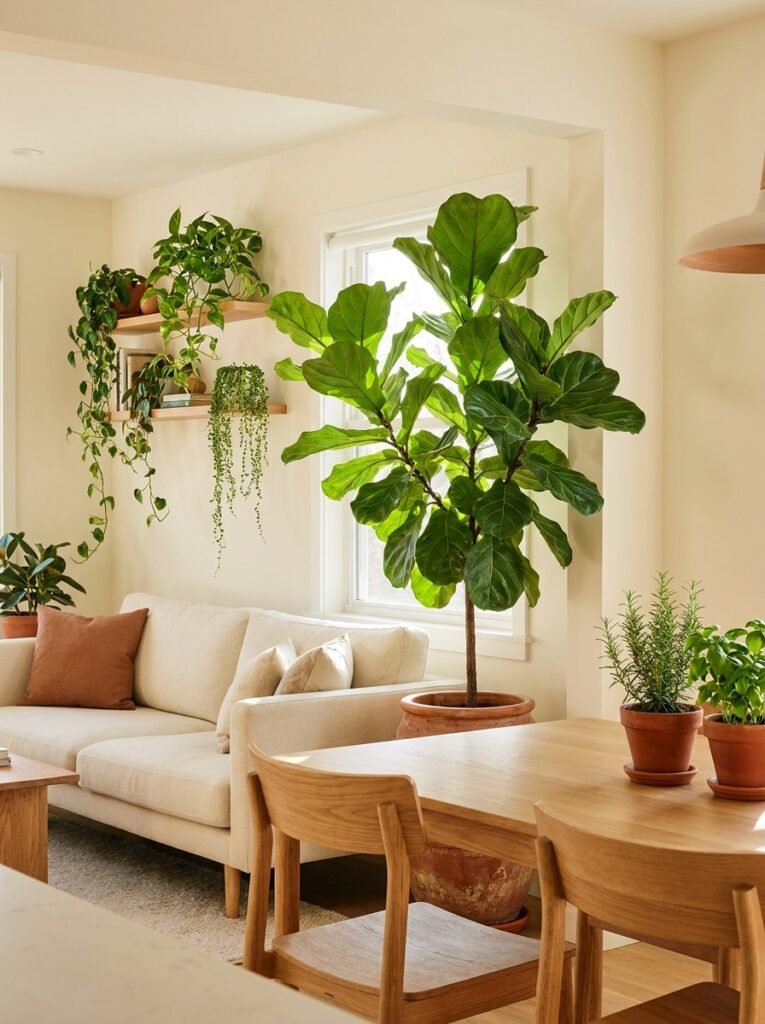
Plants belong in every room of the home, but in a small living room dining room combo, they serve a specific and powerful purpose beyond decoration. A tall floor plant — a fiddle leaf fig, an olive tree, a bird of paradise — placed at the transition point between dining and living zones acts as a soft, organic room divider that defines space without blocking light or creating a hard boundary.
Trailing plants on shelves or hanging from the ceiling add life and vertical interest. Small potted herbs on or near the dining table connect the act of eating to the living world — there is something lovely about reaching for a fresh sprig of rosemary from a plant sitting at your own table.
Beyond aesthetics, plants genuinely improve the atmosphere of a room. They add humidity, soften acoustics slightly, and create a sense of calm that is difficult to achieve with furniture alone. In a small space where the design must work hard on multiple levels, plants offer beauty, function, and atmosphere all at once.
—
11. The Sofa Choice That Can Make or Break the Whole Room
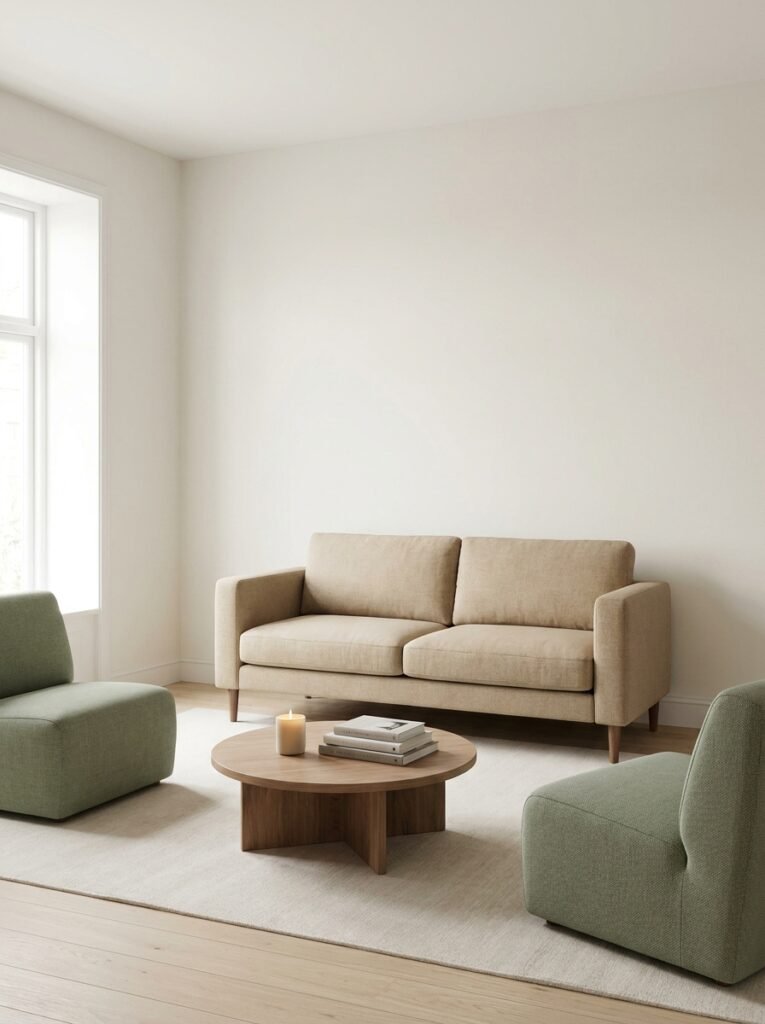
In a combo room, the sofa is the largest piece of furniture and the dominant visual element in the living zone. It must be chosen with unusual care — because in a small space, a sofa that’s the wrong size or shape can make everything else impossible.
The general guidance for small combo rooms is to choose a sofa that floats — meaning it sits in the room rather than being pushed entirely against the wall. Counterintuitively, pulling the sofa slightly away from the wall makes the room feel larger, because it creates a sense of depth and allows the eye to see the space as having layers.
Choose a sofa with legs rather than one that sits directly on the floor. Visible floor beneath furniture makes a room feel more open and less heavy. Light, neutral upholstery reflects light and feels airy. And if you love pattern, bring it in through pillows rather than the sofa itself — it’s easier to live with and easier to change.
A loveseat or a compact two-seater sofa paired with two accent chairs often gives more design flexibility than one large sectional in a combo room. The mix of seating types creates visual interest and allows you to rearrange for different functions — movie night, dinner party conversation, a quiet evening with a book.
—
12. The Small Details That Bind It All Together
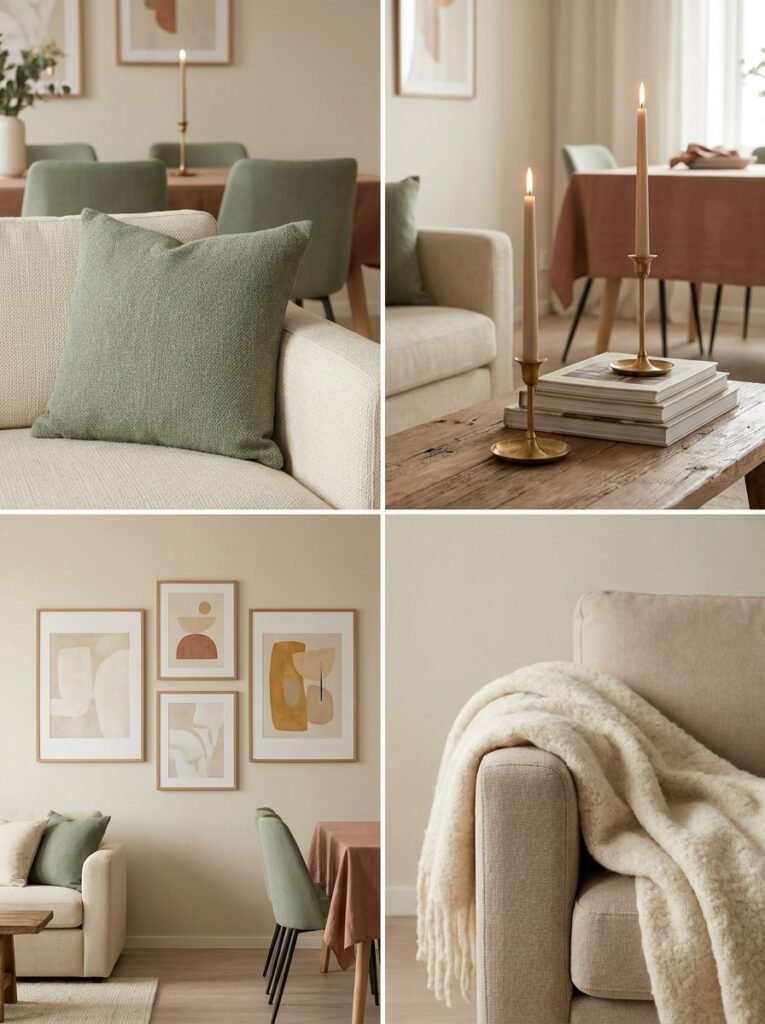
Here is where a combo room goes from looking designed to feeling lived in — which is ultimately what every beautiful home is reaching for. The small details are what make a space feel like yours.
A common dining-to-living color thread — a throw pillow that picks up the hue of your dining chairs, a candle on the dining table that matches the one on your coffee table — creates a visual conversation between the two zones that the eye registers as harmony. These subtle echoes are what make a room feel cohesive rather than crowded.
A small gallery wall shared between the two zones — bridging the visual space above the boundary between dining and living — is one of the most effective ways to unify a combo room. Art doesn’t belong exclusively to either zone; it belongs to both, and a gallery wall that spans the transition point says, quietly but confidently, that this is one beautiful room with one cohesive story.
Finally: don’t underestimate the power of scent, sound, and softness as design tools in a combo room. A candle burning on the dining table, music playing softly from a speaker tucked on a shelf, a soft rug underfoot — these sensory details are what make the space feel truly inhabitable. Design is not just what we see. It’s what we feel when we walk into a room.
—
🌿 How to Take Care of Your Combo Room’s Design
Maintaining a well-designed small combo room is less about cleaning and more about editing. Here are five habits that keep the space feeling intentional.
First, resist the urge to add things. In a small combo room, accumulation is the enemy of beauty. Before anything new comes in, something else should find a new home or leave entirely. Second, style the dining table even when it’s not being used for a meal — a small vase, a candle, two or three carefully chosen objects make it feel like a design moment rather than an unused surface. Third, fluff and rotate cushions weekly; it takes thirty seconds and makes the living zone look freshly styled. Fourth, keep surfaces edited — one or two objects on a side table, not six. Fifth, reassess your rug’s placement seasonally; slight adjustments as furniture shifts can restore the room’s sense of proportion and balance.
—
❓ FAQ
Q: What is the ideal size for a dining table in a small combo room? A: For a small combo room, a round or oval table between 36 and 48 inches in diameter typically works best — it seats four comfortably without overwhelming the space, and the absence of hard corners improves traffic flow. An extendable table that expands to seat six or eight for entertaining is worth prioritizing if hosting matters to you.
Q: Should the living and dining zones match exactly, or should they be different? A: They should feel related but not identical — think of them as two verses of the same song. Share a color palette and one or two material finishes (wood tone, metal finish) across both zones, but let the furniture scale, lighting style, and textile softness differ between them. This creates a sense of thoughtful cohesion without feeling like a matched furniture set.
Q: How do I make a small combo room feel more spacious without a renovation? A: The three highest-impact, zero-renovation moves are: add a large mirror to reflect light and depth, use two appropriately sized rugs to define zones and make the floor plan feel intentional, and hang your window treatments as high as possible (close to the ceiling) to maximize the perceived ceiling height. Together, these three changes can make a room feel measurably larger within an afternoon.
—
💭 Final Thought
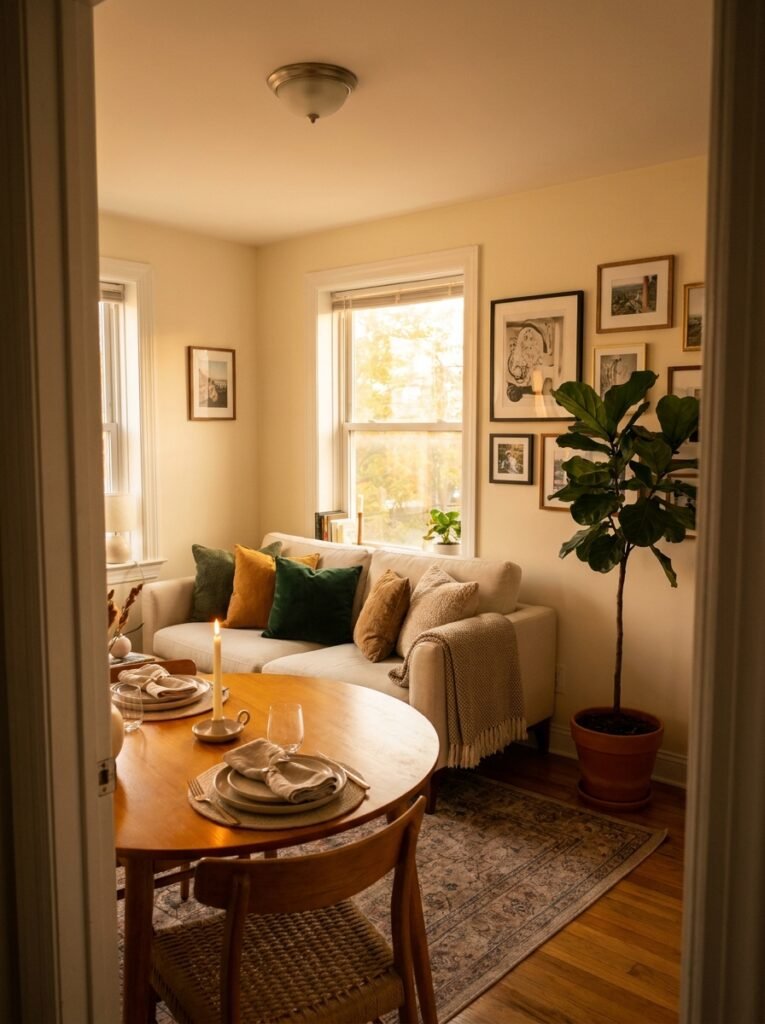
A small living room dining room combo is not a compromise — it is an invitation. An invitation to live more intentionally, to design more thoughtfully, and to discover that the spaces we love most are rarely the largest ones, but the ones that feel most completely, unmistakably ours. Every inch you’ve been given is enough. The only question is: what story do you want this room to tell?