
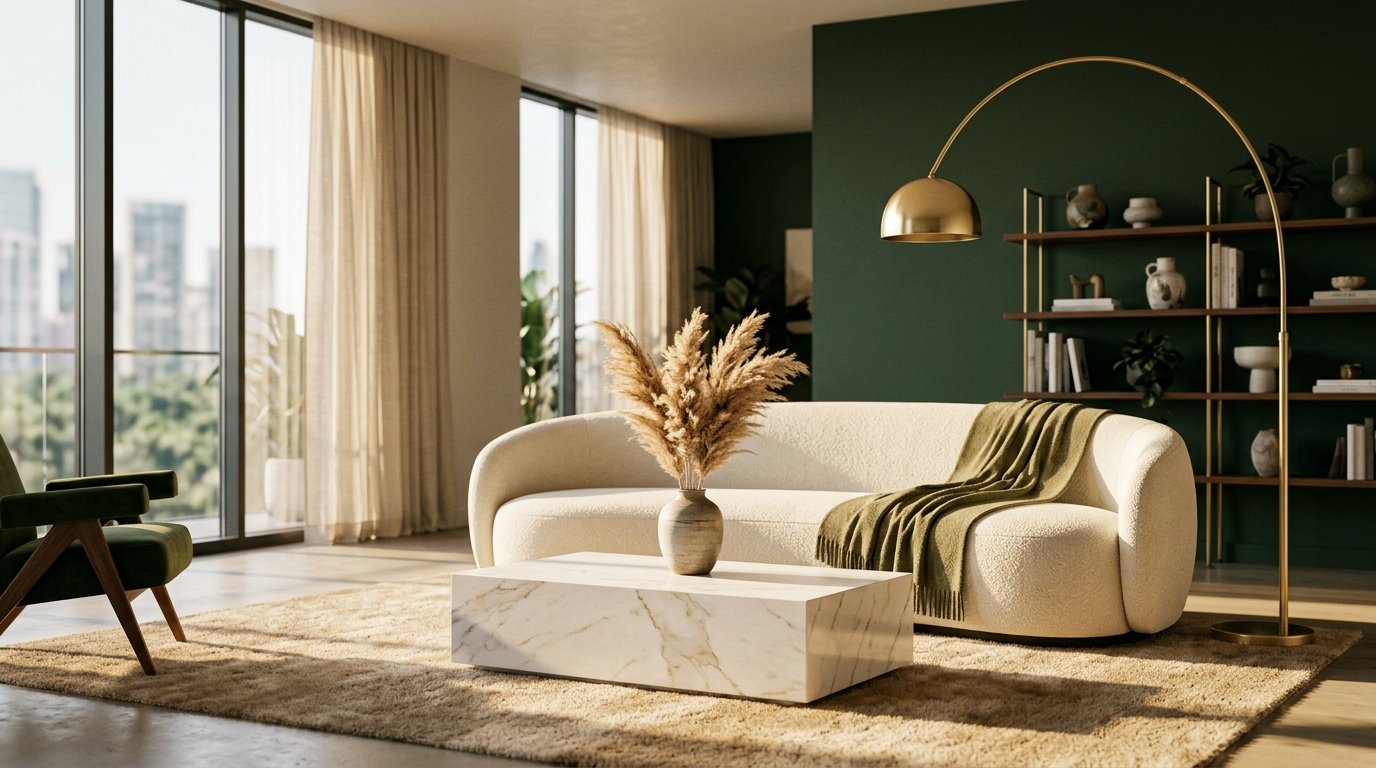
Living Room Decor Ideas Modern Luxury: How to Create a Space That Feels Like a Five-Star Hotel — Without the Price Tag
You know that feeling when you walk into a beautifully designed living room and something inside you just… exhales? That instant sense of calm, elegance, and “I want to live here forever” — that’s modern luxury, and it’s more achievable than most people think.
—
1. What Does “Modern Luxury” Actually Mean in a Living Room?
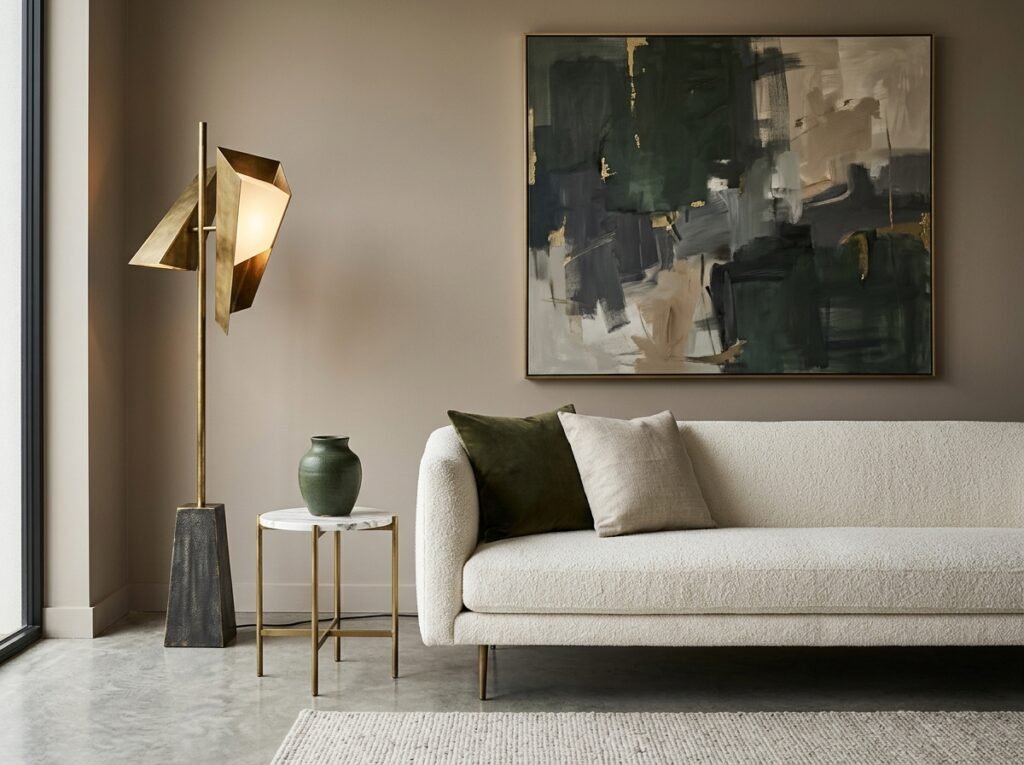
Before you start pinning velvet sofas and marble coffee tables, it’s worth pausing on what modern luxury actually means — because it’s not just about expensive things. It’s about intention. It’s the art of choosing fewer pieces and choosing them well. It’s about a room that feels curated, not cluttered, and where every single object earns its place.
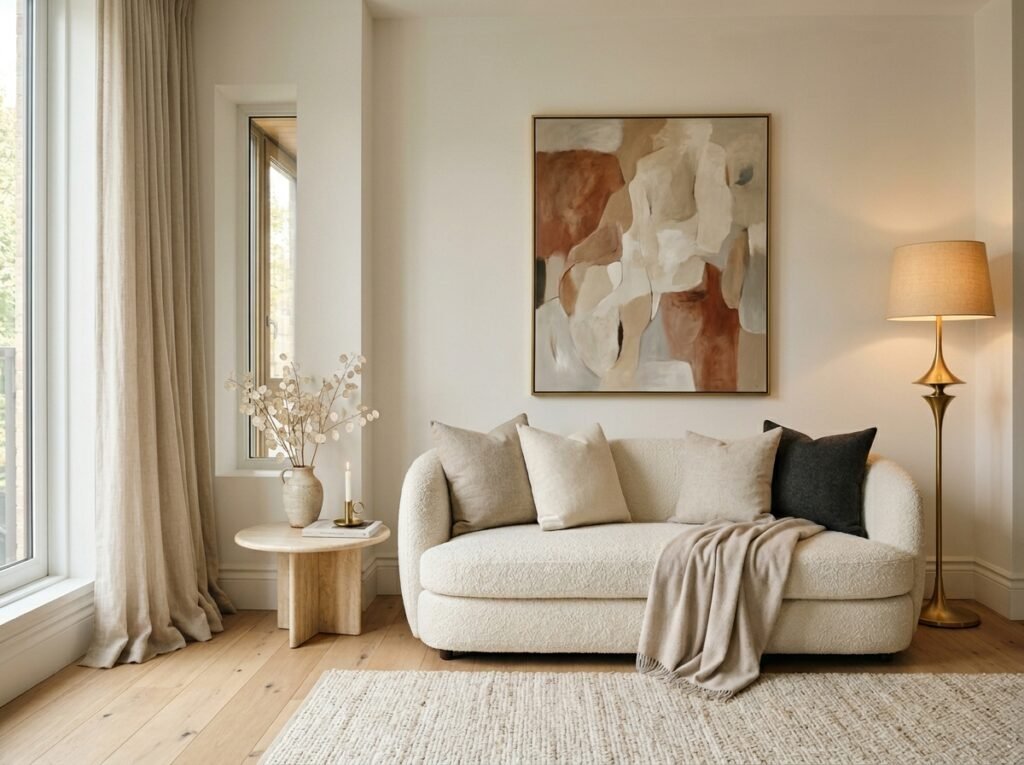
Modern luxury sits at the intersection of minimalism and opulence. It takes the clean lines and breathing room of contemporary design and layers in richness through texture, materiality, and color. Think a streamlined sofa in a cloud-soft bouclé fabric, a sculptural floor lamp that doubles as art, or a single oversized painting that anchors the entire room. The effect is effortless — but it’s anything but accidental.
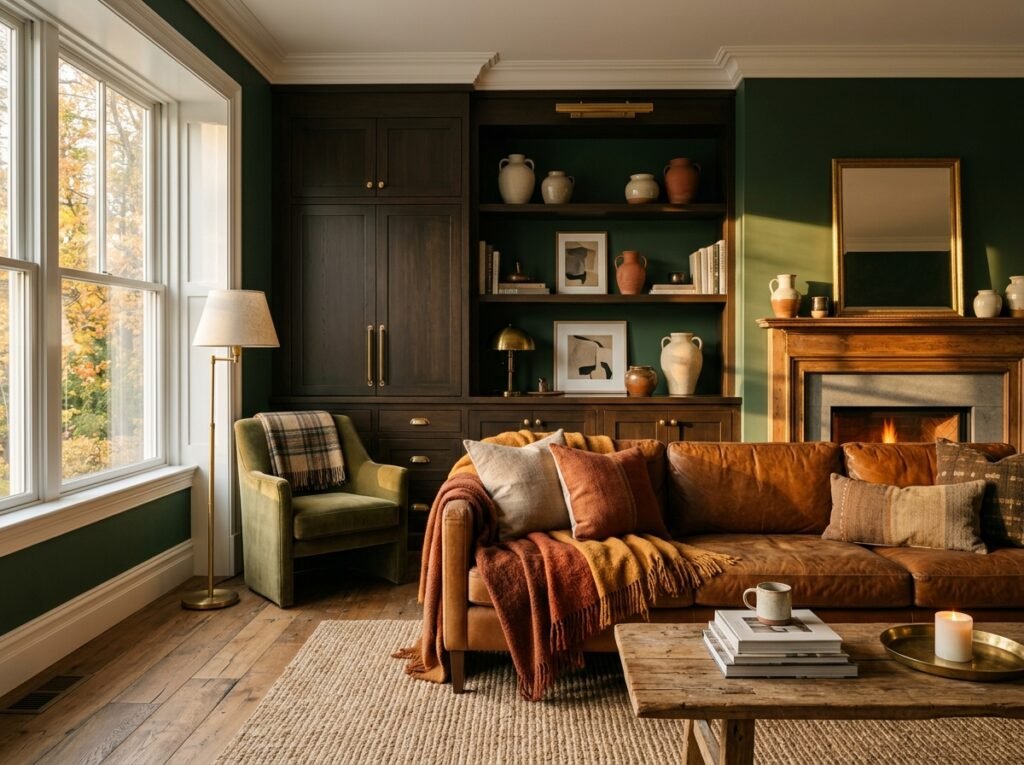
In American homes, modern luxury often leans toward warmer, more layered aesthetics — think deep greens, caramel leather, and organic textures mixed with sleek brass hardware. In British homes, there’s often a more restrained elegance at play: muted palettes, classic furniture silhouettes updated in contemporary fabrics, and that very British talent for mixing old and new without it ever feeling chaotic.
“Luxury isn’t about filling a room. It’s about editing one.”
Both approaches have something in common: they feel intentional. Every corner has been thought about. Every surface tells a quiet story.
—
2. The Color Palette That Makes a Room Feel Instantly Elevated

Color is one of the most powerful tools you have in interior design — and it costs you nothing beyond the price of paint. For modern luxury living rooms, the most successful palettes tend to share a few common traits: they’re layered rather than flat, they mix warm and cool undertones carefully, and they always include at least one deeply saturated moment to anchor the space.
Right now, the shades driving modern luxury interiors across the US and UK include warm terracotta tones paired with aged bronze, deep forest green against creamy off-whites, and the ever-growing love affair with warm charcoal — not cold grey, but a softer, almost brown-toned charcoal that feels sophisticated without being stark.
If you’re nervous about committing to bold color on your walls, start with what designers call the 60-30-10 rule. Sixty percent of your room should be a dominant neutral (walls, large furniture), thirty percent a secondary tone (rugs, curtains, accent chairs), and ten percent a bold accent (cushions, art, a vase). This ratio creates visual harmony and is the backbone of almost every professionally designed room you’ve ever admired.
For US readers renovating, Sherwin-Williams’ “Aged Copper” and Benjamin Moore’s “Onyx” are two paint choices that instantly communicate luxury without screaming it. UK readers — Little Greene’s “Lamp Black” and Farrow & Ball’s “Elephants Breath” remain timeless for that quietly opulent British feel.
—
3. The Sofa Is the Heart of the Room — Choose It Like One
No single piece of furniture carries more weight in a living room than the sofa. It anchors the space, sets the tone, and tells visitors — immediately — what kind of home they’ve walked into. In a modern luxury living room, your sofa should feel like it took thought, not a quick Saturday morning trip to a furniture warehouse.
The shapes defining modern luxury sofas right now are generous but structured. Deep seats with tight backs — not overstuffed — in fabrics like performance bouclé, velvet, or high-grade linen. Leg styles matter enormously: tapered walnut legs, brushed brass feet, or even a low-slung platform base all signal considered taste. Avoid overly ornate carved details; the luxury here is in simplicity made beautiful.
For American homes with larger square footage, a sectional in a muted sage or warm sand with integrated throw cushions can create that hotel-lobby feeling without overwhelming the room. For British homes — particularly older semis or period flats where space is tighter — a three-seater with clean lines and high-quality upholstery in an understated tone will always outperform a sofa twice its price in a busier style.
—
4. Why Lighting Is the Secret Nobody Talks About Enough
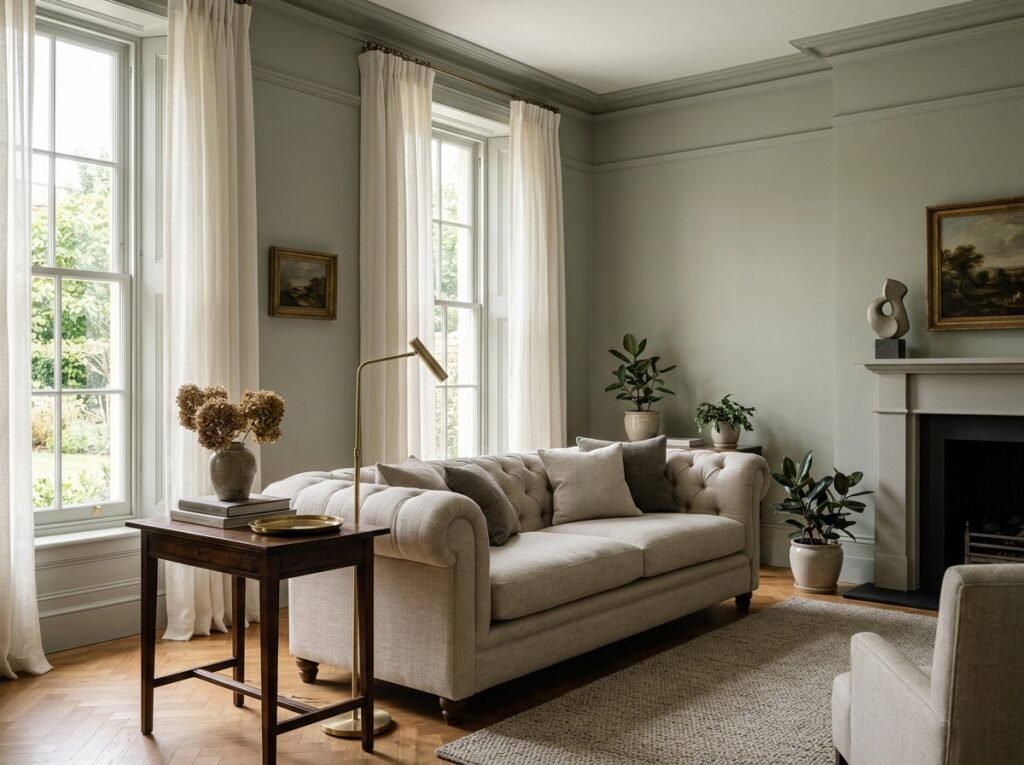
Walk into any truly luxurious living room — a high-end hotel lobby, a designer showroom, a beautifully featured home in Architectural Digest — and notice something: the lighting is never harsh. It’s layered, it’s warm, and it makes everything look better, including the people sitting in it.
Achieving this at home means moving well beyond the single overhead ceiling light. Modern luxury lighting design works in three layers. Ambient lighting provides the overall glow — think a statement pendant or a subtle recessed fixture on a dimmer. Task lighting adds function — a sculptural floor lamp beside a reading chair, or a sleek table lamp on a console. Accent lighting creates drama — think LED strip lighting beneath a floating shelf or a spotlight trained on a piece of art.
The warmth of your bulbs matters as much as the fixtures themselves. Opt for bulbs in the 2700K–3000K range, which emit a warm, golden tone rather than the cold blue-white light that flattens a room and makes it feel like a dentist’s waiting room. Dimmers are not a luxury — they’re a necessity. For under $50 or £40, you can install a dimmer switch that transforms the entire mood of your living room in seconds.
“Change the light in a room, and you change everything about how it feels.”
—
5. Texture Is What Makes a Room Feel Rich
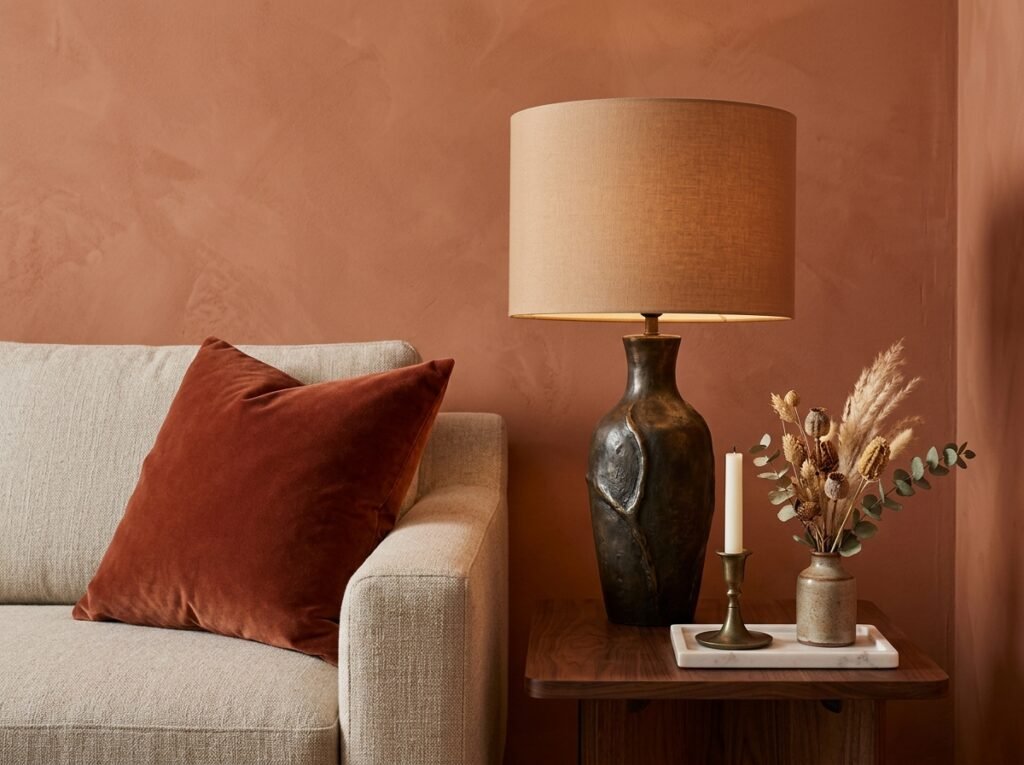
Here’s something that professional interior designers know that most homeowners don’t: texture does more for a living room than color ever could. A room with a beautiful palette but flat, uniform surfaces will always feel a little lifeless — while a room with layered textures, even in a simple palette of creams and taupes, can feel incredibly rich and inviting.
Modern luxury lives in texture contrasts. Think smooth marble against rough linen. A glossy lacquered side table beside a hand-woven jute rug. Matte wall paint behind a glittering brass mirror. Soft velvet cushions tumbled against a crisp, tightly woven sofa. These contrasts create visual interest that makes your eyes want to travel around the room — and that, in design terms, is what creates the feeling of depth and luxury.
For budget-conscious decorators in the US and UK, texture is your greatest ally because you can introduce it affordably. A chunky knit throw from a high street homeware store, a rattan tray on a coffee table, a set of linen curtains that pool slightly on the floor — these are small, inexpensive choices that collectively transform a room’s feel.
—
6. The Rug Rule That Every Interior Designer Swears By
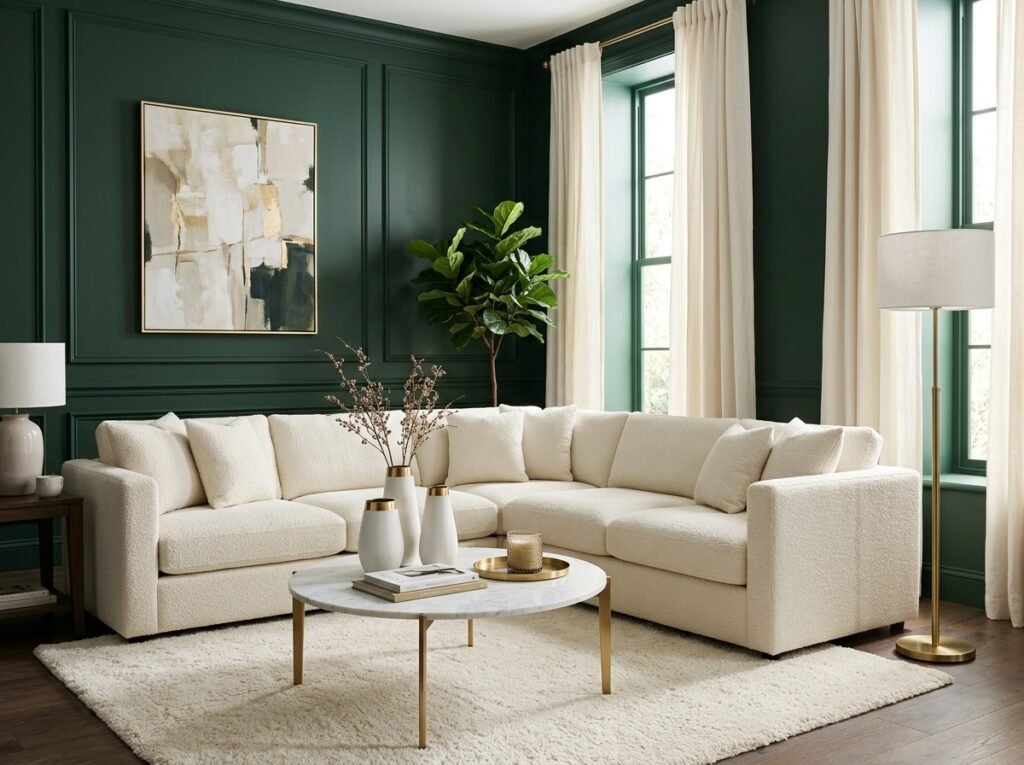
If there is one piece of advice that interior designers in both the US and UK give more consistently than almost any other, it’s this: buy a bigger rug. Most people buy a rug that’s too small, and nothing makes a room feel cheaper or more disconnected than a rug that floats awkwardly in the middle of the floor with all the furniture legs sitting around its edges.
In a modern luxury living room, the rug should be large enough that at least the front two legs of every seating piece sits on it. Ideally, all legs are on the rug. This grounds the furniture grouping, creates a defined “room within a room,” and instantly makes the space feel considered and complete.
For size reference — in an average American living room, a 9×12-foot rug is usually the minimum for a full seating arrangement. In a British sitting room, an 8×10 is often ideal. Go one size bigger than you think you need. It will look right every single time.
—
7. Art That Makes a Statement Without Shouting
Nothing elevates a living room quite like art — and nothing dates it quite as obviously as the wrong art. Modern luxury living rooms tend to feature artwork that is bold, personal, and large in scale. The era of matching prints in identical frames arranged symmetrically above a sofa is behind us.
What’s replaced it is single, oversized original or high-quality printed artwork that commands the wall it’s on. Abstract art in earthy tones, large-format photography, or even a single beautiful tapestry — these pieces become the conversation starting point of the entire room. In the US, the gallery scene in cities like New York, Chicago, and LA has made original art more accessible; in the UK, platforms like Tate Shop and independent galleries in London and Edinburgh offer beautifully printed reproductions at accessible prices.
The placement rule for art in luxury design: hang it lower than you think. Most people hang art too high. The center of a piece should sit at approximately eye level — around 57 to 60 inches from the floor — which keeps it connected to the furniture beneath it rather than floating up near the ceiling.
—
8. The Quiet Power of Considered Storage
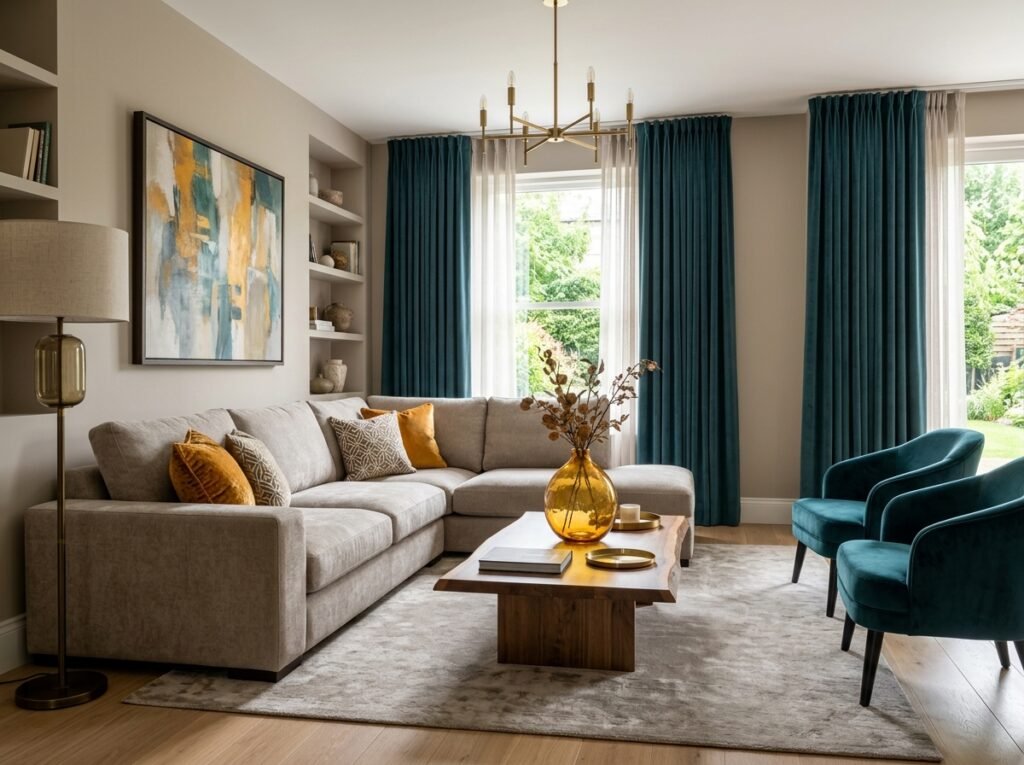
One of the least glamorous and most important truths of modern luxury interior design is this: it’s deeply organized underneath the surface. Luxury feels effortless because the clutter doesn’t exist in the same visual plane as the beauty. Thoughtful, beautiful storage isn’t just functional — it’s a design statement.
In modern luxury living rooms, storage tends to be built-in or bespoke-looking. Floating shelves styled with a handful of objects rather than crammed with books. A media unit with concealed cable management so no wires are visible. An ottoman with hidden storage that serves as both a footrest and a place to tuck away throws and magazines. Woven baskets in neutral tones that can hold everything from TV remotes to children’s toys without breaking the visual calm.
“A beautiful room isn’t one with nothing in it. It’s one where everything has a home.”
—
9. Plants and Natural Elements That Breathe Life Into a Space
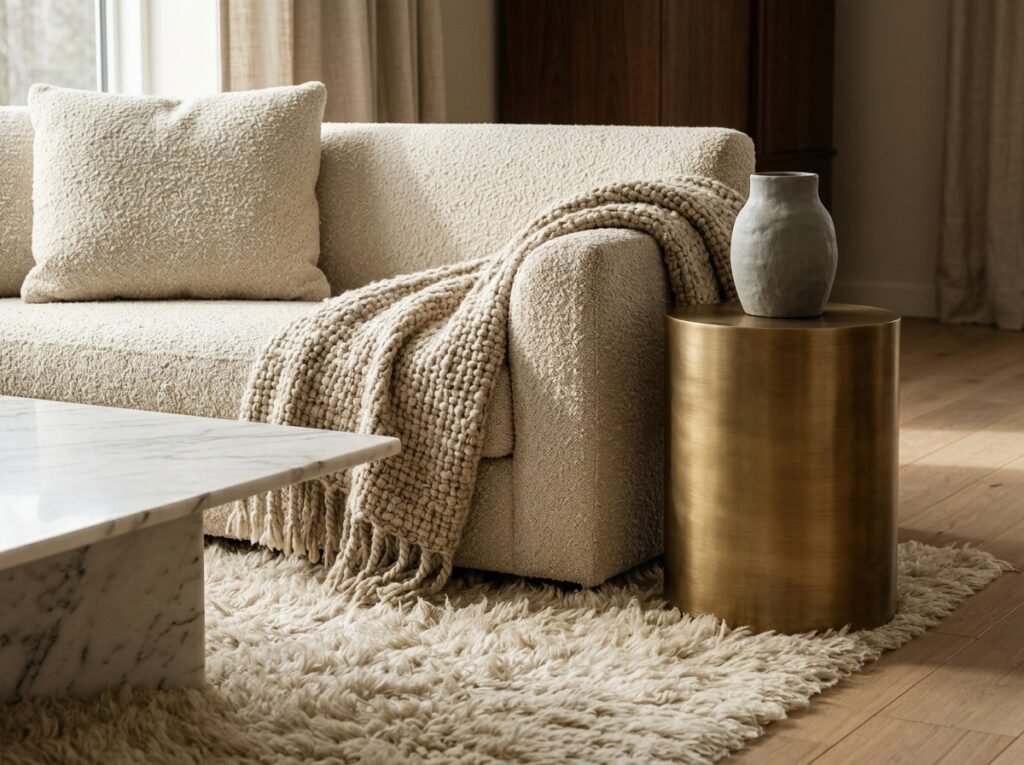
There’s a reason every aspirational interior you’ve ever saved on Pinterest contains at least one plant. Nature doesn’t just look beautiful in a room — it makes people feel better. Studies consistently show that natural elements in interior spaces reduce stress, improve air quality, and make people feel more grounded and calm.
In modern luxury design, the plant choices tend to be architectural and considered rather than a collection of mismatched small pots. A single large fiddle-leaf fig in a textured ceramic planter. A trailing pothos arranged on a high shelf. A cluster of three varying-height plants in the corner of a room to create a natural focal point. The containers matter as much as the plants — look for hand-thrown ceramics, rattan, or matte stone-effect pots.
Beyond plants, natural materials like stone, raw wood, and dried botanicals continue to define modern luxury living rooms. A marble tray on your coffee table, a driftwood sculpture, a vase of dried pampas grass — these elements bring the warmth and imperfection of nature into what might otherwise feel like a cold, too-perfect space.
—
10. The Details That Separate Good From Unforgettable
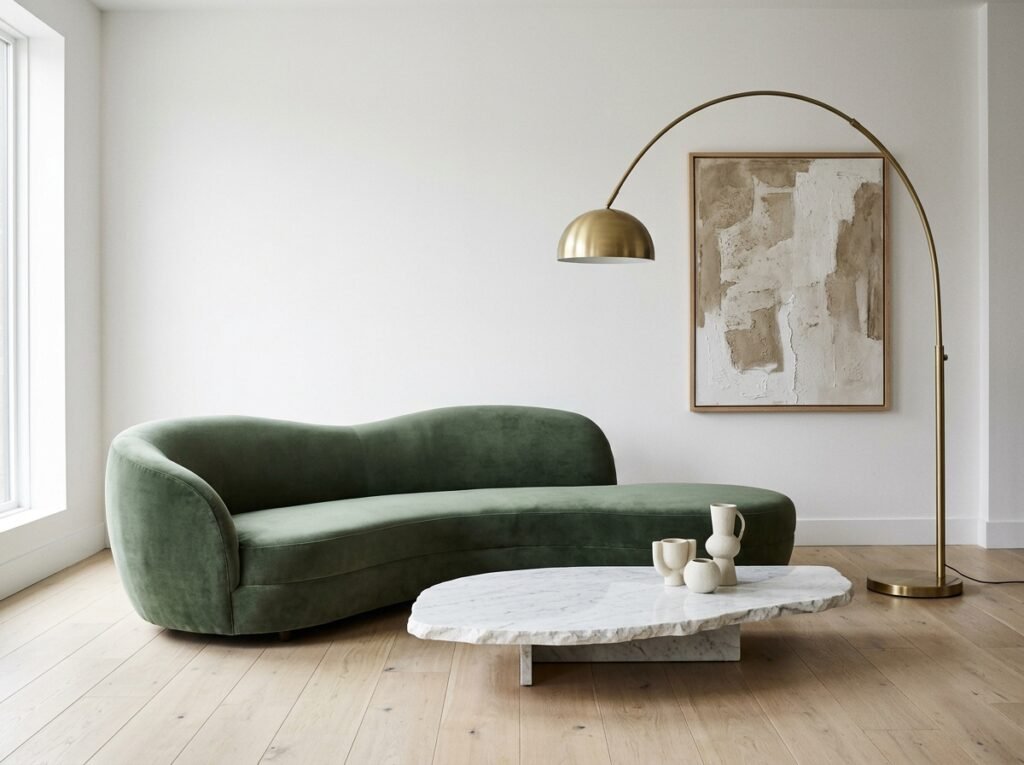
It’s always the small things. In interior design, the difference between a room that looks “nice” and one that stops people in their tracks is almost always found in the details — the hardware on the shelving, the tassels on the cushions, the way the books are arranged, the single candle in a beautiful holder.
Modern luxury living rooms pay attention to hardware. Swap out basic silver or chrome curtain rings for brushed brass or matte black. Replace standard plug socket covers with sleek brushed metal plates — a change that costs very little in the US and UK but instantly modernizes a room. Consider the weight and texture of your throws — a cashmere or high-quality lambswool throw draped over an armchair signals luxury in a way that a polyester fleece never can, no matter how stylishly it’s arranged.
These micro-upgrades don’t require a renovation budget. They require attention, patience, and the willingness to see your home the way a designer would — with fresh eyes and a focus on the small moments of beauty that together create something truly memorable.
—
11. How to Layer a Coffee Table Like a Professional Stylist
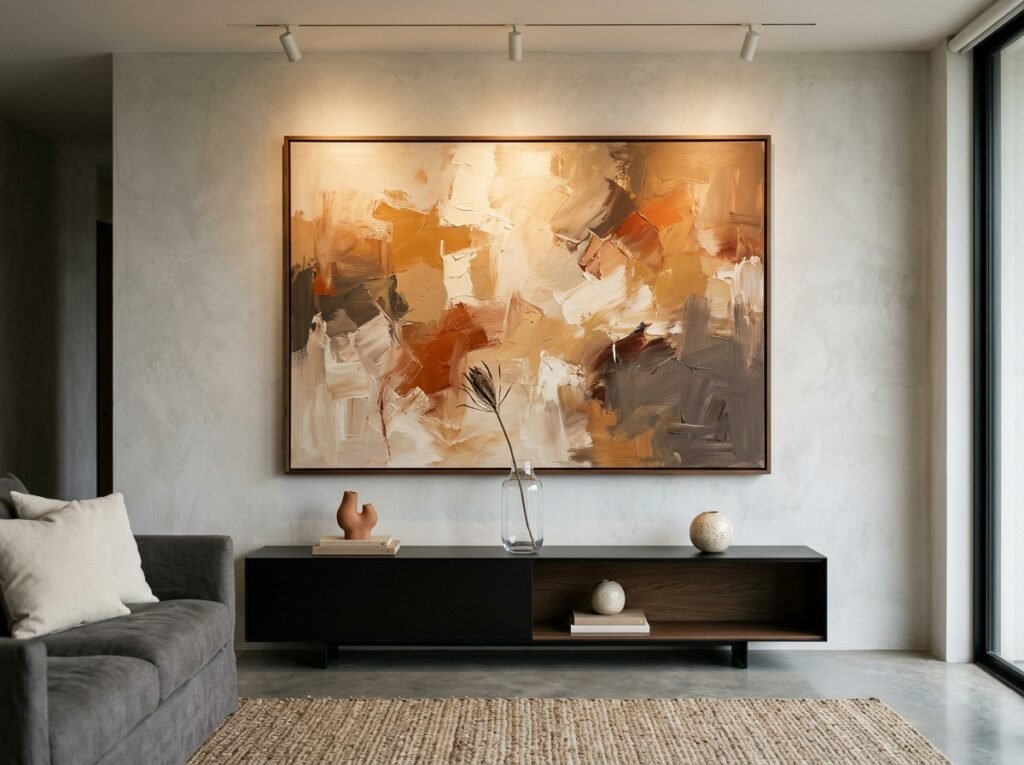
The coffee table is the styling centerpiece of your living room — and most people either over-style it with too many objects or leave it almost completely bare. Professional interior stylists in both the US and UK use a loose formula that consistently produces beautiful results: the rule of three heights.
Choose one tall element (a candle, a slender vase with dried branches), one medium element (a stack of beautiful hardcover books or a sculptural object), and one low element (a tray, a small bowl, or a single bloom in a flat dish). Group them together — slightly off-center works better than dead center — and leave empty space around the grouping. That empty space is not wasted; it’s visual breathing room, and it’s what makes the styled objects look intentional rather than cluttered.
For texture, mix materials: a ceramic vase, a wooden tray, a brass candle holder. The contrast between these surfaces does the same work on a small scale that layering textures does across the whole room.
—
12. Bringing It All Together: The Modern Luxury Living Room Formula
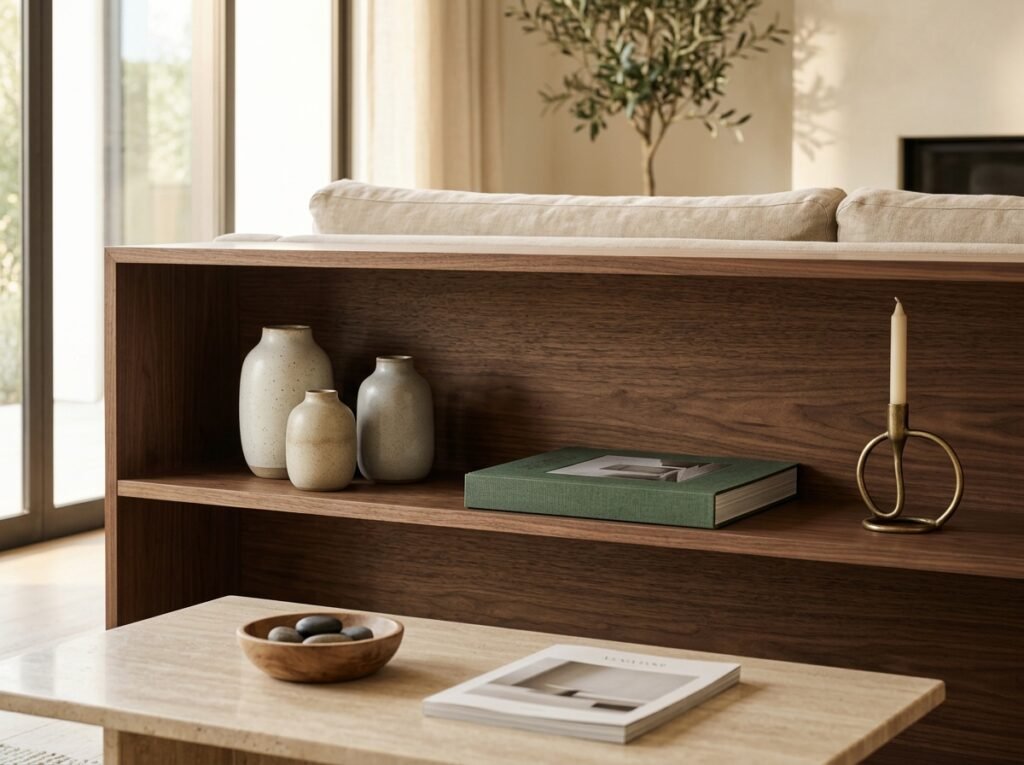
So here’s the truth that ties every one of these ideas together. A modern luxury living room doesn’t happen because you spent a lot of money. It happens because you made deliberate choices — and then stopped. The edit is everything. The restraint is the luxury.
Start with a palette that makes you feel genuinely calm and happy. Invest in one or two anchor pieces — a sofa, a rug — and choose them with care. Layer in lighting so the room has warmth and depth at every hour of the day. Add texture through materials that feel beautiful to touch. Bring in nature. Style your surfaces with intention, leave space to breathe, and let the room become a place where you — and everyone who walks into it — feel genuinely, deeply at home.
Modern luxury isn’t a look you achieve once and photograph. It’s a feeling you create and return to — a room that holds you after a long day, that makes Sunday mornings feel indulgent, that makes your everyday life feel a little more beautiful than it did before.
—
🌿 How to Maintain a Modern Luxury Living Room
Keeping a beautifully designed space feeling intentional takes less effort than you might think — it just takes consistency. Declutter the surfaces every Sunday evening, returning any stray objects to their proper home so Monday starts clean. Rotate your decorative objects seasonally — swap cushion covers, change up your coffee table styling, swap dried botanicals for fresh flowers — so the room stays fresh without requiring a full redesign. Care for your fabrics: velvet should be brushed gently, linen cushions can be re-plumped and straightened, and throws should be folded (never stuffed) when not in use. Clean your light fixtures and lampshades regularly — dusty lighting is one of the most overlooked reasons a room starts to feel a little tired. Finally, trust your instincts about what doesn’t belong. If an object creates visual noise every time you look at it, move it. A luxury space is always edited.
—
❓ FAQ
Q: How do I create a modern luxury living room on a tight budget? A: Focus your budget on the pieces with the most visual impact — a great rug, quality curtains, and one or two beautiful lighting fixtures. Style everything else using affordable finds from IKEA, H&M Home, or TJ Maxx/HomeSense, and prioritize texture and intentional arrangement over expensive individual pieces. A beautifully styled affordable room always beats an expensively cluttered one.
Q: What paint colors work best for a modern luxury living room in the US and UK? A: Warm neutrals with depth work beautifully in both markets — Benjamin Moore’s “White Dove” or Sherwin-Williams’ “Accessible Beige” for lighter schemes; Farrow & Ball’s “Mole’s Breath” or Little Greene’s “French Grey” for a more atmospheric British feel. If you want drama, deep forest greens and warm charcoals are having a significant moment right now and work across a wide variety of home styles.
Q: Should my living room furniture all match in a modern luxury interior? A: No — and this is actually one of the most important shifts in modern luxury design. Rooms where everything matches feel like a showroom, not a home. The most sophisticated living rooms mix complementary materials, finishes, and even eras — a contemporary sofa alongside a vintage side table, or a modern rug beneath a classic armchair reupholstered in a fresh fabric.
—
💭 Final Thought
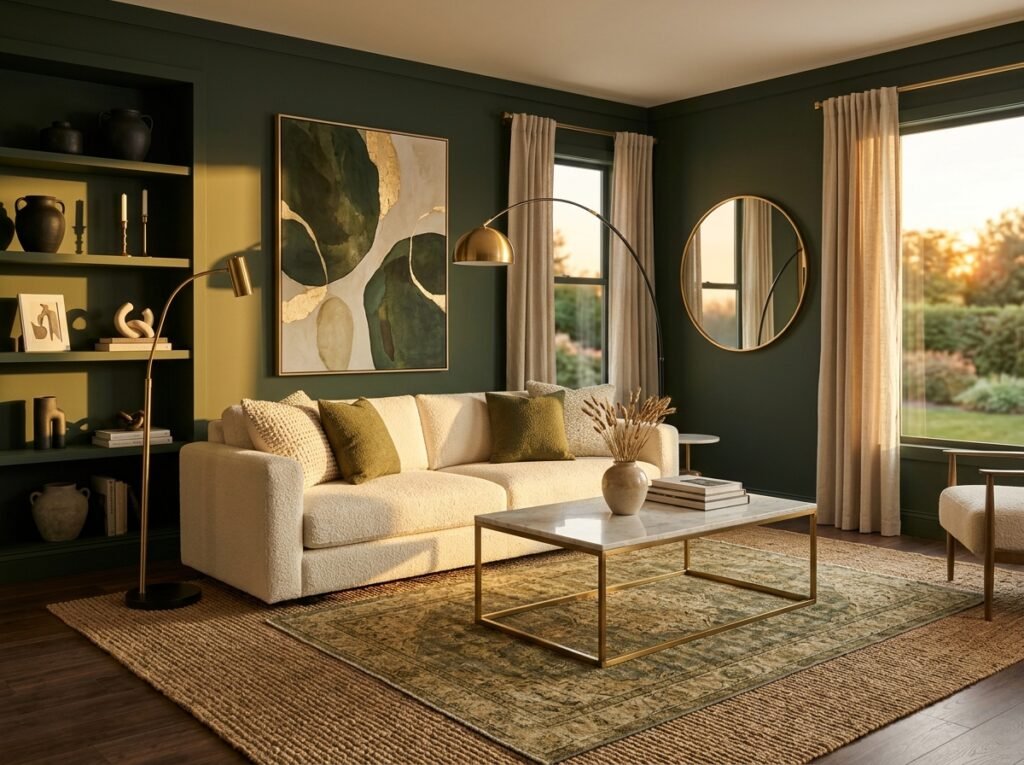
A beautiful living room isn’t a destination you arrive at when you’ve spent enough money or found the perfect piece. It’s a practice — a daily act of choosing what stays, what goes, and what makes you feel most like yourself when you walk through the door. The rooms that move us most are the ones that feel genuinely lived in and genuinely loved. So as you look around your living room today, ask yourself: does this space feel like you — or does it still feel like someone you’re waiting to become?