
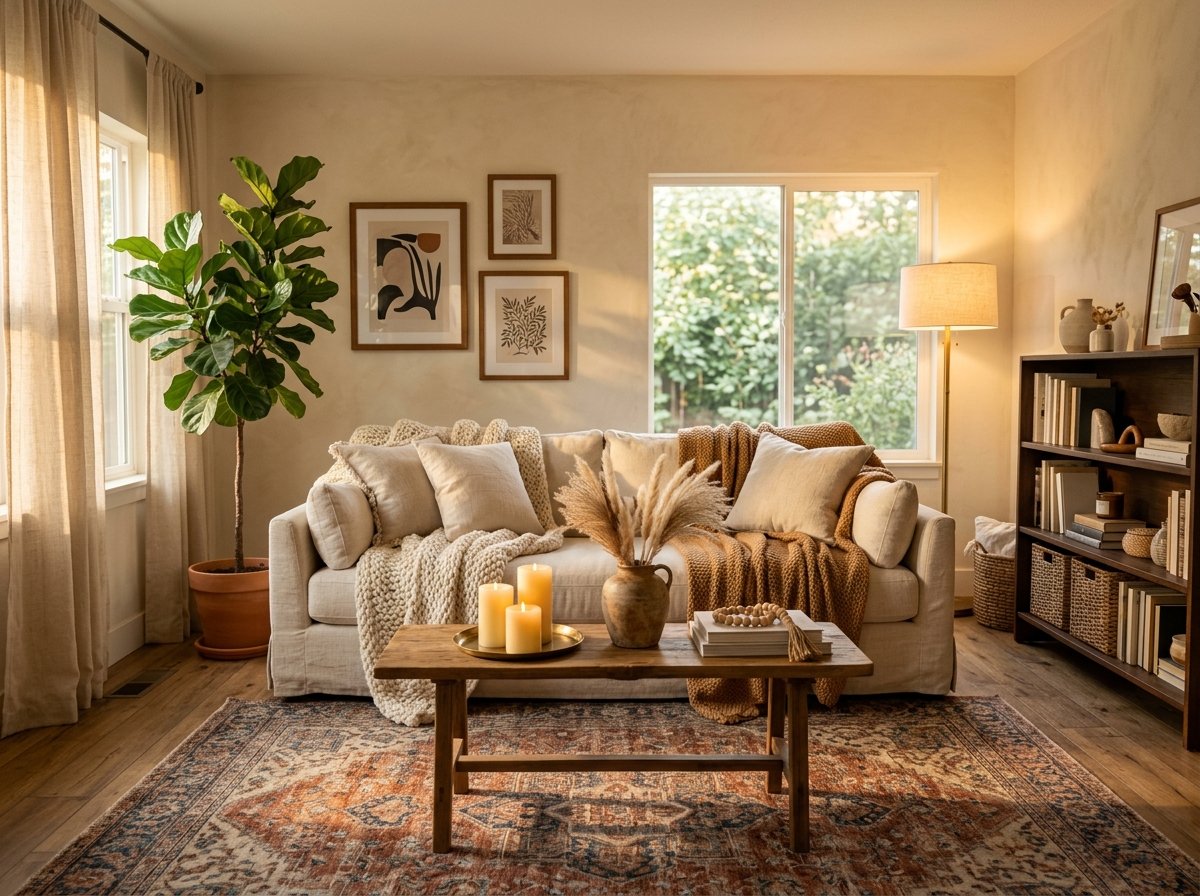
The Living Room That Feels Like a Hug: Cozy Decor Ideas That Actually Work
There’s a moment — maybe you’ve felt it — when you walk into someone’s living room and immediately exhale. Not because it’s from a magazine, but because it feels lived in, warm, and completely human. That’s what cozy really means. And creating that feeling in your own home? It’s entirely possible, no matter your budget or square footage.
—
1. Why “Cozy” Is More Than Just Throw Pillows and Candles
Let’s be real — Pinterest has given us a slightly romanticised version of what cozy looks like. Golden-lit rooms with perfect linen throws and artisan candles glowing on reclaimed wood shelves. And while those images are genuinely beautiful, real cosiness runs deeper than styling. It’s about a room that supports you — your rhythms, your rituals, your need for rest after a long week.
Psychologists who study environmental comfort consistently point to a few core elements: soft lighting, natural textures, enclosed seating arrangements, and personal touches that reflect the people who actually live there. Cosiness is essentially your nervous system saying, “Yes. This is safe. I can relax now.” When you design with that goal — rather than just chasing an aesthetic — the results are transformative. You stop decorating your living room and start building it.
“A cozy living room doesn’t happen by accident — it’s built intentionally, layer by layer.”
2. The Lighting Secret That Changes Everything
If there is one single change that will make your living room feel dramatically cosier overnight, it is this: ditch the overhead lights. Or at the very least, supplement them heavily. Overhead lighting — especially the harsh, flat kind found in most apartments and suburban homes on both sides of the Atlantic — is deeply unflattering to both people and rooms. It flattens shadows, removes depth, and makes spaces feel clinical.
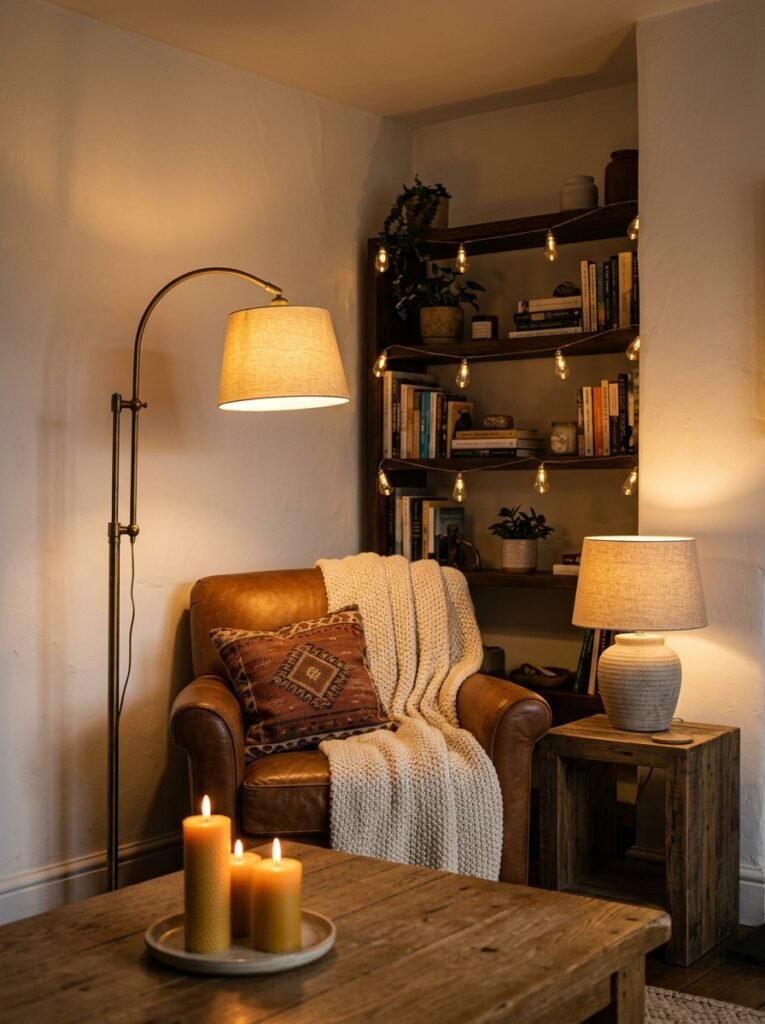
Instead, think in layers. A floor lamp in the corner with a warm Edison bulb. A table lamp on the side table beside the sofa. Candlelight on the coffee table in the evenings. String lights framed around a window or bookshelf. Each light source should cast warmth at eye level or below — that’s the height at which fireplaces and candles naturally burn, and it’s why those things feel so instinctively welcoming. Look for bulbs with a colour temperature around 2700K for that golden, late-afternoon glow. It’s a small detail that makes an enormous difference.
3. The Sofa Arrangement That Makes a Room Feel Like a Sanctuary
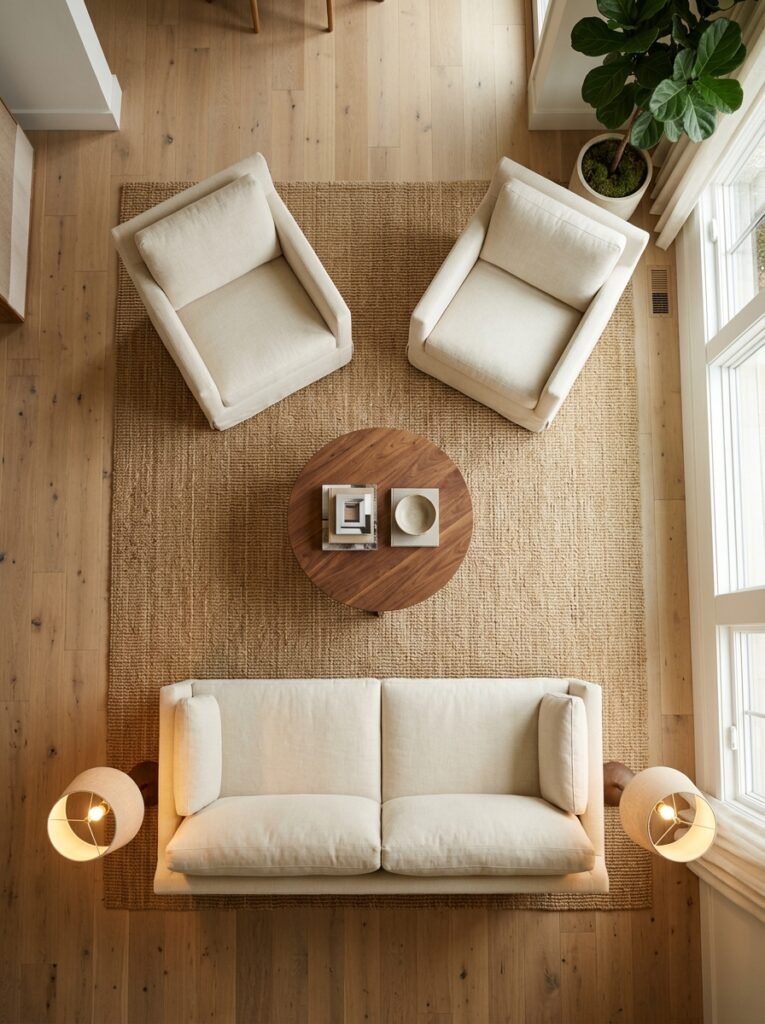
Where you place your sofa matters far more than most people realise. The most common mistake in British terraced houses and American open-plan layouts alike? Pushing every piece of furniture against the walls. It might feel like it creates more space, but it actually does the opposite — it makes the room feel sparse and disconnected, like a waiting room rather than a home.
Try pulling your sofa and chairs inward, away from the walls by even a foot or two, and arrange them to face each other. Create what designers call a “conversation circle” — a grouping of seating that encourages closeness and connection. If you have a fireplace (even a faux one or a beautiful fireplace-adjacent moment like a candle cluster), orient everything toward it. The psychological effect of having a focal point that seating faces is remarkably grounding. It tells your brain: this is the centre. This is where life happens.
4. Rugs — and Why the Wrong Size Is Quietly Ruining Your Room
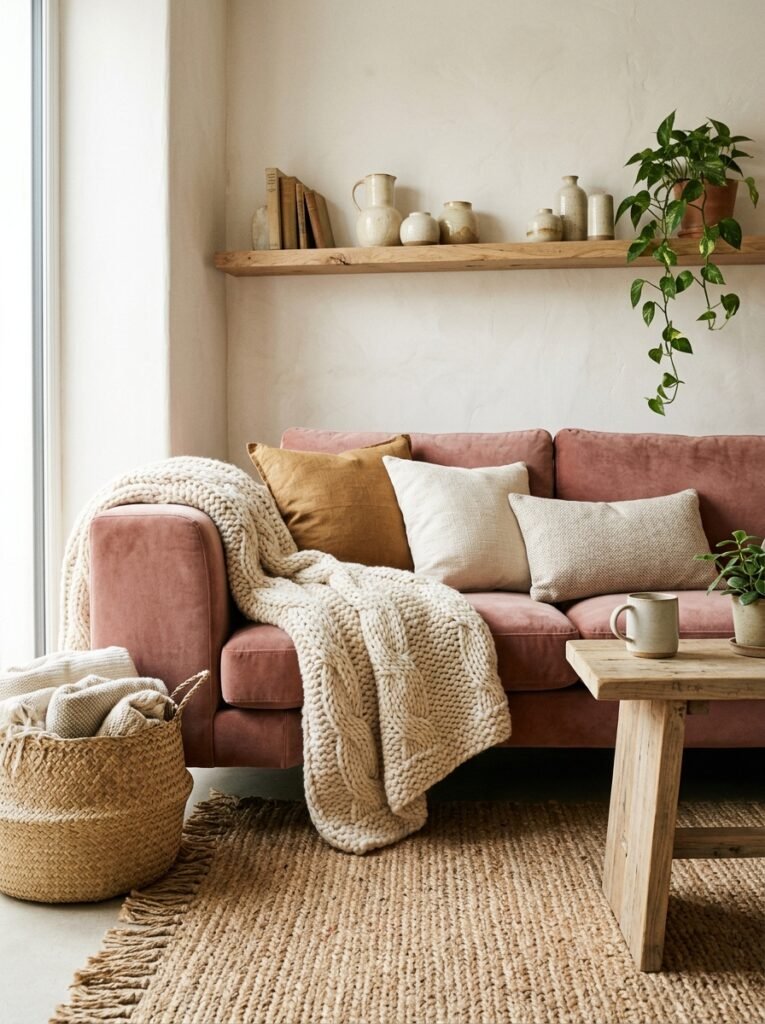
In the UK and US alike, the number one rug mistake is buying one that’s too small. A rug that only sits under the coffee table — while all the sofa legs float off it onto bare floor — creates a visual disconnect that makes the room feel choppy and smaller than it is. The rug should act like a stage: it defines the seating area and ties it together.
For a standard living room, look for a rug that is at least large enough for the front two legs of every sofa and chair to rest on it. In American rooms where space often allows, going even larger — 8’x10′ or 9’x12′ — creates that lush, enveloping feeling that makes you want to kick off your shoes and sink in. In cosier British living rooms, even a 6’x9′ rug placed correctly can be transformative. Look for natural materials: jute, wool, or cotton feel grounding underfoot and add texture that synthetic rugs simply can’t replicate.
5. Colour Psychology: The Shades That Scientifically Feel Warm
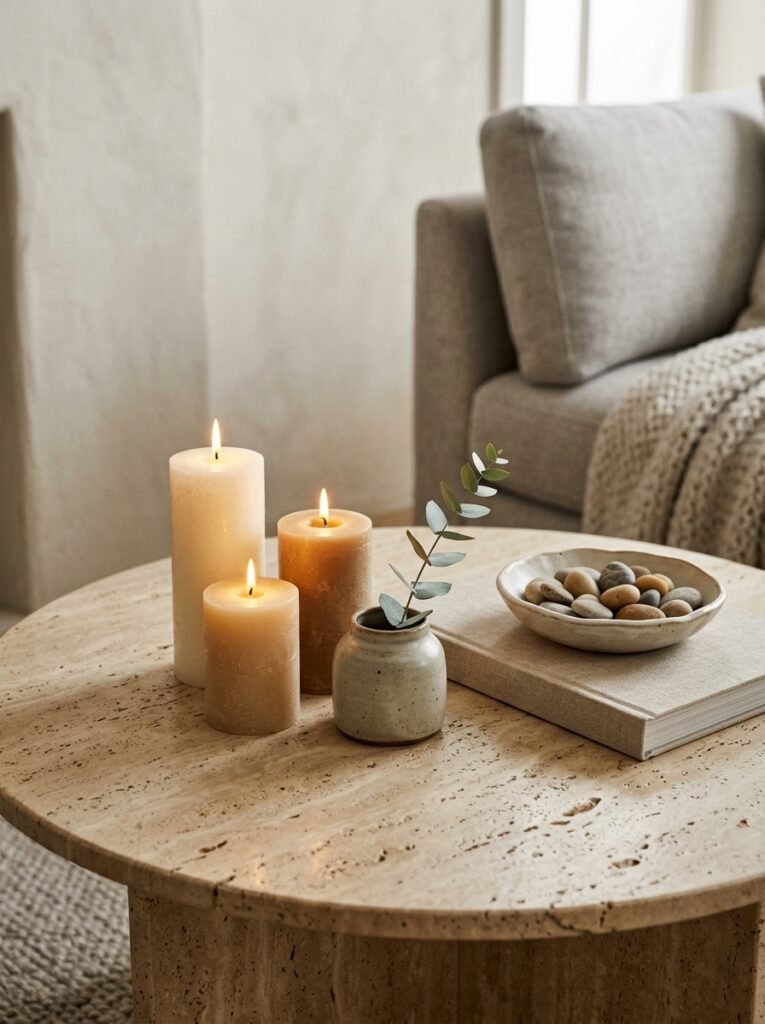
Colour is not just visual — it is visceral. Warm tones activate different parts of our perception than cool ones, and when you’re designing for comfort, understanding this is genuinely useful. Terracotta, burnt sienna, warm cream, dusty blush, deep forest green, and rich chocolate brown are all shades that research consistently links to feelings of warmth, safety, and groundedness.
This doesn’t mean you must paint your walls dark. In fact, some of the cosiest living rooms use mostly neutral walls — warm white, soft greige, or a delicate bone — and bring in colour through textiles and accessories. A rust-coloured velvet cushion against a cream sofa. A forest-green blanket draped over a linen armchair. A terracotta pot on the windowsill catching afternoon light. These touches are enough to warm a space without overwhelming it.
“Colour doesn’t have to cover every wall to change the entire feeling of a room.”
6. The Art of Layering Textiles (Without Overdoing It)
Texture is the secret language of cosy interiors. A room that lacks textural variety — all smooth surfaces, flat walls, minimal soft furnishings — will never feel truly warm, regardless of how beautiful the individual pieces are. But layering textiles well is a skill, and there’s a gentle art to it.
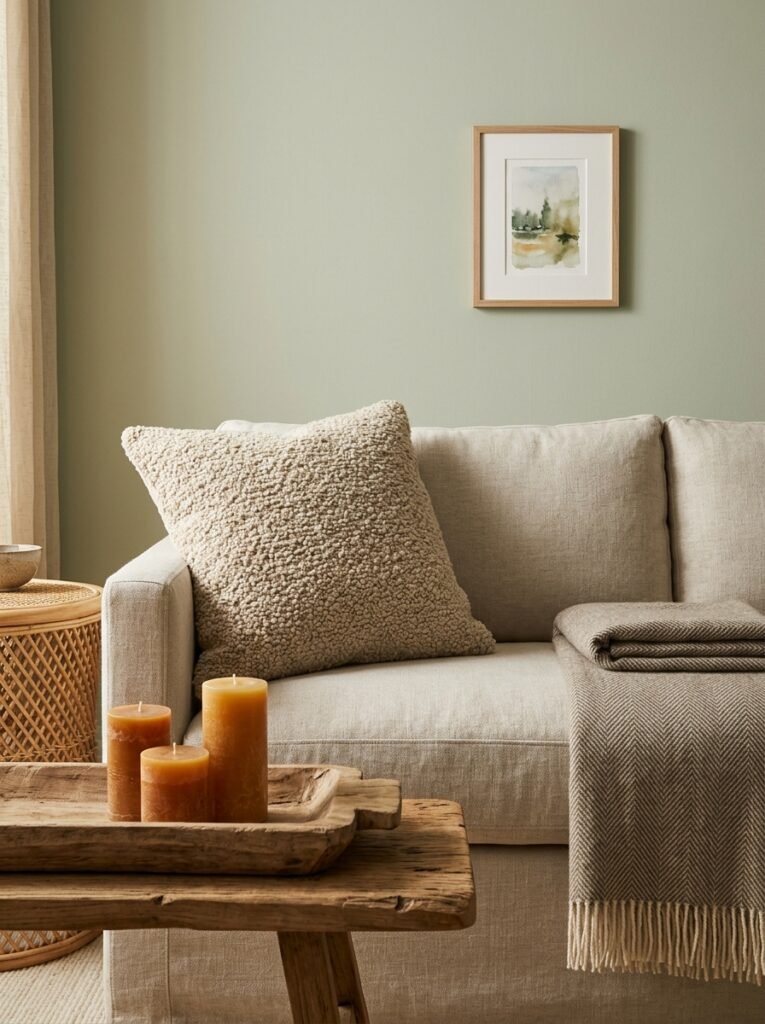
Start with your largest textile layer: the sofa. A natural linen or soft bouclé sofa provides a beautiful base. From there, layer differently: a chunky knit throw in a contrasting but complementary colour. Two or three cushions in varying textures — velvet, cotton, and something with a subtle weave or embroidery. A second, lighter blanket folded over the arm of an accent chair. The goal is that when you sit down, you are immediately surrounded by softness. Nothing should match perfectly. The slight imperfection and layering is exactly what creates that “collected over time” feeling that truly cosy rooms have and showroom-perfect spaces lack.
7. Bookshelf Styling That Tells Your Story
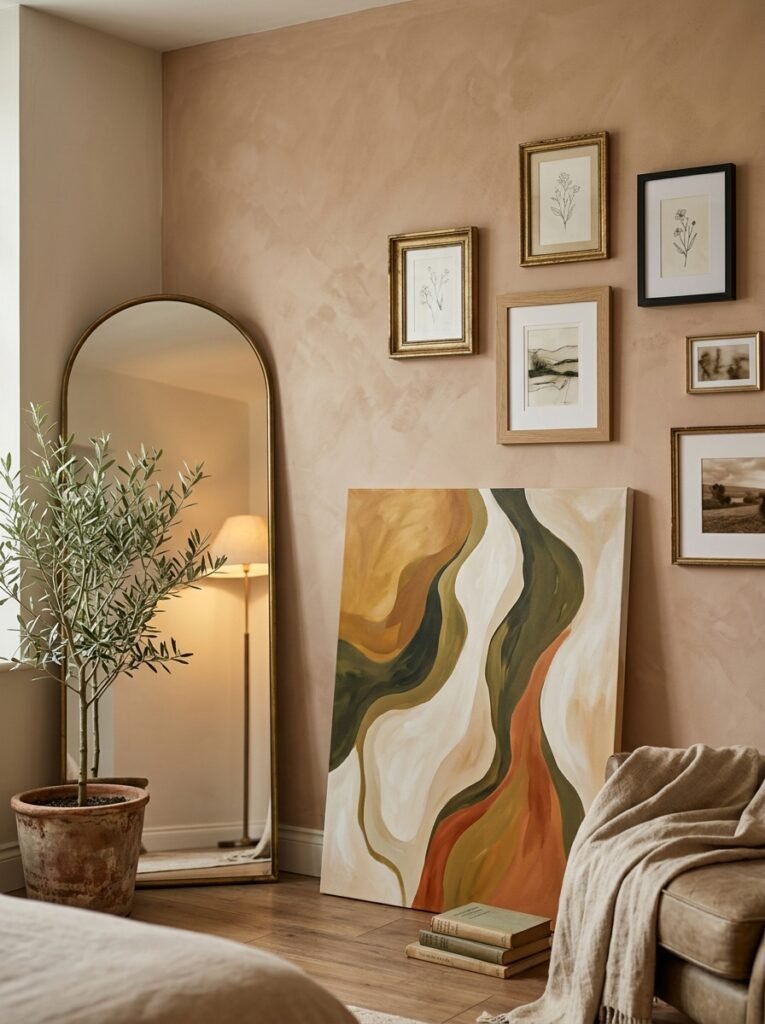
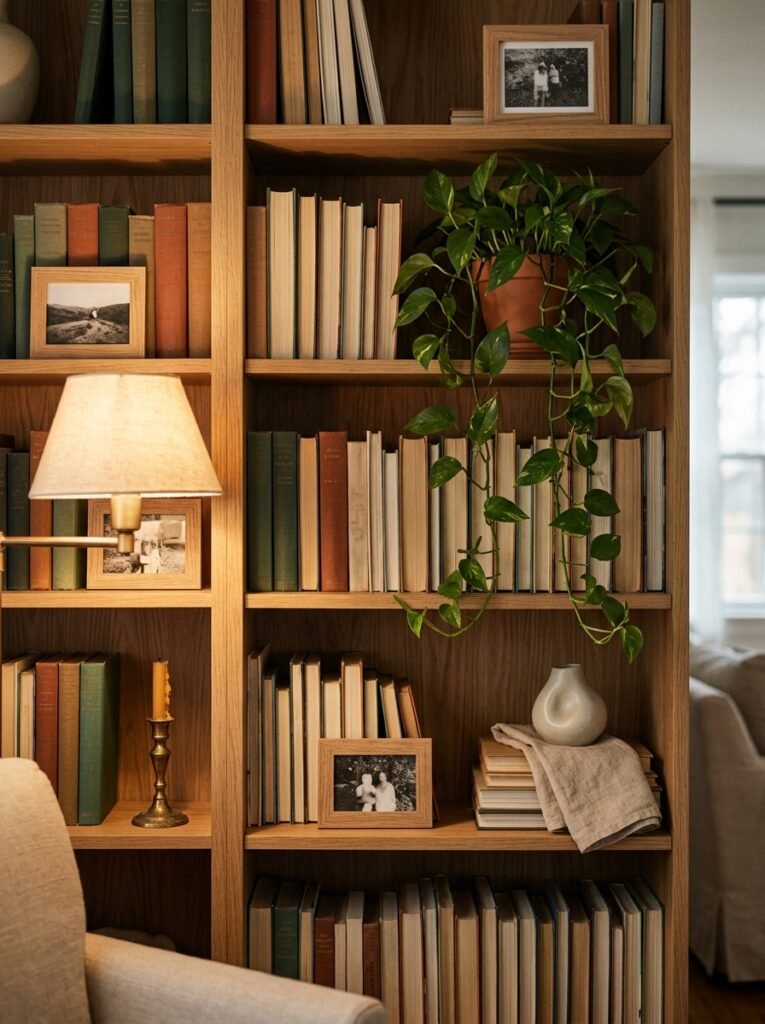
A bookshelf in a living room is one of the most powerful cosy-making tools available to you, and it is almost always underused. Books themselves bring warmth — the paper, the spines, the history embedded in them. But it’s the way you style a bookshelf that transforms it from storage into something that feels personal and alive.
Mix vertical and horizontal book stacking. Intersperse books with objects that mean something: a small piece of pottery from a holiday in Cornwall or a trip to New England, a framed photograph, a trailing plant, a candle. Group things in odd numbers — threes and fives feel natural to the eye in a way that even numbers don’t. Leave some negative space so the shelf can breathe. The goal is a bookshelf that looks like a life — accumulated, loved, and entirely your own.
8. Plants and Natural Elements That Ground a Space
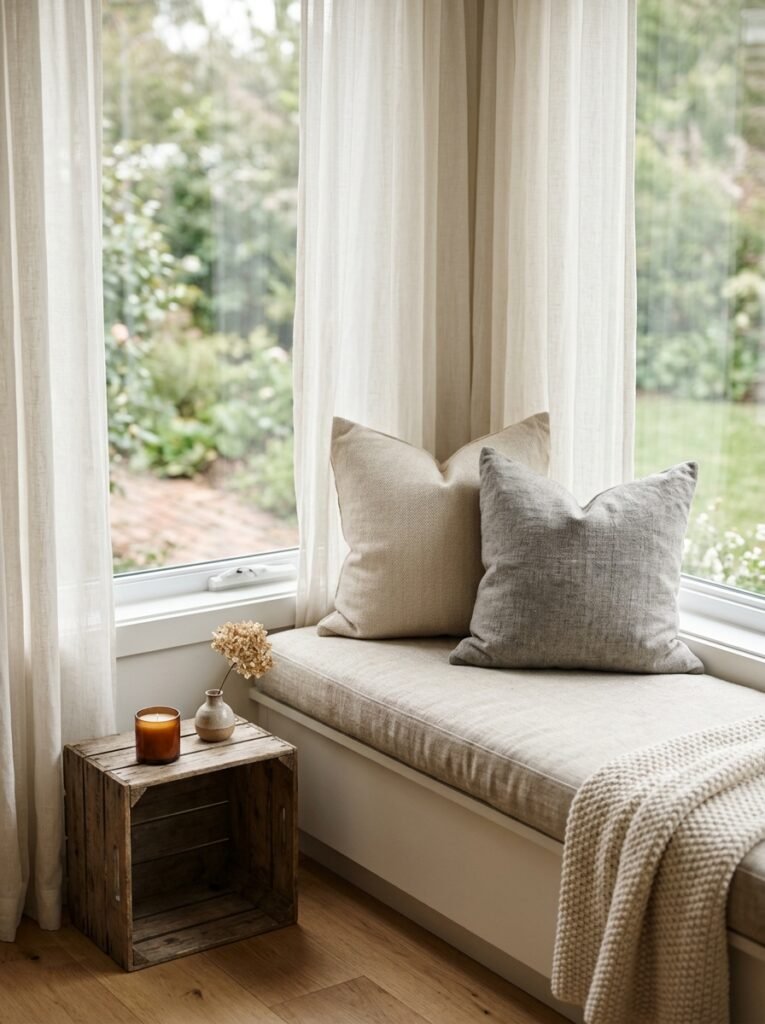
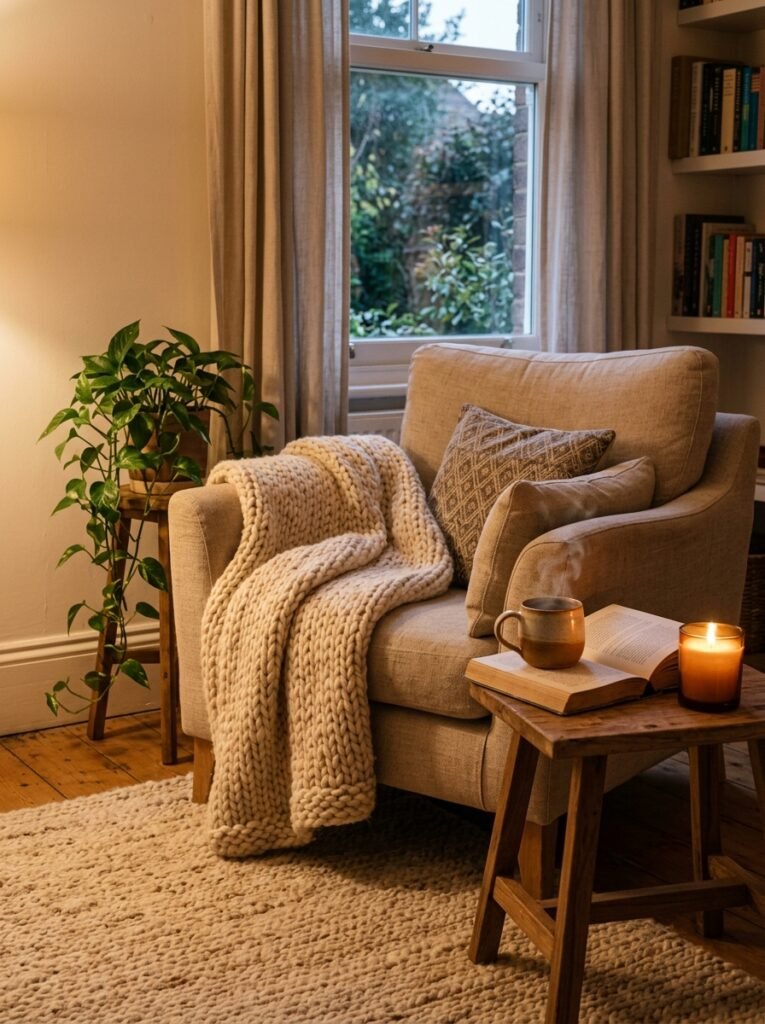
There is a reason that every truly cosy room you’ve ever walked into had some form of nature in it. Whether that’s a generous fiddle-leaf fig in an American craftsman-style living room, a collection of trailing pothos in a British flat, or simply a bowl of seasonal fruit on the coffee table — organic elements remind us that we are connected to something beyond four walls.
Plants bring oxygen, movement, and colour that feels alive in a way no textile or art print can replicate. If you’re not naturally gifted with plants (and many of us aren’t), opt for low-maintenance varieties: pothos, ZZ plants, snake plants, and peace lilies are forgiving and lush. Beyond plants, bring in other natural materials wherever possible — a wooden side table, a ceramic vase, a woven basket used for magazine storage, dried pampas grass or eucalyptus in a tall vase. These elements collectively create a softness that manufactured, synthetic rooms lack entirely.
9. The Coffee Table Edit: Function Meets Soulfulness
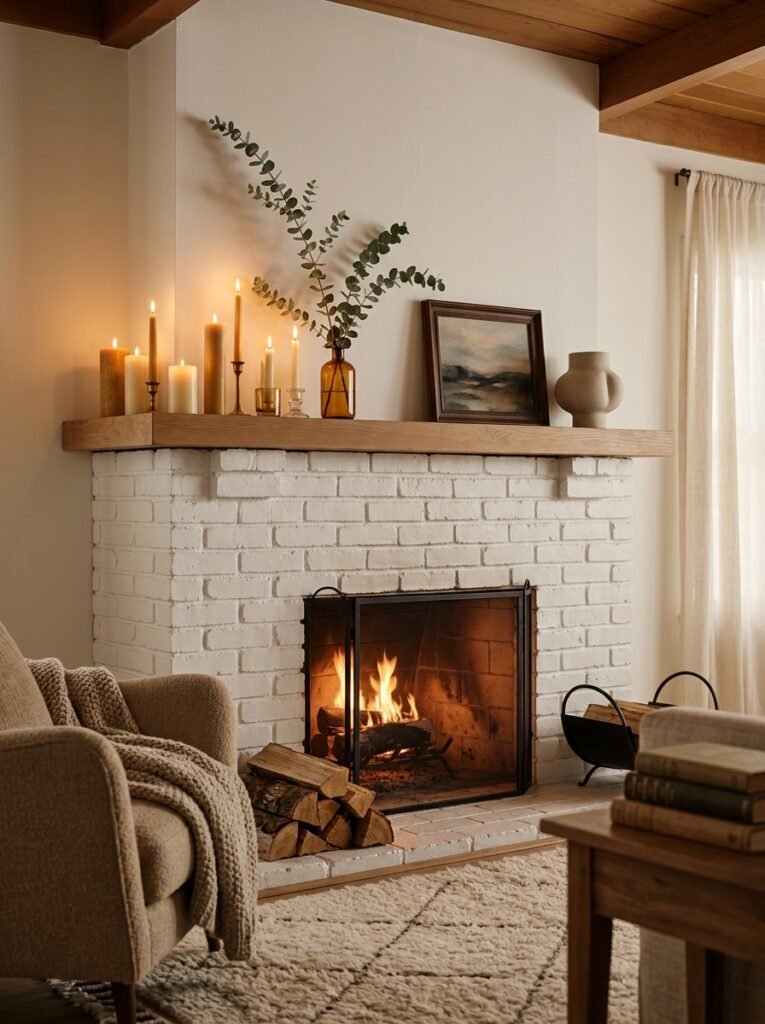
The coffee table is the heart of the living room seating area — the place where mugs are set down, books are left open, and Sunday mornings unfold slowly. Styling it well matters, but over-styling it is one of the most common Pinterest-inspired mistakes. A coffee table should still be usable.
The sweet spot is: a stack of two or three coffee table books you actually love, a candle or small plant to add height, and one practical object — a coaster set, a small tray, or a beautiful bowl that can hold your remote controls with dignity. That’s it. The tray is particularly useful because it corrals smaller items and creates visual order without looking staged. In British homes where living rooms tend to be slightly smaller and coffee tables more compact, a single tray with two or three well-chosen items is entirely sufficient and looks considered rather than cluttered.
“The best coffee table styling looks like someone lives there — because they do.”
10. The Case for Curtains That Pool on the Floor
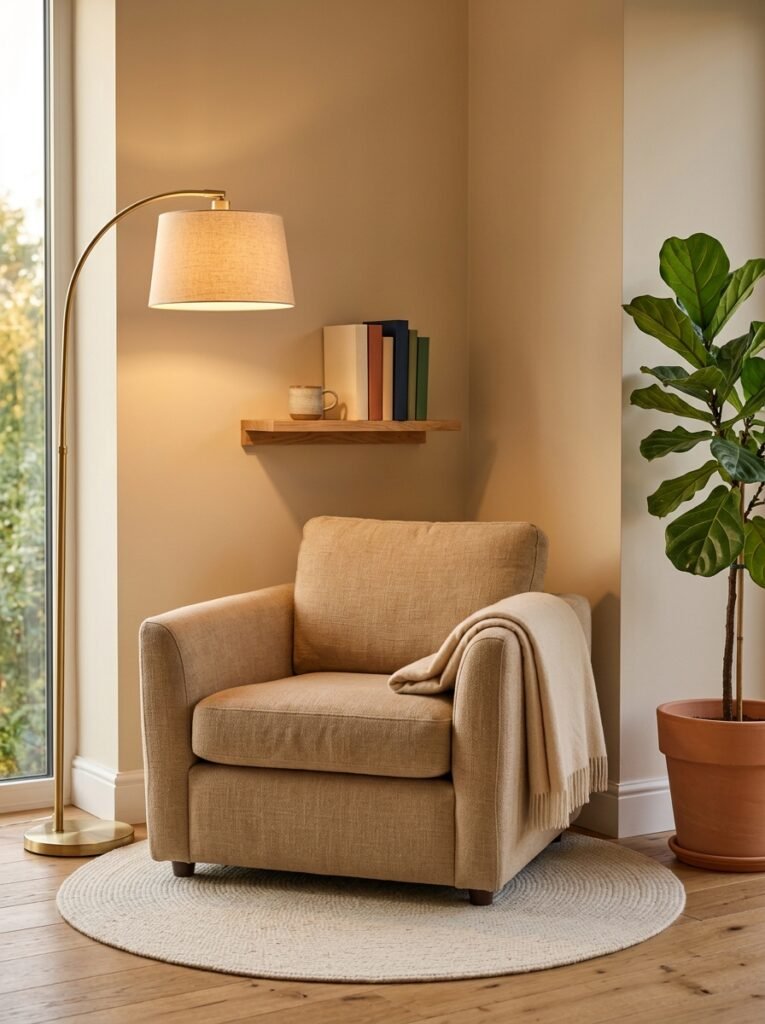
Curtains are one of the most transformative and most neglected elements in a living room. Most ready-made curtains in UK and US homes are hung too low and too short — they sit at the window frame and drop just to the sill or a few inches below. This is a look that unintentionally makes rooms feel smaller and ceilings feel lower.
For maximum cosiness and visual height, hang your curtain rod as high as possible — ideally a few inches below the ceiling — and let the curtains fall all the way to the floor. If they pool slightly, even better. Long, floor-grazing curtains in heavyweight linen, velvet, or woven cotton enclose the space in a way that genuinely wraps a room in softness. Even on a budget, IKEA’s DUNKELTID or Pottery Barn’s curtain range offer affordable options that hang beautifully when used at the correct length.
11. Scent: The Most Overlooked Dimension of a Cosy Room
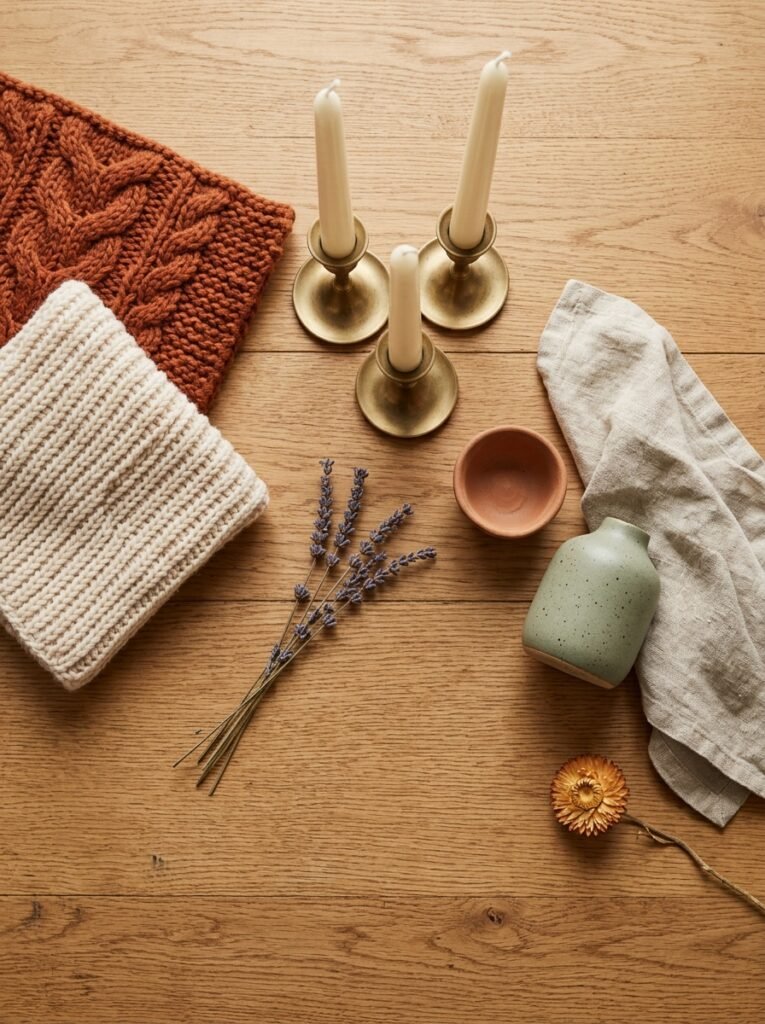
You can spend months perfecting how your living room looks and entirely neglect how it smells — but scent is one of the most powerful triggers of the feeling of home. It operates through the limbic system, the part of the brain that processes emotion and memory, which is why a certain candle can transport you back to your grandmother’s house or a childhood Christmas in seconds.
Creating a consistent scent signature for your living room is a beautiful investment in its atmosphere. Warm, woody, and slightly sweet notes — sandalwood, vanilla, amber, cedarwood, clove, or cinnamon in winter — are consistently associated with feelings of comfort and warmth. Brands like Diptyque, Jo Malone, and Paddywax offer beautiful options at various price points in both the UK and US. For a budget-friendly alternative, soy wax candles with natural fragrance oils from Etsy sellers often outperform their designer counterparts. Diffusers, linen sprays, or even a pot of mulled spices simmering on the stove in October all contribute to a room that feels, and smells, like home.
12. Personal Touches That No Interior Designer Can Prescribe
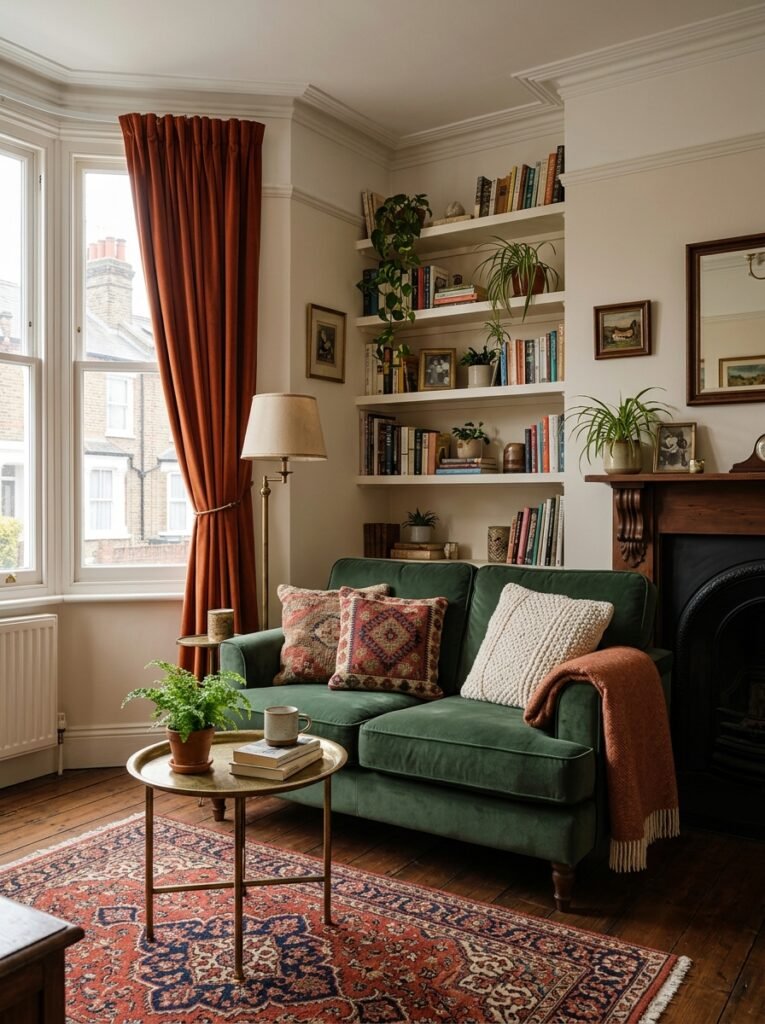
Every cosy living room has an ineffable quality — a feeling of this is someone’s life — that no amount of perfectly chosen furniture can manufacture on its own. It comes from the personal, imperfect, human details that tell the story of the people who live there. The framed photo your daughter drew at age five. The blanket your mum knitted that you’d never actually put on a mood board but you’d never remove either. The stack of books beside the sofa that reflect everything you’re currently thinking about and curious about.
Do not strip your living room of its personality in pursuit of a Pinterest aesthetic. The most photographed, most genuinely admired homes are the ones that feel curated and lived in simultaneously. Edit carefully — remove what you don’t love and clear visual clutter — but preserve every item that carries meaning or joy. Those pieces are the soul of the room. Without them, even the most beautifully designed space is just a backdrop. With them, it’s a home.
—
🌿 How to Keep Your Living Room Feeling Cosy Year-Round
Cosiness isn’t a one-time decorating project — it’s an ongoing practice, and it shifts with the seasons.
Swap your textile layers seasonally. In late autumn and winter, bring out heavier wool throws, velvet cushions, and thicker curtains. In spring and summer, lighten up with linen, cotton, and softer colour palettes. Keep your lighting layered year-round, but in summer months, lean into natural light during the day by keeping windows clean and curtains pulled fully open. Introduce seasonal organic elements — a bowl of apples in September, fresh tulips in March, a branch of blossom in April — that connect your indoor space to what’s happening outside. Clean and declutter gently every few months, not as a deep overhaul, but as a reset. Return objects to where they belong, donate what no longer serves you, and notice what the room needs. A cosy room is a living thing, and it rewards the attention you give it.
—
❓ FAQ
Q: How do I make a small living room feel cosy without it feeling cramped? A: Focus on lighting over furniture. A small room with layered, warm lighting and one large rug immediately feels intentional and intimate rather than cramped. Keep the largest furniture piece — usually the sofa — low to the ground to preserve visual height, and avoid too many small accessories that create visual noise.
Q: What’s the best colour for a cosy living room in a north-facing room (common in UK homes)? A: North-facing rooms in the UK receive cool, indirect light, which can make cooler tones feel stark. Lean into warm whites like Farrow & Ball’s “Wimborne White” or “Pointing,” or go deeper with soft terracotta or warm taupe. Avoid bright whites and cool greys, which will only amplify the chill of the light.
Q: Can a rental apartment feel genuinely cosy if I can’t paint the walls? A: Absolutely. In rental spaces, textiles do the heavy lifting that paint would otherwise do. A large, warm-toned rug, floor-length curtains (with tension rods or over-door hooks if drilling isn’t allowed), layered cushions, and soft lighting can transform even a sterile white-walled apartment into something deeply warm and personal.
—
💭 Final Thought
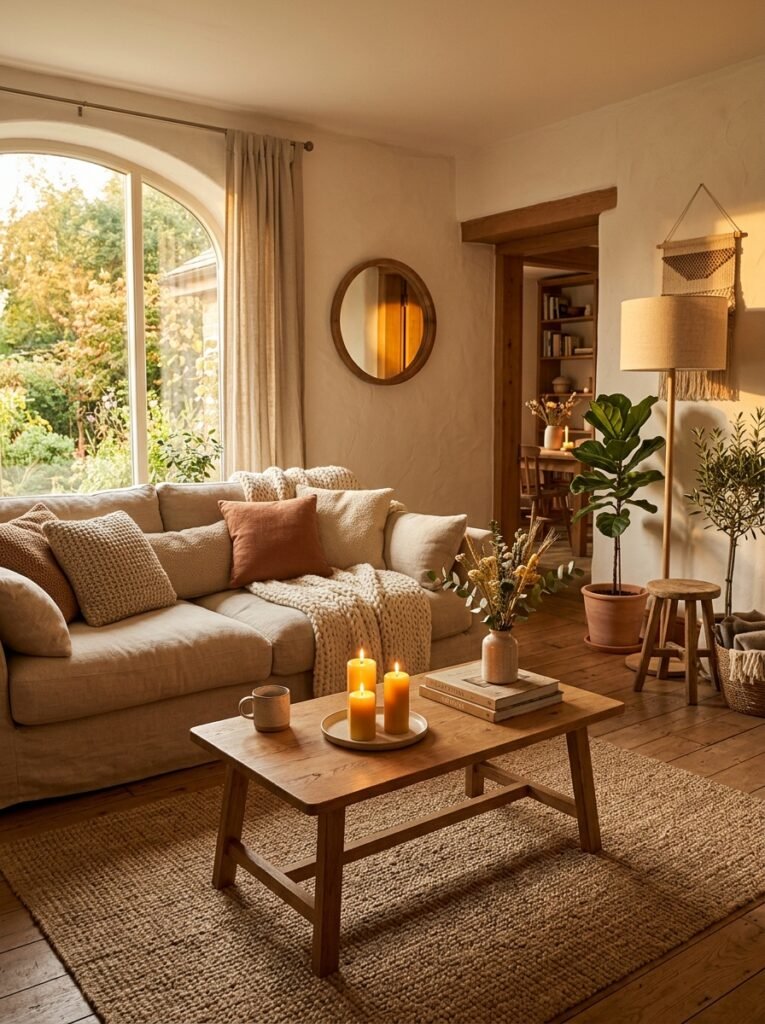
A cosy living room isn’t a destination you arrive at once and tick off a list. It’s a space you keep returning to, keep refining, keep loving — layer by layer, season by season, story by story. The most beautiful rooms aren’t the ones that look perfect; they’re the ones that feel true. So as you look around your living room today, here’s a question worth sitting with: what would need to change for this space to feel like the truest version of you?