The Living Room Cabinet Glow-Up That’s Actually Changing How People Decorate
You walk into a living room and something just works. You don’t know what it is at first. Then you notice — there’s a cabinet against the wall that’s doing ALL the heavy lifting.
—
1. Why Your Living Room Actually Needs a Cabinet (Not Just Another Shelf)
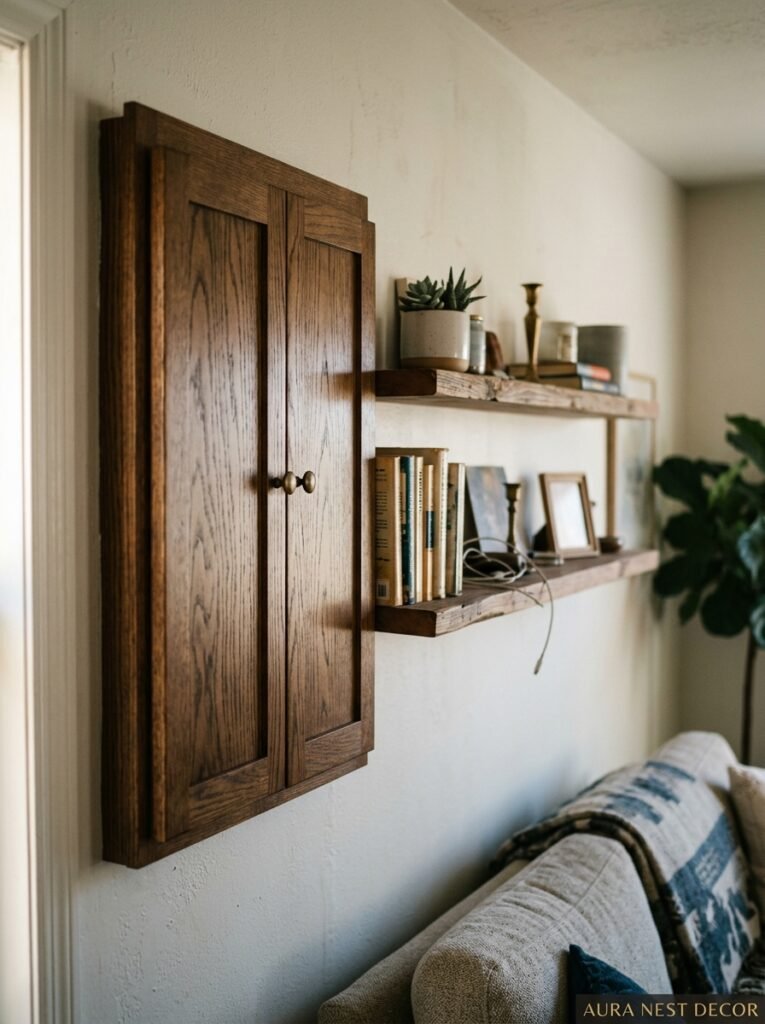
Okay so I know shelves are having a moment. Open shelving, floating ledges, the whole “look at my curated objects” vibe. And honestly? Some of it’s gorgeous. But shelves can’t hide anything. And most of us have things that need hiding.
Cables. Board games that haven’t been touched since 2021. A router that belongs in the back room of a 1998 IT department. Extra throws that don’t fit the aesthetic but you love them anyway.
A cabinet solves that. A good one becomes the spine of a room — the thing everything else sort of leans against, visually speaking. It anchors the space without demanding constant attention, which is kind of the quiet genius of cabinet styling.
I’d argue the shelf obsession has gone on long enough, actually. There’s something so satisfying about a beautiful cabinet — that closed-door magic, the way it keeps a room from feeling like a storage unit that also has a sofa in it. You get display ON TOP, style on the outside, and actual practical storage behind closed doors. That’s three problems solved with one piece of furniture, and I’m not going to pretend that isn’t a little bit thrilling.
The best living rooms I’ve ever seen — in person, on Pinterest, in every design magazine I’ve dog-eared — always have at least one cabinet. Sometimes it’s low and long, sideboard-style. Sometimes it’s tall and dramatic. But it’s always there.
“A shelf shows everything. A cabinet does the work quietly, and that’s exactly why the best rooms always have one.”
—
2. The Low Sideboard Look That Every Design Account Is Obsessed With Right Now
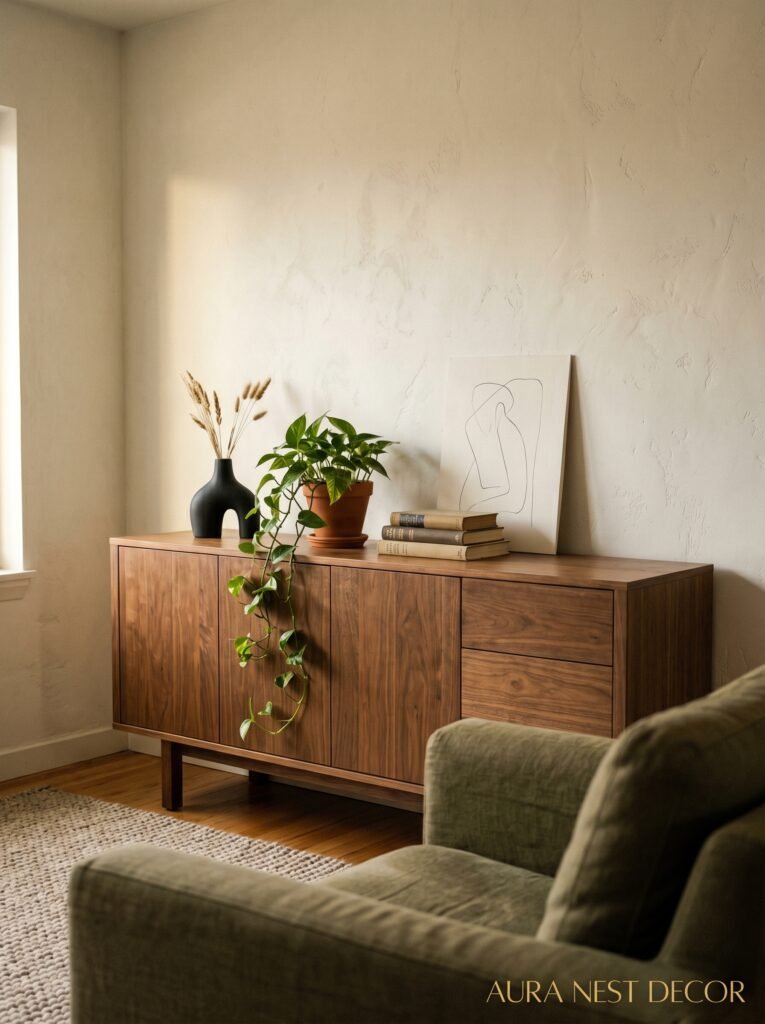
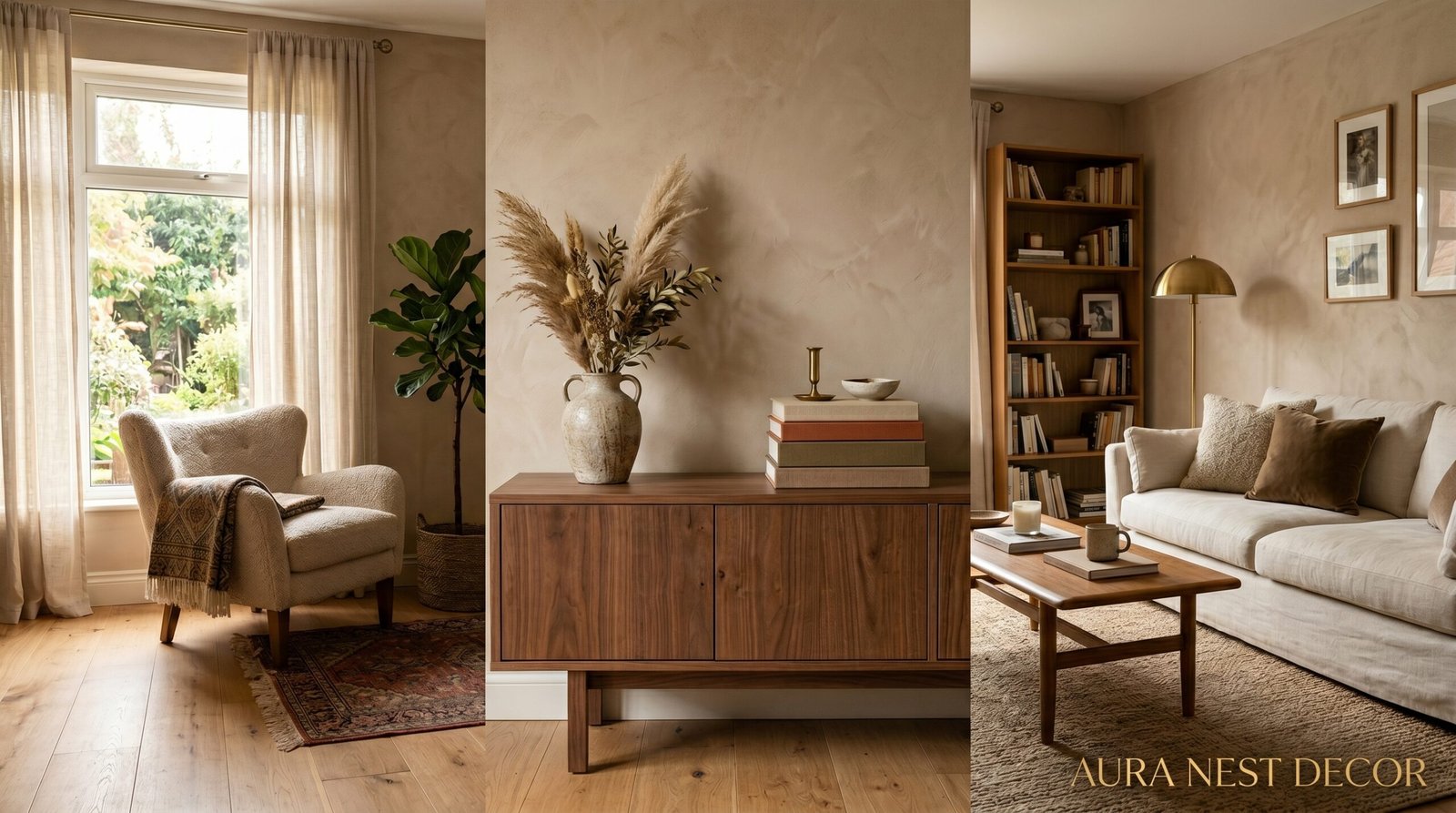
You’ve seen it. A long, low cabinet — maybe 30 inches tall, running most of the length of a wall. Often in wood, sometimes painted in that muted sage or off-white that photographs like a dream. A few carefully chosen things on top: a lamp, a piece of ceramic, maybe a trailing plant.
This is THE look right now, and it’s not going anywhere.
The reason it works so well is proportion. A low sideboard keeps the eye moving horizontally, which makes any room feel wider and more relaxed. It’s especially powerful in narrow living rooms or rooms with low ceilings — places where a tall bookcase would feel oppressive. Low and long says “calm” in a way tall and narrow simply can’t.
In American homes you’ll usually see this pushed against the longest wall, often opposite the sofa. In British homes — where rooms are often squarer and ceilings a bit lower — this layout is honestly even MORE effective. It creates breathing room the room didn’t feel like it had before.
And the storage underneath. That’s where the real life goes. Blankets, kids’ toys that need to disappear at short notice, the eight remote controls nobody can consolidate. Shut the doors and suddenly you’ve got a gallery wall moment happening on top.
—
3. The Color That Keeps Showing Up in Every Beautiful Living Room Cabinet Right Now
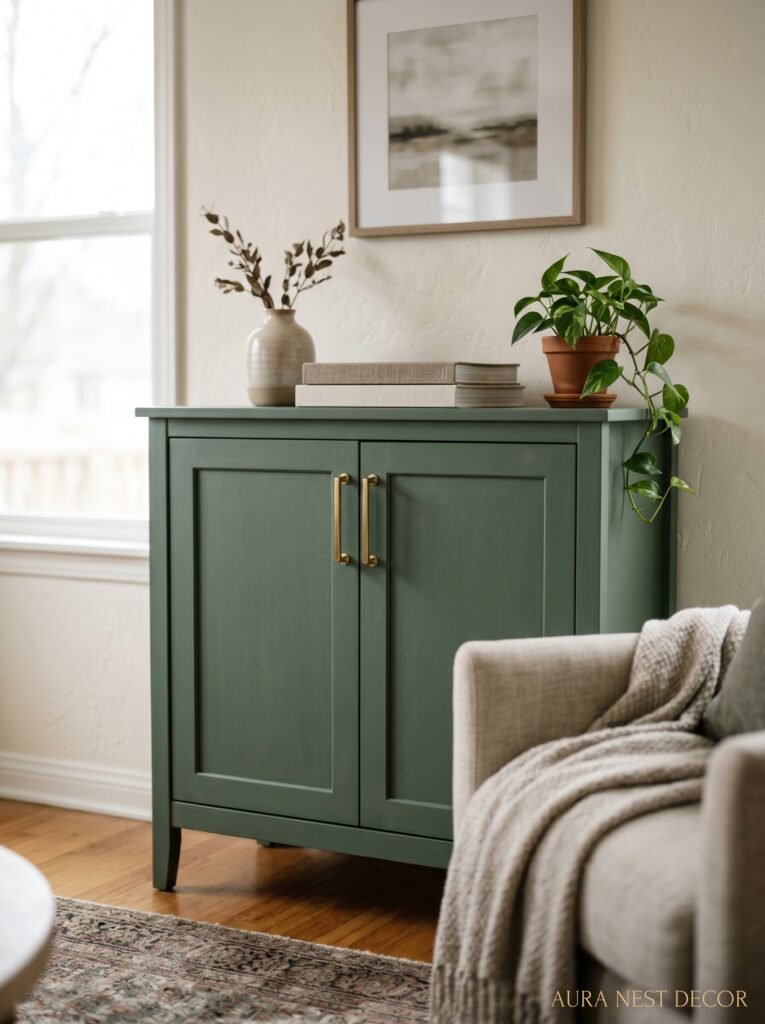
Forest green. Deep, muted, almost moody. Not the bright green of 2015 — more like the color of a library wall in a house built in 1910. It’s rich without being aggressive, it ages beautifully, and it somehow makes everything around it look more considered.
But here’s the thing. It’s not just green. There’s also a very specific shade of warm terracotta showing up on painted cabinets that I keep seeing and cannot stop thinking about. And a dusty, chalky navy. These colors all share one quality: they look like they’ve been there forever.
That “been here forever” feeling is the whole goal. You don’t want a cabinet that screams “I just bought this from a big box store.” You want something that looks inherited, settled, chosen slowly. The color is actually the biggest shortcut to getting there.
If you’ve got a light neutral room — white walls, pale floors — going dark on the cabinet is genuinely transformative. Wait, I said I wouldn’t use that word. It’s genuinely STRIKING. The contrast makes the whole room feel intentional in a way that matching everything never does.
For anyone nervous about committing: chalk paint. It’s forgiving, it gives you that matte depth, and if you hate it in six months you’re not stuck. Start with one cabinet. See what happens.
—
4. The One Styling Rule That Stops a Cabinet Top from Looking Like a Junk Shelf
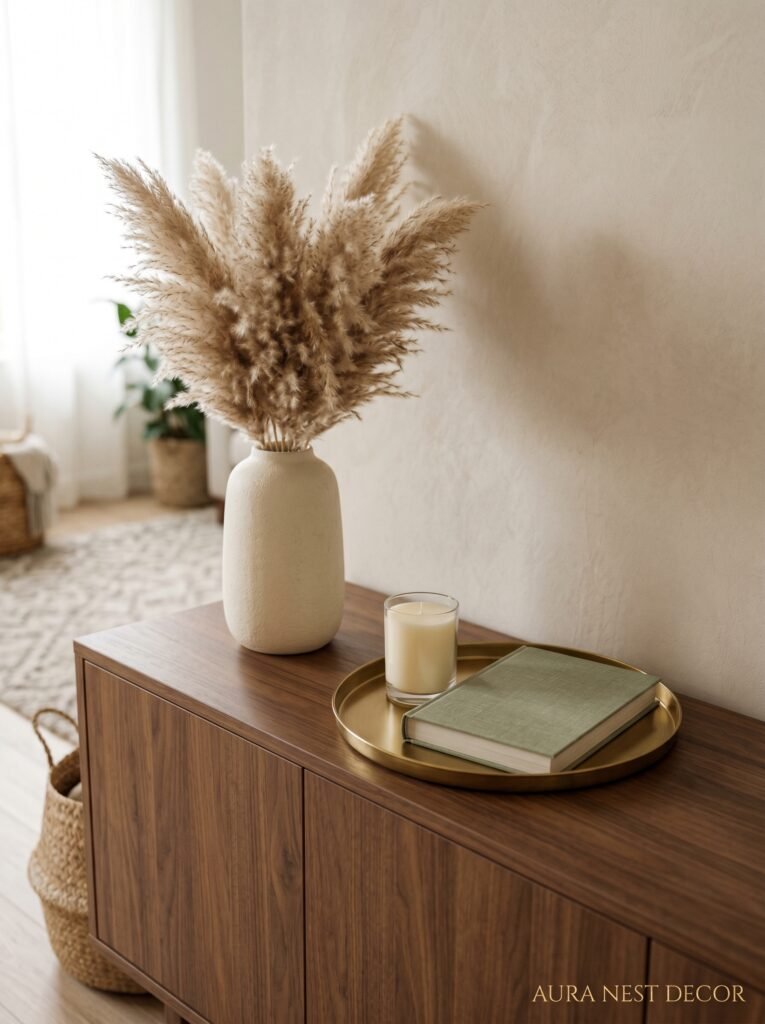
Odd numbers. Three objects, not four. Five, not six. This isn’t just design snobbery — there’s actually something in how the eye reads asymmetrical arrangements that makes them feel alive instead of staged. Even numbers feel static, like a symmetrical mantelpiece at a hotel.
But odd numbers alone won’t save you. What really matters is height variation. You need something tall, something medium, something low. A lamp counts as tall. A piece of art leaning against the wall behind everything? Even better. Then something in the middle — a vase, a small sculpture, a stack of books (yes, books on top of a cabinet are still correct and I’ll die on this hill). Then something low and incidental, like a small bowl or a candle.
The “incidental” object is the one people most often skip. And it’s the one that makes everything else look intentional. Side note — the bowl doesn’t even need to have anything in it. An empty ceramic bowl just sitting there, doing nothing, is somehow exactly right. I don’t fully understand it. But I’ve tested it enough times to trust it.
One more thing. Don’t center everything. Push the arrangement to one side, especially on a long cabinet. The negative space on the other end is part of the composition.
“The empty space on a cabinet top isn’t emptiness — it’s the thing that makes everything else look placed.”
—
5. Why Tall Cabinets Are Making a Comeback and What People Are Getting Wrong About Them
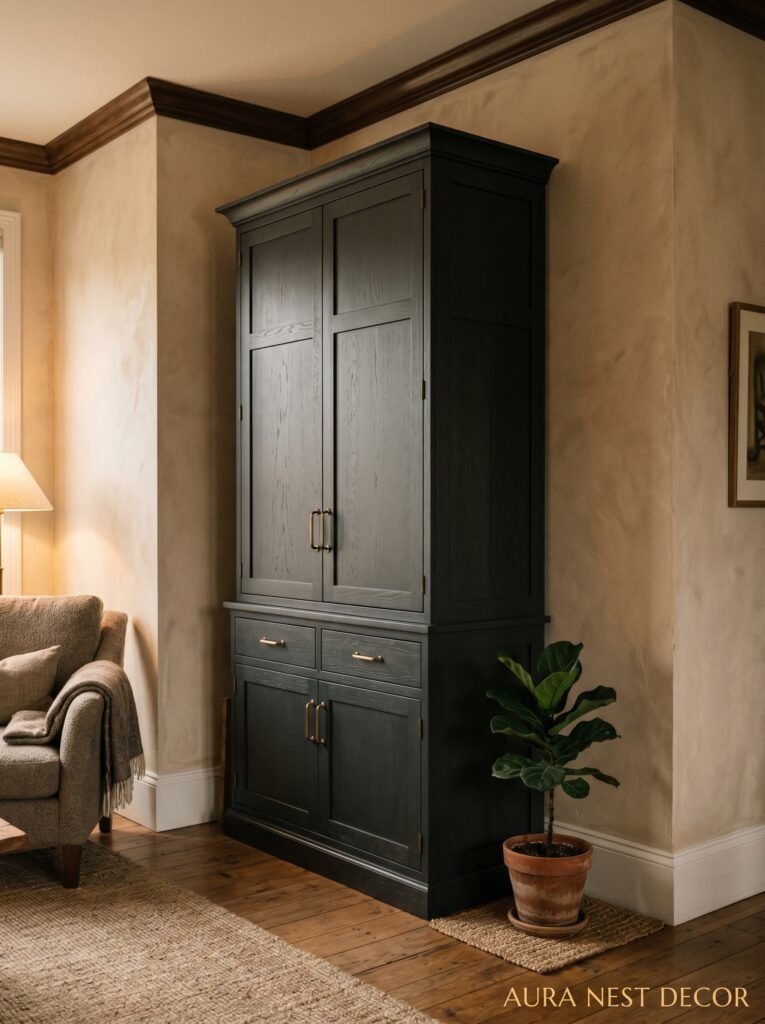
Tall cabinets fell out of fashion for a while. The whole “open plan, airy, nothing blocking the light” movement made them feel heavy and old-fashioned. But they’re back, and honestly, they deserve to be.
A tall cabinet — we’re talking ceiling height or close to it — commands a room in a way nothing else can. It’s architectural. It becomes a feature rather than furniture. And in living rooms where there’s nothing particularly interesting happening structurally (no fireplace, no bay window, no original cornicing), a tall cabinet CAN be the thing that makes the room look designed rather than just furnished.
What people get wrong: scale. They put a tall cabinet in a small room and wonder why it feels claustrophobic. But actually the math is different from what you’d expect. A very tall cabinet in a small room often works BETTER than a medium one, because it pulls the eye up and makes the ceiling feel higher. The medium-height cabinet in a small room is the one that feels awkward — too bulky to be minimal, too short to be dramatic.
The other mistake is leaving the top bare. The top of a tall cabinet is prime real estate. Baskets. A trailing plant that hangs slightly over the edge. A piece of art that’s too big to hang anywhere else. That top shelf is the thing that finishes the whole piece.
—
6. Glass Doors vs. Solid Doors — There’s Actually a Right Answer
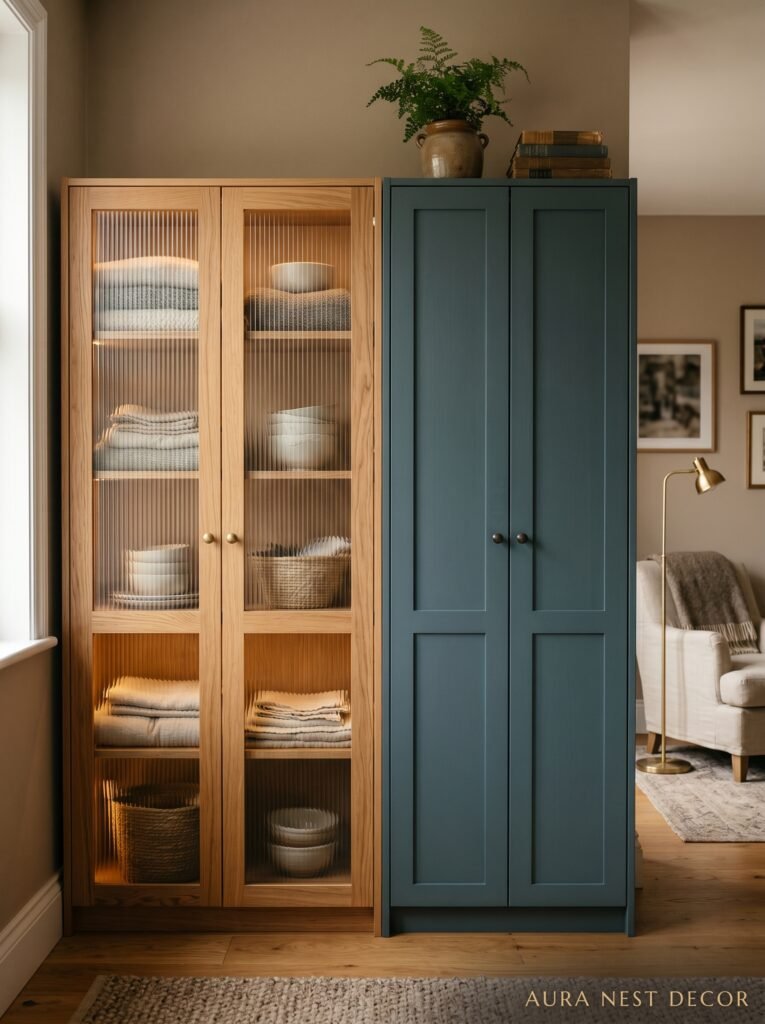
Okay, I’ll be direct: it depends entirely on what’s inside.
If you’ve got beautiful objects — good glassware, interesting ceramics, books with nice spines — glass doors are wonderful. They keep the dust off while still showing the contents. They feel considered and European and a little bit luxurious. I’m a huge fan of glass-fronted cabinets when the interior is worth looking at.
If you’ve got the router and the board games: solid doors. Every time.
The mistake is mixing up which cabinet goes where. People sometimes put glass-fronted cabinets in the spot where they store actual stuff, then wonder why the room feels busy and cluttered even though everything is technically behind doors. Glass doors don’t hide anything. They just put it in a frame.
One thing that’s underrated: painted cabinet interiors. If you’ve got glass doors, paint the inside of the cabinet a color — a dark green, a deep blue, even a deep terracotta — different from the outside. The objects inside suddenly look like they’re on display in a gallery. It’s a detail that’s small to do and enormous in impact.
—
7. The Built-In Look Without the Built-In Cost — How People Are Actually Pulling This Off
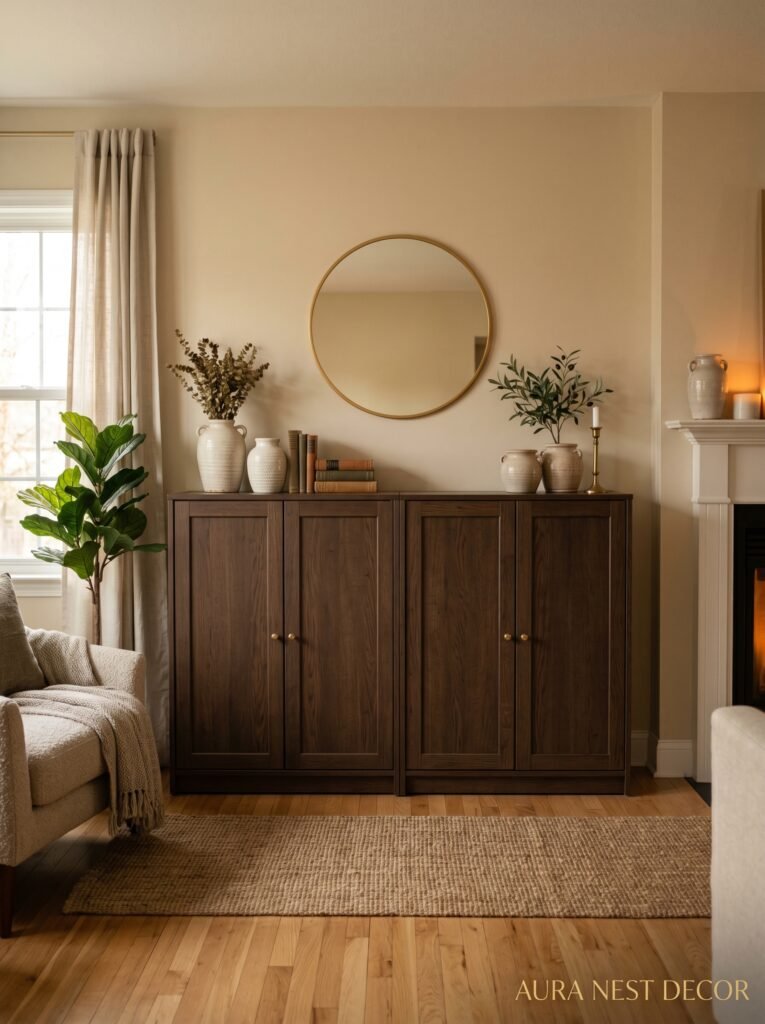
Built-in cabinets are the dream. We all know that. Floor to ceiling, fitted perfectly, makes a room look like it was designed by someone who knew exactly what they were doing. They also cost a lot. Like, a LOT.
But there are ways to get genuinely close without hiring a carpenter for three weeks.
The IKEA Billy bookcase with doors hack is still one of the best tricks going, and I’m not embarrassed to say it. When you line up two or three Billy units, add a plinth at the bottom and a crown moulding at the top to marry them to the ceiling, and paint everything the same color — including the wall behind them — the brain reads “built-in.” It doesn’t scrutinize the joints. It just sees the effect.
The color-matching is non-negotiable. If the cabinets are a different color from the wall, the eye finds the gaps. If everything is painted the same — all of it, wall included — suddenly the room has an alcove with cabinetry and not “a shelf unit I bought and assembled on a Saturday.”
Second trick: legs. Adding proper furniture legs to flat-pack cabinets lifts them off the ground and immediately makes them look more like real furniture. Weird how much this helps. A cabinet with legs looks chosen. Without legs it looks left there.
“Paint the wall the same color as the cabinets. That one step closes the gap between ‘IKEA hack’ and ‘designed room’ faster than anything else.”
—
8. What British Living Rooms Are Doing With Cabinets That Americans Should Steal Immediately
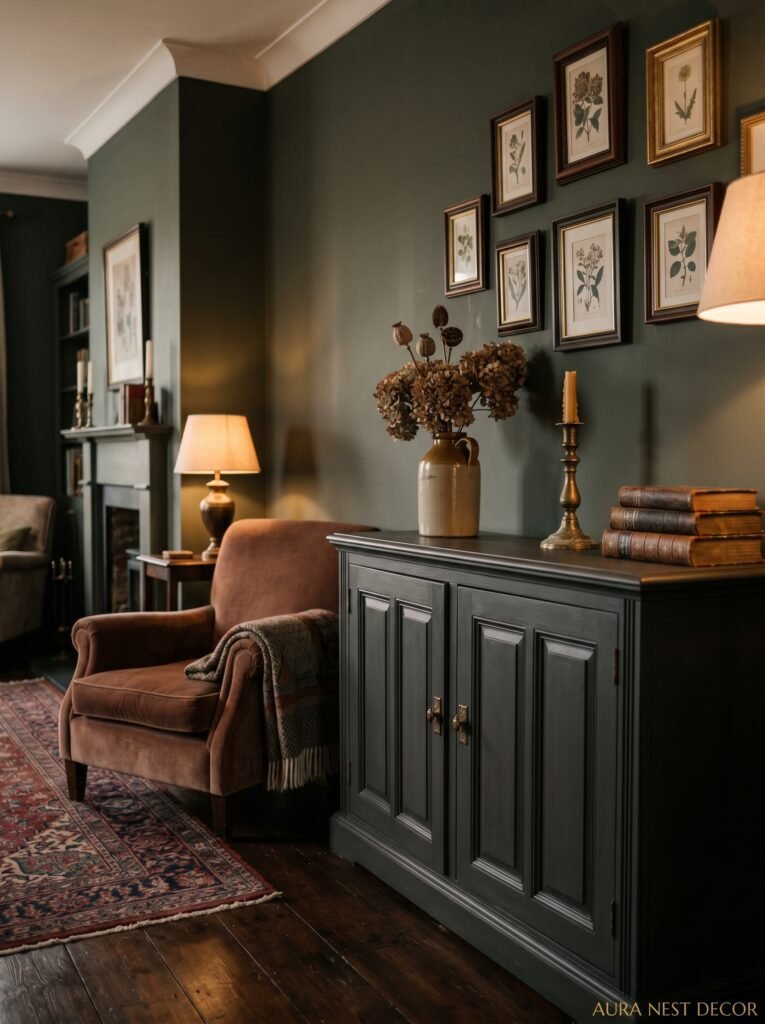
Alcove cabinets. That’s it. That’s the whole section.
Just kidding — but genuinely, British homes with their Victorian and Edwardian proportions have these natural recessed alcoves either side of a chimney breast, and the way they’re being styled right now is something I can’t stop saving to my boards. Custom cabinets built into the alcoves, painted in deep, sophisticated colors, with open shelving above and closed storage below. The closed storage handles all the practical stuff; the open shelving above is for books and objects and the occasional bit of art.
What makes this work in ANY home — even without original alcoves — is the principle of zoning closed and open storage. Bottom half behind doors. Top half open. The visual weight stays low, the room stays light, and you actually get to display the things you love without the whole room feeling chaotic.
American open-plan living rooms could genuinely use more of this thinking. The instinct in a big open space is often to go bigger with everything, but a pair of alcove-style cabinets — even freestanding ones arranged to suggest alcoves — can create intimacy and definition in a way that a single large entertainment unit can’t.
—
9. The Cabinet Styling Mistake That’s Making Your Living Room Feel Smaller
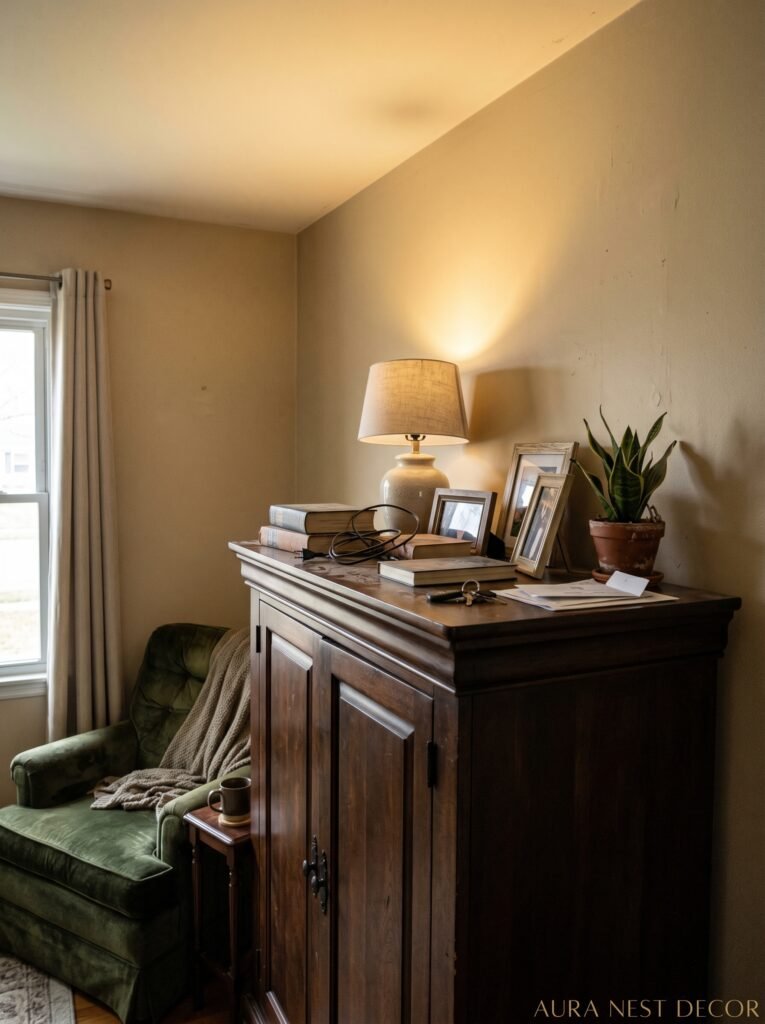
Too much stuff ON the cabinet and too much stuff IN the room competing with it.
This sounds obvious but it’s really not. The cabinet is often where people put everything that doesn’t have another home — the candles, the books, the family photos, the little sculptures from holidays, the vase someone gave them for Christmas. And they all end up on the cabinet. And then the cabinet, which was supposed to anchor the room, just becomes another surface covered in accumulated life.
Less. Genuinely, less.
Pick three to five objects for the top. Move the rest somewhere else or put them inside. The cabinet has to be able to breathe or it reads as chaos, not curation. And when people say a room “feels cluttered” they’re often actually talking about one surface — usually the cabinet — that’s working too hard.
The other thing: if your cabinet is dark or bold in color, keep the objects on top simple and few. The cabinet itself is the statement. It doesn’t need narrating.
—
10. The Lamp That Lives on Top of a Living Room Cabinet — Why It Changes EVERYTHING
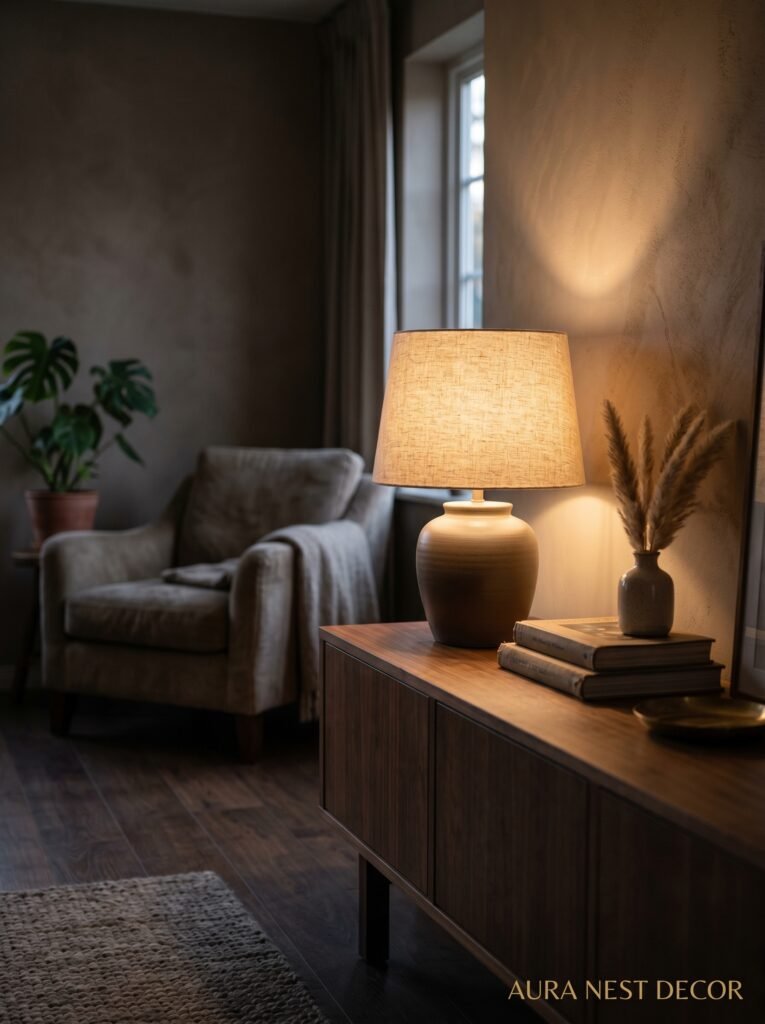
Overhead lighting is not your friend. I said it. Big ceiling light, dead center of the room, blasting down on everything — it makes rooms look like waiting rooms. The fix is lamps. Multiple, layered, at different heights.
And the best place for a lamp? On top of the cabinet.
A lamp on a cabinet does something that a floor lamp can’t quite replicate — it creates a zone. A warm pocket of light in one part of the room that draws the eye and makes that corner feel inhabited and deliberate. The amber glow at about table height is what evening lighting in a beautiful room feels like. It’s what hotels figure out early and homes take forever to get to.
In terms of type: a table lamp with a linen shade in a warm cream or oatmeal color is almost universally right. Not a drum shade — too clinical. Not a tapered shade that’s too skinny — looks fussy. A generous, slightly casual shade that lets the light spill out softly. That’s the one.
The scale has to be right. On a low sideboard, a lamp that’s too short disappears. You want the shade to sit at roughly eye level when you’re standing — so the light hits the room, not just the cabinet top.
—
11. What to Actually Store Inside (a More Honest Guide Than You’ll Usually Get)
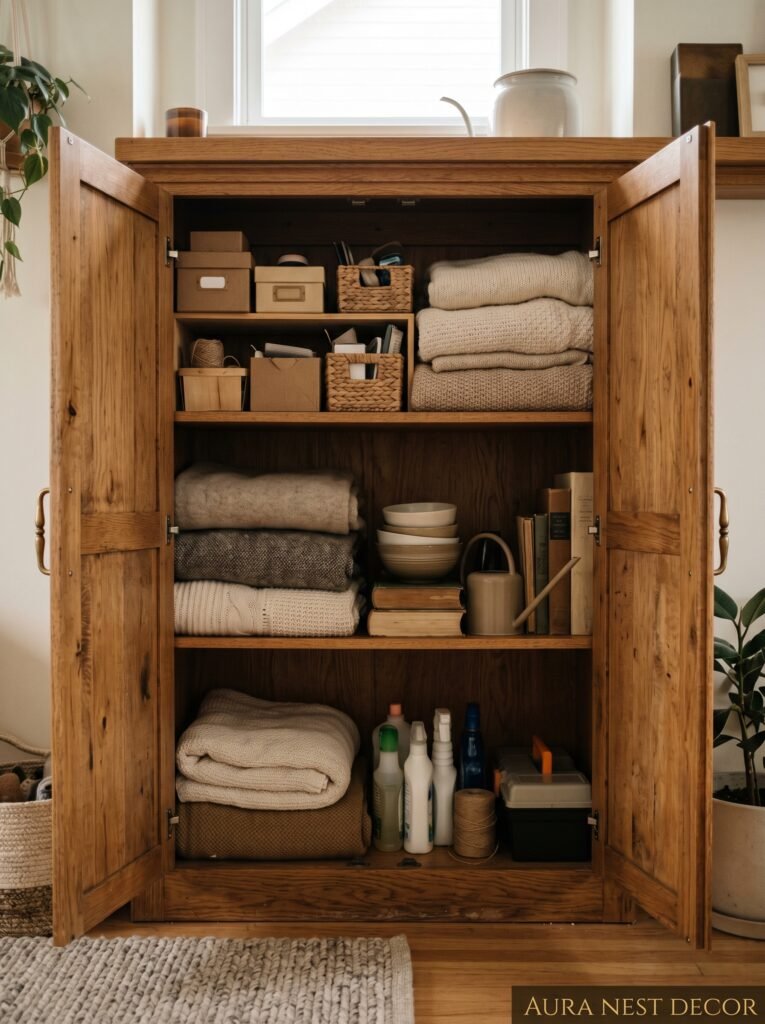
Most styling guides will tell you to store “extra textiles” and “board games” and “media equipment.” And yes, fine, all of that. But let me be honest about what actually ends up in living room cabinets in real homes.
Chargers. So many chargers. And cables. A tangle of them that you’re vaguely intending to sort out. A drawer full of batteries, some definitely dead. The instruction manual for the television you threw away eighteen months ago. Candles that are too good to burn. Birthday cards from people you like but not enough to display. A tape measure. Rubber bands.
And you know what? That’s exactly what living room cabinets are FOR. The closed-door cabinet is not precious storage. It’s life storage. The things that don’t have a category but have to go somewhere. The whole point is that the beautiful curated top of the cabinet makes you forget what’s inside.
A small tip: one drawer for cables and chargers only. Label it. Tell everyone in the house. Revolutionary.
—
12. The Cabinet Color That Interior Designers Keep Recommending for 2025 and Beyond
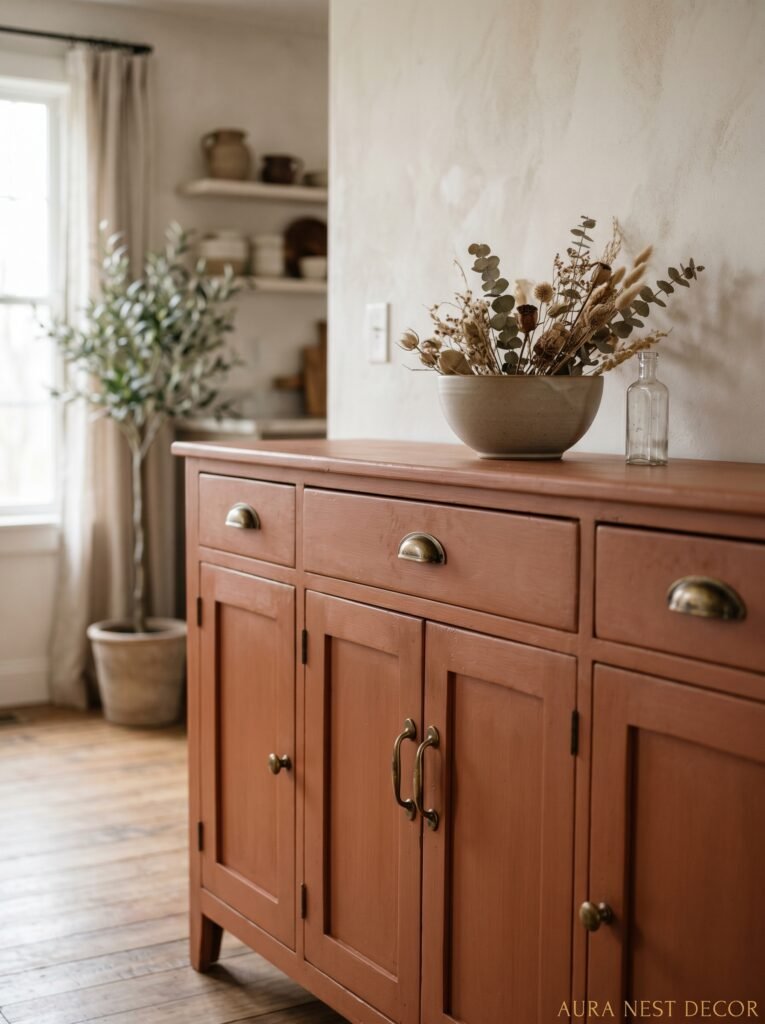
Not white. Everyone’s over white. Not grey — grey had its decade, it’s done. The direction right now is warm, characterful, and slightly unexpected.
Warm linen. Think a creamy, slightly yellowed off-white that isn’t trying to be white. It photographs beautifully, it feels warm in real life, and it goes with literally everything — wooden floors, dark walls, patterned rugs.
But the one I keep coming back to? A very warm, mid-toned mushroom. Not beige — deeper than beige. Not brown — more sophisticated than brown. It’s the color of a really good cashmere jumper. It disappears into a room in the best possible way, like it’s always been there.
For anyone who wants something bolder: that dusty, faded terracotta I mentioned earlier is genuinely having a moment. Especially against white walls. It’s warm and moody and kind of… confident? Like the cabinet knows exactly what it is. Which, honestly, is a quality we could all aspire to.
—
❓ FAQ
Q: How do I make a freestanding cabinet look like it was built in? A: Paint the wall behind it the exact same color as the cabinet. Then add a thin strip of moulding along the top where it meets the wall. Those two steps make the brain read “built-in” even when it isn’t — it’s genuinely one of the most effective tricks in lower-budget decorating.
Q: What size cabinet works best in a small living room? A: Honestly? Either go low and long (a sideboard-style cabinet that stays below window height) or go all the way to ceiling height. The awkward middle ground — a cabinet that’s taller than furniture but shorter than the ceiling — is usually what makes small rooms feel cramped. Commit to one direction or the other.
Q: How do you stop a living room cabinet from looking too formal or stuffy? A: Mix in something imperfect. A plant that’s trailing slightly untidily. A stack of actual-reading books with real spines, not decorative ones. A candle that’s been burned and has drips of wax on it. Formality comes from everything being too perfect and too matched. One casual, lived-in element breaks that tension completely.
—
💭 Final Thoughts
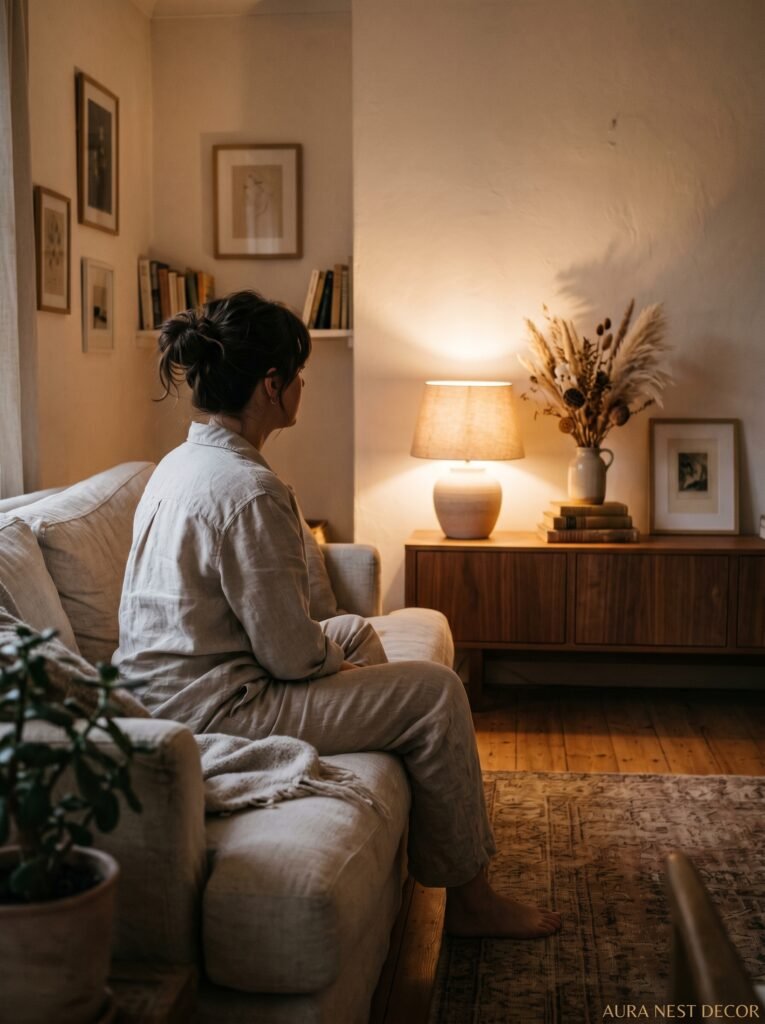
A good living room cabinet doesn’t shout. That’s kind of the whole secret. It just holds the room together — stores the chaos, displays the beauty, grounds the space — and lets everything else relax around it. Once you’ve found the right one, you’ll wonder how you ever looked at that blank wall and thought a shelf would be enough.
What does the space where your cabinet should be look like right now?