The Green Rug That Made My Living Room Actually Feel Like a Home
There’s this moment — you know the one — when you finally put the one thing in a room and suddenly it all clicks. For me, it was a mossy, deep olive green rug. And I didn’t see it coming at all.
—
1. Why Green Rugs Are Everywhere Right Now (And It’s Not a Coincidence)
Okay so I’ve been noticing this for a while. Every living room that stops me mid-scroll — the kind that makes me save the pin before I even register what I’m doing — has a green rug in it. Not always the same green. Not always the same style. But green.
And I don’t think it’s random. We’re all kind of done with grey, right? Not gonna lie, I was a grey rug person for years. It felt safe. It went with everything. But it also made my living room feel like a hotel lobby, and not the good kind.
Green rugs do something different. They bring the outside in without being obvious about it. There’s a reason biophilic design has been trending — people want their homes to feel connected to something living, something real. A deep forest green rug does that. So does a sage, actually, though it reads completely differently.
The other thing? Green plays well with basically every other colour. Cream, terracotta, navy, blush, rust, natural wood tones — green doesn’t fight with any of it. It just… holds the room together. I’d never really thought about green as a neutral before I saw it styled this way. Now I kind of can’t un-see it.
“Green isn’t a trend. It’s what your living room’s been missing.”
2. The Specific Shade That Determines Everything About Your Room
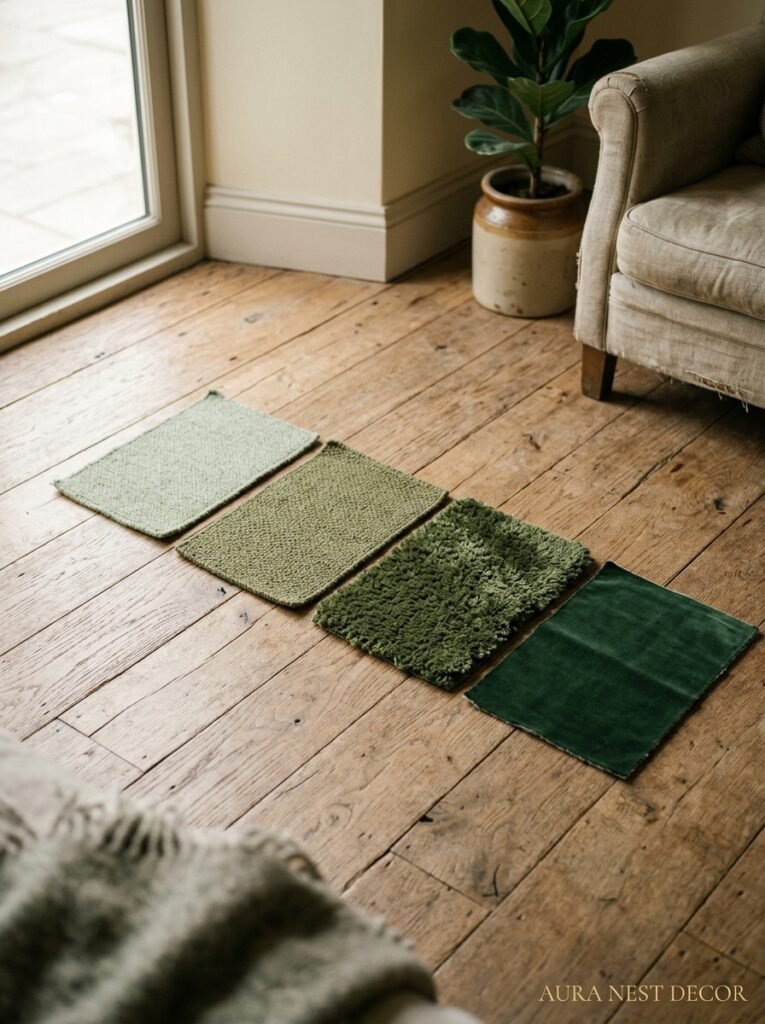
This is where people go wrong. “I want a green rug” is the beginning of a decision, not the decision itself. Because sage green and emerald green are having completely different conversations with your furniture.
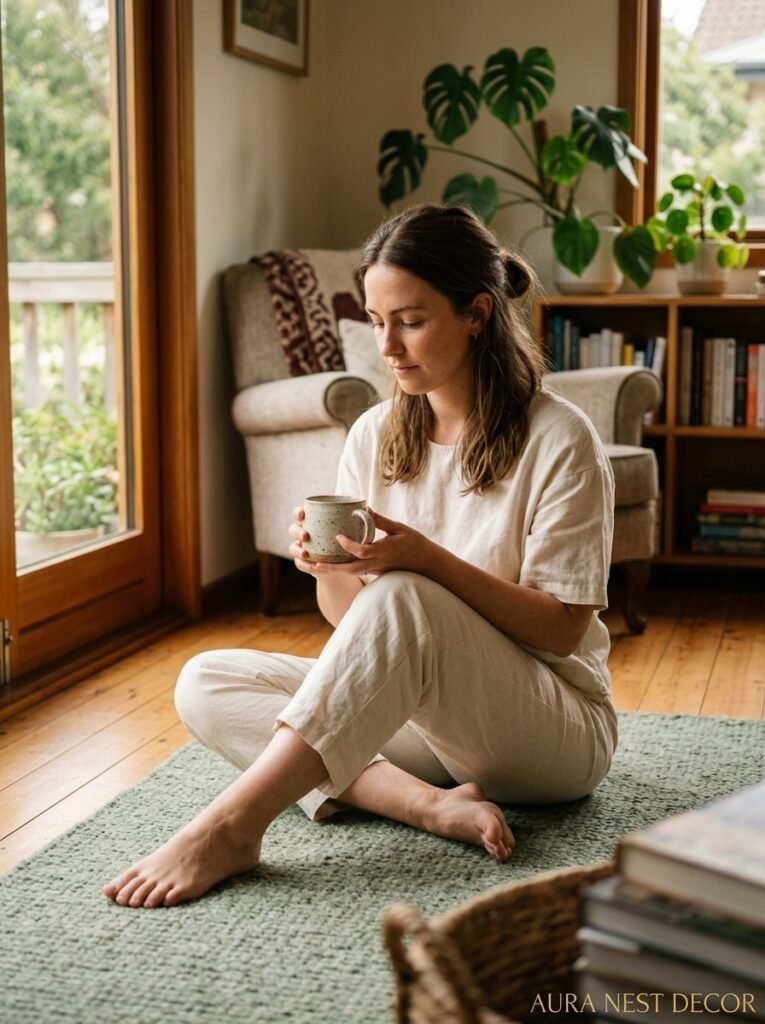
Sage and muted eucalyptus shades — these are soft, dusty, almost grey-leaning greens. They work beautifully in rooms with a lot of natural light, linen curtains, rattan, pale wood. They’re calm. They don’t shout. If you’ve got a living room that already leans warm and cottagecore, sage is your green.
Olive green is earthier. Warmer. It pairs brilliantly with leather furniture, dark wood coffee tables, and those terracotta tones that have been everywhere. It’s got a vintage quality that feels considered, not trendy.
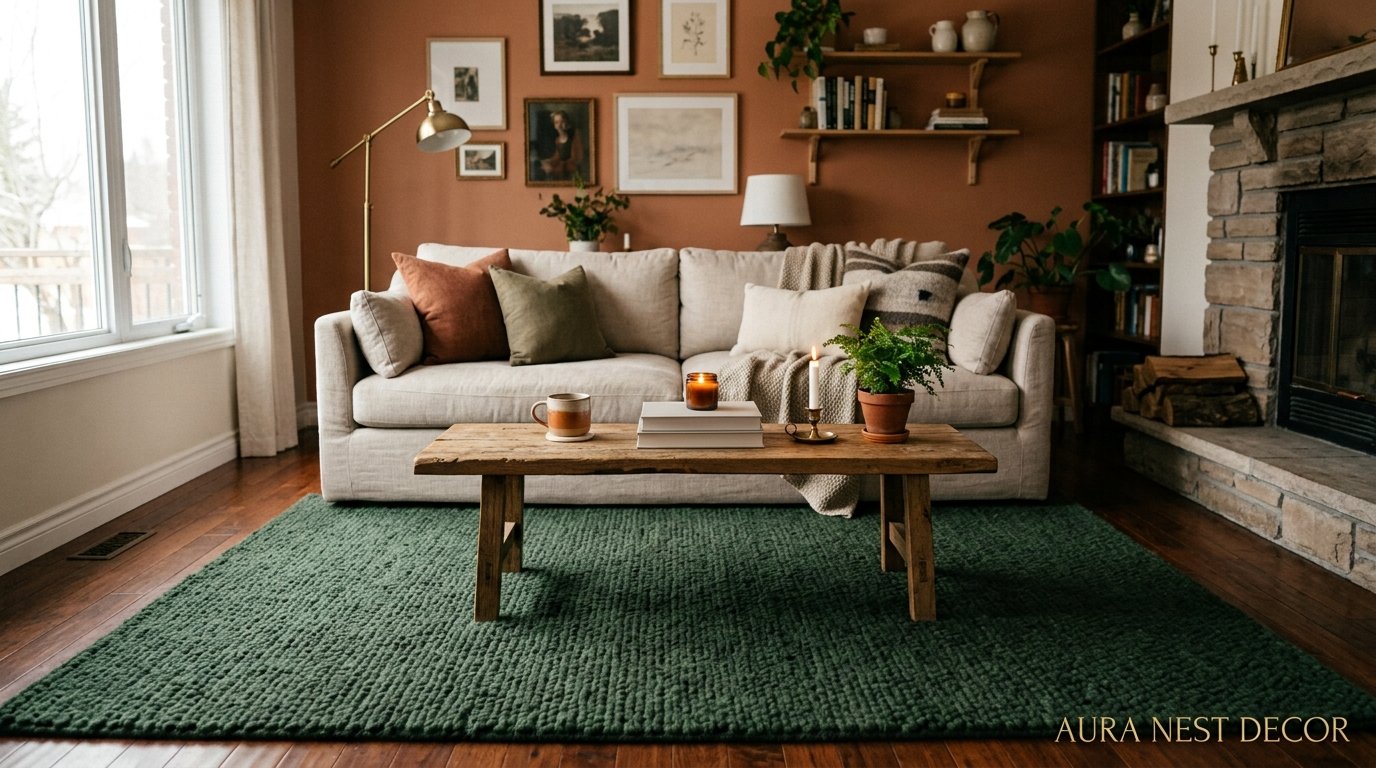
Then there’s forest green and hunter green — deep, saturated, confident. These are the rugs that make a room feel like somewhere. They work with jewel tones, with dark walls, with velvet sofas. They can absolutely work in lighter rooms too, but you need something else with weight to balance them out, otherwise the rug just sits there looking a bit out of place.
Emerald is the boldest. Bright, almost jewel-like. Not wrong, but definitely the most specific to style. It really shines in a room that already has some maximalist energy.
Choose based on your existing colours, not your Pinterest board. Your actual room — not the room you wish you had.
3. The Rug Size Mistake Almost Everyone Makes in a Living Room
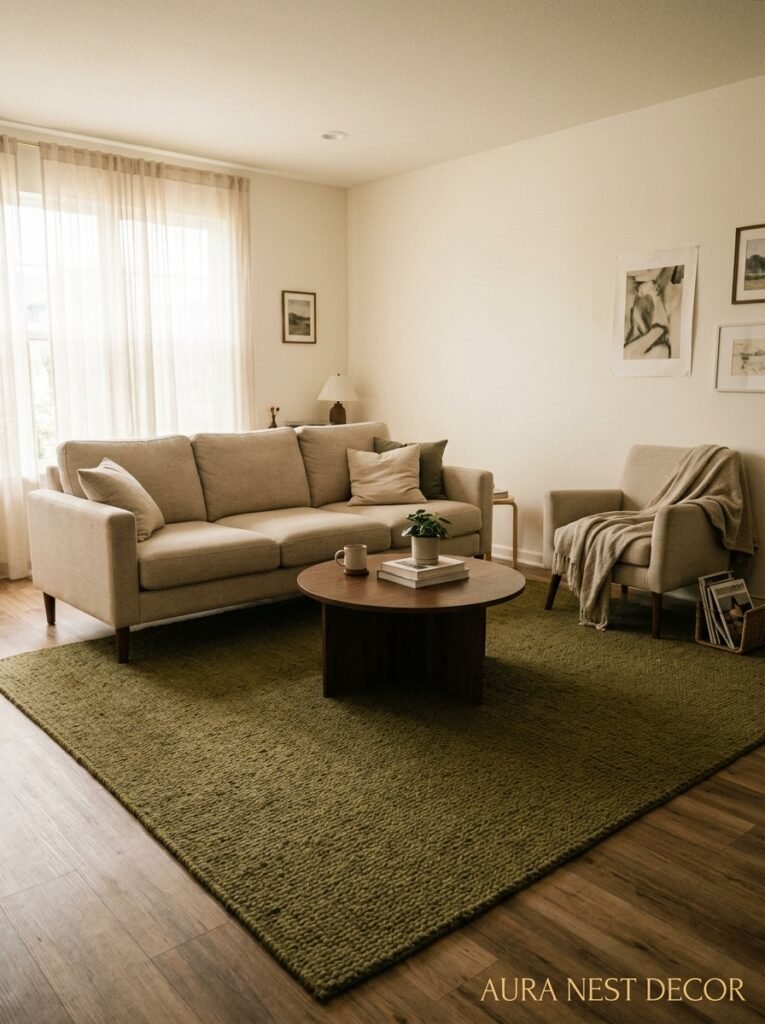
Can we talk about this? Because I see it constantly and it genuinely makes me a bit sad. A beautiful green rug, clearly the right colour, clearly good quality — and it’s the wrong size. And the whole room is off because of it.
The most common mistake: going too small. People worry about overwhelming the space, so they choose a rug that basically sits under the coffee table and nothing else. And then all your furniture floats around the edges of the room with no visual anchor, looking like they’ve all arrived at a party and don’t know each other.
A rug should anchor your seating area. All the sofa legs on the rug — ideal. At least the front legs of every main sofa and chair on the rug — acceptable. Nothing touching the rug at all? Start over.
In the US, a 8×10 is a great baseline for a standard living room. A 9×12 if you’ve got more space. In the UK where rooms can be slightly smaller and more awkwardly shaped, a 200x300cm is roughly your equivalent starting point. Measure before you buy. Take the measurements in the room itself, lay out masking tape or newspaper to visualise the footprint. Boring advice, I know, but the number of times people skip this step and then end up with a rug that looks like a bathmat…
Big rugs make rooms look bigger, by the way. Counterintuitive but completely true.
4. What Nobody Tells You About How Green Rugs Age
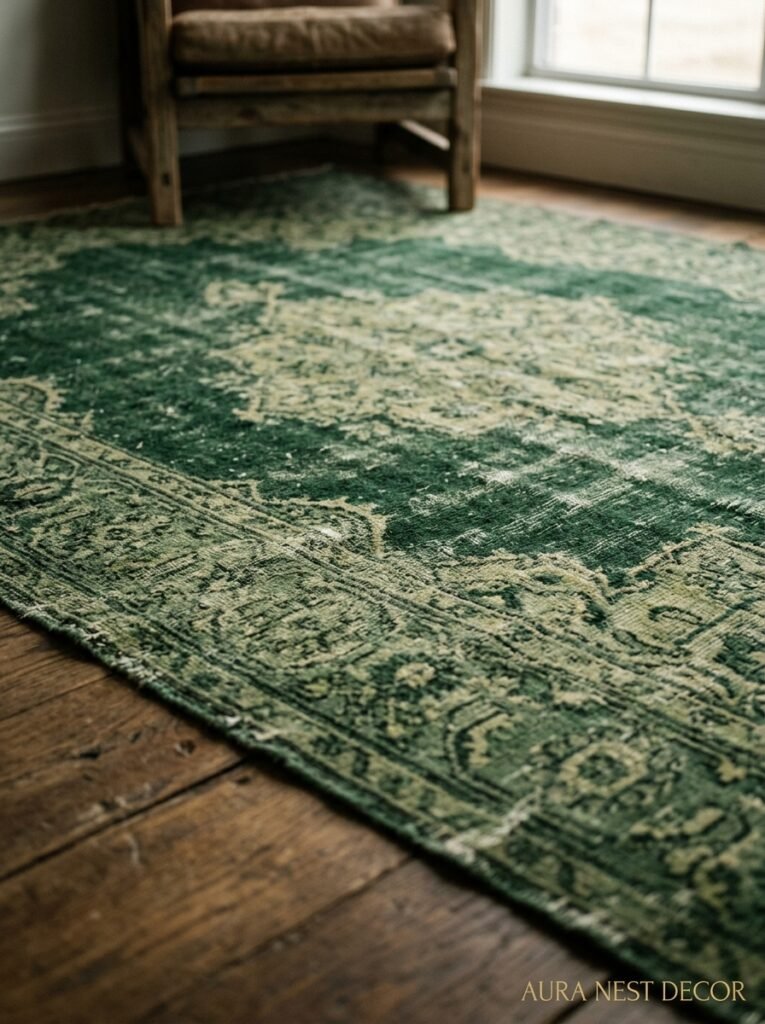
Here’s something I wish someone had told me earlier. Not all greens age the same way. And depending on the material, the way a green rug shifts and softens over time can be either really beautiful or really annoying.
Wool green rugs — especially in forest and olive shades — get better. I mean genuinely better. The pile softens, the colour deepens slightly, they start to look like they belong in the room. Wool also has this natural tendency to hide wear patterns, which is useful in a high-traffic living room.
Synthetic rugs in bright greens can be trickier. The emerald and kelly green shades can fade unevenly in direct sunlight, sometimes going almost yellowish in the sun-hit patches. If you’ve got south-facing windows and you’re set on a bright green, a UV-protective rug pad and rotating the rug every few months makes a real difference.
Flatweave green rugs — kilims, Moroccan-style — these are actually the most forgiving. They don’t show footprints, they’re easy to clean, and the pattern tends to disguise any unevenness in fading. Side note — a vintage or vintage-style flatweave in olive and rust is probably the single most versatile living room rug choice I’ve seen, full stop.
“A good rug doesn’t just lie there — it settles in, gets comfortable, starts to feel like it’s always been yours.”
5. The Sofa Colours That Make a Green Rug Sing (And the Ones That Argue With It)
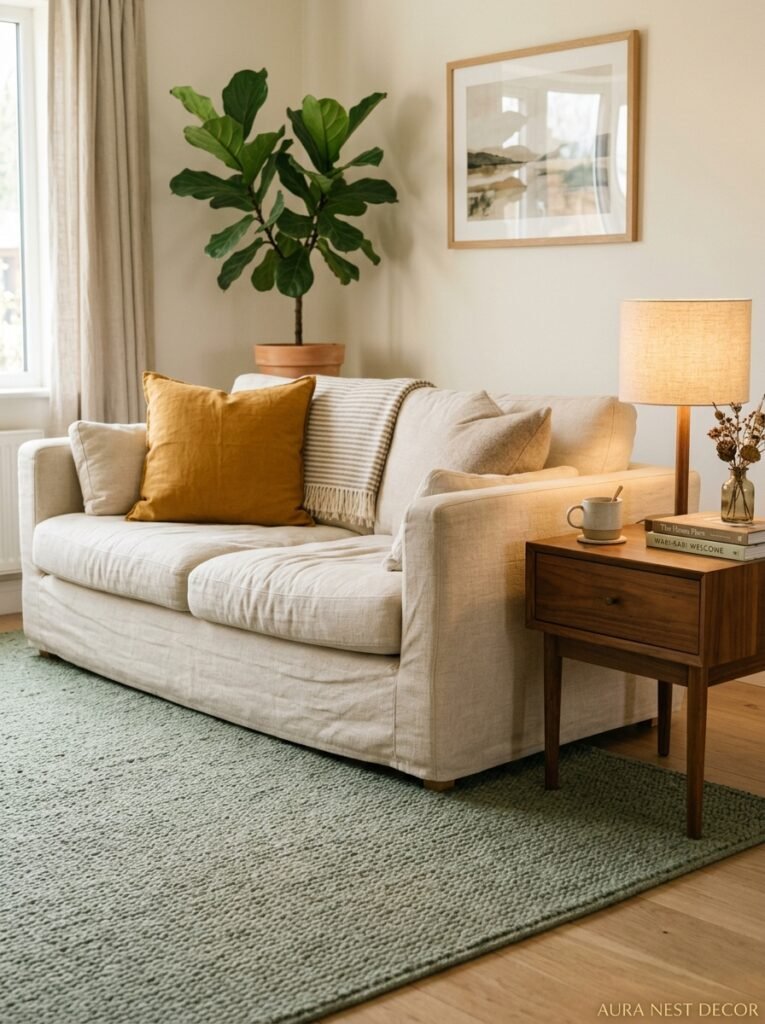
Let’s be specific here, because “green goes with most things” isn’t actually helpful when you’re standing in a room with a cream sofa wondering if that forest green rug is going to look incredible or a mistake.
Cream and off-white sofas: brilliant with almost every green. The contrast is clean without being harsh. This combination feels effortlessly put-together.
Grey sofas: this is where I’d be careful. Warm greys can look great with sage. But cool, blue-grey sofas can make certain greens look flat and a bit muddy. If you’ve got a cool grey sofa and you want green, go deep — forest green or emerald — so there’s enough contrast to give both pieces presence.
Camel and tan sofas: honestly one of my favourite combinations. A camel leather sofa on an olive or forest green rug looks like something out of a really good interior design magazine. The warmth of the leather against the cool-ish green is genuinely stunning.
Navy sofas: yes, yes, yes. Green and navy is a combination that shouldn’t work but absolutely does. Deep, cosy, a bit moody.
Terracotta-toned sofas or blush: go for sage or muted olive. The earthiness ties everything together.
The combination that’s hardest to make work? Bright orange or bright red sofas. I’m not saying it’s impossible, but you’d need to be very intentional about everything else in the room.
6. The Room Style That Matches Each Type of Green Rug
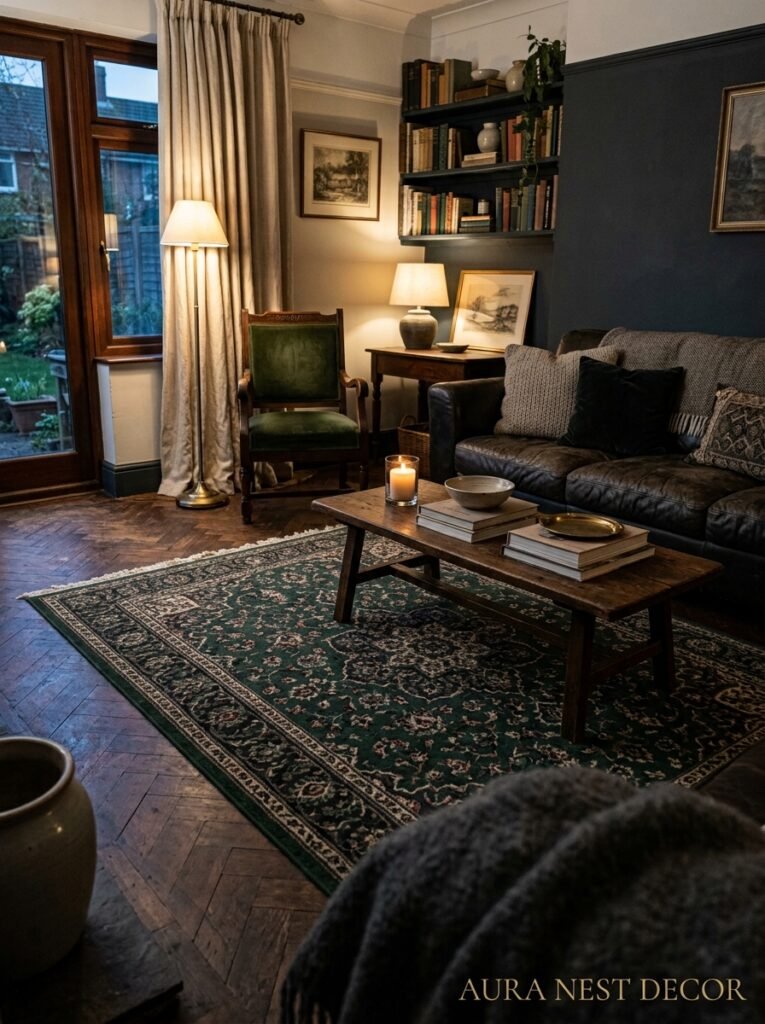
Not every green rug goes with every interior style, and I think this is worth spelling out clearly because it saves a lot of returns.
Maximalist or eclectic rooms: emerald or jewel-toned green, something with pattern. A bold green rug grounds the visual chaos and gives all the other collected things somewhere to sit.
Mid-century modern living rooms: olive green, flatweave or low pile, possibly with geometric pattern. It’s almost too perfect. Pair with walnut furniture, clean lines, some amber glass — you’re done.
Cottagecore or country-style rooms: sage or soft moss green, something in wool or a woven texture. Florals, vintage pieces, and soft sage green together are genuinely one of the cosiest combinations in interior design.
Contemporary or minimalist rooms: deep forest green in a simple flatweave or high-quality plain pile. Let the colour do all the work. No pattern needed.
Traditional British-style living rooms — think Heritage chic, William Morris-adjacent — a patterned green rug, maybe with some red or cream, ties everything back to that classic library-room feel without being stuffy.
Scandinavian-influenced spaces: pale sage or mint-green, very simple, very clean. Pairs well with the usual pale wood and white.
7. Layering Another Rug on Top — When It Actually Works
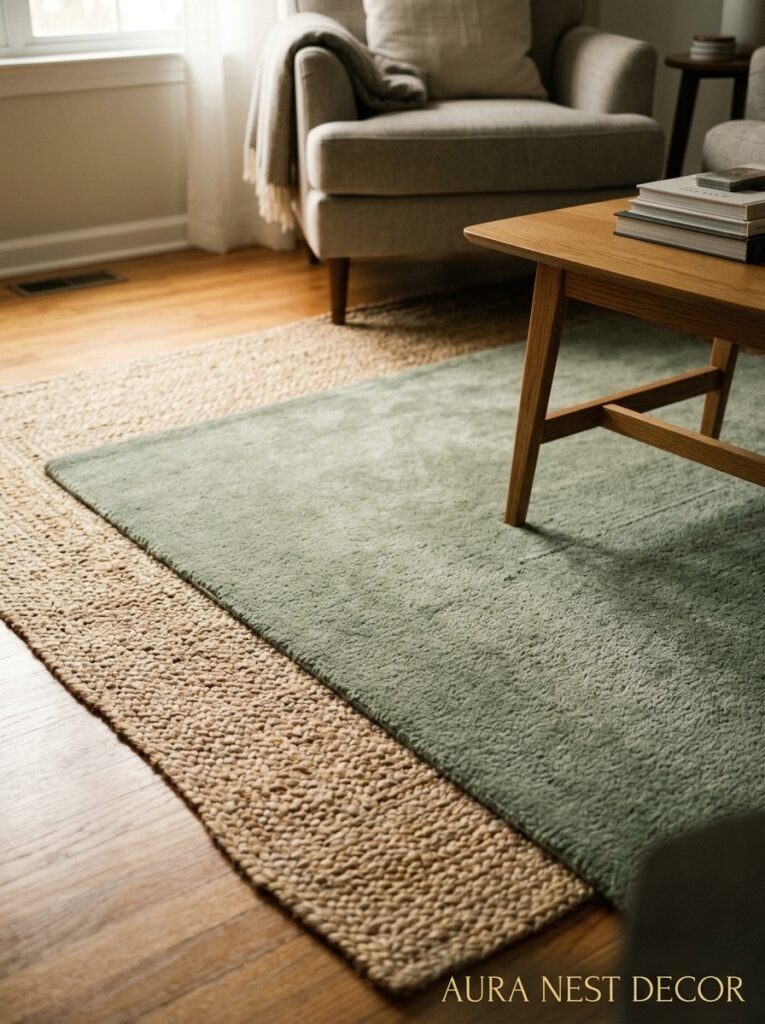
Rug layering is either going to make you look like you know what you’re doing or like you’ve just given up trying to choose. The difference is genuinely slim and I’ll try to explain it.
Layering a green rug works when the base rug is bigger, simpler, and lower in pile. Think a large natural jute or sisal as the base — then a smaller, richer green rug on top, maybe 4×6 or 5×8, positioned over the coffee table area. The contrast in texture is what makes it look intentional.
What doesn’t work: two patterned rugs of similar scale layered on top of each other. They’ll argue. Also, two rugs of almost the same size layered together — it just looks like you couldn’t decide and tried to solve the problem by using both.
A green rug layered on top of a cream or ivory flatweave is particularly beautiful. The cream base adds light and stops the green from feeling heavy.
And if you’re working with a smaller budget, this is actually a great hack — a more affordable base rug underneath, with a smaller, higher-quality green rug on top where it actually gets seen and touched.
“The rug underneath sets the stage. The rug on top gets all the credit.”
8. The Textures That Work Best in Green — This Is More Important Than You Think
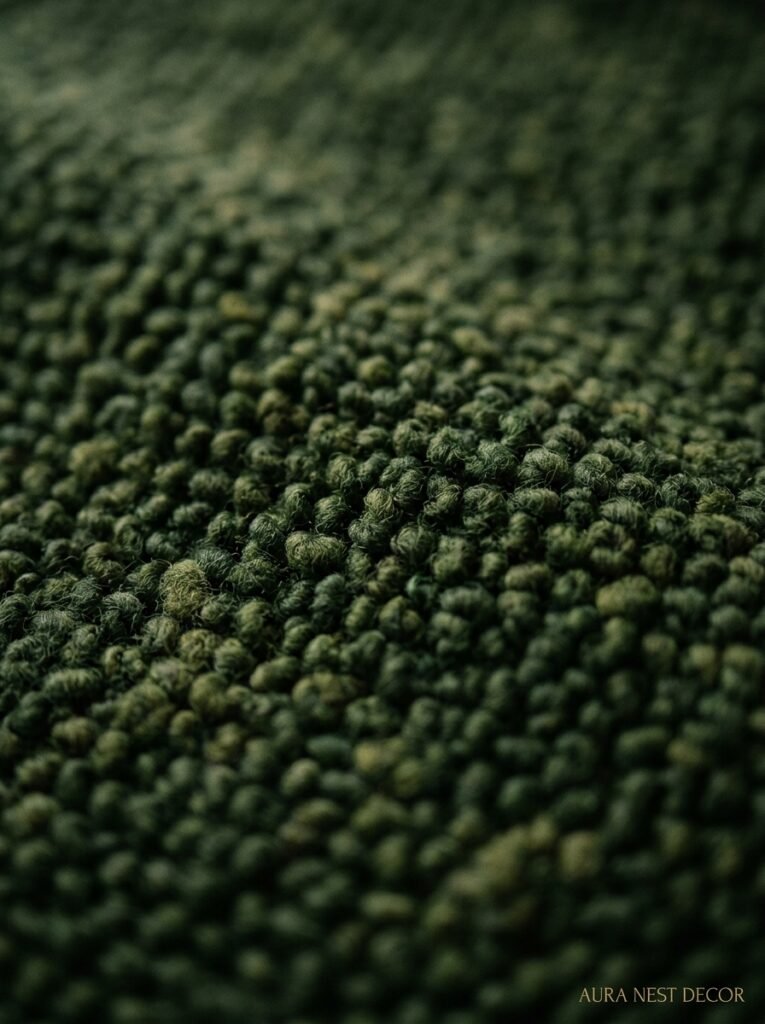
Texture changes everything about how a colour reads in a room. A forest green in a thick, plush pile feels moody and rich. The same forest green in a flatweave feels graphic and modern. Same colour, completely different room.
Shaggy or high-pile rugs in green: they look amazing, honestly, and feel incredible underfoot in winter. But they collect dust, they show footprints, and they’re a pain to vacuum. Worth it for a bedroom maybe, but think twice for a high-traffic living room.
Low-pile wool rugs: the workhorse. Durable, good-looking, gets better with age. Handles vacuuming well. Hides dirt reasonably well depending on the pattern. My personal favourite for a living room.
Flatweave: easier to clean, no pile to crush, lighter weight. Some people find them a bit thin-feeling underfoot. Get a good rug pad underneath — it makes a significant difference in how it feels and how much it moves around.
Jute or seagrass in green tones: not quite green rugs but worth mentioning — these natural fibre rugs in their natural colour often have subtle green-beige tones that work beautifully with green accessories and plants.
Tufted rugs with a pattern: the texture within the pattern itself (high and low areas) adds visual depth. Particularly beautiful in forest green with cream or gold.
9. How to Style Your Room Around a Green Rug Without Starting From Scratch
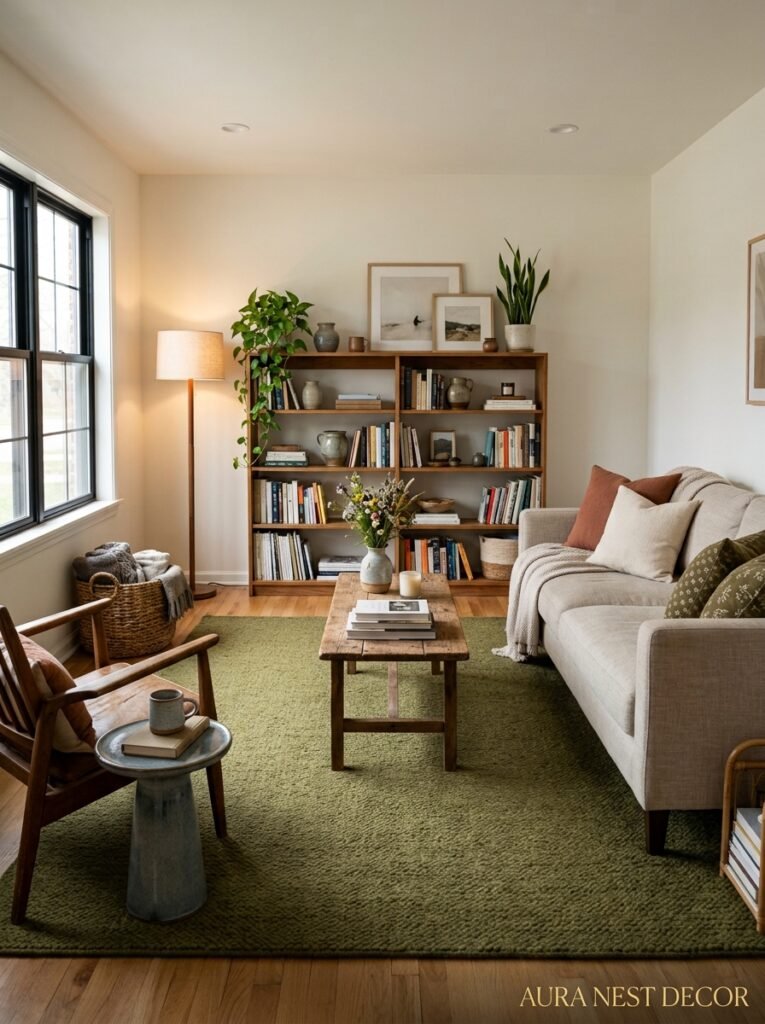
You don’t need to redecorate. I cannot stress this enough. A green rug has a way of making the things you already own look more intentional.
The main thing to think about is pulling the green up. Not everywhere — just a thread of it. A couple of green cushions (they don’t have to match the rug exactly, honestly a slightly different shade often looks better), a plant in a ceramic pot, maybe a green glass vase. Now the eye travels around the room and the rug doesn’t just sit there in isolation.
Add something warm. Green can read slightly cool, depending on the shade, so balance it with something golden — a brass lamp, a warm wood side table, terracotta pots. Candles help too, actually. The warm light they cast softens everything.
Don’t change your wall colour for the rug unless you were already planning to. White walls with a green rug look brilliant. And so do deep navy or dark grey walls, for that matter.
Books with coloured spines styled on a coffee table or bookshelf — green, cream, rust, navy — cost nothing extra and add exactly the right kind of considered detail.
10. The Rug Pad Nobody Mentions But Absolutely Everyone Needs
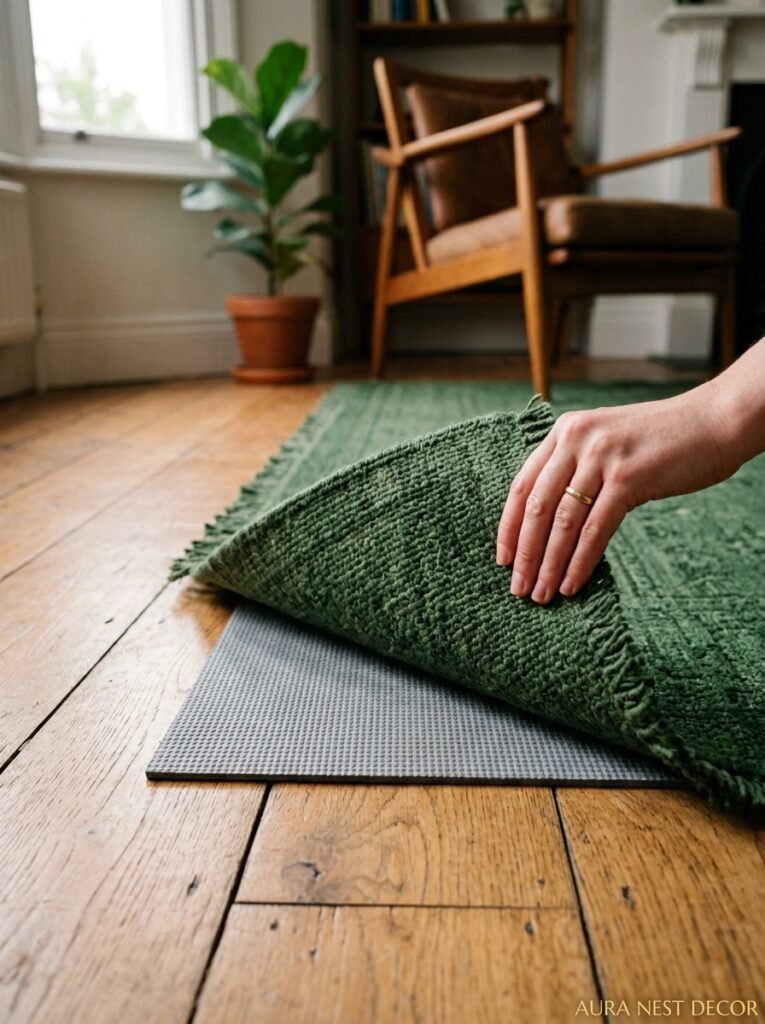
Okay this is genuinely one of those things I feel strongly about and it often gets left off lists. A rug pad is not optional. It’s not a nice extra. It’s part of the rug.
Without a rug pad, your green rug slides. It bunches up at the edges. It wears unevenly because there’s no cushioning between it and the floor. And depending on your floor type — particularly hardwood — it can actually scratch the surface over time.
A good rug pad adds grip, adds a layer of cushioning that makes the rug feel much more expensive than it is, and extends the life of the rug by reducing the friction damage that happens at the back of the pile over years of foot traffic.
For hardwood or LVT flooring: a non-slip felt-and-rubber pad. For carpeted rooms (yes, rugs on carpet is a thing): a simple non-slip mesh pad.
Size-wise, the pad should be an inch or two smaller than the rug on all sides. You don’t want it visible at the edges. Some companies will custom-cut them to size which is worth doing if your rug is an odd shape.
Spend at least £20 / $25 on the pad. The £5 ones from bargain shops don’t grip properly and they degrade fast.
11. Budget vs. Investment: When to Spend More and When It’s Fine to Go Cheap
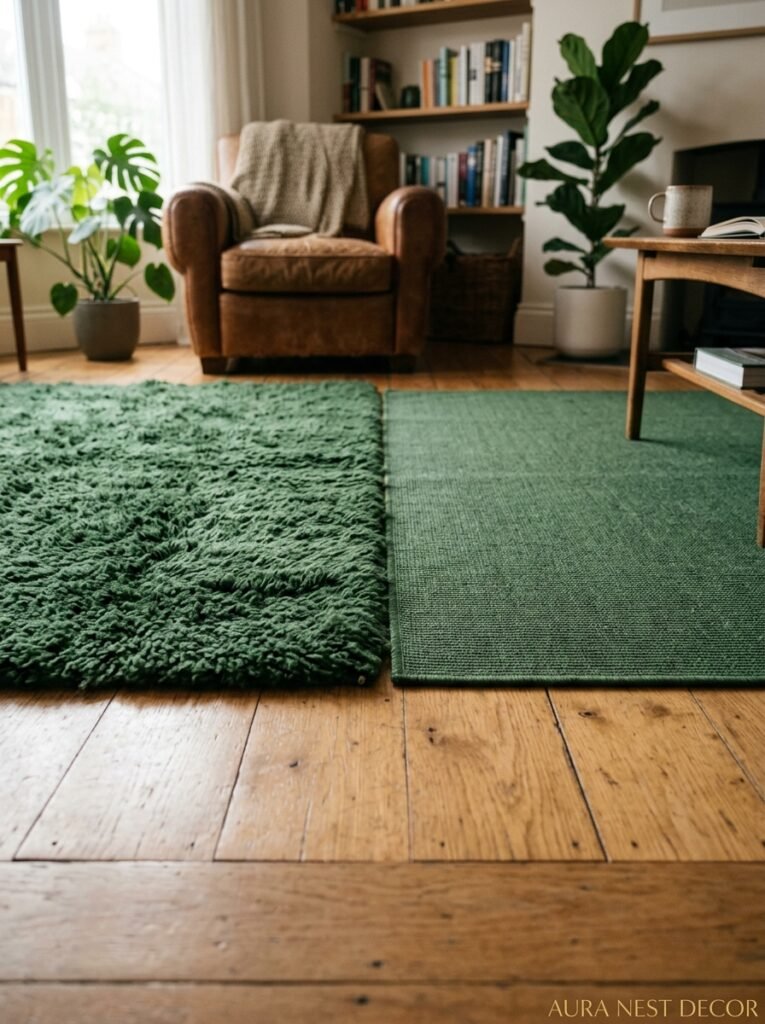
Not every rug needs to be an heirloom piece. Here’s my honest take on where the money actually matters.
Spend more when the rug is your main statement — when the room is relatively simple and the rug is doing the design work. In this case, quality shows. Wool, hand-knotted, or vintage are worth it. You’ll feel the difference.
You can absolutely go mid-range or more affordable when there’s a lot else going on in the room — strong furniture, great wallpaper, lots of textural detail. The rug is still important but it doesn’t have to do as much heavy lifting alone.
Brands worth knowing: in the US, Rugs USA, Loloi, and Pottery Barn have solid mid-range options. IKEA’s flatweaves are genuinely good for the price. For UK shoppers, Dunelm and John Lewis both have decent ranges. For something more special, look at eBay for vintage kilims — sometimes you find genuinely beautiful pieces for less than you’d expect.
The one thing I’d say: don’t go so cheap that you end up with something that sheds, slides, fades weirdly, and falls apart in eighteen months. That’s not a bargain, it’s just more work.
12. The Plant That Goes With Every Green Rug (This One’s a Bit Specific But I Stand By It)
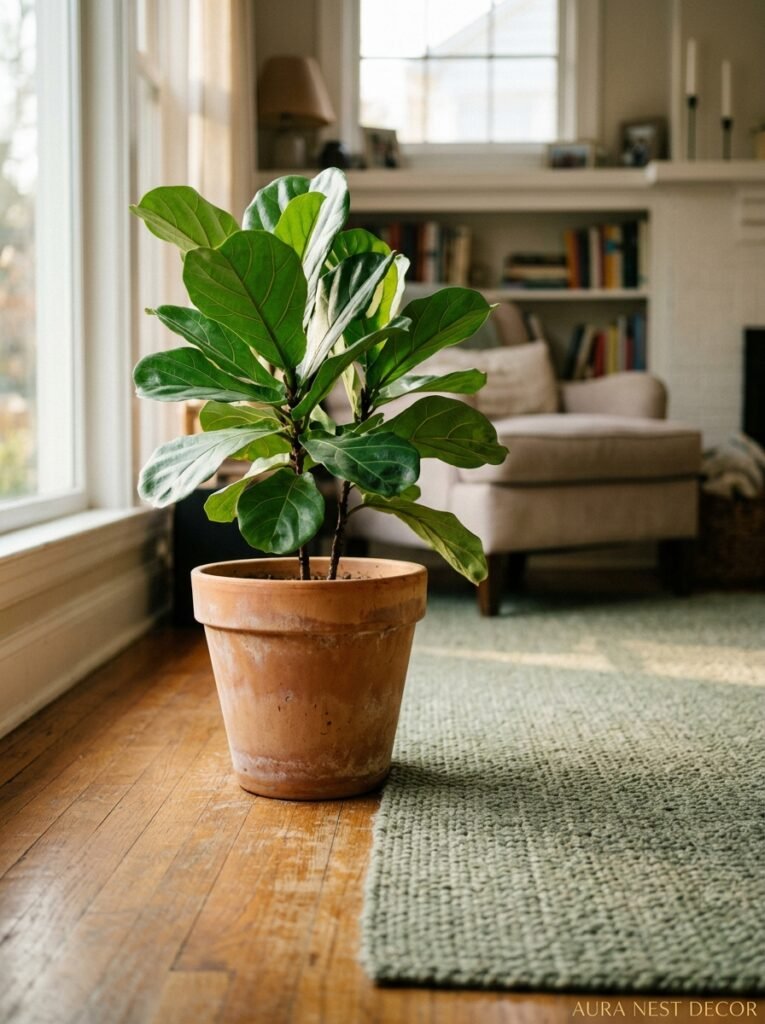
Okay, hear me out. This is slightly niche but it’s one of those details that quietly makes a room.
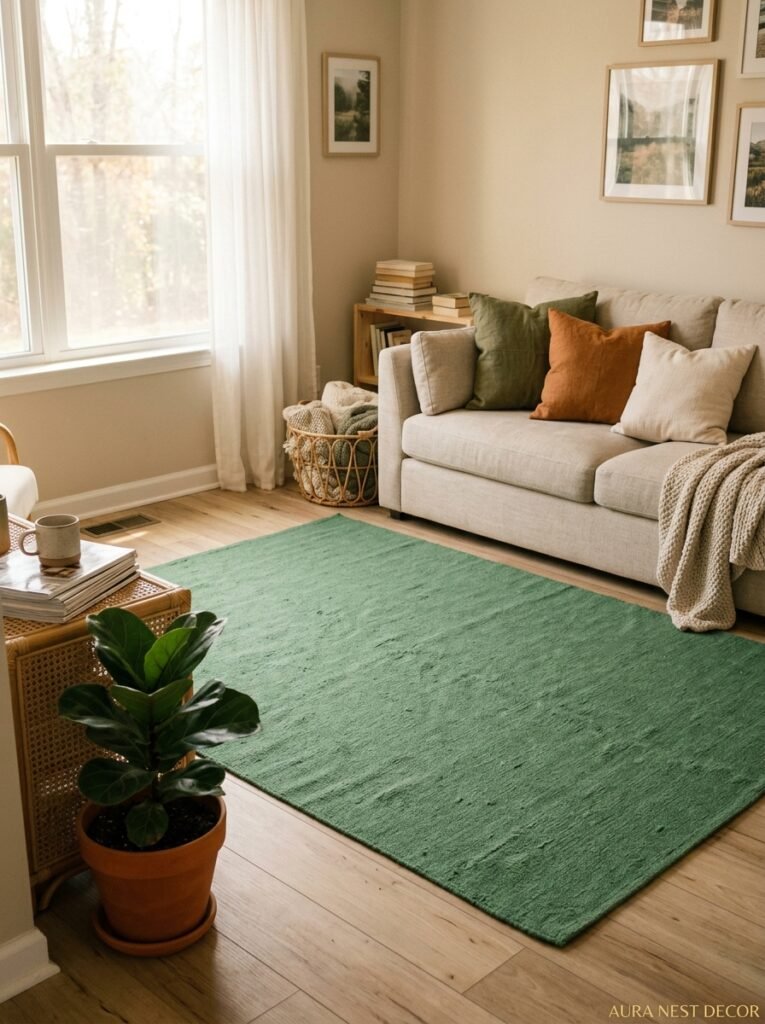
A fig tree — specifically a fiddle-leaf or a regular ficus — in a warm terracotta or matte black pot, placed in the corner of a living room near a green rug, is one of the most effortlessly beautiful combinations in home decor. The deep green of the leaves mirrors the rug, the pot adds warmth, and the height of the tree draws the eye up without you having to do anything architectural.
It works especially well with olive and forest green rugs. Less so with very pale sage, which can look a bit washed out next to a large dark-leaved plant.
Don’t have a green thumb? A large faux fiddle-leaf has come a long way. The good ones are genuinely convincing from three feet away. I won’t judge.
And if you’re not into fiddle-leafs specifically, a large monstera does the same job. So does a tall snake plant in a warm pot. The point is having something with height and green leaves that echoes the rug without being too obvious about it.
—
❓ FAQ
Q: Will a green rug make my living room feel too dark? A: It depends on the shade and the size of your windows. Darker greens like forest or hunter green can add depth — in a room with good natural light, this reads as rich and cosy, not dark. If your room is already quite dim, go for sage or a lighter olive, which brings colour without absorbing light the way a deep saturated green can. Warm lighting in the evening also helps enormously.
Q: Can I put a green rug in a small living room without it feeling overwhelming? A: Yes, and actually a correctly sized green rug often makes a small room feel bigger by grounding the furniture and giving the space a focal point. Stick to softer greens — sage, muted olive — rather than very saturated emerald or hunter green, and make sure the rug is big enough to anchor the seating area properly. A rug that’s too small will make the room feel more cramped.
Q: How do I clean a green rug without the colour fading? A: For routine cleaning, vacuum regularly (without the beater bar setting on wool rugs). For spills, blot immediately — don’t rub, which pushes the stain in and can distort the pile. Avoid harsh chemical cleaners on coloured rugs; a mild dish soap diluted in cold water works for most things. For deep cleaning, check whether it’s suitable for professional cleaning or steam cleaning — most wool rugs are, but always check the label. Rotating the rug every few months helps prevent uneven fading, especially near windows.
—
💭 Final Thoughts
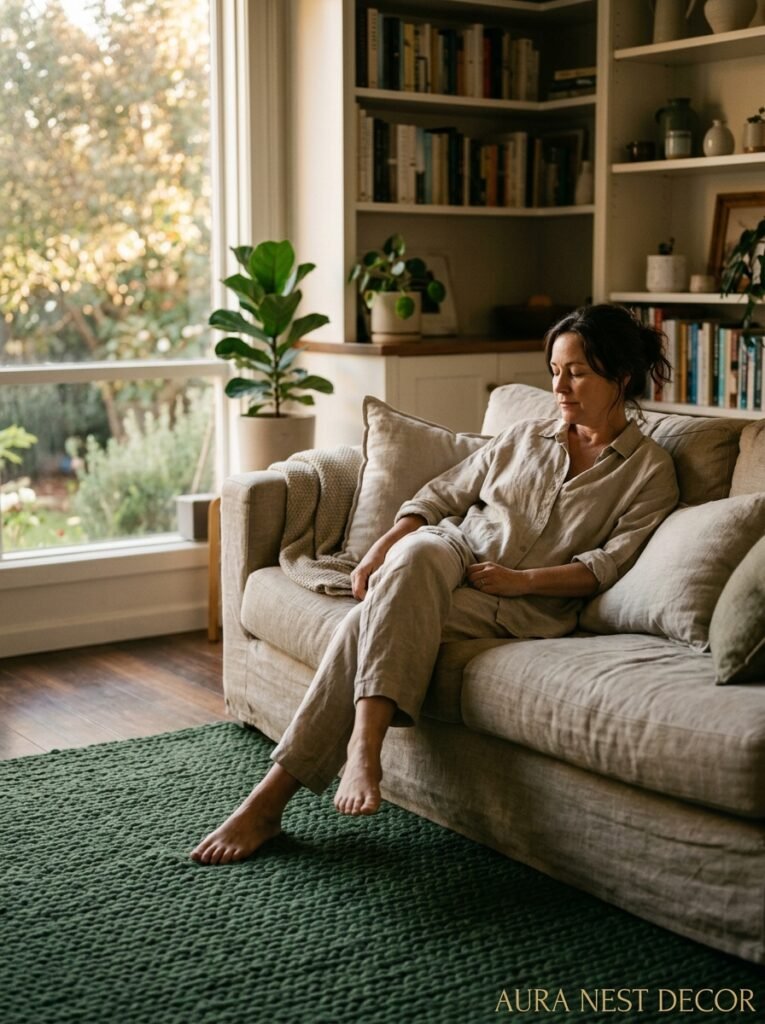
A green rug is one of those decisions that feels slightly scary right up until the moment it’s in the room — and then you can’t imagine the space without it. It doesn’t demand that you redecorate around it. It just quietly makes everything you already have look better, warmer, more considered. The hard part isn’t living with it. The hard part is choosing which green.
So tell me — are you leaning sage or going deep with forest green?