Dark Cottagecore Is the Living Room Trend That Actually Feels Like Home
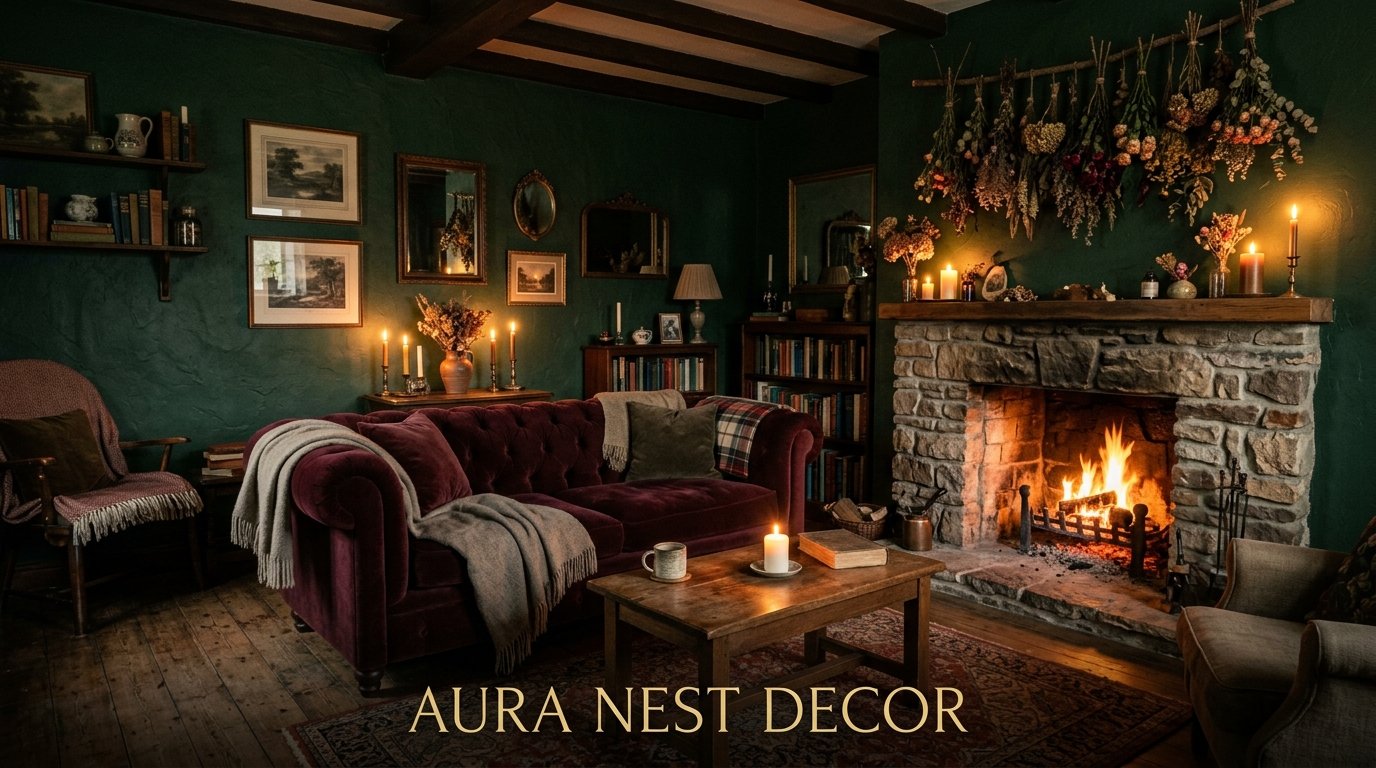
My friend Sarah walked into my living room last October and said, “this feels like a witch lives here but in a good way.” And I thought — yeah. That’s exactly it.
—
1. Why “Cozy” Started Feeling Wrong and Dark Cottagecore Fixed It
Regular cottagecore always felt a little too sweet to me. Too many cream linens, too much shiplap, too many sprigs of dried lavender in a mason jar. It looked beautiful on Pinterest. It felt kind of sterile in real life.
Dark cottagecore is the same emotional fantasy — the rambling old cottage, the overgrown garden, the sense that time moves slower here — but it leans INTO the shadows instead of bleaching them out. Think deep forest rather than sun-drenched meadow. Moonlight instead of noon. It’s cottagecore after the candles have been lit and the sun has gone down.
The look is having a serious moment in both US and UK interiors right now, and honestly I think it’s because people are tired of bright, antiseptic spaces. There’s something about a dark room done well that makes you exhale. Like your shoulders drop three inches the second you walk in.
It’s not gloomy. That’s the thing people always get wrong. Done right, it’s WARM.
2. The Wall Color That Changes Everything (and It’s Probably Not Black)
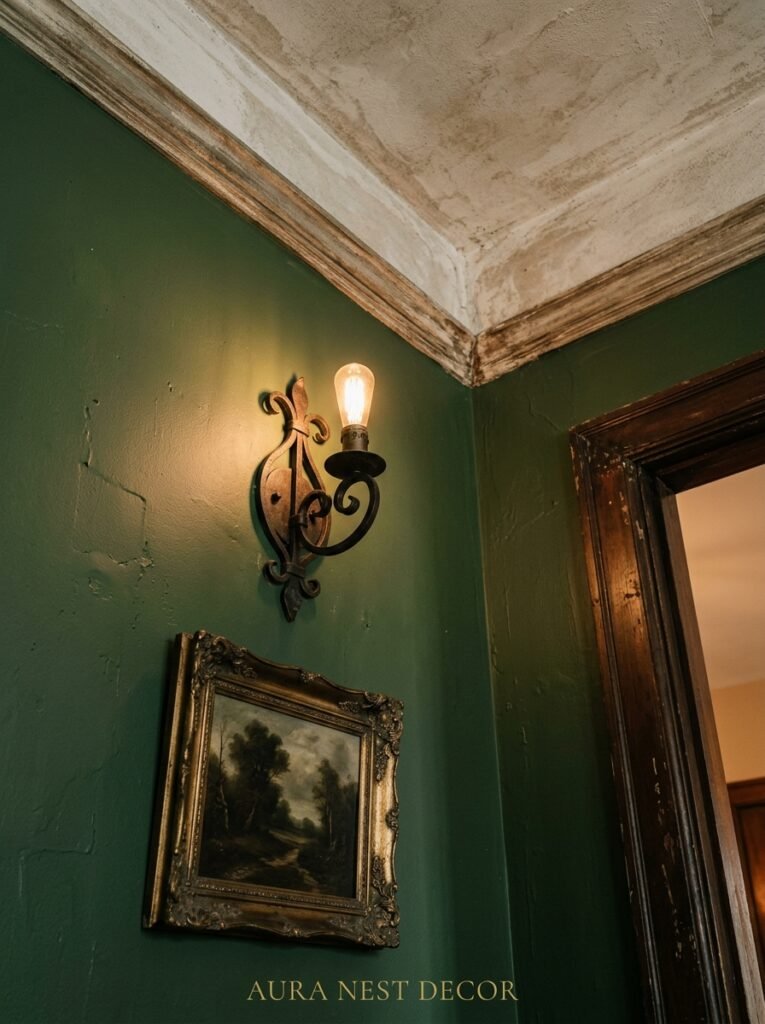
People hear “dark cottagecore” and immediately think black walls. But the colors that actually work best are the ones that feel alive — deep forest greens, inky plum, earthy terracotta-meets-brown, warm charcoal with a green or blue undertone.
Farrow & Ball’s Studio Green is criminally beautiful in a living room. So is their Preference Red, which sounds alarming but reads as a rich, aged burgundy in low light. In the US, Behr’s Cracked Pepper and Benjamin Moore’s Black Forest Green come up constantly in dark cottagecore Pinterest boards for a reason.
The undertone matters more than the darkness level. A cold dark color feels harsh. A warm dark color feels like you’re being held.
“The undertone matters more than the darkness level. A cold dark color feels harsh. A warm dark color feels like you’re being held.”
Side note — don’t feel like you have to do all four walls. One deeply painted accent wall behind a sofa, with the rest in a softer warm neutral, gives you the mood without any commitment anxiety.
3. Furniture Shapes That Actually Belong in This Kind of Room
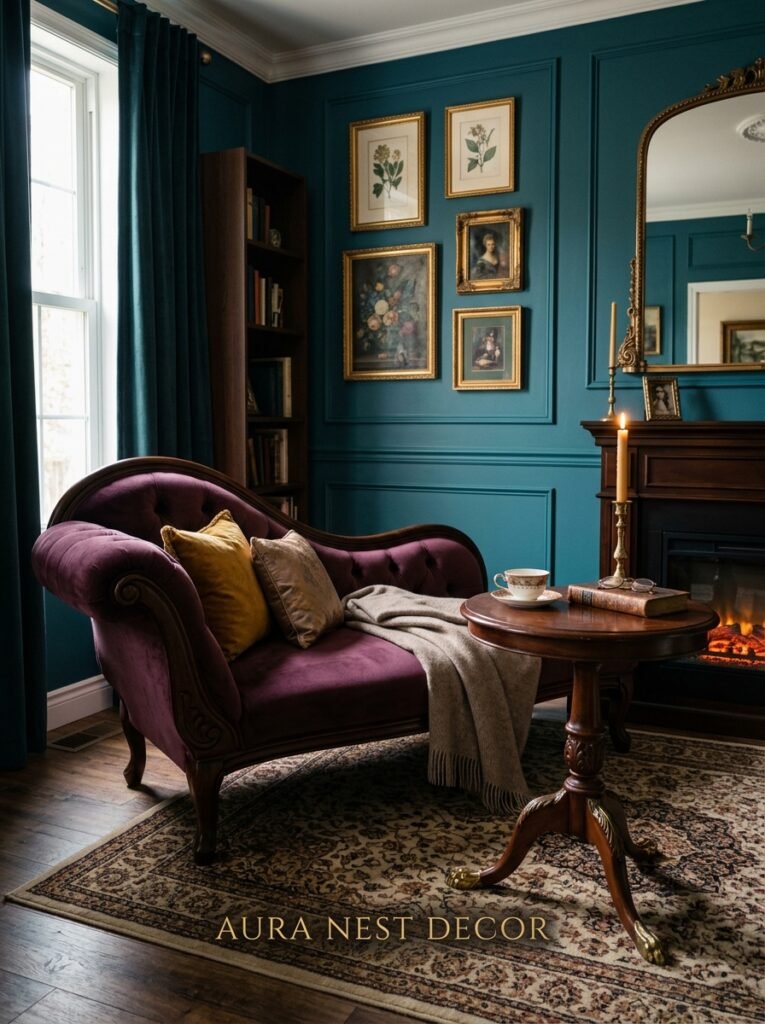
There’s a specific silhouette that reads dark cottagecore versus just “dark.”
Curved edges. Cabriole legs. Tufted backs on armchairs. Anything that looks like it was made to last two hundred years and has stories it’s not going to tell you. You want furniture that feels like it was discovered somewhere, not ordered from a flat-pack warehouse.
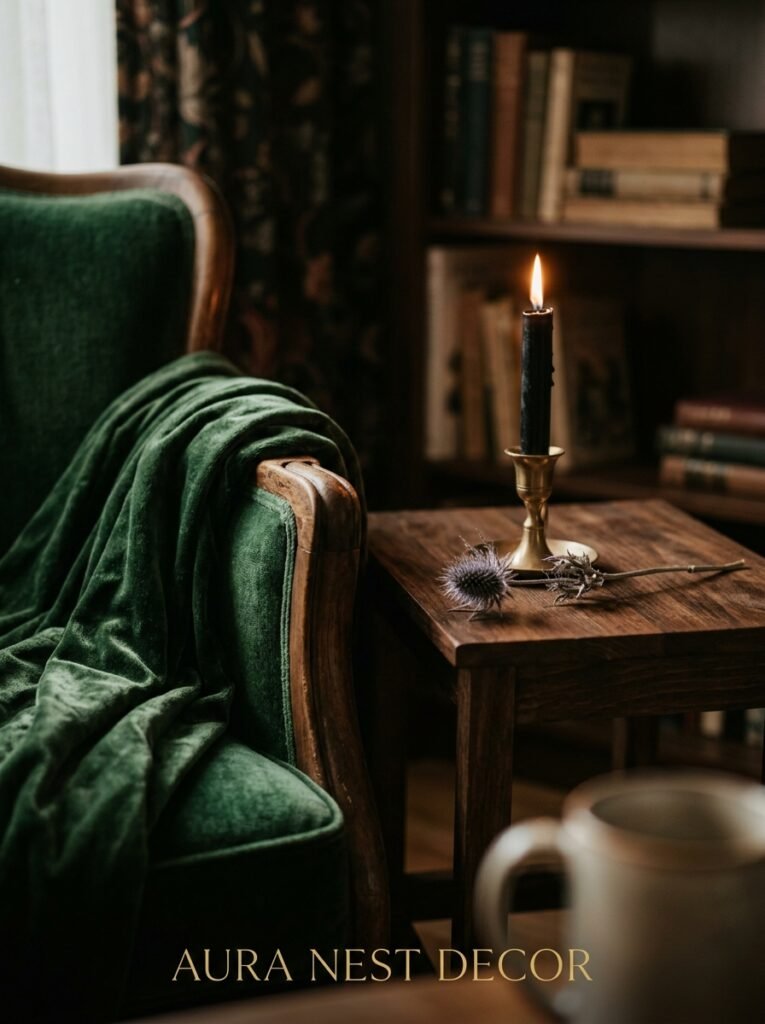
A velvet sofa in bottle green or deepest plum is basically the centerpiece of every great dark cottagecore room. And velvet is practical these days — it’s not the nightmare to clean it used to be. The way velvet catches light in a dim room is just… there’s nothing that does that same thing.
Mismatched pieces are FINE. Better than fine, actually. Two armchairs that don’t match but both feel old and interesting are more cottagecore than a perfectly coordinated suite from a showroom.
4. The Lighting Rule That Nobody Talks About Enough
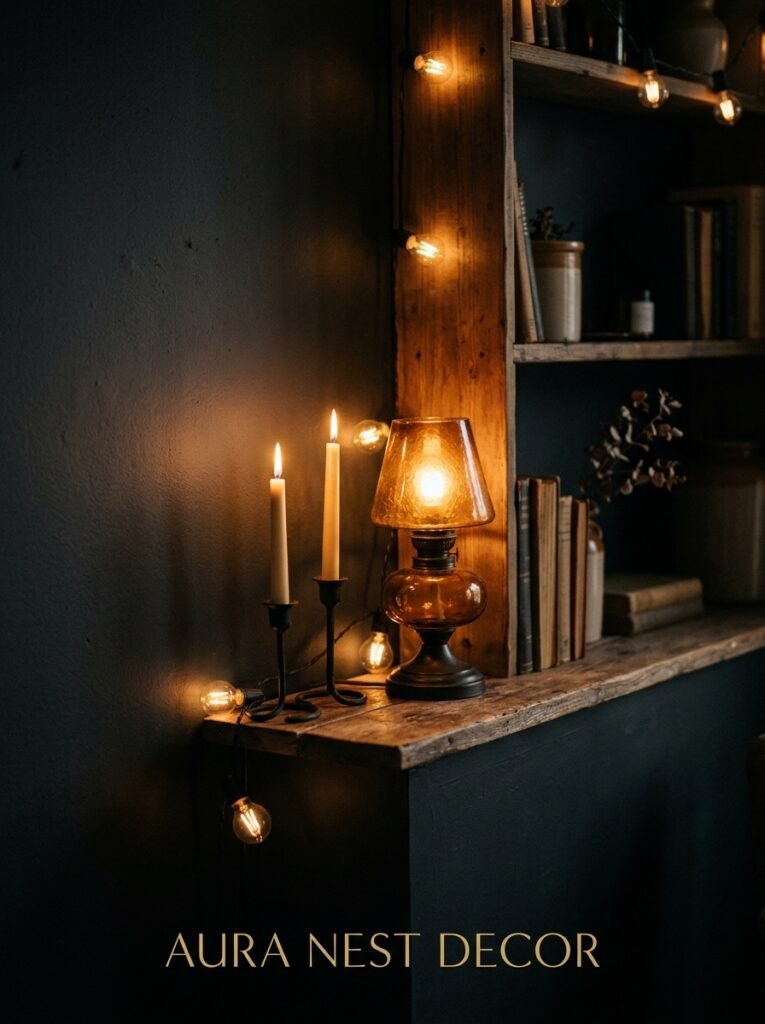
Overhead lighting is the enemy of this aesthetic. I mean that. A bright overhead light will undo every bit of atmosphere you’ve created in about four seconds.
Instead: layers. A floor lamp with a warm amber bulb in one corner. A table lamp with a heavy ceramic base on the side table. Candles — real ones if you can, or really good flameless ones because I’m not going to pretend fire risk isn’t a consideration. The glow of an Edison bulb at 7pm hits completely differently than a cool LED overhead.
In the UK, pendant lights with dark fabric shades work brilliantly because the ceilings in most older homes are lower and it keeps the scale right. In the US, where rooms can run bigger, you might layer multiple floor lamps to fill the space with pools of light instead of one even wash.
Dimmer switches. Just do it. Life-changing, genuinely.
5. Fabric and Texture: Why Linen and Velvet Are Doing All the Work Here
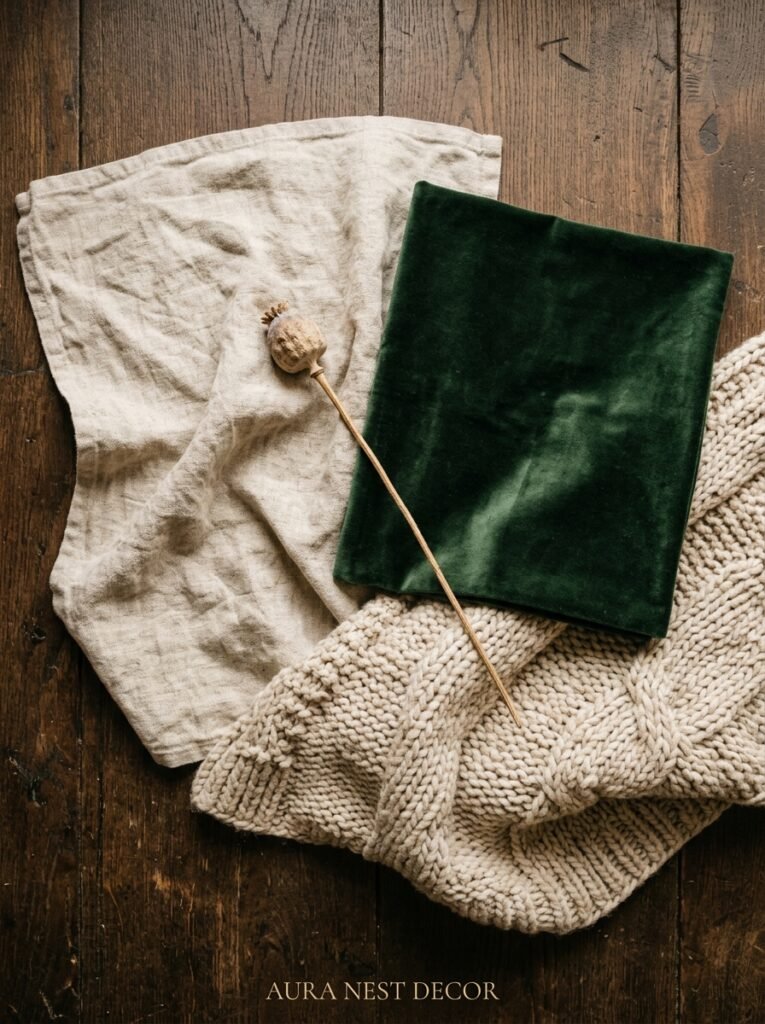
Dark cottagecore lives and dies by texture. Because when the room is dimmer and the color palette is richer, your eye needs something to DO — it craves surface variation.
Chunky knit throws in dark oatmeal or forest green draped over the arm of that velvet sofa. Linen cushions in a slightly faded floral — the kind that looks like it came from a Victorian estate sale. A worn, over-dyed wool rug in burgundy or deep teal. A velvet curtain that puddles slightly on the floor because you bought it a little too long on purpose.
Don’t match everything. The mix of slightly tired linen next to rich velvet next to a rough-woven throw is exactly the kind of tension that makes a room feel collected rather than decorated.
“Don’t match everything. The mix of slightly tired linen next to rich velvet is exactly the kind of tension that makes a room feel collected rather than decorated.”
Curtains are doing a lot in this style, by the way. Heavy, lined curtains in velvet or thick linen, hung HIGH and wide, make a room feel like it’s been there forever.
6. The Bookshelf Philosophy That Separates Good Dark Cottagecore from Pinterest Fail
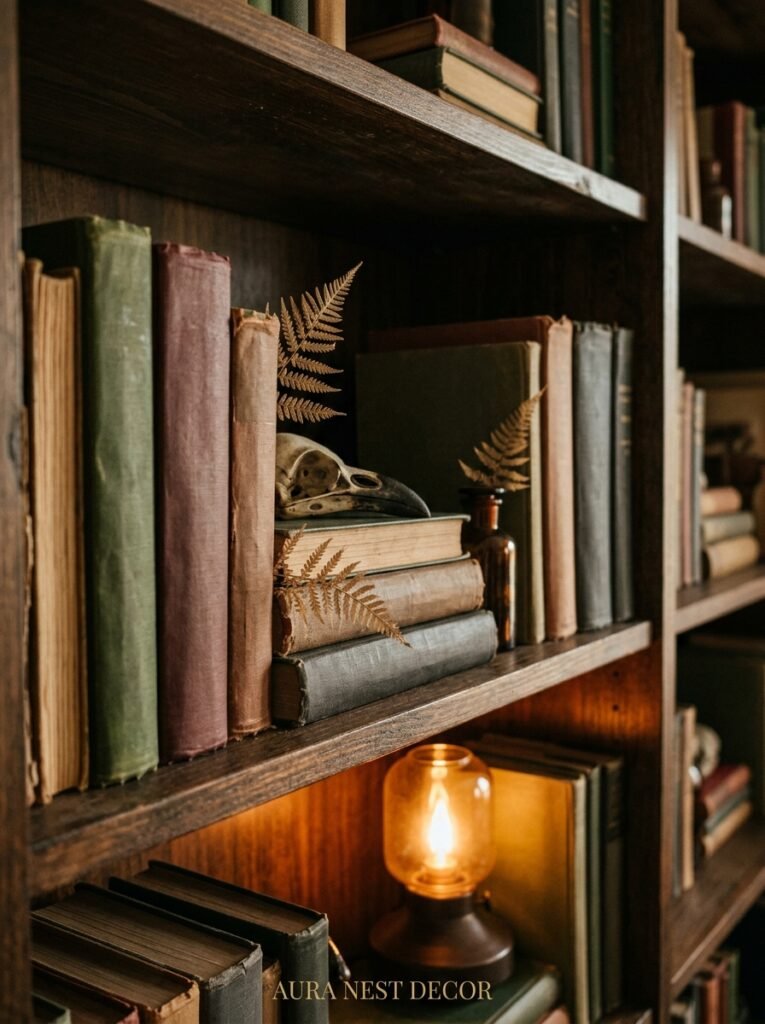
Books are non-negotiable in this aesthetic. But not just any books displayed any way.
Don’t organize by color. I know it looks good in photos but it reads as deliberately styled in a way that breaks the spell. Instead: stack some horizontally, lean a few with their spines facing in, mix paperbacks with hardcovers, put a small object in front of a row here and there. A dried mushroom. A small pottery vase. A brass candlestick that’s been through some things.
Old books genuinely matter more than new ones here. Charity shops and thrift stores in both the US and UK are full of them and they cost almost nothing. A cracked spine with a faded gold title on dark fabric? That’s the whole vibe in one object.
Fill the shelves full. Dark cottagecore is not a minimalist aesthetic. The sense of abundance — of things accumulated over time, of a life lived — is central to what makes it feel right.
7. Plants: Not the Trendy Ones, Actually
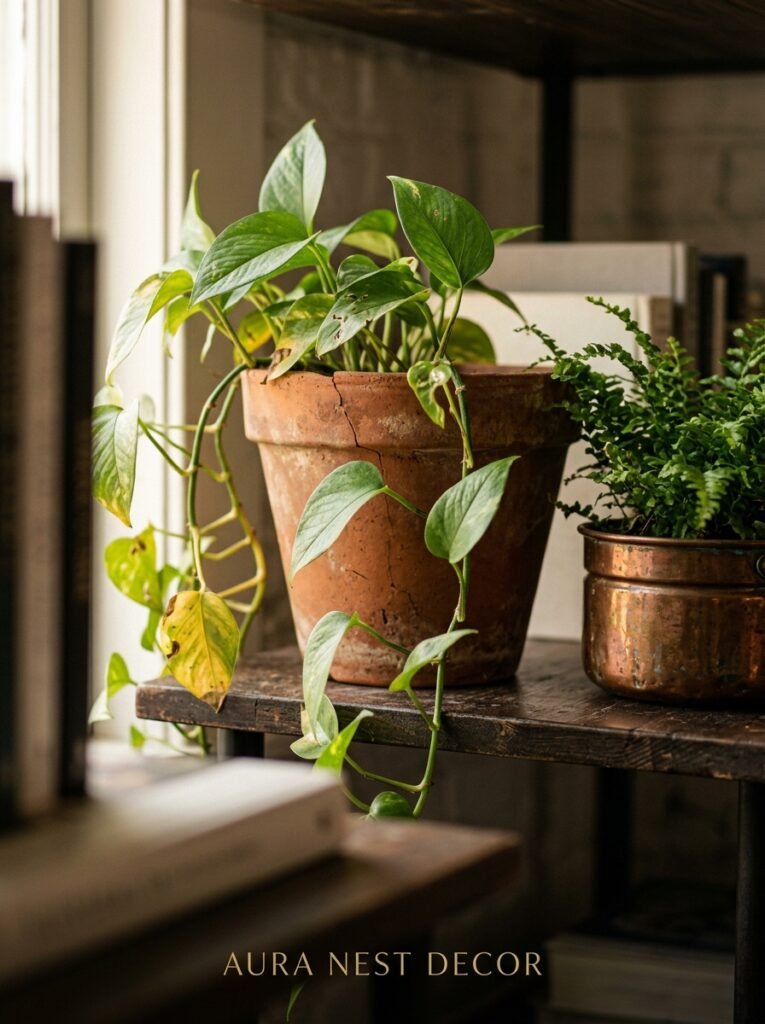
Okay, I know this might be controversial. But a bright green monstera or a neon pothos doesn’t belong in a dark cottagecore room. They’re beautiful plants, just not the right ones here.
You want plants that look like they have opinions. Dark, moody, a little strange. Burgundy-leafed heuchera brought inside in a terracotta pot. Black-stemmed elephant ear. Deep green ferns that look like they arrived from a Victorian conservatory and never left. Dried botanicals — bunches of dark dried roses, seed pods, twisted willow in a tall dark vase.
Moss is massively underrated. A small cloche or terrarium with moss and tiny stones on a side table costs almost nothing and adds exactly the kind of quiet, slightly mysterious life that this aesthetic needs.
And snakeplants — I know they’re everywhere, but the dark green with yellow edges kind genuinely works here in a way that a lot of trendier plants don’t.
8. The Accessories That Land and the Ones That Kill the Mood
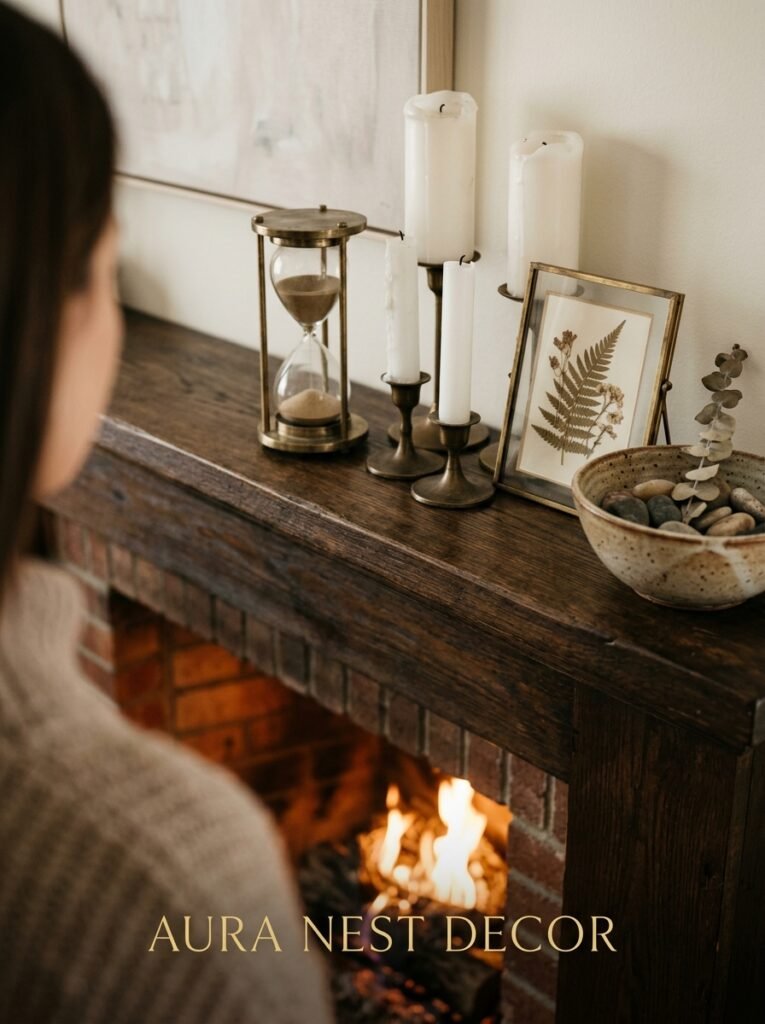
This is where a lot of people go wrong, so let me be specific.
Things that WORK: dark ceramic vessels, aged brass candleholders, apothecary-style glass bottles, old maps or botanical prints in dark wood frames, small sculptures that look vaguely found rather than mass-produced, a mortar and pestle on the mantlepiece for no practical reason whatsoever.
Things that DON’T work: anything with a rose gold finish (too modern), anything overly twee like ceramic bunny figurines or farmhouse-style lettered signs, matching decorative sets from the big box stores, synthetic-looking greenery, LED string lights in white (warm Edison string lights are a different story).
One thing I keep coming back to: a big dark-framed mirror. Not a small decorative one, but a large, slightly tarnished mirror that reflects the candle glow back into the room. It makes everything feel bigger and more magical at the same time, which is a trick I will never get tired of.
9. The Floor Situation — Rugs, Wood, and Why Bare Floors Are a Mistake Here
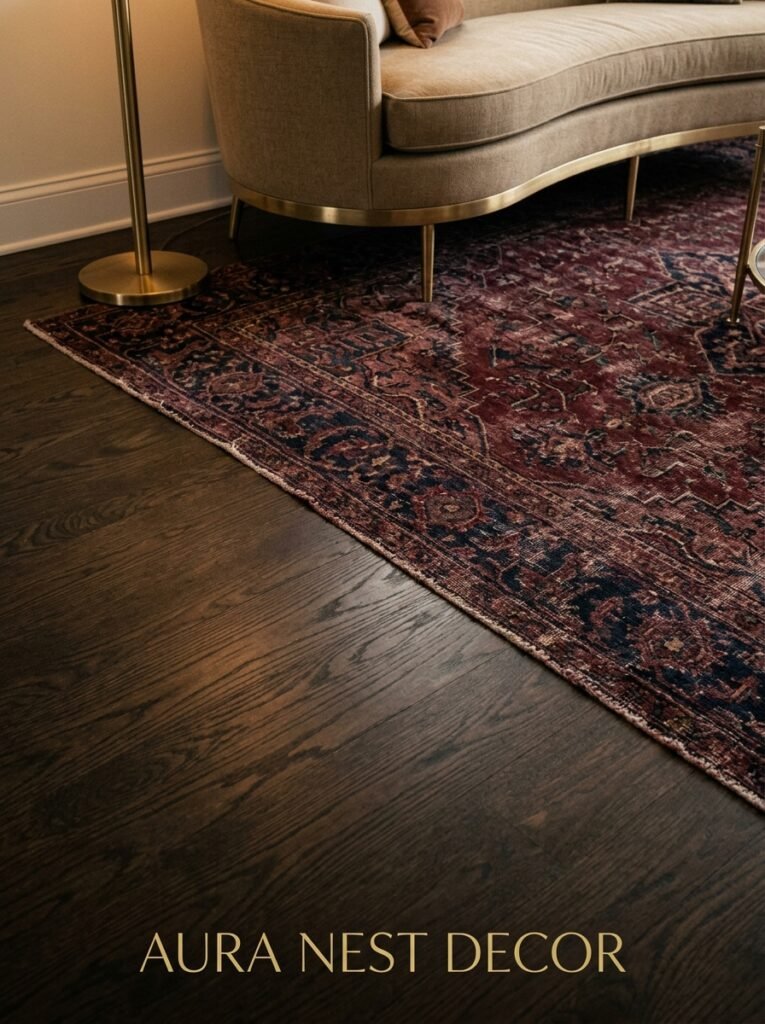
If you have beautiful old wood floors, good. That’s a gift. But bare wood floors in a dark cottagecore room feel unfinished — there’s nothing to anchor the furniture, nothing soft to look at, nothing to absorb sound so the room feels like a sanctuary instead of an empty space.
A large rug is not optional in this aesthetic. Persian-style rugs with faded jewel tones — burgundy, deep teal, old gold — are absolutely perfect, and the older and more worn-looking the better. You can find genuinely beautiful vintage-style ones at surprising price points at places like eBay or Wayfair.
In the UK, a lot of older homes have carpet to start with, and if yours is in a deep neutral color, honestly it works fine. Don’t feel like you have to rip it up to achieve this look.
Layering rugs is also very much on the table. A smaller worn rug laid over a larger neutral one? That’s a genuinely beautiful move.
10. How to Get the Smell Right (Yes, This Is Decoration)
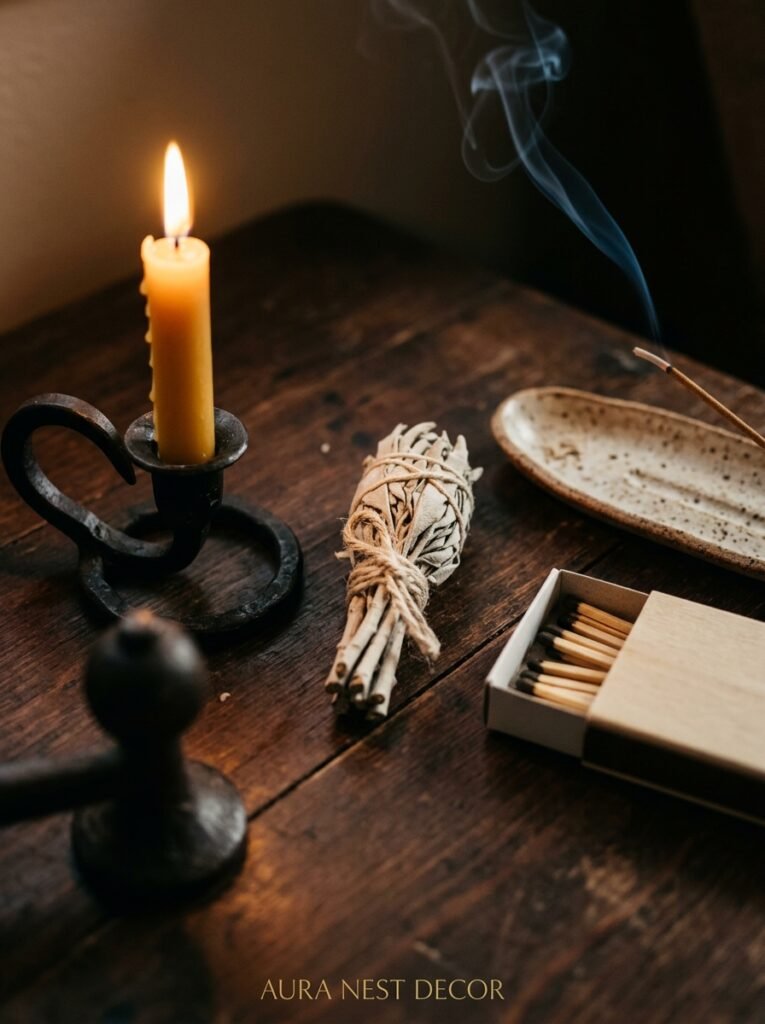
This is not a step. This is the WHOLE thing.
A dark cottagecore living room that smells like nothing is missing its soul. The smell of the room is part of the atmosphere in a way that I don’t think people take seriously enough.
Beeswax candles smell ancient and warm in a way that paraffin just doesn’t. Incense — not the cheap kind — can work brilliantly: sandalwood, oakmoss, black amber. Dried botanicals add a faint, dusty herbal scent that’s barely perceptible but absolutely present.
“A dark cottagecore living room that smells like nothing is missing its soul.”
In winter in the UK, a wood or log burner is obviously ideal if you have one — there is no candle on earth that replaces that smell. In the US, if you’re in a climate that lets you use a fireplace, same. But even without either of those, a good soy candle in fig leaf or dark amber or black tea will carry the whole thing.
Don’t underestimate this. Walk into the room blind and the smell should already tell you what kind of room it is.
11. The Budget Reality: What You Can Skip, What You Really Can’t
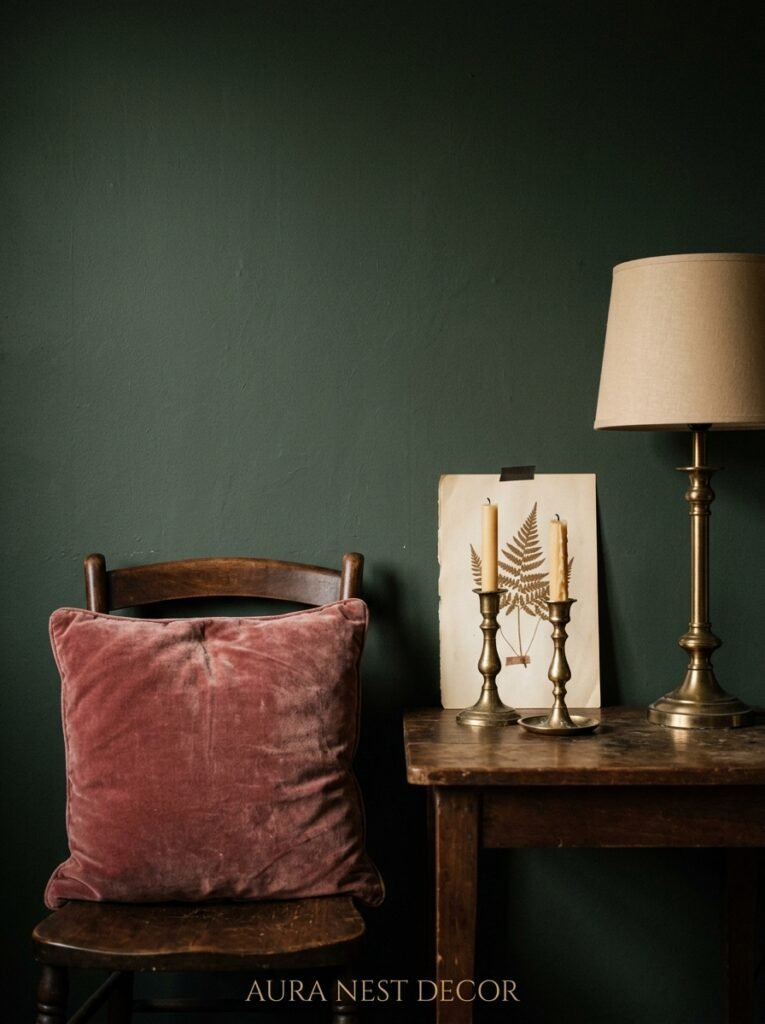
Not everyone is starting from scratch and not everyone has £2,000 to spend redoing a room. So here’s where I’d actually put the money.
The sofa or main seating is worth spending on if you can — it anchors everything and a badly chosen one in the wrong fabric will make the whole thing look off. A secondhand velvet sofa in the right color is better than a new one in the wrong material. Facebook Marketplace and Gumtree in the UK have produced some genuinely spectacular finds for people willing to look.
Paint is cheap and transformative. Seriously, if you do nothing else, repaint one wall in a deep forest green or warm charcoal and the room will already look more intentional.
The things you can DIY or source affordably: cushion covers (buy cheap inserts, splurge on interesting covers), candles, plants, books from charity shops or thrift stores, and frames from junk shops with your own prints inside them.
What to skip entirely: matching accessory sets, decorative objects that look new and generic, anything that comes in a shrink-wrapped box labeled “rustic.”
12. The Room Should Feel Like It Happened Over Time, Not in a Weekend
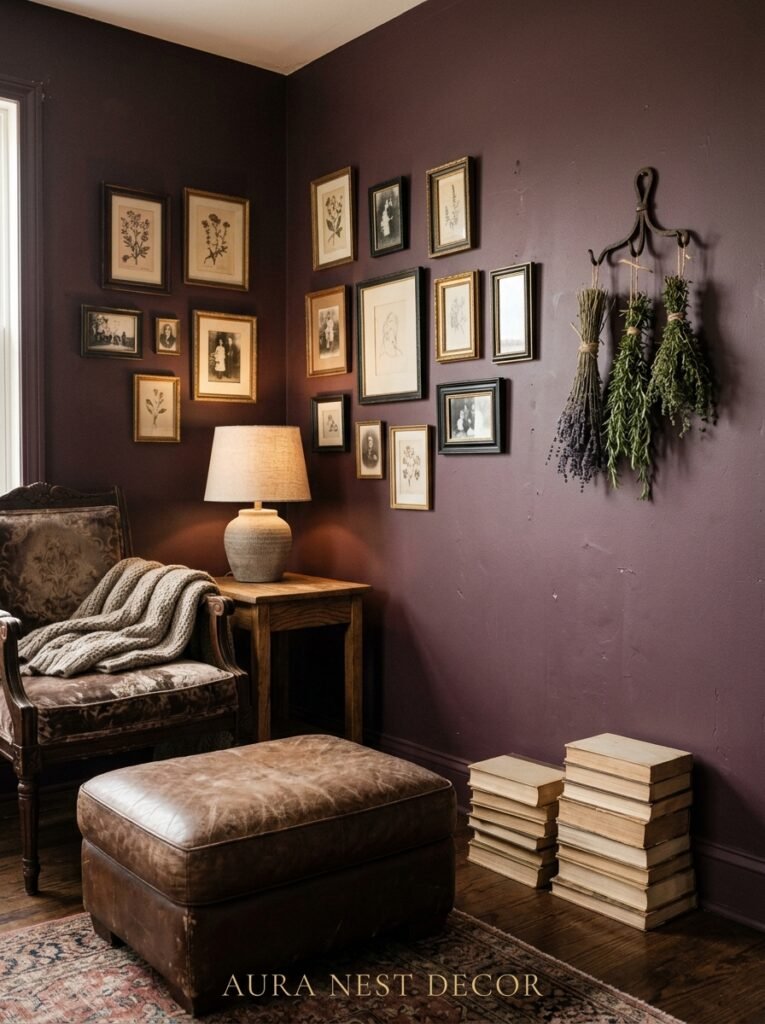
This is maybe the most important point and also the hardest to teach.
Dark cottagecore rooms that feel wrong share one thing — they look finished. Like someone made a mood board and executed it perfectly and now it’s done. That’s not what makes these spaces feel real.
The best rooms in this style feel like they grew. Like the rug was found somewhere years ago and the lamp came from a relative and the books have been on that shelf so long nobody remembers buying them. Even if none of that is true — even if you assembled the whole thing in a month — you have to resist the urge to make it look complete.
So: leave gaps on the shelves you’ll fill later. Keep the slightly imperfect thing instead of swapping it for something more coordinated. Let a throw sit slightly rumpled instead of folded perfectly. Let the candles burn down a little before the room gets photographed.
The patina of use is the whole point. A room that looks like nobody lives in it isn’t cottagecore — dark or otherwise.
—
❓ FAQ
Q: Can dark cottagecore work in a small living room without it feeling oppressive? A: Yes, and often better than in a large one, honestly. Small rooms benefit from the sense of enclosure that dark walls create — it makes them feel cozy rather than cramped. The key is keeping lighting layered and warm, using at least one mirror to bounce light around, and not over-filling with furniture. A small room done in this style can feel like the best corner of an old pub, which is not a bad thing.
Q: Do I need to commit to dark walls or can I achieve this look with lighter walls? A: You can absolutely work with lighter walls — a warm off-white or aged cream can actually be a great backdrop if the furniture, textiles, and accessories are doing the heavy lifting in darker tones. That said, if you’re willing to paint even one wall in a deeper color, the transformation is significant. It doesn’t have to be all-in to feel intentional.
Q: Where’s the best place to find dark cottagecore-style furniture in the US and UK without spending a fortune? A: Secondhand is genuinely the best answer here — Facebook Marketplace, Gumtree (UK), eBay, and local estate sales are where the real finds are. Antique shops and junk shops near smaller towns often have pieces that would look completely at home in this style. For new pieces, IKEA with some thoughtful additions (different hardware, a good throw) can work, and in the UK, Dunelm and Next Home both carry pieces that fit the aesthetic at reasonable prices.
—
💭 Final Thoughts
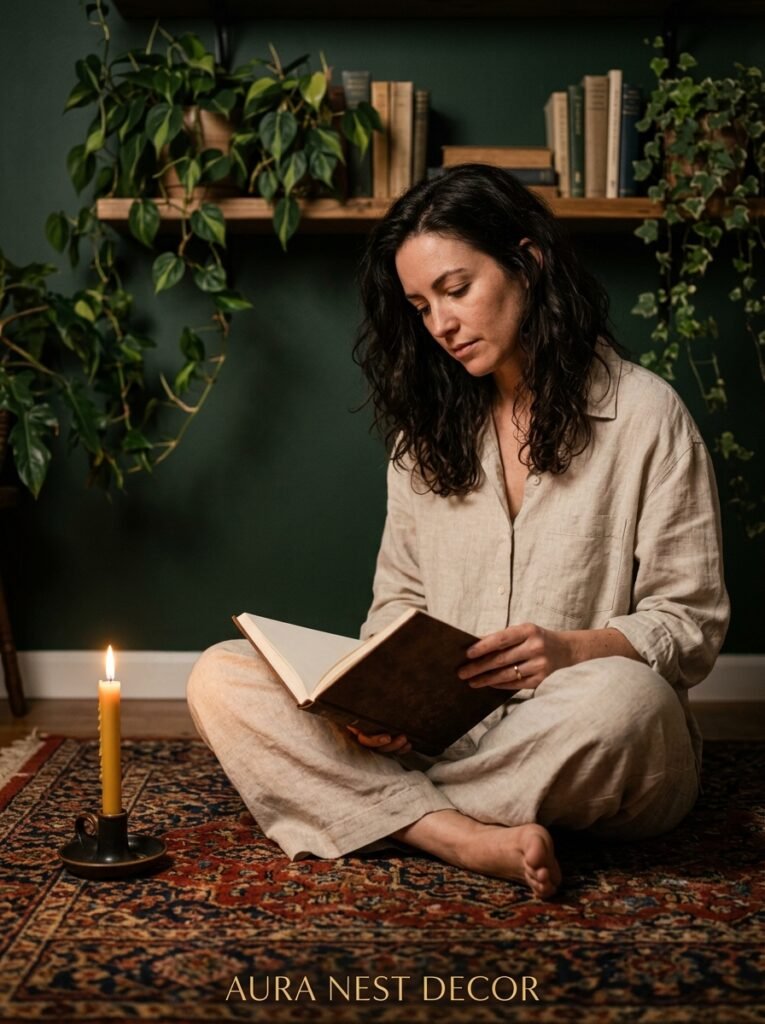
Dark cottagecore isn’t a trend you follow — it’s more like a feeling you recognize. The sense that a room should hold you, not impress you. That the best spaces look like they’ve been lived in by someone interesting.
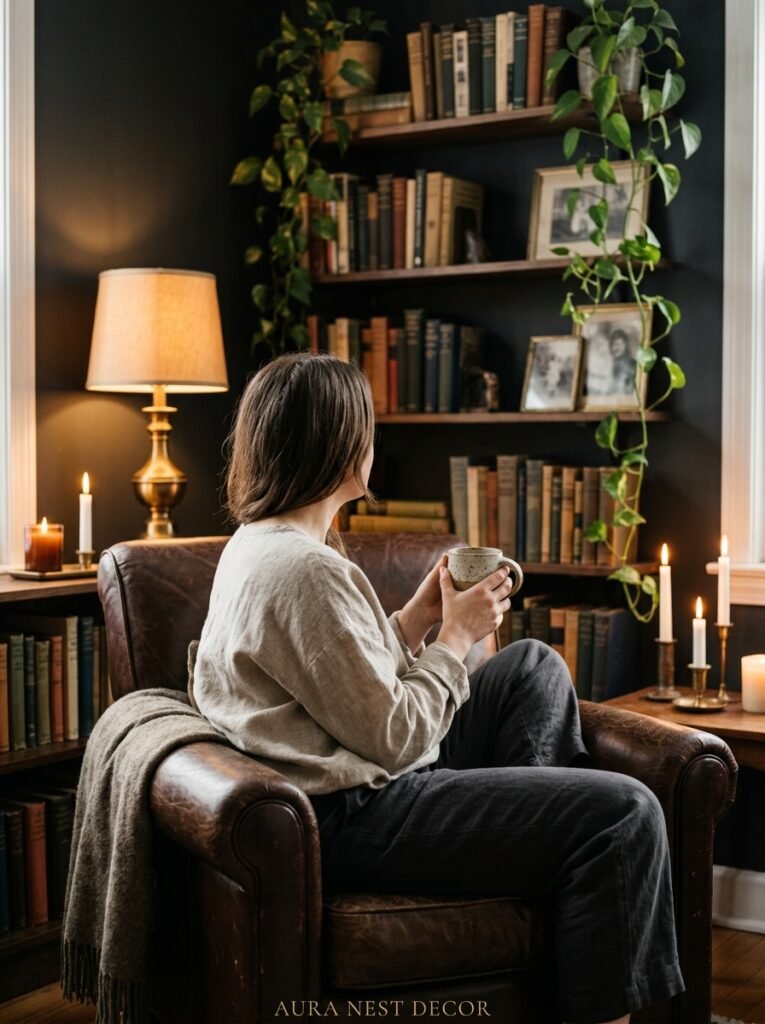
Start with one corner. A deep-colored wall behind an armchair, a lamp with a warm bulb, a stack of old books, a candle burning. See if it feels like what you’ve been looking for.
Does your living room feel like YOU yet?