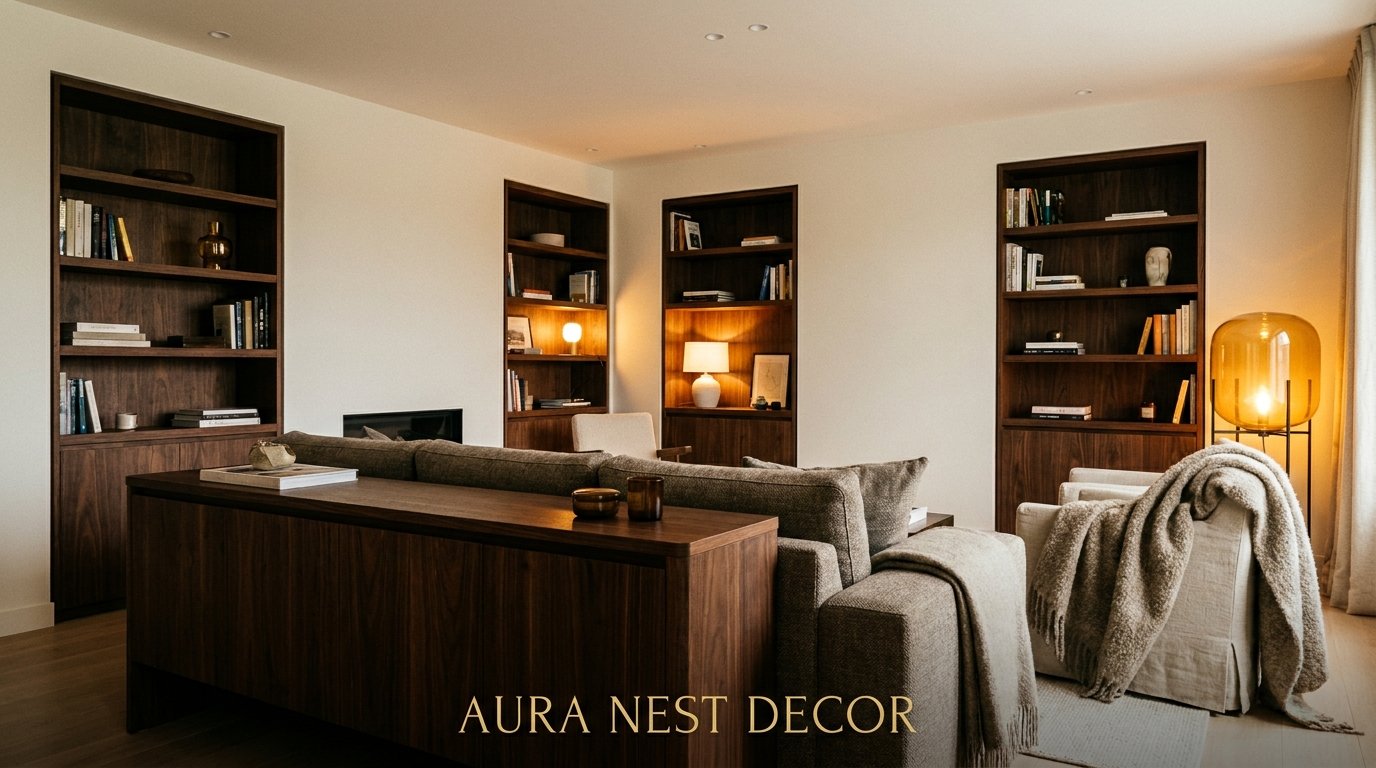
Dark Wood Living Rooms Are Having a Moment — And Honestly, It’s About Time
My friend Katie came over last autumn and stood in my doorway for a full ten seconds before saying anything. Then: “I didn’t know a room could feel like a hug.” That was the moment I knew the dark wood thing had worked.
—
1. Why Everyone Suddenly Wants Dark Wood (And Why It’s Not Actually Sudden)
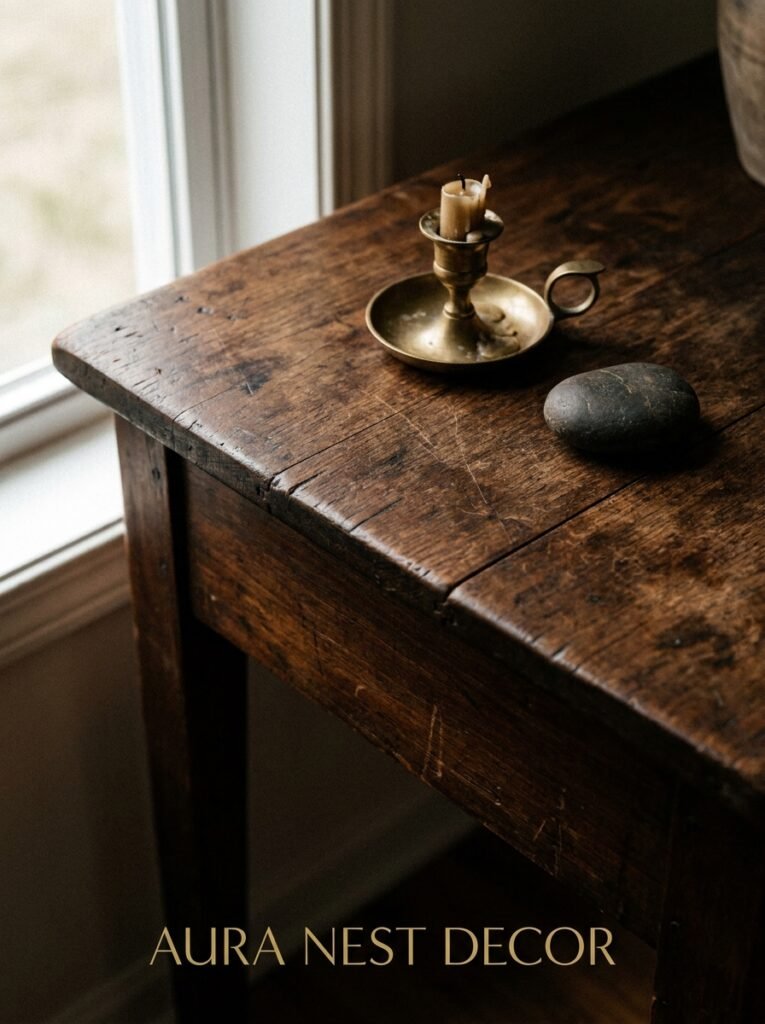
Here’s the thing — dark wood never really went anywhere. It just got buried under a decade of white walls, ghost furniture, and the collective anxiety that living spaces had to look like Instagram staging areas. We convinced ourselves that “light and airy” was the only way to make a room feel bigger, calmer, better. And for a while, that worked fine.
But something shifted. People started craving rooms that felt inhabited. Rooms that looked like someone actually chose every piece, lived alongside it, let it age a little. And dark wood does that in a way that blonde oak and white-painted furniture simply can’t.
“Dark wood doesn’t ask you to keep the room perfect. It asks you to live in it.”
Right now the specific shades doing most of the heavy lifting are deep walnut, blackened oak, and that particular chocolate-brown mahogany that shows up in mid-century pieces at estate sales. Rich, warm, just a little moody. And they’re showing up in Pinterest boards from Connecticut to Cornwall.
—
2. The Light Rule That Everyone Gets Backwards
Most people think dark wood needs more light to compensate. Add more lamps, open the curtains wider, paint the walls white to “balance” it. I used to think this too, honestly.
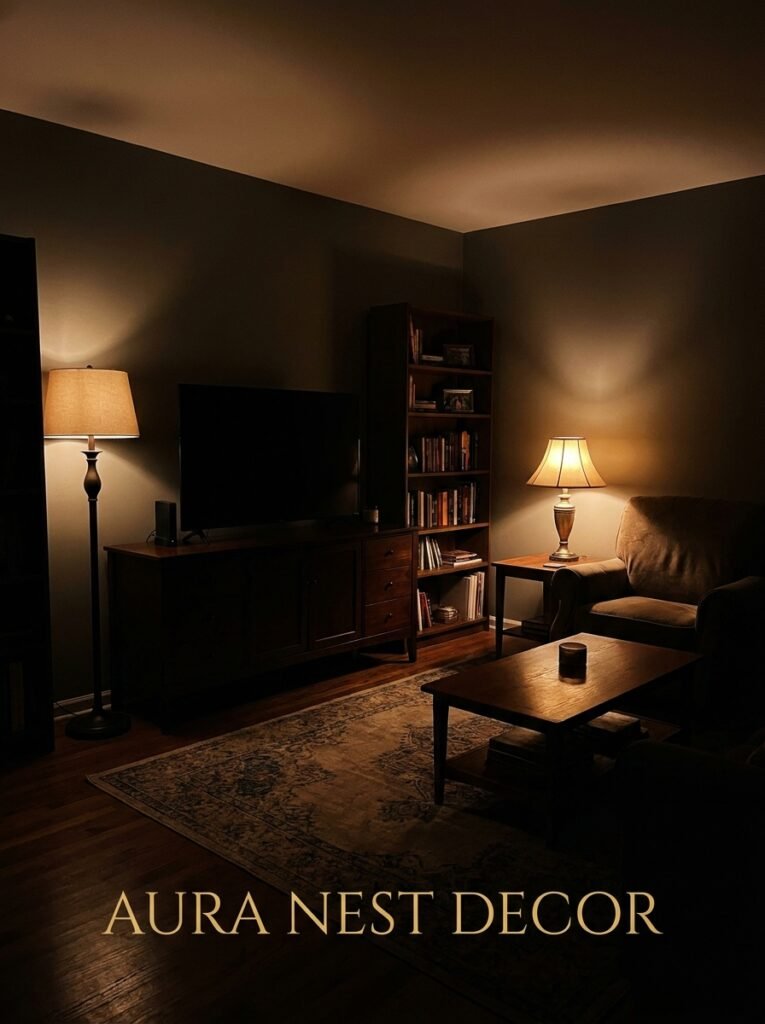
But that’s kind of backwards. The rooms that actually look stunning with dark wood are the ones that lean INTO the moodiness. Not pitch-black, obviously — but warm, layered light rather than bright, flat light.
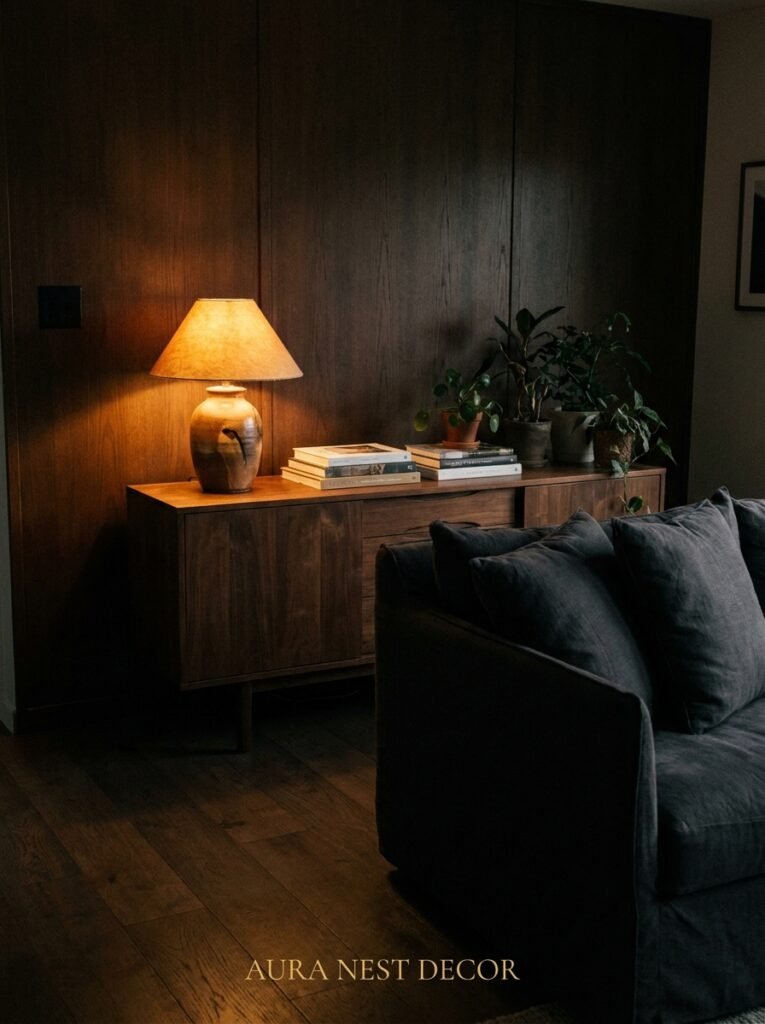
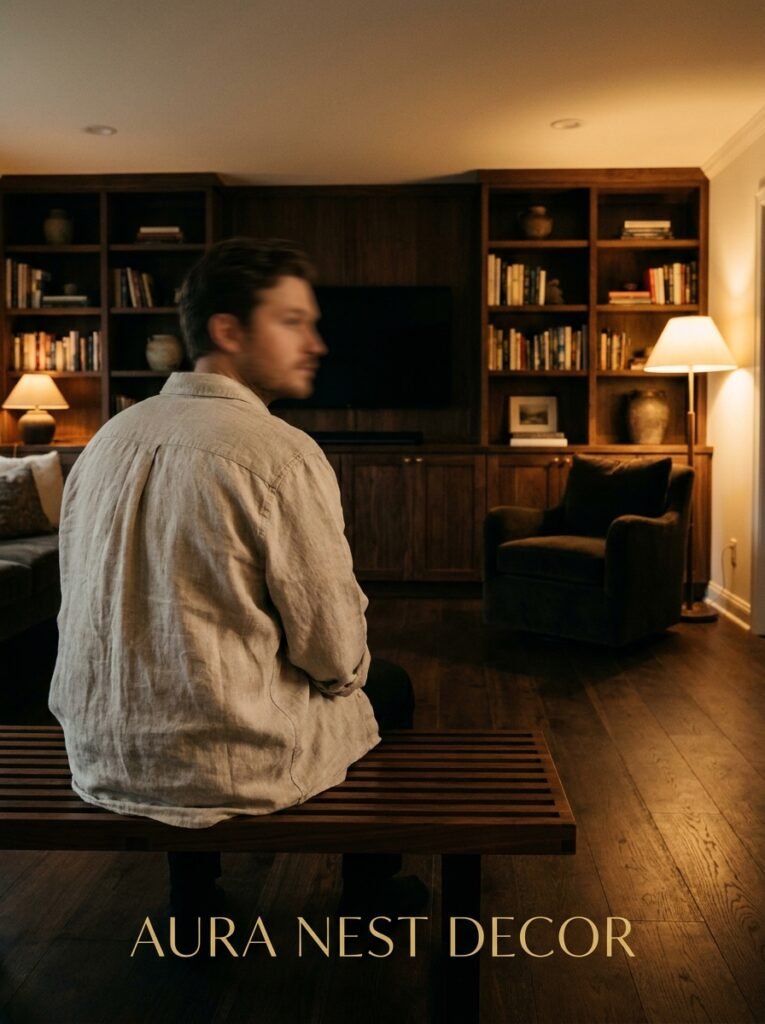
What works: the amber glow of an Edison bulb at 7pm. A table lamp with a linen shade tucked into a corner. Candles on a tray near the coffee table. These create depth. They make the grain in the wood do something interesting, catch and shadow in ways that a cold overhead light just murders completely.
So don’t panic if your living room doesn’t face south. Dark wood actually does better in rooms with less aggressive natural light. Side note — this is also why dark wood feels so good in autumn and winter. It’s designed for that light.
—
3. The Wall Color That Changes Everything (It’s Probably Not What You’re Picturing)
People’s first instinct is usually white or cream walls. Safe. Neutral. Won’t compete with the wood. Fine enough.
But the rooms that stop you mid-scroll? They’ve got something slightly bolder happening on the walls.
Forest green is the obvious answer and there’s a reason it keeps appearing — deep sage, hunter, the kind of green that looks almost grey in low light. It wraps around dark walnut furniture like the two were designed together, which sort of makes sense given that trees exist in forests. Anyway.
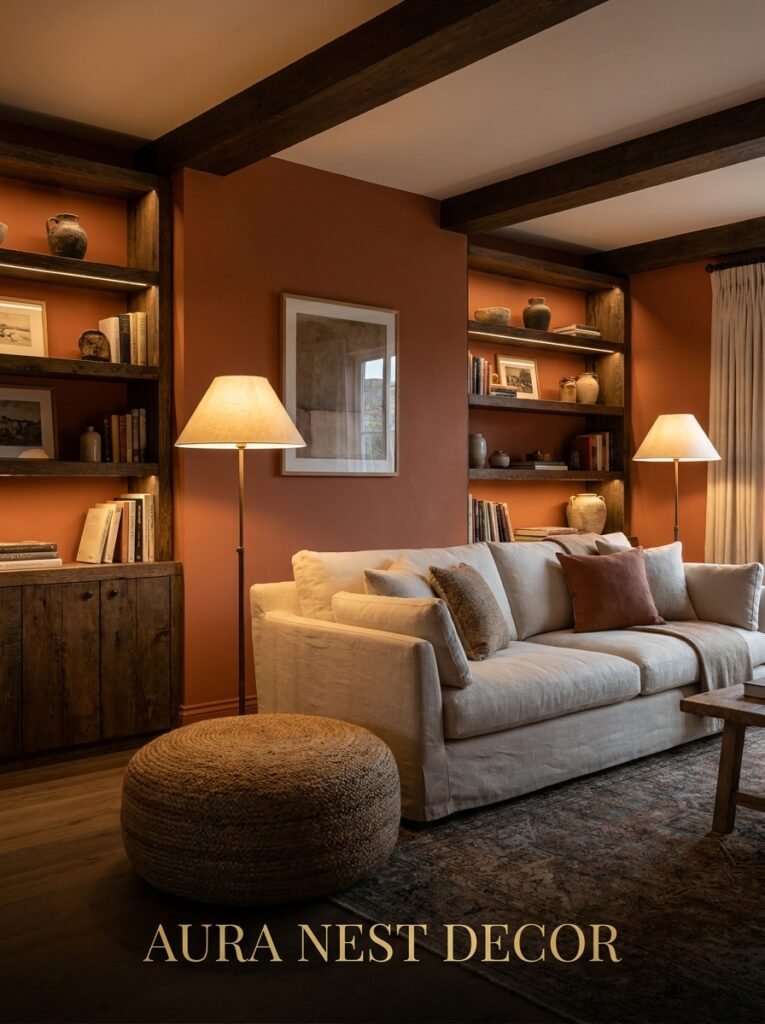
But the one I keep coming back to is warm terracotta. Not the chalky orange version — the deep, earthy, almost-brown terracotta. Put that behind a dark walnut bookcase with some warm lighting and a couple of cream linen cushions and the whole room exhales. It shouldn’t work as well as it does. It really does though.
Dusty plum is having a quiet moment too, especially in UK interiors. Moody without being oppressive. Very Victorian library if you want that, very modern maximalist if you don’t.
—
4. The Sofa Color That Either Makes or Breaks the Whole Room
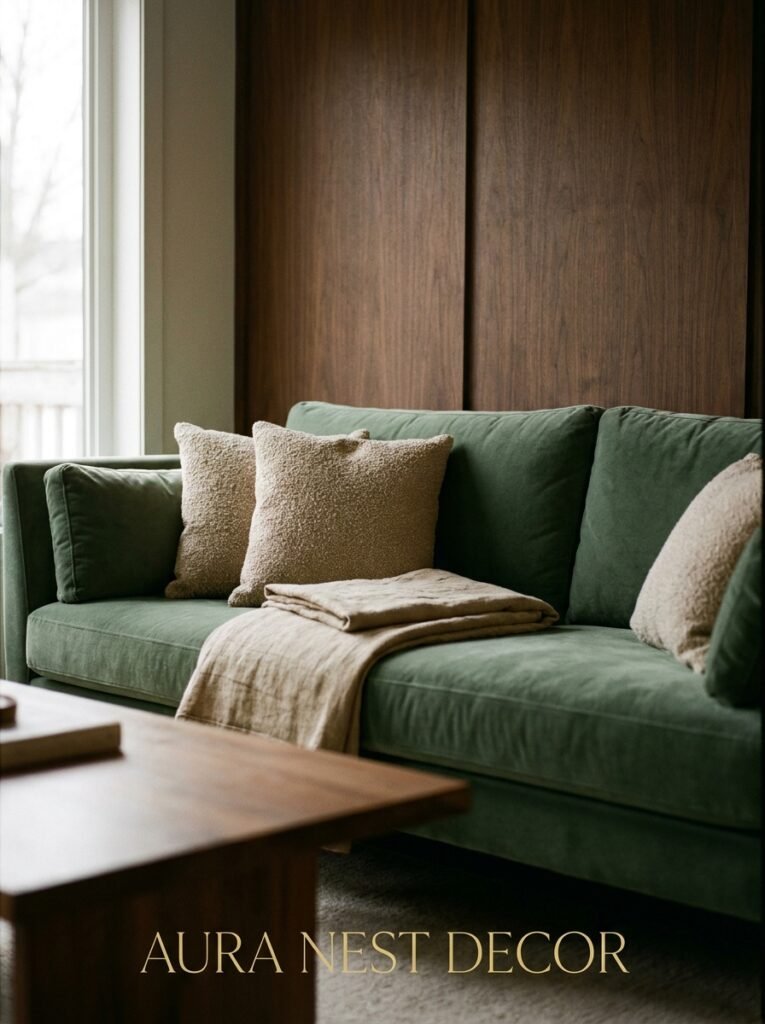
Don’t pair dark wood with a dark grey sofa. I know it feels safe and coordinated but what it actually creates is a room that has no air in it, no contrast, nothing for the eye to land on.
Dark wood wants something that pushes back a little. Cream boucle is the obvious Pinterest answer and yes, it works, I’m not going to pretend it doesn’t. But it can also tip into “showroom” territory if you’re not careful.
What I think works BETTER: cognac leather. Warm, tactile, develops a patina over years that echoes the grain in the wood in a way that feels genuinely earned. A deep rust velvet is another one — unexpected, cozy, and it photographs beautifully which let’s be honest matters if you’re pinning any of this.
The rule, if there is one: your sofa should be either significantly lighter or significantly warmer than your wood tones. Not the same value, not the same temperature. Contrast or warmth. Pick one.
—
5. How to Use a Dark Wood Coffee Table Without the Room Feeling Heavy
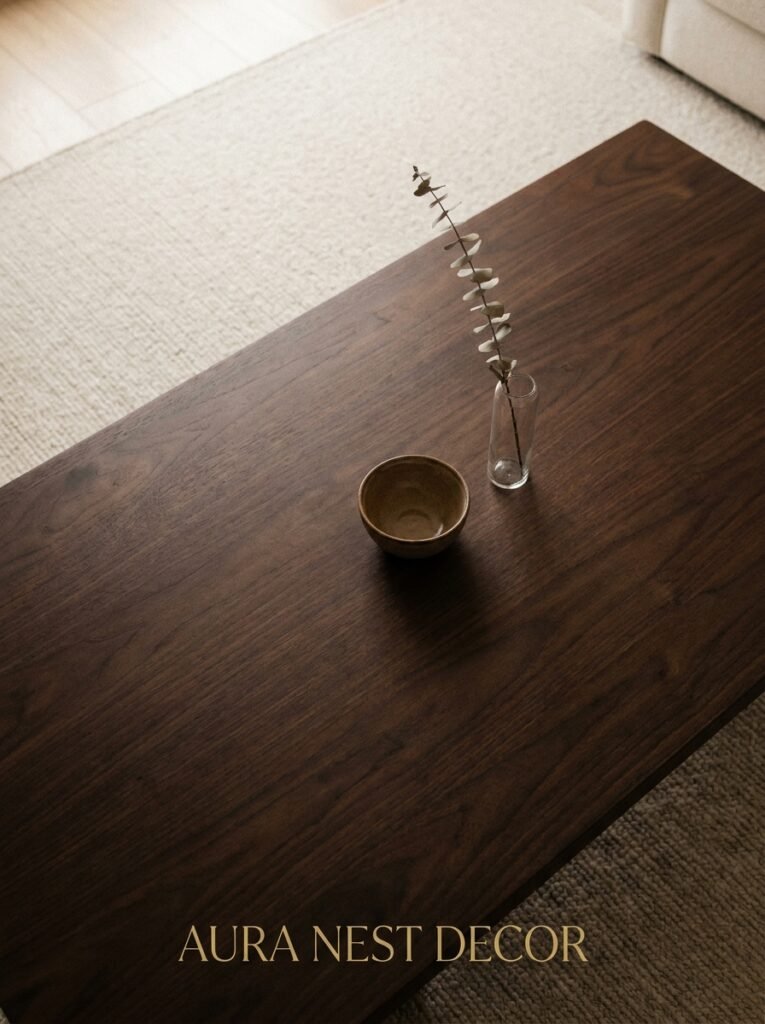
Here’s where a lot of rooms go wrong. They get the walls right, the sofa right, and then plop a massive solid dark wood coffee table in the center and suddenly everything is very serious.
The fix is simple: legs.
A coffee table with visible, tapered legs in dark wood lifts the whole piece visually. Your eye reads the floor underneath it, which means it registers as lighter. A chunky block of a coffee table, no legs — that’s an anchor. Sometimes you want an anchor. Usually you don’t.
“Legs aren’t just a style choice. They’re the difference between a room that breathes and one that sits on your chest.”
The other option is mixing materials. A dark walnut top with a brass or black metal base. Or — and this is one I really love — a dark wood frame with rattan or cane detail. Brings in texture, breaks up the weight, and it looks current without being trendy in a way you’ll hate in three years.
—
6. The Shelf Styling Detail That Makes Dark Wood Bookcases Look Intentional Instead of Heavy
Dark wood bookcases are magnificent. They’re also extremely easy to style badly, and when they’re styled badly the whole room suffers because they’re usually the biggest visual piece in it.
The mistake: filling every shelf to the same density. Books front to back, objects crammed in, no breathing room. It reads as cluttered even if everything is technically “nice.”
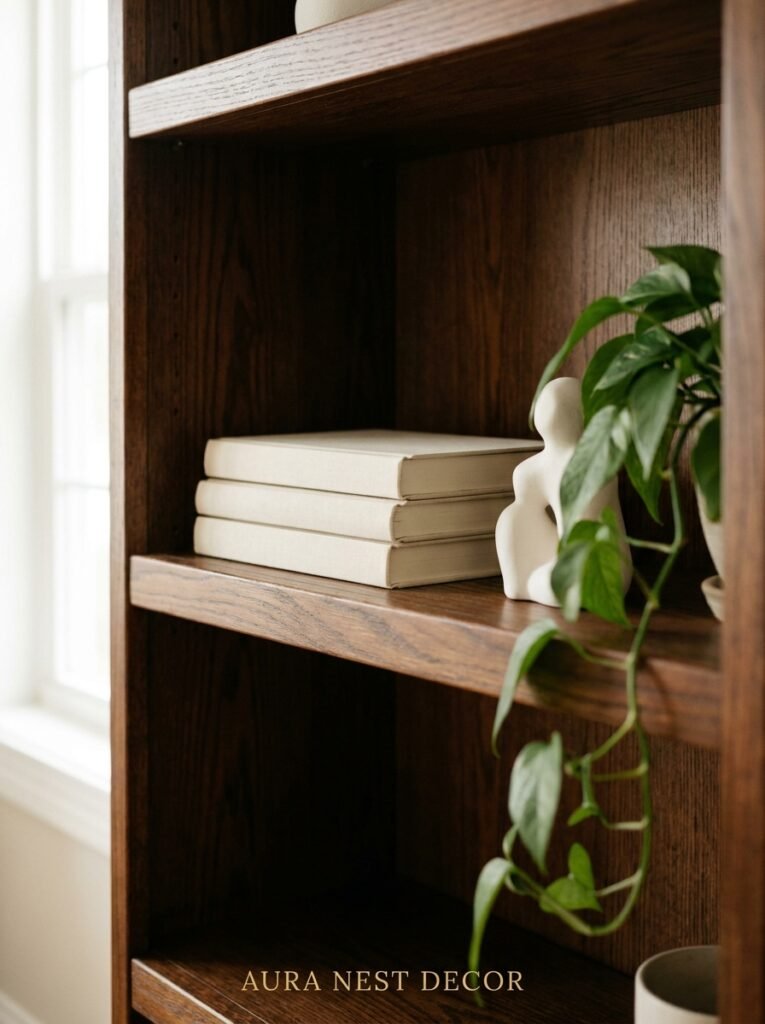
What actually works — vary the density deliberately. Some shelves packed with books spine-out. One shelf with just two objects and a lot of space. One shelf turned to show white book pages instead of spines (this sounds precious but it genuinely softens the whole unit). Plants trailing down from a top shelf. A piece of art leaning against the back of a shelf, not hung.
The detail that ties it together: ONE accent color carried throughout the shelves. Terracotta pots, rust-toned books, amber glass — pick one warm note and repeat it without making it obvious you repeated it. That’s what makes it feel curated and not decorated.
—
7. The Rug That Dark Wood Floors Actually Need
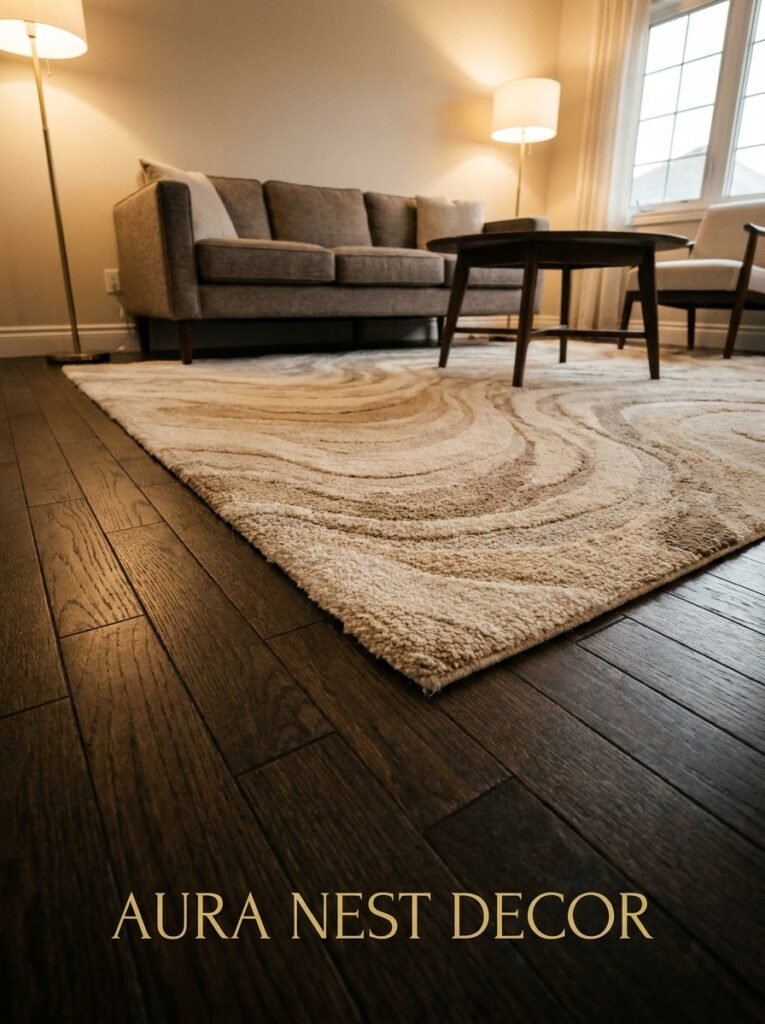
If you’ve got dark wood floors — real or engineered, doesn’t matter — the rug situation is critical.
A lot of people go for pale, neutral rugs. Ivory, cream, light grey. And look, it works fine. The contrast is nice, it lifts the floor visually. But it’s also the exact choice every room with dark floors makes, and if you’re reading this I’m guessing you want something that feels a little more specific to you.
My actual preference: a worn, antique-style rug in deep reds, navy, or faded ochre. Not a brand new one — or if it’s new, one that’s been made to look aged. The pattern adds visual interest without adding visual weight, which is a trick only rugs and wallpaper can really pull off. And the warmth of those tones bridges the dark floor and the lighter furniture in a way a neutral rug just can’t.
For UK homes especially, a proper Persian-style or Oushak rug in a sitting room with dark wood floors looks genuinely old-money comfortable. Not stuffy. Just settled.
Size matters too — bigger than you think. The rug should sit under the front legs of the sofa at minimum, ideally under all the furniture. A too-small rug in a room with dark floors looks like a bath mat.
—
8. The Mistake Almost Everyone Makes With Curtains in a Dark Wood Room
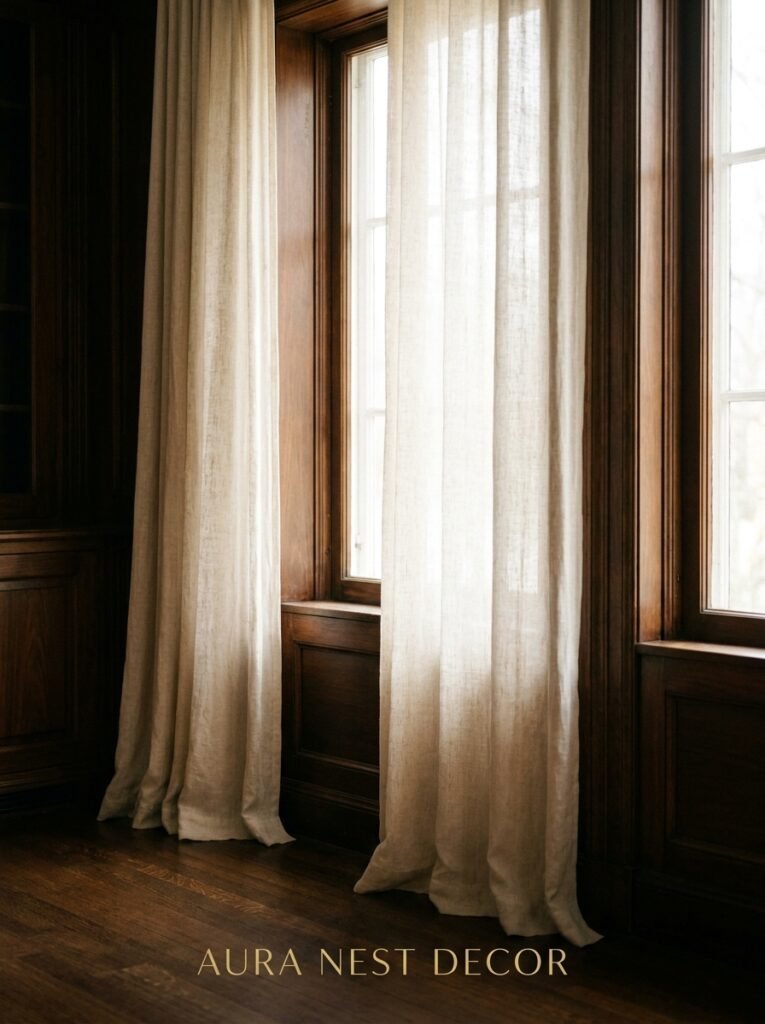
White curtains. Or worse — white wooden blinds.
I get it. You don’t want to “add more darkness.” But here’s what actually happens: white curtains in a room with dark wood floors and rich furniture create this weird, jarring contrast that makes the windows look like afterthoughts. The room reads as two separate moods colliding.
Go linen. Natural, undyed, slightly textural. Or go dark — proper dark forest green or navy curtains in a room with dark wood can be absolutely stunning, especially if you hang them high and wide so they frame the window rather than just covering it. Hanging curtains ceiling-to-floor makes ANY room feel taller, more expensive, more deliberate.
The UK version of this: if you’ve got original sash windows and dark wood floors and you put up dark green velvet curtains with brass rings, I will genuinely come and photograph your house. That combination is something else.
—
9. Metals That Actually Work (And the One That Doesn’t)

Brass. That’s the answer.
Not polished, mirror-finish brass — unlacquered brass that ages slightly, or brushed brass with just a tiny bit of warmth. It hits different against dark walnut than against blonde wood. Against light wood it can feel a little precious, a little “look how curated I am.” Against dark wood it just feels rich.
Copper works too, especially if your room has any warm earthy tones in it — terracotta, rust, ochre. The combination of dark wood and copper is very warm, very slightly bohemian, really good.
The one that doesn’t work as well as people think: chrome or cool silver. It creates a cold note in a room that’s trying to be warm. Sometimes intentional contrast is good. This particular contrast just feels off — or maybe it’s the opposite, honestly, maybe in the right very modern room it could work. But I’ve never seen it and been convinced.
—
10. The Plant Situation in a Dark Wood Room
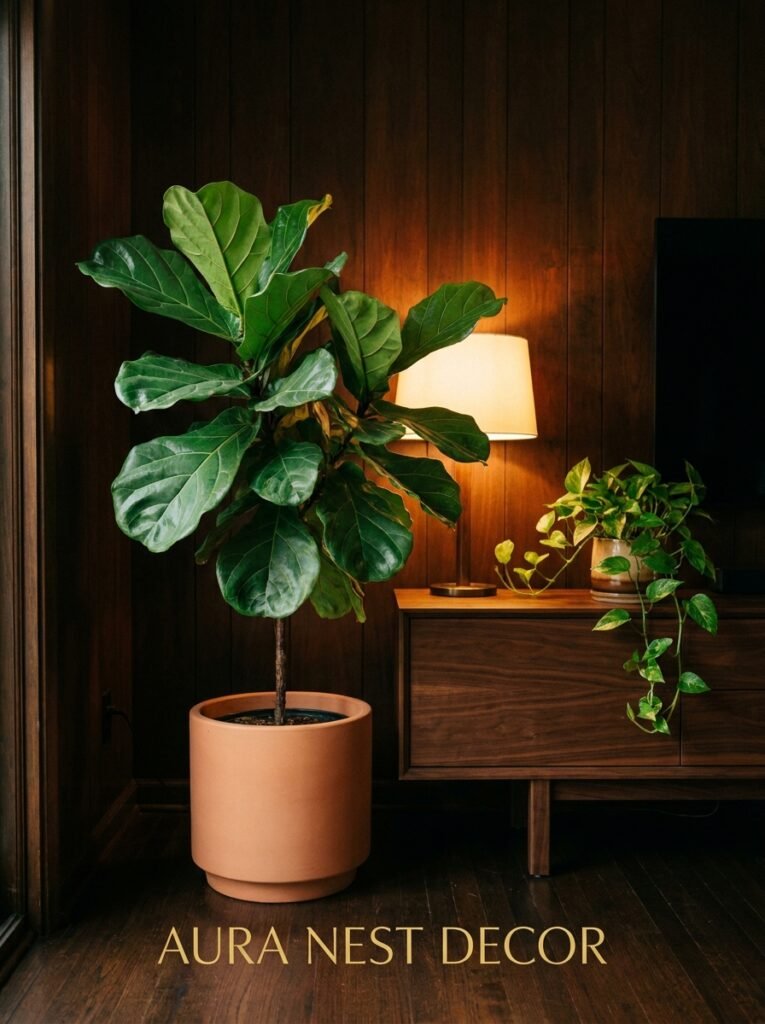
Plants matter more here than in a neutral room. Dark wood rooms absorb light and plants push back against that — they add a living note that stops the room from feeling like a furniture showroom.
But NOT any plant. Big, architectural plants in terracotta or dark matte pots. A fiddle-leaf fig, a large monstera, a floor-standing olive tree if you’ve got the ceiling height. Something with presence.
Small succulent arrangements on a coffee table surrounded by dark wood furniture just disappear. They’re too delicate for the scale.
Trail a pothos or philodendron from a high shelf. Let it drape a little. The contrast of living green against dark wood grain is one of those combinations that photographs so well it almost feels like cheating.
—
11. The Lighting Setup That Makes a Dark Wood Room Feel Like Somewhere You Actually Want to Be
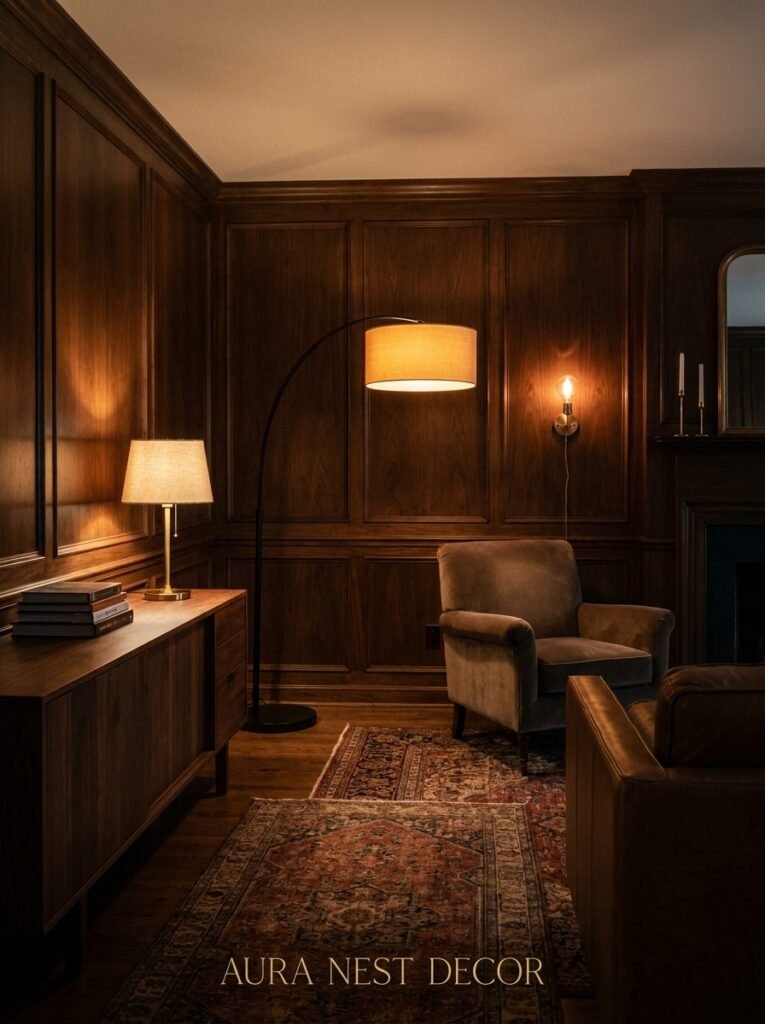
No overhead lighting. Or at minimum, never ONLY overhead lighting.
A dark wood room lit by a single overhead pendant looks like a moody office. The same room with three lamps — one tall arc lamp, one table lamp, one low floor lamp tucked in a corner — looks like the kind of place you’d want to stay until midnight talking about nothing in particular.
Layer it. Warm bulbs, 2200K to 2700K, not cool white, definitely not daylight. The floor lamp in the corner creates this wash of warm light up the wall that makes the whole room glow rather than just shine.
If you’ve got a fireplace in the room — and if you’re reading a British interiors article and you have a fireplace, please use it — a lit fire and three warm lamps is genuinely all you need. That combination with dark wood walls or furniture is exactly why people pin these rooms three thousand times.
“Three lamps and a fire. That’s the formula. Write it down.”
—
12. The One Commitment That Makes a Dark Wood Room Actually Work
You have to commit.
Half-committed dark wood rooms are worse than no dark wood at all. One dark wood side table in a white, minimalist room doesn’t create atmosphere — it just looks like you kept a piece you couldn’t decide what to do with.
The rooms that work are the ones where dark wood is THE direction, not an accent. Multiple pieces, a cohesive set of warm tones around them, lighting that supports the mood. It doesn’t mean every single thing in the room needs to be dark and heavy — contrast is good, light pieces help. But the dark wood should feel like a choice that everything else is in conversation with.
So if you’re going to do it, do it. Buy the walnut coffee table and the dark bookcase. Commit to the forest green wall. Get the amber-glass lamp. Let the room become what it wants to be.
It’s worth it. Ask Katie.
—
❓ FAQ
Q: Will dark wood furniture make my living room feel smaller? A: Not necessarily, and here’s why — it depends much more on lighting and contrast than on the furniture itself. A well-lit dark wood room with pale textiles and a large rug can feel just as spacious as an all-white room. The key is avoiding dark walls AND dark floors AND dark furniture all at the same tone with no relief anywhere. Choose one or two elements to go dark, and let the rest breathe.
Q: What’s the best wood stain or finish to look for? A: For living rooms specifically, matte or satin finishes in walnut, espresso, or blackened oak tend to look most intentional and least furniture-catalogue. High-gloss dark wood can look dated fairly quickly. If you’re refinishing existing pieces, a dark walnut stain over raw pine is surprisingly effective and much cheaper than buying new.
Q: Does dark wood work in a small British terraced house living room? A: Yes, and actually this is one of the best applications for it. Victorian and Edwardian terraced houses often have original dark wood floors, picture rails, and fireplaces that are already asking for this treatment. Lean into the period features, add a large mirror to bounce light around, and keep the textiles in cream or warm linen. It’ll look like you spent a fortune.
—
💭 Final Thoughts
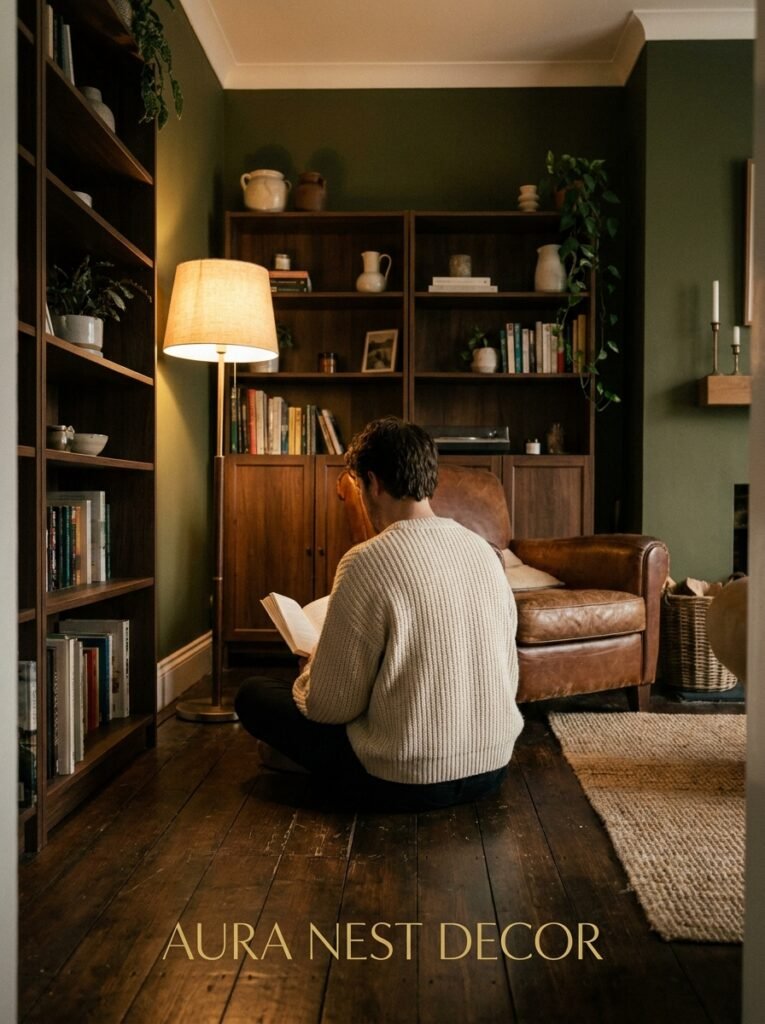
There’s a version of home design that’s trying to impress people, and there’s a version that’s trying to feel like somewhere you actually want to live. Dark wood living rooms almost always fall into the second category — there’s something about the warmth, the weight of it, the way the grain changes in different light, that makes a room feel genuinely inhabited rather than staged.
You don’t need to redo the whole room at once. Start with one piece that matters.
What would your room look like if you stopped trying to make it look bigger and just made it feel better?