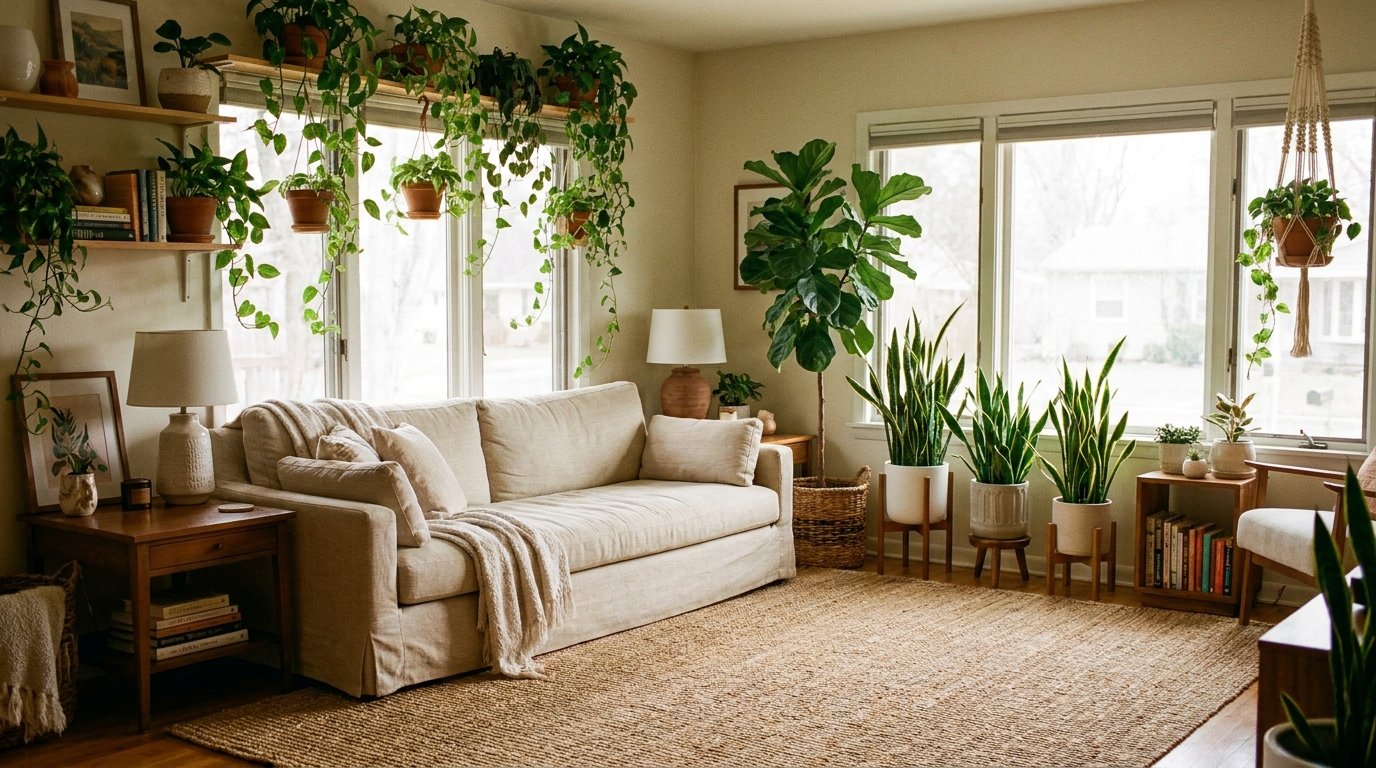
The Living Room That Finally Felt Alive (And It Wasn’t the New Sofa That Did It)
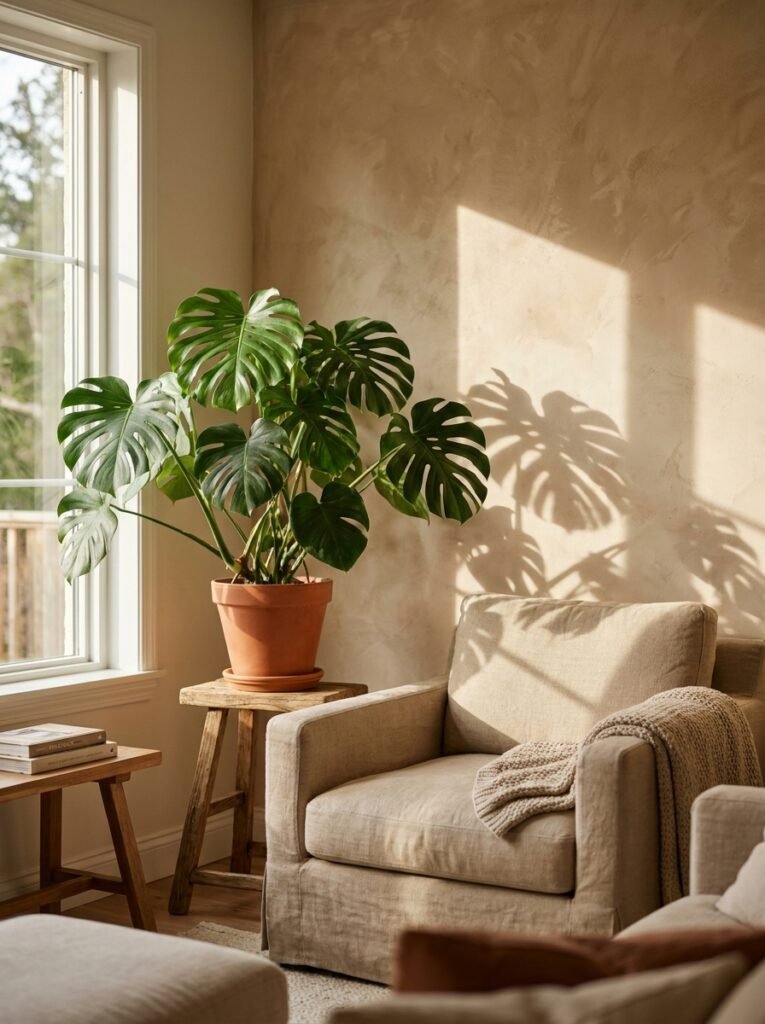
My neighbor knocked on the door last spring and said, “Did you redecorate?” I hadn’t. I’d just moved a monstera into the corner by the window and bought three small terracotta pots for the shelf above the radiator. That was it. Forty dollars and an afternoon, and suddenly the room had a pulse.
Plants do something furniture just can’t.
—
1. The Corner That Every Living Room Has — and Almost Nobody Uses Right
You know the one. That slightly awkward far corner, probably behind the sofa arm or next to where the TV stand ends. It’s not deep enough for a proper armchair, not wide enough to do much with. Most people put a floor lamp there and call it a day.
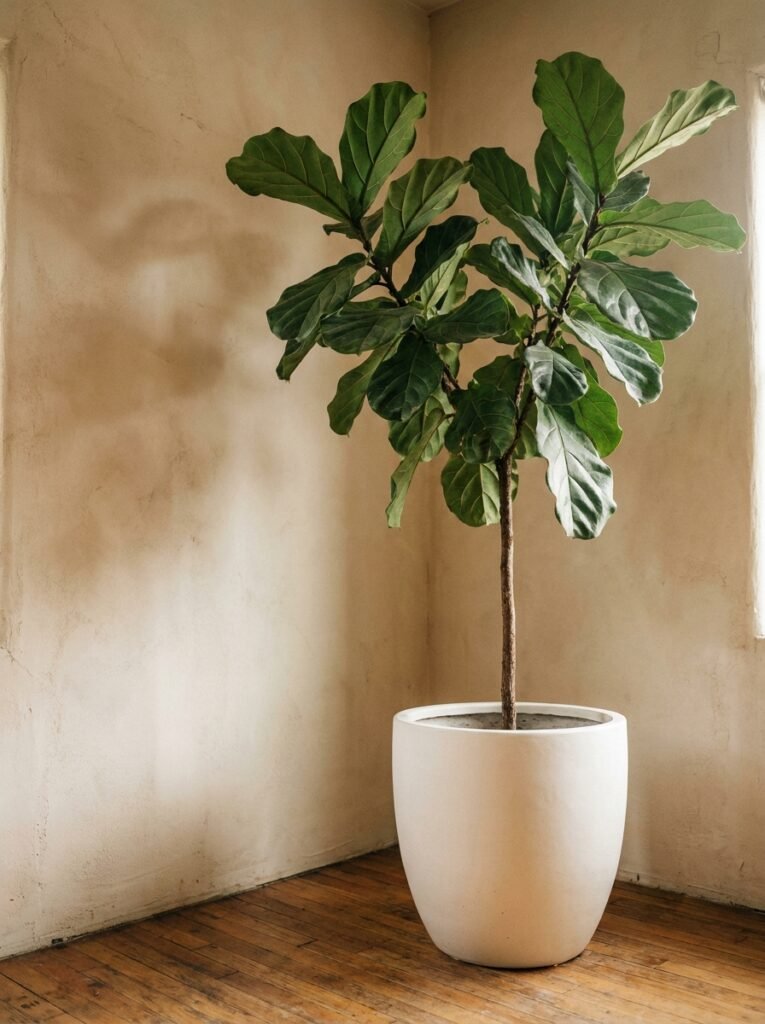
But corners are where big plants absolutely thrive — and I mean big. A fiddle leaf fig with those wide, waxy leaves. A tall bird of paradise if you get good light. Even a rubber plant left to grow tall rather than getting pruned back constantly. The corner gives it room to spread without crowding anything, and in return, the plant makes the entire seating arrangement feel anchored, intentional, like you planned the whole room around it.
Which you kind of did. Retroactively.
The trick is height. Whatever you put in that corner needs to reach at least to shoulder level or higher, otherwise it just looks lost. If your plant isn’t there yet, sit it on a sturdy wooden stool or a plant stand and let it grow into the space.
“The corner gives the plant room to spread — and in return, the plant makes the entire room feel like you planned it.”
—
2. The Shelf-Styling Rule That No One Tells You About
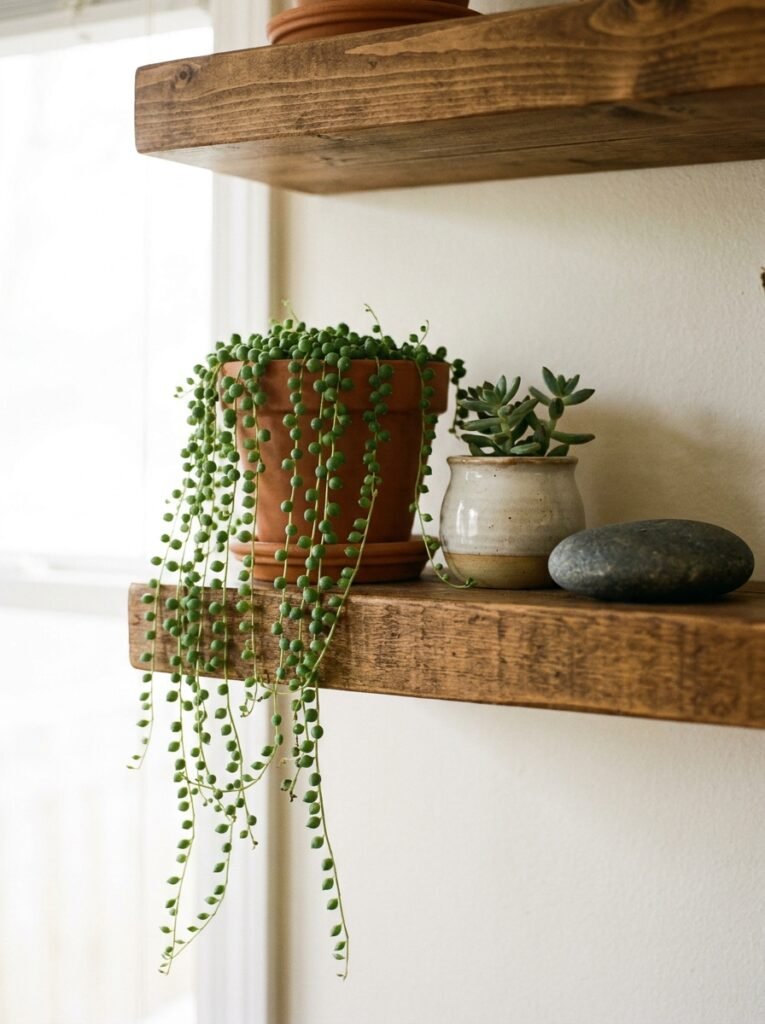
Here’s what I used to do: buy a plant, find an empty spot on a shelf, put the plant there. Done. The shelf still looked like a random collection of stuff, but now with a plant in it.
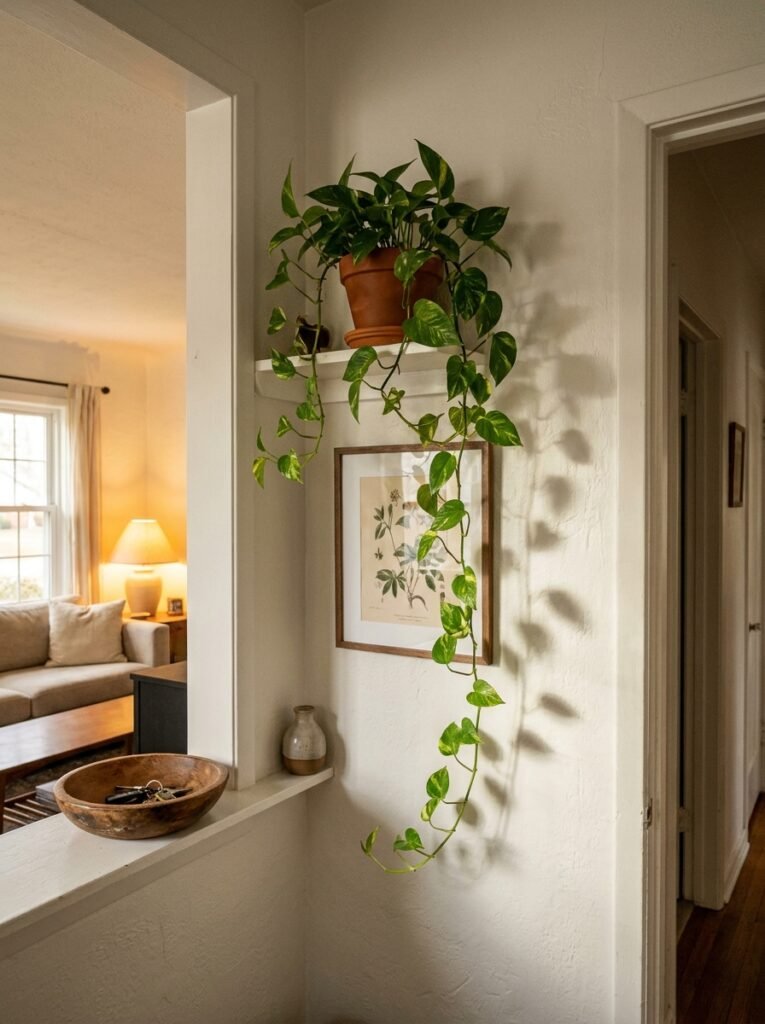
What actually works is building the shelf AROUND the trailing element. So pick one plant that spills — pothos, string of pearls, heartleaf philodendron — and let its vines set the visual flow of the whole shelf. Everything else you put on that shelf (the candle, the small framed print, the stack of two or three books) should sort of respond to where the vines are going.
It sounds a bit overthought, but honestly it takes about fifteen minutes to try and you’ll immediately see the difference. The shelf stops looking like a surface you put things on and starts looking like something you styled. Which you did, just in a smarter order.
Pothos is the easiest starting point if you’re not sure. Nearly impossible to kill, grows fast, and those heart-shaped leaves in golden or marble green look good against literally any shelf color. Dark wood, white lacquer, painted brick — doesn’t matter.
—
3. Why Your Living Room Probably Needs More Plants Than You Think
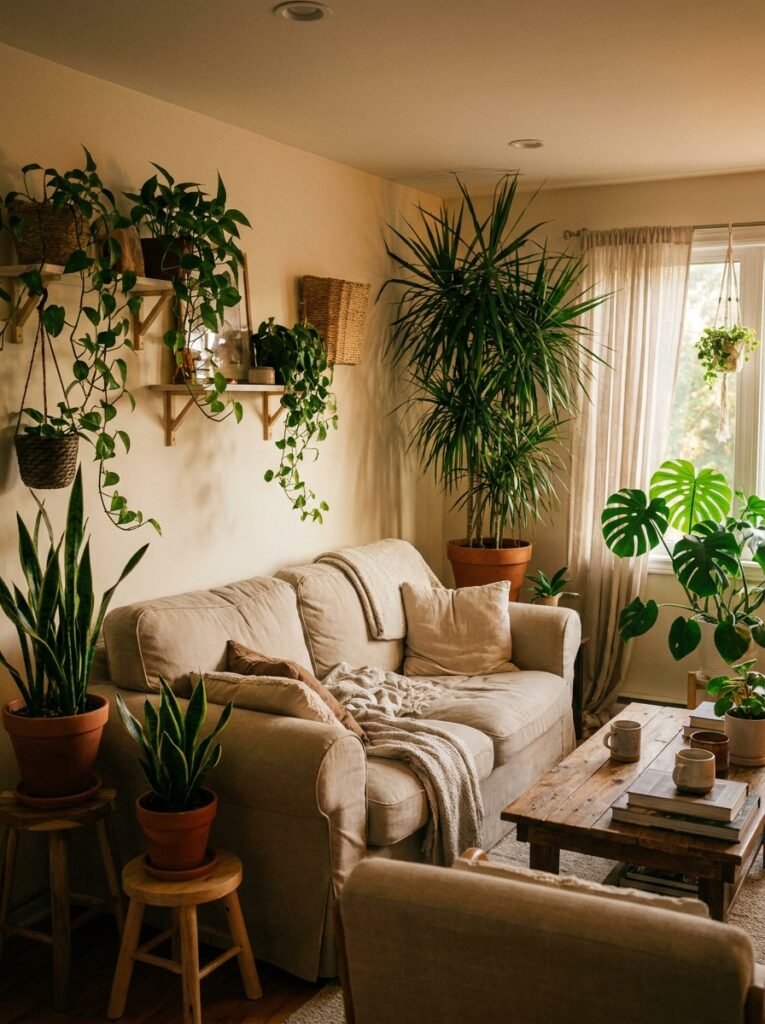
Not gonna lie, I resisted going big with plants for years. Thought it’d look cluttered. Thought I’d kill half of them. Thought my living room wasn’t big enough.
All wrong.
The thing is, one or two plants in a living room can actually look more awkward than a room with eight or ten. A single small succulent on a coffee table in a large room just sort of disappears. But when you cluster plants — different heights, different textures, maybe a few share a tray or a low wooden crate — suddenly you’ve got something that reads as a whole. A deliberate choice, not an afterthought.
The British have a term for interiors that feel this way: lived-in. As in, a real person with real interests made this room look like this, not a showroom stylist who came in for two hours and left. Plants, in sufficient numbers, do that faster than almost anything else.
—
4. The Light Problem (And What to Grow When Your Room Faces the Wrong Way)
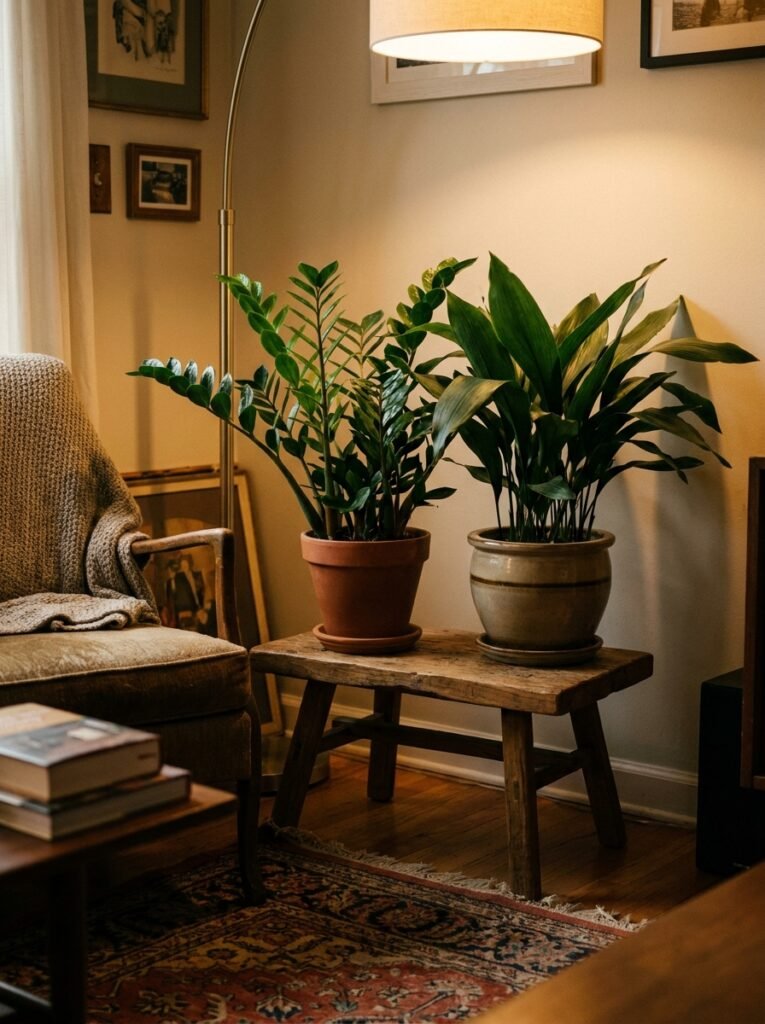
My living room faces north. I spent a lot of money killing things that need full sun before I just… accepted it.
If your room doesn’t get much direct light — north-facing in the UK is basically dim for six months a year, and the same goes for many older American homes with small windows — you’re not limited, you’re just shopping in a different section. ZZ plants. Cast iron plants (aptly named). Peace lilies. Snake plants, which will grow in almost complete darkness and still look architectural and good.
“North-facing doesn’t mean no plants. It just means you’re shopping in a different section.”
The one thing I’d push back on: don’t spend extra on a big dramatic plant you saw online if your light genuinely can’t support it. A healthy, thriving snake plant will always look better than a struggling, yellowing monstera. Health IS the aesthetic here.
Side note — grow lights have gotten way less ugly in the last few years. There are now ones designed to look like regular warm bulbs that fit in standard lamp fittings, and you can’t really tell they’re plant lights at all. Worth it if you’re attached to a low-light room but want more variety.
—
5. The Texture Mix That Separates Thoughtful Styling From Just Having Plants
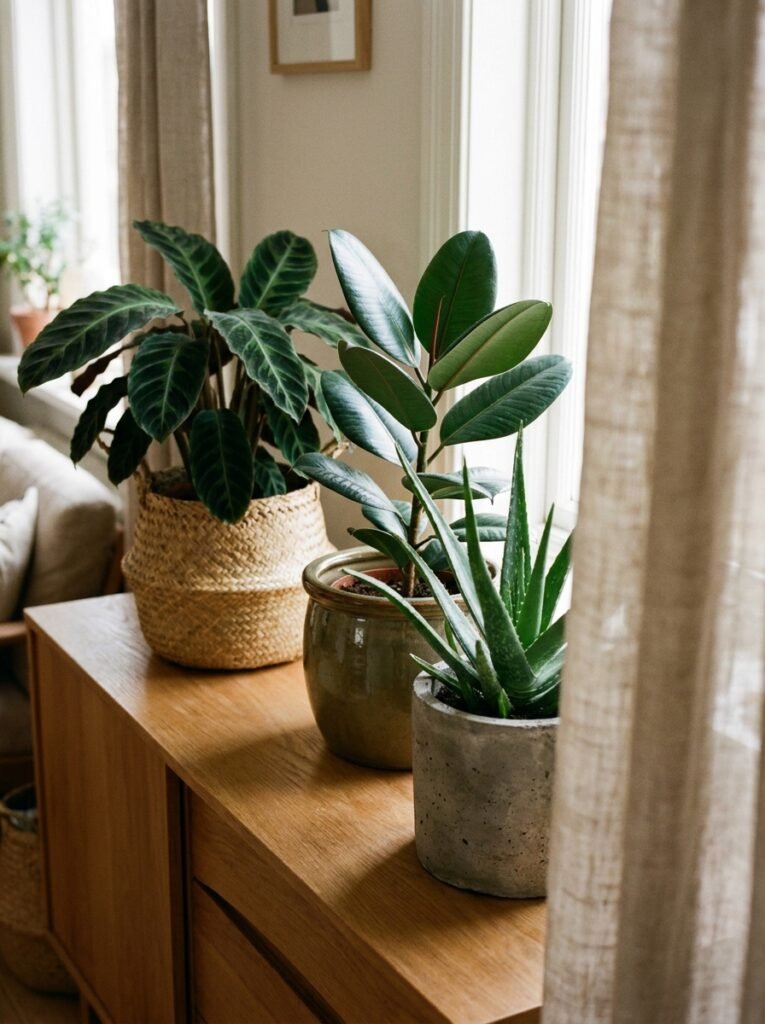
This is the stuff that makes a real difference and almost nobody talks about it in those listicle articles about “best plants for your home.”
Different plants have completely different textures, and the contrast between them is what makes a plant arrangement visually interesting instead of just green. The huge, glossy paddle leaf of a rubber plant next to the thin, wispy fronds of a Boston fern. The smooth, almost sculptural columns of a cactus next to the deeply ridged, velvety leaves of a calathea.
You want some shiny leaves and some matte ones. Some with movement (ferns, palms, that string of pearls swaying when someone walks past) and some that are totally still and solid. Some dark green, some lighter, maybe one with a bit of burgundy or variegation if your room can handle it.
Get this right and people won’t even consciously notice the plants individually — they’ll just notice the room feels layered and interesting. That’s the goal.
—
6. Terracotta Has Had Its Moment — But Here’s When to Use It and When Not To
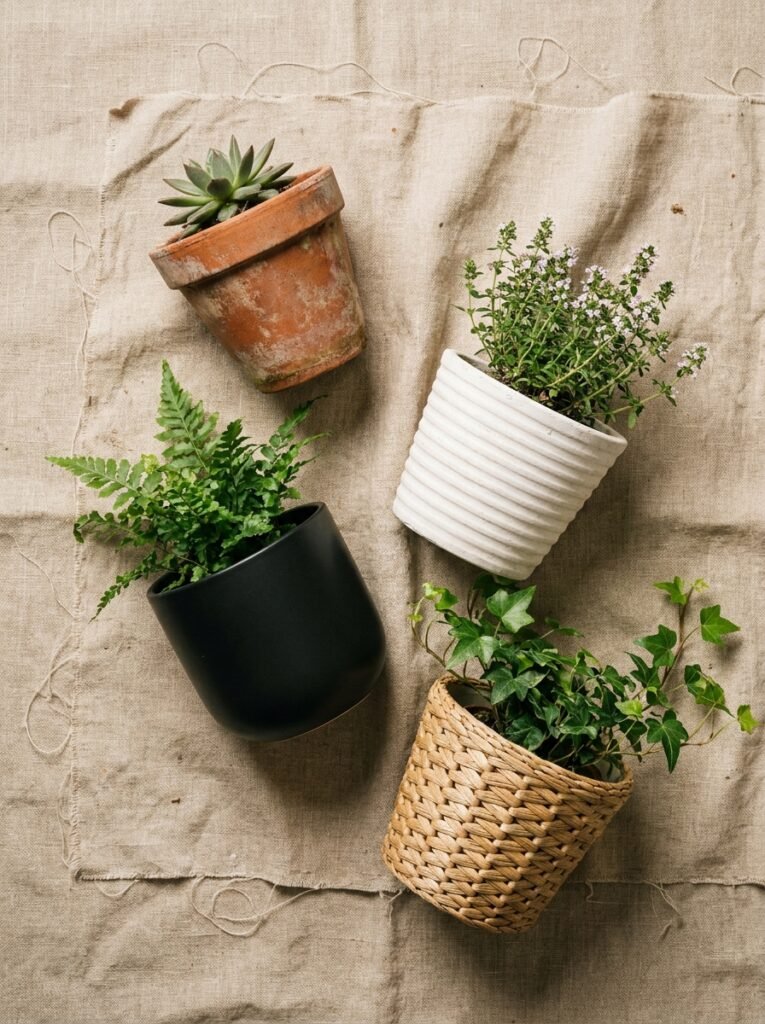
Okay, I love a terracotta pot. I’ve said it. The warm orange-brown, the weight of it, the way it ages and gets a little dusty-white bloom at the rim over time — genuinely beautiful.
But it doesn’t go with everything, and I think the internet has slightly oversold it as a universal solution.
In a room with warm tones — amber cushions, wooden floors, ochre throws — terracotta is perfect. It deepens everything. In a cool-toned room, though, grey walls, blue accents, white-washed wood — terracotta can fight the palette instead of sitting in it. In those rooms, I’d reach for matte white ceramic, pale stone, or even black if the room is confident enough. Dark pots in a pale room are dramatically underused.
The other thing: pot SIZE matters as much as color. A plant in a pot that’s too small looks stressed even when it isn’t. Go one size up from what you think you need. The soil-to-root ratio lets the plant grow without immediately getting root-bound, and the extra visual weight of a slightly generous pot makes the whole thing look grounded.
—
7. What Happens When You Group Plants on the Floor (And Why More People Should Do This)
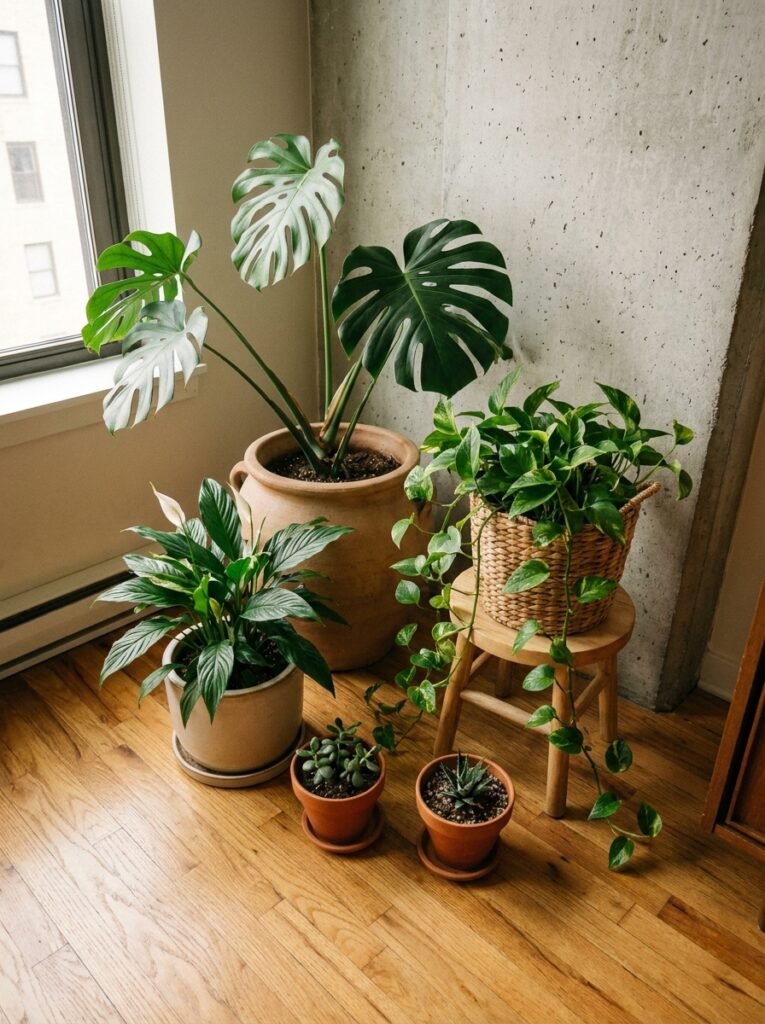
Floor-level planting feels a little risky to people who haven’t tried it, I think because we’re used to surfaces — shelves, tables, windowsills. But a cluster of three or four plants sitting directly on the floor in front of a sofa, or filling a corner at ground level, can look absolutely considered and brilliant.
It works best when you vary the heights within the cluster. One taller plant in a bigger pot. A medium one next to it. Then something low and trailing at the front, maybe a string of turtles or a small trailing philodendron. Suddenly you’ve got this layered little landscape that fills dead floor space and draws the eye in a way no side table quite manages.
A woven seagrass tray underneath pulls them together as a unit without you needing to plant anything together in the same pot. Easy, movable, looks intentional.
“A cluster of plants on the floor fills dead space and draws the eye in a way no side table quite manages.”
—
8. The Plants That Actually Work on a Coffee Table Without Being Annoying
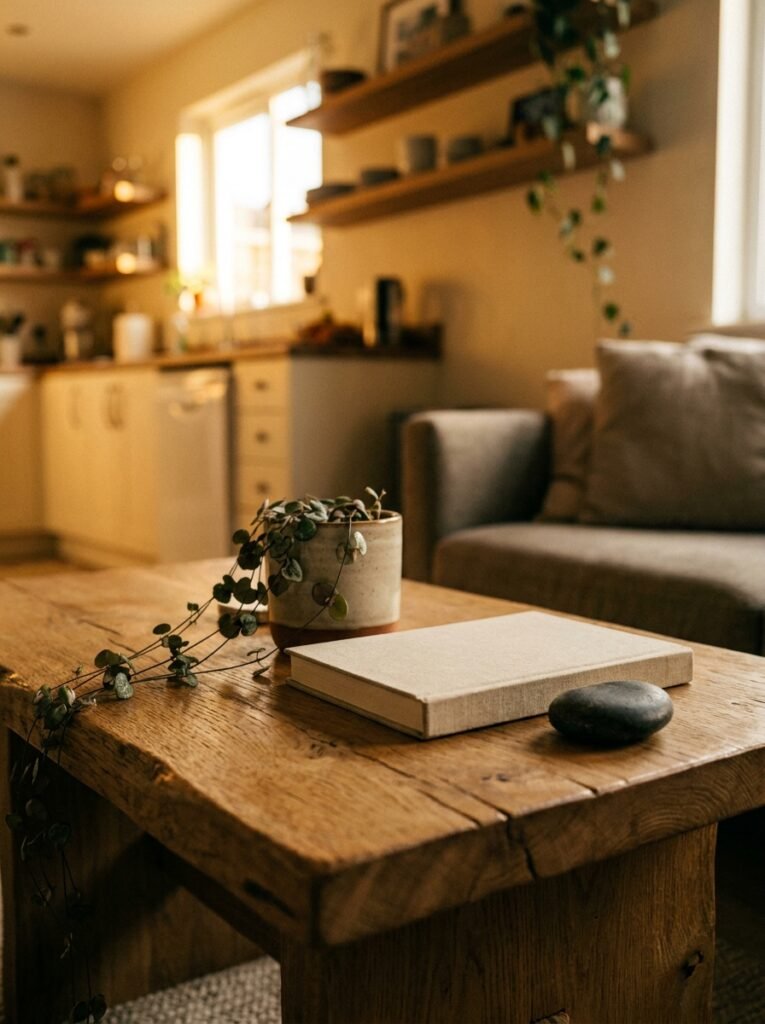
Coffee tables are contested territory. You need them functional — for remotes, drinks, the book you’re pretending to read — so the plant can’t take over. But a bare coffee table in an otherwise well-styled room always looks slightly unfinished.
Small succulents in a matching set of two or three tiny pots can work. But my current favorite solution is one single small plant in a vessel that’s interesting enough to double as a decorative object. A deep blue glazed ceramic with a single trailing pothos cutting. A matte black pot with a small, sculptural aloe. The plant almost becomes secondary to the pot itself, which is fine, it’s a coffee table, not a greenhouse.
What doesn’t work: anything with big leaves that’ll constantly get knocked, anything that needs watering so often you’re constantly moving it, anything that grows fast enough to feel like it’s encroaching. Keep the coffee table plant small, slow, and weird-looking. In a good way.
—
9. The Overlooked Spot That Plants Transform Immediately
The fireplace. Or, in British homes especially, the chimney breast — whether the fireplace is functional or not.
During spring and summer when the fire’s not lit, putting a lush plant or a cluster of plants directly in the fireplace opening is one of the most dramatic and almost free transformations you can do. A big, leafy fern that likes low light. A cascading pothos. Even a collection of different plants at different heights, arranged like a little indoor garden in the hearth.
It fills what’s otherwise a dark rectangular void. It looks deliberate and a bit editorial. And the second autumn arrives and you need the fire back, you just move the plants. It’s temporary, it’s reversible, and it photographs INCREDIBLY well, which, I mean, we’re on Pinterest, let’s be real.
—
10. Why the Bathroom Plant Trend Applies to Your Living Room Too
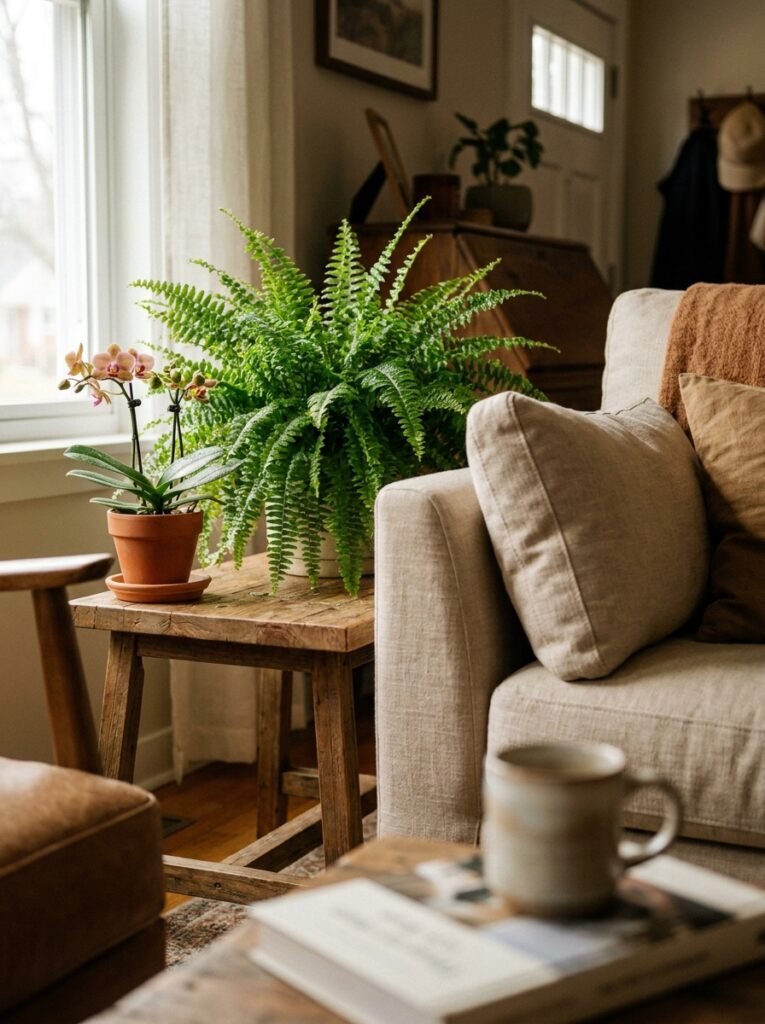
There’s been so much noise about plants in bathrooms — the humid air, the moody lighting, all of it. And fair enough. But the logic of “unexpected room” applies just as much to spots within your living room.
The area under the stairs if it opens into the living room. The deep windowsill that usually holds just a candle and a dead biscuit. The gap between two bookcases. These spots get overlooked because they don’t feel like “plant spots.” But that’s exactly why a plant there looks interesting rather than predictable.
I’ve got a small maidenhair fern sitting in the narrow space between my bookcase and the wall. It does nothing structurally. It’s almost impossible to see unless you’re standing at just the right angle. But I know it’s there, and somehow the whole bookcase arrangement feels more complete because of it.
Some things you just style for yourself.
—
11. The Watering Schedule That Will Actually Save Your Plants (And Your Patience)
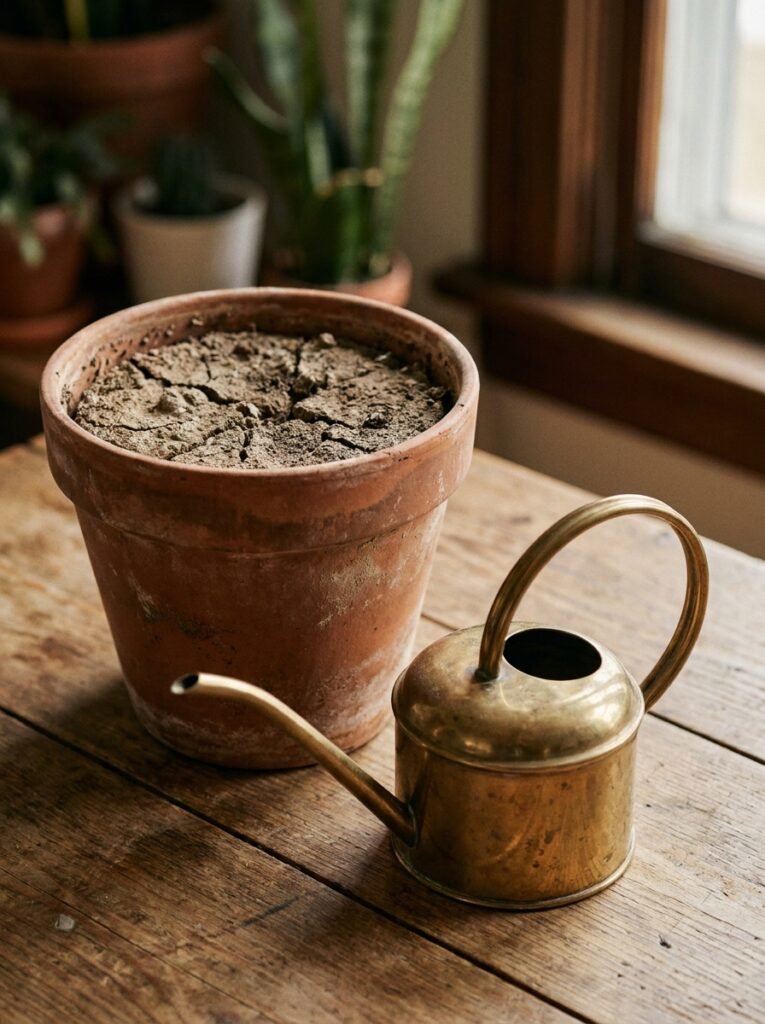
The number of plants I killed by overwatering before I just looked this up properly. Embarrassing, honestly.
Most common living room plants — pothos, snake plants, monsteras, ZZ plants, rubber plants — want to dry out between waterings. Not bone dry and cracking, but the top inch or two of soil should feel dry before you water again. Stick your finger in. It takes two seconds and it’s more reliable than any app or schedule.
The other thing: drainage. Make sure every pot has a hole in the bottom, or put a layer of grit underneath the soil if it doesn’t. Root rot is how most indoor plants die, and it happens so slowly you don’t realize until it’s too late.
Water less than you think you need to. That’s genuinely the main rule. When in doubt, wait another three days.
—
12. The Room That Lives and Breathes — A Few Last Thoughts on Getting the Balance Right
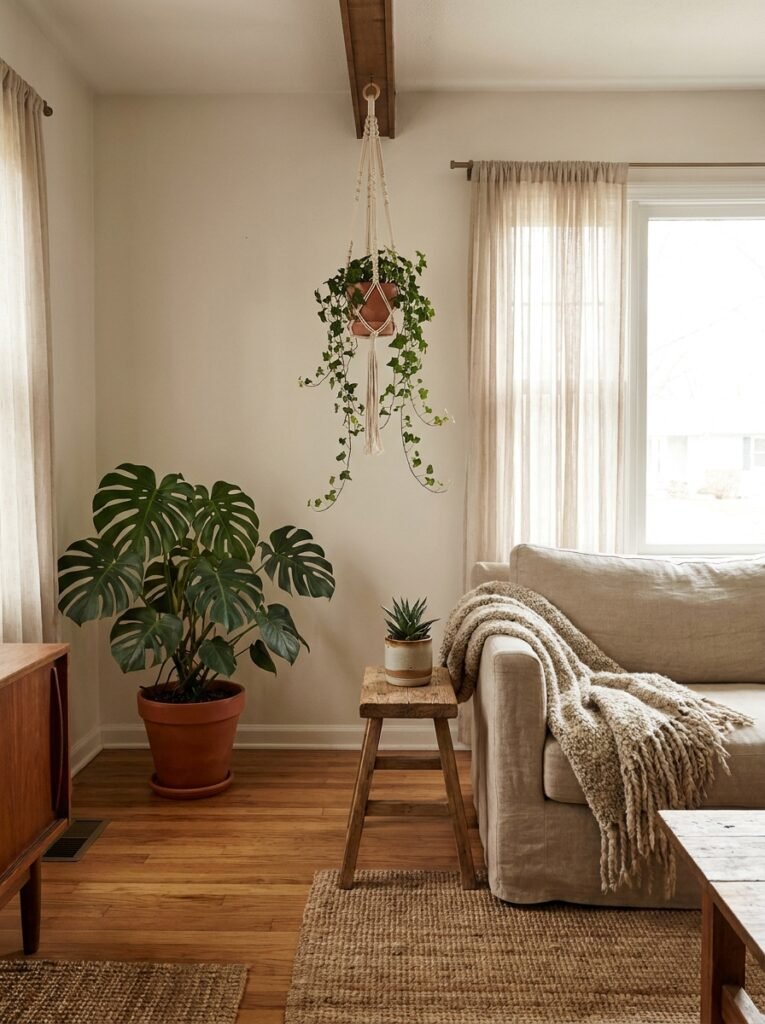
Here’s the thing I keep coming back to when I think about plant styling versus plant collecting. They’re not the same.
Collecting is fine. Fun, even. But if the goal is a living room that feels beautiful and alive rather than like a slightly indoor garden centre, the balance matters. You want plants to enhance the room’s existing character, not override it. The furniture still needs to breathe. The art still needs to be visible. The light — natural and artificial — needs room to land somewhere other than a leaf.
The rooms that get this right tend to have one or two plants doing something really bold (that corner plant, that fireplace cluster) and then quieter, smaller plants scattered elsewhere as supporting cast. The room has a plant personality without being a plant room. If that distinction makes sense, you’re already thinking about it the right way.
And honestly? Start with three plants. See where they want to live. The room will tell you what’s missing.
—
❓ FAQ
Q: What are the best low-maintenance plants for a living room if I’m a beginner? A: Snake plants, pothos, and ZZ plants are genuinely hard to kill and look great in most living rooms. They tolerate low light, irregular watering, and the general chaos of life without sulking.
Q: How do I stop my living room from looking too cluttered with lots of plants? A: Vary the heights and group plants deliberately rather than scattering them individually around the room. Clustering creates a composed look, while isolated plants everywhere can feel chaotic. Also, stick to two or three pot styles maximum — visual consistency pulls it all together.
Q: Can I mix real and artificial plants without it looking tacky? A: Yes, but placement matters. Put real plants where they’ll get touched or closely examined — coffee tables, shelves — and save artificial ones for high-up spots or corners where the detail is less visible. High-quality artificial trailing plants in hard-to-reach hanging planters are genuinely undetectable from across the room.
—
💭 Final Thoughts
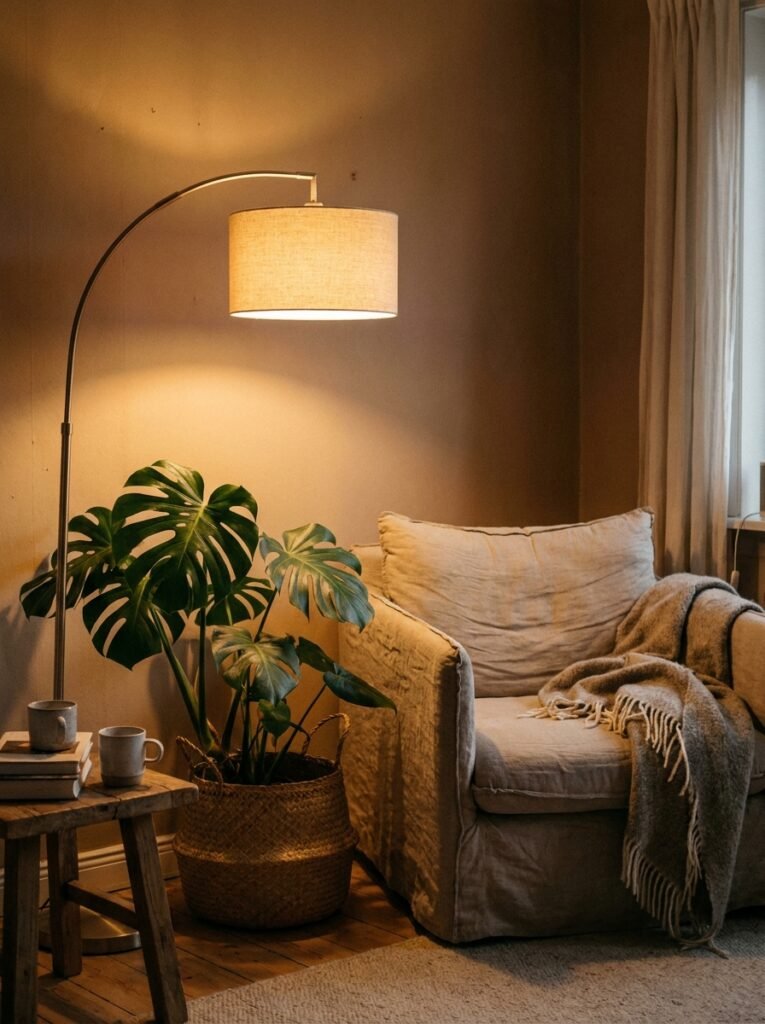
There’s something quietly satisfying about a living room that has things growing in it. It doesn’t have to be a lot. It doesn’t have to be expensive. It just has to be real. A few plants, chosen for the actual light your room gets, placed where they make the space feel more complete — that’s the whole thing, really.
So: what’s the one corner in your living room that’s been empty for a little too long?