The Corner You Keep Ignoring Is Ruining Your Living Room (And Here’s the Fix)
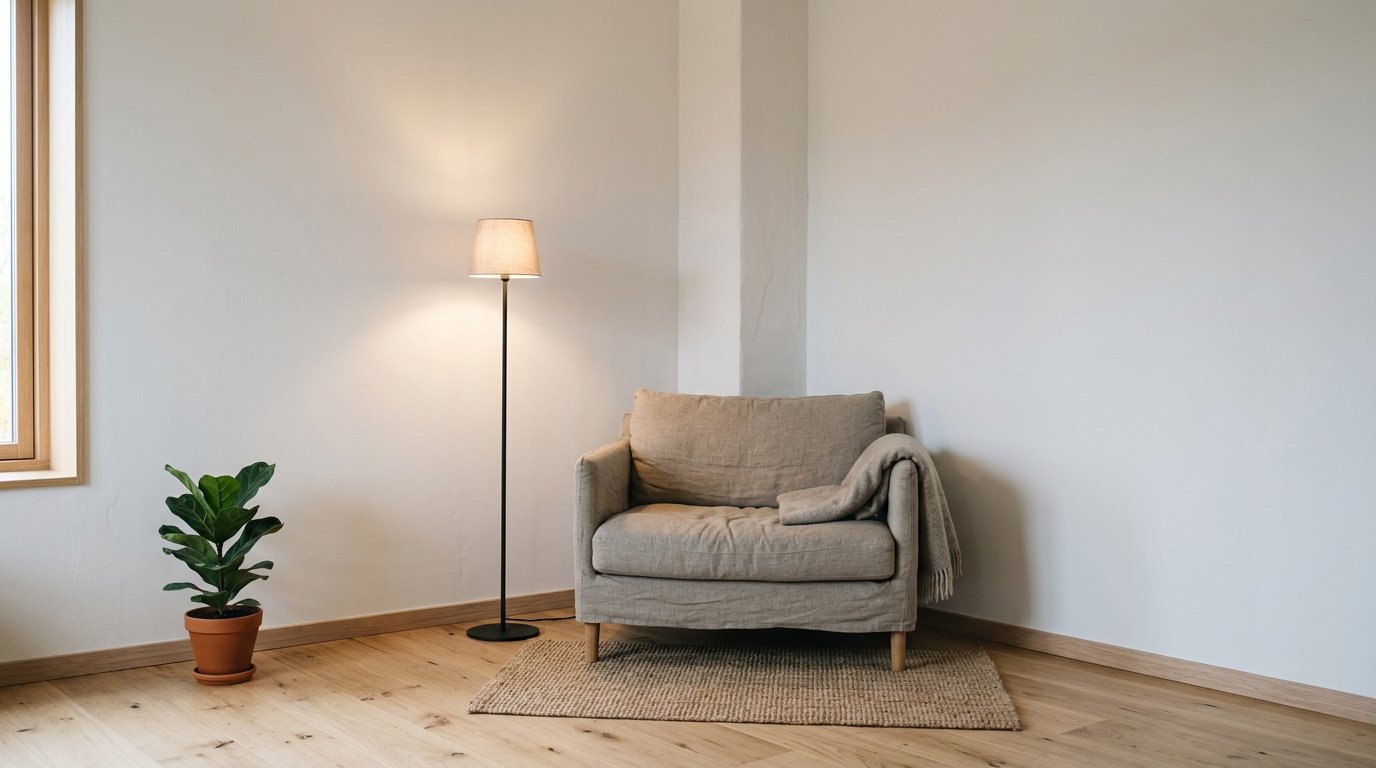
My friend walked into my flat last spring and said, “It’s nice, but something feels… unfinished.” She couldn’t name it. I couldn’t either, not for about three days. Then I realized. The corner. The back-left corner, empty except for a lamp I’d shoved there in 2021 and never thought about again.
That’s the thing about corners. They’re invisible until they suddenly aren’t.
—
1. Why Minimalist Corners Hit Different Than Maximalist Ones
There’s a particular kind of peace you get from a corner that’s been done right with restraint. Not empty — there’s a difference. But calm. Deliberate. Like it was styled by someone who made a decision and then stopped.
Maximalist corners are beautiful too, don’t get me wrong. But they require maintenance. You have to keep up with them, dust around seventeen objects, rotate things seasonally. A minimalist corner kind of… breathes. You walk past it and feel slightly better than you did before.
And honestly, for most living rooms — especially smaller ones, the kind of semi-detached British terrace or open-plan American apartment that makes up most of our actual homes — a few strong, intentional pieces will always beat a crowded shelf of stuff you don’t love.
The goal isn’t bare. The goal is chosen.
—
2. The Floor Lamp Principle Nobody Talks About
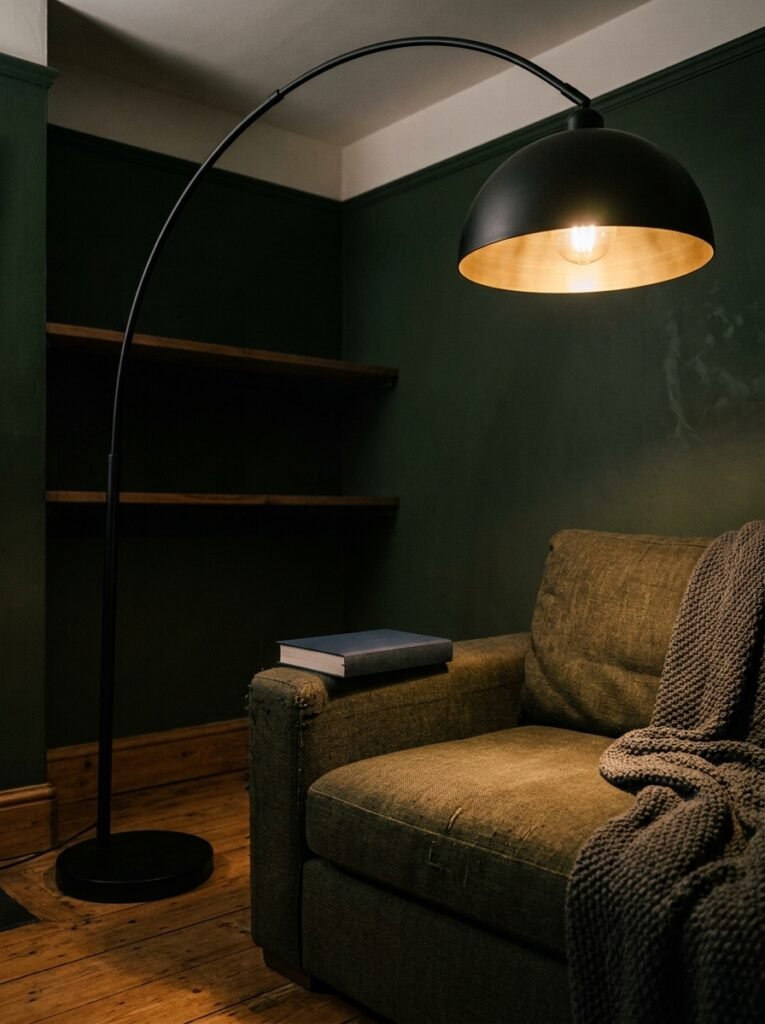
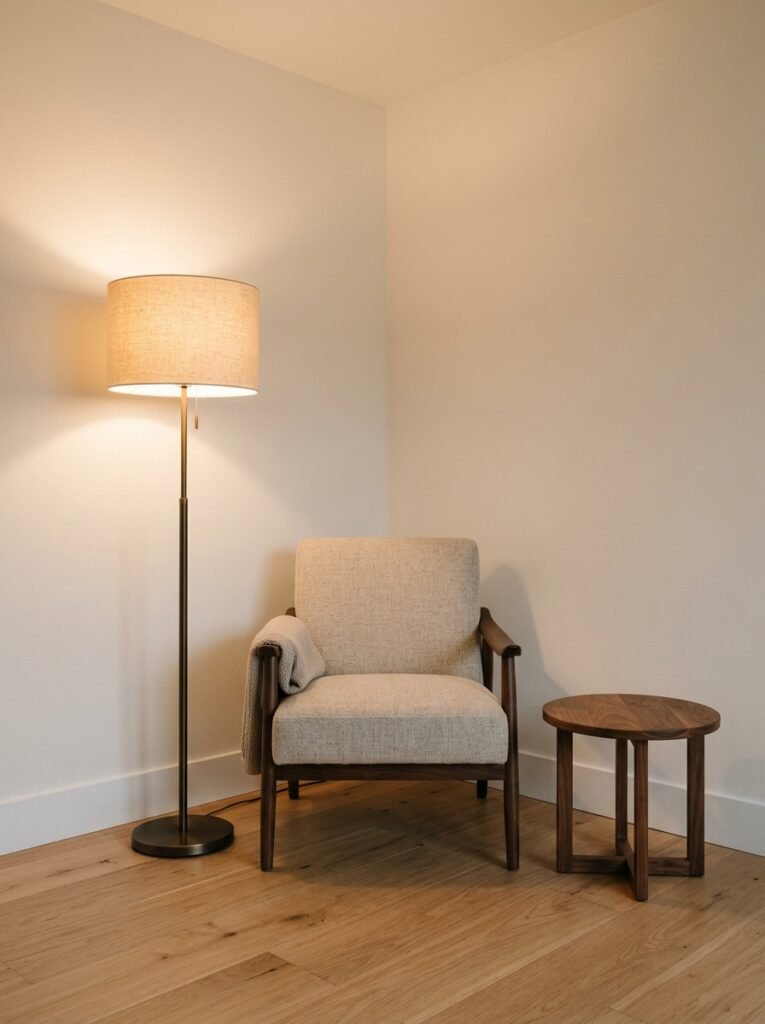
If you only do ONE thing to a neglected corner, make it this: put a good floor lamp in it. Not a cheap one. Not one that emits that harsh white overhead glare that makes everyone look mildly unwell.
An arc lamp with a warm bulb — something that throws light downward and slightly outward — can make an empty corner feel like a destination. Like somewhere you’d actually want to sit near.
“The right lamp doesn’t just light a corner. It makes the corner worth looking at in the first place.”
The height matters too. A lamp that’s too short gets swallowed. You want the shade somewhere around eye level when you’re standing, so the light reads as part of the room rather than an afterthought tucked in the dark.
I’d go warm white bulbs every single time. Around 2700K if you’re buying specific, or just anything labeled “warm white” or “soft white.” The amber glow at 7pm in winter is genuinely one of the small pleasures of having a home, and a cool bulb will rob you of it entirely.
—
3. The One Plant That Actually Works in a Low-Light Corner
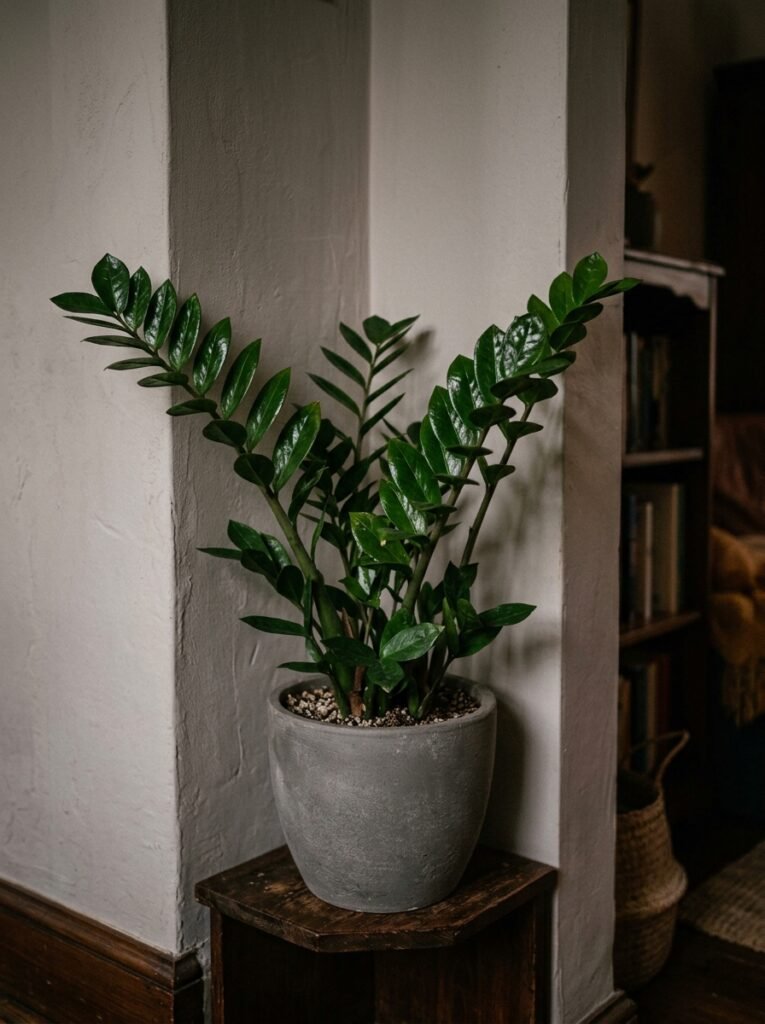
Most plant advice online will cheerfully suggest something that then immediately dies in your actual corner because corners get, at best, indirect indirect light. So let’s be real about this.
A snake plant or a ZZ plant. Full stop. I know everyone says this. There’s a reason everyone says this — they’re not wrong.
But if you want something with a bit more drama, a cast iron plant (Aspidistra elatior) is genuinely underrated. It looks expensive. It survives neglect in a way that borders on supernatural. And it has this dark, glossy leaf that photographs beautifully in natural light if your corner is anywhere near a window.
The pot matters as much as the plant, maybe more. A plain terracotta pot is never wrong. A tall, simple ceramic in matte white or warm beige can make a snake plant look architectural. What you want to avoid is a pot that competes — busy patterns, clashing colors, anything that makes you look at the pot instead of the plant.
Keep it one plant, one pot. That’s the minimalist move.
—
4. A Tall Shelf Can Make a Low Ceiling Feel Higher (No, Really)
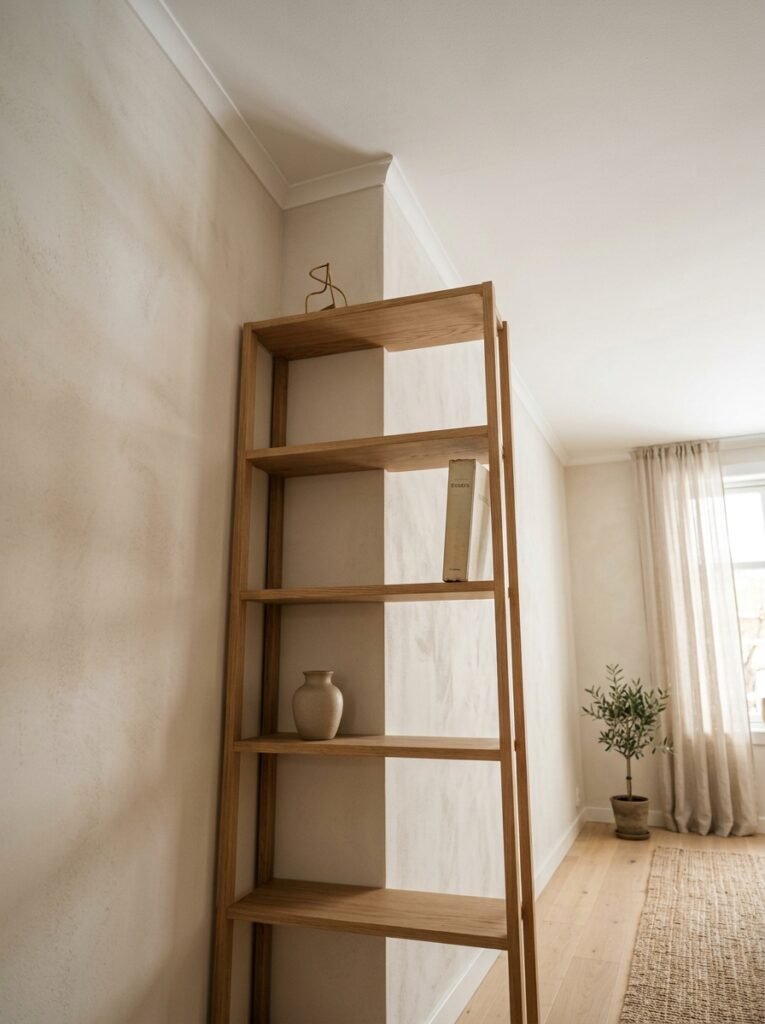
This one surprises people. You’d think adding a tall piece of furniture would make a small room feel smaller, but it doesn’t, or at least not if you do it right.
A slender, vertical bookcase or ladder shelf in a corner draws the eye up. It creates the illusion of height. And in a minimalist corner, you’re not stuffing every shelf — you’re using maybe 60% of the space, leaving deliberate gaps so the whole thing feels airy rather than crammed.
What goes on those shelves? A couple of books (not a full library — just three or four that you’d actually reach for, spines out or cover out depending on how they look). One small plant. One object that means something or looks good, ideally both.
The empty shelves are part of the design. This is the part people resist the most and regret resisting once they try it.
—
5. The Color That Keeps Showing Up in Every Beautiful Minimalist Corner Right Now
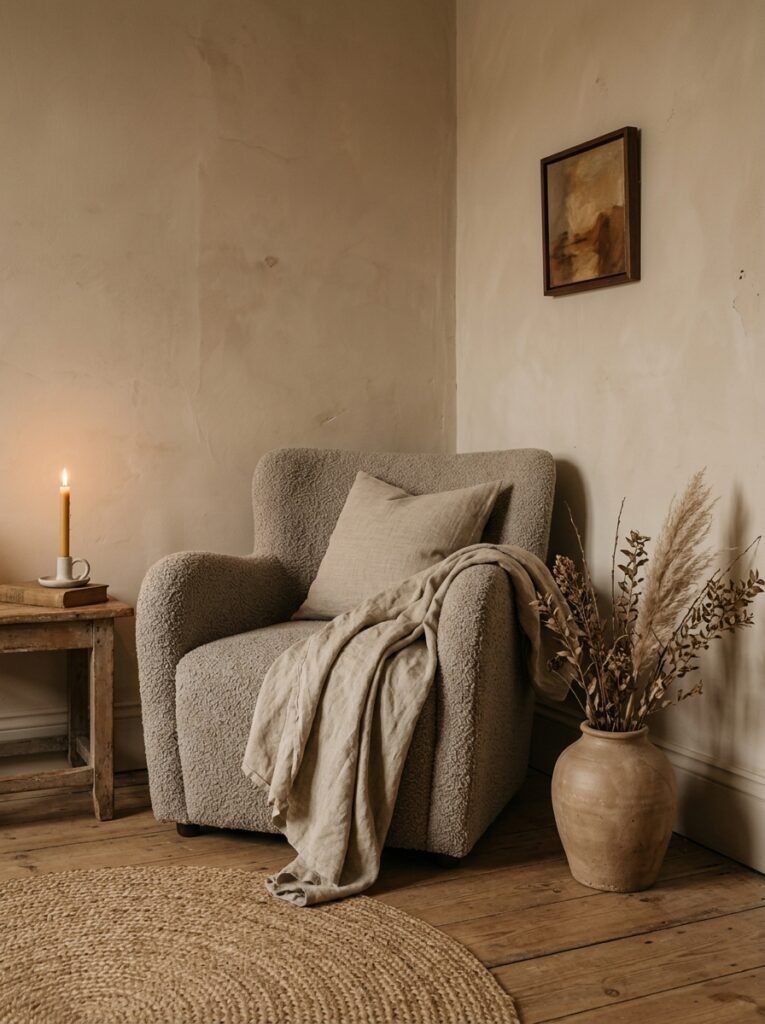
It’s not white. Not anymore, or at least not plain white.
Warm greige — that particular tone that sits somewhere between grey and beige and cream, depending on the light — is everywhere. It’s on walls, on large furniture pieces, and increasingly it’s showing up as a wall color just in a corner nook, as an accent paint situation that architects have been doing for years but regular homeowners are finally catching on to.
Painting a corner a slightly deeper or warmer tone than the rest of the room? Genuinely transformative — wait, I promised not to say that. Let’s say: it works REALLY well. It creates a sense of enclosure that makes the corner feel purposeful, like a little room within a room.
If you’re not ready to paint (totally fair, renting is a thing), a large piece of art leaning against the wall, or a woven wall hanging in a warm neutral, does a similar job. It anchors the corner with color without committing you to anything.
—
6. Why Two Chairs Beat One in a Corner (If You Have the Space)
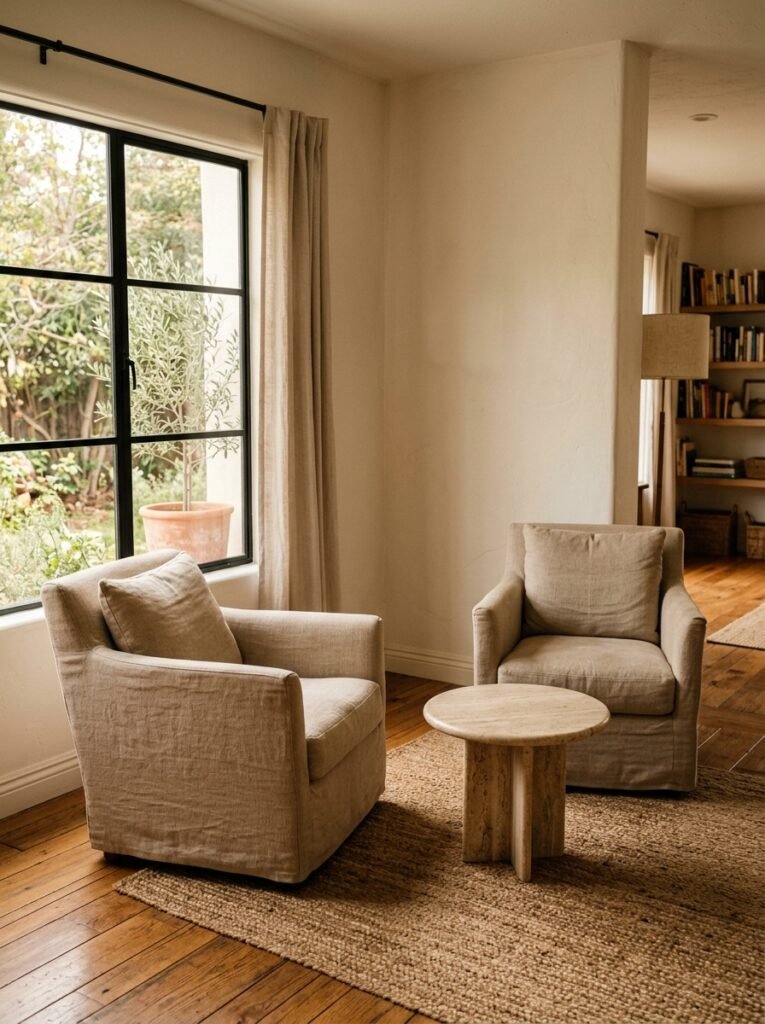
Hear me out.
A single armchair in a corner looks like a chair someone moved and forgot about. Two chairs — even slightly different ones — look intentional. They suggest conversation. They say someone thought about this.
You don’t need a full matching set. A linen armchair and a slightly different accent chair in a coordinating tone can work beautifully together. Or two of the same chair in slightly different fabrics, because matching matters less than people think when everything else is kept simple.
“Two mismatched chairs that agree on color will always feel more interesting than two identical ones that fight with the room.”
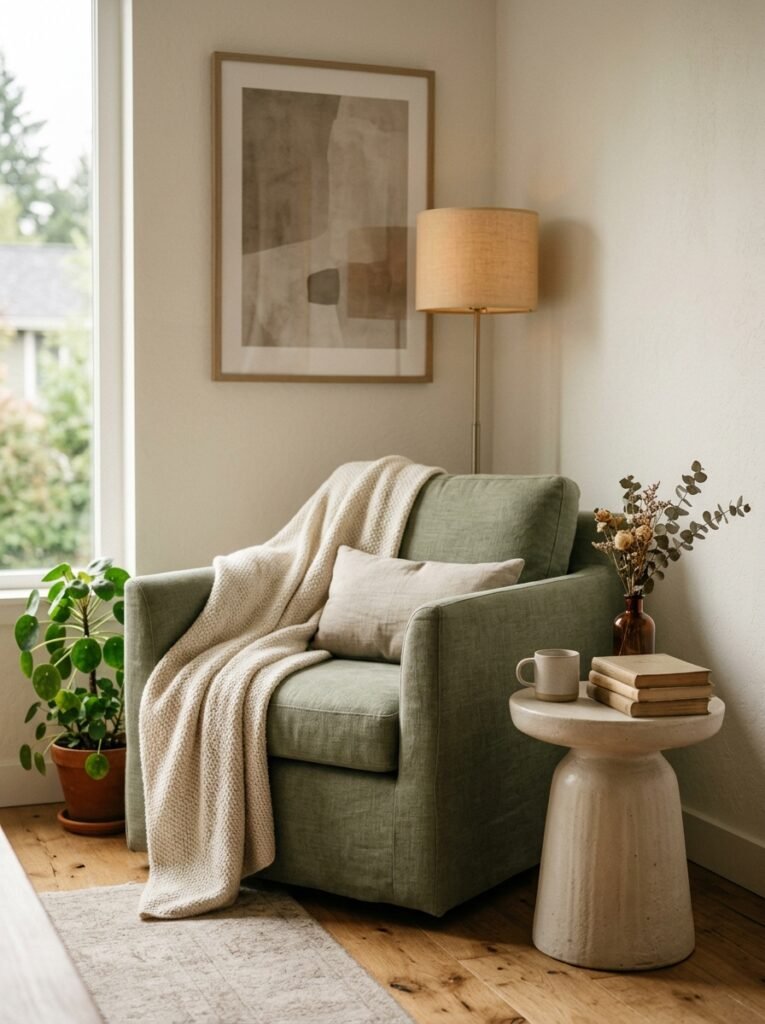
A small side table between them completes the thought — something with clean lines, not bulky. And that’s it. That’s a corner. Lamp, two chairs, small table. It sounds almost too simple. But walk into a room that has this and you’ll feel the difference before you can name it.
—
7. The Low-Cost Version That Doesn’t Look Cheap
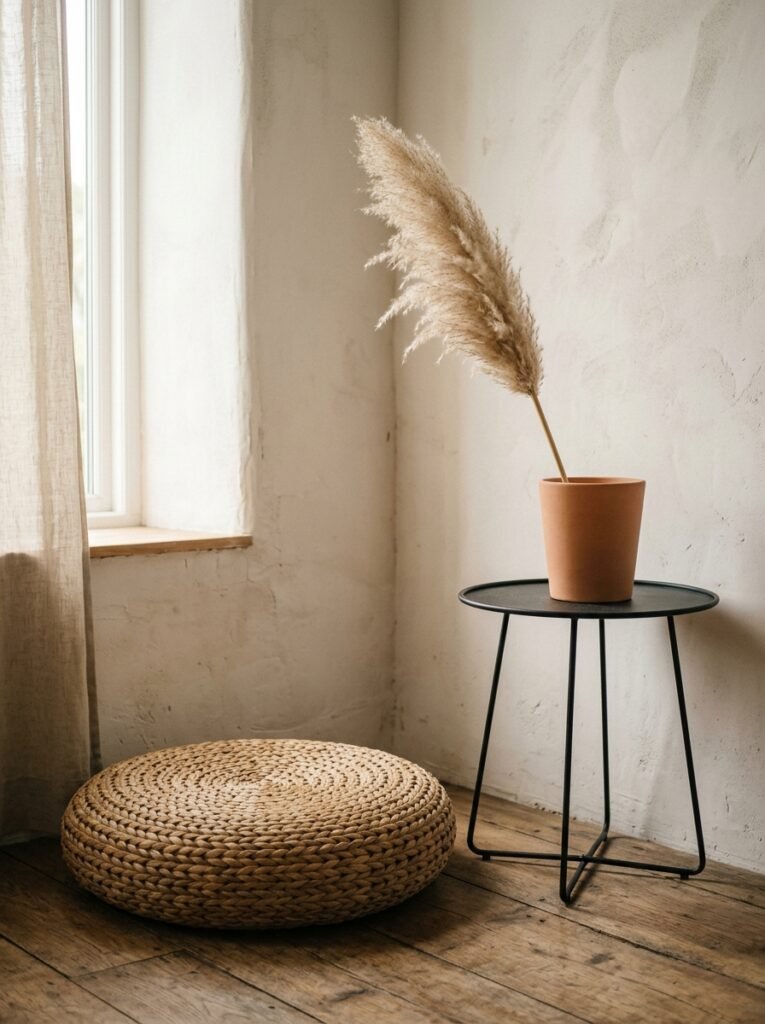
Not everyone wants to (or can) invest in new furniture every time a corner needs attention. Noted. Acknowledged. There are real options here that don’t involve spending much at all.
A stack of large hardcover books as a makeshift side table. Genuinely chic when done right, especially if the spines are visually quiet — neutral colors, no garish text. A linen throw draped over a chair you already own can completely change how that chair reads in the space.
And plants — a decent-sized plant from a garden center will almost always cost less than home decor accessories that achieve less visual impact. A tall, leggy plant in a good pot can anchor a corner like a piece of furniture.
Side note — if you’re in the UK, charity shops (what American readers might call thrift stores) are genuinely one of the best places to find ceramic pots in unusual shapes and neutral tones. People donate them constantly and they’re usually pence.
—
8. The Mirror Trick That Actually Makes Sense in a Corner
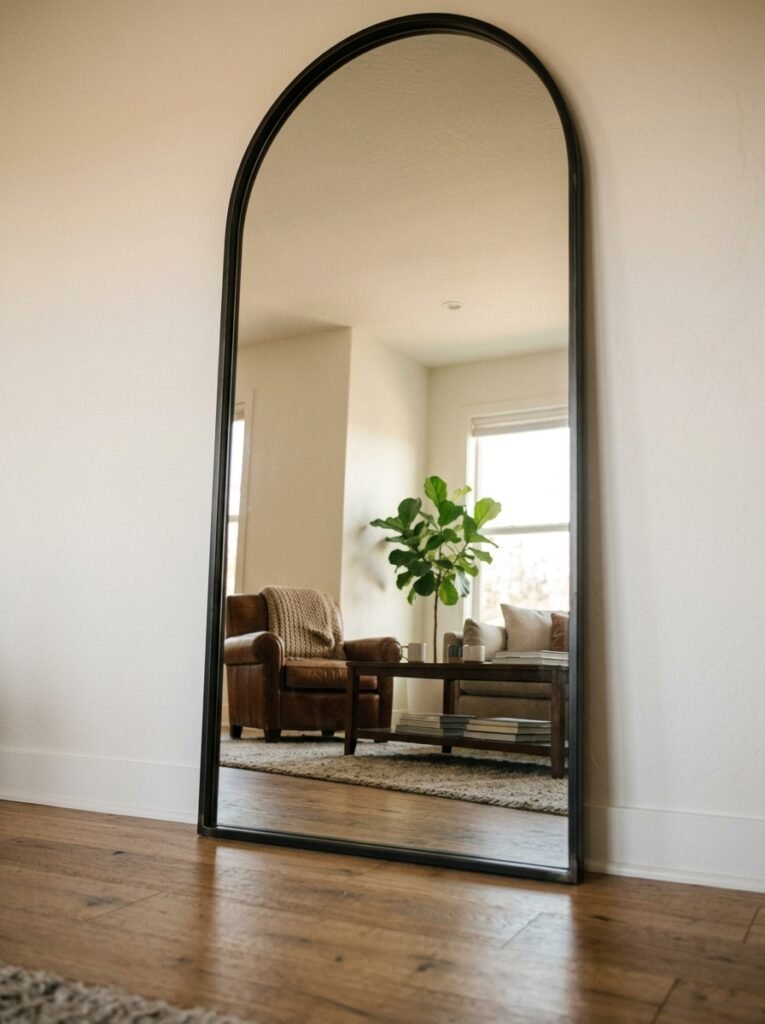
Mirrors in corners get a bad rap because they’re usually done badly. A small mirror at eye height in a corner just looks like someone wasn’t sure where to hang it. But a large, leaning mirror? Different thing entirely.
Lean a tall mirror against the corner wall — not dead center but slightly angled, like it’s casually propped — and it does a few things at once. It bounces light from wherever your lamp or window is. It makes the floor space feel larger. And, honestly, it gives the corner a slightly editorial, undone quality that feels very current.
Frame matters. For minimalist corners, a thin metal frame in matte black or brushed brass, or no frame at all on a beveled edge, is the move. Avoid ornate, avoid chunky, avoid anything that starts competing with the surrounding calm.
—
9. When Negative Space Is the Actual Decor
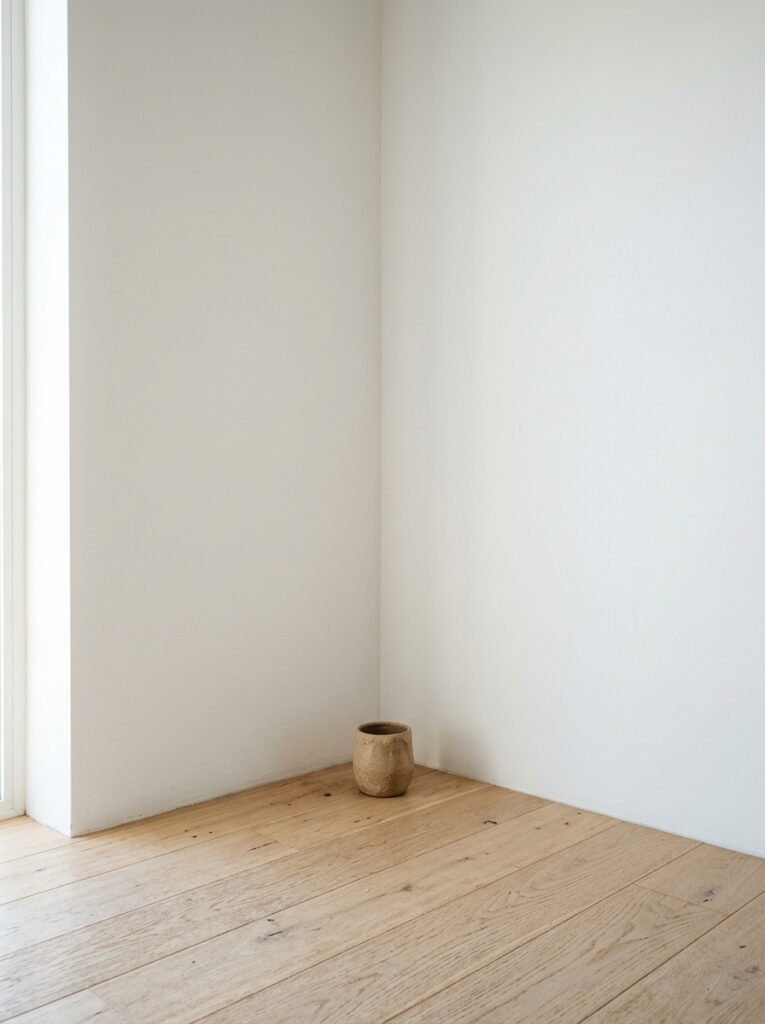
This is the one that’s hardest to explain to people who haven’t felt it yet.
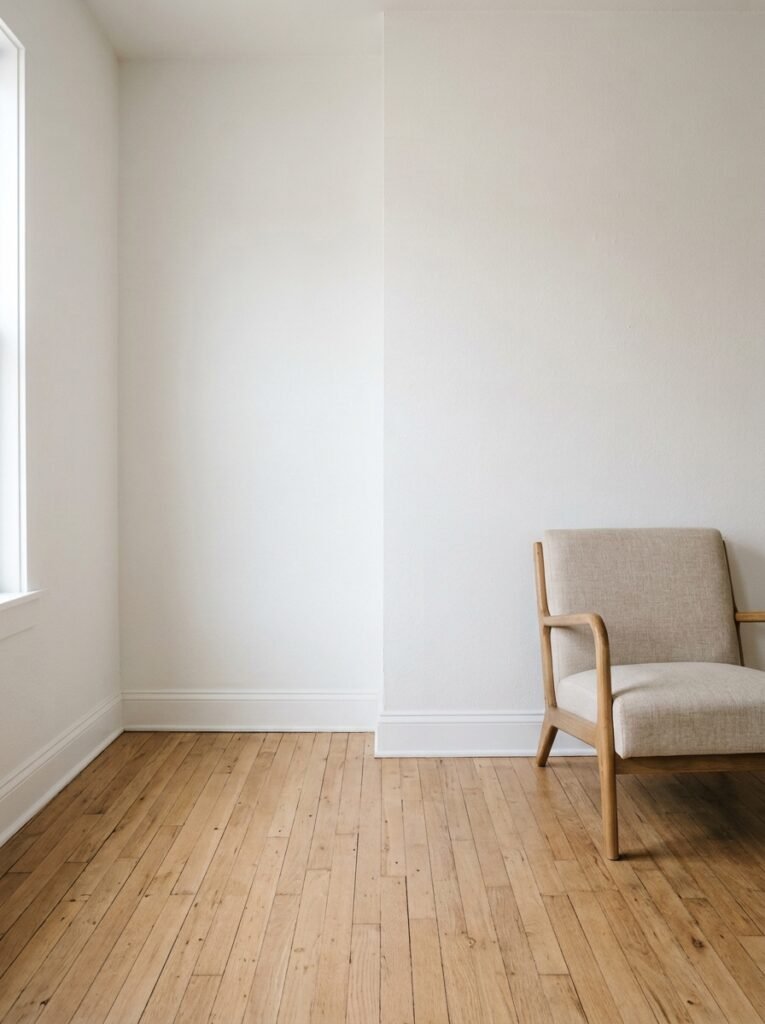
Sometimes the right minimalist corner is nearly empty. A single chair. One small plant. Nothing else. And the SPACE itself — the open floor, the bare stretch of wall, the breathing room — is what makes the room feel good.
We’re so trained to think empty means unfinished. It doesn’t. A corner with one beautiful chair and nothing else, in a room that’s otherwise well-furnished, reads as a considered choice. It reads as confidence.
“Leaving space in a room is the most underrated decorating decision you can make.”
The hard part is resisting the urge to add something every time you walk past. Buy the chair. Put it in the corner. Live with it for two weeks before you decide it needs company. It might not.
—
10. Texture Before Color: The Order Everyone Gets Backwards
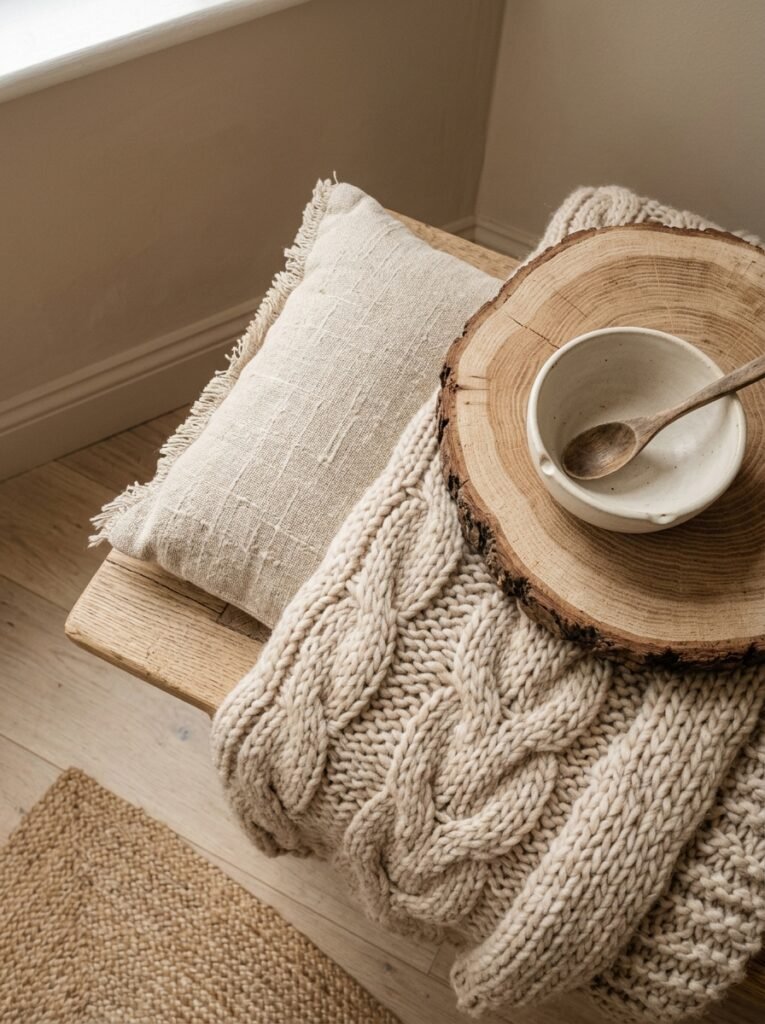
Most people start with color. They pick a color palette, find things in those colors, and then wonder why the corner still feels flat.
Texture first. Always.
A jute rug under the chair (even a small one, maybe 2×3 feet, something that’s clearly “for” that corner) adds warmth and definition. A linen throw. A matte ceramic pot. A raw-edged wooden shelf. All of these have texture that shows up in low light, in evening light, in the kind of light your corner is actually sitting in most of the time.
Color matters — don’t hear me saying it doesn’t. But color alone in a corner just looks like paint. Texture makes a corner feel lived in, layered, real. And in a minimalist approach, where you’re working with fewer objects, each one has to carry more weight. Texture is what makes one plant and one chair feel like enough.
—
11. The Small Detail That Gives a Corner a Name
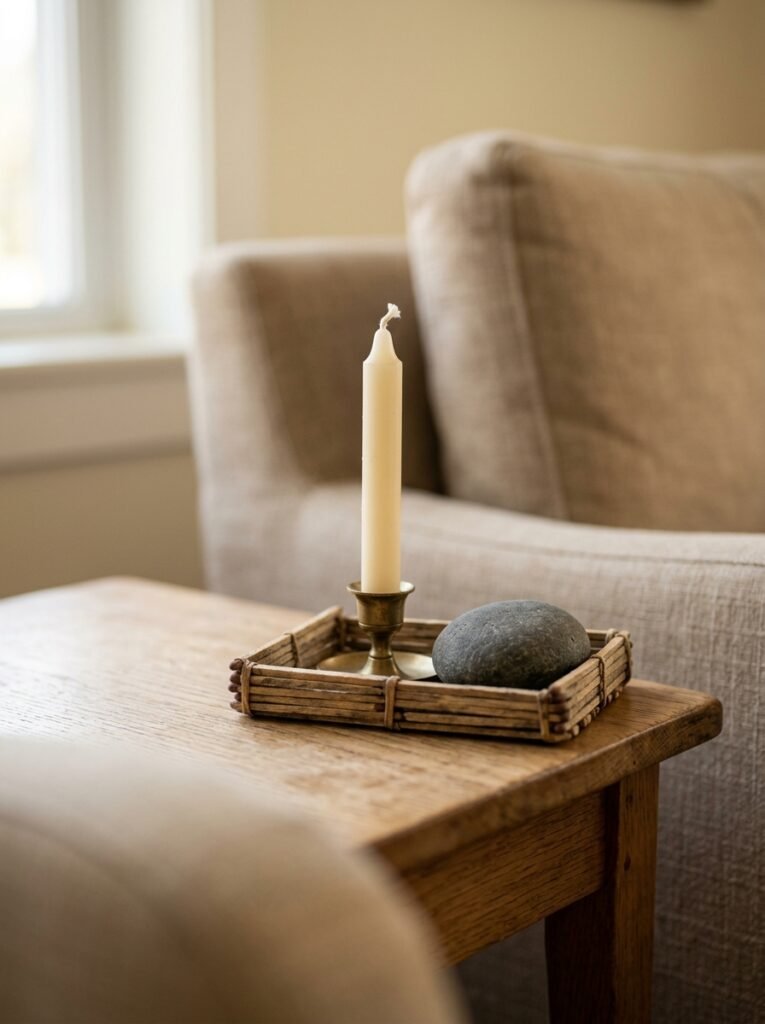
Every corner that feels truly designed has one thing that makes no sense from a practical standpoint but makes total sense aesthetically. A small sculptural object on a shelf. A single dried stem in a tall, narrow vase. A folded vintage map propped against the wall. Something that makes you tilt your head slightly when you see it for the first time.
It doesn’t have to be expensive. It doesn’t have to be “decor” in any traditional sense. But it needs to be intentional — meaning you put it there on purpose, and if someone moved it, you’d notice.
This is what separates a corner that’s “done” from a corner that’s been thought about. And people feel that distinction even when they can’t articulate it.
—
12. The One Rule Worth Actually Following
Everyone has rules about decorating. Odd numbers only. Never mix metals. Scale the rug to the sofa. Some of these are useful. Most are guidelines that get broken beautifully all the time.
But for minimalist corners specifically, there’s one I’d actually stick to: don’t let the corner become a landing strip. You know what I mean. The place where the Amazon package goes, then a coat, then yesterday’s post, then three reusable bags that never made it back to the kitchen.
Protect the corner intentionally. If you’ve designed it — if you’ve put thought into what goes there — treat it like it matters. Because the reason maximalist homes sometimes feel chaotic and minimalist ones feel calm isn’t really about how many objects are present. It’s about whether the objects are there on purpose.
A corner that’s been designed and then defended stays peaceful. One that gets treated as overflow storage reverts within days.
Design it. Then keep it.
—
❓ FAQ
Q: How do I decorate a living room corner on a tight budget? A: Start with one good lamp if you can swing it — lighting does more per pound/dollar than any other purchase. Beyond that, rearranging what you already own, adding a plant from a garden center, and clearing the corner of anything that doesn’t belong can cost almost nothing and make a big difference. Charity shops and thrift stores are genuinely great for ceramics, vases, and small accent pieces.
Q: What’s the best way to decorate a very small corner in a small living room? A: Keep it strictly to one or two elements — a floor lamp and a plant, or a chair and a small side table. Resist the urge to fill every inch. In small spaces, a corner that breathes actually makes the room feel larger, not smaller. Vertical elements (tall plants, arc lamps, slim shelves) draw the eye up and help.
Q: Do I need to match my corner decor to the rest of my living room? A: Not match exactly, no. But it should be in conversation with the room — meaning the tones, textures, and general vibe should feel consistent even if the specific pieces aren’t identical. A wildly contrasting corner in terms of style or color usually just looks like two different rooms colliding. Harmonious doesn’t mean matching.
—
💭 Final Thoughts
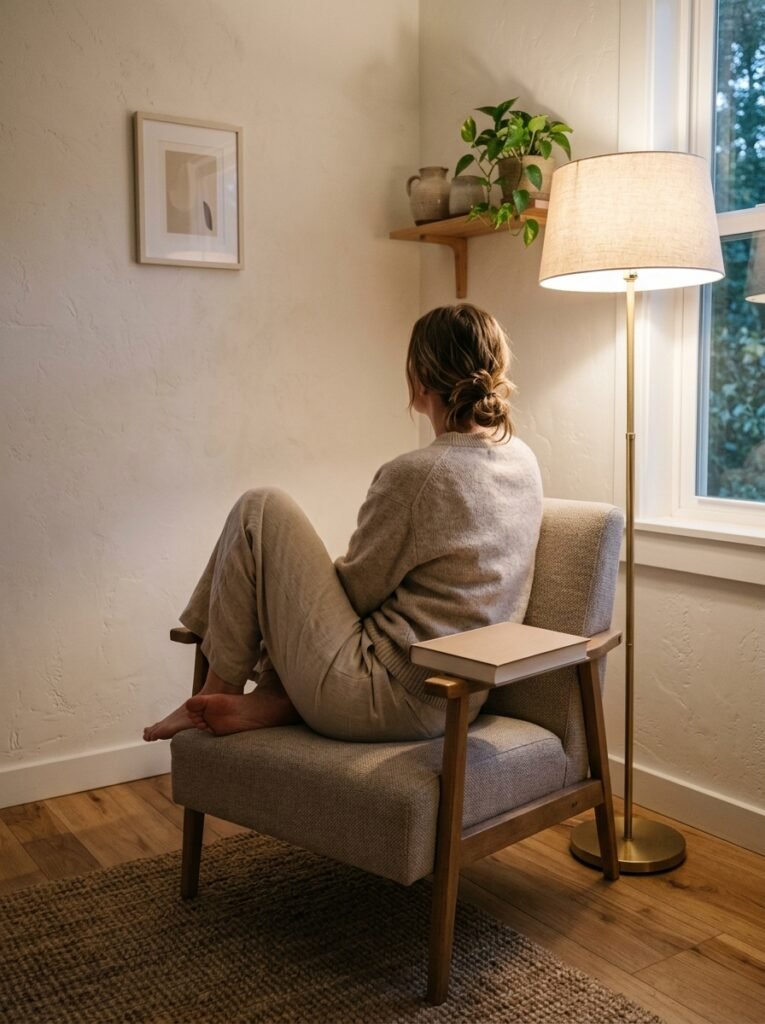
The corner isn’t a leftover space. It never was. It’s just the part of the room that requires a decision, and decisions feel harder than leaving things vague.
Make the decision. One lamp. One plant. One chair, maybe two. A deliberate amount of nothing.
What’s in your corner right now — and does it deserve to stay there?