The Case for a Quieter Christmas (And Why My Living Room Has Never Looked Better)
My neighbor put up her tree November 1st. Tinsel everywhere, those big plastic balls in five different colors, a light-up Santa that played music. Every time I walked past her window I thought — that’s so much going on. And then I’d come home to my own living room, which, at the time, wasn’t much calmer.
This year I did something different. Less. Way less. And it was the best decorating decision I’ve ever made.
—
1. Why “Less” Feels Harder Than It Should at Christmas
There’s this weird guilt that comes with minimalist Christmas decorating. Like you’re letting the holiday down or something. People see a bare mantel with three white candles and they want to know if you’re okay.
But here’s the thing — restraint is actually HARDER than excess. Anyone can pile stuff on. It takes real intention to choose what stays.
The minimalist approach asks you to make every single object count. No filler. No “it was in the box so I put it out” energy. Each piece has to earn its place on the shelf, the mantel, the windowsill. When you get it right, the room doesn’t look sparse. It looks considered. There’s a difference, and it’s a big one.
I spent years thinking I needed more to make the room feel festive. More ornaments, more string lights, more of everything. The room always looked busy. Never peaceful. And peaceful is what I actually wanted at Christmas.
“Restraint is harder than excess. Anyone can pile stuff on. It takes real intention to choose what stays.”
—
2. The Color Palette That Makes Everything Feel Instantly More Expensive
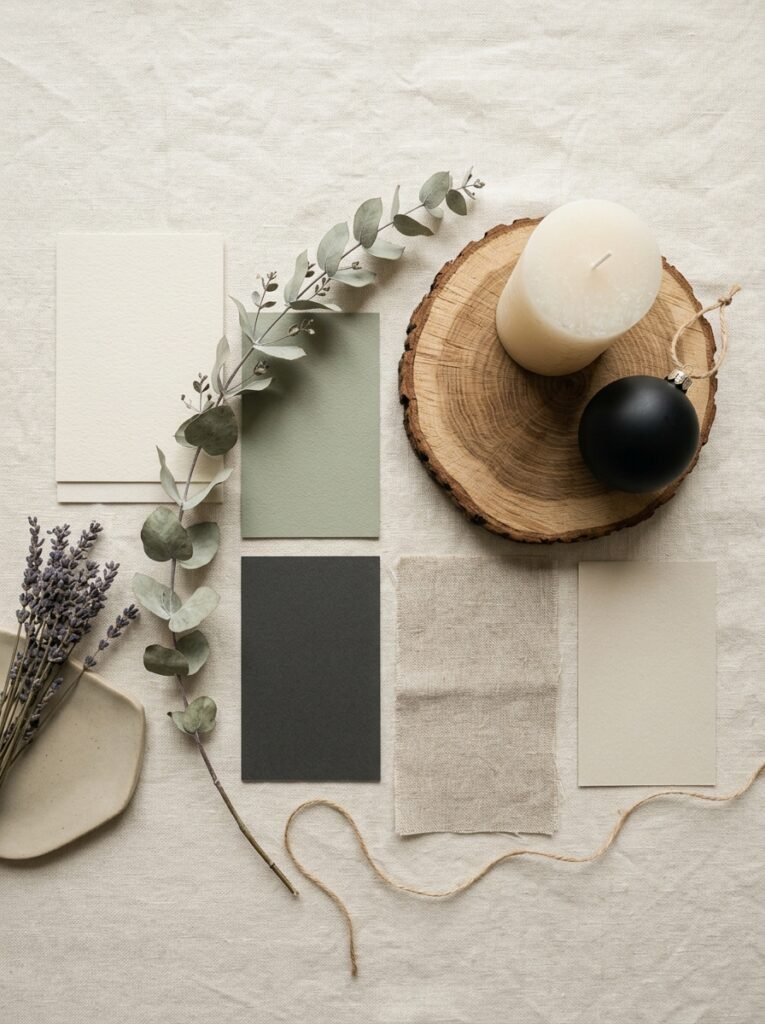
Ditch the red and green. I said it.
Not forever — they’re classics and I get it — but if you want that calm, curated look, those two together are doing a lot of loud work. Swap them for a palette that’s tighter, more tonal. Think deep forest green and cream. Or warm white and raw linen. Or if you want something a little bolder: charcoal, brass, and a single pop of deep burgundy.
The secret is picking two or three shades and not letting anything sneak in that doesn’t belong. One rogue red bow can throw the whole room off, honestly. It sounds extreme but once you notice it you can’t un-notice it.
For American homes that already lean warm and woodsy, this comes naturally. For UK homes where the living room might have more pattern — think floral sofas, printed rugs — a more neutral palette gives the Christmas layers somewhere to breathe.
—
3. What You Actually Need on the Mantelpiece (It’s Probably Three Things)
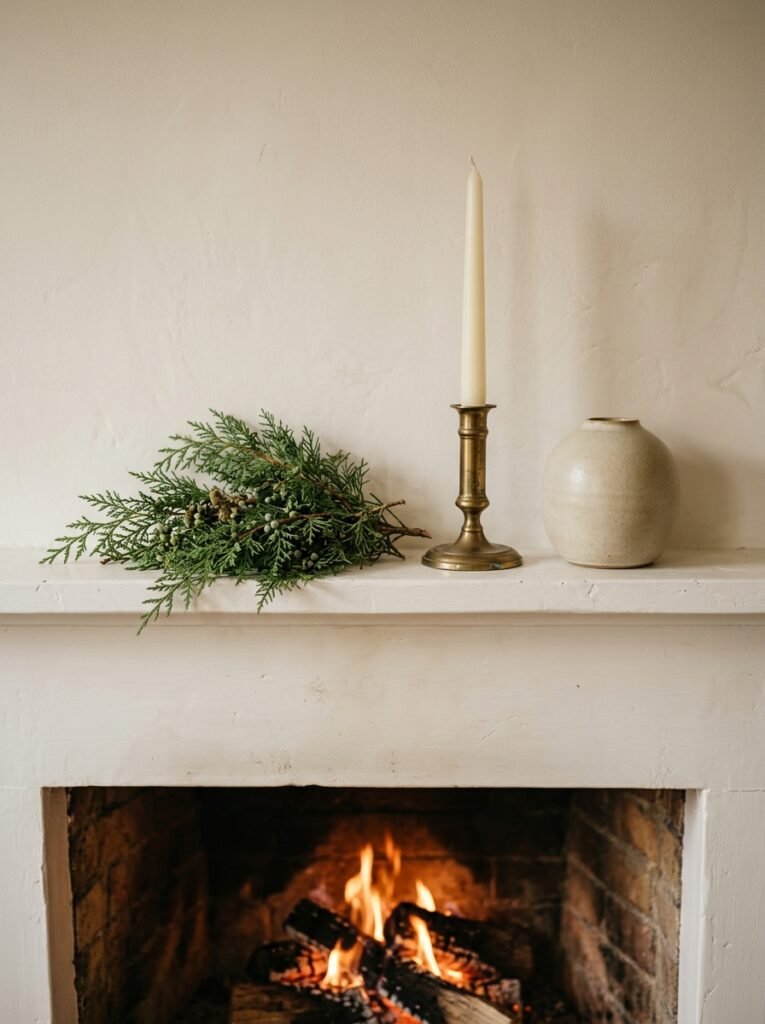
Stop putting seventeen things on your mantelpiece.
I mean it kindly. Mantelpieces are not shelves. They’re more like a stage, and every stage only needs a few actors to tell the story.
Three things is usually right. Sometimes four. Here’s the general approach that works almost every time: vary the height, keep the color consistent, and let there be actual empty space between objects. That empty space isn’t a mistake. That’s the breathing room that makes everything else look intentional.
A tall glass vase with fresh eucalyptus. A small cluster of white pillar candles at different heights. And something personal — a little ceramic deer, a brass star, a sprig of holly you picked up on a walk. That’s it. That’s a beautiful mantelpiece.
The garland question comes up a lot. Garlands work, but only if they’re simple — loose greenery, maybe some dried orange slices tucked in, nothing that looks fake or plasticky. The moment it starts looking like a department store display, you’ve gone too far.
—
4. The Tree Secret Nobody Mentions
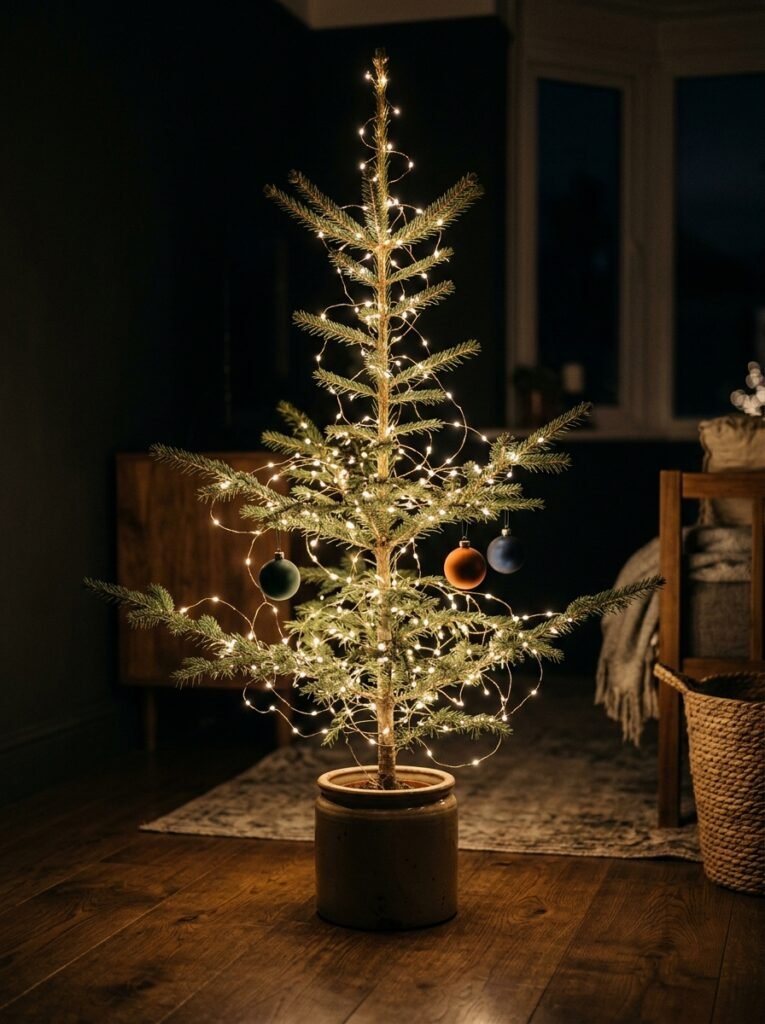
A smaller tree, beautifully decorated, looks more intentional than a big one dressed in a hurry.
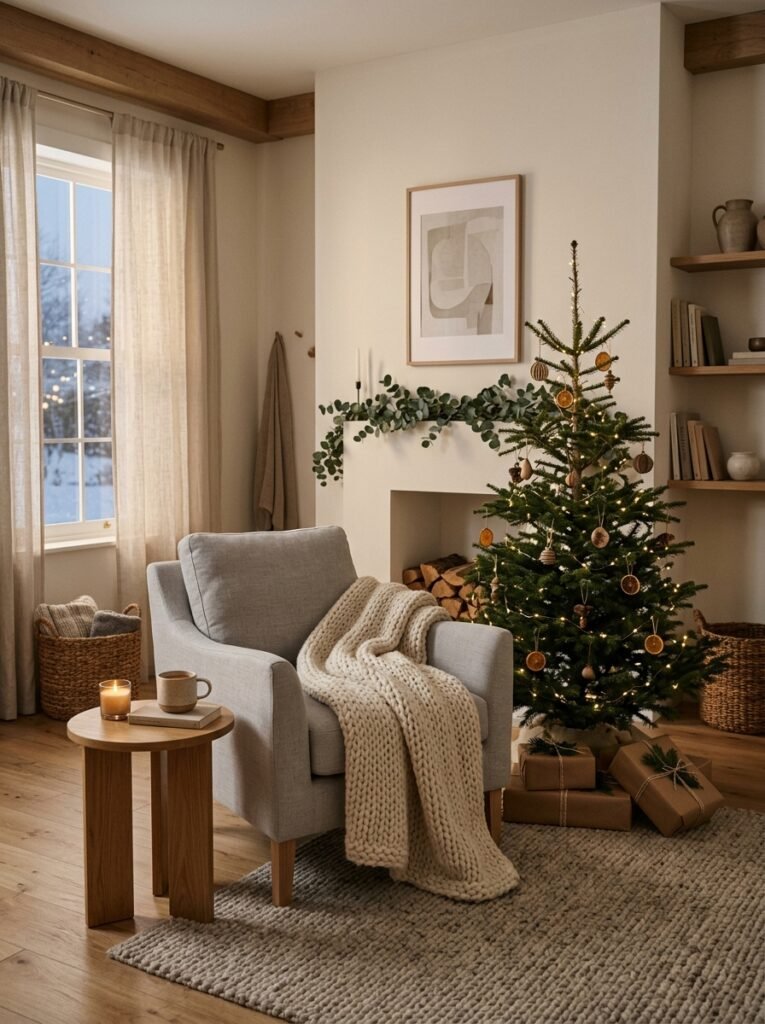
This is not popular advice. Tree size feels like it matters. But I’ve had a six-foot tree with 200 ornaments on it and I’ve had a four-foot tree with maybe forty carefully chosen ones, and every single person who came over commented on the smaller one. It just had this quiet presence. It wasn’t competing with everything else in the room.
Stick to one or two types of ornaments. Matte and shiny versions of the same thing work well — matte white balls and glass icicles, for example. Or handmade straw ornaments (very Scandinavian, very timeless) and a single strand of warm fairy lights. Not two strands, not three. One.
The tree topper matters more than people think. A simple star in brass or raw wood beats an elaborate angel in a room that’s trying to stay calm. Side note — skip the tinsel entirely. You don’t need it. It dates the look immediately.
—
5. Candles Do More Work Than You Think They Can
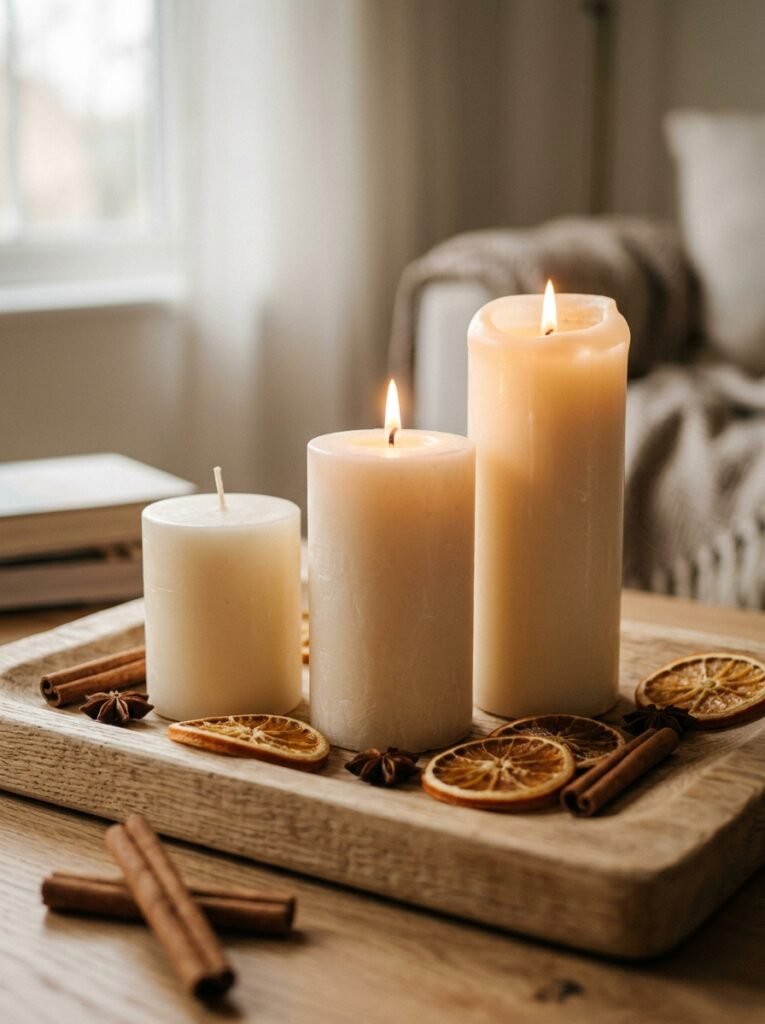
This might be my strongest opinion: good candles are doing more for your Christmas living room than almost anything else, and most people underuse them completely.
Not the little tea lights in glass holders (though fine in a pinch). I mean real candles. Thick ones, in ivory or deep cream or beeswax gold, placed in simple holders — a concrete base, a brass taper holder, a cluster of three wooden stumps. Something that looks intentional at any time of year, not just December.
“Good candles are doing more for your Christmas living room than almost anything else, and most people underuse them completely.”
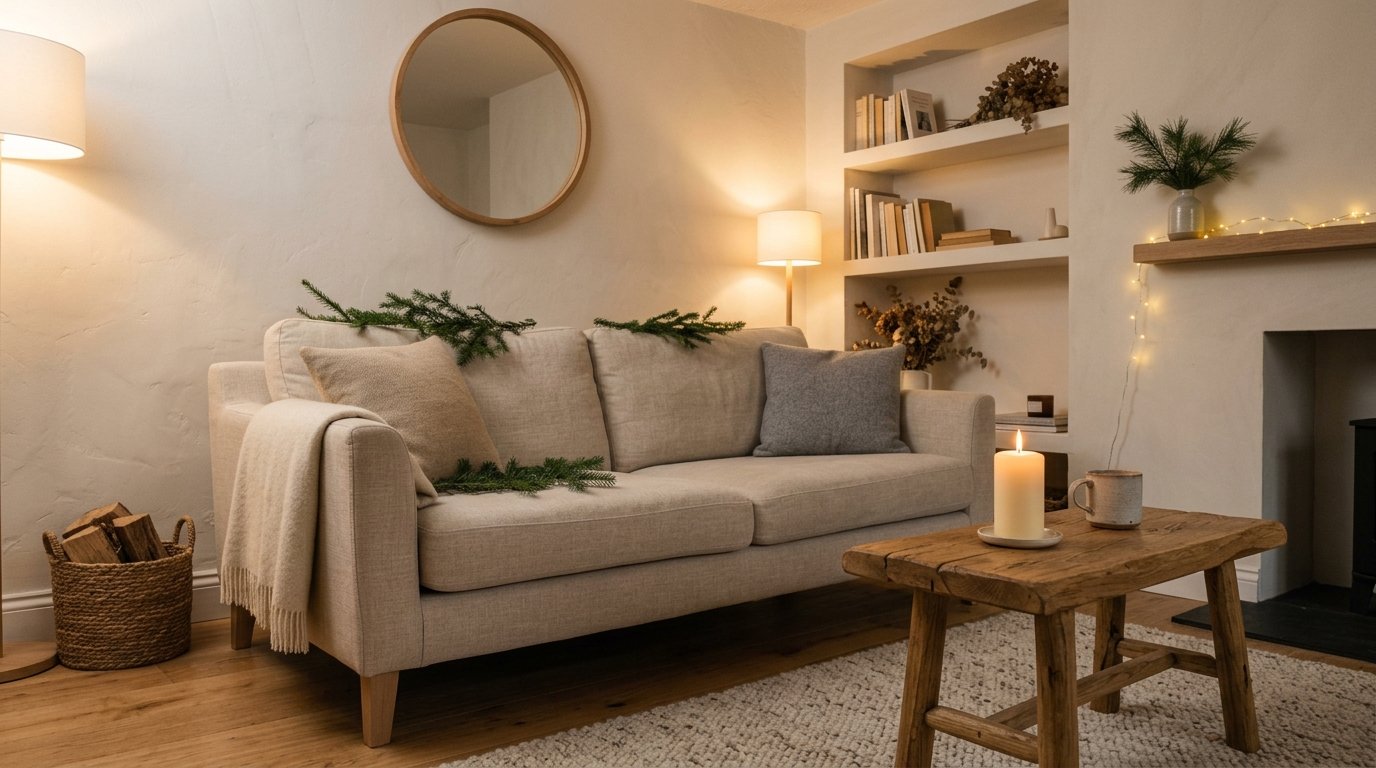
Light them at 5pm when it gets dark and your whole room shifts. The amber glow changes the color of every surface. Cream walls go warm, wood goes golden, even the air feels different. You don’t need twinkle lights competing with everything if the candles are doing their job. In the UK especially, where December is properly dark by late afternoon, candles do extraordinary work.
Just — please, please — be safe. Proper holders, never left unattended, away from anything that can catch. You know this already but I had to say it.
—
6. The One Textile Change That Makes the Room Feel Like Christmas

You don’t have to redecorate your entire living room. You just don’t.
Swap two things and it’ll feel like December. Your throw blanket and your cushion covers. That’s it.
A thick, chunky knitted throw in oatmeal or cream or deep grey draped over the back of the sofa reads as cozy and seasonal without screaming anything in particular. Add one or two cushion covers in a simple check, a subtle sprig print, or plain velvet in forest green or dusty burgundy. Velvet is doing so much heavy lifting this time of year — it catches light, it feels expensive, and it’s the kind of thing that works in a minimalist space without adding noise.
A woven wool or jute rug layered under or beside your existing rug adds texture without color. Textures are what Christmas should feel like. Not just look like. Feel like.
—
7. What to Do With the Coffee Table (Don’t Skip This One)
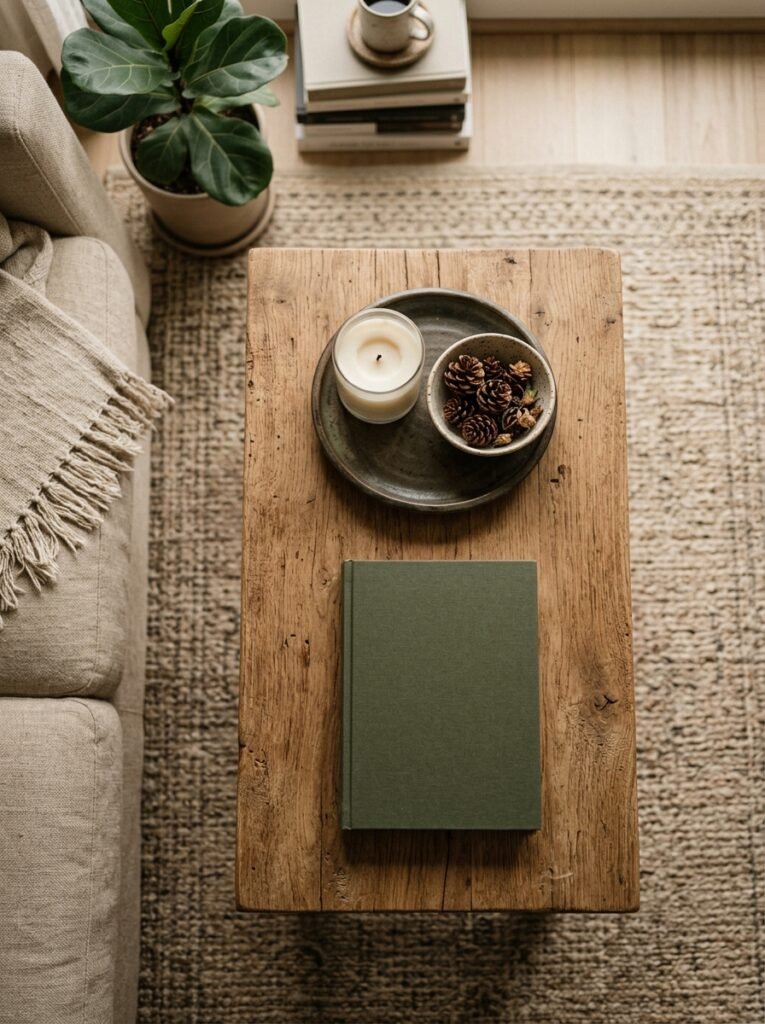
The coffee table is the most neglected surface in the Christmas-decorated living room and it absolutely shouldn’t be.
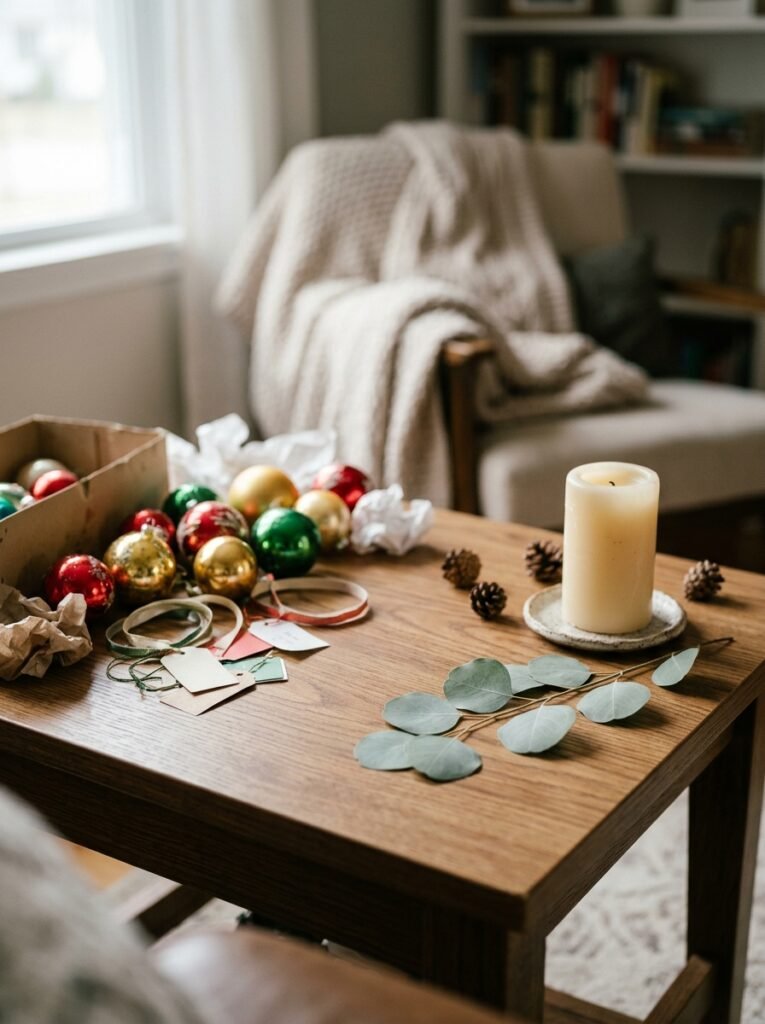
Keep it simple but make it feel seasonal. A small wooden tray or a piece of slate as a base gives you a contained area to work with. Into that: a couple of pillar candles, a few pinecones you actually picked up somewhere, maybe a small hardback book with a beautiful spine facing up. Done.
Or — and I love this one — a glass cloche over a single tiny thing. A little wooden figure, a sprig of rosemary, a handful of star anise that smells incredible every time someone walks past. The cloche makes anything feel like it was meant to be there.
What you want to avoid is the spread-out-on-every-inch approach. Greenery cascading across the whole table, bowls of decorations, random bits. It ends up looking like the table is just waiting to be cleared, not like it was styled.
—
8. Real Greenery vs. Faux: A Controversial Position
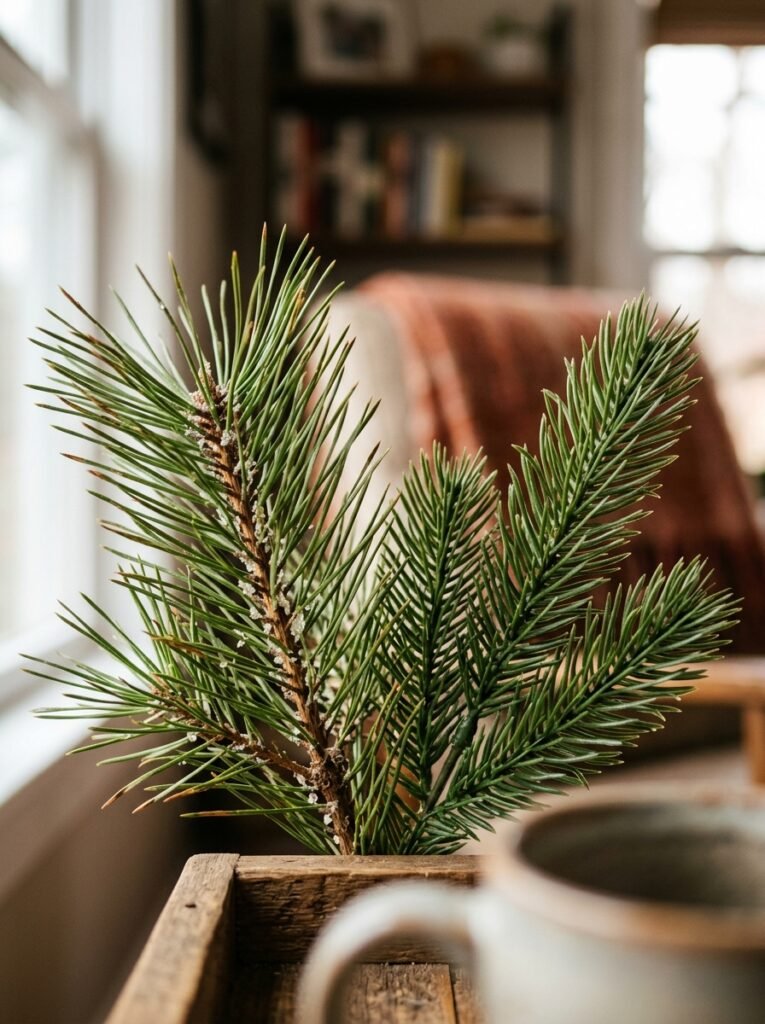
I’m coming down firmly on the side of real. I know. Faux is practical, it lasts, no needles on the floor, you can use it every year. I understand the argument completely.
But real greenery smells like Christmas. You walk into a room with a fresh wreath or a bunch of eucalyptus or a pine garland and your whole nervous system settles. It’s not something a faux version can do. The smell is doing emotional work that no amount of candles or styling fully replaces, or maybe it just adds something different, honestly.
If your budget or your schedule doesn’t allow for real everywhere, pick one spot for real greenery. The mantel. A small vase on the console table. Even a sprig in a bud vase on a bookshelf. Let one thing be real and you’ll feel the difference.
In the UK there’s still a strong culture of fresh holly and ivy, which is lovely and free if you’ve got a garden. Americans have easier access to pine and cedar branches, which are extraordinary — a few branches in a tall vase is one of the most beautiful and easiest things you can do this time of year.
—
9. The Lighting Layer That Changes Everything After Dark
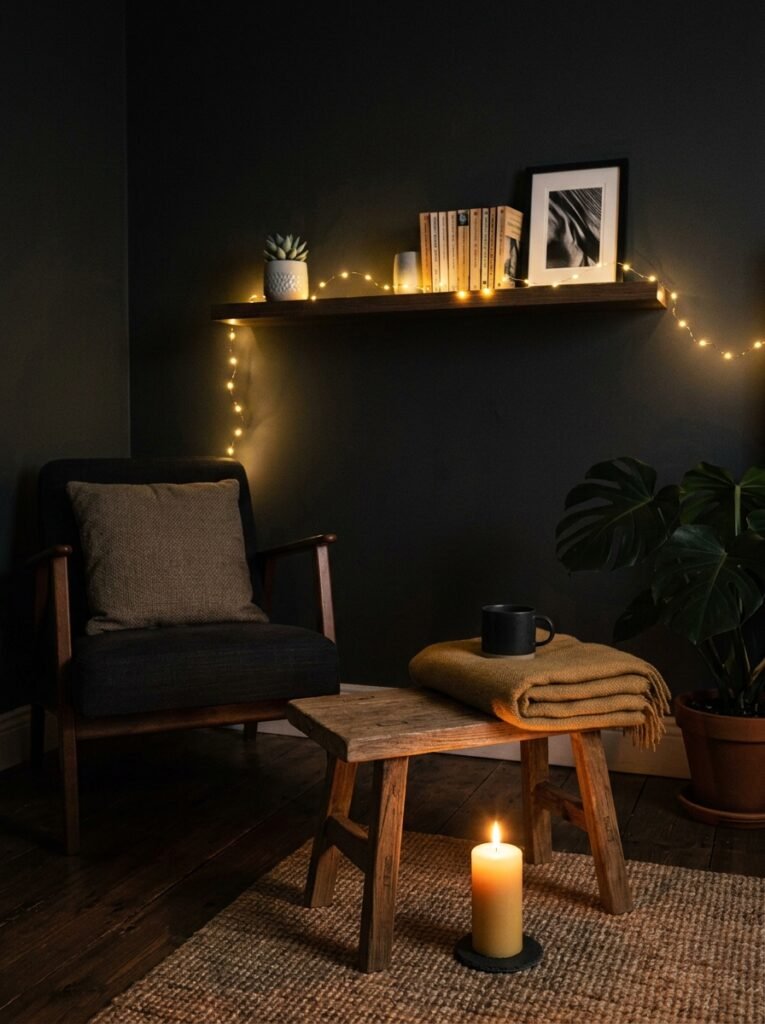
Overhead lights off. Full stop.
I don’t actually know why people leave overhead lights on during the Christmas season. The room always looks better without them. Use lamps, candles, and your tree lights. That’s the full lighting plan.
A warm-toned lamp on either side of the sofa creates a kind of sanctuary feeling. Layer in a small table lamp somewhere lower — a side table, a bookshelf — and suddenly there’s depth in the room. Then the tree, with its single strand of warm white lights (warm, not cool, please — cool white lights give a clinical feeling that’s never cozy), and the candles wherever they’re safe.
“Overhead lights off. The room always looks better without them.”
This works especially well in smaller UK living rooms where the scale of the space is already intimate. American rooms with higher ceilings might need an extra lamp, but the principle holds.
—
10. The Forgotten Power of Scent as a Decorating Choice

Decorating isn’t only visual. This is something I’ve come to feel pretty strongly about, and I think minimalist rooms especially benefit from it because there’s less visual stimulation competing for attention.
A simmering pot of orange peel, cinnamon sticks, and star anise on the stove. A beeswax candle that smells like pine. A bowl of cloves and dried orange slices on the coffee table that releases a low, warm fragrance all day. These aren’t expensive. They’re just intentional.
Scent memory is powerful in a way decorations can’t quite match. Someone walks into your room and doesn’t even fully notice the beautifully arranged mantel — but they DO notice something that makes them feel like it’s Christmas, and half the time it’s the smell doing that.
—
11. The Decorations Worth Keeping Year After Year

This is practical. This is the bit that actually saves money and time and storage space.
Invest — slowly, over multiple years — in a small collection of genuinely beautiful, completely neutral Christmas objects. Things that work in almost any room, any year, regardless of your sofa color or your current mood for color palettes.
Brass candlestick holders. A set of plain glass baubles. A simple wooden advent calendar with small drawers. A cotton or linen stocking in natural cream. An unglazed ceramic star.
These are the things that move from house to house, decade to decade, and get more beautiful the older they are. They’re the opposite of the plastic decorations that look slightly worse every year and somehow multiply in the box.
Buy one good thing per year. Just one. By year five you’ll have a small, beautiful collection that makes decorating feel like a reunion with old friends instead of a chore.
—
12. The Edit That Actually Puts the Look Together
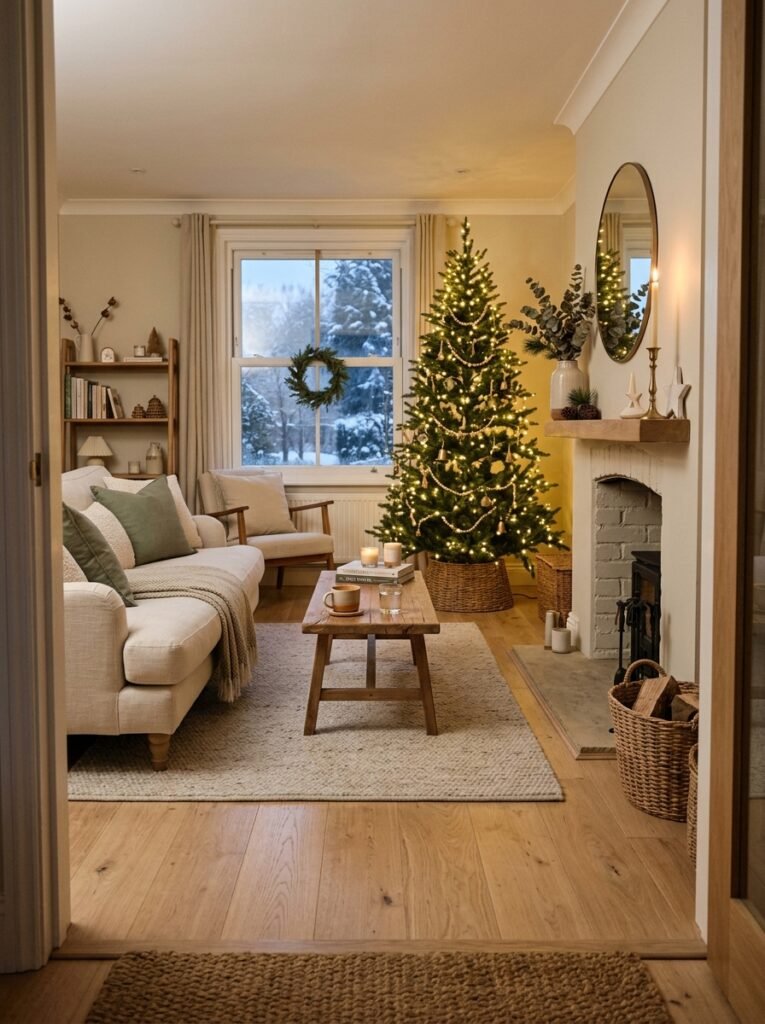
Everything I’ve described above works better if you do this last step: the final edit. The brutal one.
Once you’ve placed everything, leave the room. Come back in thirty seconds and look at it fresh. If your eye catches on something first and that something is a distraction rather than a feature — take it out. If a surface feels cluttered, remove the least important thing. If a color feels wrong, swap it.
The edit is where the minimalist look actually comes from. Not from buying less, exactly — from being willing to put back what doesn’t earn its place.
I usually find there’s one thing in every room I’ve decorated that I put out out of habit or guilt and that I always end up removing on the second or third pass. A decoration from a relative that doesn’t match. A piece I thought I loved but that’s fighting with everything else. Into the box it goes, kindly, for another year.
The goal is a room that feels like you thought about it — and then let it breathe.
—
❓ FAQ
Q: Can minimalist Christmas decor still feel warm and festive, or does it just look cold? A: Yes — and this is the most common fear people have. The warmth comes from materials and lighting, not from quantity. Candles, real greenery, soft textiles, and warm-toned lights create all the coziness of a heavily decorated room without the visual chaos. It feels intentional, not clinical, when you do it right.
Q: How do I convince my family to go more minimal when they love lots of decorations? A: Honestly, you might not fully win this one and that’s okay. A good middle ground is keeping the family decorations in one specific area — the tree, say, or a dedicated corner — and keeping the rest of the room calm. You still get the nostalgia and the memories attached to those pieces without letting them take over every surface.
Q: What’s the easiest first step if I’ve always done traditional and want to try minimal this year? A: Take out everything you’d normally put up, then put back only what you genuinely love. Not what matches, not what you’ve always had out — just what actually makes you feel something when you look at it. You’ll probably end up with a third of what you started with, and the room will be better for it.
—
💭 Final Thoughts
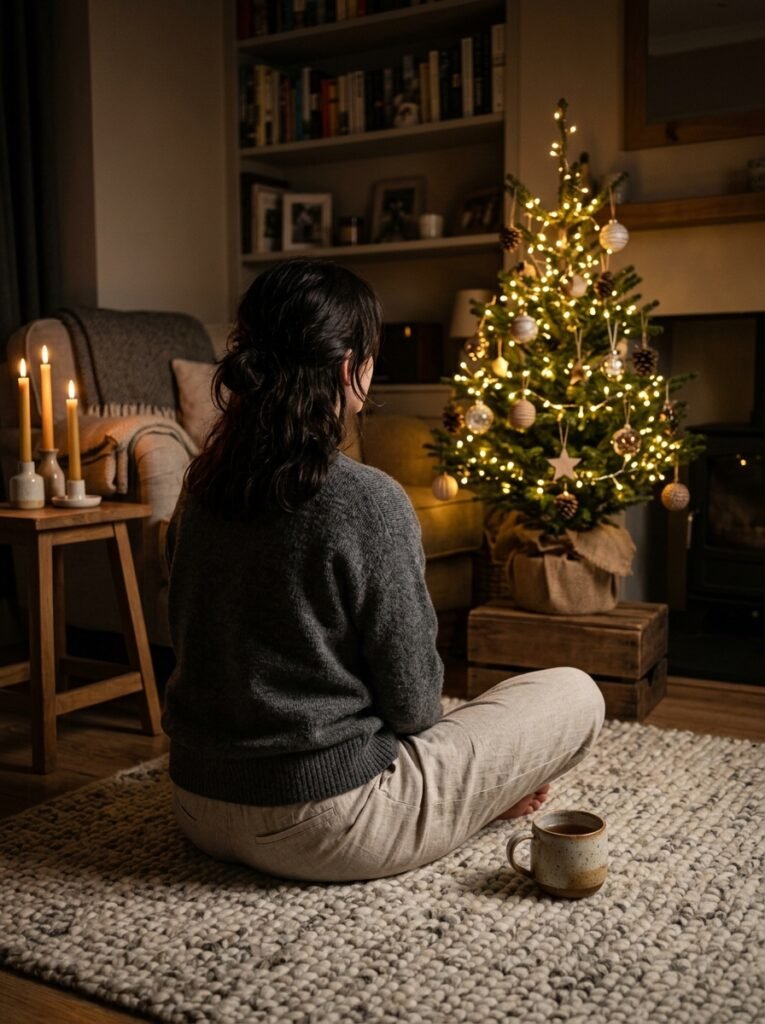
Minimalist Christmas decorating isn’t a trend, and it’s not a personality type. It’s just the decision to be a little more careful about what you let into your space during a month that can get very loud very quickly. The rooms I come back to on Pinterest, the ones I screenshot at midnight thinking “that’s it, that’s the feeling” — they’re always the quiet ones.
What would it feel like to walk into your living room on Christmas Eve and just… exhale?