
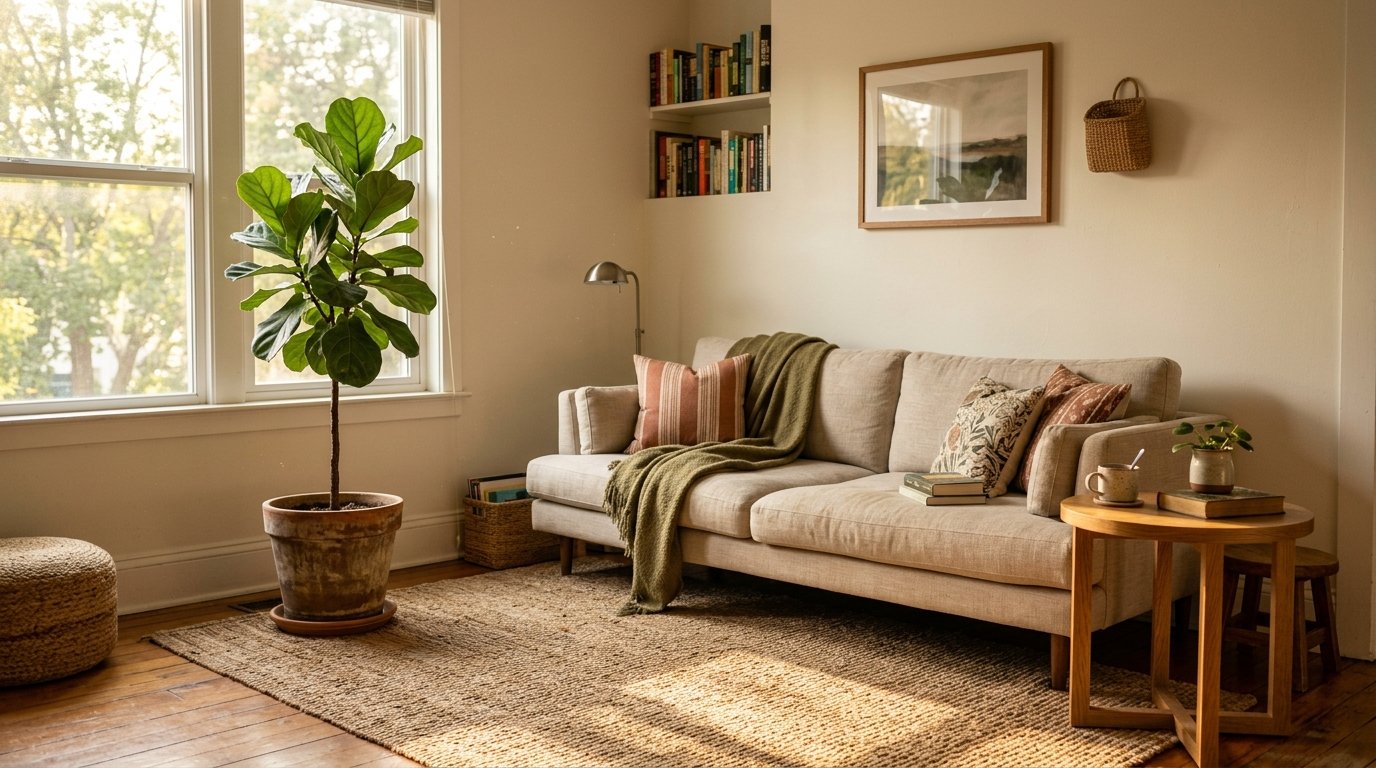
Why Small Living Rooms Actually Photograph Better (And How to Make Yours Look Like That)
My friend Diane called me last year, genuinely stressed, because her estate agent had told her that her new flat’s living room was “cozy” — which we all know is code for tiny. She wanted to cancel the purchase. I told her not to, and honestly, a year later, her living room is the most-saved photo on her Pinterest board. So. There’s that.
—
1. The Lie We’ve Been Told About Square Footage
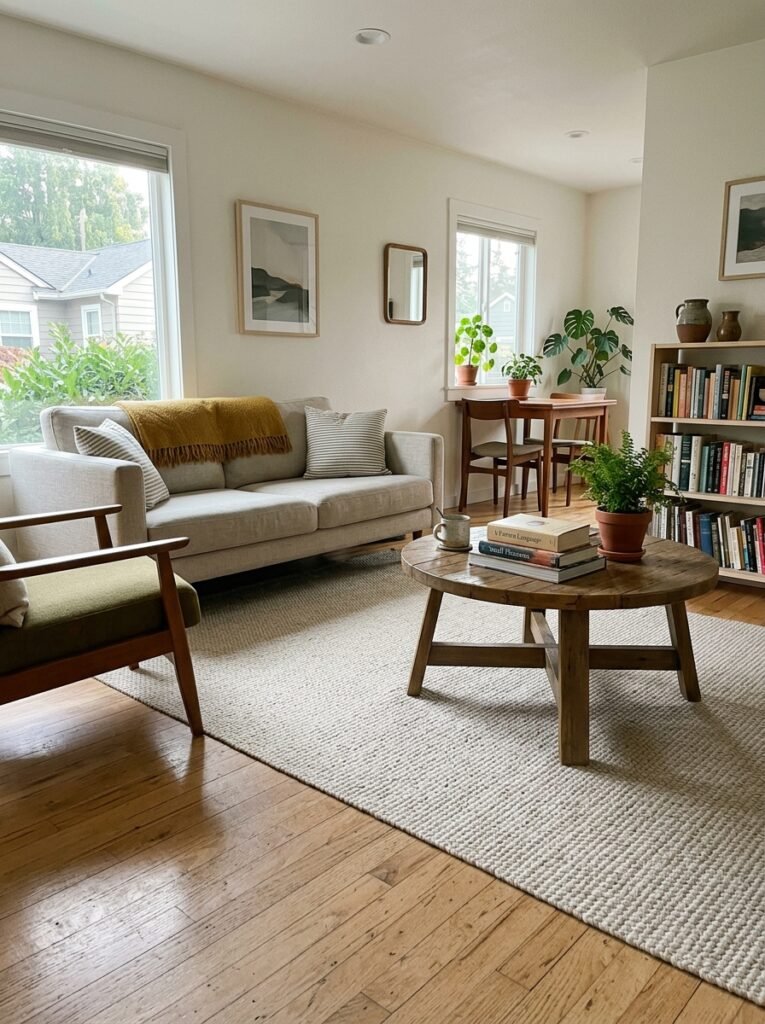
Small does not mean sad. I’m just going to say that right out of the gate, because a lot of decorating advice online treats small rooms like a problem to be solved — a limitation, an apology. And that framing will ruin your design choices before you even start.
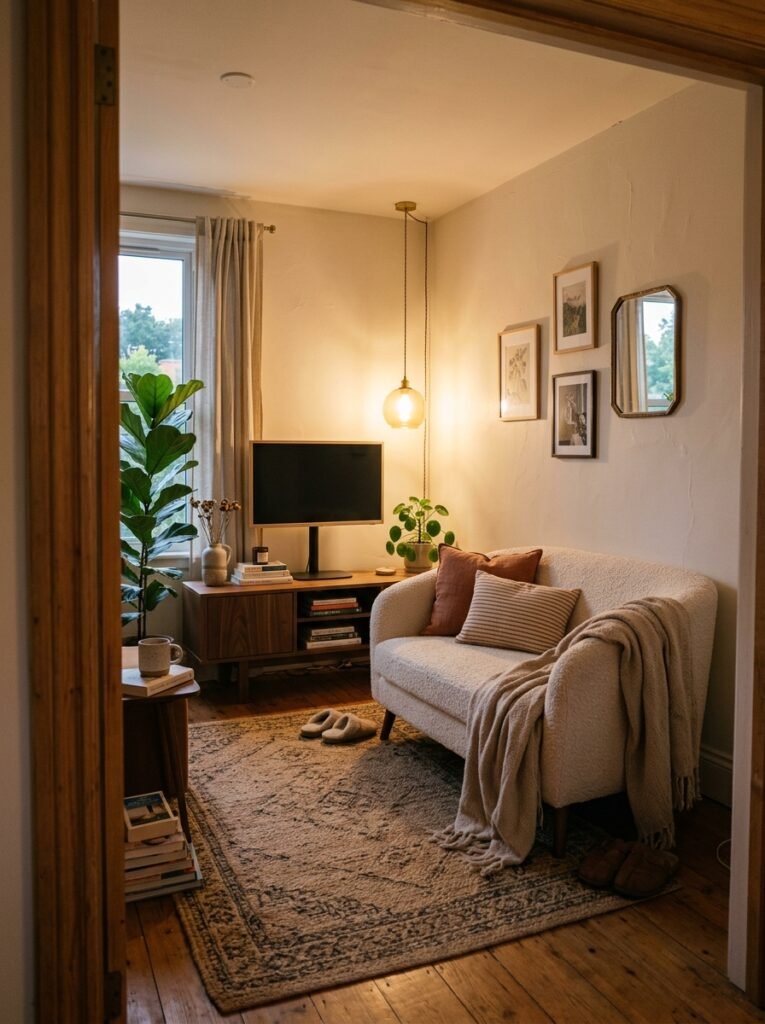
Here’s what nobody tells you: small rooms have ATMOSPHERE in a way that large, open-plan spaces genuinely struggle to achieve. That amber glow of a lamp in the corner? It hits completely differently when the room is twelve feet wide versus twenty-two. The coziness isn’t accidental. You can lean into it.
The best small living rooms I’ve ever seen weren’t trying to look big. They were leaning into exactly what they were — intimate, intentional, layered. That shift in mindset is worth more than any furniture arrangement hack.
“The best small living rooms aren’t trying to look big. They’re leaning into exactly what they are.”
Stop apologizing for the square footage. Start decorating for what the room actually is.
—
2. The One Mirror Trick That Doesn’t Look Like a Hotel Lobby
Okay, everyone knows mirrors make small rooms look bigger. That’s not a secret. But the way most people use them IS the problem — one large rectangular mirror above the sofa, centered, predictable. It reads instantly as “I googled how to make a small room look bigger” and not in a charming way.
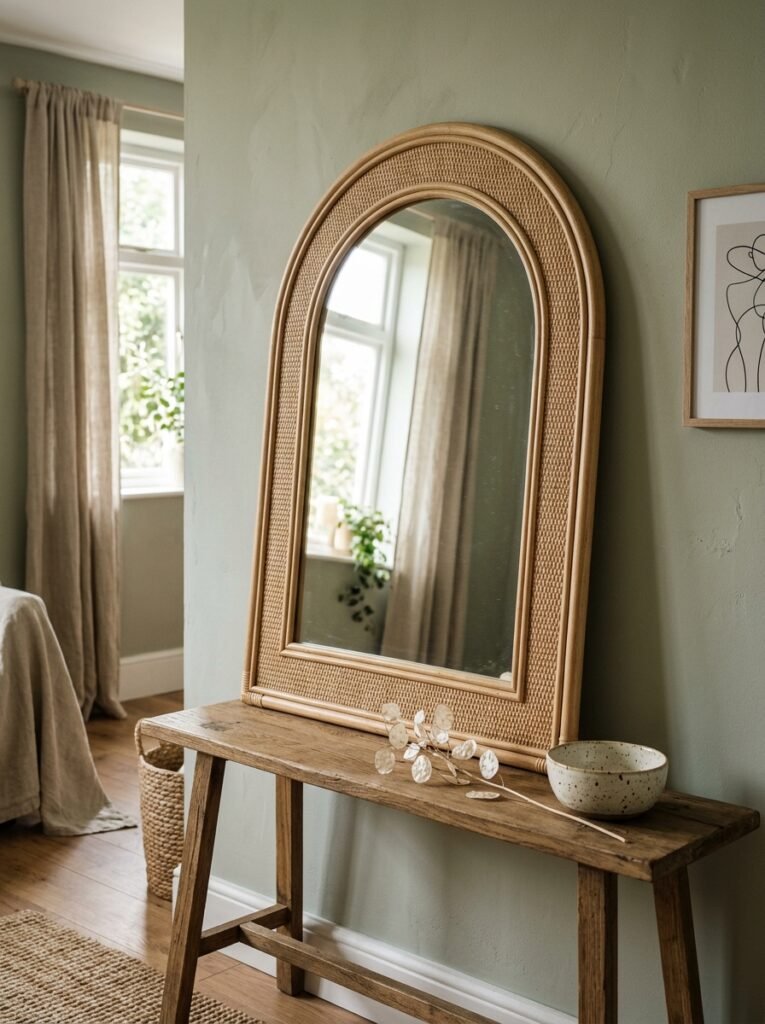
Instead, try placing a tall, narrow mirror at an angle against the wall, leaning slightly, like it belongs to the room rather than being mounted for function. Or, group two or three smaller mirrors — different shapes, mismatched frames — on one wall. The effect is less optical-illusion, more collected and lived-in.
The goal is for someone to walk in and say “oh, this room feels nice” not “oh, she used a mirror.” You want the trick invisible. And I’d say an arched or irregular-shaped mirror works better in a small space than a straight rectangle almost every time. The organic edge doesn’t call as much attention to itself.
—
3. Your Sofa Is Probably Too Big (Sorry)
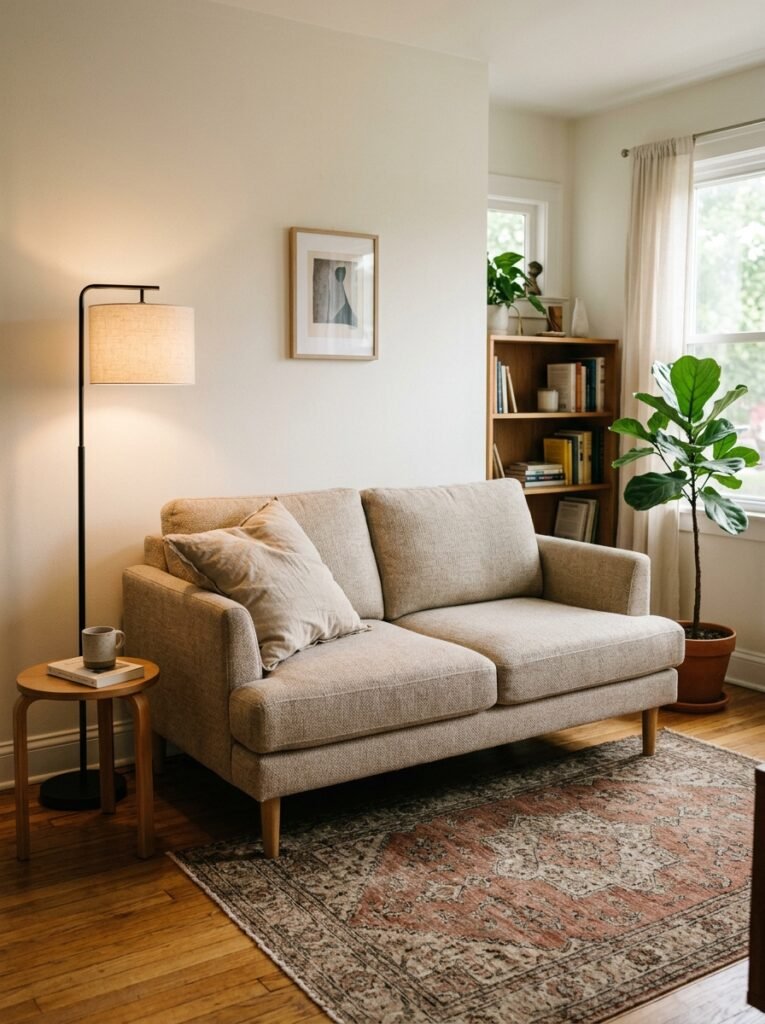
Not gonna lie, this is the one that stings. But a lot of small living rooms are being held hostage by a sofa that is simply too large for the space, and the owner has convinced themselves it’s fine because they love it.
A three-seat sofa pushed flat against the wall, with no breathing room, is not cozy — it’s cramped. And pulling it away from the wall actually helps, even in a small room. Even six or eight inches. It creates the illusion of dimension and makes the sofa look chosen rather than wedged.
If you’re starting fresh, or if you’re brave enough to rethink: a two-seat sofa paired with a single armchair almost always works better in a small space than one long sofa. The asymmetry makes the room feel styled. Two identical seats facing each other, meanwhile, tends to read as a waiting room.
Side note — sofa legs matter more than anyone ever admits. A sofa with visible legs, even short ones, lets light pass underneath and makes the floor look longer. Skirted sofas, no matter how beautiful, visually “sit” heavier.
—
4. The Color That Keeps Showing Up in Every Beautiful Small Living Room Right Now
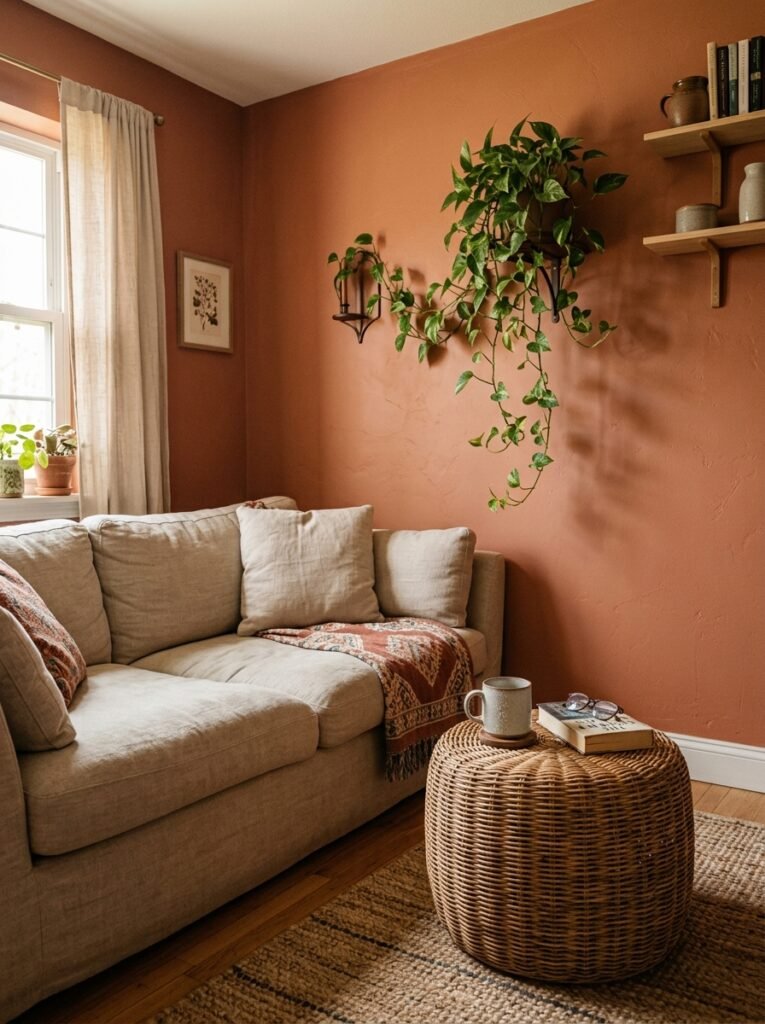
It’s not white. Or rather, it’s not ONLY white, and pure bright white is actually doing small rooms a disservice lately.
What’s working — and what I keep seeing saved and re-saved on every design-forward board — is what I’d call “warm stone.” Think: a very pale greige with yellow undertones, something that reads almost neutral but glows when the light changes throughout the day. It doesn’t shrink the room, and it doesn’t make it feel clinical.
The other color that’s having a moment in small living rooms is deep, moody green. And I know that sounds counterintuitive — dark color, small room — but hear me out. When you paint all four walls AND the ceiling the same deep tone, something interesting happens. The boundaries of the room disappear. Instead of seeing four small walls, you see one rich, enveloping atmosphere. It’s the difference between a box and a den.
“When you paint the ceiling the same shade as the walls, the room stops feeling small and starts feeling intentional.”
This works especially well with warm artificial lighting in the evenings. Not fluorescent. Not cool-toned LEDs. Warm, slightly amber bulbs — the kind that make everyone look good and everything feel more expensive than it is.
—
5. Curtains Are Not Optional, and Most People Hang Them Wrong
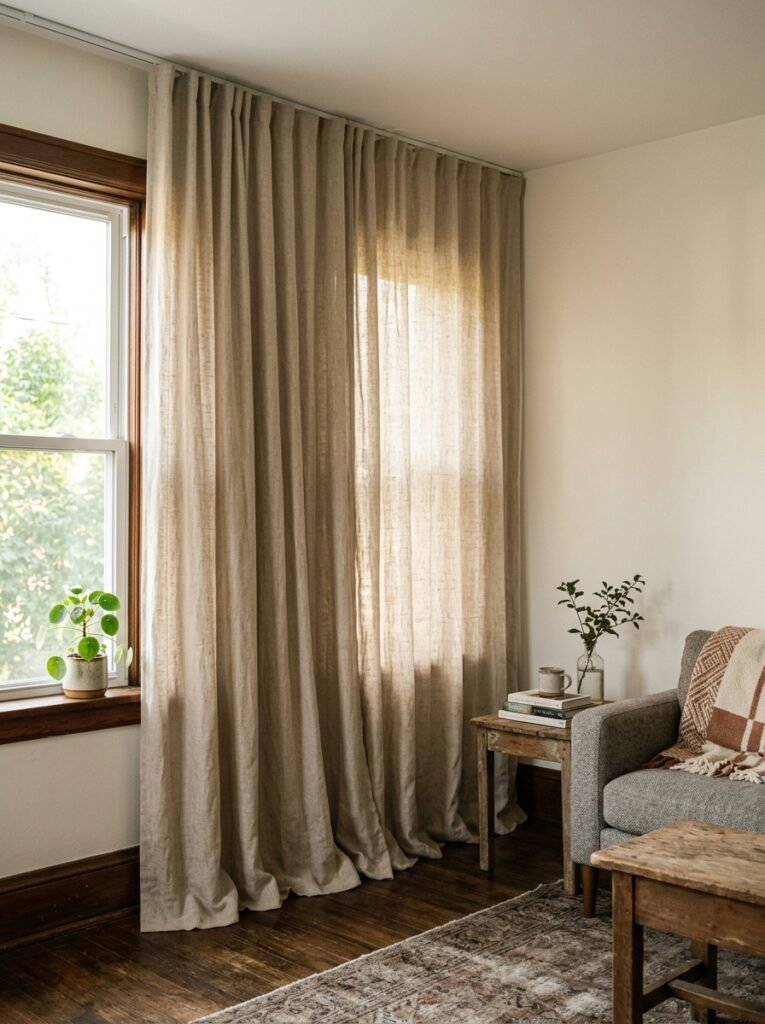
Short curtains. Low curtain rods. These are the two most common mistakes in small living rooms, and they’re doing so much damage.
Hang your curtains as high as possible — ideally as close to the ceiling as you can get without it looking strange. And let them fall all the way to the floor, with maybe a very slight puddle or just grazing it. This one thing will make your ceiling feel taller than any paint color will.
Width matters too. The panels should extend well beyond the actual window frame — several inches on each side at minimum — so that when the curtains are open, they’re mostly covering wall, not glass. The window looks bigger, the wall looks like it has more breathing room, and the whole thing feels more finished.
As for fabric: heavy, lined curtains in a plain texture (linen, velvet, a medium-weight cotton) do more visual work than any pattern. In a small room, a bold curtain print competes with everything else. Save the pattern for a cushion or a throw.
—
6. The “Dead Corner” Problem and What Actually Lives There
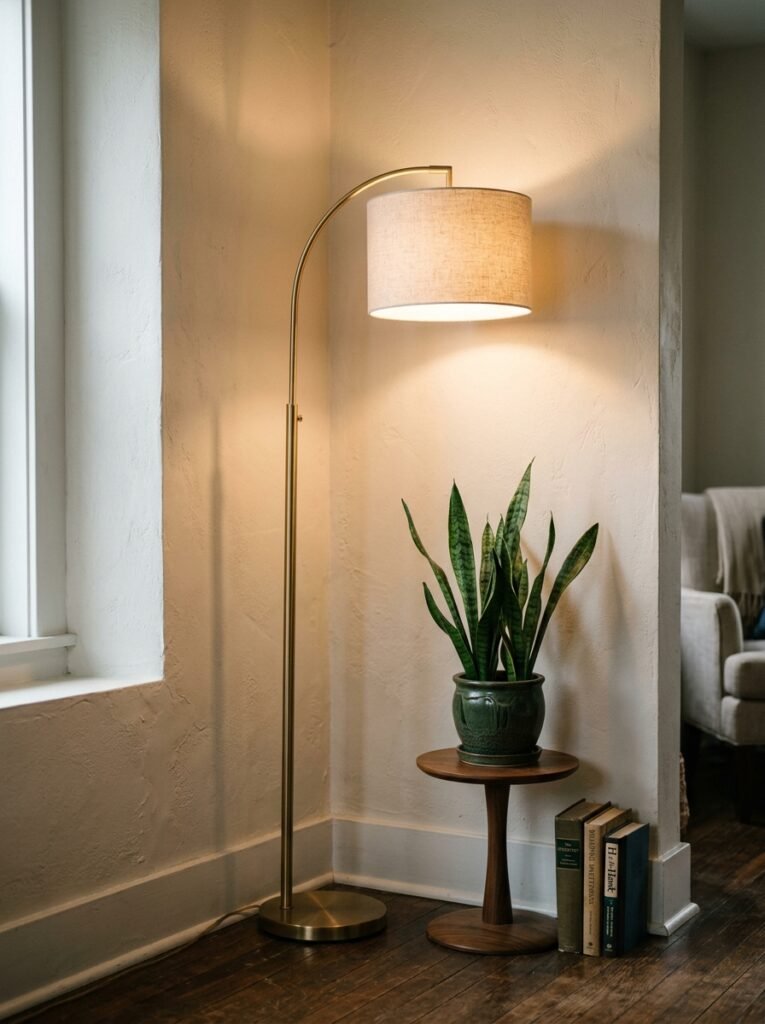
Every small living room has one. The corner that’s too awkward for a sofa, too small for a bookcase, too exposed for anything cozy. And most people leave it empty or shove a random plant there and hope nobody notices.
A tall floor lamp is the single best thing you can put in a dead corner. Full stop. It draws the eye upward, it adds light exactly where it’s needed (corners get dark fast), and it costs a fraction of what any other furniture solution would. A lamp with a warm-toned shade, a slightly sculptural base, placed at an angle into the corner — that’s it. That’s the whole solution.
If you want to do more: a tall lamp plus a small side table, just barely fitting in the corner, creates a little vignette that feels intentional. Stack two or three books on the table, something with an interesting spine, maybe a small vase. Now the corner is a moment rather than an afterthought.
—
7. Floating Shelves at the Right Height Change Everything
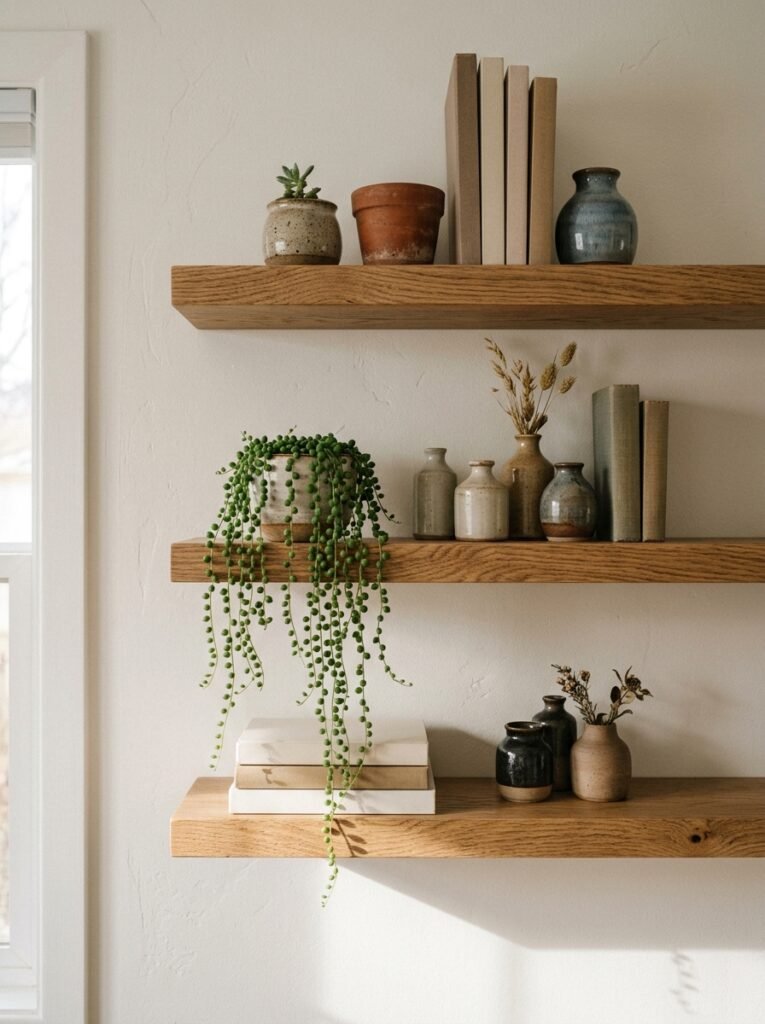
Not too high. Not too low. This is where I see people going wrong constantly.
Floating shelves in a small living room should hit around eye level when you’re standing — maybe sixty to sixty-six inches from the floor to the top shelf. Any higher and they look like they’re floating in a void. Any lower and they visually cut the room in half.
And what goes on them matters. The formula that works: roughly sixty percent books or objects, forty percent empty space. Leave some shelf showing. The white space isn’t wasted — it’s what lets the other things breathe and gives the eye somewhere to rest.
Keep the objects on the shelves relatively similar in height for one shelf, then varied on another. A little rhythm goes a long way. And please — no random mix of souvenirs and stuff you haven’t found a home for yet. Curate a bit. A small room amplifies clutter in a way a large room doesn’t.
—
8. The Rug Size That Actually Works (Hint: Bigger Than You Think)
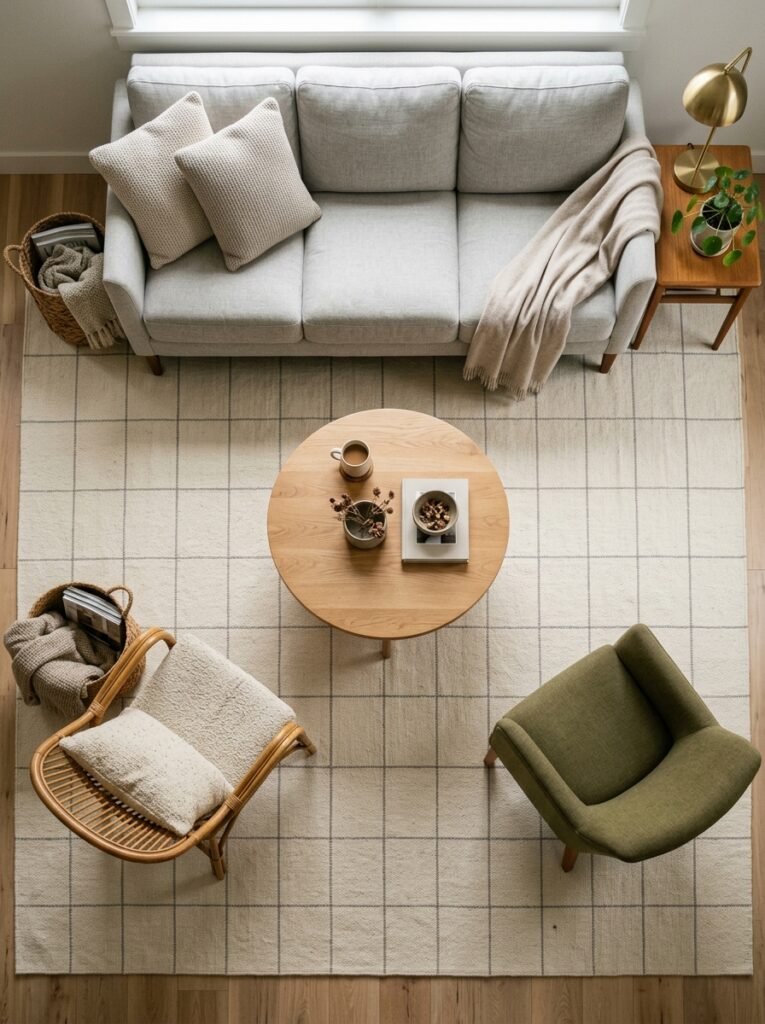
Too-small rugs. This is an epidemic and I’m tired of seeing it.
In a small living room, the instinct is to buy a small rug because you don’t want it to overwhelm the space. This is backwards. A rug that doesn’t extend under the front legs of at least some of the seating looks stranded and shrinks the room. It reads as an afterthought.
The rug should anchor the entire seating area. At minimum, the front legs of the sofa and any chairs should sit on it. Ideally, more. If that feels like a lot of rug, you’re probably finally in the right territory.
Texture matters here more than pattern. A flat-woven or low-pile rug in a neutral tone keeps things calm. A woven jute rug adds warmth and natural texture without adding visual noise. Save the bold pattern for a room where it has space to breathe — in a small living room, a patterned rug competes with everything from the sofa cushions to the curtains, and someone always loses.
—
9. Nesting Tables Are Smarter Than a Coffee Table in Most Cases
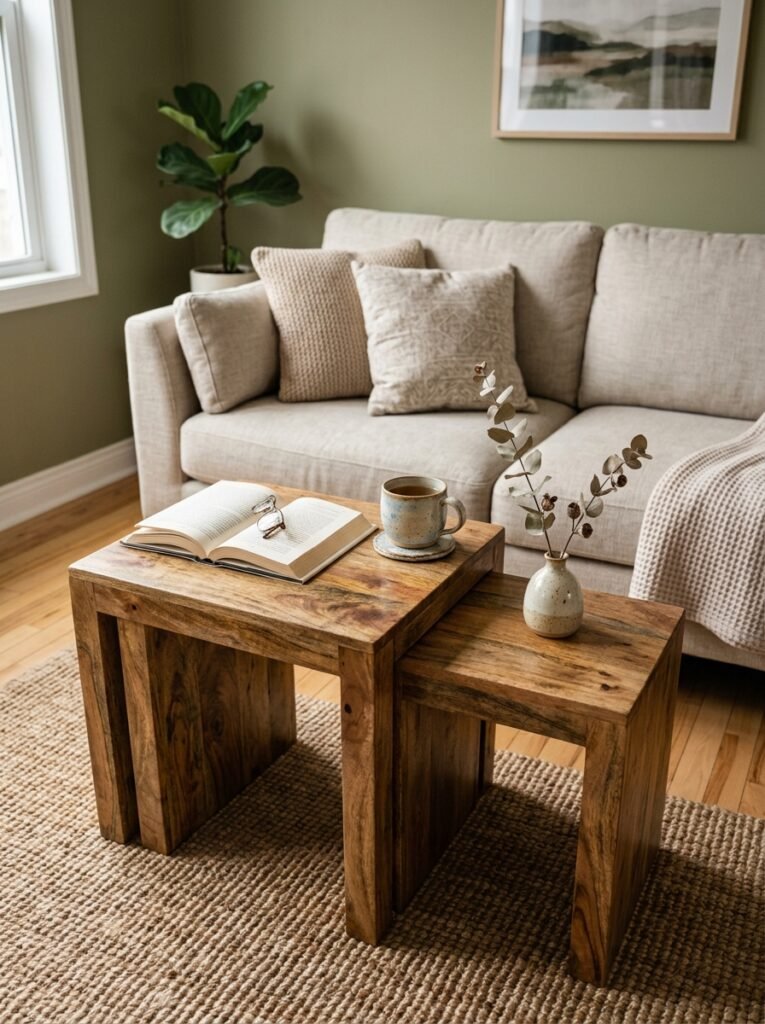
I said what I said. A large, heavy coffee table in the center of a small living room eats floor space and makes the room feel impassable. You end up shuffling around it, pulling it toward you when you need it, and the whole thing just becomes an obstacle with a nice candle on it.
Nesting tables — two or three, different heights, that tuck together when not in use — give you surface area exactly when you need it and almost nothing when you don’t. The floor opens up. The room breathes.
“A large coffee table in a small living room isn’t a focal point — it’s a traffic problem with a candle on it.”
Same logic applies to ottomans with storage: they function as a coffee table, extra seating if you need it, and hidden storage for blankets and remotes. Dual-purpose pieces aren’t a compromise in a small living room. They’re just smart.
—
10. The One Rule About Pattern in a Small Space
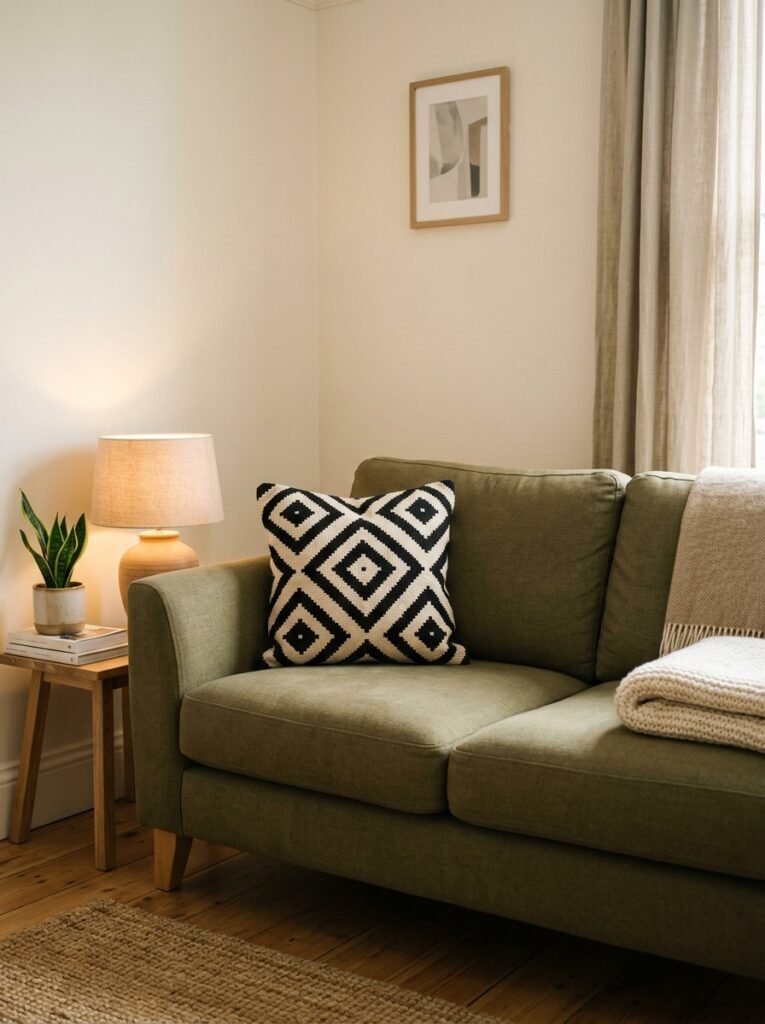
You can have pattern. Just not everywhere.
One patterned element per small living room — that’s my personal rule and I’m sticking to it. Usually that’s a cushion or a throw, occasionally a small accent chair, very occasionally a piece of art. The rest of the room stays in solid tones that relate to the colors in the pattern. This way the pattern reads as a choice rather than chaos.
The mistake is layering a patterned rug with patterned cushions and a patterned throw and some kind of wallpaper feature wall. In a big room, that can be maximalist and wonderful. In a small room, it’s just visually exhausting. Your eye doesn’t know where to go and the room feels cluttered even if it’s technically tidy.
Pick your one thing. Let it be a really good thing. Let everything else support it.
—
11. What Your Lighting Is Missing (and Why It’s the First Thing Guests Notice)
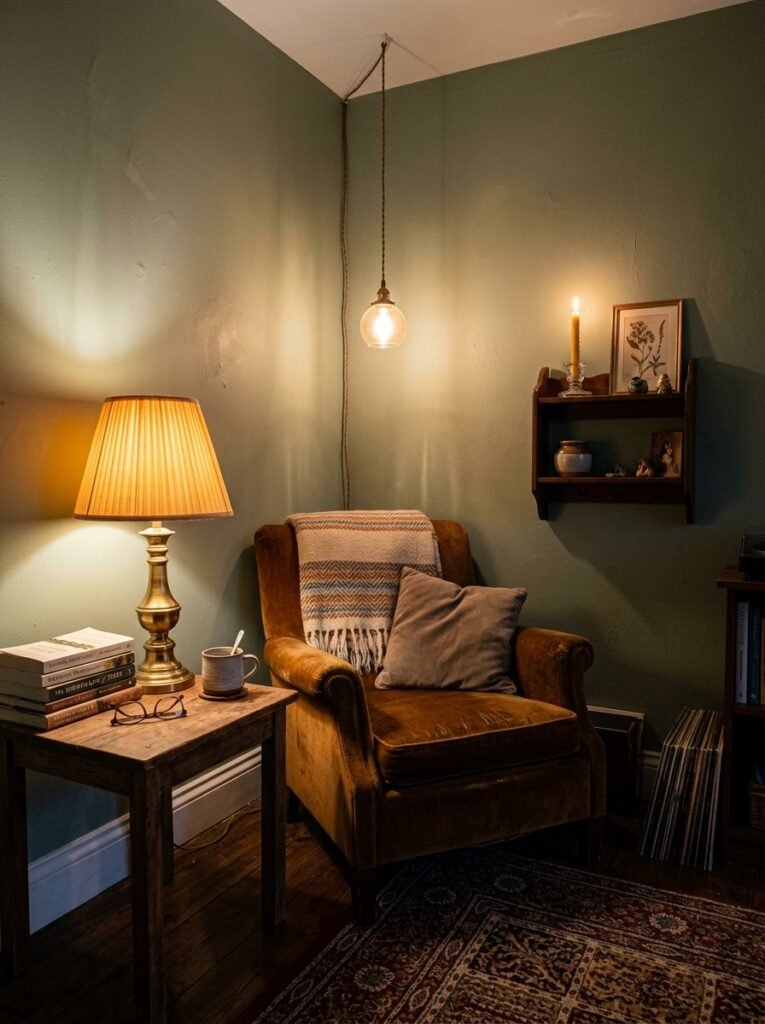
A single overhead light in a small living room is a design crime, and I’ll die on this hill.
Overhead-only lighting flattens everything. It casts unflattering shadows on furniture, makes the room feel like an office or a hotel corridor, and completely kills atmosphere. You need at least three light sources in a small living room, and NONE of them should be directly above where people are sitting.
A floor lamp in the corner (see section six). A table lamp on a side table. Maybe a small lamp on a shelf or console. Possibly wall sconces if you’re serious about this. The goal is pools of warm light at different heights — low, medium, and occasionally something drawing the eye upward. When you get that layering right, the room feels completely different after dark. Larger, somehow, and much more inviting.
If you’re doing everything else right and the room still feels small and flat? Check the lighting. It’s almost always the lighting.
—
12. The Thing People Save Most on Pinterest Isn’t the Furniture
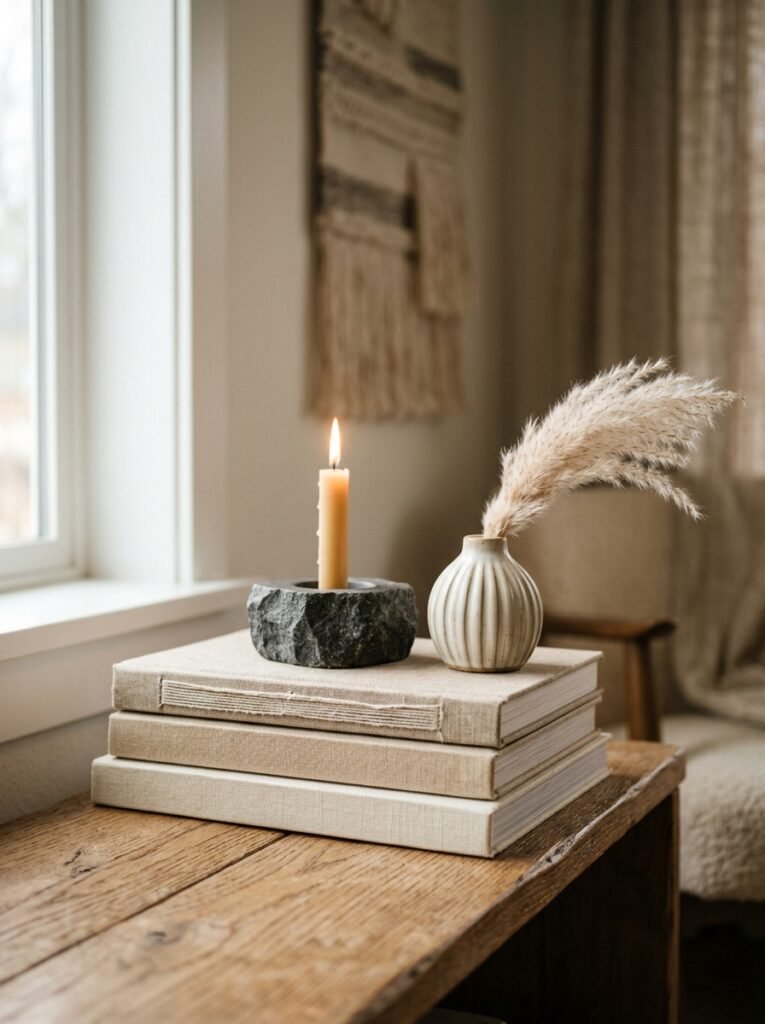
It’s the layering. The way a room feels assembled over time, like it has a story — even if it was done last weekend.
That thing is hard to fake but easy to get if you understand what’s actually creating it. It’s the mix of textures: something smooth next to something rough, something shiny next to something matte. It’s the slightly different heights in a styled shelf. It’s the throw that’s been used and casually folded rather than artfully arranged. It’s the stack of books on the floor beside the sofa that says “someone actually reads in this room.”
A small living room done with that kind of layering will outperform a large, expensive, but flat room every single time. Every. Time. You don’t need square footage. You need intention, and a few things that feel genuinely chosen rather than filled.
That’s the whole secret, honestly.
—
❓ FAQ
Q: How do I make a small living room feel bigger without moving walls? A: Focus on light, vertical lines, and fewer but better-chosen pieces. Hang curtains close to the ceiling, keep a rug that anchors the whole seating area, and add at least two extra lamps to layer your lighting. These three things together do more than any single paint trick.
Q: What’s the best sofa style for a small living room? A: Go for something with visible legs (it lets light pass underneath, which makes the floor look longer), and consider a two-seater plus an accent chair rather than a large three-seat sofa. Modular designs can also work well because they’re flexible, but avoid anything bulky or heavily skirted.
Q: Can a dark color really work in a small living room? A: Yes — if you commit fully. Painting all four walls and the ceiling the same deep tone (a warm green, a dusty blue, a deep terracotta) makes the boundaries of the room visually disappear and creates atmosphere rather than cramped walls. The key is layering in warm lighting so the room glows rather than feels heavy.
—
💭 Final Thoughts
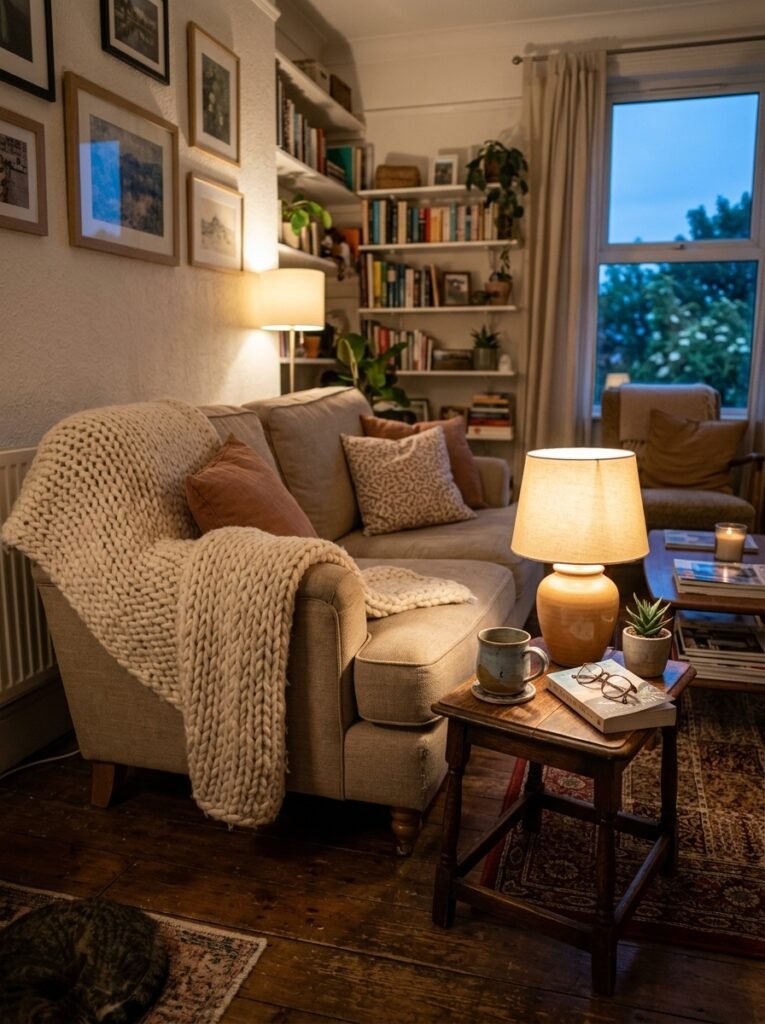
Small living rooms are genuinely one of my favorite things to think about, maybe because the constraints force creativity in a way that big blank spaces don’t. Every inch has to earn its place. Every choice is visible.
Diane’s flat, by the way — she repainted the walls a warm sage green, added a floor lamp in the dead corner, swapped the coffee table for nesting tables, and hung linen curtains from ceiling to floor. Same room. Completely different feeling. Her estate agent actually asked her for the decorator’s name.
What’s the one thing you keep going back to when you look at your small living room — is it the furniture, the light, or something you can’t quite put your finger on?