
Why Your Living Room Feels Cluttered (And Why Japanese Decor Might Be the Answer You Didn’t Expect)
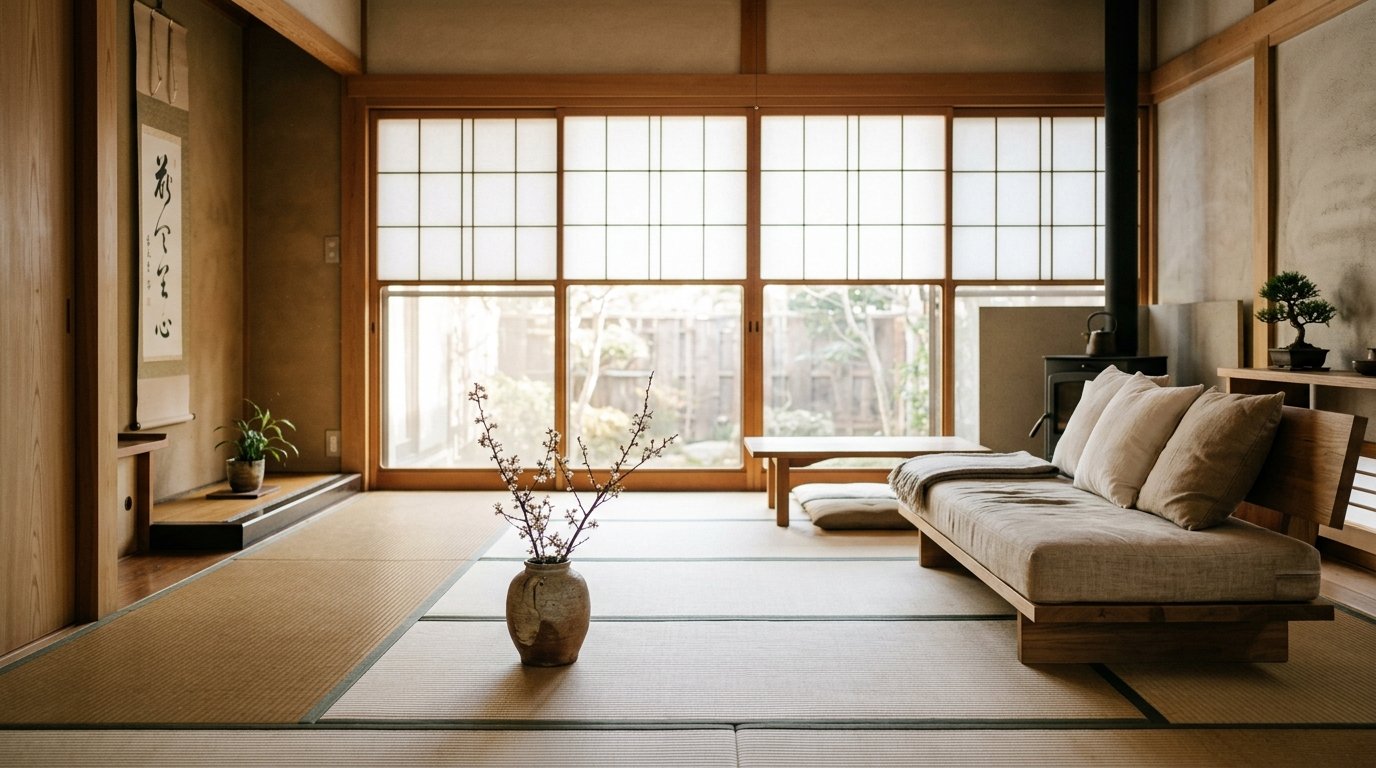
My friend came over last spring and said something I haven’t stopped thinking about. She walked into my living room, looked around, and went: “It feels like you can actually breathe in here.” And I didn’t know how to explain it because I hadn’t decorated it so much as un-decorated it.
That’s the thing about Japanese-inspired living rooms. The effect isn’t obvious. It sneaks up on you.
—
1. The Biggest Misconception About Japanese Style (It’s Not What You Think It Is)
People hear “Japanese decor” and immediately picture something cold. Minimal to the point of sterile. A white room with one sad plant and nothing else.
But that’s not it. Not even close.
Real Japanese interior philosophy — and I’m talking wabi-sabi, ma, the whole thing — is actually about warmth through restraint. It’s about choosing things slowly and letting them breathe. The rooms that do this well don’t look empty, they look considered. There’s a difference.
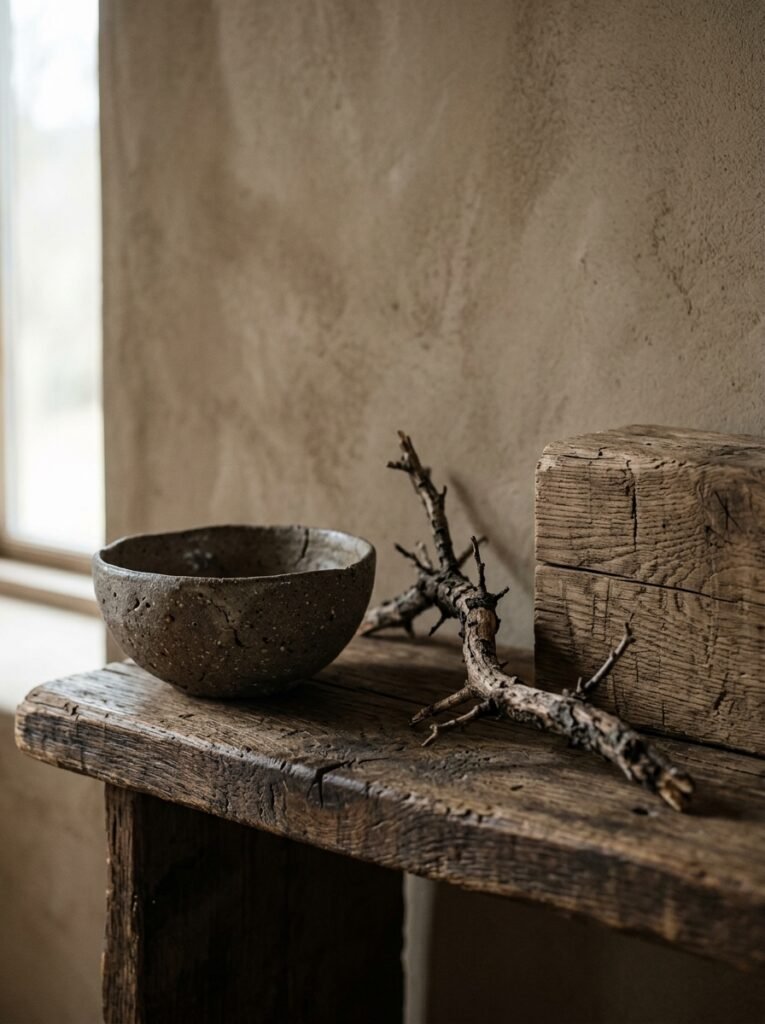
Wabi-sabi specifically is this idea that imperfection is beautiful. A slightly uneven ceramic bowl. A linen cushion that’s been washed fifty times and shows it. A piece of driftwood you picked up somewhere and never threw away. None of it matches in the Western sense, but it coheres. That’s the part people miss.
So if you’re walking into this thinking you need to buy a bunch of new stuff, stop. You probably don’t. You might just need to remove things. And rethink what “finished” looks like.
“Japanese-inspired rooms don’t look empty. They look considered. There’s a difference — and it changes everything about how a space feels.”
—
2. The Floor Is Doing More Work Than Your Sofa Right Now
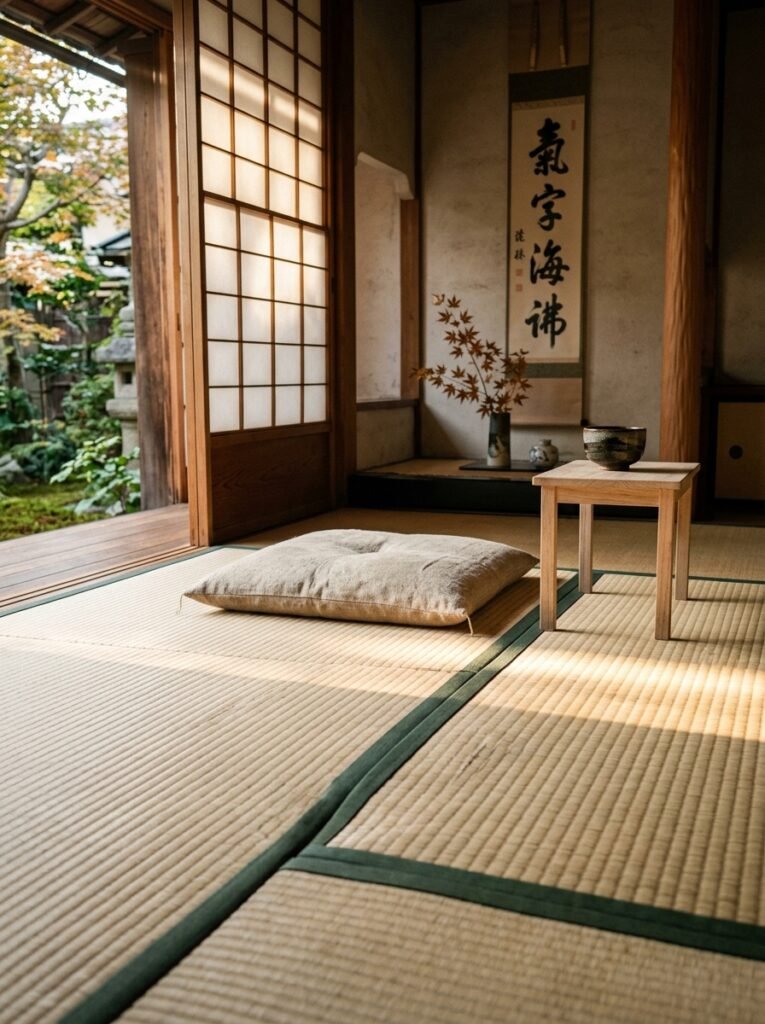
Seriously. In Japanese interiors, the floor is kind of the main character.
This doesn’t mean you need to rip out your carpet or install tatami mats (though if you’re renting and can’t change the floors, a large area rug can do a LOT). What it means is that the visual weight of a room shifts downward. Low furniture. Seating closer to the ground. The eye doesn’t scan the room from five feet up — it settles.
Low-profile sofas and floor cushions are the fastest route here. If you’ve got a sofa that sits high off the ground with exposed legs, try a low platform alternative or layer a few oversized cushions directly on a natural-fiber rug. Suddenly the room feels more grounded. More intentional.
And the rugs themselves matter. Natural materials — jute, seagrass, woven bamboo — do something that synthetic rugs just don’t. They add texture without adding noise, if that makes sense. They’re quiet. The whole room gets quieter when they’re in it.
—
3. The Neutral Palette That Actually Has Color In It
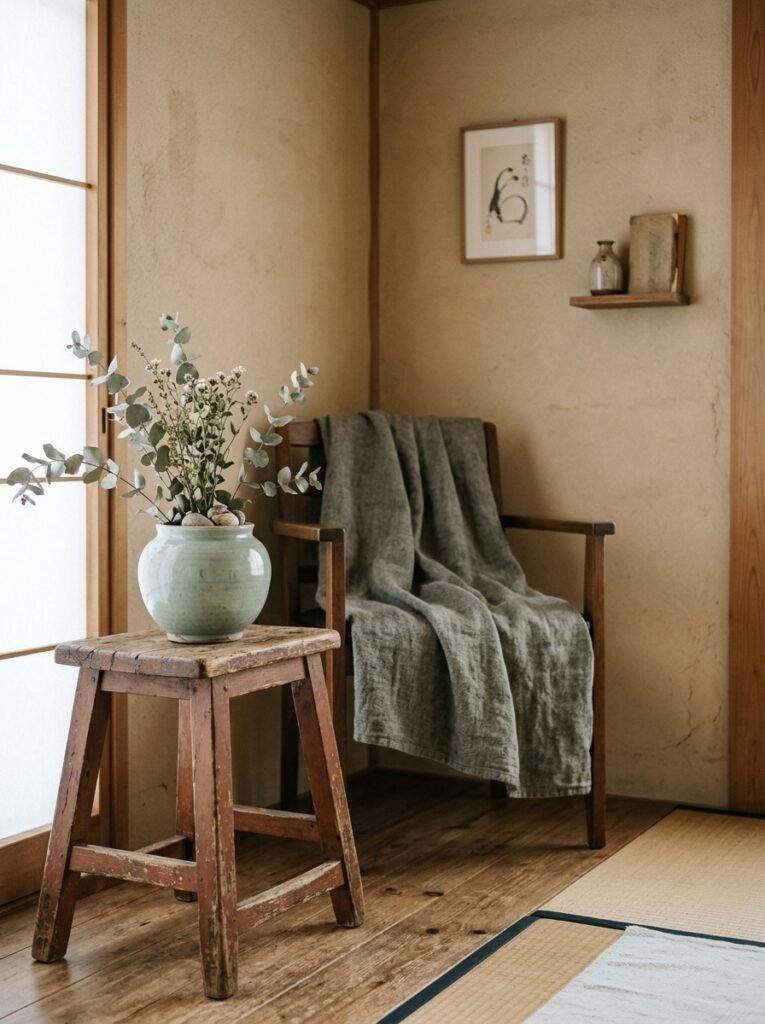
Here’s where I’ll push back on the all-beige-everything trend that gets called Japanese but isn’t really. Traditional Japanese color sense is subtle but it’s not absent.
Think about matcha green. Indigo. Rust. Charcoal. These show up, just in small doses — a single cushion, a glazed ceramic vase, the binding on a stack of books. The base is always neutral: warm whites, natural wood tones, stone greys. But there are ALWAYS these quiet little moments of color that stop the eye.
The key is keeping it asymmetrical. Don’t put two rust cushions on either end of the sofa like decorative bookends. Put one. Move on. The lack of symmetry is part of the point — it’s what separates a wabi-sabi approach from a showroom display.
Side note — if you’re nervous about color, start with texture instead. A charcoal linen throw over a cream sofa gives you visual interest without committing to anything. You can always add a splash of indigo later when you’re feeling brave.
—
4. Why Every Beautiful Japanese-Inspired Room Has One Very Specific Kind of Light
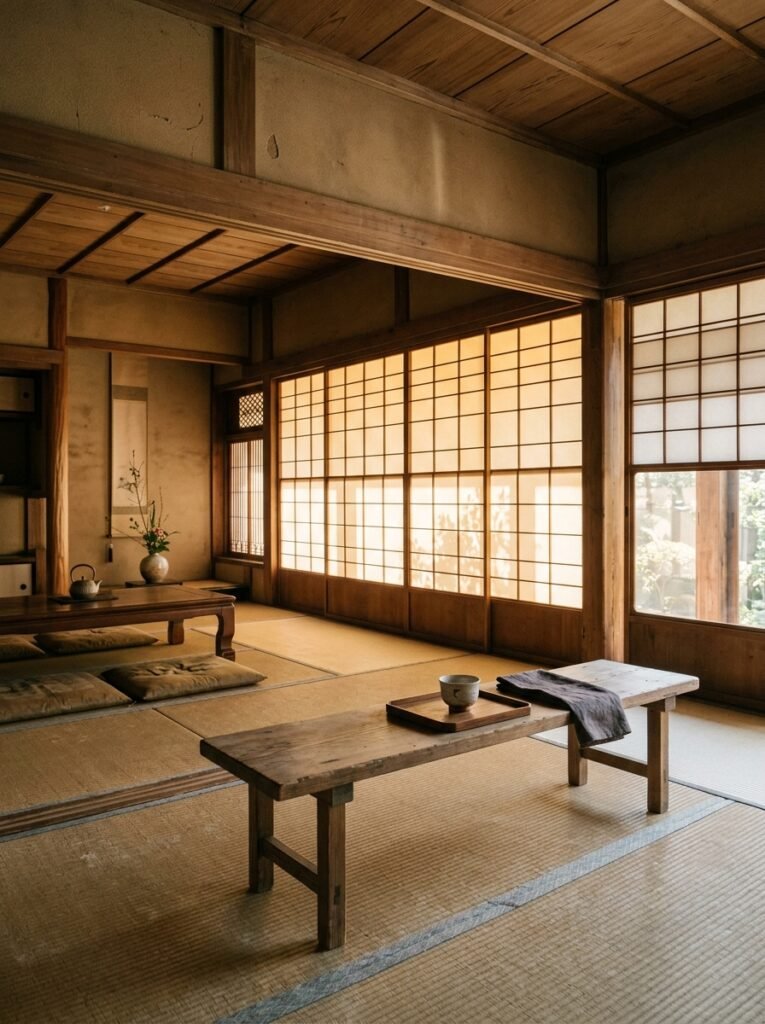
Not warm light. Not “good” lighting. Something more specific than that.
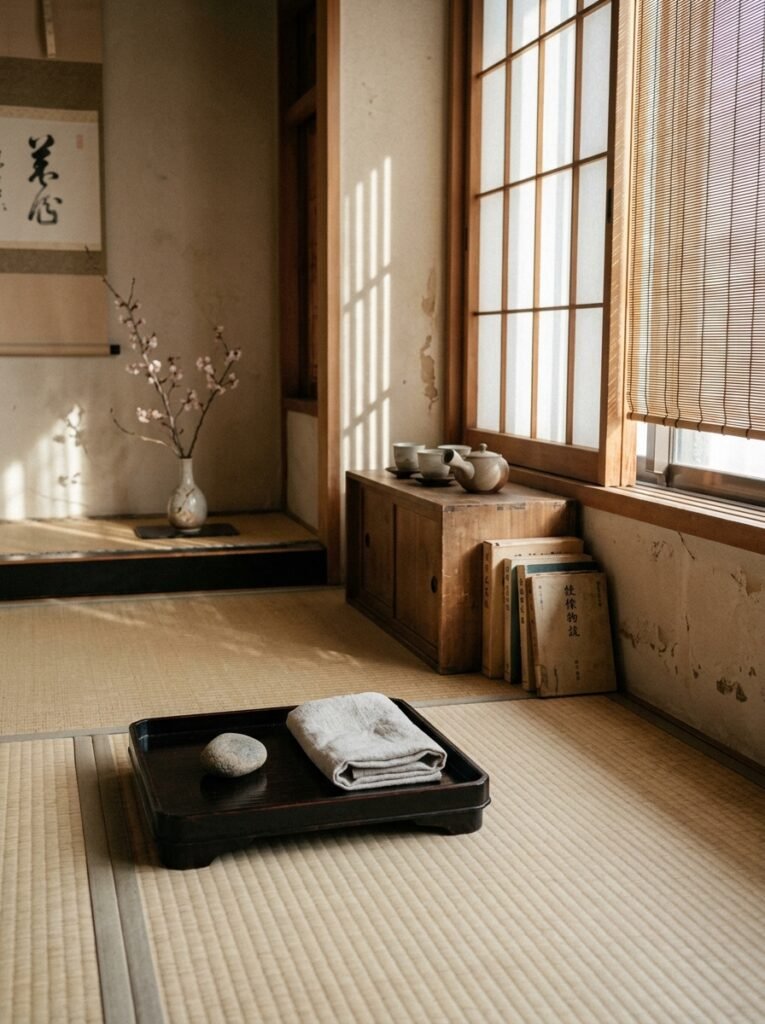
The way light behaves in these rooms is everything. Think: paper lanterns. Washi paper pendants. Lamps that diffuse rather than project. The light doesn’t beam at you, it filters through something — and that changes how a room feels at 7pm when everything else in your house looks harsh under an overhead bulb.
Shoji-style screens — those translucent panels with a wooden grid — were originally designed to filter outdoor light softly into a room. You can get that effect without the screens. A pendant light with a washi or frosted diffuser. Candles grouped together rather than placed individually. Floor lamps with fabric shades pulled into corners.
The overhead light should be the LAST thing you turn on, not the first. That’s actually a rule I try to live by now, and not gonna lie, it’s improved my evenings more than I expected.
“The overhead light should be the last thing you turn on. Turn on the lamp first. The whole room will thank you.”
—
5. The One Thing That Makes a Japanese-Inspired Room Feel Instantly Authentic
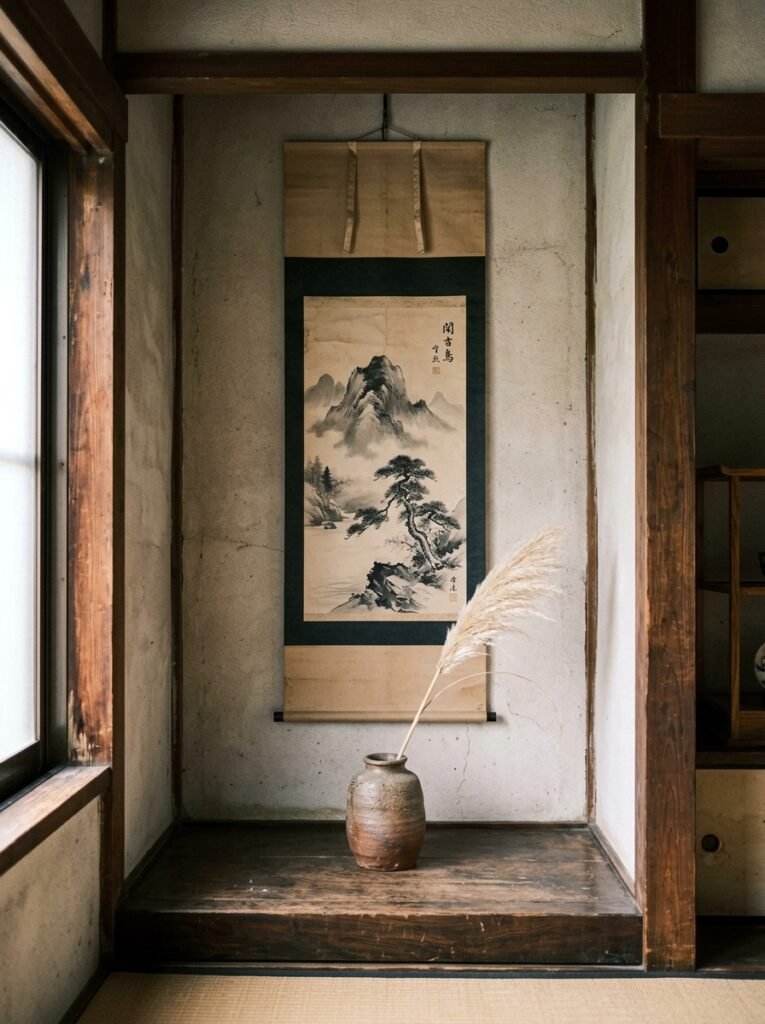
Natural materials. Specifically, the presence of wood.
Not a lot of wood. Not a cabin. Just — wood. A low coffee table with visible grain. A small shelf in solid oak or walnut. A wooden tray on the sideboard holding three objects you love. The tactile quality of natural wood does something to a room that no painted or laminate surface can replicate. It makes it feel alive, in a low-key way.
And the finish matters. Matte, not glossy. Raw or lightly oiled rather than lacquered. You want to see the grain. You want to almost be able to feel it from across the room.
Bamboo works too and is more affordable than most hardwoods. A bamboo side table, a set of bamboo frames on the wall — they carry that same quiet, organic quality. Nothing about them shouts, and that’s exactly the point.
—
6. The Mistake Everyone Makes With the Plants
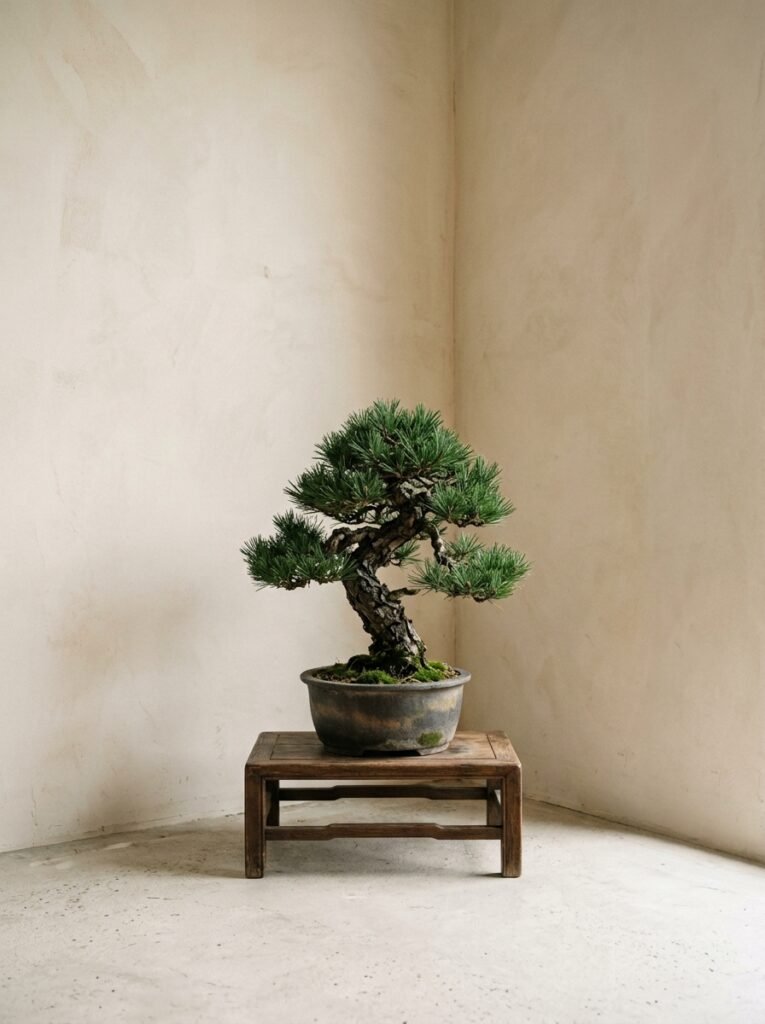
They overcrowd them.
Japanese garden and interior philosophy doesn’t pile plants into corners like you’re trying to recreate a greenhouse. It places them. One carefully chosen plant — a tall bamboo stem, a bonsai, a single trailing plant in a handmade pot — does more than seven plants crammed onto a windowsill.
The pot matters as much as the plant. Ceramic, with that slightly uneven glaze that tells you it was made by a person. Matte black or earth-toned, maybe with a subtle texture. No plastic. No bright glossy glazes unless the plant is very small and very spare.
If you’ve already got a lot of plants in your living room, I’m not saying clear them out. But try an experiment — pull a few back, isolate one or two as the “main” plants in the space, and see how the room changes. It usually does.
—
7. How to Handle a Gallery Wall Without It Feeling Like Gallery Wall
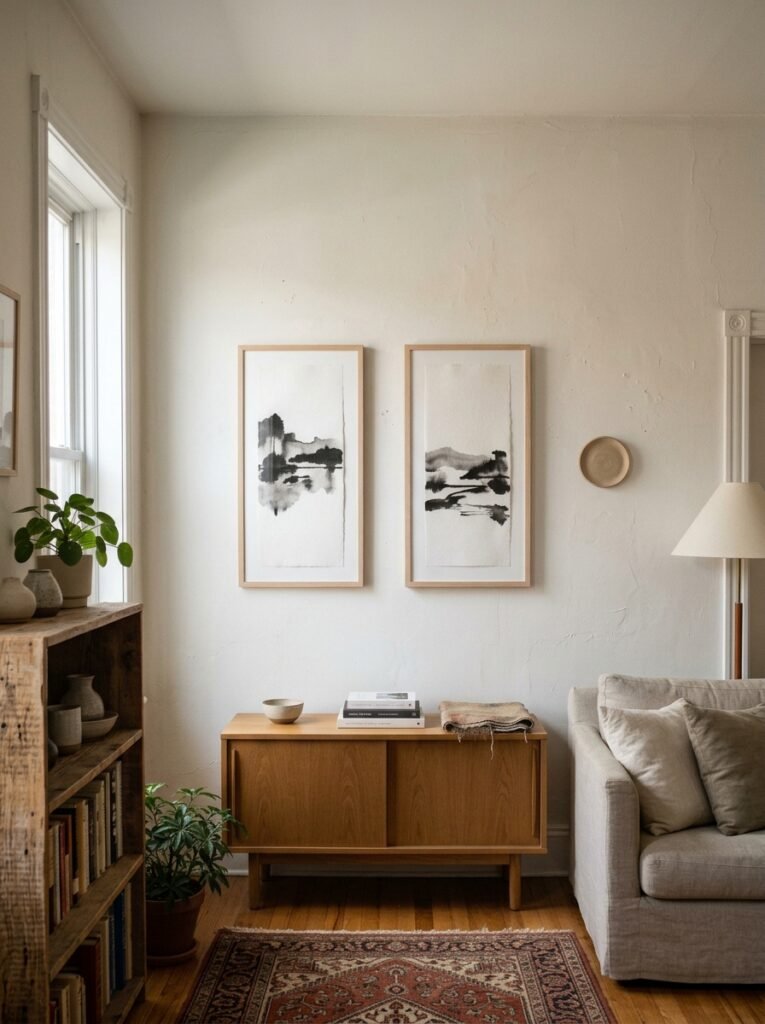
Gallery walls done the Western way — packed together, lots of frames, a deliberate arrangement — aren’t really a Japanese thing. But art absolutely is.
The difference is restraint and intentionality. One piece of art, hung with care, tells a story. A single framed woodblock print. A piece of handwritten Japanese calligraphy you found at a market. An abstract piece in ink on white paper. One. Maybe two.
And here’s the part people get wrong: the negative space around the art is part of the art. Don’t fill the whole wall. Let the piece float. Give it room to be looked at properly rather than competing with six other frames for your attention.
If you’re working with a feature wall and you WANT more than one piece, try an asymmetrical arrangement — one large piece hung slightly higher, one small piece lower and to the side, a gap between them. Not centered. Not symmetrical. Slightly unexpected.
—
8. The Storage Secret That Japanese Interiors Have Known Forever
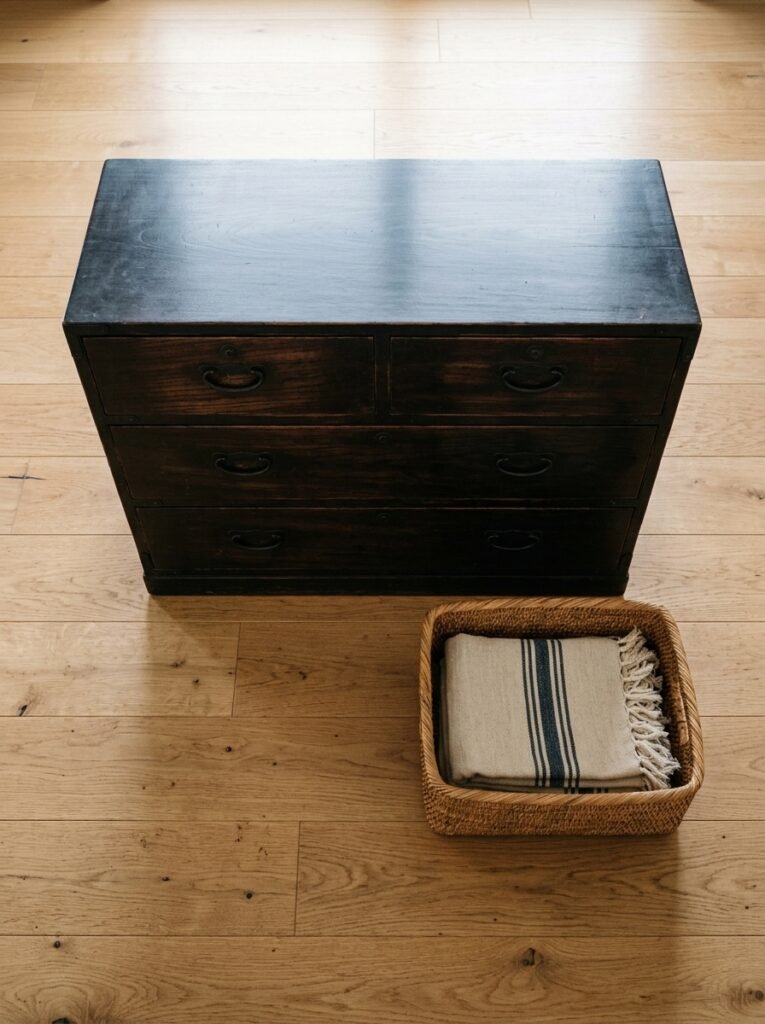
Hidden storage is the goal. Always.
Clutter on surfaces is the enemy of this aesthetic. Not because tidiness is morally superior or whatever, but because visual noise interrupts the kind of calm a Japanese-inspired room creates. Every object you can see should be there on PURPOSE.
That means: baskets with lids. Sliding doors where possible. Built-in storage if you’ve got it, and if you don’t, furniture with storage built in — a low sideboard with doors, a storage ottoman, a media unit that closes.
And then the objects that ARE visible? Edit them down. A ceramics collection can be beautiful — but put three pieces out, not twelve. The three you love most. Let them breathe.
“Every object you can see should be there on purpose. That’s not minimalism — that’s just paying attention.”
—
9. Why the Scent of the Room Is Doing Half the Work
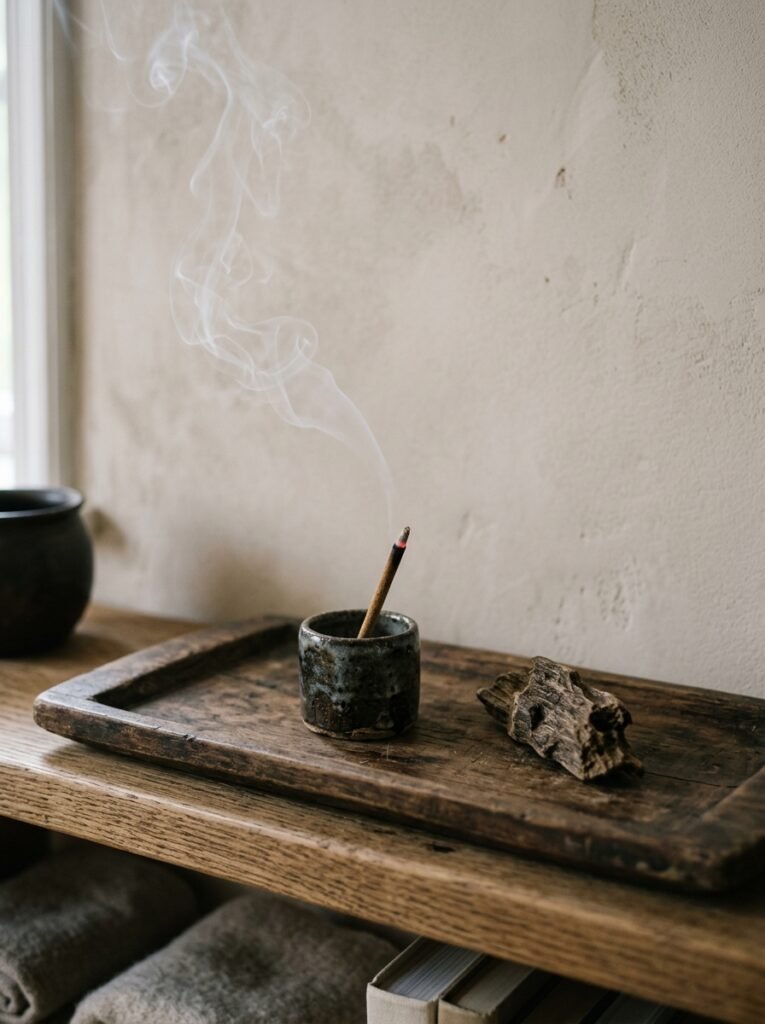
This doesn’t get talked about enough in decor articles.
Scent is part of the sensory experience of a space. Japanese interiors have always known this — incense, hinoki (Japanese cypress wood), green tea, cedar. These scents aren’t heavy or perfume-y, they’re clean and faintly woody, like being in a very good place.
You can get close to this with a few practical swaps. Unscented beeswax candles. A small clay incense holder with a quiet, woody incense stick. A diffuser running at low intensity with cedarwood or hinoki oil if you can find it. Even a bowl of dried botanicals — eucalyptus leaves, dried mushrooms, a piece of bark — adds to the sensory quality of a room without being showy.
It sounds like a small detail. But walk into a room that smells calm and clean and slightly earthy and then tell me it didn’t change how the space felt.
—
10. The Furniture Edit That Will Honestly Save You Money
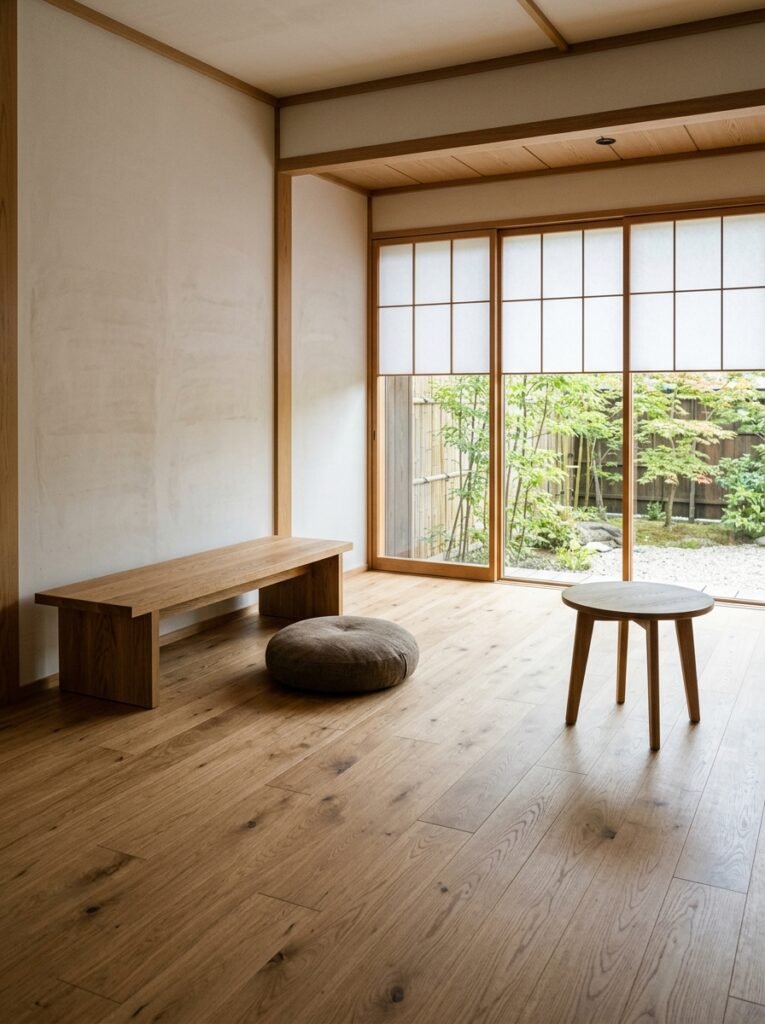
The hard sell of Japanese decor that nobody mentions: you need LESS furniture.
That sounds obvious but think about what it actually means. You don’t need a sofa, two armchairs, a coffee table, side tables, a console, a TV stand, a bookshelf AND a floor lamp. You need some of those things. Chosen well. Spaced properly.
A low sofa with clean lines. One low table. One lamp. Maybe one extra seat — a floor cushion, a single chair. The breathing room between the pieces is what makes the room feel composed rather than chaotic.
And because you’re buying fewer pieces, you can buy better ones. A solid wood coffee table that’ll last twenty years instead of three flat-pack ones that won’t. This aesthetic actually rewards the “buy less, buy better” approach in a very literal way.
—
11. The Textile Combination That Makes a Room Feel Like a Hug Without Looking Busy
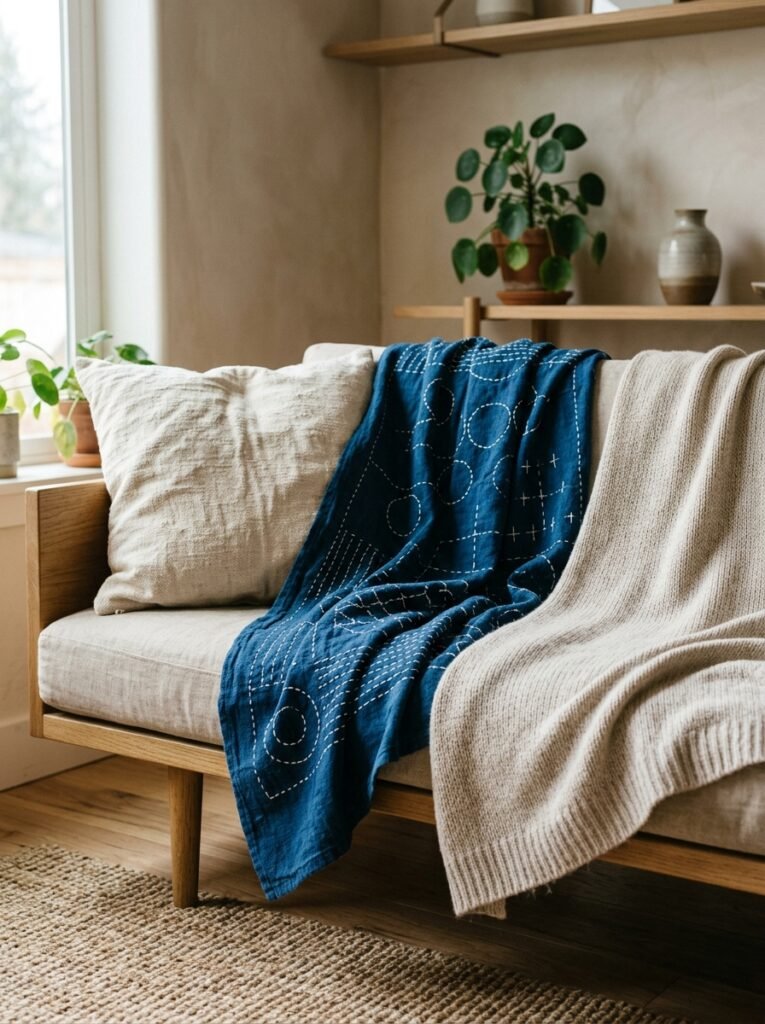
Linen and cotton and natural wool. That’s kind of the whole brief.
Not velvet. Not faux fur. Not anything that looks like it needs special care. The textiles in a Japanese-inspired room should look like they’ve been lived in, softened by use, slightly imperfect in a way that makes them lovable. That’s wabi-sabi again — the worn linen cushion cover is MORE beautiful than the pristine one.
Layer them simply. A linen sofa cover or slipcover. A cotton throw in a muted stripe. A wool rug in natural undyed tones. Or maybe just one of those things if the rest of the room is already doing a lot.
Keep the patterns minimal. Geometric, simple — or no pattern at all. The texture IS the pattern in this kind of room. You don’t need to add much on top of that.
—
12. Where to Actually Start If You’re Overwhelmed Right Now
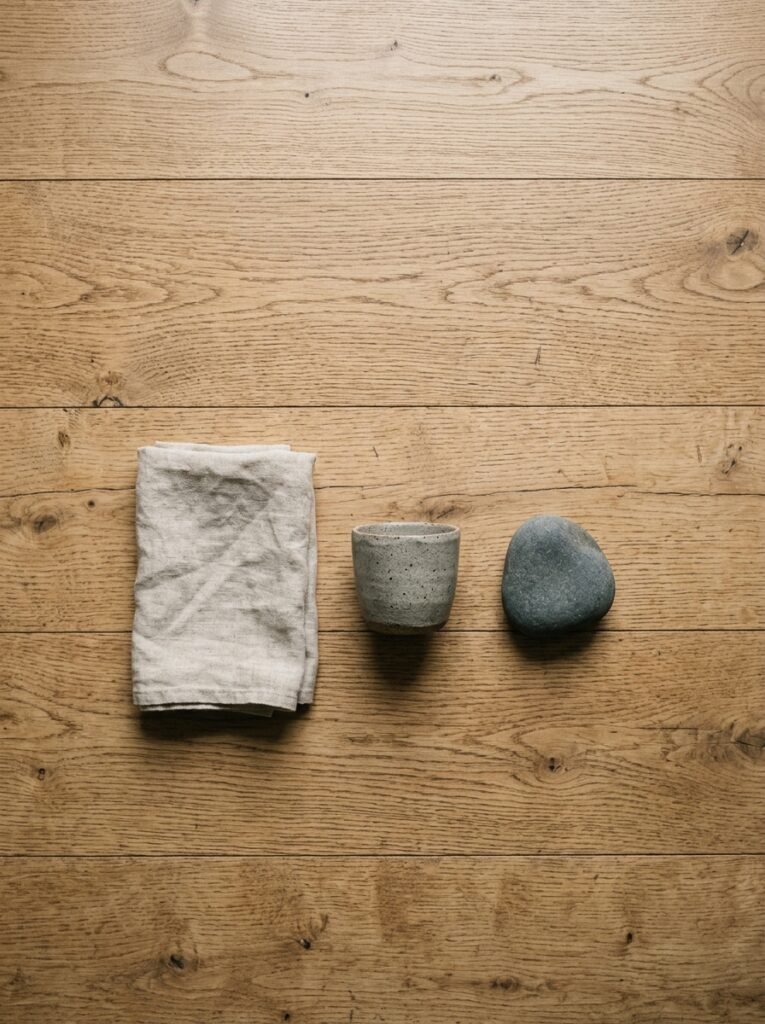
Here’s the honest answer: start by taking things out, not putting things in.
Walk into your living room and look at every surface. Identify three things that are there out of habit, not intention — a random decorative object you’ve stopped noticing, a stack of magazines, a throw pillow that doesn’t quite go. Remove them. Live with the space for a week.
Then, if it feels like something’s missing rather than something’s lighter, add ONE thing. One considered, beautiful, natural thing. A wooden tray. A ceramic vase. A plant in a simple pot.
This is a slow process. Or maybe it’s a quick one — honestly, some people clear out a room in an afternoon and never look back. The point isn’t the pace. It’s paying attention to what a room is actually doing, versus what you assumed it was supposed to look like.
Japanese interior philosophy, at its core, isn’t about aesthetics. It’s about presence. Being somewhere that helps you notice you’re there.
And once you’ve felt that in a room, you can’t unfeel it.
—
❓ FAQ
Q: Do I need to stick to a strict Japanese style or can I mix it with other aesthetics? A: You really don’t need to go all-in. A lot of the best Japanese-inspired rooms in the US and UK are mixed — natural materials, low furniture, and a restrained palette combined with pieces the homeowner already loves. The philosophy is more of a lens than a rulebook. Apply the parts that resonate and leave the rest.
Q: How do I make a small living room feel more spacious with this style? A: Low furniture is the single fastest trick — it raises the visual ceiling of the room without changing anything structurally. Pair that with keeping surfaces mostly clear and using a large, light-colored natural rug to anchor the space, and a small room can feel genuinely calm rather than cramped. Mirrors can help too, just use them sparingly and hang them low.
Q: Is Japanese decor expensive to pull off? A: Not inherently. The whole philosophy is about less, not more — so if you’re willing to edit what you already have and buy slowly, it can actually cost very little. Second-hand shops and flea markets are brilliant for the kind of slightly-worn, handmade-looking ceramics and natural wood pieces this aesthetic loves. You’re not hunting for a specific brand. You’re hunting for a feeling.
—
💭 Final Thoughts
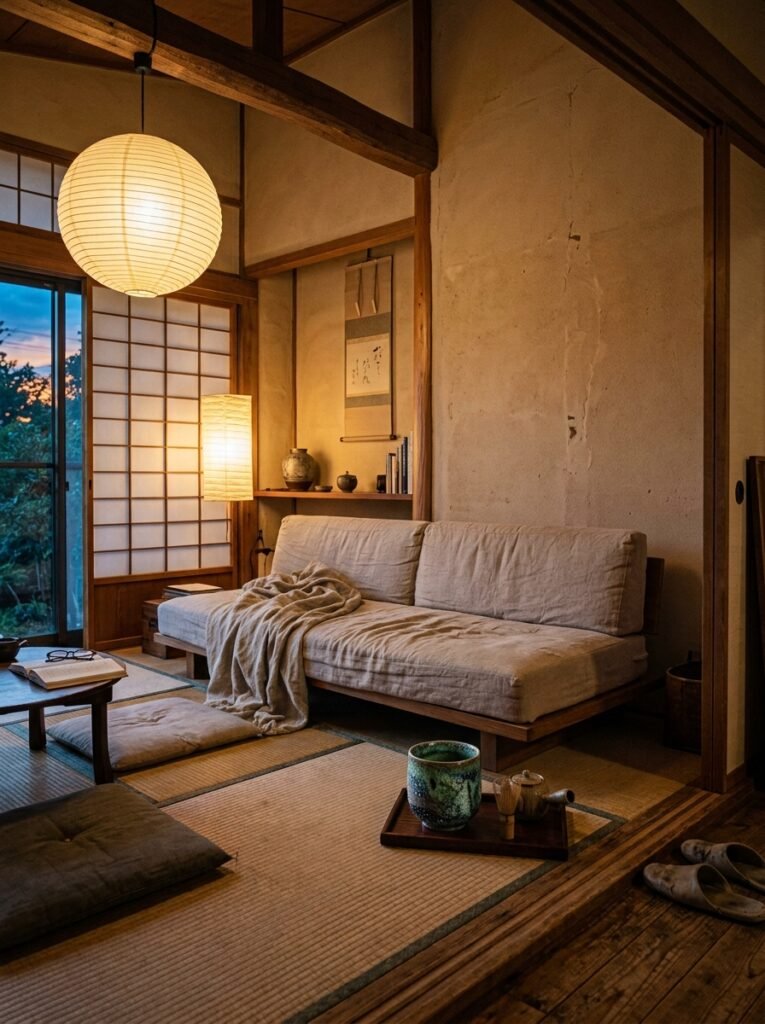
There’s something almost counterintuitive about a decorating style that asks you to stop decorating. But the living rooms I keep coming back to on Pinterest, the ones I screenshot and think about later — they almost always have this quality of stillness. Like the room isn’t performing anything.
I think that’s what Japanese-inspired design is really offering. Not a look. A feeling. And once your living room has that feeling even a little bit, everything else starts to seem like too much.
So — what’s the one thing in your living room right now that you’ve stopped actually seeing?