12 Concrete Patio Ideas to Transform Your Outdoor Space
Concrete patios have long been praised for their durability, affordability, and low-maintenance appeal, making them one of the most popular choices for homeowners looking to upgrade their outdoor living space. What many people don’t realize, however, is just how versatile concrete can be when it comes to design, texture, and finish. Gone are the days when concrete meant a plain, gray slab; today’s patio designs incorporate stamped patterns, bold colors, and creative layouts that rival more expensive materials like natural stone or pavers. Whether you’re starting from scratch or renovating an existing patio, there are countless ways to make concrete feel warm, stylish, and uniquely yours. In this article, we’ll explore 12 concrete patio ideas that combine practicality with striking curb appeal for any backyard.
1. Stamped Concrete That Mimics Natural Stone
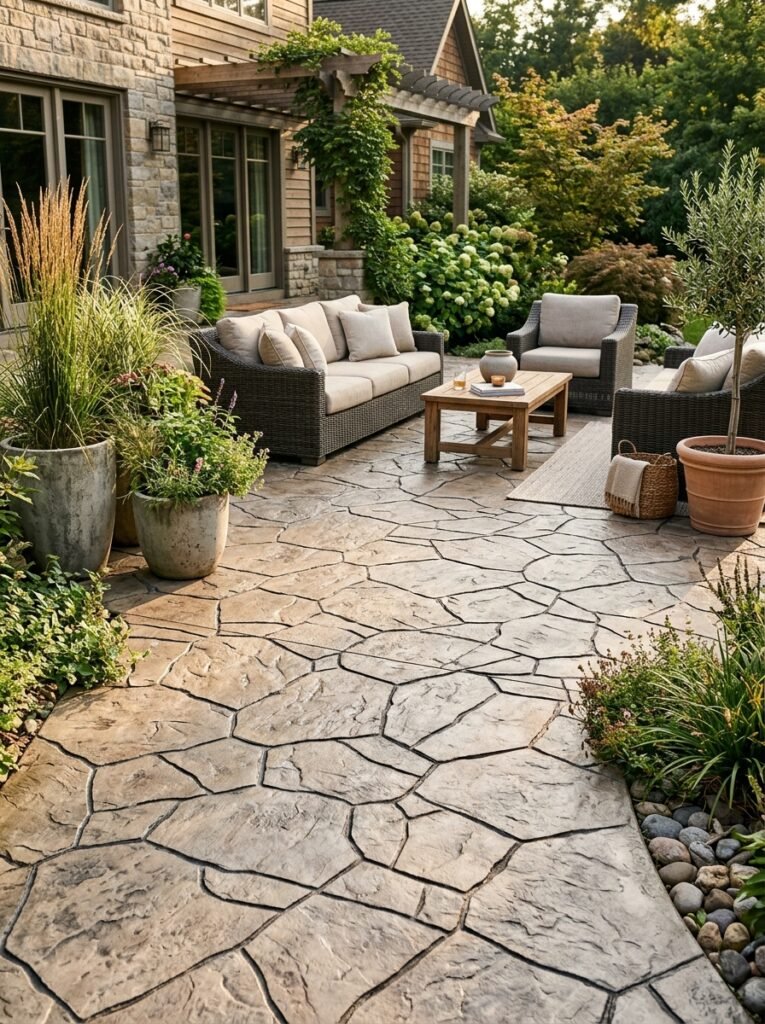
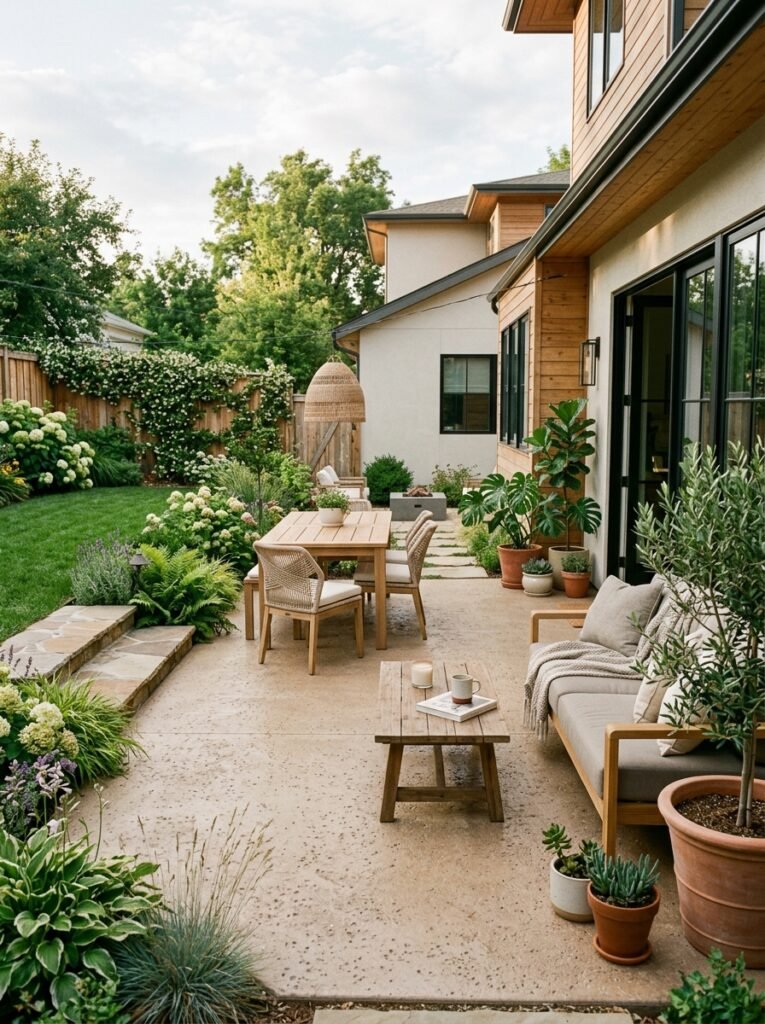
Stamped concrete has become one of the most sought-after patio finishes because it replicates the look of natural stone, slate, or brick at a fraction of the cost. This technique involves pressing textured molds into freshly poured concrete before it fully cures, creating realistic patterns and dimension across the surface. Homeowners can choose from a wide range of stamp designs, from cobblestone and flagstone patterns to more intricate herringbone brick layouts. Pairing the stamped texture with a complementary earth-toned stain enhances the illusion even further, making it difficult to distinguish from real stone at a glance. This option is ideal for those who want the elegance of natural materials without the higher price tag and maintenance demands.
2. Exposed Aggregate for Added Texture
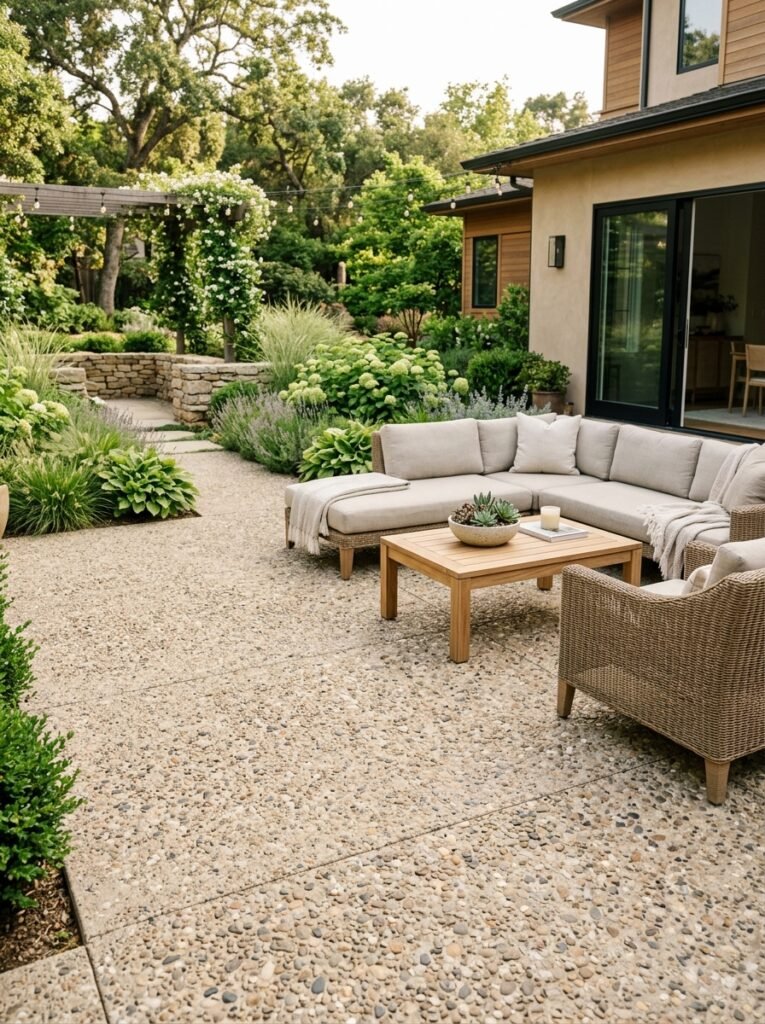
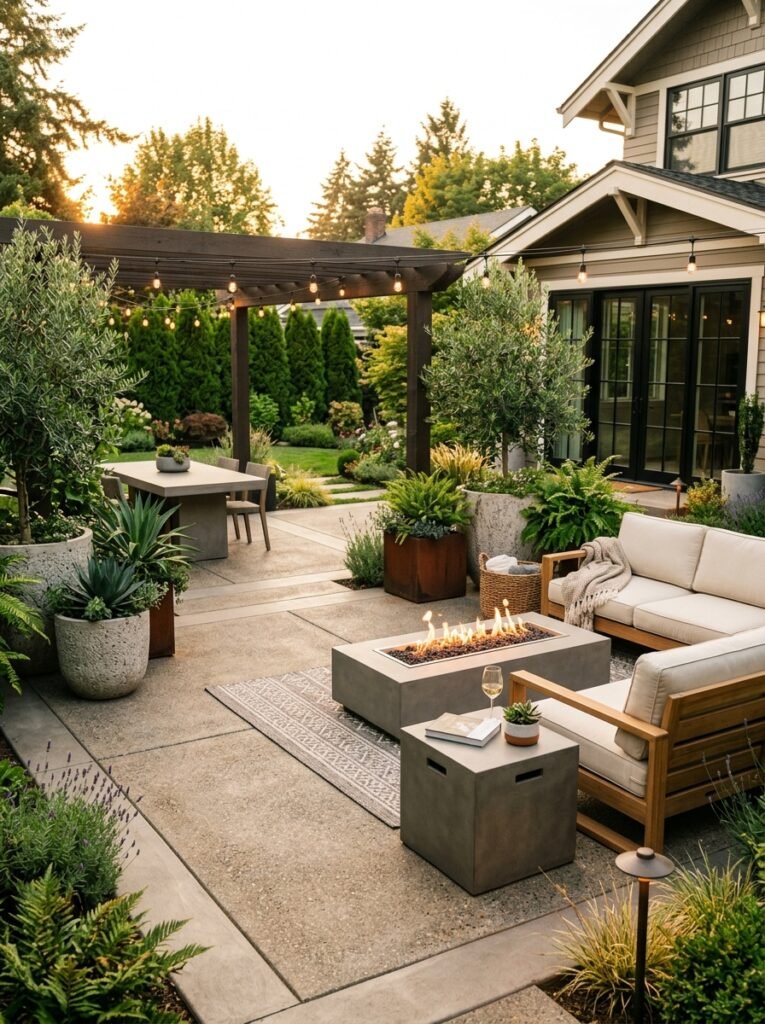
Exposed aggregate concrete reveals the natural stones and pebbles embedded within the mix, creating a textured, slip-resistant surface that’s both functional and visually appealing. This finish is achieved by washing away the top layer of cement paste shortly after pouring, exposing the decorative aggregate beneath. The result is a speckled, natural look that pairs beautifully with modern or rustic outdoor designs alike. Because the texture provides excellent traction, exposed aggregate is a particularly smart choice for patios surrounding pools or areas prone to becoming slippery when wet. This finish also tends to hide dirt and minor stains better than smooth concrete, making it a practical long-term option.
3. Bold Colored Concrete Stains
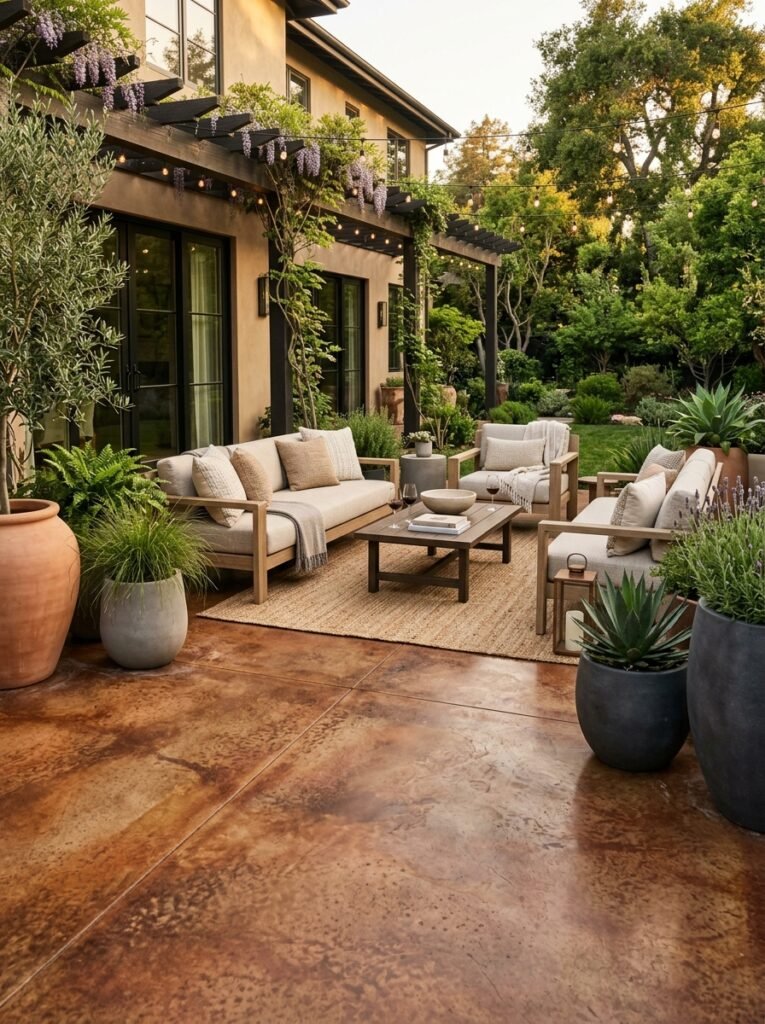
Applying a colored concrete stain is one of the easiest and most cost-effective ways to completely transform the look of a plain patio slab. Stains come in a wide variety of shades, from warm terracottas and earthy browns to cooler blues and grays, allowing homeowners to customize their outdoor space to match their home’s exterior. Acid-based stains create rich, variegated tones with a marbled effect, while water-based stains offer more consistent, uniform coloring across the surface. This technique works particularly well for homeowners looking to refresh an older, worn patio without the expense of a full replacement. A well-chosen stain color can dramatically elevate the overall aesthetic of the outdoor living area.
4. Geometric Scored Patterns
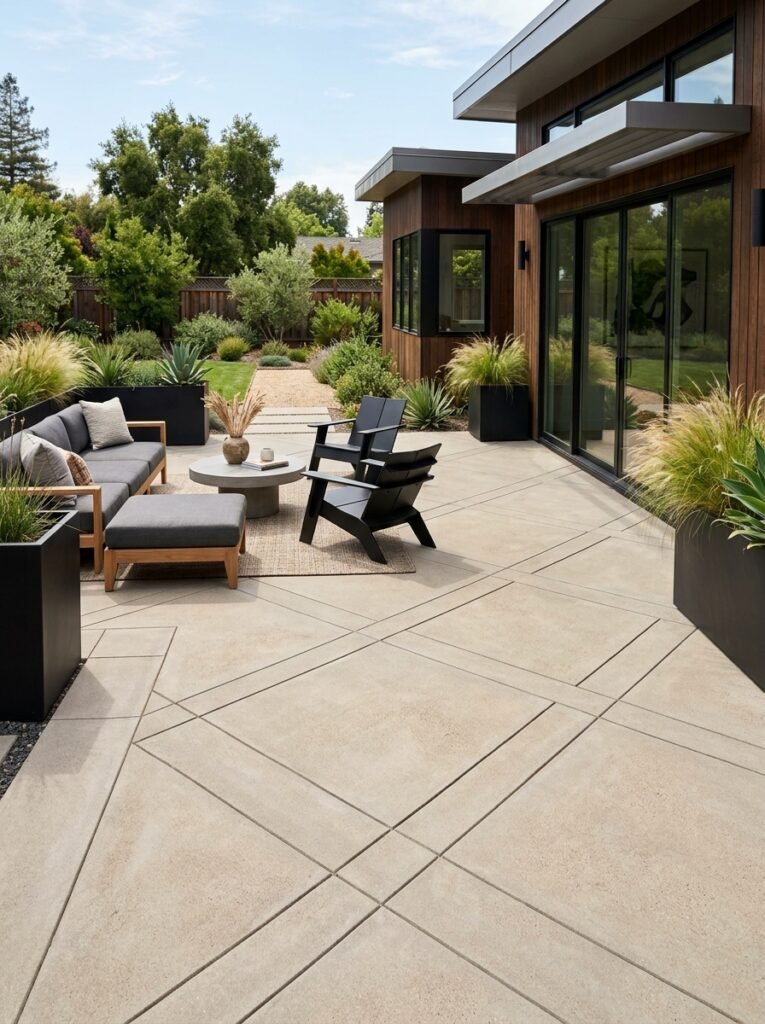
Scoring concrete involves cutting shallow grooves into the surface to create geometric patterns, such as squares, diamonds, or herringbone designs, adding visual interest without altering the material itself. This technique is often combined with staining to highlight the pattern, creating a striking contrast between sections of the patio. Scored concrete offers a modern, architectural look that pairs particularly well with contemporary home designs and minimalist landscaping. Because the process is relatively simple and doesn’t require specialized stamps or molds, it tends to be a more budget-friendly customization option. This idea is perfect for homeowners who want a clean, sophisticated look without going overboard on texture or color.
5. Two-Tone Concrete Design
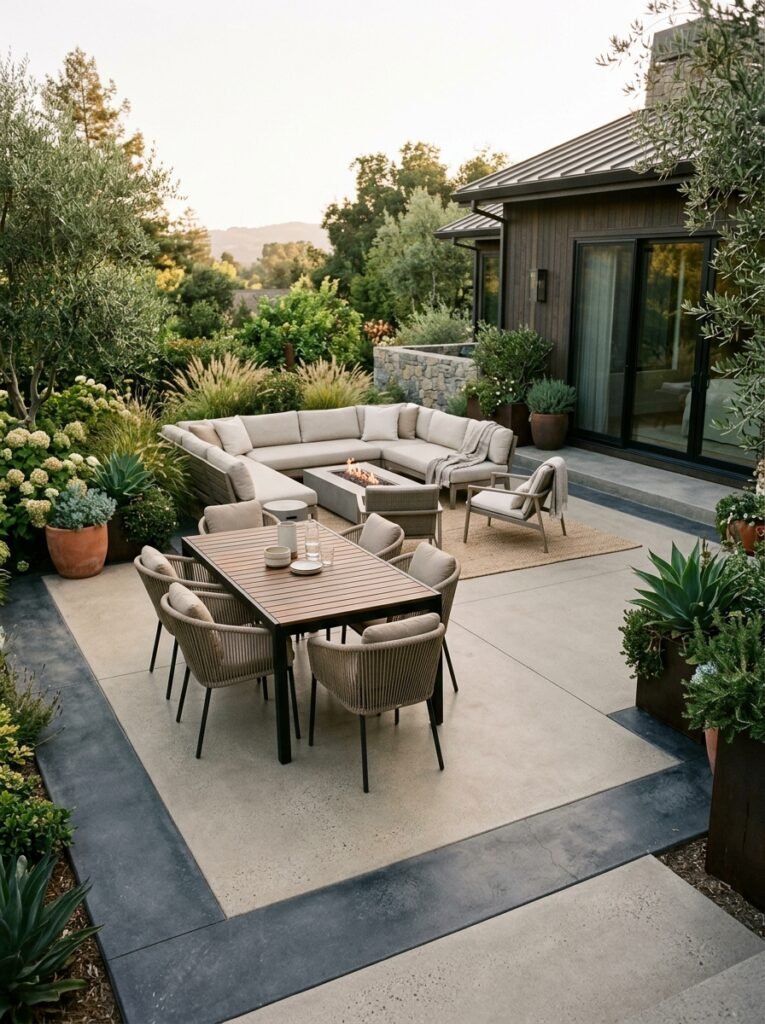
Combining two different concrete colors or finishes within the same patio creates a layered, custom look that instantly elevates the overall design. A popular approach involves using a darker border around the perimeter of the patio, paired with a lighter, complementary tone in the central area. This technique can also be used to visually define separate zones within a larger patio, such as a dining area versus a lounging space. Two-tone designs work particularly well when paired with contrasting textures, like a smooth center paired with a stamped or exposed aggregate border. This idea offers a high-end, custom aesthetic while still remaining relatively affordable compared to mixing multiple hardscape materials.
6. Concrete Patio with Built-In Fire Pit
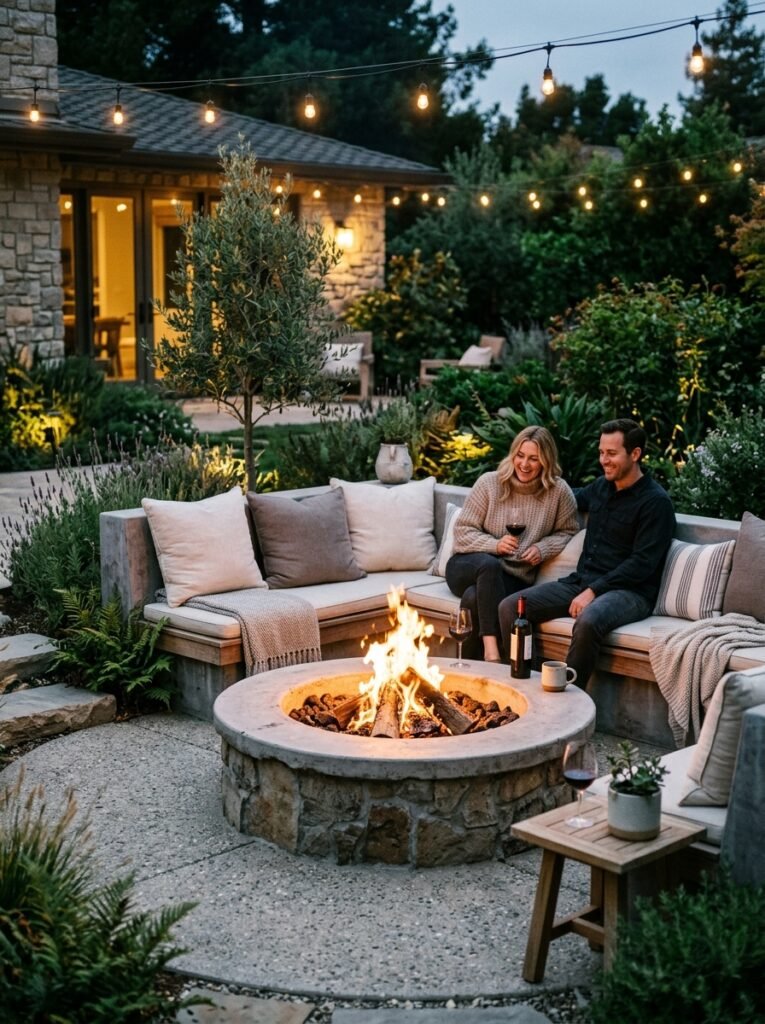
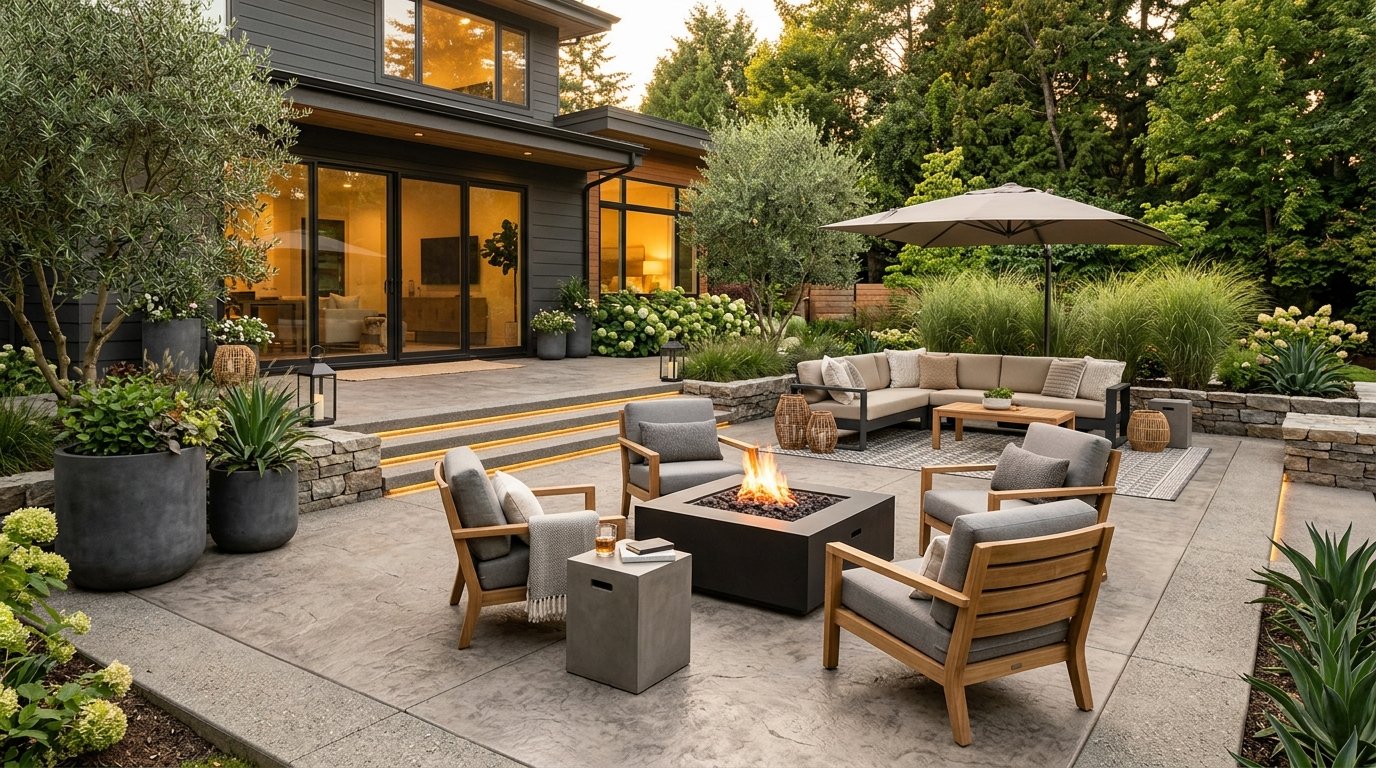
Incorporating a built-in concrete fire pit directly into the patio design creates a natural gathering space perfect for cool evenings and outdoor entertaining. Circular or square fire pit designs can be finished with the same stamped or stained concrete used throughout the rest of the patio for a cohesive, unified look. Surrounding the fire pit with built-in concrete bench seating maximizes both functionality and style, eliminating the need for additional outdoor furniture. This feature works particularly well in larger backyards where the fire pit can serve as a focal point for the entire outdoor living area. Adding this element instantly transforms a simple patio into a destination space for family and friends to gather.
7. Curved and Organic Patio Shapes
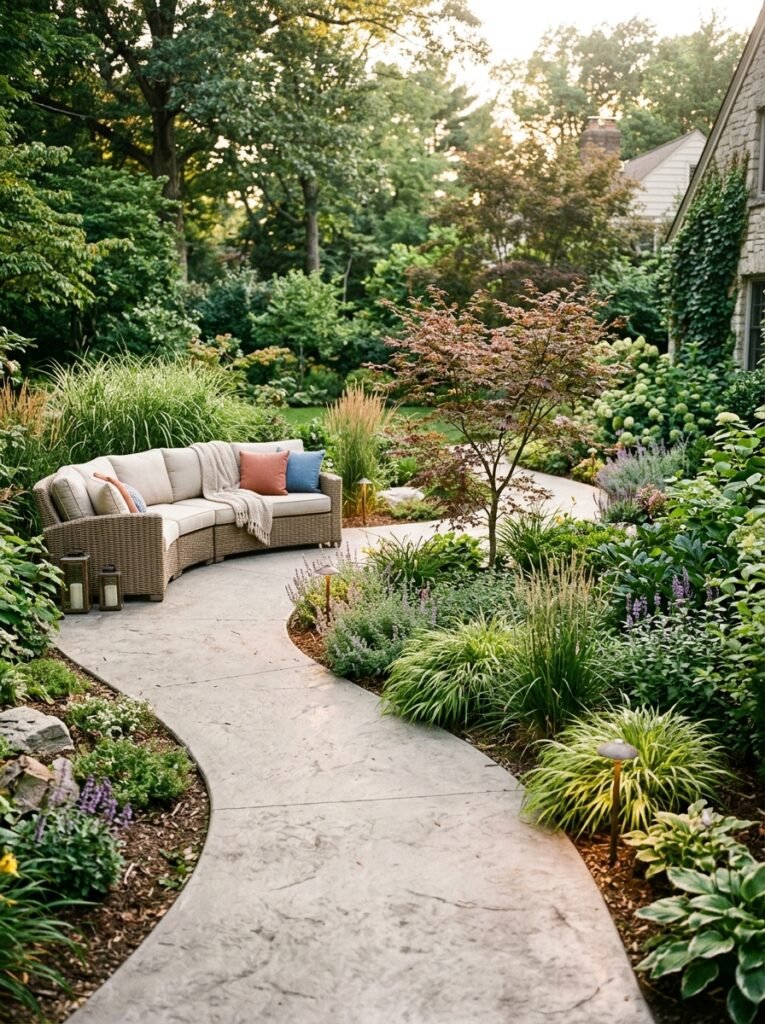
Moving away from traditional rectangular layouts, curved and organic-shaped concrete patios create a softer, more natural flow that blends seamlessly with surrounding landscaping. These free-form designs often follow the natural contours of the yard, wrapping around garden beds, trees, or existing outdoor features. Curved edges also tend to feel more inviting and less rigid than sharp, angular layouts, making the space feel more like an extension of the garden itself. This approach works particularly well for homeowners with sprawling, informal backyard designs rather than strict, symmetrical landscaping. While curved forms require more skilled labor to pour and finish, the resulting design often feels far more custom and unique.
8. Polished Concrete for a Sleek Modern Look
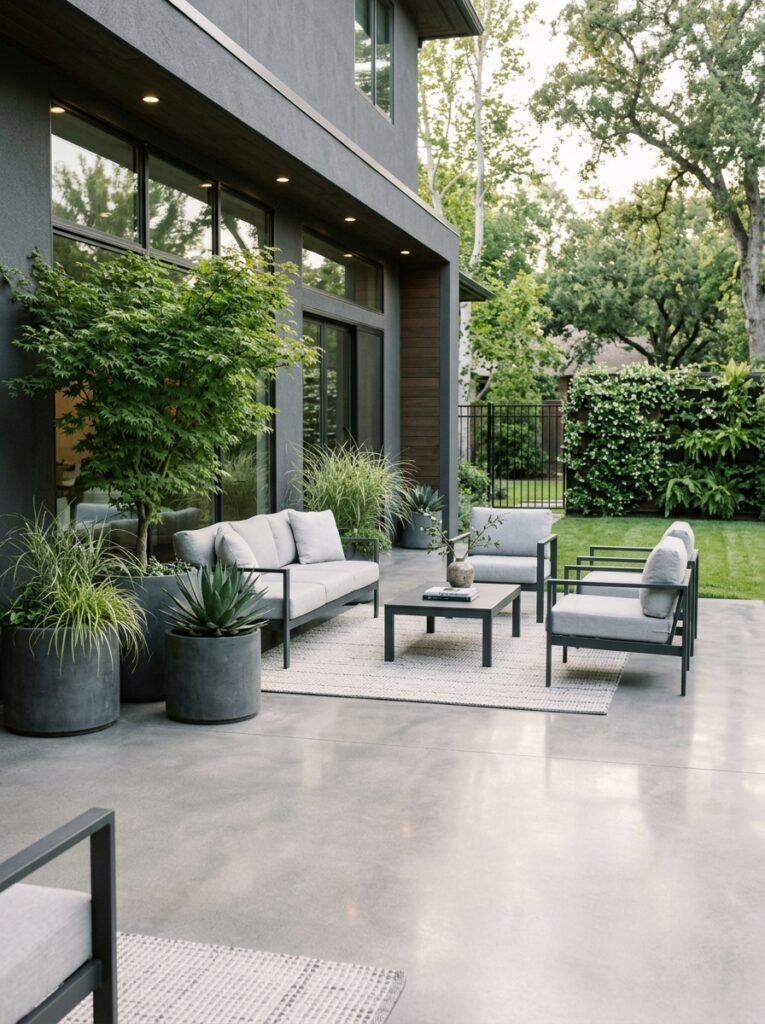
Polished concrete offers a smooth, glossy finish that brings a sleek, contemporary edge to outdoor patio spaces, particularly those attached to modern home designs. This technique involves grinding down the surface using progressively finer abrasives until a reflective sheen is achieved, similar to polished indoor flooring. Polished patios pair exceptionally well with minimalist outdoor furniture, clean-lined planters, and monochromatic color schemes. This finish also tends to reflect natural light beautifully, helping to brighten shaded outdoor areas that might otherwise feel dark or enclosed. While polished concrete requires a bit more maintenance to avoid scratching, its striking visual impact makes it a popular choice for design-forward homeowners.
9. Concrete Pavers Arranged in Creative Patterns
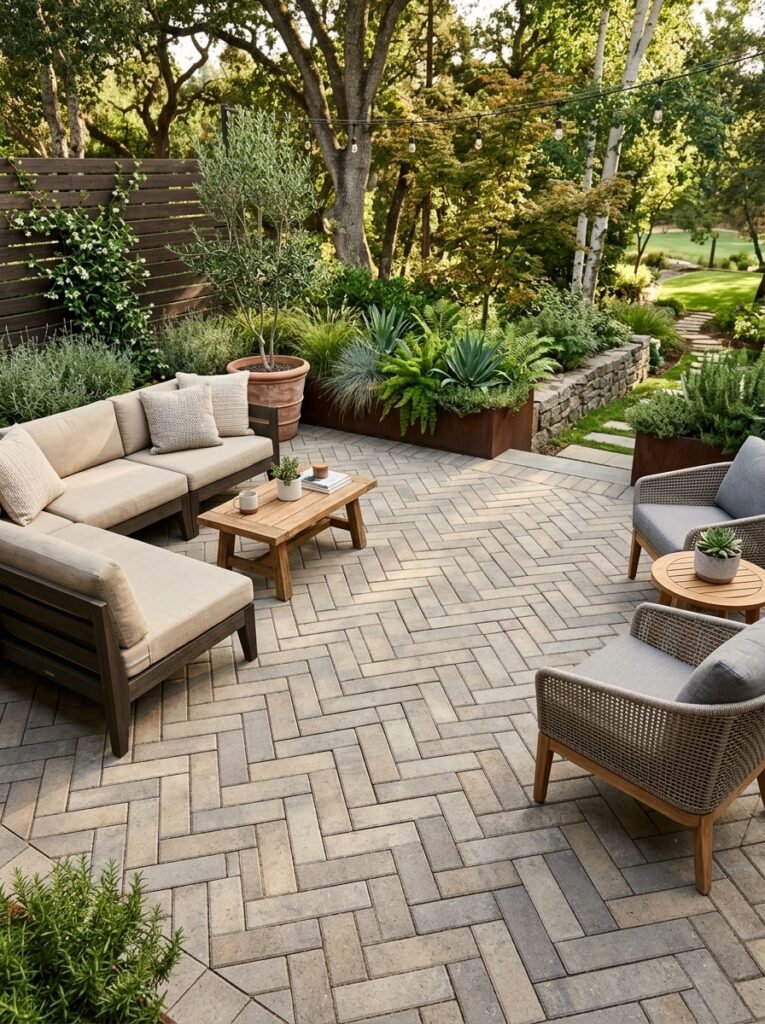
Rather than pouring a single continuous slab, some homeowners opt for individual concrete pavers arranged in creative patterns like basketweave, running bond, or herringbone layouts. This approach offers more design flexibility, allowing for mixed colors, shapes, and sizes within a single cohesive patio design. Gaps between pavers can be filled with gravel, sand, or even low-growing groundcover plants for a softer, more textured finished look. This modular approach also makes future repairs easier, since individual pavers can be replaced without needing to redo the entire patio surface. It’s an excellent option for homeowners who want the classic charm of paver patios with the affordability and durability of concrete.
10. Concrete Patio with Integrated Planters
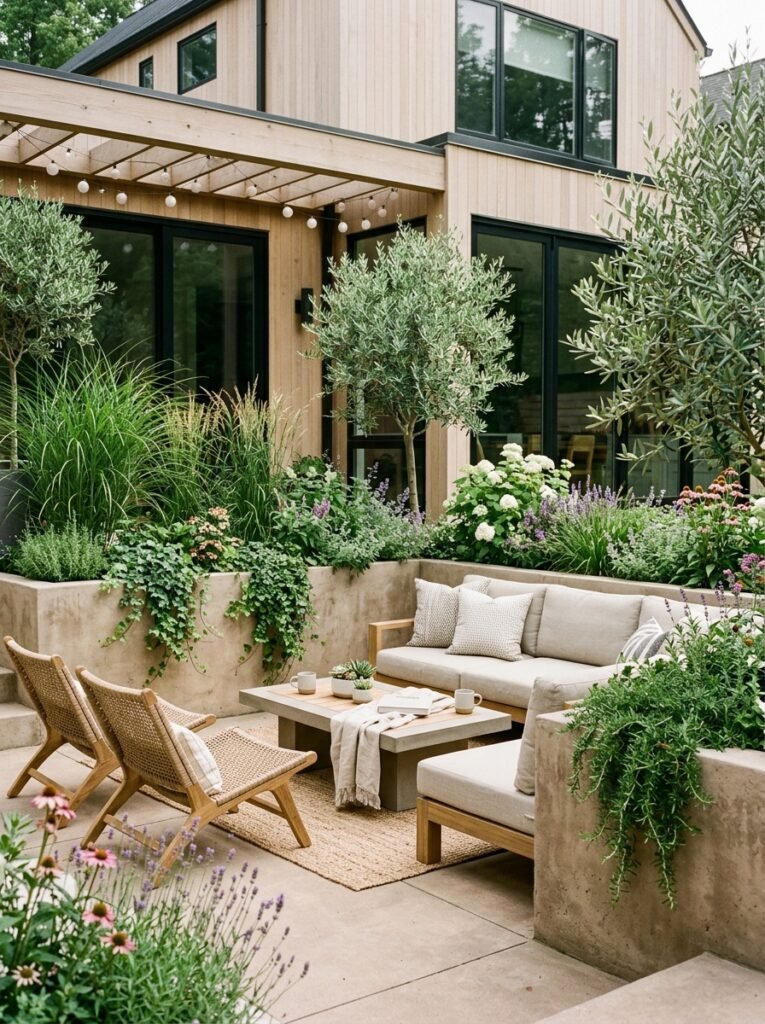
Building integrated concrete planters directly into the patio design adds a lush, green element that softens the hardscape and connects the space to the surrounding garden. These built-in planters can be filled with anything from small ornamental trees to trailing vines and colorful seasonal flowers, adding year-round visual interest. Positioning planters strategically around the perimeter also helps define the boundaries of the patio space without requiring a separate fence or railing. This idea works particularly well for smaller urban backyards or patios where maximizing greenery within a limited footprint is a priority. Integrated planters create a beautiful balance between the durability of concrete and the natural softness of living plants.
11. Textured Concrete with Wood-Look Finish
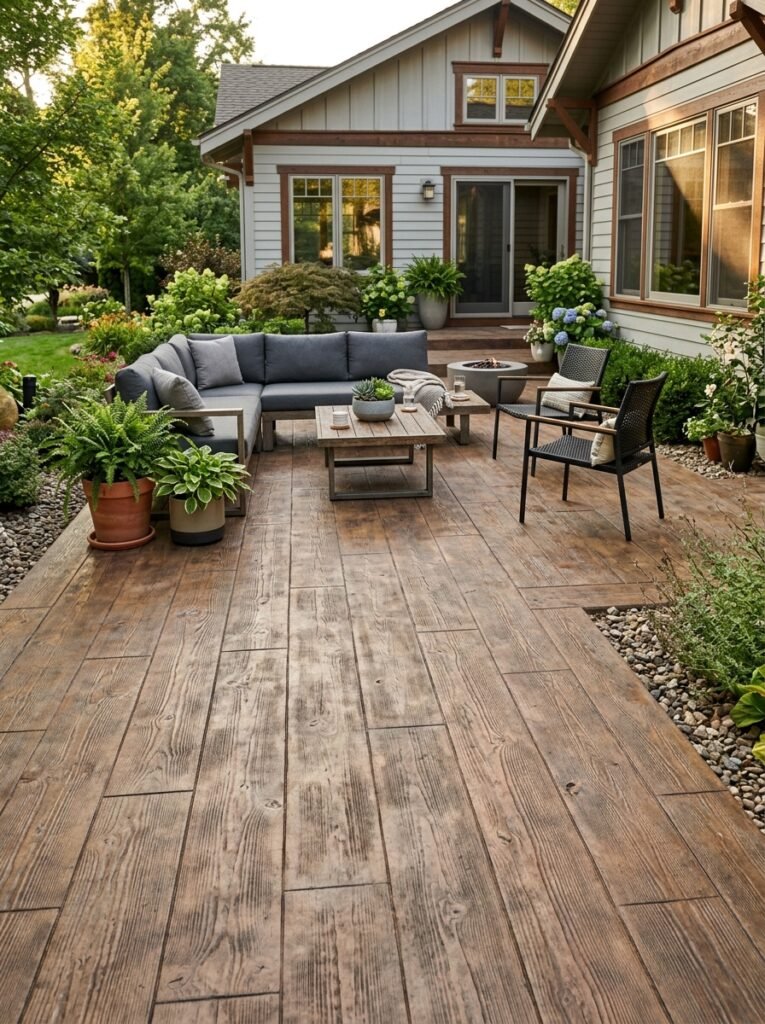
Wood-look stamped concrete has surged in popularity as homeowners seek the warm, natural appearance of a wooden deck without the ongoing maintenance concerns like rotting, warping, or splintering. Specialized stamps replicate the grain, knots, and plank lines of real wood, and staining techniques add further realism with variegated brown and gray tones. This option is particularly appealing for homeowners in humid or rainy climates, where traditional wood decking can deteriorate quickly over time. Wood-look concrete also eliminates the need for annual sealing or staining that real wood decks typically require, saving significant time and money long-term. This idea offers the best of both worlds: authentic wood aesthetics paired with the low-maintenance durability of concrete.
12. Concrete Patio with Decorative Border Detailing
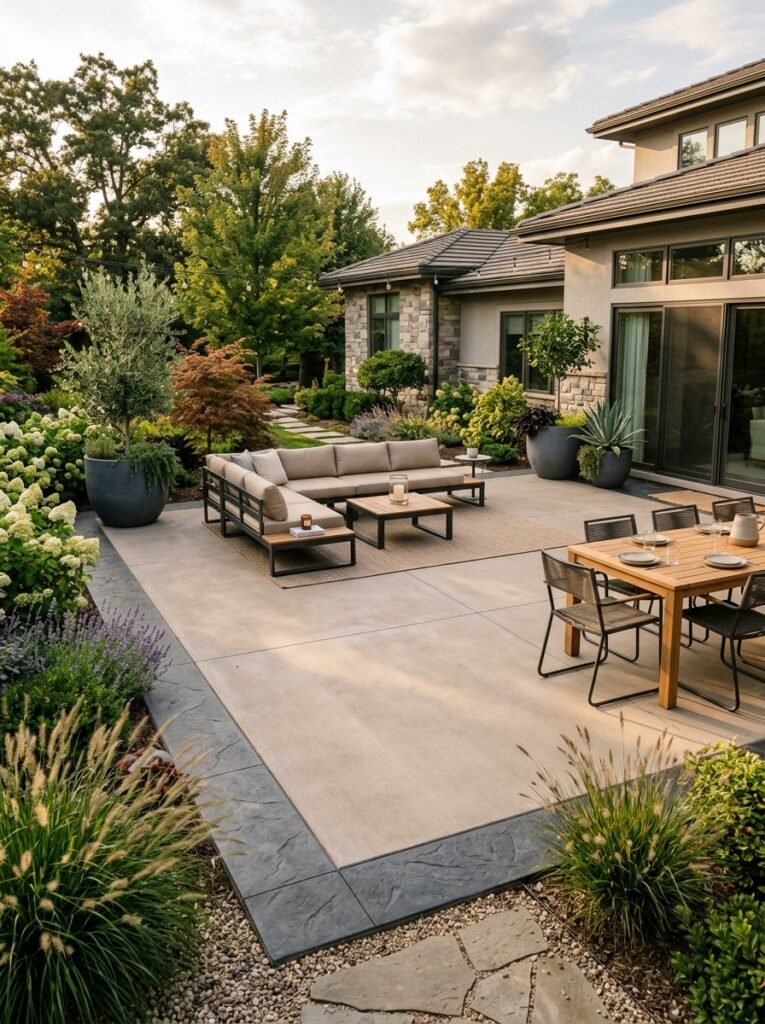
Adding a decorative border around the edge of a concrete patio, whether through contrasting color, a different texture, or an inlaid brick pattern, gives the entire space a finished, custom-designed appearance. This detail acts as a visual frame for the patio, similar to how a rug defines a seating area within a living room. Borders can be simple and understated or bold and intricate, depending on the overall style of the home and landscaping. This idea is particularly effective for larger patios, where a plain, uninterrupted slab might otherwise feel too vast or visually flat. A well-executed border detail is often what separates a builder-grade patio from one that feels professionally designed.
Final Thoughts
Concrete patios offer an impressive range of design possibilities that go far beyond the plain gray slabs many homeowners picture when they think of this material. From stamped stone replicas and bold color stains to built-in fire pits and integrated planters, these 12 ideas prove that concrete can be both highly functional and beautifully stylish. The key to a successful concrete patio design lies in choosing finishes and features that complement your home’s existing architecture and your family’s outdoor lifestyle. Because concrete is so durable and low-maintenance, investing in a thoughtfully designed patio pays off for years to come with minimal upkeep required. With the right combination of texture, color, and layout, a concrete patio can become one of the most valuable and enjoyable spaces in your entire home.