Kitchen Backsplash Ideas With Oak Cabinets: 12 Beautiful Ways to Update Your Kitchen
Introduction
Finding the right backsplash can completely transform a kitchen, especially when you are working with warm and natural oak cabinets. The best kitchen backsplash ideas with oak cabinets balance the golden, honey, or medium-brown tones of the wood while adding personality, texture, and visual interest. Whether your kitchen feels traditional, farmhouse-inspired, modern, or somewhere in between, the backsplash can help connect the cabinets, countertops, walls, and hardware into one cohesive design. From classic white tile to dramatic stone and handmade finishes, there are countless ways to make oak cabinetry feel fresh and stylish.
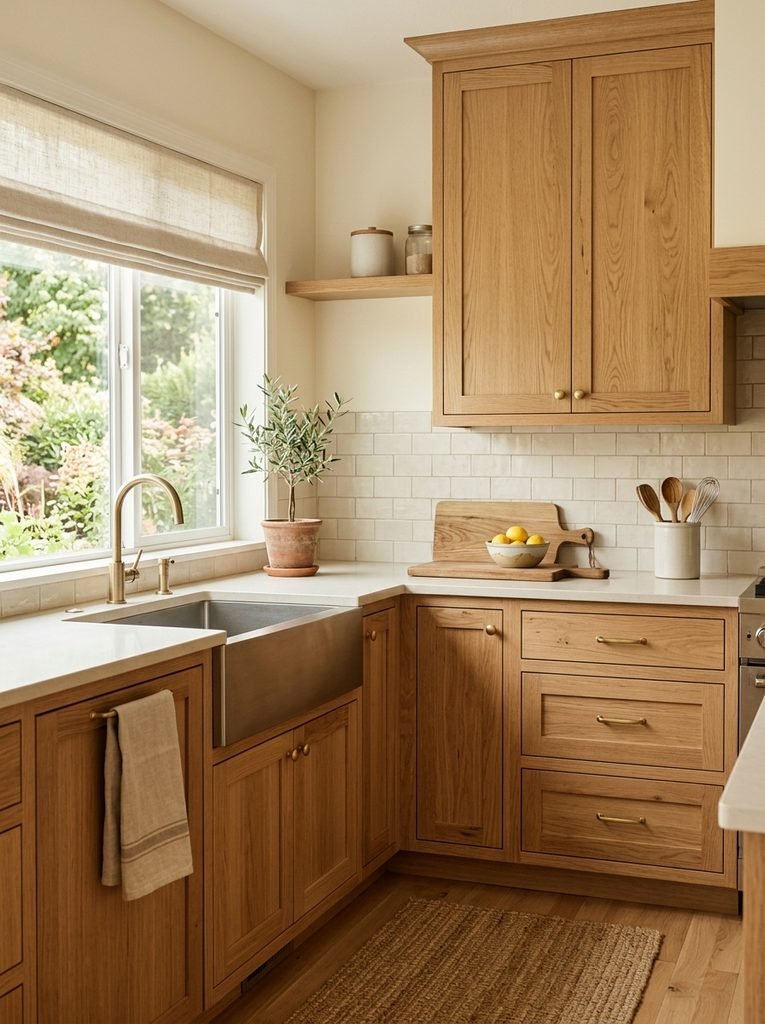
Oak cabinets have a naturally warm appearance that can become the foundation for a beautiful kitchen design. Instead of trying to hide the wood grain, consider choosing a backsplash that complements its natural character and creates a balanced color palette. Soft whites, creamy neutrals, earthy greens, warm grays, and natural stone tones can all work beautifully with oak. The key is selecting a material and pattern that enhances the cabinets rather than competing with them.
1. Classic White Subway Tile With Oak Cabinets
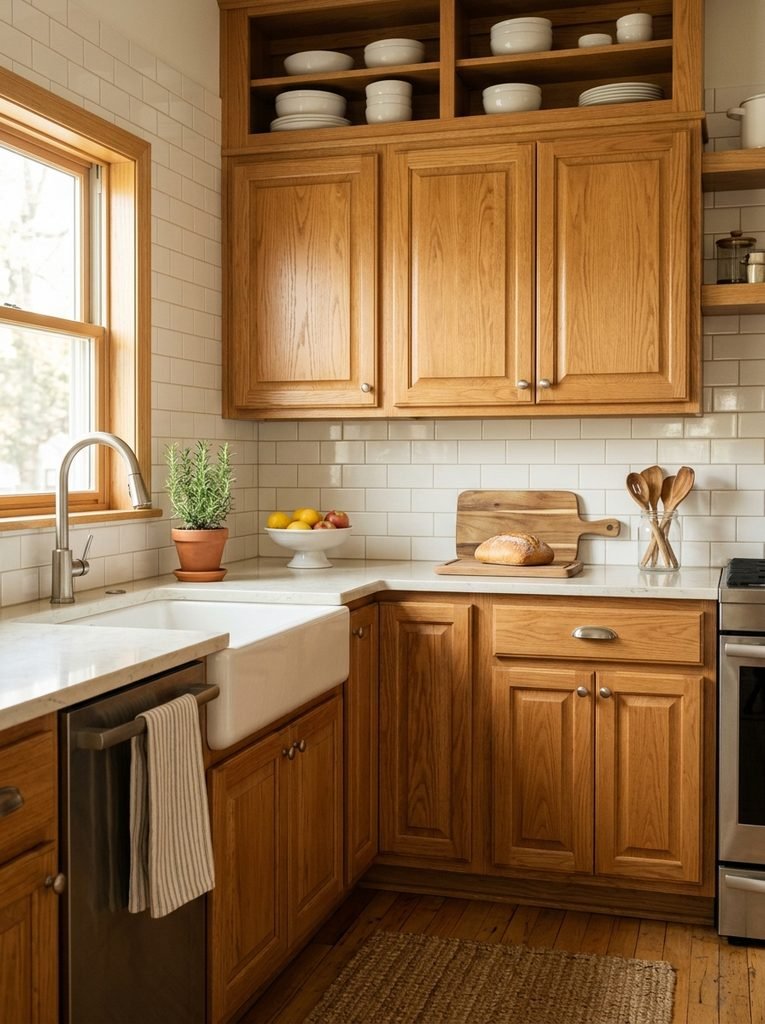
White subway tile is one of the most timeless backsplash ideas with oak cabinets because its clean appearance creates a beautiful contrast against warm wood. A traditional white subway tile backsplash can brighten the kitchen while allowing the natural grain of oak cabinetry to remain the visual star. Choose a warm white rather than an icy white if your cabinets have golden or honey undertones. Pairing the tile with light countertops, simple hardware, and natural wood accents can create a kitchen that feels fresh without looking overly trendy.
For a more contemporary interpretation, consider installing the subway tile in a vertical stack or offset pattern instead of the traditional running-bond arrangement. A slightly handmade or uneven tile can introduce subtle texture while maintaining the simplicity of the white color. Warm white grout will create a softer appearance, while contrasting grout can make the individual tiles more noticeable. This versatile backsplash works particularly well in traditional, transitional, farmhouse, and modern kitchens with oak cabinets.
2. Creamy White Tile Backsplash
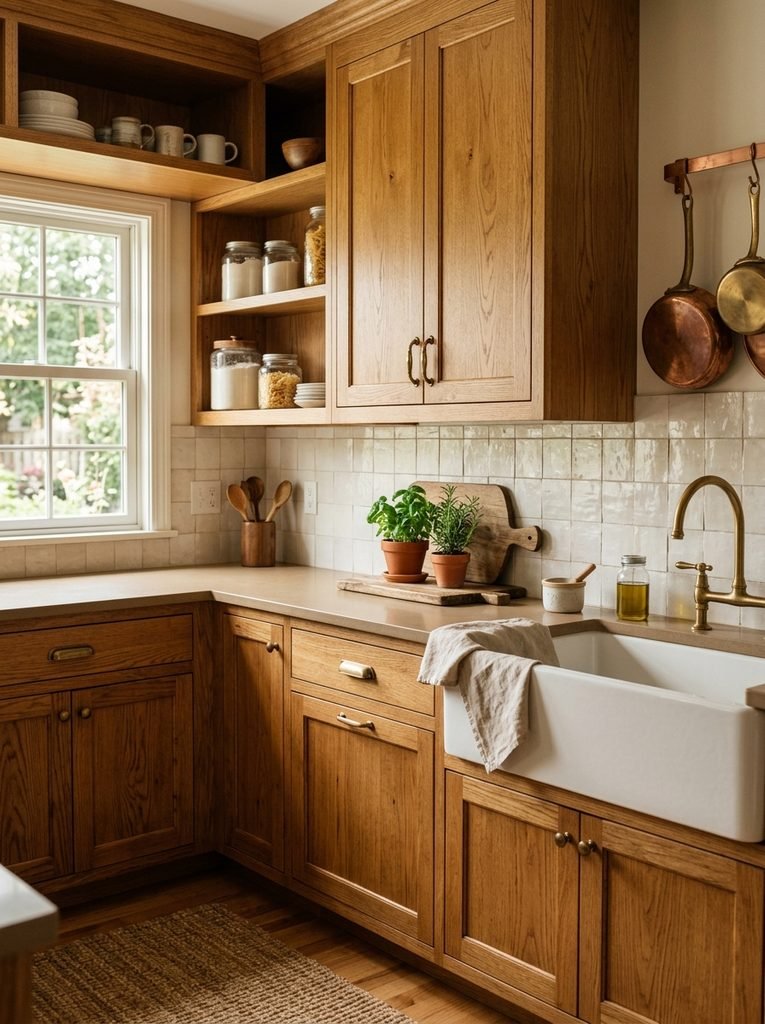
A creamy white backsplash is an excellent choice when you want a softer look than bright white tile. Because oak naturally contains warm undertones, creamy or ivory backsplash tile can create a seamless connection between the cabinetry and the rest of the kitchen. This combination makes the room feel welcoming, comfortable, and naturally coordinated rather than sharply contrasted. It is especially effective in kitchens with beige, cream, taupe, or warm white countertops.
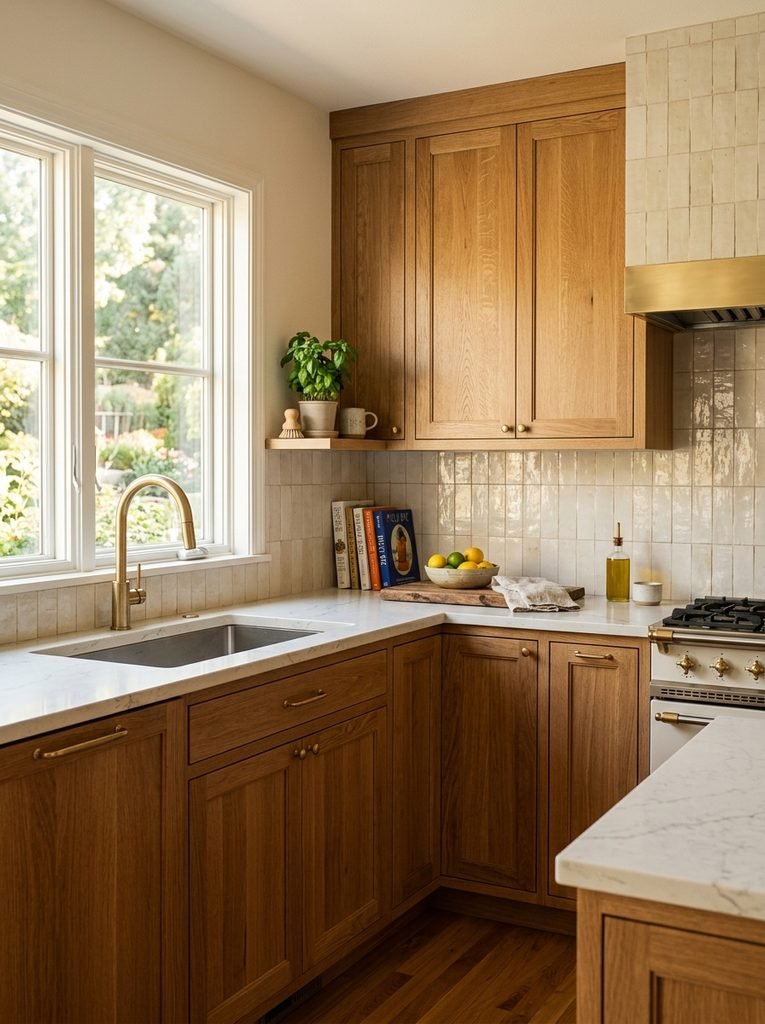
Consider choosing square ceramic tiles, elongated rectangular tiles, or lightly textured handmade-look tiles for additional character. Glossy cream tile can reflect natural light and make a smaller kitchen feel brighter, while matte tile creates a more relaxed and understated finish. Adding brass or antique bronze hardware can further emphasize the warm tones throughout the room. If you prefer a timeless kitchen design that will remain attractive for years, this is one of the safest backsplash choices for oak cabinets.
3. Green Tile Backsplash With Oak Cabinets
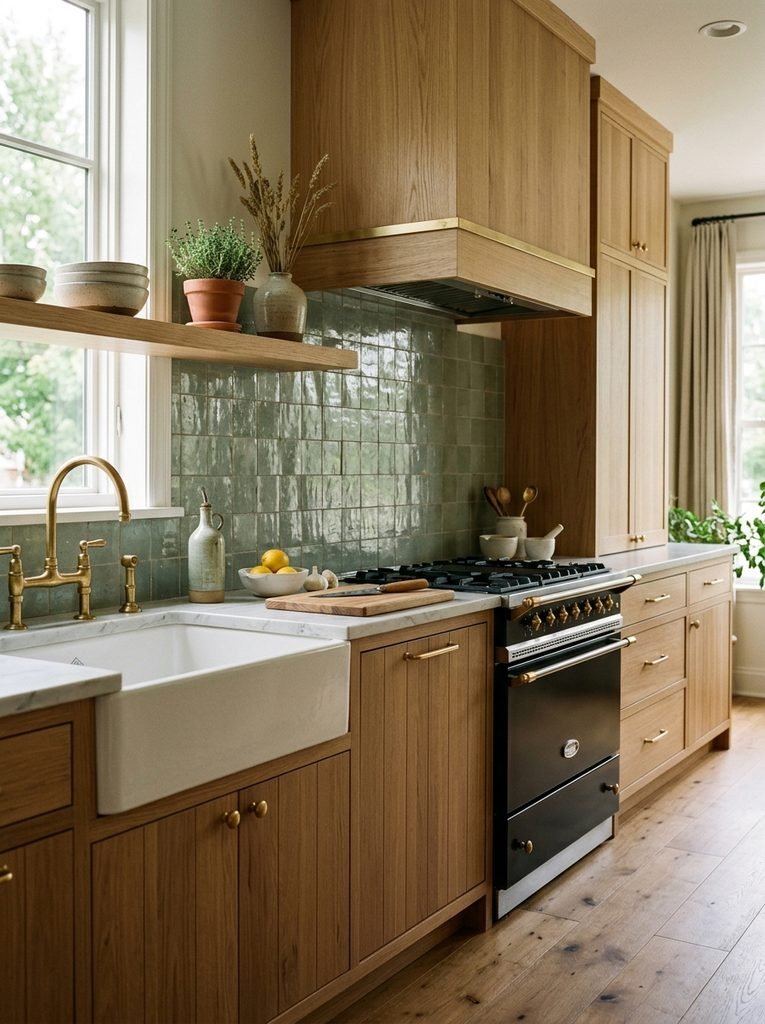
Green backsplash tile can bring an earthy, nature-inspired quality to a kitchen featuring oak cabinetry. Shades such as sage, olive, moss, and muted green work particularly well because they complement the natural warmth and organic character of wood. A soft sage green backsplash can make oak cabinets feel intentional and sophisticated rather than dated. The combination is especially beautiful in kitchens with natural stone countertops, brass hardware, and plenty of plants or other organic accents.
For a subtle design, choose a muted green ceramic tile in a simple rectangular or square shape. If you want more visual personality, consider glossy zellige-style tile with natural variation from one piece to another. Keep the surrounding finishes relatively simple so the green backsplash and oak cabinets can remain the main design features. This color combination is particularly appealing for farmhouse, cottage, organic modern, and vintage-inspired kitchens.
4. Marble Backsplash With Oak Cabinets
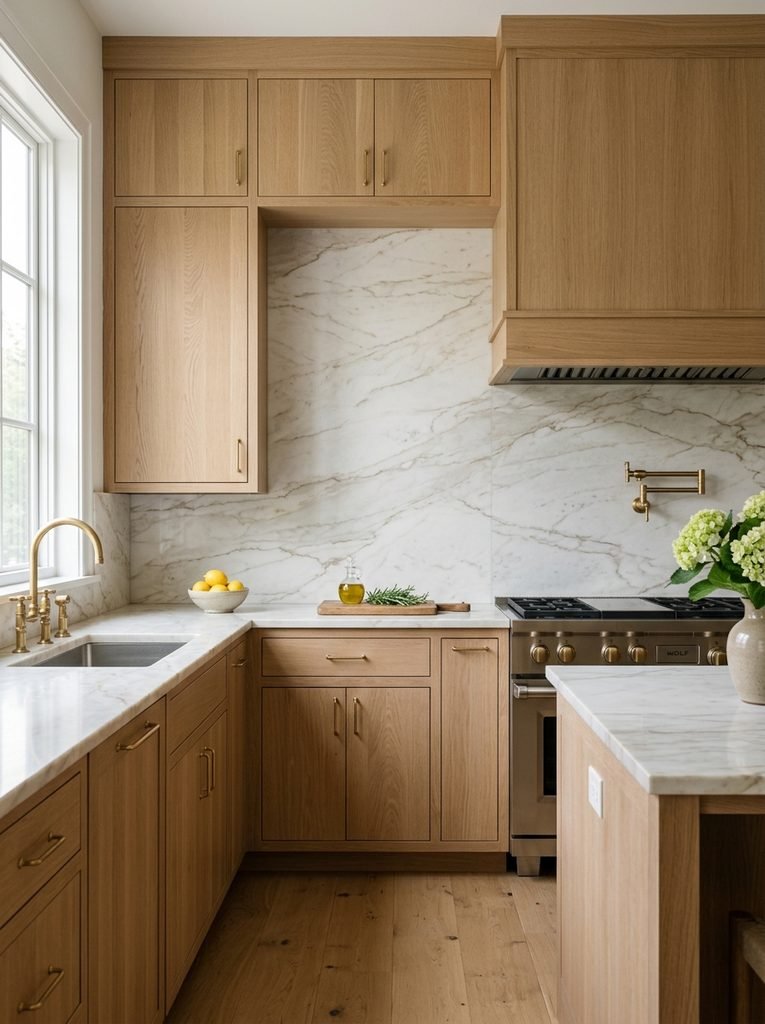
A marble backsplash can instantly elevate oak cabinets by introducing a sophisticated stone surface with natural movement. White marble with subtle gray or beige veining creates contrast while still maintaining a warm and elegant appearance. The veining can also connect the oak cabinets with lighter countertops, making the entire kitchen feel more thoughtfully designed. This option is ideal when you want your oak kitchen to have a more refined or luxurious appearance.
You do not necessarily need to use expensive natural marble to achieve this aesthetic. Marble-look porcelain or ceramic slabs can provide a similar appearance while offering practical benefits and a range of price points. Choose a stone with warm or neutral veining if your oak has strong golden undertones, because very cool gray marble can sometimes make the cabinets appear more orange. Extending the backsplash from the countertop to the underside of the upper cabinets can create an especially polished and seamless effect.
5. Beige and Taupe Backsplash Tile
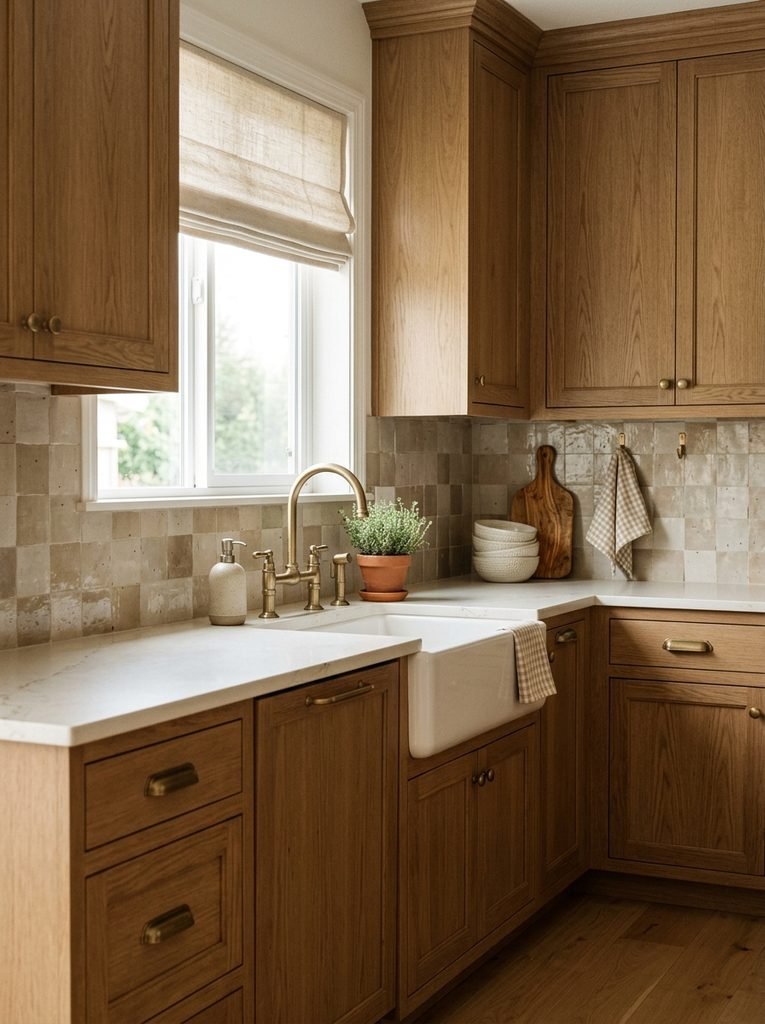
Beige and taupe backsplash ideas are particularly effective when you want to create a warm, understated kitchen with oak cabinets. These neutral colors naturally complement the warm undertones found in oak while adding enough contrast to prevent the room from looking monotonous. A beige backsplash can also bridge the gap between darker oak cabinets and lighter countertops. This makes it a practical option for kitchens where you want a cohesive palette rather than a dramatic focal point.
Look for tiles with subtle texture, variation, or natural stone-inspired patterns to keep the neutral color from feeling flat. Taupe can be especially attractive with medium or darker oak cabinets because it provides a slightly deeper visual layer behind the countertops. Pair the backsplash with brushed brass, bronze, or matte black hardware depending on the overall style you want. Layering neutral materials in slightly different shades can create a warm and sophisticated kitchen without relying on bold colors.
6. Natural Stone Backsplash
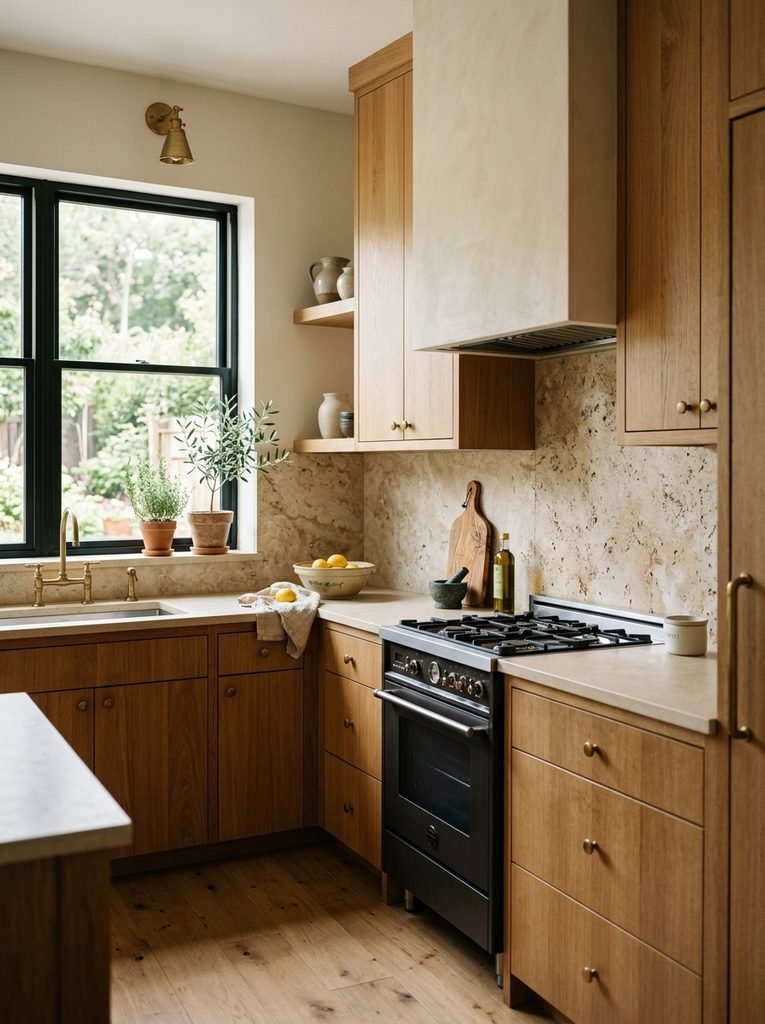
Natural stone is one of the best options for homeowners who want to emphasize the organic beauty of oak cabinets. Materials such as travertine, limestone, slate, and warm-toned quartzite can introduce texture and earthy variation that feels naturally connected to wood. Instead of creating a strong contrast, natural stone allows the cabinets and backsplash to work together as part of a relaxed material palette. This approach is particularly attractive in rustic, Mediterranean, organic modern, and farmhouse kitchens.
Choose a stone based on the undertones already present in your oak cabinetry and countertops. Warm beige, cream, sand, and soft brown stones can create a particularly harmonious combination with golden oak. If the stone has a lot of visual movement, consider keeping the countertops and hardware relatively simple to prevent the kitchen from becoming visually busy. A natural stone backsplash can also add depth and character to an older oak kitchen without requiring the cabinets to be replaced.
7. White Herringbone Backsplash
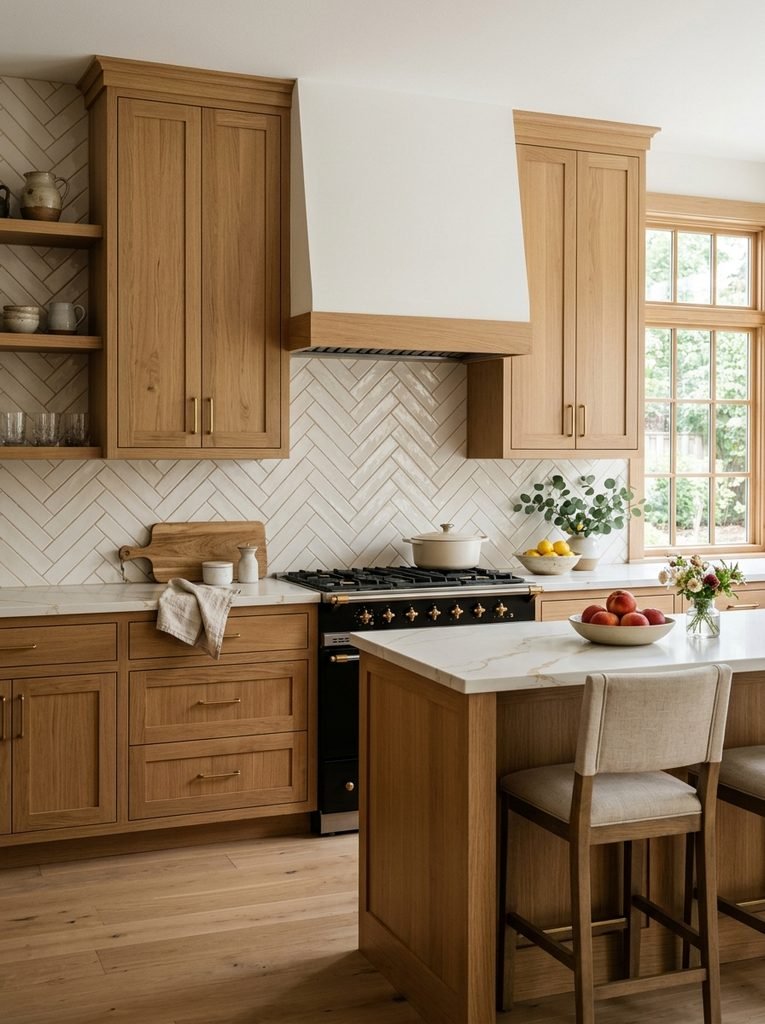
A white herringbone backsplash adds pattern and personality while maintaining the bright, classic appeal of white tile. The angled arrangement creates movement across the wall, which can make a simple oak kitchen feel more customized and thoughtfully designed. Because the tile itself remains neutral, the pattern provides visual interest without overwhelming the natural wood cabinetry. This makes herringbone an excellent choice for homeowners who want a decorative backsplash without introducing a strong color.
You can use a warm white ceramic tile with matching grout for a subtle effect or slightly darker grout to emphasize the herringbone pattern. A handmade-look tile can make the backsplash feel more relaxed, while a smooth glossy tile can create a cleaner transitional appearance. Pairing this design with simple oak cabinets, quartz countertops, and understated hardware creates a timeless kitchen that still feels current. It is also a great way to add character to a kitchen without making a major structural change.
8. Blue Backsplash Tile With Oak Cabinets
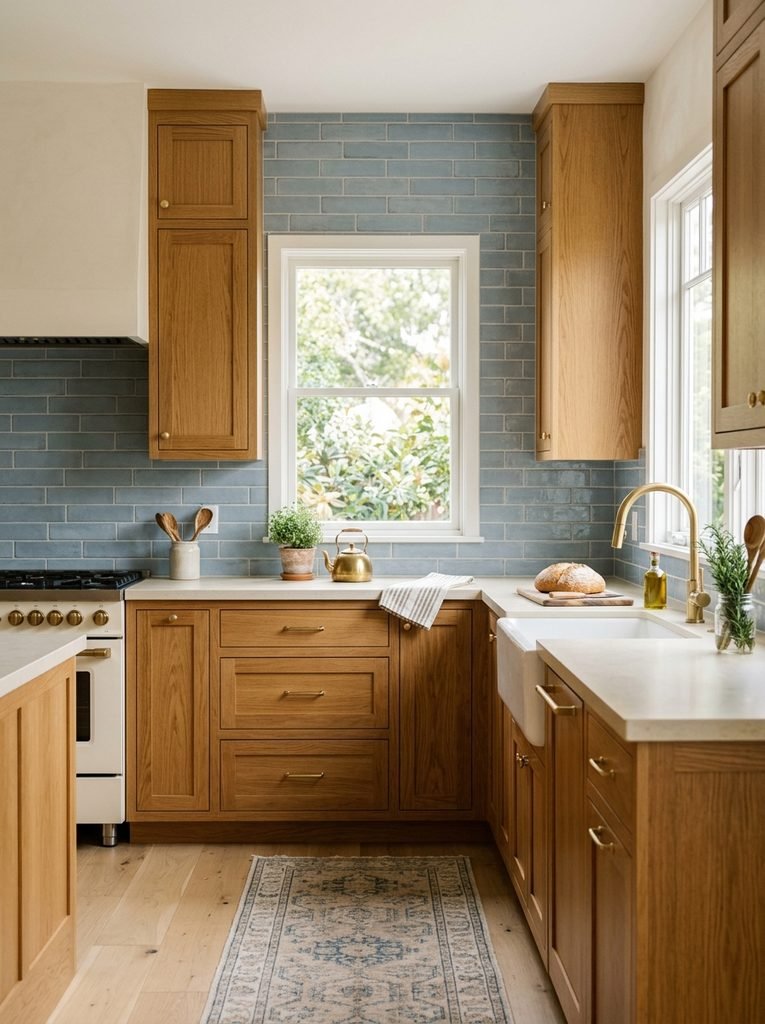
Blue backsplash tile can provide a beautiful cool-toned contrast to the warmth of oak cabinetry. Soft blue, dusty blue, denim, slate blue, and muted navy can all work depending on the color and finish of the cabinets. A light blue backsplash can create an airy cottage-inspired kitchen, while deeper blue tile can give the room a more dramatic and sophisticated appearance. The contrast between blue and warm wood can make both colors appear richer and more intentional.
For a balanced design, choose a blue with muted or slightly gray undertones rather than an extremely bright shade. Glossy blue tile can reflect light and add dimension, while matte blue tile creates a more contemporary and understated appearance. White or cream countertops can help bridge the difference between the cool backsplash and warm oak cabinets. Add brass hardware if you want to emphasize warmth or matte black hardware for a more modern finish.
9. Textured Zellige-Style Backsplash
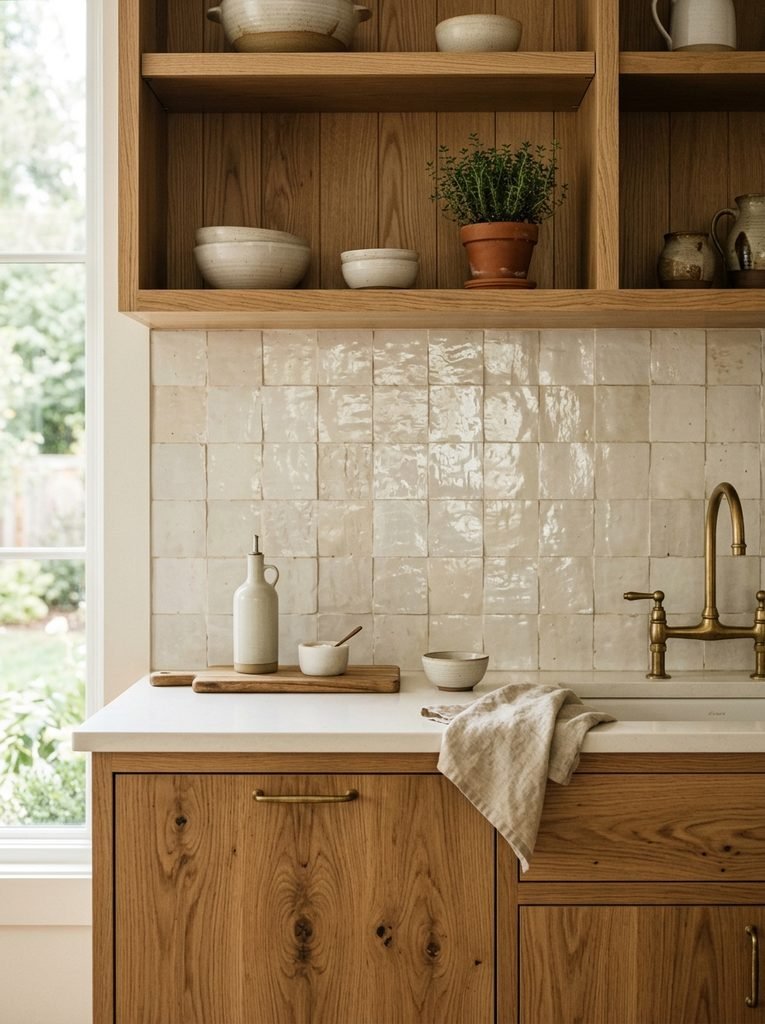
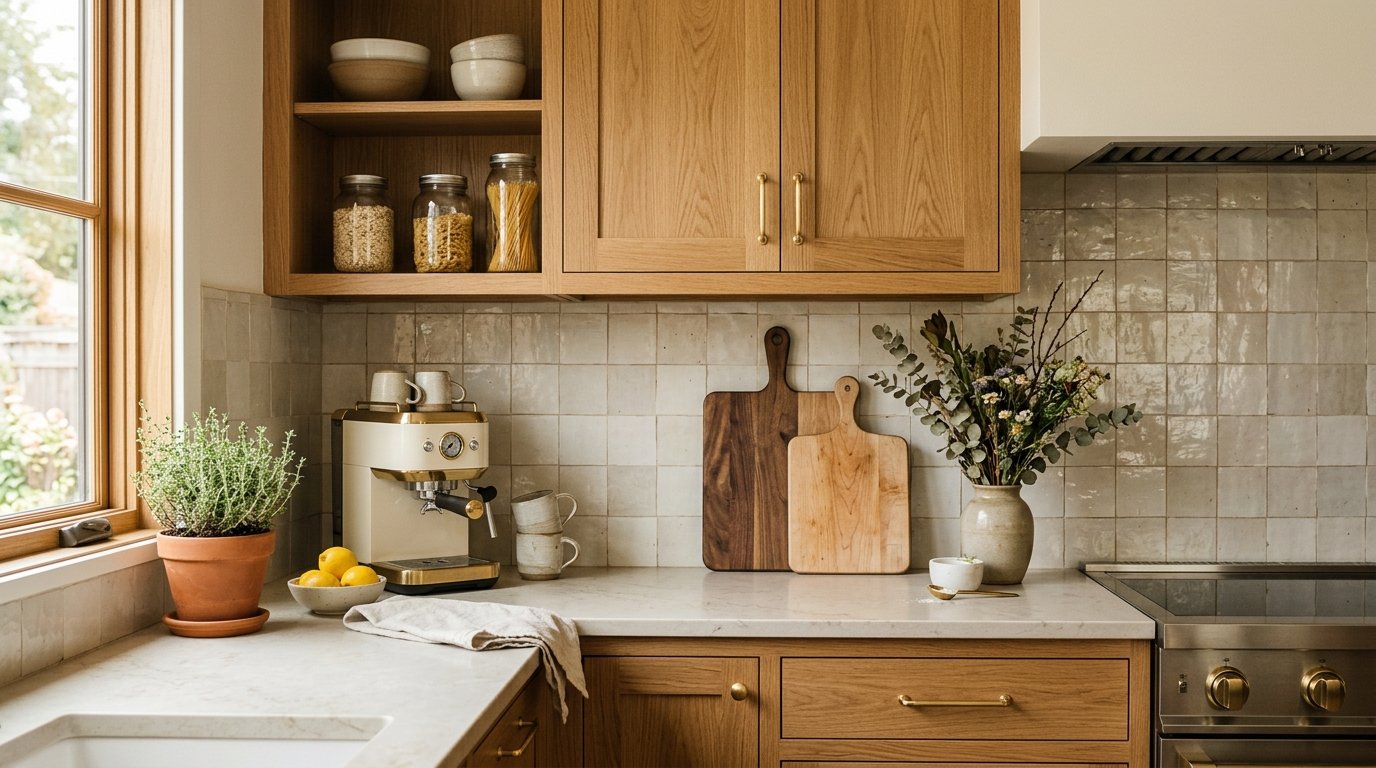
Zellige-style tile is a beautiful option for adding texture and handcrafted character to a kitchen with oak cabinets. These tiles typically have natural variation in color, shape, and surface reflection, giving the backsplash a distinctive artisan appearance. Warm white, cream, beige, pale green, and soft neutral shades can all complement oak beautifully. The subtle imperfections help keep the kitchen from feeling overly uniform or mass-produced.
A creamy zellige-style backsplash can be especially effective when paired with natural oak because both materials have organic variations. Rather than competing with the wood grain, the uneven tile surface creates another layer of texture that makes the kitchen feel warm and collected. Keep other finishes relatively simple so the combination does not become visually overwhelming. This backsplash style works beautifully in organic modern, European-inspired, cottage, and modern farmhouse kitchens.
10. Black Backsplash With Oak Cabinets
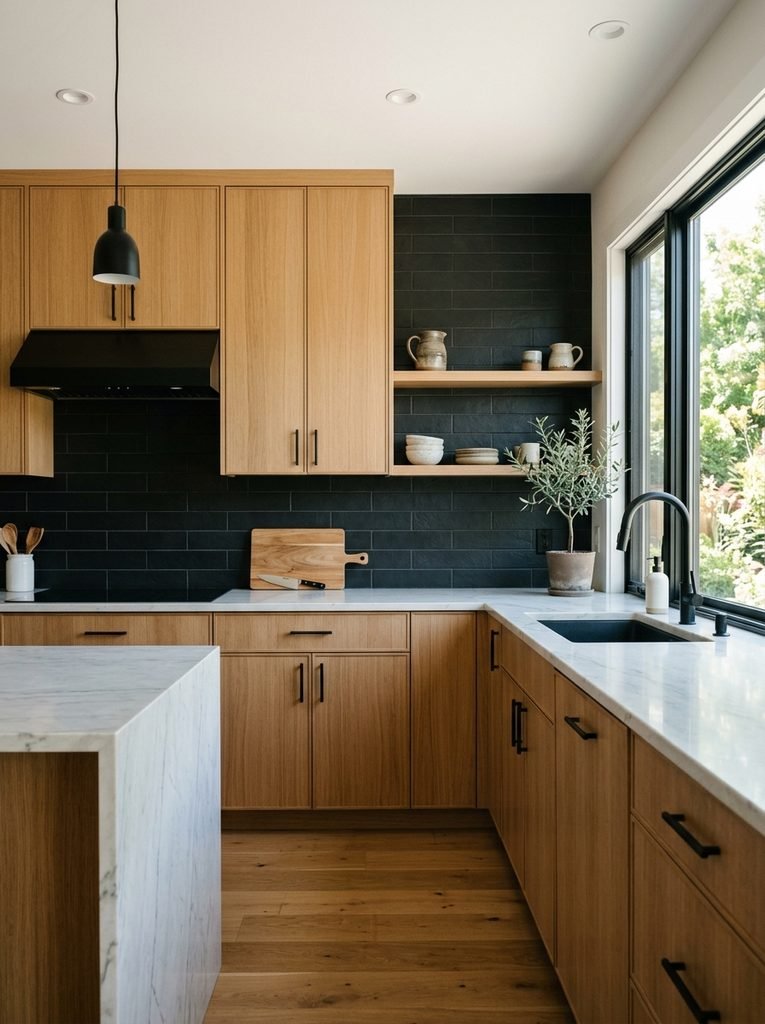
A black backsplash can create a bold and sophisticated contrast against light or medium oak cabinets. The darker surface grounds the kitchen and can make warm wood tones appear richer and more luxurious. This approach works particularly well when the kitchen has plenty of natural light, because the dark backsplash creates depth without necessarily making the room feel too enclosed. Black tile can also coordinate beautifully with black appliances, window frames, lighting, or cabinet hardware.
If a completely black backsplash feels too dramatic, choose charcoal, deep gray, or black-and-white patterned tile instead. Matte black creates a modern appearance, while glossy black tile can reflect light and introduce a more polished feeling. Balance the dark backsplash with lighter countertops, warm wood flooring, or cream-colored accessories. This combination is particularly effective in modern, contemporary, industrial, and moody kitchen designs.
11. Brick-Style Backsplash With Oak Cabinets
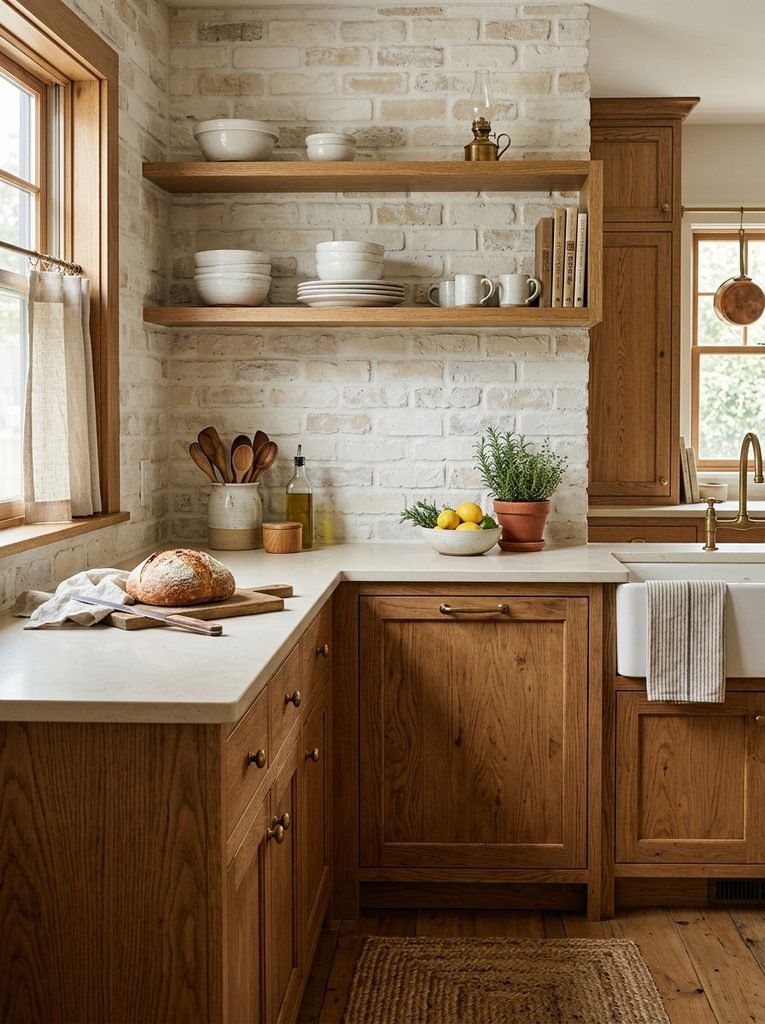
Brick-style backsplash tile can give an oak kitchen a relaxed, character-filled appearance. Whitewashed brick works especially well when you want the texture of brick without introducing a heavy red or orange color into the space. Traditional red or warm brick can also work with oak, particularly in rustic, farmhouse, cottage, or industrial-inspired kitchens. The combination of wood grain and brick texture creates a welcoming kitchen that feels layered and lived-in.
For a lighter and more contemporary look, consider a thin brick veneer in white, cream, or soft beige. The irregular texture can add architectural interest even when the color remains neutral. Pair the backsplash with open shelving, vintage-inspired lighting, ceramic accessories, or simple metal hardware to reinforce the relaxed aesthetic. Because both oak and brick have strong visual texture, keeping the countertops relatively simple can help maintain balance.
12. Full-Height Stone Backsplash With Oak Cabinets
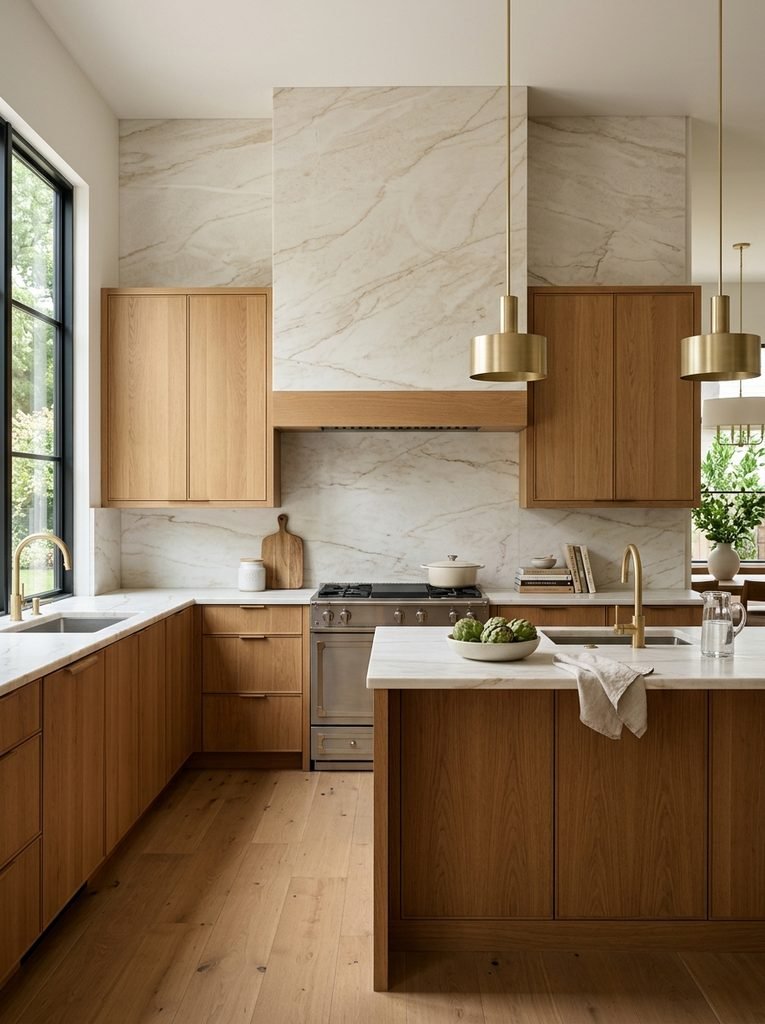
A full-height stone backsplash can make oak cabinets look dramatically more upscale while creating a strong architectural focal point. Instead of stopping at the standard backsplash height, extend the material from the countertop all the way to the upper cabinets or ceiling where appropriate. Light quartzite, warm marble, limestone, or a neutral stone-look porcelain can create a seamless background that highlights the cabinetry. This approach works particularly well in kitchens where the backsplash wall is one of the first features you notice when entering the room.
Choose a stone with veining or subtle movement that complements rather than clashes with the oak grain. Warm white stone with beige or taupe veining can create a sophisticated connection between the wood, countertops, and walls. If the stone is highly dramatic, keep cabinet hardware, lighting, and accessories simple so the backsplash remains the focal point. A full-height backsplash is a larger investment than standard tile, but it can give an older oak kitchen a completely refreshed and custom-designed appearance.
How to Choose the Best Backsplash for Oak Cabinets
When choosing among kitchen backsplash ideas with oak cabinets, start by identifying the undertone of your existing wood. Honey oak, golden oak, natural oak, and darker oak can each look different depending on the surrounding colors and lighting. Warm neutrals are generally an easy match, while cool colors can be used when you intentionally want stronger contrast. Looking at tile samples beside the actual cabinets at different times of day is one of the best ways to avoid choosing a color that looks completely different once installed.
You should also consider the countertop because the backsplash connects the countertop and cabinets visually. If your countertop has noticeable veining or patterns, a simpler backsplash can prevent the kitchen from feeling too busy. If your countertop is plain, you have more freedom to introduce pattern, texture, color, or dramatic stone on the backsplash wall. Hardware, flooring, wall paint, and lighting should also be considered because all of these elements contribute to the final color story.
Final Thoughts
The best kitchen backsplash ideas with oak cabinets are the ones that work with the warmth and natural grain of the wood instead of fighting against it. Classic white subway tile, creamy neutrals, green tile, marble, natural stone, blue accents, textured zellige-style finishes, and dramatic dark backsplashes can all create beautiful results when chosen with the right undertones. You do not need to replace your oak cabinets to achieve a fresh and updated kitchen, because the right backsplash can completely change how the existing cabinetry looks and feels. Whether your goal is a cozy farmhouse kitchen, an organic modern space, or a sophisticated transitional design, these 12 backsplash ideas offer plenty of inspiration for creating a kitchen that feels warm, stylish, and timeless.