Tudor Interior: Timeless Design Ideas for a Classic and Elegant Home
Blog > Home > Modern interior > Tudor Interior: Timeless Design Ideas for a Classic and Elegant Home
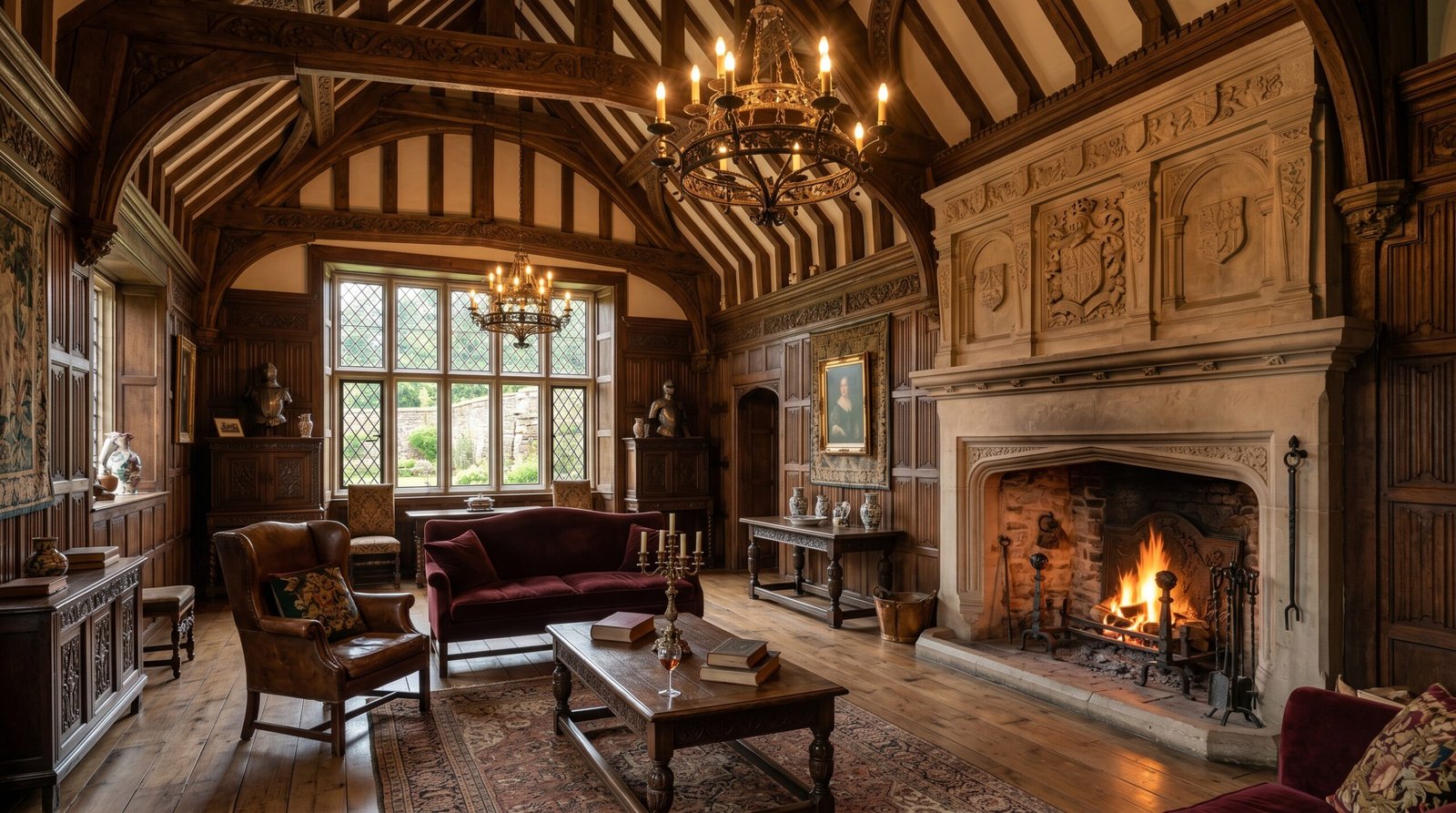
Tudor interior design is known for its rich history, dark wooden details, and cozy, storybook-like atmosphere. Inspired by medieval English architecture from the Tudor period, this style combines rustic charm with elegant craftsmanship. It often features exposed wooden beams, stone textures, leaded glass windows, and warm, earthy tones that create a strong sense of character. Today, Tudor interior design is still admired for its timeless appeal and ability to make a home feel both grand and inviting. In this article, you will explore 12 beautifully structured Tudor interior ideas that can help you bring this classic style into your modern home.
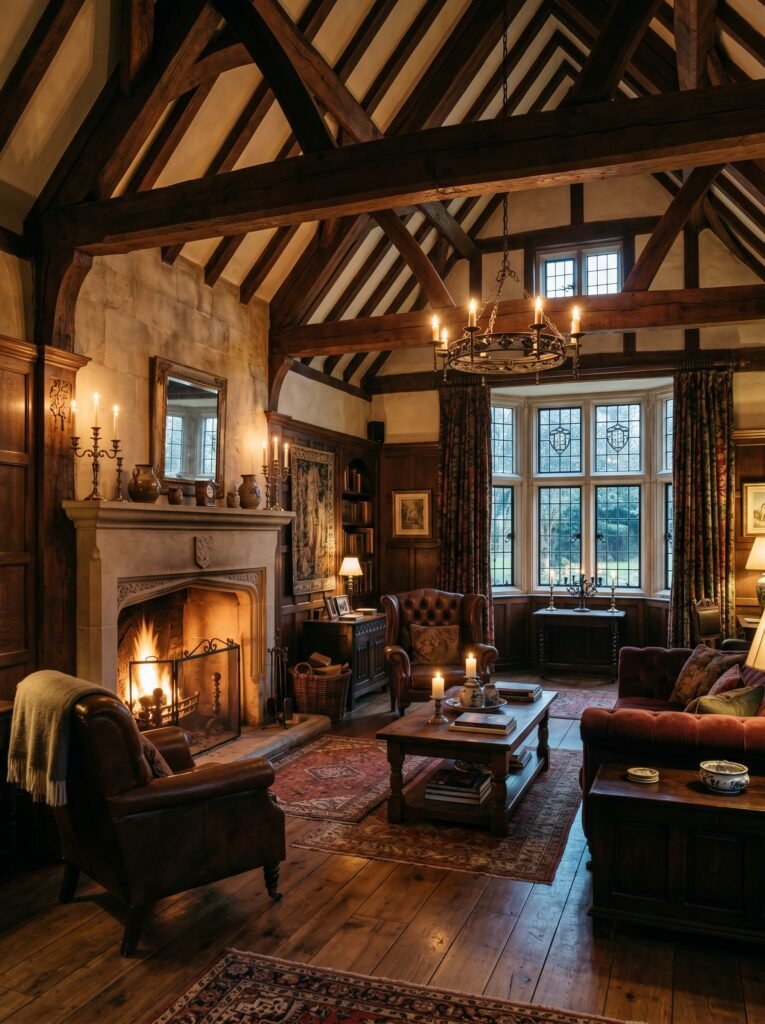
Table Of Content
1. Exposed Wooden Ceiling Beams
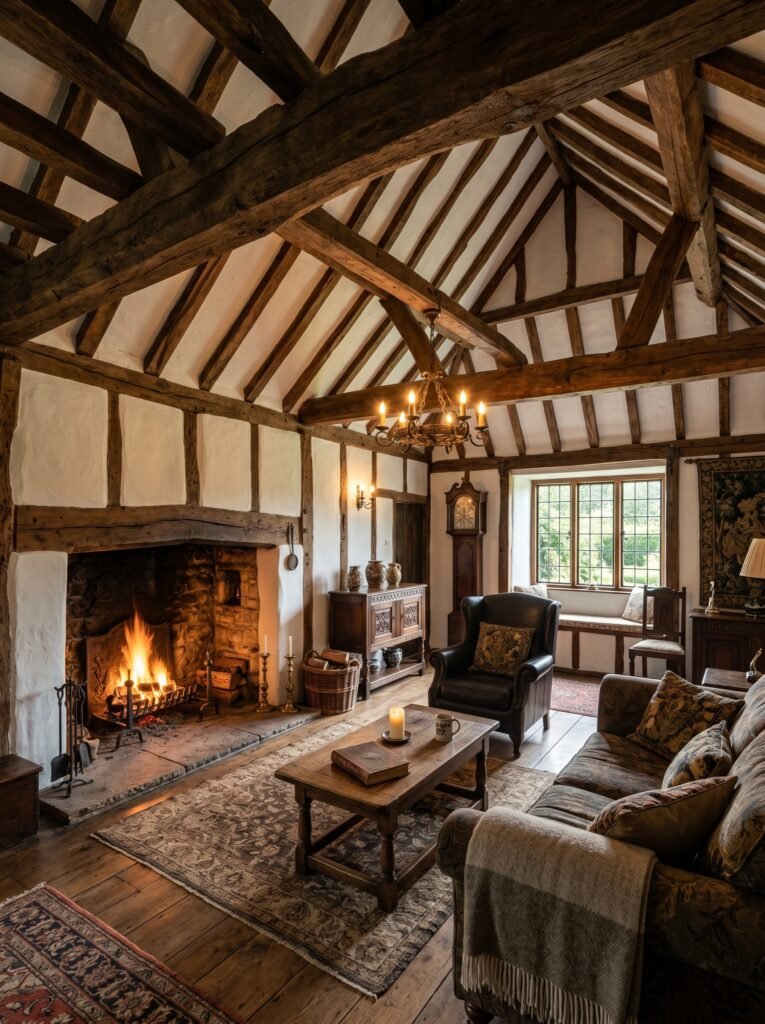
One of the most defining features of a Tudor interior is exposed wooden beams across the ceiling. These beams add depth, structure, and a strong architectural character to any room. Dark-stained oak is commonly used to create a dramatic contrast against lighter walls. This design element instantly gives a historical and authentic medieval feel. Even in modern homes, faux beams can be used to achieve a similar aesthetic without major construction.
2. Stone Fireplace as a Focal Point
A large stone fireplace is the heart of traditional Tudor interior design. It creates a warm and cozy atmosphere that reflects the medieval roots of this style. Natural stone materials such as limestone or slate are often used for an authentic look. The fireplace usually serves as the main gathering point in living rooms. Adding wrought iron tools or a carved wooden mantel enhances its old-world charm.
3. Leaded Glass Windows
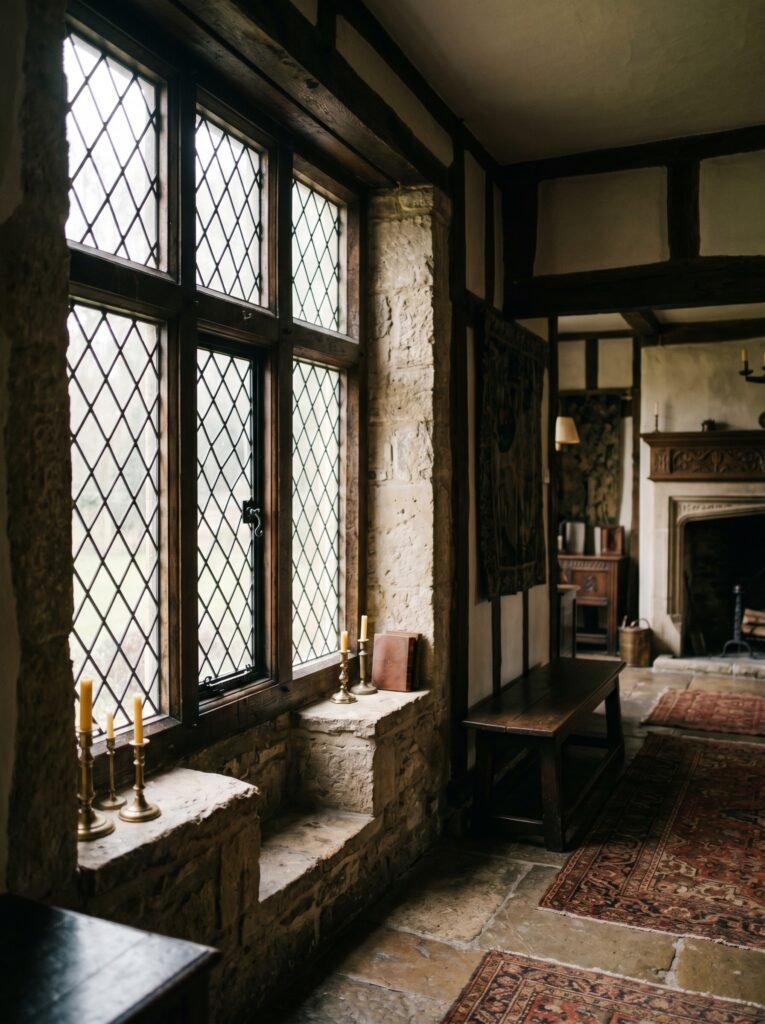
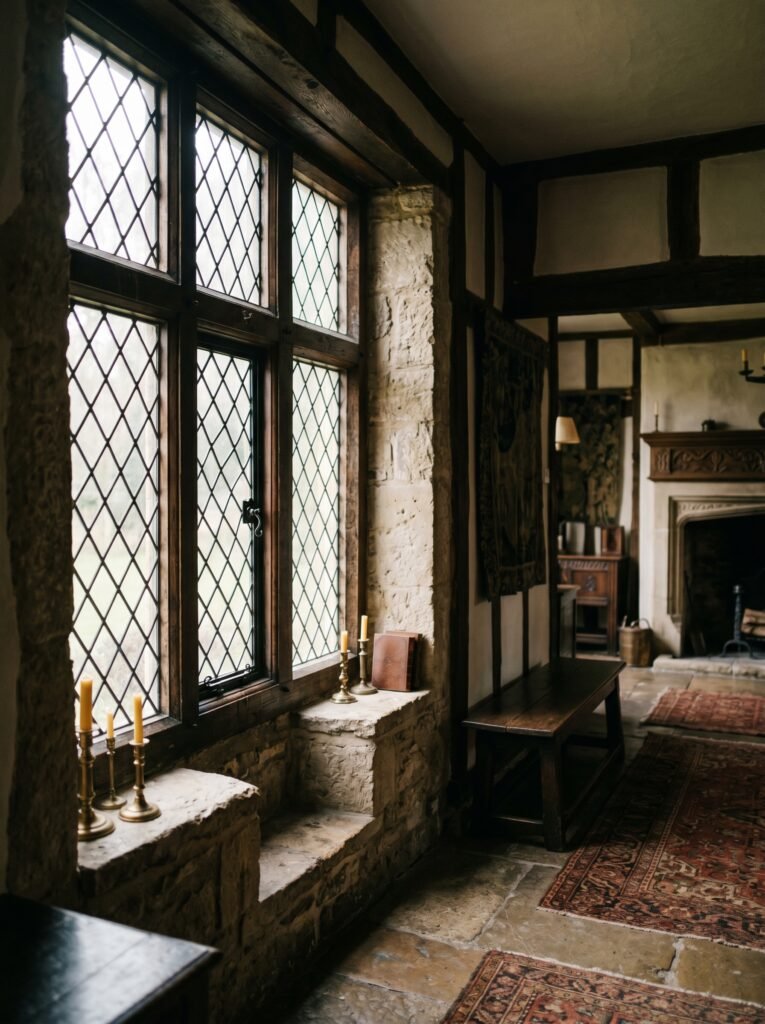
Leaded glass windows are another signature feature of Tudor interiors. These windows often have small, diamond-shaped panes held together by dark metal strips. They allow soft natural light to filter into the room while maintaining privacy. The slightly uneven glass adds to the historical authenticity of the design. This feature works especially well in living rooms, hallways, and staircases.
4. Rich Dark Wood Paneling
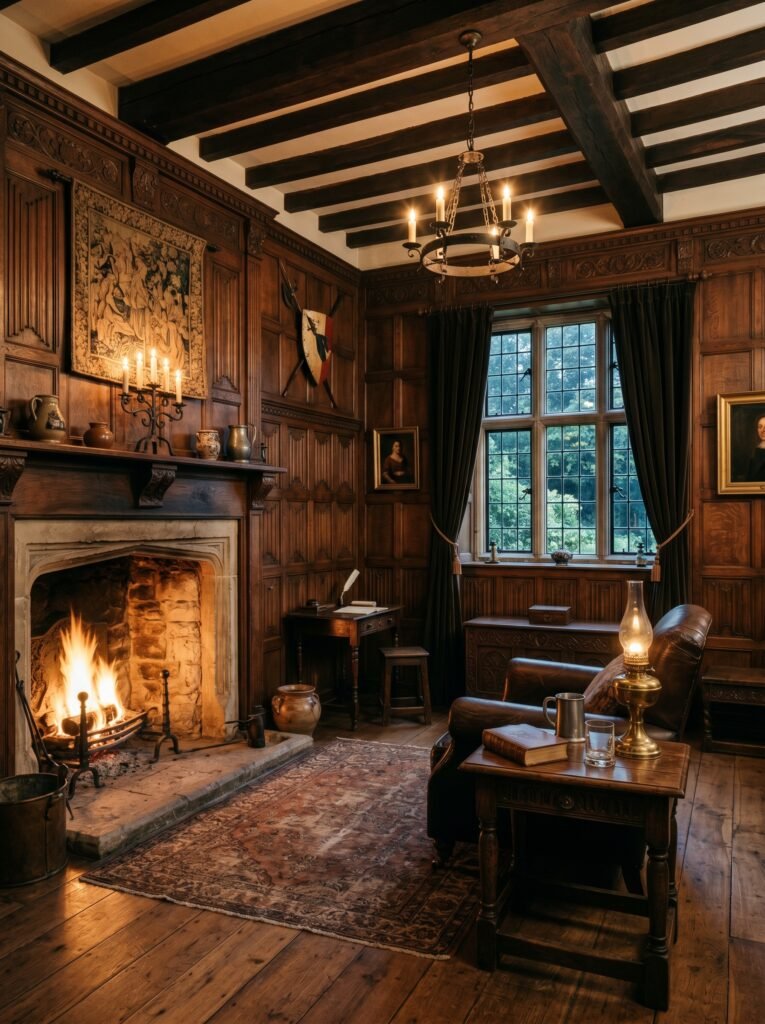
Wood paneling plays a major role in creating a true Tudor interior feel. Walls are often covered in dark oak or walnut panels that add warmth and depth. This design choice gives rooms a cozy yet sophisticated appearance. When paired with soft lighting, it creates a dramatic and inviting ambiance. Modern versions often mix wood paneling with lighter paint to balance the look.
5. Earthy Color Palette
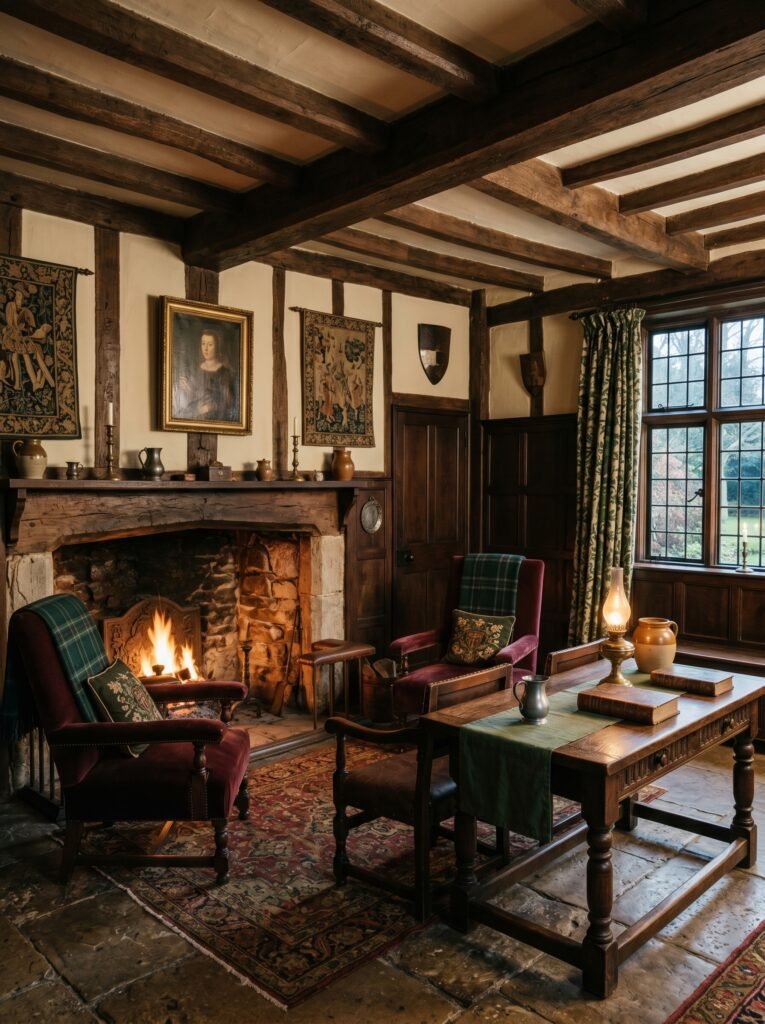
A Tudor interior typically uses a rich, earthy color palette inspired by nature. Shades like deep brown, forest green, burgundy, and cream are commonly used. These colors help create a warm and grounded environment. They also complement the heavy wood and stone materials found in the design. The result is a harmonious and timeless aesthetic that never feels outdated.
6. Heavy Wooden Furniture
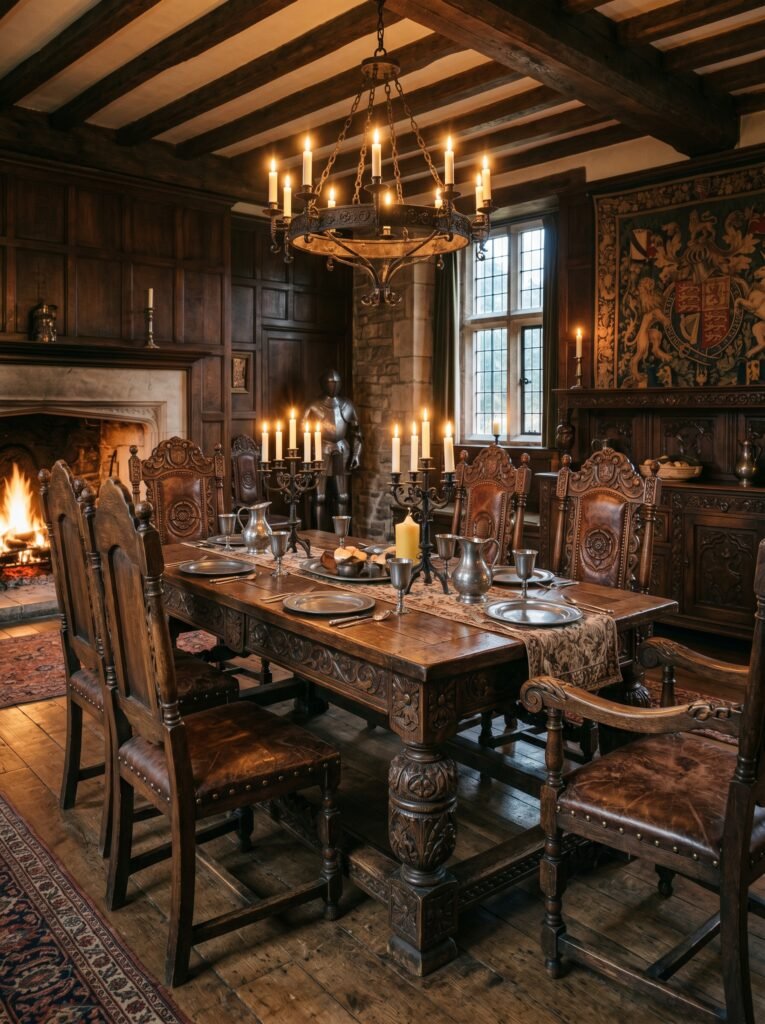
Furniture in Tudor interiors is usually large, sturdy, and made of solid wood. Tables, chairs, and cabinets often feature detailed carvings and traditional craftsmanship. Oak is the most commonly used material due to its durability and rich appearance. Upholstery is often made from leather or thick fabrics for added comfort. This type of furniture enhances the historical and luxurious feel of the space.
7. Decorative Tapestries and Wall Hangings
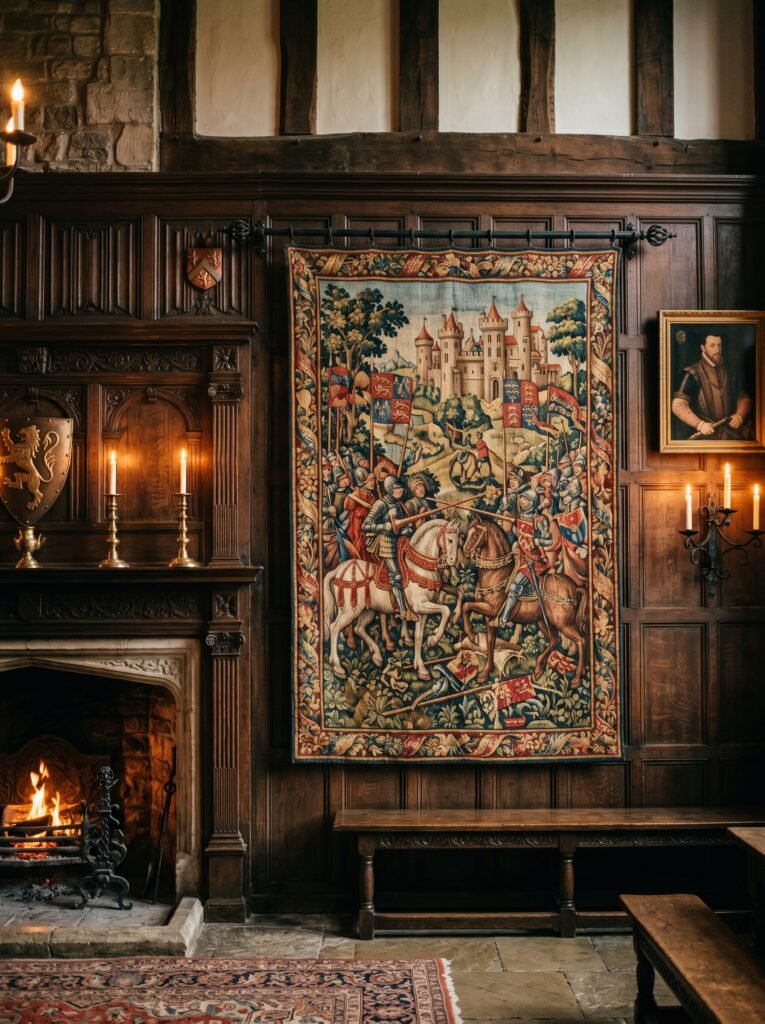
Tapestries are a classic decorative element in Tudor interior design. They were originally used for insulation but now serve as artistic focal points. These wall hangings often depict historical scenes, nature, or royal themes. They add texture, color, and storytelling to plain walls. In modern homes, they can be used to soften heavy wood interiors and add visual interest.
8. Arched Doorways and Ceilings
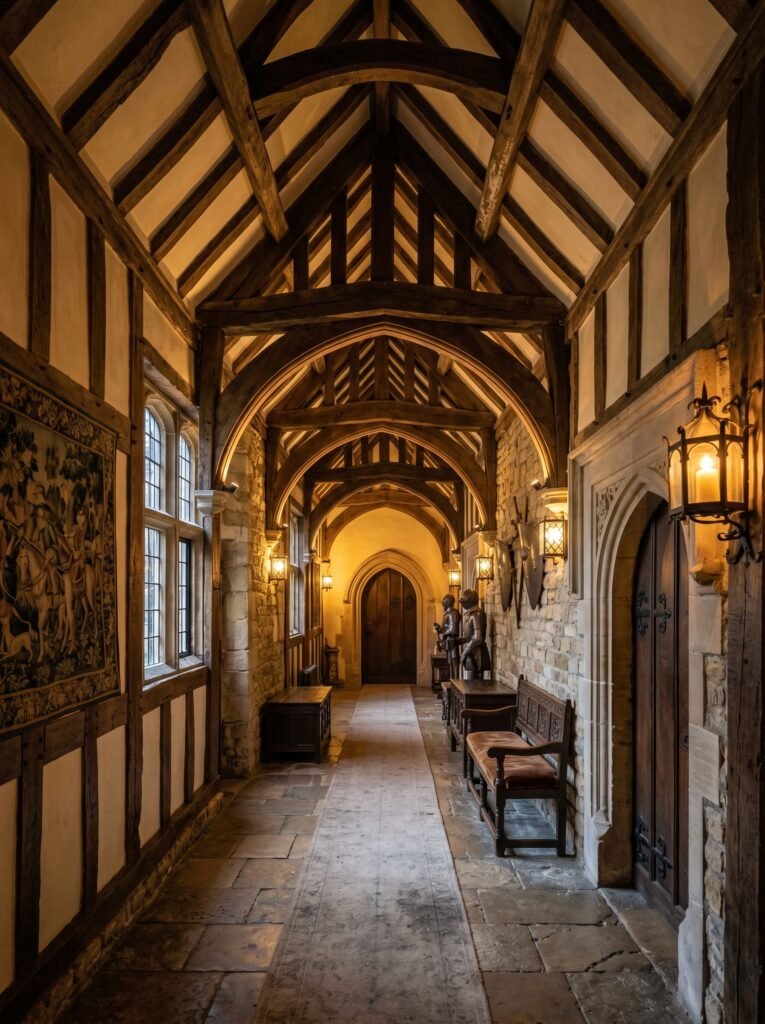
Arched designs are commonly found in Tudor-style homes, especially in doorways and ceilings. These curves soften the otherwise heavy and structured appearance of the interior. Arches also reflect medieval architectural influences from the original Tudor period. They help create a sense of flow between different rooms. This feature adds elegance while maintaining the traditional character of the home.
9. Wrought Iron Details
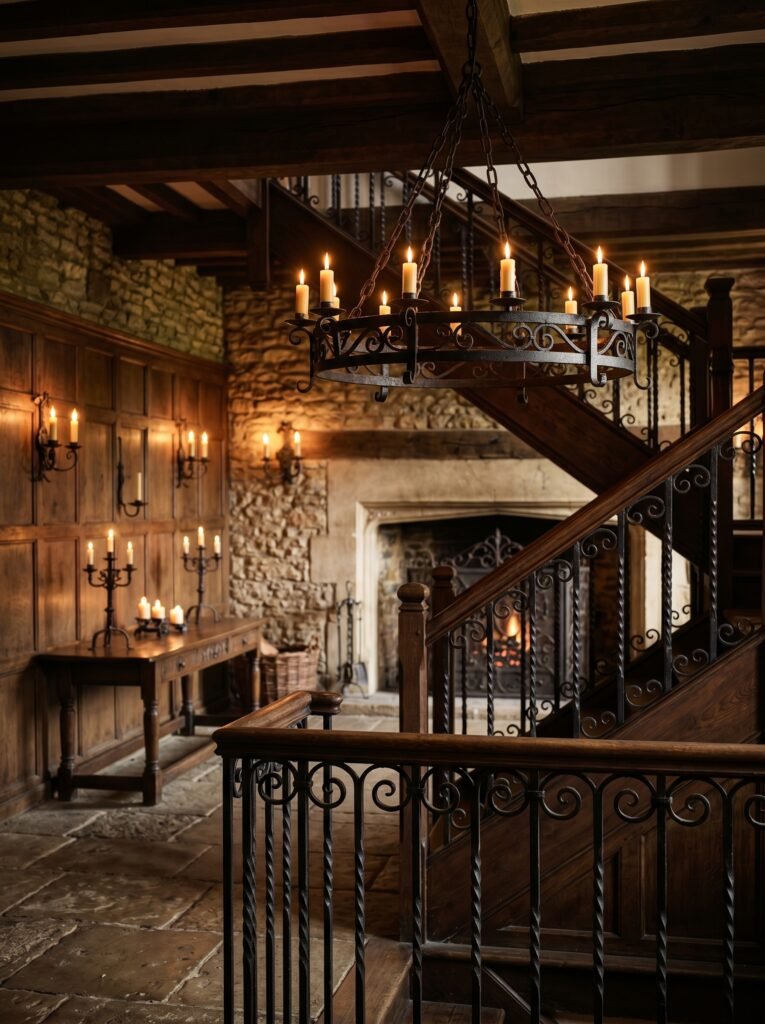
Wrought iron is widely used in Tudor interiors for both functional and decorative purposes. You can find it in light fixtures, stair railings, and fireplace tools. Its dark, handcrafted appearance pairs perfectly with wood and stone materials. Iron chandeliers with candle-style bulbs are especially popular in this design style. These details add a strong medieval and rustic touch to the space.
10. Cozy Library or Reading Nook
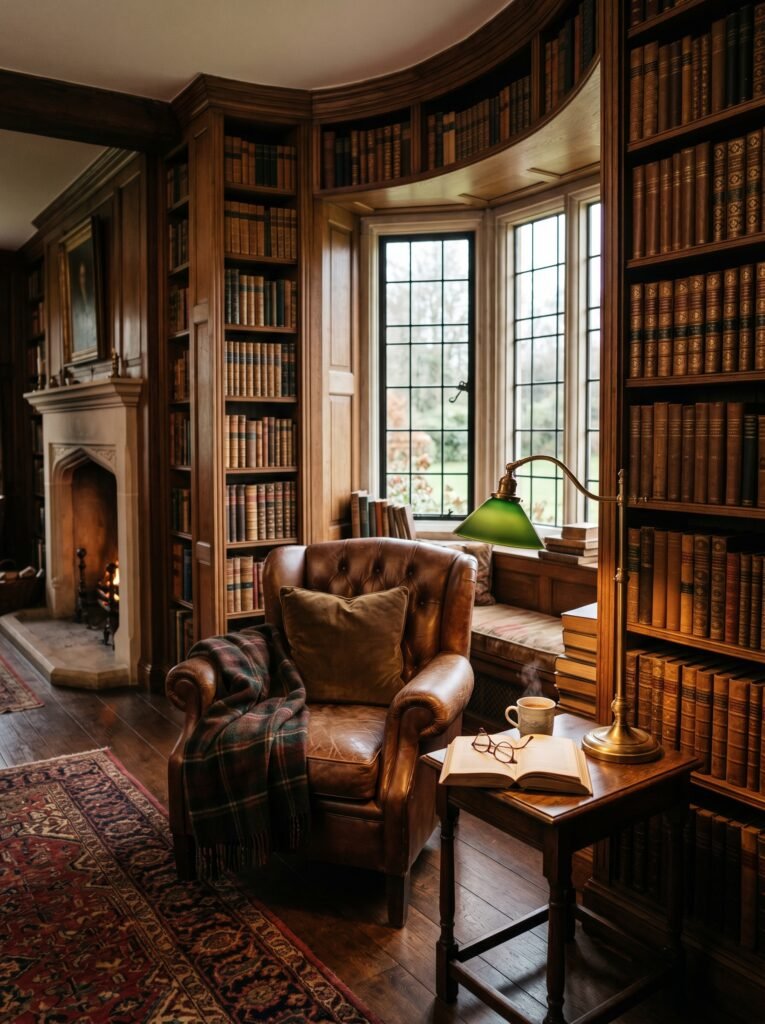
A Tudor interior often includes a cozy library or reading nook filled with wooden shelves and warm lighting. Built-in bookshelves made of dark wood create a scholarly and inviting atmosphere. Comfortable leather chairs or window seats make the space perfect for relaxation. Soft lighting from lamps or wall sconces enhances the cozy feeling. This idea reflects the intellectual and historical charm of Tudor homes.
11. Textured Wall Finishes
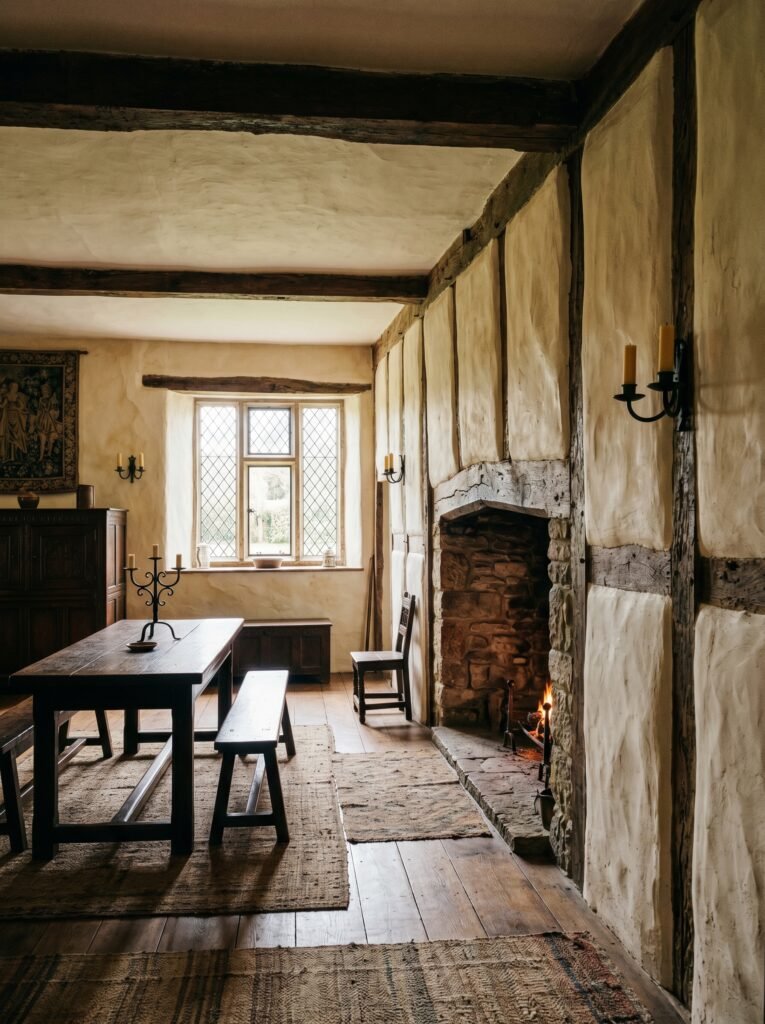
Instead of smooth modern walls, Tudor interiors often feature textured finishes. Plaster walls with a slightly uneven surface give an authentic old-world look. These textures help reflect the handmade nature of traditional Tudor homes. They also work well with heavy wooden and stone elements. This subtle detail adds depth and realism to the overall design.
12. Antique Accessories and Decor
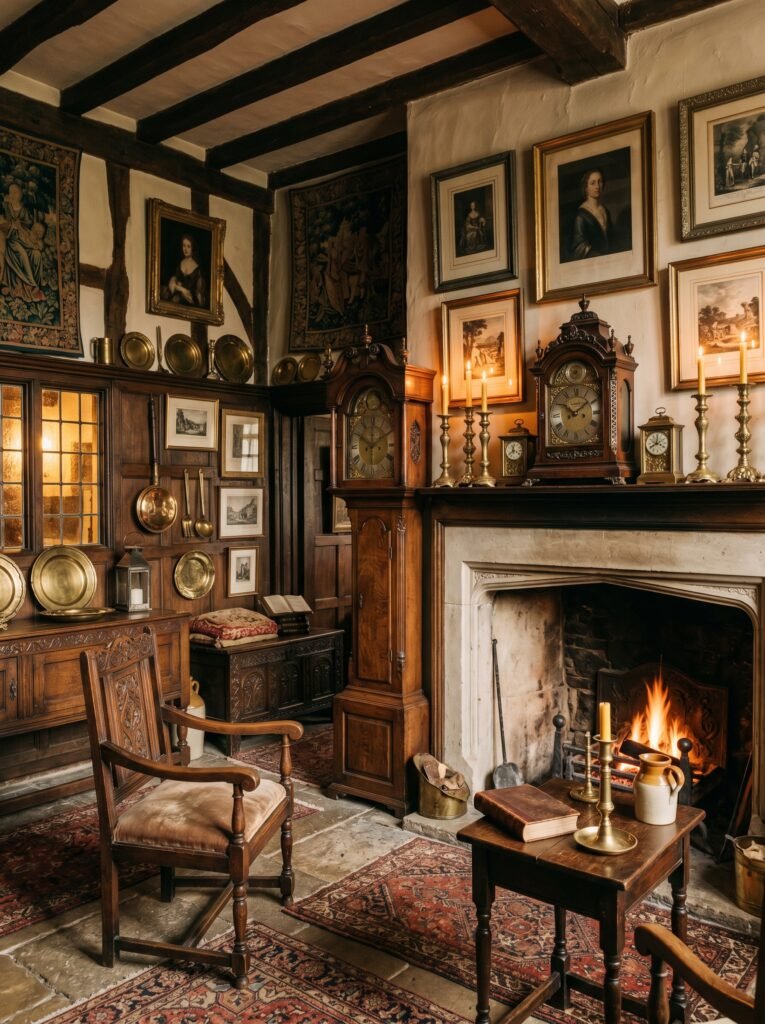
Accessories play an important role in completing a Tudor interior. Antique clocks, candle holders, and vintage-style artwork are commonly used. These decorative items reinforce the historical theme of the space. Even small details like brass handles or carved picture frames make a difference. The goal is to create a lived-in, timeless environment full of character.
13. How to Care for Tudor Interior
- Clean Wooden Surfaces – Dust and polish wood furniture regularly to maintain its rich look.
- Protect Carved Details – Use a soft cloth to clean carvings and avoid harsh chemicals.
- Maintain Fabrics – Keep curtains, cushions, and tapestries clean by gentle washing or vacuuming.
- Control Humidity – Keep indoor humidity balanced to protect old-style wood and materials.
- Preserve Lighting Style – Clean chandeliers, lamps, and fixtures to keep the warm Tudor atmosphere.
13.1. FAQ
13.2. What is Tudor interior style❓
Tudor interior style is a classic design style inspired by the homes built during the Tudor period in England. It is known for its old-fashioned, warm, and cozy look. This style often includes dark wooden beams, stone details, and traditional furniture that gives a rich historical feel to the space.
13.3. What are the main features of Tudor interior design❓
The main features of Tudor interior design include exposed wooden beams, large fireplaces, heavy wooden furniture, and textured walls. The color scheme is usually warm and dark, such as brown, cream, and deep red. These elements together create a strong and elegant traditional look inside the home.
13.4. Why is Tudor interior style popular in homes❓
Tudor interior style is popular because it creates a warm, cozy, and timeless atmosphere. Many people like its historical charm and detailed craftsmanship. It also gives a unique character to the home that feels different from modern simple designs.
14. Final Thoughts
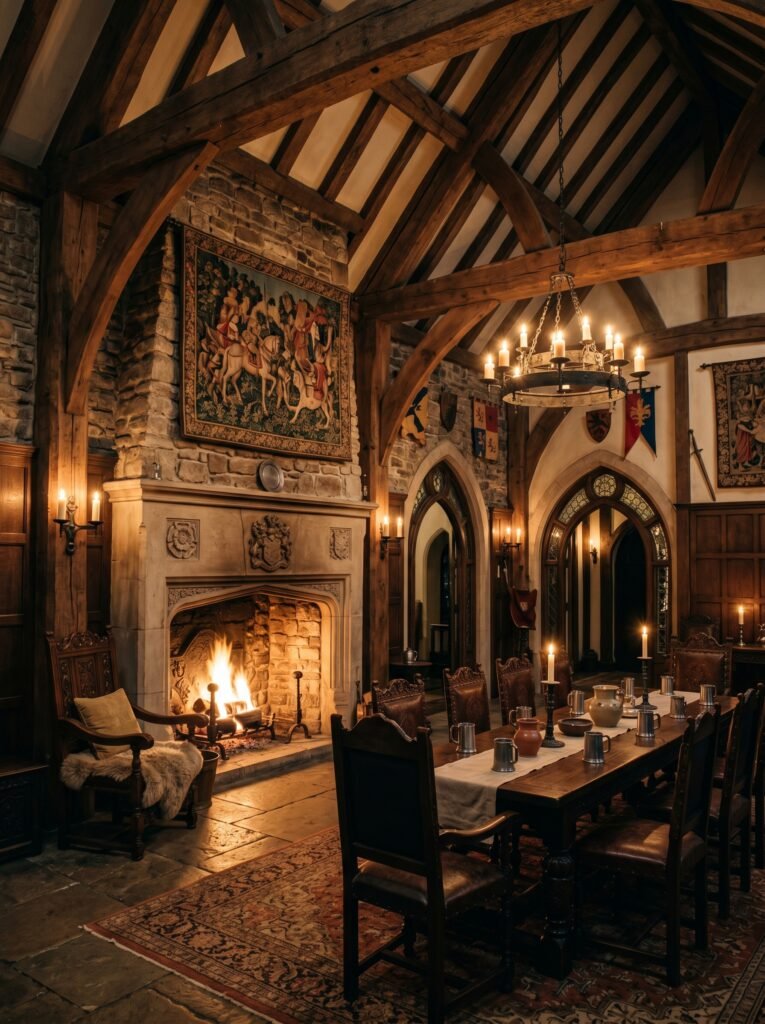
Tudor interior design is a beautiful blend of history, craftsmanship, and cozy elegance. Its defining features like exposed beams, stone fireplaces, and dark wood elements create a warm and dramatic atmosphere. While rooted in medieval architecture, this style can still be adapted to modern homes with thoughtful design choices. Each of the 12 ideas shared above helps bring authenticity and charm into your living space. By combining traditional elements with subtle modern touches, you can create a Tudor interior that feels both timeless and comfortable.