
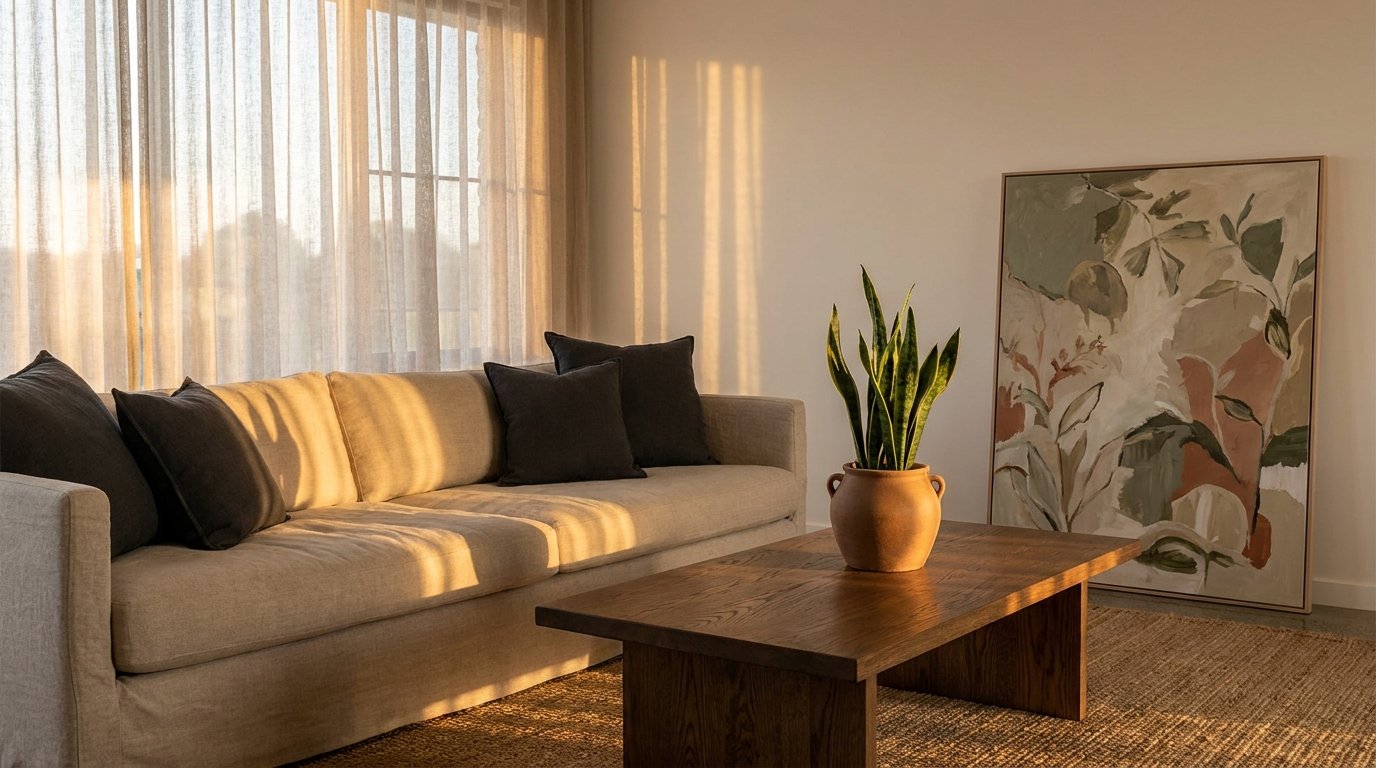
The Japandi Living Room: How One Design Philosophy Quietly Changes the Way You Feel at Home
There’s a moment — maybe you’ve felt it — when you walk into a room and something in your chest just… settles. The noise in your head gets quieter. Your shoulders drop. You didn’t know you were carrying tension until the room asked you to set it down. That’s not an accident. That’s Japandi.
—
1. What Japandi Actually Is (and Why It Feels Different From Every Other Trend)
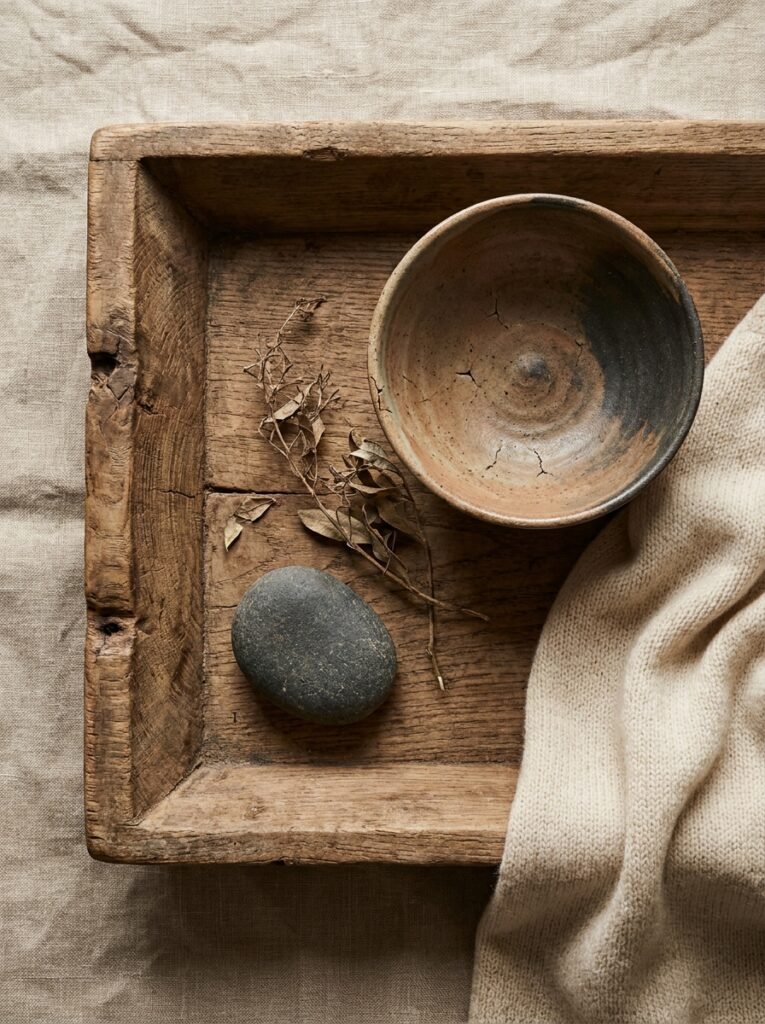
Japandi isn’t just a visual aesthetic that looks good on a mood board — though it absolutely does. It’s the marriage of two ancient design philosophies: Japanese wabi-sabi, the art of finding beauty in imperfection and impermanence, and Scandinavian hygge, the Danish and Norwegian tradition of cultivating warmth, coziness, and intentional comfort. When these two worlds meet in your living room, something remarkable happens. The result isn’t cold minimalism. It isn’t cluttered warmth either. It’s a rare, precise kind of calm — the design equivalent of a deep breath.
The reason Japandi feels so different from other interior trends is that it isn’t driven by aesthetics alone. It’s driven by feeling. Every choice — the curve of a chair, the texture of a linen throw, the gap between furniture pieces — is made in service of how the room makes you feel. And right now, in a world that constantly competes for our attention, a living room that asks nothing of you except to rest feels almost revolutionary.
“A Japandi living room doesn’t just look beautiful — it teaches you how to be still.”
—
2. The Color Palette That Feels Like an Exhale

If you’ve been staring at Japandi living rooms on Pinterest and wondering why they feel so soothing, start with the color story. Japandi leans heavily into a quiet, organic palette — warm whites, soft grays, muted sage greens, clay beiges, and charcoal blacks. These aren’t the bright, saturated colors of maximalist design. They’re the colors of stone, fog, driftwood, and dry earth. They belong to the natural world, which is exactly why your nervous system recognizes them as safe.
The key distinction between Japandi and generic minimalism is warmth. Where stark white modernism can feel clinical and cold, Japandi introduces warm undertones — think cream instead of bright white, warm ash instead of cool gray. A single terracotta wall, muted to near-dusty softness, can anchor an entire living room in groundedness. Layer two or three of these tones together and you’ve built a space that feels like it’s holding you rather than displaying itself.
Don’t be afraid of contrast, either. Japandi embraces the drama of deep charcoal cushions against a warm oatmeal sofa, or matte black hardware against pale oak shelving. The contrast is always quiet, never jarring — like the difference between a whisper and a shout.
—
3. Furniture That Earns Its Place in the Room
Imagine your living room as a conversation. In that conversation, every piece of furniture gets to speak — but only if it has something meaningful to say. That’s the Japandi approach to furniture selection, and it’s one of the most liberating design rules you’ll ever follow.
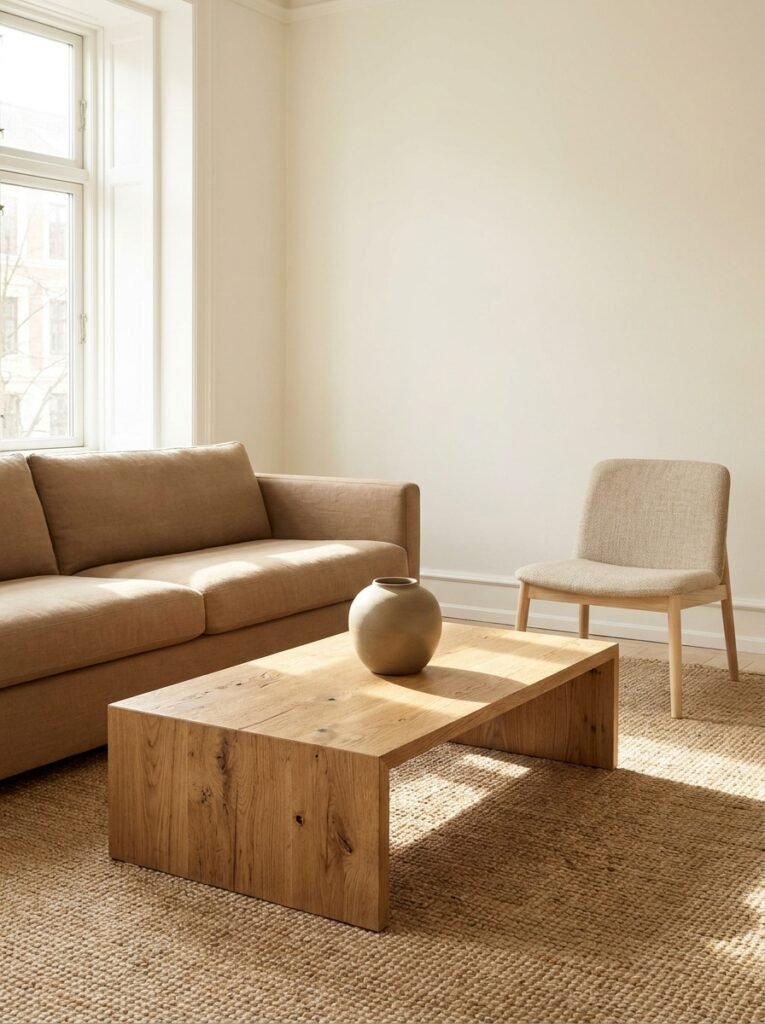
Japandi furniture is low to the ground, grounded in nature, and stripped of ornamentation. Think clean lines with just enough curve to feel human. Solid wood legs — ash, oak, walnut — in their most honest form. Upholstery in natural fabrics like linen, cotton, or wool. No glass and chrome showpieces. No furniture that tries too hard to impress.
A typical Japandi living room might feature a low-slung sofa in warm linen, a solid oak coffee table with visible wood grain, and one or two armchairs with simple, architectural silhouettes. That’s often enough. The space between the furniture is just as intentional as the furniture itself — Japandi living rooms breathe, and that breathing is part of their beauty.
—
4. The Art of Negative Space (Your Room Needs Room to Think)

Western design has spent decades telling us that empty space is wasted space — that every corner needs a plant, every wall needs art, every surface needs styling. Japandi quietly, firmly disagrees. In Japanese design philosophy, ma — the concept of negative space or meaningful emptiness — is considered just as important as what fills the room. A bare wall isn’t an oversight. It’s a rest note in the composition.
When you allow your living room to breathe, several things happen. First, the pieces you do choose become more powerful. A single ceramic bowl on a coffee table becomes a sculpture when it isn’t competing with seven other objects. Second, the room becomes easier to be in — your eye has somewhere to rest, and so does your mind. Third, cleaning becomes easier, which means the room stays feeling calm rather than sliding into chaos.
“In a Japandi room, what you leave out is just as meaningful as what you put in.”
—
5. Natural Materials That Tell a Story Over Time
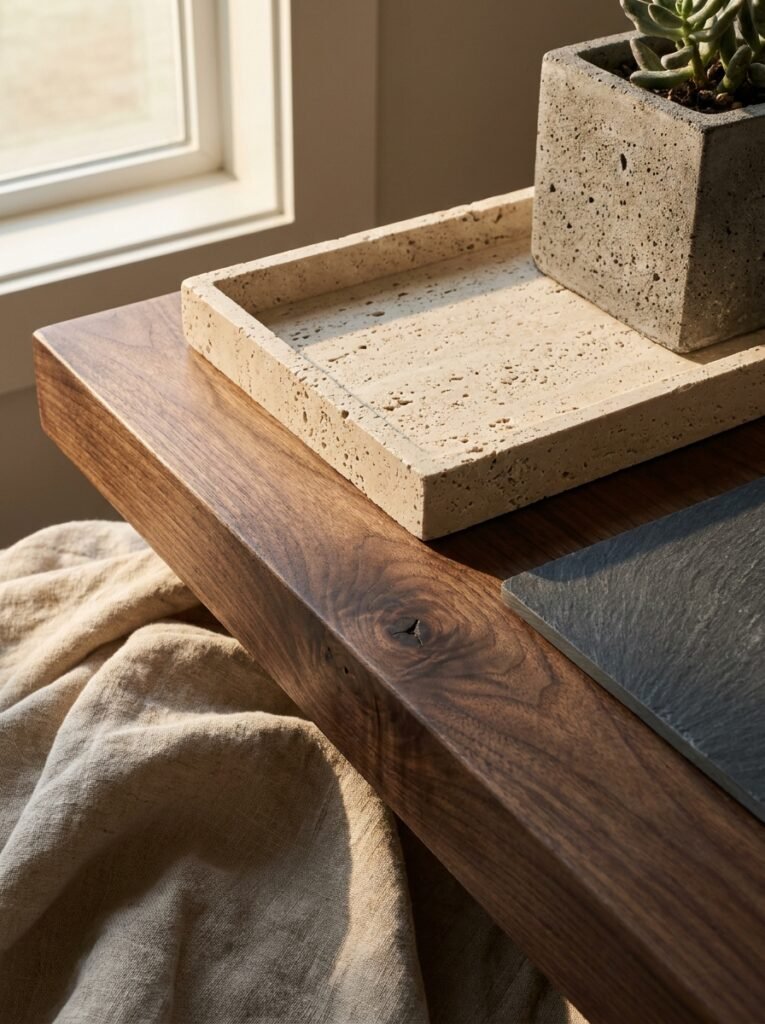
One of the most deeply human aspects of Japandi design is its relationship with materials that age. This goes back to wabi-sabi — the Japanese philosophy that finds profound beauty in things that are worn, weathered, and marked by time. A Japandi living room doesn’t need to look perfect. It needs to look honest.
Natural wood is the backbone of this philosophy. Choose furniture with visible grain, knots, and natural variations — not the artificially perfect wood-look laminate, but the real thing that will darken, soften, and develop character over years of use. Pair it with stone elements — a slate side table, a travertine tray, a concrete-finish planter. Add rattan or wicker in small doses for texture and lightness.
Textiles in natural fibers are equally essential. Linen cushion covers that soften and wrinkle slightly. A wool throw in a muted stripe. A jute rug that develops a gentle patina underfoot. These materials don’t just look the part — they change the sensory experience of the room. They feel different under your hands and feet. They make the space feel inhabited, loved, and real.
—
6. Lighting That Transforms the Mood Like Nothing Else Can
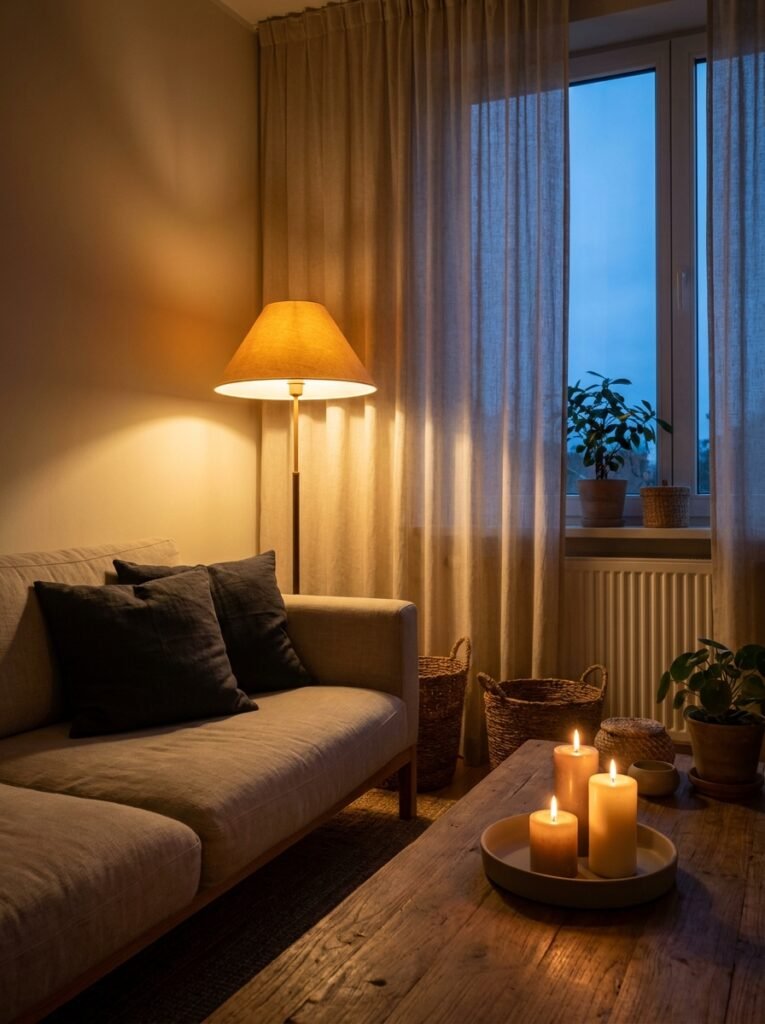
If color is the soul of a Japandi living room, lighting is its heartbeat. The way a room is lit determines everything about how it feels at different hours — and Japandi design understands this intimately. The goal is to move away from harsh overhead lighting and toward layered, warm, and intentional light sources that shift as the day does.
Start with natural light. Japandi living rooms maximize it — sheer linen curtains that diffuse sunlight into something golden and soft, or no curtains at all where privacy allows. Then build your artificial lighting in layers: a warm floor lamp in the corner that creates a pool of amber light for evening reading, a cluster of small pendant lights in warm-toned bulbs above a seating area, and candles — always candles — for the hours when you want the room to feel like a sanctuary.
The light temperature matters enormously. Choose bulbs in the 2700K–3000K range — warm white, never cool white or daylight. The difference between a room lit at 4000K and one at 2700K is the difference between a fluorescent office and a candlelit café. Your nervous system knows which one it prefers.
—
7. Plants as Living Architecture (Not Just Decoration)
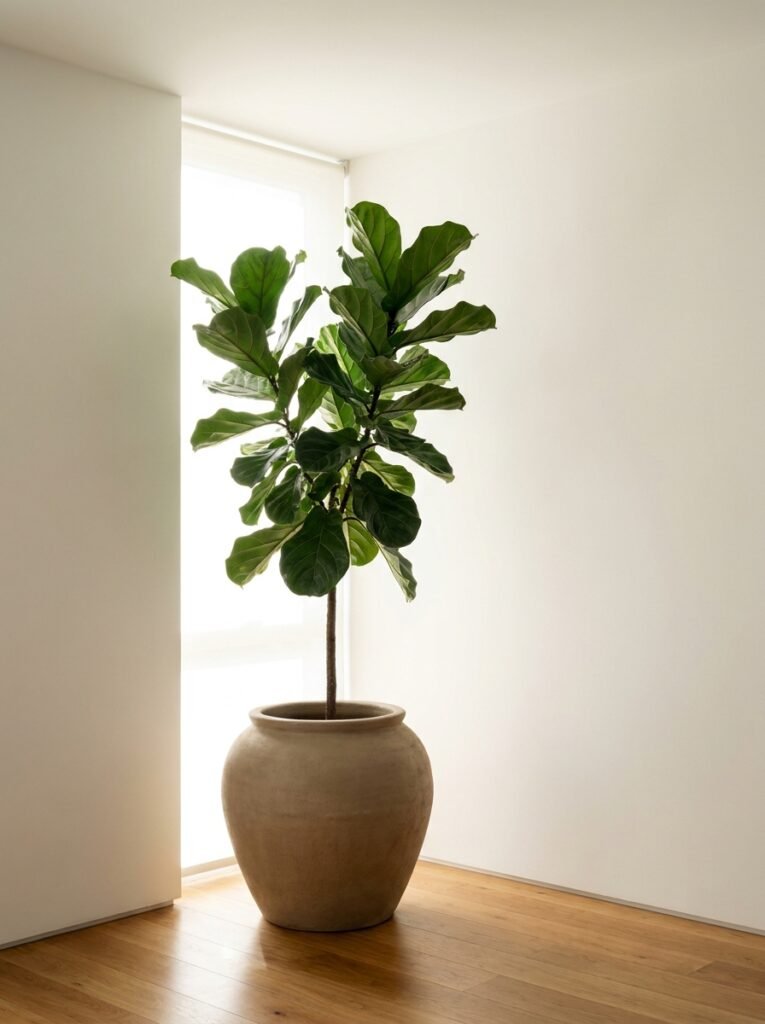
There’s a reason every Japandi living room you’ve ever saved on Pinterest has at least one plant — and it isn’t just because plants photograph beautifully. In both Japanese and Scandinavian design traditions, nature isn’t something you decorate with. It’s something you live alongside. Bringing plants into your living room is an act of connection, not decoration.
The plant choices in Japandi spaces tend to be architectural and unfussy — a single fiddle leaf fig in a matte clay pot, a sculptural snake plant with its dramatic vertical leaves, a trailing pothos that softens a high shelf, or a cluster of small succulents on a windowsill. What you won’t find is an overwhelming jungle of competing plants fighting for visual dominance.
Think of each plant as a piece of living sculpture. Choose it deliberately, pot it thoughtfully in a vessel that belongs to the room’s material language — terracotta, matte ceramic, stone — and give it space to be seen.
“A single plant, chosen carefully and placed with intention, can make a room feel more alive than a hundred decorative objects.”
—
8. The Japandi Approach to Art and Wall Decor
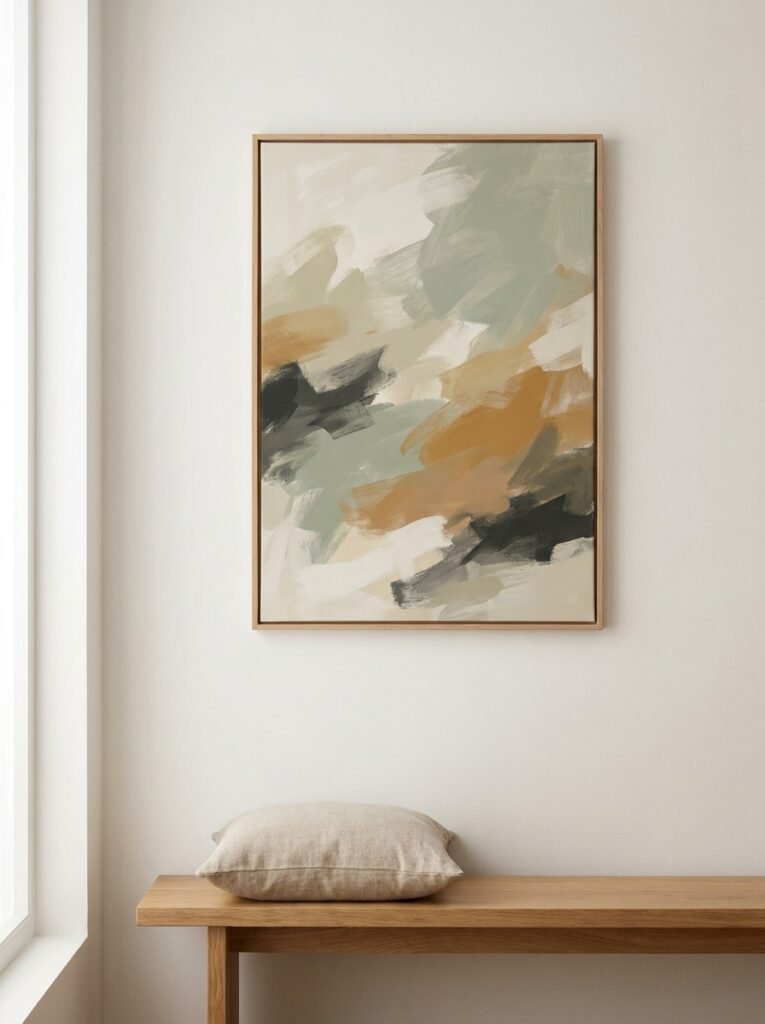
Wall art in a Japandi living room follows the same philosophy as everything else: intention over abundance. Rather than filling walls with a gallery mix of everything meaningful to you, Japandi asks you to choose with discipline. One large piece of art — a nature-inspired painting, a simple ink drawing, a photograph of landscape — can carry far more emotional weight than five smaller pieces competing for attention.
The art itself tends toward the natural, the abstract, and the quietly contemplative. Botanical illustrations in muted tones. Abstract forms in earthy colors. Black-and-white photography that captures texture or landscape. Japanese calligraphy, with its meditative simplicity, is a natural fit. What you’re looking for is art that adds to the room’s sense of stillness — not art that demands to be the loudest voice in the room.
Framing matters, too. Natural wood frames, thin black metal frames, or even frameless prints mounted directly to the wall all honor the Japandi aesthetic. Ornate gold frames and elaborate matting feel like visitors from a different design philosophy — they’re welcome elsewhere, but not here.
—
9. Small Space Japandi: The Philosophy That Makes Tiny Rooms Feel Expansive
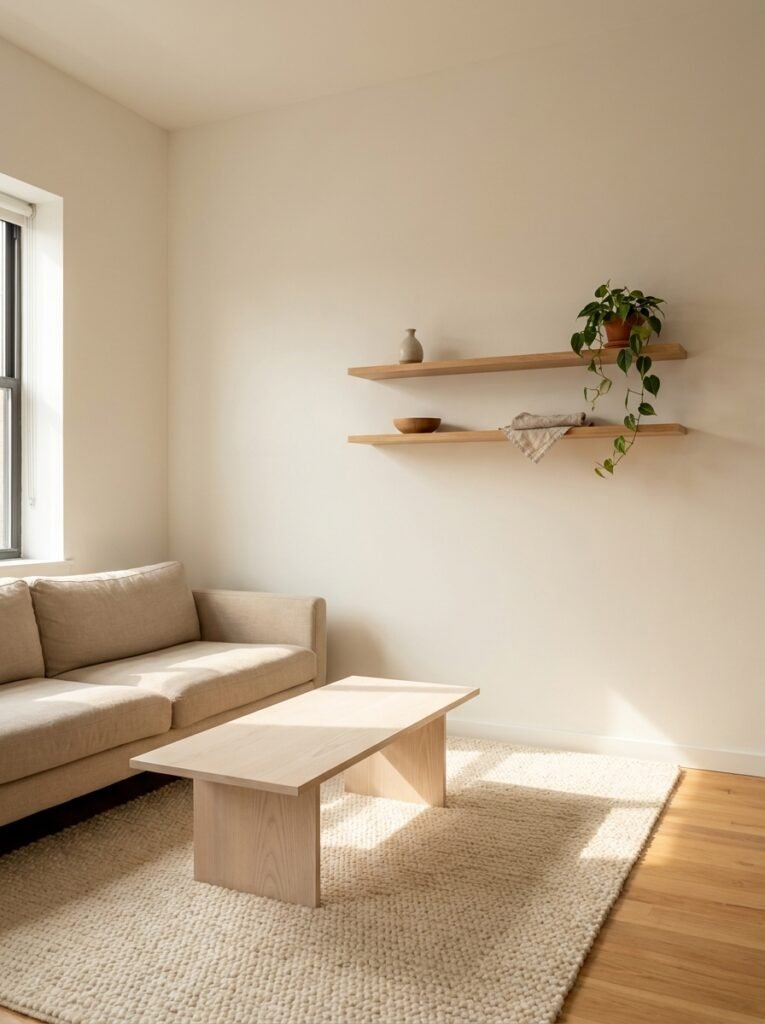
Here’s something worth knowing: Japandi design doesn’t need a large living room to work. In fact, it was built for thoughtful smallness. Both Japanese and Scandinavian cultures have long traditions of designing beautiful, functional spaces within compact footprints — apartment culture in Tokyo, small historic homes in Copenhagen — and those traditions translate beautifully into smaller Western living rooms.
The secret is discipline and vertical thinking. Keep furniture low to the ground (it makes ceilings feel higher). Choose a sofa and coffee table that fit without crowding, and resist the urge to fill every corner. Use a large, light-colored rug to anchor the space and give it a sense of defined, generous ground. Utilize vertical space with floating shelves — a few carefully curated objects, a plant or two, a book you love — rather than freestanding furniture that eats floor space.
In a small Japandi living room, every single object earns its place. This isn’t a limitation — it’s a liberation. When you can only keep what you truly love, the room becomes more authentic than any large space filled with compromise.
—
10. Texture as the Secret Language of Comfort
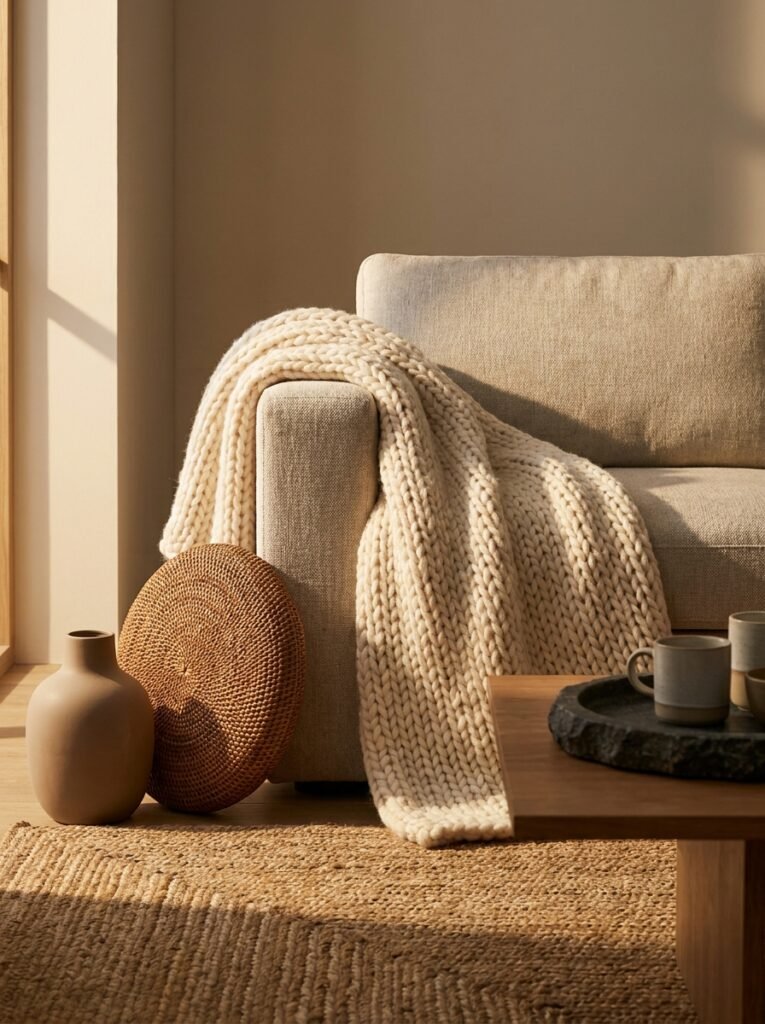
A Japandi living room might appear quiet from across the room, but get closer and you’ll discover it’s whispering in a dozen different textures. This is deliberate. Without texture, a neutral-toned room risks feeling flat, sterile, and lifeless. With it, the same muted palette becomes rich, layered, and deeply tactile.
Build your texture story from the ground up — literally. A natural fiber rug (jute, wool, or a flatweave cotton blend) gives the foundation warmth and depth. Then layer: a linen sofa, a knitted throw, a woven cushion, a smooth ceramic vase beside a rough stone tray. The interplay between rough and smooth, matte and soft, warm and cool is what makes the room feel alive under your hands, not just pleasing to your eyes.
This is particularly important in the winter months, when a living room that looks cozy but doesn’t feel cozy falls short of its promise. A Japandi space, properly textured, wraps itself around you in the best possible way.
—
11. How to Declutter Your Living Room the Japandi Way (Without Losing Your Personality)
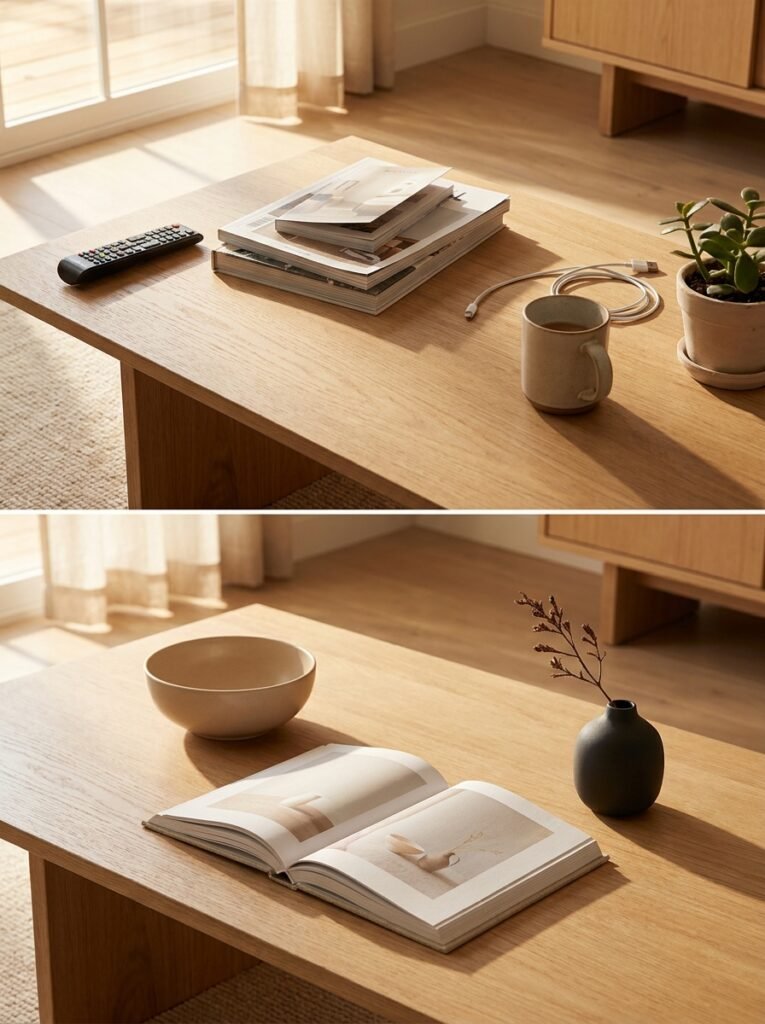
The word “declutter” can feel threatening — like someone is about to take away something you love. But Japandi decluttering is different from the ruthless minimalism that tells you to throw out everything that doesn’t “spark joy.” It’s more nuanced, more generous, and ultimately more livable than that.
Start by removing anything that creates visual noise — the pile of random items on the coffee table, the too-many throw pillows, the row of frames in different styles and sizes. This isn’t about permanent loss. It’s about editing. Then look at what remains and ask honestly: does this add to the room’s sense of calm, or is it competing with it?
Keep the objects that tell your story with quiet confidence — the travel memento that sits beautifully, the family photograph in a simple frame, the book you’ve read three times. Let go of the objects you’re keeping out of guilt or inertia. The goal isn’t a room with no personality — it’s a room where your personality comes through clearly, without static.
—
12. The Emotional Transformation of Living in a Japandi Space
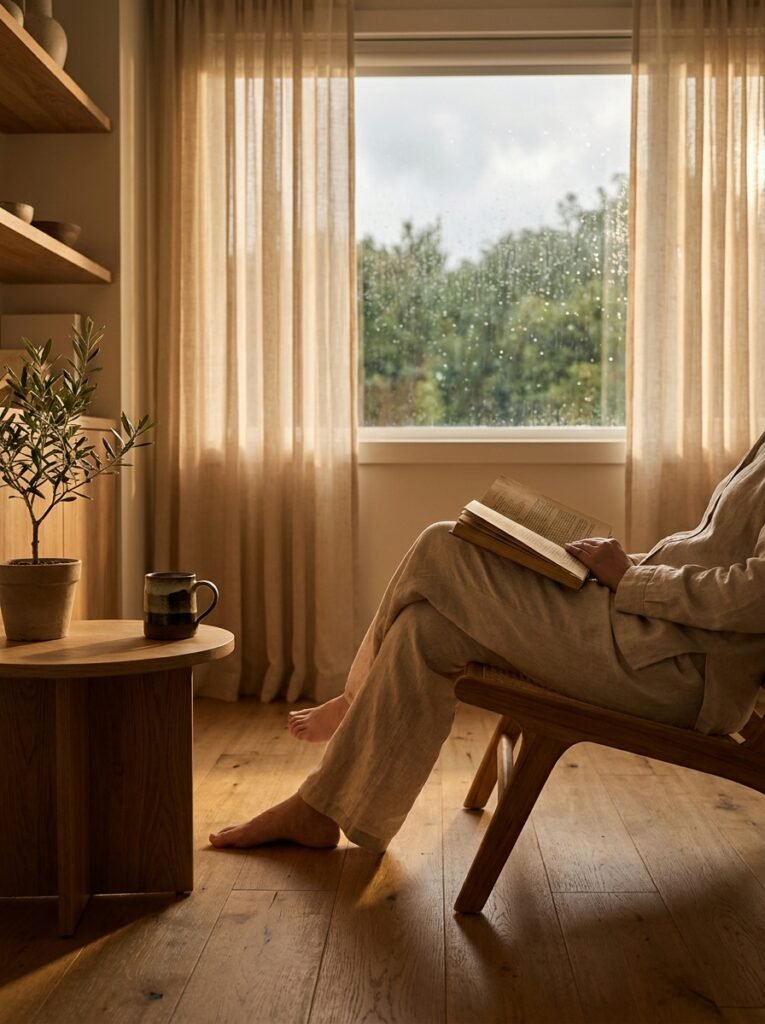
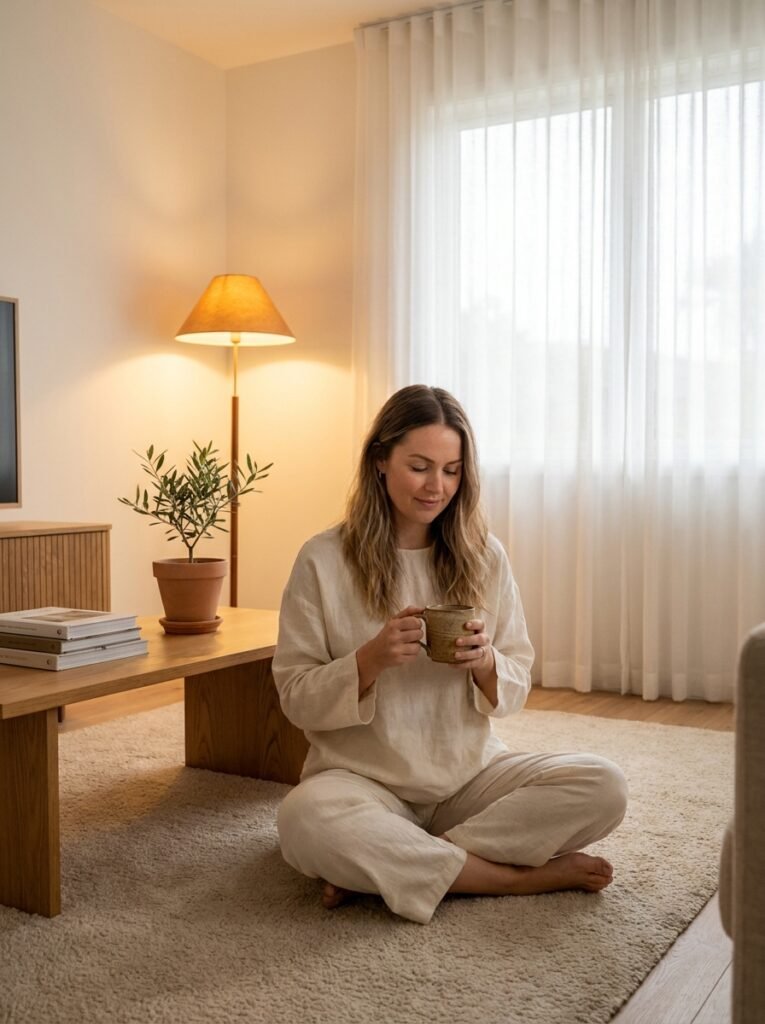
Something shifts when you spend real time in a Japandi living room — not just visiting one on Pinterest, but actually living in one. The way you start your mornings changes. You find yourself making coffee and sitting with it, rather than grabbing it and running. You read more. You talk more — real conversations, not the distracted half-listening that happens when a room is visually chaotic. You notice things: the light moving across the wall in the late afternoon, the grain of the wood on your coffee table, the sound of rain against a window you can now actually hear because the room is quiet enough to let it through.
This is what design philosophers mean when they say that environment shapes behavior. A Japandi living room doesn’t just look different from a cluttered, visually busy space — it functions differently. It slows time, quiets noise, and creates the conditions in which you can actually rest. In a culture that has made busyness a virtue, that’s not a small thing. That might be the most radical thing a room can do.
—
🌿 How to Start Your Japandi Living Room Transformation
You don’t need to renovate or spend a fortune. Start with these five human, practical steps:
First, do one honest declutter. Walk through your living room with fresh eyes and remove the things that create visual noise — you don’t have to throw them away, but give them a temporary home elsewhere so you can see what you’re working with underneath.
Second, adjust your lighting. Swap any cool-white bulbs for warm-white ones (2700K), add one floor lamp or table lamp to a dark corner, and try an evening with only lamp and candlelight. Notice how the room — and your mood — changes.
Third, invest in one natural material piece. A linen cushion cover, a jute rug, a genuine wood tray. Touch matters. Let your room become more tactile.
Fourth, choose one plant and pot it with care. One architectural plant in a beautiful matte pot, given a place of prominence, does more for a room than five haphazardly placed small ones.
Fifth, leave something empty. One clear surface. One bare wall. Give yourself the experience of negative space and pay attention to whether the room feels lighter for it.
—
❓ FAQ
Q: Is Japandi design expensive to achieve? A: Not necessarily. Japandi is more about editing and intention than buying new things. Many of the most powerful changes — decluttering, adjusting lighting, rearranging furniture — cost nothing. When you do buy, you’re buying fewer, better things: a quality linen throw, a solid wood piece, a beautiful ceramic. In the long run, buying less but better is often more economical than constantly refreshing a space with cheaper trend pieces.
Q: Can Japandi work in a living room that needs to be family-friendly and functional? A: Absolutely — and this is one of Japandi’s underrated strengths. Because the philosophy prioritizes durability, natural materials, and functional beauty, it holds up beautifully in family homes. Solid wood furniture develops character rather than looking damaged. Natural fiber rugs are hardy and cleanable. The key is choosing durable versions of Japandi materials and building in smart, hidden storage so the room can be tidied quickly without losing its sense of calm.
Q: How do I add warmth to a Japandi living room without making it feel cluttered? A: Warmth in Japandi comes from texture and light rather than objects. A chunky knit throw over the arm of a sofa, warm-toned lighting at eye level rather than overhead, and natural wood elements all add significant warmth without adding visual clutter. Adding one or two objects with sentimental meaning — displayed with intention and space around them — keeps the room feeling personal without tipping into overwhelming.
—
💭 Final Thought
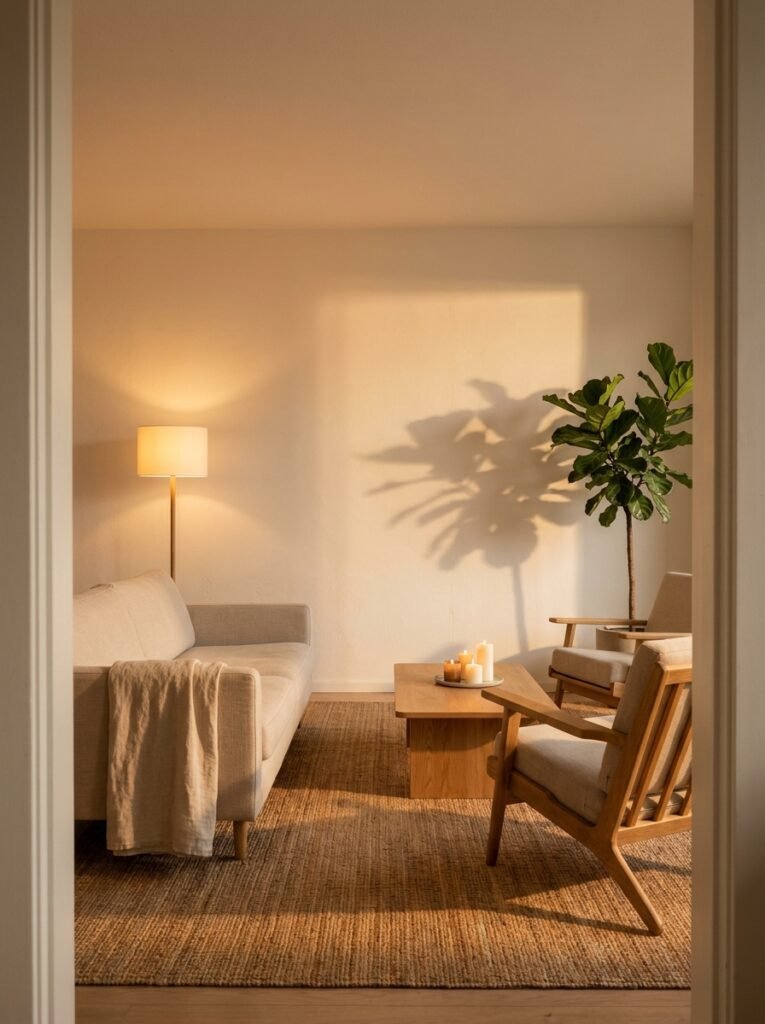
A Japandi living room isn’t a trend you follow — it’s a decision you make about how you want to feel at home. It’s choosing stillness over stimulation, quality over quantity, and presence over performance. The most beautiful thing about this design philosophy is that it gives back to you: a room that quiets you, grounds you, and reminds you that the most important life is the one happening right now, in the room you’re already in.
So here’s the question worth sitting with: what would change in your daily life if the room you came home to every evening was genuinely designed to help you rest?