
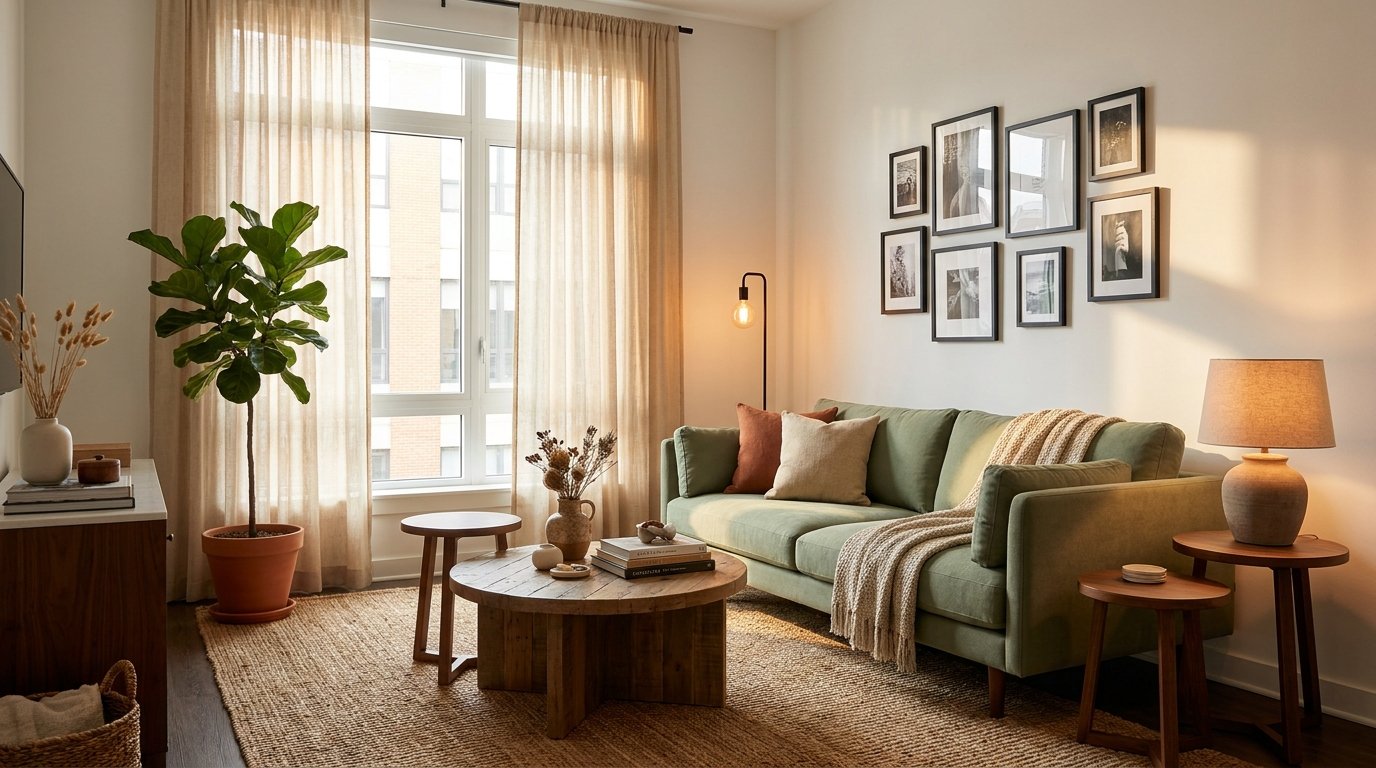
The Apartment Living Room That Finally Feels Like You — Design Secrets That Change Everything
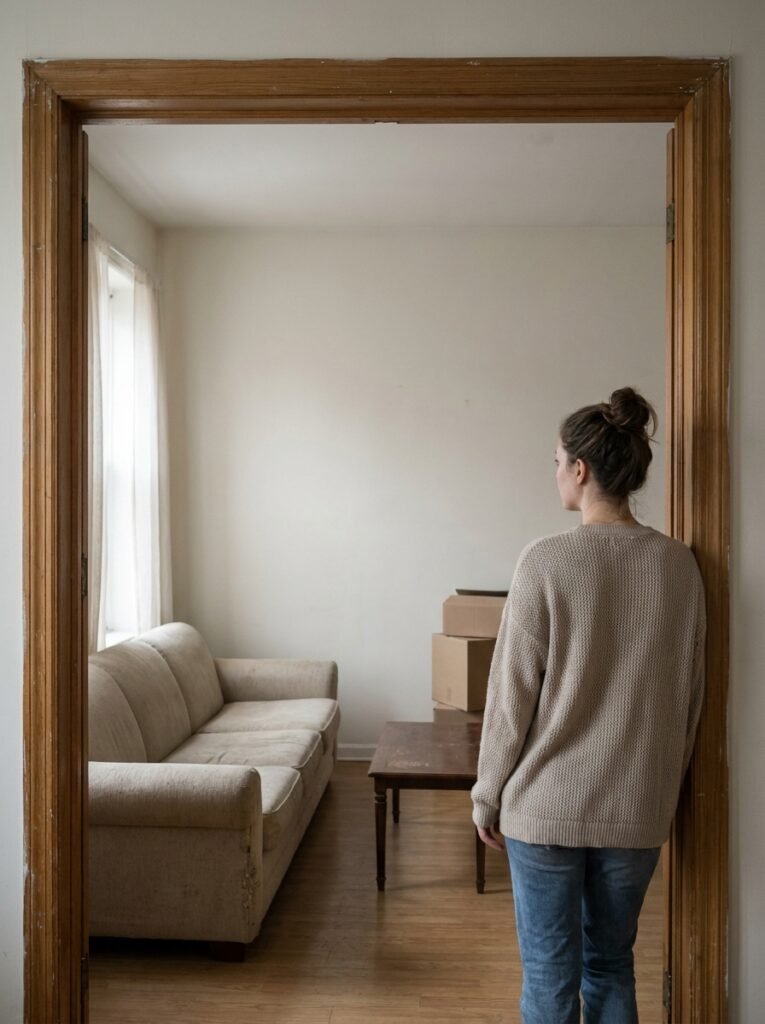
There’s a specific kind of frustration that comes from standing in your apartment living room, staring at it, and feeling nothing. Not warmth, not pride — just a vague sense that it could be better, if only you knew where to start. That feeling is more common than you think, and the good news is: it’s completely fixable, even on a rental budget, even in 400 square feet.
—
1. The First Thing Everyone Gets Wrong About Small Living Rooms
Most people walk into a small apartment living room and immediately start thinking about what to remove. They edit down, strip back, and end up with a space that feels sparse rather than intentional. Here’s the truth that professional designers have always known: small rooms don’t need less — they need smarter.
The instinct to minimize is understandable. We’ve all heard “less is more” so many times it’s practically wallpaper at this point. But “less” and “thoughtful” are not the same thing. A room with three well-chosen, correctly scaled pieces of furniture will always feel more alive than a room with eight mismatched bargain finds pushed against the walls.
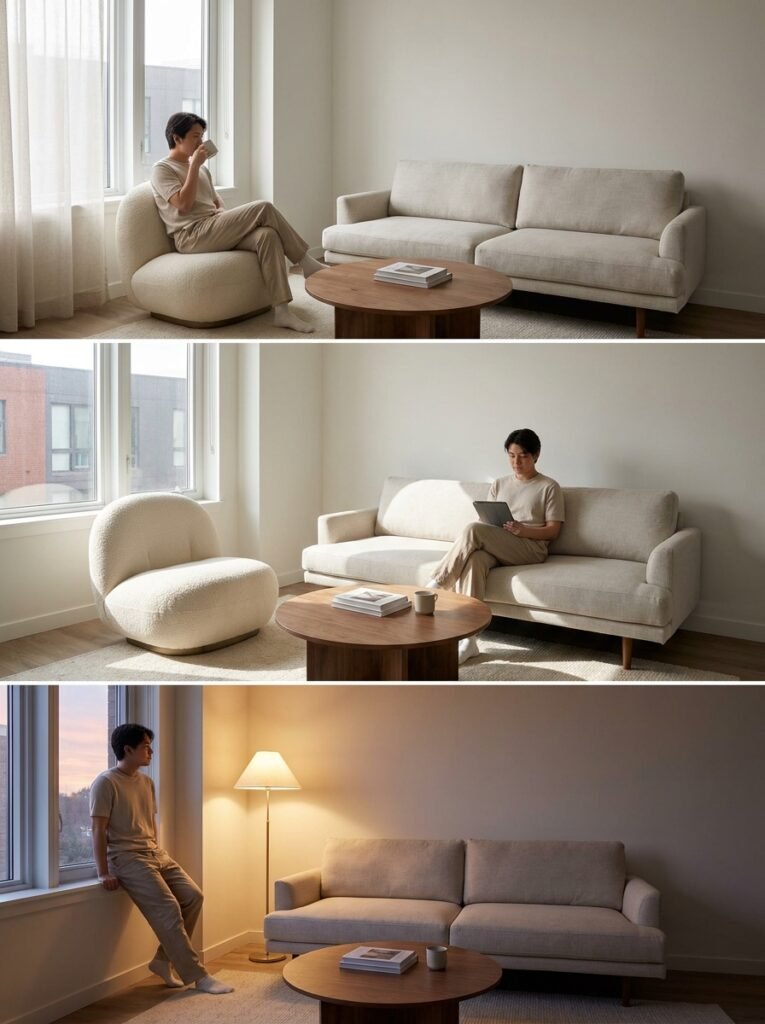
Before you move a single piece of furniture or scroll through another home decor account, take ten minutes to simply sit in your living room at different times of day. Notice where the light falls in the morning. Notice what you see first when you walk through the front door. Notice where your eyes naturally want to rest — and where they don’t. This quiet observation is where great apartment design actually begins, and most people skip it entirely.
“Your living room doesn’t need more things. It needs the right things, placed with intention.”
—
2. Why Your Furniture Layout Is Making the Room Feel Smaller
Here is one of the most counterintuitive design truths you will ever encounter: pulling furniture away from the walls actually makes a room feel larger. It goes against every instinct, especially when square footage is precious, but the science of spatial perception backs it up completely.
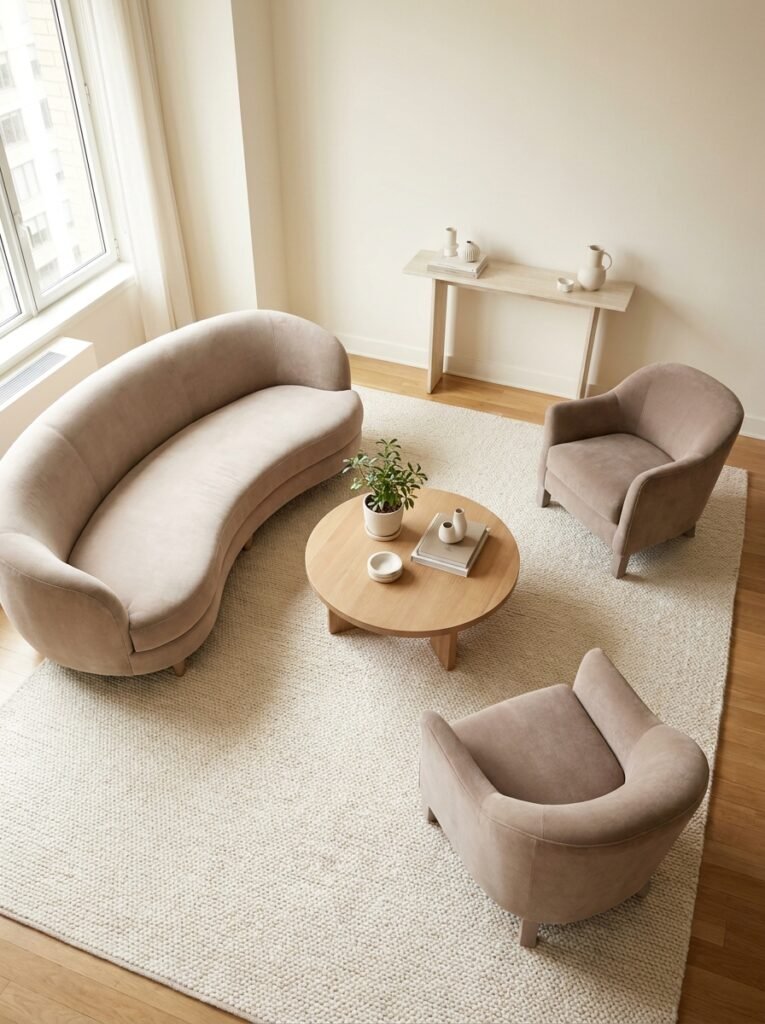
When sofas and chairs hug the perimeter of a room, the center becomes a dead zone — an empty expanse that feels awkward and echoing rather than open and airy. Floating your furniture even six to twelve inches away from the walls creates a sense of depth and intentional arrangement. It signals that someone designed this space, rather than just deposited furniture into it.
The most functional layout for an apartment living room is typically a conversation-first arrangement. That means your sofa and any chairs face each other — or at least angle toward a central focal point — so that the room becomes a place people naturally want to gather and stay. Add a rug that’s large enough to anchor all the furniture legs, and suddenly what felt like a scattered collection of pieces becomes a cohesive, designed room.
—
3. The Color Rule That Transforms Rental Walls Without Painting

If you’re renting, you’ve likely made peace with white or beige walls — or perhaps a particularly unfortunate shade of “landlord gray” that seems designed to drain the soul from any space. The great news is that color in a living room doesn’t begin and end with paint, and there are ways to make the walls feel intentionally neutral rather than depressingly blank.
The trick is what designers call “color layering” — building richness through textiles, art, and accessories rather than architecture. Start with your sofa as the largest piece of color in the room. A deep terracotta, a warm sage green, or a dusty blue sofa immediately transforms a white-walled room into something that feels curated and warm. From there, pull one or two tones from that anchor piece and repeat them in smaller doses throughout the room — a throw pillow here, a ceramic vase there, a piece of artwork that echoes the same family of hues.
The repetition of color is what makes a room feel designed rather than accidentally decorated. When your eye travels around the space and keeps encountering the same warm amber or the same cool sage, the room reads as intentional, cohesive, and deeply personal.
—
4. How to Choose a Rug That Actually Works for Your Space
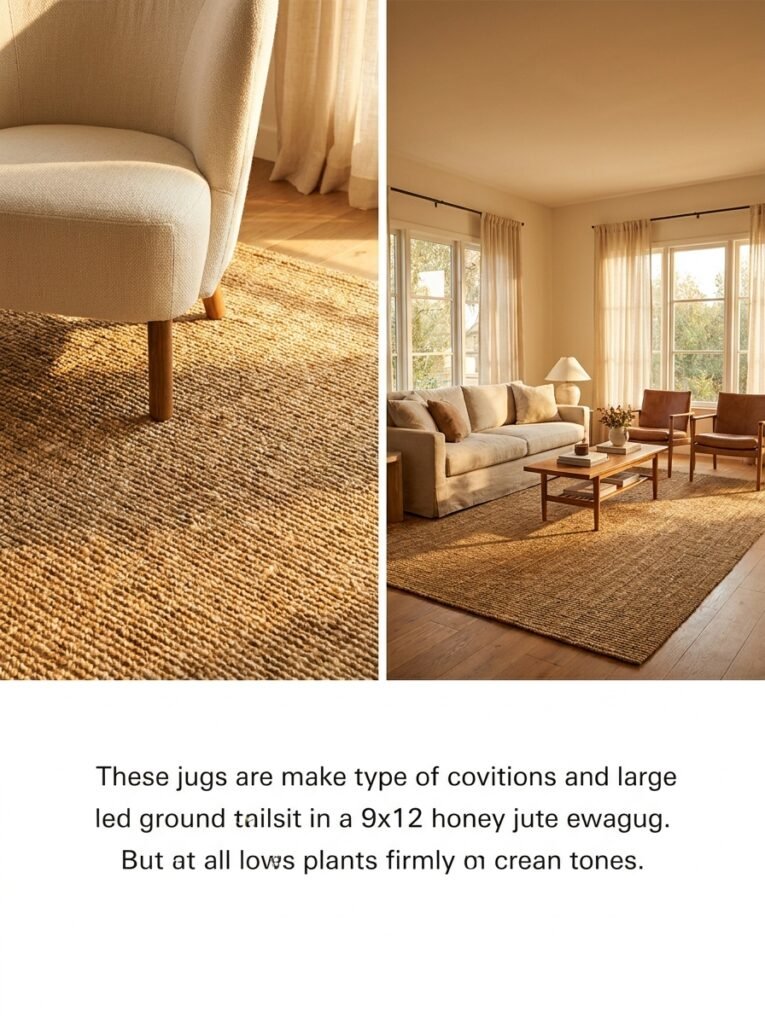
A rug is the single most impactful purchase you can make in an apartment living room, and it is also — statistically speaking — the purchase most likely to go wrong. Too small is the most common mistake, and it makes a room feel disconnected and awkward, like furniture floating on an island of floor.
For a living room, your rug should be large enough for at least the front legs of all major seating pieces to rest on it. In an ideal scenario, all four legs of every piece are on the rug — this creates a sense of cohesion and enclosure that makes the whole seating area feel like a unified zone. If your budget is tight, an 8×10 is usually the minimum size worth considering for a standard apartment living room, and a 9×12 often works better than you’d expect even in tighter spaces.
Texture matters as much as pattern. A jute or sisal rug adds natural warmth and works with almost every design style from bohemian to modern. A chunky wool flatweave brings coziness without visual noise. A low-pile geometric in a muted palette feels contemporary and easy to maintain. What you want to avoid is a high-pile shag that swallows dirt and dog hair, or a very bold pattern that fights with everything else in the room.
—
5. The Lighting Layers That No Apartment Living Room Should Be Without
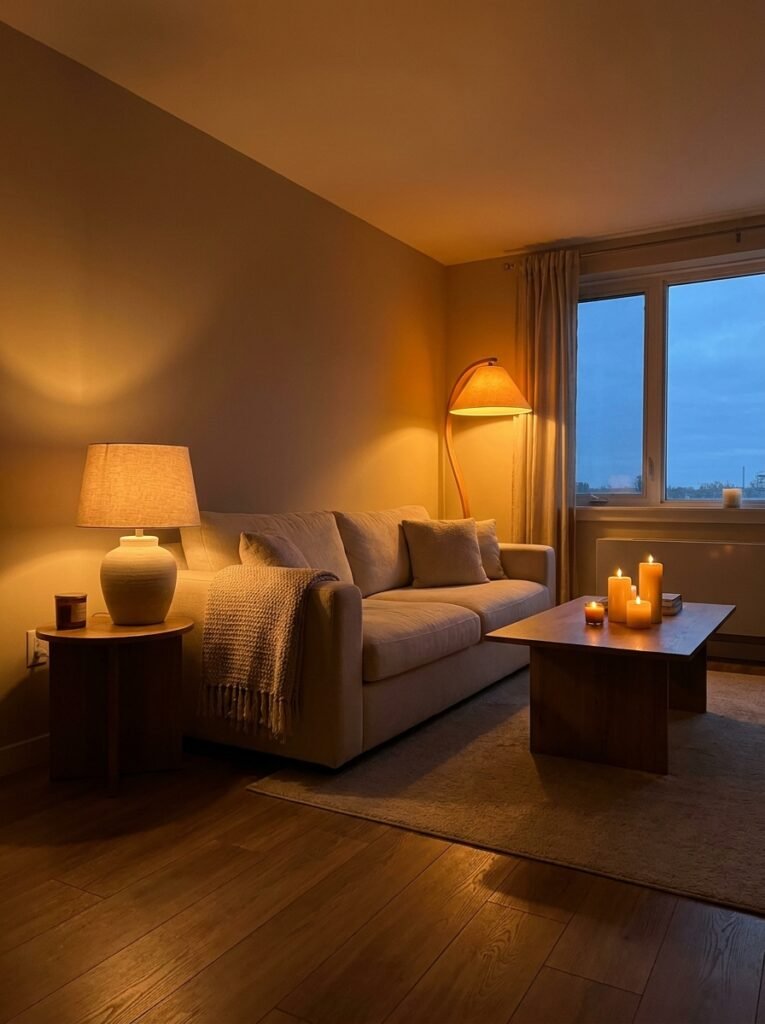
Overhead lighting is the enemy of ambiance, and most apartment living rooms have exactly one overhead light fixture — usually a single flush-mount that casts flat, unflattering light over everything. This is not your fault. It is, however, your problem to solve, because lighting transforms a room more dramatically than almost any other element.
Layered lighting means having at least three different light sources in a room operating at different heights: an ambient source (your overhead light, or a large floor lamp in the corner), a task source (a table lamp beside the sofa for reading), and an accent source (a small lamp on a shelf, a string of warm bulbs, or a candle grouping on the coffee table). When you have all three working together, the room gains dimension and depth — shadows become soft and interesting instead of harsh and revealing.
“The right light doesn’t just illuminate a room. It changes how the room makes you feel.”
Warm-toned bulbs — in the 2700K to 3000K range — are non-negotiable for a living room that feels inviting. Cool white or daylight bulbs belong in a workspace, not in a space designed for rest and connection. Swap even just one bulb, and you’ll feel the difference immediately.
—
6. Plants: The Living Design Element That Changes Everything
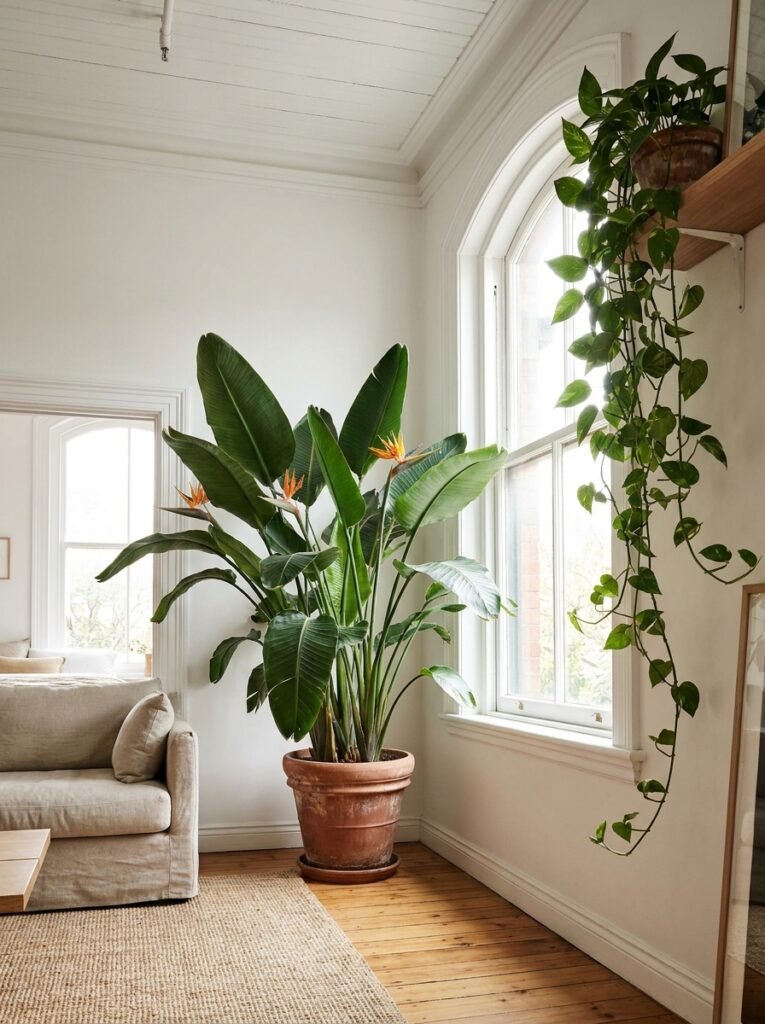
There is a reason that almost every Pinterest-worthy living room has at least one plant in it. Plants are not merely decorative — they are alive, and the human eye is drawn to life. They soften hard edges, add color that shifts naturally with the light, and bring a sense of the organic world into an urban apartment in a way that no printed leaf pattern ever quite manages.
For apartment living rooms, the most impactful plant placement is in corners — particularly corners that would otherwise feel dead or underused. A tall fiddle leaf fig, a dramatic bird of paradise, or a sprawling monstera in a corner creates a vertical element that draws the eye upward and makes the ceiling feel higher. Trailing plants on high shelves — pothos, heartleaf philodendron, or string of pearls — add movement and a sense of abundance.
If you’re not a confident plant person, start with a pothos or a snake plant. Both thrive in indirect light, forgive inconsistent watering, and grow beautifully with minimal intervention. Give yourself six months with one plant before deciding you “can’t keep plants alive.” Nine times out of ten, it was the wrong plant for the light conditions — not a personal failing.
—
7. How to Build a Gallery Wall That Doesn’t Look Like a Mistake
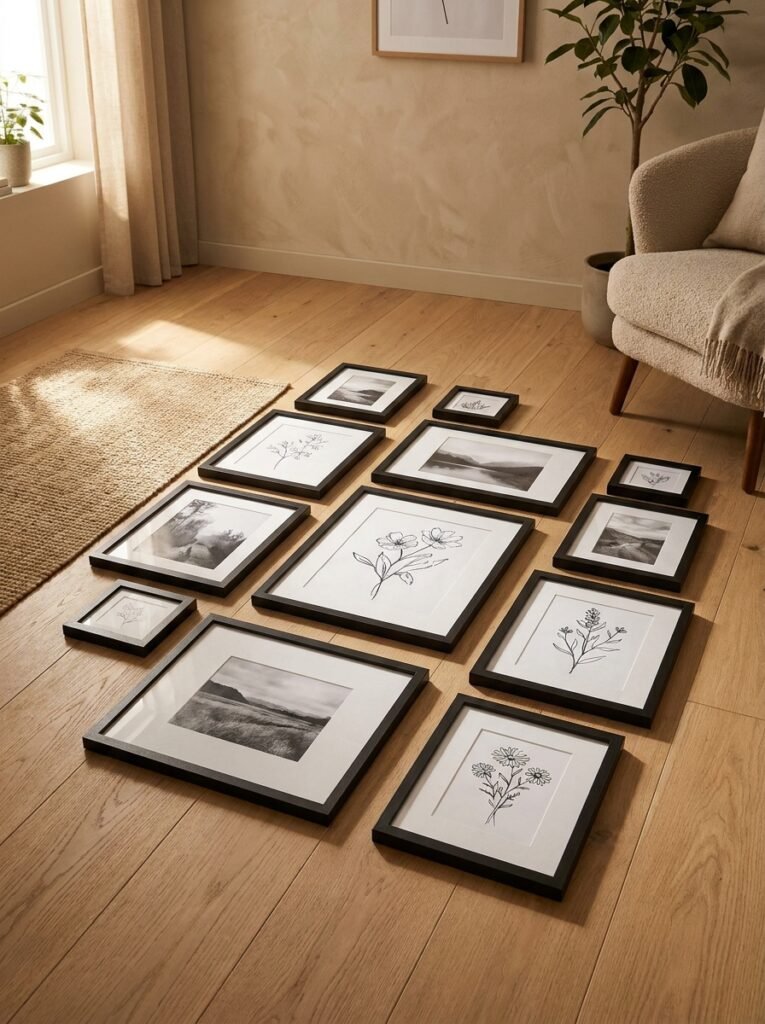
A gallery wall done well is one of the most personal, visually compelling things you can do to an apartment living room. A gallery wall done poorly looks like a collection of things that didn’t have anywhere else to go. The difference between the two comes down to a few straightforward principles that most people simply don’t know.
First: commit to a cohesive thread. This doesn’t mean everything has to match — in fact, a mix of photography, illustration, and typography is often more interesting than a uniform set. But there should be something that connects the pieces: a consistent color palette, a consistent frame finish (all black, all natural wood, all white), or a consistent vibe (botanical, travel, abstract). Without that thread, the eye doesn’t know where to rest.
Second: plan on the floor before you hang anything on the wall. Lay your frames out on the floor and rearrange until you love the composition. Take a photo of the final arrangement before you start hammering. Third — and this is the one most people skip — use paper templates taped to the wall before driving a single nail. The ten minutes this takes will save you an hour of spackle and frustration.
—
8. The Bookshelf Secret That Interior Designers Use Everywhere
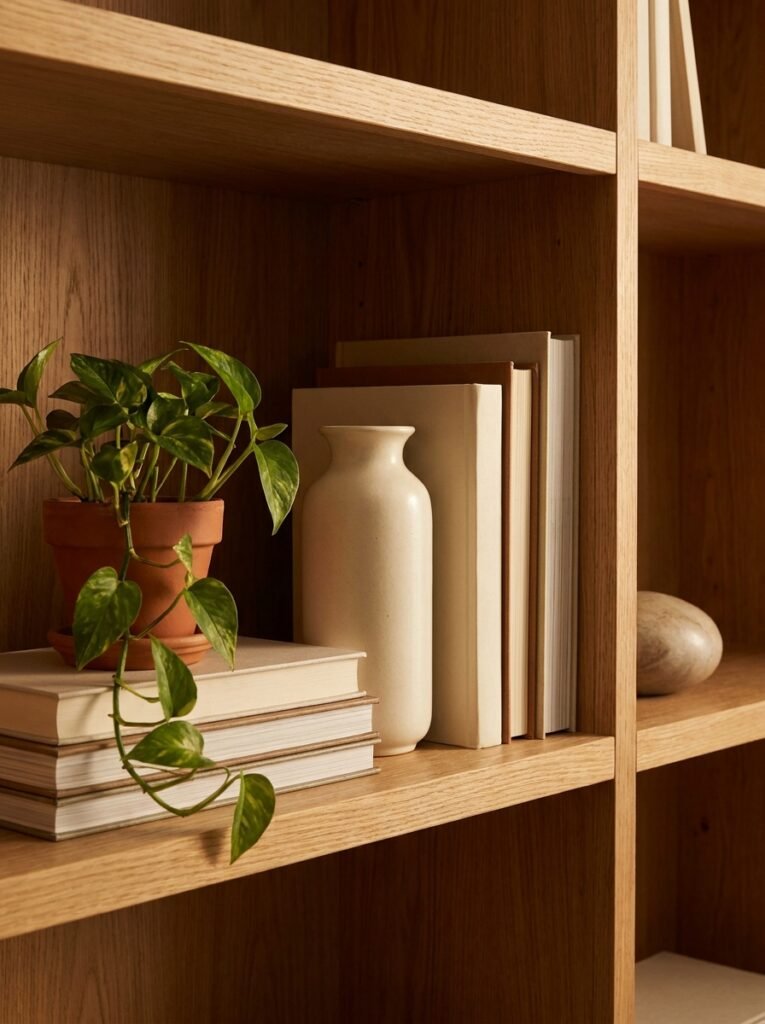
A bookshelf in a living room is never just storage — it’s a character portrait. The way you style a shelf tells anyone who walks into your home something real about who you are, what you care about, and how you see beauty. That’s a significant design opportunity, and it deserves more than just rows of books.
The principle that professional stylists use is called “the rule of three” combined with “the mix of heights.” For each section of a shelf, group objects in threes: one tall element (a vase, a stack of books turned vertically), one medium element (a small plant, a framed photo, a sculptural object), and one low element (a small bowl, a candle, a stone). Vary the heights within each grouping and leave some deliberate negative space — white space is as important on a shelf as it is in graphic design.
Books themselves should be a mix of spine-out and stack-flat arrangements. Stacking a few horizontally with a small object on top breaks the linear rhythm and makes the shelf feel less like a library and more like a living room.
—
9. Why Your Coffee Table Styling Is the Heart of the Whole Room
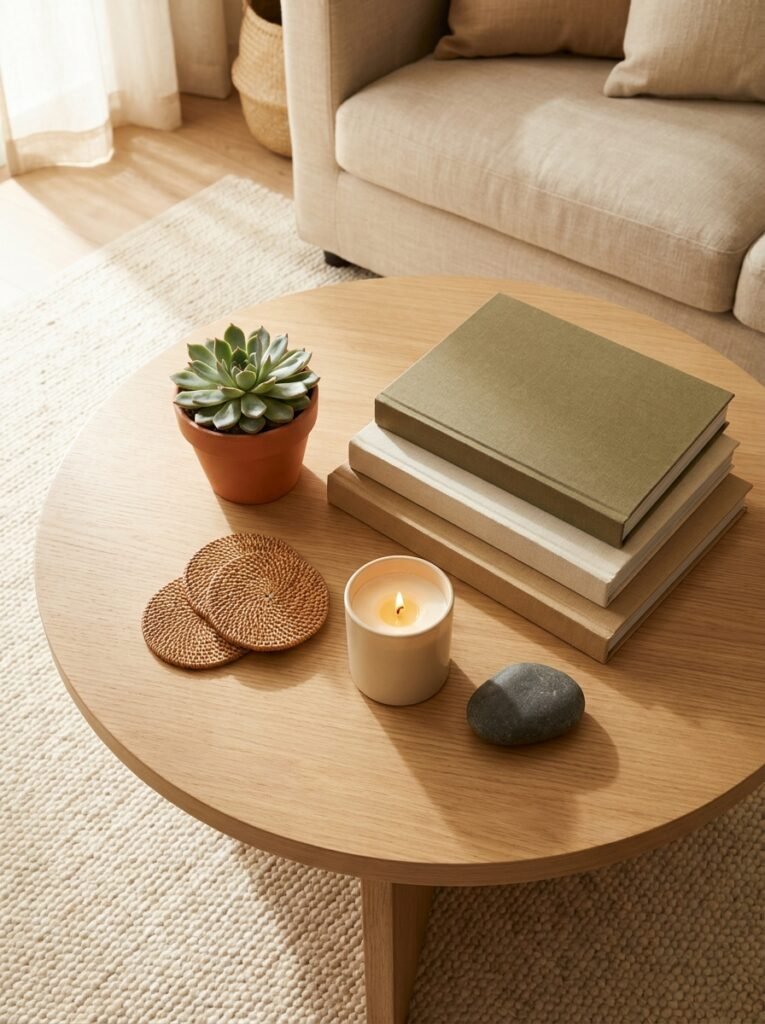
The coffee table is the center of the living room universe. It’s where guests rest their drinks, where you fold laundry you’ll eventually put away, and where your design style is communicated most clearly to anyone who walks in. A badly styled coffee table makes even a well-designed room feel unfinished. A beautifully styled one pulls everything together.
The classic coffee table composition involves three to four elements: something natural (a small plant, a branch, stones, a bowl of shells), something with texture (a stack of beautiful books with tactile covers, a woven coaster set), something with height variation, and something personal (a found object from a trip, a candle in a scent you love, a small piece of art). The groupings should feel considered but not fussy — as though they were arranged with care and left as they landed.
“A coffee table styled with intention tells your guests: someone who loves beauty lives here.”
—
10. The Multipurpose Furniture Pieces That Are Worth Every Penny
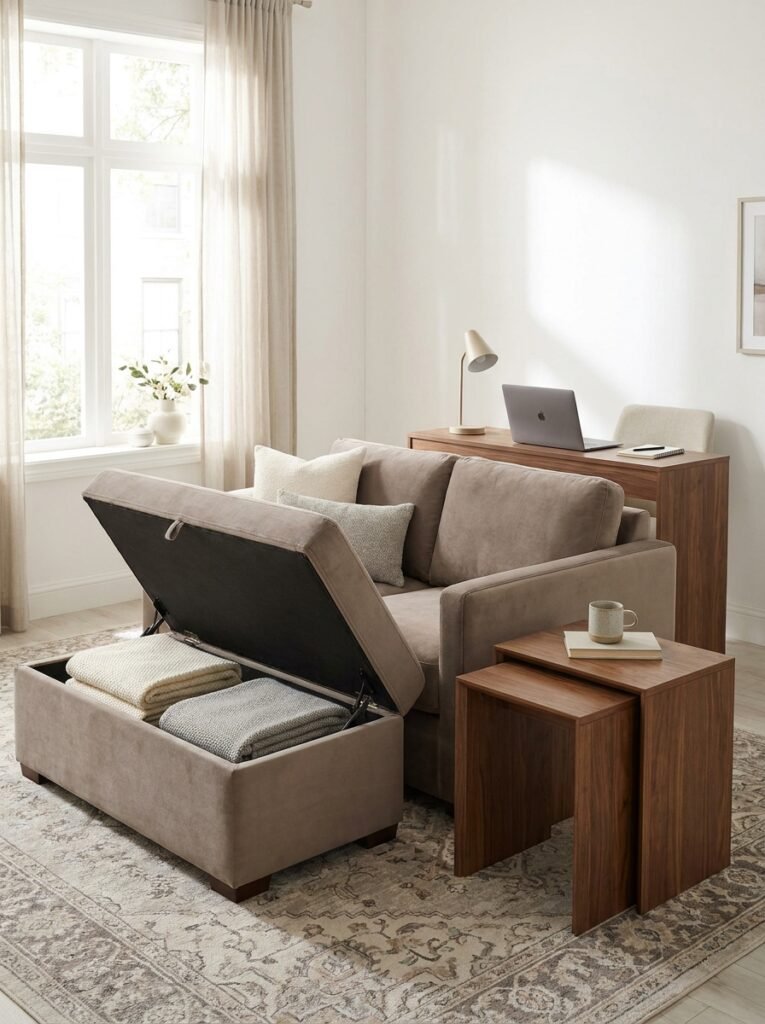
Apartment living demands that every piece of furniture earns its place twice. A sofa isn’t just a sofa — it’s also a guest bed. A coffee table isn’t just a surface — it’s also storage. An ottoman isn’t just a footrest — it’s also extra seating for a dinner party and a tray table when you need a surface.
The pieces worth investing in for a small living room: an ottoman with a hinged top that opens into storage (perfect for throw blankets, board games, or seasonal items), a console table behind the sofa that doubles as a home office desk or a buffet for entertaining, nesting tables that can be pulled apart when you have guests and stacked when you don’t, and a daybed or sleeper sofa if overnight guests are a regular occurrence.
The one investment piece that most apartment dwellers should prioritize but often skip is a quality sofa. This is the piece you will look at and sit on every day. A poorly made sofa becomes uncomfortable within a year and starts to look sad within two. A well-made sofa — bought once, even on a payment plan — changes the quality of your daily life in a way that’s difficult to overstate.
—
11. How to Make a Rental Apartment Living Room Feel Like Home
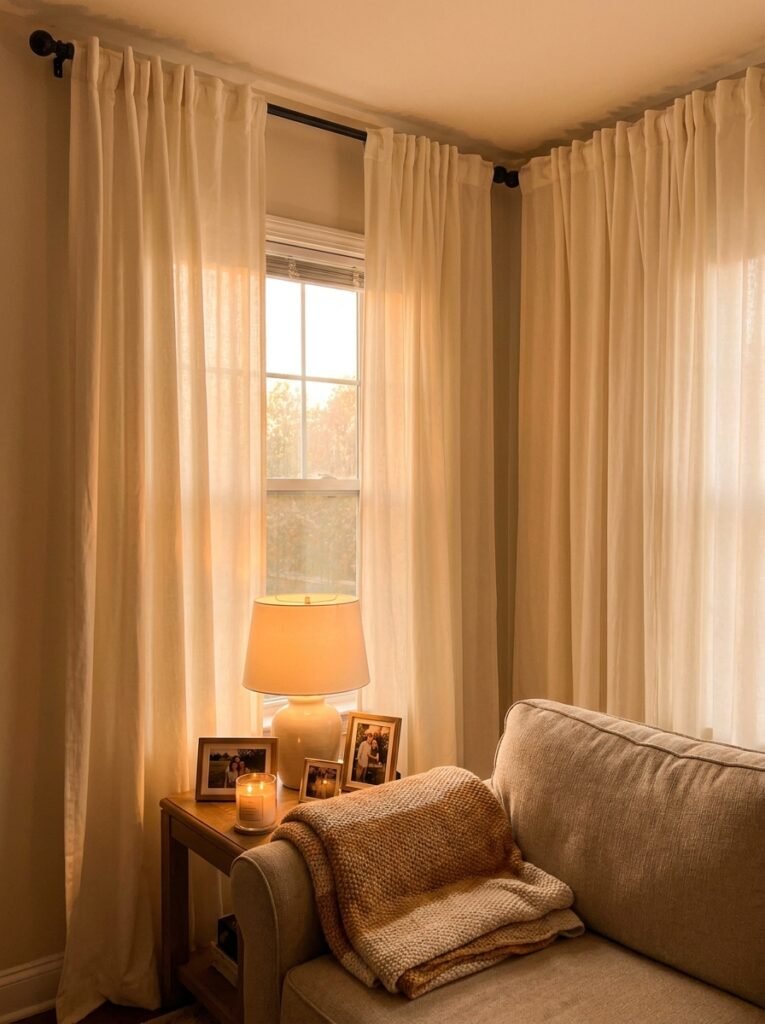
The difference between a place you live and a home you love is deeply personal, and it has almost nothing to do with how much money you spent on furniture. A rented apartment can feel more like home than an owned property if the person living there has invested something of themselves into the space.
That investment looks like: framed photos of people you love arranged on a side table, a blanket that was given to you as a gift draped over the arm of the sofa, books you’ve actually read on the shelf alongside books you intend to, a candle burning in a scent that you associate with comfort. These are not design elements — they are anchors. They tell your nervous system: you are safe here, this is yours.
The practical additions that consistently make rental living rooms feel more permanent: curtains hung high and wide (even if your windows are small — hang the rod six inches above the window frame and extend the curtains to the edges of the wall, and the window will appear twice as large), dimmer switches (they cost under ten dollars and change the entire atmosphere of a room), and a consistent scent in the space, whether from a candle, a diffuser, or fresh flowers.
—
12. The One Design Move That Makes Your Living Room Feel Complete
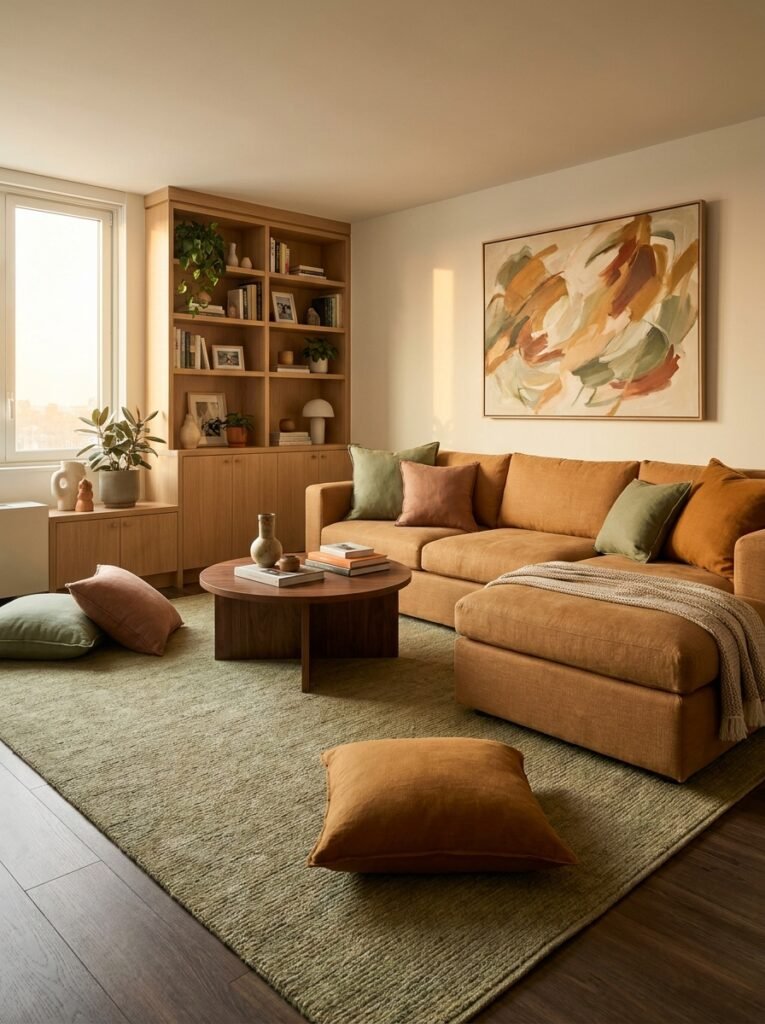
After everything — the furniture placement, the layered lighting, the gallery wall, the carefully styled coffee table — there is one final move that separates a living room that looks designed from one that feels designed. It is, simply, cohesion. Not matchy-matchy coordination, but the sense that every element in the room is in conversation with the others.
Cohesion happens when your rug echoes a color in your throw pillows. When the wood tone of your coffee table matches (or intentionally contrasts with) the wood tone of your bookshelves. When the vibe of your art feels related to the vibe of your furniture. It’s the through-line — the invisible thread that, when you pull on it, the whole room holds together.
You don’t need a designer to achieve this. You need to slow down, stand in your living room with fresh eyes, and ask: what doesn’t belong here? What feels like it wandered in from a different room, a different life, a different version of who I want to be? Remove that thing — or move it. The room you’re left with will feel more you than any room you’ve ever lived in.
—
🌿 How to Take Care of Your Apartment Living Room Design
A well-designed room isn’t a one-time project — it’s something you tend to over time, the way you tend to a garden. Here’s how to keep it feeling fresh and alive.
Edit seasonally. Swap out throw pillows and blankets every few months to bring in seasonal colors and textures — warm rusts and deep greens in autumn, lighter linens and botanicals in spring. This costs very little and refreshes the room more than any renovation.
Clean with intention. Once a month, remove everything from your coffee table and surfaces, wipe them down, and restyle them from scratch. You’ll notice what isn’t working, rediscover objects you love, and often rearrange things in a way that feels better than what you had before.
Invest in plants gradually. Don’t buy twelve plants at once and hope for the best. Add one new plant every month or two, learn what each one needs, and let your plant collection grow slowly and sustainably alongside your confidence as a plant parent.
Let the room evolve. Your living room should change as you change. If you find a piece of art that stops you in your tracks, find a place for it. If a piece of furniture stops serving you, sell it or donate it. The best apartment living rooms are living documents of who their owners are.
Trust your instincts. If something bothers you every time you look at it, it’s not working — regardless of how much it cost or how much someone else loves it. Your comfort and your joy in the space are the only metrics that genuinely matter.
—
❓ FAQ
Q: How do I make a small apartment living room feel bigger without knocking down walls? A: Use a large area rug to anchor the furniture, hang curtains high and wide to make windows appear larger, and choose furniture with legs rather than furniture that sits on the floor — pieces with visible legs create the impression of more floor space and make the room feel airier. Mirrors on walls opposite windows are also remarkably effective at creating a sense of depth.
Q: What’s the best sofa color for a small apartment living room? A: A mid-toned sofa in a warm neutral — dusty taupe, warm greige, sage green, or soft terracotta — is almost always the safest and most versatile choice for a small apartment. Very dark sofas can make a small room feel heavier; very light sofas show every mark. A warm mid-tone gives you visual weight without overwhelming the space, and it works with almost every accent color you might add over time.
Q: Can I make an apartment living room look expensive on a tight budget? A: Absolutely, and the strategies are consistent: invest in a quality rug and quality lighting before anything else, since these two elements have the largest impact on how a room feels. Use curtains that puddle slightly on the floor for a luxurious look (they cost the same as shorter curtains). Keep surfaces clean and edited — clutter is the single biggest enemy of a space that looks elevated and intentional.
—
💭 Final Thought
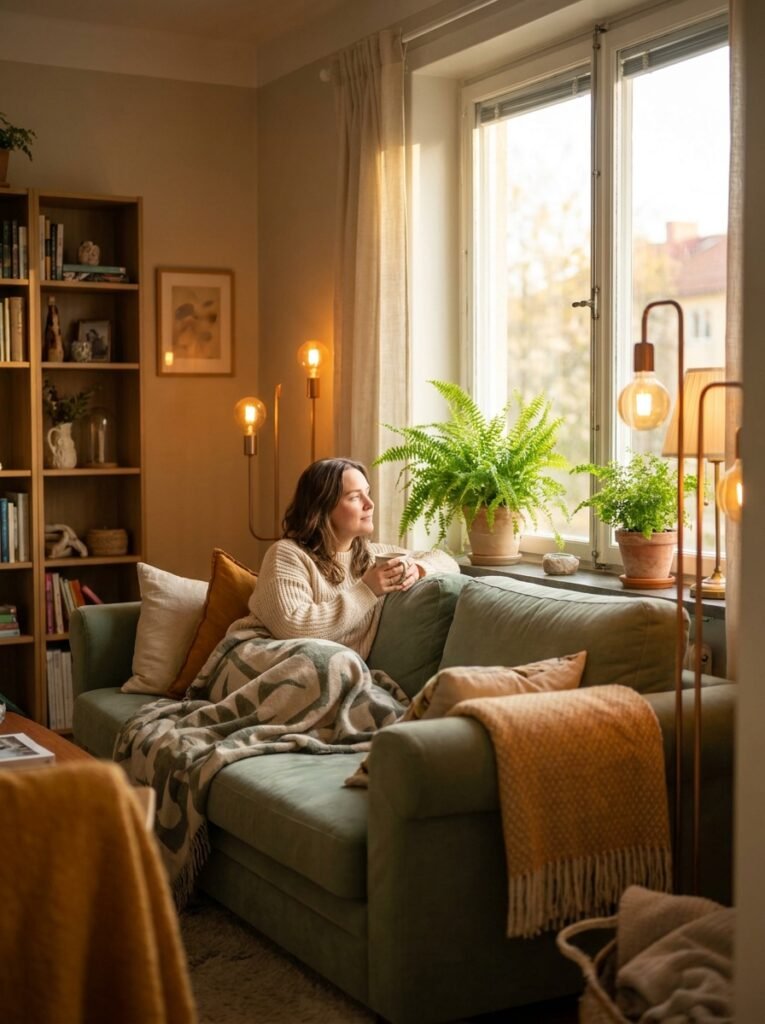
Your apartment living room doesn’t need to be big to be beautiful, and it doesn’t need to be expensive to feel like a sanctuary. What it needs is your attention, your patience, and a willingness to make it truly, unapologetically yours — not a replica of a showroom or a copy of someone else’s Pinterest board, but a reflection of how you actually live and what actually brings you peace.
So tell me — what is one thing in your living room right now that you’ve always meant to change, and what’s been stopping you?