
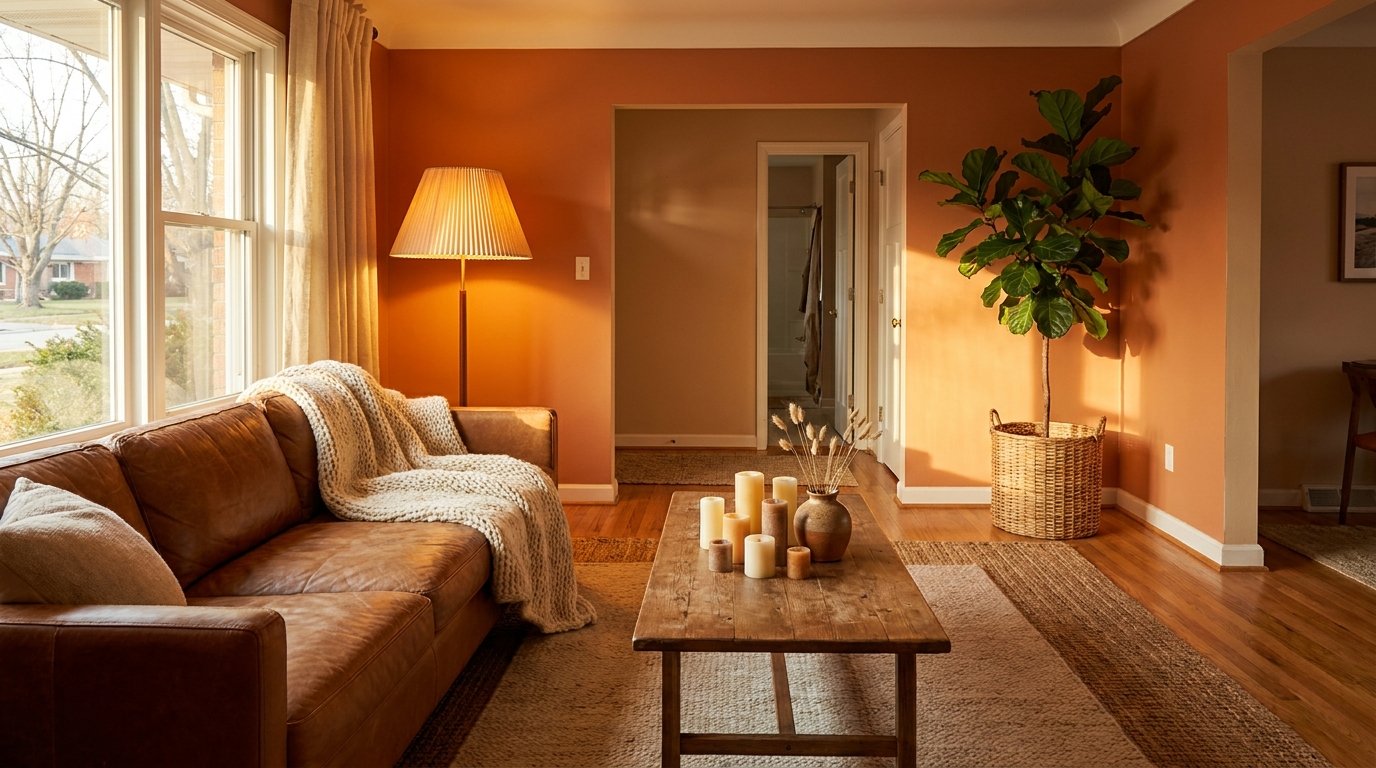
The Warm Living Room You’ve Always Wanted — And Exactly How to Create It
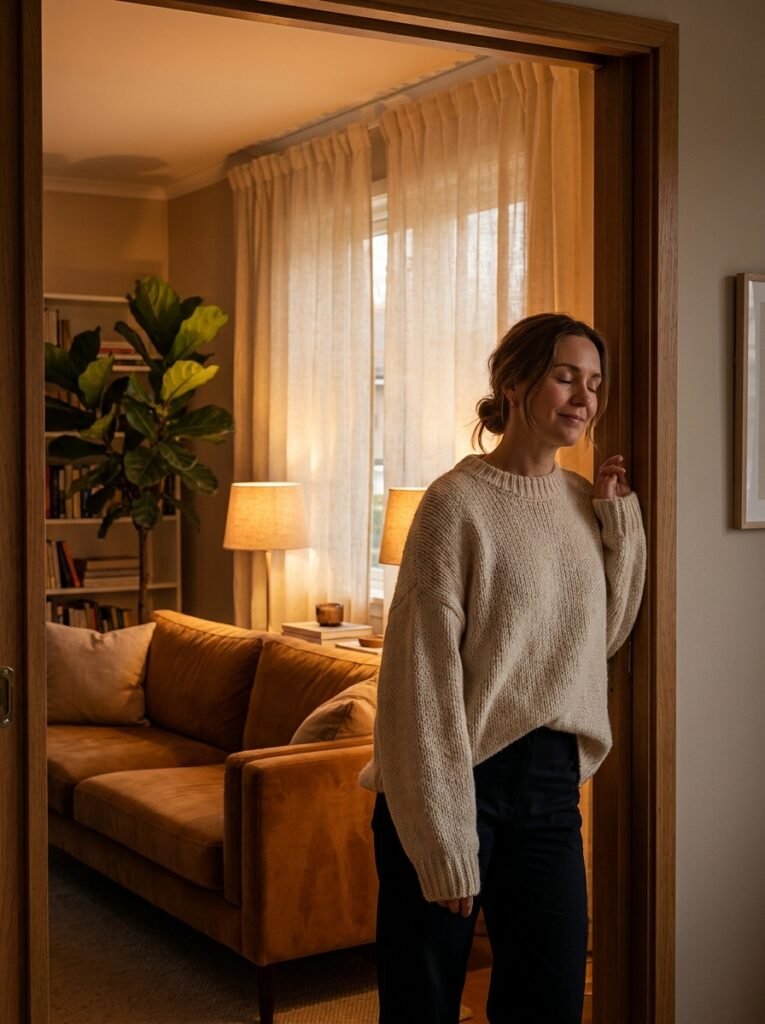
There’s a moment — maybe you’ve felt it — when you walk into someone’s living room and something inside you quietly exhales. The light is soft, the colors feel like a hug, and you instinctively want to curl up and stay a while. That feeling isn’t accidental. It’s designed, intentionally or not, through a series of choices that together create what we call warmth — and the beautiful truth is, you can create it in your own home too.
—
1. Why Warmth in a Living Room Isn’t Just About Temperature
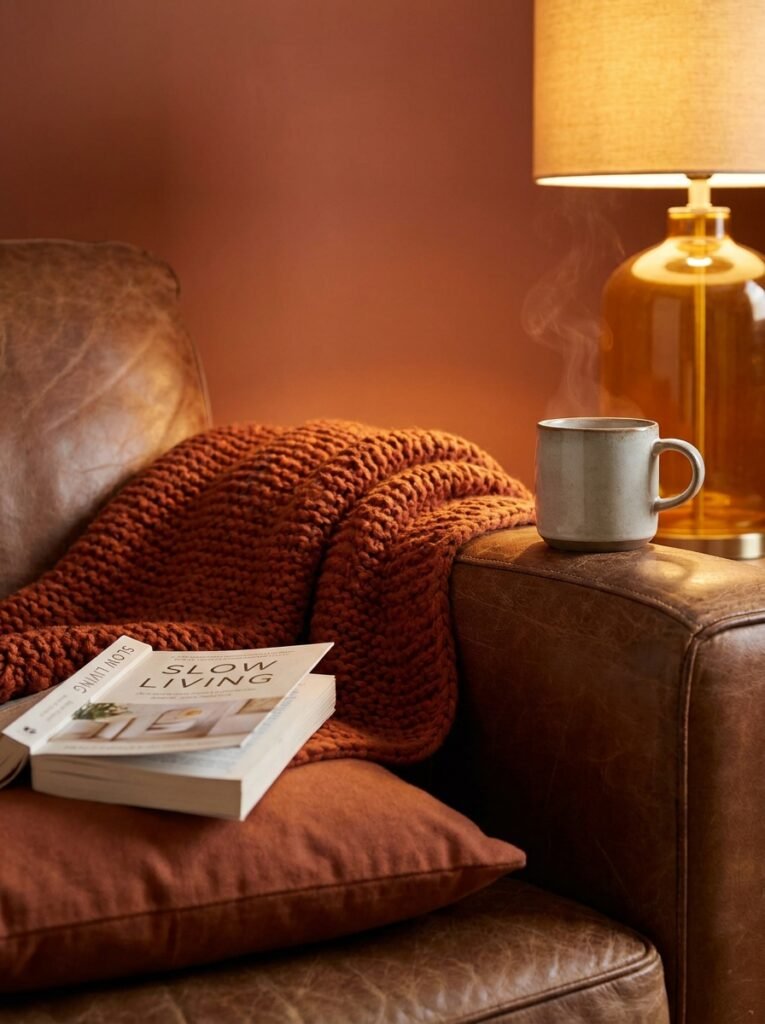
Most people assume a warm living room is simply one that’s physically heated — but warmth, in the design sense, is something you feel with your eyes before you feel it on your skin. It’s the amber glow of a well-placed lamp at dusk. It’s the visual weight of a chunky knit throw draped over the arm of a worn leather sofa. It’s the way a deep terracotta wall makes a room feel anchored, like it’s been loved for decades.
Warmth in interior design is the emotional quality of a space — the sense that the room welcomes you, holds you, and tells you to slow down. Designers talk about it in terms of color temperature, texture layering, and light sources, but at its core, it comes down to one thing: does this room make you feel something when you enter it?
The answer, for so many modern living rooms, is unfortunately no. White walls, gray everything, no art, no layers — functional, yes, but sterile. And there’s a growing longing, especially among people who spend long hours at home, to fix that. To make their living room the warmest, most inviting room in the house.
“A warm living room doesn’t happen by accident — it happens through intention, texture, and the courage to lean into color.”
2. The Color Palette That Actually Makes a Room Feel Warm
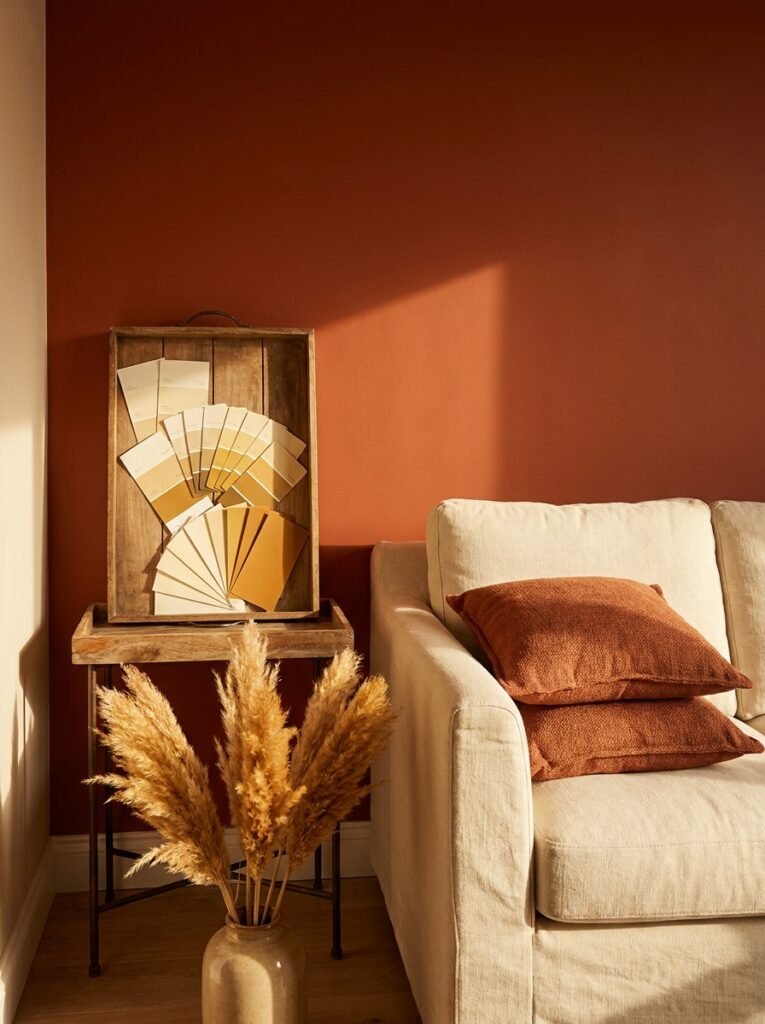
Color is the single most powerful tool you have, and the good news is that warm living rooms don’t require bold or dramatic choices. In fact, some of the coziest rooms are built on surprisingly quiet palettes.
Think about the colors that make you feel comforted in nature — the golden hour light filtering through trees, the earthy rust of autumn leaves, the creamy white of old linen, the soft brown of well-loved wood. These are your anchors. Warm whites, off-whites, and creams replace cold grays. Terracotta, burnt sienna, and ochre bring earthy depth. Sage green — warmer than it sounds — adds life without coldness.
The key is undertone. Every color has one, and warm undertones (yellow, red, orange) are your best friends here. A beige with a pink or golden undertone will always feel warmer than one with a green or gray undertone. When choosing paint, always test samples in the actual room at different times of day — paint swatches under a hardware store’s fluorescent lights lie to you every single time.
If you’re not ready to repaint, don’t panic. Introduce warm colors through soft furnishings — cushions in rust and amber, a rug in warm terracotta, art with golden or earthy tones. Color psychology is real, and even small doses of warm hues shift a room’s entire emotional temperature.
3. The Lighting Secret That Interior Designers Never Stop Talking About
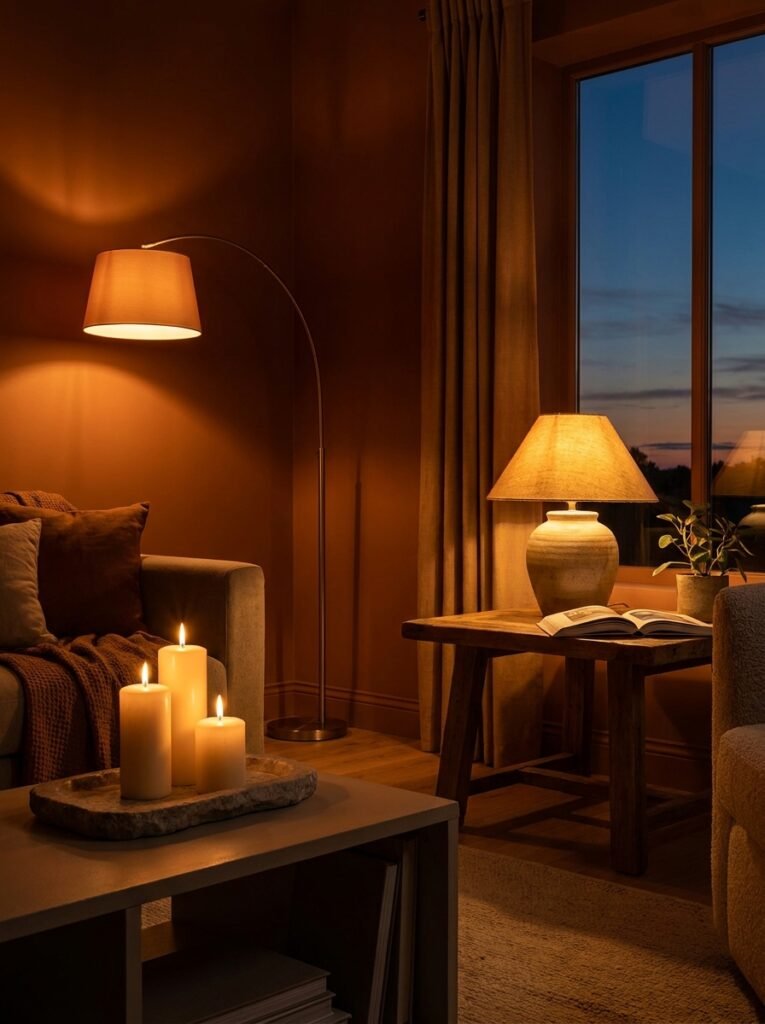
If there is one single change that transforms a living room from cold to warm overnight, it is lighting — specifically, replacing overhead lighting with layered, low, ambient sources.
Overhead lights — especially cool-toned ones — flatten a room and create a harshness that no amount of decor can fully overcome. They light everything equally, which sounds fair but actually strips a room of depth, shadow, and that gorgeous atmospheric quality that makes a space feel intimate.
Warm living rooms use layers: a floor lamp in the corner casting upward light, table lamps at eye level creating pools of golden glow, candles on a coffee table or mantle adding flicker and life. If you can, switch every bulb in your living room to one with a color temperature of 2700K–3000K — this is the “warm white” zone, the golden zone, the zone that makes everything look better including you.
Dimmers are a relatively inexpensive upgrade that provide an enormous return. The ability to drop the lights in the evening — to shift the room from “afternoon productivity” to “evening comfort” — is genuinely transformative. It’s the difference between a room that functions and a room that feels.
4. Why Texture Is the Unsung Hero of Cozy Living Rooms
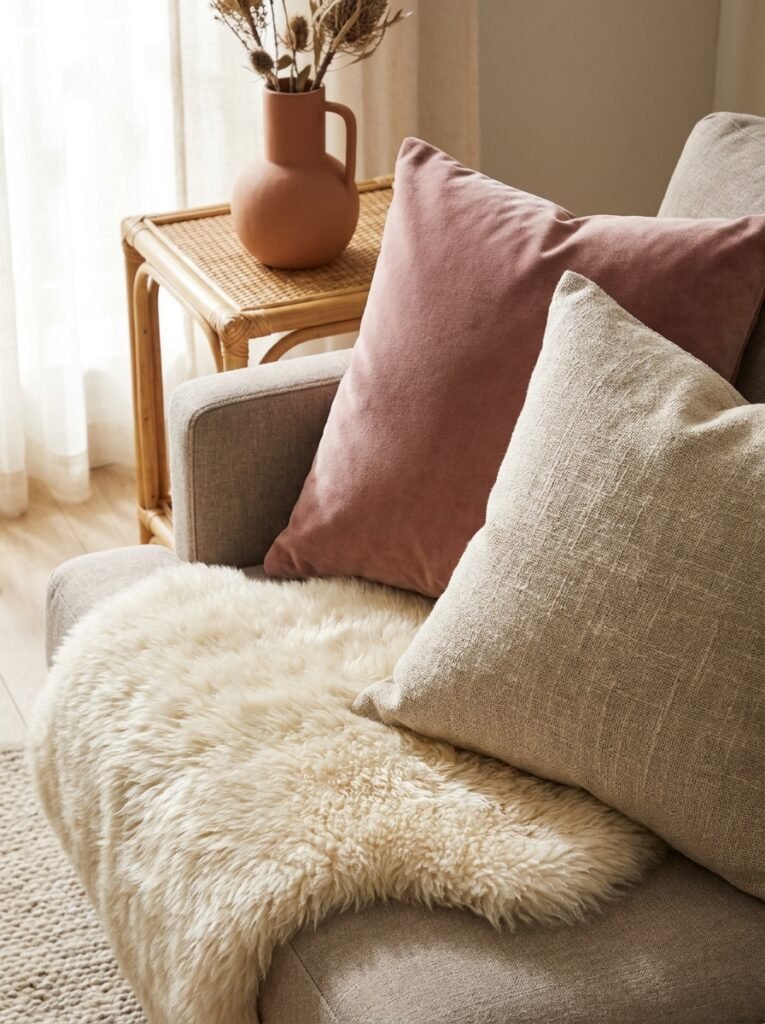
Walk into a cold-feeling room and look carefully. You’ll often notice something: everything is one texture. Smooth walls, flat cushions, a single-material sofa, a glass coffee table. There’s no variety for your eyes to rest on, explore, or luxuriate in — and texture, perhaps more than anything else, is what tells your nervous system that a room is safe and comfortable.
Warm living rooms are layered — deliberately, joyfully so. A velvet sofa alongside a rough linen pillow and a smooth ceramic vase. A jute rug under a sheepskin throw. Woven baskets next to matte-painted walls. Wood, metal, fabric, and natural materials in conversation with each other.
This doesn’t mean cluttered. It means considered. Every surface and object should offer something tactile, something that makes you want to reach out and touch it. Because warmth isn’t just visual — it’s sensory, and a room that engages multiple senses is one that people sink into and don’t want to leave.
“Layer your textures the way you layer your autumn wardrobe — each piece distinct, and every combination more beautiful than the last.”
5. Furniture Arrangement: The Simple Geometry of Togetherness
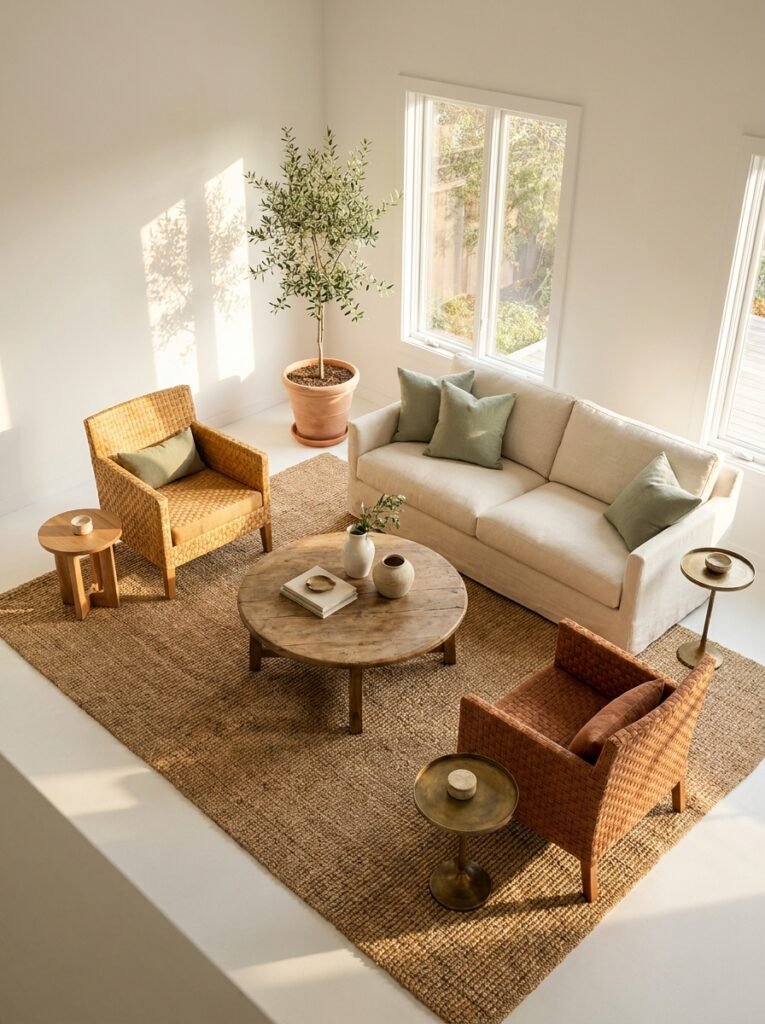
Furniture placement is the architecture of warmth, and most people get it wrong in one of two ways: either pushing everything against the walls (which creates a hollow, waiting-room feeling) or arranging everything to face the TV (which turns a living space into a viewing space).
Warm living rooms are arranged for conversation. Sofas and chairs angled toward each other — not perfectly symmetrical, but organically grouped, the way people naturally cluster at a good dinner party. A coffee table within reach of everyone seated. Side tables near every seat so no one has to awkwardly hold their drink.
The floating furniture arrangement — where pieces are pulled away from walls and toward the center — creates intimacy. It defines the space as a gathering point rather than a corridor. Even in small rooms, pulling the sofa even 6 inches from the wall creates a sense of intentionality and groundedness that instantly reads as cozier.
Think about traffic flow too — a warm room is one you can move through easily and naturally, where nothing feels like an obstacle course. Clear pathways between seating and doorways make a room feel both larger and more welcoming.
6. The Power of Natural Materials in Creating Organic Warmth
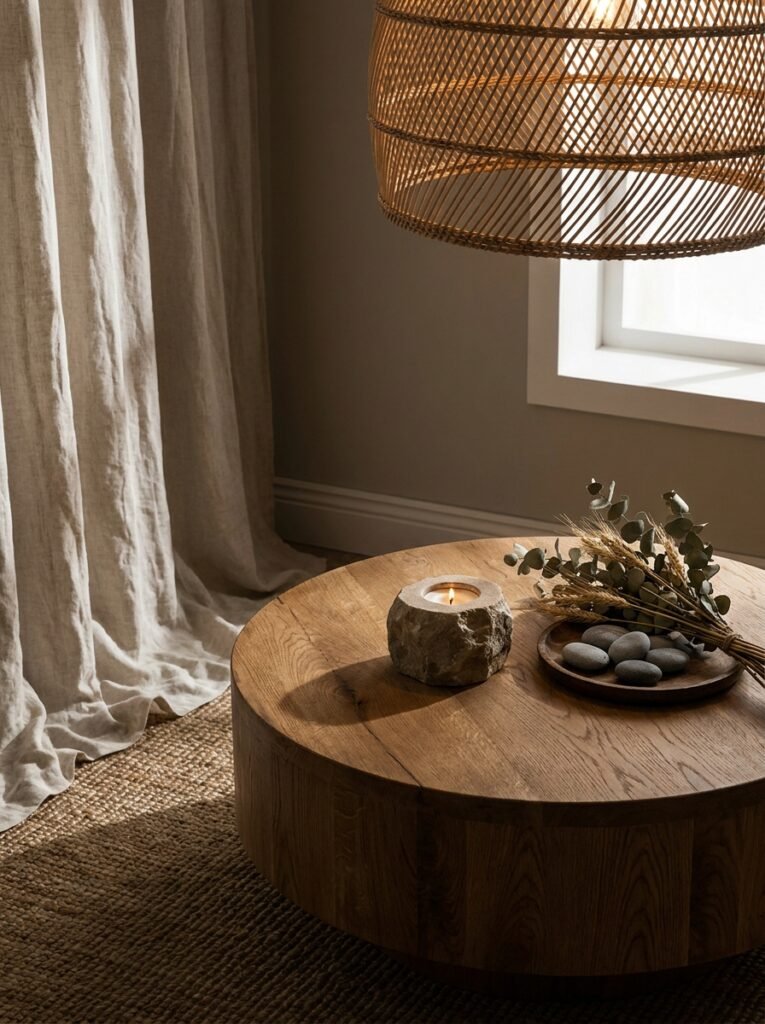
There is a reason why a living room with a wooden coffee table, rattan pendant light, and stone-textured cushions feels warmer than one filled with plastic laminate and acrylic — and it isn’t just aesthetic. It’s deeply instinctive. As humans, we evolved surrounded by natural materials, and our nervous systems still respond to them with a sense of ease and belonging.
Wood is the cornerstone of organic warmth. Warm-toned woods — oak, walnut, cherry, pine — bring a grounded, anchored quality to a room. If you can’t invest in a new furniture piece, even a small wooden tray on a coffee table or wooden frames around mirrors and art will start to shift the feeling of a space.
Rattan and wicker add warmth through their honey-toned color and organic imperfection. Stone — in the form of a fireplace surround, a marble-effect candle holder, or a slate coaster set — adds an elemental quality. Linen and cotton in their natural, undyed forms bring softness without coldness. The more natural materials you can introduce, the more a room begins to feel like it grew there rather than arrived in a flat-pack box.
7. Plants and Greenery: The Breathing Element Every Warm Room Needs
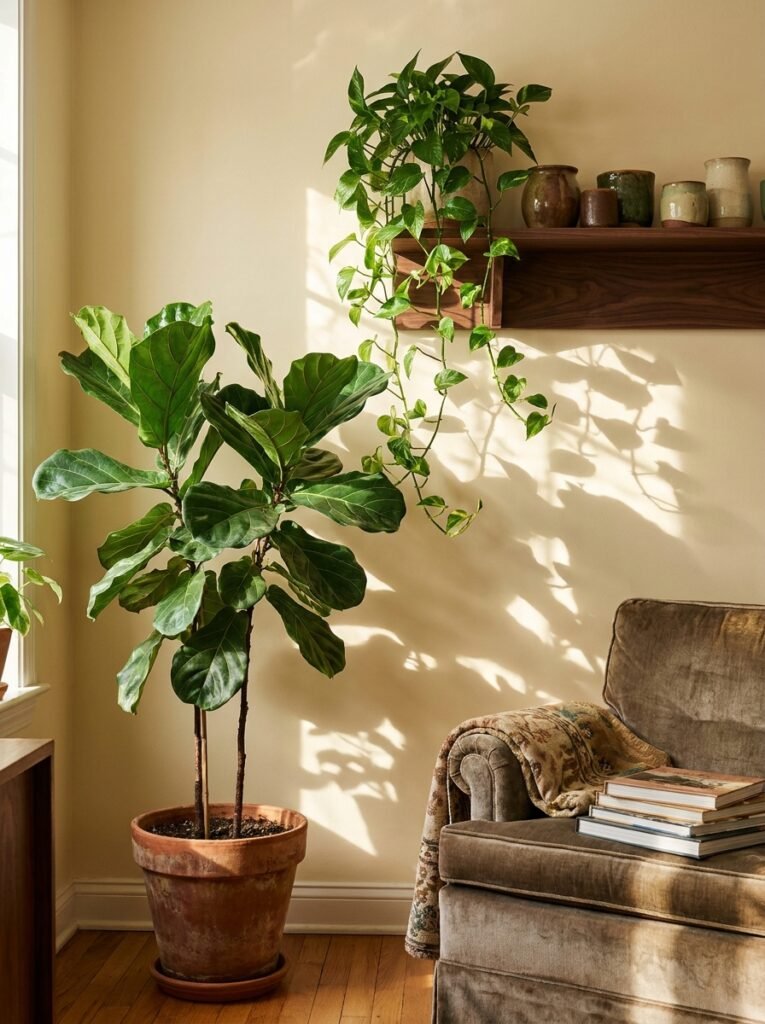
A room without life can feel static, and there’s a simplicity to the solution: grow something in it. Plants are perhaps the most democratically beautiful addition to any living room — available at every price point, in every size, for every light condition — and they do something that no piece of furniture or paint color can fully replicate: they breathe.
The visual effect of greenery against warm-toned walls is stunning. Deep green leaves against terracotta, pale sage against warm cream, a trailing pothos draped over a walnut shelf — these combinations are achingly beautiful in photographs and even more beautiful in person.
Beyond beauty, plants bring genuine warmth through psychological association. Studies have shown that the presence of plants in interior spaces reduces stress and increases feelings of calm and comfort. In a living room, a few well-placed plants — a tall fiddle-leaf fig in a corner, a cluster of smaller pots on a window ledge, a trailing plant on a high shelf — elevate the space from decorated to inhabited.
8. Scent: The Invisible Decorator That Completes the Room
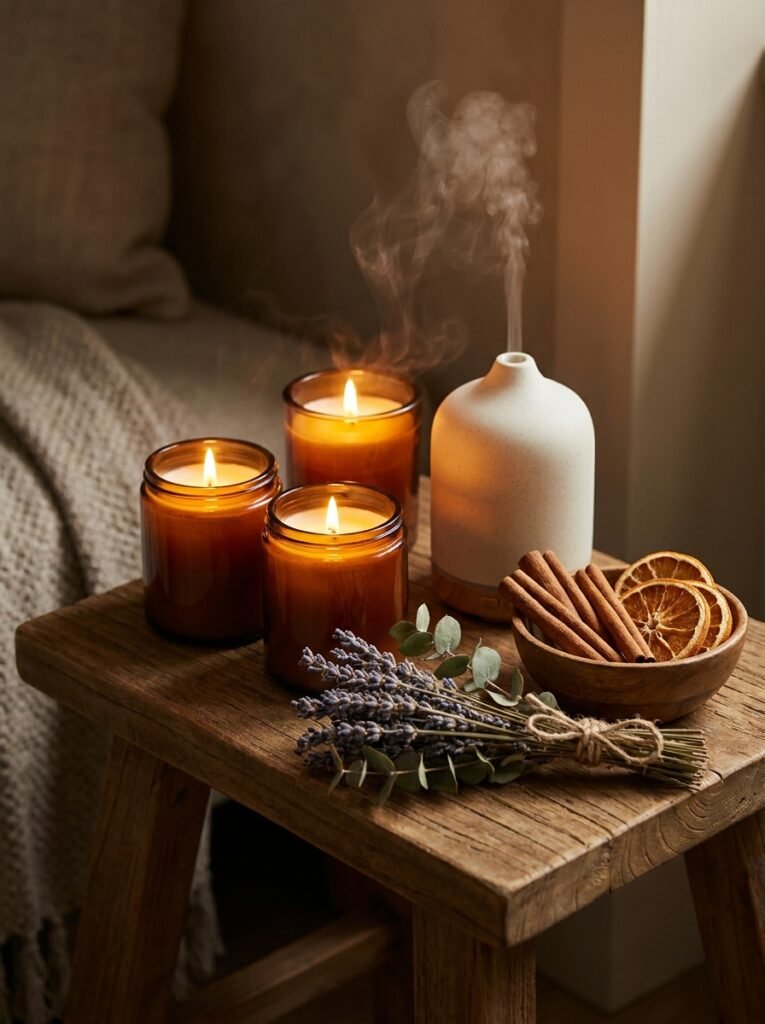
Here is something the Pinterest photos can’t show you, but your lived experience knows to be true: scent is a powerful component of warmth. You have walked into rooms that smelled of woodsmoke or vanilla or fresh bread and felt instantly, completely at home. That’s not coincidence — scent bypasses the logical brain and speaks directly to emotion and memory.
In a warm living room, scent is the final layer. Candles in amber, cedarwood, vanilla, or sandalwood. A diffuser with warm essential oils — cinnamon, orange, frankincense, clove. Even a bouquet of dried lavender or eucalyptus — scentless visually, fragrant in reality — tucked into a corner or fireplace.
Be thoughtful about this. Overpowering fragrance is uncomfortable and can irritate. The goal is a gentle, welcoming signature — subtle enough that guests notice it only when they first walk in, but enough to quietly anchor the room’s emotional atmosphere.
9. Cozy Corners: The Art of Creating a Room Within a Room
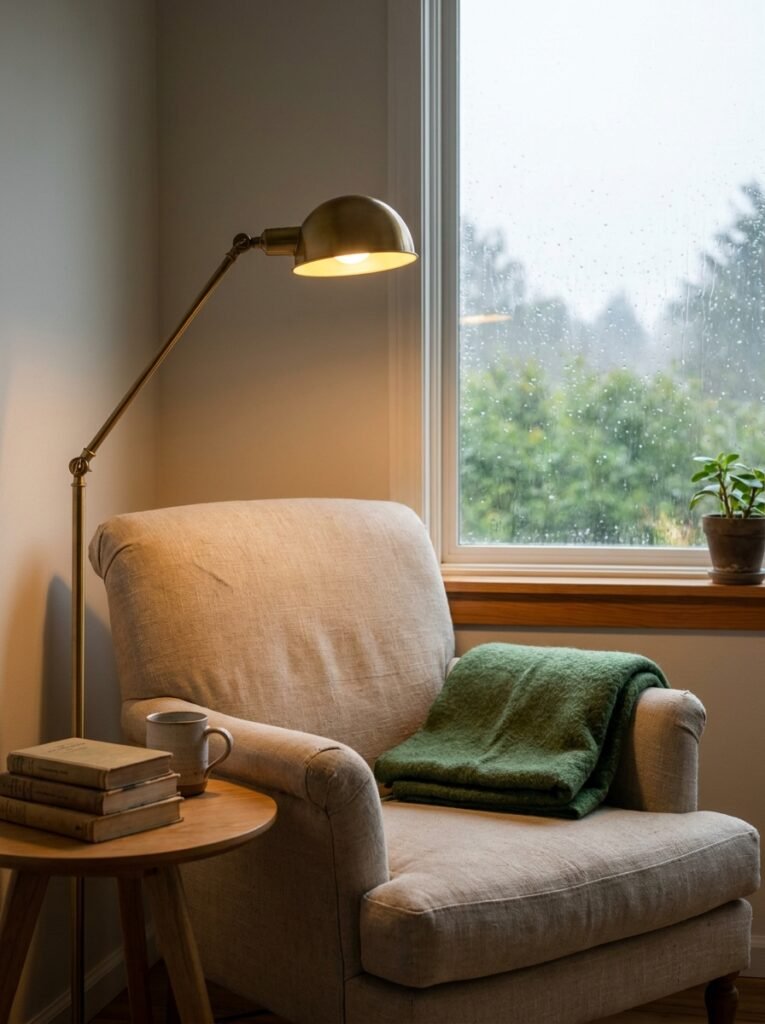
One of the defining features of the warmest living rooms is that they contain at least one corner, nook, or alcove that feels like a retreat within a retreat. A reading chair angled toward a window, wrapped in a soft blanket, with a small table nearby and a floor lamp bent close — this is the kind of spot that people gravitate toward instinctively and remember long after they’ve left your home.
Creating a cozy corner doesn’t require extra square footage. It requires intention. A single armchair pulled slightly apart from the main seating area, distinguished by a different lamp, a personal stack of books, or a small plant, becomes its own world. It says: someone sits here. Someone reads here. Someone is loved in this room.
“The warmest homes are full of specific places — the corner where she reads, the chair where he thinks, the spot where they talk for hours.”
10. Warm Living Room Styles Worth Drawing Inspiration From
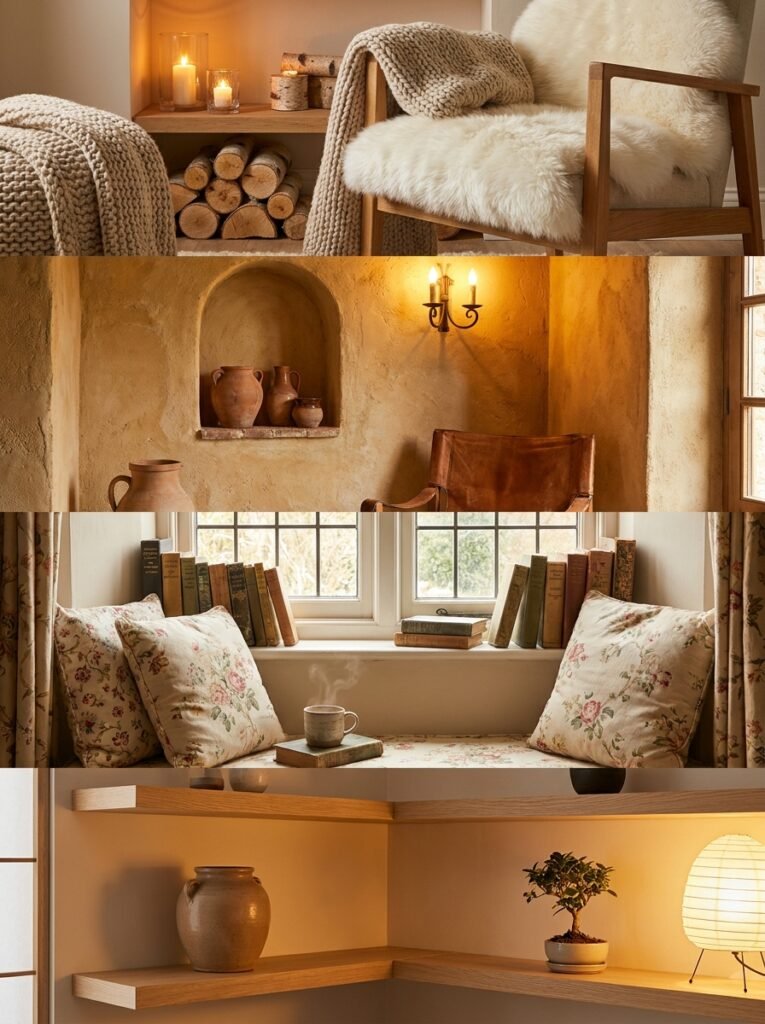
Knowing the why of warmth is useful, but sometimes you need a visual vocabulary — a named aesthetic to anchor your decisions and guide your shopping.
Scandinavian hygge interiors balance minimalism with maximum coziness: neutral palettes, warm woods, candlelight, and layers of soft textiles. Nordic homes are famously warm despite their cold climates precisely because their design philosophy prioritizes emotional comfort.
The warm Mediterranean or Tuscan style leans into terracotta, rough plaster walls, wrought iron details, deep reds and golds, and heavy wooden beams — it’s luxurious and grounded simultaneously.
Cottagecore and English country bring florals, vintage finds, mismatched antiques, and a sense of accumulated love — rooms that look as though they evolved over generations rather than being styled in an afternoon.
Japandi — the hybrid of Japanese minimalism and Scandinavian coziness — is perhaps the most sophisticated of the warm aesthetics, using natural materials, warm neutrals, and intentional negative space to create stillness that reads as deeply peaceful.
You don’t need to commit fully to any single style. The best warm rooms borrow freely from all of them, guided not by trend but by what genuinely resonates with the person living there.
11. Budget-Friendly Ways to Warm Up Any Living Room This Weekend
Warmth is not a luxury. Some of the coziest living rooms ever photographed were created on shoestring budgets by people who simply understood light, texture, and color.
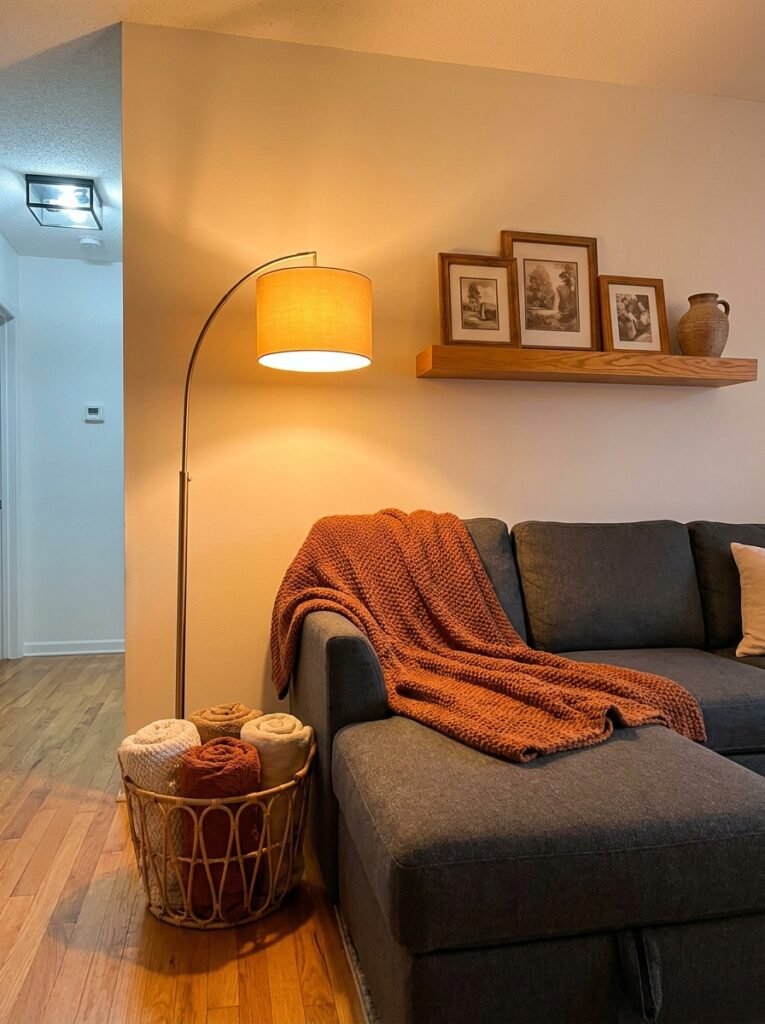
Start with the lighting — swap out cool bulbs for warm white ones. This costs almost nothing and makes an immediate, dramatic difference. Add a throw — a chunky knit or faux fur in a warm, earthy tone draped over the sofa arm changes the entire feeling of a room. Rearrange your furniture away from the walls and toward conversation groupings. Light a candle.
Visit thrift stores and secondhand markets for wooden frames, ceramic vessels, rattan baskets, and vintage art — all the textural, organic elements that warm a room instantly. A single warm-toned throw pillow on a gray sofa has pulled more rooms from cold to cozy than any expensive renovation. The willingness to experiment and layer is worth far more than a large budget.
12. The Feeling a Warm Living Room Creates — And Why It Matters
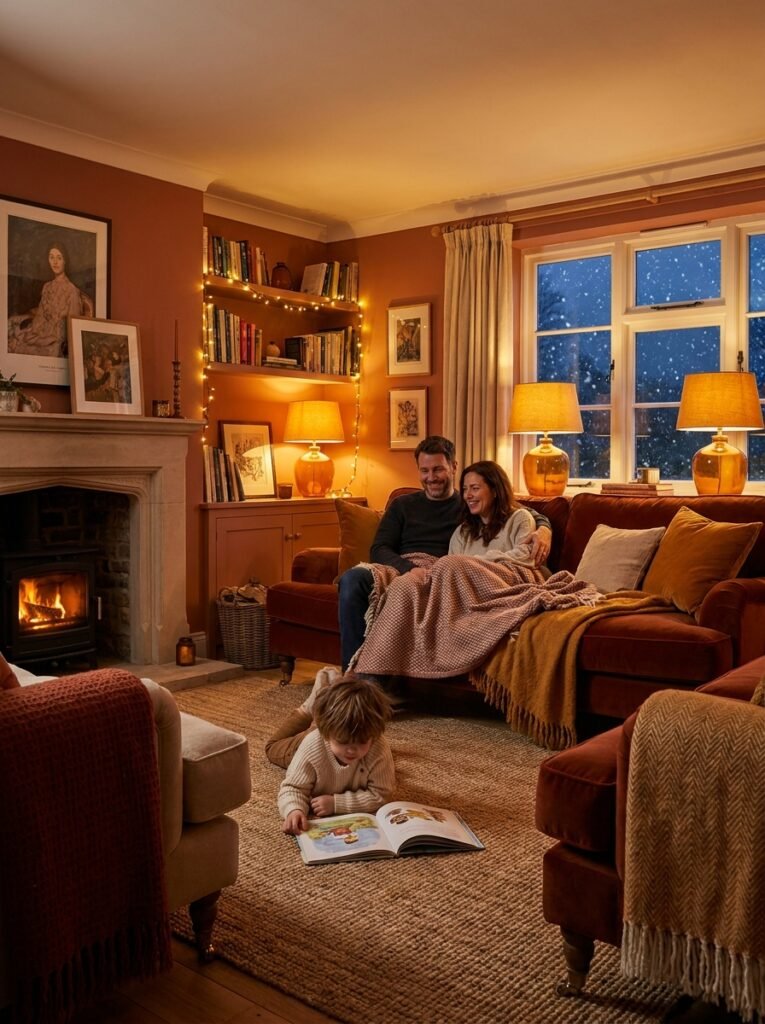
In a world that often moves too fast, a warm living room is an act of resistance. It says: slow down. Stay a while. You matter enough to be comfortable here.
A room that feels warm creates a ripple effect through the people who inhabit it — families linger longer in conversations, friends feel more open and honest, children feel secure enough to be imaginative and playful. There is genuine research showing that the physical environment we inhabit shapes our mood, our relationships, and even our mental health. A warm living room is not a frivolity. It is an investment in the quality of the life lived inside it.
The warmth you create in your living room extends outward. When guests leave your home and say “I don’t want to go,” when your teenager chooses to do their homework on the sofa near you rather than alone in their room, when your partner reaches for your hand while watching something quiet on a winter evening — that is your warm room doing its work. Quietly, steadily, beautifully.
—
🌿 How to Maintain the Warmth in Your Living Room
Creating a warm living room is a beginning, not a one-time project — because warmth, like any living thing, needs tending.
Seasonal refreshing is one of the most enjoyable ways to maintain warmth. Swap out lighter linen throws for heavier wool ones in autumn. Introduce dried botanicals and candles in winter. Bring in fresh flowers and lighter textures in spring. The room stays alive, and your relationship to it stays fresh.
Declutter with warmth in mind, not minimalism for its own sake. The goal isn’t empty surfaces — it’s meaningful ones. Keep only what you love or use regularly, and make sure every object that remains earns its place visually and emotionally.
Clean your windows regularly — this sounds almost comically practical, but natural light is one of your greatest warmth assets, and dirty windows significantly reduce how much of it enters your room.
Reassess your lighting sources every few months and replace any bulbs that have drifted cooler. Over time, bulbs can shift, and you may not notice the gradual change until you replace one and suddenly remember what warmth felt like.
Finally — and perhaps most importantly — live in your room. Sit in every seat. Notice where the light falls at different times of day. Feel what’s working and what isn’t. Warmth is ultimately responsive, not prescriptive, and the person who knows your living room best is you.
—
❓ FAQ
Q: What is the fastest way to make a living room feel warmer? A: Replace any cool-toned overhead bulbs with warm white LED bulbs (2700K) and add a single floor lamp in a dim corner. Lighting changes are the fastest, most affordable, and most dramatic transformation you can make — often achievable in an afternoon for under twenty dollars.
Q: What colors make a living room feel the warmest? A: Terracotta, warm cream, off-white, caramel, ochre, warm sage green, and deep rust are all excellent choices. The key is to look for colors with warm undertones — yellow, red, or orange — rather than cool ones like blue or green. Even a warm neutral like mushroom or wheat will feel cozier than a cool gray at the same depth.
Q: Can a small living room still feel warm and cozy? A: Absolutely — in fact, smaller rooms often feel cozier naturally because they have less space to heat visually. The key tips for small warm spaces are to use warm, slightly deeper colors on the walls (light doesn’t always feel cozier in small rooms), layer textures generously, use fewer but larger furniture pieces to avoid a cluttered look, and prioritize ambient lighting over overhead lights.
—
💭 Final Thought
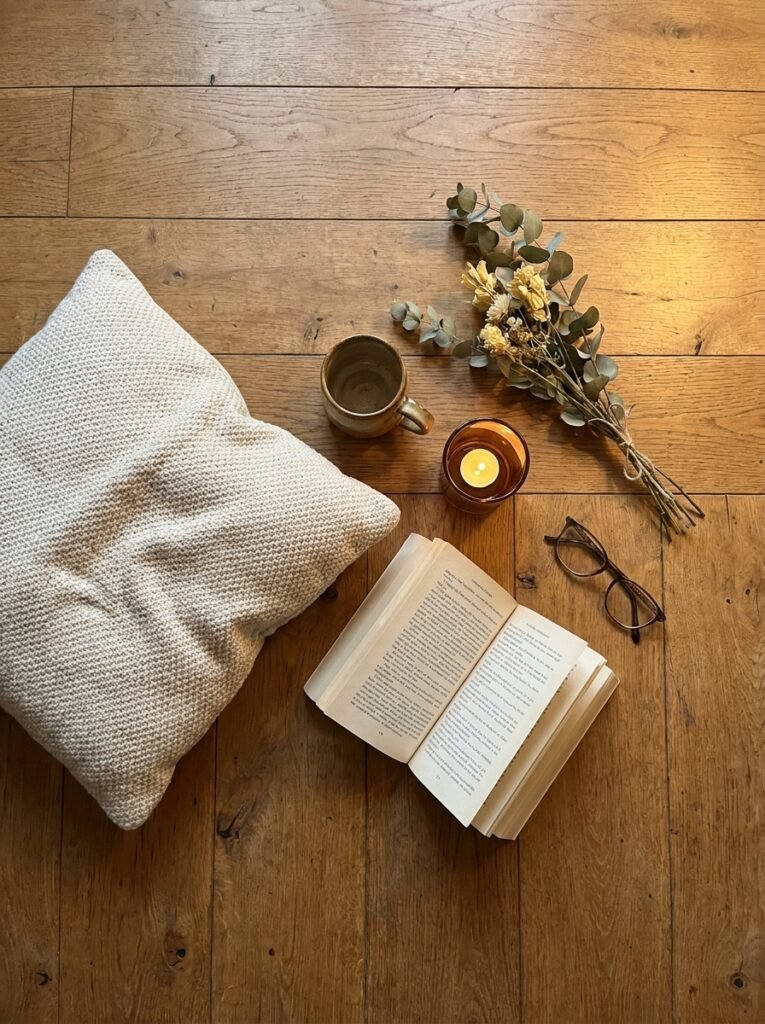
A warm living room is, in the end, a form of love — love for the people who will sit in it, laugh in it, cry in it, and fall asleep in it. Every throw pillow chosen with care, every lamp positioned to cast its best golden light, every plant placed where it will thrive — these are quiet declarations that this space matters, that the people in it matter.
You don’t need a designer’s budget or a decorator’s confidence to create a room that wraps people in warmth. You need curiosity, patience, and the willingness to keep asking the most important design question of all: How does this room make me feel?