
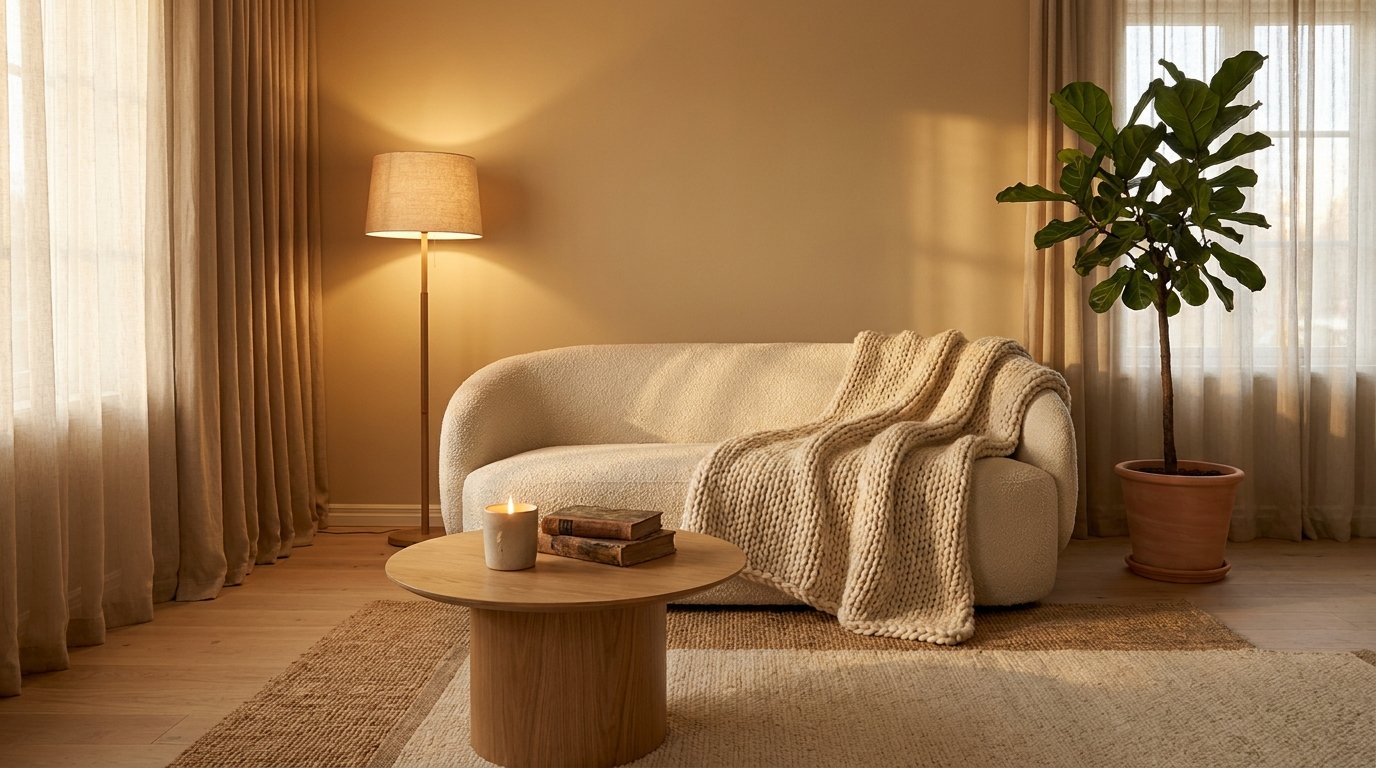
The Coziest Living Room Ideas That Will Make You Never Want to Leave Home
There’s a moment — maybe you’ve felt it — when you sink into the right chair, in the right room, with a warm drink in your hands, and everything just exhales. That’s what a truly cozy living room does. It doesn’t just look good in photos. It feels like the best version of home.

—
1. Why Coziness Is an Emotion, Not Just an Aesthetic
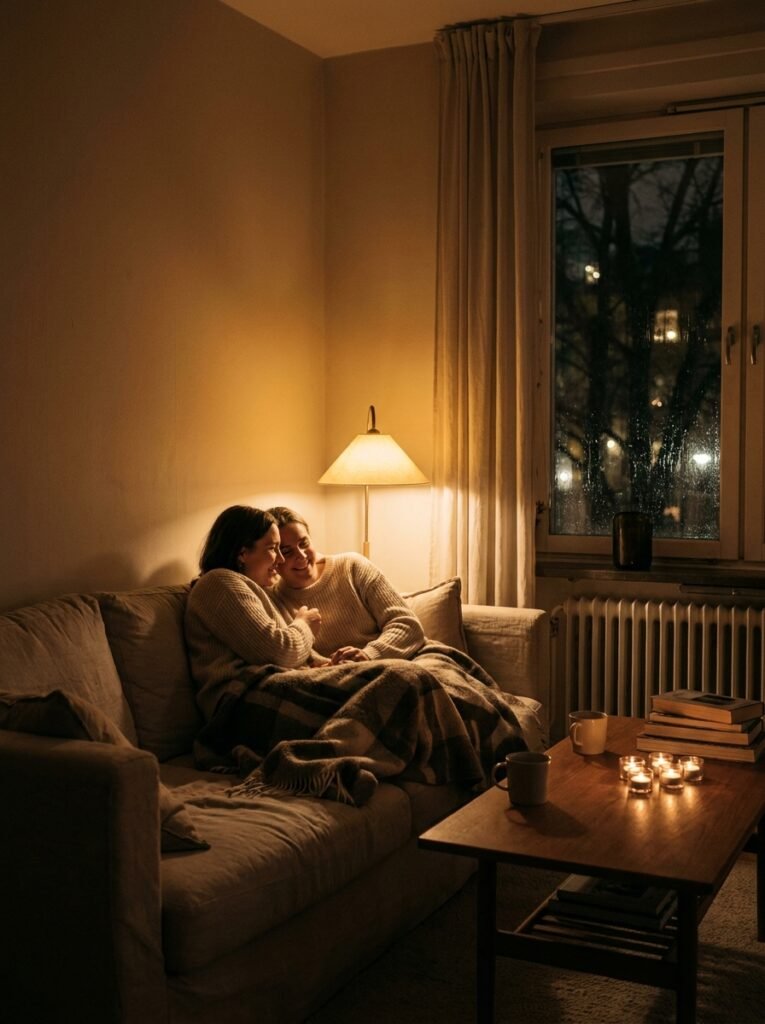
Before we talk throws and throw pillows, let’s talk about something more important: what coziness actually is. The Danish have a word for it — hygge — and it doesn’t translate perfectly into English because it’s not about objects. It’s about a feeling of warmth, safety, and belonging that a space creates around you.
A cozy living room makes you breathe slower. It makes guests linger longer than they planned. It’s the room where conversations get real, where laughter happens without effort, where a rainy afternoon becomes something to look forward to rather than endure.
“A cozy living room doesn’t just hold furniture — it holds the moments that matter most.”
The reason this matters as a starting point is simple: if you design for the feeling first, every decision you make after that becomes much clearer. You stop chasing trends and start curating warmth. And there is a significant difference between the two.
—
2. The Color Palette That Actually Makes a Room Feel Warmer

Color is the single most powerful tool you have — and the most misunderstood. Many people assume that a cozy room must be dark, but that’s not entirely accurate. Coziness comes from depth and warmth, not just darkness.
Warm neutrals like sand, cream, terracotta, caramel, and warm taupe create an envelope of comfort around a room. These tones reflect light softly rather than sharply, which eliminates the cold, sterile feeling that bright whites and cool grays often create.
If you love deeper tones, consider earthy greens like sage and moss, or muted burgundy and rust — colors pulled directly from the natural world. Nature is inherently cozy because our nervous systems are wired to feel safe in it.
A practical approach: start with your walls in a warm neutral, then build inward with deeper tones in upholstery, rugs, and accent pieces. This creates visual layering — the same principle that makes a well-dressed person look put-together. The room feels intentional, rich, and deeply livable.
—
3. The Furniture Arrangement Secret Nobody Talks About Enough
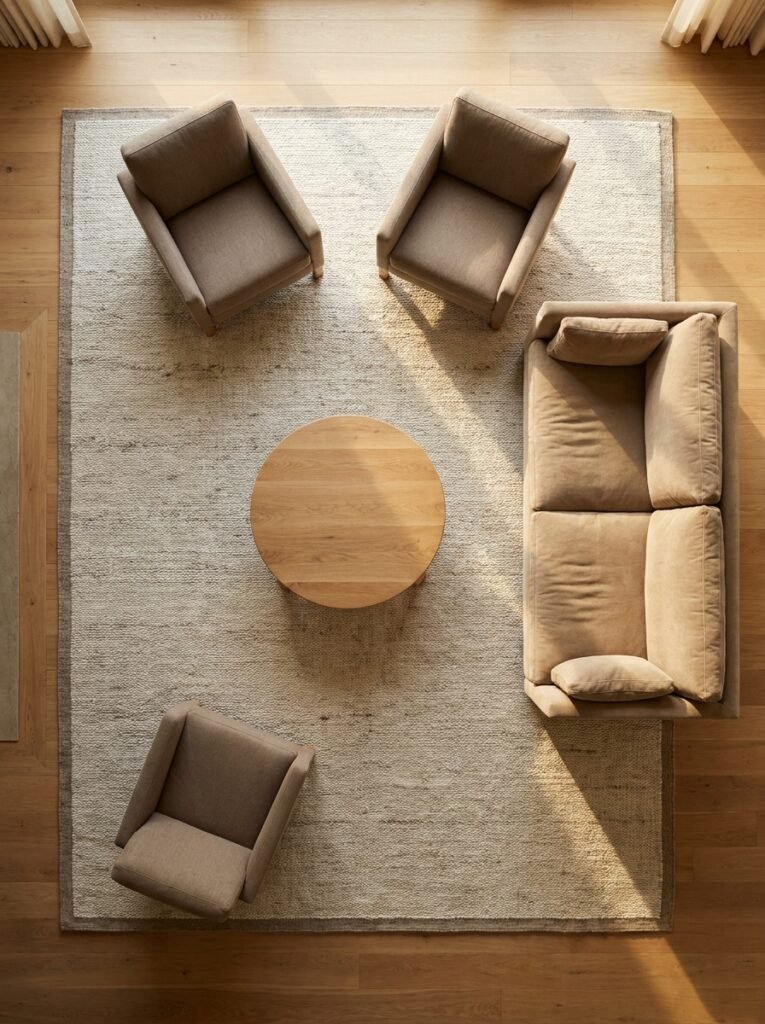
Here’s something that surprises people: coziness is about proximity. Not just what furniture you choose, but how close it sits to itself and to the people in the room.
A common mistake is pushing all the furniture against the walls — a habit many of us inherited from childhood homes with large families trying to maximize floor space. But floating furniture toward the center of a room, arranged inward toward each other, creates an entirely different energy. It says: come in, sit down, stay awhile.
The ideal cozy arrangement has seating no more than eight feet apart. Beyond that distance, conversation becomes an effort. Voices raise. Eye contact breaks. The intimacy dissolves. Bring pieces closer together and watch how the entire dynamic of the room changes — for people and for photographs.
A U-shape or L-shape configuration works beautifully in most living rooms. Anchor everything with a rug that’s large enough to hold all the front legs of the seating. This grounds the space and ties it together visually.
—
4. Lighting — The One Element That Changes Everything After Dark
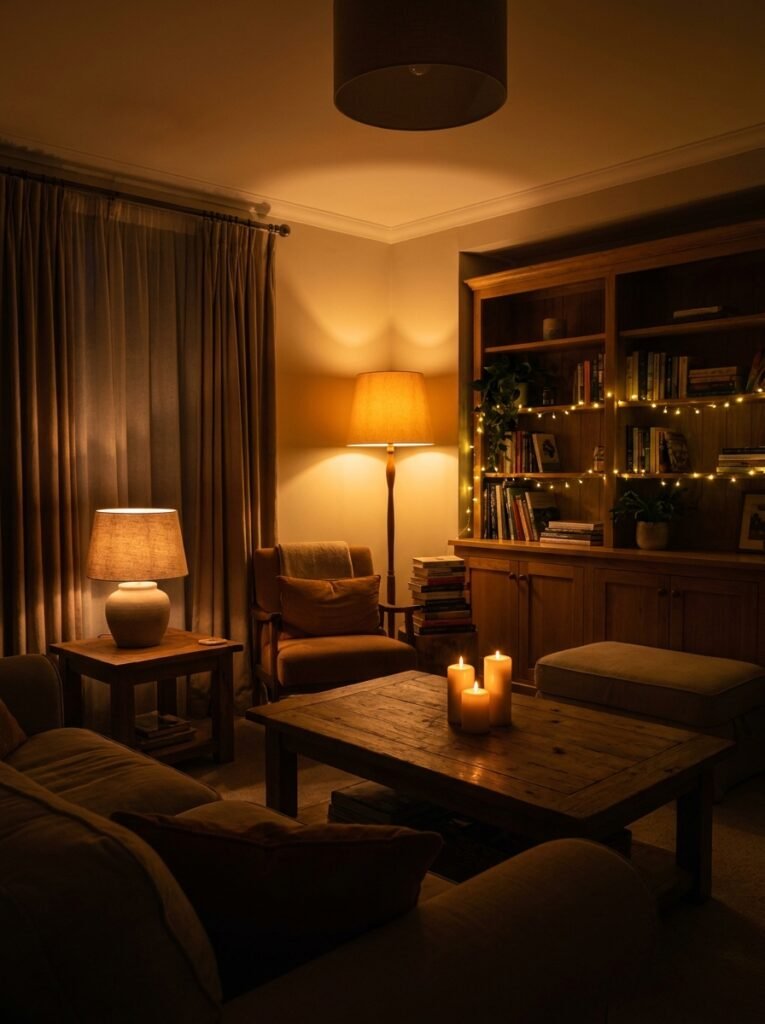
Imagine walking into a living room lit entirely by overhead fluorescent light. Now imagine that same room lit by three warm lamps, a few candles, and the soft glow of fairy lights tucked into a corner. The furniture hasn’t changed. The paint hasn’t changed. But the room? Completely transformed.
Lighting is the single most impactful element in creating coziness — and the most often neglected. The goal is to layer your light sources so that no single one dominates. Overhead lighting should be dimmable and used sparingly. Floor lamps, table lamps, wall sconces, and candles each contribute a different quality of warmth.
Look for bulbs with a color temperature of 2700K or lower — this is the warm, amber-toned light that makes skin look beautiful and rooms feel like evening in a farmhouse kitchen. Cool daylight bulbs (5000K and above) are excellent for workspaces but actively counteract coziness in a living room.
Candles deserve their own mention. Even battery-operated ones carry an undeniable psychological warmth — something about flickering light that speaks to something ancient and safe inside us.
—
5. Textiles: Where Coziness Becomes Something You Can Actually Touch
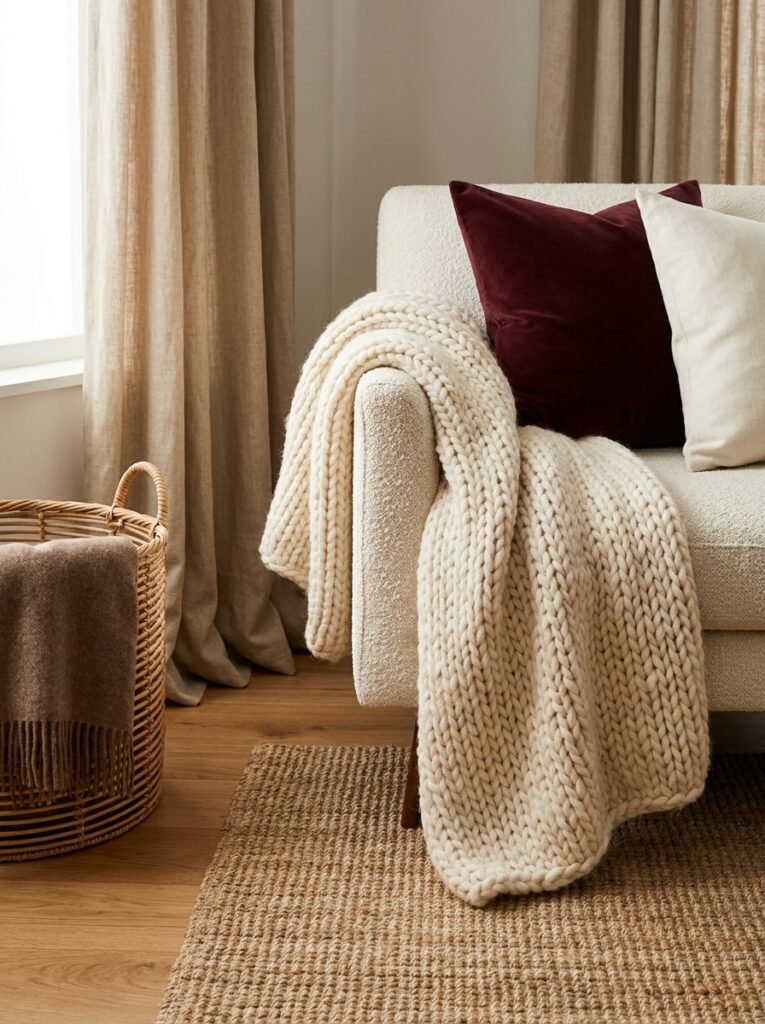
If color sets the mood and lighting sets the atmosphere, textiles are where coziness becomes physical. A room can look warm in a photo and feel cold in real life. Textiles close that gap entirely.
The rule of thumb: layer at least three different textures in a living room. A chunky knit throw. A velvet cushion. A jute or wool area rug. A linen curtain. Boucle upholstery. Each material catches light differently and invites touch in a different way — and together, they create a sensory richness that reads immediately as warm and welcoming.
“The softest rooms aren’t just designed for the eyes — they’re designed for hands that reach for something comforting.”
Don’t be afraid of abundance here. More texture is almost always better than less in a cozy living room. Drape an extra throw over the arm of a chair. Stack cushions in varying sizes. Let curtains pool slightly on the floor. These small indulgences signal comfort in a way that sparse, minimal styling rarely achieves.
—
6. The Magic of a Focal Point That Draws People In
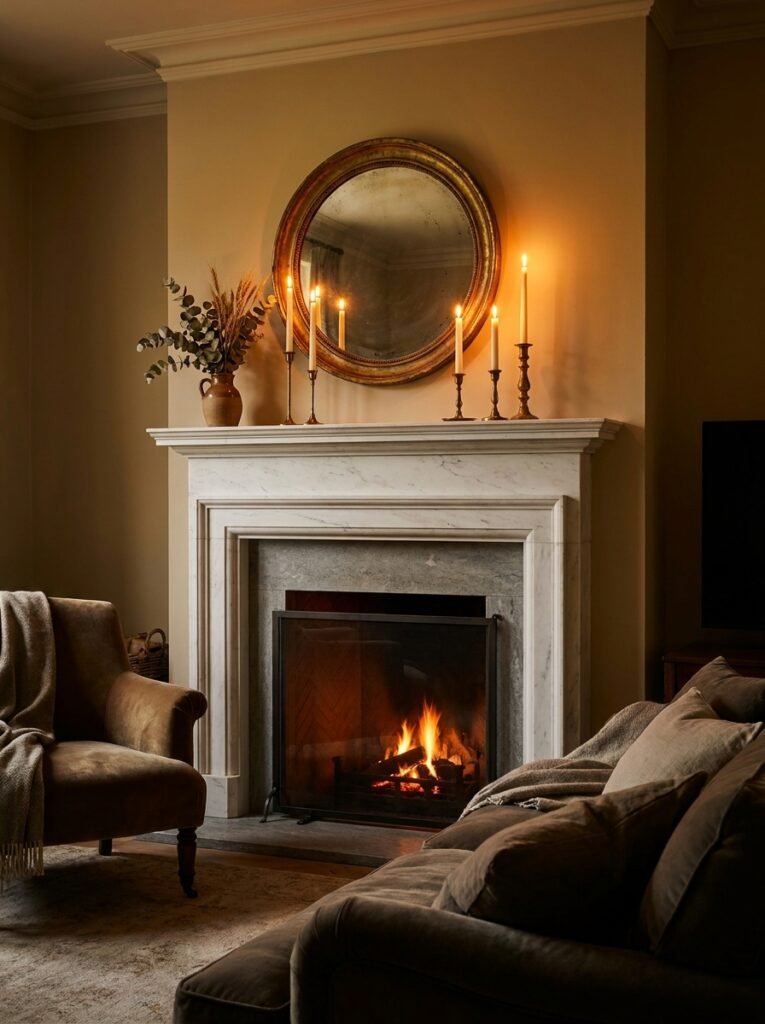
Every truly cozy living room has a focal point — something the eye naturally travels to and the body naturally gravitates toward. Traditionally, this was a fireplace. And if you’re lucky enough to have one, use it unapologetically as your room’s anchor.
But a fireplace isn’t the only option. An oversized piece of art, a beautifully styled bookshelf, a large window with a deep seat, or even an electric fireplace insert can serve the same psychological purpose: it gives the room a heart.
Style your focal point intentionally. A mantle stacked with meaningful objects, warm candles, and a mirror that reflects light. A gallery wall arranged with purpose. A bookshelf organized by color and interspersed with plants, ceramics, and personal objects. The focal point should tell a story — because cozy rooms feel personal, not showroom-perfect.
—
7. Plants, Natural Elements, and the Science of Biophilic Design
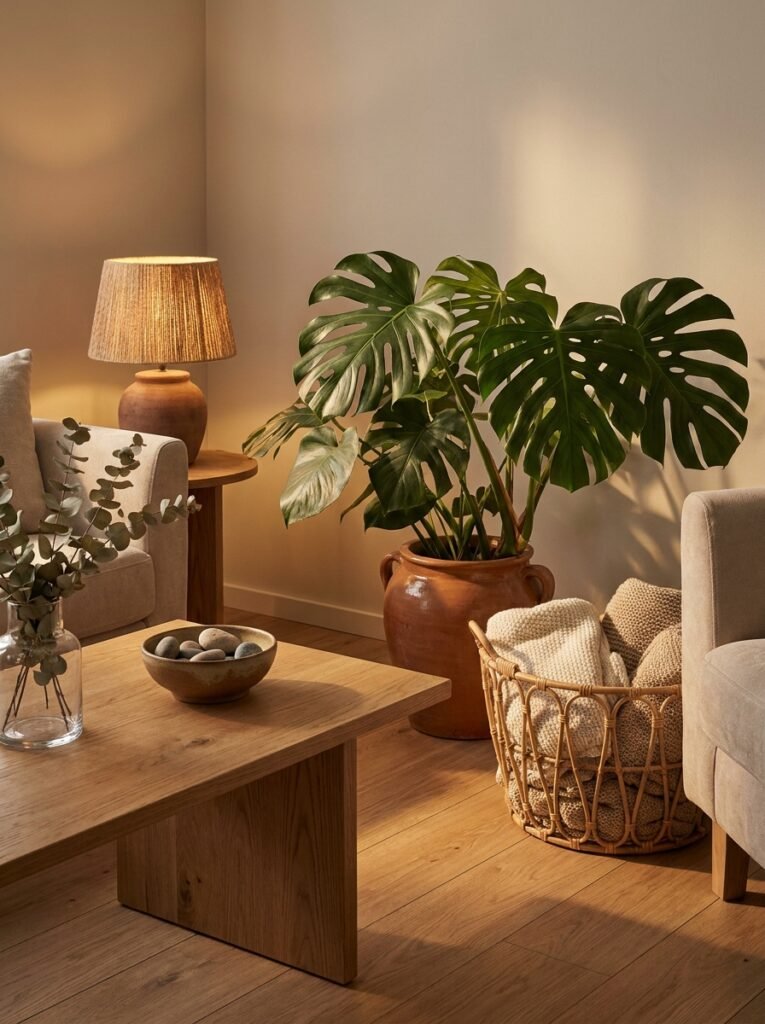
Research consistently shows that exposure to natural elements — wood, stone, water, plants — reduces cortisol levels and creates feelings of calm and safety. This is the science behind biophilic design, and it’s one of the most powerful tools available to anyone designing a cozy living room.
You don’t need a jungle. A single large plant in a warm ceramic pot, a wooden coffee table with visible grain, a woven rattan basket, a bowl of river stones, a vase of dried eucalyptus — these elements ground a space in the natural world and make it feel less manufactured, less cold, and fundamentally more human.
Live plants carry an added dimension: they change. They grow. They require a small amount of care. And that living quality makes a room feel alive rather than staged — which is precisely the difference between a cozy home and a cozy-looking hotel lobby.
—
8. The Small Details That People Feel Without Noticing
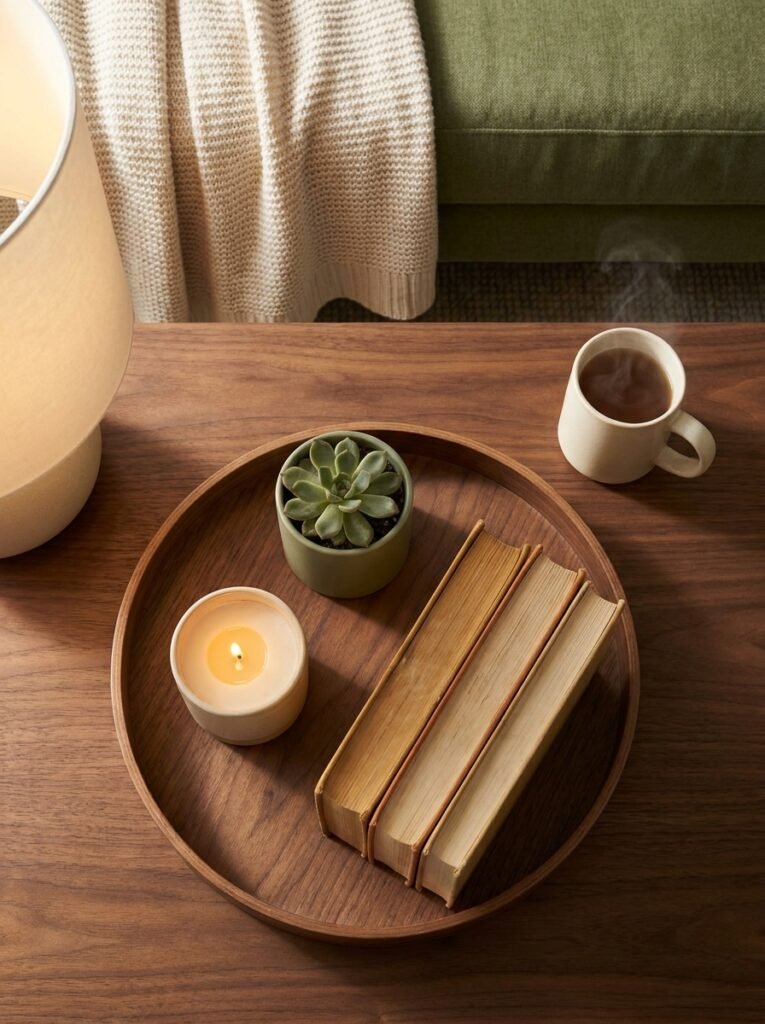
Here’s a truth about cozy spaces: people rarely walk in and say “Oh, what a beautiful throw pillow.” Instead, they walk in and say, “I love this room — I don’t know what it is.” That “I don’t know what it is” is almost always the sum of small, intentional details working together invisibly.
A tray on the coffee table with a candle, a small succulent, and a stack of books. A basket next to the couch filled with extra blankets. A side table at exactly the right height for a coffee cup. A lamp placed in a corner that was previously dark. Curtains hung close to the ceiling so the windows feel taller and the room feels larger.
None of these details costs much. Most cost nothing but thought. But collectively, they tell the person in the room: someone cared about your comfort here. And that is the emotional core of all great interior design.
—
9. Scent — The Forgotten Dimension of a Cozy Room
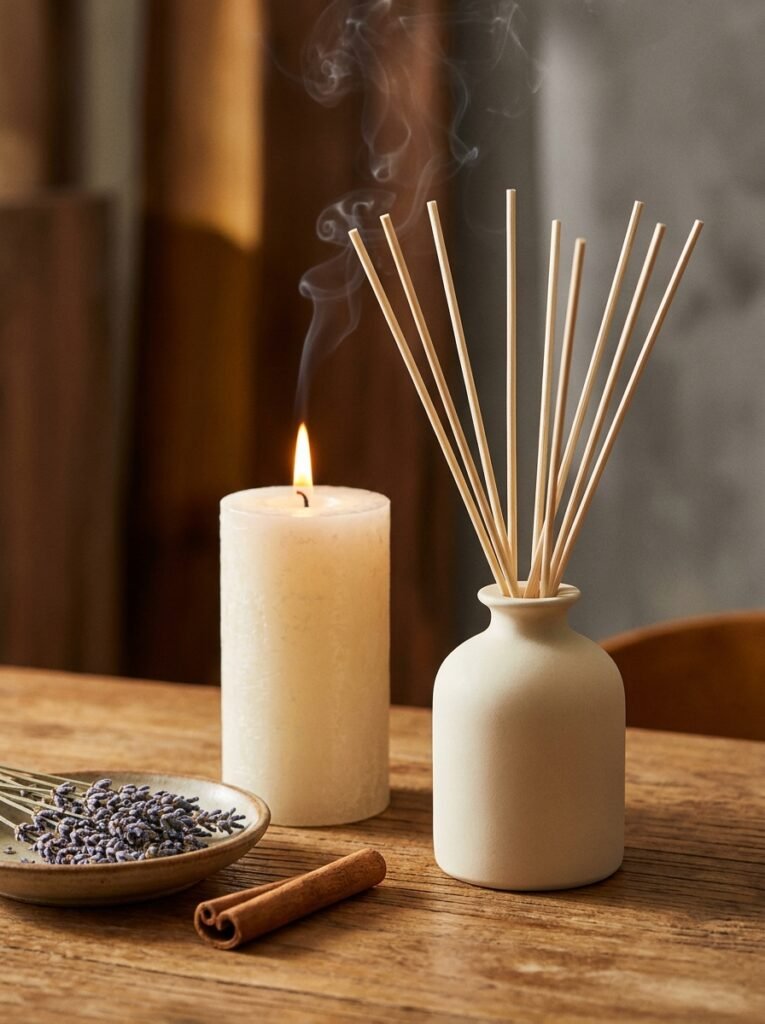
We talk about how rooms look. We talk about how they feel to the touch. Rarely do we talk about how they smell — but scent may be the most emotionally direct sense we have. Smell bypasses rational thought and goes straight to memory and emotion.
A cozy living room smells like something. It smells like the vanilla and amber of a slow-burning candle. Like the cedar of a real wood surface. Like freshly brewed coffee drifting in from the kitchen. Like dried lavender in a small dish near the window.
“The best-designed rooms don’t just look like home — they smell like it.”
Invest in one or two signature scents for your living room. Reed diffusers work well for consistent background fragrance. Candles create atmosphere for evenings. Avoid overpowering artificial scents — the goal is a subtle warmth that you notice on the way in and forget about once you’re settled, because it simply feels right.
—
10. Budget-Friendly Cozy: How to Achieve Warmth Without a Major Renovation
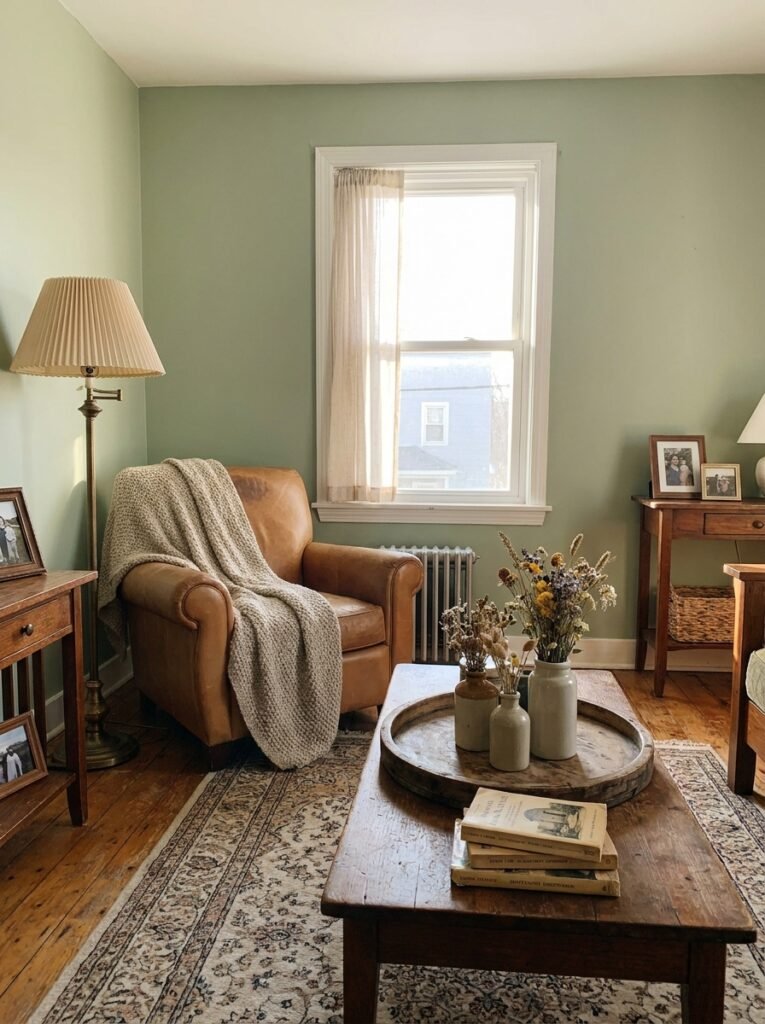
The beautiful thing about cozy design is that it doesn’t scale with budget the way that other design styles do. Some of the warmest, most genuinely inviting living rooms exist in small apartments with secondhand furniture and discount-store accessories.
Start with what you have. Rearrange the furniture. Move things closer together. Add one warm lamp. Swap a cool-toned throw for a warmer one. Paint is inexpensive and transformative — a gallon of warm taupe or sage can completely rewrite a room’s personality.
Thrift stores and estate sales are extraordinary sources for the kinds of objects that create coziness: aged wooden trays, vintage ceramic vases, worn leather chairs, heavy curtain panels, oversized knit blankets. These pieces carry a history that brand-new fast-furniture simply cannot replicate, and history — the sense that a room has been lived in and loved — is one of the most powerful cozy signals there is.
—
11. Seasonal Coziness: Evolving Your Space Through the Year
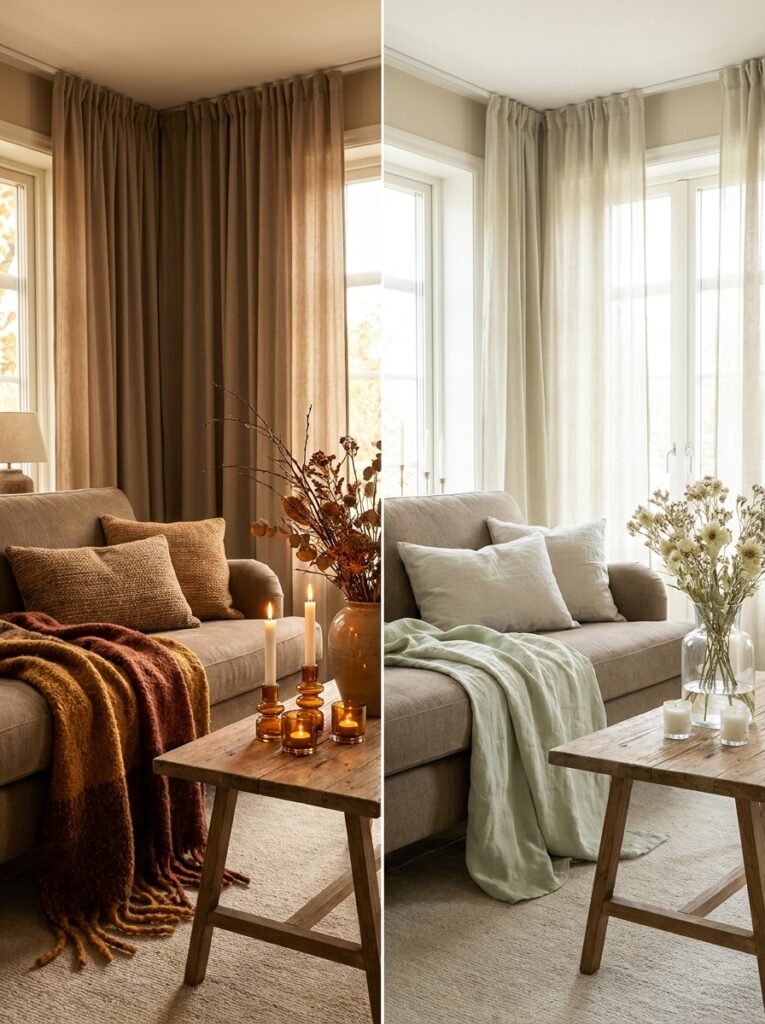
A living room that stays identical through all four seasons misses an opportunity. Coziness is inherently seasonal — and adapting your space to the time of year deepens the experience considerably.
In autumn and winter, layer in heavier textiles, deeper colors, more candles, and warm-toned accessories. A wool blanket over the back of the sofa. A cluster of amber glass candleholders on the coffee table. Dried botanicals. Rich, earthy cushion covers.
In spring and summer, lighten the palette. Swap heavy throws for linen. Bring in fresh or dried flowers. Open the curtains wider to let natural light flood in. Move a plant closer to a window. These seasonal shifts keep the room feeling alive and intentional — never stagnant.
—
12. Making It Yours: The Final Layer That Makes a Room Truly Cozy
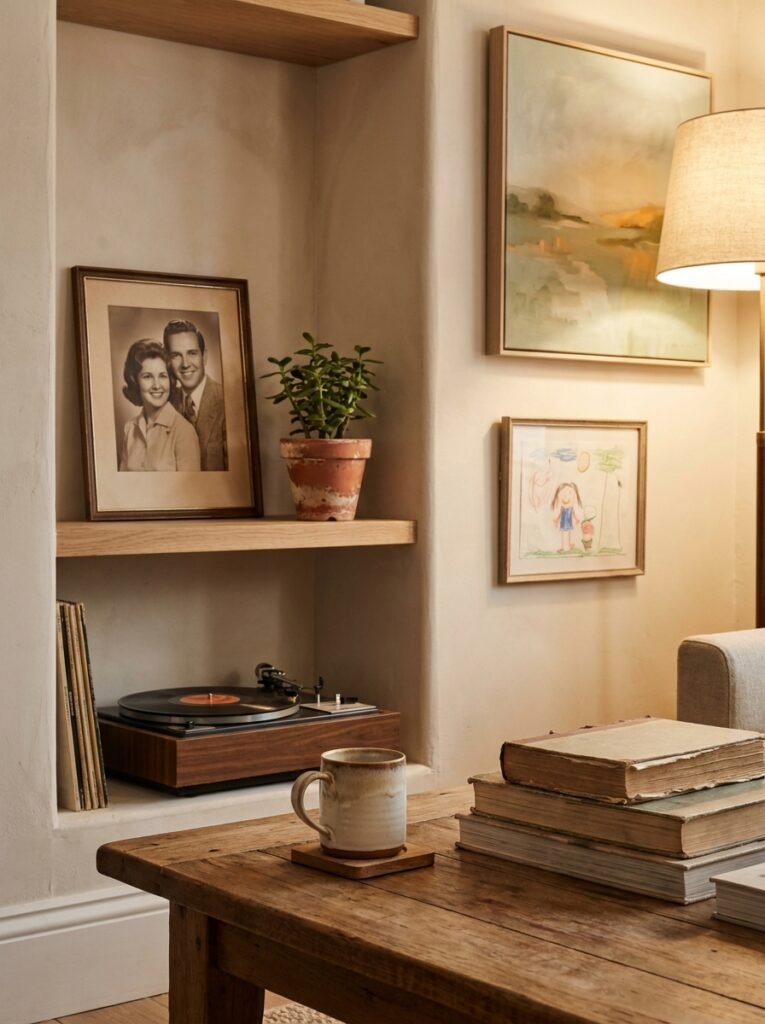
This is perhaps the most important section, and it’s impossible to find in any design catalog. The final layer of a truly cozy living room is you.
The books you’ve actually read, stacked on the coffee table. The photograph from a trip that changed your life, framed on the wall. The handmade mug from a local market that you use every single morning. The old record player your grandmother gave you. The art your child made in third grade.
These objects carry no monetary value that a home stager would recognize. But they carry something far more powerful — they carry meaning. And meaning, it turns out, is the deepest form of warmth a room can have. Anyone can buy a beautiful throw pillow. Only you can create a room that looks like you live there — fully, lovingly, and well.
—
🌿 How to Take Care of Your Cozy Living Room
Maintaining a cozy space is less about cleaning schedules and more about intentional habits that keep the warmth alive.
First, declutter regularly — but thoughtfully. Coziness is not minimalism, but it does require that the objects in your room have purpose. If something no longer brings warmth or function, let it go. Clutter creates visual noise that counteracts calm.
Second, rotate your textiles seasonally. Wash and store heavier blankets and cushion covers during warmer months. This keeps pieces fresh and makes their return each autumn feel like a genuine homecoming.
Third, refresh your scent every few weeks. Replace candle jars when they burn down. Replenish diffuser reeds. Keep dried botanicals dust-free. Scent fades gradually and we stop noticing it — refreshing it reactivates the sensory warmth of the room.
Fourth, tend to your plants. A struggling or dying plant creates a subtle but real atmosphere of neglect. Choose low-maintenance varieties if you’re not a natural plant parent — pothos, snake plants, and ZZ plants thrive on minimal care and add maximum life.
Finally, sit in the room regularly and ask yourself how it feels. Not how it looks. How it feels. Comfort is a lived experience, and the best cozy rooms are continuously refined by the people who actually inhabit them.
—
❓ FAQ
Q: What colors make a living room feel the most cozy? A: Warm neutrals — sand, cream, caramel, terracotta, and warm taupe — are universally effective at creating coziness. Deeper earthy tones like sage green, moss, burgundy, and rust also add warmth without making a space feel dark. The key is choosing tones with warm (yellow or red) undertones rather than cool (blue or green) undertones, even within the neutral palette.
Q: How do I make a small living room feel cozy without it feeling cluttered? A: Small rooms have a natural coziness advantage — proximity and intimacy are already built in. Focus on one strong focal point, use furniture scaled appropriately to the room, and choose a limited palette of two or three warm tones. Layer texture rather than objects, and use vertical space — tall bookshelves, curtains hung near the ceiling — to draw the eye upward and make the room feel larger without losing warmth.
Q: What’s the most affordable way to make a living room cozier immediately? A: Lighting is the most immediate and affordable transformation available. Replace any cool-toned overhead bulbs with warm 2700K bulbs, add one floor lamp, and place a few candles strategically. This single change costs under thirty dollars in most cases and completely alters the atmosphere of the room — especially in the evening when coziness matters most.
—
💭 Final Thought
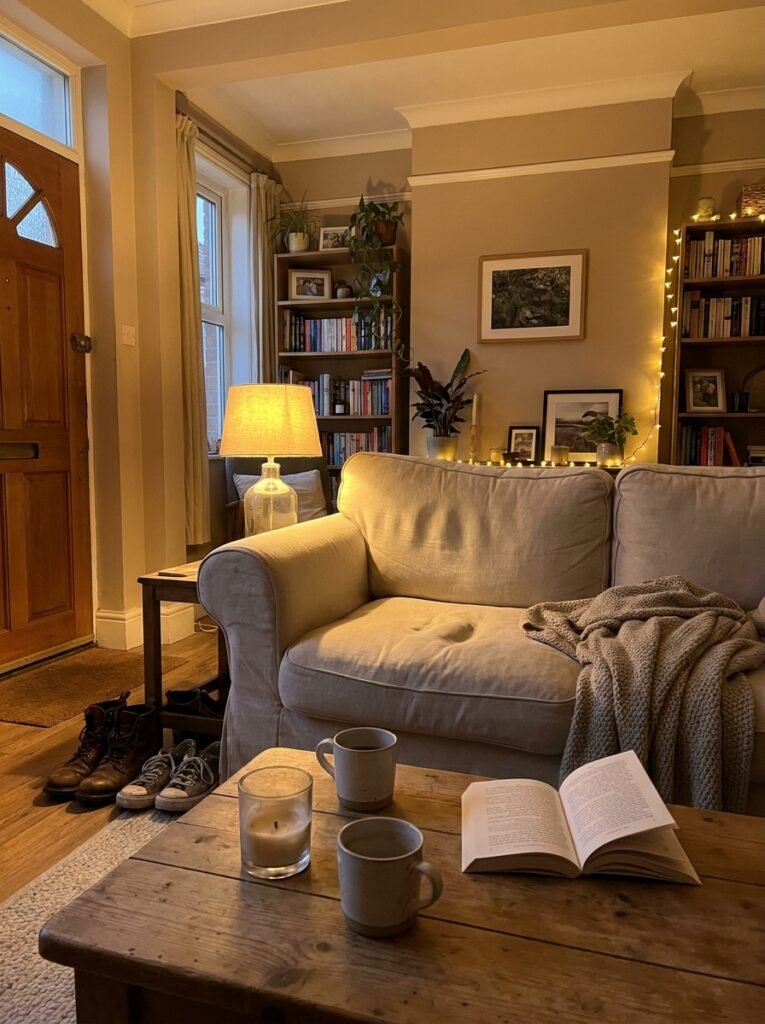
A cozy living room isn’t a design project you complete and check off a list. It’s a living, breathing reflection of the life being lived inside it — and it grows warmer with time, with intention, and with the small daily acts of care that turn a house into a home. The best rooms aren’t the ones that win awards or go perfectly viral on Pinterest. They’re the ones where people take their shoes off without being asked, where conversations stretch past midnight, and where coming home actually feels like arriving somewhere. So the question worth sitting with today is this: what one small change could you make this week to help your living room feel more like that?