
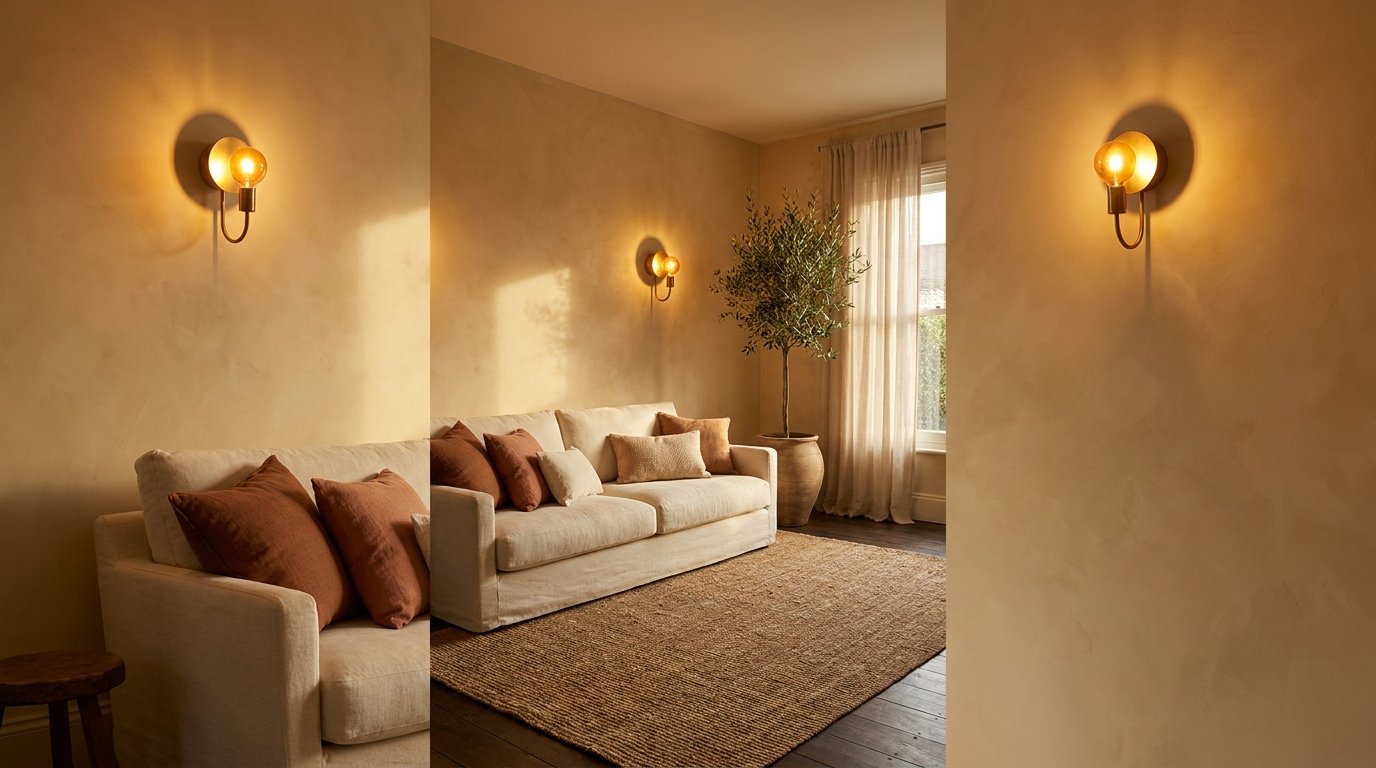
Why Wall Sconces Are the Secret to a Living Room That Actually Feels Like Home
There’s a moment — usually in the evening, when the overhead light is too harsh and the lamp isn’t quite enough — when you realize your living room is missing something. Wall sconces might be the answer you didn’t know you were looking for.
—
1. The Problem With Most Living Room Lighting (And Why Nobody Talks About It)
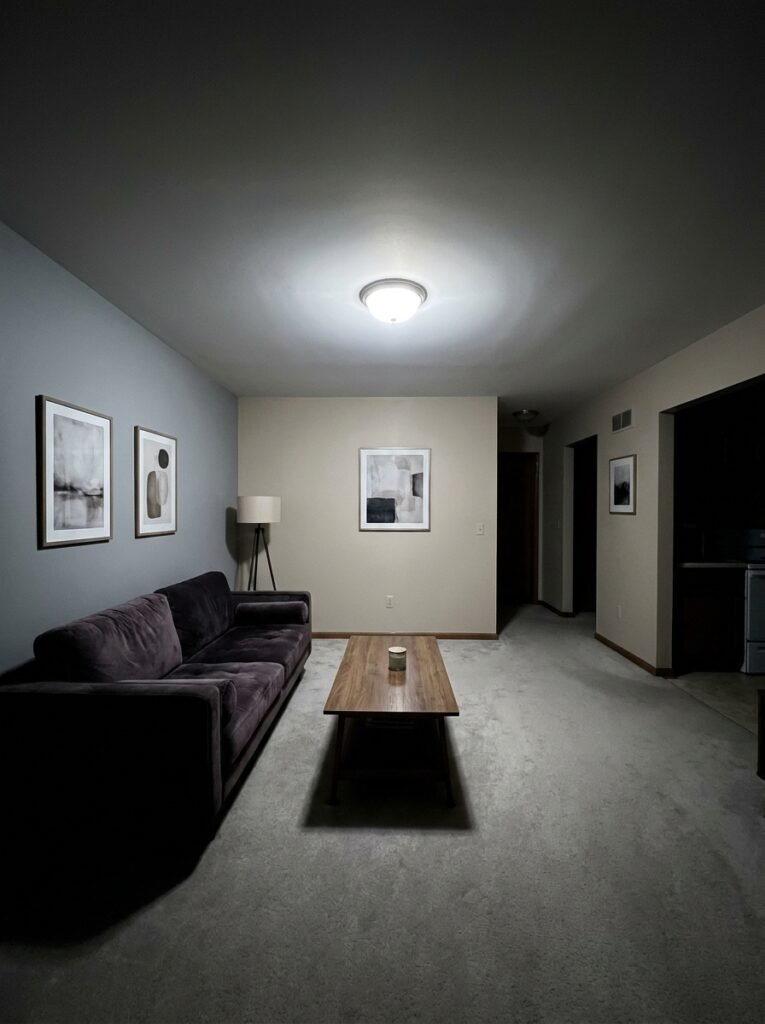
Walk into almost any living room and you’ll find the same setup: one ceiling fixture doing all the heavy lifting while the corners stay dark and the room feels flat, no matter how beautiful the furniture is. Lighting designers have a term for this — “one-point lighting” — and it’s the single biggest reason so many otherwise lovely rooms feel vaguely uncomfortable without anyone being able to explain why.
The human eye is naturally drawn to light, which means when all your light comes from one source directly overhead, there’s nowhere interesting for your gaze to travel. The room loses dimension. It loses warmth. It loses the layered, inviting quality that makes you want to sink into the sofa and stay awhile.
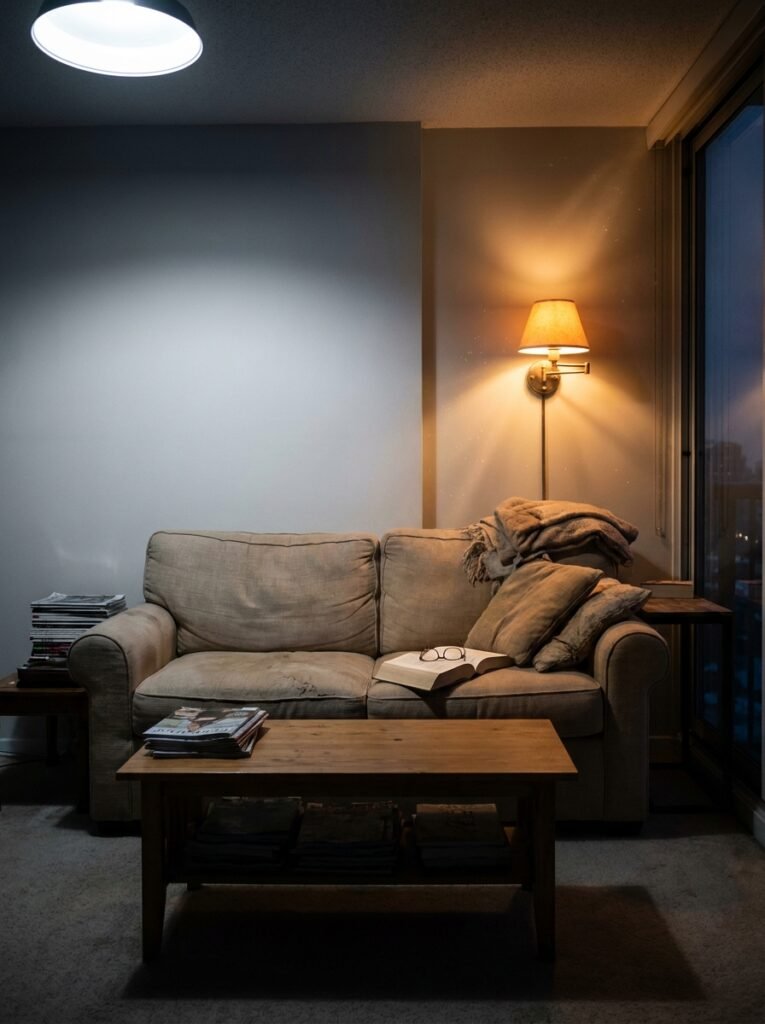
Wall sconces solve this by introducing what designers call “secondary lighting layers” — light sources that sit at eye level or slightly above, casting pools of warm illumination that make the walls themselves feel alive. When sconces flank a sofa, frame a fireplace, or glow softly on either side of a gallery wall, they don’t just brighten the room. They completely transform the feeling of the entire space.
“Great lighting doesn’t illuminate a room — it reveals it.”
2. What Exactly Is a Wall Sconce, and Why Is It Different From Everything Else?
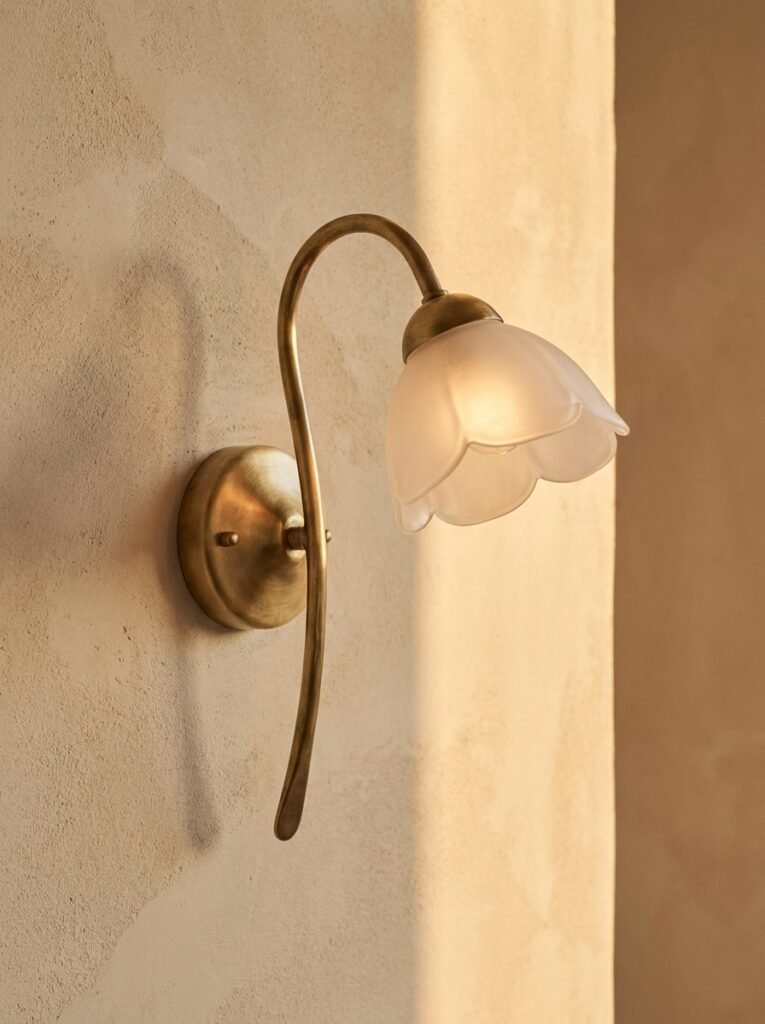
A wall sconce is a light fixture mounted directly onto a wall, hardwired into the electrical system or — in many modern versions — plug-in or battery-operated for renters and commitment-phobes alike. Unlike floor lamps, which anchor light to a single spot on the floor, or table lamps, which depend on surface space you may not have, sconces float at wall height. They take up zero floor space, zero tabletop space, and they make an enormous visual statement in the process.
What makes them genuinely special is their dual function: they serve as both light source and art. A well-chosen sconce on a bare wall is as decorative as a framed print — sometimes more so — because it brings movement, texture, and the living quality of actual light. A sculptural brass sconce catching the evening glow, a frosted glass fixture diffusing soft light across a textured wall — these aren’t just functional objects. They’re design moments.
There are four main types worth knowing. Uplight sconces direct light upward, elongating the perception of ceiling height and creating drama. Downlight sconces cast a focused beam downward, perfect for reading nooks or accent lighting. Ambient sconces diffuse light in all directions through translucent shades, creating that soft, all-over glow. And swing-arm sconces extend and pivot, offering the practical flexibility that makes them a favorite beside sofas and reading chairs.
3. The Height Question Everyone Gets Wrong
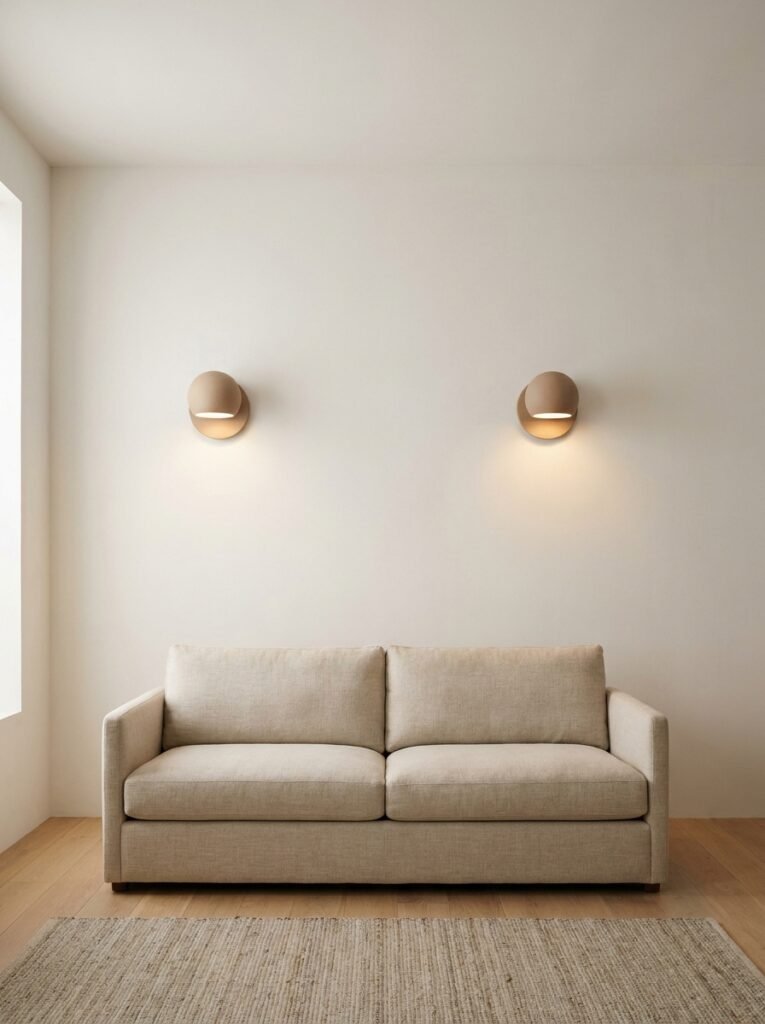
Here’s where even confident decorators stumble: sconce mounting height. Get it wrong and the fixture looks awkward, lights the ceiling instead of the room, or — worse — sits at exactly face-level and blinds anyone standing nearby.
The general rule is to mount wall sconces between 60 and 72 inches from the floor to the center of the fixture. This places them slightly above average eye level when standing, which creates a flattering, ambient light quality without any glare. In rooms with particularly high ceilings, you can push this to 78 or even 84 inches, letting the fixture become a more dramatic architectural element.
When flanking a sofa, the sweet spot shifts slightly. If your sofa back sits at around 30 to 36 inches, you want the sconce to hit somewhere between 48 and 60 inches from the floor — low enough to be visually connected to the seating, high enough not to be in your eyeline when you lean back. That small range makes a profound difference in how natural and intentional the pairing looks.
One more tip that rarely gets mentioned: if you’re mounting sconces on either side of a piece of furniture or artwork, measure the space between them carefully. As a rule of thumb, sconces flanking a sofa should be spaced 6 to 8 feet apart — roughly the width of a standard three-seat sofa — to create symmetry without feeling crowded.
4. Choosing the Right Style for Your Living Room’s Personality
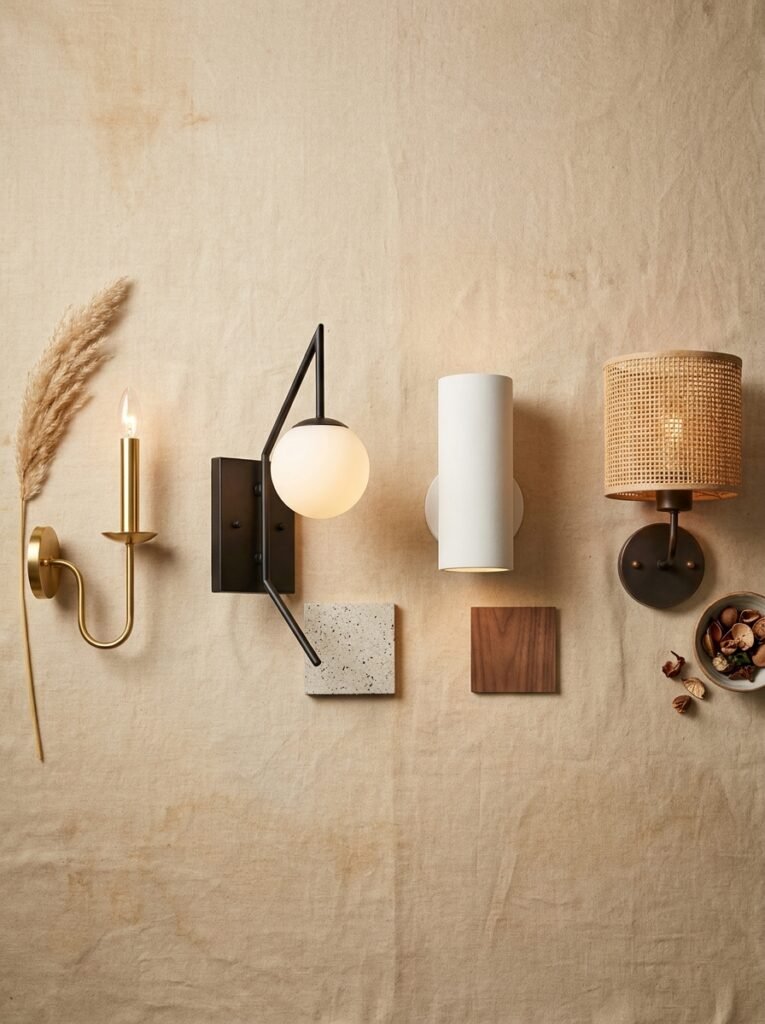
Style selection is where the real creative joy lives, and the options in today’s market are genuinely extraordinary. The key is matching the sconce’s character to the character of your space — not forcing a trend onto a room that has its own story to tell.
For a warm, traditional living room with upholstered furniture, rich wood tones, and layered textiles, look toward candlestick sconces in brushed brass or antique bronze. Their slender profiles and flame-like bulbs reference centuries of domestic warmth without feeling costume-y. Pair them with Edison-style amber bulbs and the effect is magical — like the whole room is lit by candlelight.
Mid-century modern living rooms — the ones with clean lines, walnut furniture, and a carefully edited color palette — shine brightest with sculptural sconces in matte black, warm brass, or even ceramic. Look for geometric shapes, exposed bulbs, or those distinctive sputnik-style multi-arm designs that feel simultaneously retro and fresh.
Minimalist and Scandinavian-inspired spaces call for restraint: simple cylinder sconces in white or brushed nickel, indirect uplighting that disappears into the architecture, or the increasingly popular concrete and linen shade combinations that feel effortlessly considered.
Maximalist, bohemian, and eclectic living rooms — the spaces layered with pattern, plant life, and personality — can handle something bolder. Rattan shades, hammered metal, stained glass, hand-thrown ceramic bases, or even sconces that look like tiny sculptural lanterns all feel at home in a room that celebrates abundance.
“The right sconce doesn’t match your room — it completes it.”
5. How Plug-In Sconces Changed Everything for Renters
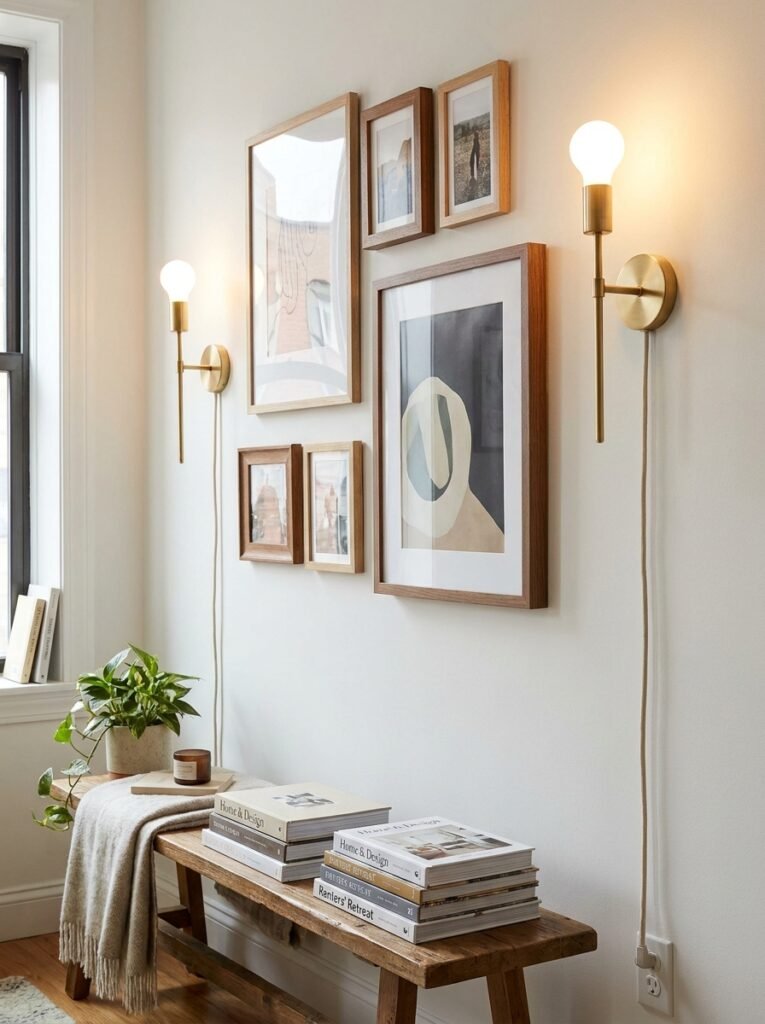
Until fairly recently, adding wall sconces to your living room meant calling an electrician, planning around wiring, patching drywall, and spending several hundred dollars before you’d even bought the fixture. That reality locked renters and budget-conscious decorators out of one of the most impactful design tools available.
Plug-in wall sconces changed all of that. These fixtures come with a standard power cord that plugs into any wall outlet — sometimes visible, sometimes discreetly hidden behind furniture or run along the wall in a cord cover that gets painted to match. The installation involves nothing more than mounting hardware and a power outlet, which means you can have professionally styled sconce lighting in an afternoon, with no tools beyond a drill and a level.
The range of plug-in options has expanded dramatically in recent years, from basic pharmacy-style designs to genuinely beautiful statement pieces in every style imaginable. Battery-operated and rechargeable sconces have also entered the market in a serious way, many of them equipped with warm LED light and smart controls that let you adjust brightness from your phone. For anyone renting a space with a no-modification lease, these are nothing short of revolutionary.
6. The Magic of Dimmers — Why Every Sconce Needs One
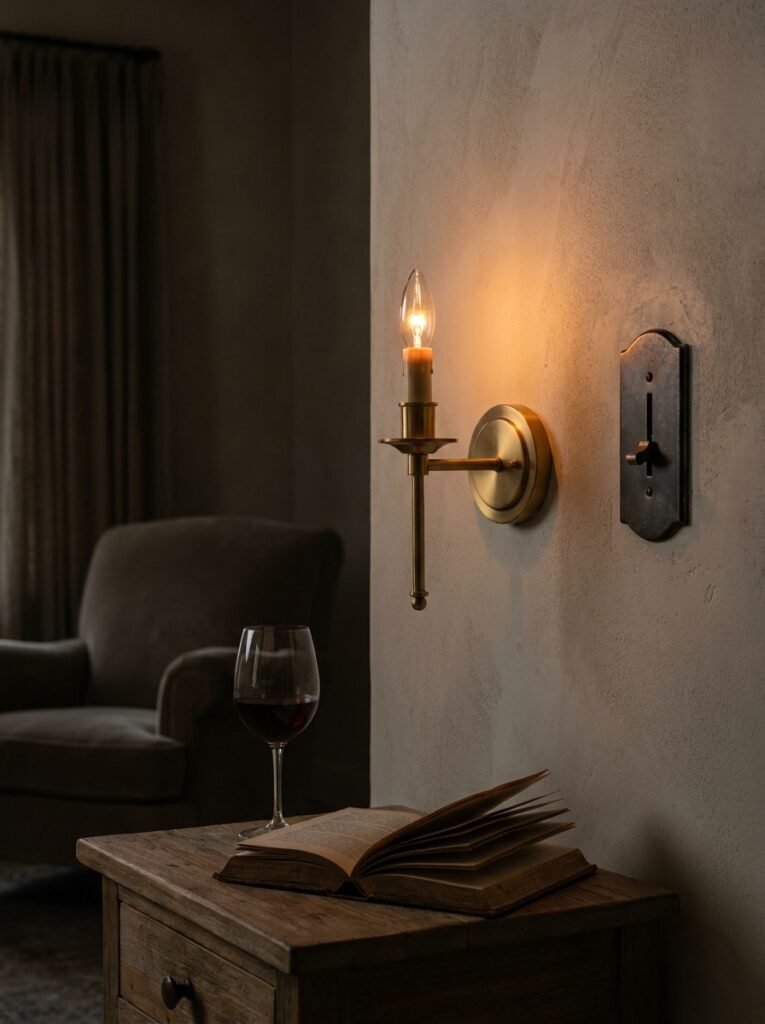
If wall sconces are the secret weapon of living room lighting, dimmers are the secret weapon of sconces. The ability to control the exact intensity of your light at any moment transforms a fixed element into a fully responsive one — brighter when you need to focus, softer when you want to unwind, almost candlelike when the evening calls for it.
Installing a dimmer switch is one of the simplest, most cost-effective upgrades a homeowner can make — typically a straightforward DIY job with basic electrical knowledge and the right switch for your fixture type. LED-compatible dimmer switches are now widely available and priced very reasonably, and many smart home systems include dimming as a standard feature accessible through voice or phone.
The practical payoff is significant: a living room with dimmable sconces effectively becomes multiple rooms in one. Bright and functional for daytime use, warm and ambient for evening entertaining, and soft and dreamy for winding down at the end of a long day. That kind of versatility from a single design decision is exceptional value.
7. Pairing Sconces With Other Lighting for a Layered Look
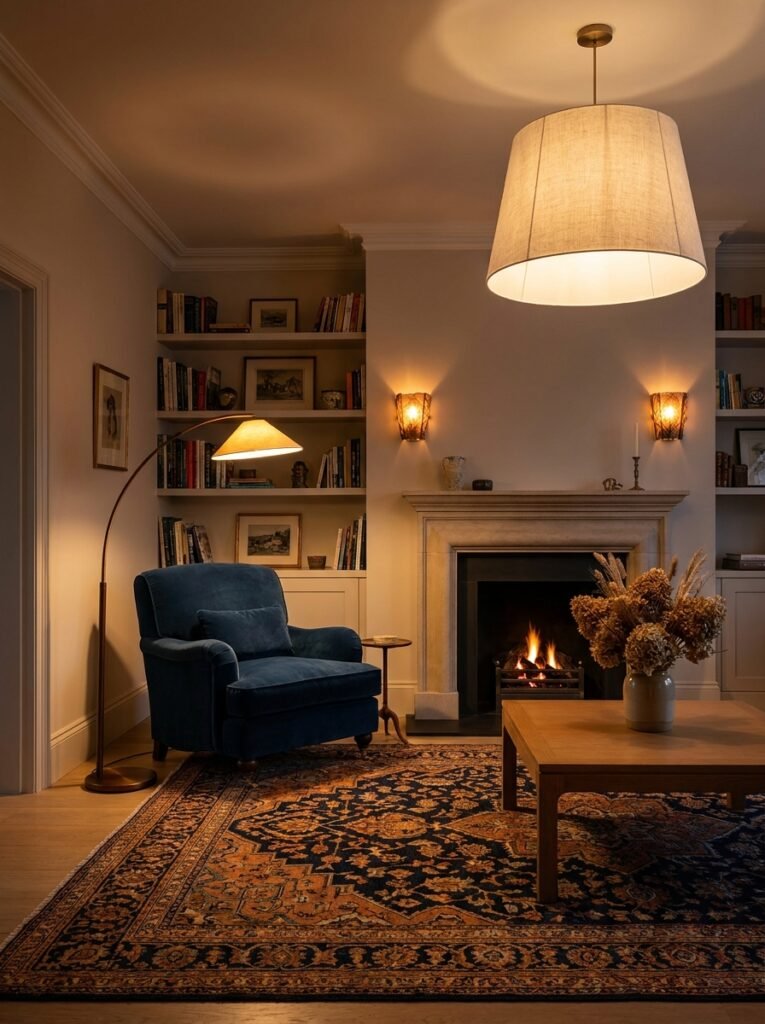
The true power of wall sconces emerges when they’re part of a layered lighting scheme rather than operating alone. Layered lighting — a concept used by professional interior designers on every project — means deliberately combining multiple light sources at different heights and intensities to create a room that feels rich, complex, and tailored.
A well-layered living room typically includes three categories: ambient lighting (the general room illumination, often from overhead fixtures or recessed lighting), task lighting (focused light for reading, working, or specific activities), and accent lighting (decorative light that highlights architectural features, artwork, or creates mood). Sconces can comfortably occupy all three categories depending on their type and placement.
For a cohesive look, choose light fixtures across all your layers that share at least one design element — the same metal finish, a complementary color family, or a similar aesthetic sensibility. You don’t need everything to match exactly. In fact, a mix of related-but-distinct fixtures often looks more intentional and collected than a perfectly matched set.
8. Gallery Walls, Fireplaces, and the Art of Flanking
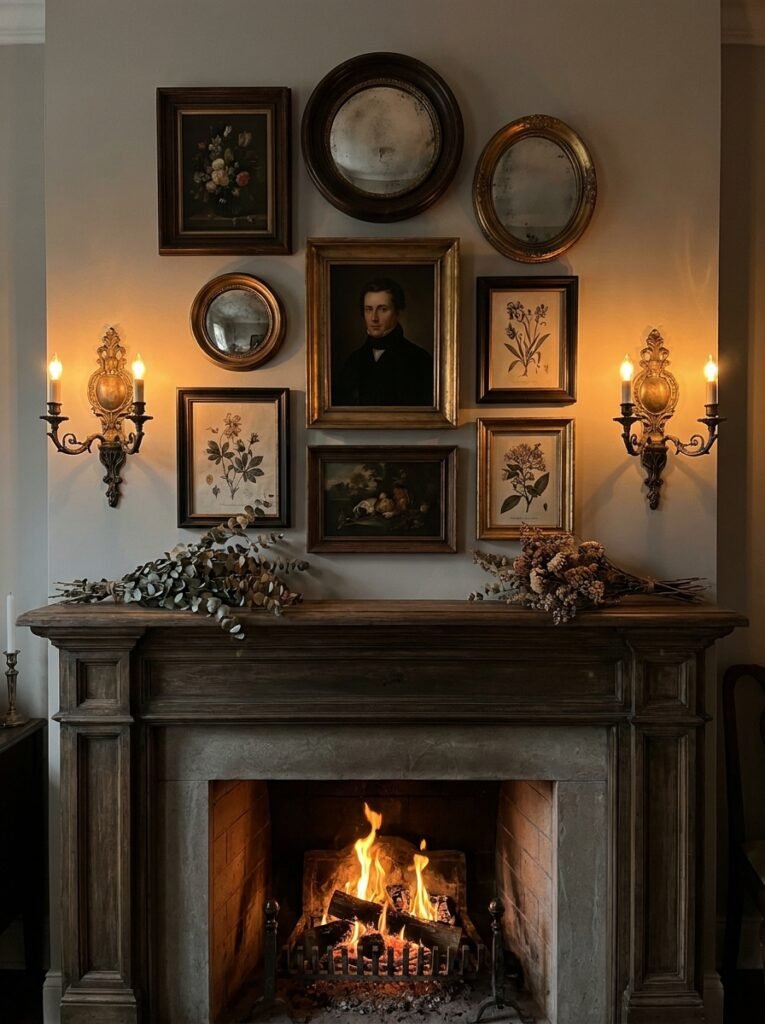
Some of the most compelling sconce applications in living rooms involve anchoring them to a focal point: flanking a fireplace, framing a gallery wall, or bookending a large piece of artwork. When sconces frame something meaningful, they do double duty — they light the space and they signal that this element deserves your attention.
Fireplace flanking is perhaps the most classic of all sconce arrangements, and for good reason. The visual warmth of actual or simulated flames in a fireplace paired with the warm glow of two matching sconces creates a symmetry that reads as deeply comforting on a neurological level. It mimics the gathering-around-the-hearth quality that humans have found instinctively welcoming for thousands of years.
Gallery walls benefit enormously from sconce lighting for a different reason: illumination reveals texture, depth, and color in framed artwork in ways that flat overhead light simply cannot. If your gallery wall is a labor of love — carefully curated pieces that tell your family’s story or reflect your artistic sensibilities — placing sconces within the arrangement or on either side ensures those pieces are seen the way they deserve to be.
“A sconce beside a painting doesn’t just light the art — it honors it.”
9. Small Living Rooms and the Game-Changing Power of Wall Lighting
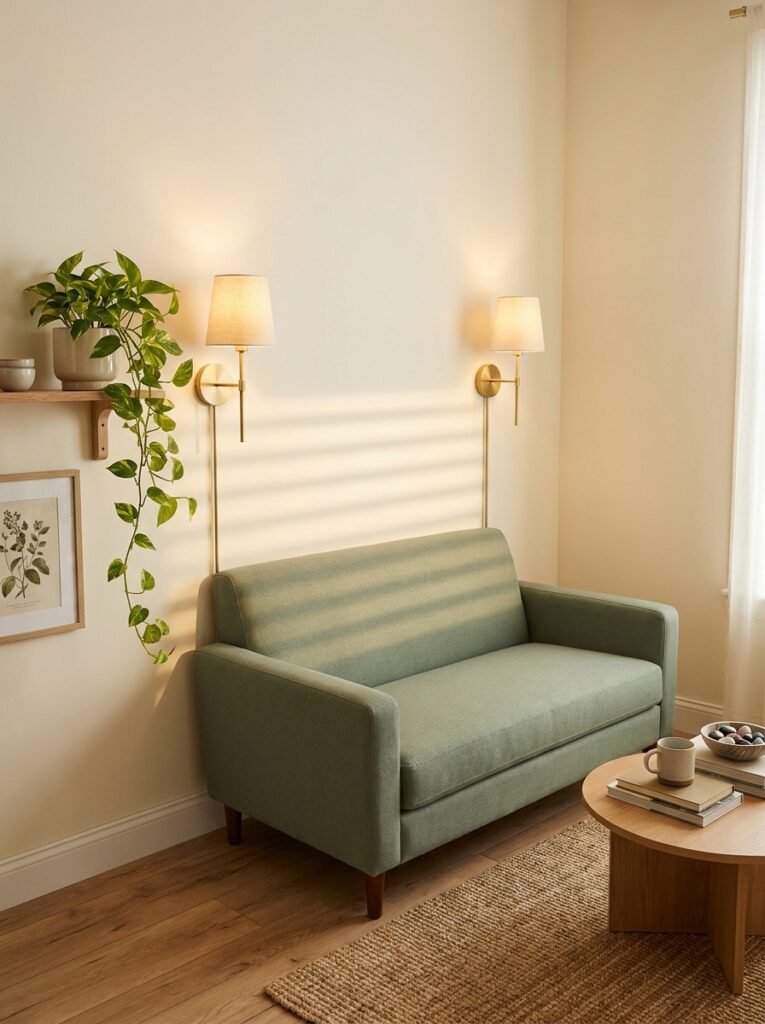
If you have a small living room, wall sconces might be the single highest-impact design investment you can make. Here’s why: floor lamps and table lamps take up precious floor and surface space, contribute visual clutter, and often overwhelm a compact room. Wall sconces, by contrast, float above the visual plane entirely, freeing up every square inch of your floor while still delivering beautiful, layered light.
There’s also a ceiling height perception effect worth understanding. When light is introduced at wall height rather than from above, it draws the eye horizontally across the room rather than vertically, which tends to make narrow spaces feel wider and low-ceilinged rooms feel less oppressive. An upward-directing sconce has the opposite effect — it pulls the eye toward the ceiling, creating the impression of greater height.
In truly tiny living rooms, two plug-in sconces flanking the sofa or a reading chair can replace the table lamp you’d otherwise need on an end table, the floor lamp you’d need in the corner, and the general sense of visual clutter that comes with having too many objects competing for attention in a small space.
10. Trending Sconce Styles That Are Dominating Pinterest Right Now
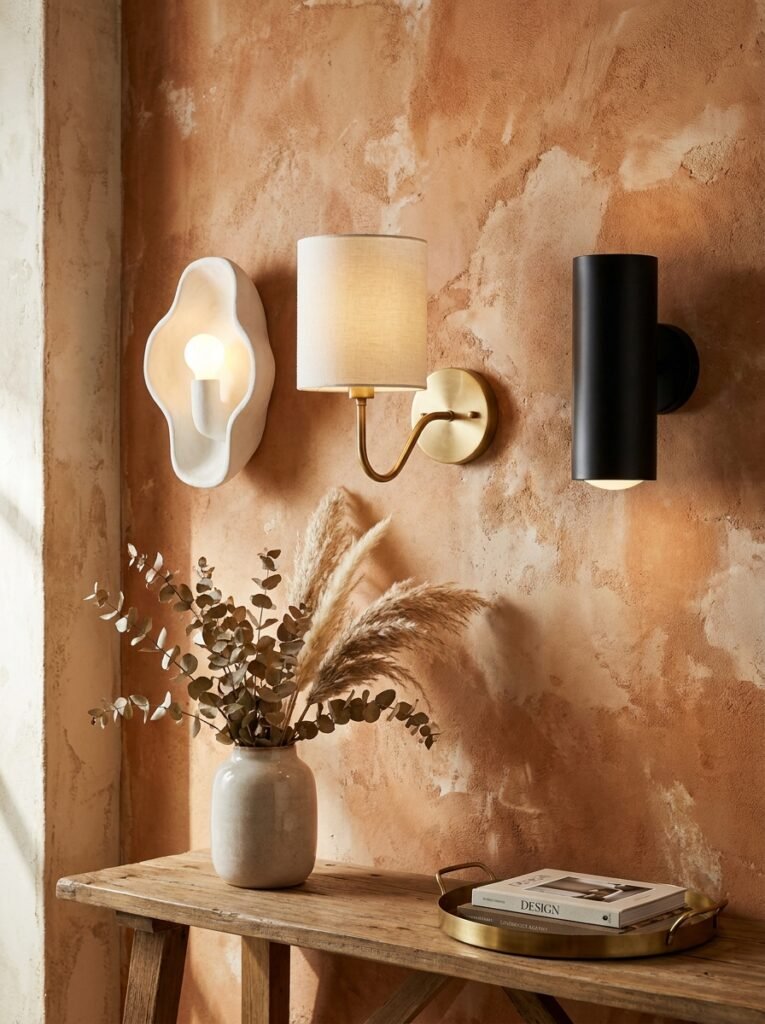
The design landscape shifts, and sconces are no exception to the currents of trend. Right now, a few specific styles are showing up on Pinterest boards, in design publications, and in the most-shared living room photos, and they’re worth knowing about whether you’re decorating from scratch or updating an existing space.
Sculptural plaster and ceramic sconces have a strong moment right now — their organic, handmade quality brings warmth and texture to spaces that feel over-designed. They photograph beautifully against textured limewash walls or warm-toned paint, which is likely part of why they perform so well on visual platforms.
Curved and arched designs are also everywhere, echoing the broader arc (no pun intended) of design toward softer, less angular shapes in furniture and architecture. A curved brass arm holding a simple linen shade or an exposed globe bulb has a timeless quality that feels simultaneously of-the-moment and destined to stay relevant.
Matte black sconces continue their long run because they’re extraordinarily versatile — they work in modern farmhouse spaces, industrial lofts, minimalist interiors, and even some traditionally decorated rooms when the rest of the hardware is pulled in the same direction.
11. The Bulb Question — Why Your Sconce Is Only as Good as What’s in It
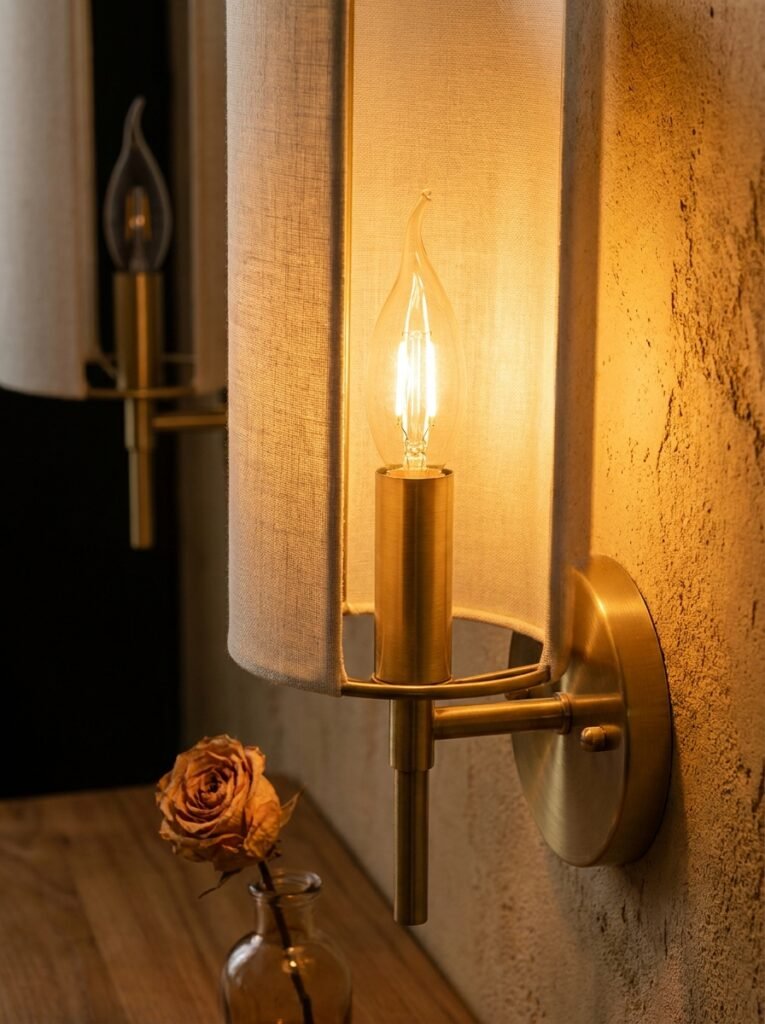
The fixture gets all the attention, but the bulb makes the light, and the quality and character of light in your living room is everything. Choosing the wrong bulb for a beautiful sconce is like buying a stunning cooking pot and then filling it with something flavorless — technically functional, deeply disappointing.
For living rooms, warm white bulbs in the 2700K to 3000K color temperature range are almost universally the right choice. This is the color range that mimics traditional incandescent warmth — the golden, slightly amber quality of light that makes skin look healthy, textiles look rich, and rooms feel genuinely comfortable. Bulbs above 3500K start entering cool white and daylight territory, which feels energizing in a kitchen or office but clinical and slightly sterile in a living room.
Globe bulbs work beautifully in sconces with open or exposed designs. Flame-tip bulbs honor the candlestick tradition without feeling dated. For sconces with fabric or frosted glass shades, a standard A19 or candelabra base LED in warm white will give you soft, diffused light with excellent energy efficiency and longevity.
12. The Emotional Dimension of Light — What Science Says About Warm Lighting and Wellbeing
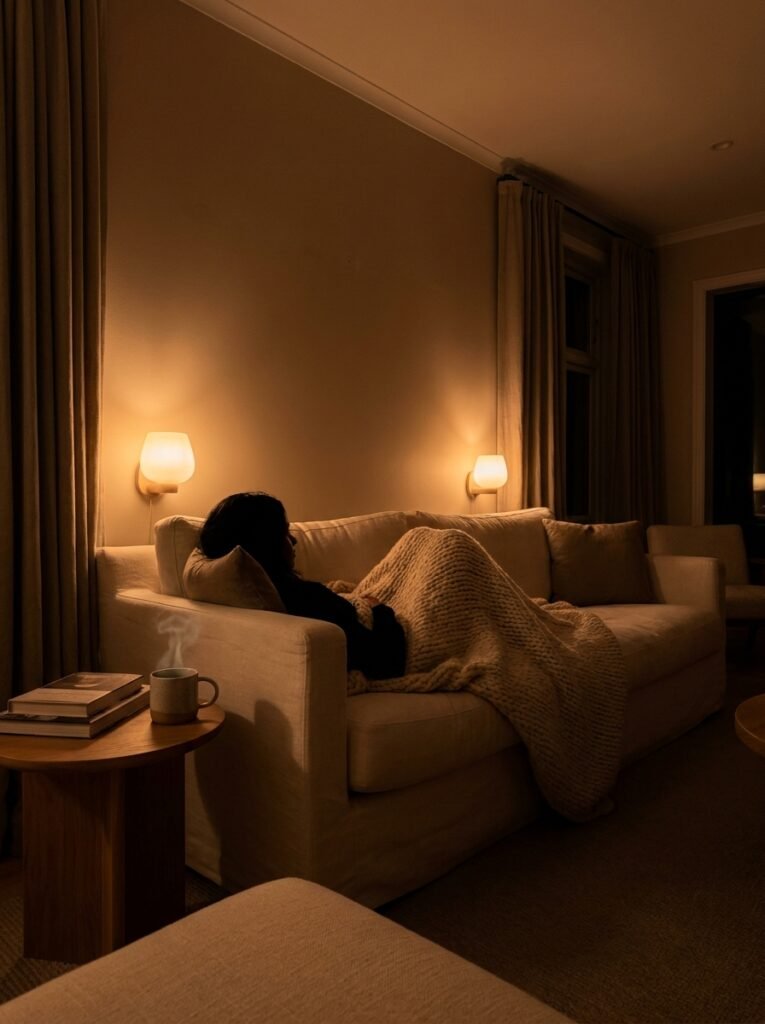
Here’s something worth sitting with: the preference for warm, ambient lighting in the evening isn’t just aesthetic preference. Research in chronobiology — the study of biological rhythms — has consistently found that exposure to warm, low-intensity light in the evening hours supports the body’s natural production of melatonin, the hormone that governs sleep quality and circadian rhythm. Conversely, bright, cool-toned overhead lighting in the evening suppresses melatonin and delays sleep.
Your living room, for most people, is where the day begins to wind down. It’s the space where you transition from the demands of the outside world into the quieter rhythms of home. The lighting choices you make in that room — whether knowingly or not — are directly shaping the quality of your rest, your mood, and the texture of your family’s shared evenings.
Wall sconces with warm bulbs and dimmer switches aren’t just a design choice. In the truest sense, they’re a wellness choice — a way of telling your nervous system that the day is done and it’s safe to soften. That’s a remarkable amount of meaning to carry for something as simple as a fixture on a wall.
—
🌿 How to Take Care of Your Wall Sconces
Keeping your sconces beautiful and functioning well doesn’t take much effort, but a little regular attention goes a long way. Dust the shades and arms monthly using a soft microfiber cloth — fabric shades can be gently vacuumed with a brush attachment to lift embedded dust without damaging the material. For metal finishes, especially brass or bronze, a quick wipe with a slightly damp cloth followed by immediate drying prevents water spots and keeps the finish looking intentional rather than worn.
Check your bulbs every six months or so, even if they haven’t burned out — LED bulbs can dim gradually over time without you noticing, until the day you compare old light to new and wonder how you lived with the difference. If you have plug-in sconces, periodically inspect the cord for any fraying or damage and keep the area around the plug clear for safety.
For hardwired sconces, resist the urge to DIY any electrical issues beyond bulb replacement — call a licensed electrician for anything involving the wiring itself. Your fixtures will last decades with basic care, and they’re absolutely worth protecting.
—
❓ FAQ
Q: Can I install wall sconces without an electrician? A: Yes, if you choose plug-in or battery-operated sconces, no electrical work is required at all. Plug-in styles mount to the wall with basic hardware and connect directly to a standard outlet — installation typically takes under an hour. For hardwired sconces, an electrician is recommended unless you have solid experience with home electrical work.
Q: How many wall sconces does a living room need? A: Most living rooms benefit from two to four sconces depending on the room’s size and layout. A pair flanking a sofa or fireplace is the most common starting point. Larger rooms or those with multiple seating areas may call for additional pairs — the goal is balanced, layered light rather than a specific number.
Q: Do wall sconces have to match other light fixtures in the room? A: They don’t have to match exactly, but they should relate. Sharing a metal finish, a similar color palette, or a compatible aesthetic sensibility creates cohesion without rigidity. Many designers intentionally mix fixture styles while keeping all metals consistent — for example, brass sconces paired with a brass-accented ceiling fixture — for a collected, personal look that feels more intentional than a fully matched set.
—
💭 Final Thought
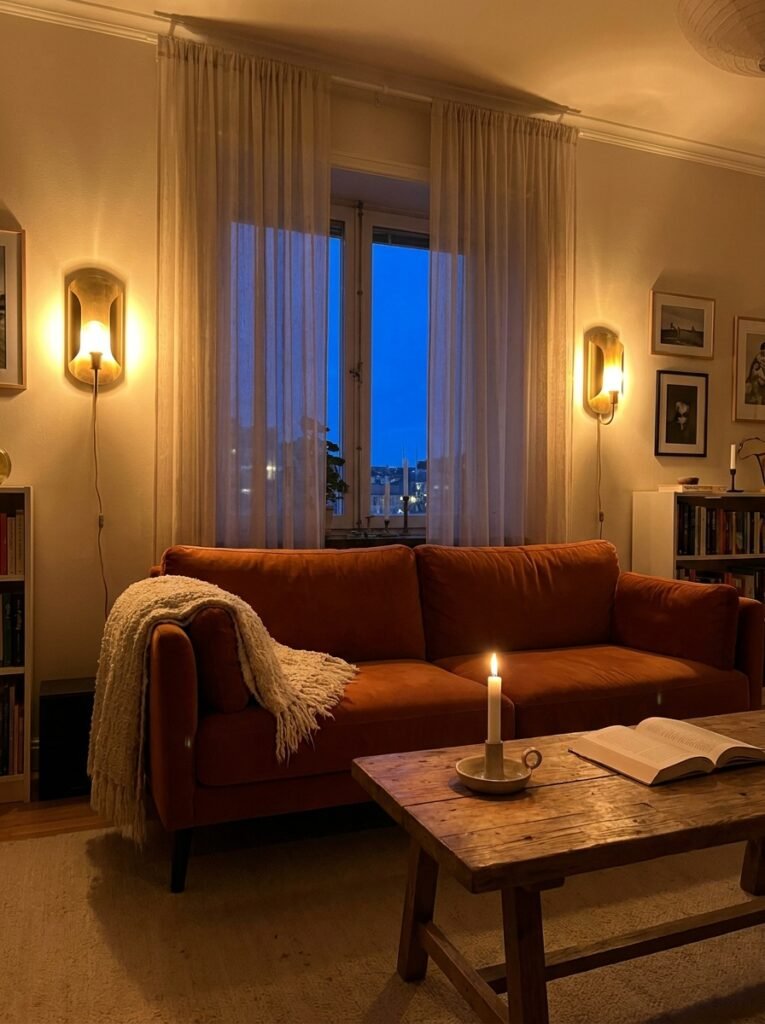
A living room should feel like an exhale — the place where the world’s noise quiets and something softer takes over. Lighting, more than almost any other design element, is responsible for creating that feeling, and wall sconces are one of the most accessible, beautiful ways to get it right. The warm glow of a well-placed sconce at the end of a long day is a small thing, maybe, but small things done with intention are what turn a house into a home.
So the next time you sit in your living room and something feels slightly off — not quite cozy enough, not quite complete — look at your walls. Is there a corner that could use a glow? Is there a focal point waiting to be honored? What would it feel like to come home every evening to a room lit exactly the way you’ve always imagined it?