
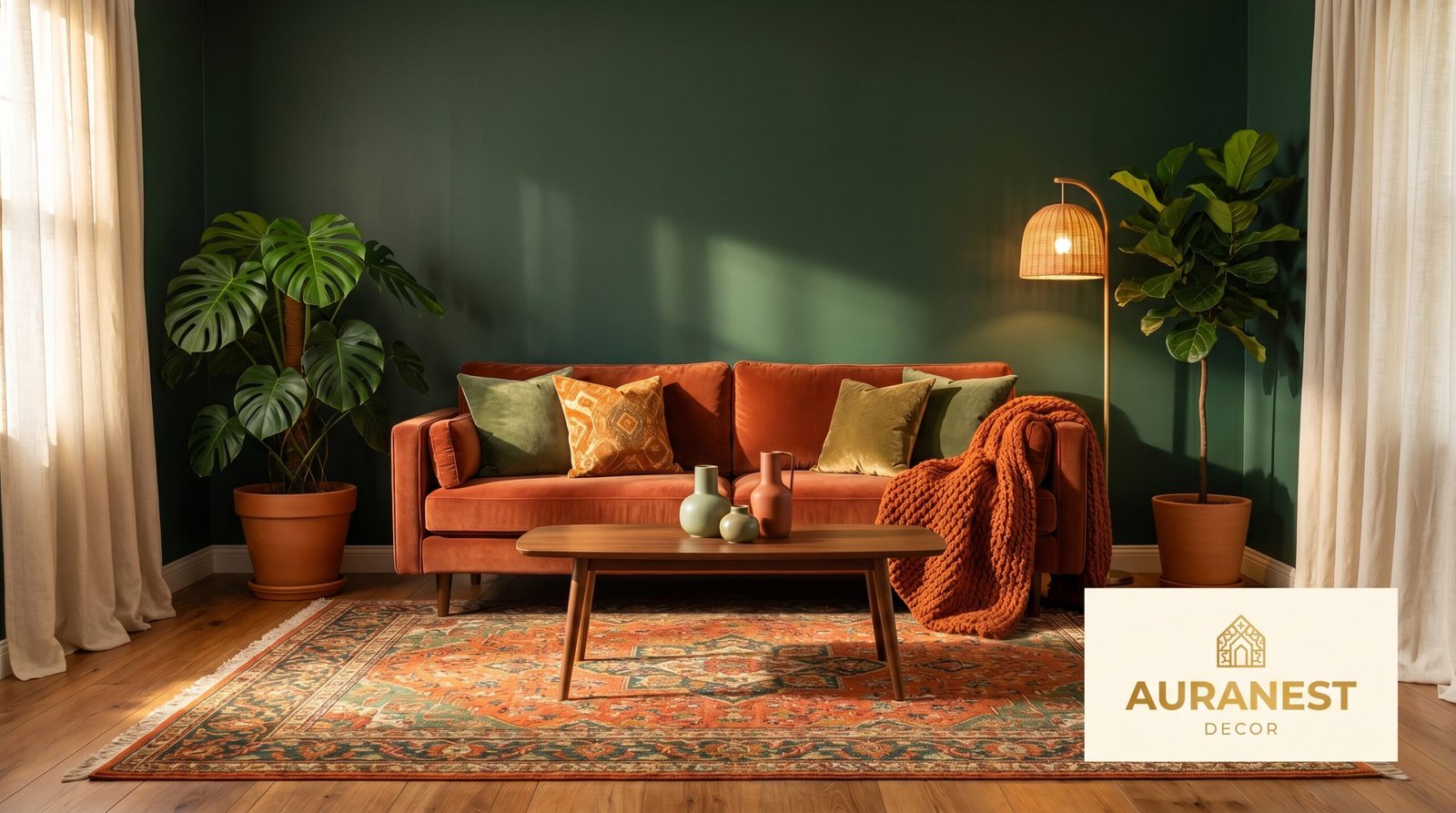
The Green and Orange Living Room: A Color Combination That Actually Feels Like Home
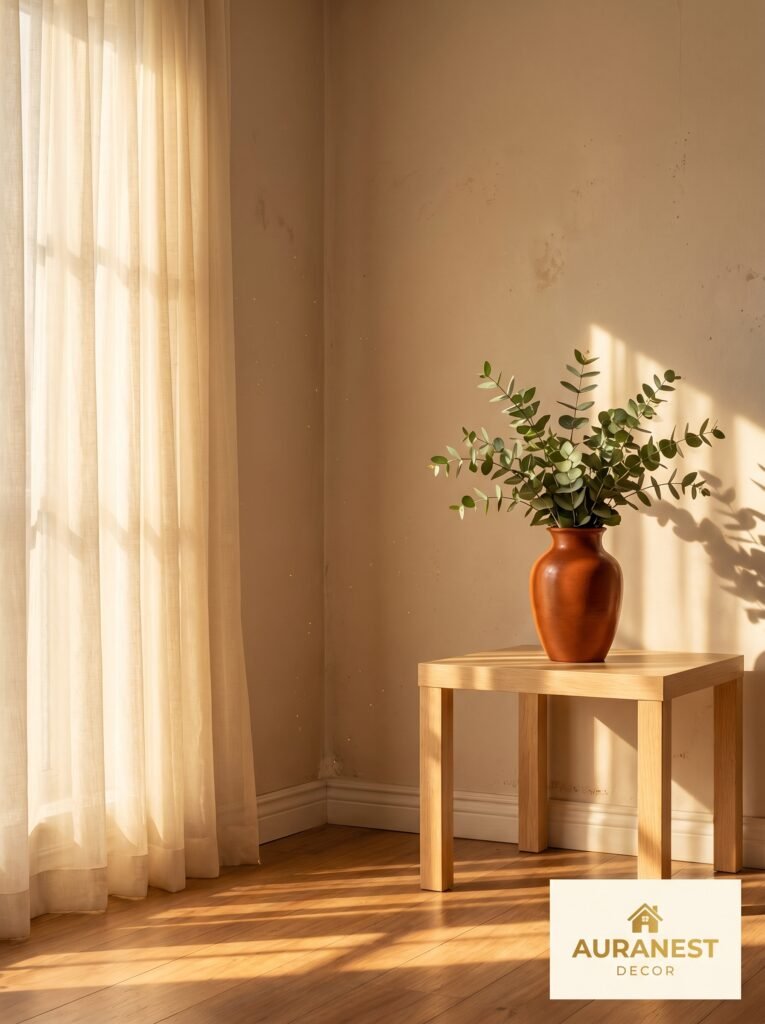
There’s a moment — right when the afternoon light shifts and the golden hour starts bleeding through your windows — when a green and orange living room doesn’t just look beautiful. It feels alive. If you’ve been staring at your neutral walls wondering why your space feels more hotel lobby than warm family home, this color duo might be exactly what you’ve been circling around without knowing it.
—
1. Why Green and Orange Belong Together (Even If It Surprised You)
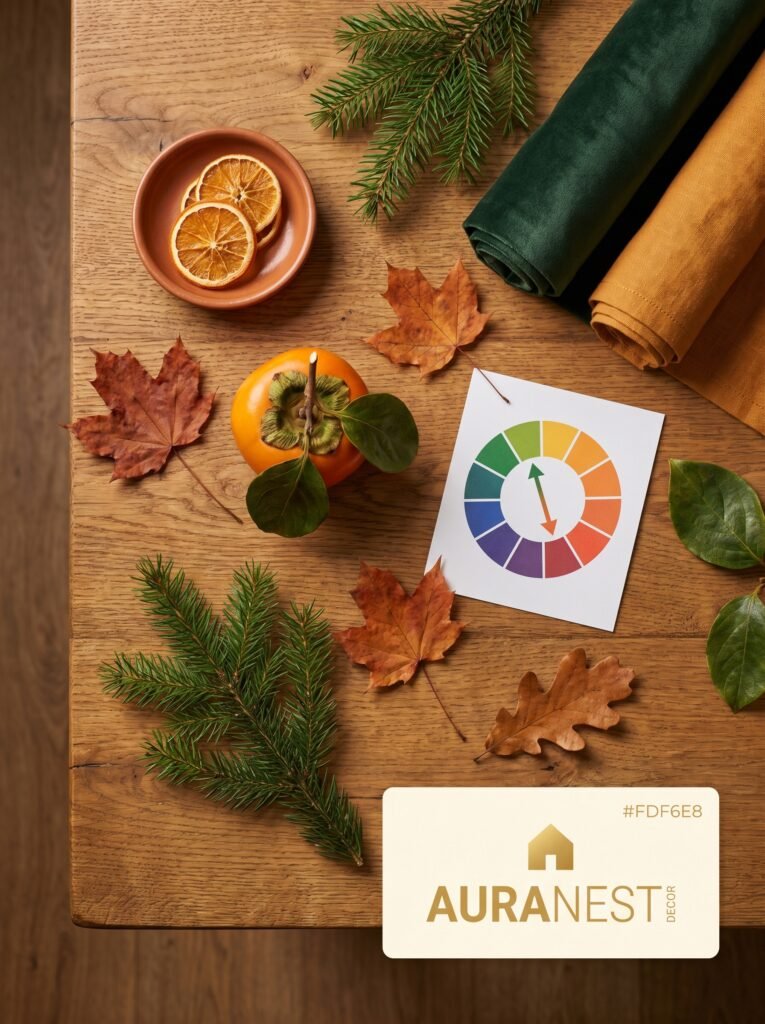
At first glance, green and orange might feel like a bold gamble. You see it and think: is this a jungle? A retro diner? But here’s the thing — nature figured this out long before any interior designer did. Think of a persimmon tree heavy with fruit, those burnished orange rounds nestled against deep green leaves. Think of pumpkin vines sprawling across a late-summer garden. Think of autumn forests where rust-orange leaves fall against the evergreens that hold their color. This pairing is ancient, natural, and utterly grounding.
Color theory backs this up, too. Green and orange sit at a harmonious angle on the color wheel — not direct complements, which can feel jarring, but close enough to create tension that’s alive and interesting rather than static. Green carries calm, growth, and stability. Orange brings warmth, optimism, and energy. Together, they create a living room that feels simultaneously restful and welcoming — the rare combination that makes guests want to sink into your sofa and never leave.
“A living room isn’t just a room — it’s a feeling, and the right colors are the very first language it speaks.”
2. The Mood Your Green and Orange Living Room Creates
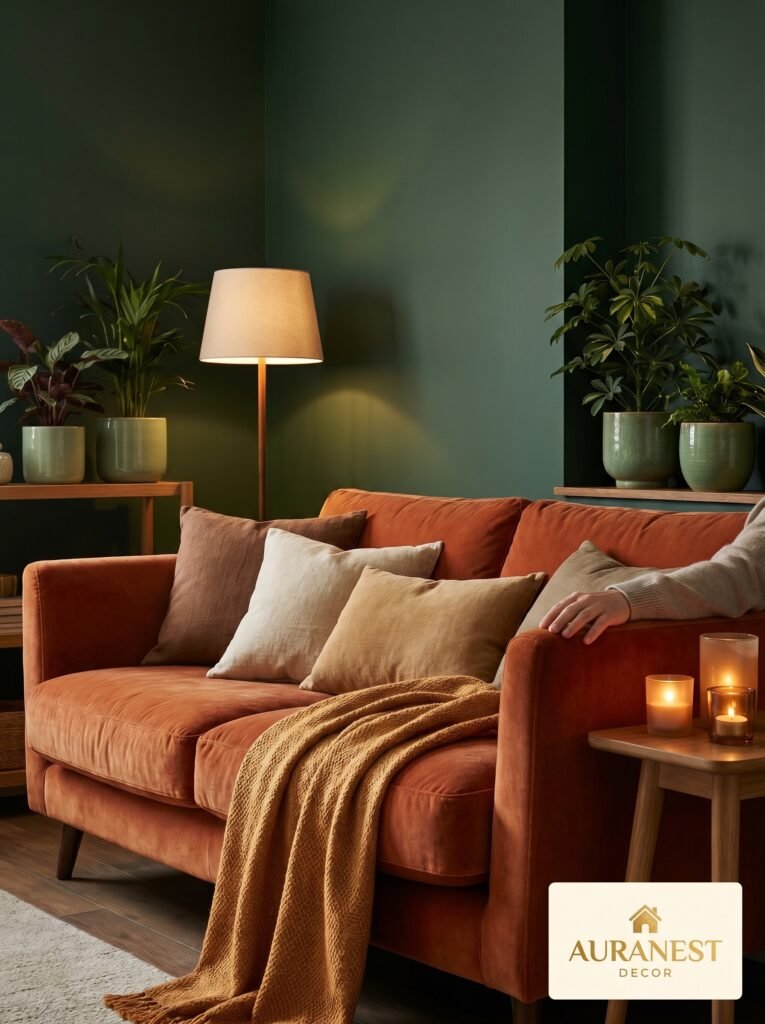
Close your eyes for a second and imagine this: you walk into a living room where deep forest-green walls meet a worn, terracotta-orange velvet sofa. There are potted plants in ceramic pots — some sage, some jade — and a woven throw in warm amber draped over one corner. The light is soft. The room smells faintly of sandalwood. You exhale without even realizing you were holding your breath.
That exhale — that is the mood this color combination creates. Psychologists studying color consistently point to green as one of the most restorative colors the human eye processes, largely because it requires no focal adjustment (our eyes rest at green naturally). Orange, by contrast, stimulates sociability and appetite, which is exactly why you want it in living spaces where connection happens. Together, they produce a room that says slow down and come closer at the same time. It’s a contradiction that works beautifully.
3. Choosing the Right Shades — Because Not All Greens and Oranges Are Equal
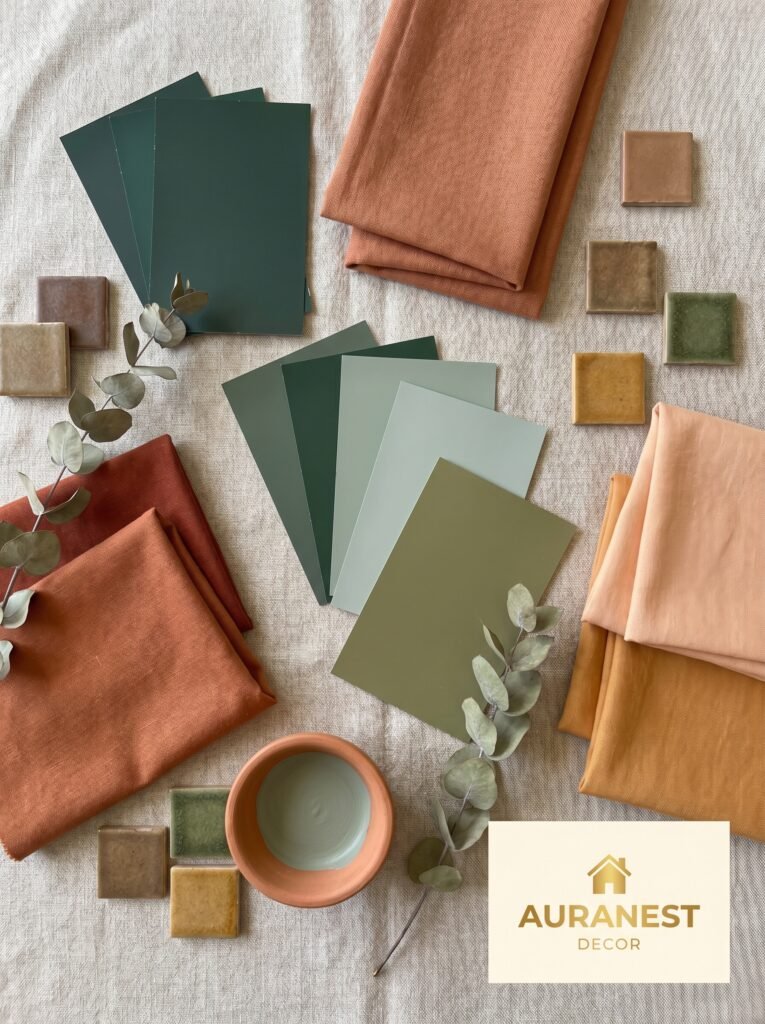
Here’s where most people trip up. “Green and orange” covers an enormous spectrum, and the wrong pairings can feel chaotic rather than curated. The good news? Once you understand a few ground rules, the whole thing clicks.
For greens, consider whether you want the room to feel earthy and rustic or fresh and modern. Deep hunter green, bottle green, and forest green read as sophisticated and grounded — ideal for living rooms that lean traditional or eclectic. Sage green and eucalyptus green feel lighter, more contemporary, and pair beautifully with softer, peachy oranges. Olive green bridges the gap beautifully and is endlessly versatile.
For oranges, the spectrum runs from fiery burnt sienna and terracotta to the soft blush of peach and the richness of amber. If you want a sophisticated, grown-up palette, reach for terracotta and rust rather than bright, crayon orange — those muted tones have depth and complexity that photograph beautifully and age even better. Bright orange has its place (in a maximalist, boho, or retro-inspired space), but it demands very careful balancing.
4. The Art of the Anchor Color — Which One Leads the Room?
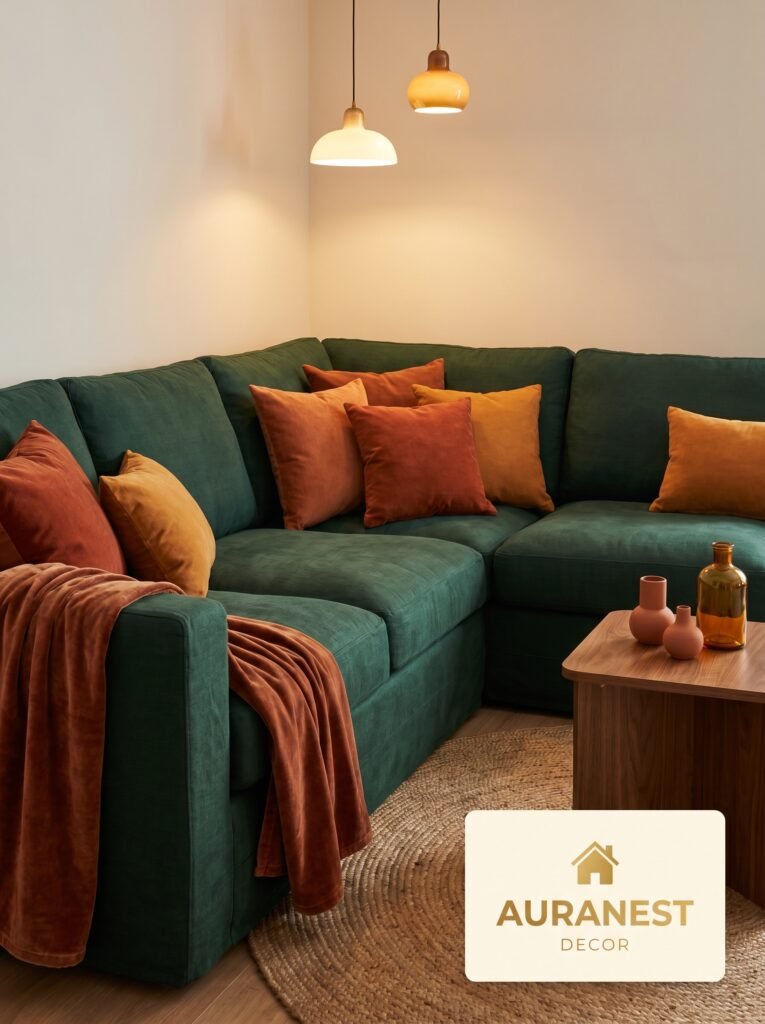
One of the most important decisions you’ll make in a green and orange living room is which color anchors the space and which one accents. This is the difference between a cohesive room and one that feels unsure of itself.
The 60-30-10 rule is your friend here. Sixty percent of the room in your dominant color — this is usually your walls, large furniture pieces, or flooring. Thirty percent in your secondary color — cushions, a statement sofa, window treatments, or an accent wall. Ten percent in accent details — artwork, throws, small decorative objects, plant pots.
If you want a calm, nature-inspired space, let green dominate. Green walls or a large green sectional as your anchor, then orange as the fire — throw pillows, a vintage rug, ceramic vases, the warm wood tones of your furniture. If you want a warmer, cozier feel — something that leans more autumnal — let terracotta or burnt orange lead. Green becomes your breath of fresh air: in the form of plants (always, always plants), green cushions, artwork with botanical themes, or a single painted bookcase.
“The secret to a room that feels curated rather than chaotic is simple: let one color lead, and let the other respond.”
5. Green and Orange With Neutrals — Making the Palette Breathe
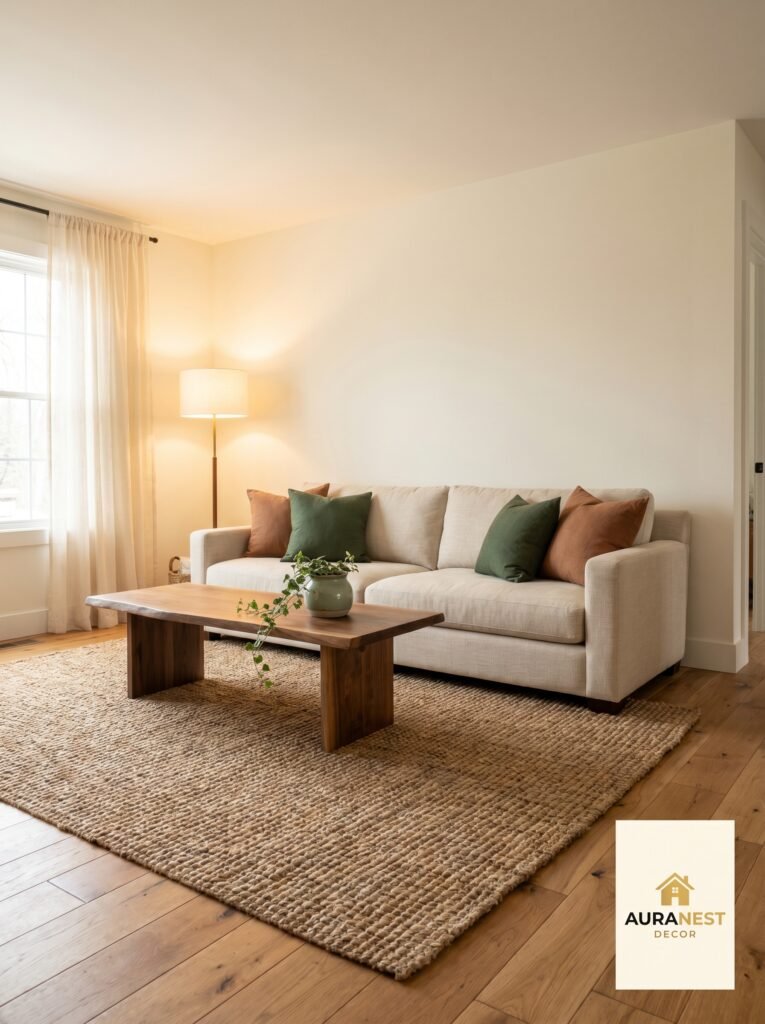
Here’s something every great interior designer knows: a strong color story needs white space. Not necessarily white walls — but visual breathing room, achieved through neutrals that let your greens and oranges pop without overwhelming the eye.
Warm neutrals work most beautifully with this palette. Creamy white, warm linen, soft beige, natural jute, and raw wood tones all speak the same language as green and orange — they’re grounded, organic, and warm. A linen sofa in undyed fabric becomes the perfect neutral anchor. A jute rug adds texture without competing. Bare oak floorboards or warm walnut furniture tie the whole palette together with an earthy continuity.
Cooler neutrals — stark white, grey, charcoal — can work too, particularly if you’re going for a more modern interpretation. A charcoal grey wall can make forest green accents feel more tailored and contemporary. Just be careful not to strip all the warmth out of the room; that warmth is, after all, the whole point.
6. Furniture Choices That Make the Colors Sing
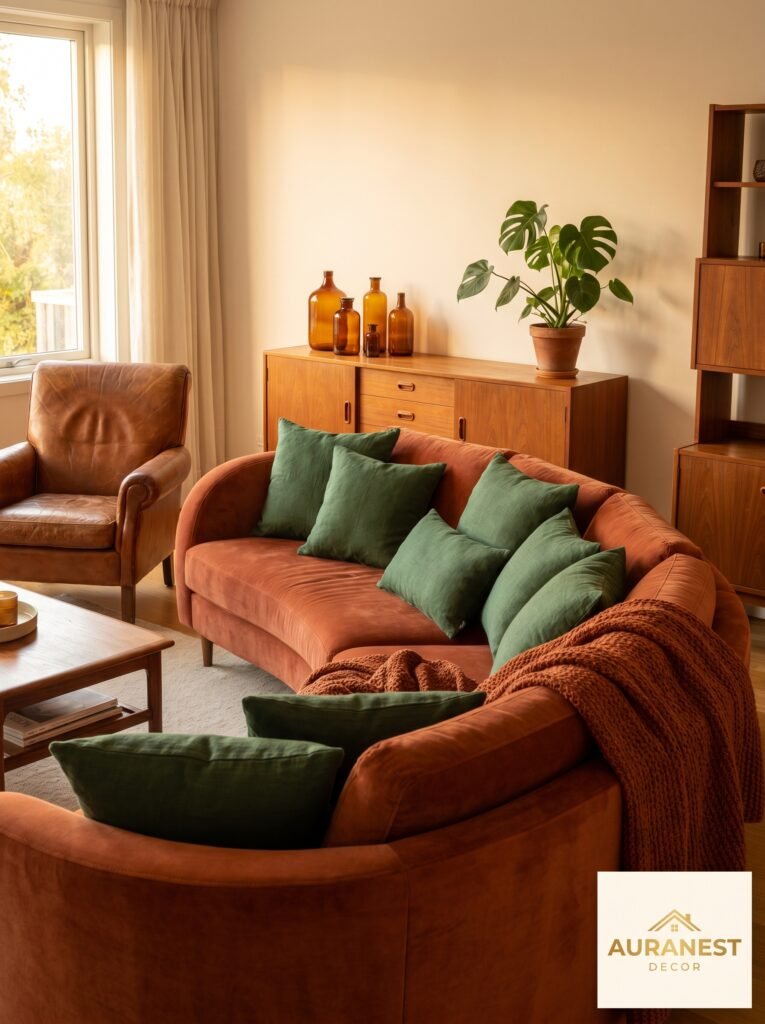
The furniture in a green and orange living room carries the palette just as much as the paint does. A terracotta velvet sofa is one of the single most effective anchor pieces you can buy — it ages beautifully, photographs incredibly, and brings instant warmth to any space. Pair it with forest green cushions and you’ve done most of the work in one decision.
If a full orange sofa feels too bold, consider a green sofa with orange accessories. A deep bottle-green linen sofa surrounded by amber throw pillows, a rust-colored knit blanket, and copper-toned side table accessories creates a living room that feels lush and intentional. Wooden furniture — particularly darker walnut or lighter oak — straddles the palette beautifully and keeps everything from feeling too matchy.
Don’t underestimate the power of vintage and secondhand pieces in this palette. A worn leather armchair in cognac brown is orange-adjacent in the best possible way. A mid-century sideboard in teak brings warm amber tones without screaming. This color combination thrives on layers and history — pieces with patina and character feel more at home here than anything that looks like it just left a showroom.
7. Textiles and Texture — Where the Coziness Really Lives
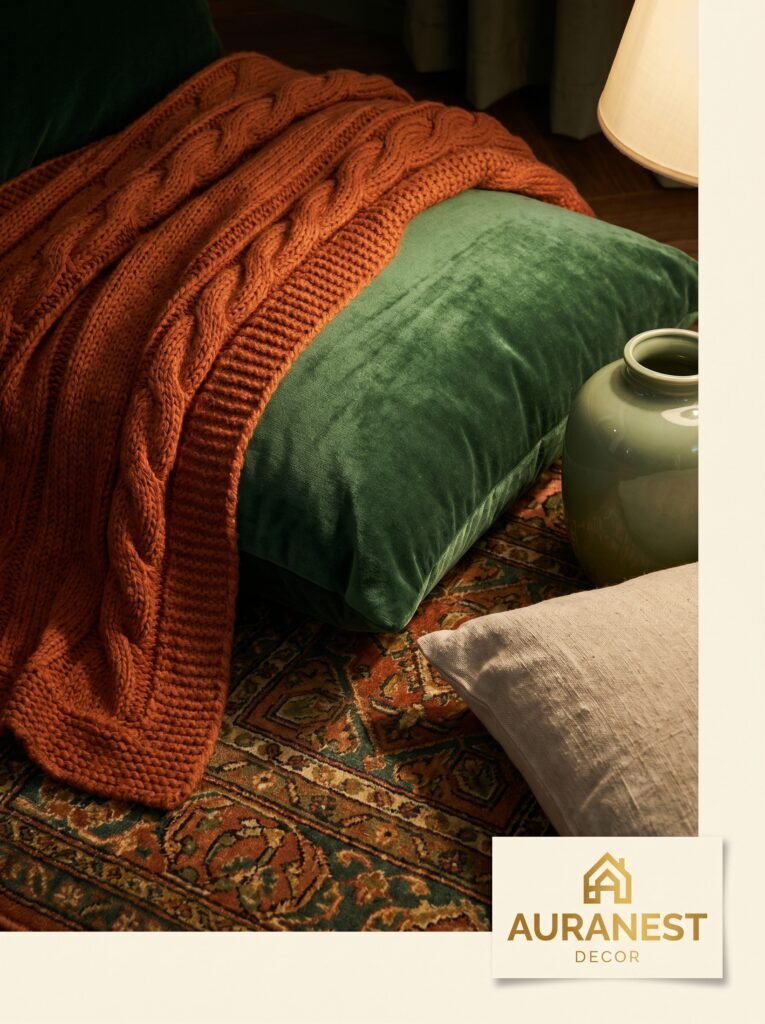
A green and orange living room without texture is like a recipe without seasoning — technically correct, but somehow flat. The real magic of this palette comes alive in the layering of fabrics, weaves, and surfaces that catch the light differently at every hour of the day.
Think: a chunky knit throw in burnt orange tossed casually over the arm of a green sofa. Think: a Persian-inspired rug in jewel tones where orange, red, and green dance together in patterns that feel centuries old. Think: velvet cushion covers that shift from one shade to another depending on which way the nap falls. Think: linen curtains in warm ivory that pool softly on the floor.
The combination of different textures — smooth velvet next to rough jute, glossy ceramic next to matte linen — creates visual richness that reads as thoughtful and layered rather than decorated by algorithm. That’s the kind of room people stop mid-scroll to save.
8. The Role of Plants — Non-Negotiable, Actually
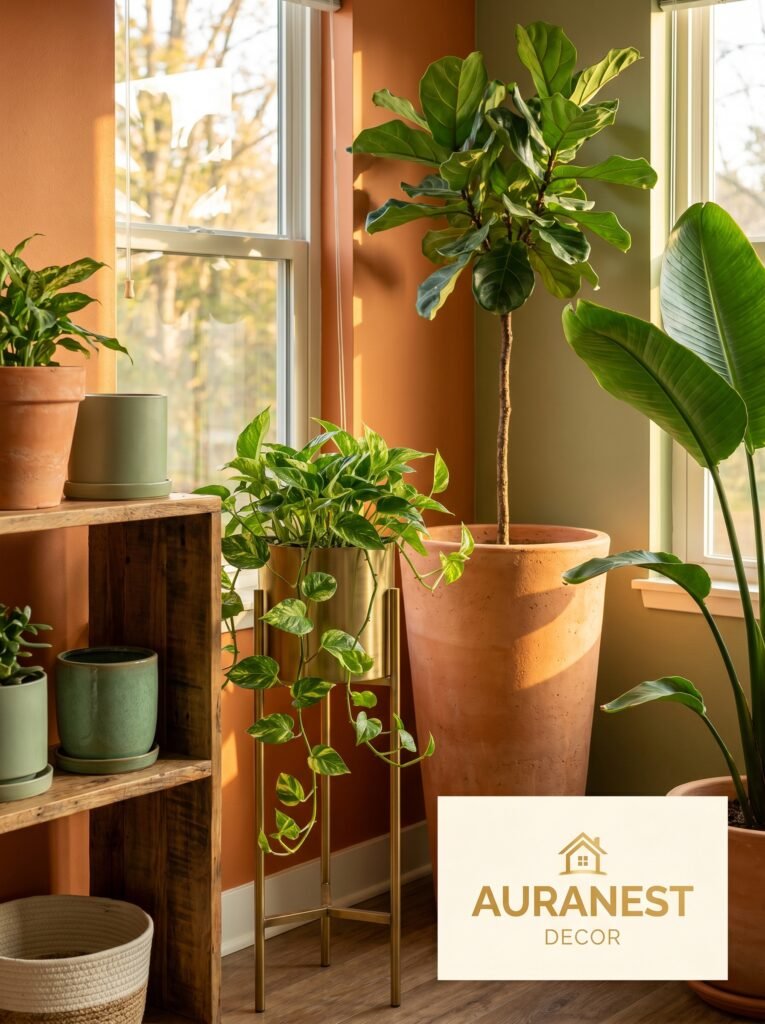
If you’re doing a green and orange living room without plants, you’re leaving the most powerful design element on the table. Plants don’t just add green — they add living green, the kind that shifts subtly with light and growth and season, the kind that breathes. In this particular palette, plants are not optional. They are essential.
Large statement plants — a monstera, a fiddle-leaf fig, a tall bird of paradise — bring architectural drama. They fill corners, soften hard lines, and bring the green of the walls into three dimensions. Trailing plants like pothos or string of pearls add movement. Smaller plants on shelves and side tables create detail and life at every level of the room.
The pots you choose matter enormously too. Terracotta pots — classic, simple, the color of the earth — are almost embarrassingly perfect for this palette. They bring that warm orange-red tone into even the green parts of the room, tying everything together with beautiful naturalness. Ceramic pots in sage or deep green, brushed brass plant stands, woven rattan — every choice in your plant styling is also a choice in your palette.
“Plants don’t decorate a room — they complete it. They are the living proof that your space is cared for.”
9. Lighting That Warms the Whole Story
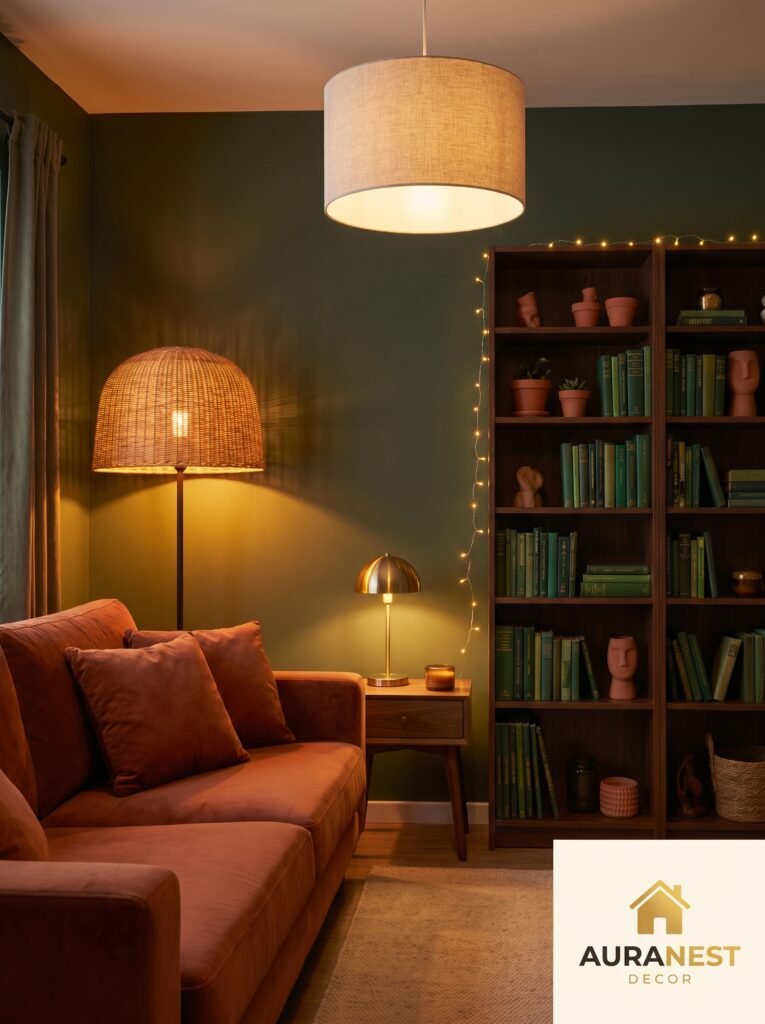
Here’s something designers know that most people overlook: the color of your lighting changes everything. A green and orange living room lit with cool, blue-toned bulbs will feel cold and clinical, like something went wrong. The same room bathed in warm, golden-toned light — 2700K to 3000K on the Kelvin scale — will glow like a candlelit dinner every evening.
Choose warm-toned bulbs in every fixture. Layer your lighting: overhead ambient light, floor lamps that cast warm pools, table lamps at sofa height, perhaps a string of warm fairy lights woven through a bookshelf. Each layer brings a different character to the room at different times of day. The terracotta sofa deepens. The green walls soften. The amber throw seems to glow from within.
Rattan lampshades, linen pendants, and aged brass or copper fixtures all carry the palette without being obvious about it. They’re not orange — but they’re warm, textured, and earthy in all the right ways.
10. Artwork and Wall Decor That Ties It All Together
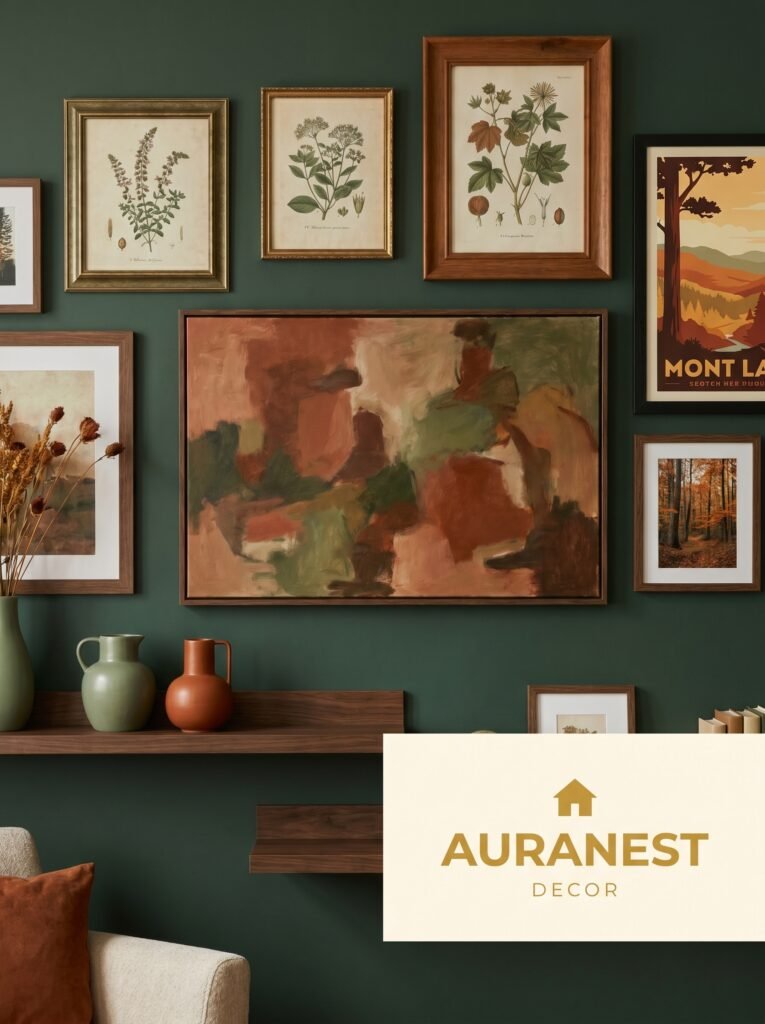
A green and orange living room is one of the most art-friendly palettes you can build because the colors show up naturally in so much art — from botanical prints to abstract oil paintings to vintage travel posters to photography of natural landscapes. You have enormous freedom here, and that’s a gift.
Botanical prints in ornate frames bring the green and orange world indoors in the most literal way. Abstract artwork with earthy tones — terracotta, moss, burnt umber — adds texture to the walls without competing with your palette. A large gallery wall mixing different styles and frames feels collected and personal rather than themed and staged.
The frames themselves deserve attention. Warm wood frames, aged brass, dark walnut, and simple natural rattan all work beautifully. Avoid cold silver or stark black unless your palette skews very modern — those tones interrupt the warmth the rest of the room is working hard to create.
11. Small Green and Orange Living Rooms — How to Make the Palette Work in Tight Spaces
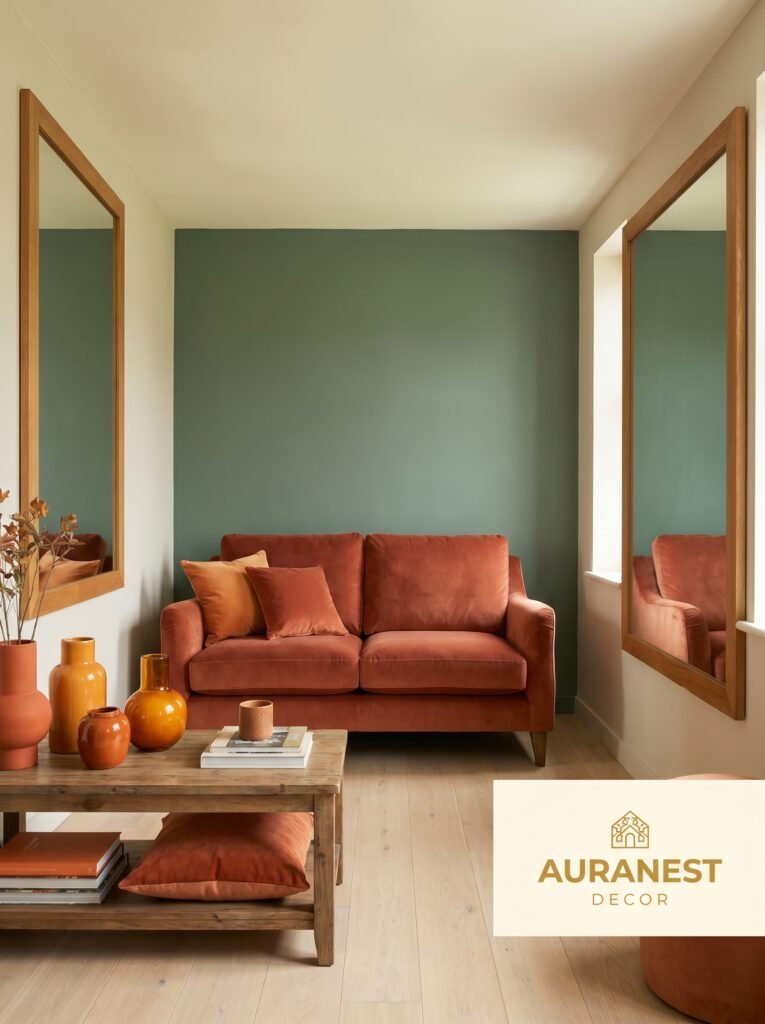
One of the most common hesitations people have about bold color is the fear it will make a small room feel smaller. In reality, the opposite can be true when the palette is handled with confidence and intelligence.
In a small living room, a deep green accent wall behind the sofa creates a sense of depth — the wall appears to recede, making the room feel longer than it is. Orange accessories at the front of the room pull the eye forward, creating a dynamic tension that reads as spacious rather than cramped. Mirrors with warm metallic or wooden frames reflect the light and the palette simultaneously, effectively doubling the visual impact of every color choice you’ve made.
Keep the large neutral surfaces — flooring, ceiling — light to preserve airiness. Let the colors live in the furniture, accessories, and that single accent wall. A small room done with this kind of confidence feels intentional and full of personality — which is infinitely more inviting than a small room playing it safe with beige.
12. Seasonal Shifts — A Palette That Lives and Breathes Through the Year
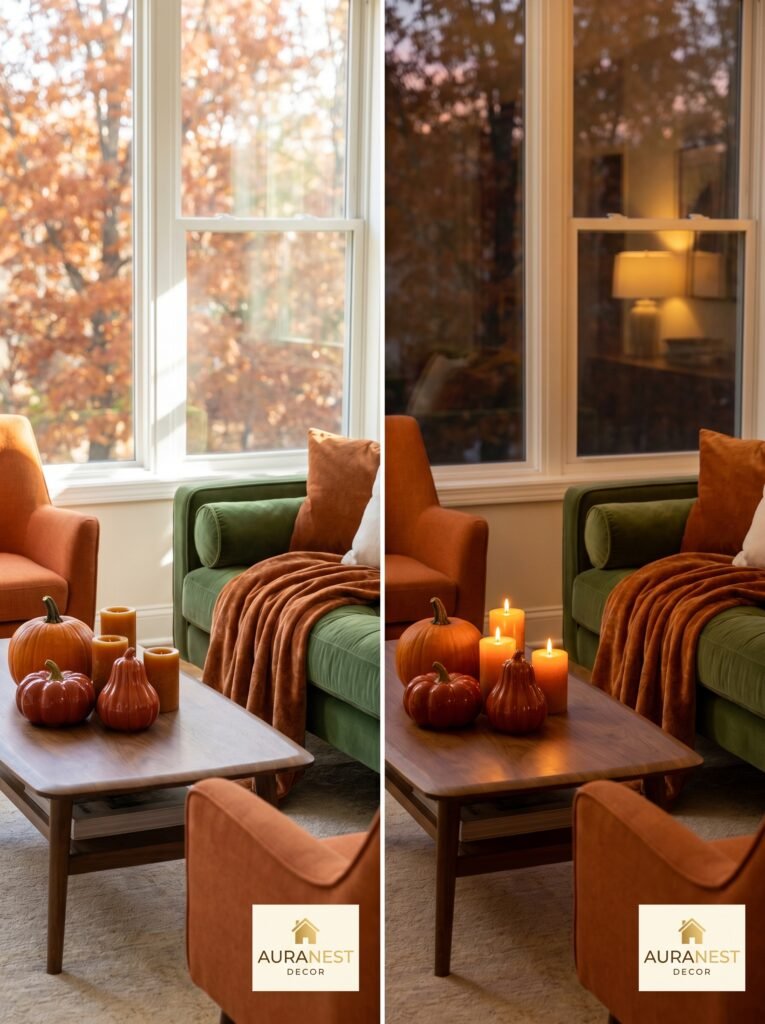
One of the most underappreciated things about a green and orange living room is how naturally it moves through the seasons without requiring a complete overhaul. This is a palette that has a conversation with the world outside your windows all year long.
In spring, lean into the green. Add fresh florals, swap your heavy velvet cushions for lighter linen ones, bring in yellow-green accents that feel new and growing. In summer, bring in brighter tones — coral rather than terracotta, lime green plants in terracotta pots, rattan accessories that feel breezy and warm. In autumn, the room hits its absolute peak — when the leaves outside turn orange and rust, your interior feels like it was designed for this exact moment. Add pumpkins (genuine ones or ceramic), amber candles, heavier textiles in spice tones. In winter, the green anchors warmth against the cold and grey — pile on the throws, light every candle, and let the room hold you close while everything outside goes quiet.
This is a living palette. It doesn’t just decorate your home — it marks the passing of time with beauty.
—
🌿 How to Take Care of Your Green and Orange Living Room
The best rooms don’t just get decorated — they get maintained with the same thoughtfulness that created them. Here’s how to keep yours feeling intentional and alive:
Rotate your accessories seasonally, even in small ways. Swapping cushion covers, changing out a candle scent, or bringing in fresh botanicals costs almost nothing and makes the room feel refreshed every few months. Keep plants watered and healthy — a dying plant in a beautifully styled room breaks the spell entirely and signals neglect more loudly than anything else. Protect your terracotta and warm-toned textiles from too much direct harsh sunlight, which can bleach orange tones over time; use sheer curtains to filter light without losing it. Invest in quality where it counts — a good velvet sofa, a well-made rug — and be playful and budget-friendly in the accessories and art. And finally, trust your instincts. This palette rewards confidence. If something makes you feel good when you walk into the room, it belongs there.
—
❓ FAQ
Q: Is green and orange too bold for a living room? A: Not at all, as long as you approach it with intention. The key is in the shades you choose — muted, earthy tones like forest green, sage, terracotta, and burnt orange create a sophisticated and grounded palette rather than an overwhelming one. Start with one anchor color and build gradually if you’re nervous.
Q: What colors go with green and orange in a living room? A: Warm neutrals are your best friends — cream, warm white, natural linen, undyed jute, and raw wood tones all complement this palette beautifully. Warm metallics like brushed brass, aged bronze, and copper also work wonderfully. For a more dramatic effect, deep charcoal or warm chocolate brown can anchor the palette with real depth.
Q: Can a small living room use a green and orange color scheme? A: Absolutely. In fact, a well-executed green and orange palette can make a small room feel more intentional and dynamic than a cautious neutral scheme. Focus on a single green accent wall, keep larger surfaces light and neutral, and let the orange live in smaller accessories and furniture pieces. The layered, warm feeling this palette creates is particularly welcoming in a cozy, smaller space.
—
💭 Final Thought
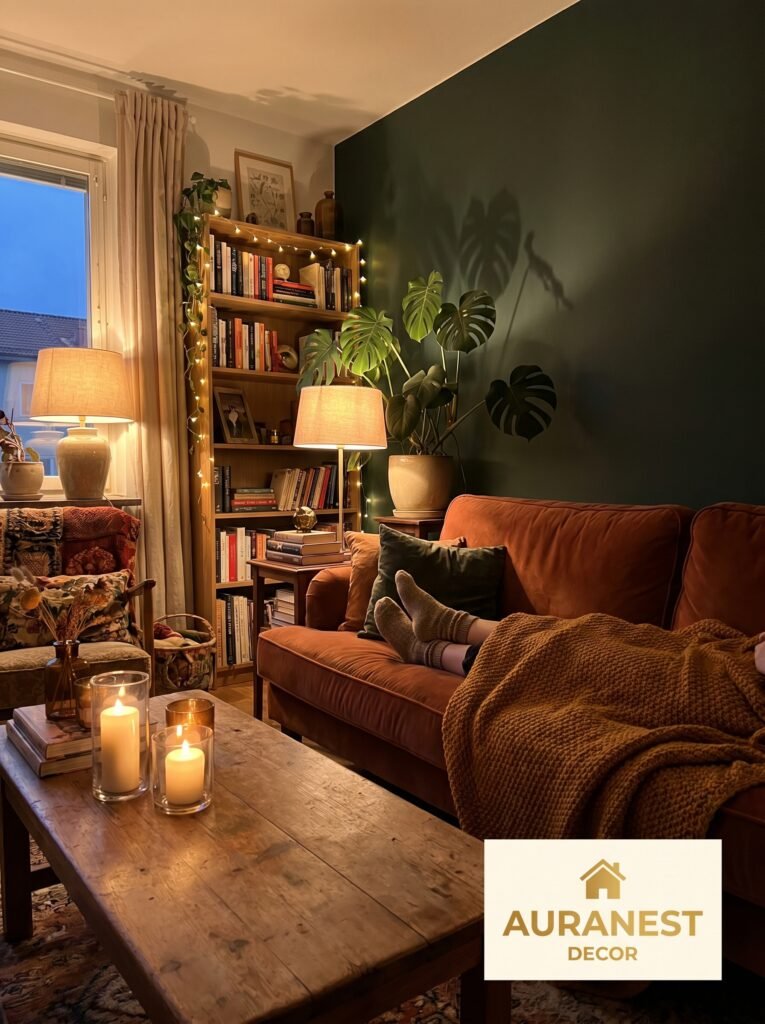
A green and orange living room isn’t just a design choice — it’s a kind of declaration. It says: I want this home to feel alive. I want warmth. I want to walk into this room and feel something. And that, ultimately, is what a living room should do. Not impress visitors with its restraint, but hold you — and everyone you love — with genuine comfort and color.
So tell me: if your living room could say something about who you are and how you want to live, what would it say?