
Alcove Ideas Living Room: 13 Ways to Turn That Awkward Corner Into the Most Beautiful Spot in Your Home
There’s something quietly magical about an alcove — that recessed little pocket in your living room wall that most people ignore, paint over, or stuff with clutter. But what if that overlooked nook was actually the secret ingredient your room has been missing all along?
—
1. Why Alcoves Are the Most Underrated Feature in Any Living Room
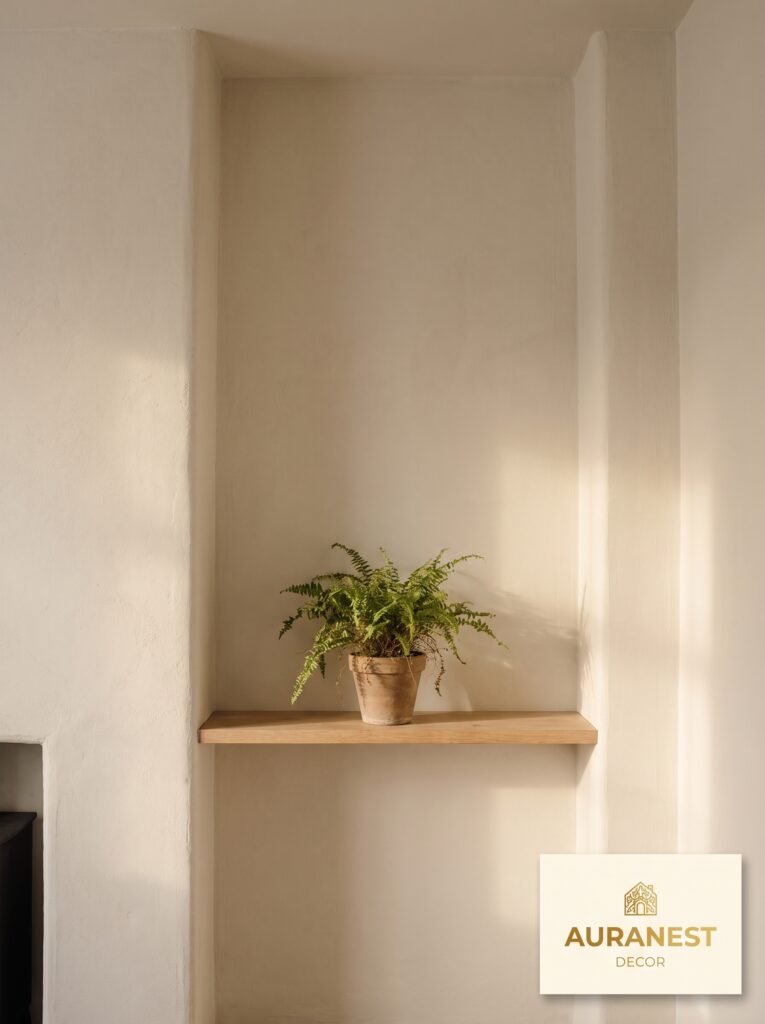
Walk into almost any older home, Victorian terrace, or even a newer build with a chimney breast, and you’ll find them — alcoves sitting quietly on either side of a fireplace, tucked into a corner, or carved into a thick external wall. Most homeowners treat them as awkward afterthoughts. They shove a single sad houseplant inside, paint them the same color as the rest of the room, and never think about them again.
That’s a missed opportunity of extraordinary proportions.
An alcove is essentially a built-in frame — architecture handing you a blank canvas with defined edges and natural boundaries. Interior designers charge thousands of dollars to create the kind of visual interest that an alcove offers for free. The depth, the shadow play, the natural sense of enclosure — these are design gifts hiding in plain sight.
“Your alcove isn’t a problem to solve. It’s a feature waiting to be celebrated.”
Whether your alcove is deep enough to walk into or barely six inches recessed, there are ideas here that will completely transform how you see — and use — that space.
—
2. The Classic Built-In Bookcase Alcove (Done in a Way That Actually Looks Expensive)
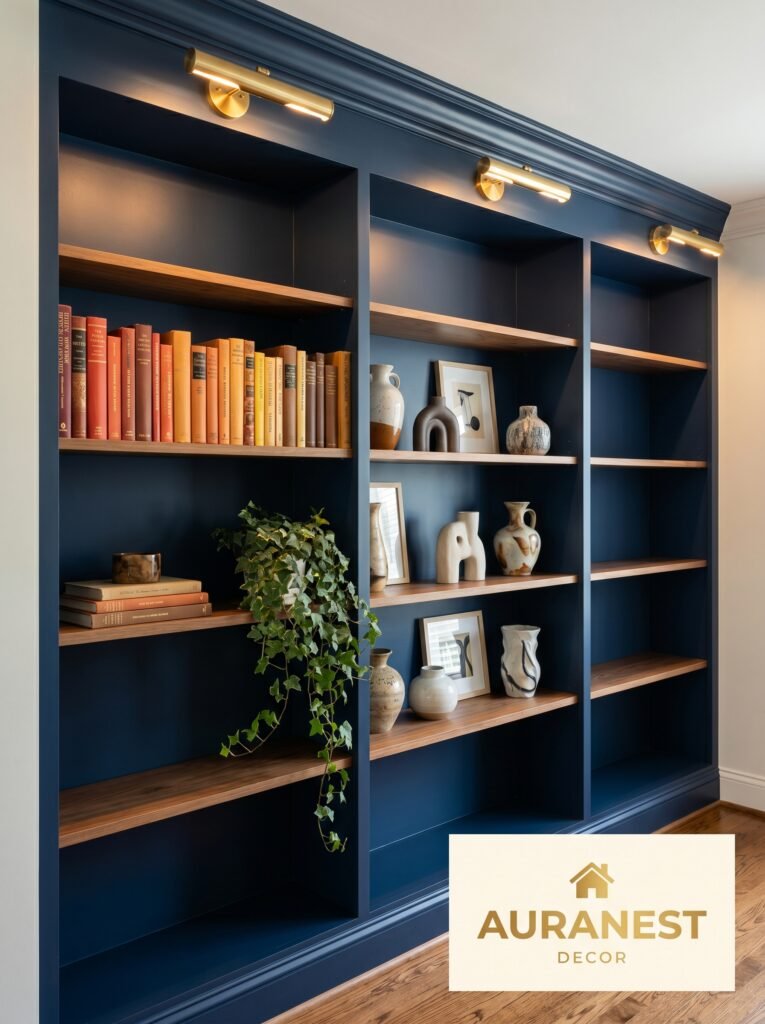
Let’s start with the most beloved alcove idea of all time, because it deserves far more than a passing mention: built-in bookshelves. When done well, they don’t just organize your books — they become the entire personality of your living room.
The key difference between built-in shelves that look stunning and ones that look like flat-pack furniture shoved into a hole? It’s the trim work. Add a small cornice or crown molding along the top edge, paint the inside back wall a contrasting deep color — navy, forest green, or even a warm terracotta — and suddenly your books and objects become curated art against a jewel-toned backdrop.
Style the shelves in thirds: one-third books, one-third decorative objects, one-third empty breathing space. That negative space is what makes the whole thing feel intentional rather than chaotic. Add small pin lights at the top of the alcove pointing downward, and you’ve created something that looks like it belongs in an architectural digest spread rather than a DIY weekend project.
—
3. A Reading Nook That Makes You Want to Disappear Into It
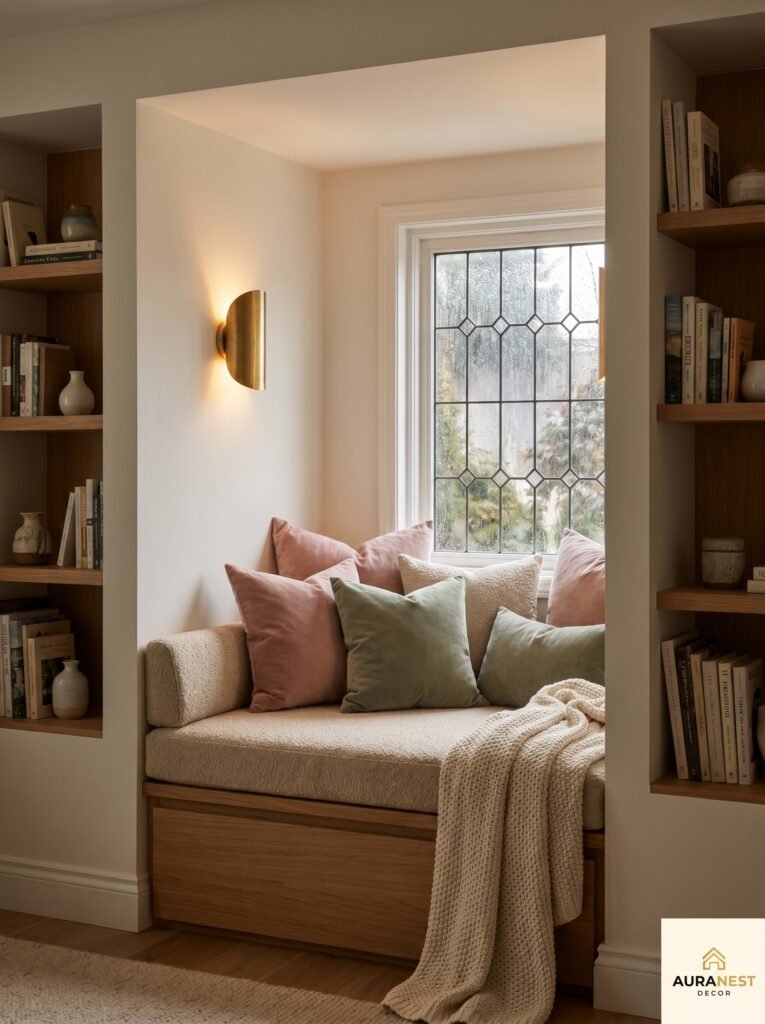
Imagine this: it’s a grey Sunday afternoon, rain tapping gently on the window, and you have a cup of tea and a novel in your hands. Now imagine sinking into a cushioned bench seat fitted perfectly into your living room alcove, surrounded on both sides by shelves holding your favorite things, with soft warm light glowing above you. That’s not a fantasy — that’s an alcove reading nook done right, and it’s entirely achievable.
The bench seat itself is usually built on a simple wooden frame with a hinged lid for hidden storage underneath. Have a cushion made in a durable fabric — a linen blend, a bouclé, or even a cozy velvet — and pile it with throws and pillows in textures that beg to be touched. Keep the palette soft and warm: creams, oatmeal tones, dusty pinks, sage greens.
What makes a reading nook feel genuinely cozy rather than staged is the lighting. A small wall-mounted sconce or a flexible reading light positioned just above shoulder height makes all the difference. It signals to your brain: this is a place for rest. This is yours.
—
4. The Moody Dark Alcove Trend That’s Taking Over Pinterest
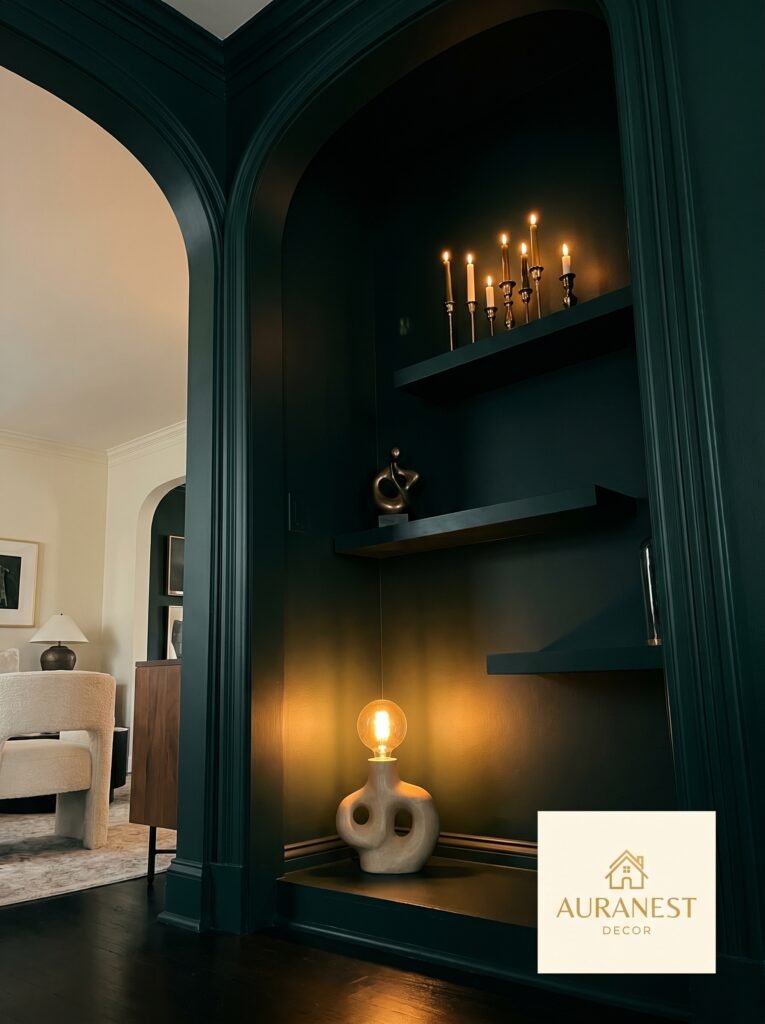
If you’ve spent any time scrolling Pinterest in the last couple of years, you’ll have noticed a striking trend: alcoves painted dramatically darker than the rest of the room. Deep charcoal. Inky navy. Rich hunter green. Warm chocolate brown. And every single time — it works.
Here’s the psychology behind it: dark paint inside a recessed space accentuates the depth you already have. It creates a sense of warmth and intimacy, like the alcove is pulling you in. Objects placed inside — a lamp, a vase, a sculpture — pop with incredible clarity against a dark background because the contrast does the work.
The trick is to also paint the trim of the alcove the same dark color, rather than keeping it white. When you eliminate the pale trim lines, the whole alcove reads as one cohesive, intentional statement rather than a painted box. Pair it with brass or gold accessories and warm Edison bulb lighting, and you have something genuinely stunning.
“Dark walls in an alcove don’t shrink a room — they give it a soul.”
—
5. An Alcove Home Office That Disappears When You’re Off the Clock
Working from home has changed how we think about living space forever. The challenge — especially in smaller homes — is creating a workspace that doesn’t colonize your entire living room. An alcove, it turns out, is the perfect solution.
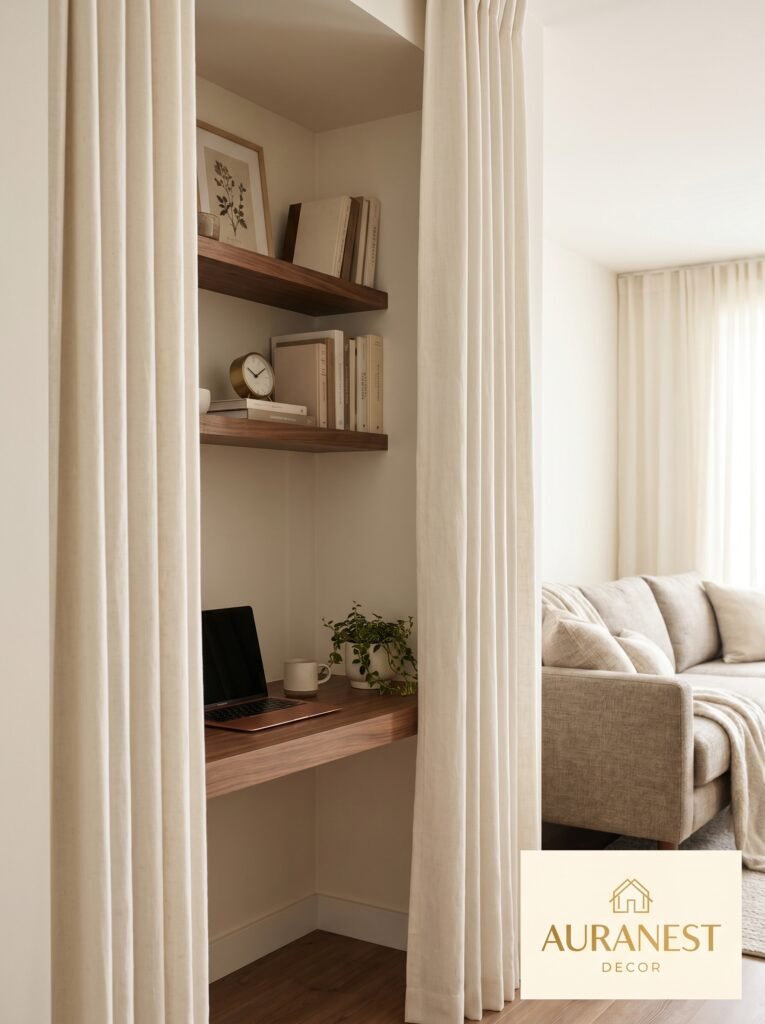
A fitted desk built into the alcove at a comfortable height, with shelving above for files, books, and a few personal touches, creates a proper working zone without bleeding into the rest of the room. The magic trick? Curtains. A simple pair of floor-to-ceiling curtains hung just outside the alcove opening can close over the entire workspace when the workday is done. The desk, the cables, the spreadsheets — all of it disappears behind a sweep of beautiful fabric. Your living room is a living room again.
Choose a desk surface in a warm wood tone rather than cold white laminate — it reads more like furniture and less like office equipment, which matters enormously when the curtains are open during the day.
—
6. The Art Gallery Alcove: Treating Your Wall Like a Museum
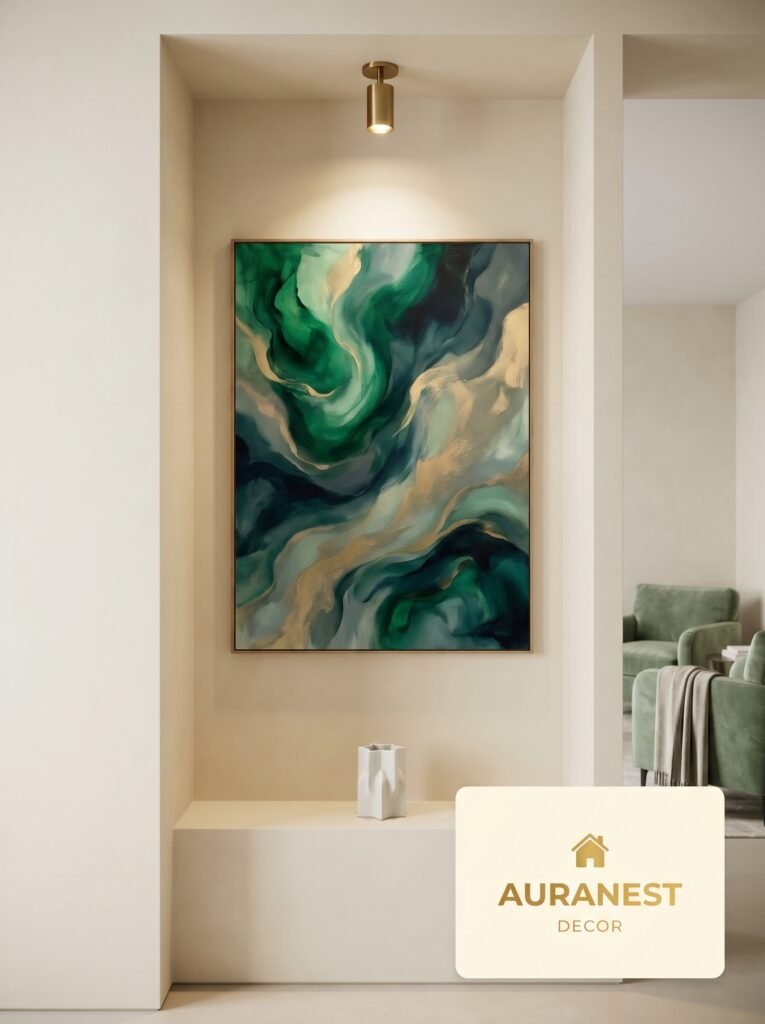
An alcove with a flat back wall is essentially a picture frame that your house built for you. Use it like one. A single oversized piece of art hung on the back wall of an alcove, lit from above with a small directional spotlight, has an impact that no gallery wall ever could — because the architecture is doing half the work already.
For maximum effect, choose art that picks up one of the dominant colors in your living room, but goes deeper or bolder with it. If your sofa is sage green, choose a painting with emerald tones. If your room is mostly neutral, this is your chance to introduce a single powerful hit of color. The alcove frames and contains it so it never feels overwhelming.
Sculptural pieces work beautifully here too — a ceramic bust, an abstract bronze form, or even a single dramatic arrangement of dried botanicals mounted on the wall. The key is restraint. One powerful thing, beautifully lit, is always more striking than many competing things fighting for attention.
—
7. Alcove Lighting Ideas That Change the Entire Atmosphere of a Room
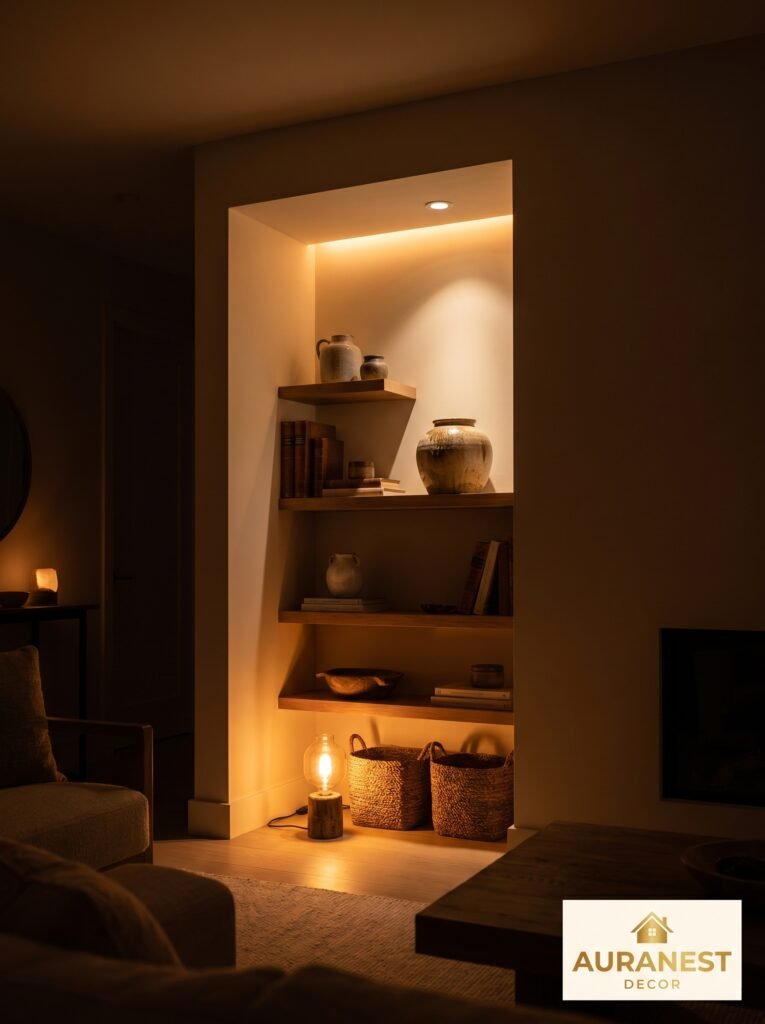
It cannot be overstated how much lighting transforms an alcove. The same space can feel like a forgotten corner at noon and a warm, glowing centerpiece at 7pm — purely because of how it’s lit.
Built-in LED strip lights along the top edge of the alcove casting light downward over shelves create that high-end retail aesthetic that feels simultaneously luxurious and homey. Recessed ceiling spotlights positioned inside the alcove add drama and focus. A single table lamp on the floor of the alcove with a warm-toned bulb creates a pooling, candlelit effect that makes everything around it feel softer.
The most important rule? Never use cool white or daylight-spectrum bulbs in an alcove. Stick to warm whites (2700K-3000K), and your alcove will look like it was styled by a professional every single evening.
—
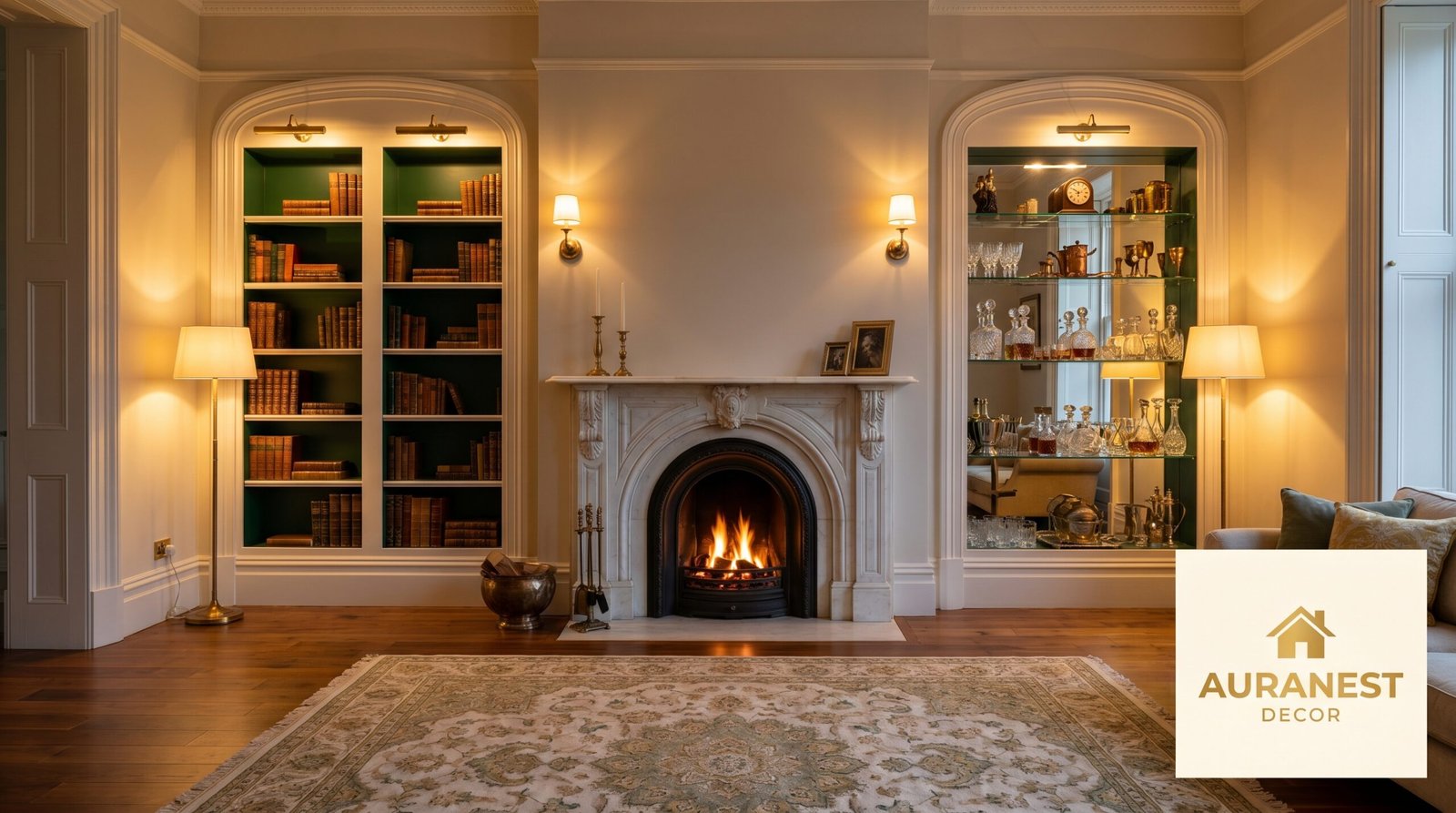
8. The Fireplace Flanked Alcoves: Treating Them as a Matching Pair
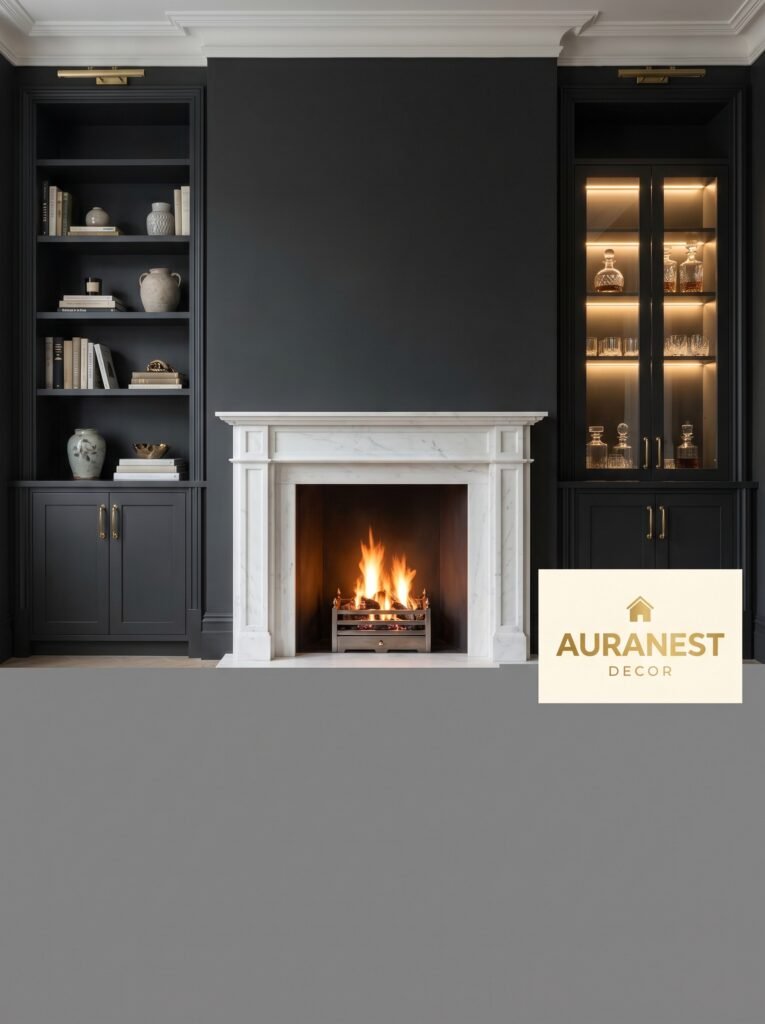
If your living room has a chimney breast, chances are you have two alcoves — one on each side. These matching recesses are one of the most beautiful architectural features a room can have, and treating them as a deliberate pair rather than two separate problems is the key to making them sing.
They don’t have to be identical. You could put built-in shelves in one alcove and a drinks cabinet in the other. Or a reading bench on the left and a media unit on the right. What matters is that they share a visual language — the same color paint inside, the same trim style, the same lighting approach — so the room feels balanced and intentional even if the function of each alcove differs.
This asymmetrical-but-cohesive approach is something interior designers use constantly because it feels organic and considered rather than rigidly symmetrical. It looks like the room evolved thoughtfully over time, which is exactly the kind of lived-in elegance that makes a house feel like a home.
—
9. Styling an Alcove With Plants: Creating a Living Green Moment
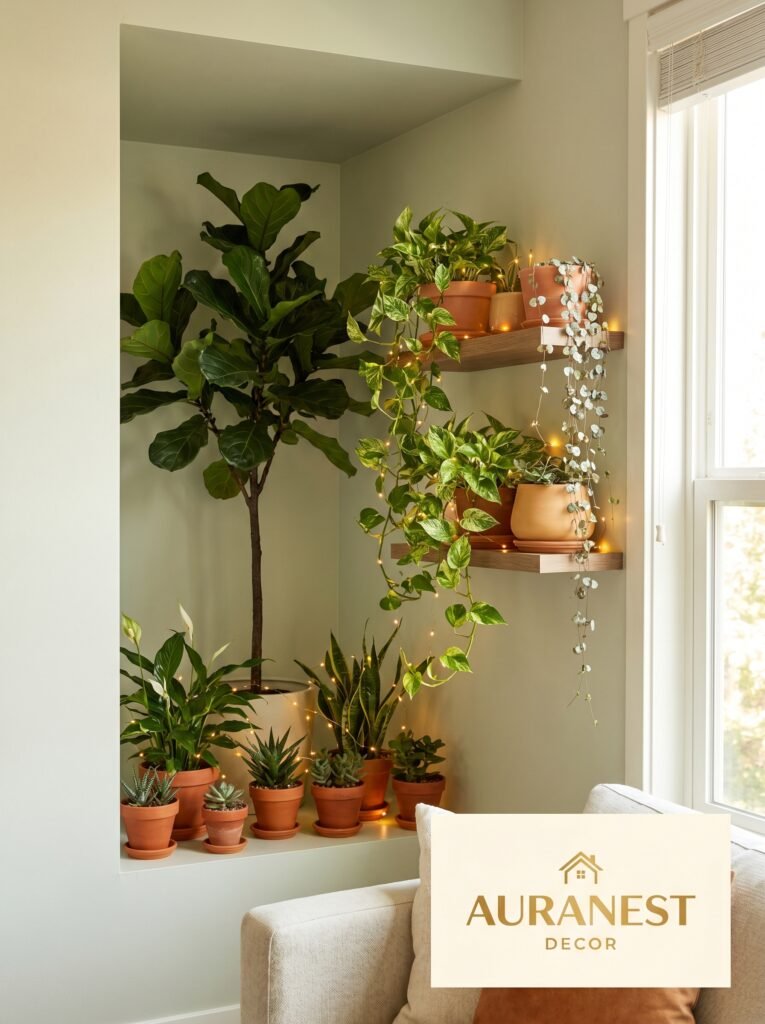
There’s a particular kind of joy that comes from a living room corner that’s genuinely alive — and an alcove is the perfect container for a considered plant display. The architectural depth gives even simple plant arrangements a sense of layered depth that’s difficult to achieve on a flat surface.
Think in terms of height variation: a tall fiddle-leaf fig or snake plant at the back, medium-height trailing plants like pothos or string of hearts on a shelf above, and small succulents or a single trailing plant at lower level. This creates a cascade of green that feels lush without being cluttered.
“A corner full of plants isn’t decoration — it’s an entire mood.”
For alcoves with lower light levels, there are genuinely beautiful low-light plants that thrive: ZZ plants, peace lilies, cast iron plants, and certain varieties of philodendron. Pair the plants with terracotta pots in varying sizes and a few small trailing strings of warm fairy lights woven through the foliage, and your alcove becomes the most photographed corner of your home.
—
10. The Media Unit Alcove: Hiding Your TV Without Losing Style
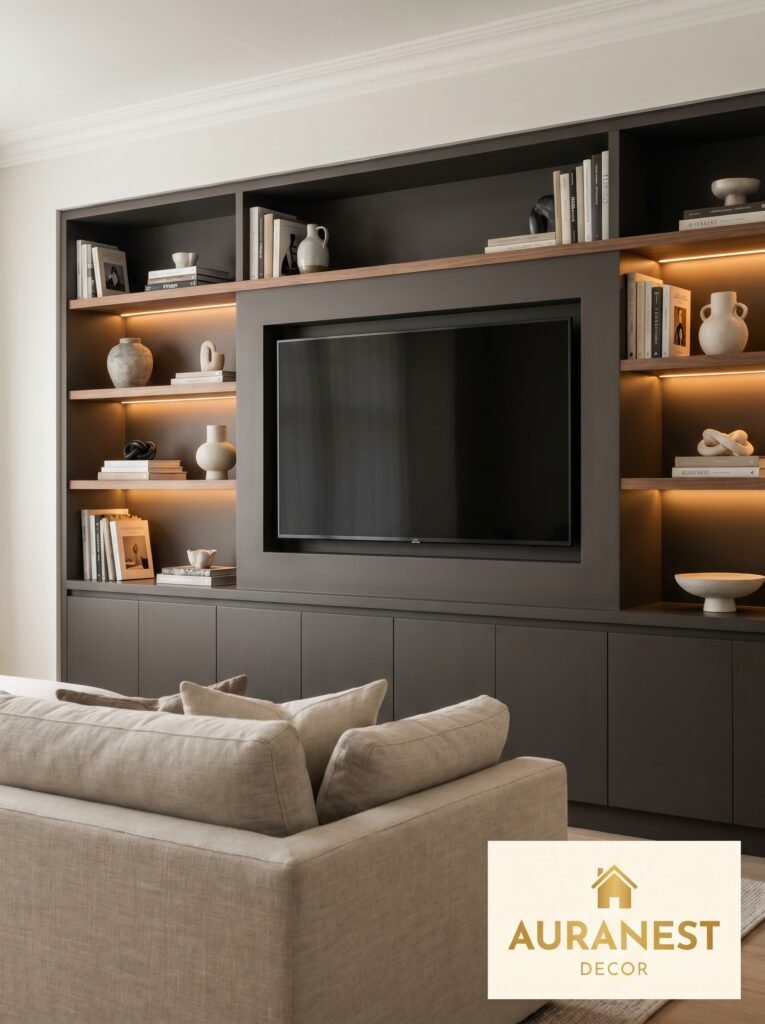
Here’s one of the most practical — and most frequently searched — alcove ideas on Pinterest: building your TV and media setup into an alcove so it looks intentional rather than like a screen awkwardly perched on a stand.
A fitted media unit inside an alcove solves multiple problems simultaneously. It creates storage for cables, consoles, remotes, and all the visual clutter that technology generates. It frames the television within the architecture of the room. And it elevates the entire wall from a functional zone to a designed feature.
The finish you choose matters enormously here. Painted MDF in a matte color that matches the alcove walls creates a seamless, almost gallery-like look. A warm timber veneer adds organic warmth. And floating shelves above the TV within the alcove allow you to display books and objects, softening what could otherwise feel like a purely tech-focused wall.
—
11. Budget Alcove Ideas That Look Like They Cost a Fortune
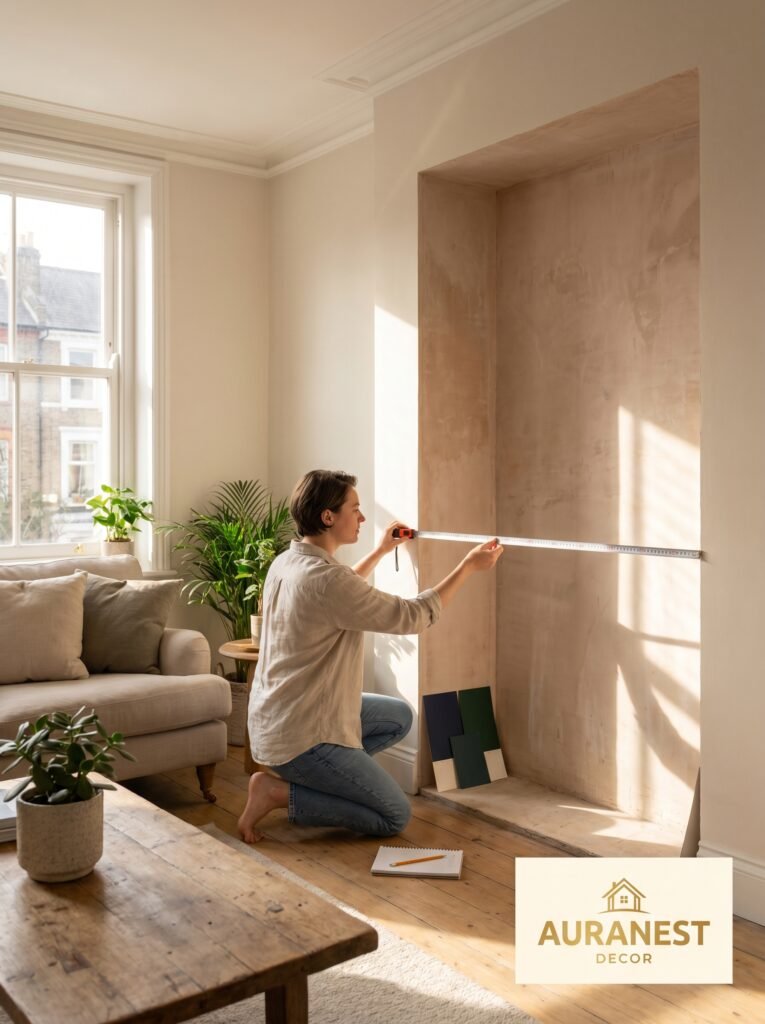
Not every alcove transformation requires a carpenter and a significant budget. Some of the most beautiful alcove ideas on Pinterest cost almost nothing — they just require a good eye and a willingness to try.
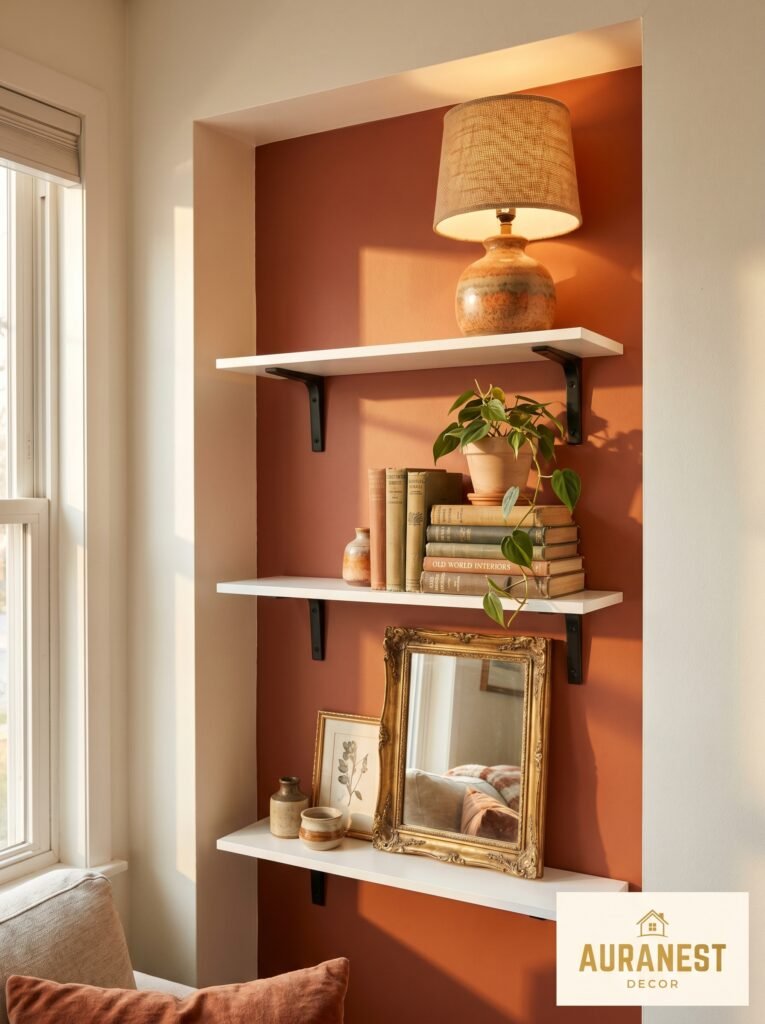
Start with paint. Painting the inside of an alcove a different, deeper color from the rest of the room costs next to nothing and makes an enormous visual impact. Add floating shelves — IKEA’s LACK or KALLAX range offers affordable starting points that can be elevated with new hardware and a fresh coat of paint. Use tension rods across the alcove opening to hang a curtain and create an instant cozy cabinet feel.
Thrift stores and vintage markets are treasure troves for alcove styling. A single found ceramic lamp, an antique mirror leaning against the back wall, a stack of beautiful old hardcovers — these are the kinds of objects that give an alcove genuine character, and they never cost what they look like they cost.
—
12. The Cozy Bar Cart Alcove: Making Hosting Feel Effortlessly Elegant
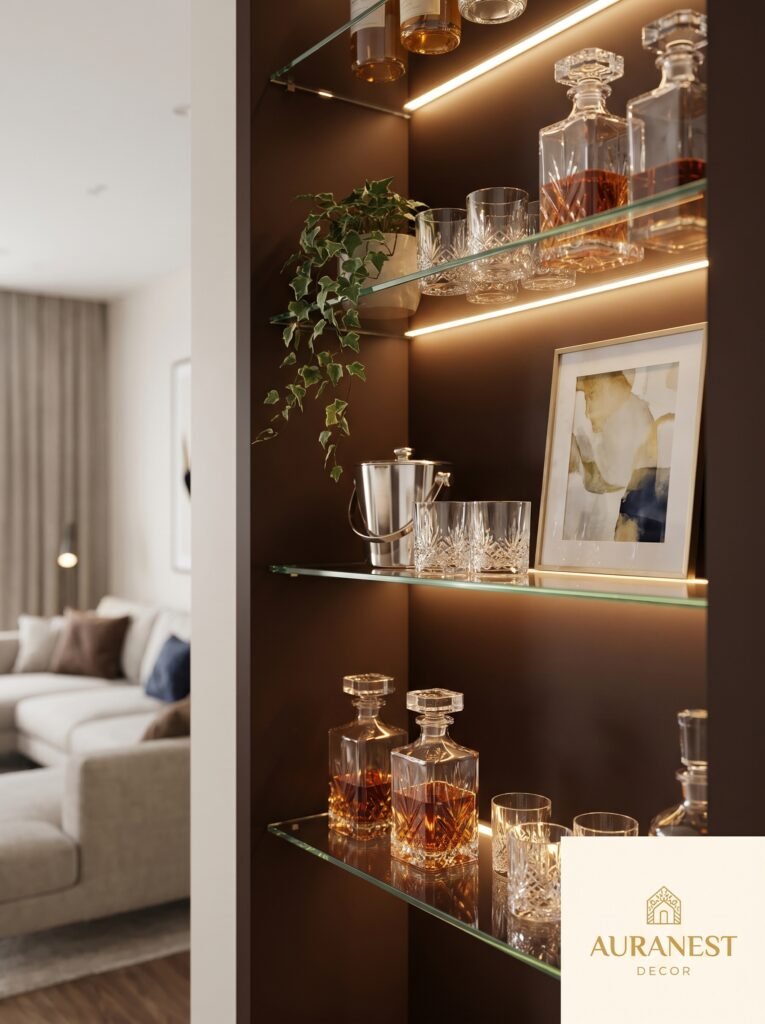
There’s something deeply satisfying about a home that looks like it was designed for gathering — and a dedicated drinks or bar alcove in your living room is perhaps the most hospitable design gesture you can make.
A fitted drinks cabinet or even a collection of beautiful decanters, glassware, and a small ice bucket arranged on floating shelves inside an alcove creates a moment of warmth and welcome. Guests are drawn to it. Conversations start there. It signals — without a single word — that this is a home that knows how to enjoy itself.
Style it with intention: mix heights, add a small trailing plant, back-light the shelves with warm LED strips so the glass and crystal catch the light. A small framed print or a single piece of art on the back wall adds personality. Keep it edited — five beautiful things displayed well will always outperform fifteen things crowded together.
—
🌿 How to Make the Most of Your Living Room Alcove
Before you dive into any alcove project, take a day to simply observe the space. Notice where the natural light falls at different times of day, because this will guide your color choices and plant selections enormously. An east-facing alcove that catches morning light can handle darker paint; a north-facing one might need lighter tones and supplementary artificial light.
Measure the space properly — not just width and height, but depth too. Many alcoves are surprisingly shallow, and knowing your exact dimensions before buying shelves or furniture will save enormous frustration. A depth of six inches can hold books face-out. Twelve inches handles regular upright books and small objects. Eighteen inches or more opens up possibilities for deeper furniture, plants, and even seating.
Think about what you actually need your living room to do before you decide on an alcove function. If storage is your pressing need, built-in shelving with closed cabinet doors below makes sense. If your living room already has plenty of storage but feels soulless and cold, a plant display or art moment might give the room the warmth it’s been missing.
Finally — don’t rush the styling. Live with the painted or fitted alcove for a week before you fill it with objects. Resist the urge to overcrowd it immediately. The best-styled alcoves are ones where the owner was patient enough to wait for the right objects rather than filling every inch in one weekend.
—
❓ FAQ
Q: What is the best way to decorate an alcove in a living room on a small budget? A: Start with paint — choosing a deeper, richer color for the inside of the alcove costs very little but creates a dramatic, high-end look. Add floating shelves from affordable retailers, style with a mix of books, plants, and a single lamp, and you’ll have a transformed alcove for well under $100.
Q: Should alcoves on either side of a fireplace match exactly? A: They don’t need to match identically, but they should share a visual language — the same interior paint color, similar lighting style, and complementary design approach. Using both alcoves for slightly different functions (storage on one side, display on the other) actually feels more natural and interesting than rigid symmetry.
Q: What color should I paint the inside of an alcove? A: The most impactful approach is to go at least two to three shades deeper than your main wall color, or choose a completely contrasting accent color that picks up a secondary tone from your room’s palette. Deep navy, forest green, warm terracotta, and charcoal are all consistently popular because they create depth and warmth simultaneously.
—
💭 Final Thought
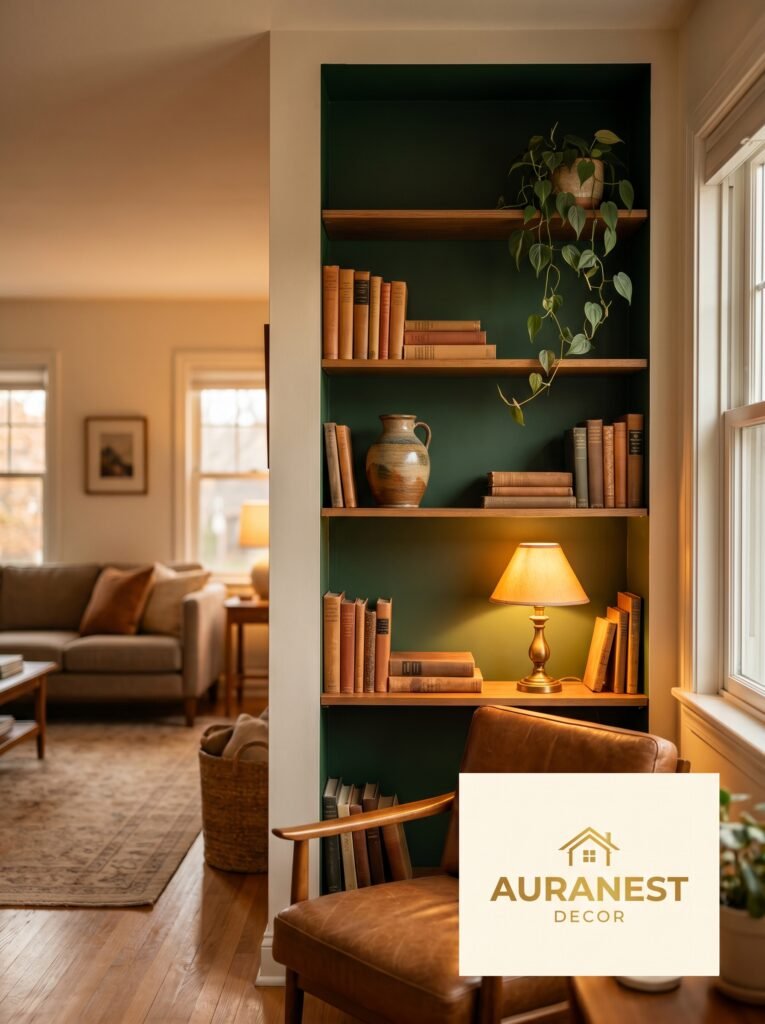
An alcove is one of those quiet gifts that a home gives you — a place where architecture creates possibility, and where a relatively small investment of creativity and care can completely change the feeling of an entire room. The best alcove transformations aren’t the most expensive ones; they’re the ones that feel genuinely personal, as if they could only belong to that particular home and that particular person who lives in it.
Your alcove is waiting. What story do you want it to tell?