
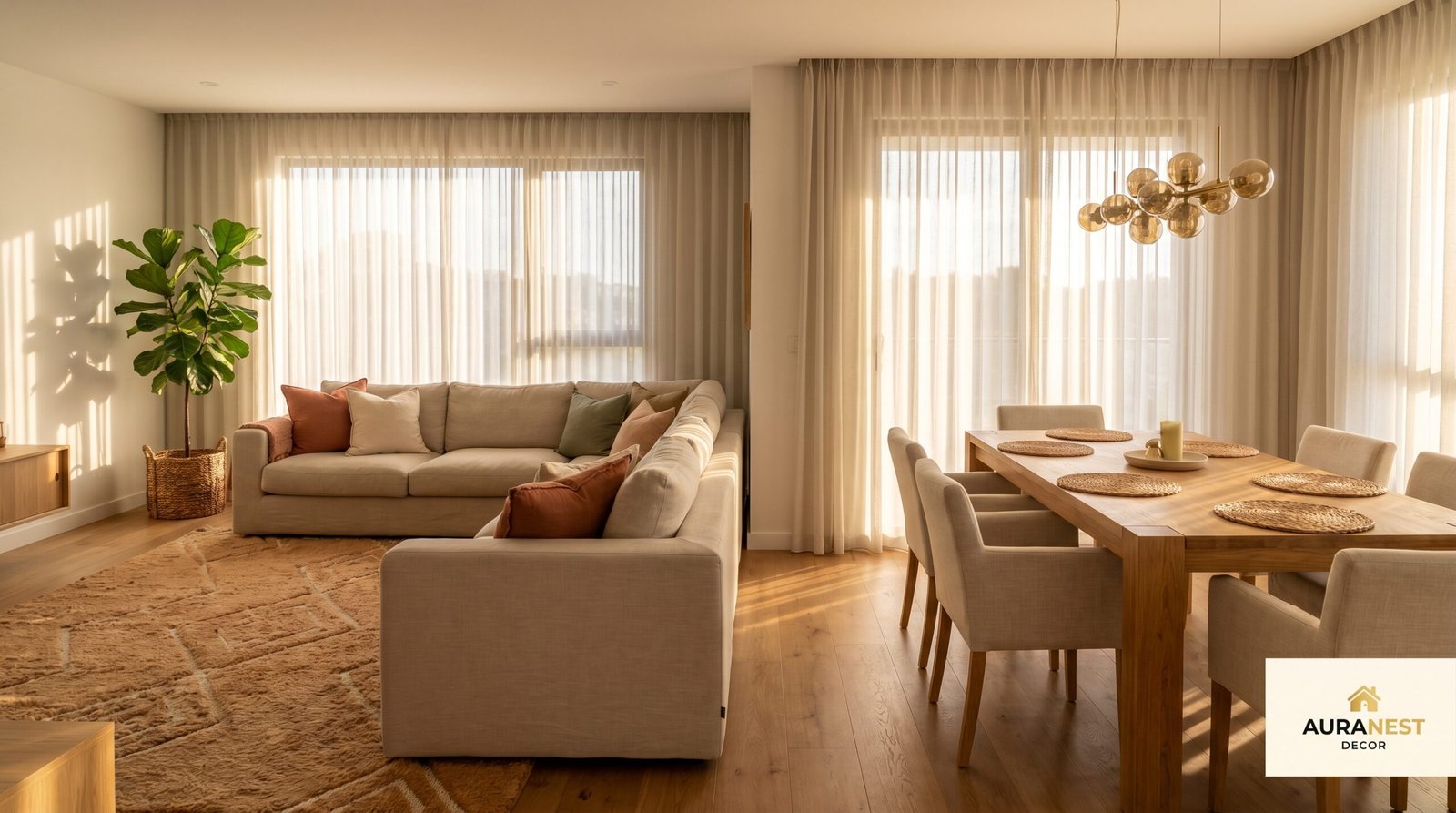
The Living Dining Room Combo: How to Design One Space That Does Everything Beautifully
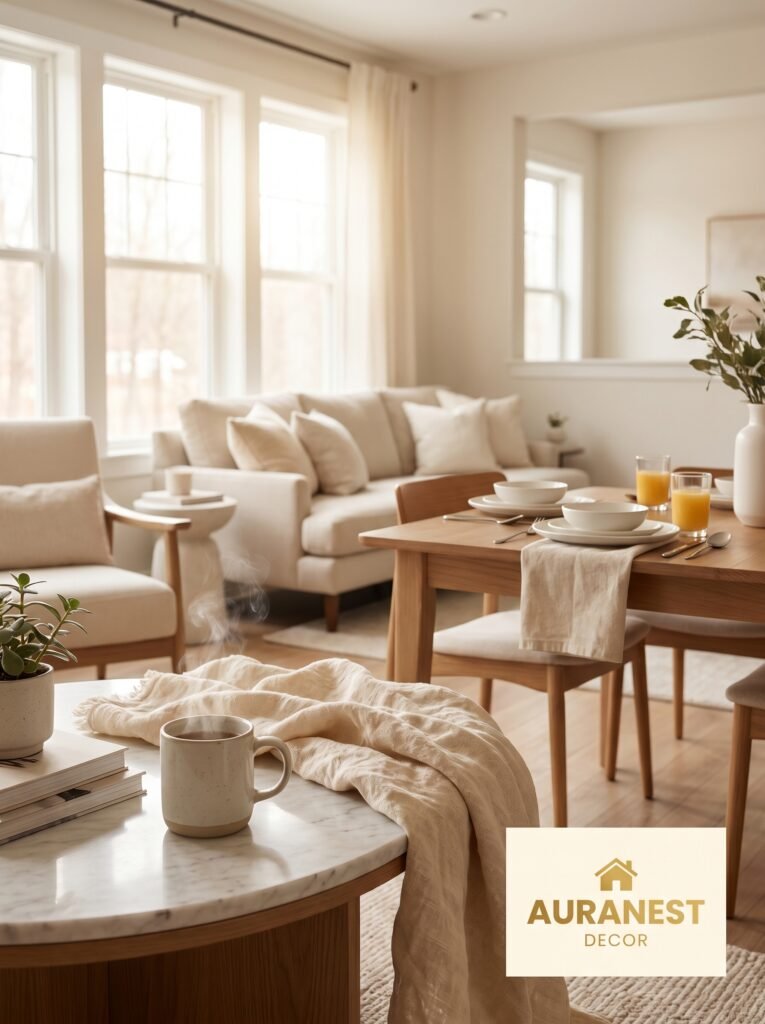
There’s a particular kind of magic that happens in a room that holds both your sofa and your dining table — where Saturday morning coffee melts into a lazy brunch, and weeknight dinners feel just a little more alive because the whole family is already gathered nearby. If you’re working with a living dining room combo, you’re not decorating a compromise. You’re creating a home’s most human space.
—
1. Why the Living Dining Room Combo Is Having Its Greatest Moment Yet
For decades, open-plan living was aspirational — something you saw in architecture magazines or newly built homes with generous budgets. But today, the living dining room combo has become one of the most searched and pinned interior concepts on the internet, not because it’s trendy, but because it genuinely works for the way most of us actually live.
Think about it. How many people do you know who use a formal dining room every day? Most dedicated dining rooms become the room where homework gets dumped, where holiday decorations wait to be put away, where the treadmill goes to retire. A combined living and dining space, on the other hand, earns its square footage constantly. It adapts. It breathes. It serves you in the morning, in the evening, on quiet Tuesdays and chaotic Sundays alike.
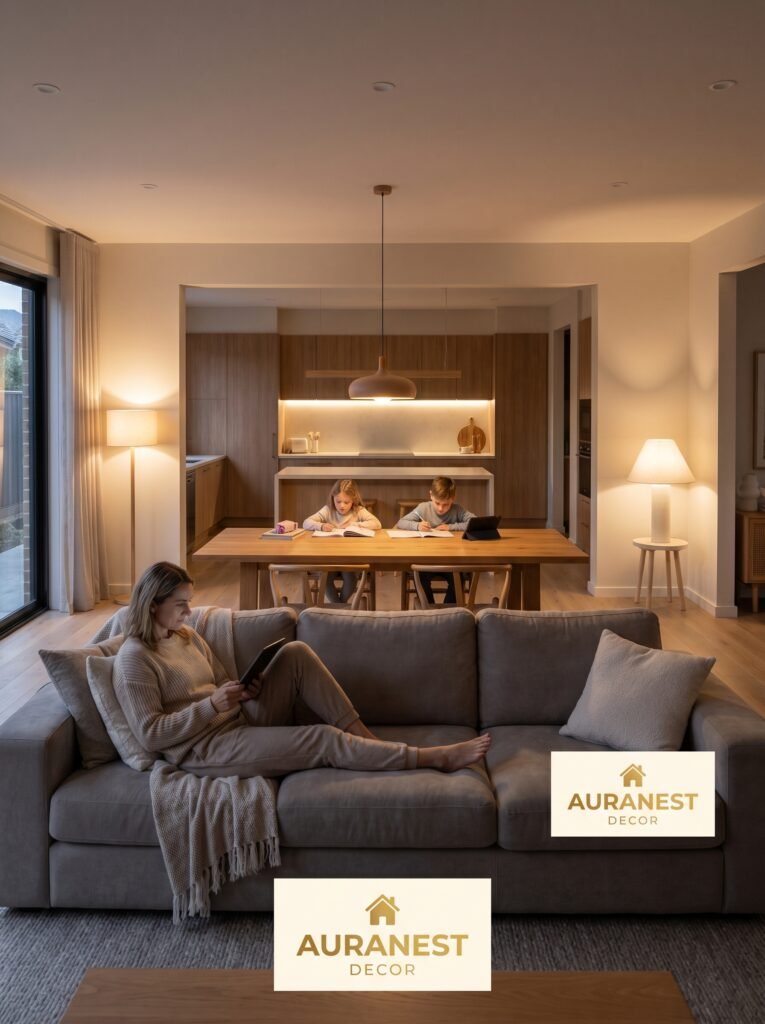
The shift toward open-plan, multi-functional spaces also reflects something real about modern life — we want to be with each other even when we’re doing different things. The person cooking can talk to the person watching TV. The kids can do homework at the dining table while a parent relaxes on the couch. That invisible wall between living and dining was never keeping people in — it was keeping connection out.
“The best rooms don’t just look beautiful — they make life feel easier, warmer, and more whole.”
2. The Art of Zone Definition: How to Separate Without Dividing
Here’s the foundational challenge of a living dining room combo: how do you make one open room feel like two distinct, purposeful spaces without building a wall or losing the openness that makes it special in the first place?
The answer lies in zone definition — a design principle that uses visual and sensory cues rather than physical barriers to communicate where one area ends and another begins.
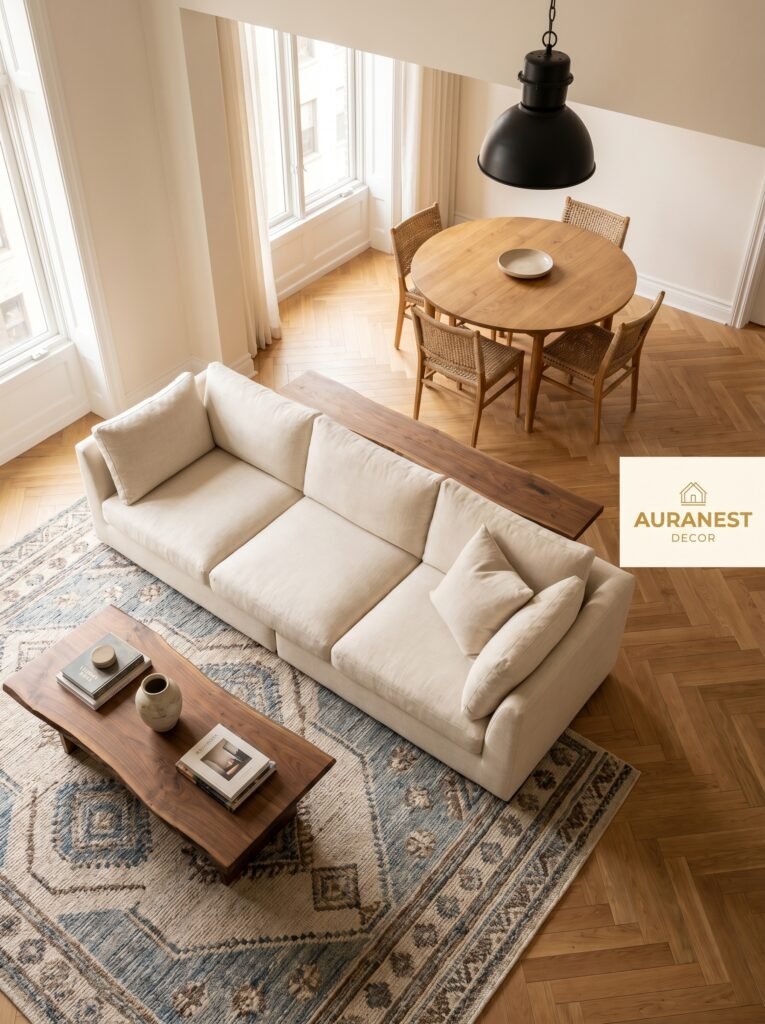
Rugs are your most powerful tool here. Placing a large area rug under your sofa and coffee table anchors the living zone immediately. It says: this is where we rest. Your dining table, left on bare floor or on its own smaller rug, becomes a separate world just steps away. The contrast alone does most of the work.
Lighting is equally transformative. A pendant light hanging directly above your dining table is not just decorative — it is a declaration. It draws the eye down, centers the dining experience, and creates a psychological sense of enclosure even in a completely open room. Pair it with softer, ambient lighting in the living area, and suddenly you have two moods living harmoniously under one roof.
Furniture arrangement adds the third layer. The back of your sofa, facing away from the dining table, acts as a soft visual boundary. You don’t need height. You don’t need a shelf or a room divider. The intentional placement of furniture tells the room’s story better than any wall ever could.
3. Choosing a Color Palette That Unifies Without Boring
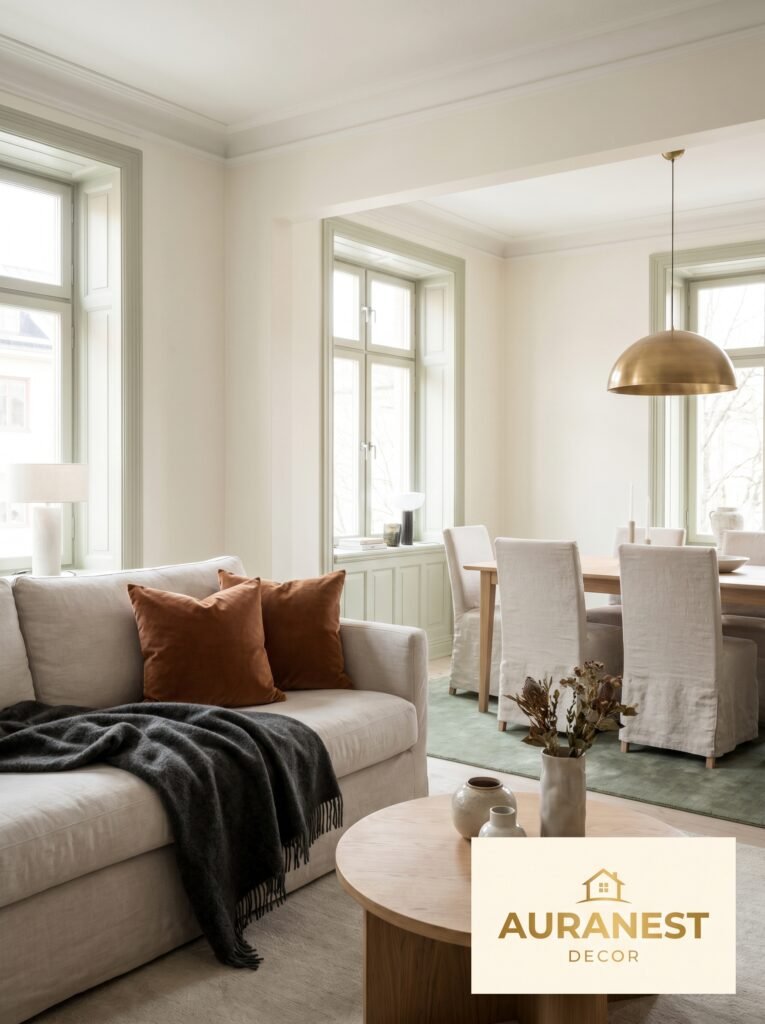
One of the quiet anxieties people bring to living dining room combo design is color. Should the two zones match exactly? Should they contrast? What if it all feels too matchy-matchy, or worse — like a showroom that nobody actually lives in?
The most sophisticated approach is a unified base palette with tonal variation. Choose one or two anchor colors — perhaps a warm white, a soft sage, or a grounded terracotta — and let them run through both zones. This creates visual cohesion, the sense that the room belongs to itself. Then introduce variation through textiles, wood tones, and accent pieces.
Your living area might have deeper, cozier tones — a charcoal throw, rust-colored cushions, a darker wood coffee table. Your dining zone might feel lighter, brighter, more energized — linen seat covers, a lighter timber table, a bold pendant in brass or matte black. Same family of colors. Different emotional register. It works beautifully.
Avoid the temptation to use two completely unrelated palettes in each zone. It fragments the eye and makes the room feel chaotic rather than curated. A living dining room combo should always feel like one cohesive story told in two chapters — not two different books sitting on the same shelf.
4. The Furniture Scale Secret That Changes Everything
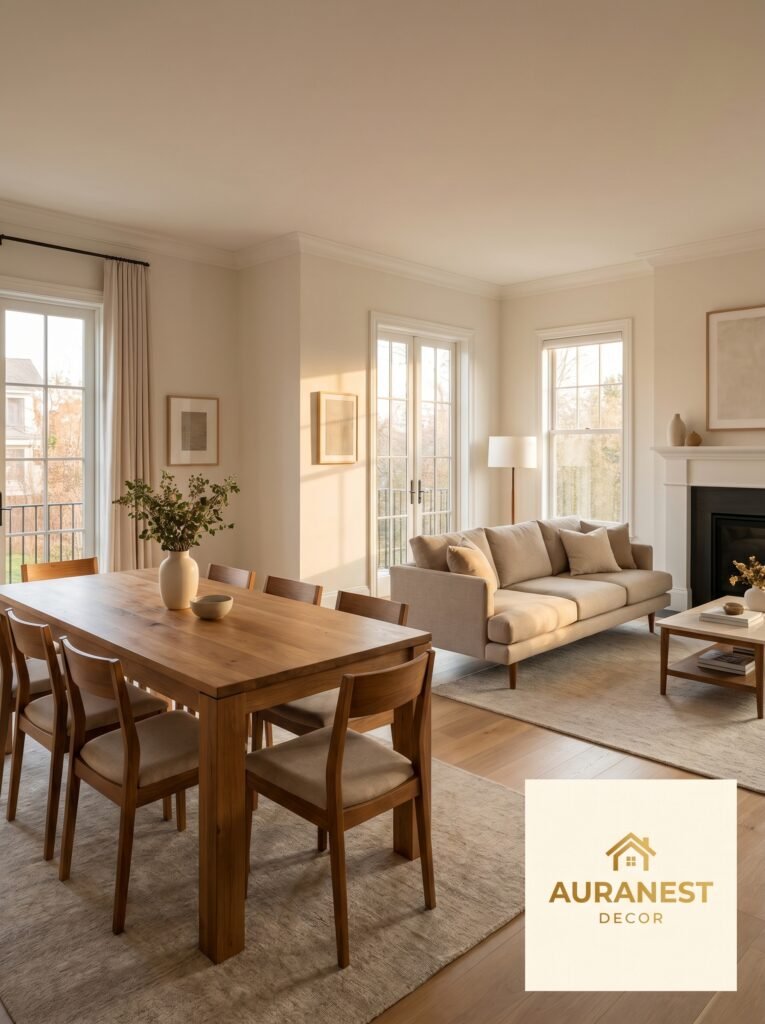
Scale is the invisible hand behind every beautiful room. And in a living dining room combo, getting furniture scale right is arguably the single most impactful decision you’ll make.
The most common mistake? Furniture that’s too small. A tiny sofa and a petite dining table in a generously sized open room will always look — and feel — deflated. Scale down too much, and the room swallows your furniture whole. There’s no sense of grounding, no sense of arrival.
Go slightly larger than your instinct tells you. A substantial dining table — one that could seat six even if you typically dine as four — anchors the dining zone with authority. A full-sized sectional or a classic three-seater sofa gives the living area weight and presence. These pieces communicate confidence. They say: this room knows what it is.
The key caveat is proportion to the room itself. In smaller open-plan spaces, this means choosing furniture with clean lines and visible legs, which creates an illusion of floor space even when pieces are generously sized. A bulky sofa sitting low to the ground with a solid base will make a small room feel stuffed. The same volume in a sofa with tapered legs? It floats. It breathes.
“In design, confidence looks like scale. Choose furniture that fills the room with purpose, not apology.”
5. How Lighting Transforms the Mood of Every Moment
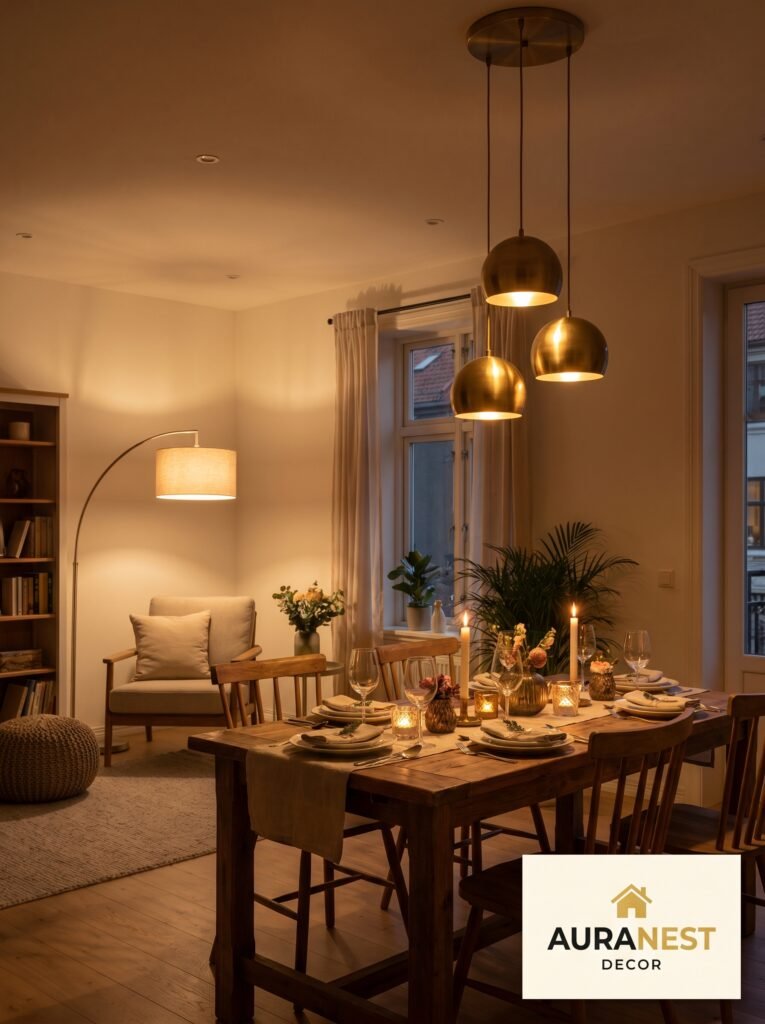
Lighting in a living dining room combo is not one decision — it is a layered system, and getting it right will transform how the room feels at every hour of the day.
Natural light is your starting point. If your space has windows, fight for them. Keep window treatments light and sheer so daylight pours freely through both zones. A sun-drenched combined living and dining room has an energy that no artificial light can fully replicate — it feels alive, generous, welcoming.
For artificial lighting, think in three layers: ambient, task, and accent. Ambient light fills the room — recessed ceiling lights, a large pendant, or a statement chandelier over the dining table. Task lighting serves specific purposes — under-cabinet lighting if your space flows from a kitchen, a reading lamp beside the sofa. Accent lighting is where personality lives — a floor lamp in a corner, LED strips behind a media unit, candlelight on the dining table for evenings.
The dining table pendant deserves its own moment of attention. This single fixture does more design work than almost anything else in a combined space. Choose it with care. A cluster of pendants at varying heights feels modern and organic. A large drum shade feels warm and grounded. A sculptural chandelier makes a statement. Whatever you choose, hang it lower than you think — about 30 to 36 inches above the tabletop — so it creates intimacy rather than floating disconnected near the ceiling.
Dimmers are non-negotiable. The ability to shift from bright and energetic during meals to soft and warm during evening relaxation is what makes a combined space truly livable. Without dimmers, you’re working with one note when the room deserves a whole melody.
6. Smart Storage Solutions That Keep the Combo Clutter-Free
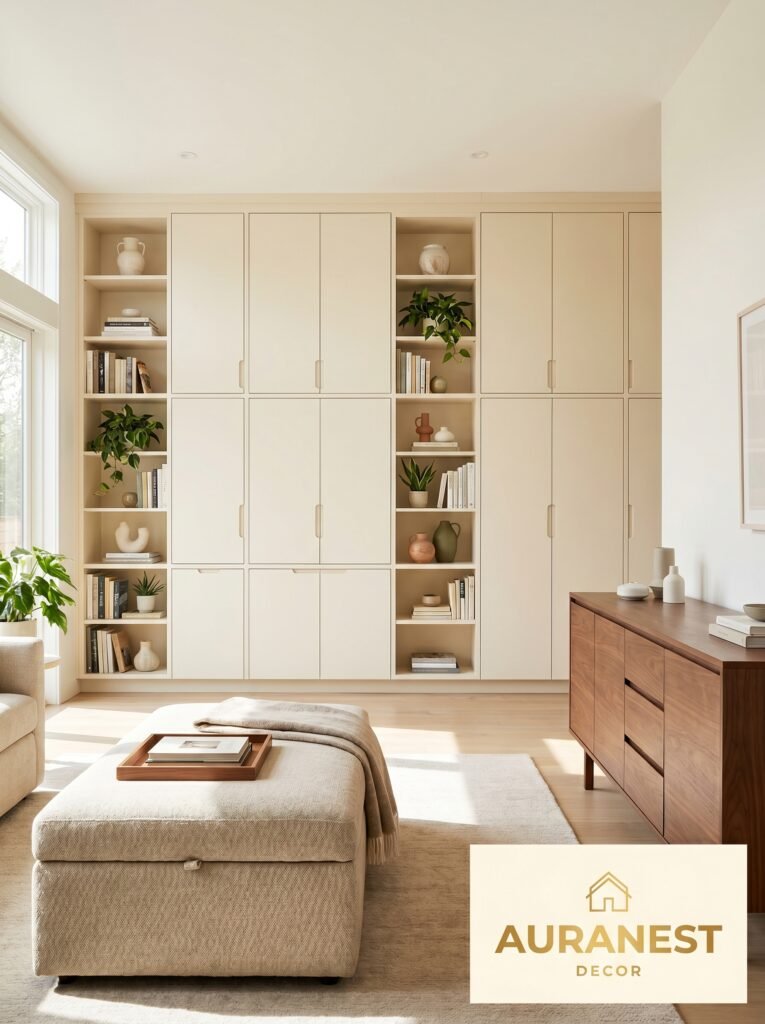
Here is the truth about open-plan living that design magazines don’t always tell you: without intentional storage, a combined living and dining room will look chaotic within a week. The openness that makes it beautiful is also what puts every item on display.
Built-in storage is the gold standard — a wall of cabinetry that combines open shelving for display and closed doors for everything else. If built-ins aren’t an option, a quality sideboard in the dining zone pulls double duty as a beautiful piece of furniture and a hiding place for placemats, candles, extra napkins, and everything the dining table attracts.
In the living zone, a coffee table with drawer storage or a lift-top mechanism keeps remote controls, chargers, and magazines out of sight. Ottomans with hidden storage inside are a quiet genius move — they offer seating, a place to rest your feet, and an entire compartment for throws, board games, or kids’ toys.
Vertical storage also matters more than people realize. Tall bookshelves draw the eye upward, making rooms feel larger, while providing substantial storage space. Style them intentionally — books mixed with plants, art objects, and a few carefully chosen decorative pieces — and they become one of the most character-rich elements in the room.
7. The Dining Table: Your Space’s Hardest-Working Piece of Furniture
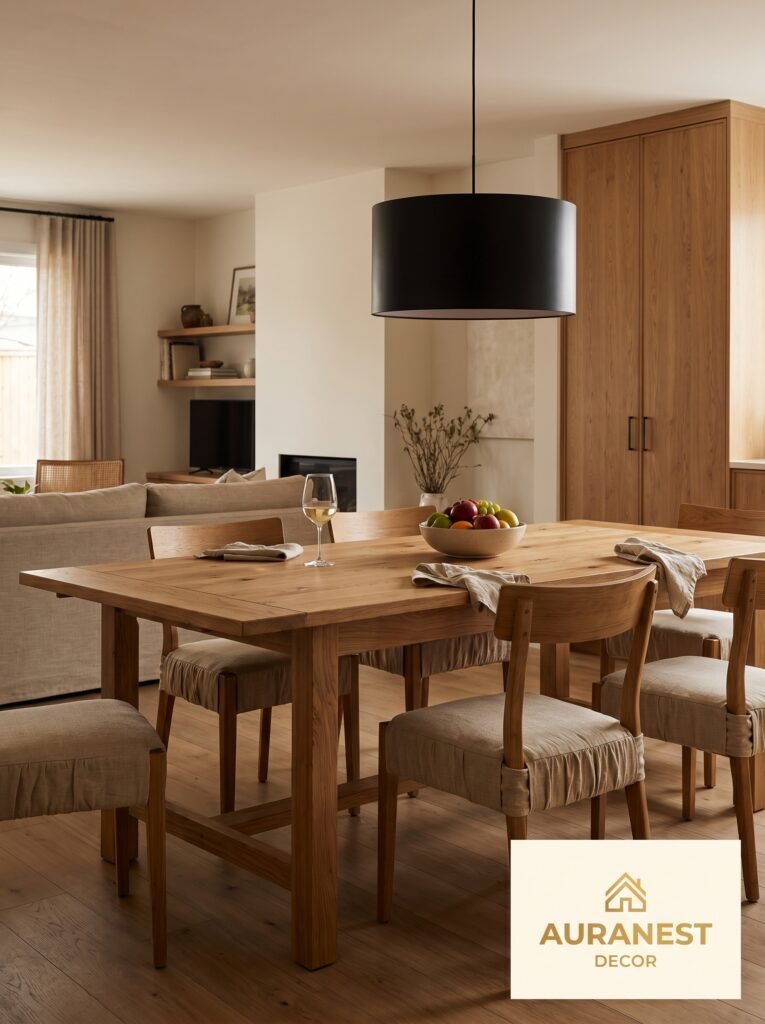
If your sofa is the heart of your living room, your dining table is the soul of your combined space. It is where meals happen, yes — but also where homework gets done, where crafts unfold on rainy afternoons, where laptops open during work-from-home days, where birthday cakes are cut and wine glasses clink late into the night.
Choose your dining table not just for aesthetics but for life. Round tables soften a space and encourage conversation — no head of the table, no hierarchy, just people gathered in a circle. Rectangular tables are workhorses, offering maximum surface area and a natural anchor point for longer rooms.
Material matters enormously. A solid wood table develops character over time — the small scratches and worn edges become part of its story. Marble-topped tables are stunning but require more mindfulness around spills and acidity. Extendable tables are perhaps the smartest choice for a combined space, offering the right footprint for daily use and the flexibility to expand when guests arrive.
Whatever table you choose, pair it with chairs that invite people to linger. Comfort is an underrated dining room quality. Chairs with a little cushion, or with a shape that supports the back well, turn a 20-minute dinner into a two-hour conversation. And that is always worth the investment.
“Your dining table is where ordinary days become memories. Choose one worthy of the stories it will hold.”
8. How to Use Textiles to Warm a Combined Space
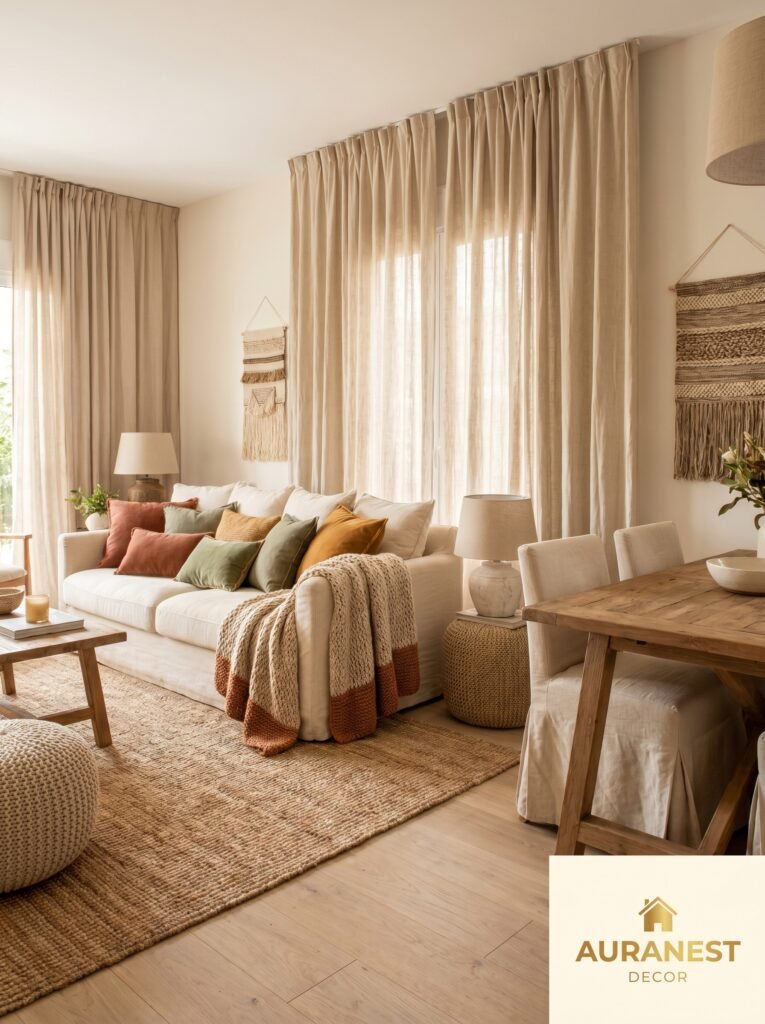
Textiles are the warmth-givers of interior design — the difference between a room that looks beautiful in photographs and one that actually feels good to be inside. In a living dining room combo, strategic use of textiles bridges the two zones while layering in the comfort that makes a house feel like home.
Start with the rug. As mentioned, this is your zone-defining anchor in the living area — but it is also a huge opportunity for texture and color. A jute or sisal rug brings natural, organic warmth. A wool rug in a geometric pattern adds visual interest and incredible softness underfoot. A Persian-inspired rug in deep jewel tones anchors a more eclectic space.
Curtains, when floor-to-ceiling and generous in width, add a luxury that transforms any room. Even budget-friendly curtain panels look expensive when hung high — close to the ceiling — and allowed to pool very slightly on the floor. Choose linen or a linen blend for a lived-in, organic feel that complements both dining and living zones.
On your dining chairs, seat cushions or upholstered seats connect the dining zone to the softer world of the living area. A simple linen slipcover on dining chairs immediately softens what could otherwise feel like a more formal space. Throw cushions on your sofa in fabrics that echo the dining chair textile create that sense of intentional, whole-room design.
9. Plant Life: The Living Element That Ties Everything Together
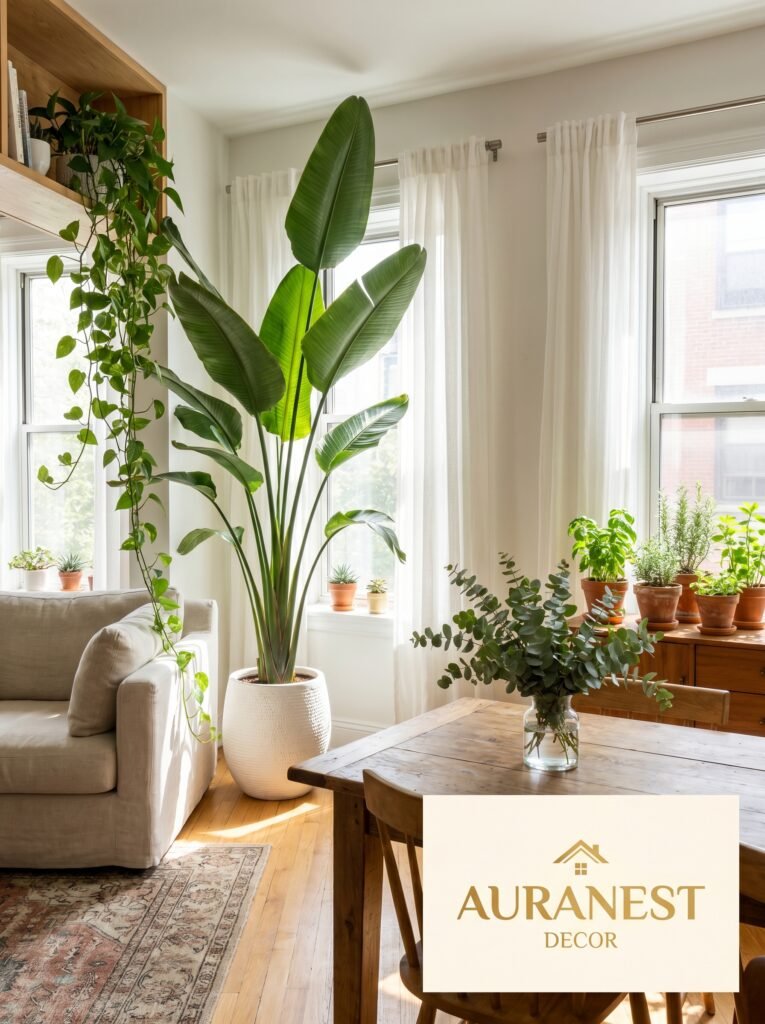
There is something that plants do in a combined living and dining room that no other design element can replicate — they make the space feel alive. Not just beautiful. Genuinely, organically alive. And in a room where you eat, rest, talk, and exist together, that quality of aliveness matters more than almost anything.
Large statement plants — a fiddle leaf fig, a monstera, a bird of paradise — work best in the living zone, where their vertical presence adds height and drama. Place one in a corner near natural light and watch it transform the entire corner from dead space into a design moment.
In the dining zone, smaller plants on the table or sideboard soften the harder lines of furniture. A trailing pothos on a shelf, a cluster of herbs in terracotta pots near a window, a simple vase of seasonal branches on the dining table — these add the kind of effortless, living beauty that takes a space from designed to dwelled in.
10. The Gallery Wall Strategy for a Seamless Combined Space
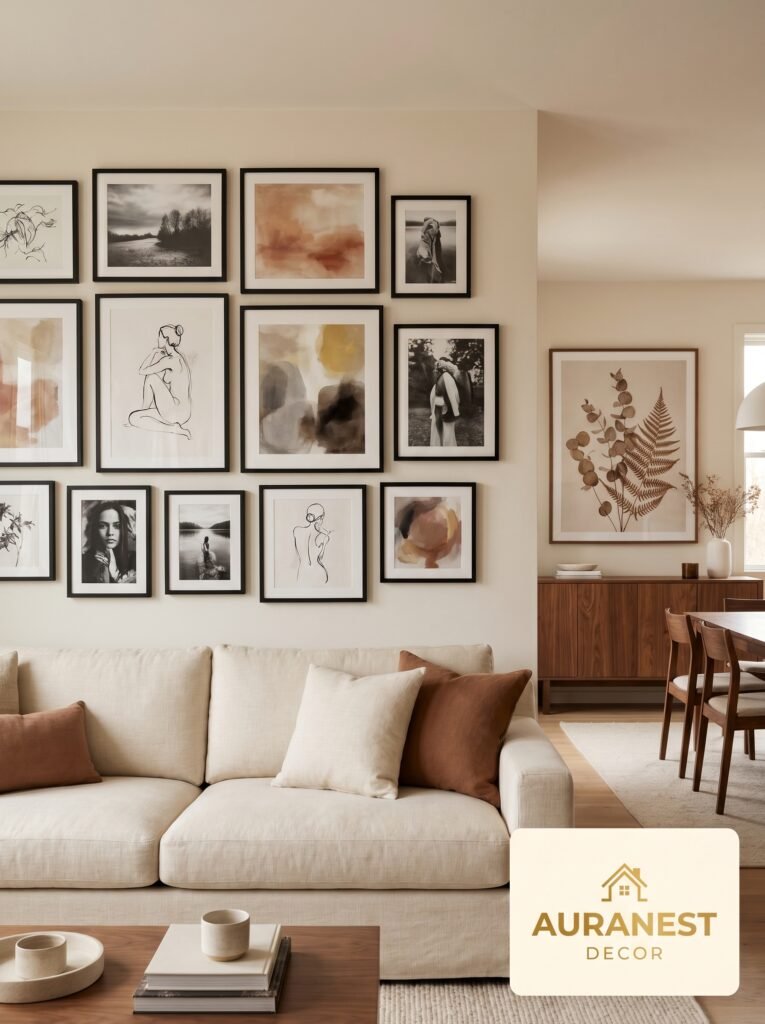
Art is how a room tells its story, and in a living dining room combo, thoughtful art placement reinforces zone identity while maintaining overall cohesion.
The living zone is the natural home for a gallery wall — a curated collection of frames in complementary sizes, mixing photography, illustration, and abstract art. A gallery wall above the sofa anchors the living zone visually and gives the eye a resting place filled with personality and meaning. The key to gallery walls that feel curated rather than chaotic is consistency — either in frame color, mat color, or overall tone of the artwork.
In the dining zone, a single large-scale piece of art often works better than a collection. One generous canvas or framed print above a sideboard creates a focal point that anchors the space without competing with the already-busy social energy of a dining area.
The through-line between the art in both zones should be tonal — colors that reference each other, or a consistent mood (earthy and natural, bold and graphic, soft and romantic) that makes the whole room feel like a single, deliberate vision.
11. Budget-Friendly Ideas That Look Anything But
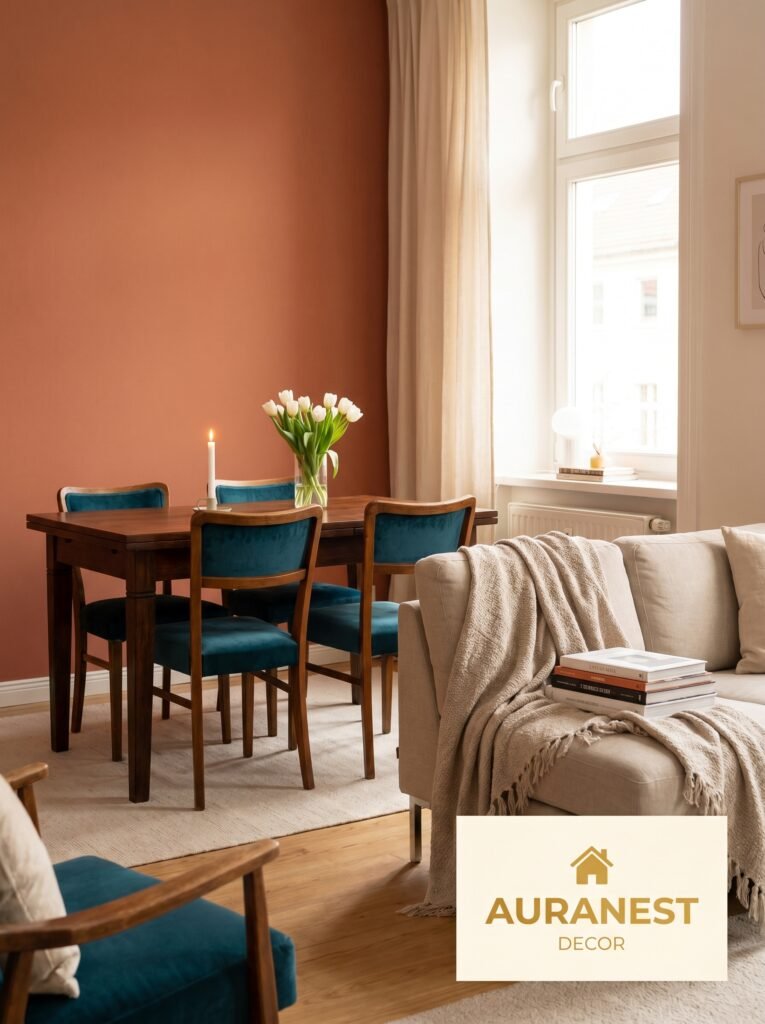
The living dining room combo is one of the most democratically beautiful spaces in interior design, because smart styling can elevate even the most modest budget into something genuinely magazine-worthy.
Secondhand furniture is your greatest ally. A solid wood dining table from a thrift store or Facebook Marketplace, sanded and refinished, will outperform many brand-new options in both character and quality. Vintage chairs, reupholstered in a modern fabric, become statement pieces that no mass-market retailer can replicate.
Painting is the highest-impact, lowest-cost transformation available. A fresh coat of paint in a considered color can make mismatched furniture feel intentional, make a small room feel larger, and give the entire combined space a fresh identity. Don’t overlook painting just one wall — a warm terracotta or deep teal accent wall behind the dining table can become the room’s defining visual moment.
Styling details matter far more than price tags. A candle on the dining table. Fresh flowers in a simple vase. A stack of beautiful coffee table books. A throw draped just-so over the sofa arm. These are the touches that make people walk into a room and stop. They cost very little and mean everything.
12. How to Make a Small Living Dining Room Combo Feel Spacious and Intentional
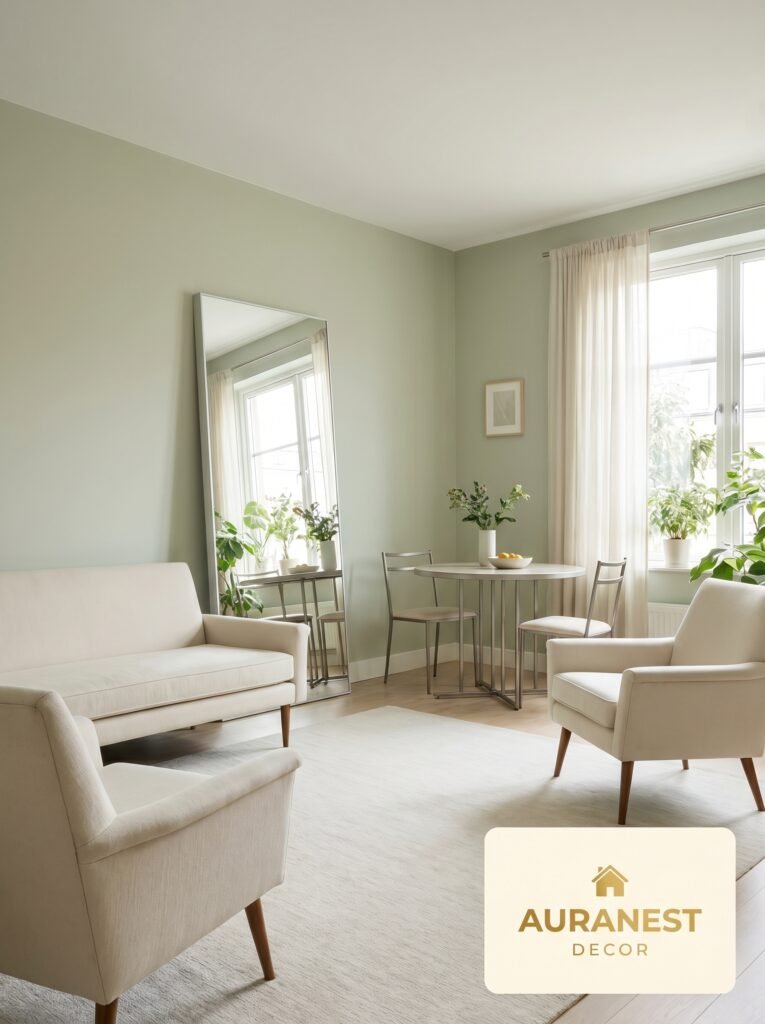
Small combined spaces have their own particular design alchemy — they require more intentionality, more restraint, and sometimes more creativity than larger rooms. But when they work, small combined living and dining spaces are some of the most charming, intimate rooms imaginable.
The foundational rule is to reduce visual noise. Every piece of furniture should earn its place with both function and beauty. Avoid anything that fills space without serving a purpose. Choose pieces with legs over pieces that sit heavily on the floor — visual access to the floor reads as space, even when space is limited.
Mirrors are small-room magic. A large mirror on a wall — particularly reflecting a window or a light source — doubles the perceived depth of a room instantly. In a combined living and dining space, a leaned or hung mirror in the living zone can make a compact room feel remarkably generous.
Keep the palette light. Whites, soft creams, warm greiges, pale sage — these colors push walls back visually and flood the room with a sense of air. Introduce personality through texture rather than heavy pattern, which can make a small room feel busy and cramped.
Finally, be willing to choose less. A small combined space with five carefully chosen pieces of furniture will always feel better than the same room crowded with ten. Restraint is not deprivation — in small-space design, it is the highest form of confidence.
—
🌿 How to Take Care of Your Living Dining Room Combo
Maintaining the beauty and functionality of a combined space is all about building small, consistent habits rather than undertaking dramatic overhauls.
First, establish a daily reset. Before bed or at the start of each morning, take five minutes to return the dining table to its clear, intentional state. Mail, school bags, and laptops have a way of colonizing dining tables — a nightly clear-off keeps the space feeling like the beautiful, multi-purpose room it is.
Second, rotate your textiles seasonally. Swapping a summer linen throw for a chunky winter knit, or changing cushion covers from breezy neutrals to richer autumn tones, costs very little and keeps the room feeling fresh and seasonally alive without a full redecoration.
Third, tend to your plants with gentle consistency. Water when the soil asks for it, not on a rigid schedule. Dust the leaves occasionally — dusty plants look tired, and this small act of care shows immediately in how alive and vibrant the room feels.
Fourth, revisit your lighting regularly. Bulbs burn out, seasons change the quality of natural light, and what felt like perfect brightness in July may feel harsh in November. Adjusting your artificial lighting as seasons shift makes the combined space feel properly cared for all year.
Fifth, style your dining table with intention even when no guests are coming. A simple table runner, a candle, a small plant — these everyday details mean the dining zone always feels like somewhere worth sitting down.
—
❓ FAQ
Q: How do I visually separate a living room and dining room in an open-plan space? A: The most effective tools are rugs, lighting, and furniture arrangement. Place a large area rug under your sofa and coffee table to anchor the living zone, hang a pendant light directly above your dining table to define that area, and position the back of your sofa to create a soft visual boundary between the two spaces. You don’t need physical barriers — you need intentional placement.
Q: What is the best furniture layout for a living dining room combo? A: Generally, positioning the dining table near the kitchen end of the open space (if adjacent to a kitchen) and the sofa arrangement toward the opposite end creates the most intuitive, functional flow. Make sure to leave at least 36 inches of clearance around the dining table for chairs to pull out comfortably, and allow a clear walkway between both zones.
Q: Can a living dining room combo work in a small apartment? A: Absolutely — in fact, a combined space is often the best solution for smaller homes. The key is choosing furniture with clean lines and visible legs, keeping the color palette light and cohesive, using mirrors strategically to expand the sense of space, and being ruthlessly intentional about what furniture you include. A small combined space done well feels cozy and complete, not cramped.
—
💭 Final Thought
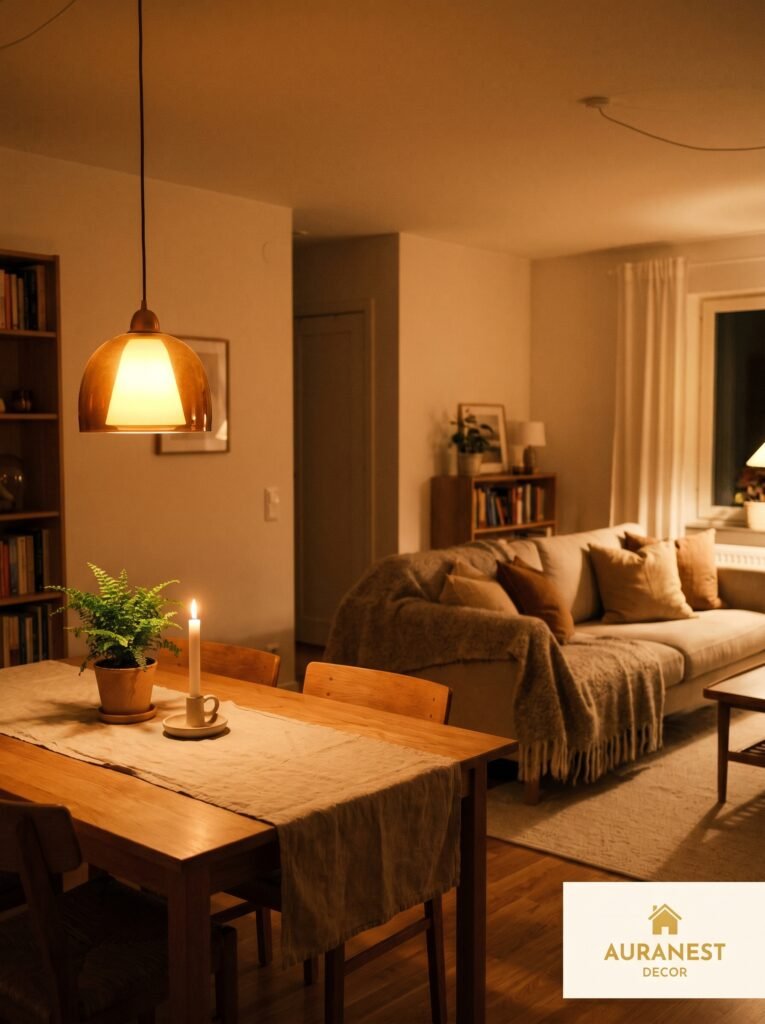
A living dining room combo, at its best, is not just a practical solution to limited square footage or an open-plan architectural choice — it is a philosophy about how we want to live. It says: we want to be near each other. We want meals and rest and conversation to happen in the same generous, welcoming space. We want our home to meet us where we actually are, not where a floor plan assumes we should be.
Every design choice in this kind of space — the rug you anchor the sofa with, the pendant you hang above the table, the dining chairs you linger in long after the plates are cleared — is a quiet act of building a life. So as you begin or refine your own combined space, here is the question worth sitting with: what does your ideal version of this room feel like, and what one change could you make this week to start moving toward it?