
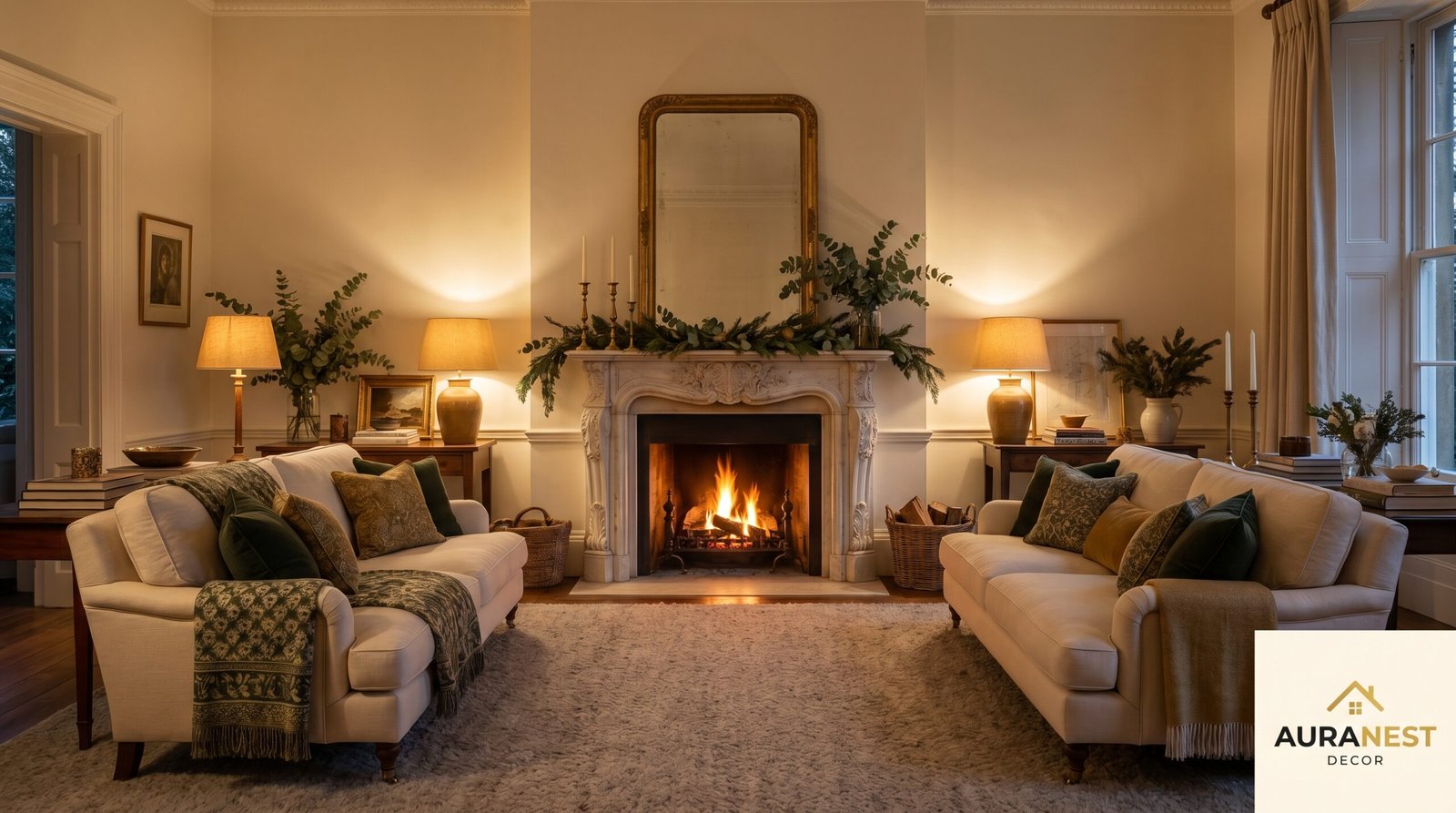
The Living Room Fireplace: How One Simple Element Can Transform a House Into a Home
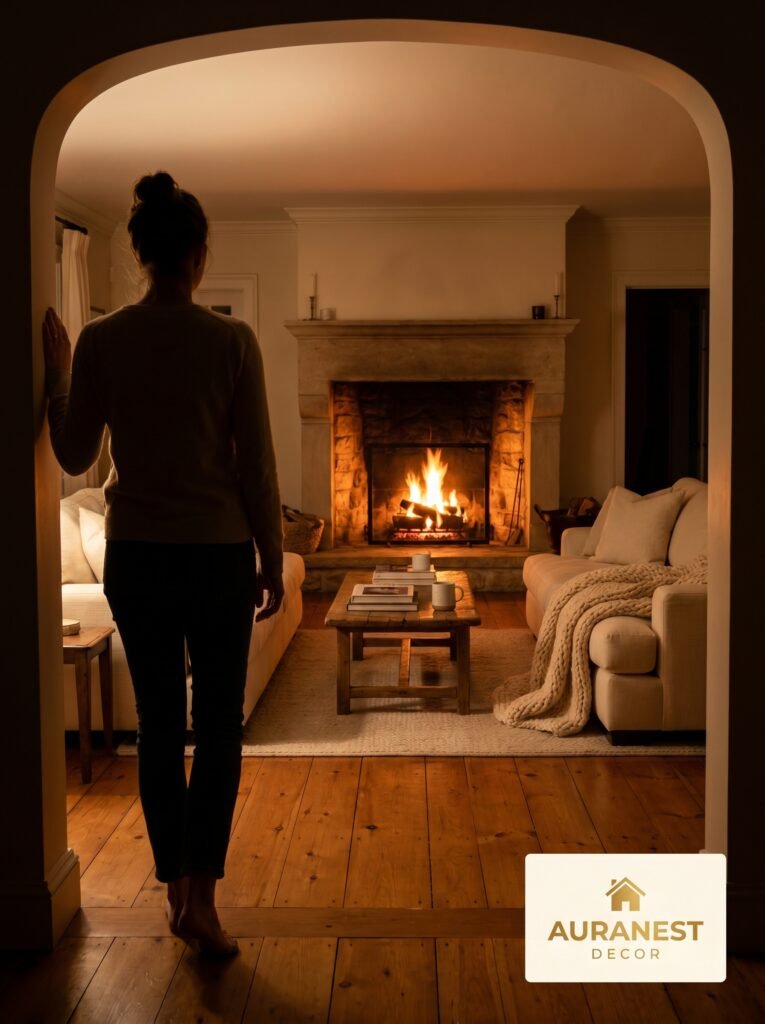
There’s a moment — you’ve probably felt it — when you walk into a room with a fireplace and something inside you exhales. Not just because it’s warm, but because something ancient and deeply human in you recognizes it: this is where we gather. A living room fireplace isn’t just a design feature. It’s the emotional center of a home.
—
1. Why a Fireplace Still Feels Like Magic in a Modern World
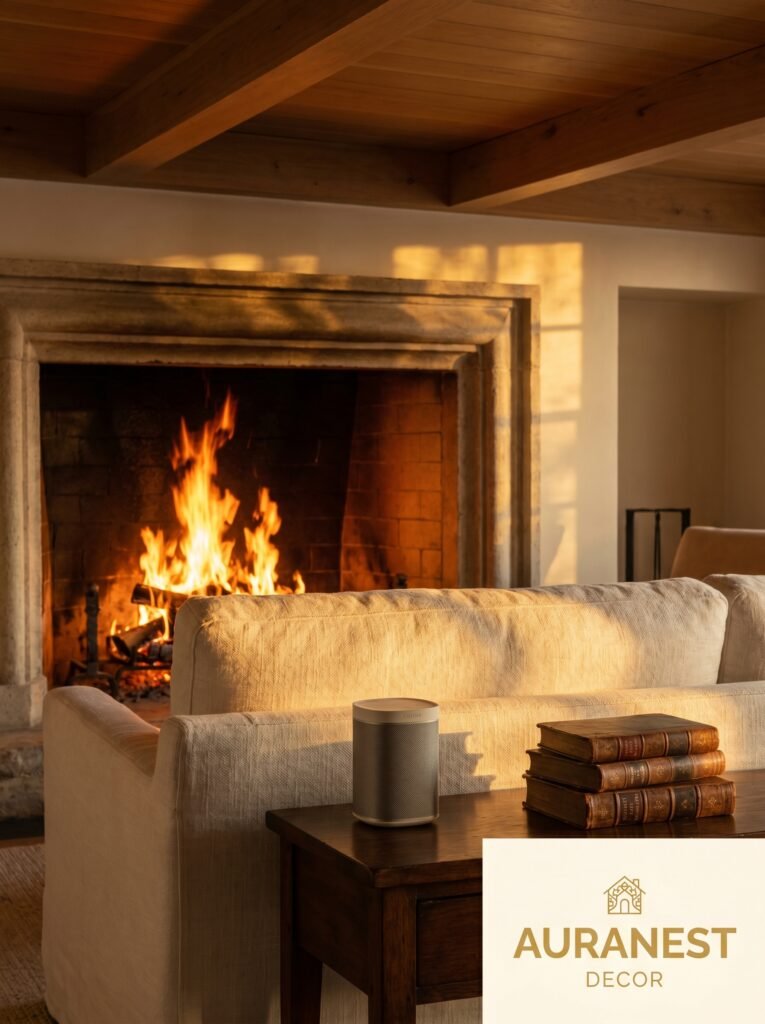
We live in a world of smart TVs, wireless speakers, and voice-controlled lighting. And yet — nothing in a living room commands attention, pulls people together, or creates atmosphere quite like a fireplace. There’s a reason every interior designer worth their salt considers a fireplace the single most transformative element a room can have. It’s not nostalgia exactly. It’s something older than that.
The crackling sound of burning wood, the dancing amber light across a ceiling, the gentle wave of warmth that doesn’t just heat your skin but somehow heats the mood of the entire room — these are sensory experiences that no technology has managed to replicate. Even a well-designed electric fireplace, done right, carries that same gravitational pull. People walk into a room and drift toward it without even thinking.
“A fireplace doesn’t just warm a room — it gives a room a reason to exist.”
Interior designers often talk about focal points — the thing your eye goes to first when you enter a space. Most rooms have to manufacture a focal point through art, mirrors, or a statement sofa. A living room with a fireplace? The focal point is already decided. Everything else in the room simply gets to support it.
—
2. The History Hidden Inside Your Hearth
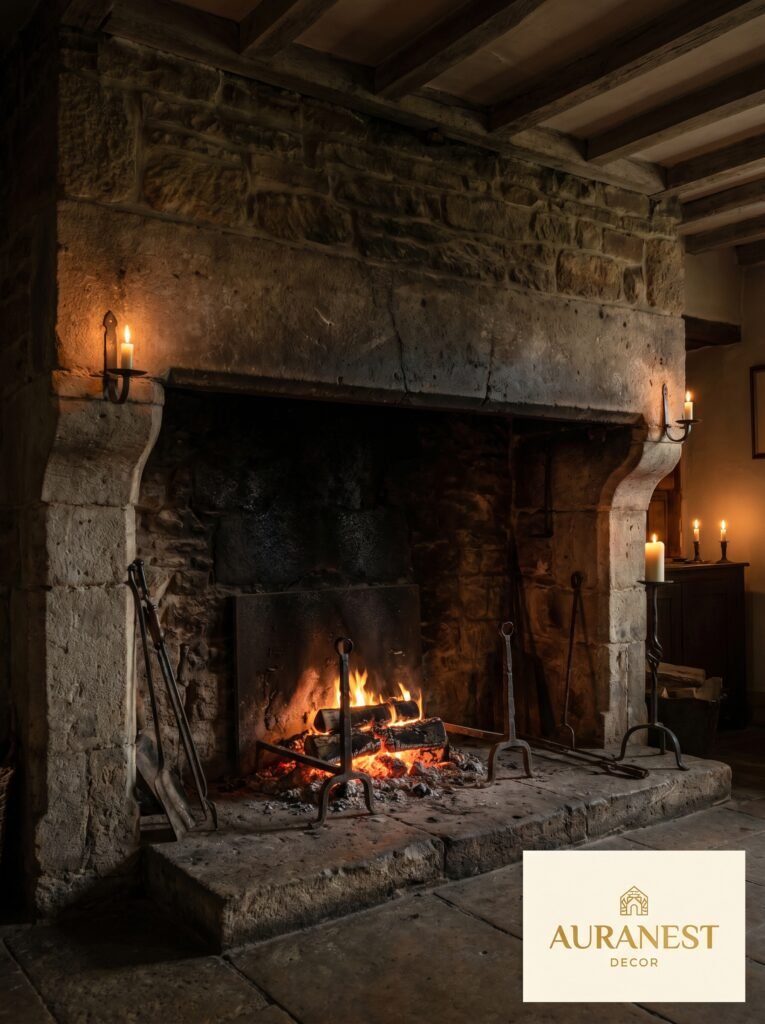
Before we dive into how to style one, it’s worth pausing to appreciate what a fireplace actually represents. For thousands of years, fire was the center of domestic life — not metaphorically, but literally. It cooked the food, heated the home, lit the darkness, and gathered the family. The hearth was life.
As homes evolved, the fireplace moved from functional necessity to architectural centerpiece, and then eventually to a design choice. But the emotional weight it carries has never really diminished. When you sit by a fireplace, you’re participating in something that stretches back to the earliest shelters humans ever built. That might sound dramatic, but it’s true — and that’s exactly why a fireplace in the living room feels so different from any other design element. It carries memory in its bones.
—
3. Choosing the Right Fireplace Type for Your Living Room
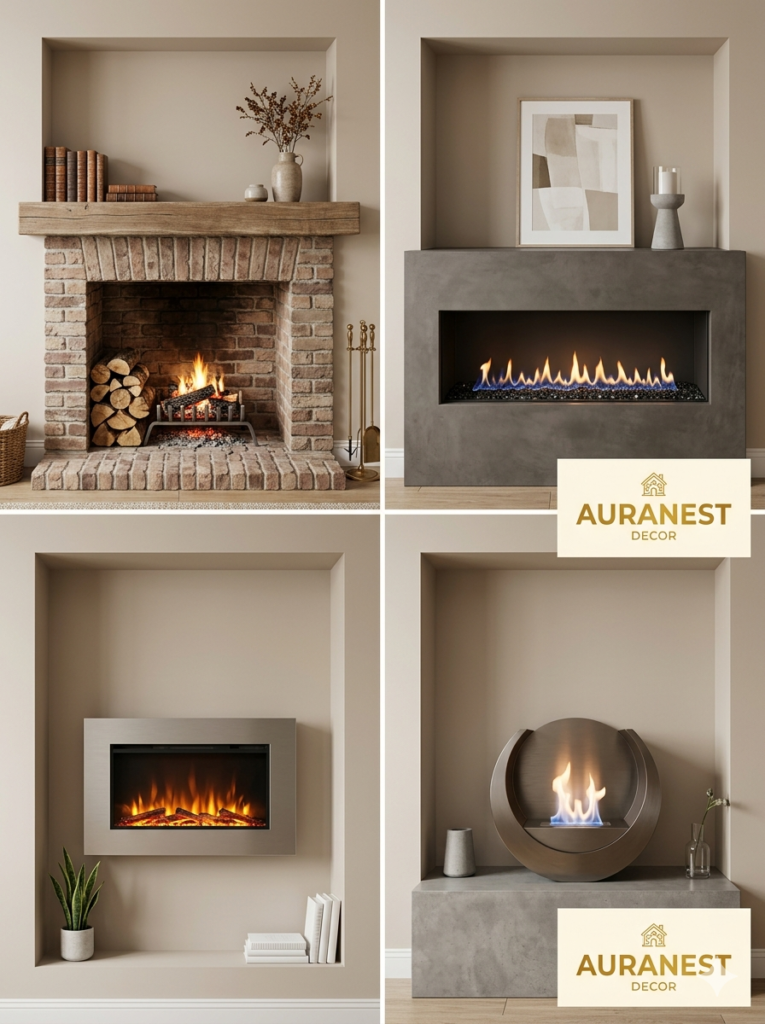
Not every home was built with a traditional wood-burning fireplace, and that’s completely fine. The market for fireplaces today is remarkably diverse, and understanding your options is the first step toward making a decision that genuinely fits your space, lifestyle, and budget.
Wood-burning fireplaces are the classic choice — they offer the full sensory experience, including the authentic smell of burning wood and the unpredictable, living quality of real flame. However, they require a chimney, regular cleaning, and access to firewood. If you have one in your home, consider yourself lucky and think carefully about how to restore or highlight it.
Gas fireplaces are increasingly popular because they combine the visual warmth of real flame with the convenience of a switch. They’re cleaner, easier to maintain, and can be installed in spaces that wouldn’t otherwise support a wood-burning unit. Many modern gas fireplaces are genuinely beautiful — linear, frameless designs that feel both contemporary and cozy.
Electric fireplaces have come a very long way. Today’s models use advanced LED technology to create flame effects that are surprisingly convincing, and they can be mounted on almost any wall without any venting requirements whatsoever. For renters or those in apartments, they’re a genuine game-changer.
Ethanol fireplaces offer yet another path — they burn clean, require no chimney, and create real flame in a sleek, architectural form. They’re a designer’s dream for spaces where neither gas nor wood is practical.
—
4. The Mantel Is the Fireplace’s Voice
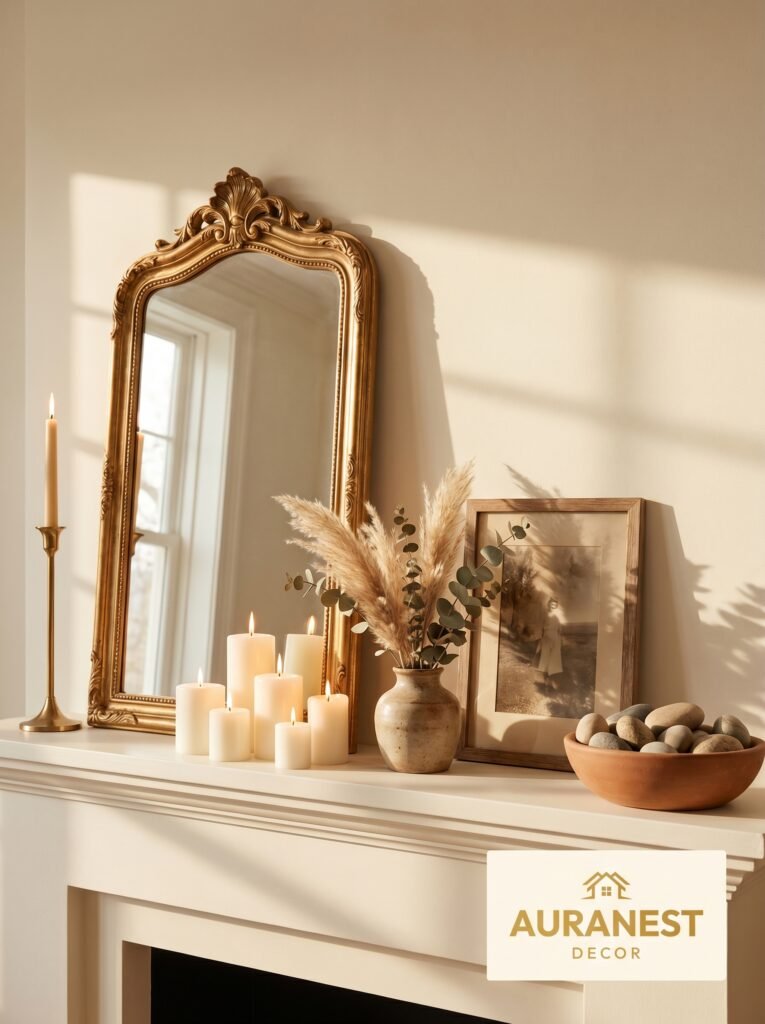
If the firebox is the heart of a fireplace, the mantel is its personality. The mantel — that shelf and surround framing the firebox — is where interior design truly gets to speak. And it’s one of the most endlessly customizable elements in any living room.
A grand marble mantel with classical molding tells one story. A raw wood beam resting on brick tells an entirely different one. A sleek, flat plaster surround with no ornamentation at all whispers something modern and restrained. Before you choose a mantel style, ask yourself: what story does this room want to tell?
The mantel shelf itself is perhaps the most styled surface in any home — more so than bookshelves, more so than coffee tables. It’s a curated moment. Designers layer height, texture, and meaning up there: a mirror that bounces light, candles that echo the flame below, something personal (a photograph, a found object, a piece of pottery), something natural (a branch, a plant, a bowl of stones), and something that anchors the eye. The key is asymmetry with intention — not chaos, but not rigidity either.
“The mantel shelf is the one place in a home where you’re allowed to be a little theatrical.”
—
5. Fireplace Surround Materials That Define a Room’s Character
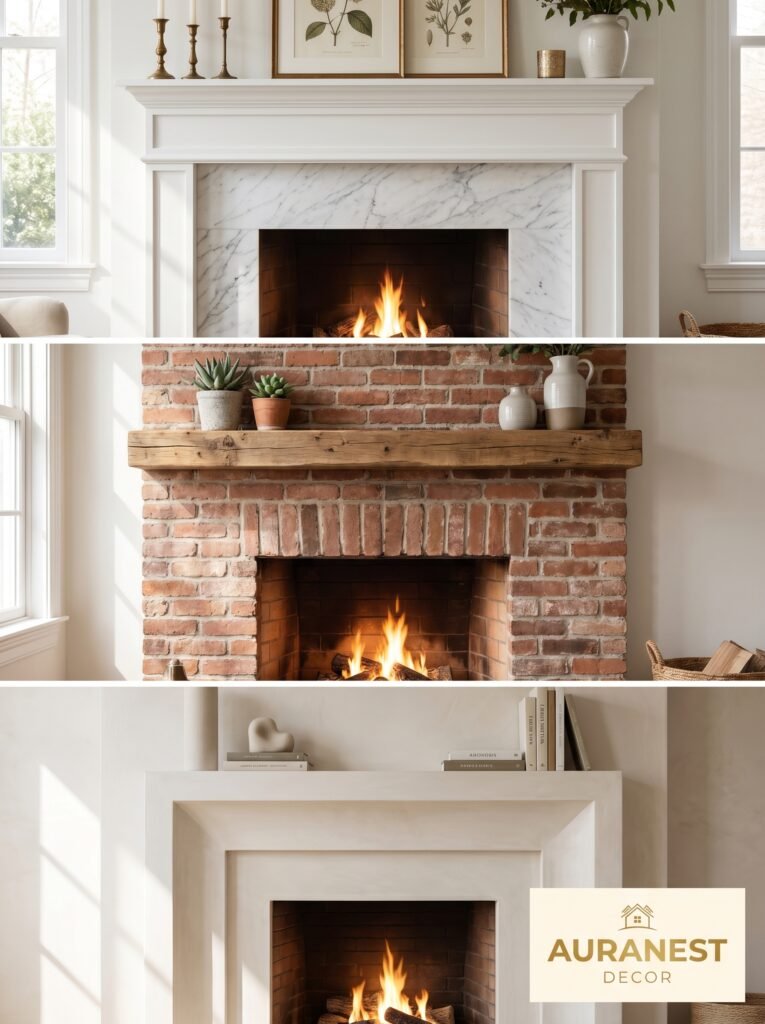
The material surrounding the firebox plays an enormous role in the overall feeling of your living room. It’s the first thing your eye registers, and it sets the tone for everything else in the space.
Marble surrounds — whether Carrara, Calacatta, or a more dramatic black marquina — bring a sense of timeless elegance. They photograph beautifully and work in both traditional and contemporary rooms, depending on how they’re framed and furnished. Marble around a fireplace is one of those rare design choices that almost never feels wrong.
Brick is perhaps the most emotionally loaded surround material. Exposed brick around a fireplace feels honest, warm, and deeply rooted — it speaks of old houses and long winters and people who knew how to sit still. Painted brick, often done in white or warm cream, bridges that rustic quality with something lighter and more modern.
Stone — rough-cut, stacked, or polished — brings texture and a connection to the natural world that’s genuinely hard to achieve with any other material. A stone fireplace surround, particularly in a living room with high ceilings and wooden floors, creates something that feels almost sacred in its sense of permanence.
For contemporary spaces, concrete and plaster surrounds offer clean, architectural lines. They don’t call attention to themselves, which paradoxically makes the fire itself even more prominent.
—
6. Arranging Furniture Around a Fireplace (Without Getting It Wrong)
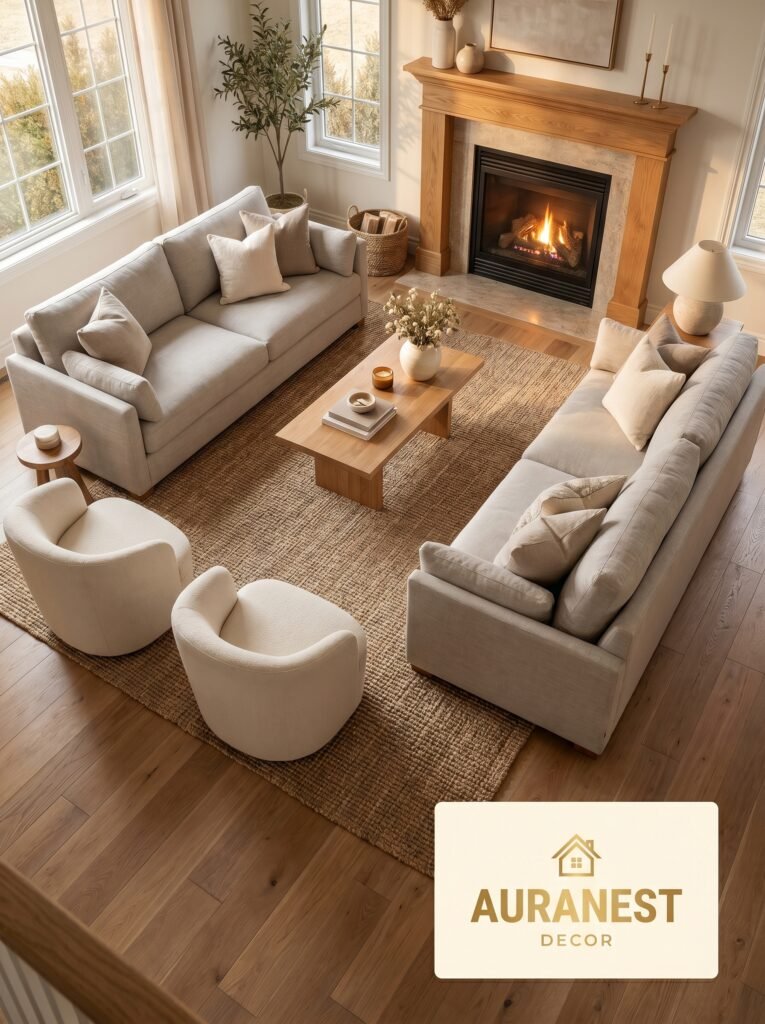
Here’s something that surprises a lot of people: having a fireplace in a living room doesn’t automatically mean the furniture arrangement will feel right. In fact, some of the most beautiful fireplaces in the world sit in living rooms where the furniture says, “I’m not sure why I’m here.”
The golden rule of furniture arrangement around a fireplace is conversational intimacy. Seating should face — or at least angle toward — the fireplace, at a distance that feels comfortable rather than confrontational. Two sofas facing each other with the fireplace at the head of the arrangement is a timeless formula. A sofa with two chairs in loose conversation across from it is another.
The distance matters more than people realize. Seating too close to the fireplace creates anxiety (physical heat, plus the visual claustrophobia of being too close to the focal point). Too far away and the fire loses its ability to anchor the seating group. Generally, six to ten feet from the firebox is the sweet spot — close enough to feel the warmth and fully see the flame, far enough to feel relaxed.
Rugs play an enormously important role here. A well-chosen rug defines the seating area and creates the sense that the entire grouping belongs together. It frames the floor the way a mantel frames the firebox.
—
7. Lighting a Living Room With a Fireplace: The Art of Layering
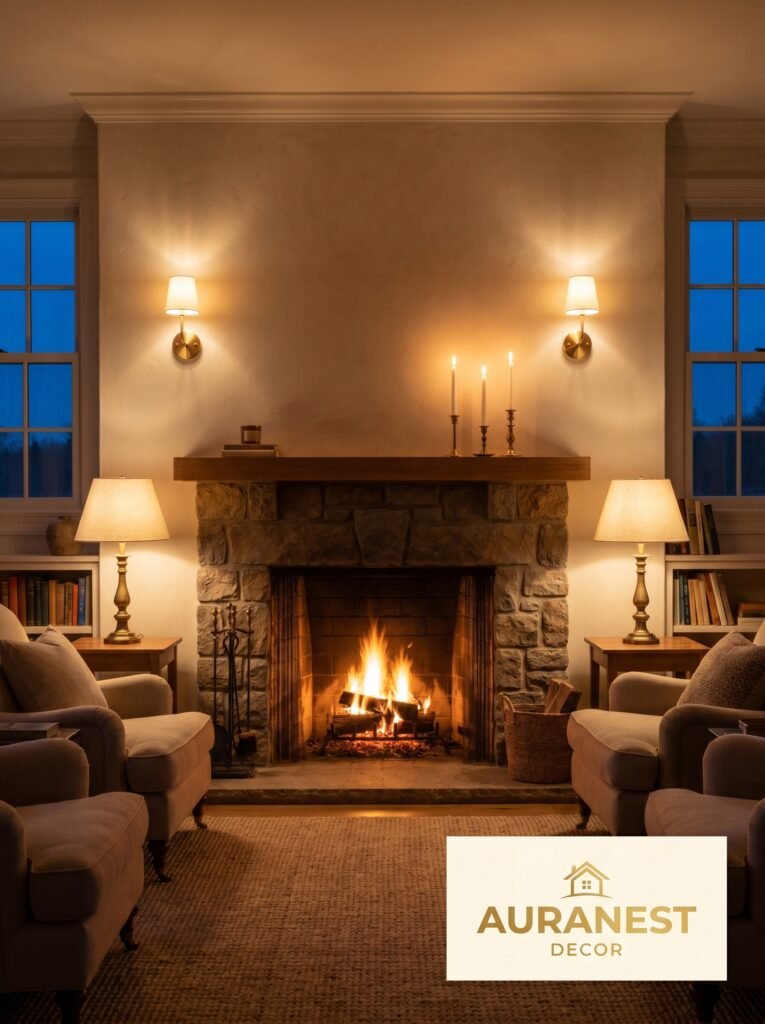
One of the most underestimated aspects of fireplace design is how a room should be lit in relation to it. The fireplace produces its own moving, warm, amber light — and every other light source in the room should be in quiet conversation with it, not competing against it.
Overhead lighting — particularly harsh, bright ceiling fixtures — is the enemy of a fireplace’s atmosphere. When the fire is lit, you want the room’s ambient lighting to be low and warm. Dimmer switches are not a luxury in a room with a fireplace; they’re a necessity.
Table lamps and floor lamps positioned around the seating area create pools of warm light that complement the fire beautifully. Sconces flanking the fireplace mantel add symmetry and a lovely glow that draws the eye upward. Candles placed on the mantel or on nearby surfaces echo the fireplace’s flame in miniature — a layering trick that experienced interior designers use constantly.
—
8. Fireplace Decor Through the Seasons
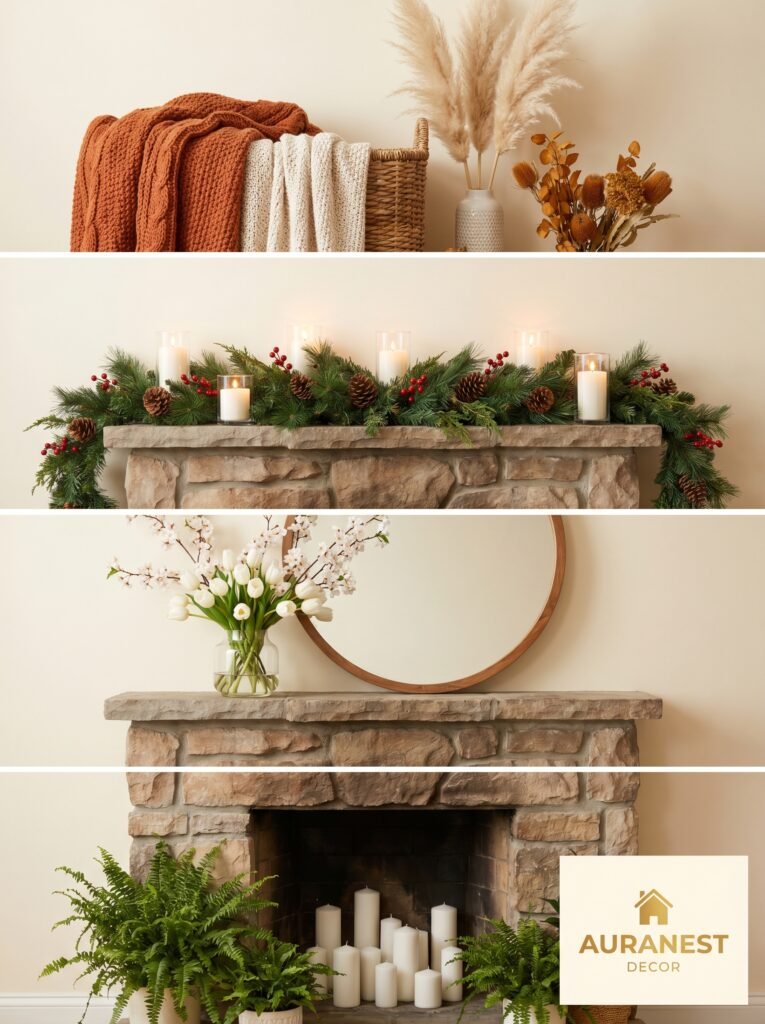
A fireplace in a living room is never finished — it’s a living thing that changes with the seasons, and the most beautifully designed homes treat it that way. Seasonal styling around a fireplace is one of the simplest and most satisfying decorating rituals a homeowner can adopt.
In autumn, think about warm textures gathering around the hearth: a stack of chunky knit blankets in a basket nearby, dried botanicals or pampas grass in a tall vase beside the surround, amber and rust tones in the decorative objects on the mantel. In winter, the fireplace becomes almost ceremonial — pine cones, holiday greenery, candles, and the kind of quiet richness that makes a room feel like a gift.
Spring calls for something lighter: white flowers in a simple vessel, fresh greenery, a mirror leaned against the mantel to catch more light. And summer, when the fireplace itself might sit dormant, is a wonderful opportunity to fill the firebox with something beautiful — a cluster of white pillar candles, a curated stack of books, or a lush arrangement of fern-like plants.
“Every season deserves its own version of the fireplace. That’s not decorating — that’s honoring where you live.”
—
9. Small Living Rooms and Fireplaces: Solving the Scale Problem
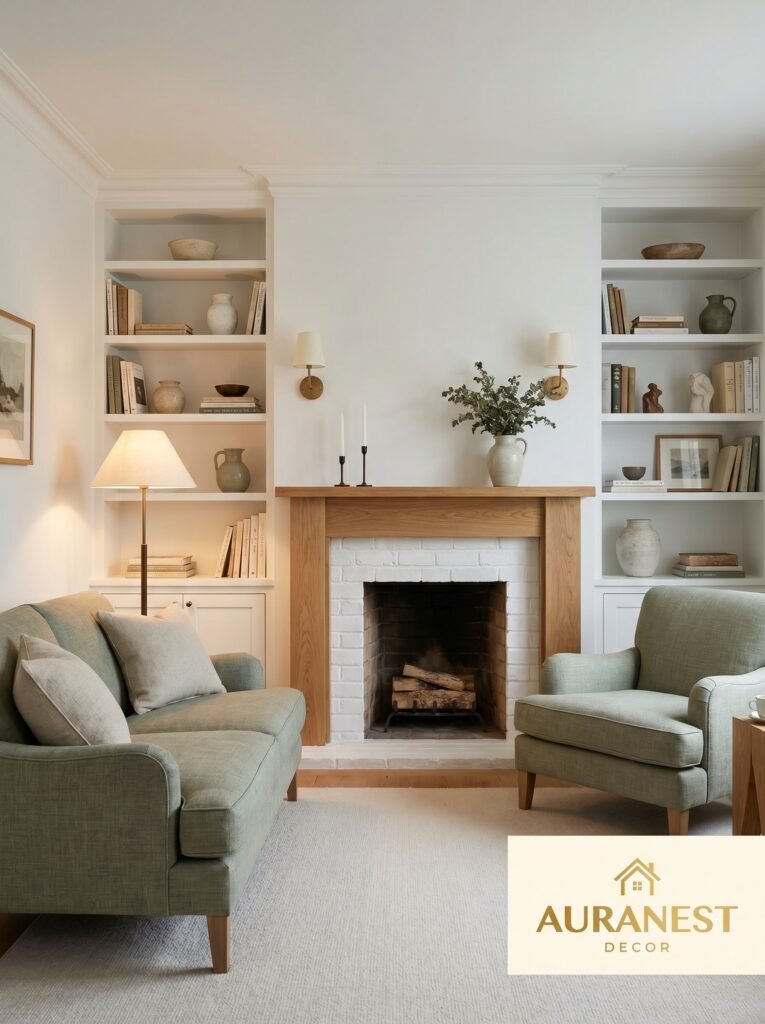
A common concern among homeowners with smaller living rooms is whether a fireplace will overwhelm the space — or whether the space is simply too small to do one justice. The answer, almost always, is that scale and proportion are everything.
In a small room, a fireplace surround that goes too tall or too wide will feel crushing. The solution is restraint: a simpler, smaller surround, a leaner mantel shelf, and a firebox that’s appropriately sized for the wall it occupies. Many of the most charming living room fireplaces in the world are actually quite modest in physical size — it’s the styling and the setting around them that creates their impact.
Built-in shelving flanking a small fireplace is one of the most practical and beautiful solutions a designer can offer for a compact room. It makes the fireplace feel intentional and architecturally significant without adding bulk to the room. It also solves storage problems elegantly, which is never a bad thing in a small space.
—
10. Color Palettes That Complement a Fireplace
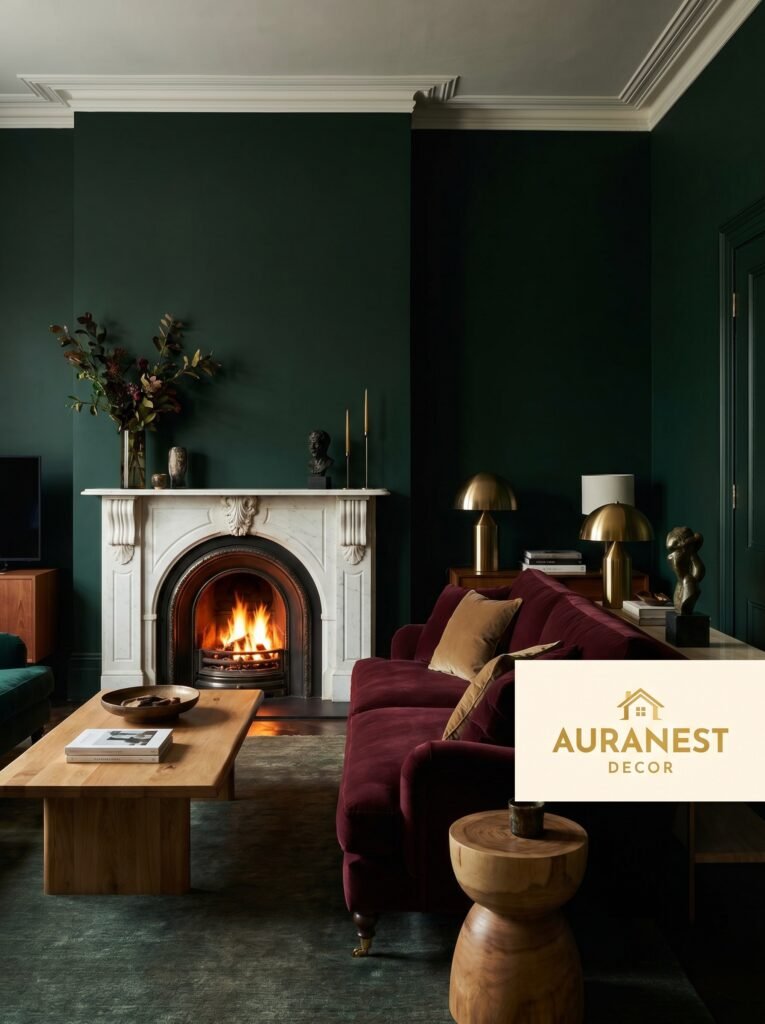
Color and fireplace design are deeply intertwined, though this is something many homeowners only discover once they’re already in the middle of a renovation. The colors you choose for the walls, ceiling, and furniture in a fireplace room should support the warmth and intimacy that the fireplace naturally creates.
Warm neutrals — creamy whites, soft greiges, warm taupes, and gentle terracottas — work in beautiful harmony with virtually any fireplace style. They reflect the firelight gently and create a sense of enveloping coziness. Deep, moody colors like forest green, navy, charcoal, and burgundy create extraordinary drama around a fireplace, particularly in rooms where the fireplace wall is painted a different color from the rest of the space.
Cool, stark whites can absolutely work, but they require more thoughtfulness. Without warm wood tones, natural textures, and layers of soft furnishings to counterbalance them, a cold white room with a fireplace can feel like a contradiction in terms. The fire works harder to warm a room that’s visually cool, and sometimes it simply can’t win.
—
11. The Cozy Factor: Textiles, Textures, and the Living Room Fireplace
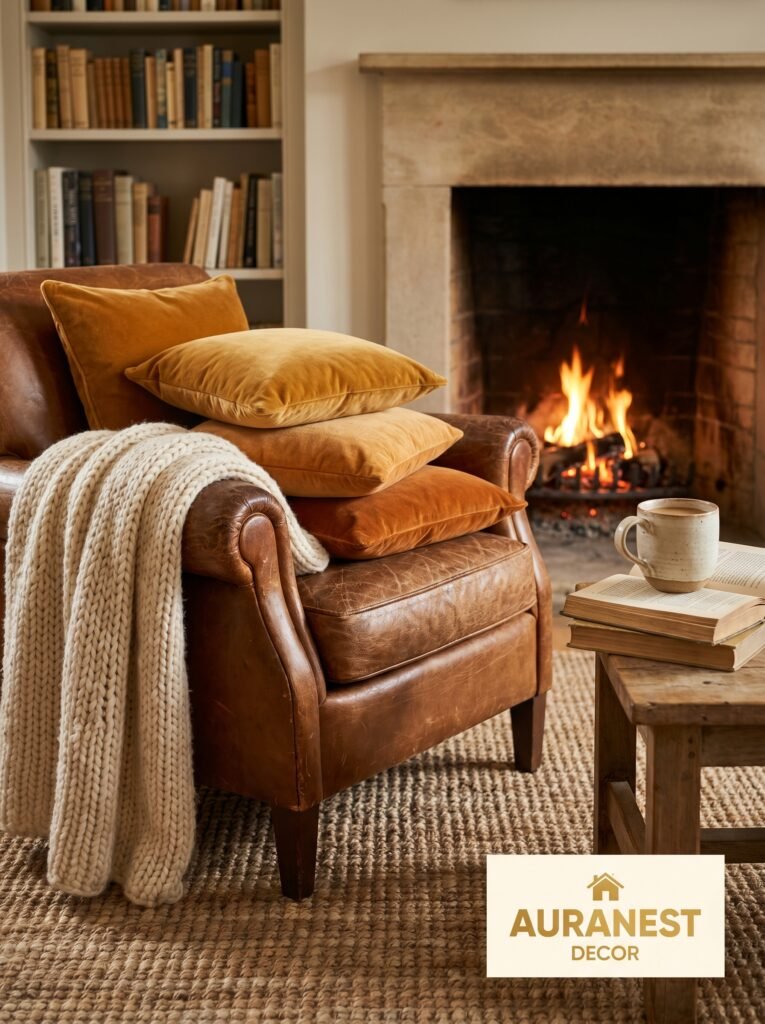
No design element works alone, and the fireplace is no exception. Its ability to create coziness — that deeply desired quality that Danes call hygge — depends almost entirely on what surrounds it. Textiles and textures are the silent partners of every great fireplace moment.
Wool throws draped over the arm of a sofa, velvet cushions in amber and ochre, a thick jute rug anchoring the seating area, a worn leather chair positioned at an angle to catch the firelight — these are the supporting cast that transforms a room from beautiful into something you genuinely never want to leave. The fireplace gives warmth. The textiles give permission to relax.
Books are underrated in this context too. A living room filled with books, anchored by a fireplace, is one of the most universally beloved domestic scenes imaginable. There’s a reason it appears on a thousand Pinterest boards and in every shelter magazine you’ve ever picked up. It isn’t a trend. It’s a human archetype.
—
12. Restoring or Updating an Existing Fireplace Without Losing Its Soul
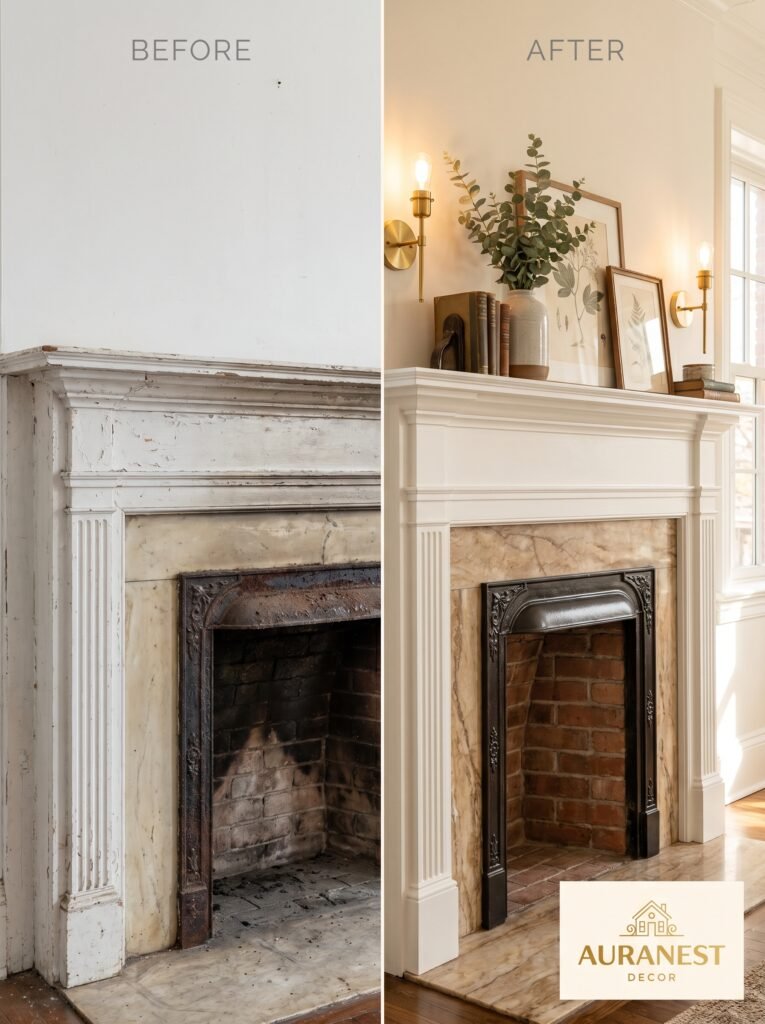
Perhaps the most delicate work of all is what happens when you inherit a fireplace. An older home, a dated surround, a firebox that’s been painted over or half-heartedly tiled — and underneath all of that, something worth saving.
The instinct to gut and start fresh is understandable, but often regrettable. Old fireplaces carry something that new ones have to work very hard to earn: patina, proportion, and the kind of architectural detail that simply isn’t made the same way today. Before you rip anything out, look carefully. A marble surround painted white can be stripped. A brick firebox that’s been covered in ceramic tile can be uncovered. Original cast iron details can often be cleaned and restored.
If the bones are right, consider updating through addition rather than replacement: a new mantel paint color, updated styling on the shelf, fresh lighting on either side, a firebox insert that modernizes the fuel source without disturbing the surround. The best fireplace renovations are the ones where you stand back afterward and think, “It looks like it was always supposed to be this way.”
—
🌿 How to Take Care of Your Living Room Fireplace
A beautiful fireplace is also a functional one, and a little routine care goes a long way toward keeping it both gorgeous and safe.
Start with annual professional inspections if you have a wood-burning or gas unit. A certified chimney sweep can check for creosote buildup, blockages, or structural issues that you simply can’t assess from the firebox opening. It’s one of those tasks that feels optional until it very much isn’t.
Clean the firebox regularly — removing ash from a wood-burning fireplace after every few uses keeps airflow strong and prevents buildup. A soft brush and a specialized fireplace vacuum make this much less daunting than it sounds.
Polish or seal the surround material appropriately for what it’s made of. Marble benefits from an occasional application of stone sealer. Brick can be refreshed with a gentle cleaning and, if desired, a light coat of breathable sealant. Cast iron components should be wiped down with a dry cloth after each use.
Keep the mantel and surround dusted regularly — it’s the focal point of the room, so dust and grime are always more visible there than elsewhere.
Finally, think about the firebox as a decorative space in the off-season. When the fire isn’t lit, an empty black opening can feel like a void. Fill it intentionally — candles, stacked birchwood logs, a beautiful grate with dried botanicals — and the fireplace works for your room twelve months of the year.
—
❓ FAQ
Q: Can I add a fireplace to a living room that doesn’t have one? A: Yes, absolutely — and more easily than most people assume. Gas fireplaces can be installed in many walls with the addition of direct-vent systems, while electric fireplaces require no venting at all and can be mounted virtually anywhere. Ethanol fireplaces are also entirely self-contained and freestanding. The right option depends on your budget, your home’s construction, and how important the authentic flame experience is to you.
Q: How do I choose a fireplace mantel that suits my living room style? A: Start by identifying the existing style language of your room — is it traditional, modern, farmhouse, transitional? Then look for a mantel that speaks the same language. Traditional rooms tend to suit painted wood mantels with classical molding details. Contemporary rooms often look stunning with a simple, flat plaster or concrete surround. Farmhouse and rustic interiors respond beautifully to raw wood beams or brick surrounds. When in doubt, a simple, well-proportioned white painted mantel is almost universally flattering.
Q: What’s the best way to style a fireplace mantel? A: The principle designers return to again and again is this: vary height, layer texture, and include something personal. Start with a mirror or large piece of art as a backdrop. Add height asymmetrically with a tall candlestick on one side and a lower object on the other. Include something natural, something personal, and something reflective. Step back, remove one thing, and it will almost always look better. The mantel shelf, like most great design, tends to improve with restraint.
—
💭 Final Thought
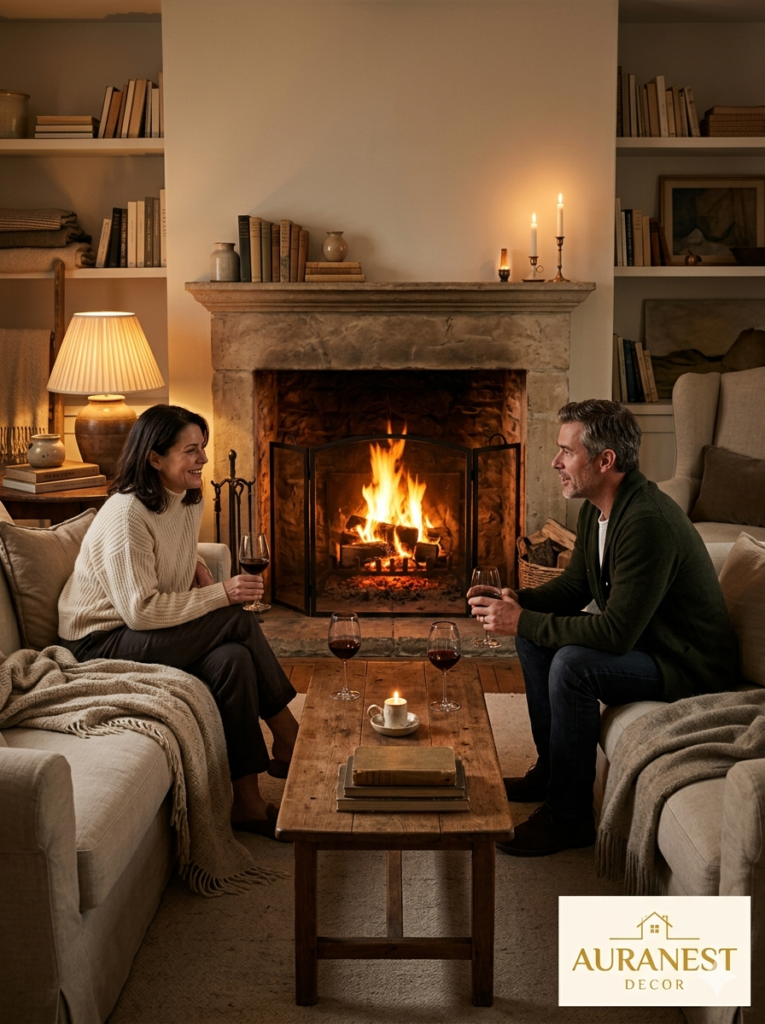
A living room fireplace is many things at once — a design element, a conversation starter, a source of warmth, a keeper of winter evenings and quiet Sunday mornings. But above everything else, it’s an invitation. An invitation to slow down, to gather, to stay a little longer.
Whatever your home looks like right now — whether you have a grand stone fireplace or a modest electric unit you’re thinking of dressing up — the opportunity it offers you is the same: to create a space where people exhale when they walk in.
So tell me — what does your fireplace look like right now, and what’s the one thing you’d change about the room that holds it?