
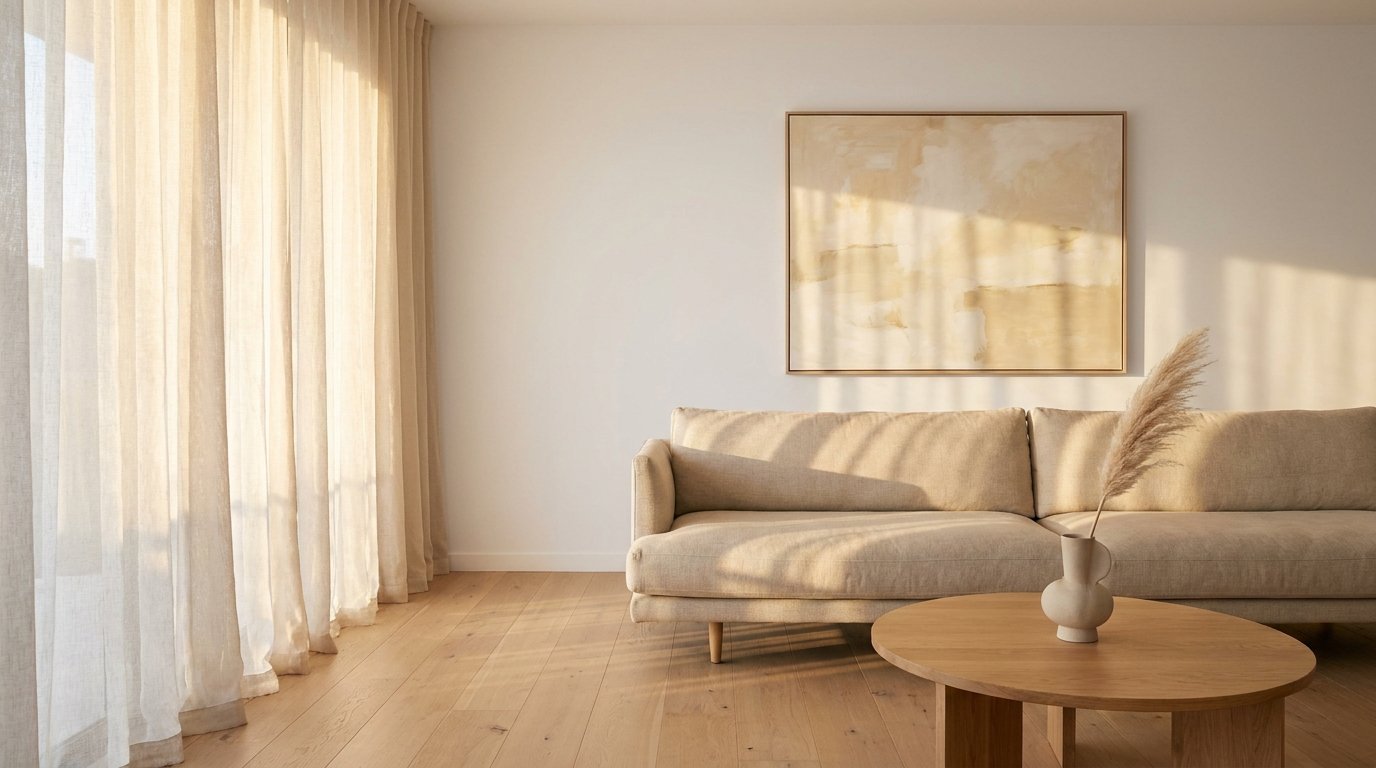
Living Room Decor Ideas Minimalist: How to Create a Space That Finally Feels Like You Can Breathe
There’s a moment — you know the one — when you walk into a beautifully spare living room and something in your chest just loosens. The clutter is gone, the noise is quiet, and every single object in that room seems to belong exactly where it is. This is what minimalist living room decor actually feels like when it’s done right: not cold, not empty, not like a hotel lobby — but like the deepest exhale you’ve had all week.
—
1. Why Minimalism Feels So Emotionally Powerful Right Now
We are living in an age of relentless accumulation. Every scroll through a shopping app, every sale notification, every “just in case” purchase adds another layer to our homes — and to our minds. It’s no coincidence that minimalist interiors have surged in popularity across the US and UK at the same time that anxiety, burnout, and the need for calm have become part of everyday conversation.
Minimalism isn’t a trend born from aesthetics alone. It’s a response. A collective exhale. When your living room is stripped back to only the things that genuinely matter — the worn leather sofa you love, the single piece of art that makes you stop and look every single time, the lamp that casts exactly the right warm glow — your nervous system actually responds differently. Research in environmental psychology consistently shows that visual clutter raises cortisol levels, while ordered, uncluttered spaces support feelings of calm and control.
In the UK, this has translated into a love of what designers call “considered minimalism” — spaces that feel curated rather than bare, influenced by Scandinavian and Japanese design traditions. In the US, particularly in cities like New York, Chicago, and Los Angeles, urban minimalism has become synonymous with intelligent, intentional living. Wherever you are, the emotional pull is the same: you want to come home and feel like you can breathe.
“A minimalist living room doesn’t remove personality — it removes everything that was hiding it.”
2. The One Mindset Shift That Changes Everything
Most people approach minimalist decorating the wrong way. They start by looking at pictures on Pinterest and think: I need to get rid of stuff. And then they stand in their living room, look at their things, and feel overwhelmed — or guilty — or both.
Here’s the mindset shift that actually works: instead of asking what should I remove, start by asking what do I want to feel in this room?
Do you want to feel calm and grounded after a long week? Creative and inspired on a slow Sunday morning? Warm and connected when people you love are gathered around you? When you name the feeling first, the decorating decisions become so much clearer. Every item, every colour, every piece of furniture becomes easy to evaluate: does this thing serve the feeling I want? If yes, it stays. If not, it goes — not because minimalism demands it, but because you decided your comfort matters more.
This is the foundation of every genuinely beautiful minimalist living room you’ve ever saved on Pinterest. It wasn’t designed by someone who loved nothing. It was designed by someone who knew exactly what they loved most.
3. Choosing a Neutral Palette That Actually Has Warmth
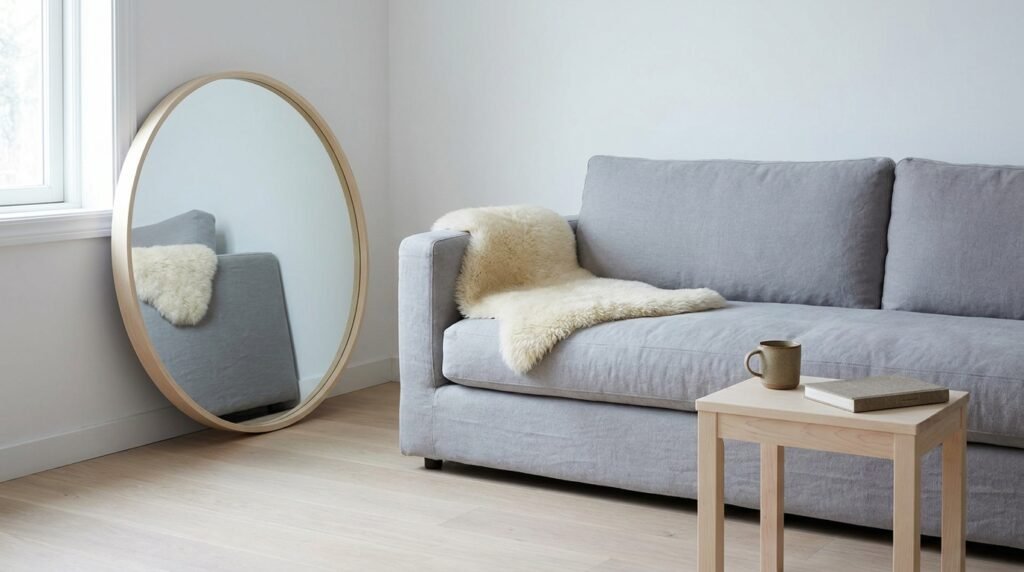
The number one fear people have about minimalist living rooms is that they’ll end up looking cold. White walls. Grey floors. Nowhere to sit emotionally. And yes, if you approach your colour palette carelessly, that can happen. But it absolutely doesn’t have to.
The key is understanding the difference between cool neutrals and warm neutrals. Cool neutrals — bright white, icy grey, stark beige — can feel clinical without the right balance of texture and light. Warm neutrals — think linen white, warm greige (that beautiful grey-beige hybrid), sand, stone, and oat — hold light differently. They feel like cashmere. They feel like a Sunday morning.
In British homes, designers have long favoured shades from Farrow & Ball — colours like “Elephant’s Breath,” “Strong White,” and “Pavilion Gray” that sit somewhere between grey and warm and do extraordinary things in a room depending on the hour of day. In American interiors, Benjamin Moore’s “White Dove” and Sherwin-Williams’ “Accessible Beige” have become household names for exactly the same reason: they’re neutrals that breathe.
For your minimalist living room, choose one dominant wall colour and pull two or three complementary tones from it — for your sofa, your rug, your accent pieces. Keep the palette tight. Three tones, maximum four. When a room whispers a single cohesive colour story, it feels intentional. And intentional always feels calm.
4. The Sofa Is the Heartbeat of a Minimalist Living Room
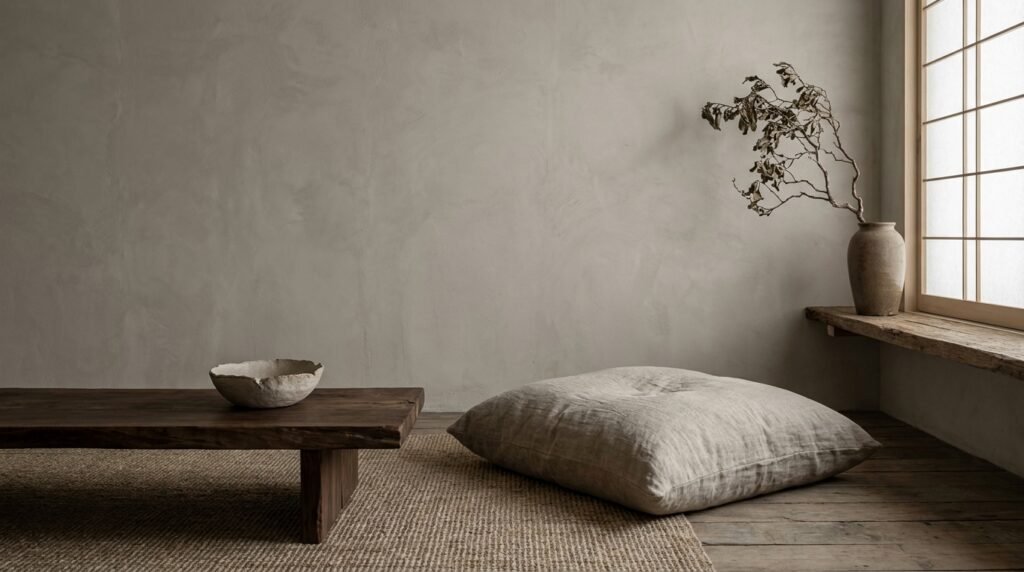
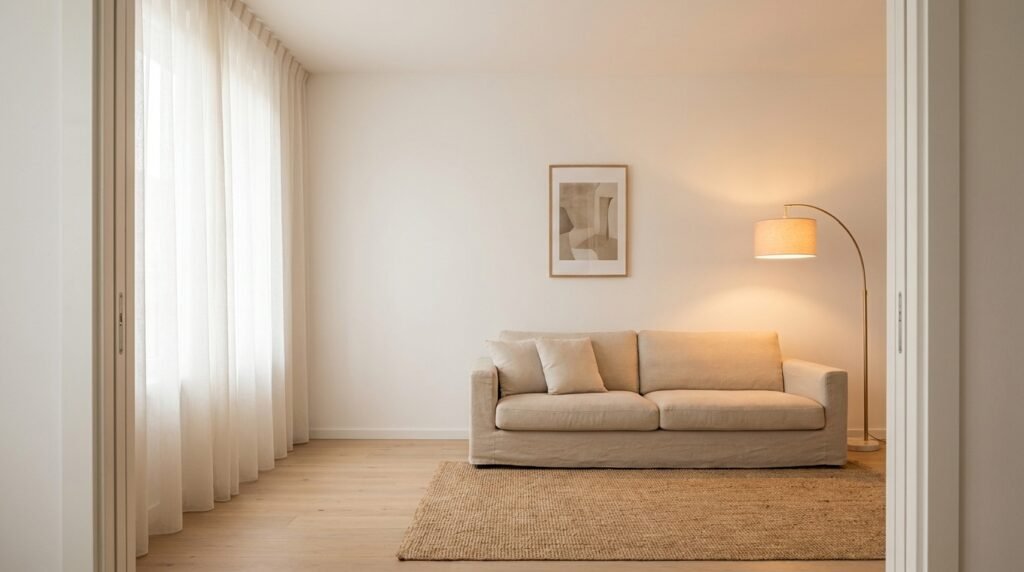
In a room where you’re intentionally using fewer pieces, every single item carries more visual weight — and nothing carries more weight than your sofa. This is the piece worth investing in. Worth waiting for. Worth saving for.
For a minimalist living room, look for clean lines without fussy detailing — no ornate legs, no excessive cushioning, no scrolled armrests that compete for attention. A deep, wide sofa in a warm neutral linen or a textured boucle feels inviting without overwhelming. In the US, brands like Article, Crate & Barrel, and West Elm offer excellent options at mid-range price points. In the UK, Swoon, Neptune, and the ever-reliable John Lewis have beautifully considered pieces that balance simplicity with comfort.
Colour-wise, warm whites, oatmeal, soft caramel, sage green, and dusty terracotta all work beautifully in a minimal palette. Avoid anything too dark or too bright unless it’s a very deliberate, singular statement — and even then, be thoughtful. Your sofa will anchor the entire room for years. Choose something you want to grow old with.
“The right sofa doesn’t just fill a room — it gives everyone in the room somewhere to land.”
5. How to Layer Texture Without Creating Visual Noise
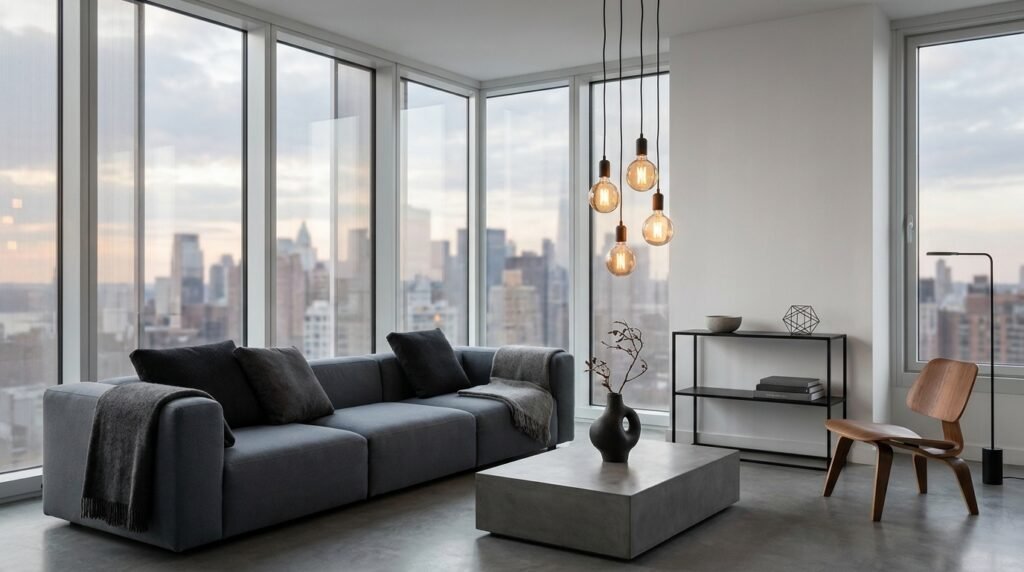
Here’s the secret that separates a beautiful minimalist room from one that just feels empty: texture is your best friend. When you’re working with a limited number of objects and a quiet colour palette, texture is what stops a room from feeling flat. It adds depth, warmth, and that ineffable sense that someone thoughtful lives here.
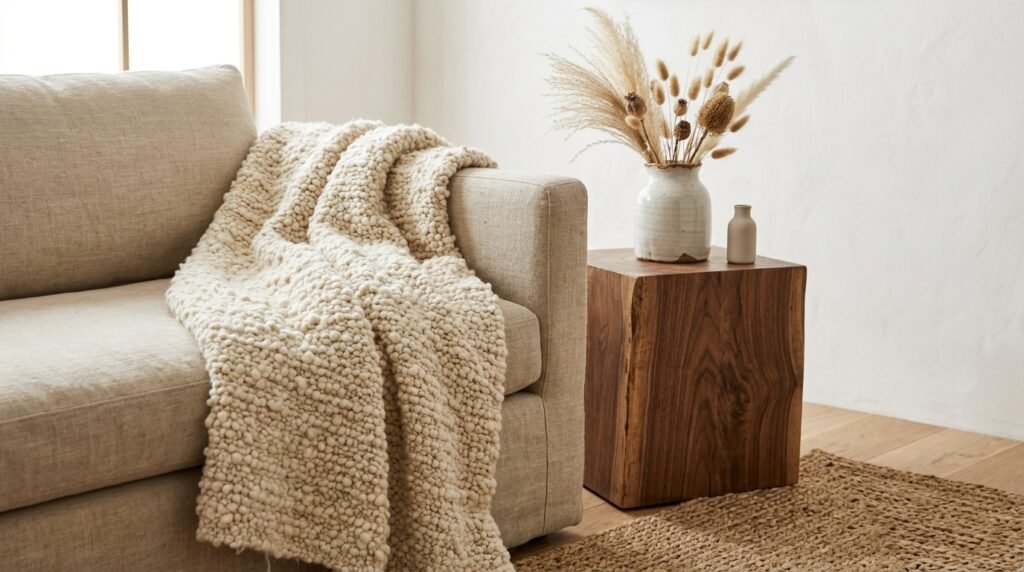
Think about layering different materials throughout the room — a jute rug beneath a linen sofa, a chunky knit throw draped just-so over the armrest, a smooth ceramic vase next to a rough-hewn wooden bowl. Velvet cushions against a linen sofa. A rattan side table beside a sleek marble coffee table. The contrast between soft and hard, rough and smooth, matte and shiny — that’s where the magic lives.
The golden rule: keep the colours tonal, vary the textures widely. If everything in your warm-white living room is the same smooth surface, it will feel sterile. But if you have matte plaster walls, a woven rug, soft upholstery, natural wood, and a glazed ceramic or two — all in that same warm-white family — the room comes alive in the most quiet, beautiful way.
6. The Art of the Single Statement Piece
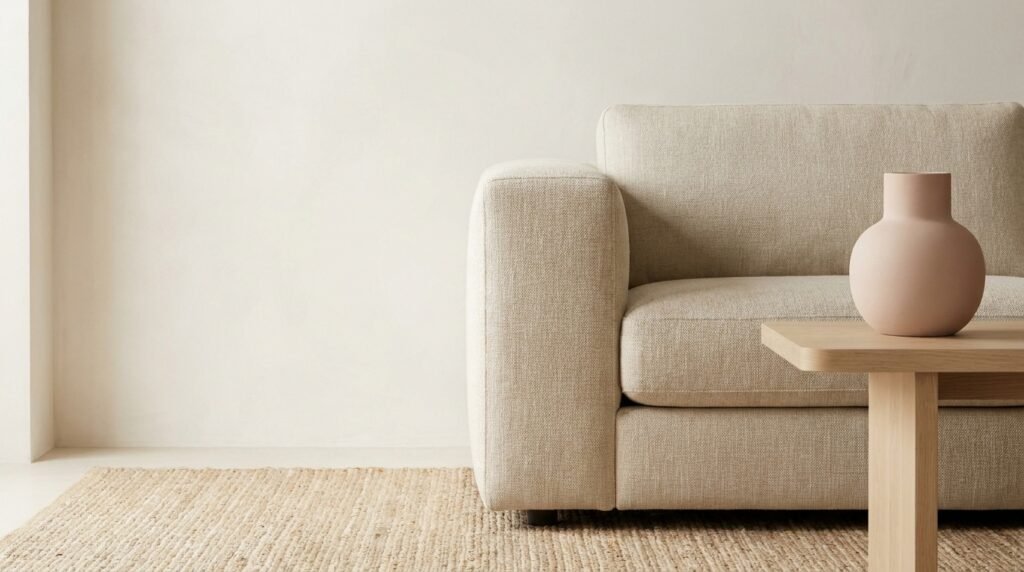
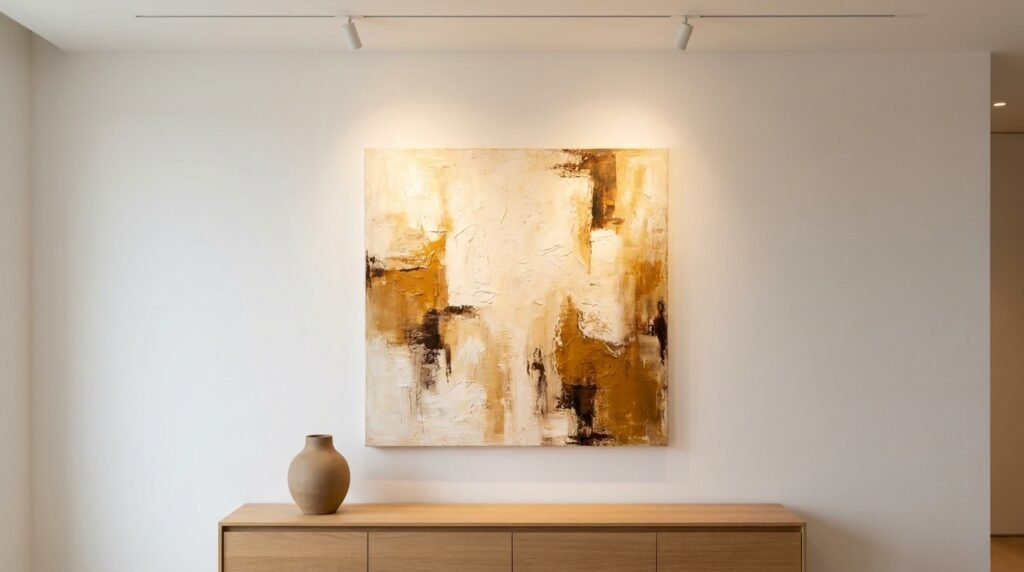
Minimalist interiors are often misread as decoration-free interiors. But the best minimal rooms aren’t empty — they’re edited. And one of the most powerful tools in a minimalist decorator’s kit is the single statement piece: one artwork, one oversized object, one architectural feature that the whole room quietly orbits.
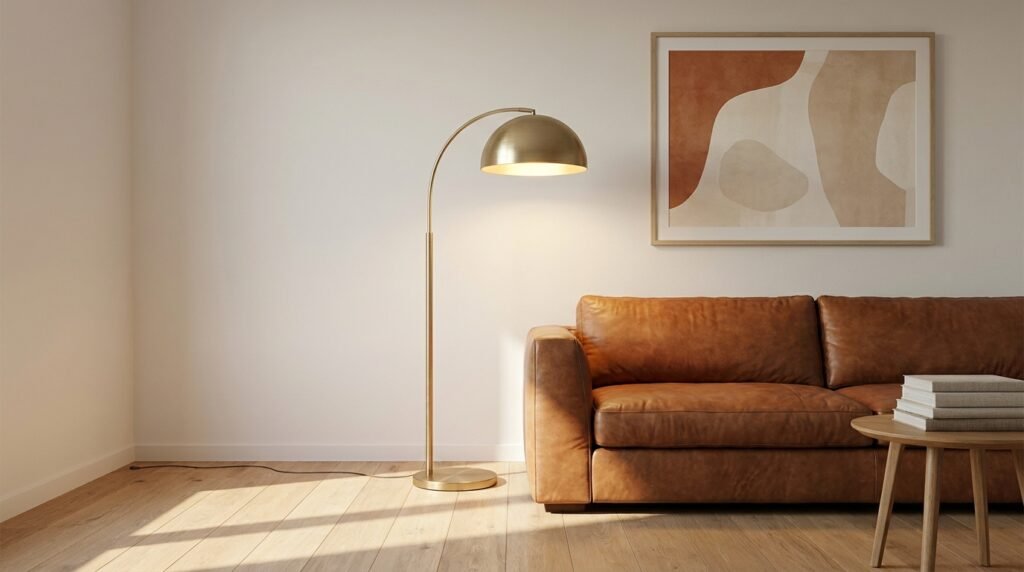
This could be a large-scale abstract painting in muted earth tones above your sofa — the kind you might find at an independent gallery or even a high-quality art print from Society6 or Desenio. It could be a sculptural floor lamp with an oversized shade that becomes a room within a room when lit at night. It could be a beautifully aged antique mirror above the fireplace — a particularly beloved approach in British homes where original Victorian and Georgian fireplaces give a room an immediate sense of history and weight.
Whatever your statement piece is, give it room to breathe. Don’t crowd it. Don’t compete with it. Let the quiet around it be part of the design.
7. Floor Plans That Make a Small Living Room Feel Generous
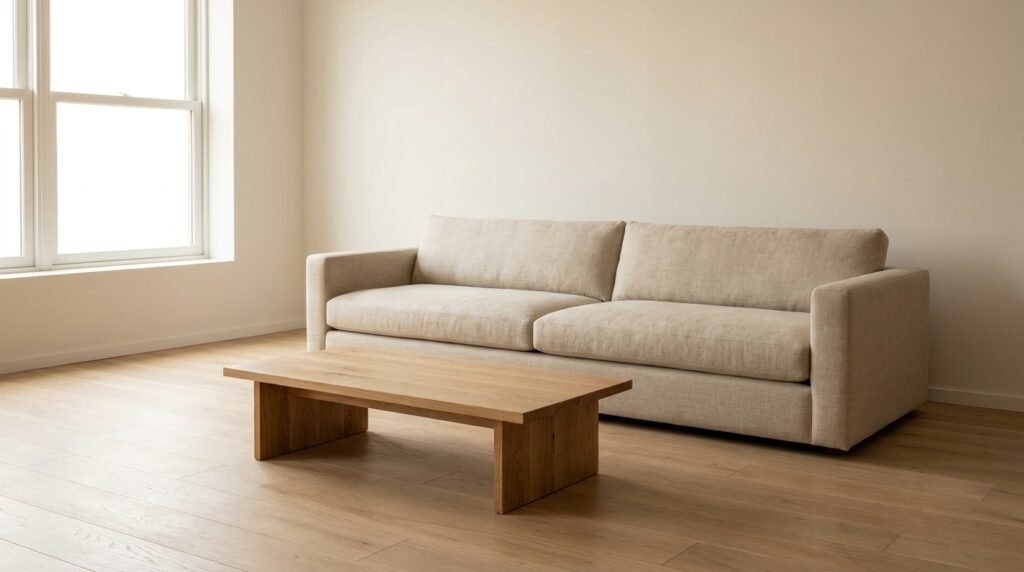
Whether you’re working with a compact London flat, a narrow Victorian terrace, or a small American apartment living room, the way you arrange your furniture will make or break the minimalist effect. The instinct in a small room is to push everything against the walls — but counterintuitively, this often makes a room feel smaller and more chaotic.
Instead, try floating your furniture slightly away from the walls. Even four to six inches of breathing room between your sofa and the wall creates a sense of airiness and intention. Define zones with a rug — choose one that’s large enough for the front legs of your sofa and chairs to sit on, anchoring the seating area as a distinct, cosy island within the room.
Keep pathways clear. In minimalist design, the negative space — the empty floor, the bare wall — is as important as the objects themselves. That space is doing active work: it’s creating the feeling of ease that you walked in for.
8. Plants: The One Living Element That Belongs in Every Minimalist Room
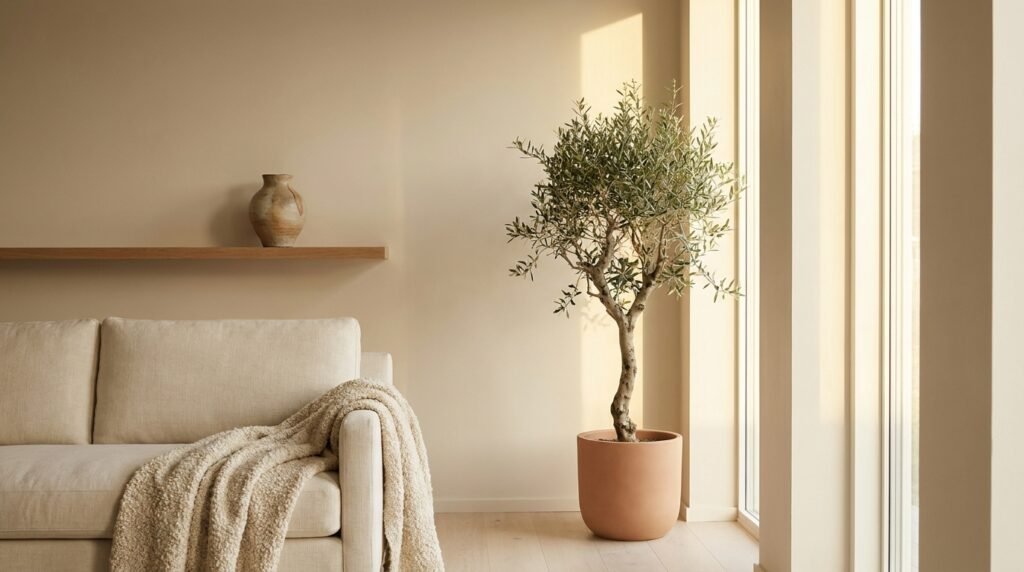
A minimalist living room without greenery can tip from serene into sterile. A single, well-chosen plant changes the energy of a room in a way that’s almost impossible to explain rationally — it adds life, oxygen, organic shape, and an irreplaceable sense of the natural world inside your home.
For minimal interiors, less-is-more applies here too. One large, architectural plant often does more than five small ones scattered around. A tall fiddle leaf fig in a simple terracotta pot. A dramatic monstera in a white ceramic planter. A single snake plant on a minimalist shelf. These aren’t just plants — they’re living sculptures, and in a pared-back room, they carry enormous visual and emotional weight.
In both US and UK homes, there’s been a beautiful return to natural materials and organic forms in interior design. Plants are the living extension of that movement. They remind us — even in the most edited, intentional space — that something wild and growing belongs here too.
“The right plant in the right corner doesn’t just decorate a room — it reminds you that you’re alive.”
9. Lighting That Turns a Room Into a Feeling
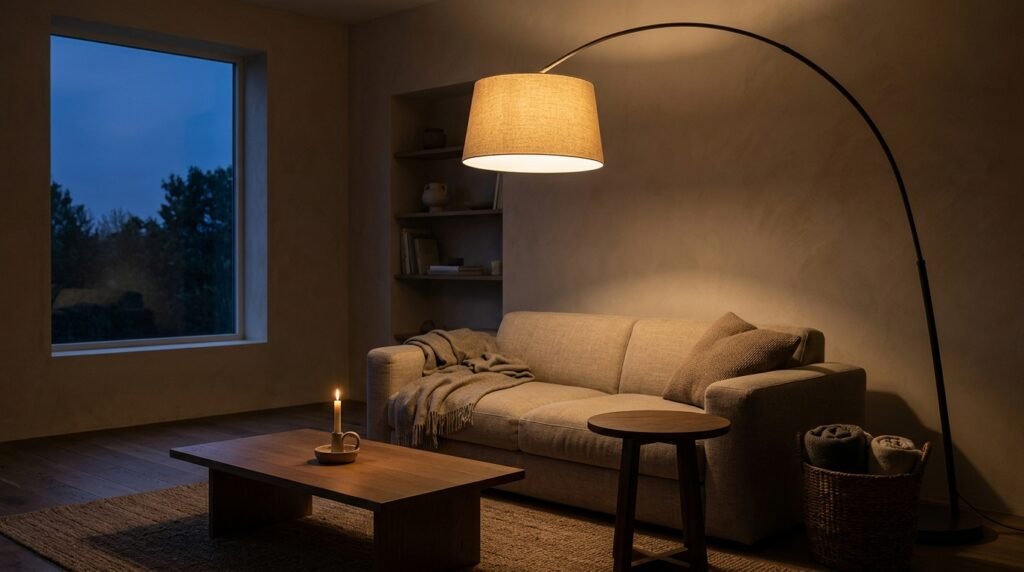
If you’ve ever walked into a minimalist room that felt magical and couldn’t quite put your finger on why, there’s a strong chance the answer was lighting. Lighting in a minimal room isn’t just functional — it’s atmospheric. It’s the difference between a room that looks good in photographs and a room that makes you never want to leave.
Layer your lighting always. An overhead light for practicality, a floor lamp for warmth and height, a table lamp for intimacy. In the evenings, turn off the overhead entirely and let the lamps do all the work. The warm, low-level light they cast — particularly with bulbs in the 2700K range — transforms even a simple room into something that feels genuinely beautiful.
In the UK, where grey skies are a reality for a significant portion of the year, good artificial lighting isn’t optional — it’s essential to mental wellbeing and home comfort. In the US, where spaces can often be larger and ceilings higher, lighting is the tool that brings a big room down to a human scale.
10. Storage Solutions That Keep the Calm Intact
A minimalist living room can only stay minimal if your storage is doing its job quietly and completely. Visible clutter — cables trailing across the floor, remote controls scattered across the coffee table, books piled in random stacks — undoes the calming effect of even the most thoughtfully designed room.
Built-in storage is the gold standard: bookshelves with doors, window seats with hidden compartments, media units with closed cabinets. But not everyone has the budget or the ability (particularly renters in the UK and US) to install built-ins. The good news is that smart freestanding storage can work just as well. Lidded baskets in natural materials like seagrass or rattan can hold everything from spare throws to children’s toys while looking entirely intentional. A simple credenza with sliding doors keeps your television area clean and uncluttered.
The goal is a room where every object has a home — and when it’s not in use, it’s in that home, out of sight, out of mind.
11. The Power of Negative Space and Why You Should Protect It
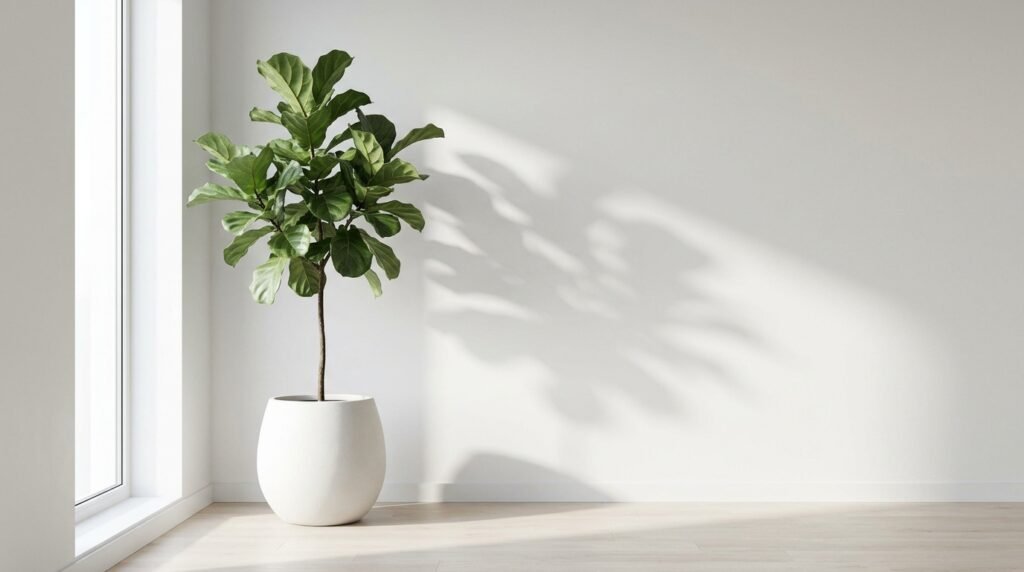
This is perhaps the most distinctly minimalist concept, and the hardest for most people to embrace fully: empty space is not wasted space. In minimalist design, the space around objects is as deliberate and valuable as the objects themselves. It’s called negative space, and protecting it is one of the most important things you can do for your living room.
This means leaving that stretch of bare wall bare — even when every instinct tells you to hang something on it. It means choosing a coffee table with simple, open lines rather than one with shelves crammed with objects. It means having one throw on your sofa, not four. It means resisting the urge to fill every surface.
The negative space in your living room is where your eyes rest. It’s where your mind goes quiet. In a world that is constantly demanding your attention, that emptiness is not nothing — it’s everything.
12. Making It Feel Lived-In, Not Staged
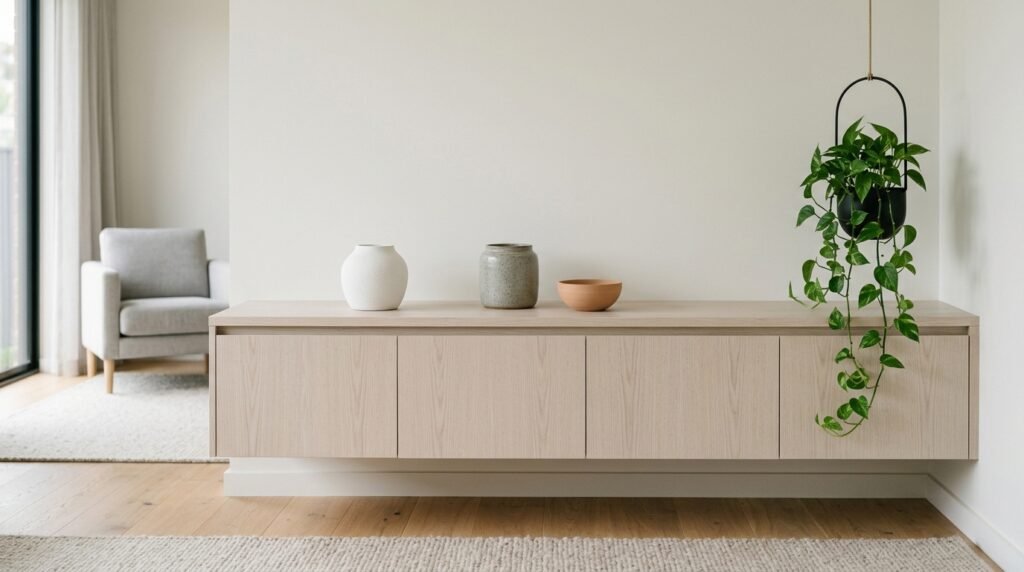
The final and perhaps most important thing to understand about minimalist living room decor is this: the goal is never to make your home look like a showroom. The goal is to make it feel like the best, most peaceful version of your life.
That means leaving the book you’re currently reading on the side table. It means keeping the throw rumpled rather than perfectly folded. It means having one or two pieces that are purely sentimental — the pottery bowl a friend made you, the photograph from a trip that changed how you see the world.
Minimalism, done right, doesn’t erase your personality. It removes everything that was obscuring it. When the clutter is gone and the room breathes, what remains is the real story of who you are and how you choose to live. That story, told quietly through a few beautiful, chosen things, is always more interesting than anything you could buy.
—
🌿 How to Take Care of Your Minimalist Living Room
Keeping a minimalist space feeling genuinely calm requires small, consistent habits rather than occasional overhauls. First, adopt a “one in, one out” policy: if a new object enters the room, something else needs to leave or find a proper home. This one simple rule prevents the slow creep of clutter that undoes minimalist interiors over time.
Second, do a weekly reset — even just ten minutes of returning things to their designated homes, straightening cushions, clearing surfaces — makes an enormous difference to how the room feels throughout the week.
Third, clean surfaces regularly. In a minimal room, dust and fingerprints are far more visible than in a cluttered one. A quick wipe-down of surfaces, windows, and mirrors keeps the room feeling fresh and considered.
Fourth, revisit your room seasonally. Swap your lighter linen throws for heavier knits in autumn. Introduce dried botanicals and deeper candle tones in winter. Let the room evolve slowly with the year — it keeps the space feeling alive without adding clutter.
Fifth, trust the quiet. When you’re tempted to add something new, sit in the room first. Often, what you thought was missing is actually already there — you just needed to be still long enough to notice it.
—
❓ FAQ
Q: How do I make a minimalist living room feel warm and not cold or empty? A: Warmth in a minimal room comes from texture, layering, and lighting rather than from quantity of objects. Use warm-toned neutrals on walls, layer natural materials like linen, jute, wood, and ceramic throughout, and rely on warm-temperature lamps in the evenings rather than harsh overhead lighting. A single well-placed plant and a few genuinely loved objects will do more for warmth than any amount of decorative clutter.
Q: Can I have a minimalist living room if I have children or a busy household? A: Absolutely — in fact, minimalist principles work particularly well in family homes because they make tidying faster and visual calm easier to restore. The key is investing in excellent, discreet storage: lidded baskets, closed cabinets, built-in shelving with doors. Children’s toys, games, and everyday objects all have a home, and the daily reset becomes a much simpler task when there’s less to sort through.
Q: What’s the biggest mistake people make when trying to decorate minimally? A: The most common mistake is removing too much too quickly and ending up with a room that feels bare rather than intentional. True minimalism is about curation, not deprivation. Start slowly — remove only what you’re certain you don’t love or need, live with the space for a while, and then make further edits. The best minimalist rooms are built gradually, through honest editing over time, not through a single dramatic clear-out.
—
💭 Final Thought
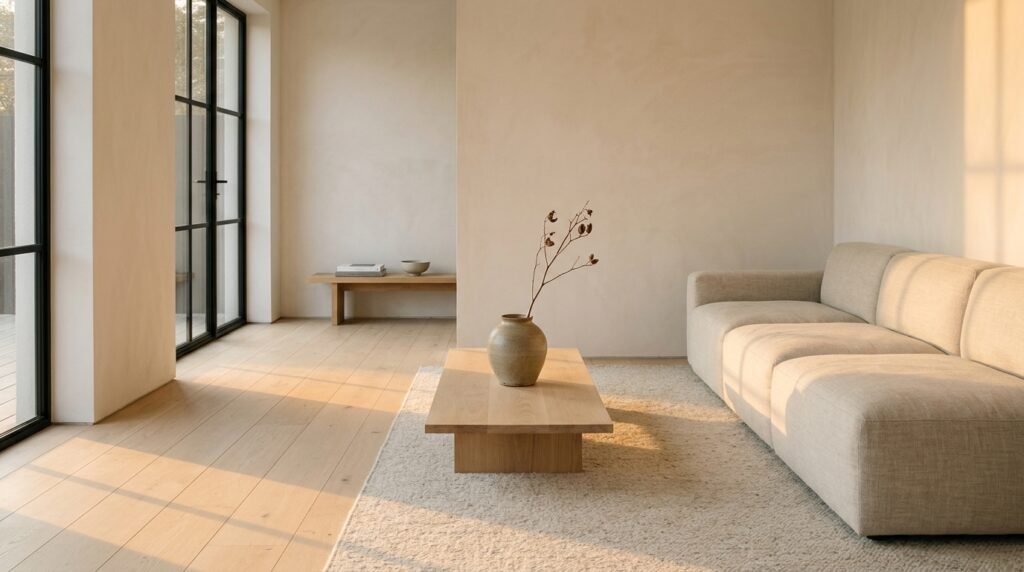
A minimalist living room isn’t something you achieve once and then maintain — it’s something you choose, again and again, every time you bring something new into your home and ask honestly: does this belong here? It’s a practice as much as an aesthetic, and like all good practices, it rewards you not with a perfect room but with a more peaceful life inside it. Your home should tell the story of who you actually are, not who you think you should be.
So here’s the question worth sitting with: if you stripped your living room back to only the things you truly loved — what would be left, and would that be enough?