
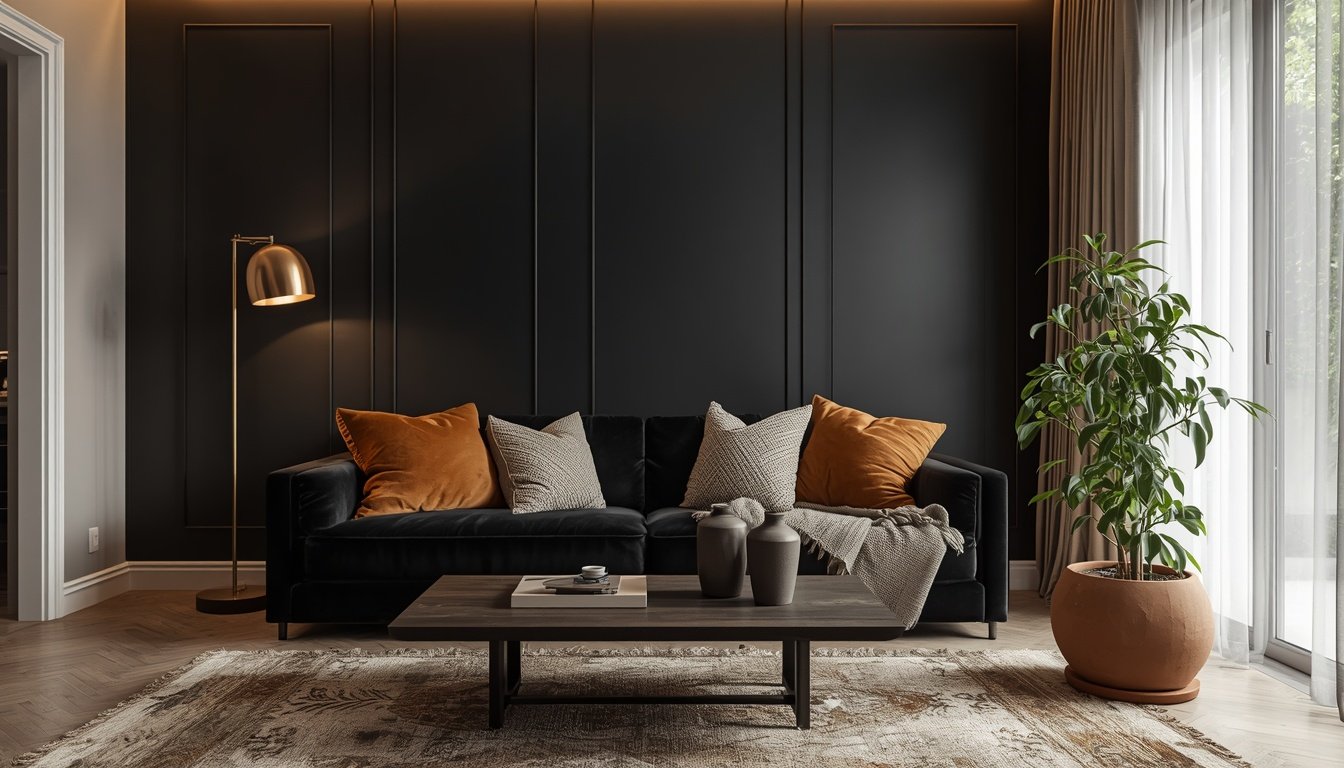
Living Room Decor Ideas for Apartments with Black: How to Make Dark Tones Feel Like Home
There’s a moment — maybe you’ve had it too — when you scroll past a beautifully styled apartment living room and something in your chest just stops. The walls are dark, the furniture is bold, and the whole space feels like a secret worth keeping. That’s the quiet power of black in a living room. And if you’ve been told your apartment is “too small” or “too bright” or “too anything” for black decor, this article is your permission slip to ignore that advice entirely.

—
1. Why Black Belongs in Small Apartment Living Rooms More Than You Think

The most persistent myth in interior design is that dark colours shrink a room. Walk into any carefully styled apartment in London’s Notting Hill or a well-loved brownstone in Brooklyn and you’ll see why that simply isn’t true. Black, when used with intention, creates depth — not claustrophobia. It adds layers to a room rather than swallowing them whole.
Interior designers have known for years that dark walls in a small space can actually make the room feel more curated, more purposeful, and — counterintuitively — more expansive. When every surface shares a deep, consistent tone, the boundaries of the room become less obvious. Your eye doesn’t rush to find the edges. It settles. It explores.
“Black doesn’t close a room in — it wraps you inside something intentional.”
This is particularly relevant for apartment dwellers in cities like Manchester, Chicago, Edinburgh, or New York, where square footage is precious and style is non-negotiable. Your living room may be compact, but it can absolutely be dramatic — and those two things are not in conflict.
2. Starting with the Foundation: How Much Black Is Too Much?

Before you buy a single throw pillow or repaint a single wall, the most important question to ask yourself is this: what feeling do I want to walk into every single day? Black works on a spectrum, and understanding where your comfort zone lives will save you from a room that feels oppressive rather than elegant.
A light touch of black might mean matte black hardware on open shelving, a few statement frames on white walls, and a charcoal linen sofa. A more committed approach might involve a full accent wall in a deep graphite, paired with black velvet furniture and warm brass accents. Neither is wrong — they’re just different conversations the room is having with you.
For most apartment living rooms, interior designers recommend starting with 60% neutrals, 30% black and deep tones, and 10% bright or warm accent colours. This ratio keeps the space grounded without tipping into darkness you didn’t ask for.
3. The Best Shades of Black for Your Living Room Walls

Here’s something most people don’t realize until they’re standing in a paint aisle staring at forty variations of what they thought was just “black”: there is no singular black. There are warm blacks, cool blacks, blacks that pull green in the afternoon light, and blacks that go almost navy at dusk.
In the US, Sherwin-Williams’ Tricorn Black and Benjamin Moore’s Onyx are perennial favourites — both true, clean blacks that photograph beautifully and hold their depth in varying light. In the UK, Farrow & Ball’s Off-Black (number 57) and Little Greene’s Obsidian are the go-to choices for a more nuanced, sophisticated result that shifts subtly with natural light throughout the day.
If you’re renting — as many apartment dwellers in London, Glasgow, LA, or Boston are — and painting walls isn’t an option, don’t panic. Black-toned wallpaper panels, large canvas artwork with dark grounds, and deep-toned removable peel-and-stick wallpaper all achieve a similar atmosphere without ever touching the landlord’s magnolia paint.
4. Furniture Choices That Make Black Decor Feel Warm, Not Cold

The fear most people carry into black decorating is this: what if it feels like a cave? The answer lies almost entirely in your furniture choices. Black walls or dark accent pieces need texture and warmth to breathe properly — and the good news is that warmth is surprisingly easy to layer in.
A black velvet sofa against a dark wall sounds overwhelming until you add a chunky cream throw, a worn leather accent chair, and a jute rug underfoot. Suddenly you have a room that feels like the world’s most stylish reading nook. A black metal bookshelf becomes less industrial when it’s dressed with trailing pothos plants, terracotta pots, and a few well-loved paperbacks.
In British homes, the tendency is often toward heritage warmth — think dark paint paired with antique wood side tables, worn leather Chesterfields, and wool plaid throws in rust and gold. In American apartments, the palette often skews more contemporary — black paired with warm white, natural wood tones, and matte gold fixtures. Both approaches are deeply beautiful and deeply liveable.
5. Lighting: The Single Most Important Factor in a Black Living Room

Imagine walking into a living room at seven in the evening, lamps casting a warm amber glow across dark walls, candles flickering on a coffee table draped in soft linen. The whole room feels like an exhale. That’s not magic — that’s intentional lighting, and it is genuinely the difference between a dark room that depresses and one that enchants.
Black absorbs light, which means you need more of it — and you need it layered. Single overhead lighting in a dark living room is the fastest way to make the space feel institutional. Instead, build a lighting plan with at least three sources: ambient (overhead or floor lamp), task (reading lamp, table lamp), and accent (LED strip lights behind furniture, candles, fairy lights).
“Layer your lighting like you layer your clothes — thoughtfully, with warmth at every level.”
For apartment-friendly options, cordless rechargeable lamps have completely changed what’s possible in rented spaces. Brands like IKEA, John Lewis, and West Elm offer stylish, affordable versions that can sit on shelves, side tables, or the floor without a single wire touching your skirting board.
6. How to Use Black in a Rental Apartment Without Losing Your Deposit
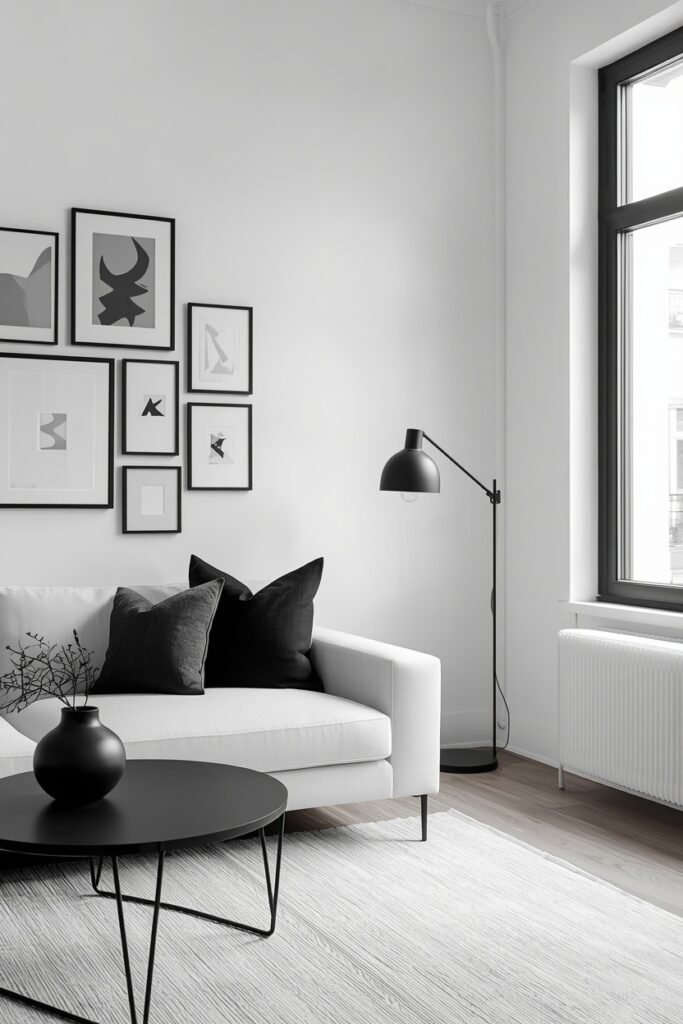
Renting doesn’t mean decorating is off-limits — it means you have to be cleverer about it. And black decor, more than almost any other style choice, translates beautifully through accessories, soft furnishings, and furniture rather than permanent fixtures.
A large black-framed mirror leaning against a wall (rather than hung) can anchor a space visually without a single wall plug. Black linen curtains hanging from a tension rod bring drama and height to any window. A dark area rug defines the living space and instantly shifts the mood. Even replacing standard white lampshades with black ones is a thirty-minute, fully reversible change that transforms a room completely.
The key principle for renters working with black is this: own everything you bring in, and make sure it does double or triple duty. A black storage ottoman that acts as a coffee table, additional seating, and hidden storage. A dark bookshelf that divides a studio space while also displaying your personality. Every piece should earn its place.
7. Mixing Black with Colour: The Combinations That Always Work

Black is one of the most versatile foundation tones in decorating precisely because it elevates almost every colour it sits beside. The combinations that consistently work — in apartments from Edinburgh to Austin — are worth knowing by heart.
Black and warm white create a classic, editorial contrast that’s timeless without being cold. Black and terracotta bring warmth and earthiness — very much a current favourite in both UK and US interiors. Black and sage green feels organic and grown-up, like a forest at dusk. Black and blush pink is softer than you’d expect and deeply inviting. Black and warm brass or gold is the combination that never, ever fails.
What to avoid: pairing black with cool, icy blues or greys in a space that already lacks natural light. These combinations can create an atmosphere that reads as sterile rather than dramatic, especially in north-facing apartments that don’t receive much direct sunlight.
8. Black Accents vs. Black as a Dominant Tone — Knowing the Difference

There are two distinct approaches to black living room decor, and understanding which one suits your apartment is crucial before you spend a single pound or dollar.
Using black as an accent means you’re introducing it through hardware, frames, cushions, lamps, and decorative objects against a lighter backdrop. This approach is lower commitment, easier to evolve over time, and ideal for apartments with limited natural light or particularly small floor plans — think a typical London flat or a compact New York studio.
Using black as a dominant tone means embracing it in larger quantities — a full accent wall, a dark sofa, significant areas of black furniture. This works beautifully in apartments with high ceilings, generous windows, or exposed brick (common in converted buildings in both the UK and US). The dominant approach makes a statement the moment someone walks through the door.
Neither approach is superior. The best living rooms often blend both — a dark dominant wall anchored by a lighter sofa, accented with black hardware and objects. Contrast within the dark palette is what keeps the room feeling alive.
“The rooms we remember aren’t the ones that played it safe — they’re the ones that knew exactly what they wanted to be.”
9. Texture Is Everything in a Black Living Room

When a room is built around a colour as strong as black, texture becomes the language the space speaks. Without it, a dark room reads as flat — almost two-dimensional. With it, every shadow and every surface becomes part of a composition worth looking at for a long time.
Think about the materials you’re layering: matte black paint beside glossy black ceramic vases. Rough-weave linen cushions against a smooth velvet sofa. A knitted cream throw draped across a dark leather chair. Woven rattan lampshades casting dappled warmth across a charcoal wall. Each textural contrast makes the black richer and the room more interesting.
In practical terms for a US or UK apartment, texture is also budget-friendly. A faux fur throw from TK Maxx or TJ Maxx, a woven cotton cushion from IKEA, a secondhand ceramic vase from a charity shop or thrift store — these small, affordable additions do enormous work in a dark living room.
10. Plants and Black Decor: Why They Are Made for Each Other

There is something genuinely magical about green plants against a dark backdrop — the contrast is as dramatic and satisfying as any curated gallery wall, and it costs far less. In black living rooms, plants don’t just decorate; they breathe life into a space that might otherwise feel too controlled or too serious.
Large-leafed plants work particularly well in dark rooms — the Monstera deliciosa, fiddle-leaf fig, or rubber plant all create bold silhouettes that show up beautifully against dark walls. Trailing plants like pothos or string of hearts add softness and movement, particularly when placed on high shelves or in hanging planters.
The benefit of plants in dark apartments extends beyond the visual, too. Research consistently shows that indoor plants improve mood and air quality — both welcome bonuses in a small city apartment where the windows may not always be open.
11. Styling Your Black Living Room for the Seasons

One of the genuine pleasures of a black living room is how completely it transforms with seasonal styling. The dark foundation stays constant; the accents shift with the time of year, and the effect is a space that never feels stale.
In autumn and winter — when both British and American interiors naturally shift toward cozy — a black living room comes into its fullest expression. Deep burgundy throws, amber candles, warm wool blankets in rust and ochre, cinnamon-scented diffusers, and dimmed warm-toned lamps create an atmosphere that feels like the best possible version of staying in.
In spring and summer, the same room lightens and freshens beautifully. Swap the heavy throws for lightweight linen in white or sage. Bring in fresh flowers in terracotta vases. Open the curtains wide and let the contrast between black walls and bright natural light do its work. The room transforms, but the bones — the dark, intentional foundation — remain.
12. The Small Details That Make a Black Living Room Feel Truly Finished

The difference between a living room that looks styled and one that looks decorated comes down to the small details — and in a black apartment living room, those details matter more than in almost any other aesthetic.
Books stacked with their pages facing outward (rather than their spines) for a soft, textural look on dark shelves. A single large art print in a matte black frame rather than a cluster of smaller ones that compete for attention. A tray on the coffee table corralling candles, a small plant, and a beautiful object rather than leaving items scattered. Dark, considered tableware visible on open shelving that reinforces the palette. Fresh flowers — just one bunch, in a simple vessel — that remind the room it’s lived in and loved.
These finishing touches cost almost nothing in terms of money, but they cost attention — and that attention is exactly what separates a Pinterest-worthy space from a merely furnished one.
—
🌿 How to Take Care of Your Black Living Room Decor
A black living room is genuinely low-maintenance once it’s set up, but a few habits keep it looking its best over time.
Dust matte black surfaces regularly, since dark tones show light-coloured dust more readily than pale surfaces do. A microfibre cloth does the job perfectly on painted walls, shelving, and furniture. For velvet or dark upholstered pieces, a lint roller used weekly prevents the pale pet hair and fluff buildup that shows so clearly on dark fabric. Rotate your plants toward the light source every week or two so they grow evenly and stay lush. Swap seasonal accents — throws, cushions, and small decorative objects — at least twice a year to keep the space feeling fresh. And finally, review your lighting every few months: bulbs warm slightly as they age, and recalibrating your lamp placement occasionally ensures the room always feels as intentional as it did on day one.
—
❓ FAQ
Q: Will black walls make my apartment living room look smaller? A: Not necessarily — and often the opposite is true. When dark tones are used with good lighting and thoughtful contrast, they create depth rather than claustrophobia. The key is layering warm light sources throughout the room and introducing texture and varied tones to prevent the space from feeling flat.
Q: What colours work best with black decor in a living room? A: Warm whites, terracotta, sage green, blush pink, and warm brass or gold all pair beautifully with black. The most important thing is warmth — avoid pairing black with cool greys or icy blues in rooms that already lack abundant natural light, as this combination can feel cold rather than cozy.
Q: Can I create a black living room aesthetic in a rental apartment? A: Absolutely. Removable wallpaper, large black-framed mirrors, dark-toned rugs, black linen curtains on tension rods, and furniture you own entirely are all rental-friendly ways to build a dramatic, dark aesthetic without touching the walls or risking your deposit.
—
💭 Final Thought

A black living room in an apartment isn’t an act of boldness for boldness’s sake — it’s a very quiet declaration that your home is a place of intention, not accident. It says that you thought about how you wanted to feel when you walked through the door, and you built that feeling into the walls, the light, the textures, and the details. That kind of home is worth making, whatever the square footage.
So here’s the question worth sitting with: what does your ideal living room feel like when you close your eyes — and what one single change could bring your actual space a little closer to that feeling today?