Why the Industrial Living Room Trend Is Actually Having Its Best Moment Ever (And How to Not Get It Wrong)
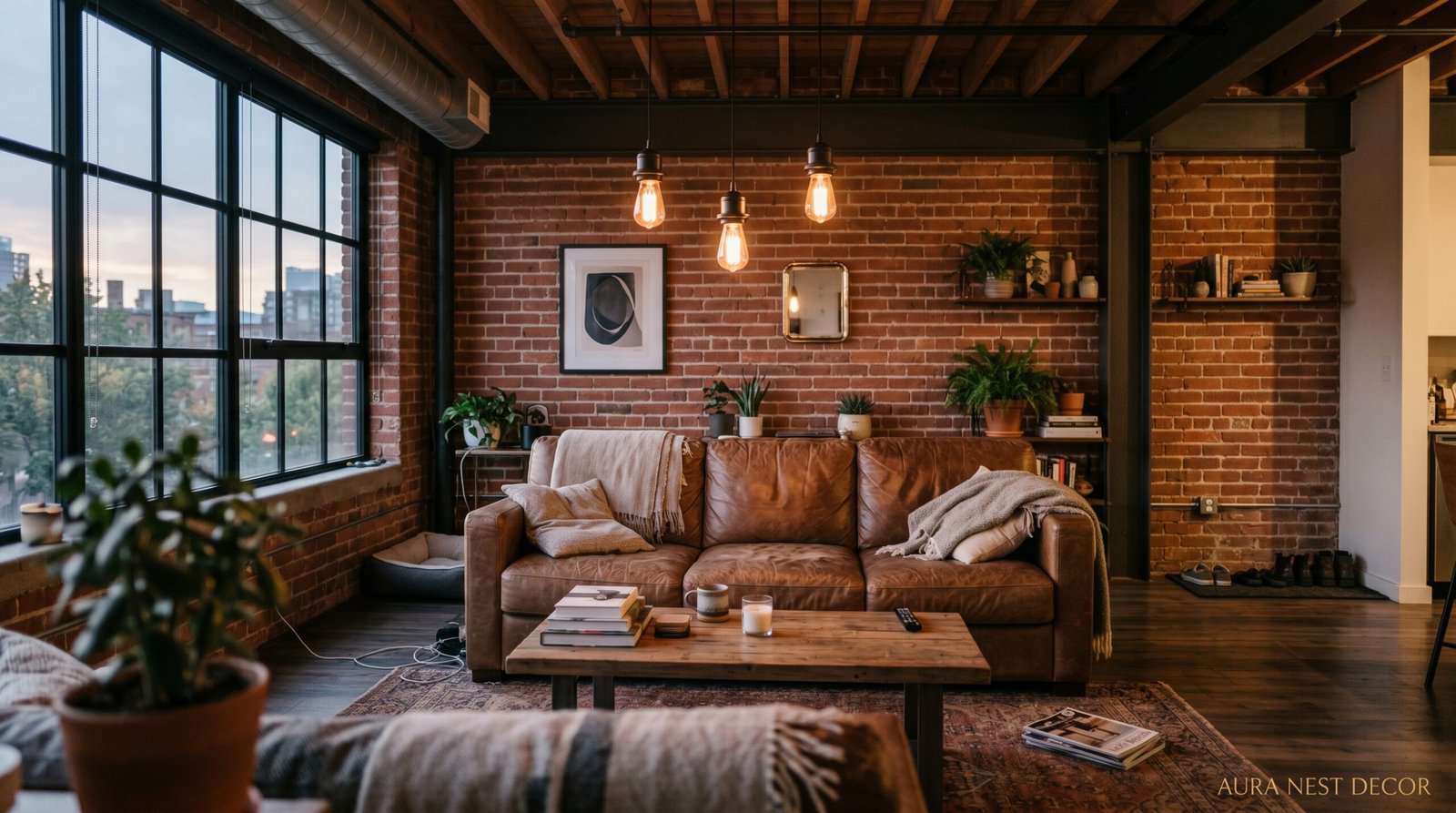
You know that feeling when you walk into a room and it just gets you? Dark metal, worn leather, exposed wood — nothing trying too hard. That’s what a good industrial living room does. It doesn’t perform. It just exists, and it’s somehow more compelling for it.
—
1. The Thing Nobody Tells You About Industrial Style (It’s Not About Being Minimalist)
Here’s what I got wrong for years. I thought industrial meant sparse. Cold. Basically empty with a few pipes showing. I kept seeing these Pinterest boards that were basically just… gray rooms with nowhere comfortable to sit, and I assumed that was the aesthetic.
It’s not.
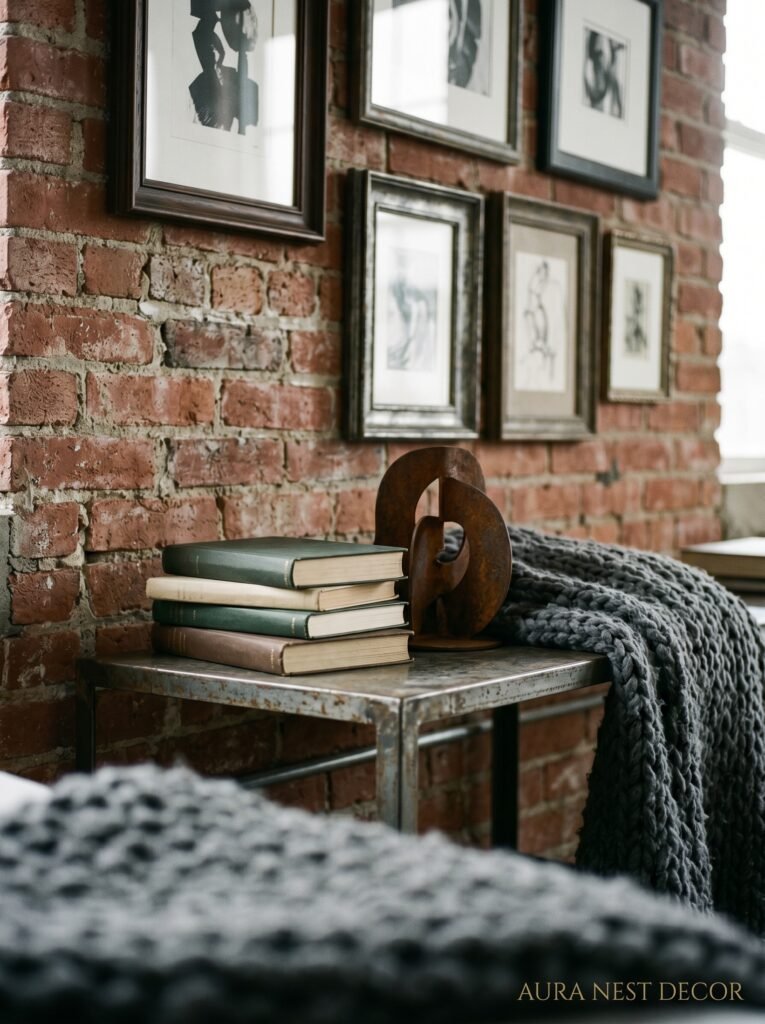
The industrial style that actually works — the kind that stops you mid-scroll — is layered. Dense, even. It’s got texture fighting texture in the best possible way. Rough concrete next to broken-in leather. Cold metal next to a big wool throw that’s been washed so many times it’s almost cloud-soft. The contrast is the whole point. And when you understand that, everything clicks.
The lofts in Manchester’s Northern Quarter get this right. So do those converted warehouse apartments you see in Brooklyn. They’re full. They’ve got books and plants and vintage rugs that have no business looking that good next to exposed ductwork — and yet. There’s something about the rawness that makes the warm stuff feel even warmer.
So if you’ve been holding back because you thought industrial meant sacrificing comfort, stop. It doesn’t.
“Industrial design isn’t about removing softness — it’s about making softness earn its place.”
—
2. The Color That Keeps Showing Up in Every Beautiful Industrial Living Room Right Now
It’s not gray. Well — it’s not just gray. What I keep seeing everywhere right now, and I mean on the boards I’m actually saving rather than just passively scrolling past, is warm charcoal. There’s a difference, and it matters more than you’d think.
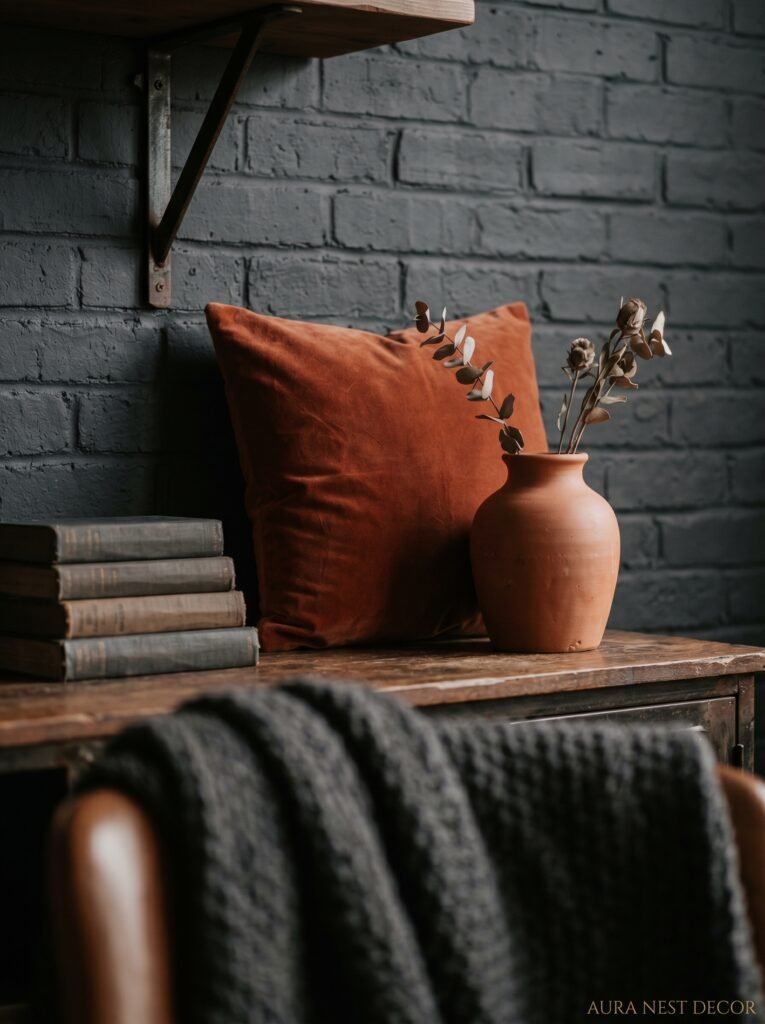
Cool gray reads clinical. It can tip into feeling like an office waiting room if you’re not careful. But warm charcoal — something with an undertone of brown or green in it — that’s a completely different thing. It has depth. It pulls the eye in rather than pushing it away.
Farrow & Ball’s “Off-Black” does this. So does Sherwin-Williams’ “Urbane Bronze,” which I know is technically more brown, but it plays so beautifully with dark metals that it’s become basically the unofficial official color of industrial interiors in the US right now.
Pair either of those with natural aged wood — not the orange-toned pine that dominated the noughties, but something closer to walnut or weathered oak — and you’ve got a foundation that will never, ever look dated. That’s the other thing about industrial done well: it doesn’t age like trends do. It ages like a good pair of jeans.
—
3. How to Choose a Sofa That Doesn’t Immediately Betray the Whole Vibe

The sofa is where most people go wrong. They nail the walls, they get the lighting right, and then they plop down a nubby cream linen three-seater that belongs in a Scandi kitchen and wonder why the room feels confused.
Industrial living rooms want leather. Or something that at least reads like it. Not stiff showroom leather — broken-in leather, ideally cognac or saddle brown or even a dark tobacco. Something that looks like it’s been lived on. The kind you sink into, not the kind you sit nervously upright on at someone else’s house.
If leather genuinely doesn’t work for you (allergies, ethics, budget — all valid), look for velvet in deep, moody colors. Midnight navy. Forest green. A dark plum that’s almost black in certain light. Velvet sounds wrong for industrial, I know, but it actually works because of that contrast principle again — the richness of the fabric plays off the roughness of everything else in a way that makes both things better.
What you want to avoid is anything too tailored or too delicate. Rolled arms, floral prints, anything that looks like it’d be more at home in a country cottage. Not because there’s anything wrong with those things — they’re lovely, just not here.
—
4. The Lighting Rule That Changes Everything in a Dark Room
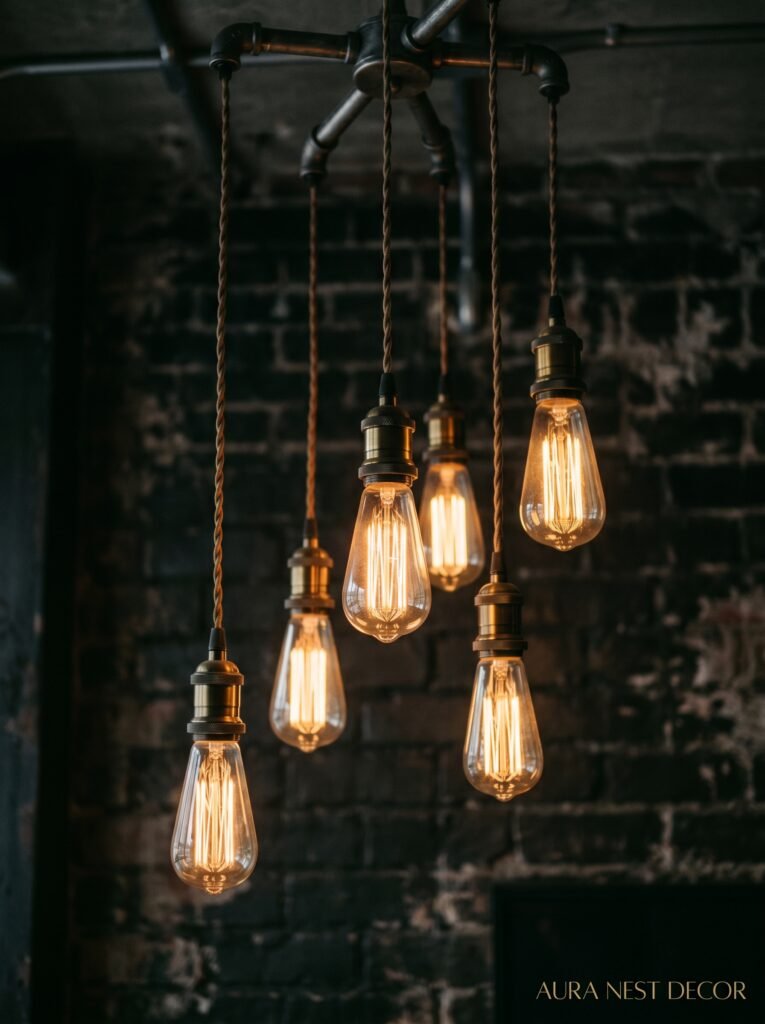
Overhead lighting. That’s the enemy. Or at least, overhead lighting as the ONLY source of light is the enemy.
Industrial spaces want layers — and not in a vague Pinterest-caption way. Specifically: one ambient source up high that’s doing the least amount of work, then floor lamps, table lamps, maybe a swing-arm wall lamp if you’ve got the wall for it. The overhead exists just to keep you from stubbing your toe. The floor lamps and table lamps are the ones actually setting the mood.
What kind of fixtures? This is where the look really comes together, honestly. Exposed Edison bulbs are a bit done at this point, but I don’t think they’re fully out — they just need to be done with intention. A single oversized pendant with a cage shade over a coffee table, or a cluster of bare filament bulbs at different heights in a corner, those still read great. What’s looking more current is black metal arc lamps, factory-style adjustable desk lamps repurposed as side table lamps, and especially matte black or aged brass wall sconces.
The amber glow of a filament bulb at 7pm, in a room with dark walls and warm wood — that specific thing is why people fall in love with industrial interiors. It’s not replicable with cool-white LEDs. Get warm bulbs. 2700K or lower. This is non-negotiable.
“You can’t buy atmosphere. But you can absolutely ruin it with the wrong lightbulb.”
—
5. The Flooring Decision That’s More Important Than the One You’re Currently Overthinking
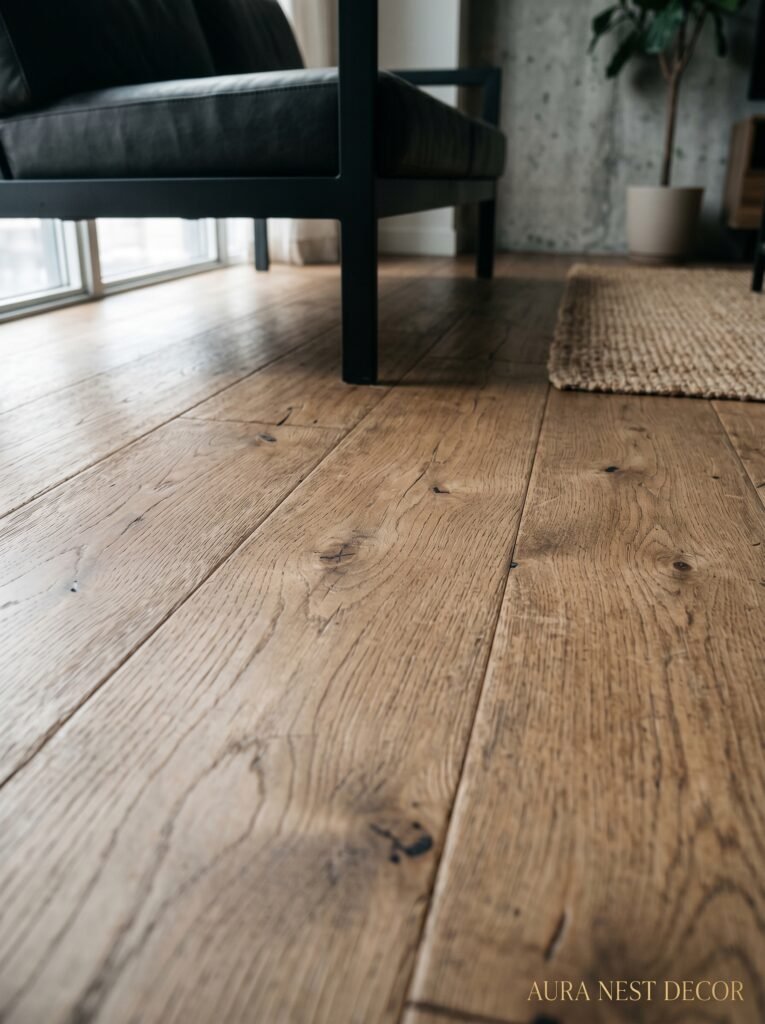
People spend hours agonizing over what to put on their walls. The floors get five minutes. And I get it — floors are expensive and disruptive and it’s scary to commit. But in an industrial living room, the floor might actually be the most important surface you’ve got.
Concrete is the dream, obviously. Polished concrete, especially. There’s nothing quite like it — the way it reflects light differently throughout the day, the way it gets more beautiful with use rather than less. But it’s not always possible, and it’s definitely not always affordable. And that’s fine.
Dark hardwood is the next best thing, and honestly it’s easier to live with. Something in a dark walnut stain, or reclaimed wood with visible knots and grain — that texture carries so much of the industrial feeling on its own. If you’re in a flat (UK readers, this is especially for you) and can’t change the floors at all, a large, flat-weave rug in a dark tone or a subtle geometric pattern can go a long way toward anchoring the room.
What doesn’t work: light blonde wood floors, very shiny laminate, anything with a strong red undertone. These fight the palette instead of joining it.
—
6. The Specific Type of Coffee Table That Actually Makes the Room

Not every coffee table is created equal, and in an industrial living room, the wrong one is immediately obvious. A glass coffee table, for example, disappears visually in a way that sounds like it should be fine but actually just makes the whole thing feel unanchored.
You want mass. You want material that you can actually see. The best industrial coffee tables are reclaimed wood on metal hairpin legs (classic, for good reason), solid raw steel with a sealed surface, or something that mixes both — a concrete top with a simple iron base, for instance. Side note — a large wooden spool repurposed as a coffee table is one of those choices that sounds so try-hard when you describe it and then looks so right in the actual room.
Height matters too. Lower is better. A coffee table that sits closer to the floor reads more relaxed, more lived-in, which is the whole feeling you’re going for. And don’t style it to death. A stack of two or three thick design books, a candle, maybe a small plant or a piece of raw stone. That’s it. Let the table itself be the statement.
—
7. Plants That Earn Their Place Without Looking Like You Tried Too Hard
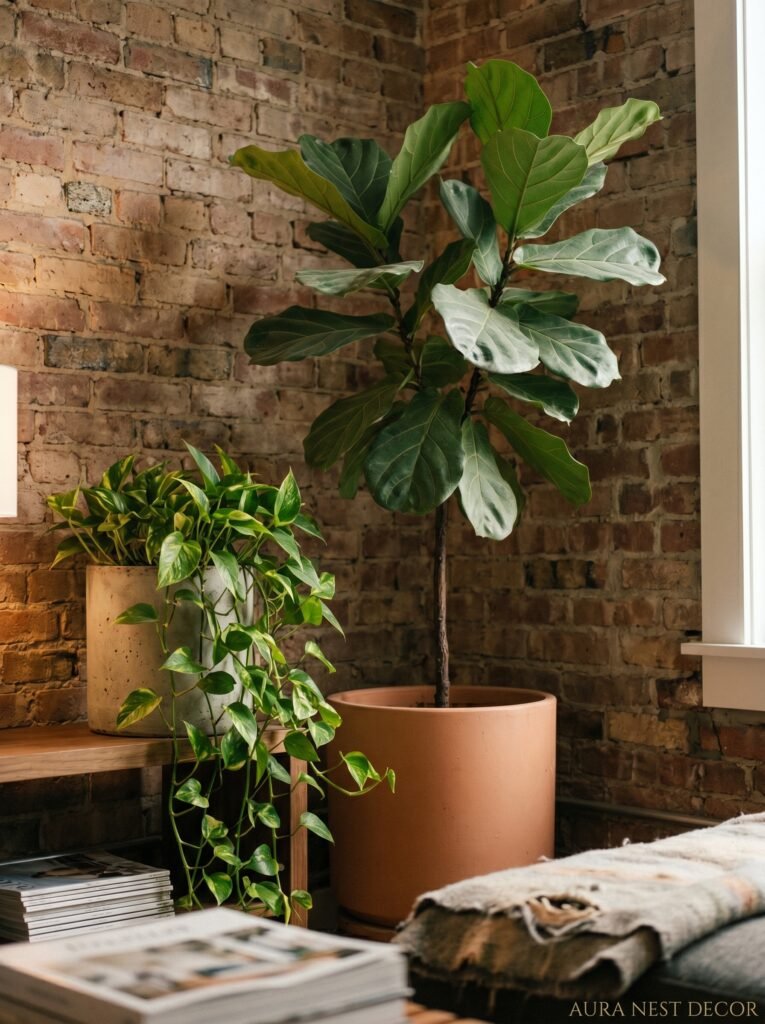
Plants in industrial spaces need to be picked carefully, because the wrong ones can suddenly make your living room look like a garden center rather than a cool converted warehouse.
Big, structural plants work best. A fiddle leaf fig, obviously — I know it’s been everywhere for a decade but there’s a reason it’s stayed. A rubber plant in a dark, wide pot. A bird of paradise. Even something as simple as a large snake plant in a matte black planter can be exactly right. The key word is structural. You want something with presence, not something wispy or delicate.
Trailing plants can work too but only if they’re trailing from something solid — an industrial shelving unit, a high shelf, a metal bracket on the wall. Trailing from a dainty macramé hanger is a vibe clash that won’t serve you.
And the pots. Please, the pots. Matte black, dark charcoal, raw concrete, or aged terracotta for something warmer. Glazed pastel pots belong somewhere else — not here.
“One big, confident plant beats six nervous little ones every single time.”
—
8. The Wall Treatment Hiding in Plain Sight That Most People Overlook
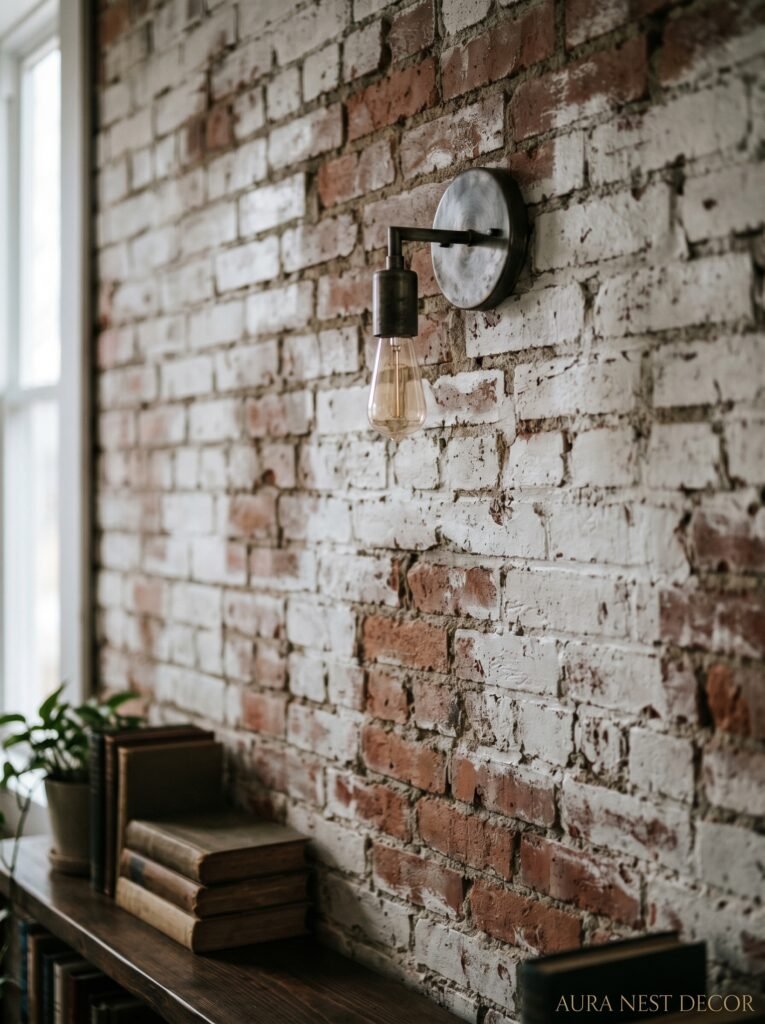
Everyone goes straight for exposed brick, and yes — exposed brick is wonderful. If you have it, keep it. Celebrate it. But what if you don’t? Because most people don’t, and that’s where things get interesting.
Brick-effect wallpaper has come a LONG way. I know, I know — five years ago it was cheap and obvious and painful. But some of the newer options are genuinely hard to distinguish from the real thing at a conversational distance, and they add texture to a wall that would otherwise just be flat paint. Worth looking at, especially for a feature wall behind a sofa.
But here’s the underrated option: raw-textured plaster. Not the perfectly smooth stuff. Unperfect plaster, with slight variation in surface — sometimes called “Venetian plaster” but without the high sheen version — applied in warm off-white or a dark gray. It gives the wall depth without being literal about it, and it photographs beautifully. A lot of the most-saved industrial living room photos on Pinterest right now have this treatment on at least one wall, even if you don’t immediately clock what you’re looking at.
—
9. Why Vintage Always Beats New in an Industrial Space (And Where to Actually Find Good Pieces)
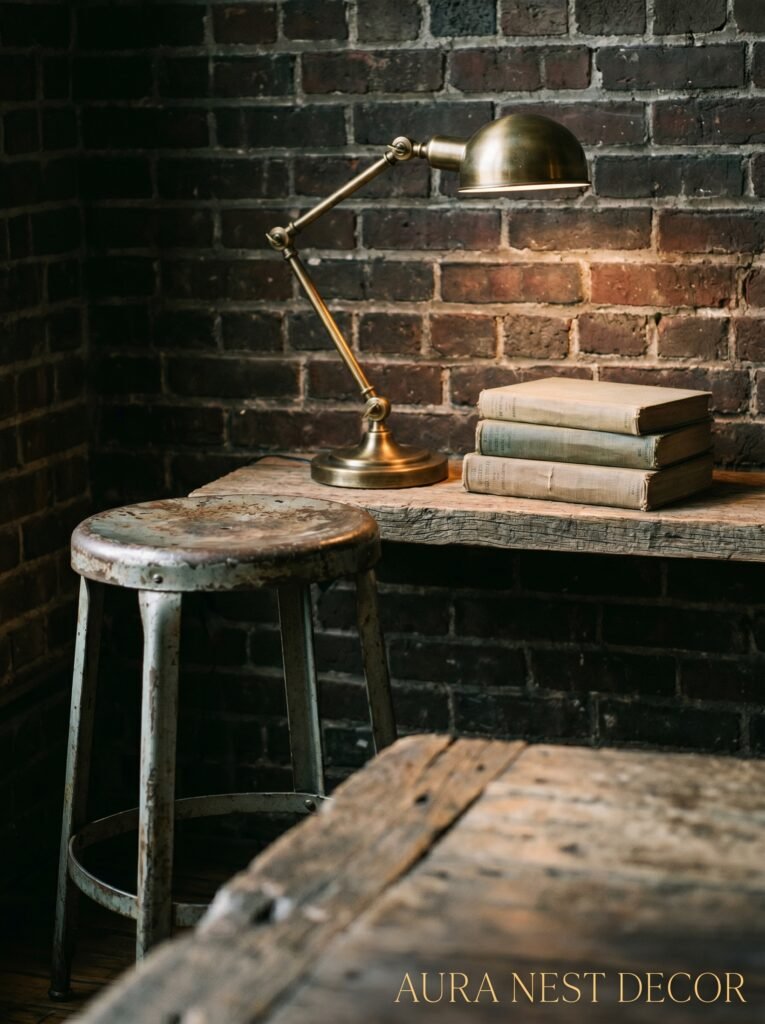
A room full of brand-new industrial-style furniture is going to look like a stage set. It’s going to feel like a showroom. And that’s the opposite of what this aesthetic is actually about.
The whole soul of industrial design came from actual industrial spaces — factories, workshops, warehouses — being repurposed. That DNA is baked in. So when you bring real vintage pieces into the mix, even just one or two, it grounds the room in something that feels genuine rather than performed.
In the UK, Vinterior and 1stDibs have good options online, but honestly local vintage markets and salvage yards are better. The Portobello Road Market in London, the Northern Quarter vintage shops in Manchester, or any decent reclamation yard within driving distance will give you things that no online retailer can: actual history and actual patina. In the US, Chairish is great for online vintage, but local estate sales and Facebook Marketplace can be genuinely incredible if you’re patient.
What to look for: old factory stools, vintage industrial shelving units (the kind with adjustable metal brackets), wooden crates that can become side tables, old scientific or industrial instruments as objects. Not decorative replicas — actual things that were used.
—
10. The One Textile Choice That Instantly Warms an Industrial Room Without Ruining It
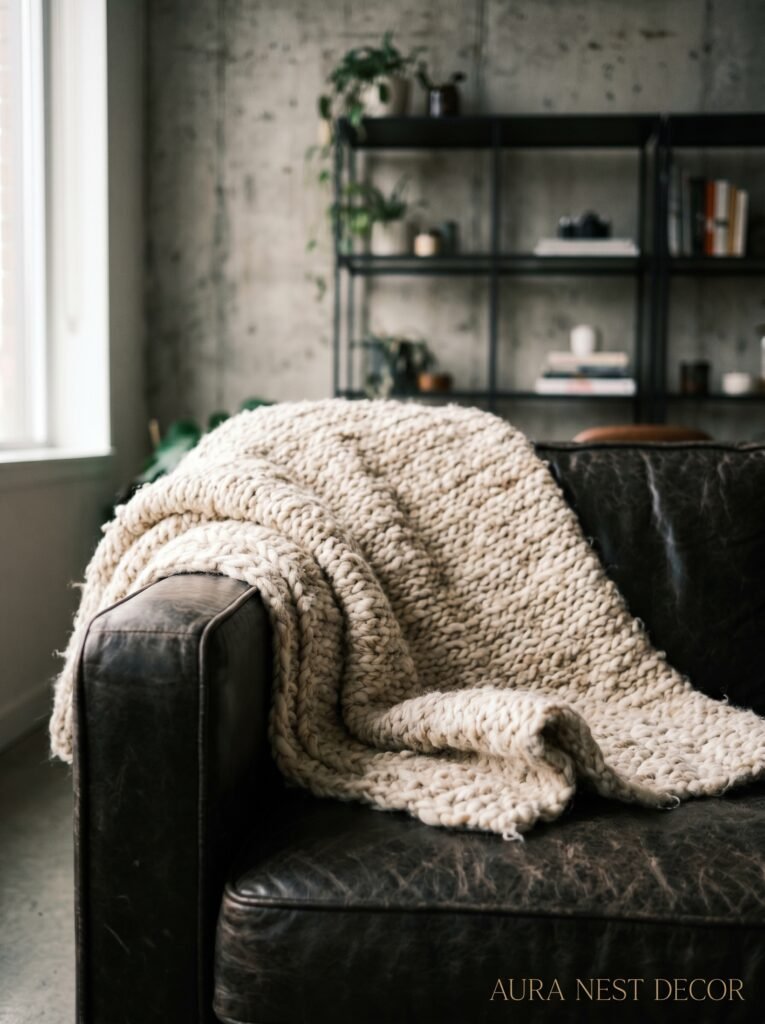
Sheepskin. But not a tiny decorative one draped over an armchair like an afterthought.
A proper, full sheepskin throw — or two, even — over the back of a leather sofa or draped across the arm of a reading chair. The rawness of sheepskin (it’s basically an unprocessed material, which is very on-brand for the aesthetic) works beautifully against all the hard surfaces. And the contrast of something that visually warm against dark metal and concrete is the thing that stops a room from feeling cold.
Beyond sheepskin, chunky knit throws in off-white or oatmeal, heavy wool blankets in dark plaid, worn canvas cushions — all of these work because they’re textural and a bit undone-looking. What doesn’t work is anything silky, anything with a very precise pattern, anything that looks too precious. The textiles in an industrial room should look like they’ve been lived with.
—
11. What to Do With the Ceiling That Almost Nobody Thinks About
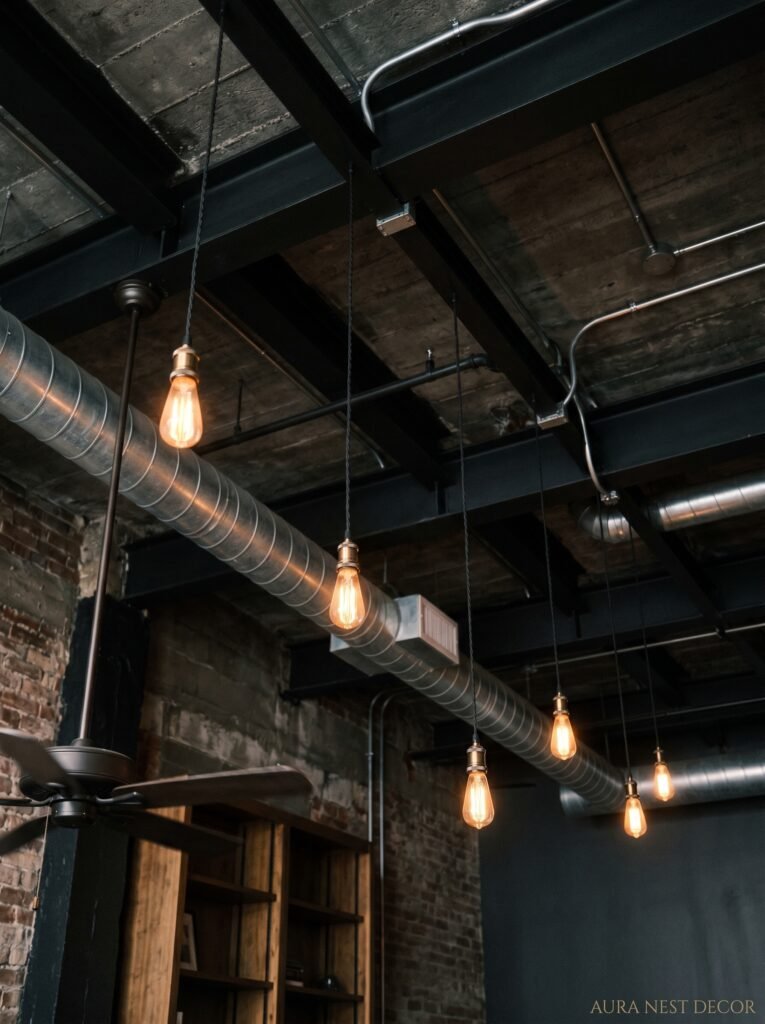
The ceiling is free real estate and almost everyone ignores it.
In an industrial space, especially one with any height to it, the ceiling is actually where some of the most interesting decisions get made. Exposed beams, if you have them — keep them dark, or even stain them darker. Exposed pipes or ductwork, if you’re lucky enough to have them — don’t paint over them to “hide” them, because they ARE the look.
If you’re working with a standard 8-foot ceiling and there’s nothing industrial about it to begin with, you’ve got a few options. Dark paint on the ceiling (yes, even in a smallish room) is counterintuitive but genuinely stunning and makes the room feel more enclosed in a cozy way rather than a cramped way. Or you can hang lighting low — a really substantial pendant that comes down significantly into the room — which draws the eye in a way that makes the ceiling feel less like a limitation.
Coving and ornate plaster molding (very common in older UK properties) can actually be a lovely contrast, by the way. Don’t feel like you need to rip it out. A Victorian ceiling cornice in a room with concrete floors and dark metal furniture is an interesting tension that reads as confident rather than confused.
—
12. The Small Details That Signal You Actually Know What You’re Doing
Anyone can buy a metal pendant lamp and call it industrial. The people whose rooms actually make other people’s jaws drop — those people are getting the details right.
It’s the matte black electrical conduit on an exposed cord. It’s the raw edge on the wooden shelving, not routed and rounded smooth. It’s the cluster of amber glass bottles on a windowsill that catches the late afternoon light. It’s the wall-mounted reading lamp that actually pivots rather than just sitting there decoratively.
Handle hardware is huge, by the way. Swap out any shiny chrome or brushed nickel hardware in the room (lamps, furniture legs, anything) for matte black or aged bronze. It’s a ten-minute job in some cases and the difference is disproportionate to the effort.
And please: let some things be imperfect. A small scuff on the coffee table leg. A rug that’s slightly off-center. An art print hung at eye level rather than precisely measured and centered. Industrial style doesn’t want perfection. It wants realness. The rooms that feel best are the ones that look like someone actually lives in them, hard.
—
❓ FAQ
Q: Can an industrial living room work in a small space or a typical suburban home? A: Absolutely — the loft aesthetic isn’t a requirement. The key is committing to the material palette (dark metals, wood, concrete tones) rather than trying to fake the architectural bones. A suburban semi-detached with dark walls, the right lighting, and a leather sofa can feel genuinely industrial without needing exposed ductwork.
Q: Is the industrial trend going to feel dated in a few years? A: The maximalist-industrial look might cycle out, but the core of this style — raw materials, honest construction, layered textures — has been around since people started converting warehouses into homes in the 80s and 90s. If you’re not chasing specific trend micro-moments and just building with quality materials, it ages well.
Q: How do I make an industrial living room feel warm enough for a family with kids? A: Textiles do most of the heavy lifting here. More throws, bigger rugs, upholstered furniture rather than all-leather. Keep the palette warm rather than cool-gray. And honestly, the wear and wear-in that comes with kids living in a room tends to suit industrial style pretty naturally — it’s not a look that suffers from being actually used.
—
💭 Final Thoughts
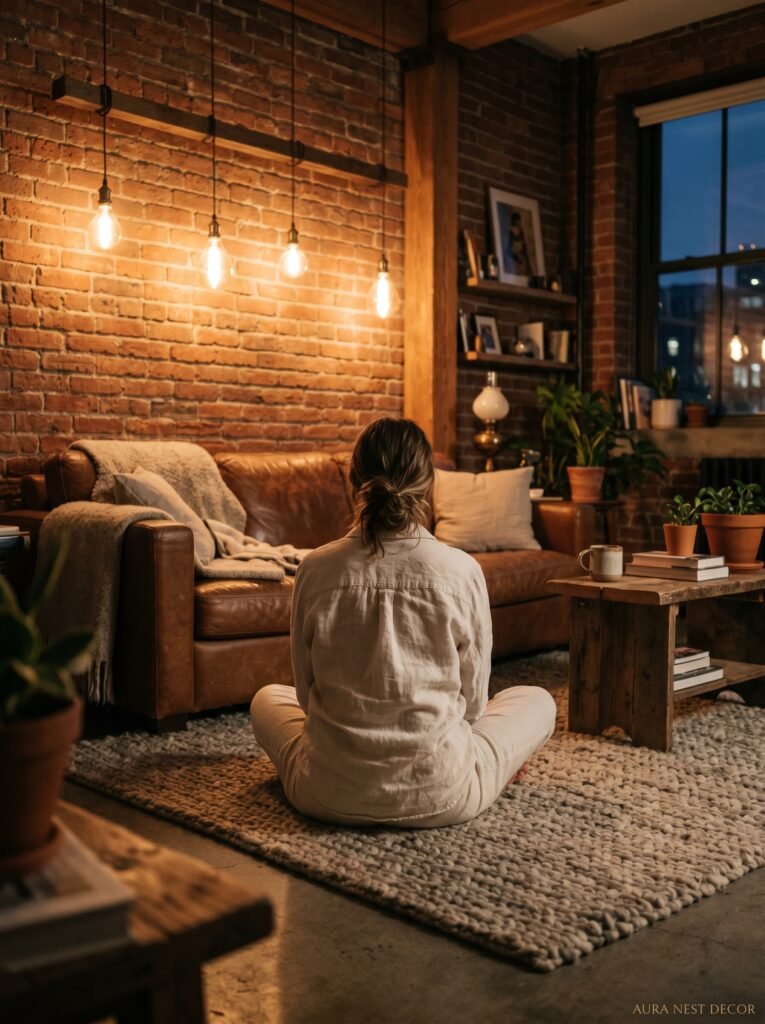
The best industrial living rooms don’t look like they were designed. They look like they happened, slowly, by someone who kept choosing things they genuinely loved. That’s probably the most useful thing to take from any of this — start with one or two pieces that feel right to you and let the room grow around them. Does anything about your current space feel like it could become something like this, or does it feel like starting from scratch?