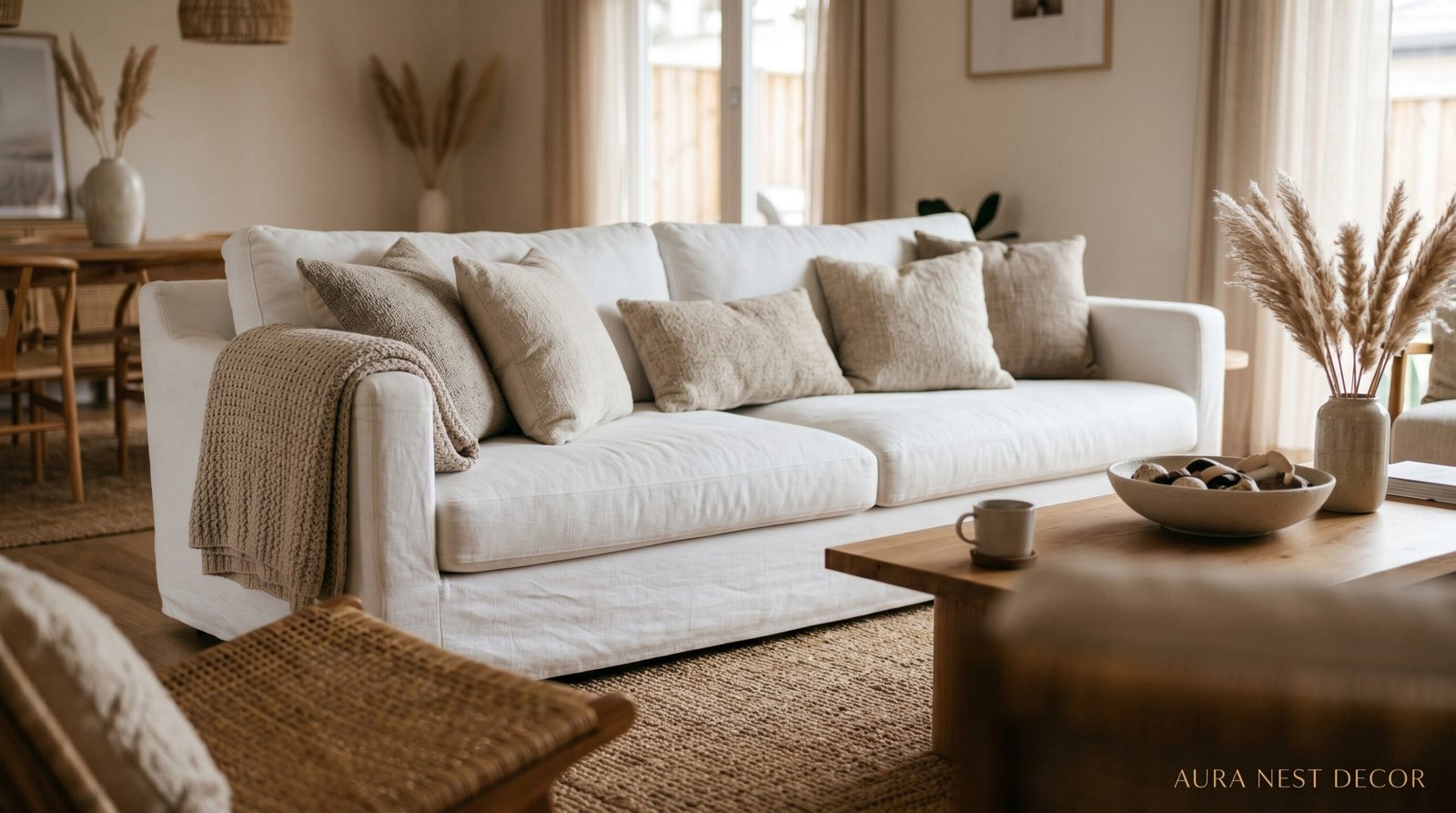
I Got a White Couch and Everyone Thought I Was Insane. Here’s What Actually Happened.
My mother called it a cry for help. My best friend said, and I quote, “you don’t have a white couch personality.” And honestly? I wasn’t sure she was wrong. But I bought it anyway — a big, cream-white, sink-into-it sofa — and my living room has never looked better. Or stayed cleaner, weirdly. More on that in a second.
—
1. Why White Couches Look So Terrifyingly Good (And Why That Fear Is Mostly in Your Head)

There’s something about a white sofa that stops you in your tracks on Pinterest. You know the feeling. You’re scrolling at 11pm and suddenly there it is — this impossibly serene living room, all soft light and pale linen, and you think I want that immediately followed by but I could never.
But here’s the thing. Most of that fear is inherited. Someone told us white furniture was impractical and we just… believed them. Passed the idea down like a family heirloom of anxiety.
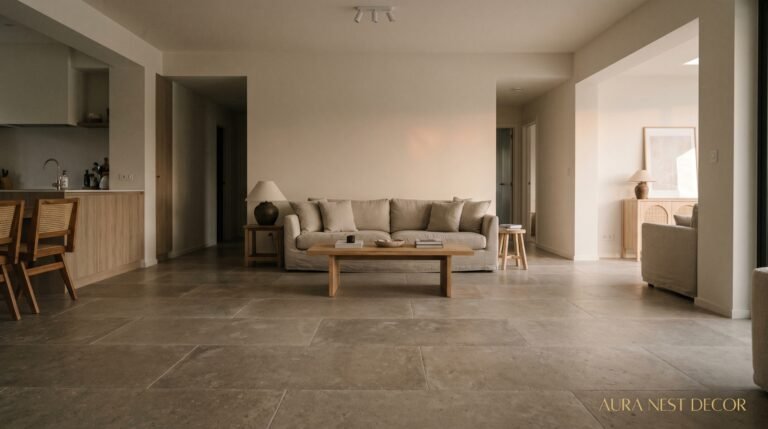
White doesn’t just reflect light — it creates light. In a north-facing British living room that gets maybe forty minutes of actual sun on a good Tuesday, a white sofa can genuinely change the whole feel of the space. It bounces what little brightness you have around the room. American homes with big open-plan living areas — same deal. White holds the whole room together without competing with anything else.
And honestly, the “impossibly pristine” look that intimidates everyone? It’s not about keeping it perfectly clean. It’s about how white forgives a slightly imperfect room in a way that, say, a dark navy velvet absolutely does not.
“A white couch doesn’t demand a perfect room. It makes an imperfect room look curated.”
—
2. The Difference Between White, Off-White, and Cream (And Why It Matters More Than You Think)
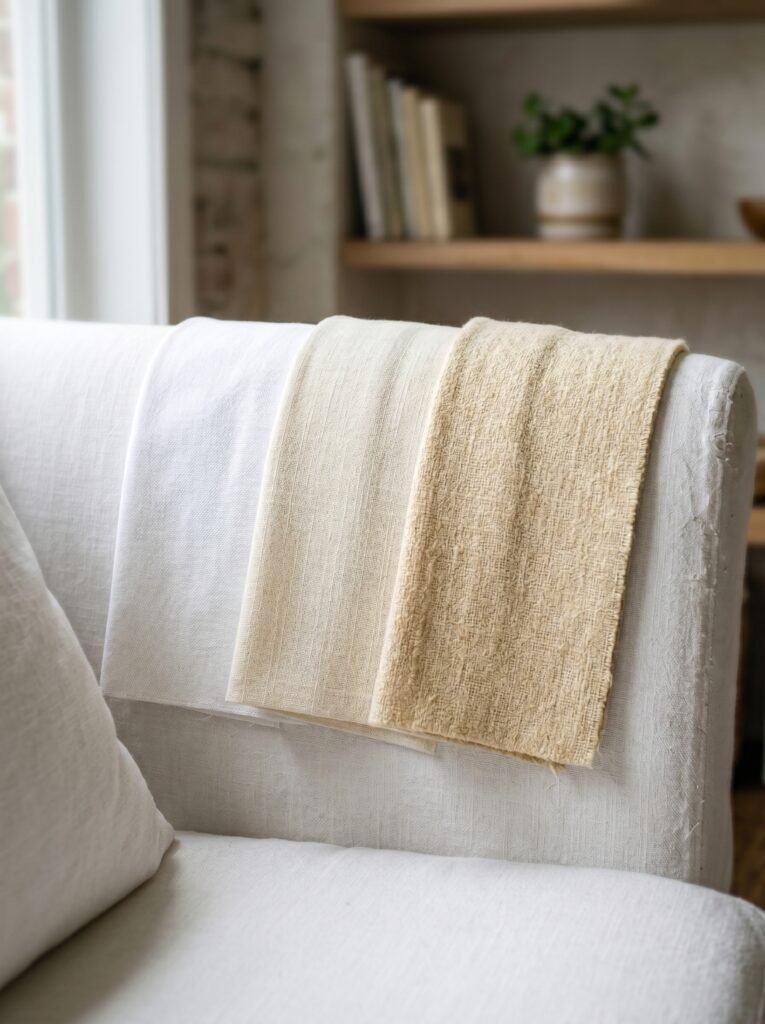
Not all white is the same. I cannot stress this enough. Getting the undertone wrong is how you end up with a sofa that looks yellow next to your grey walls, or weirdly stark against your warm oak floors.
Pure bright white — we’re talking optical white, the kind that looks almost blue — works in very specific rooms. Minimalist spaces, high ceilings, lots of natural light, modern art on the walls. If your room has warmth in it anywhere (wooden floors, terracotta accents, warm-toned rugs), pure white will clash. Not dramatically. Just… wrong. The kind of wrong you can’t quite name but definitely feel.
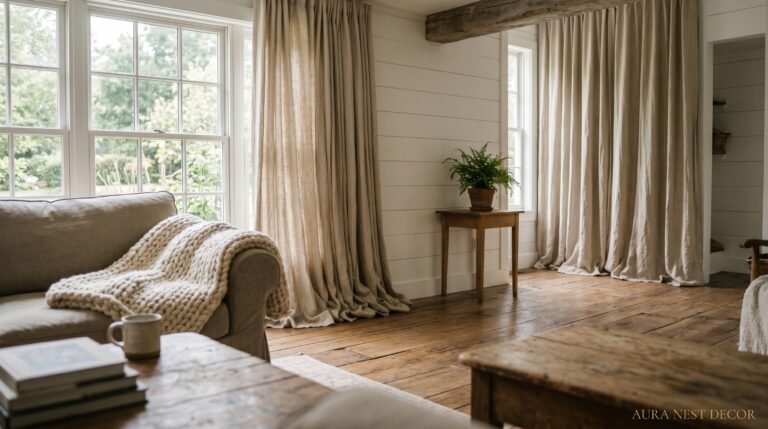
Off-white and linen tones are warmer. They sit better in most homes — traditional UK Victorian terraces, American farmhouse styles, anything with wood or natural textures. There’s a reason so many interior designers default to something like a Farrow & Ball “All White” or a warm Belgian linen sofa rather than anything truly stark.
Cream is the warmest of the three and it honestly photographs the most beautifully. There’s a softness to cream that makes a room feel lived-in and inviting, not clinical. Side note — if you’re decorating partly for your Instagram or Pinterest boards, cream photographs warmer in natural light and looks less washed-out than pure white.
So before you buy, hold fabric swatches next to your floors. Next to your wall paint. At different times of day. This is not overkill, this is just how you avoid a very expensive mistake.
—
3. The Rug That Makes or Breaks the Whole Room
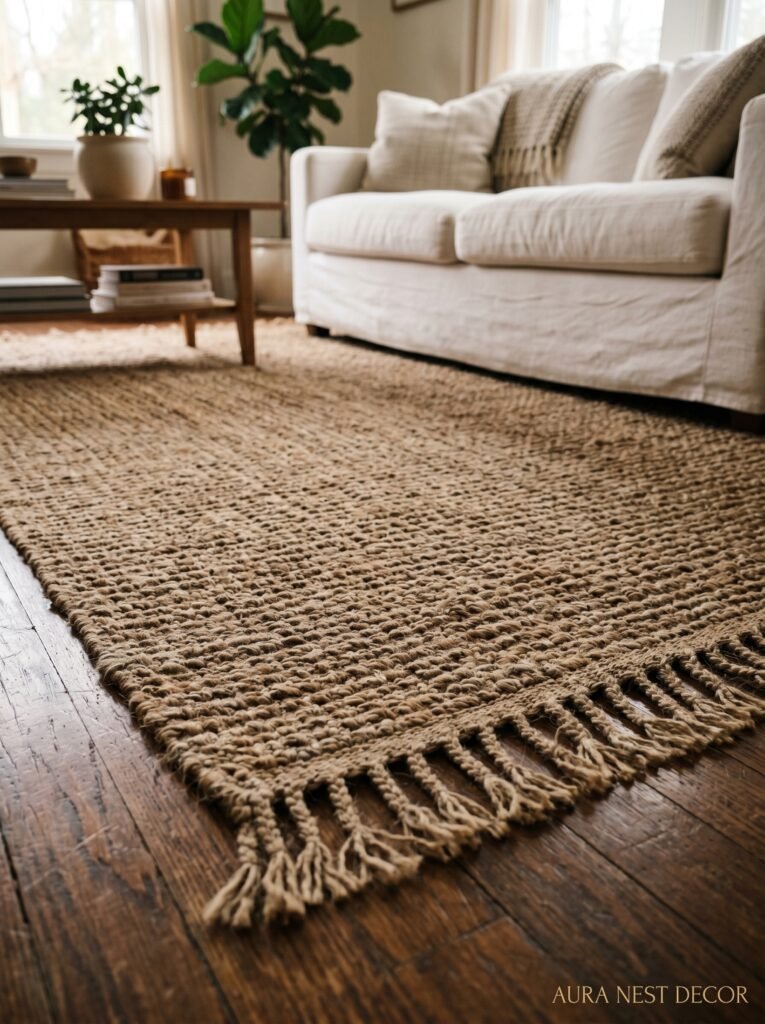
I’m going to say something controversial: the rug matters MORE than the couch cushions. Everyone obsesses over throw pillows — and yes, we’ll get there — but the rug is doing the heavy lifting in a white couch living room.
Because here’s the thing. White sits at the top of the color scale. It’s the lightest thing in your room. Everything below it — the rug, the floor — becomes the visual anchor. Get that wrong and the whole room floats.
For a white couch, you want a rug with DEPTH. Not necessarily dark, but textured, layered, warm. A flat, pale rug under a white sofa and everything just… evaporates. A Moroccan shag rug in warm ivory and grey adds dimension. A deep terracotta Persian-style rug grounds the whole space and makes the white pop in the best way. Jute and natural fiber rugs work brilliantly in that farmhouse or coastal direction.
What doesn’t work? A stark grey flatweave. Too cold, too corporate. Or anything too busy and colorful — it fights the sofa instead of framing it. The rug should feel like it belongs to the earth and the floor, while the sofa floats above it all.
—
4. Pillows Aren’t Decoration. They’re a Conversation.
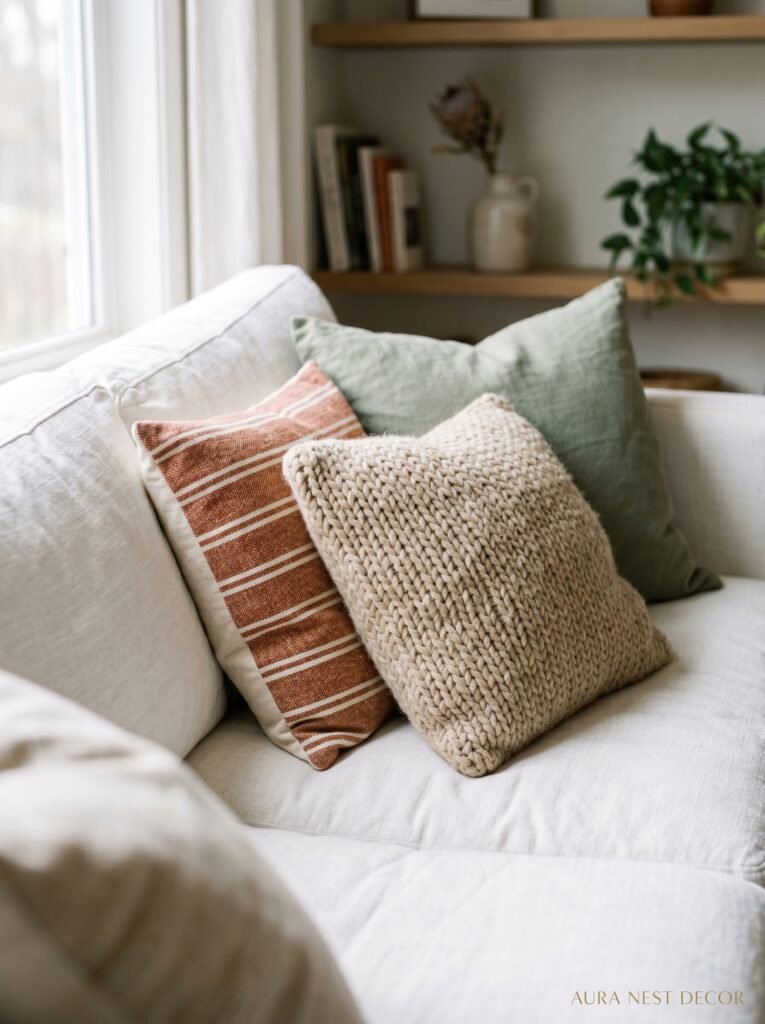
You know those living rooms where the throw pillows look like someone styled them once, photographed them, and now no one’s allowed to touch them? That’s not what we’re going for.
A white couch is a blank canvas, which is either exciting or overwhelming depending on where you’re standing. The pillow arrangement is where your personality actually shows up.
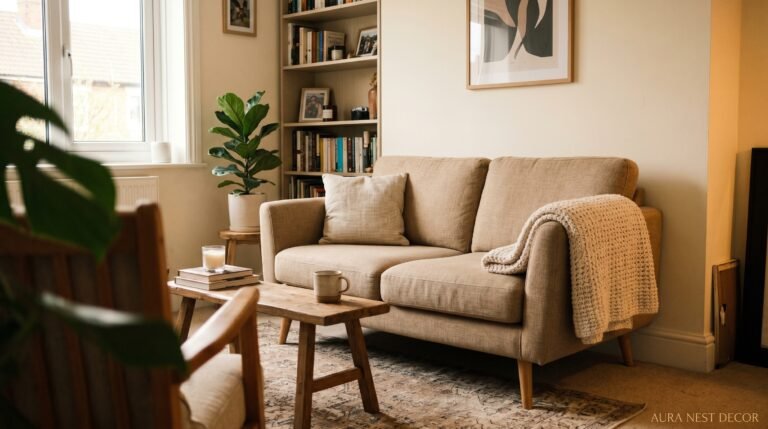
Here’s what I’ve found works: mix textures before you mix colors. A chunky knit pillow next to a smooth cotton one next to a slightly rumpled linen one — that layering of texture does most of the work for you. Then bring in color. Not too much color, and not too matchy.
The worst thing you can do is buy a “coordinated set.” Three cushions in the same color family, same size, evenly spaced. It looks like a hotel lobby. And not a good hotel.
For US homes leaning more American farmhouse or relaxed modern, I love warm naturals with ONE statement piece — maybe a rust-orange velvet cushion, or a moody dark green. Very British cozy? Go for darker, moodier tones. Midnight blue, forest green, dusty rose. Layer a throw over one arm slightly undone. It should look like someone was just there, reading.
“Don’t style your white couch. Unstyled it. That’s the difference between a showroom and a home.”
—
5. The Lighting Situation That Instantly Makes a White Couch Look Magazine-Worthy
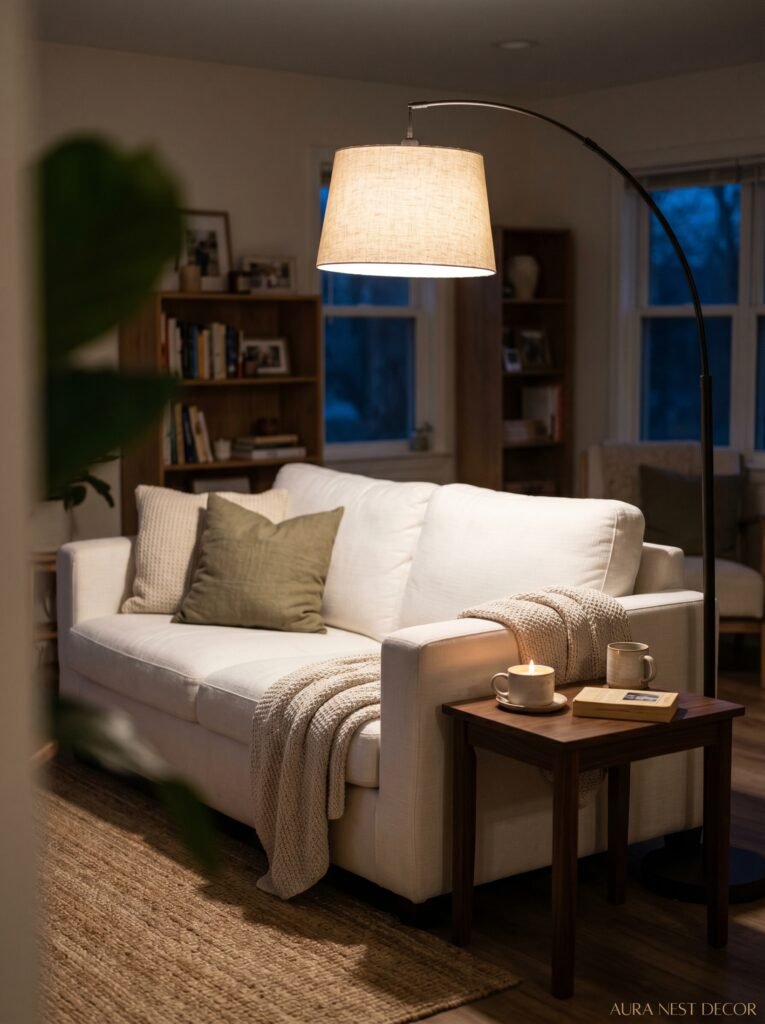
This one’s so overlooked it actually drives me a little bit crazy.
White furniture is incredibly responsive to light. It absorbs the color of whatever light hits it. Harsh, cool LED overhead lighting? Your couch looks institutional. The amber glow of a warm-toned floor lamp at 7pm? Suddenly your living room looks like it belongs in a magazine spread for a very expensive Scottish hotel.
The trick is layers. You want overhead light that you barely use in the evenings, a floor lamp or two, and ideally some candles or low table lamps. In the UK especially, we’re brilliant at this — a well-placed standard lamp next to a white sofa, warm bulb, low-slung light? Genuinely transformative. Americans tend to over-rely on ceiling fixtures and it flattens everything.
Also, position matters. A white couch placed opposite a window catches all that lovely natural light during the day. In a dark corner, it just looks dingy. Don’t put white in the shadows. Let it do what it wants to do.
—
6. The One Wall Treatment That Makes White Couches Look Intentional (Not Accidental)
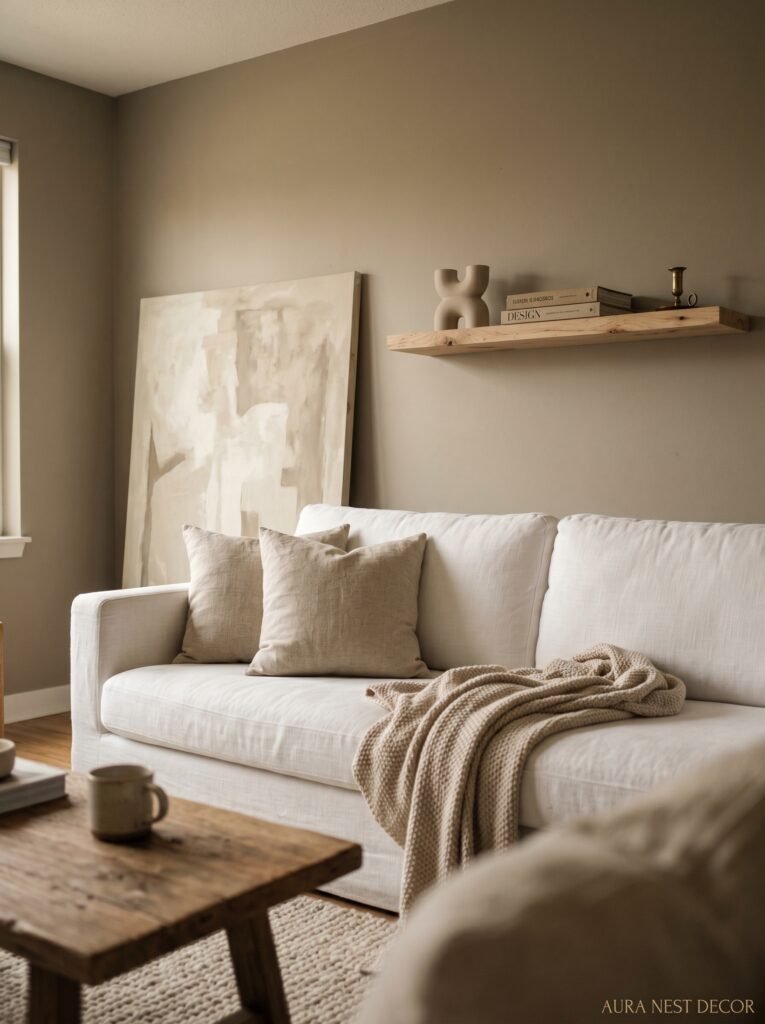
A white couch against a white wall is… fine. Kind of nothing, honestly. Everything washes out and the room reads as “we ran out of ideas” rather than “we made a deliberate choice.”
The wall behind or around your sofa is doing a LOT of work. And here’s the move: go darker or more textured than you think you should.
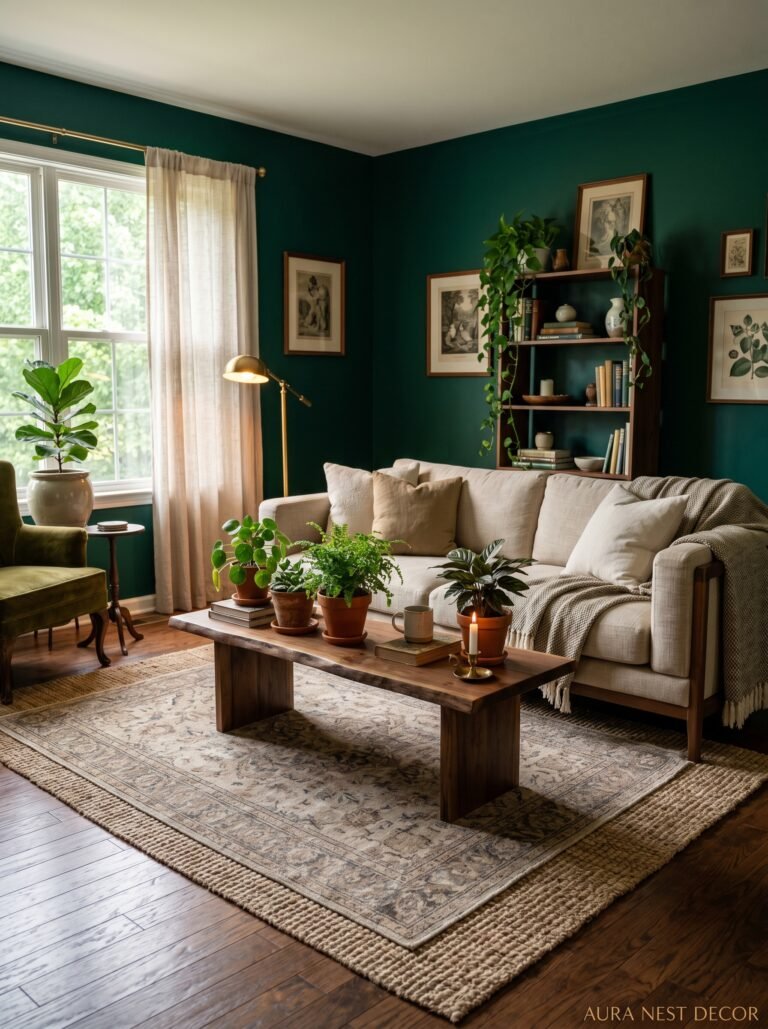
A deep sage green wall with a white sofa in front? Stunning. Proper, Instagram-worthy stunning. A warm terracotta or clay wall tone? Same. Even a soft warm grey — not cold blue-grey, warm greige — gives the white sofa something to pop against.
Wallpaper works brilliantly here too. A linen-textured wallpaper in a muted tone, a subtle botanical print, even a faded vintage-looking stripe. In British homes, this feels incredibly natural — we’ve been layering patterned wallpaper with statement furniture for centuries. American maximalist design is leaning back into this too, and it’s about time.
The other option is a gallery wall. Done right — mismatched frames, a mix of art and mirrors, slightly asymmetrical — it gives the white sofa a rich, curated backdrop that makes the whole room feel collected and personal.
—
7. What Actually Goes on the Coffee Table (Without Looking Like a Set Dressing Department)
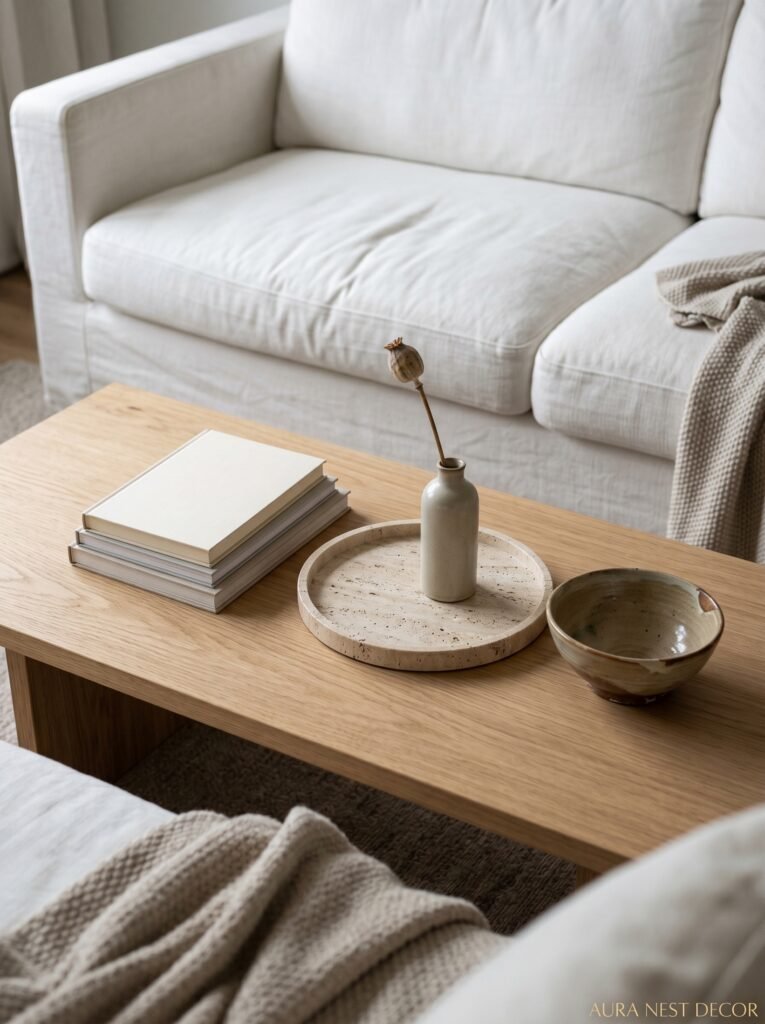
The coffee table situation in a white couch living room is where people get precious and it goes sideways.
You’ve seen the hyper-styled tables — the artfully stacked coffee table books, the sculptural vase, the single sprig of eucalyptus, the candle that’s never been lit. It looks gorgeous in a photo. In real life it looks like you’re trying too hard and also no one’s allowed to put their tea down.
Real coffee table styling has a lived-in quality. Yes, have a couple of good books — ones you’ve actually read, not just bought for their spines, although honestly no judgment. A small tray corrals the bits and bobs and makes them look intentional. A candle that’s clearly been burned. Maybe a bowl that sometimes has fruit in it and sometimes has your TV remote and your hand cream.
The scale matters too. A coffee table that’s too small in front of a big white sofa looks nervous. Go bigger than you think. Round tables soften the whole arrangement if you’ve got a lot of straight lines. Rattan or wood adds warmth; white-on-white tables look sleek but cold.
“Your coffee table should look like you live there. Because you do.”
—
8. The Color That Keeps Showing Up in Every Beautiful White Couch Living Room Right Now
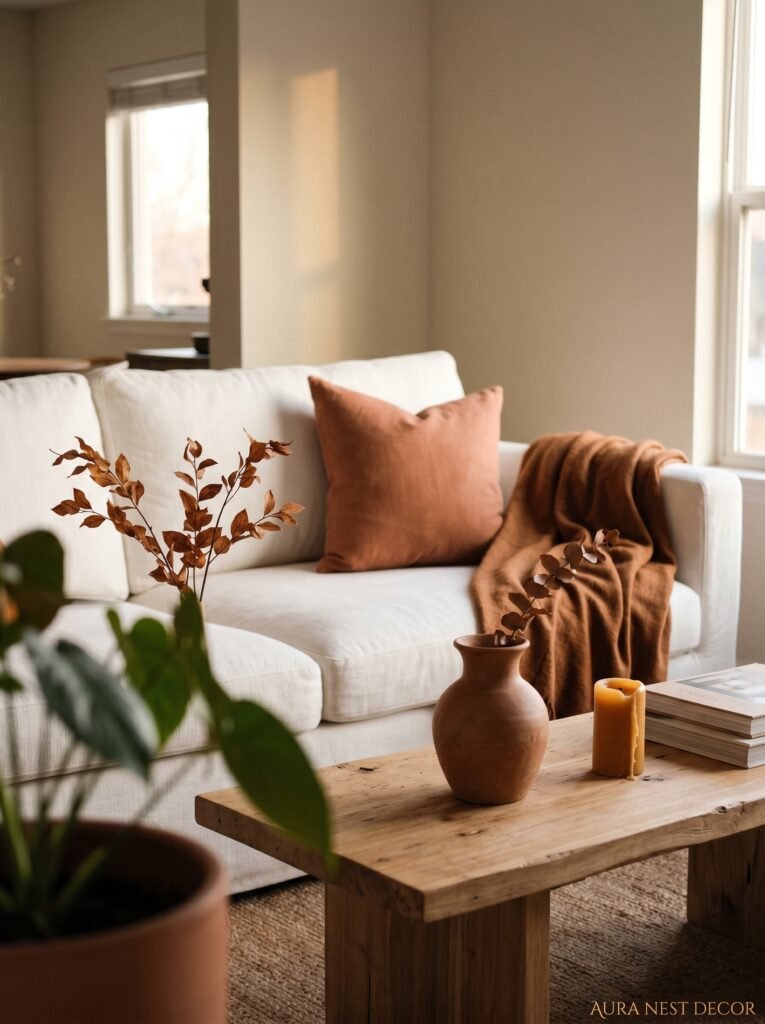
If you’ve spent any time on Pinterest lately — or on interior design accounts on Instagram, or flipping through Living Etc or House Beautiful — you’ll have noticed something. There’s a color that keeps appearing next to white sofas right now and it’s not grey. It’s not beige. It’s not the expected neutral.
It’s warm rust. Terracotta. That earthy orange-red that design people kept calling “the color of the moment” two years ago and that has absolutely refused to stop being relevant.
Rust makes white sing. There’s something about the contrast — cool, pale white next to that warm, earthy red-orange — that just works on a primal level. A rust-colored throw. A terracotta lamp base. Some amber glassware catching the light on a shelf. These small additions pull the whole white couch room into something that feels genuinely current and also somehow timeless.
It works in both the American living room context and the British one. A Scandi-influenced open plan with clean lines and rust accents. A cozy English cottage room with a white sofa piled with earthy cushions. Both feel good. Really good.
Don’t sleep on warm green either — olive, hunter, deep sage. But terracotta is having a moment and I’m not tired of it yet.
—
9. Small White Couch Living Rooms: The One Rule That Makes Them Look Intentional
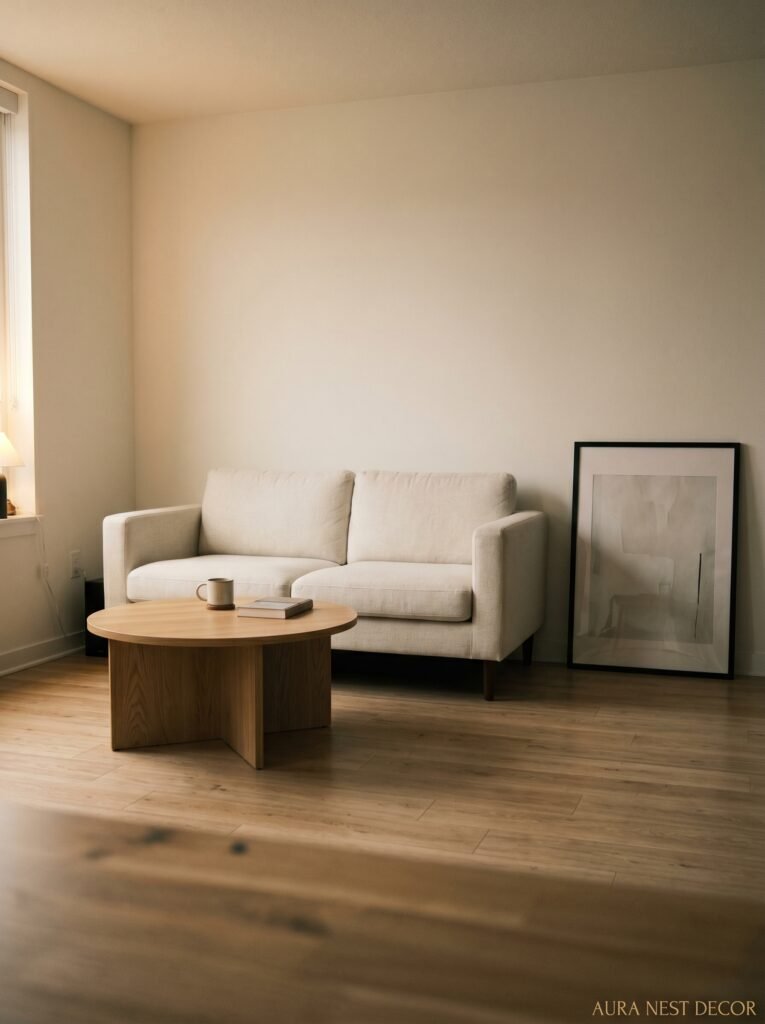
Small rooms and white couches have a relationship that’s actually really good, if you play it right.
The rule is this: go BIGGER on the sofa than you think you should. I know. It feels backwards. But cramming a tiny loveseat into a small room to “save space” just makes the room look apologetic. A proper-sized white sofa that takes up most of one wall looks confident. Like you made a choice. Like you meant it.
Pair that with legs on the sofa — raised legs rather than a to-the-floor skirt — so you can see the floor underneath, which visually expands the space. Keep the rest of the furniture lighter and lower. A glass or acrylic coffee table. Floating shelves instead of a big bookcase. Mirrors — especially a large one leaning against the wall — do an almost embarrassingly good job of making a small room feel twice its size.
In UK terraced houses with small, narrow front rooms, this approach genuinely transforms the space. In American apartments where the living room is basically also the dining room and the office, same principle applies. Commit to the white sofa. Don’t shrink around it.
—
10. How to Actually Keep It Clean (Because I Know You’re Wondering)

Okay. Let’s be real about this.
A white couch WILL get dirty. Something will spill, someone will sit on it in jeans with a belt buckle, a dog will find it immediately. This is not a matter of if, it’s when.
So here’s what actually works, from someone who’s been living with one for over a year now.
First: performance fabric. This changed everything for me. There are sofas now — Bouclé-look fabrics, linen-look fabrics — that are made with a stain-resistant treatment that genuinely works. You wipe them down. They dry. The horror stories about white couches come largely from people who bought 100% untreated cotton or silk. Don’t do that.
Second: removable covers. If you’re buying a sofa with fixed upholstery, you’re making this harder than it needs to be. A slipcovered sofa means you can actually wash the thing. IKEA’s Söderhamn and Kivik ranges, both hugely popular on both sides of the Atlantic, have washable covers. This is the move.
Third: a good fabric protector spray. Apply it when the sofa is new. Reapply every few months. It’s not glamorous but it works.
Fourth — and this one’s genuinely underrated — a throw blanket draped over the main seating area. Not for decoration, but as a first line of defense. You can wash a throw in five minutes.
—
11. The Plants That Look Best Against a White Sofa (And the Ones That Don’t)
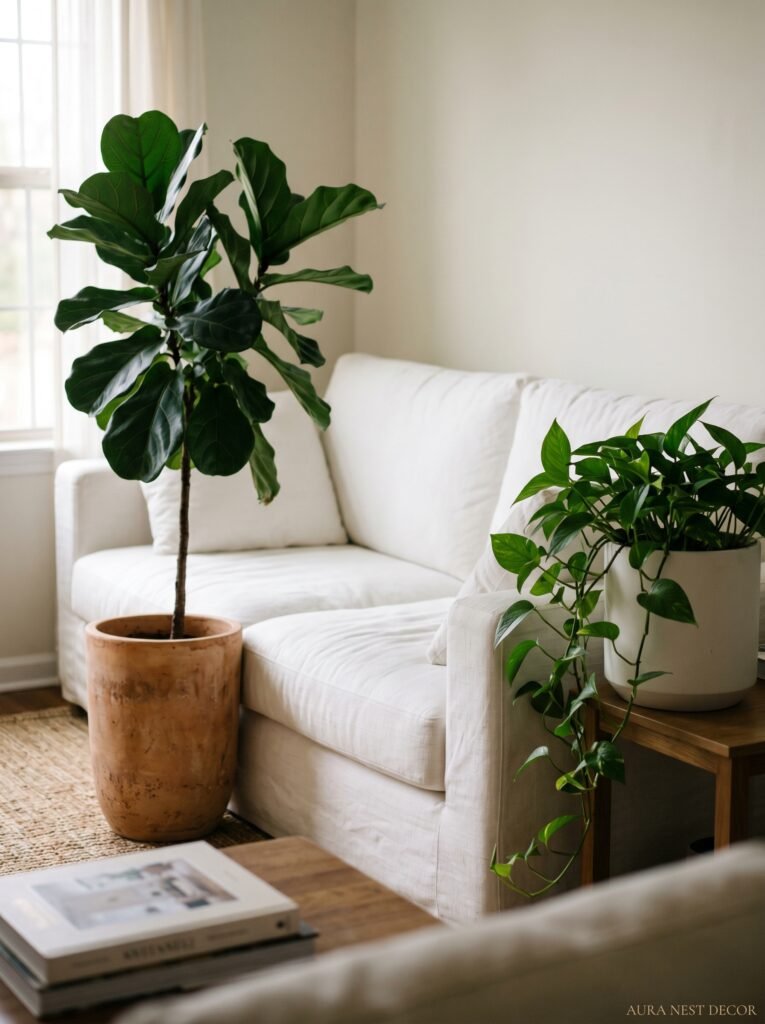
This is a shorter one but I want to say it because I see the same mistakes over and over.
Trailing plants and large leafy plants look INCREDIBLE near a white sofa. A big Monstera in the corner? Chef’s kiss. A trailing Pothos on a shelf above the sofa? Yes. The green-against-white contrast is perfect — fresh, natural, a little bit Scandinavian in the best way.
Succulents and small cacti on the coffee table? They’re fine, but they’re a bit lost. Too small, too contained. They don’t do enough for the space.
Dried pampas grass or dried florals — very popular right now in both US and UK interiors — bring in that warm, neutral, textural quality that a white couch room often needs more of. A tall dried arrangement in a terracotta or stone-colored vase next to the sofa? That’s the kind of detail that makes a room look designed rather than just decorated.
And fake plants — look, you know your life. If you kill everything green, a really good quality faux Monstera or faux Eucalyptus is a thousand times better than no plant at all. The design world is largely over judging you for this, and so am I.
—
12. The Styling Detail Everyone Forgets That Pulls the Whole Room Together
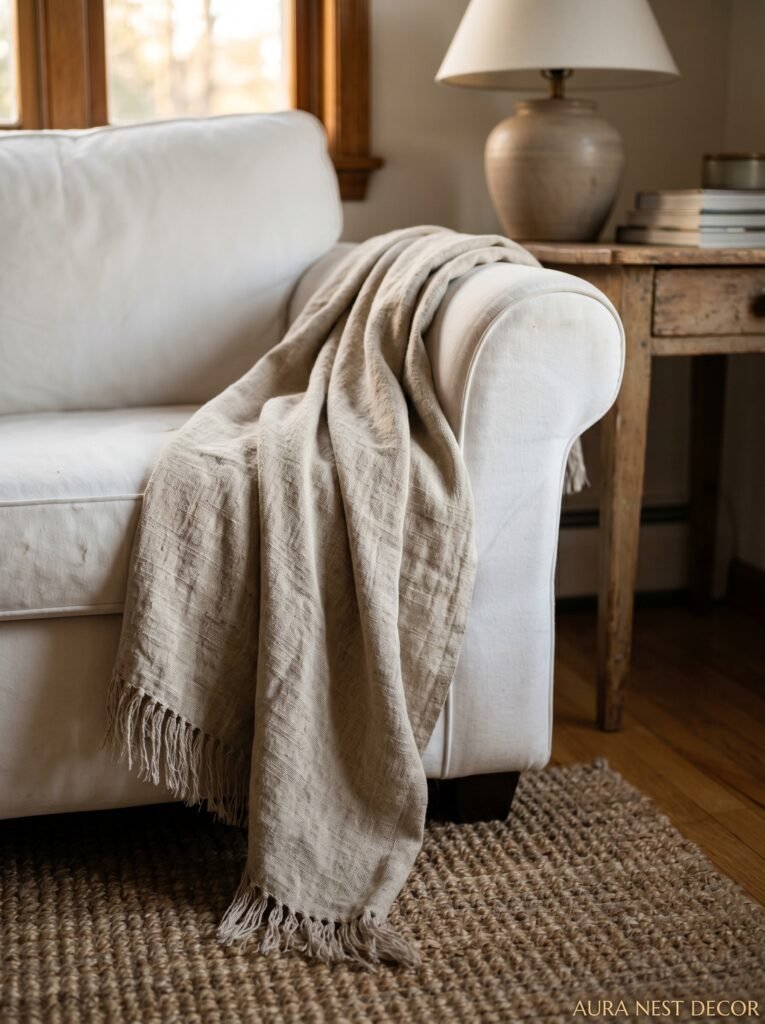
After all the sofas and rugs and rugs and throw pillows and lighting — there’s one thing that ties a white couch living room together that almost no one talks about.
The skirting boards and trim.
Hear me out. In a room with a white sofa, your eye travels. And what it finds at the edges of the room — the trim, the baseboards, the architrave around the door — either harmonizes with the white or quietly undermines it. Bright white gloss trim next to a warm cream sofa creates a jarring temperature mismatch. It makes your sofa look yellow and your trim look harsh.
Paint your trim and your sofa in the same color family. If your sofa is warm white, paint the trim in something equally warm — an aged white, a pale warm grey, a soft linen tone. In British homes where the original Victorian coving and skirting is often very present and very beautiful, this matters even more. Let the architecture and the furniture speak the same language.
It’s a small thing. But it’s the difference between a room that looks accidentally put together and one that looks like someone thought it through.
—
❓ FAQ
Q: Is a white couch practical if you have kids or pets? A: It can be, genuinely. The key is choosing performance fabric or a slipcovered sofa with washable covers. A lot of modern sofas are built exactly for this — look for terms like “stain-resistant,” “bouclé weave,” or “washable slipcover.” It’s not the death wish it used to be. Pair it with a blanket over the main seating area and you’re mostly fine.
Q: What color walls work best with a white sofa? A: Warm, deeper tones work better than you’d expect — sage green, terracotta, warm greige, even a soft charcoal. A white sofa against a white wall can look flat and unintentional. Give the sofa something to stand against and it’ll look a hundred times more considered.
Q: Should my white couch be bright white or more of a cream? A: That depends entirely on your room’s undertones. Warm floors, warm woods, earthy colors — go cream or off-white. A more modern, cool-toned room can handle brighter white. Hold swatches in your actual space at different times of day before committing. This matters more than most people realize, and it’s so easy to check before you buy.
—
💭 Final Thoughts

Buying a white sofa is a little bit of a declaration. It says you’re not decorating around fear. It says you’ve decided to live in the room, not protect it. And once you’ve made that decision — once the sofa is in and the light is hitting it right and your ridiculous rust-colored throw is draped just so — you’ll wonder what you were ever worried about.
My friend who said I didn’t have a white couch personality? She’s asked me twice now where I bought it.
What’s actually stopping you from just going for it?