The Sofa That Finally Made My Tiny Living Room Feel Like Enough
You walk in, scan the room, and immediately feel it — that low-grade panic that your space is just too small to be beautiful. I used to feel it every single time. Then I changed one thing, and honestly, everything shifted.
—
1. Why Most Small-Room Sofa Advice Is Actually Making Things Worse
Here’s what nobody tells you: the furniture industry doesn’t really design for small spaces. It designs for aspirational spaces — those open-plan, sunlit living rooms you see in catalogs where the sofa is more of a statement than a seat. And so when you type “sofa for small living room” into Google, you get a list of the same generic advice — get something light-colored, get something with legs, keep it small. Sure. Fine. But that advice treats your room like a problem to solve instead of a space to love.
The thing is, a small living room can be genuinely gorgeous. Not “cozy for its size” gorgeous. Just gorgeous, full stop. But you can’t get there by following rules designed for rooms twice as big and then scaled down. You need to think differently about what a sofa is actually doing in your space.
Because it’s not just a place to sit. It’s the emotional anchor of the whole room. It sets the tone. Get it wrong and nothing else you do — the throw pillows, the rug, the careful little gallery wall — will save it. Get it right and suddenly everything clicks.
—
2. The Sofa Depth Nobody Talks About (But Everyone Should)
Let me ask you something. Have you ever sat down on a sofa and felt like you were going to slide right off it? Or the opposite — sunk so far back that getting up again felt like a workout?
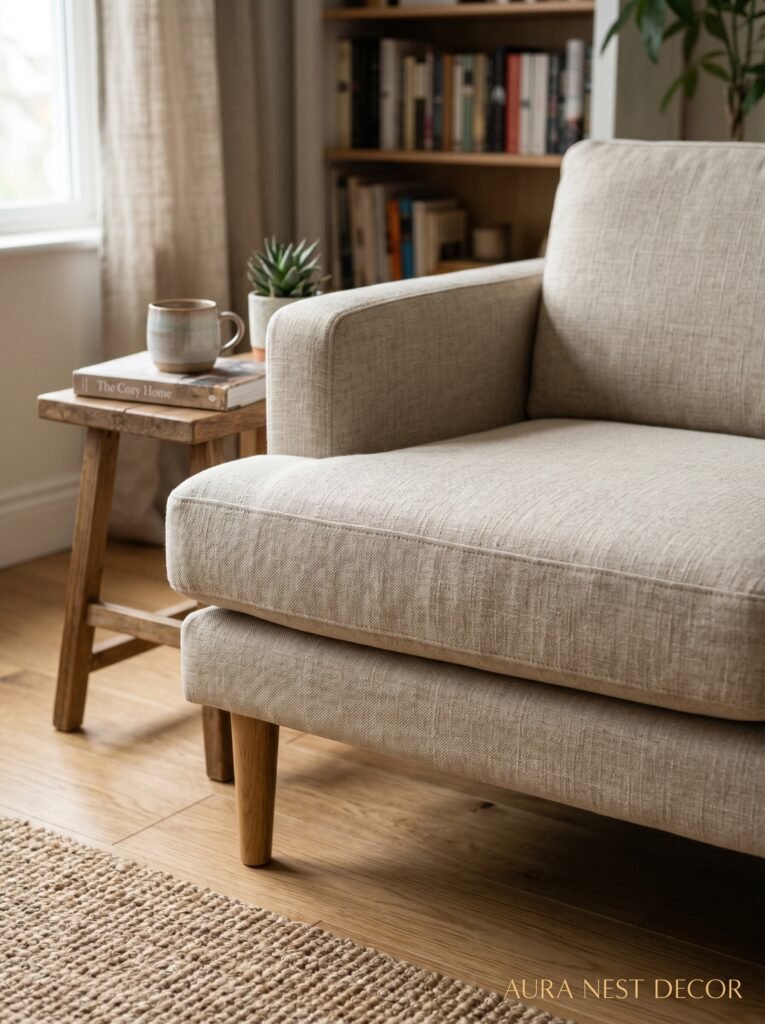
Depth is the most underestimated measurement when it comes to sofas, especially in small rooms. Most people obsess over length (totally fair, I get it), but depth — how far front-to-back the seat cushion goes — can make or break a small living room layout. A super-deep sofa isn’t just a bad visual choice for a tight room, it literally eats the floor. You lose walking space, the room feels cramped, and everything gets a bit claustrophobic.
For small rooms, I’d aim for a sofa with a seat depth somewhere around 20 to 22 inches. It sounds like a small thing. It’s not. That’s the range where most people actually sit well — not perching, not sinking — and it keeps the room breathing. Anything over 24 or 25 inches in a really compact space starts to feel like the sofa is quietly bullying everything else out of its way.
British Victorian terrace living rooms, I’m looking at you specifically. That’s often a long-and-narrow problem, not a small-and-square one, and a deep sofa placed lengthwise in a long narrow room will make the whole thing feel like a hallway. So before you fall in love with something at a showroom, measure twice. Then measure again.
—
3. The Color That Actually Makes a Small Room Look Bigger (It’s Not White)
Everyone says white or cream. And look, it’s not wrong advice. But it’s also not the ONLY answer, and it’s kind of boring. Also — cream sofas with kids or dogs? Come on.
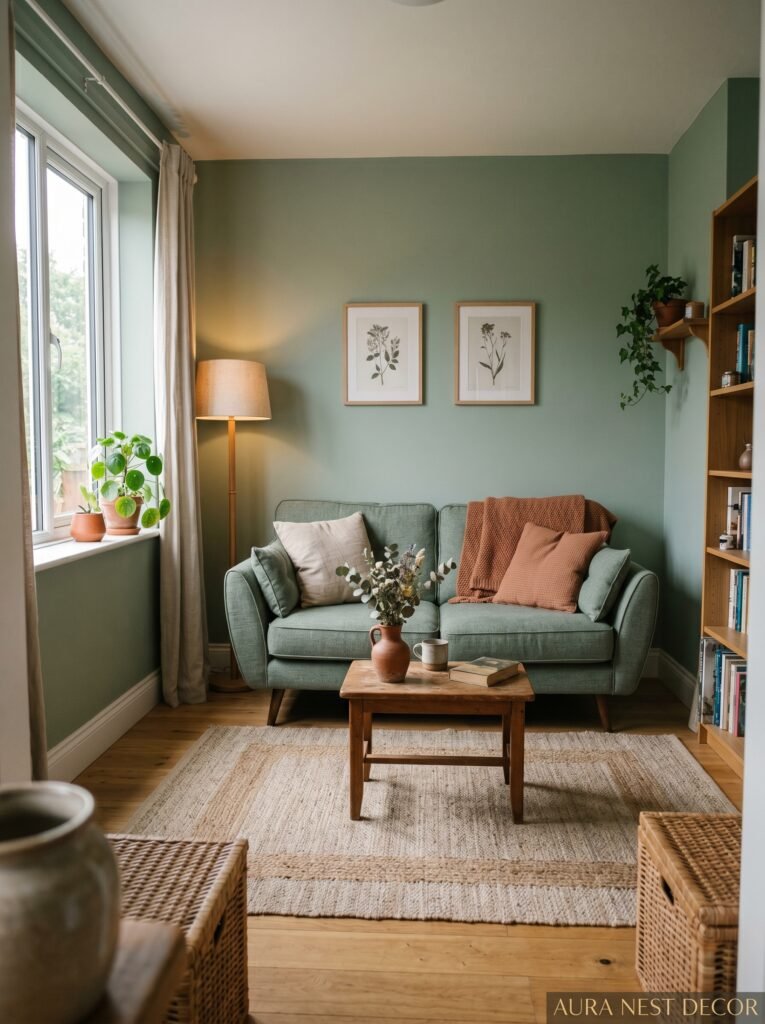
Here’s what I’ve noticed browsing thousands of small-room interiors: a sofa in a medium-deep, dusty, slightly muted tone often does more for the room than a pale one. Think dusty rose, slate blue, sage green, mushroom. These colors are close to what interior designers call “retreating” shades — they don’t aggressively grab your eye, they settle into the room. They make the sofa feel like it belongs there, rather than like a piece of furniture you’re squeezing in.
White and cream sofas tend to pop out visually. Which in a bigger room reads as a focal point. In a tiny room it sometimes just reads as… large. A sofa that blends into a considered color palette can actually appear smaller, because your brain isn’t latching onto the contrast.
Side note — I had a dusty teal sofa in a 12-foot square room for three years and every single person who came over said the room felt spacious. It wasn’t. It was definitely not spacious. But it felt intentional, which I think tricks people into thinking there’s more room to breathe.
—
4. Why Sofa Legs Are Kind of a Magic Trick
This one is genuinely, almost embarrassingly, effective.
“The six inches of air beneath a sofa does more visual work than any throw pillow ever could.”
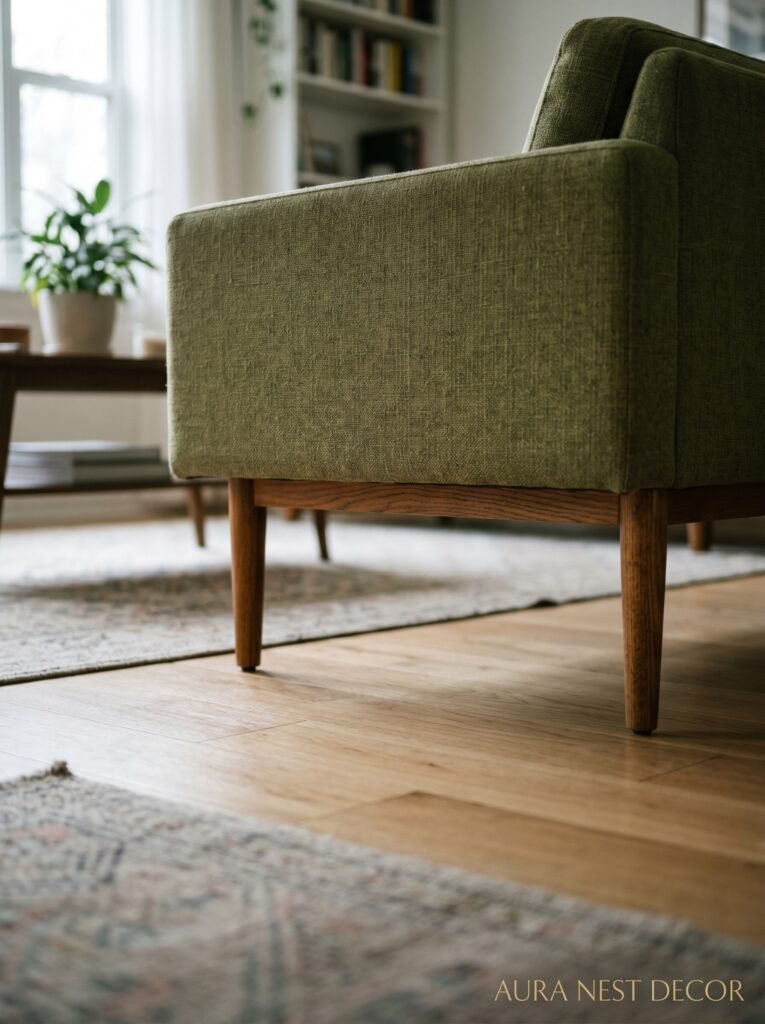
Exposed sofa legs — slender ones, mid-century-style ones, anything that creates a gap between the bottom of the sofa and the floor — let your eye travel underneath the furniture. And when your eye can travel, the room feels continuous. It doesn’t feel cut off or blocked. The floor reads as a single uninterrupted surface and that is such a simple way to make a small room feel bigger.
A sofa that sits flat on the floor, or with a box-style base that hides any daylight underneath, essentially creates a visual wall. Fine in a big room where you’ve got space to spare. In a small room it can feel like the furniture is dividing your limited square footage into even smaller chunks.
Natural wood legs or slim metal legs in black or brass are having a major moment right now, honestly. And the practical bonus: it’s so much easier to vacuum under a sofa with legs. I know that’s not a glamorous point but you’ll thank me in February.
—
5. The Two-Seater vs. Three-Seater Argument Nobody Wins
I’ve had this conversation with approximately a hundred friends and I still don’t have a tidy answer.
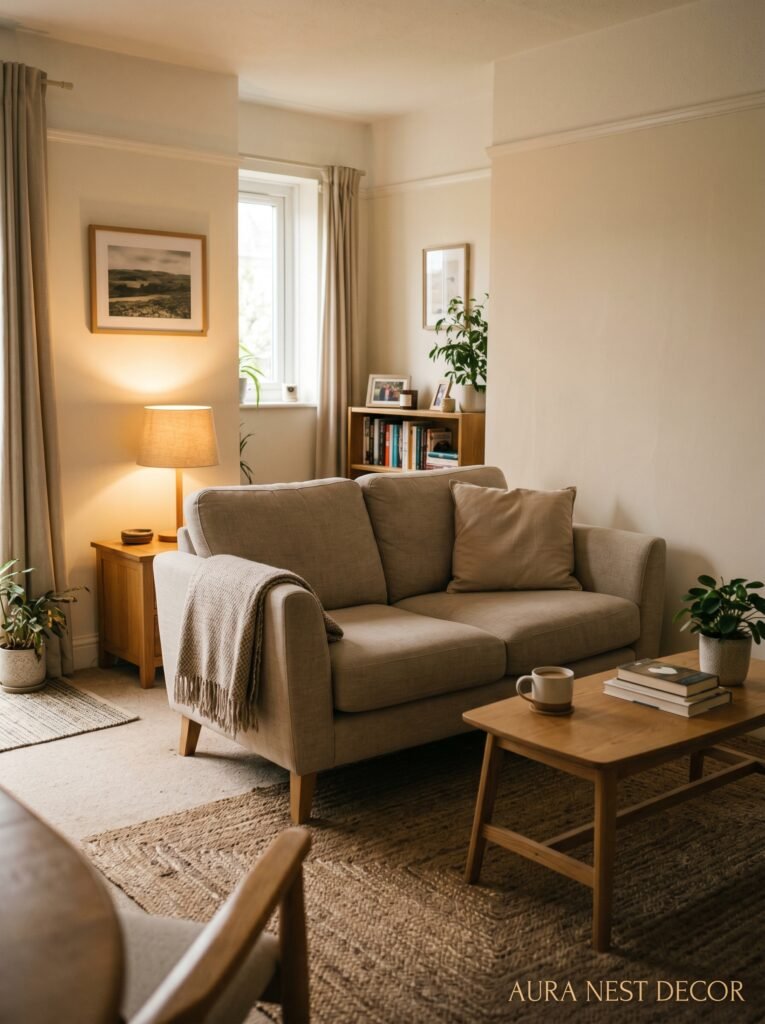
The kneejerk instinct is to go smaller — get the two-seater, keep the room open. And sometimes that’s right. But sometimes a two-seater in a room that needs a three-seater just creates a different kind of imbalance. The sofa looks like it shrank in the wash. The room feels slightly off, like something’s missing even if you can’t put your finger on it.
For most American living rooms I’d say the “small” category starts under about 120 square feet. In that range, a three-seater can absolutely work if it’s scaled right — meaning, not too deep, not ridiculously boxy. For UK living rooms, especially those older terrace conversions where the front room is genuinely tiny — like, 90 to 100 square feet — a two-seater with a thoughtfully chosen chair can actually give you MORE flexibility than a three-seater would.
So the answer is: measure your room, sketch it out (there are free room-planner tools online), and see what the dimensions genuinely support. Don’t just go smaller out of fear. Sometimes a slightly bigger sofa that’s perfectly proportioned makes the room feel MORE considered, not less.
—
6. The One Rule About Sofa Arms That Every Small-Space Blog Skips
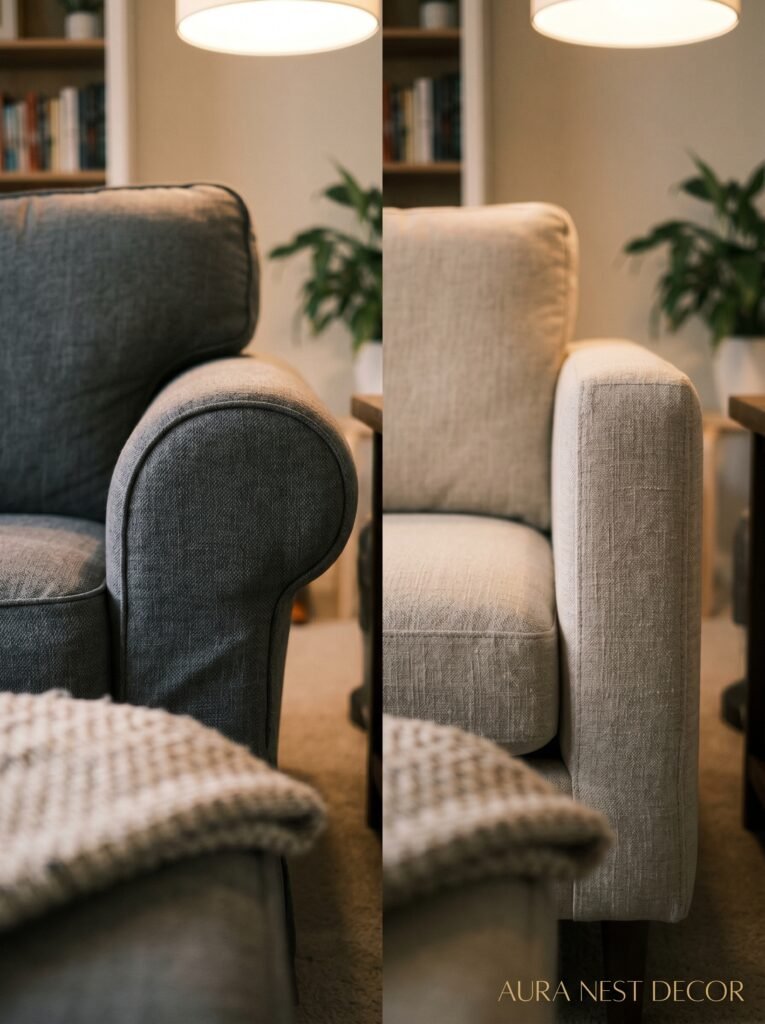
I’m kind of obsessed with sofa arms and I’ll tell you why. Low, wide, rolled arms are beautiful. They read as classic and a bit luxurious. They are also, in a small room, space thieves.
Wide rolled arms can add five or six inches to the visual width of a sofa on each side. That’s half a foot, sometimes more, that’s basically decorative. In a large room that’s fine, it’s charming, it reads as intentional. In a small room you’re giving up precious length for arms nobody’s really using.
Low-profile arms — often seen on mid-century designs, on track-arm sofas, on more contemporary shapes — keep the overall footprint tight. The sofa looks sleek, it doesn’t visually crowd the room, and those few inches genuinely add up. I once swapped a rolled-arm two-seater for a track-arm version at almost the same seat length and the room looked like I’d knocked a wall out. I didn’t. I just lost the puffy arms.
Also, if you’re in the UK and you’re browsing sofas from British retailers like John Lewis or Habitat or even IKEA, do check the arm height too. High, square arms can make a smaller sofa feel more imposing than the actual dimensions suggest. Low and narrow is almost always the better call for compact rooms.
—
7. Placing It Against the Wall Is the Obvious Move. Don’t Do It.
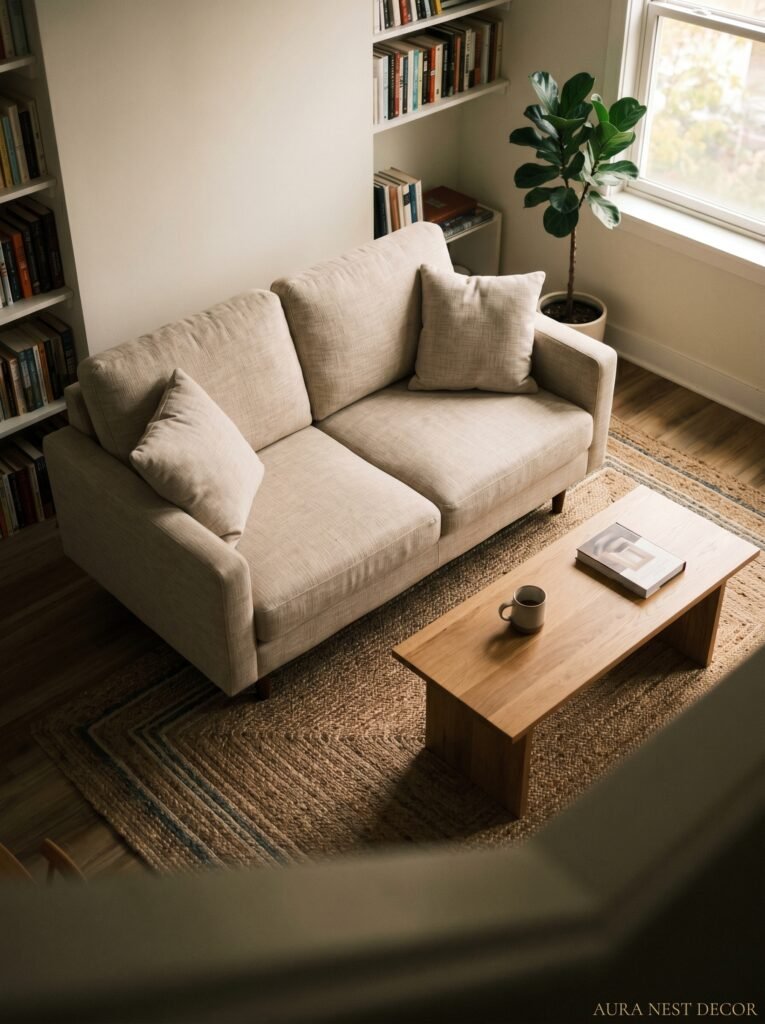
“Pushing furniture to the walls doesn’t make a room bigger. It makes it feel like a waiting room.”
I know. I KNOW it feels counterintuitive. You’ve got a small room, you want to maximize the floor space, so everything goes to the edges. But here’s the thing — a sofa floating slightly away from the wall, even if it’s just 3 or 4 inches, creates depth in the room. It gives the impression that the space extends behind the furniture. Your brain registers that as more room.
Plus, a sofa placed even a little bit away from the wall gives you a place to tuck a very slim console table behind it. Suddenly you’ve got a surface for a lamp or a plant, and the sofa looks styled rather than shoved.
For smaller American living rooms with a TV wall, floating the sofa 4 to 6 inches from the wall it backs up to, and anchoring it on a rug, does something genuinely remarkable to how the room reads. It feels designed. Not just arranged.
In smaller UK rooms where you literally cannot pull the sofa out at all, even pushing it to the wall but pulling the front legs onto a rug helps a lot. The rug does some of that visual work of separating the sofa from the perimeter.
—
8. The Specific Sofa Styles That Keep Showing Up in the Best Small Living Rooms
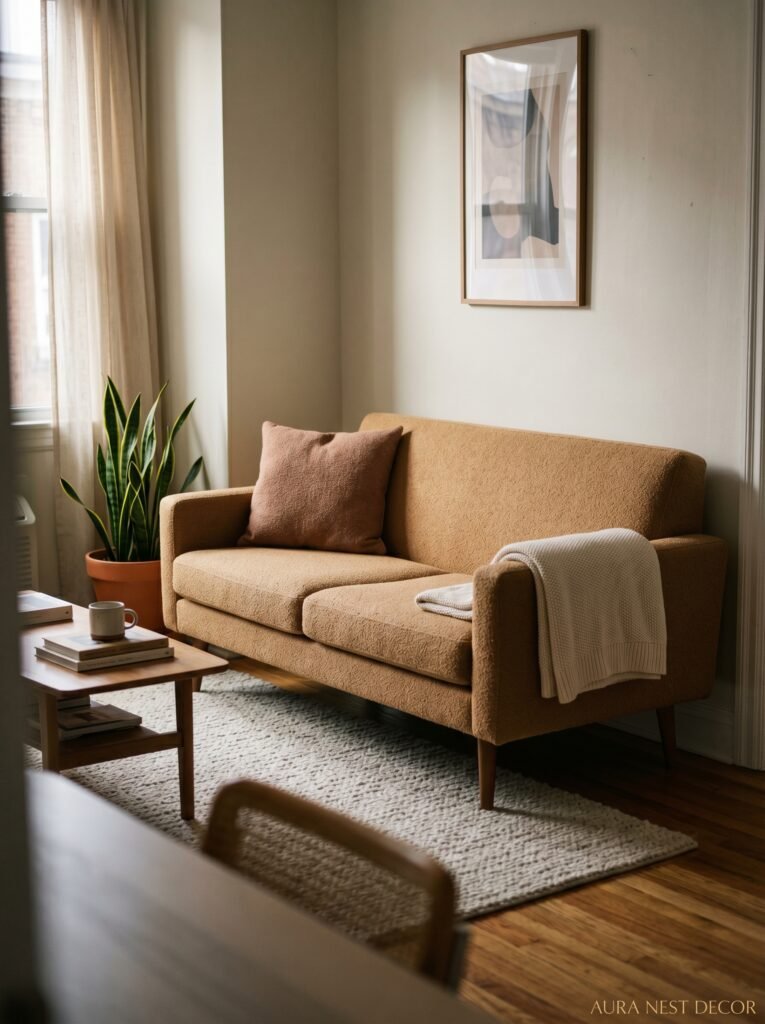
Not gonna pretend there’s only one answer here, but there are a few shapes that come up again and again for a reason.
The classic two-seater Chesterfield, but in a smaller-scale version — under 70 inches wide — is weirdly great in small rooms because the tufted back and rolled arms give so much visual richness that the room feels full without being stuffed. It’s a lot of personality in a small package.
Apartment-sized sectionals. Yes, sectionals in small rooms. But specifically L-shaped ones with a shorter chase, designed for under 200 square feet. Done right, these define the seating zone in a way that makes the small room feel like a deliberate layout rather than an accident.
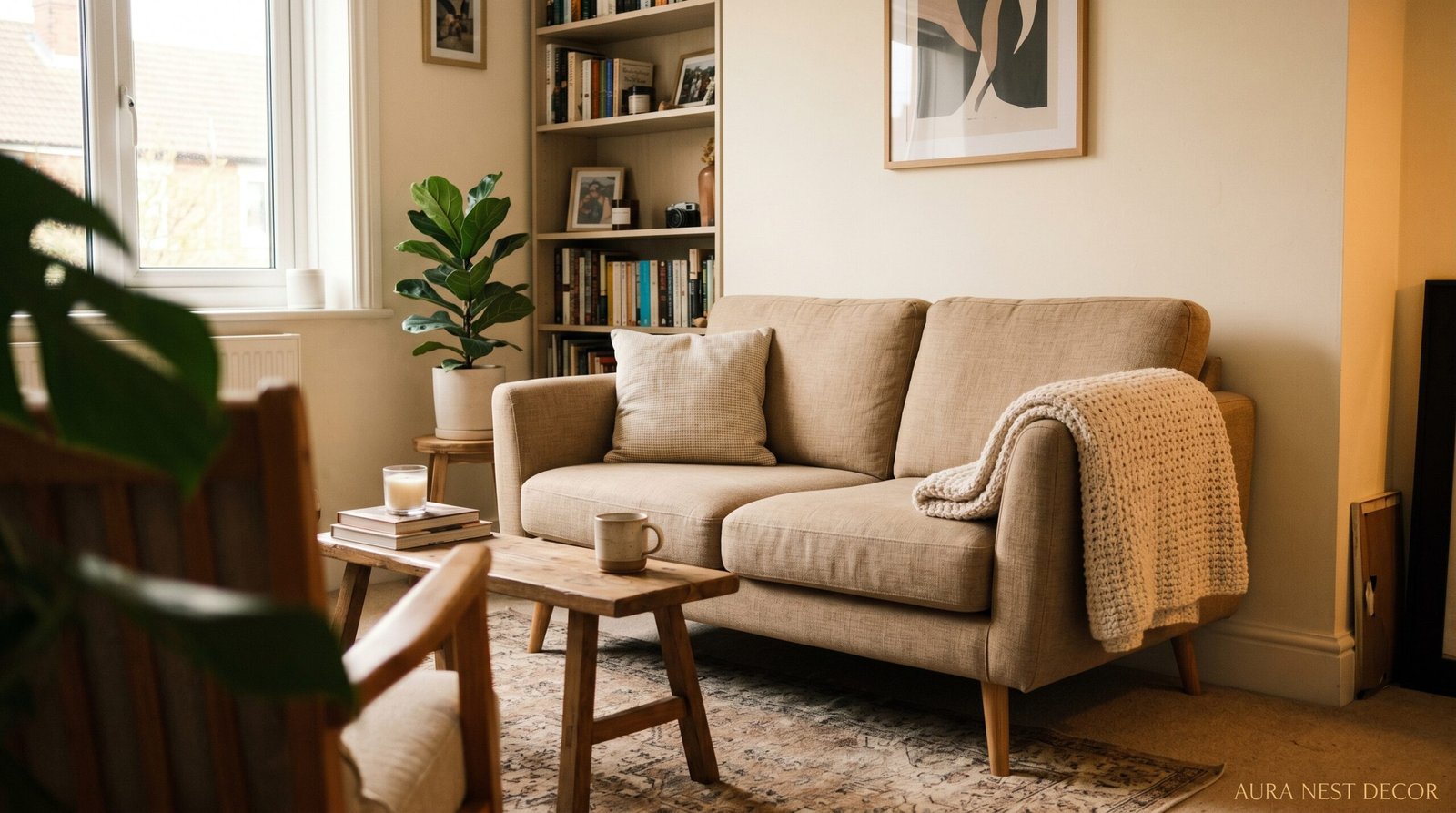
Mid-century two-seaters with tapered wood legs are basically timeless at this point, and they work because of everything I said about legs above. Low, sleek, lightweight-looking. They sit in a room without dominating it.
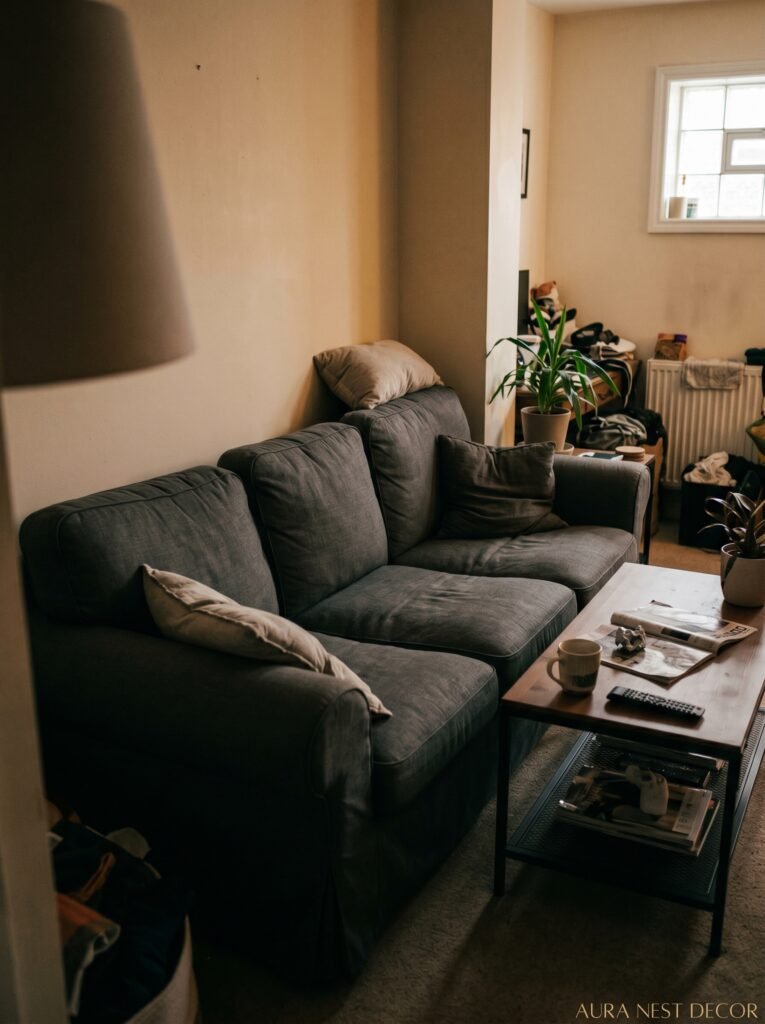
And honestly? The IKEA KIVIK in the two-seater format. I’m not even embarrassed to say it. It’s deep (which you’d normally avoid), but for taller people or anyone who actually wants to curl up and watch a film, it sometimes works beautifully when paired with the right rug scale and a lower coffee table. Don’t rule it out.
—
9. The Rug Trick That Completely Changes How Your Sofa Reads
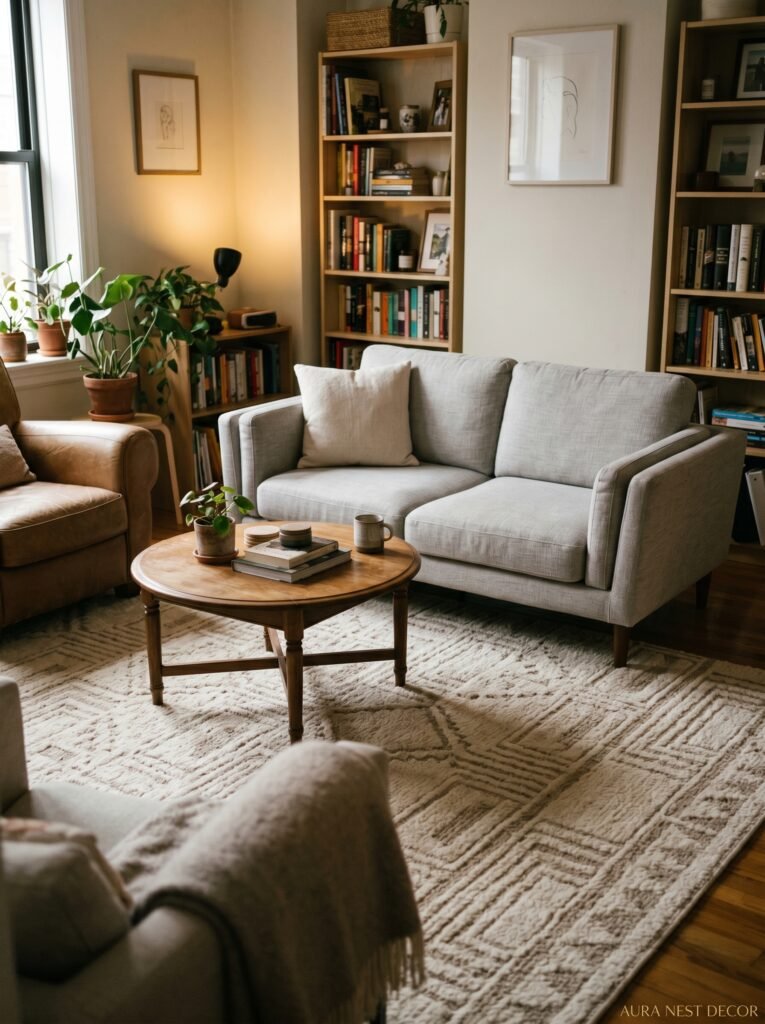
Get a rug that’s bigger than you think you need. Seriously.
People are almost always too conservative with rug sizing in small rooms. A tiny rug under a sofa makes the sofa look like it’s floating awkwardly. It makes the whole seating area look provisional, like you haven’t quite committed.
A rug that extends at least 6 to 8 inches out from each side of the sofa — and that the coffee table sits fully on — anchors the whole thing. The sofa stops being a piece of furniture sitting in a room and becomes part of a defined living zone. That’s such a different feeling. The room feels intentional. It feels complete.
For US homes I’d say for a compact living room with a two or three-seater, don’t go smaller than a 5 x 8 rug. In most cases a 6 x 9 is actually better even if it feels like a lot on paper. In UK homes with smaller proportions, a 160 x 230cm rug is roughly equivalent and tends to work well.
—
10. What to Do When Your Small Living Room Is Also Long and Narrow
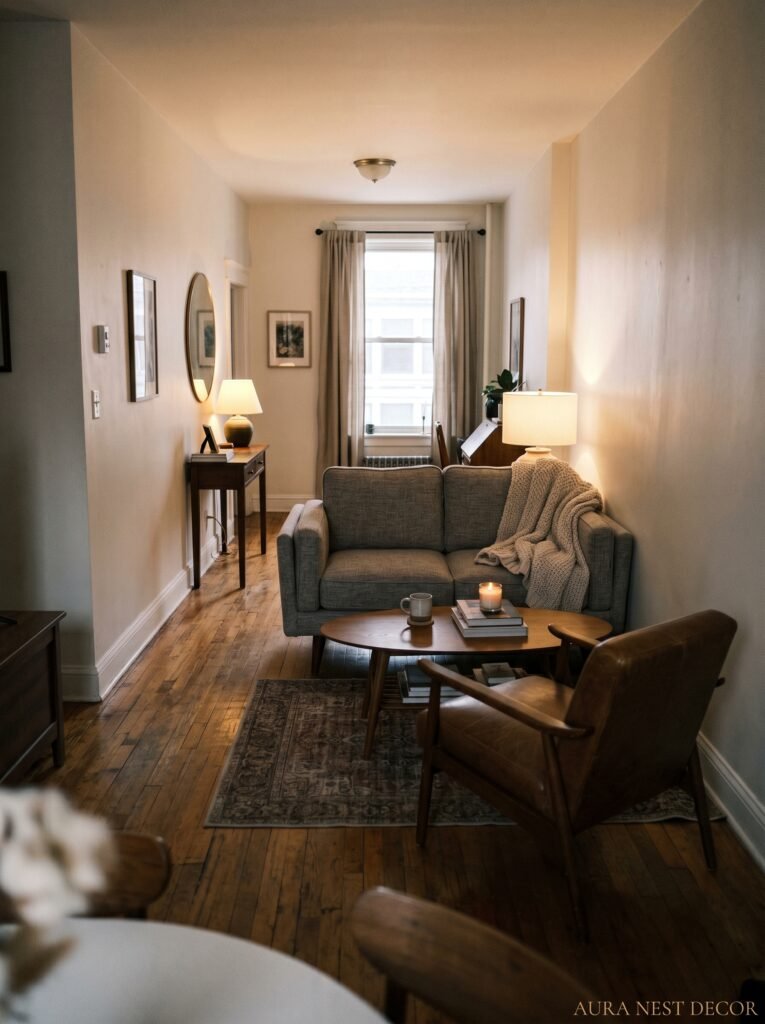
The narrow-room problem is different from the small-square-room problem and it needs its own answer.
In a long narrow room, a standard sofa placed against the long wall makes the whole thing feel like a train carriage. Not ideal. What often works better is breaking the visual “corridor” effect — placing a smaller sofa or loveseat against the shorter wall, so you’re essentially sitting across the width rather than down the length. This makes the room feel wider because your sightline is going across the room, not along it.
You can also use a sofa plus a couple of chairs in conversation-style arrangement — two chairs facing each other at one end and the sofa sort of perpendicular. That L-shape arrangement does a lot to make a narrow room feel like a room rather than a hallway.
—
11. The Colors and Fabrics That Are Actually Worth It for High-Traffic Small Rooms
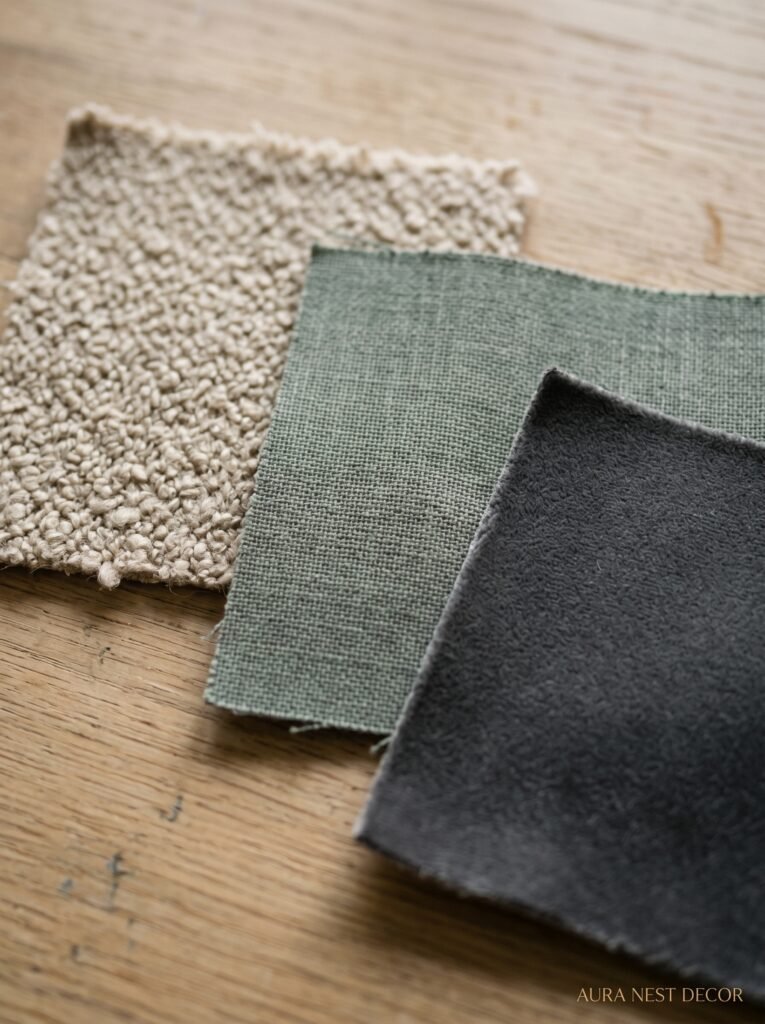
Performance fabrics. I know it sounds like marketing language but it’s not.
If your small living room is your ACTUAL living room — meaning, people sit on this sofa daily, there might be kids or a dog, someone eats lunch on it sometimes — then picking a sofa with a performance fabric like a tight-weave microfiber, a performance velvet, or an indoor-outdoor weave fabric is genuinely smart. These clean well. They hold their shape. They don’t pill in six months.
In terms of colors that hide life while still looking beautiful: charcoal, slate grey, deep sage, warm taupe. These are the unsung heroes of the practical-but-pretty sofa world. They don’t show every crumb (unlike ivory linen, no matter what the catalog says), and they look rich and grounded in a small room without making it feel dark.
—
12. The Single Biggest Mistake People Make When Buying a Sofa for a Small Room
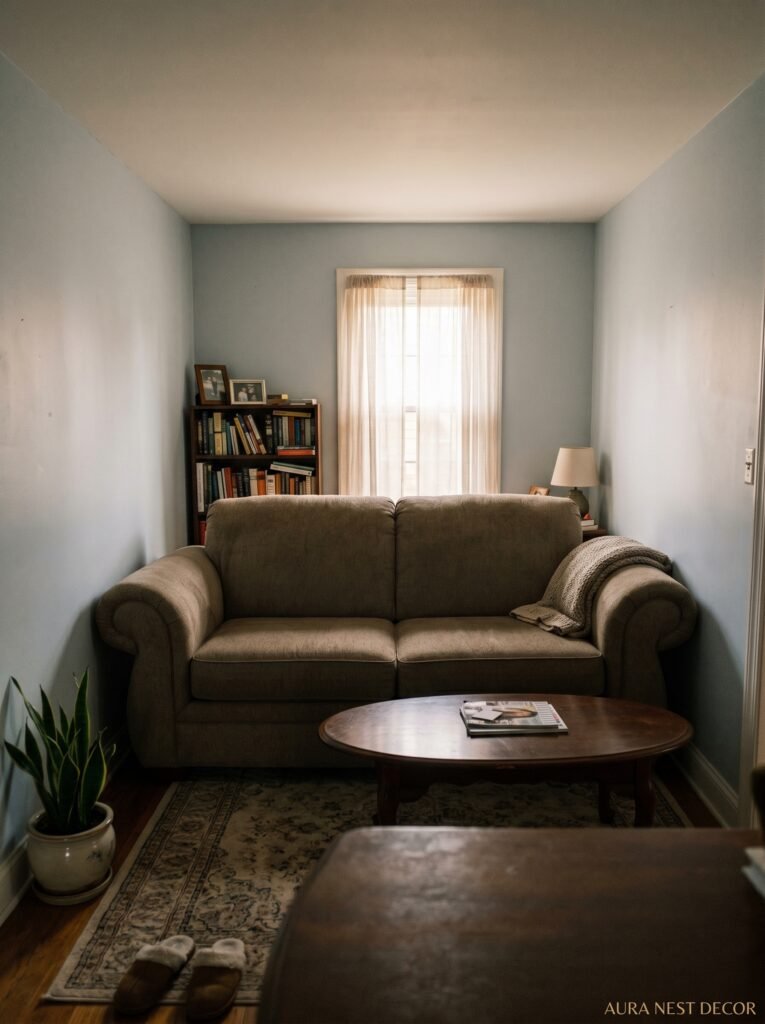
They don’t measure before they fall in love.
“It’s so easy to buy the wrong sofa for a small room, and so hard to fix it once it’s in.”
Not the dimensions of the sofa. The dimensions of the room, the doorways, the hallway it has to come through, the staircase if you’re in a UK townhouse. I can’t tell you how many times I’ve heard the story of the perfect sofa that made it as far as the front door and not one inch further.
Measure your room. Measure the door. Measure the sofa with the legs on AND off. Know whether the legs detach. If you’re in a British terrace or semi-detached with that classic tight front hallway and sharp turn into the living room, this is non-negotiable. Delivery teams won’t promise it’ll fit. That’s on you.
Mark the sofa footprint on your floor with painter’s tape before you order. Live with it for a day. Walk around it. See how it feels. It sounds excessive. It has saved me (and several friends) from some genuinely expensive mistakes.
—
❓ FAQ
Q: Can a sectional sofa work in a small living room? A: It really can, but you need to look specifically for apartment-sized or small-scale sectionals — ones designed with a shorter chaise section and overall widths under about 90 to 95 inches. The key is making sure the shorter arm of the L doesn’t block walkways or doorways. Done right, a small sectional can actually define a compact room beautifully.
Q: What’s the best sofa color for a small living room with low light? A: Avoid very dark colors if your room doesn’t get much natural light, but don’t default to white either — it can look stark in dim rooms. Warm muted tones like warm stone, blush, or a soft camel tend to reflect whatever light there is in a gentle, flattering way. Pair it with warm-toned bulbs rather than cool white LEDs and the whole room will feel a lot cozier.
Q: How do I make a small living room feel cozy rather than cramped? A: The difference between cozy and cramped is usually layering and intention. A room feels cramped when it’s got too much furniture with no breathing room between pieces. It feels cozy when there’s a defined seating zone (sofa, rug, light source all anchored together), soft textures, and enough empty space to move through comfortably. You don’t need more stuff — you need the right stuff in the right arrangement.
—
💭 Final Thoughts
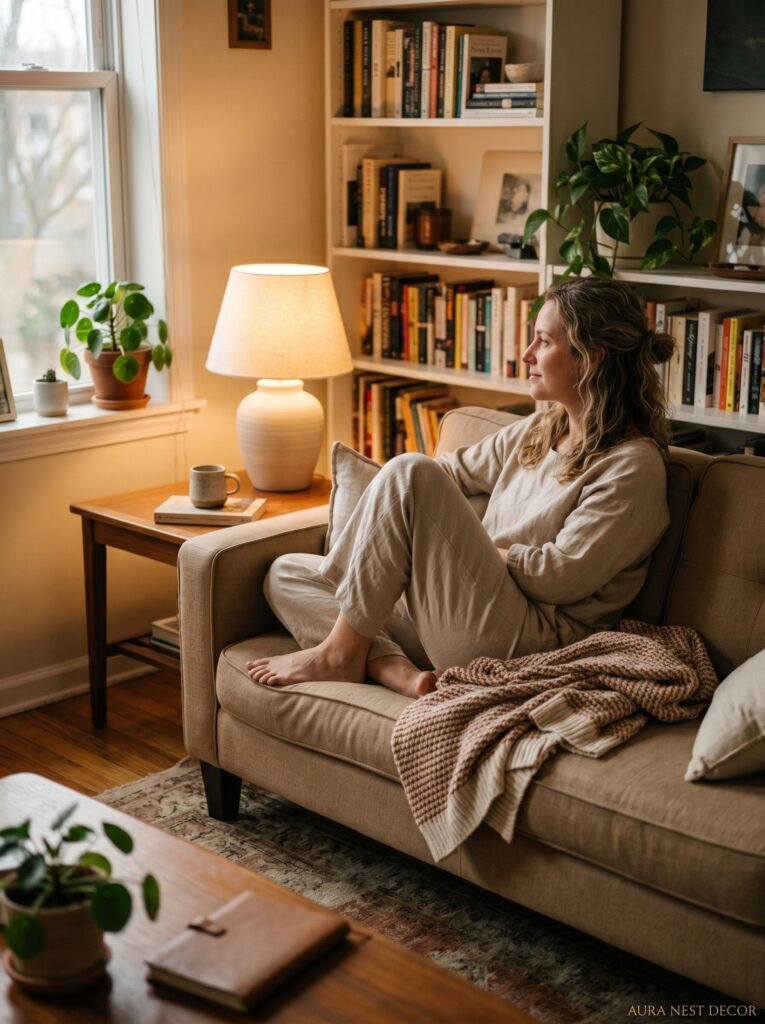
A small living room isn’t a consolation prize. Some of my favorite rooms I’ve ever been in were small — warm, considered, layered with things that actually meant something. The sofa you choose is the beginning of that, not the obstacle.
Get the proportions right, trust your instincts about color, and don’t let anyone talk you into something that looks beautiful in a showroom but doesn’t work in your actual life. And maybe tape out that footprint before you order.
What would make your small living room feel like the room you actually want to come home to?