Why Tile Floors in the Living Room Are Having a Moment (And Why I’m Completely Obsessed)
You walk into someone’s house and the floor stops you cold. Not the sofa, not the gallery wall — the floor. That’s what a good tile living room does. And honestly? It’s taken me embarrassing amounts of Pinterest time to admit that tile might be the most underrated decision you can make in a main living space.
—
1. The Reason Everyone’s Been Too Scared to Try This
Here’s the thing nobody says out loud: most people avoid tile in the living room because it feels cold. Clinical. Like a doctor’s office with a nice rug thrown over it. I get it. I had the same hesitation.
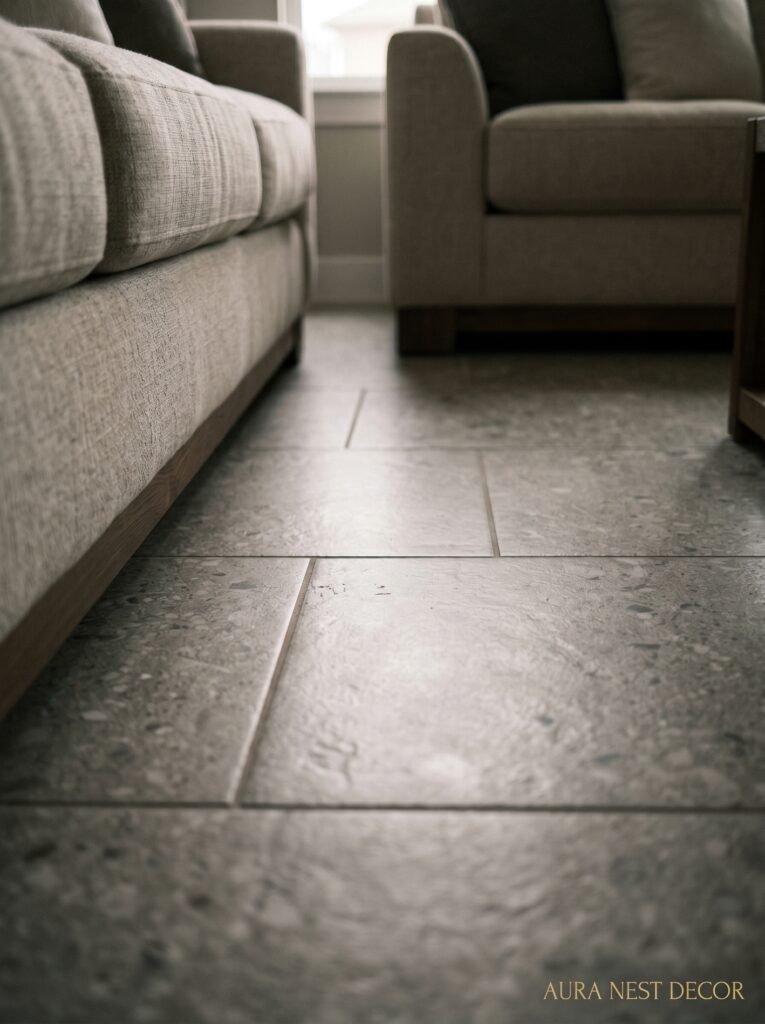
But that fear is based on a version of tile that doesn’t really exist anymore. The tile that’s making rounds on Pinterest right now — the oversized limestone-look porcelain, the warm terracotta, the slightly imperfect zellige-adjacent slabs — none of it reads cold. Not even close. I saw a living room last year with 24×24 cream porcelain laid in a staggered offset pattern and I genuinely thought it was polished concrete for a moment, except warmer. More intentional.
The hesitation also comes from carpet culture, which is deeply rooted in the UK and in a lot of US homes, especially anything built before 1990. Wall-to-wall carpet said comfort. It said cozy. Tile said patio. But design moves, and what felt like an outdoor material for years has crept inside so slowly and confidently that now a terracotta tile living room floor feels MORE cozy to me than beige carpet. Not less.
So if you’ve been nervous about this, that’s normal. But you might be working from an outdated picture in your head.
“The fear of a cold floor is almost always about the wrong tile, not tile itself.”
2. The Specific Tile That Keeps Appearing in Every Beautiful Living Room Right Now
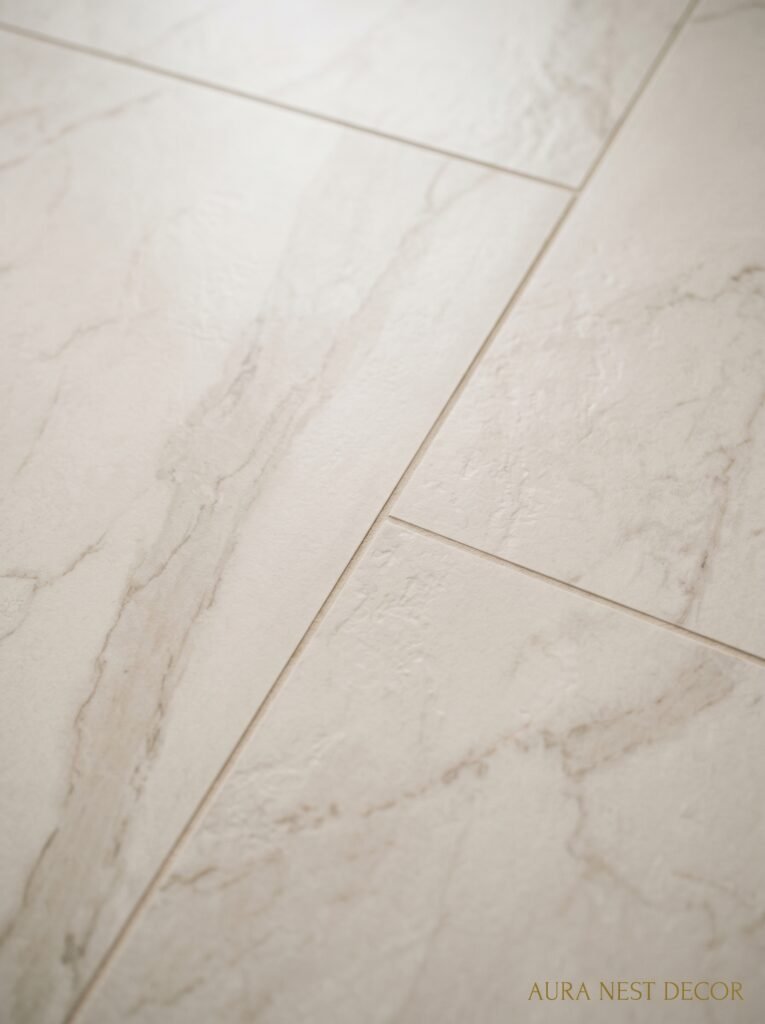
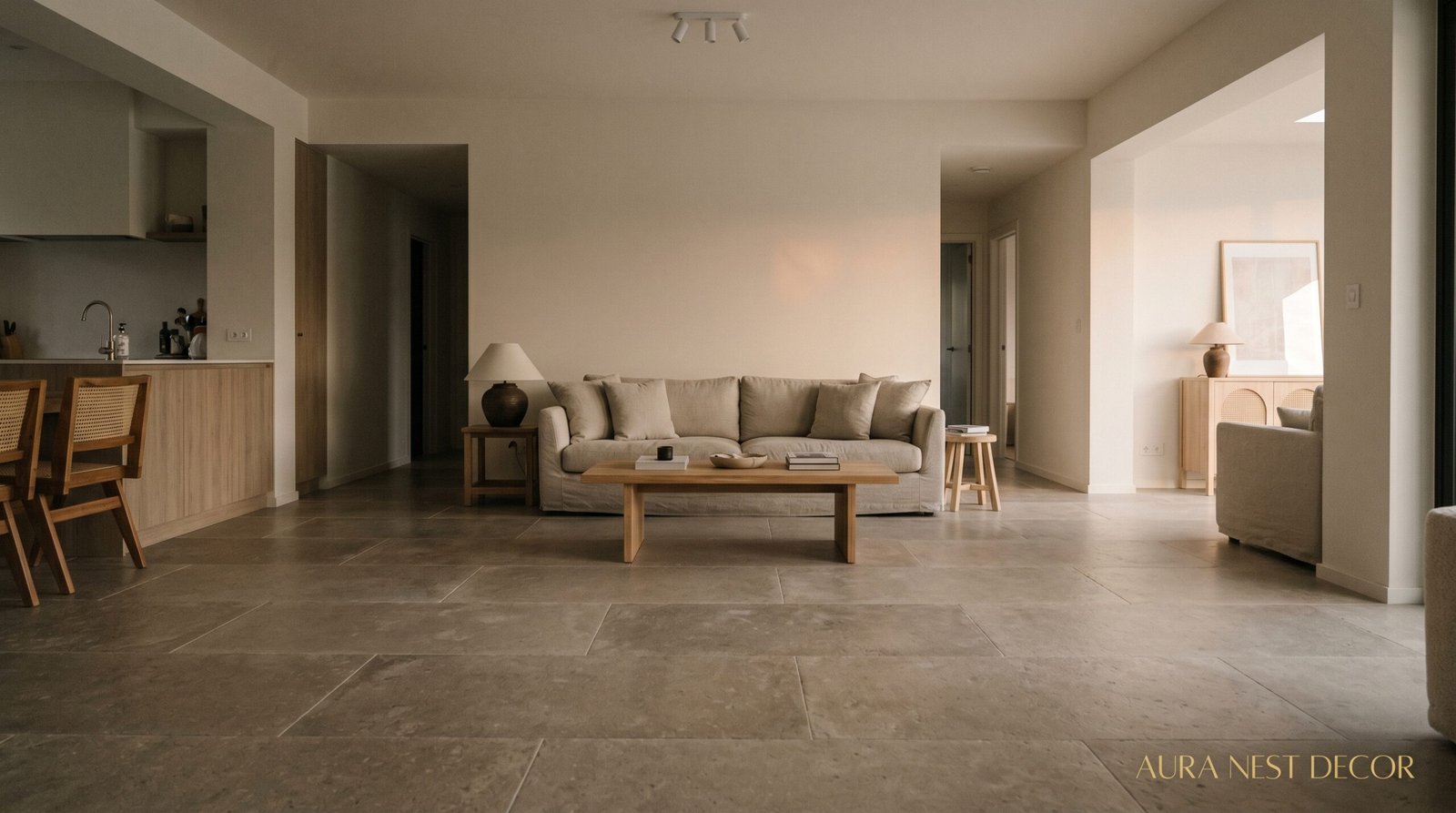
I’ll just say it. Warm-toned large format porcelain is everywhere and I’m not even a little sick of it yet. We’re talking tiles in the 24×24 or 32×32 inch range, in colors that read like very pale sand, warm greige, or that specific shade of cream that photographs like morning light.
What makes these work so well in a living room — as opposed to, say, a bathroom — is the SCALE. Big tiles mean fewer grout lines. Fewer grout lines means the floor reads as one surface, which makes the whole room feel calmer and more spacious. Especially in open-plan living spaces that are all over UK new builds and American ranch-style homes alike.
But the warm-toned porcelain isn’t the only one winning right now. Terracotta is having a full comeback and I don’t think it’s leaving anytime soon. Not the flat orange terracotta of a 1970s extension — the matte, slightly uneven, artisanal-looking terracotta that you’d find in a Provence farmhouse or a Santa Fe hacienda. That tile has texture. It has life. It doesn’t pretend to be anything except exactly what it is, and that’s exactly why it works.
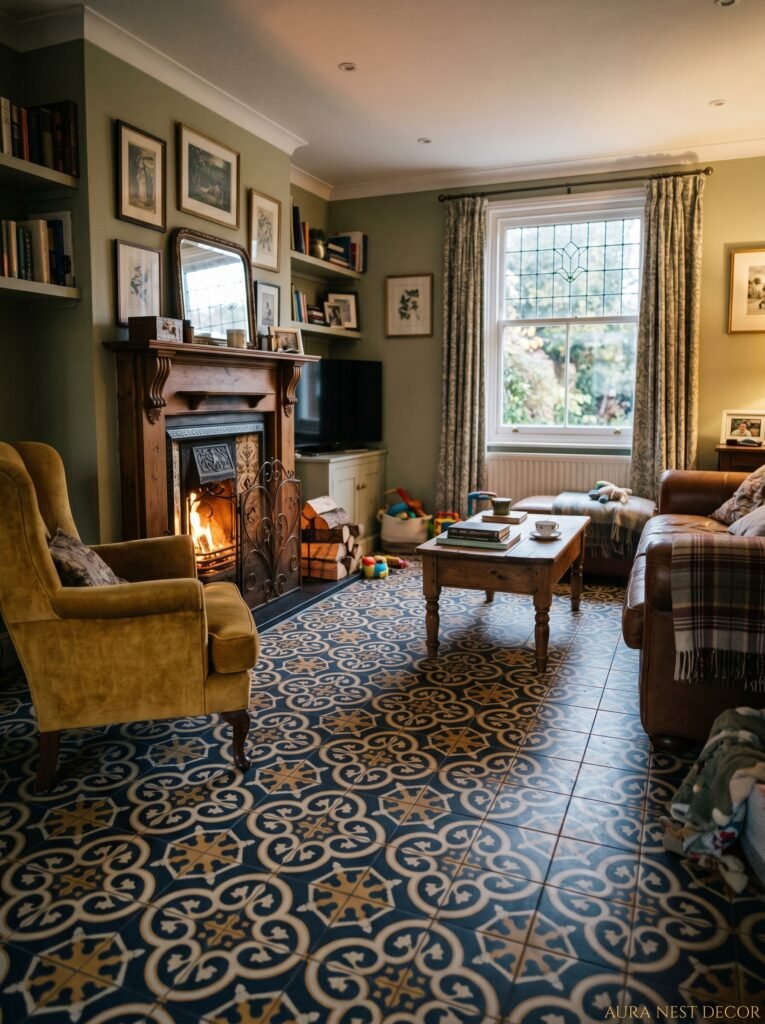
Encaustic cement tiles are the other one I keep seeing in UK homes especially — those geometric patterned tiles, usually in navy and white or terracotta and cream, laid in a main living area with a plain white sofa and about four plants. Stunning every single time.
3. What Happens to a Room’s Vibe When the Floor Is Tile (And It’s Not What You Think)
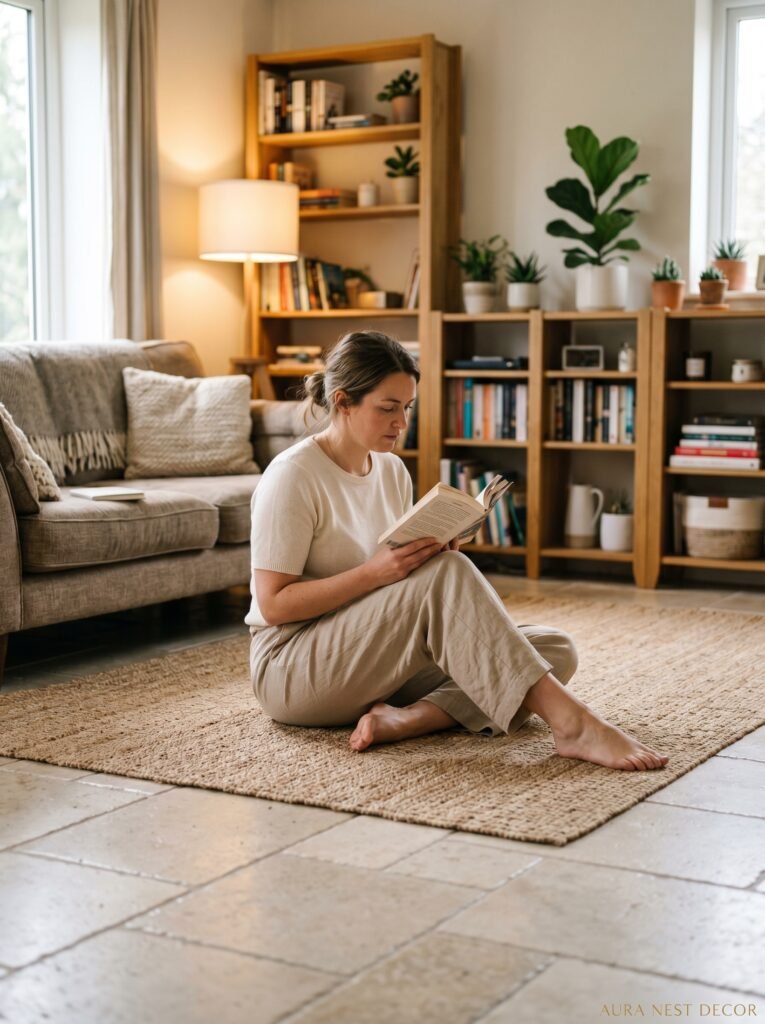
Okay, here’s the part that actually surprised me when I started noticing it. Tile floors in a living room don’t cool down the room — they make everything you put IN the room look more intentional.
Bear with me. When the floor is carpet, furniture sort of… sits on it. Blends into it. Especially if the carpet is a neutral. But when the floor is tile — especially a beautiful large format stone-look tile — the furniture floats. The sofa looks chosen. The coffee table looks placed with purpose. Even an ordinary bookshelf looks more considered when there’s a gorgeous floor underneath it.
Interior designers know this. It’s basically why showrooms almost never have carpet. The floor is the foundation and when it’s strong, everything above it benefits.
This matters if you’re someone who doesn’t want to spend a fortune on furniture but still wants a pulled-together room. A genuinely beautiful tile floor does a lot of the work FOR you. That’s not a small thing.
Side note — this is also why a bad tile choice is so visible. There’s nowhere to hide on a tile floor the way there is with carpet. Which means it’s worth taking your time.
4. The Grout Color Decision That Most People Get Wrong
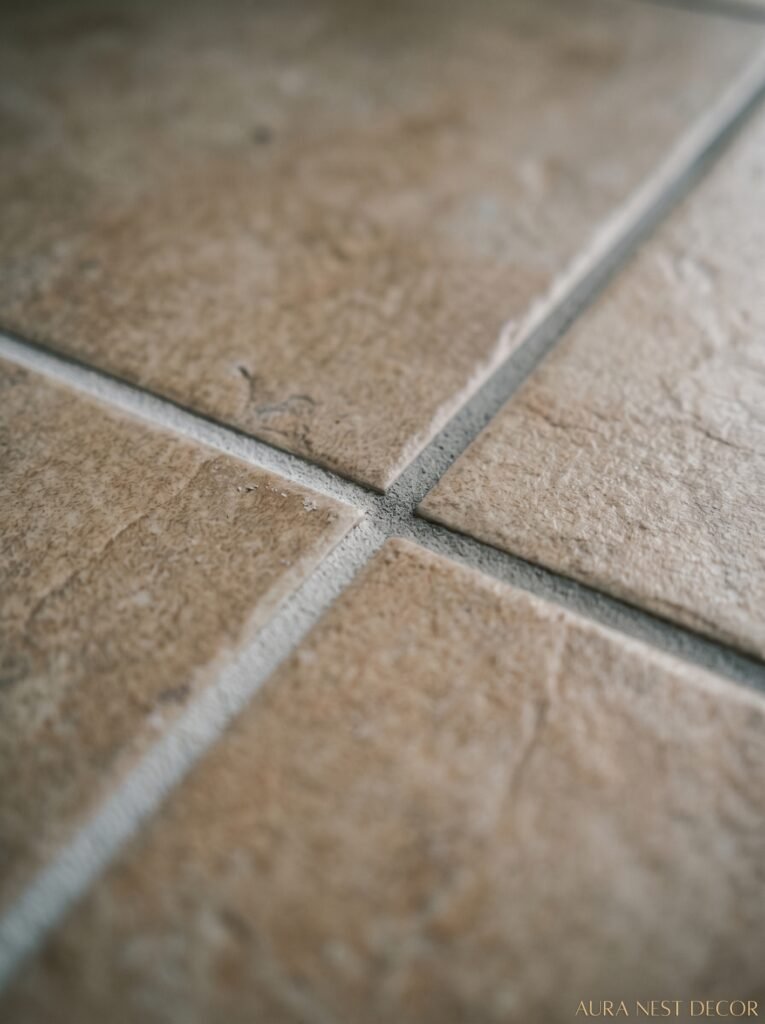
I’m going to be a little bossy about this for a second because I’ve seen too many otherwise beautiful tile floors let down by one small thing.
Don’t use bright white grout.
Not on a living room floor. Not unless the tile is genuinely stark white and the whole room is a minimal, high-contrast space. Because bright white grout on a warm cream or greige tile just looks like a grid. It draws your eye to the lines instead of the tile surface, and suddenly the floor reads as smaller, busier, and more bathroom-y than it should.
The move is matching your grout as closely to the tile color as possible, or going slightly darker for a subtle definition. Unsanded grout for thinner joints. Epoxy if you have pets or kids and don’t want to deal with staining. These are not glamorous decisions but they are the ones that separate a tile floor that looks amazing in five years from one that looks grubby in eighteen months.
UK builders especially — and I say this with love — default to gray grout on everything. Gray grout on terracotta tile is a no. Gray grout on warm cream porcelain is a no. Take five extra minutes and source the right grout color. It genuinely changes everything.
“The grout decision is the one people make last and regret first.”
5. The Rug Question, Because Everyone Asks It
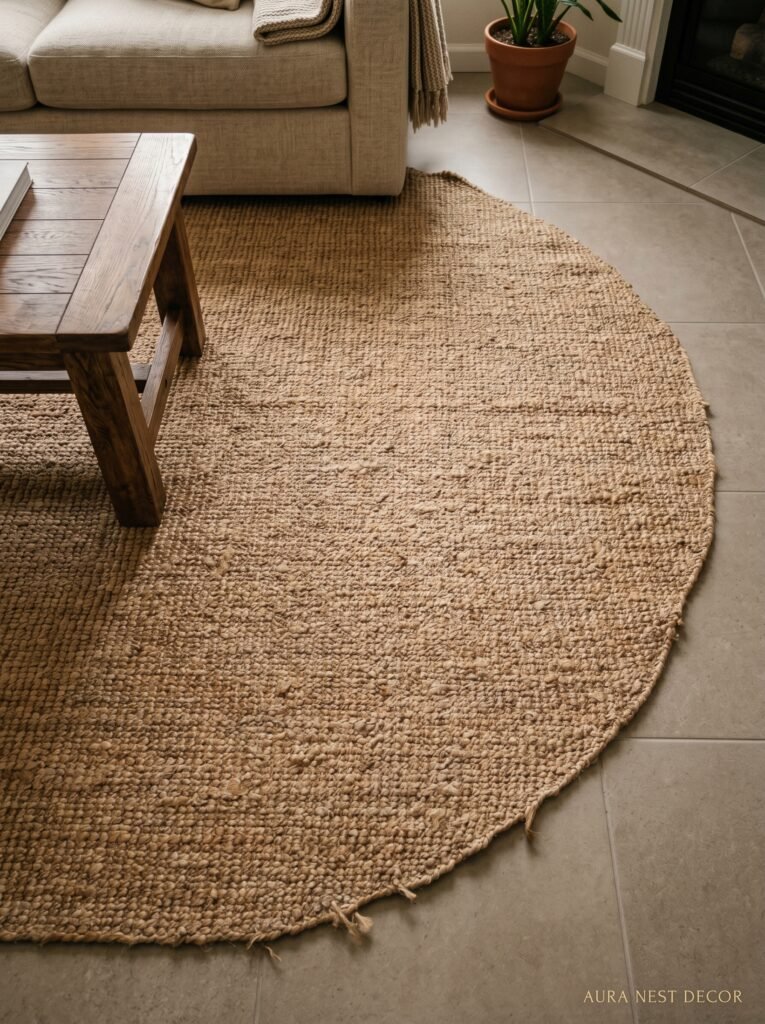
Yes. You still use a rug. Actually, this is one of the best things about tile in the living room — you get to layer a rug over a floor that’s already beautiful, which means the rug becomes an accent instead of a necessity.
With carpet, the rug has to be chosen carefully to not clash, to add something, to justify its own existence. With tile? You can throw a Moroccan Beni Ourain over warm cream porcelain and the whole thing looks intentional and effortless. A jute rug on terracotta tile is so good it should be illegal.
The key is thinking about what the rug does in terms of temperature — both literally and visually. Tile floors don’t retain heat the way carpet does, so in winter, especially in the UK where the cold really DOES come up through the floor, you want a rug that has some substance to it. Wool. A thick flatweave. Not a thin cotton layer that does nothing for warmth.
In American homes with radiant floor heating under tile — which is an option worth considering if you’re renovating — the rug situation is different. You can go thinner. The floor itself is keeping things warm. But in most British semis and terrace houses, layer generously.
6. The Tile Pattern Conversation Nobody’s Having Loudly Enough
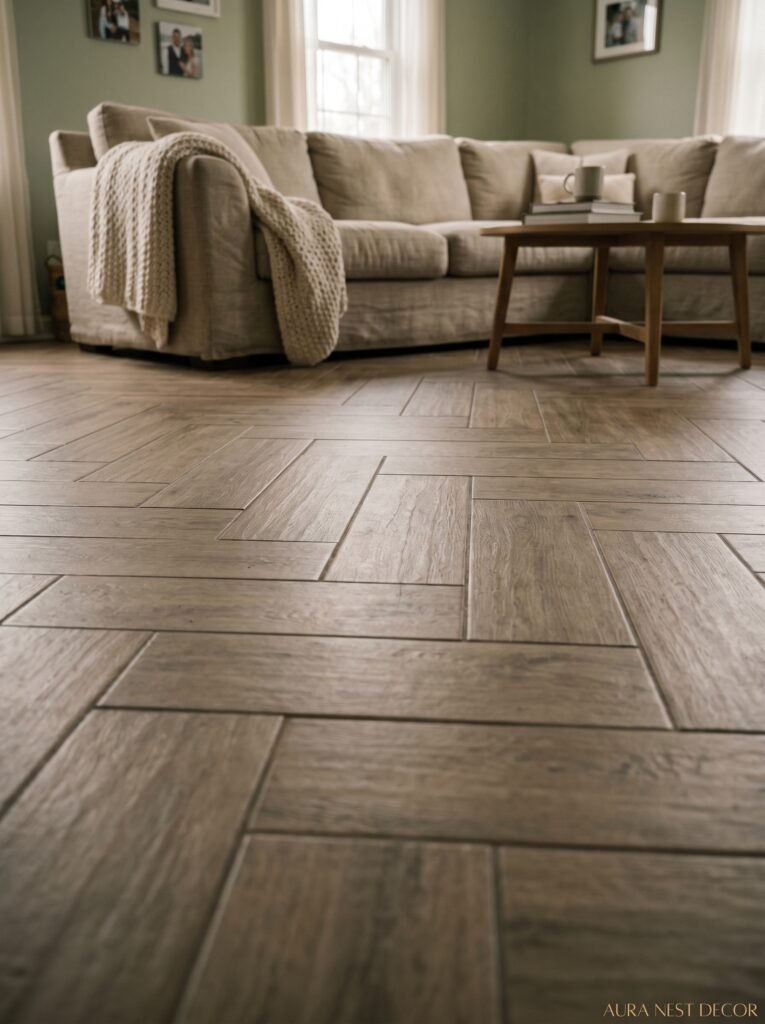
People spend so much time picking the tile and almost no time thinking about the lay pattern, and it shows.
Straight lay — grid pattern, tiles lined up — is the default. It’s not wrong. But it’s also the most boring option and in a living room, where you have time to look at the floor, boring starts to feel like a missed opportunity.
Offset or brick lay (staggering tiles by 50% or 33%) gives the same tile completely different energy. More dynamic. Less grid-like. On a large format tile, the 33% offset in particular gives a very clean, contemporary feel that works in everything from a modern apartment to an older character home.
Diagonal lay — turning the tiles 45 degrees — is the one that makes a small room feel bigger. It genuinely works. The lines lead the eye outward toward the walls, which reads as space. If you have a small-to-medium living room and you’re worried tile will make it feel smaller, diagonal lay is your answer.
Herringbone on tile is having a moment in more traditional and period UK homes, especially on smaller format tiles like 4×8 brick-shaped porcelain in a warm white or soft gray. It looks expensive without necessarily being expensive. It rewards attention.
7. What British Living Rooms Are Doing With Tile That American Rooms Aren’t Yet
This is a generalization, obviously. But hear me out.
In the UK — particularly in flats and houses in London, the South, and increasingly up North — I’m seeing tile used in living rooms as a design choice that connects inside to outside. The living space has the same or similar tile as the garden patio or the kitchen extension. It’s a through-line. The floor becomes the thing that reads across different spaces and ties a home together visually.
American interiors haven’t fully embraced this yet, at least not in most of the US Pinterest content I see. There’s still a tendency to keep tile in “wet areas” — kitchen, bathroom, entryway — and treat the living room as carpet or hardwood territory. But that’s changing fast, especially in warmer states. Texas, California, Arizona, Florida homes are tiling living rooms with a confidence that’s definitely influencing the rest of the country.
The British thing I love, though, is the willingness to mix periods. A Victorian terrace with original fireplace, ornate coving, and… stunning modern porcelain tile on the floor. It shouldn’t work. It does. Every time.
“When you tile a Victorian living room, the modernity makes the original features pop harder. Not softer.”
8. The Cost Conversation, Because Let’s Be Real
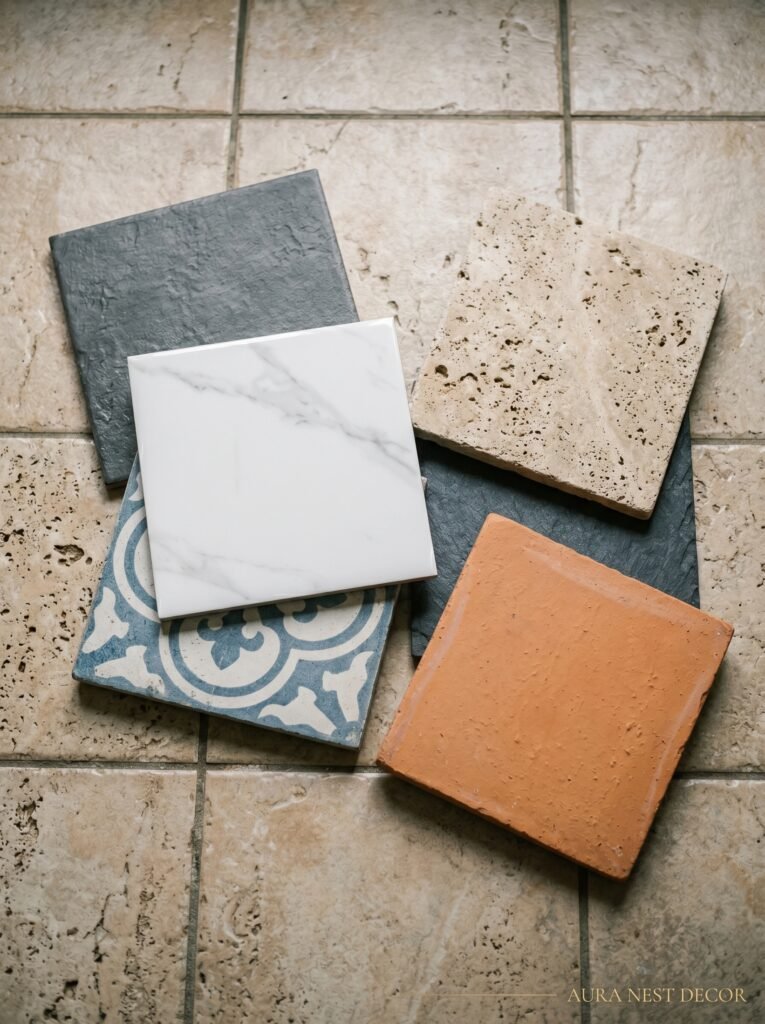
Tile in a living room is not cheap. Let’s just say it plainly instead of dancing around it.
You’re looking at material costs, underlay or backer board prep, adhesive, grout, potentially floor leveling, and labor for the tile setter — because laying large format tiles in a living room is not a beginner’s DIY unless you really know what you’re doing. In the UK, you’d realistically budget somewhere between £40-£90 per square meter installed for a decent quality tile, depending on the tile and your region. In the US, $10-$20 per square foot installed is a reasonable ballpark for porcelain, more for natural stone.
But here’s the part of the cost conversation that doesn’t get said enough. Tile lasts. A well-laid tile floor in a living room will outlast the house’s mortgage. You won’t replace it. You won’t rip it up in ten years because it’s worn or dated. Carpet needs replacing. Hardwood needs refinishing. Tile, maintained properly, just keeps going.
So the upfront cost is high. The lifetime cost is actually very competitive.
9. The Heating Question for Cold-Climate Homes
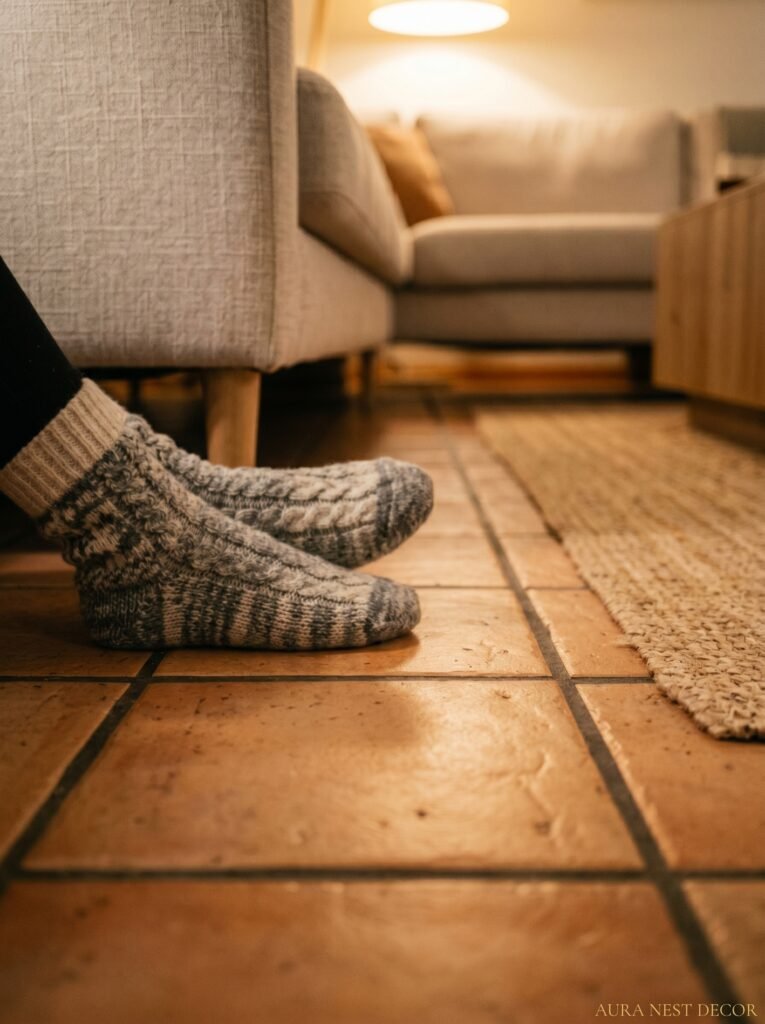
Okay this is where I want to push back a little on the people who say tile is wrong for cold climates. Because yes — tile is a thermal conductor, which means it doesn’t hold heat, it moves it. Standing on cold tile in January in Edinburgh or Minneapolis is not fun. That’s real.
But this is also a 2024 problem with a 2024 solution: underfloor heating. Electric mat UFH (underfloor heating) for smaller rooms is not as expensive as it once was and tile is actually THE best flooring to pair with it because tile conducts heat so efficiently. The floor warms up fast, holds an even temperature, and radiates heat upward in a way that feels genuinely lovely.
In UK homes specifically, electric UFH under living room tile is increasingly common in renovations and it changes the cold-floor experience completely. I’d argue a warm tile floor in winter is more comfortable than carpet because it’s evenly heated — no cold drafts, no hot spots.
If you’re in an American climate that has genuinely cold winters and you’re tiling your living room, please at least price out the UFH option. It’s almost always worth it.
10. Colors That Actually Work With Tile Floors in a Living Room (And Some That Don’t)
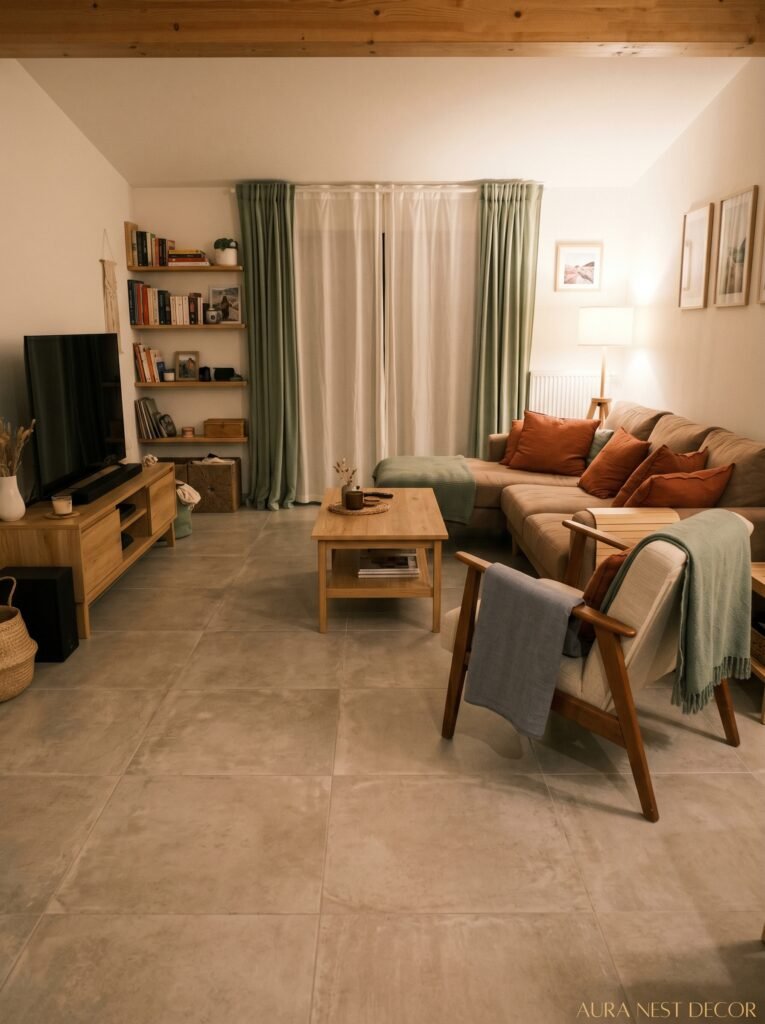
With warm cream or greige tile on the floor, the room opens up to a huge range of wall color options. Dusty terracotta walls (yes, different shade than the floor, it works). Deep forest green. Warm white. Even a moody navy can feel right if the tile is warm-toned enough.
Terracotta tile floors are a bit more specific. They love earthy companions — sage green, warm white, raw linen, mustard. They’re less happy with cool grays or anything that reads blue-toned. If you pair terracotta tile with gray walls you end up with a vibe that’s fighting itself, and the room always looks slightly off without you being able to say why.
Patterned encaustic tiles are the bossy ones. They want simple walls, simple furniture, and simple textiles. Give them that and they carry the whole room. Try to compete with them and it’s chaos.
11. The Furniture Placement Reality Nobody Talks About
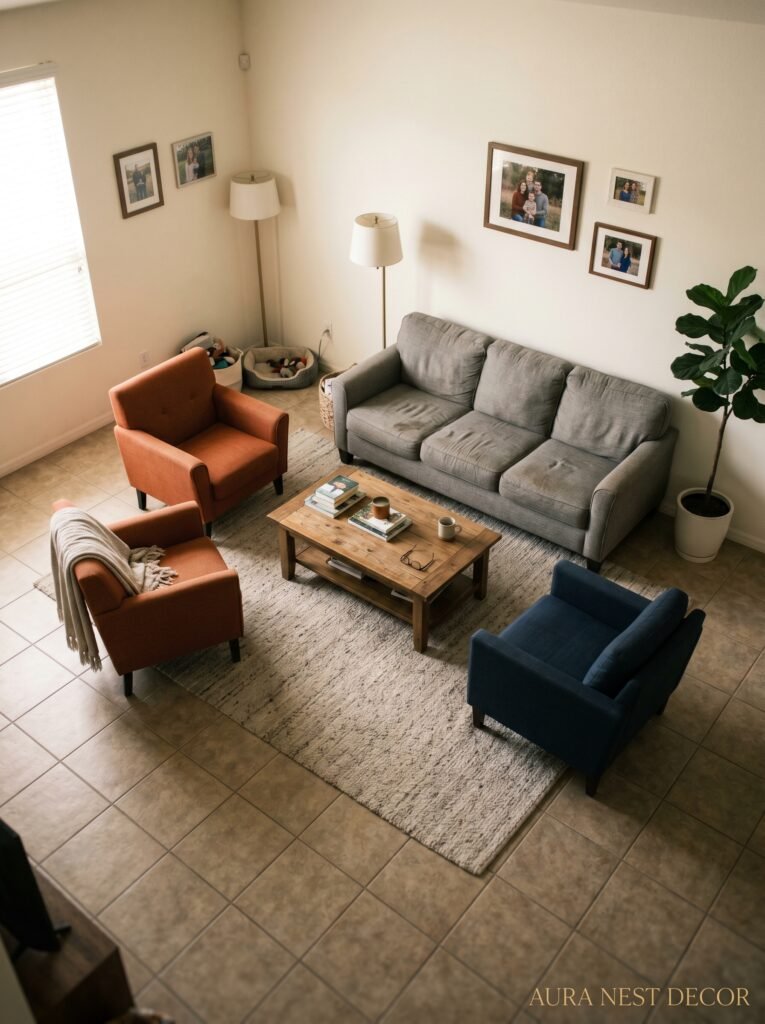
Tile floors and furniture legs have a relationship that needs thought. Specifically — furniture on tile SLIDES if you’re not careful, and scratches if you’re really not careful.
Felt pads on every single leg. Non-negotiable. In the UK especially, a lot of sofas and chairs have bare wooden or metal legs that will mark a tile surface over time if you’re not protecting the floor. This sounds like a tiny admin task but future you will be very grateful.
Also — heavier furniture feels more stable on tile than on carpet, which is counterintuitive but true. A heavy oak coffee table on a tile floor feels grounded. Planted. Whereas on carpet it can feel like it’s sitting on a slightly squishy surface. Tile floors reward solid, substantial furniture in a way that carpet doesn’t always.
12. The One Thing That Guarantees a Tile Living Room Looks Right
After all of this — the pattern decisions, the grout color, the heating considerations, the rug layering — there’s one thing that ties it all together.
Natural light.
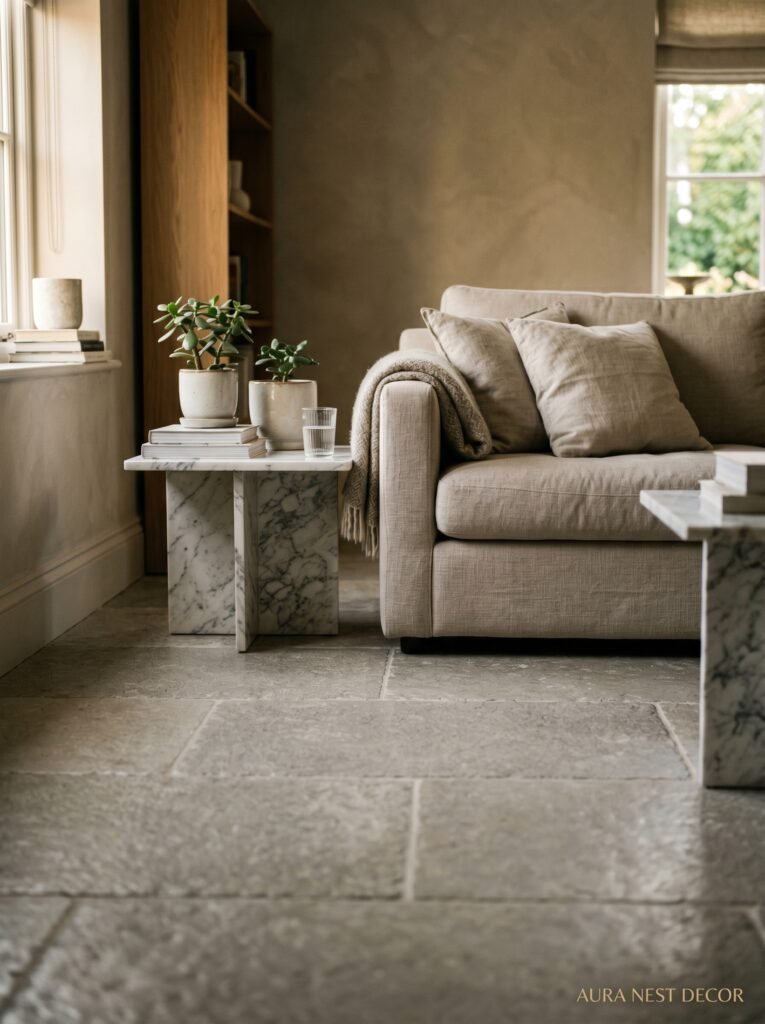
A tile living room floor in good natural light is magnificent. The surface catches and moves light in a way that wood and carpet can’t. Matte tiles have a soft, warm glow. Polished tiles create a subtle shimmer. Even semi-matte porcelain has a quality in afternoon light that makes you stop and notice the floor.
This means orientation matters. North-facing living rooms with limited natural light can make a tile floor feel flat or cold. In this case, go warmer in tile color, add more lamps, and lean harder into rugs and textiles to bring the warmth the light can’t.
South-facing rooms? Put in the most beautiful tile you can afford and let the light do the rest. It’ll look different at 9am, at noon, at 4pm, and at dusk. In the best possible way.
—
❓ FAQ
Q: Is tile too cold for a UK living room? A: It can be if you don’t plan for it, but electric underfloor heating mats solve this completely and aren’t as expensive as you’d think for a single room. A good layered rug helps too, especially through winter.
Q: What size tile looks best in a living room? A: Bigger is almost always better in terms of visual impact — 24×24 inches or larger for contemporary spaces. Smaller format tiles like 12×12 tend to read as kitchen or bathroom, so if you’re tiling a living room, go larger and you’ll get a much more refined look.
Q: Can tile floors work in a rented home in the UK? A: If you’re renting, tile is out since it’s a permanent change. But you can get the look with large format luxury vinyl tile (LVT) in stone or concrete effects, which is peel-and-stick or floating and fully removable.
—
💭 Final Thoughts
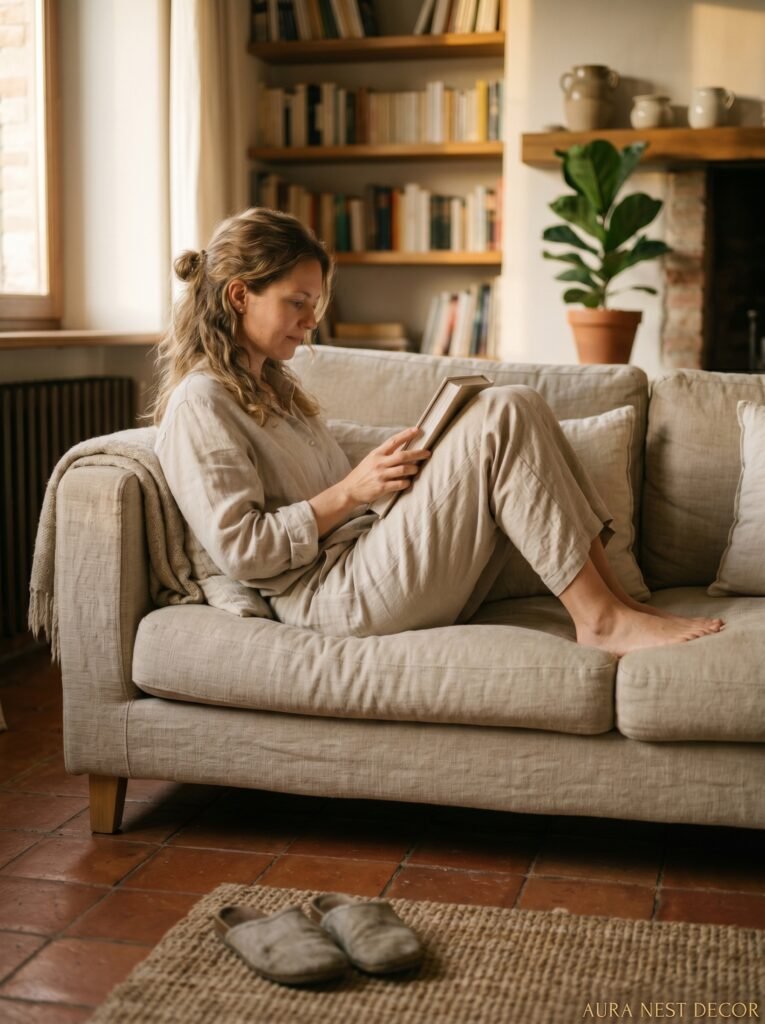
Tile in the living room is one of those decisions that feels risky right up until the moment it’s done — and then you can’t imagine the room any other way. It’s not a trend, not really. It’s a return to something that’s worked in homes across the Mediterranean, the Middle East, and warm-climate Europe for centuries. We’re just finally catching up.
The floor is the largest surface in any room. Doesn’t it deserve your most interesting decision?