The Standing Lamp That Changes Everything (And the Mistakes Most People Make Before They Find It)
You know that moment when you walk into someone’s living room and it just feels right? The light is doing something you can’t quite name. It’s not the furniture, not the paint color. It’s the lamp in the corner, casting that warm amber pool across the floor, and you think — oh. That’s it.
Most of us spend years getting this wrong before we get it right.
—
1. Why Your Living Room Probably Has a Lighting Problem You Haven’t Named Yet
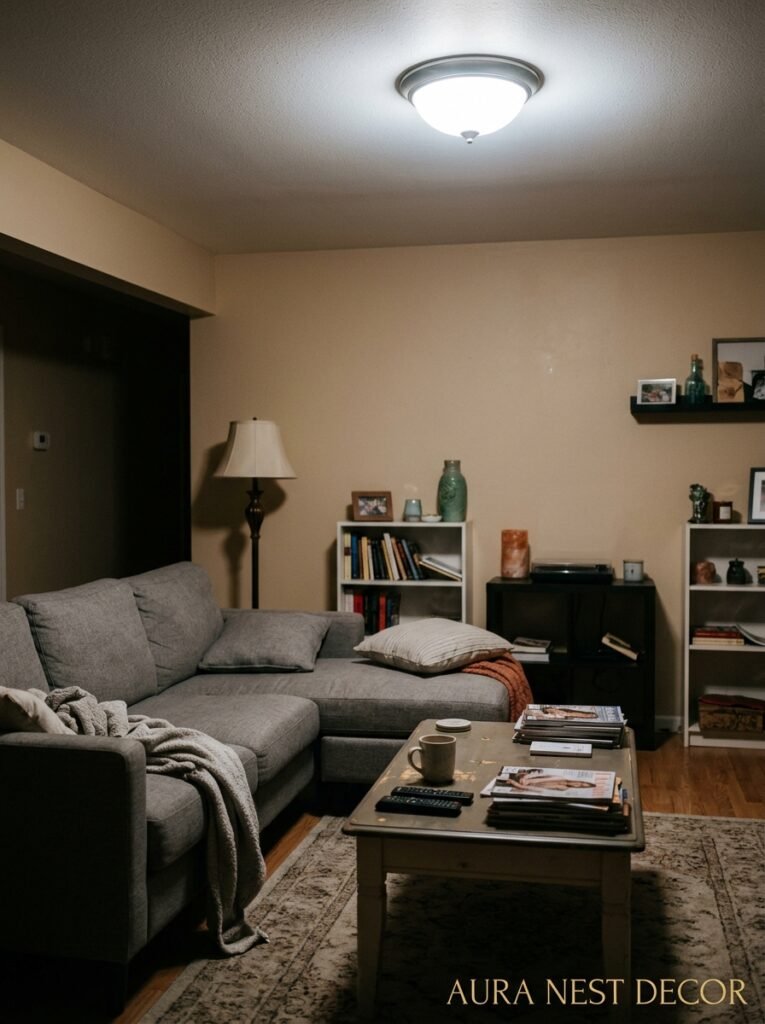
Here’s the thing nobody says out loud: overhead lighting is basically the fluorescent tube of home decor. Harsh, flat, ages everybody in the room. And yet most living rooms rely on it almost entirely, with maybe a sad little table lamp doing all the emotional labor in the corner.
A standing lamp — a proper floor lamp, the kind that actually thinks about where it’s putting light — changes the whole shape of a room. Not gonna lie, I didn’t fully believe this until I pulled out the overhead in my own sitting room and just ran two floor lamps for a week. The room felt smaller in the best way. More intimate. Like the kind of place you actually want to sit in after 6pm.
The problem is that “floor lamp” is a huge category. There’s a big difference between a pharmacy lamp you grabbed from a clearance shelf and an arc lamp positioned over a reading chair like it was designed specifically for that moment. Both are technically standing lamps. Only one of them makes guests say “I love your living room.”
So before you buy anything, you need to understand what kind of light you’re actually missing.
—
2. The Difference Between a Lamp That Fills a Room and One That Defines It
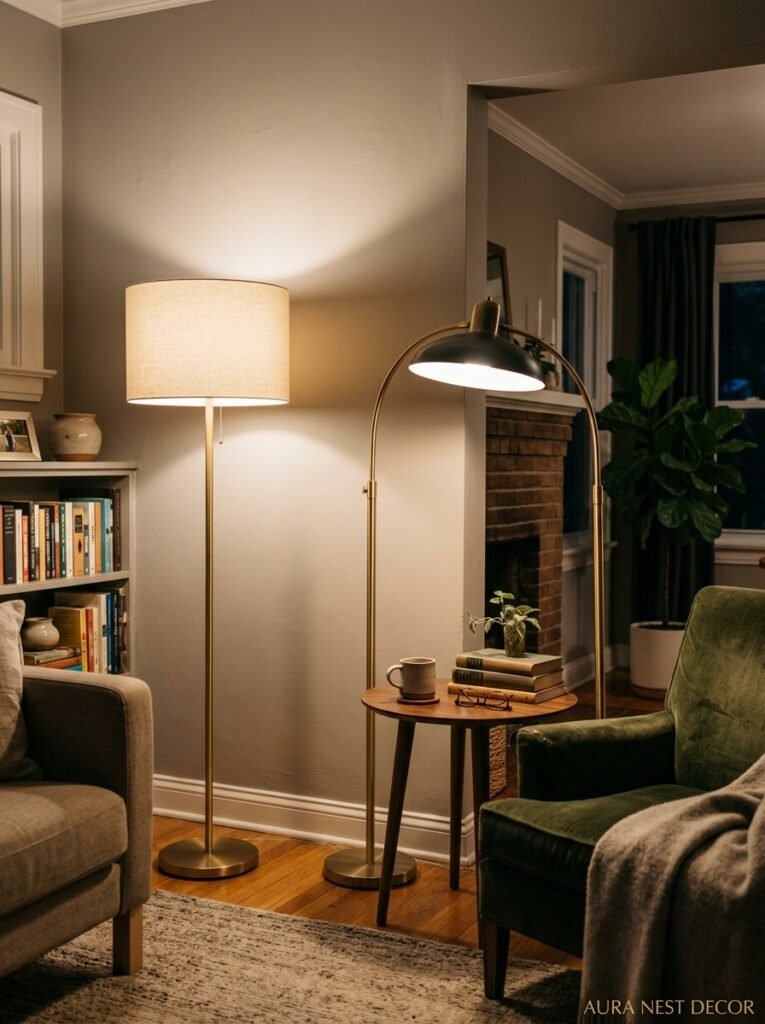
Ambient light. Task light. Accent light. These are the three types designers talk about, and for good reason — they’re genuinely useful categories once you actually understand them in a real room rather than a textbook.
Ambient is the background glow, the stuff that makes a room liveable at night without switching on the overheads. A torchiere floor lamp — the kind that points upward and bounces light off the ceiling — does this really well. It gives you that warm, diffuse, nobody’s-being-interrogated feel.
Task lighting is what you need when you’re actually doing something. Reading. Sewing. Going through an enormous pile of post you’ve been ignoring for three weeks. An adjustable pharmacy lamp or a swing-arm floor lamp is your friend here. Something with a shade that directs light downward, focused, no-nonsense.
Accent lighting is the fun one. It’s the lamp with the sculptural base you bought because it looked like art. It’s the skinny tripod lamp in the corner that you didn’t think would work but somehow completely does. It adds depth to a room — shadows and highlights where there’d otherwise just be a flat wall.
Most living rooms need at least two of these. The mistake is buying one lamp and expecting it to do everything.
—
3. Arc Lamps: The Interior Design Move That Looks Expensive and Isn’t
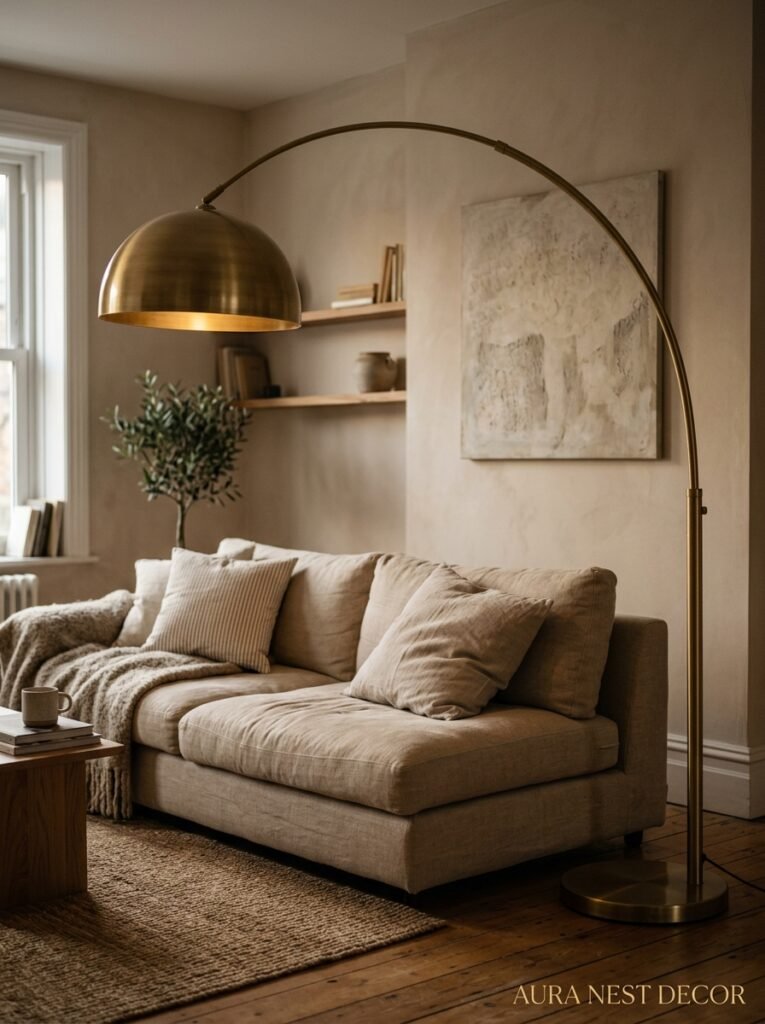
Arc lamps have had a moment. They’ve been having a moment, honestly, for about four years now, and they’re not stopping. You’ve seen them — that long curved arm sweeping out over a sofa or armchair, the shade hanging down like a pendant that never needed to be hardwired into your ceiling.
And the reason they keep showing up on every “dream living room” Pinterest board is that they solve a very specific problem elegantly. You want overhead light over a seating area, but you don’t want to rent a ladder or negotiate with your landlord. An arc lamp gives you that pendant-light effect without any of that drama.
The base matters more than people think. Marble bases look stunning and stay put — they’re heavy enough that you won’t accidentally knock the whole thing over. Concrete bases are having a quieter moment right now, more industrial, and they work beautifully in rooms with raw wood or exposed brick. Metal bases are fine, honestly, but they can feel a bit lightweight.
Side note — if you get an arc lamp, please position it so the arc goes over the sofa, not behind it. I cannot tell you how many times I’ve seen it set up the wrong way and the whole effect is lost.
—
4. The Shade Shape That’s Secretly Doing Most of the Work
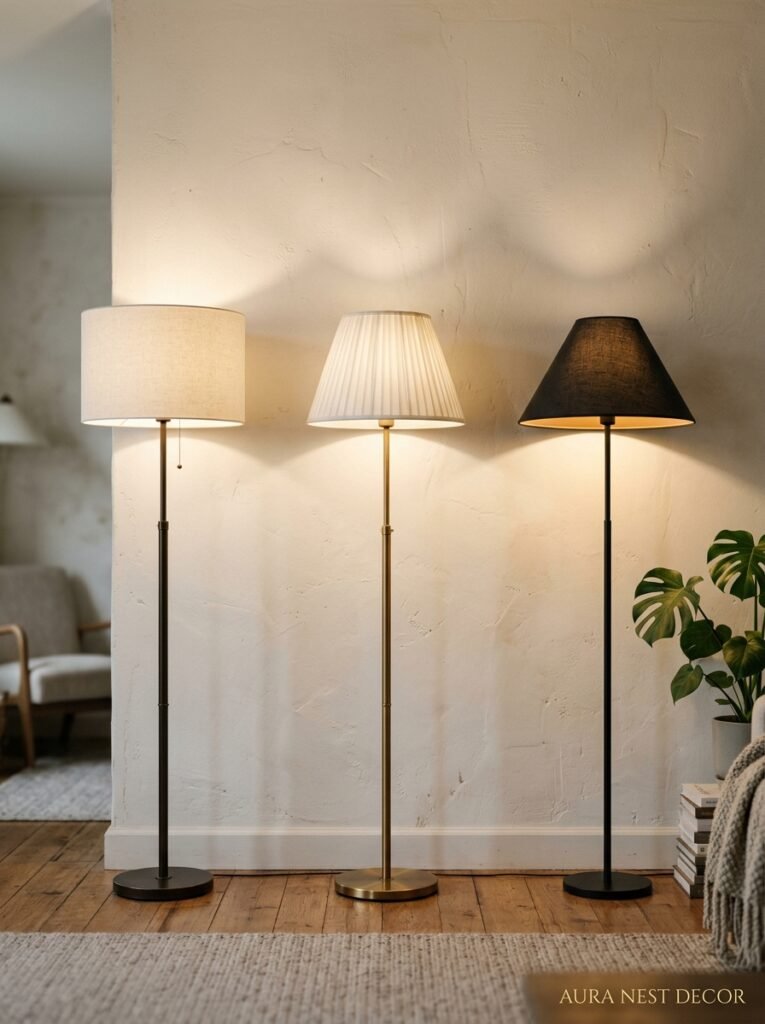
Everyone fixates on the lamp base. The marble. The brass. The interesting silhouette. And then they stick a drum shade on top without thinking about it, and wonder why the light feels wrong.
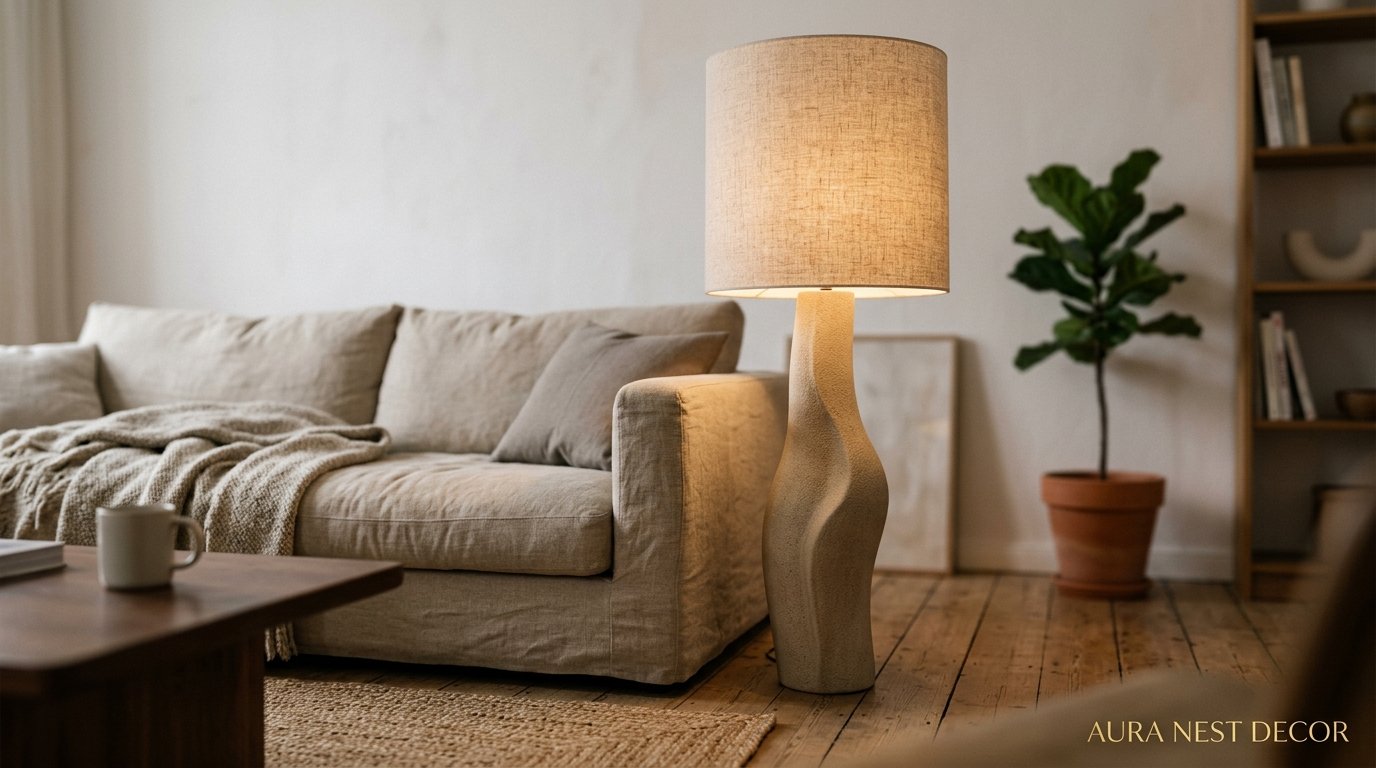
The shape of your shade determines where the light goes. Drum shades — perfectly cylindrical — throw light up and down in roughly equal amounts. They’re versatile, clean-looking, a solid default. But they don’t do anything particularly interesting.
Empire shades (wider at the bottom, narrower at the top) push more light downward and outward. They’re warmer, more traditional-looking, and honestly more flattering. If you’re going for a cozy, lived-in English country house sort of vibe — you know, the aesthetic that half of Pinterest is currently obsessed with — an empire shade in a warm linen or cotton is going to do a lot of heavy lifting.
“The right shade doesn’t just cover a bulb. It shapes the entire personality of a room.”
Coolie shades are the shallow, wide-brimmed ones that look almost like a hat. They throw light outward dramatically and create a beautiful glow around the lamp itself. Very mid-century. Very statement.
And then there are opaque shades — ceramic, metal, the kind that only let light through the bottom opening. These are dramatic. Focused. They’re not for every room, but in the right corner, positioned just right, they’re extraordinary.
—
5. The Bulb Temperature Conversation Nobody Wants to Have (But You Really Should)
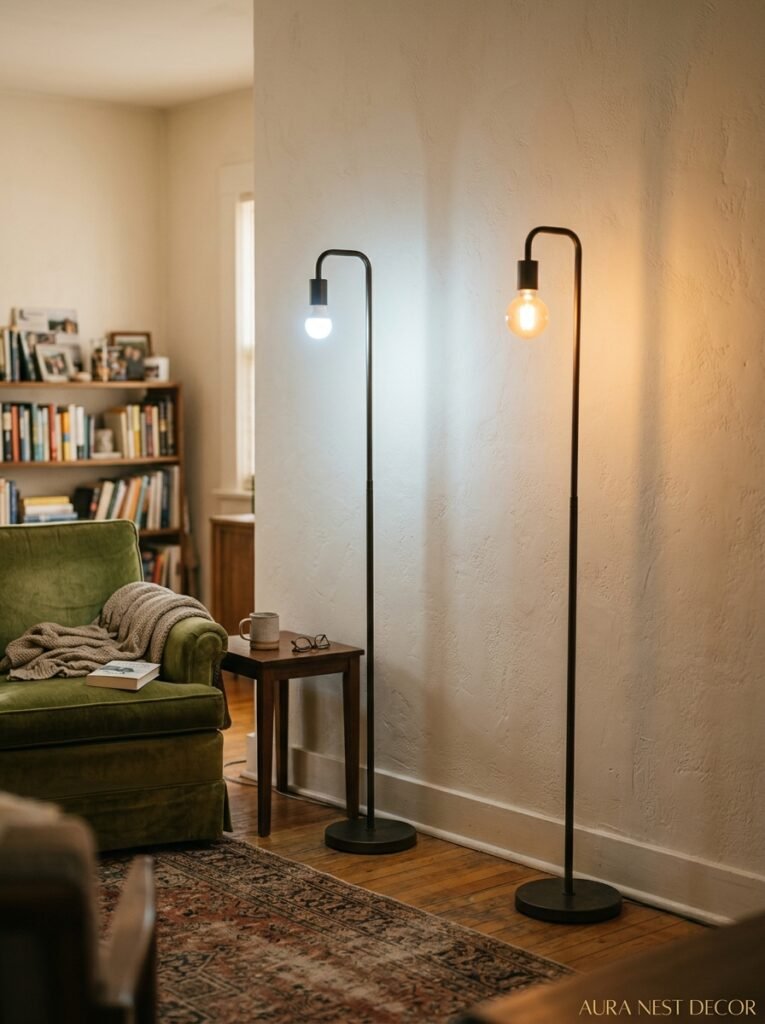
Okay, this is unsexy. Nobody’s pinning bulb temperature guides to their dream home boards. But I promise you it matters more than almost any other decision you’re going to make about your lamp.
Color temperature is measured in Kelvin. Lower numbers — 2700K, 3000K — are warm and yellow-ish. Higher numbers — 4000K, 5000K — are cool and white and feel a bit like a dentist’s office. For a living room? You almost always want to be in that 2700K to 3000K range. That’s the amber glow that makes everything look better, including the people sitting in it.
LED bulbs have gotten genuinely good now. The old argument that they felt harsh compared to incandescent? Not really true anymore if you’re buying decent ones. A warm LED in a nice shade, with a dimmer — this is the setup. This is what makes the room.
Dimmability deserves its own sentence. Get a dimmable bulb and a lamp with a dimmer switch. Because the difference between “reading light” brightness and “winding down at 9pm” brightness is enormous and you want to be able to control that without getting up and switching lamps.
—
6. What Your Living Room Layout Is Actually Telling the Lamp to Do
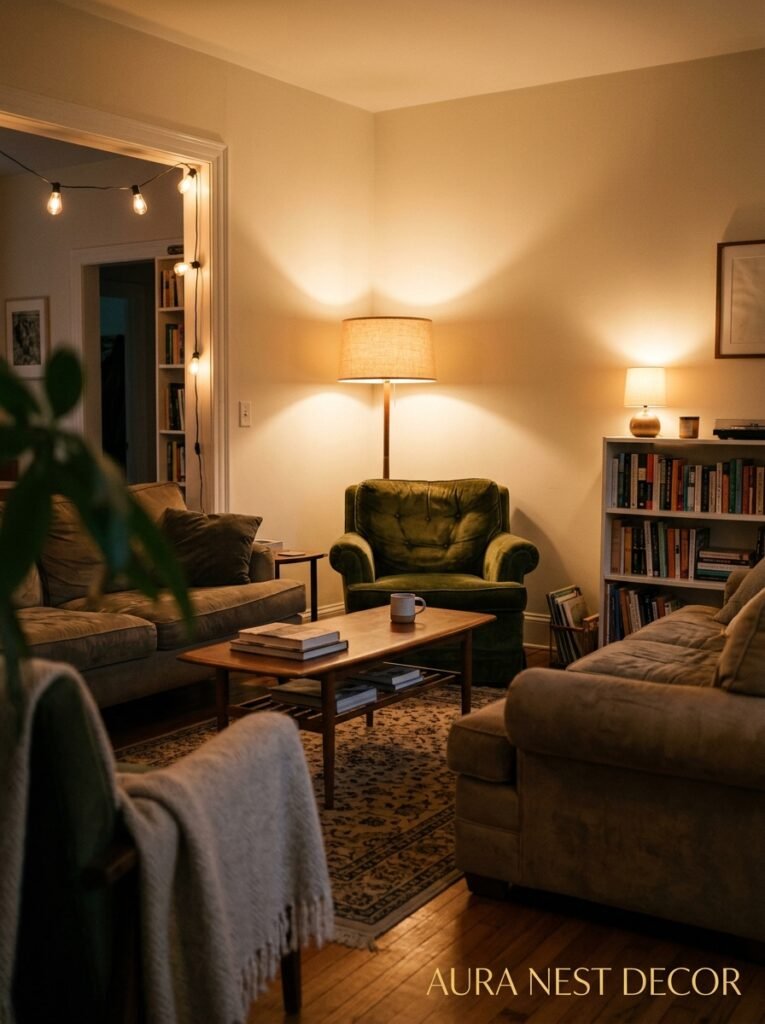
Here’s something I didn’t think about for years: the placement of a floor lamp isn’t just a lighting decision. It’s a spatial decision. A well-placed lamp defines zones in an open-plan room, anchors a furniture arrangement, and draws the eye to the parts of the room you want people to notice.
In a small living room, a lamp in the corner behind a sofa creates that layered depth thing — you’re not just seeing the furniture face-on, there’s something glowing behind it. Feels more expensive. More intentional.
In a bigger open-plan space, two floor lamps can do what no amount of overhead lighting can: they create multiple pools of light that feel like distinct little rooms within the room. One by the reading chair, one anchoring the sofa end. Suddenly that big open space has warmth in it.
Don’t fight your room’s bones. If you have a beautiful bay window that sits empty in the evening, a floor lamp there will make the room look amazing from both inside and outside. If you’ve got an awkward corner that nothing fills well, a tripod lamp with some visual interest does double duty — fills the space AND lights it.
—
7. Tripod Lamps: The One That Works in Almost Every Style of Room
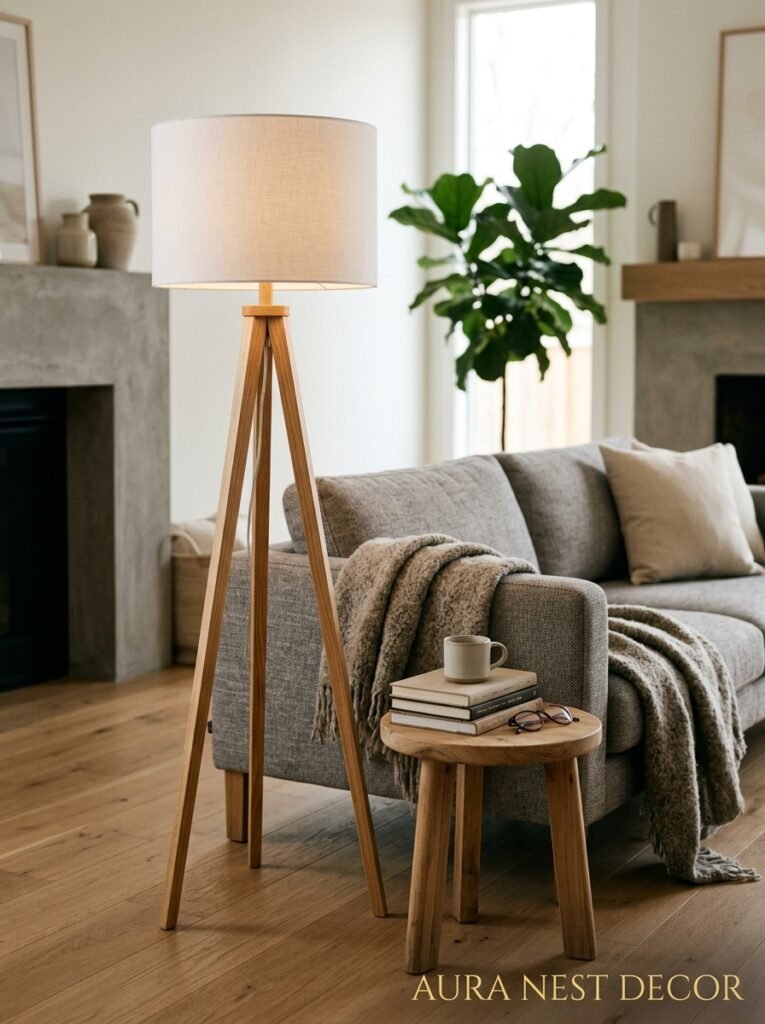
Tripod lamps are genuinely one of those rare things that works across almost every interior style without looking like it’s trying too hard. Scandi minimal? Yes. Bohemian layered? Also yes. Modern traditional (which is having an enormous moment right now)? Absolutely.
The three legs just do something structurally interesting that a single pole can’t replicate. They take up visual space without taking up floor space, if that makes sense. You can see through them. They feel lighter, more architectural.
“A tripod lamp in a bare corner isn’t just filling space — it’s giving the room a skeleton.”
Wood tripod legs are warm and natural, great for any room that’s leaning into texture and organic materials. Brass or gold metal legs are having a particularly good run at the moment — they catch the light in a way that feels curated without being fussy. Black metal tripods are graphic, almost sculptural, and they work brilliantly in rooms with strong lines and contrast.
The one watch-out: make sure the shade isn’t so large that it overwhelms the visual lightness of the tripod legs. The whole point is that open, airy quality. A massive Empire shade on a delicate tripod looks like it’s apologizing for itself.
—
8. The Color Palette Nobody Talks About When Choosing a Lamp

Most people think about the lamp in isolation. Does the base color work? Does the shade color work? And they forget entirely that the lamp is going to sit in a room with a whole bunch of other stuff that also has opinions.
Brass is the safe bet right now and has been for a while. It’s warm enough to sit with wood tones, bold enough to hold its own against white walls, subtle enough that it doesn’t fight with other metals in the room if they’re not too far apart in tone. Antique brass specifically — not too shiny, a little aged-looking — is having a massive moment in both US and UK interior circles.
Matte black is the alternative for anyone who finds brass too warm or too conventional. It reads as modern without feeling cold, especially when the shade is in a natural linen or warm cotton. A matte black arc lamp in a room that’s otherwise quite soft and textured does this beautiful tension thing.
White lamps — white base, white shade — are either brilliant or a mistake depending entirely on the room. In a very maximalist, colorful space, a white lamp gives the eye a place to rest. In a room that’s already quite pale and minimal, a white lamp just disappears. Not in a good way.
—
9. The Height Rule That Everyone Gets Wrong the First Time
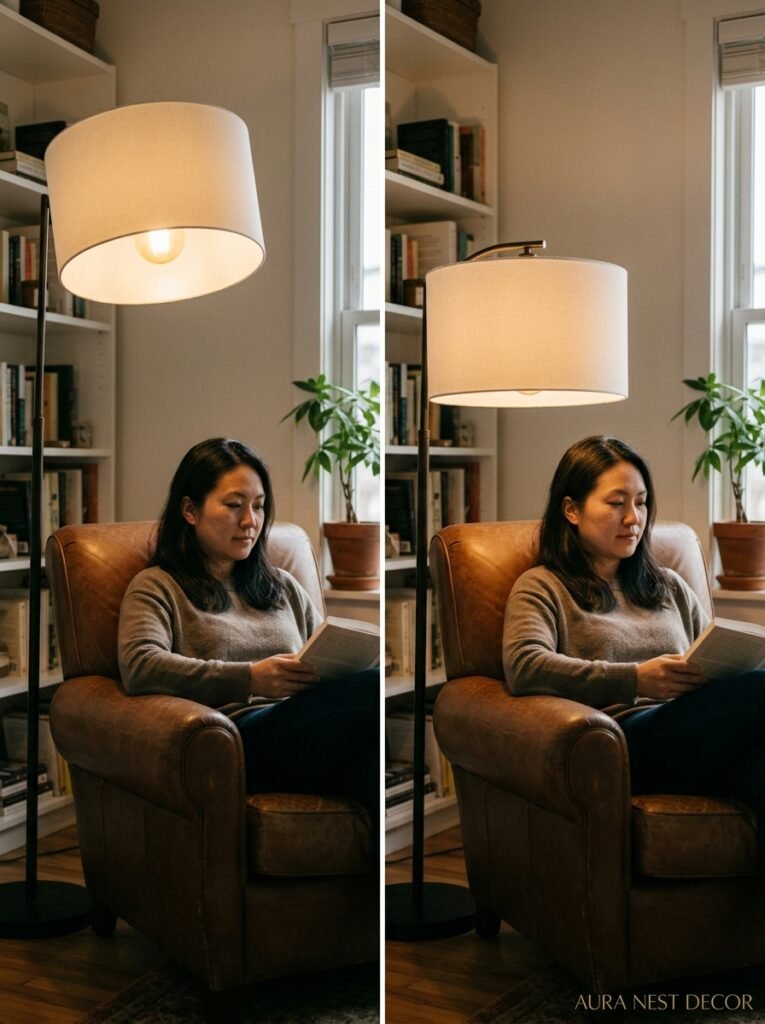
Standard floor lamps are usually around 58 to 65 inches tall. That’s your baseline. But “standard” doesn’t mean “right for your room” — and this is where a lot of people end up with lamps that feel weirdly tall or oddly short for no reason they can identify.
The general principle: when you’re using a lamp primarily for reading, the bottom of the shade should sit at roughly eye level when you’re seated. That puts the light source at the right height to illuminate what you’re reading without shining directly in your eyes. Simple, but so many people get this backward.
For arc lamps positioned over a sofa or chair, you want the shade to sit somewhere between 6 and 7 feet from the floor — high enough that nobody bonks their head on it, low enough that it actually feels like it’s in conversation with the furniture below it.
Torchieres can go taller because they’re bouncing light off the ceiling, not aiming it at anything specific. A very tall, slender torchiere in a room with high ceilings looks extraordinary. In a room with 8-foot ceilings, maybe less so.
—
10. Reading Nook Lighting That Actually Makes You Want to Use the Nook
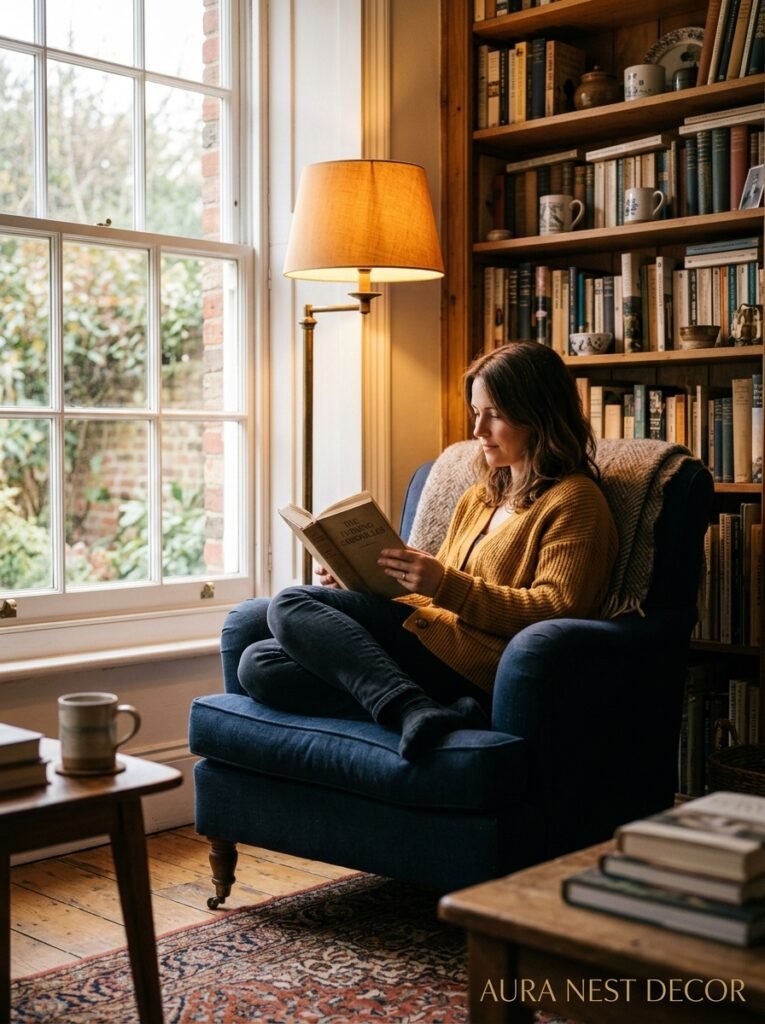
Reading nooks are one of those things where the fantasy and the reality can diverge pretty dramatically. The fantasy is a cozy corner with beautiful light and a pile of good books. The reality is often a corner where the lamp is either too bright or the wrong angle and after ten minutes your neck aches.
The pharmacy lamp is the reading nook MVP, and I’ll stand by that. Adjustable neck, directed light, usually not too expensive, comes in a range of finishes. A classic pharmacy lamp in aged brass or matte black, next to a good chair, with the head positioned just over your shoulder — that’s the setup.
Swing-arm floor lamps are also excellent for reading. They give you the directionality of a pharmacy lamp with a bit more range. Some people find them slightly less aesthetically interesting because the arm is utilitarian-looking, but the newer ones have gotten genuinely nice.
What you don’t want for reading is a torchiere, a tripod with a drum shade, or anything with an opaque shade that doesn’t direct light where you need it. They look beautiful. They’re useless for actually reading by.
—
11. The Living Rooms on Pinterest That Get It Right (And What They’re Actually Doing)
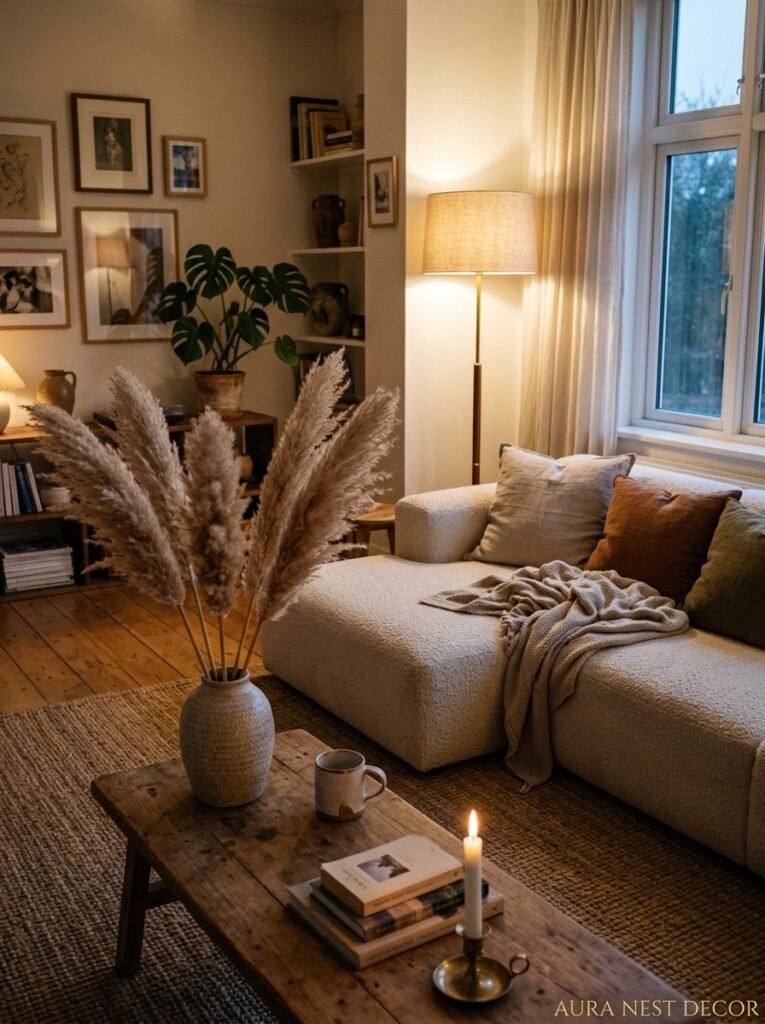
You’ve saved them. Those rooms. The ones that make you exhale a little. The ones where everything looks considered but not stiff.
Nine times out of ten, those rooms have at least two light sources at floor level and none of them are cheap. Not expensive necessarily, but considered. There’s usually an arc lamp or a torchiere doing ambient work, and something more focused — a pharmacy or tripod lamp — doing task or accent work nearby.
The shades are almost always in natural materials. Linen, cotton, rattan occasionally. Not white plastic, not frosted glass unless it’s very deliberate. The warmth of natural fabric shades is genuinely hard to replicate.
And the bulbs are warm. Almost without exception. You can tell by the golden quality of the light in the photos. Cool white light photographs differently, and when you live under it, it feels different too.
The other thing those rooms have in common: the lamps are on dimmers. They can be the main light source in the evening, intimate and warm, or they can be supplementary light during the day when the room doesn’t need them to work as hard.
—
12. The Lamp You Actually Need vs. the Lamp You’re Going to Buy First
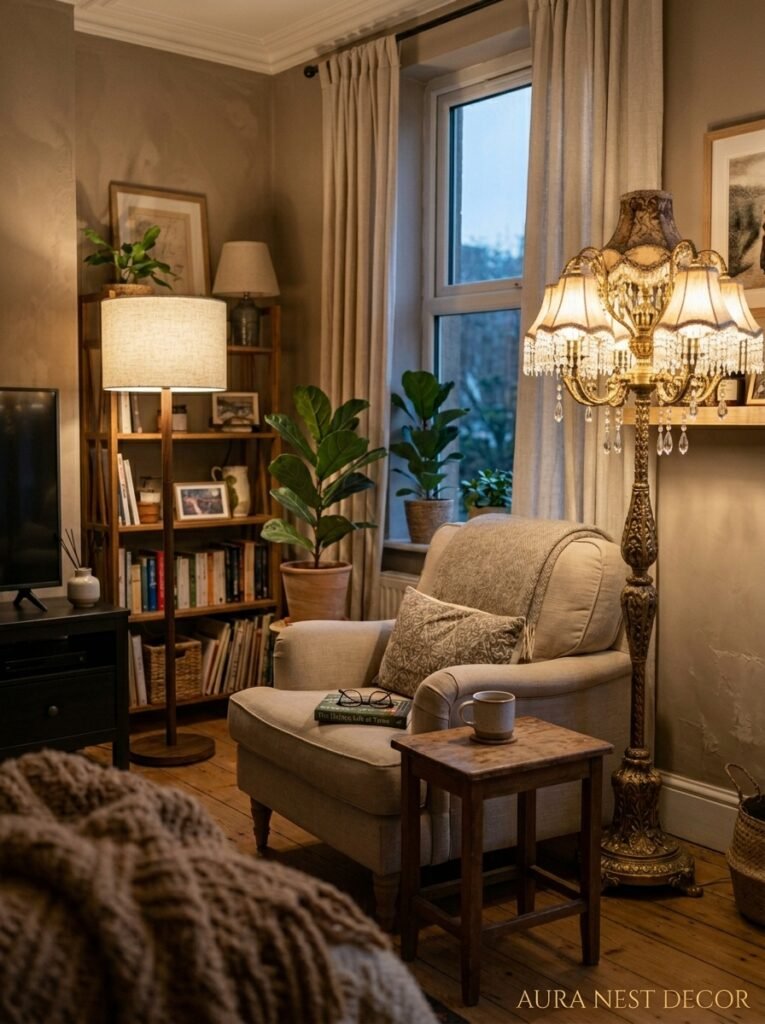
Most people — I say this with love, because I did it too — buy the lamp that looks best in the shop or in the thumbnail. The one with the interesting base, the pretty shade, the just-right finish. And they don’t think hard enough about what job it’s going to do in their specific room.
So here’s the question worth asking before you buy anything: what is the actual problem you’re solving? Are you trying to add warmth to a room that feels stark? Are you trying to light a specific chair for reading? Are you trying to fill an awkward corner with something that has presence?
Because each of those problems has a different answer. The most beautiful arc lamp in the world doesn’t help you if what you actually needed was a directed task light. A gorgeous torchiere does nothing if the room already has enough ambient light and what it needed was visual interest.
“Buy for the problem you have, not the aesthetic you want — and then find an aesthetic that solves it beautifully. Those lamps exist.”
They really do exist. And once you find the right one, you’ll understand exactly what it means when a room just feels right.
—
❓ FAQ
Q: How many floor lamps does a living room actually need? A: Most rooms benefit from two, sometimes three. One for ambient warmth, one for task lighting near your main seating. In a larger or open-plan room, a third can help anchor another zone or corner. One lamp doing everything usually means the room doesn’t feel quite right in the evenings without you knowing why.
Q: Are arc lamps safe to leave on? A: Generally yes, especially modern ones with LED bulbs, which run much cooler than old incandescent bulbs. The main things to watch: make sure the bulb wattage doesn’t exceed what the shade is rated for, and don’t position it so the shade is directly touching anything flammable. LED bulbs make this much less of a concern than it used to be.
Q: What’s the best floor lamp for a small living room? A: A slim tripod or a single-pole lamp with a relatively modest shade will give you the most visual light without eating floor space. Arc lamps can work surprisingly well in small rooms too — the arc keeps the base pushed out of the main traffic area while the light goes where you need it. Avoid very wide shade styles that visually crowd the room.
—
💭 Final Thoughts
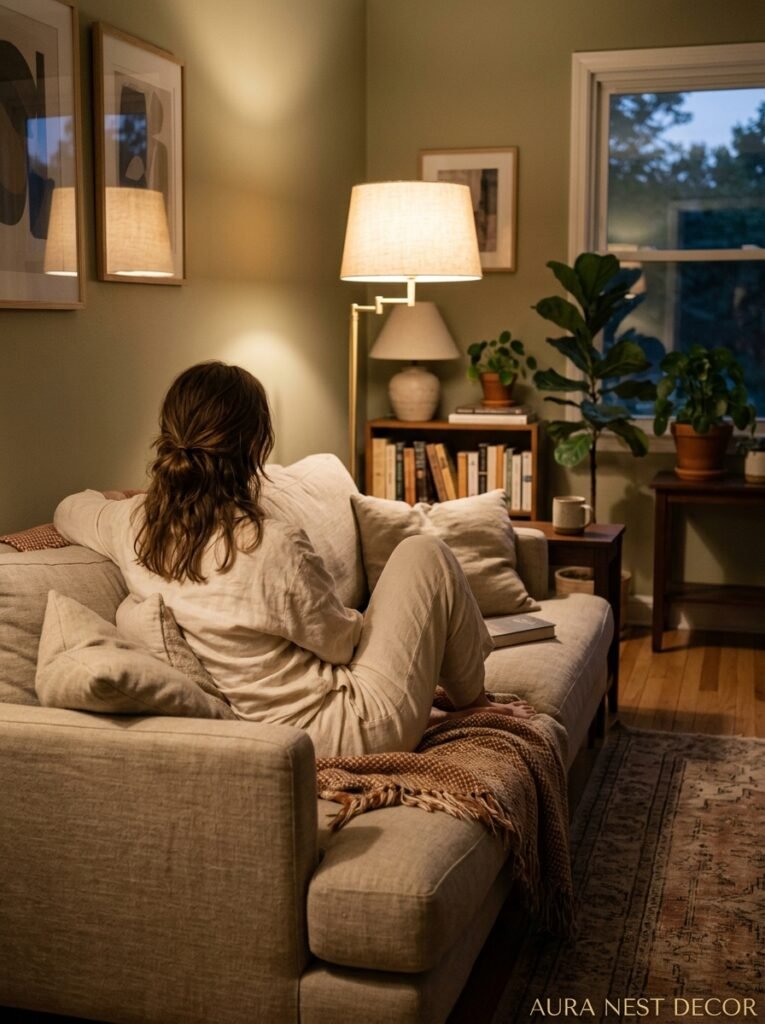
There’s something almost embarrassingly simple about what a good standing lamp does to a room. You move it two feet, swap the bulb for a warmer one, put it on a dimmer — and the whole space changes. It doesn’t have to be a project. It doesn’t have to be expensive.
It just has to be the right lamp, in the right place, doing the right job.
What’s the one corner of your living room that’s never quite worked — and do you think it might actually be a lighting problem?