The Accent Chair That Changed How I Think About My Entire Living Room
You know that moment when you move one piece of furniture and suddenly the whole room clicks? That happened to me with an accent chair. Just one chair. And I kind of can’t stop thinking about it.
—
1. Why Most Living Rooms Feel “Almost There” — And What’s Actually Missing
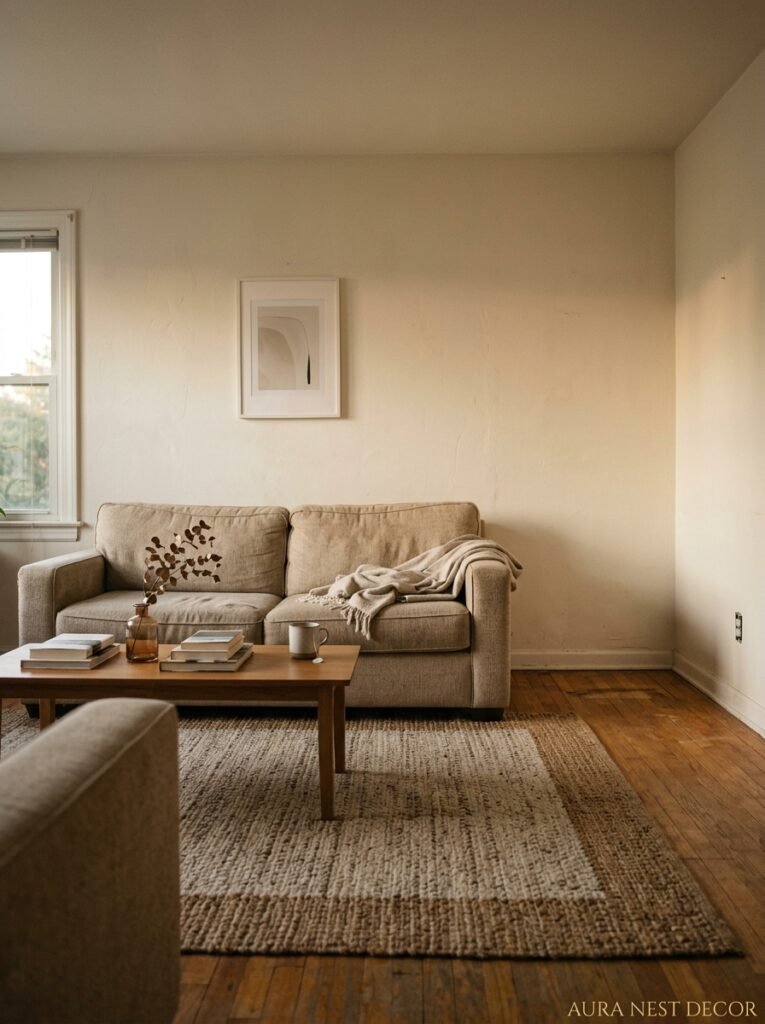
Here’s the thing nobody tells you when you’re setting up a living room. You can have the perfect sofa. The right rug. A coffee table that cost more than it should have. And the room still feels flat. A little… staged, maybe. Like a showroom instead of a home.
The culprit, nine times out of ten, is that there’s no point of difference. Everything’s too coordinated, too safe. It all says the same thing at the same volume. An accent chair is the thing that speaks at a different pitch. It’s the visual equivalent of someone in a great outfit walking into a room where everyone’s dressed the same.
I don’t mean you need something wild. I mean something that’s YOURS. Something that doesn’t obviously match, but somehow belongs. The chair that makes people sit down and go “oh, where did you get that?” — that chair is doing a lot of heavy lifting for your room. And the best part is, once you find it, the rest of the room suddenly looks more intentional too. It’s strange how that works.
“One chair that doesn’t match perfectly will make everything else look more considered.”
2. The Velvet Chair Trend That’s Not Going Anywhere (And Why That’s Fine)
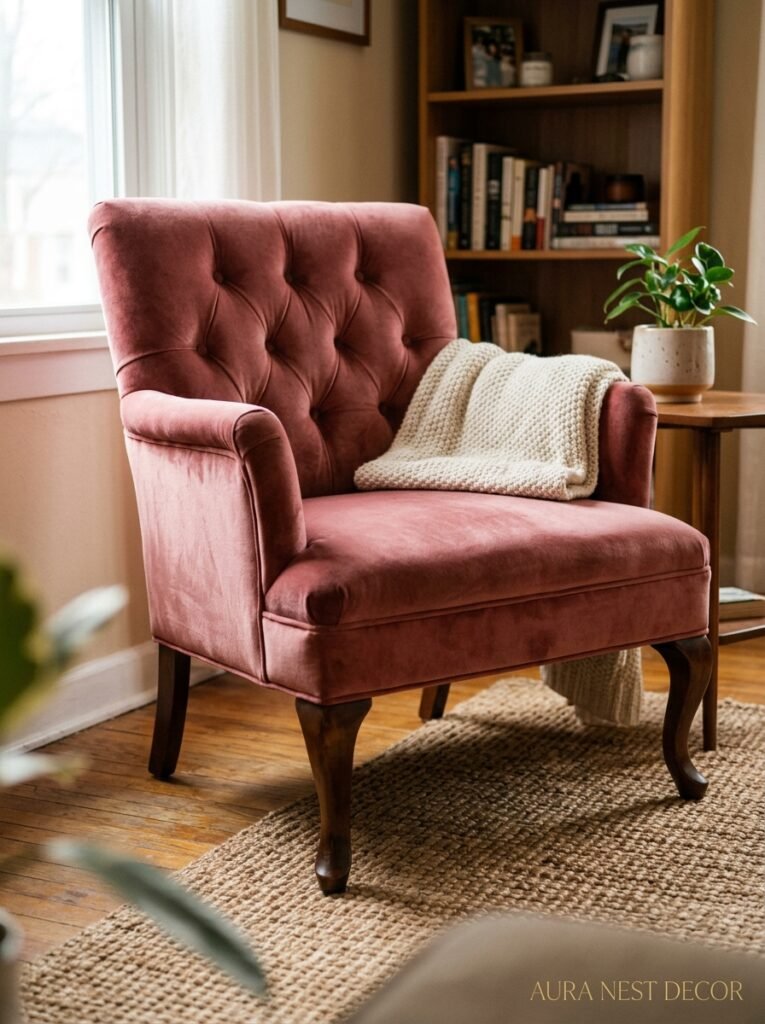
Let’s just address it. Velvet accent chairs are everywhere right now, and if you’re a little tired of seeing them, I get it. But here’s why they keep showing up — they genuinely work.
Velvet has this quality where it looks expensive without being expensive. A £180 / $220 velvet chair in a deep forest green or dusty rose can read as a serious design choice, not a budget buy. The texture catches light differently depending on the time of day. In the morning it looks muted and sophisticated, at night under a lamp it practically glows. That’s a lot of personality for one piece of furniture.
And the colour range for velvet chairs right now is honestly stunning. We’re seeing a lot of ochre, burnt sienna, deep teal. Shades that used to feel risky but now feel right. If you’ve been thinking about it and talking yourself out of it — maybe stop talking yourself out of it. The worst-case scenario is that you sell it on Facebook Marketplace and someone snaps it up in 20 minutes because everyone wants one.
3. The Shape That Interior Designers Keep Quietly Recommending
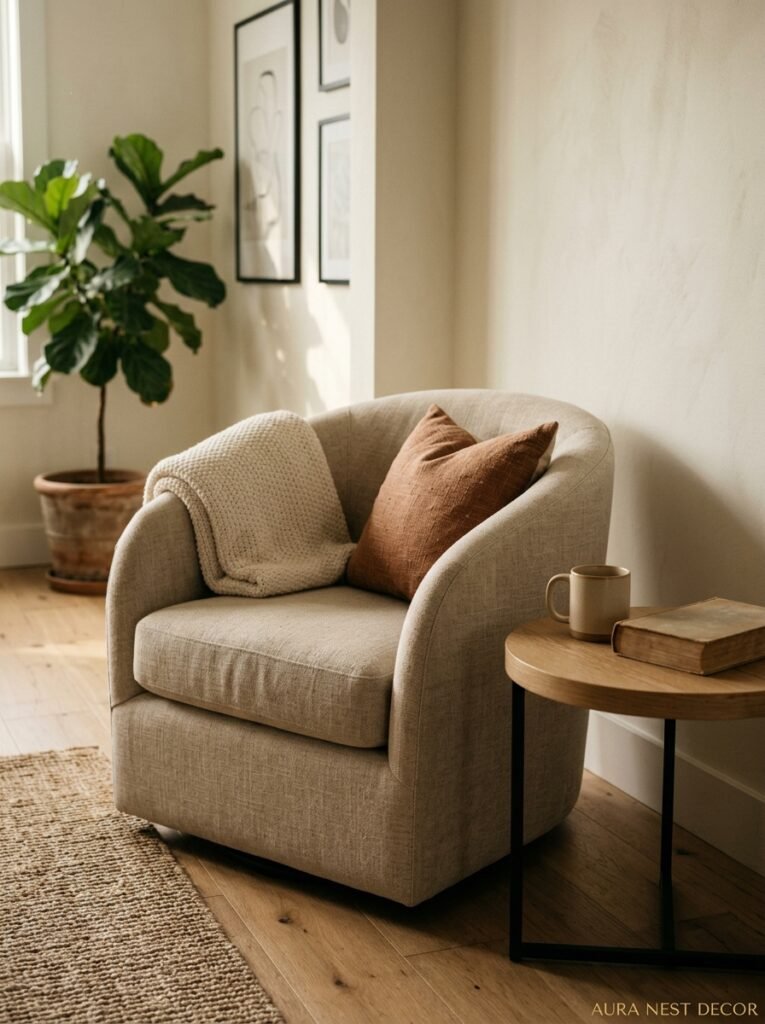
Not gonna lie, I spent a long time picking chairs based on colour and fabric and completely ignoring the silhouette. Big mistake. The shape is the thing that determines whether a chair looks like it was chosen or just placed.
Right now there’s a quiet consensus among decorators (at least every design account I follow obsessively) around chairs with curved backs. Not the big round egg-chair situation — though honestly, respect if that’s your thing. But that gentle arc to the backrest. The kind that looks like someone drew it with a single soft pencil stroke.
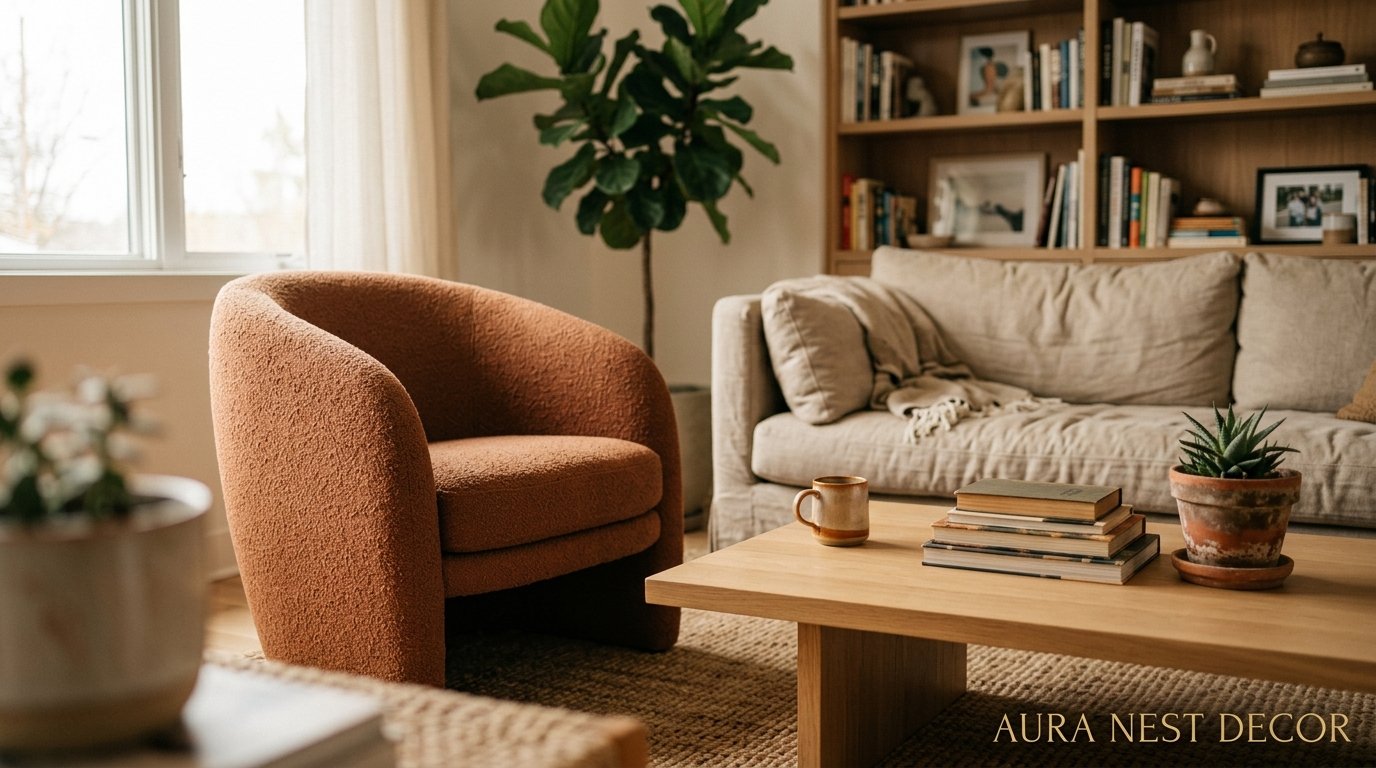
Curved backs soften a room. Especially in open-plan living spaces, which can get a bit sharp and boxy, a curved chair anchors a corner and makes it feel like a deliberate destination. Pair it with a small side table and a floor lamp and you’ve basically built a room within a room. A little reading nook, a place to put down a cup of tea, a spot that feels like it belongs to someone. It’s such a simple move and it lands so well.
4. The Chair Placement Rule That Nobody Actually Talks About
Everyone talks about which chair to buy. Almost nobody talks about WHERE to put it.
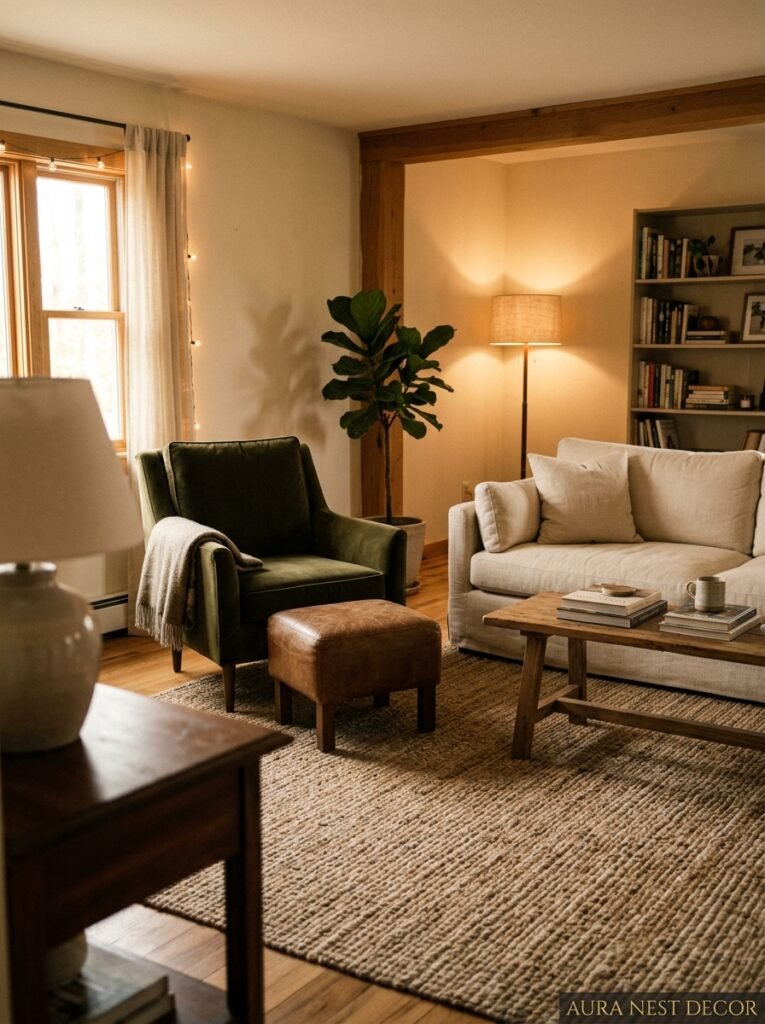
Most people shove the accent chair in a corner and feel vaguely disappointed when the room still doesn’t look like a Pinterest board. Here’s what’s actually going on: a chair in a corner is furniture storage. A chair angled slightly toward the sofa — maybe 30 degrees, maybe a bit more — is a conversation piece. Literally and figuratively.
That angle is everything. It says “someone sits here and talks to the people on the sofa.” It creates a triangle of furniture instead of a straight line, and triangles are visually interesting in a way that lines just aren’t. You don’t need a symmetrical setup with matching chairs on either side of a fireplace (though gorgeous, obviously). You just need that slight turn, that little suggestion that the chair is participating in the room rather than watching it from the side.
Also — and I feel strongly about this — don’t push it flush against the wall. Give it breathing room. A foot and a half of space between the chair and the wall makes it look styled. Right up against the baseboard looks like you ran out of ideas.
“A chair angled toward your sofa does more for a room than any throw pillow ever will.”
5. What British Living Rooms Get Right That American Rooms Often Miss
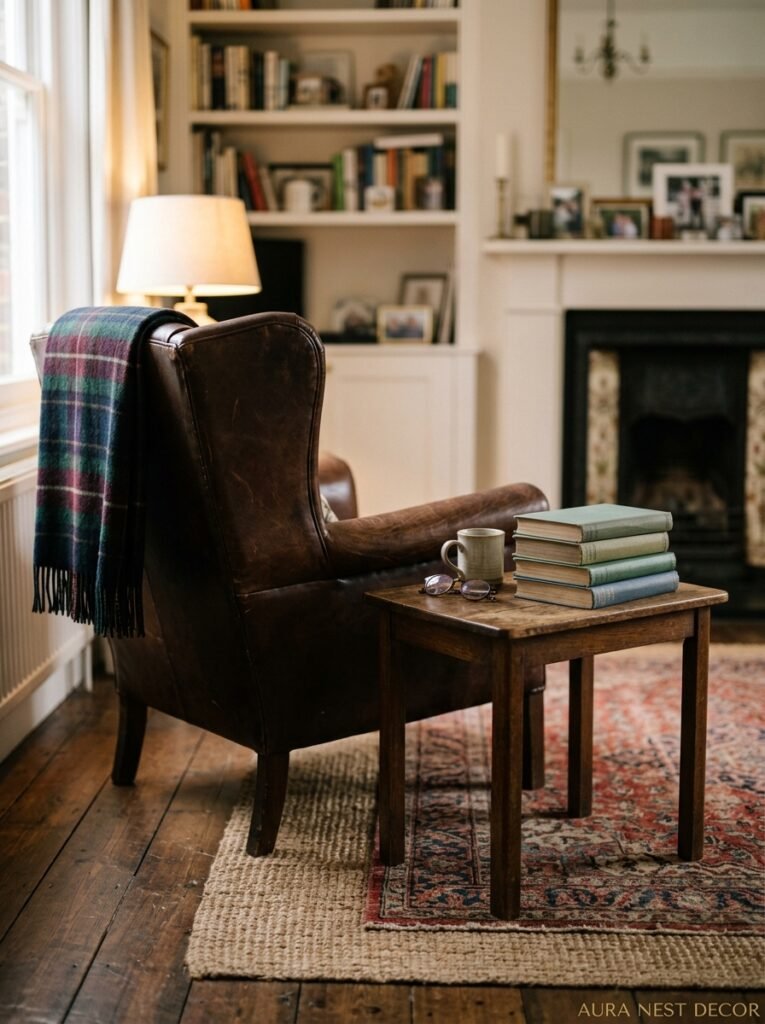
This is purely observational but I think it’s interesting. British living rooms — especially older homes with their awkward alcoves and chimney breasts and odd proportions — tend to use accent chairs out of necessity. There isn’t always room for a second sofa. So the accent chair isn’t a bonus, it’s a functional seat.
And that constraint produces something beautiful. The chairs tend to be more interesting. More individual. Often older, or at least vintage-looking. A wingback recovered in a bold check, or a small slipper chair that’s been in the family. They’re not trying to match anything — they just have to fit and look right.
American living rooms, on the other hand, tend to go bigger. More sofa, more space, and the accent chair can feel like an afterthought in a larger floor plan. The antidote is actually the same: choose a chair with a distinct personality, give it a proper little “zone,” and treat it like a real seat instead of decorative overflow.
Both countries have a version of the perfectly imperfect living room in them. It just takes a chair with a bit of a character to get there.
6. The Reading Nook Setup That Takes Under an Hour to Pull Off
I’ve seen so many elaborate reading nook renovations on Pinterest. Built-in shelves, custom window seats, wallpapered alcoves. Beautiful. Also, involves contractors and a budget conversation I’m not ready to have.
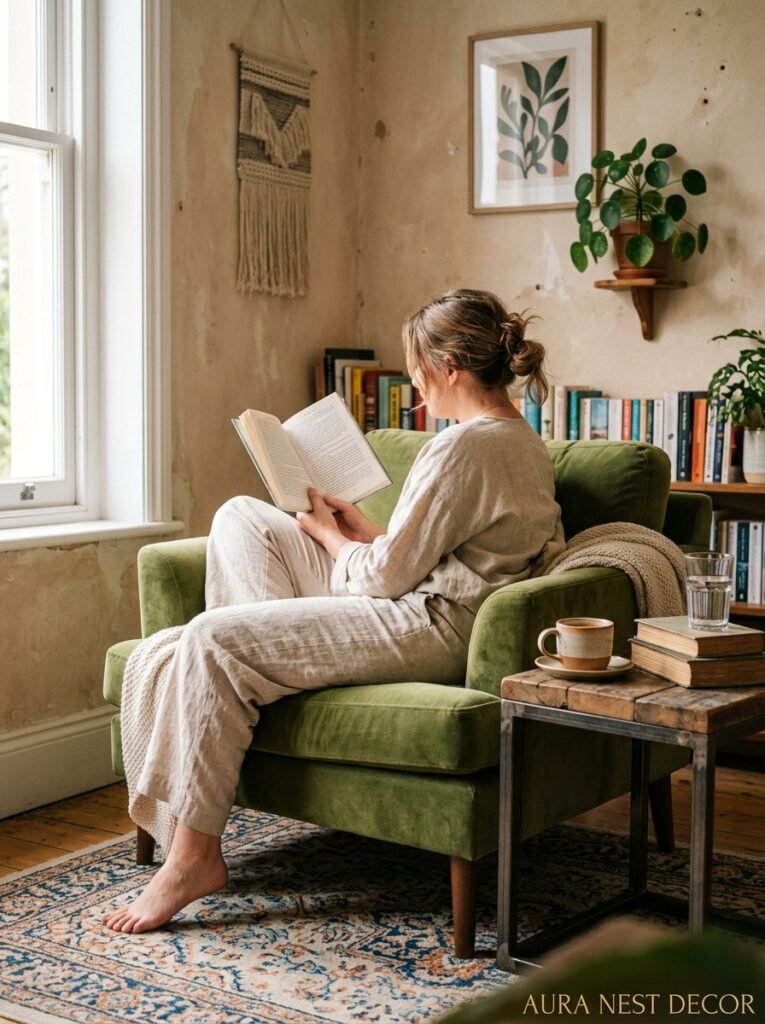
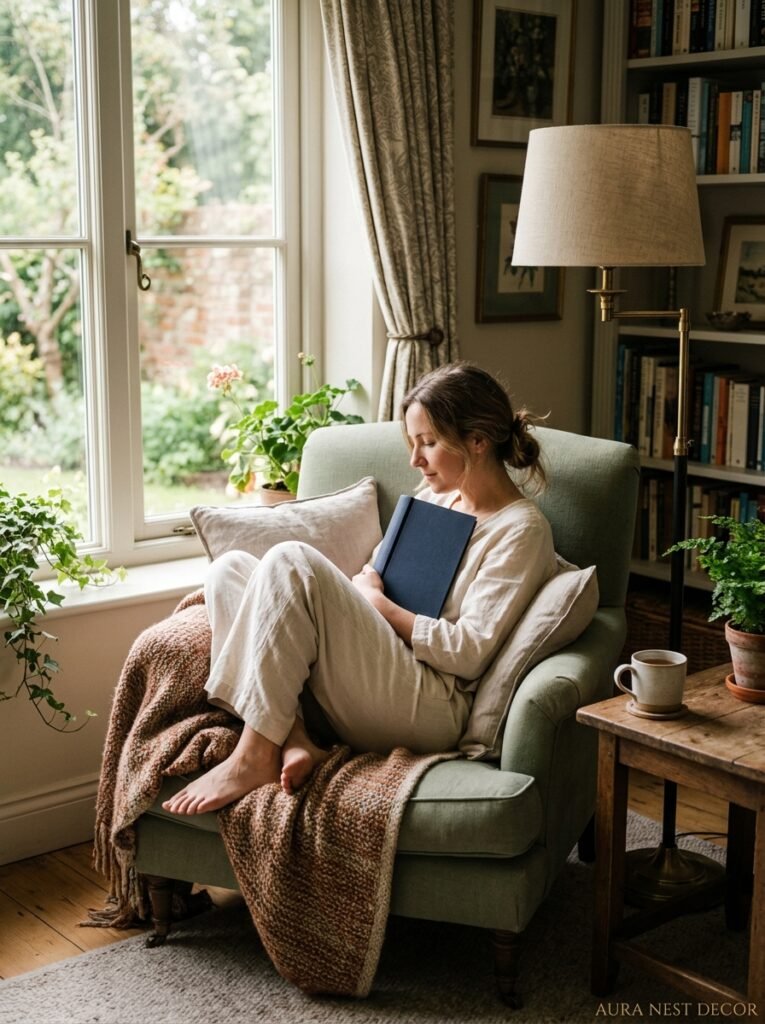
Here’s the fast version. Accent chair with arms (important — you want somewhere to rest your book). Small side table that comes to about the height of the chair arm. A floor lamp positioned just behind and to one side of the chair so the light falls where you’d actually hold a book. One throw blanket. Done.
That’s it. That’s the whole thing. You don’t need a designated alcove or a bay window or even good natural light. The lamp does the work. And there’s something specific about a floor lamp behind an accent chair — the light pools down and creates this little cone of warmth that the rest of the room doesn’t have. At 9pm when the overhead lights are off and just the floor lamp is on, that corner looks like something out of a catalogue. Takes about 45 minutes to set up and costs less than you think.
7. Fabrics That Age Well vs. the Ones You’ll Regret
So you’ve fallen in love with a chair online. The photo is incredible. But it’s upholstered in something that looks like linen. And you have a dog. Or a child. Or, like most of us, some combination of the two.
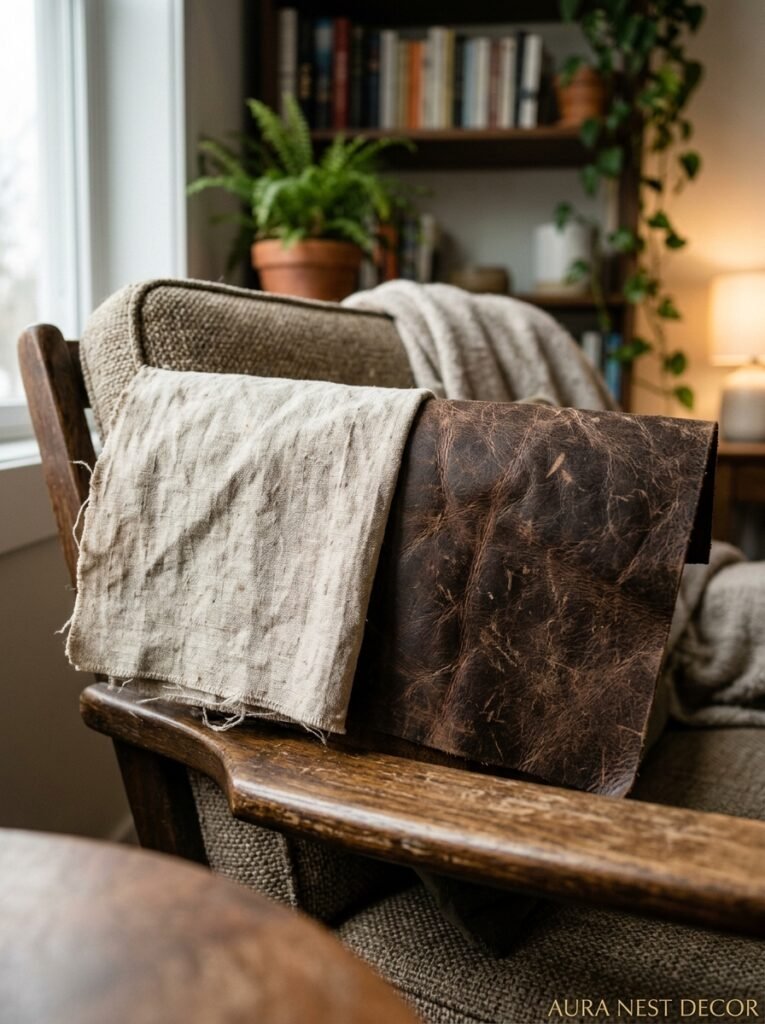
Let’s be honest about fabrics. Open-weave linens and loosely woven textures look gorgeous in photographs and pick up every single hair, crumb, and mysterious stain in real life. If you’re buying an accent chair for a room where life actually happens, you want something with a tighter weave. Velvet, counterintuitively, is actually pretty easy to maintain — the pile flattens around marks rather than absorbing them, and a quick once-over with a soft brush usually sorts it out. Performance fabrics that mimic the look of linen or boucle are GENUINELY worth paying a bit more for now.
Boucle, by the way — the textured loopy fabric that’s been all over every design account since about 2021 — does age, and it does pull. If you’re putting it in a low-traffic spot, it’s dreamy. If it’s the main seat in a busy room, budget for the fact that it won’t look showroom-fresh after year two.
“The fabric you fall in love with in the photo and the fabric that survives your actual life are rarely the same thing.”
8. Colours That Work With Everything (Even When You Think They Won’t)
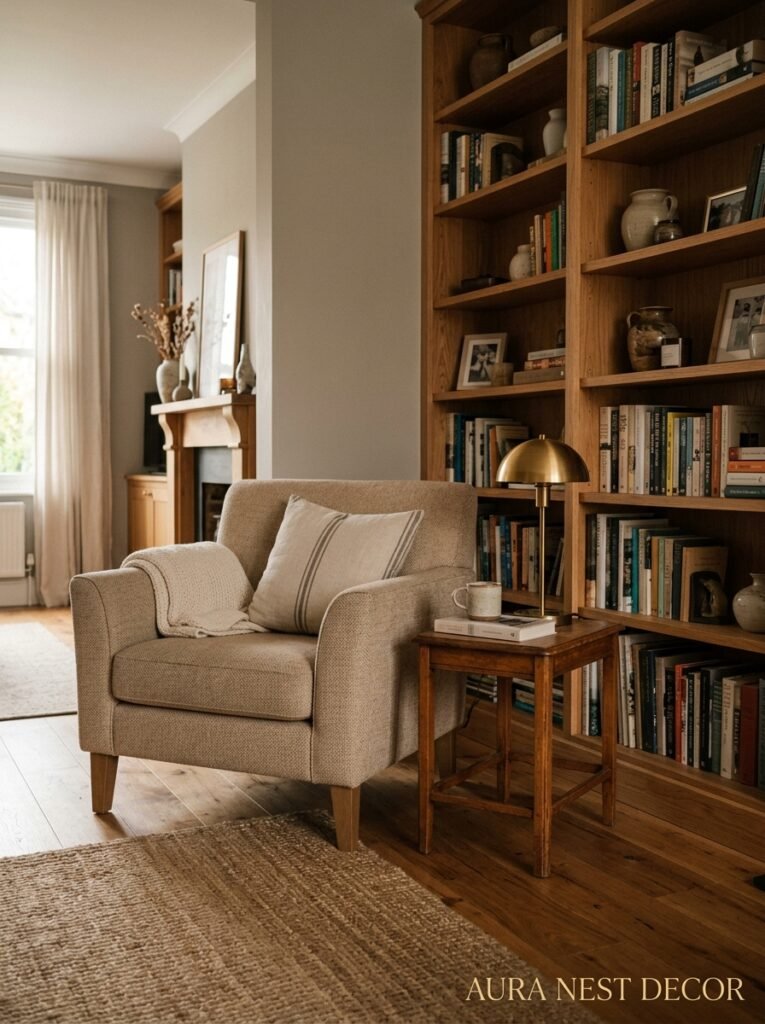
Here’s a colour I didn’t expect to be recommending: terracotta. I know. It sounds like 2019. But a terracotta accent chair in a room with white walls and natural wood tones does something almost impossible — it makes the whole room feel warmer without you having to change a single other thing.
The other one is a deep, saturated navy. Not the safe medium blue that matches everything and surprises no one. A proper dark navy, almost ink-blue. Against a neutral sofa it looks sharp. Against a warm grey it looks expensive. Against white walls it looks like a deliberate choice, which is all any accent chair is really trying to do.
Mustard yellow still works if you’ve been on the fence. It’s one of those colours that photographs insanely well, which on Pinterest is more important than people admit. And sage green — that muted, dusty green that pairs with absolutely everything — isn’t going anywhere. If you want a chair you’ll still love in five years, sage green velvet or boucle is honestly a very safe bet. Or maybe safe is the wrong word. Confident. That’s the word.
9. Small Living Room? Here’s the Chair Style That Won’t Eat the Space
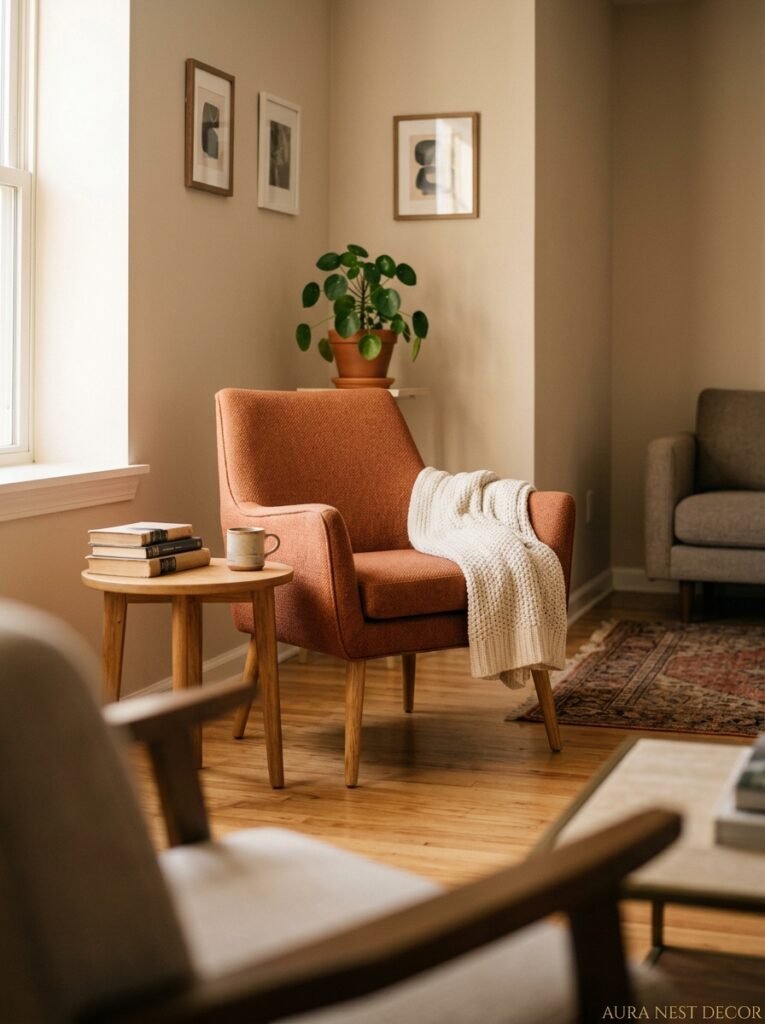
Small living rooms are a different problem and they need a different approach. The mistake people make is going too small — choosing a little accent chair because they’re afraid of scale, and ending up with something that looks like it belongs in a children’s room.
Counter-intuitive truth: a mid-sized chair with open legs reads smaller than a tiny chair that’s fully upholstered to the floor. Open legs let you see the floor beneath the chair, which makes the room feel bigger. A squat, fully upholstered armchair with no legs visible is visually heavy in a way that takes up more space than it actually occupies.
So look for chairs with slim legs — ideally in wood or brass. A barrel chair on tapered walnut legs. A small slipper chair lifted off the ground just enough to see the floor underneath. Keep the upholstery in a colour that isn’t too far from your wall colour if the room is tiny — contrast reads heavier. And don’t skip the accent chair just because the room is small. A small room with one genuinely interesting seat looks curated. A small room with only a sofa looks like a waiting area.
10. The Lamp + Chair Combination That Interior Designers Use Like a Formula
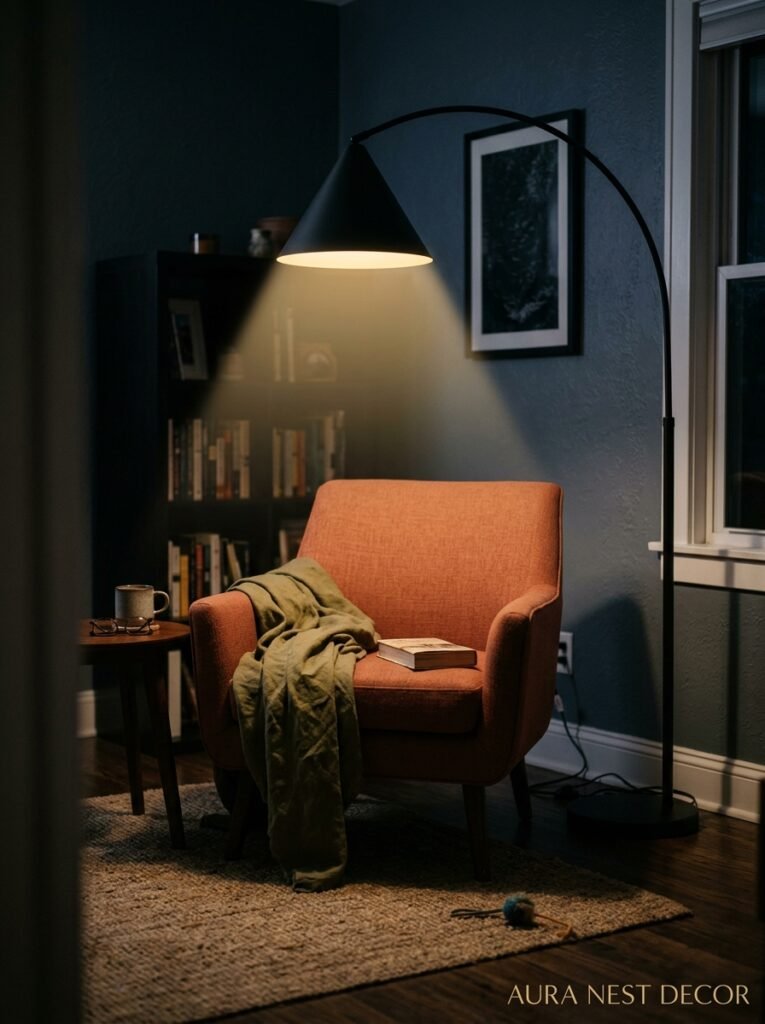
There’s a reason you keep seeing this in styled rooms and not knowing why they look so good. Floor lamp, accent chair, small round side table. The Holy Trinity of a living room corner.
The lamp should be taller than the back of the chair. Arc lamps — the ones with the long curved arm — are perfect here because they reach over the chair and illuminate from above, the way natural light from a window would. A straight floor lamp can work too if it’s positioned behind and beside the chair, not directly in front of it.
The side table needs to be roughly arm height. This sounds obvious but I’ve seen so many setups where the table is either too low (you have to lean down to reach your drink) or too high (looks like a lectern). The sweet spot is where you can rest your elbow on the chair arm and your hand naturally falls to the tabletop. That’s the height. And round tables look better next to chairs than square or rectangular ones — something about the curves connecting.
Get the lamp, get the chair, get the round table. Put a candle or a small plant on the table. Now stand back and look at it. That’s the corner that photographs well, that everyone comments on, and that you’ll actually sit in every day.
11. Where to Actually Find Good Accent Chairs (Without Buying Junk)
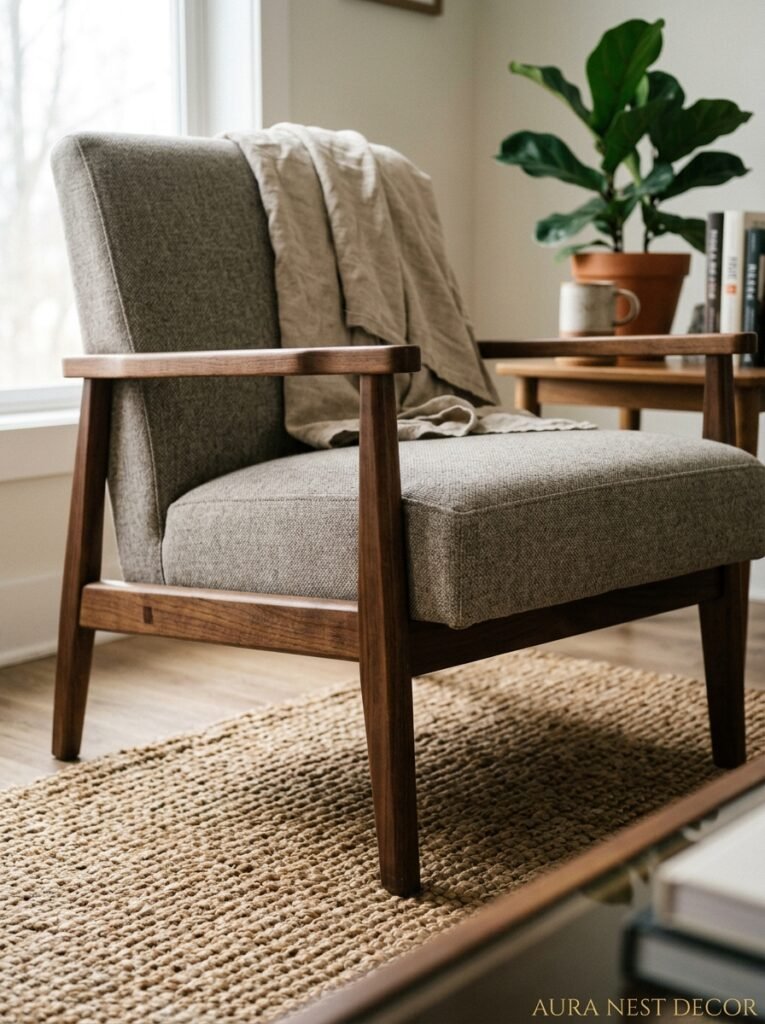
Okay, real talk. There’s a huge range in quality and a huge range in price, and they don’t always correlate the way you’d hope.
For the US: West Elm has good bones and goes on sale regularly — worth waiting for 30% off before buying. Joss & Main and Wayfair are hit or miss, so read reviews specifically about fabric quality and whether the chair is as firm/sturdy as pictured. Article does consistently solid work in the mid-price range and their chairs hold up. For a real find, check Facebook Marketplace and Craigslist — vintage accent chairs from the 70s and 80s often just need reupholstering and have much better frames than new budget options.
For the UK: Made.com went bust, which is a tragedy. Swoon is good, La Redoute consistently surprises me with quality at the price. John Lewis for peace of mind and returns. And honestly, eBay and Vinted for vintage chairs are SO underrated — a Victorian-era tub chair reupholstered in a contemporary fabric is one of the best things you can put in a British living room, and you can do it for well under £300 if you’re patient.
The thing to avoid at any price point: chairs where the frame wobbles when you sit in them, chairs with staple-gun upholstery you can see on the underside, and chairs that are described as “accent” but are clearly dining chairs wearing a different hat.
12. The Permission Slip to Stop Matching and Start Mixing
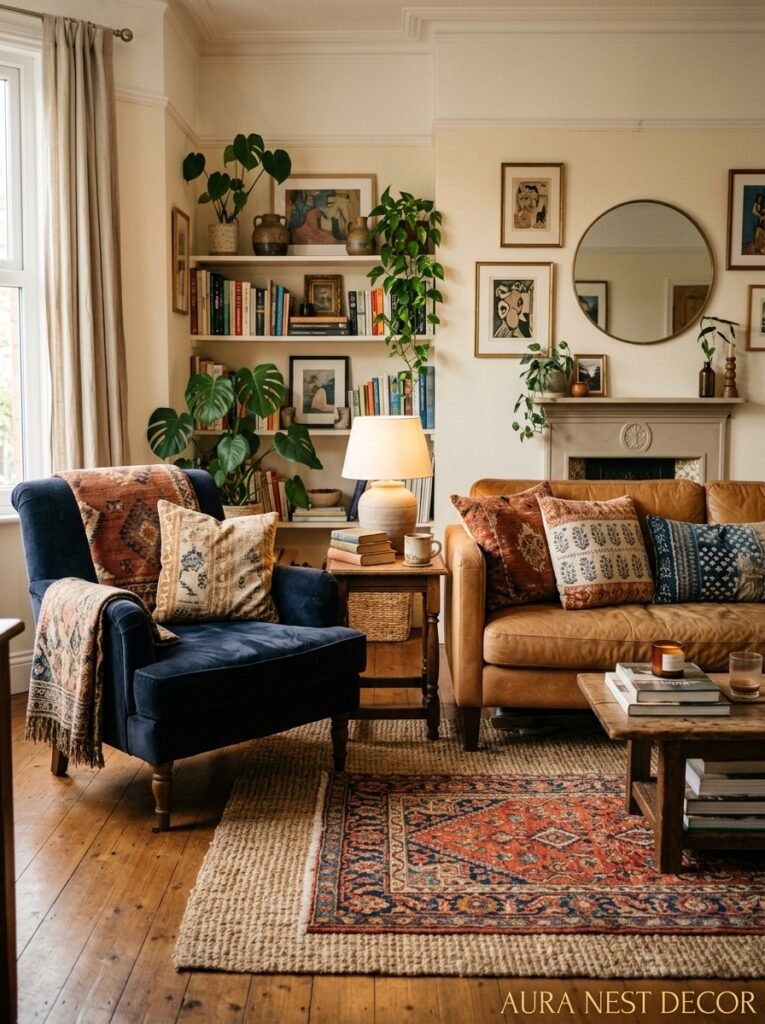
This is the one I want to end on, because I think it’s the one that actually holds people back.
You don’t need to match the accent chair to your sofa. You really don’t. You don’t need to pull a colour from the rug or coordinate it with the cushions or make sure the wood tones are identical. That approach produces rooms that look like showrooms. And showrooms don’t feel like anybody lives there.
Mix the metals. Mix the wood tones. Put a velvet chair in a room with a leather sofa. Put something floral in a mostly neutral space. The only rule that matters is that there’s some connecting thread — scale, a colour echo, a similar vibe. Not a matching set.
The rooms that feel genuinely beautiful and personal are almost always the rooms where someone made a choice that could have gone wrong and didn’t. An accent chair is the easiest way to make that choice. It’s one seat. If it doesn’t work, you move it, sell it, or give it a different room. But more often than not, the slightly unexpected chair is the one that makes the whole room feel alive.
Give yourself permission to pick the one you actually love. Not the safe one. The one you keep coming back to.
—
❓ FAQ
Q: How much should I realistically spend on an accent chair that lasts? A: For a chair you’ll use regularly, somewhere between $300–$600 in the US or £200–£450 in the UK tends to be the sweet spot where quality construction actually starts showing up. Below that you’re often gambling on the frame. That said, a vintage chair reupholstered can give you better quality for less — the older frames are frequently more solid than modern budget options.
Q: Can I put two different accent chairs in the same living room? A: Yes, and it often looks better than two matching ones. The key is keeping something consistent — similar leg height, a colour that echoes between them, or a shared mood (both vintage, both modern, both soft in silhouette). Two chairs that share one characteristic but differ in everything else usually read as intentional rather than chaotic.
Q: My living room is open-plan — where does the accent chair actually go? A: In open-plan spaces the accent chair is brilliant for defining a “zone.” Use it to anchor the living area, positioned slightly toward the sofa so it closes off the seating group and creates a visual boundary between the living space and whatever else is going on in the room. A rug underneath both the sofa and the chair reinforces that zone and makes the whole thing feel cohesive.
—
💭 Final Thoughts
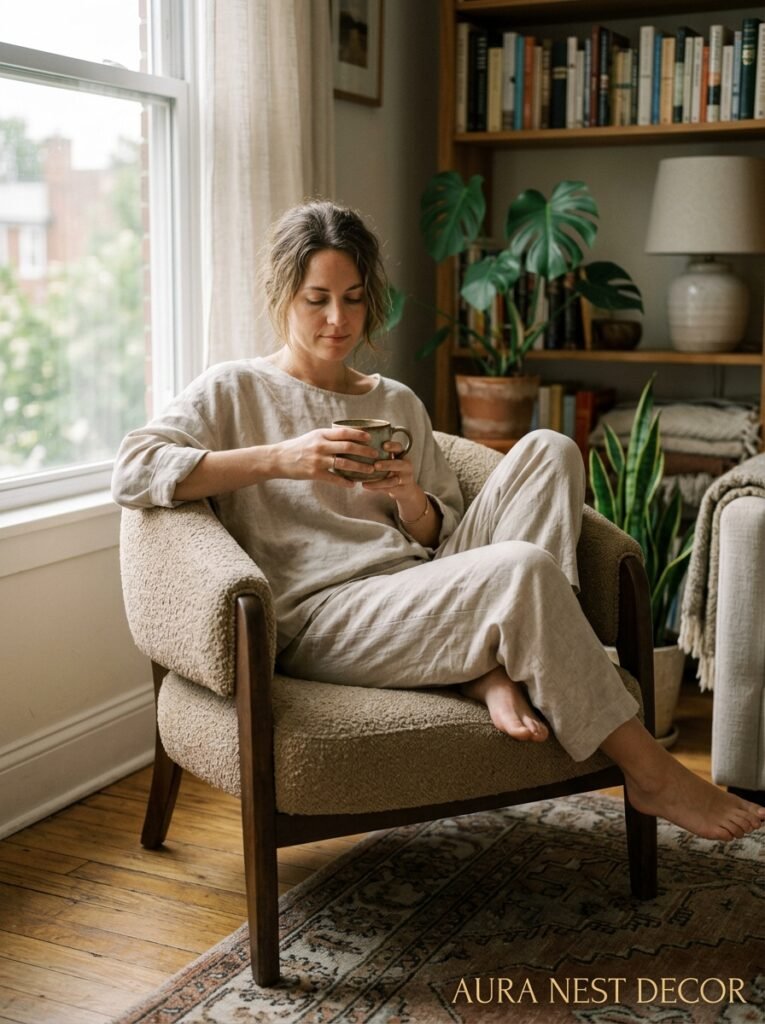
One chair. That’s genuinely all it takes to change the feeling of a room. Not a renovation, not a new colour scheme, not starting over. Just one seat with a personality, placed with a little intention.
The living rooms I keep going back to look at — on Pinterest, in magazines, in people’s actual homes — always have that one piece that makes you think “oh, that person has a point of view.” And it’s usually the chair.
What’s the chair you’ve been talking yourself out of?