Living Room Tiles Are Having a Moment — And I’m Not Going Back to Carpet
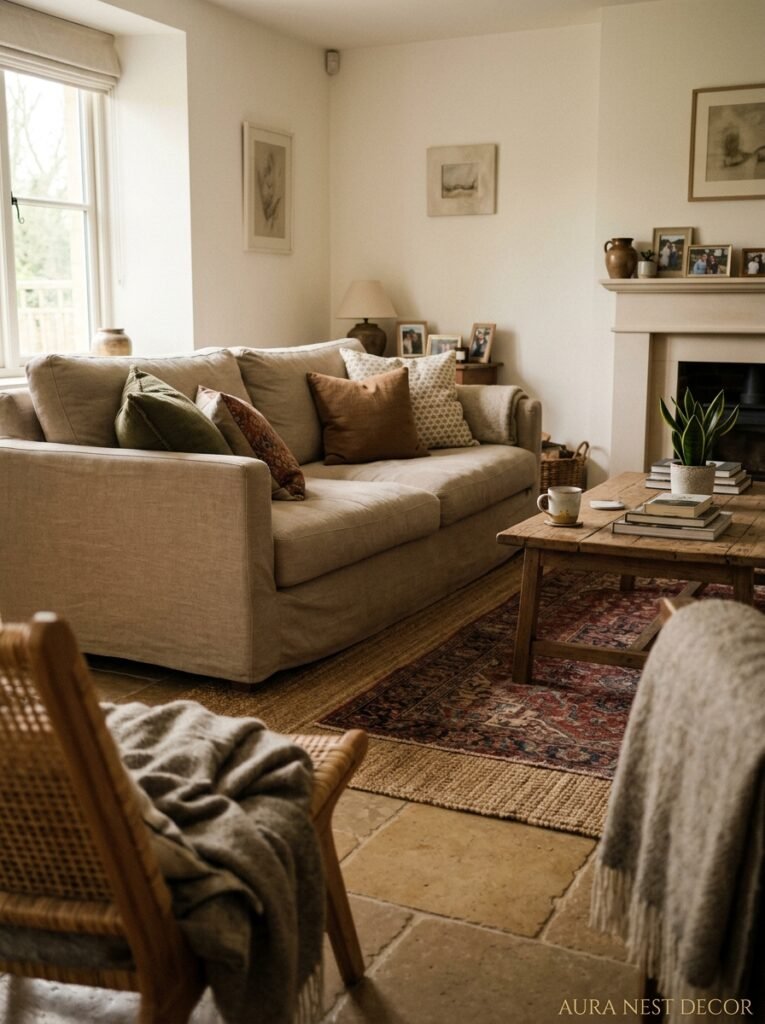
You know that feeling when you walk into someone’s house and the floor just stops you? Not the furniture, not the art. The floor. That’s what a good living room tile does. And once you’ve seen it done right, you’ll never look at beige carpet the same way again.
—
1. Why Everyone’s Suddenly Ripping Up Their Living Room Carpet (And What They’re Finding Underneath)
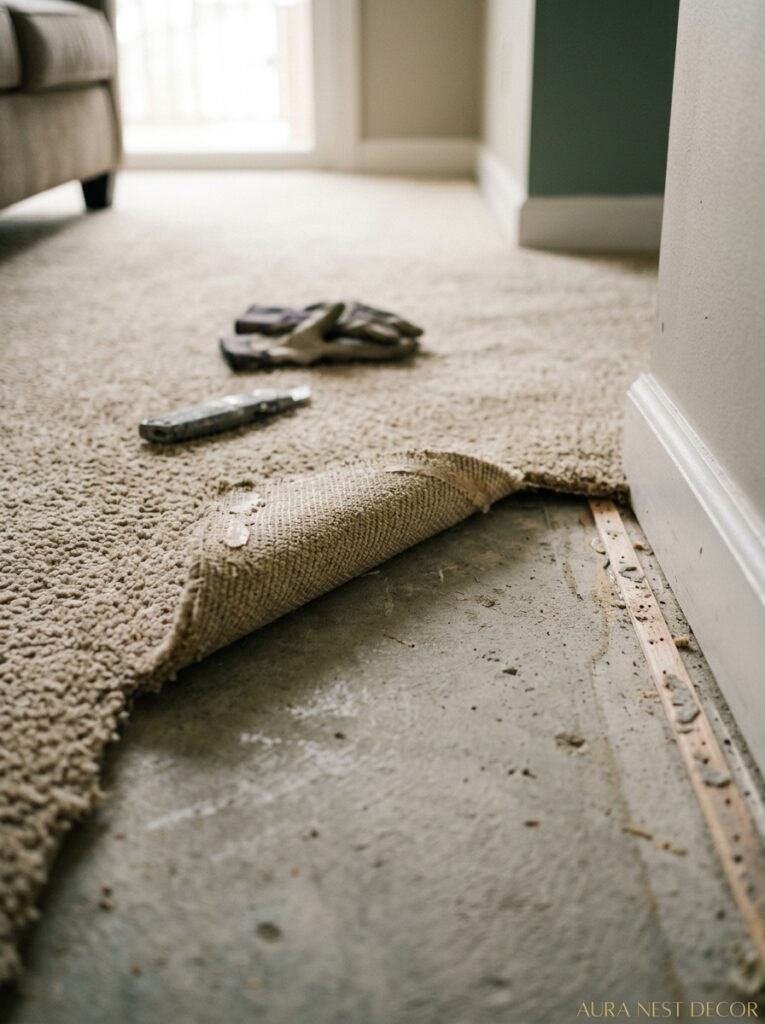
There’s a shift happening. You can see it all over Pinterest, in design magazines, in the renovation accounts you follow at 11pm when you should be sleeping. People are pulling up carpet — sometimes reluctantly, sometimes with great joy — and finding that tile underneath isn’t just practical. It can be the most beautiful thing in the room.
It started in warmer climates, honestly. Southern US homes, Mediterranean-influenced interiors, Spanish-style bungalows where terracotta had been laying low for decades. Then the British design crowd caught on, and suddenly minimalist Scandi apartments in London were getting large-format stone-effect tiles and everyone was losing their minds about it in the comments.
But here’s what I think is really driving it: people are tired of floors that feel invisible. Carpet kind of disappears, right? And while there’s comfort in that, there’s also this wasted opportunity. Your floor is the biggest surface in the room. It sets the mood before a single piece of furniture gets placed on it.
So yeah. People are ripping up carpet. And what they’re discovering — either literally or just conceptually when they’re planning a renovation — is that the right living room tile doesn’t just hold the room together. It defines it.
“Your floor is doing more design work than you think. Or it should be.”
2. The Tile That Keeps Showing Up in Every Beautiful Living Room Right Now
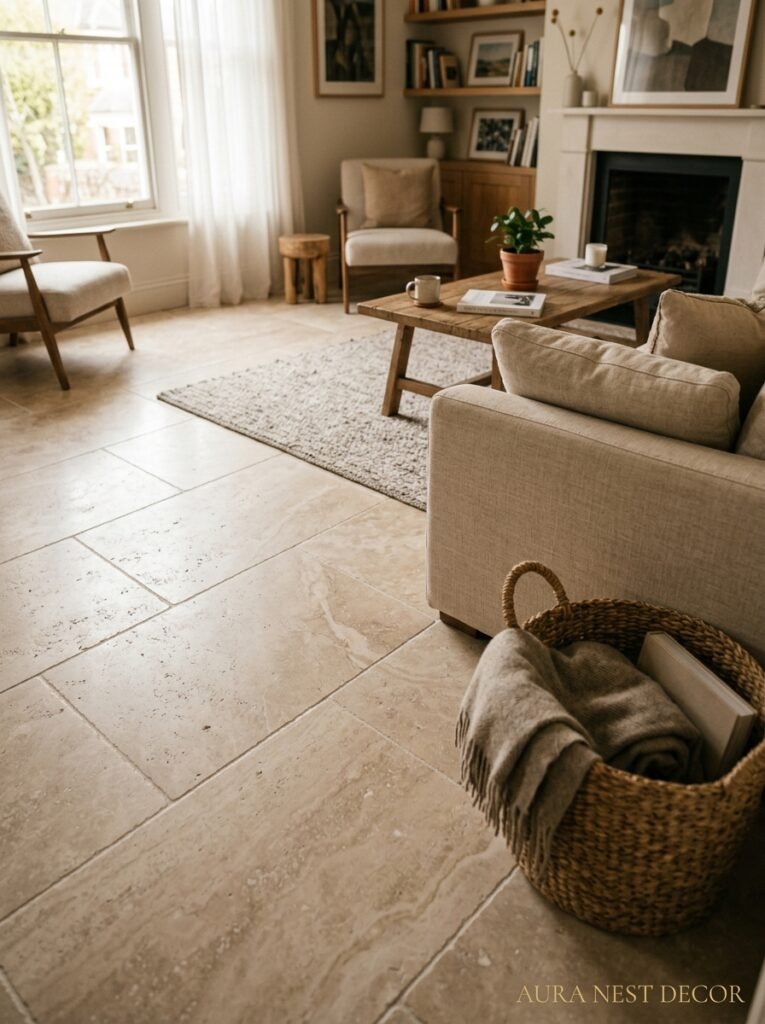
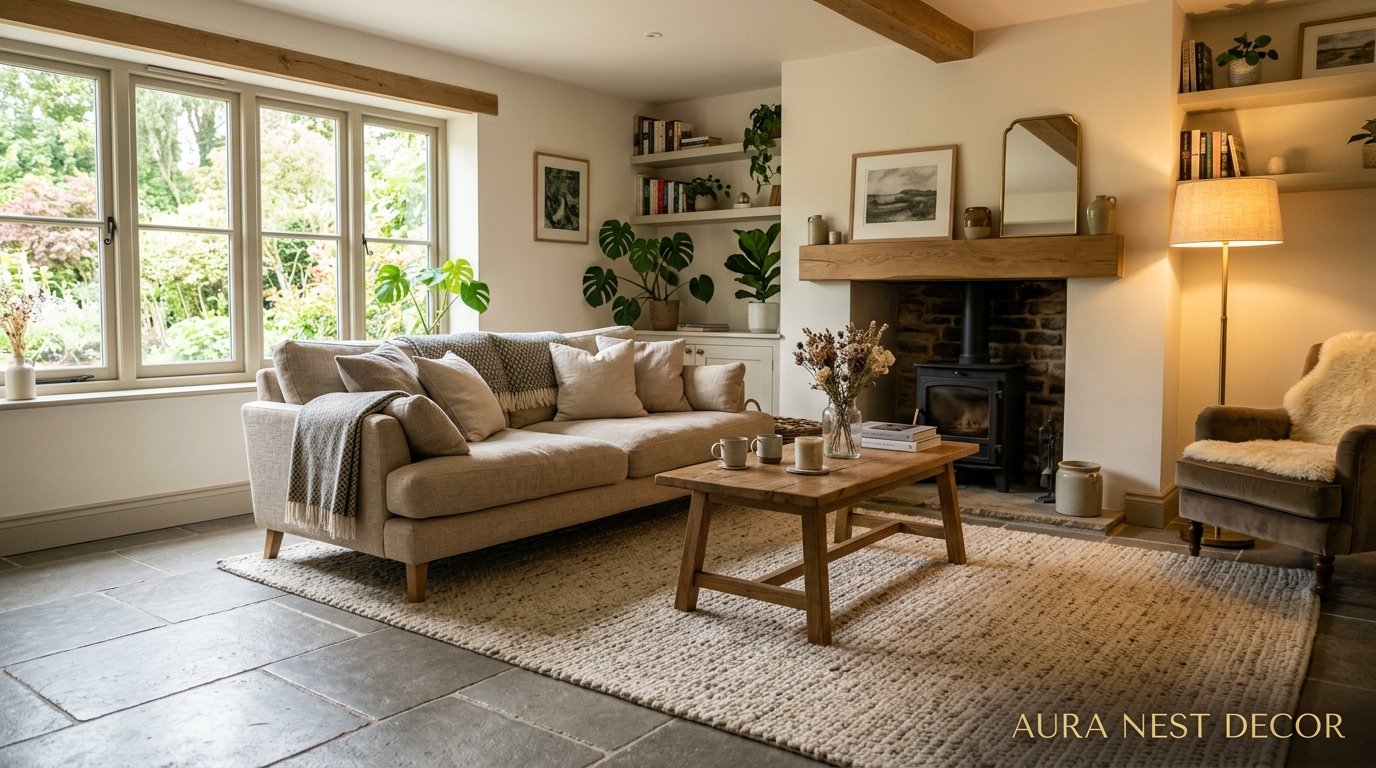
Large format. Matte finish. Slightly warm undertone. If you’ve been on Pinterest for more than ten minutes lately, you’ve seen it. Usually in a pale stone look — travertine effect, limestone effect, sometimes an actual slab aesthetic — laid in a running brick pattern or straight set, with minimal grout lines so the whole floor reads almost seamless.
I know that sounds like it could be cold and hard and very 2016-hotel-lobby. But it’s not, done right. The secret is the matte finish. Polished tiles in a living room are a nightmare (you see every footprint, every dust particle, they look beautiful in photos and exhausting in real life), but matte large-format tiles have this incredible quality where they absorb light gently instead of bouncing it around. They make a room feel calmer. More expensive, somehow, even when they’re absolutely not.
The scale matters too. A 24×24 tile or even bigger — 32×32 if your room can handle it — in a light stone colour makes a small living room feel significantly larger. Because fewer grout lines means fewer visual interruptions, and your eye just… floats across the surface. It’s one of those things that sounds like decorator talk but genuinely works.
In the UK especially, I’ve noticed people pairing these big pale tiles with warm wood furniture and loads of texture in throws and cushions. It’s a really smart move — the floor stays clean and calm, and everything on top of it does the cosiness work.
3. The Case for Patterned Tile (Even If You Think You’re Too Scared)
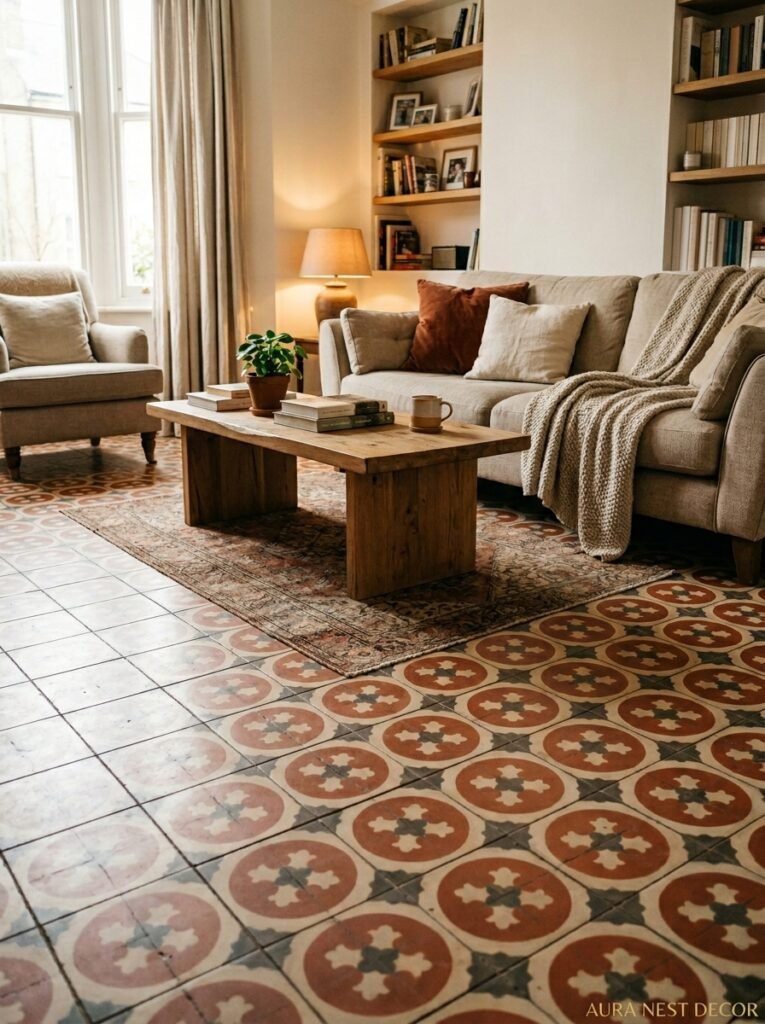
Okay, but can we talk about pattern for a second? Because I feel like there’s a whole category of homeowner who secretly LOVES patterned tile and keeps chickening out because “it might date” or “it’s too much” and I want to gently push back on that.
Zellige tile in a living room. Encaustic cement tile. Classic Victorian-inspired geometric patterns — which, if you’re in a period UK home, are practically calling out to you from underneath that laminate. These choices have been around for decades, some of them for centuries, and they haven’t dated yet.
The trick I keep seeing work is this: let the tile be the loudest thing in the room. If you’re going for a bold geometric floor — a deep navy and cream pattern, for example, or a terracotta Moroccan-inspired tile — keep the walls neutral, keep the sofa simple, and let the floor do all the talking. You don’t have to choose between a beautiful room and a patterned floor. You just have to be disciplined about what else competes with it.
And actually, patterned tile tends to hide dirt and wear in a way that plain tile just doesn’t. Side note — this is genuinely useful if you have kids or pets or, honestly, just a normal amount of life happening in your living room.
4. The Grout Line Conversation Nobody Wants to Have (But Should)
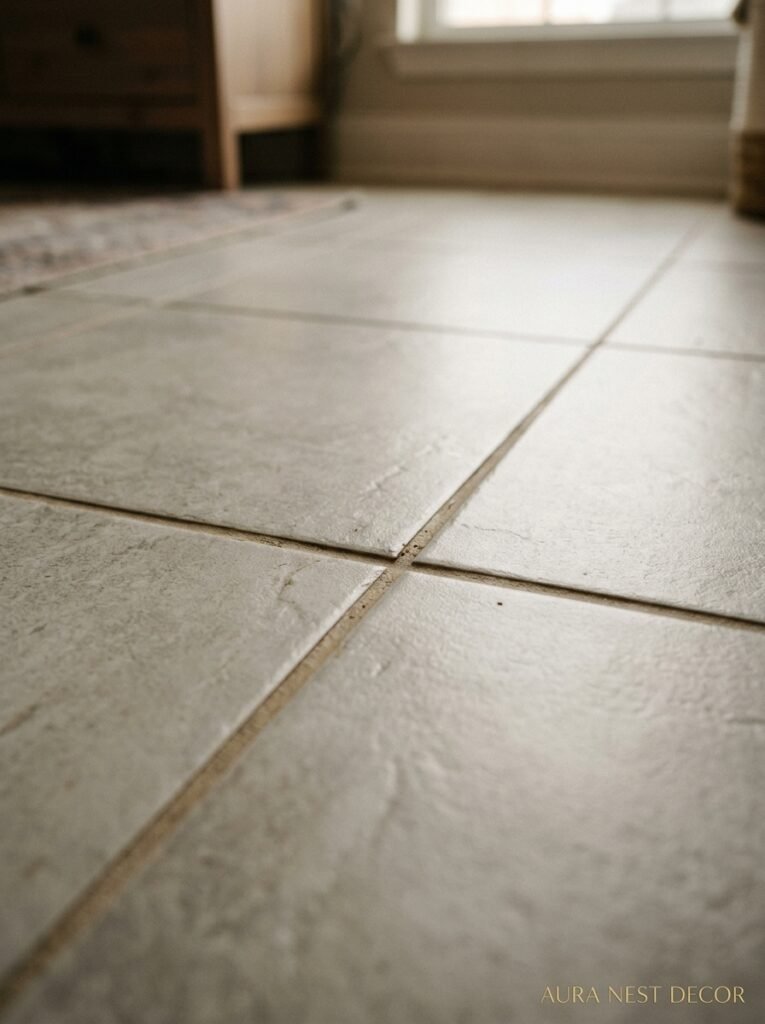
Here’s a thing I wish someone had told me earlier: the grout colour might matter as much as the tile itself.
I’m serious. You can pick the most beautiful tile in the showroom — that perfect aged terracotta, or the crisp white large-format stone look — and completely change how it reads in your home just by your grout choice. A white tile with white grout reads almost like continuous marble. That same white tile with a warm grey grout suddenly looks graphic and intentional, almost Scandinavian. Dark grout on a light tile? Striking. Matching grout to tile? Seamless and quiet.
There’s a trend right now toward slightly contrasting grout — not dramatic contrast, just a tone or two off from the tile. It adds dimension without making the floor look like a grid. I really like this approach for large-format tiles especially, where you want the individual tiles to read as individual but you don’t want the grout lines to dominate.
Also — and this is the boring-but-important part — unsanded grout, sanded grout, epoxy grout. They all behave differently. For living rooms specifically (lower traffic than kitchens, fewer spills) standard sanded grout usually works fine in wider joints, but if you’ve got very narrow joints with those seamless large-format tiles, you’ll want unsanded. Don’t skip this research. Wrong grout = cracking grout = redoing the whole floor two years later. Ask me how I know.
“Grout isn’t a finishing detail. It’s a design decision you’re stuck with.”
5. Tiles That Make a Small Living Room Feel Genuinely Bigger (Not Just On Instagram)
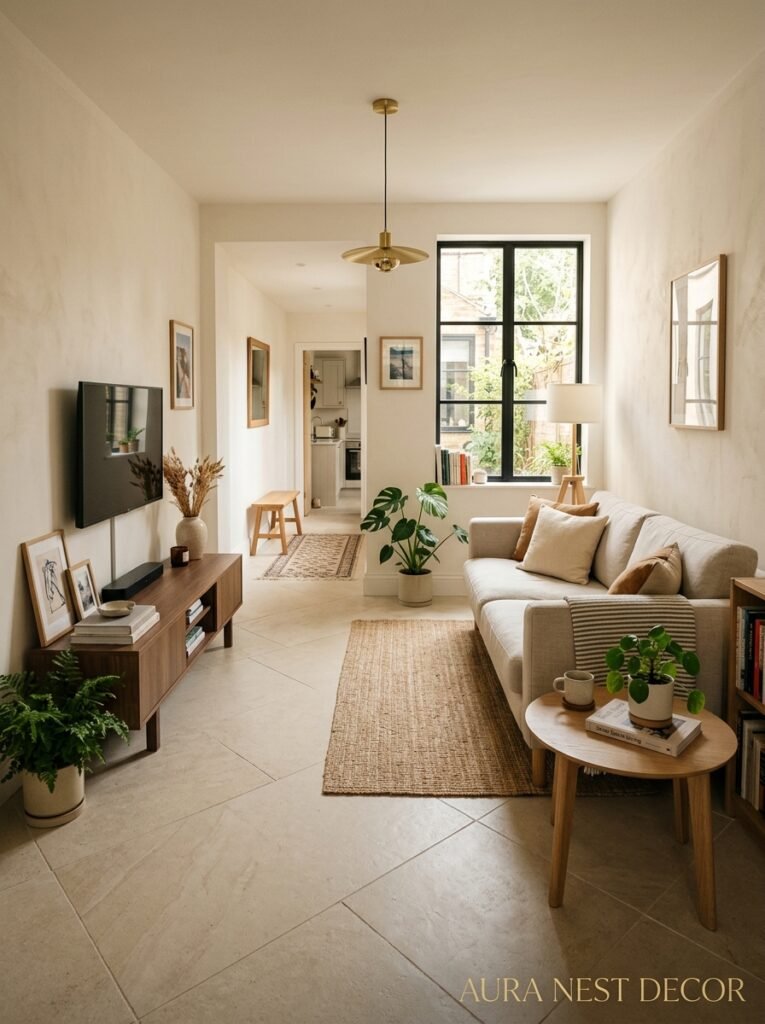
Small living room? I’ve got you. There are tile choices that actually, reliably, make a space read larger — not just in staged photos but in real life when you’re standing in it on a Tuesday evening.
First: go bigger than feels comfortable. This is counterintuitive and almost everyone does the opposite. They think small room = small tile, because large tiles will “overwhelm” the space. Nope. Small tiles in a small room create visual busyness, lots of grout lines, and the floor looks choppy. One large-format tile makes the whole surface feel like one calm plane, and the room breathes.
Second: think about the direction of the lay. Running tiles diagonally — at 45 degrees — is an older trick but it genuinely works. It leads the eye outward toward the corners of the room rather than stopping at the walls, and a space can feel noticeably wider. It does add to installation cost (more cuts, more waste) but if you’re renovating anyway, worth considering.
Third: lighter colours. Not necessarily white — pale greige, warm cream, light stone — something that reflects rather than absorbs the light. Combined with the scale of a large tile, a small room can honestly surprise you. I’ve seen 12×12-foot living rooms in London Victorian terraces done in 600x600mm limestone-effect tiles in a warm ivory and they looked absolutely enormous. Or at least, much less like they were apologising for themselves.
6. The Colour That’s Actually Working in Living Rooms Right Now (Hint: It’s Not Grey)
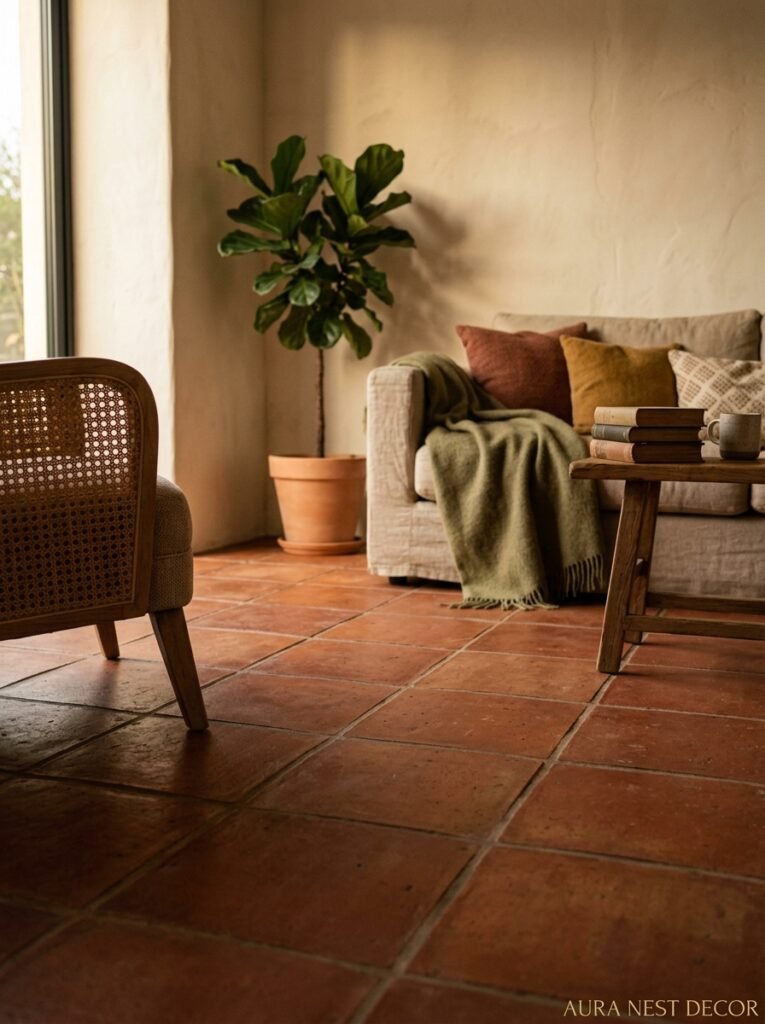
Grey tile had such a long run. Such a LONG run. And I don’t want to completely write it off because a really warm grey — especially in a textured or stone-effect format — is still genuinely lovely. But the cool, flat grey tile that basically colonised UK new-builds and US open-plan renovations from about 2014 to 2022? We’re moving away from that.
What’s replacing it is warmth. Specifically: terracotta tones, warm taupes, creamy off-whites, and the whole spectrum of natural stone looks — travertine, limestone, sandstone — in their actual warm, organic, slightly imperfect tones.
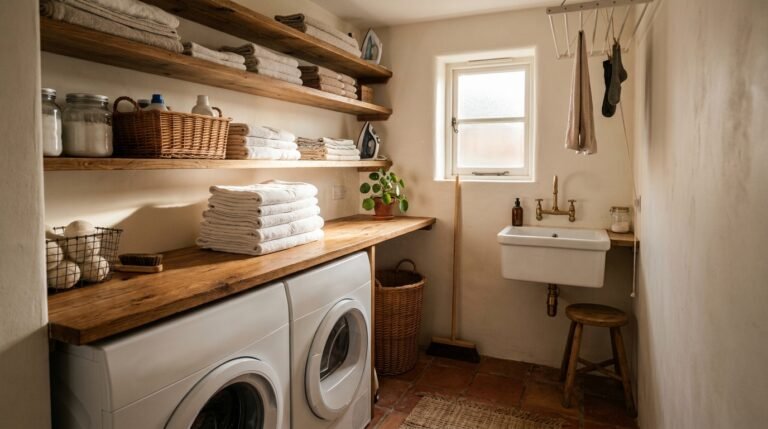
Terracotta in particular has done something remarkable. It started coming back in small doses — a terracotta pot here, a throw there — and now it’s showing up on the floor and it looks incredible. Original unglazed terracotta tiles in a living room, with their slight colour variation and handmade quality, have this warmth that no colour paint can replicate. They’re not for everyone. They need sealing, they’re porous, they can feel cold underfoot unless you’ve got underfloor heating (more on that in a sec). But the way they look at 6pm with afternoon light coming through the window — honestly, there’s nothing like it.
7. Underfloor Heating + Tile: The Combination That Will Ruin Every Other Floor For You
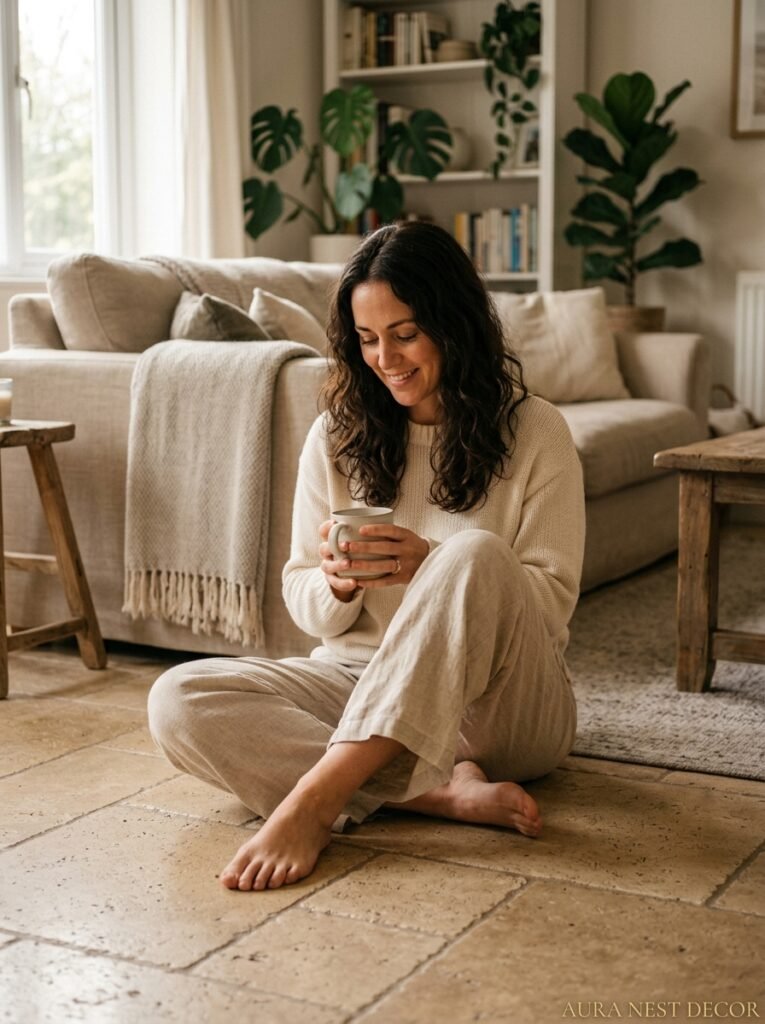
Can we just acknowledge that tile with underfloor heating is one of the great home pleasures available to modern people? I realise that’s a strong statement. I stand by it.
Cold tile is one of the main objections people have to tiling their living room. Fair enough — nobody wants to walk across a cold floor in January. But tile is actually the best material for underfloor heating (UFH). Better than wood. Better than carpet, obviously. Tile conducts and holds heat incredibly efficiently, so once the floor is warm, it stays warm.
Electric UFH mats can go under tile with relative ease, and for a living room — a contained space — they’re not massively expensive to run, especially if you’re putting them on a timer and pre-heating the space an hour before you’re home. Hydronic (water-based) UFH is a bigger installation job but better for whole-house systems if you’re doing a full renovation.
The warmth from a tiled floor with heating underneath is different from radiator heat. It rises evenly from the ground. There are no cold spots. You actually want to sit on the floor. It turns out tiled floors aren’t cold floors — unheated tiled floors are cold. That’s a very solvable problem.
“The moment you heat a tiled floor properly, carpet starts to feel like a consolation prize.”
8. Mixing Tile With Rugs: The Part Where People Get This Wrong
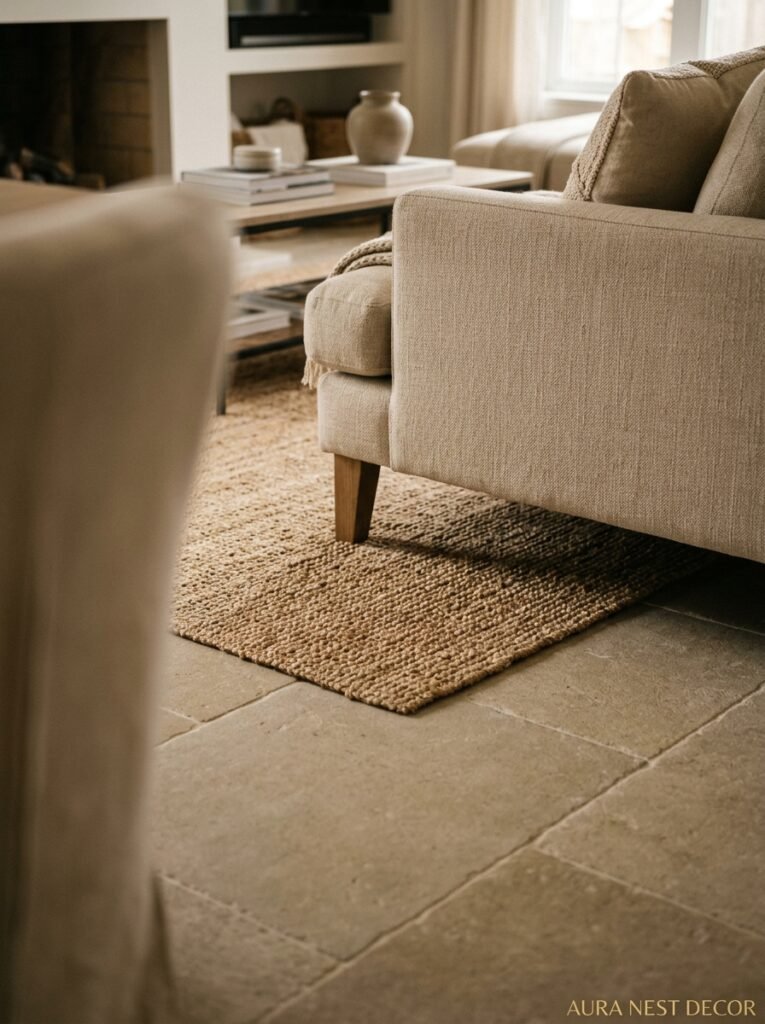
So you’ve gone for tile in the living room. Beautiful. But a tiled floor without a rug in a living space can feel stark, acoustically weird, and a bit like you’re living in a hotel lobby waiting room. The rug is non-negotiable.
Where people go wrong is choosing a rug that fights the tile. If you’ve got a patterned tile, you need a rug with very little going on — a flat-weave, a solid colour, something textural but quiet. If your tile is plain and calm (that large-format matte stone look we talked about earlier), you’ve got more freedom. You can bring in pattern, texture, pile height, colour through the rug.
Scale matters hugely here. The rug should be big enough that at least the front legs of every sofa and chair in the seating area rest on it. A tiny rug floating in the middle of a tiled floor looks lost and slightly tragic. Go bigger. Bigger than feels right in the shop. It’ll look right at home.
And don’t stress about the tile underneath being “wasted” because the rug covers it. You still get those uncovered bands of tile around the edges of the room. That’s actually part of the effect — the tile frames the rug, the rug anchors the furniture, and the whole thing looks deliberate.
9. Tiles That Work In UK Period Homes Without Looking Like a Mistake
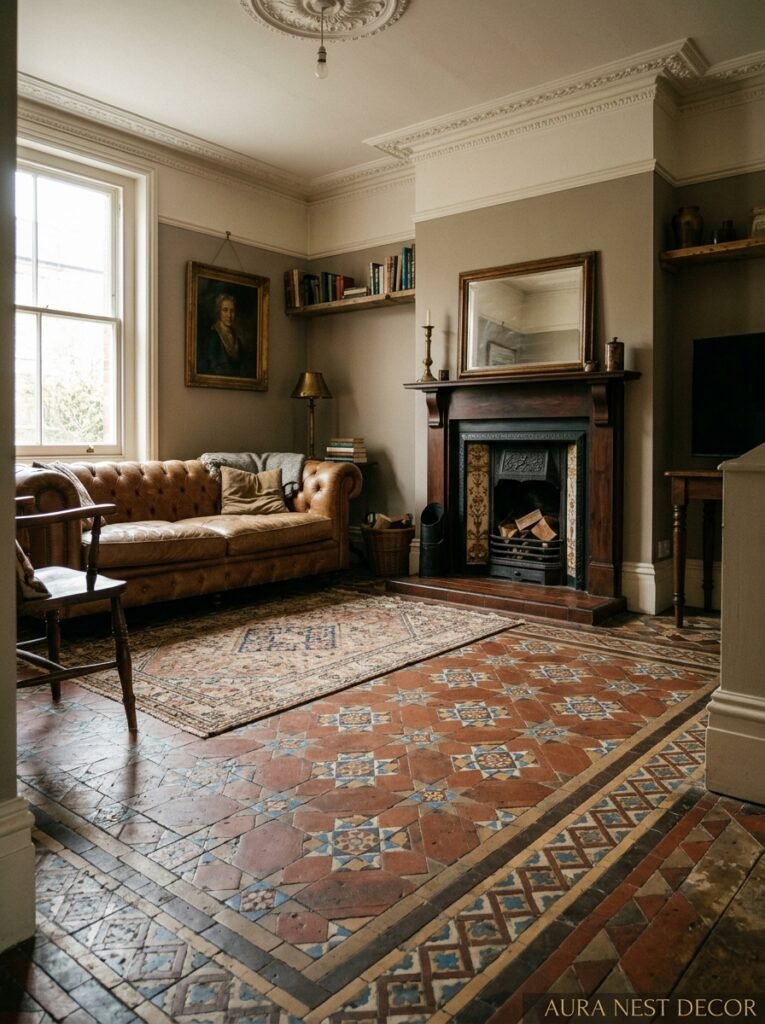
This one’s specifically for anyone with a Victorian terrace, an Edwardian semi, or a 1930s bay-fronted house who’s wondering whether tile even belongs in their living room. It does. But it has to be the right tile.
Original Victorian hallway tiles — the black and white geometric encaustic patterns — have obvious cousins that work beautifully in a period living room. Warm terracotta. Handmade-looking cement tiles with geometric or floral patterns. Encaustic tiles in deep jewel tones. These choices feel at home in a period property because they’re working with the age of the building rather than against it.
What tends to look strange is dropping a very sleek, modern large-format tile into a room with original cornicing and a cast iron fireplace. Not impossible to pull off — I’ve seen it work as a deliberate contrast — but it requires confidence and a lot of attention to the other elements in the room.
For most UK period homes, I’d lean toward smaller-format tiles with character. Something handmade-looking. Something with slight colour variation. The floor should feel like it has a history, even if it’s new.
10. What Nobody Tells You About the Installation (That Will Absolutely Affect Your Budget)
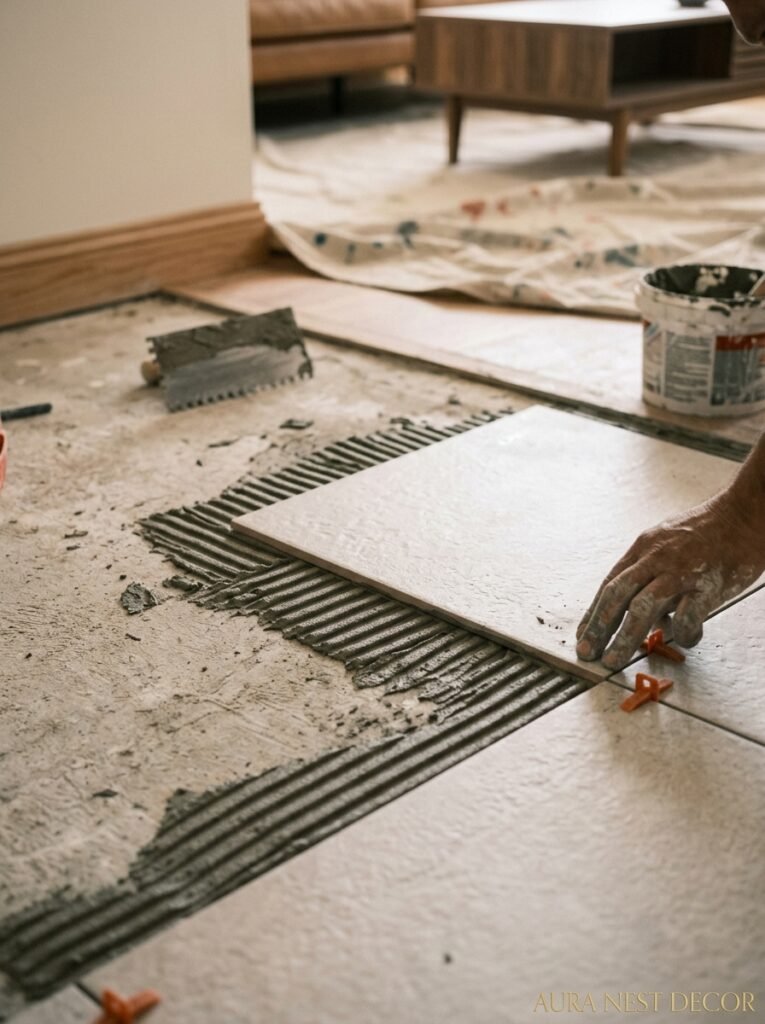
Okay, real talk. Tile is not a cheap floor to install, and there are costs that catch people off guard.
Floor preparation is huge. Your subfloor needs to be flat — really flat, within 3mm over 2 meters or so — otherwise tiles crack. If your subfloor isn’t level (and in older homes, it almost never is), you need floor levelling compound before a single tile goes down. That adds time and cost. Sometimes significant cost.
Then there’s the waste factor. Tiles break. Cuts happen. You need to order more than you think — usually 10% extra is the standard advice, but for a room with lots of awkward cuts around a fireplace or bay window, I’d say 15%.
Larger tiles are harder to lay than smaller ones. More skill required, more time, more chance of lippage (that’s when tile edges aren’t perfectly flush, and you can feel them underfoot or catch the light weirdly). A good tiler charges accordingly.
And then grout. And sealer if you’re using natural stone or terracotta. And removal of whatever’s there now — carpet disposal, old adhesive removal if there’s a previous tile under there.
None of this means don’t do it. The result is worth it. Just go in with accurate numbers.
11. The Tile Finishes That Photograph Beautifully But Make You Miserable to Live With
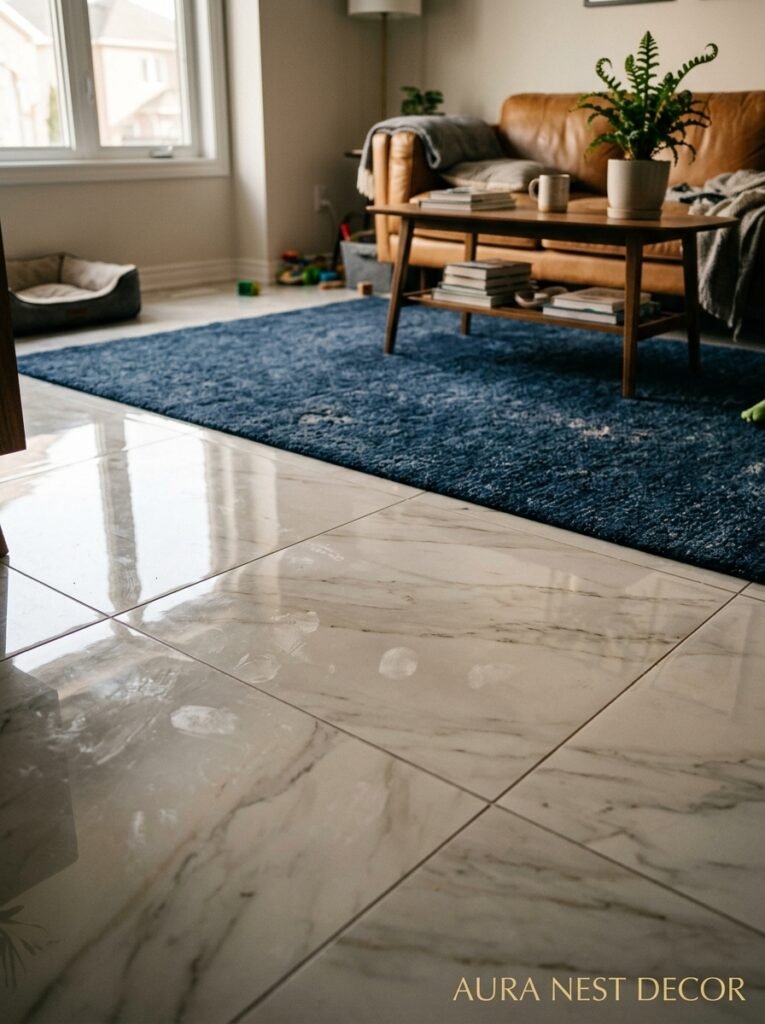
Since we’re being honest: some tiles are made for Instagram and not for life. Polished marble-look tiles, for example. They’re gorgeous. They look incredible in photos. They show every footprint, every scuff, every piece of dust in actual daily life, and if you have pets or kids or just feet, you’ll be cleaning them constantly and still feel like they look dirty.
Same issue with very dark tiles in a high-gloss finish. Stunning in a showroom. Relentless in a living room.
The matte finishes, the textured finishes, the slightly variegated stone effects — these are the ones that age well, hide wear, and still look beautiful at the end of a normal human week. Not every floor needs to look pristine to look good. Tile that has a little texture and variation builds character over time rather than just showing damage.
Also: white tile with very white grout in a living room. I know it looks amazing in photos. Unless you never eat snacks on your sofa or have any kind of real life happening in that room, reconsider. Or go in with very good grout sealer and absolutely zero regrets.
12. How to Figure Out Which Living Room Tile Is Actually Right For Your Home
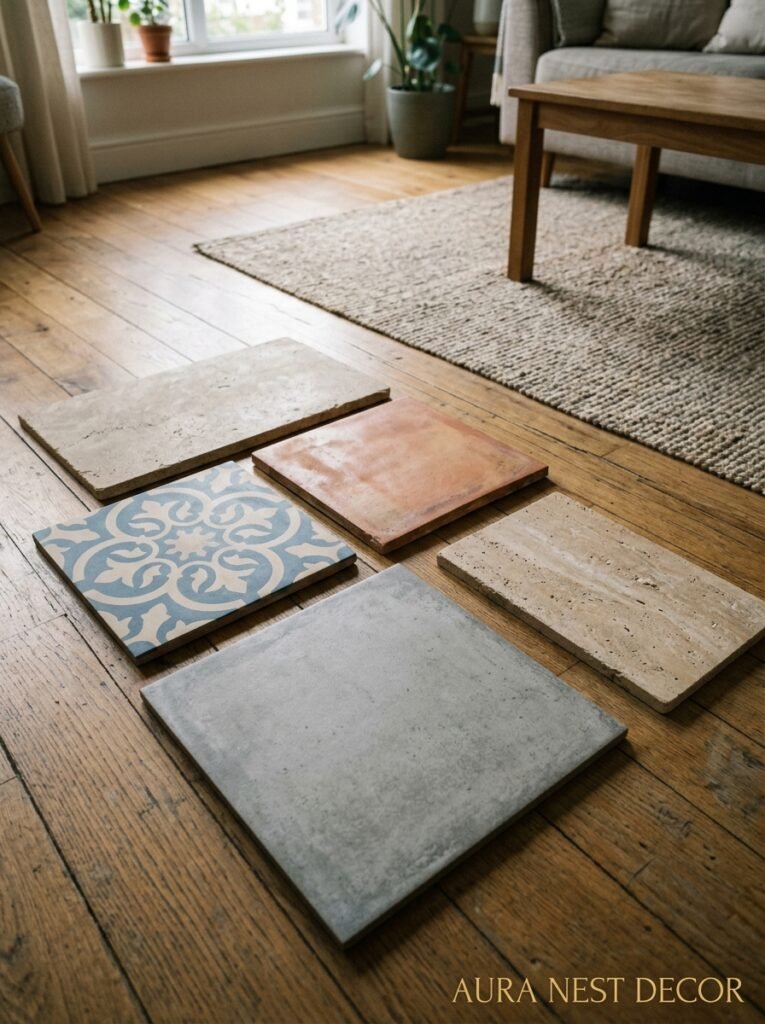
Here’s the honest version of the decision process, because everyone’s house is different.
Start with your light. North-facing rooms — common in UK homes especially — need warmer tile tones. A cool grey or stark white tile in a north-facing living room can make it feel clinical. Warm stone, warm cream, terracotta: these absorb cooler light better.
Think about your lifestyle. Do you have dogs? Kids? A lot of foot traffic? Textured, mid-tone tiles in matte finishes. Do you want the living room to feel like a retreat? Calm, pale, seamless large-format. Are you in a period home? Lean into the character.
Get samples. Full stop. A 2-inch sample chip means nothing. Order the largest sample you can, lay it on the actual floor, and look at it in morning light and evening light and in lamplight, because tile reads completely differently at different times of day.
And if you’re still unsure, go and see the tile laid out in a showroom — not just sitting on a shelf. Seeing it flat, in a large area, under varied light, tells you something that no sample or photo ever will.
—
❓ FAQ
Q: Can you put tiles in a living room with underfloor heating? A: Absolutely — tile is actually the most efficient material to use with underfloor heating because it conducts and retains heat so well. Electric mat systems can usually be installed under tile with minimal fuss, and they make a huge difference to comfort in tiled spaces. Just make sure your tiler knows about the UFH system before they start laying.
Q: What size tile is best for a small living room? A: Counterintuitively, larger format tiles often work better in small rooms because fewer grout lines mean less visual busyness and the floor reads as one surface. A 600x600mm or 60x30cm tile in a light, warm tone can make a small living room feel noticeably bigger. Avoid tiny tiles in small spaces — they make a room look choppy.
Q: Is tiling a living room more expensive than carpet? A: In most cases, yes — tile costs more upfront, both for materials and installation. But tile lasts significantly longer than carpet, doesn’t hold allergens or pet smells, and doesn’t need replacing after ten years of normal use. Most people who tile their living rooms consider it a long-term investment rather than a like-for-like replacement cost.
—
💭 Final Thoughts
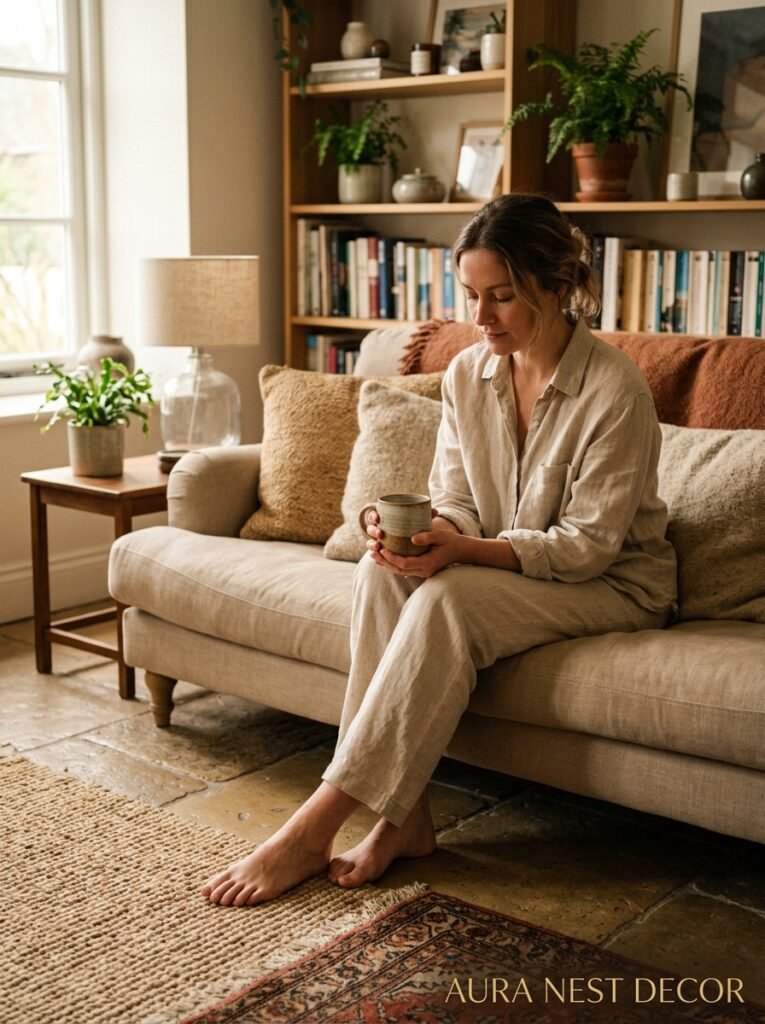
Living room tile is one of those decisions that feels permanent (and is, honestly), but it’s also one of the ones that can change a room more completely than almost anything else you could do to it. Get the floor right and everything else falls into place around it a little more easily.
The best tile choices I’ve seen aren’t always the most expensive or the most dramatic. They’re the ones that feel like they were always meant to be there.
So — what’s the floor situation in your living room right now, and what’s stopping you from changing it?