Why Grey Floors Are Taking Over Living Rooms (And Why I’m Not Even a Little Bit Sorry About It)
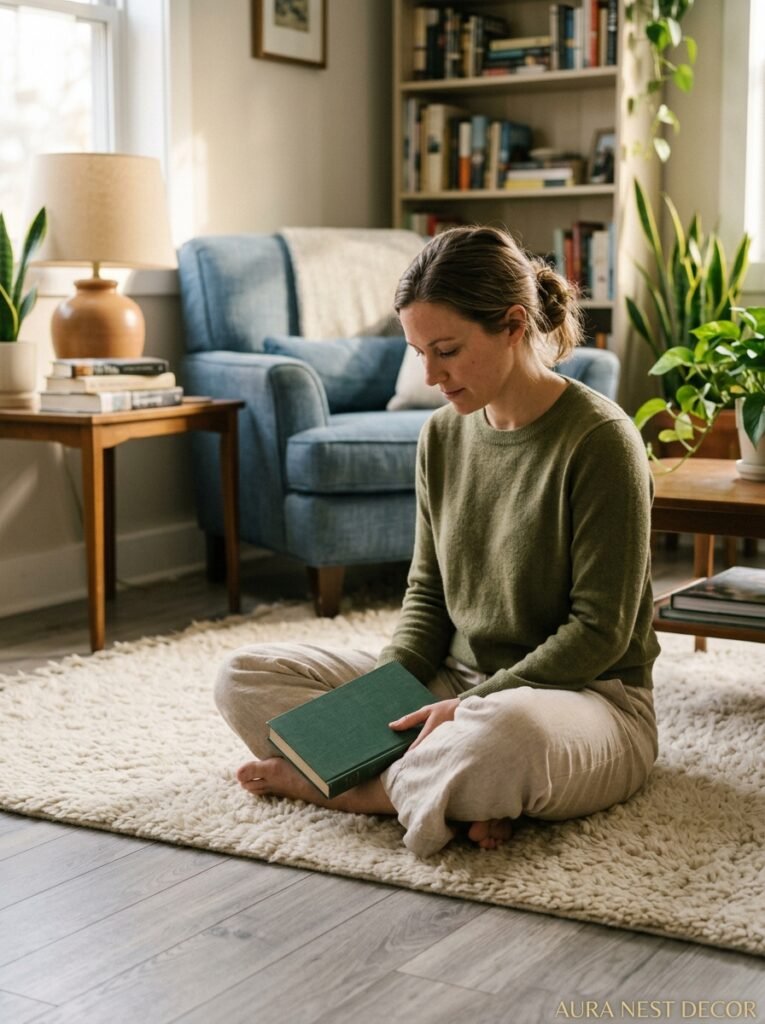
There’s a moment when you walk into a room with grey flooring and something just… clicks. It’s hard to explain. The whole space feels considered, like someone made real decisions in there. I’ve been obsessed with this look for years, and I’m finally writing the full breakdown.
—
1. The Shade Nobody Tells You to Pick (But Should)
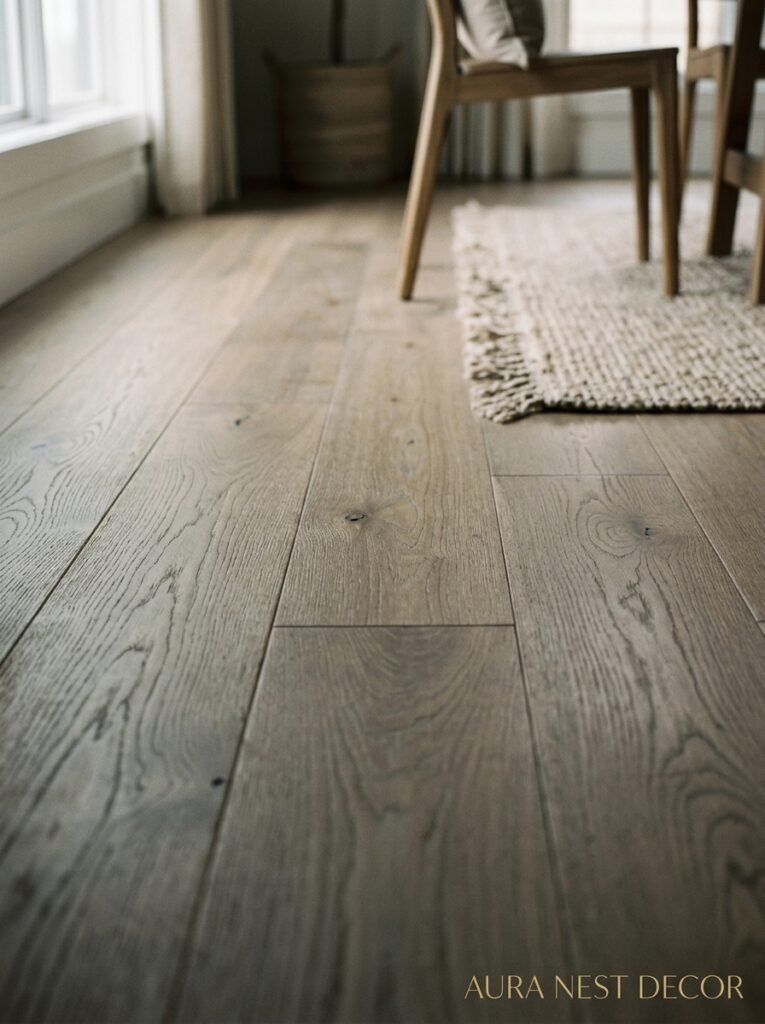
Warm grey. Not the cold, clinical grey that makes a room feel like a hospital waiting area — I mean that toasty, slightly greige-y tone that sits right at the edge of grey and brown without fully committing to either.
It’s the shade that photographs beautifully in any light. Overcast British morning? Looks cozy. Sunny California afternoon flooding through the blinds? Looks incredible. There’s a reason interior designers keep coming back to it.
Here’s the thing people don’t say enough: the undertones in your grey flooring will determine your ENTIRE color palette from that point forward. Get a floor with blue undertones and suddenly your creamy white walls look faintly yellow. Get one with purple undertones — and yes, some greys do have purple in them — and your warm-toned furniture looks exhausted and disconnected.
So before you fall in love with a grey on a tiny sample square, bring it home. Live with it for a weekend. Put it under a lamp, in natural light, in complete darkness with just a single overhead bulb. It will tell you what it actually is.
Warm grey with those brown or beige undertones is forgiving. It works with wood, with linen, with terracotta, with navy. It’s the floor shade that basically holds hands with everything else in the room without making a fuss.
“The undertone in your grey floor is quietly running the entire color story of your room — most people don’t figure this out until it’s too late.”
—
2. The Wall Color That Looks Absolutely Stunning Against Grey Floors (You’ve Probably Overlooked It)
Not white. Or — okay, not JUST white.
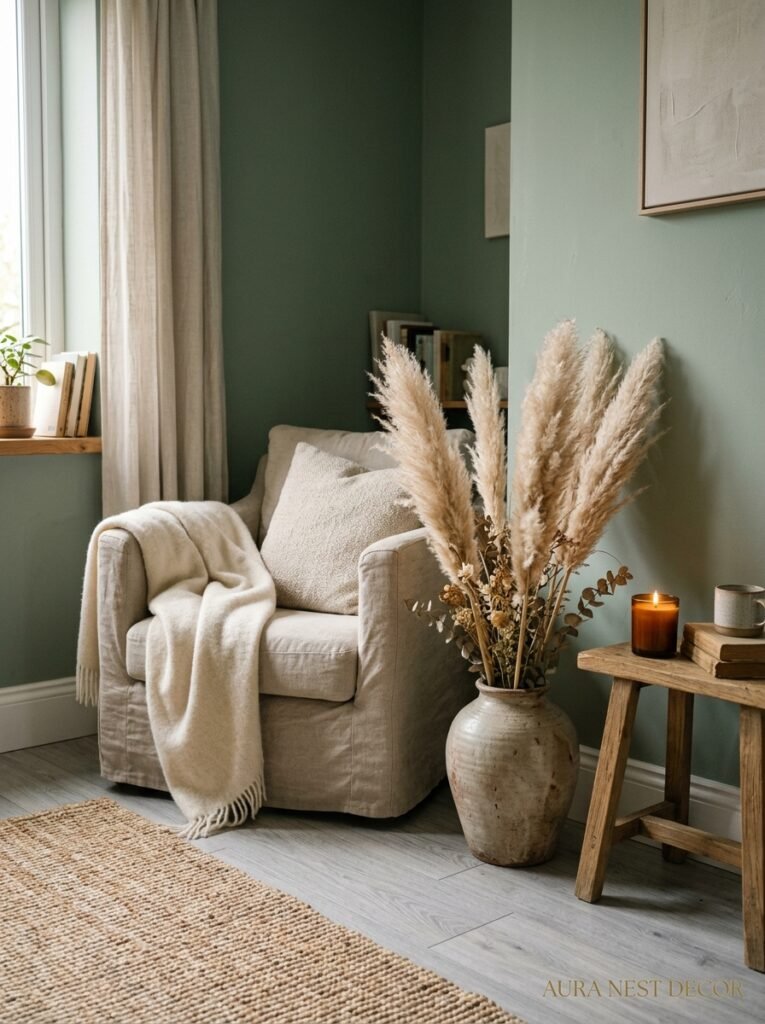
Dusty sage. I said it. That muted, almost-green-but-not-quite shade that’s been creeping into every beautifully curated Pinterest board for the past two years, and there’s a reason. Against a warm grey floor, dusty sage reads as sophisticated without trying too hard. It doesn’t scream “look at me,” it just sort of… breathes.
The combination works because both shades sit in the same tonal family — they’re both naturals, both muted, both doing their thing without competing. The result is a living room that feels like somewhere real, not a showroom.
That said. If you love white walls — and many people do, and honestly fair enough — then go warm white, not bright white. Brilliant white next to grey flooring can make the floor look cold and the walls look stark and the whole thing starts to feel more dental office than dream home.
Warm white, like a very soft off-white or antique linen shade, just sits against grey flooring like it was born there. And with the right lighting — evening lamplight especially, that amber glow you get around 7pm when the overhead’s off and the floor lamps are doing the work — it’s genuinely gorgeous.
Anyway, dusty sage. Don’t sleep on it.
—
3. Why Light Grey Floors Make Small Living Rooms Feel Like They Expanded Overnight
This one’s practical and I love it.
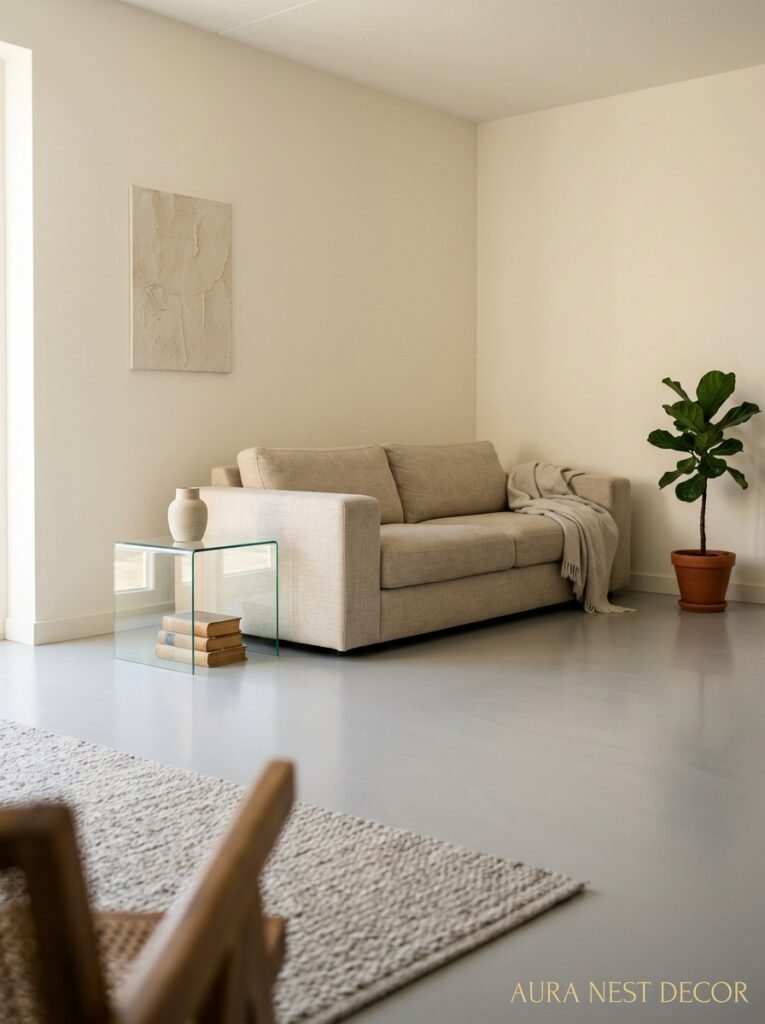
Light grey flooring — and I mean genuinely pale, almost silver-toned — reflects light in a way that darker floors simply don’t. In a small living room, this is enormous. The floor stops being this dark anchor that visually shrinks the space and starts being part of the brightness. It reads almost as neutral as natural light.
Side note — I’ve seen this work in some genuinely tiny London flats and it’s kind of shocking how much difference it makes. You walk in expecting a cramped, awkward rectangle and instead it just… opens up. Same four walls. Same square footage. Different floor.
Pair light grey floors with low furniture — a sofa with visible legs rather than one that sits flat to the ground, a coffee table that you can see under — and you’ve created so much visual breathing room that the space feels almost double its actual size.
The other trick? Don’t break up the floor with a huge, bold rug. In small rooms, grey floors should mostly be SEEN. A small, subtle rug under the coffee table, fine. But a giant pattern rug wall-to-wall is working against you. Let the floor be the room.
—
4. The Furniture Finish That Looks Best on Grey Floors (And the One That Looks Wrong Every Time)
Okay, strong opinion incoming.
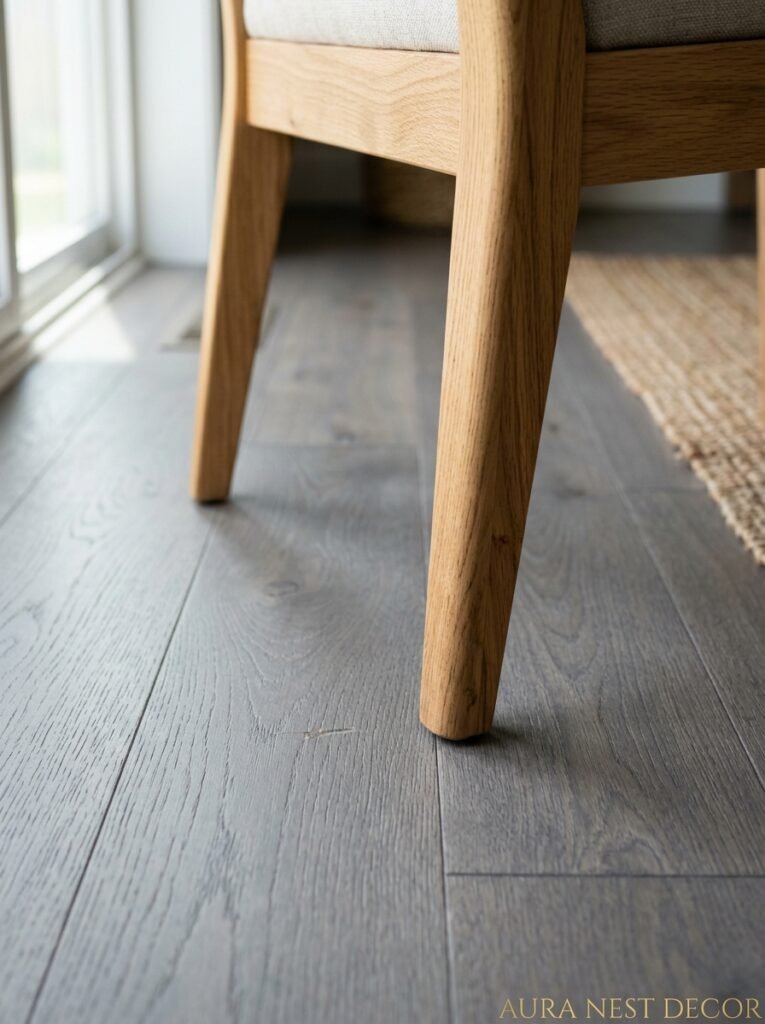
Natural oak furniture on grey flooring is one of the best combinations in interior design. Full stop. The warmth of untreated, honey-toned oak against a cool-to-neutral grey floor creates this instant balance that just works. The floor gives the room its cool backbone. The oak furniture brings the warmth back. Neither one dominates.
You’ll see this everywhere in Scandinavian-inspired interiors — because Scandinavians figured this out decades ago — and the reason it keeps showing up is because it doesn’t go stale. It’s not a trend. It’s just a genuinely good pairing.
Now. What doesn’t work?
Dark espresso furniture on mid-grey floors. I’ve seen people try it, I understand the impulse, it feels dramatic and rich in theory. But in practice the contrast is so heavy that the room ends up feeling bottom-weighted and a bit gloomy. Everything’s dark. The floor is dark, the furniture is dark, and the whole thing sits there looking like it needs rescuing.
If you love dark furniture — genuinely love it, have it already, not getting rid of it — then go with a lighter grey floor to create contrast. But espresso furniture on mid-grey flooring? I’d steer clear.
“Natural oak on grey floors isn’t a trend. It’s a cheat code.”
—
5. The Living Room Lighting Mistake People Make When They Have Grey Flooring
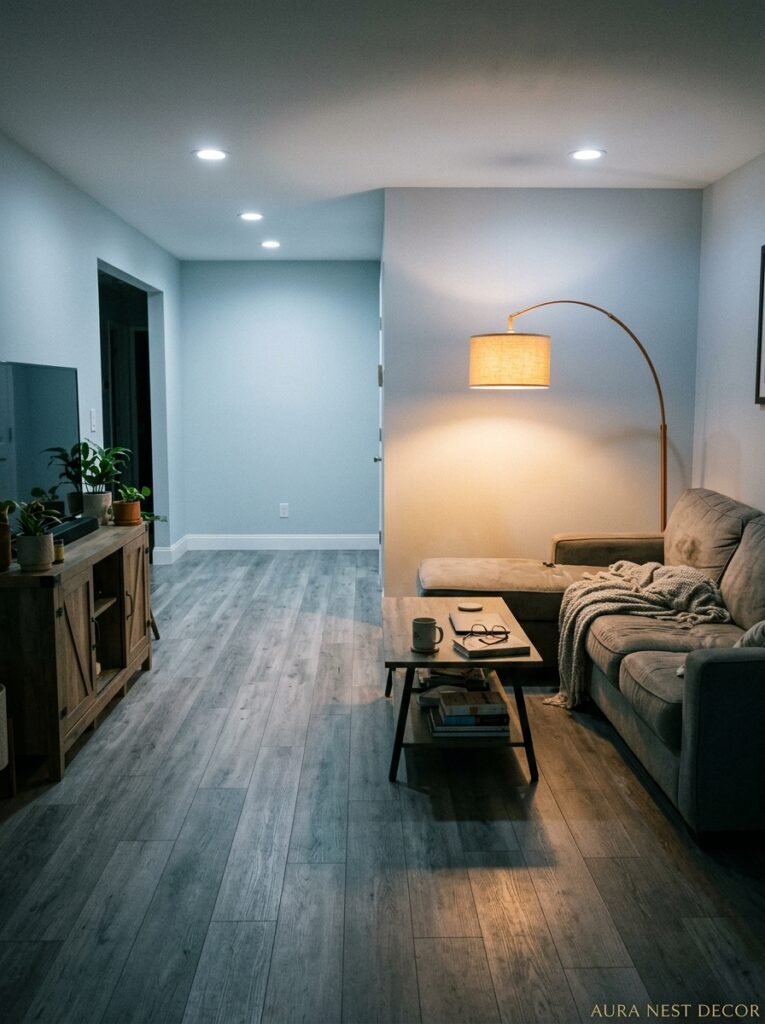
Grey absorbs light differently than warm-toned floors. It sounds obvious but so many people don’t account for it when they’re decorating.
Warm floors — think honey wood, amber laminate, that kind of thing — naturally radiate warmth even when the room’s not well lit. Grey floors don’t do that. They stay grey. Which is part of their beauty, honestly, that clean cool quality. But it does mean your lighting has to work harder.
Cool overhead lighting is the enemy. Those bright white LED bulbs that some people use for energy efficiency are genuinely terrible in living rooms with grey floors. The floor goes cold, the room goes clinical, and suddenly it’s not a cozy living space anymore, it’s a lab.
What you want is warm-toned bulbs everywhere. 2700K is the sweet spot. Table lamps, floor lamps, accent lighting, all warm. The contrast between warm light and a cool grey floor is actually stunning — the floor takes on this beautiful depth, almost like it’s a different material entirely.
Add candles if you’re into that. Or not. But the warm bulb thing is non-negotiable if you want your grey floor living room to feel inviting.
—
6. Grey Floors and Rugs: The Pairing Rules That Nobody Taught You
The rug is having a moment on top of grey floors and I’m here for it, but there are some things to know.
First: don’t match. A grey rug on a grey floor disappears. I’ve watched people do this thinking it’ll look cohesive and layered and sophisticated, and instead it just looks like the rug is trying to hide.
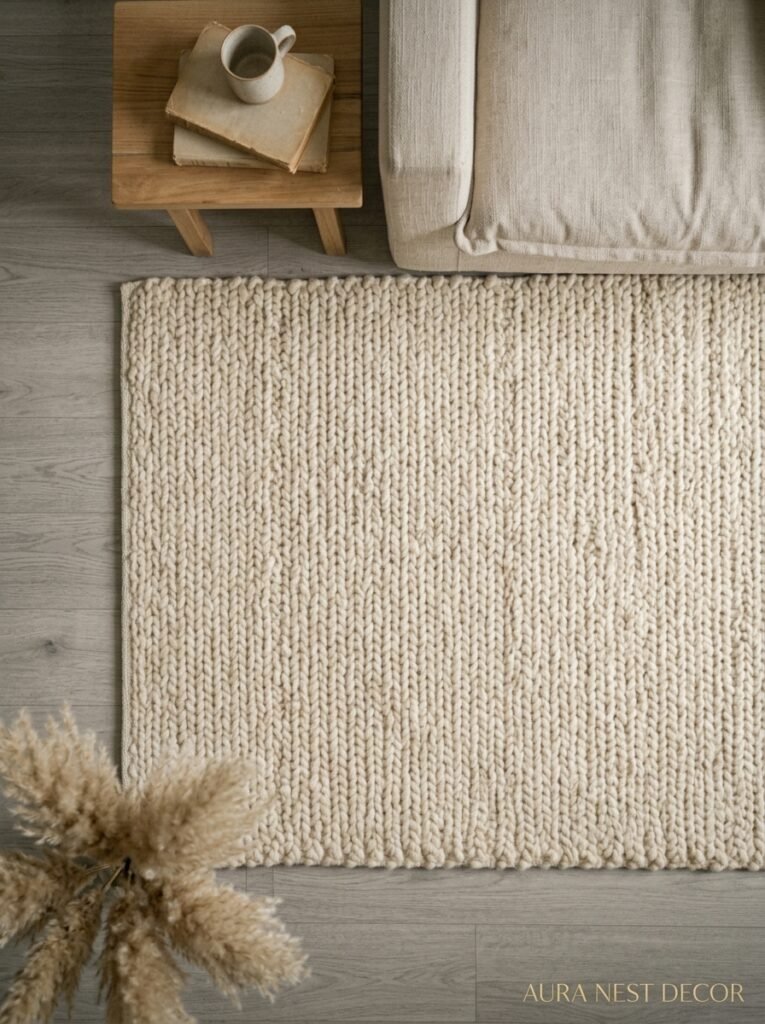
Grey floors are genuinely beautiful on their own, so when you add a rug, make it earn its place. Bold terracotta. Deep navy. A warm cream with texture. A rust-toned Persian-style rug that has some age to it — or looks like it does. These pop against grey flooring in a way that feels intentional, not accidental.
The texture of the rug matters almost as much as the color. Flat-weave rugs on grey floors can look a bit flat (obviously). A chunky wool rug, something with pile and depth, adds something the room genuinely needs — tactile softness, warmth underfoot, visual weight that balances all that cool smoothness. Jute and sisal can also work really well if you’re going for something more relaxed and earthy.
Size matters, and I cannot stress this enough: always size up. People consistently buy rugs that are too small for their living rooms, and on grey floors especially, a too-small rug looks like a postage stamp floating in the middle of a room. At minimum, the front legs of your sofa and chairs should sit ON the rug.
—
7. Dark Grey Floors: When They Work Brilliantly and When They’re a Mistake
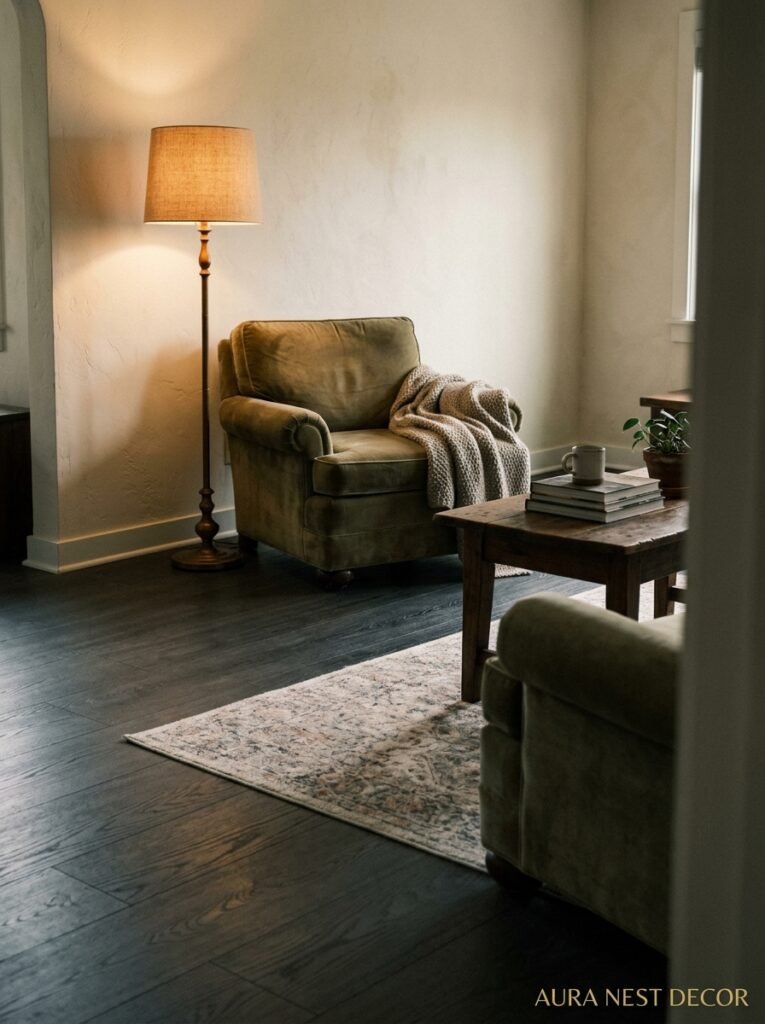
Dark grey floors are seductive. I completely understand it. There’s something so gorgeous about that deep charcoal tone — it’s dramatic, it’s sleek, and in the right context it looks genuinely extraordinary.
The right context is key.
Large rooms with good natural light can carry dark grey floors beautifully. The floor grounds everything, creates this sense of anchored solidity, and the light coming in stops the space from feeling too heavy. In a big, airy living room — think high ceilings, large windows, maybe south-facing in a UK home — dark grey flooring can be absolutely stunning.
Small rooms with limited light? That’s where it gets complicated.
Dark grey floors in a small, north-facing living room will absorb light and make the space feel smaller and darker than it already is. Not irreparable — the right wall color, generous layered lighting, the right furniture — can salvage it. But you’d be working uphill.
If you’re set on dark grey and the room isn’t huge, then walls need to be LIGHT. Not dusty sage this time (too similar in weight) — actually pale. Almost white. And the furniture should have some lift to it. Legs visible. Height. Lightness in material if not in color.
“Dark grey floors in a small room aren’t impossible — but you’re going to need to fight for the light.”
—
8. The One Plant That Makes Grey Flooring Look Like a Magazine Spread
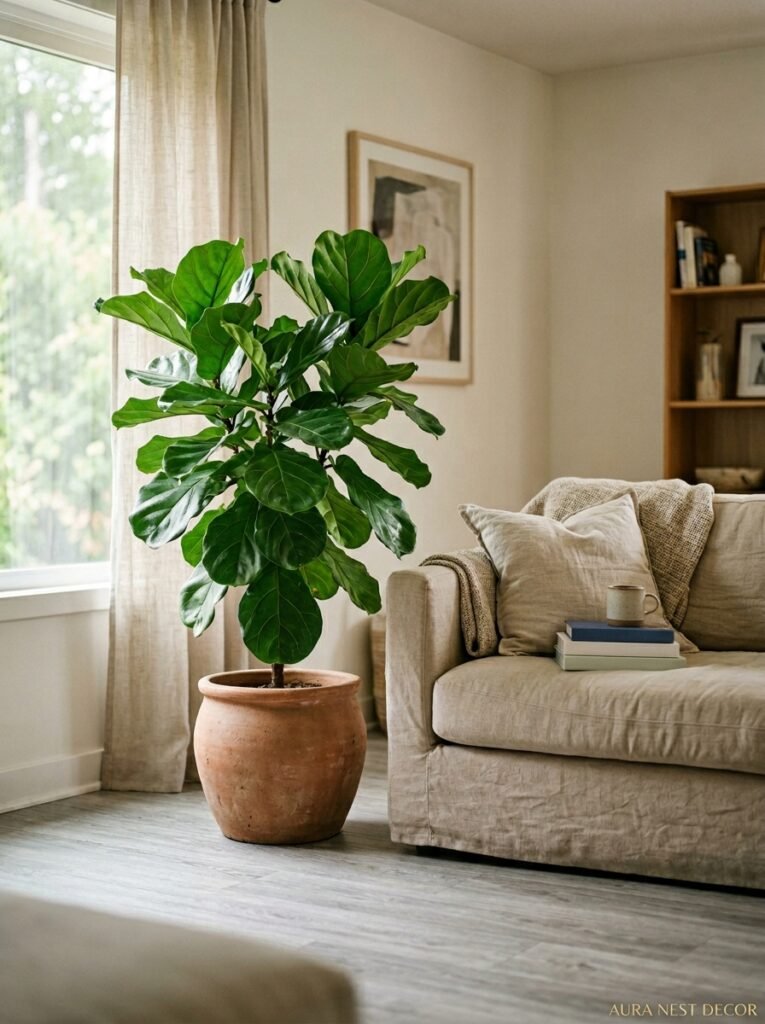
Okay this is going to sound weirdly specific but hear me out.
A fiddle-leaf fig or a large monstera — something BIG, something structural, with dark green glossy leaves — placed in a white or terracotta pot against a grey floor is one of the easiest styling wins you’ll find. The green pops off the grey in a way that feels alive and organic, and the contrast between that cool, hard floor and the living, textured plant is genuinely beautiful.
It’s not just the color. The scale matters. A small plant on a shelf doesn’t do what a large floor plant does. You need something that commands its corner, that creates a vertical moment in the room, that you can actually SEE from the door.
The pot choice matters too — crisp white ceramic on grey floors has a clean, modern quality. Terracotta pots go slightly warmer and earthier, softening the room a bit.
Honestly, grey flooring and indoor plants are one of those combinations that make complete sense once you see it. The floor stays cool and smooth, the plants bring the life and warmth. It works.
—
9. How to Mix Grey Floors With Warm Tones Without It Looking Like a Mistake
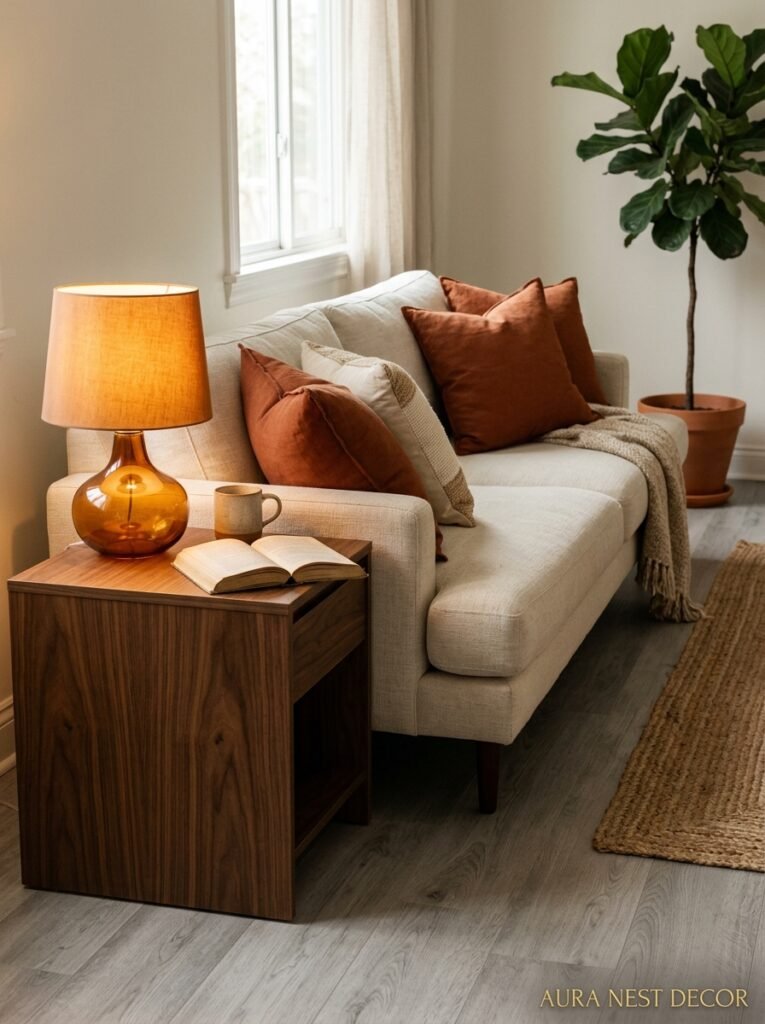
This is genuinely the question I get asked most.
People are afraid of mixing grey (cool) with warm tones — terracotta, mustard, warm caramel — because on paper it sounds like a clash. In practice, it’s one of the most beautiful combinations you can do in a living room.
The trick is to let the grey be the neutral it actually is. Grey flooring isn’t a color statement in the way that, say, navy blue flooring would be. It’s a backdrop. A really sophisticated, versatile backdrop. So when you bring in warm terracotta cushions, a mustard throw, caramel leather — you’re not clashing with the floor. You’re furnishing the room, and the floor is just doing its job of holding everything together.
The rooms that look like a mistake are the ones where someone added TOO many conflicting warm tones without any cohesion. It’s not the grey-warm combination that’s the problem, it’s the lack of a repeating element to tie things together. Pick two warm tones, max. Use them consistently through the room. The grey floor will anchor it.
—
10. The Grey Flooring Finish That Photographs Best for Pinterest (And the One That Shows Everything)
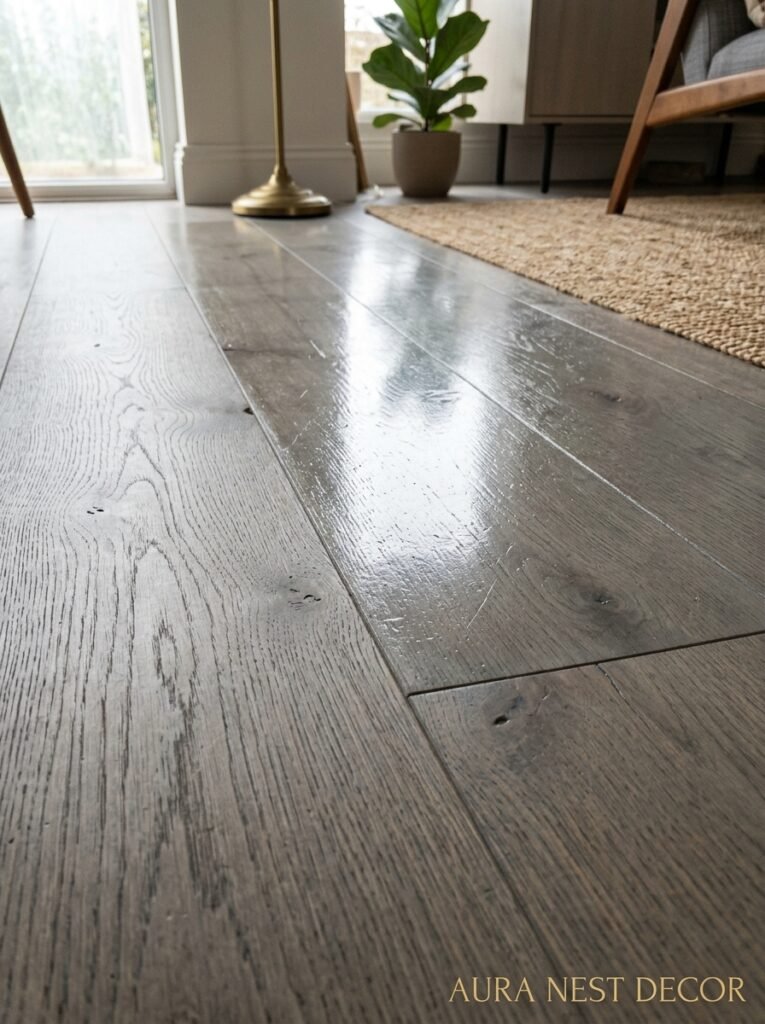
Matte. Always matte.
High-gloss grey flooring shows fingerprints, scratches, dust, and every footprint within about four seconds of being cleaned. I know it looks incredible in showrooms — all that reflective depth, the way light bounces off it — but living with it is genuinely hard work, and it photographs terribly in home settings because all you see is reflection and imperfection.
Matte or satin-finish grey flooring does something much more quietly beautiful. It shows the material, the texture, the color without the distraction of a glossy surface. In photos it looks clean and considered. In real life it hides daily wear so much better.
This is especially true if you have kids, dogs, or are just a regular person who doesn’t want to Swiffer their floor three times a day.
Satin is a nice middle ground if you want a little sheen — it catches the light gently without turning into a mirror. But if you’re choosing for beauty AND practicality, matte wins every time.
—
11. What British Homes Do With Grey Floors That Americans Should Steal Immediately
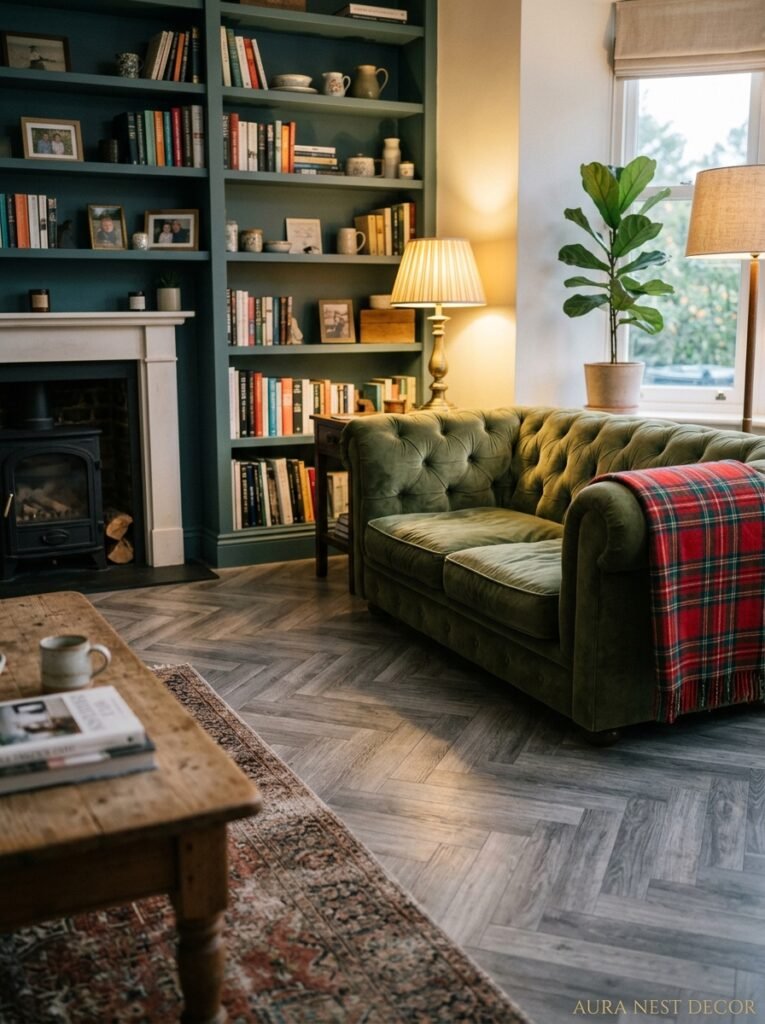
Not gonna lie, British interiors do this specific thing with grey floors that American decorating culture hasn’t fully caught on to yet.
Layered textiles. Everywhere.
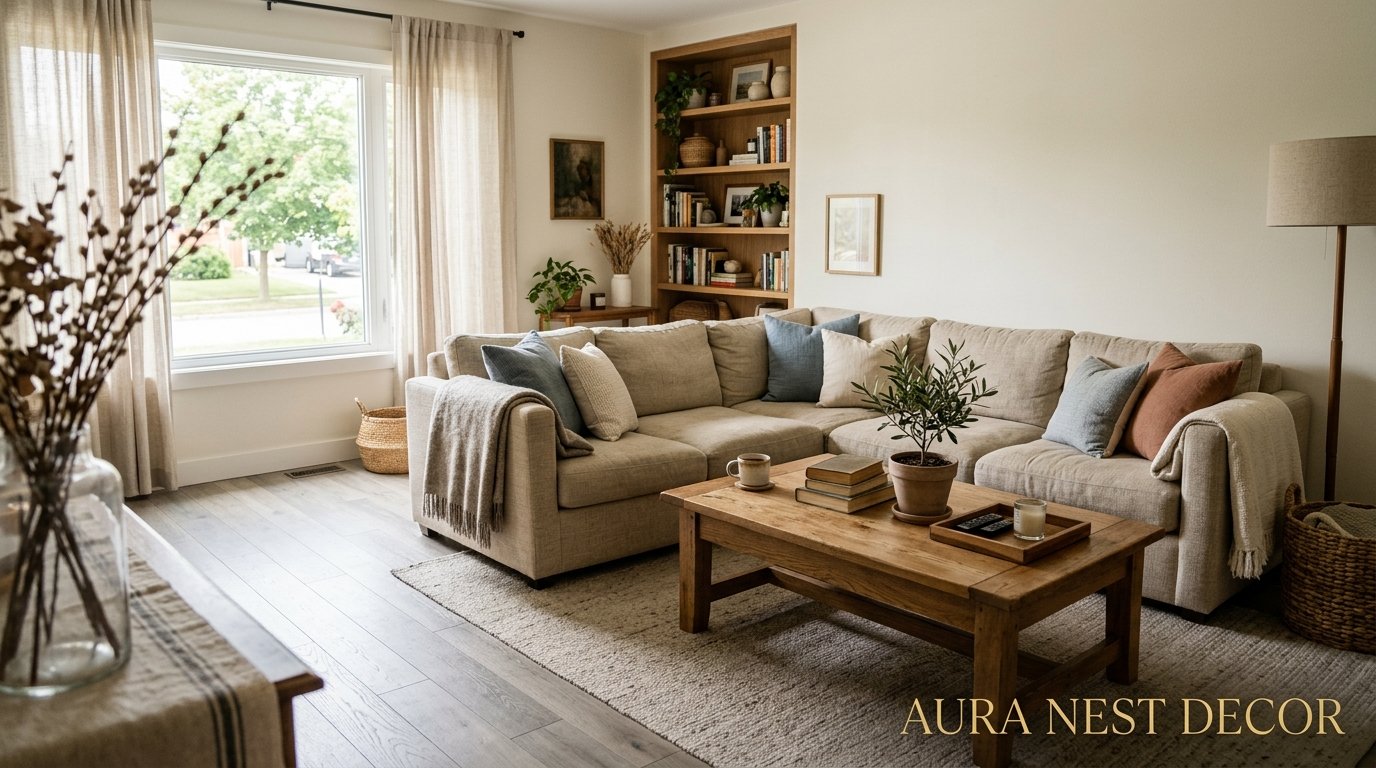
Where American interiors often go sleek and minimal with grey floors — clean lines, low-profile furniture, minimal accessories — British homes tend to pile on the texture in a way that’s completely warm and unpretentious. Chunky knit throws draped over the arm of a linen sofa. Velvet cushions. A layered gallery wall with frames that don’t all match. Heavy curtains puddling slightly onto the grey floor.
The result is this lived-in richness that makes the grey floor feel cozy rather than cold. The floor is still there doing its sophisticated, cool thing, but everything around it is so warm and textured that the room feels embracing.
American interiors are starting to go this direction — I’ve seen it creeping in on Pinterest over the past year or so — but British homes have been doing it longer and doing it WELL. Steal it. The combination of a beautiful grey floor and a genuinely layered, textile-heavy room is something else.
—
12. The Budget Grey Flooring Option That Looks Surprisingly High-End
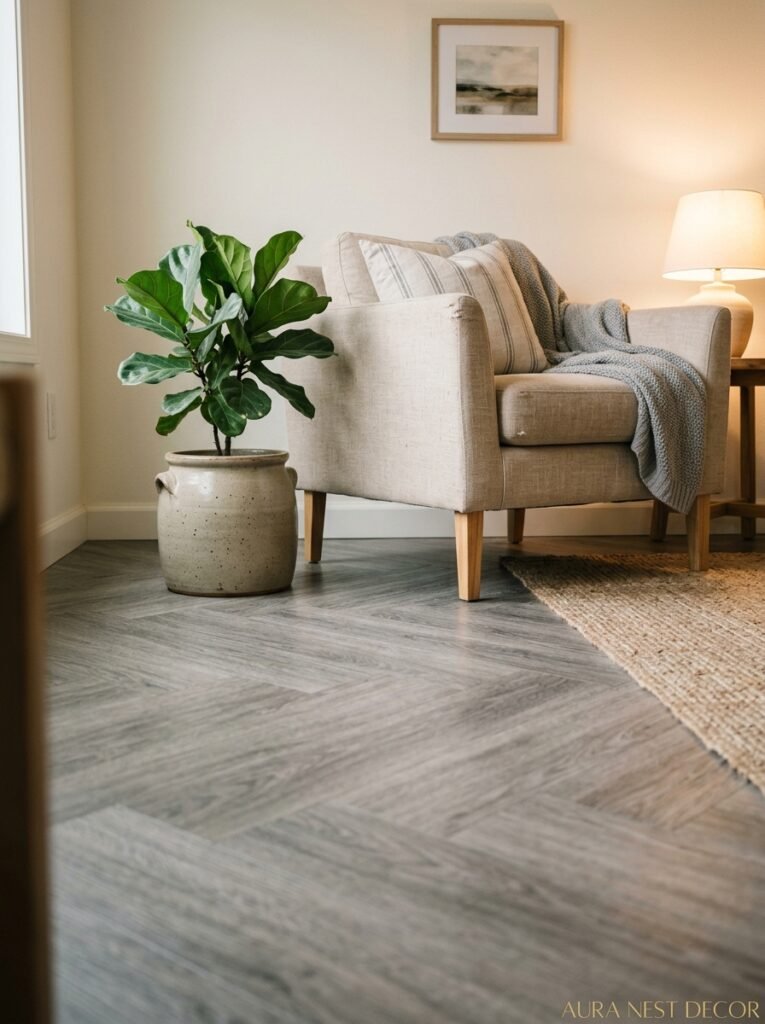
Luxury vinyl plank. In a warm grey tone, with a realistic wood grain texture.
I know. I know. “Vinyl” sounds cheap. But the quality of LVP flooring in the last five years has gone completely off a cliff in the best direction. The texture, the weight, the way it photographs — you genuinely cannot tell in most cases.
The benefits for a living room are real: it’s waterproof (good news if you have pets or kids), it’s warmer underfoot than real stone or tile, it’s significantly cheaper than engineered hardwood or solid wood, and the installation is so manageable that many people do it themselves over a weekend.
In grey tones specifically, LVP has come a long way. There are options now with such realistic variation in tone and grain that they have real visual depth — they don’t look flat or plasticky the way old vinyl floors did.
The key is buying the thicker options. Anything under 6mm feels hollow underfoot and sounds wrong when you walk on it. Go 8mm minimum, ideally with a good underlay, and the experience of being in that room changes completely.
—
❓ FAQ
Q: Does grey flooring make a living room look cold? A: It can, but it doesn’t have to. The key is your undertone — warm grey with beige or brown tones reads much cozier than cool blue-grey. Layer in warm lighting (2700K bulbs), plenty of textiles, and some warm-toned furniture, and the room will feel anything but cold.
Q: What’s the most popular shade of grey flooring right now? A: Warm mid-grey is everywhere — that toasty greige territory that sits between grey and beige. It’s versatile enough to work with almost any color palette, which is probably why it keeps showing up. Light grey is also very popular for smaller spaces.
Q: Can grey flooring go out of style? A: Neutral flooring doesn’t tend to date the way paint colors or furniture trends do. Grey has been strong for over a decade now and there’s no real sign of it stepping back — if anything, the range of grey tones available has just expanded. A good quality grey floor is a long-term investment, not a passing trend.
—
💭 Final Thoughts
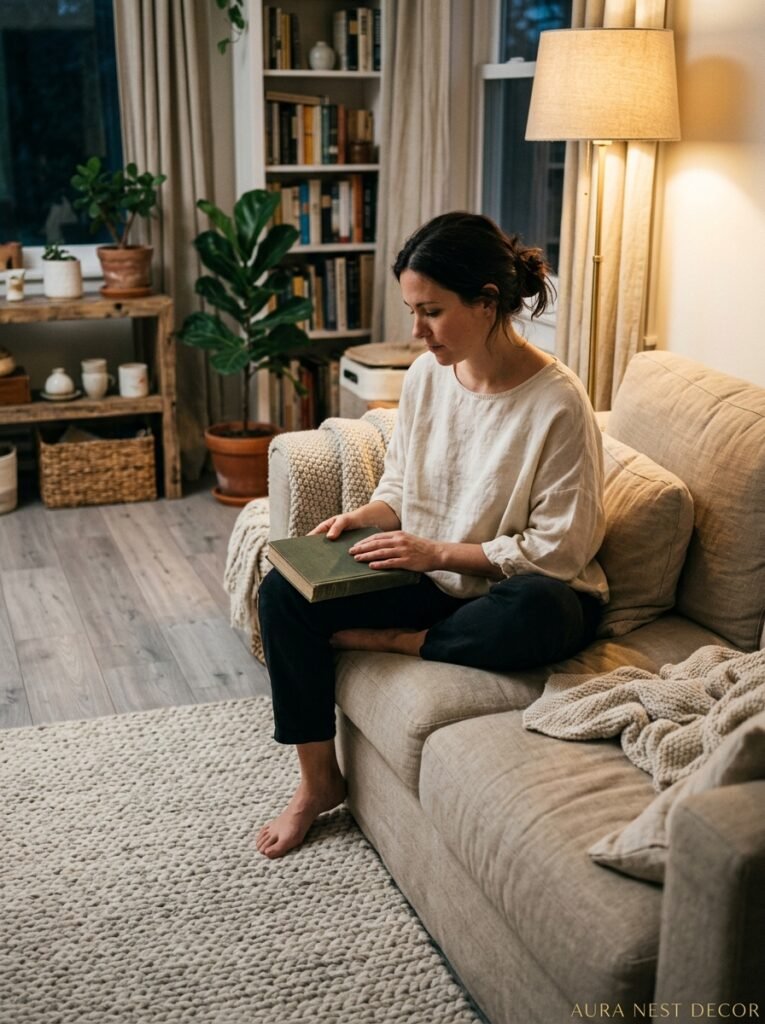
Grey flooring is one of those decisions that feels risky before you do it and obvious afterward. The versatility is real, the beauty is real, and when it’s done right — with the right undertone, the right lighting, the right mix of warm textures — it doesn’t just work. It makes the whole room.
So: are you going grey, or are you still on the fence?