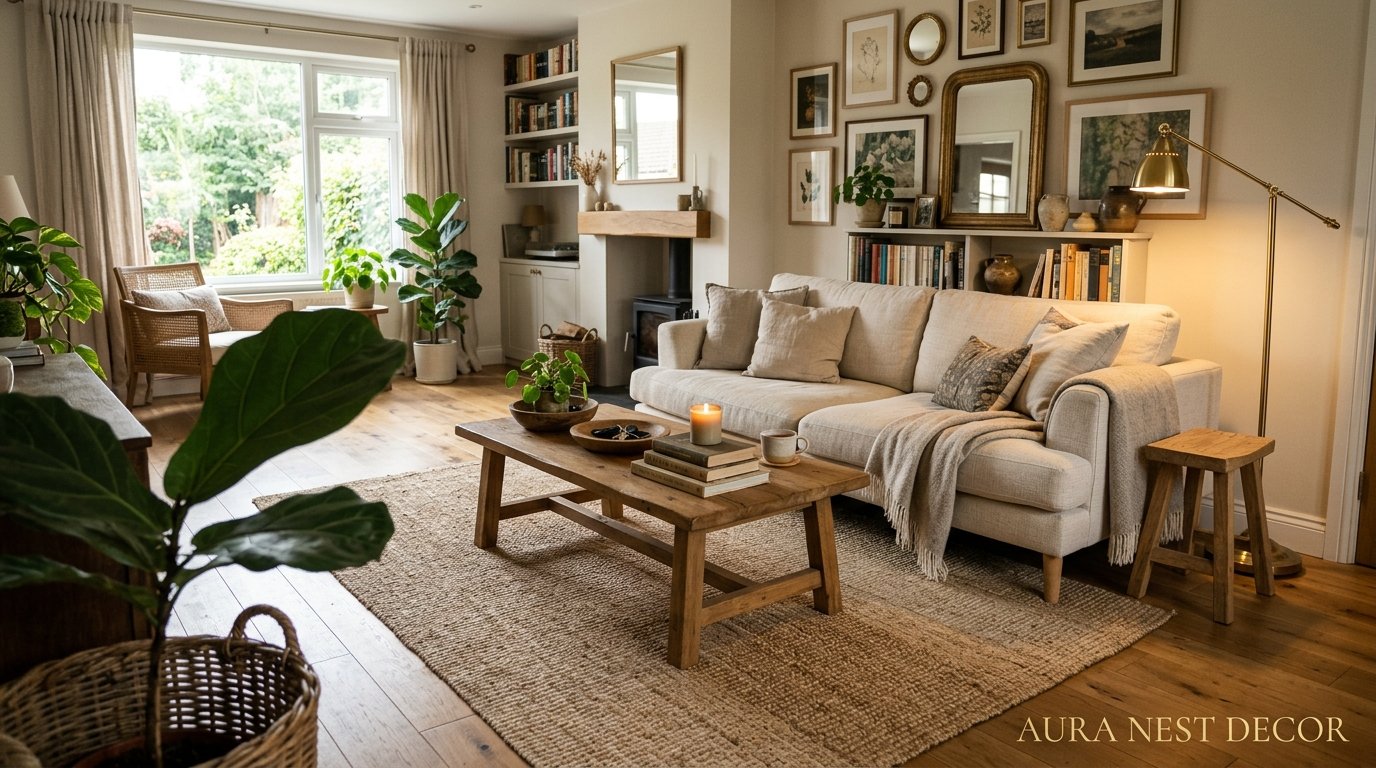
The Rug Mistake Almost Everyone Makes (And What to Do Instead)
You finally found the perfect sofa. The pillows are right. The lighting is doing its thing. And then you look down — and something’s just off. Nine times out of ten? It’s the rug.
—
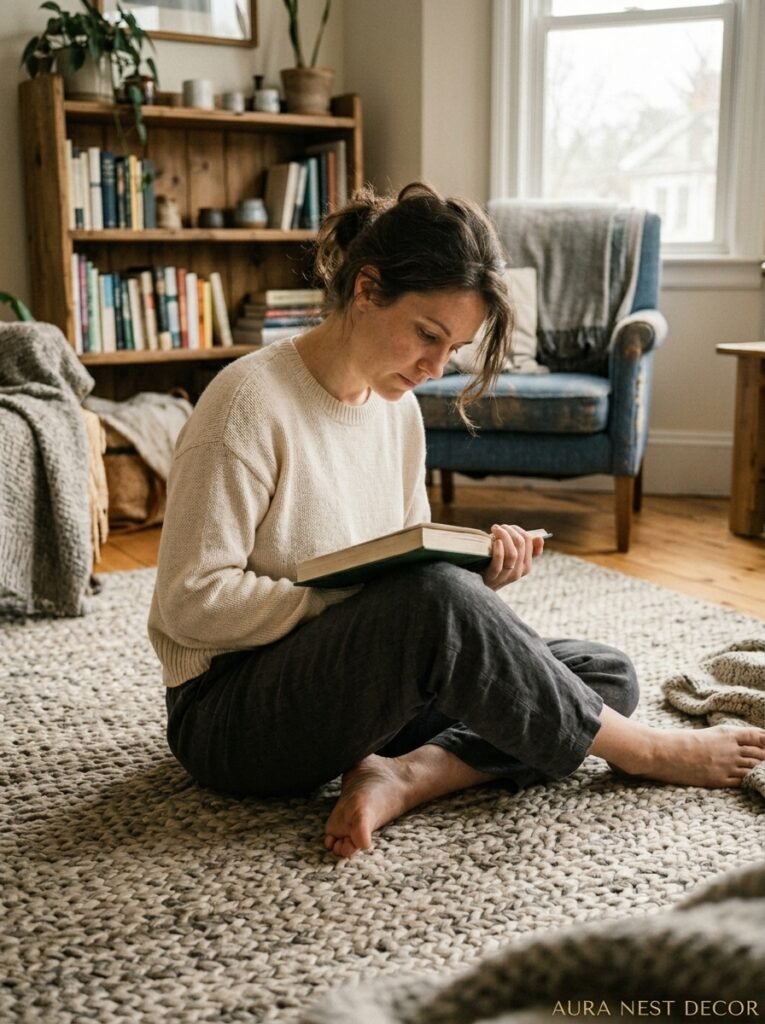
1. Why Your Living Room Feels Unfinished (Hint: Look at the Floor)
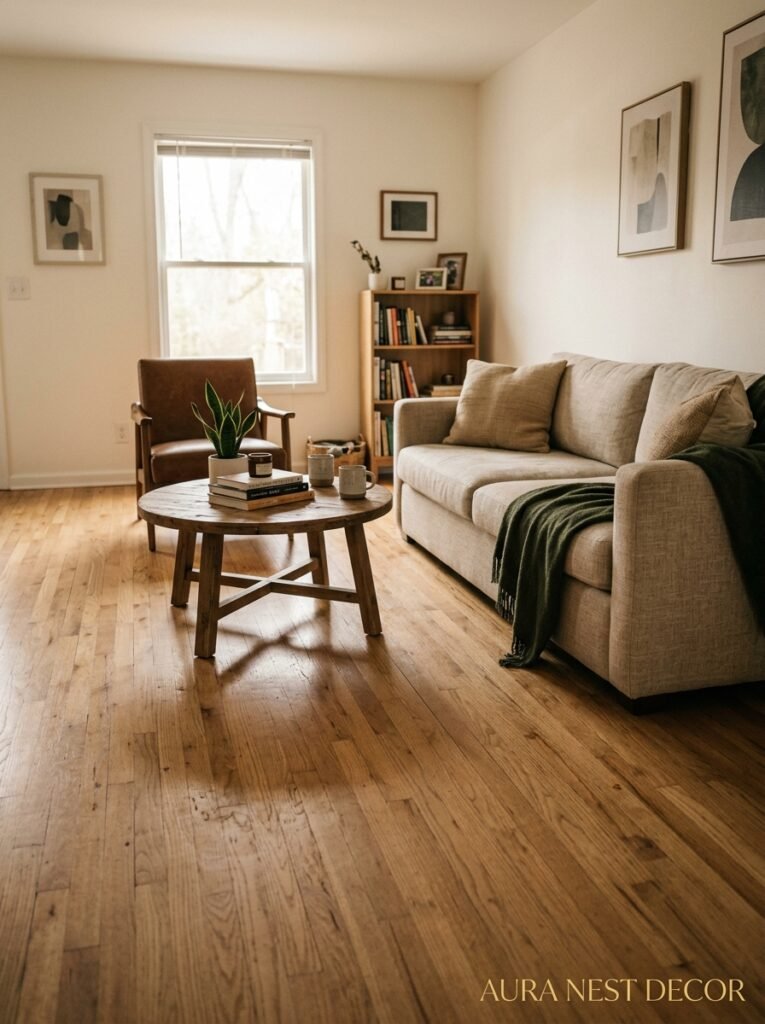
Here’s the thing nobody tells you when you’re decorating: the rug is actually doing more work than almost any other piece of furniture in the room. People spend months agonizing over sofa fabric and then buy the first affordable rug they see on a weekend afternoon. I’ve done it. It shows.
A rug isn’t just floor covering. It’s the thing that tells the room where it begins and ends. Without it, even a beautifully furnished space can feel like a collection of objects that don’t quite belong to each other — like guests at a party who haven’t been introduced yet. The moment you put the right rug down, suddenly everything clicks. The sofa belongs to the coffee table. The armchair is part of the conversation. The room becomes a room.
And the wrong rug? It does the opposite. A rug that’s too small makes your furniture look like it’s floating in space. A pattern that fights your cushions creates this low-level visual noise you can’t quite name but absolutely feel. You walk in, something’s wrong, you can’t figure out what, and eventually you stop noticing your living room entirely — which is honestly the saddest thing that can happen to a space you care about.
So. Let’s fix that.
“The right rug doesn’t just cover your floor — it tells the whole room where to stand.”
2. The Size Rule That Most Interior Designers Actually Agree On
Okay so there are very few hard rules in interior design, but rug size is one of the places where there’s genuine consensus — and genuine mass confusion.
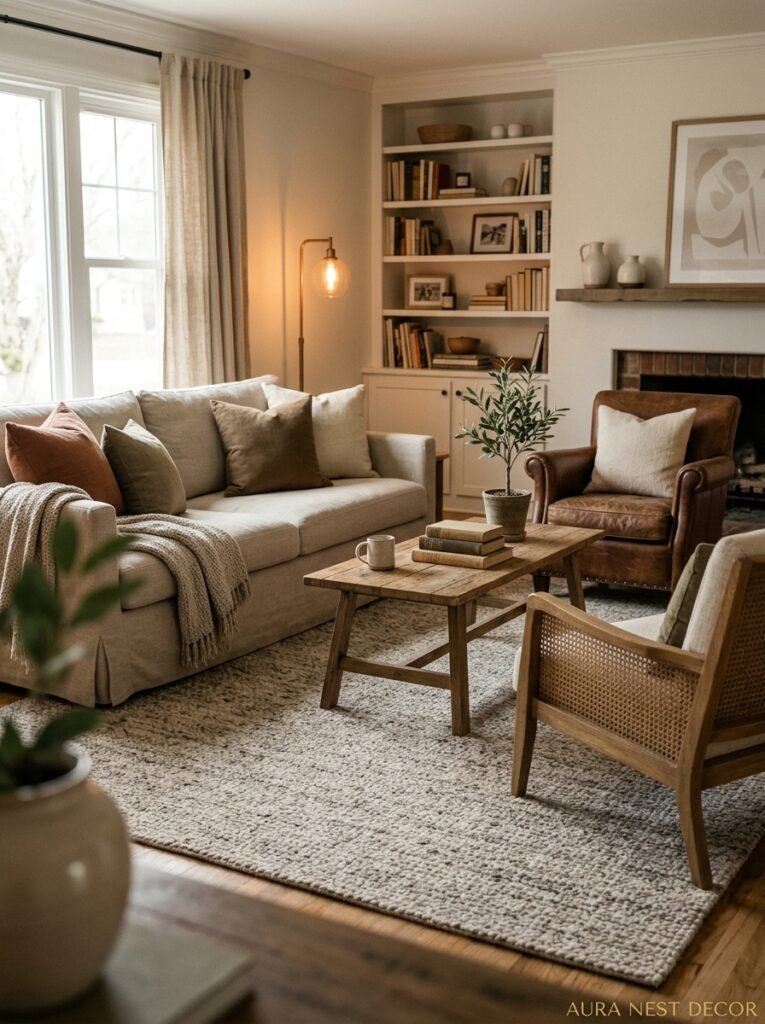
The most common mistake is buying too small. WAY too small. Like, rugs that barely reach the front legs of the sofa small. I see this constantly on Pinterest and in real homes and I think it happens because rugs feel expensive and floor space feels enormous and so people underestimate. But a rug that’s too small doesn’t save money in any meaningful way — it just makes the room look unintentional.
The standard advice is this: in a living room, you want all your main furniture legs sitting on the rug, or at minimum the front legs of every major piece. For a typical sofa-and-chairs setup, that usually means you’re looking at an 8×10 or 9×12 area rug. In a larger room? Go bigger. A 10×14 isn’t excessive. It’s right.
Before you buy anything, tape out the dimensions on your floor with painter’s tape. Seriously. Do it. It takes ten minutes and it will save you from an expensive mistake that lives in your living room for the next three years.
3. The Color That Keeps Showing Up in Every Beautiful Living Room Right Now
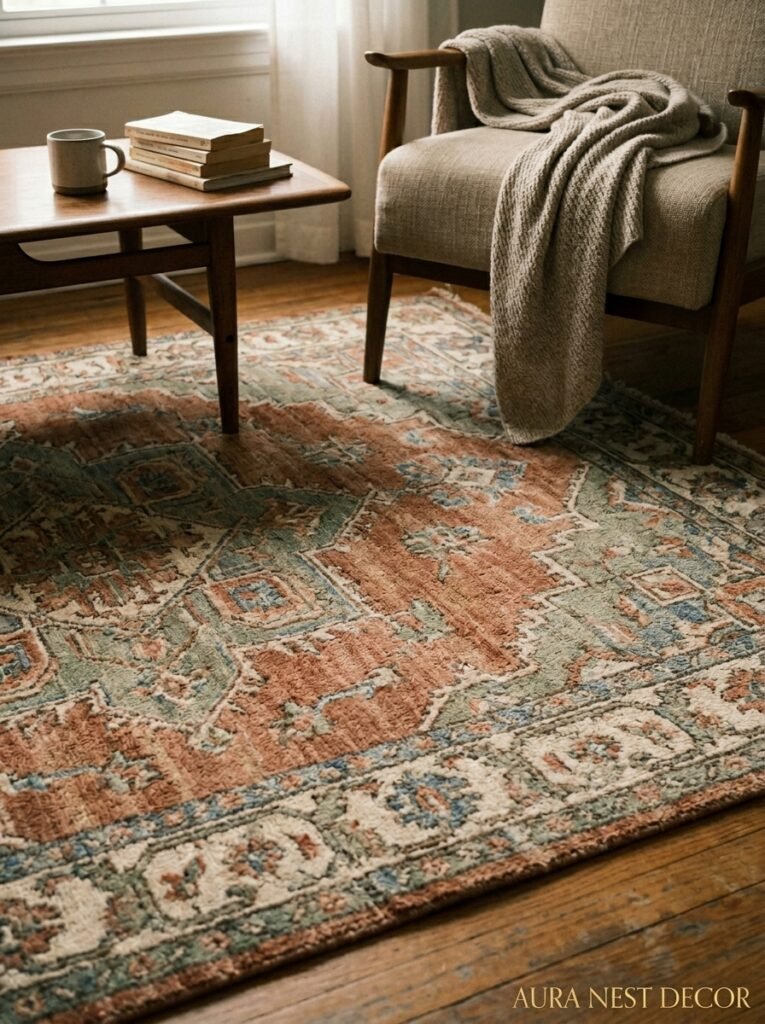
Not beige. Well — kind of beige, but warmer. More alive. It’s that range of tones somewhere between warm ivory, aged linen, and very pale terracotta that’s absolutely everywhere right now, and for good reason. It works with almost everything. Natural wood? Yes. Dark walls? Yes. A navy sofa? Incredibly yes.
But here’s what’s actually interesting: the rooms that really stop you mid-scroll aren’t the ones with safe, neutral rugs. They’re the rooms where someone was brave enough to add a little unexpected color to the floor — a muted sage, a dusty rose, a faded Turkish-style pattern in brick and cream — and it makes the whole room feel curated and considered rather than assembled.
The trick is muted. Saturated, bright color on a rug is a huge commitment and can date a room fast. But a dusty, slightly worn-looking color — the kind that looks like it’s been in the family for decades — adds warmth without screaming at you from the floor.
Anyway, if you’re stuck, start with what you’re not going to change. Your sofa fabric, your wall color, your main light source. The rug should pick up one tone from that mix and make it quieter.
4. Pile Height: The Thing Nobody Researches Until They’ve Made the Wrong Choice Twice
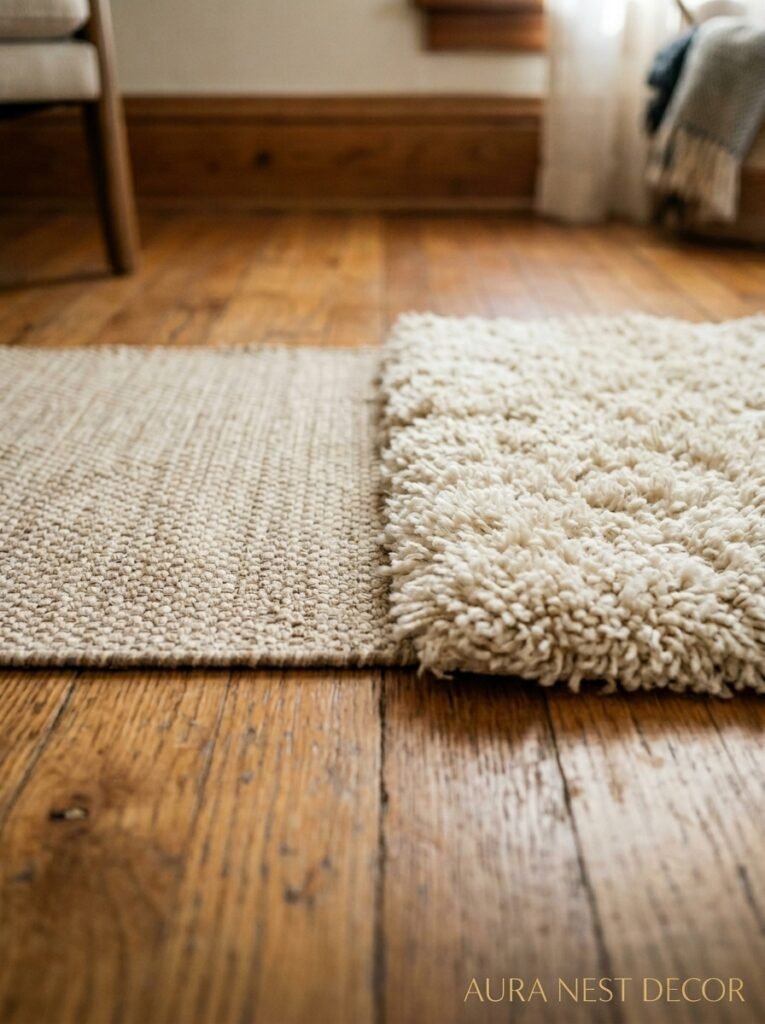
Low pile. High pile. Flat weave. Shag. It sounds tedious to care about and then you live with the wrong one for two years and you care a lot.
High pile rugs — the fluffy, deep ones — feel incredible under bare feet. There’s honestly nothing cozier on a cold morning, and they look gorgeous in photos. But. They’re harder to clean, they flatten under furniture, and they can make a small room feel a little heavy and cave-like. In a larger living room with good light? Dreamy. In a small, darker space? Potentially suffocating.
Low pile and flat weave rugs are more practical and actually work in more situations than people give them credit for. They’re easier to vacuum, they hold their shape better under sofa legs, and they tend to look more refined. A flat weave kilim or a tight Moroccan-style pattern brings so much personality into a room without the maintenance burden.
For most living rooms — especially if you’ve got kids, pets, or just a busy household — I’d honestly lean low to medium pile and put the money you save on fluffiness toward quality and pattern instead. You’ll be happier in a year.
“High pile wins the photo. Low pile wins the long game.”
5. The One Rule That Makes a Small Living Room Feel Intentional
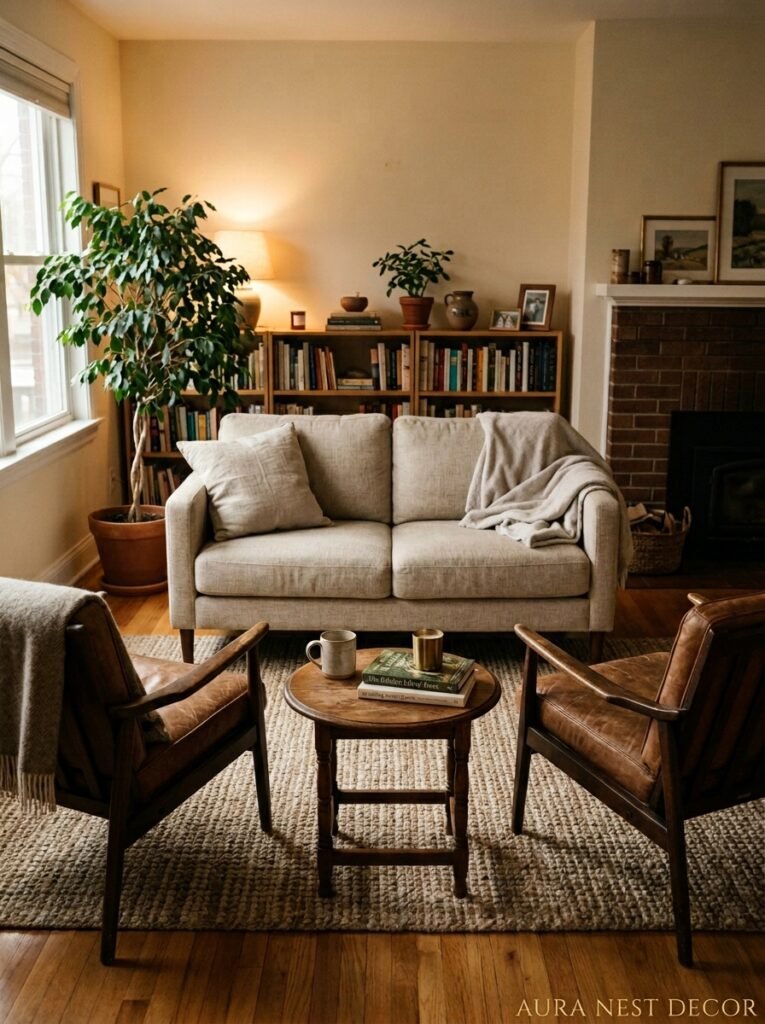
Small rooms need bigger rugs, not smaller ones. I know it feels backward. It’s not.
When you put a small rug in a small room, it cuts the floor into awkward sections and actually draws attention to how little space there is. When you go bold with a larger rug — one that runs close to the walls and anchors everything on it — the room reads as a complete, intentional space. The proportions become about the furniture arrangement rather than about the floor area.
Side note — this is also why floating furniture in a small room rarely works. Pushing everything against the walls is a classic instinct but it actually just empties out the center of the room and makes it feel staged rather than lived-in. Pull things in toward each other, put a properly sized rug underneath, and suddenly a small living room stops apologizing for itself.
If you’re working with a small footprint, look for rugs that are simple in color but interesting in texture, or vice versa. You don’t want a busy pattern competing with limited wall space and furniture. A solid or subtle texture with great depth can make a small room feel rich and considered.
6. Layering Rugs: When It Works and When It Just Looks Chaotic
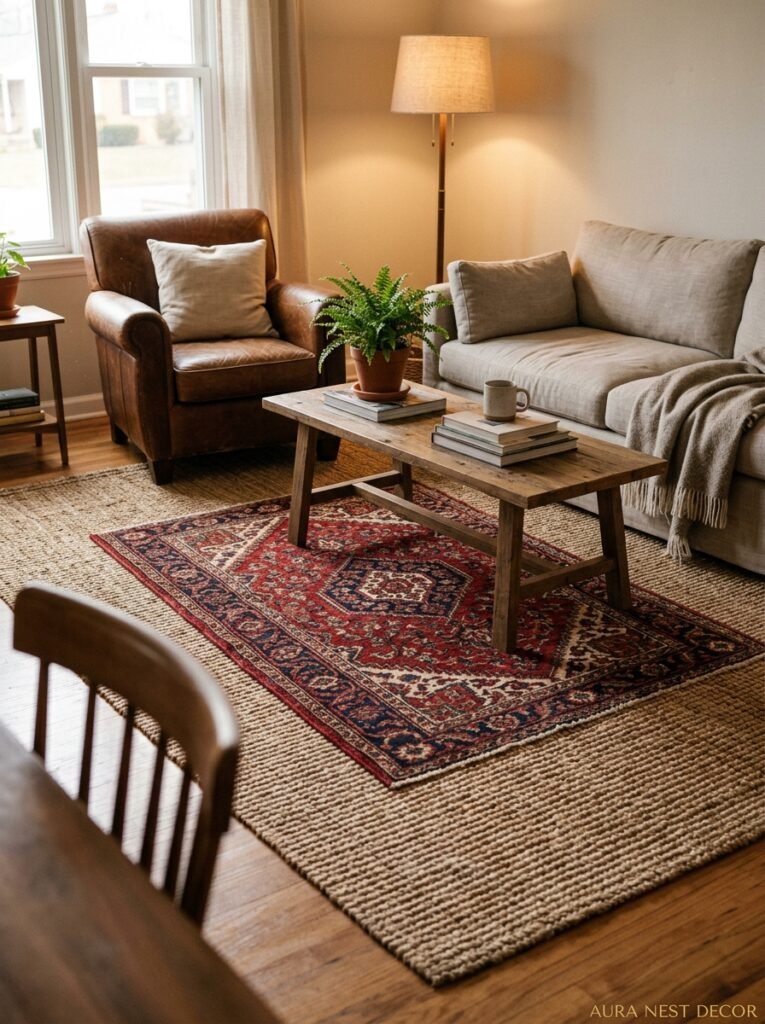
Layered rugs are having such a moment. And they can look genuinely beautiful — a flat jute or seagrass underneath, a smaller vintage-style rug on top, the textures playing off each other in this warm, eclectic way. Done right, it’s one of the best design tricks for a living room.
Done wrong? It just looks like you couldn’t decide.
The key is contrast and scale. Your base layer should be large and relatively neutral — natural fiber rugs are perfect because they’re inexpensive, durable, and don’t compete with anything. The top layer should be smaller, more patterned or colorful, and positioned where it makes visual sense — in front of the sofa, not randomly floating in a corner.
What doesn’t work is layering two similarly sized rugs, or two rugs with competing patterns, or a smaller plain rug on top of a larger patterned one. That’s just visual noise. The point is that each rug has a job. The base rug defines the space. The top rug adds personality.
Also — and this is practical — make sure the edges of both rugs are somewhat secured. Rug grippers and tape exist. Use them. A beautiful layered rug situation that’s constantly bunching and becoming a tripping hazard is not the aesthetic.
7. What Rug Materials Actually Mean for Your Living Room Life
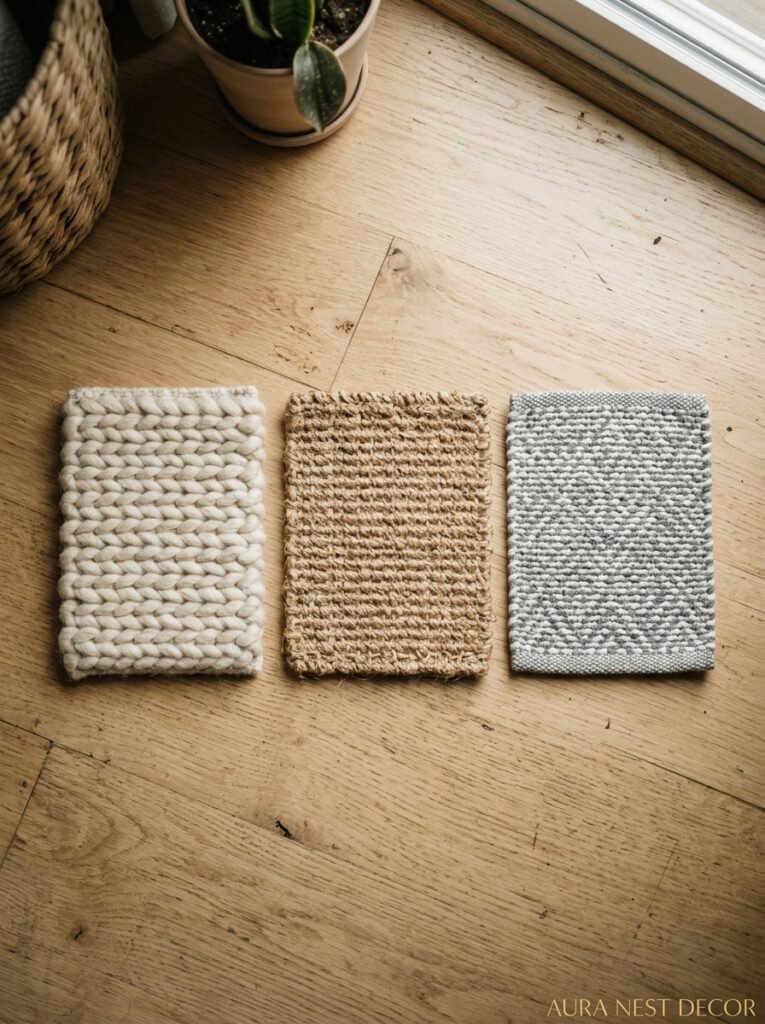
Wool. Cotton. Jute. Viscose. Synthetic. The material conversation isn’t glamorous but it really matters and I wish someone had explained it to me earlier.
Wool rugs are the gold standard for living rooms. They’re naturally resilient, they clean up surprisingly well, they don’t flatten as fast as synthetics, and they age beautifully — meaning a wool rug looks better after a few years rather than sad and worn. They’re expensive. Worth it if you can swing it.
Jute and sisal are beautiful but unforgiving. They look incredible, very natural and grounding, but they don’t love moisture (so maybe not ideal if you’re always carrying a tea mug from room to room), and they can feel rough underfoot. Best under furniture rather than in high bare-foot-traffic zones.
Viscose — sometimes sold as “art silk” — looks luxurious and catches light beautifully. It’s also a bit fragile, marks easily, and isn’t great in high-traffic rooms. Guest living room? Maybe. Main family living room? Probably not.
Synthetic rugs — polypropylene especially — get a bad reputation but honestly? Modern synthetics have come a long way. They’re great for families and they’re often where the most interesting patterns live at accessible price points. Not forever rugs, but decent working rugs.
“Buy the best material you can actually afford to maintain — not just to acquire.”
8. Pattern Mixing: The Confidence Move That Changes Everything
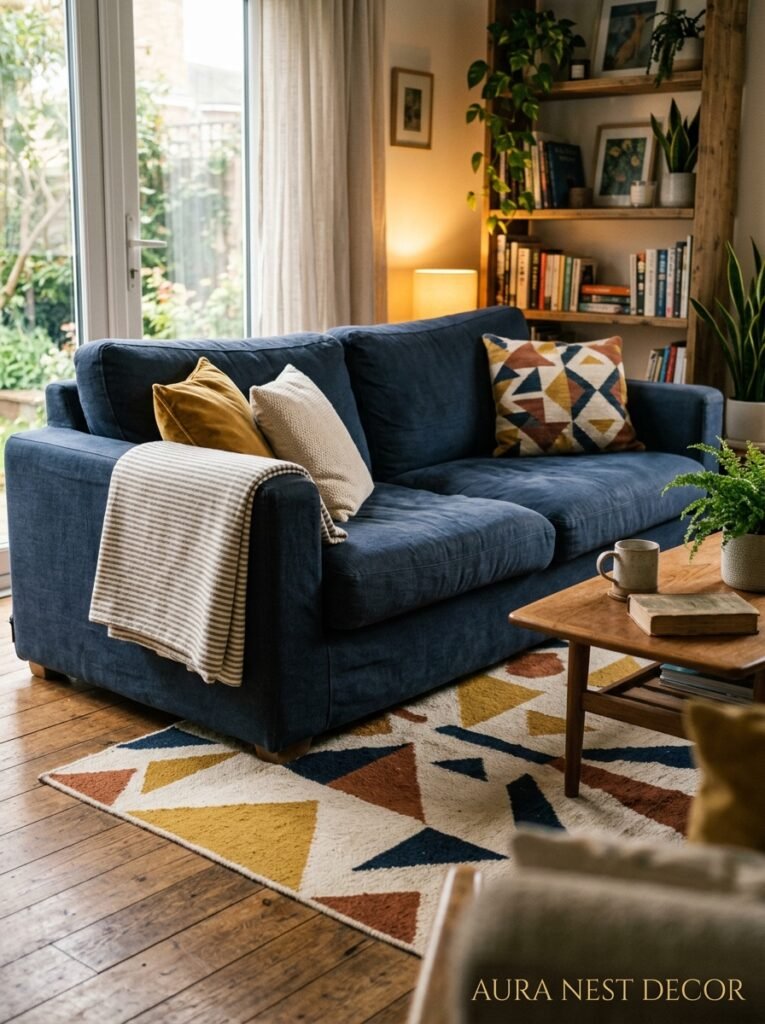
Mixing patterns in a living room intimidates people but it’s one of those things that looks much harder than it is once you understand the one underlying principle: vary the SCALE.
A large-scale pattern and a small-scale pattern can absolutely live in the same room. What creates visual chaos is two large-scale patterns competing at the same visual weight. So if your sofa has big, bold stripes or a significant geometric, go for a smaller, more subdued pattern on the rug — or a texture rather than a print. And if your rug is the star (a dramatic Persian, a big geometric Beni Ourain), keep everything else calm.
For US and UK living rooms where the design aesthetic tends to lean either eclectic-cozy or clean-contemporary, rugs with geometric patterns in muted tones are doing a lot of heavy lifting right now. They add visual interest without demanding too much attention. And they’re endlessly pin-able, which — if you’re here — probably matters.
Or honestly, maybe it doesn’t and you just know what you like. Trust that more than any trend.
9. The Vintage and Antique Rug Rabbit Hole (It’s Worth Going Down)
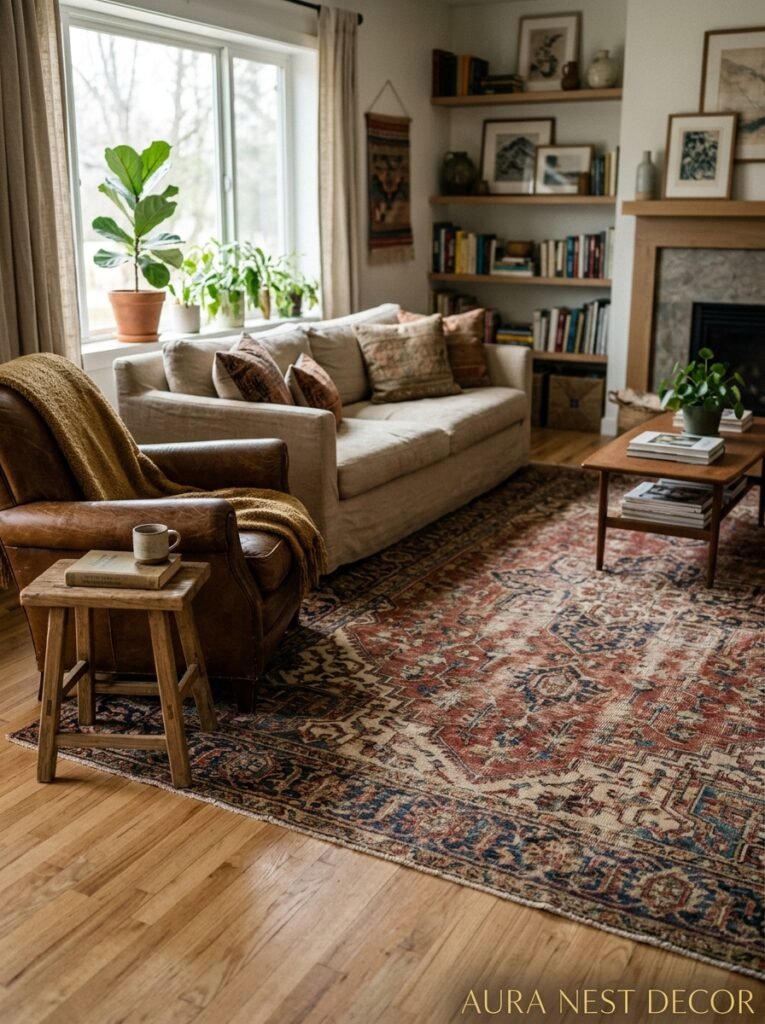
If you haven’t seriously considered a vintage rug for your living room, consider this your gentle push. They’re different. Not because of age for its own sake, but because the colors are different — genuinely, irreproducibly different. Dyes that have been fading for forty or sixty years create a depth and complexity that no new rug, no matter how beautifully designed, can replicate.
Etsy, eBay, local antique markets, Facebook Marketplace — vintage rugs are more accessible than they used to be. You can sometimes find an absolutely gorgeous handmade rug for less than a mediocre new one from a big box store. Not always. But often enough that it’s worth looking.
The thing about vintage rugs is they also bring a sense of permanence to a room. Like the room has a history, has been lived in, has stories. Even a room full of entirely new furniture can feel grounded and real with a vintage rug under it.
One small warning: if you’re buying online, understand the return policy before you commit. Colors read very differently on screens than in person, especially with older rugs where the photography is often inconsistent.
10. Rug Pads: Genuinely the Most Boring Purchase That Makes the Biggest Difference
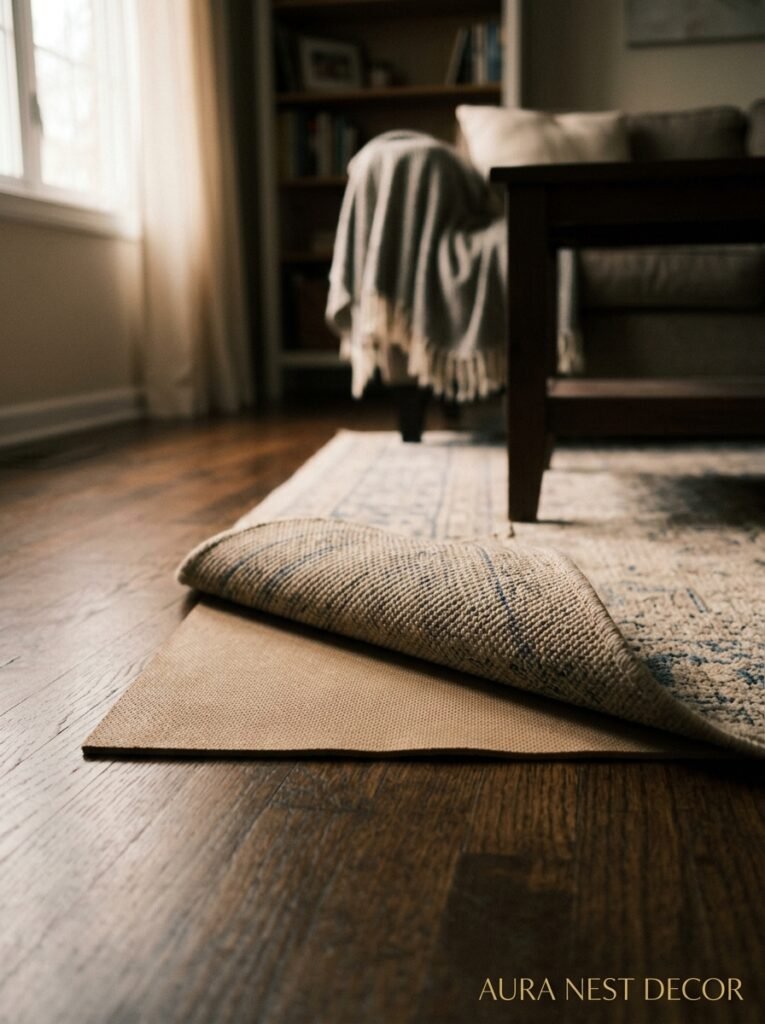
Not glamorous. Not Pinterest-worthy. Completely essential.
A rug pad does three things. It keeps the rug from sliding (which is a safety thing, not just an annoyance thing). It adds a little cushion underfoot, which is especially important on hardwood or tile. And it protects your floor from dye transfer or the natural oils in certain rug materials — which is something you definitely don’t think about until it’s too late.
Get a rug pad that’s about an inch smaller on all sides than your rug so it doesn’t peek out. Make sure it’s rated for your floor type — some pads aren’t suitable for hardwood or leave marks over time. And don’t skip it thinking it’s optional. It’s not, really.
11. The Direction Your Rug Faces Matters More Than You’d Think
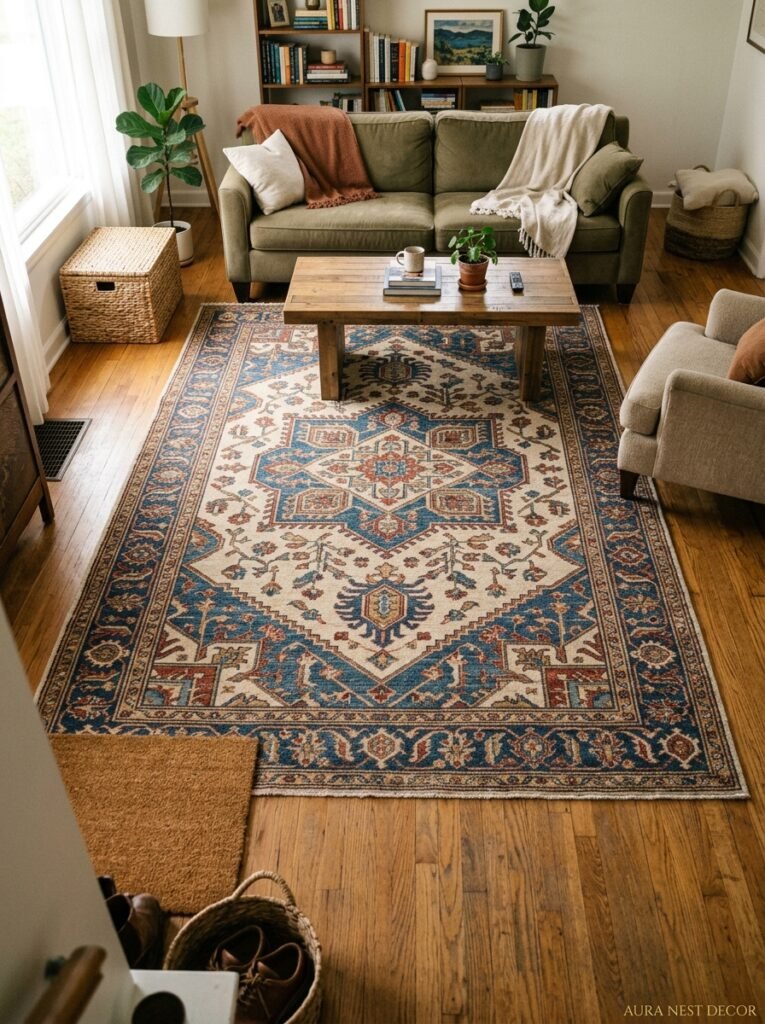
This sounds like a very specific and possibly pretentious thing to care about, and yet. The direction of a rug’s pattern or pile can actually affect how a room reads spatially.
In a longer, narrower living room, placing a rug horizontally (across the width rather than running the length) can help the room feel wider and more balanced. Running a rug lengthwise in an already long room just emphasizes the tunnel effect.
Also — and this is about light, not layout — pile direction affects how a rug catches light. If you run your hand one way and the rug looks dark, and the other way it looks lighter, that’s the pile direction. Position the rug so the pile runs toward the main light source in the room and the color will look richer and more accurate. This sounds incredibly small. In practice it makes a real visual difference.
12. When to Break Every Rule and Just Buy the Rug You Love
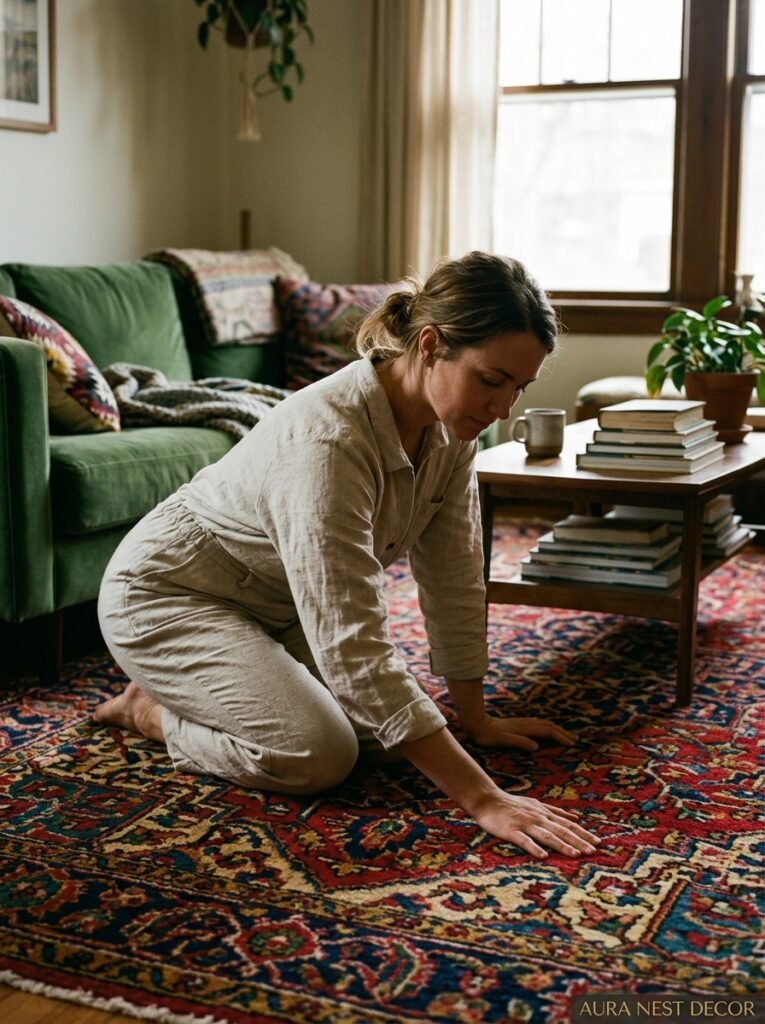
Here’s where I land after all of this. Rules are useful. They explain why something isn’t working. But they’re not the point.
The point is that you walk into your living room and feel something good. Ease, warmth, excitement — whatever it is that makes a home feel worth coming back to. If a rug does that for you, buy it. Even if it’s slightly too small. Even if the pattern doesn’t strictly “go” with your sofa. Even if it’s a color you can’t quite justify.
Rooms that feel genuinely personal and alive always have at least one choice that wasn’t safe. One thing someone bought because they loved it, not because it made sense. The rug can be that thing.
I’ve seen rooms that followed every rule and felt like showrooms. I’ve seen rooms that broke most of them and felt like home. You know which one you want to live in.
—
❓ FAQ
Q: How do I know what size rug to get for my living room? A: Tape out the dimensions on your floor with painter’s tape before buying anything — it sounds tedious but it’s the single most useful thing you can do. For most living rooms, an 8×10 is the minimum for a sofa-and-chairs setup, and going up to a 9×12 or larger is rarely a mistake.
Q: Can I put a rug on top of carpet in my living room? A: Yes, and it can look great — it’s actually a smart way to define a seating area in a larger carpeted room. Low pile rugs tend to work best here since they don’t add too much height and are less likely to slide. A rug gripper pad is still a good idea even on carpet.
Q: How often should I clean my living room rug? A: Vacuum regularly — weekly if you’ve got pets or kids, every couple of weeks otherwise. For a deeper clean, most wool and synthetic rugs can be professionally cleaned once a year or every eighteen months depending on traffic. Spot-treat spills immediately with cold water and a mild detergent, and blot rather than rub.
—
💭 Final Thoughts
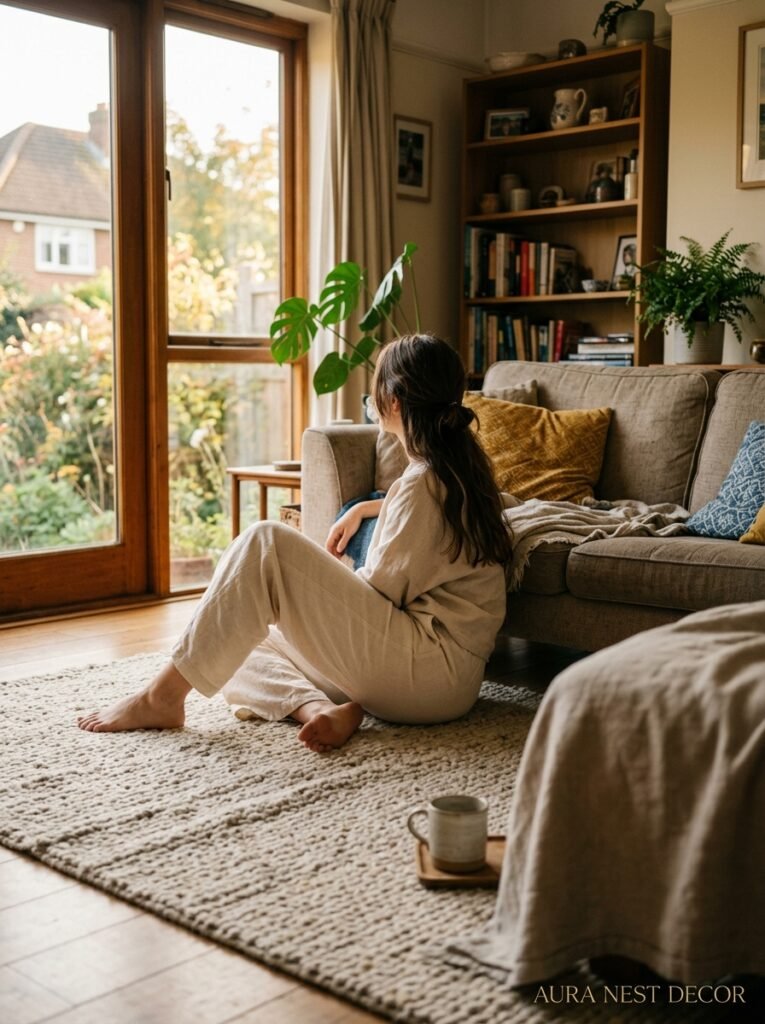
A rug is one of those purchases that sounds functional and turns out to be deeply personal. Getting it right can make you fall in love with your living room all over again — the way it looks, the way it feels underfoot on a slow Sunday morning, the way the whole room suddenly makes sense. Getting it wrong is annoying but fixable, and honestly, most of us get there through a wrong rug or two first.
Don’t let perfect be the enemy of good enough to love. What’s the one thing about your current living room rug — or lack of one — that you’d change first?