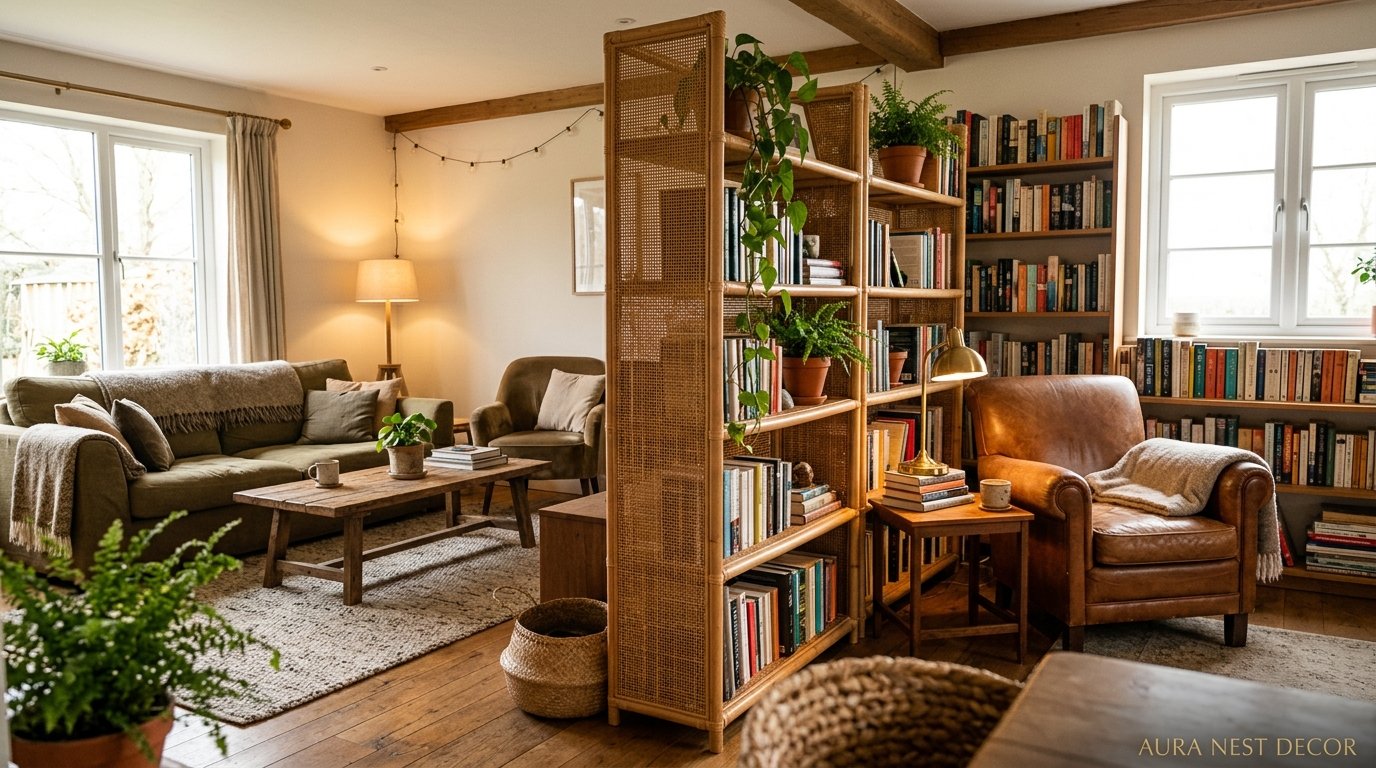
The Smartest Thing You Can Do to a Living Room That Feels Like One Big Blah
You walk in and something’s just… off. The space is fine. Totally livable. But it doesn’t feel like anything. No sense of where one moment ends and another begins. That’s a partition problem — and it’s way more fixable than you think.
—
1. Why Your Open-Plan Living Room Feels Like an Airport Terminal
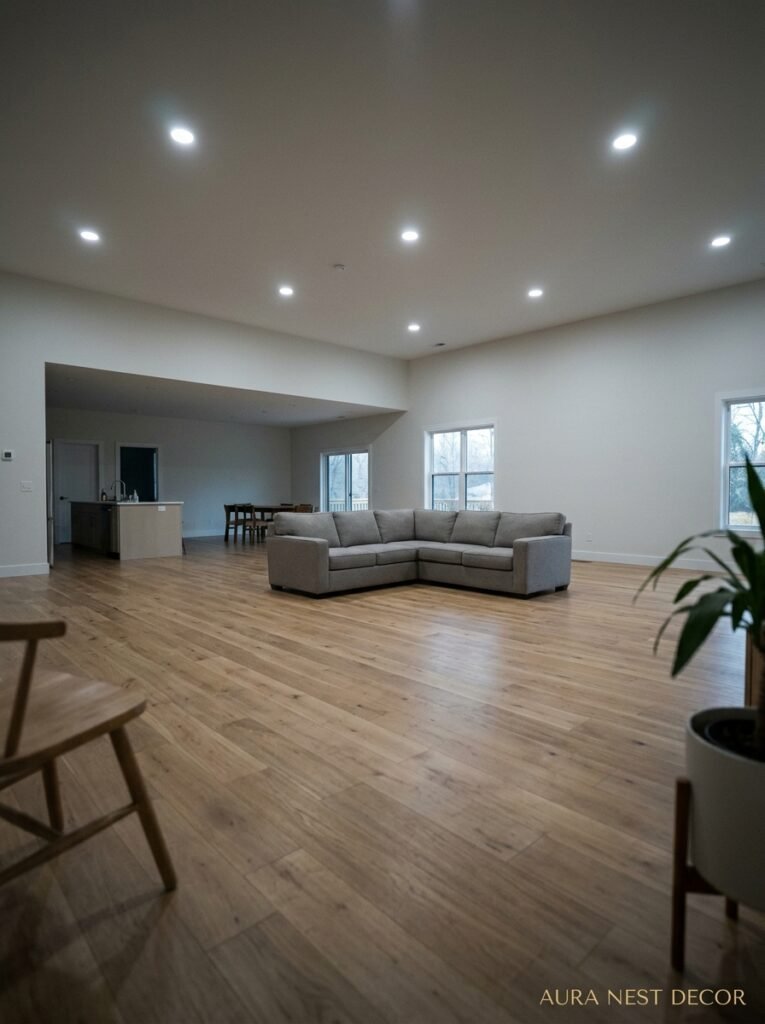
Open-plan living was sold to us as the dream, wasn’t it? Knock down the walls, let the light in, feel the space. And sure, for a while it felt modern and airy and like something out of a magazine. But a lot of us are sitting in these wide-open rooms right now wondering why they feel kind of… soulless? There’s nowhere to land. Nowhere that says this is where we eat, this is where we actually relax, this is the corner that belongs to me.
Airports are big and open too. Nobody hangs their favorite blanket in one.
The thing is, humans actually need delineation. We need our spaces to tell us what to do in them. When a room is all one thing, every activity competes with every other activity, and nothing wins. The TV is technically in the “living” zone but it’s also just sitting in the middle of a void. The sofa faces… everything. And the whole room ends up feeling like a waiting area rather than a home.
A partition doesn’t fix this by closing space off. It fixes it by giving the space intention.
“You don’t need more room. You need your room to mean more.”
—
2. The Partition Type That Everyone’s Pinning Right Now (And Whether It Actually Works)
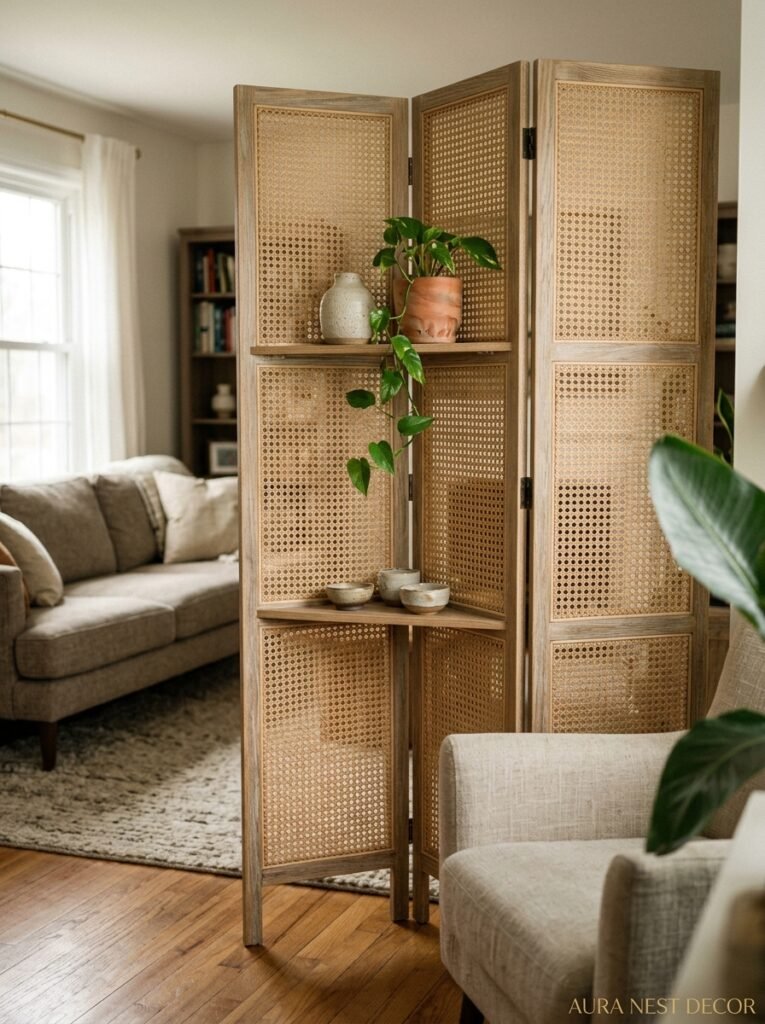
Bookshelf dividers. They’re everywhere. And honestly, for once, the Pinterest obsession is totally warranted — because a good open bookshelf partition does about six things at once without trying hard.
It creates a visual boundary without closing off light or airflow. That matters a lot in UK homes especially, where natural light is basically a precious resource from October through April and you’d be insane to block it completely. A solid wall where you used to have open space can make a British sitting room feel like a cave by November. But a tall bookshelf — something around 6 feet, open on both sides — lets the room breathe while still saying “hey, this side is the living area and that side is the dining space.”
And then there’s the styling factor. A bookcase that faces the living room shows off your books, your plants, your little bits and pieces that make a house feel occupied and loved. The back of it faces the dining area and you can paint that back panel a contrasting color — which sounds small but looks SO good. Deep green backing behind white shelves. Warm terracotta behind natural oak. That’s not just a divider anymore, it’s a design feature.
Does it work for sound? Not really, no. Don’t expect it to muffle the TV. But for visual separation, for giving the eye somewhere to rest, for making your open-plan room finally feel like it has two personalities instead of zero — yeah. It really works.
—
3. The Case for Curtains (Seriously, Hear Me Out)
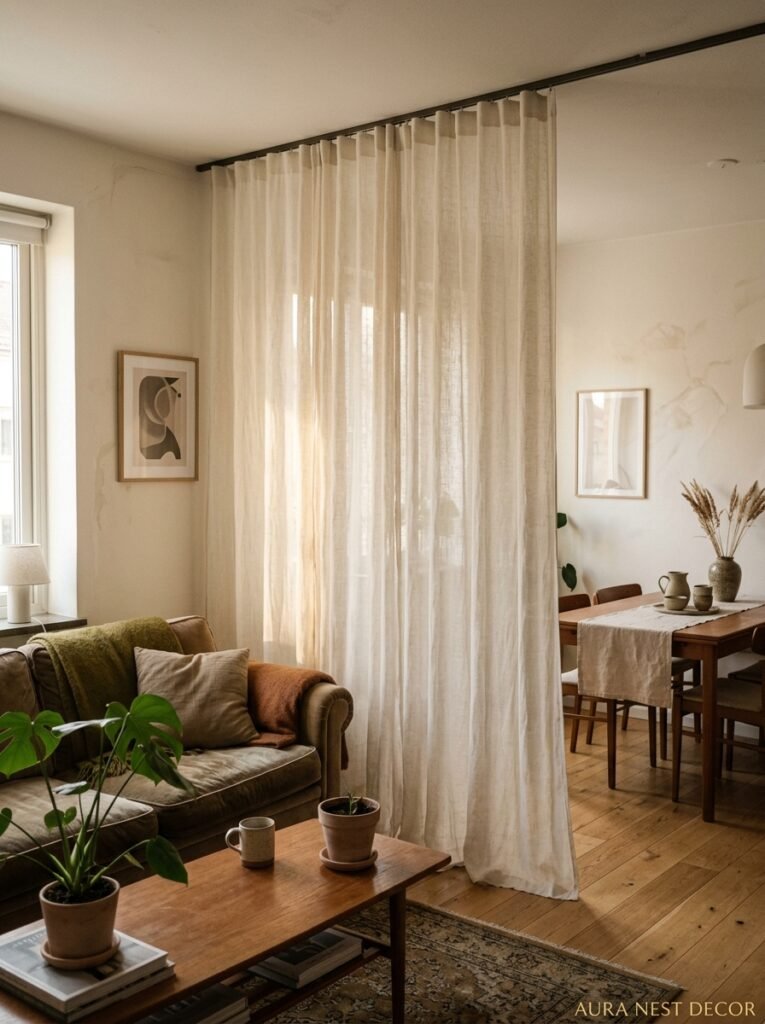
I know. Curtains as a room divider sounds like a dorm room. Or like you’re trying to hide something behind a makeshift changing area at a craft fair. But done right — I mean actually done right — a curtain partition is one of the most elegant and flexible things you can add to a living room.
The key is the rod and the fabric. Ceiling-mounted tracks, the kind that run flush with the ceiling, make curtain dividers look architectural rather than accidental. The curtain itself needs to be heavy and full — linen, velvet, something with actual substance. Not a sheer panel that flutters around like it can’t make up its mind.
What makes this work so well is the total flexibility. Hosting people tonight? Pull it back. Need to close off the TV area while someone works from home? Draw it shut. Want to make the living room feel more intimate for just two people rather than an echoing open space? There it is. A moveable wall that takes five seconds.
And texturally, it adds so much. A long floor-to-ceiling velvet curtain in a warm dusty rose or a deep forest green hanging from a sleek black track is genuinely beautiful. Not just functional. Actually beautiful. Side note — this is one of those solutions that costs a fraction of what a structural divider would and looks about three times as good when done with intention.
—
4. What Japanese Design Has Been Trying to Tell Us for Centuries
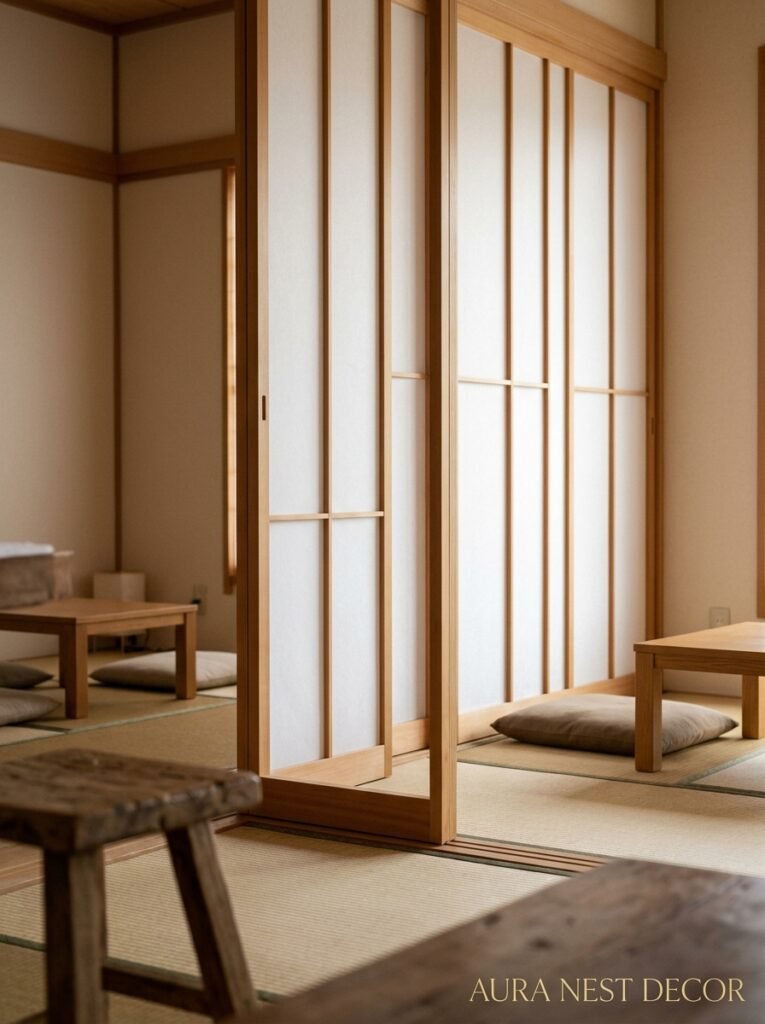
Shoji screens. Or, if you want something that doesn’t specifically read as Japanese-inspired but borrows the same logic, any kind of lattice panel or open frame screen. The principle is identical: define space without enclosing it.
The screen or panel acts like a pause in a sentence. It tells the eye: something changes here. It doesn’t wall anything off, it just suggests a transition. And that suggestion is enough. Genuinely enough. Our brains pick up on visual cues like this and organize the space accordingly, which is why a screen can make a room feel like two distinct areas even when you can still technically see the whole thing from end to end.
Modern versions of this in living rooms are getting quite creative. Laser-cut metal screens. Slatted wood panels that you can hang or lean. Rattan room dividers that look like they wandered in from a Bali villa. Macramé panels (not the 1970s scratchy kind, the current refined versions with clean geometric lines) that add texture without weight.
“A screen doesn’t close a room off — it gives the room something to say.”
The one thing to be aware of: proportion. A screen that’s too short just looks like you put a piece of art on the floor. It needs to be tall enough to register as a boundary — something in your sightline, not at shin level. Most people need something at least five feet tall to actually feel the spatial effect.
—
5. The Furniture Placement Trick That Works Like an Invisible Wall
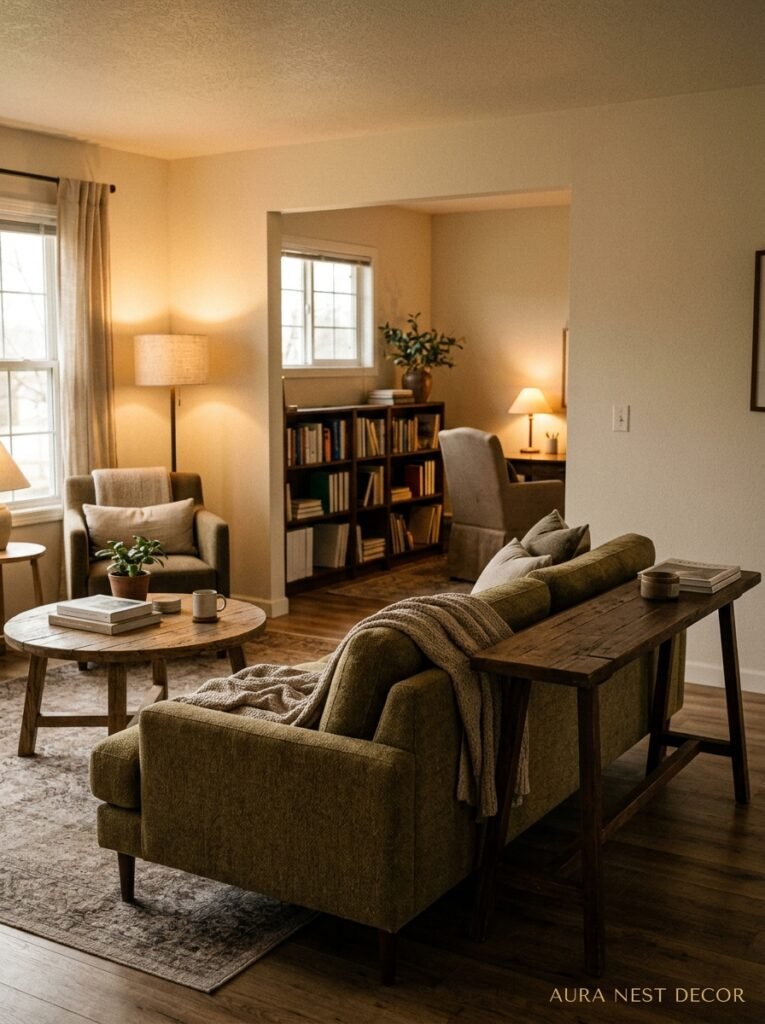
This one’s free. Zero purchases required. And it’s probably the most underused partition technique in residential interiors.
Turn your sofa around.
Or at least, angle it. Position the back of the sofa — which is usually treated as the room’s awkward afterthought — as a deliberate edge between two zones. When your sofa faces into a defined seating area with its back to the dining or entryway zone, it creates a boundary that the eye reads as intentional even without any physical structure.
Reinforce it with a narrow console table placed along the back of the sofa. Now you’ve got a surface that faces the dining area, that you can put a lamp on, maybe a plant, a small piece of art leaning against the wall behind it. The back of your sofa just became a living, breathing little vignette. The zone separation happens naturally because there’s a visual logic to it.
This doesn’t work in every room — if your space is really small, you might not have the floor area to pull it off without things feeling cramped. But in most open-plan living rooms, especially the longer rectangular ones that are so common in UK terraced houses and American ranch-style homes, this is genuinely the first thing I’d try before spending anything at all.
—
6. When You Want a Partition That Also Pays Rent
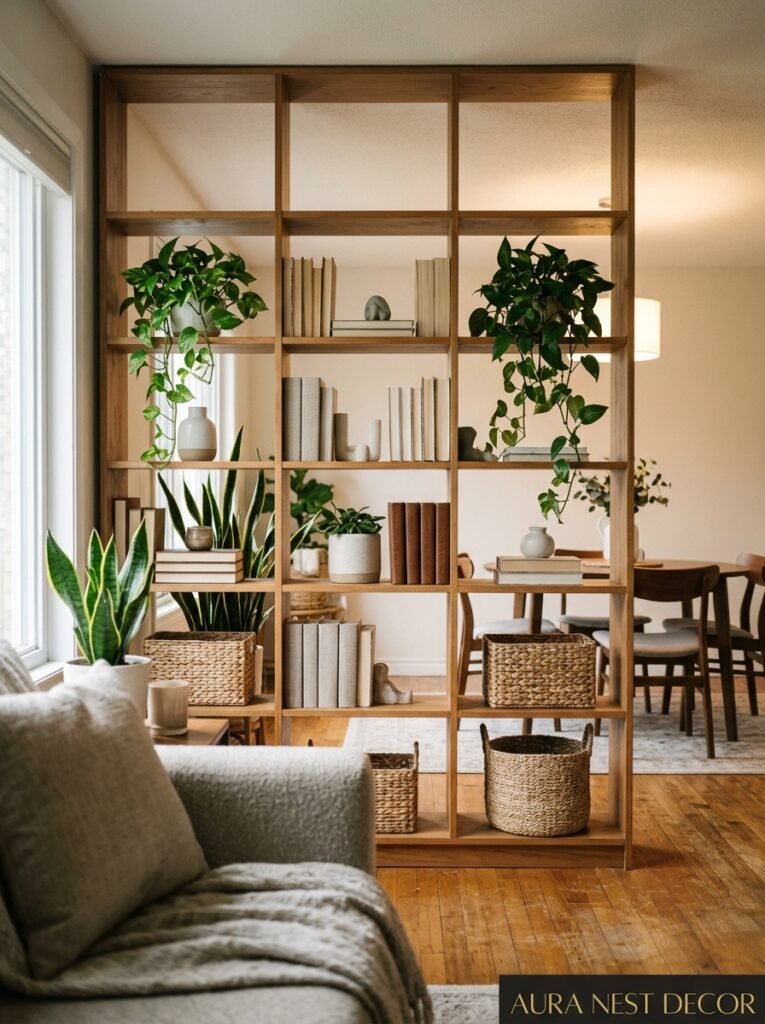
Some dividers are purely aesthetic. Good for them. But some people need their partition to WORK — to actually store things, to house a plant collection, to act as a bar cabinet, to do something beyond just standing there looking pretty.
Enter the room divider that doubles as a home bar. Or a plant wall. Or a display cabinet.
A tall, open shelving unit with a mix of closed and open sections gives you storage on both sides — one side houses the “living room stuff” (remotes, candles, books, whatever), the other side faces toward the kitchen or dining room and holds glassware, decanters, some trailing pothos. It’s one piece of furniture doing the job of two rooms.
Plant partitions are another thing entirely. A row of tall indoor plants — I’m talking fiddle leaf figs, tall snake plants, big monstera — placed in a deliberate line creates a soft, organic boundary that literally breathes. It’s not rigid, it’s not hard-edged, it doesn’t close anything off. But it creates a green corridor that your eye reads as a dividing line. American homes with high ceilings especially suit this because you can go really tall. A seven-foot fiddle leaf fig in a terracotta planter, placed deliberately, is architecture.
—
7. The Lighting Move That Does All the Partitioning Work for You
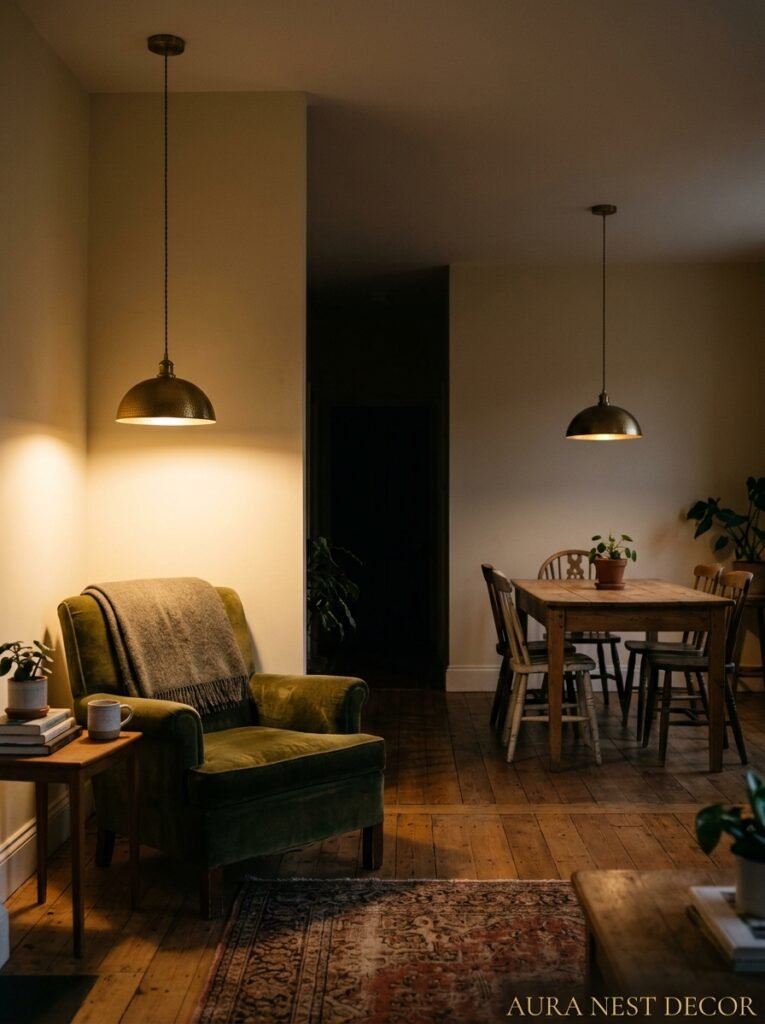
Okay, this one genuinely surprised me when I first noticed it working. You can create completely distinct zones in a room — no furniture moved, no screens bought, no shelves installed — purely through lighting.
The idea is that different light temperatures and heights in the same room read as different spaces. Your living seating area has a floor lamp at 2700K (warm, amber, glowy), maybe a table lamp on the side table. Your dining area has a pendant light overhead at the same color temperature, but the directional quality of it is completely different — it pulls the eye DOWN to the table rather than diffusing around the room.
That amber glow of an Edison bulb at 7pm, casting a pool of warmth over a specific area while the surrounding space stays slightly shadowed — that’s a zone. Your eye and your body know it.
“Light doesn’t just illuminate a room. It decides which parts of the room feel real.”
Pair this with almost any physical divider and you’ve doubled the effect. Or use it alone in a room where you genuinely can’t add any furniture or structure. A pendant dropped low over a reading chair in the corner of an open living room makes that corner feel like its own world. No wall required.
—
8. The Paint Trick That Nobody Talks About Enough
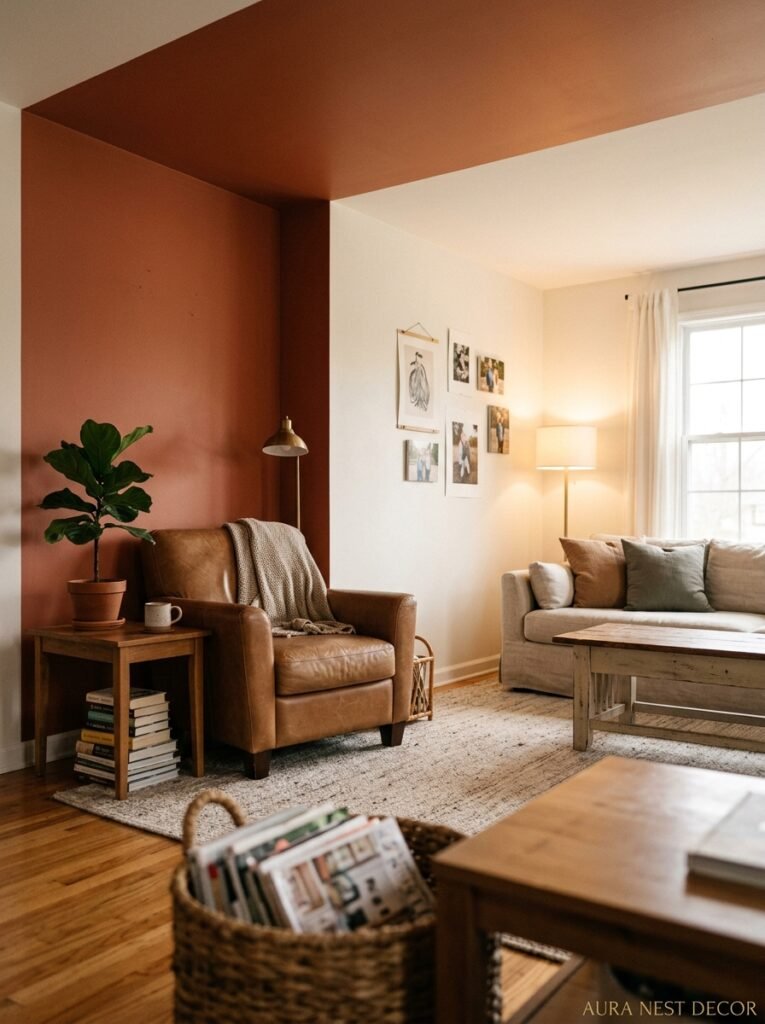
Zone painting. And not in the way you’re picturing — not a bold accent wall, not a color block that looks like a graphic design experiment. More subtle than that.
Take the ceiling. If you paint the ceiling of one zone of your living room a different color than the ceiling of the adjacent zone, the brain reads it as a different room. Genuinely. It’s remarkable how effective this is. A white-ceilinged dining area opening into a living room with a soft warm ceiling in a pale clay or stone — those feel like two separate spaces even with no physical marker at all.
It works on the floor too. Where a rug begins and ends creates a zone. Most people know this. But using TWO rugs in an open-plan room — a large one anchoring the living seating area, a smaller one under the dining table — visually tiles the floor into distinct territories. Especially effective if there’s a slight contrast between them. Doesn’t have to be dramatic. Even a jute rug next to a wool one does it.
—
9. The Archway Addition That Makes Every Room Look Like It’s Been There Forever
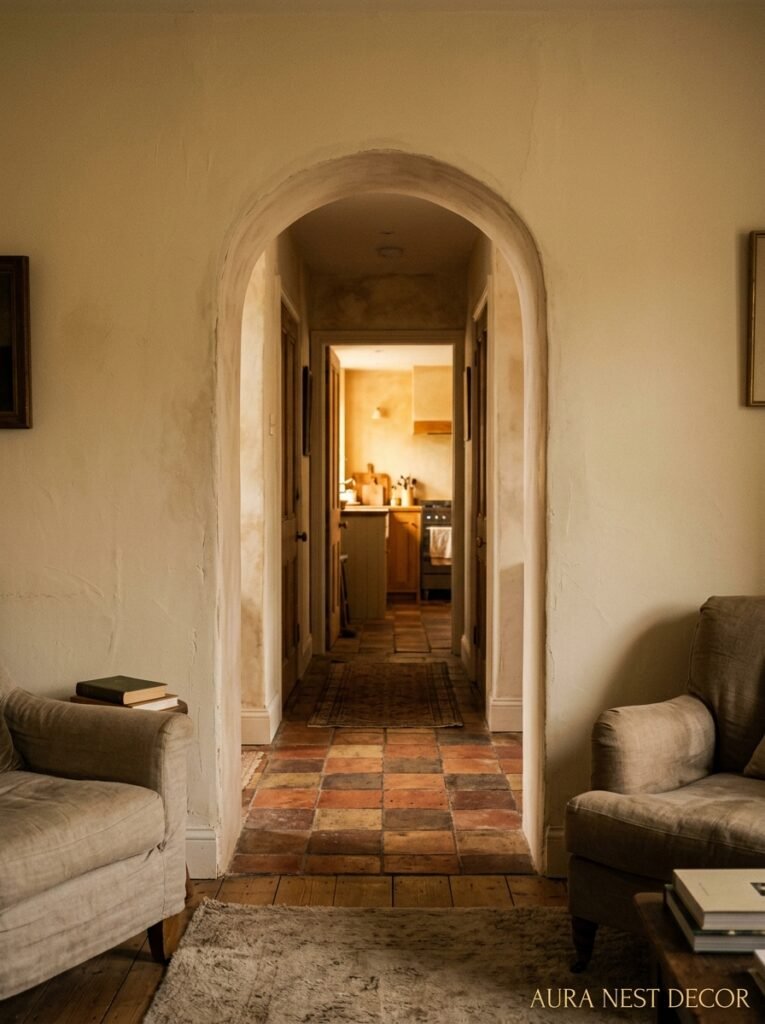
Archways. Or half-walls with rounded tops, or just a partial wall that goes up to about chest height. These feel structural because they sort of are — but they’re not as permanent or expensive as knocking walls about.
A half-wall partition — maybe 42 inches tall — between a living room and a dining room gives the sense of two rooms while keeping sight lines open and maintaining the spacious feel. Top it with a row of pendant lights or a long planter box running the length of it and it genuinely looks like intentional architecture rather than an afterthought.
The rounded archway is having such a moment right now and honestly it deserves it. Something about a curved opening feels warm and ancient in a way that straight lines just don’t. Passing through an arch even into an adjacent part of the same room creates a sensation of arrival. You’ve arrived somewhere. That’s all design is really doing — managing how you feel about moving through space.
—
10. Why Rental Properties Need This More Than Anyone (And How to Do It Without Drilling Anything)
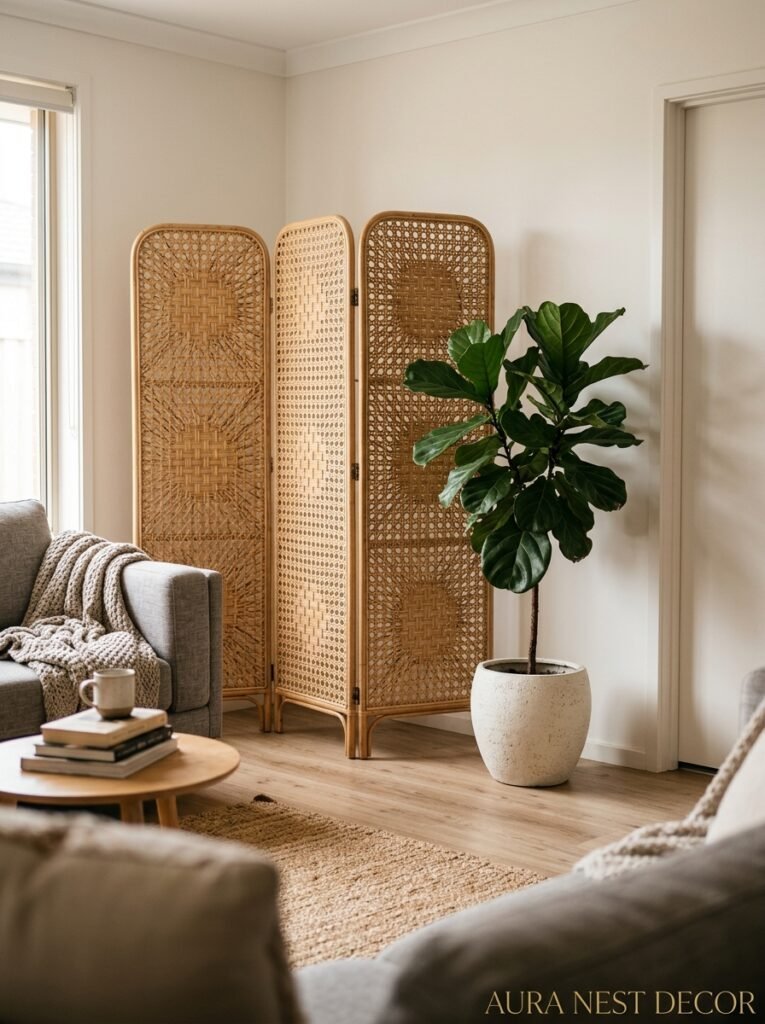
You’re renting. You can’t touch the walls, can’t hang anything substantial, definitely can’t install shelving that leaves marks. And your open-plan living room feels like… a beige event space. I hear you.
Freestanding is your best friend. Tall freestanding shelving units that lean against walls without being fixed. Folding screens that stand on their own. Floor-to-ceiling tension curtain rods (the ones that use pressure rather than drilling) that can hold surprisingly heavy panels. Even a cluster of large plants in weighty pots — heavy enough to stay stable — can create a zone.
The other thing nobody talks about in rentals: rugs and floor lamps doing the heavy lifting. Two rugs, two floor lamps positioned on opposite sides of an invisible divide, and your room starts to read as intentional. You’re essentially convincing the room to organize itself through cues rather than structure. And honestly, that’s not a compromise. Sometimes it’s the better solution.
—
11. The One Style Mistake That Makes Partition Ideas Look Cluttered
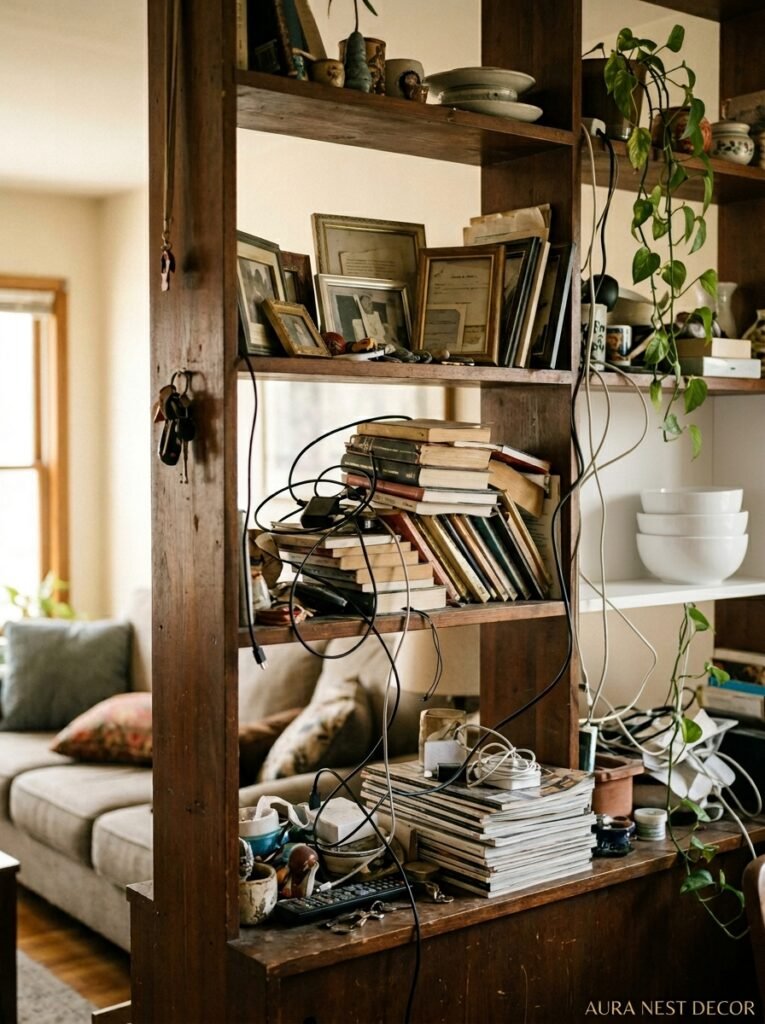
Too much. That’s the mistake. Too many dividing elements competing with each other.
A bookshelf AND a curtain AND a screen AND a plant wall — that’s not zones, that’s chaos. The room looks like it couldn’t decide. Each dividing element should have breathing room to actually read as a divider. If you layer too many things, they cancel each other out and the space feels more confused than before you started.
Pick a primary partition element. Then maybe one soft layer to complement it — a rug that reinforces the zone, a lighting change that emphasizes it. That’s usually enough. The restraint is the hardest part. Because when you start to see the potential for creating zones, it’s easy to get excited and just… keep adding. Don’t. The room will thank you.
Also — and I feel strongly about this — if you’re using a bookshelf divider, don’t style every single shelf to maximum capacity. Empty space on shelves is part of the design. A few well-chosen objects with actual gaps between them will always read better than a shelf stuffed with every book you own plus fourteen candles plus the souvenir from that trip three years ago.
—
12. The Question to Ask Before You Buy or Build Anything
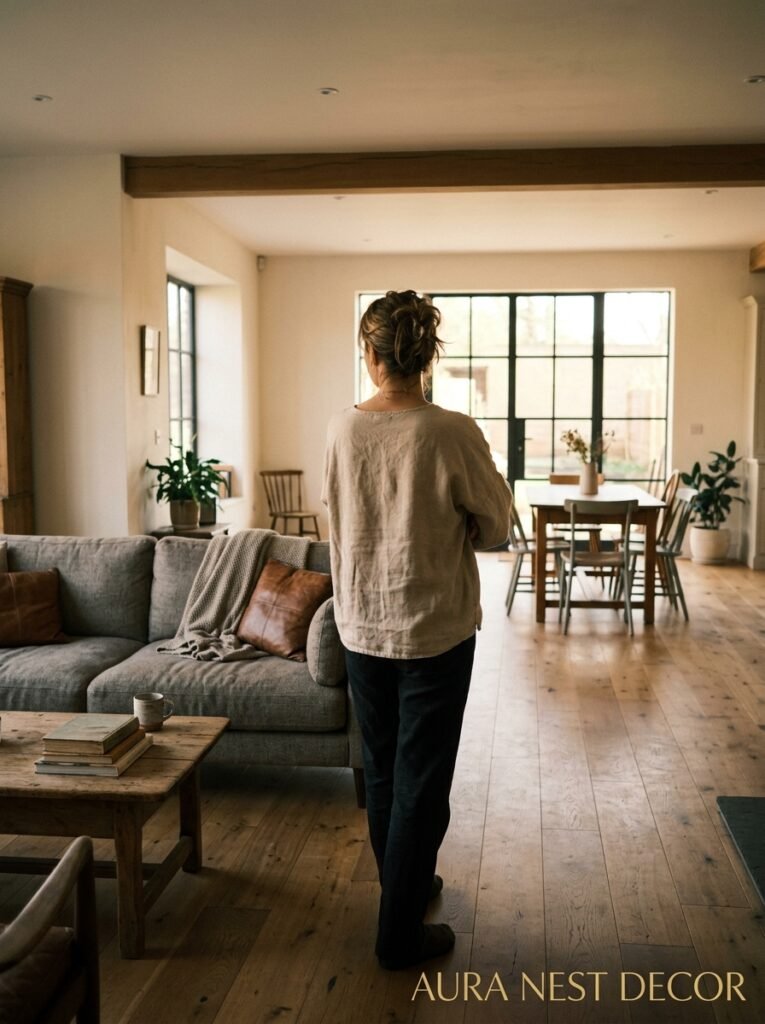
Before you order that room divider, before you call a joiner, before you do anything — stand in your living room and ask yourself: what do I actually want these spaces to feel like separately?
Not “what do I want them to look like.” FEEL like.
Do you want the living seating area to feel cozy and cave-like while the dining area stays bright and social? Then you want something that absorbs light on the living side — fabric, wood, something soft-edged. Do you want both areas to feel open but just defined? Then glass, rattan, or open shelving. Do you need total flexibility? Curtains.
The form follows the feeling. Always. And when you’ve figured out the feeling, the right partition becomes obvious pretty quickly. You won’t have to convince yourself it’s right. It’ll just be right, and you’ll know it when you see it — the way you always knew something was missing before.
—
❓ FAQ
Q: How do you partition a living room without making it feel smaller? A: Go transparent or semi-open — bookshelves, screens, curtains — rather than solid walls. Anything that lets light pass through while creating a visual boundary keeps the room feeling connected and spacious. Height helps too; taller dividers read as intentional without closing things in.
Q: What’s the most budget-friendly partition idea for a living room? A: Sofa placement is free. Turning the back of your sofa toward one zone with a console table along it creates a surprisingly effective visual divide for zero cost. After that, a large rug to define the seating area is probably the next best investment — usually cheaper than any furniture or structural solution.
Q: Can I partition a living room in a rental without damaging the walls? A: Absolutely. Freestanding shelving, folding screens, tension rod curtains, and clusters of large plants all create great zone separation without any drilling or permanent changes. Rugs and floor lamps reinforce the effect without touching a single wall.
—
💭 Final Thoughts
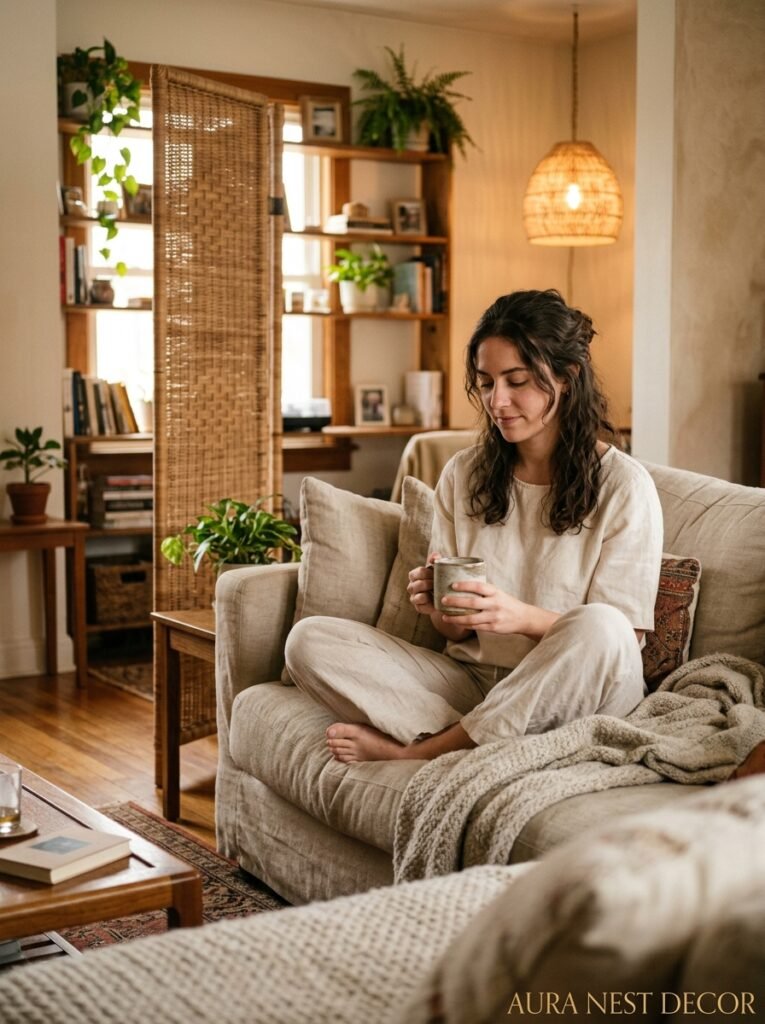
A partition isn’t a design compromise. It’s not an admission that open-plan didn’t work out. It’s an understanding — a pretty sophisticated one, actually — that space needs meaning to function well. Give your living room a reason to be more than one thing.
The best partition ideas don’t announce themselves. You just feel the difference: you sit down on the sofa and you’re somewhere. Which is all you ever wanted, isn’t it?