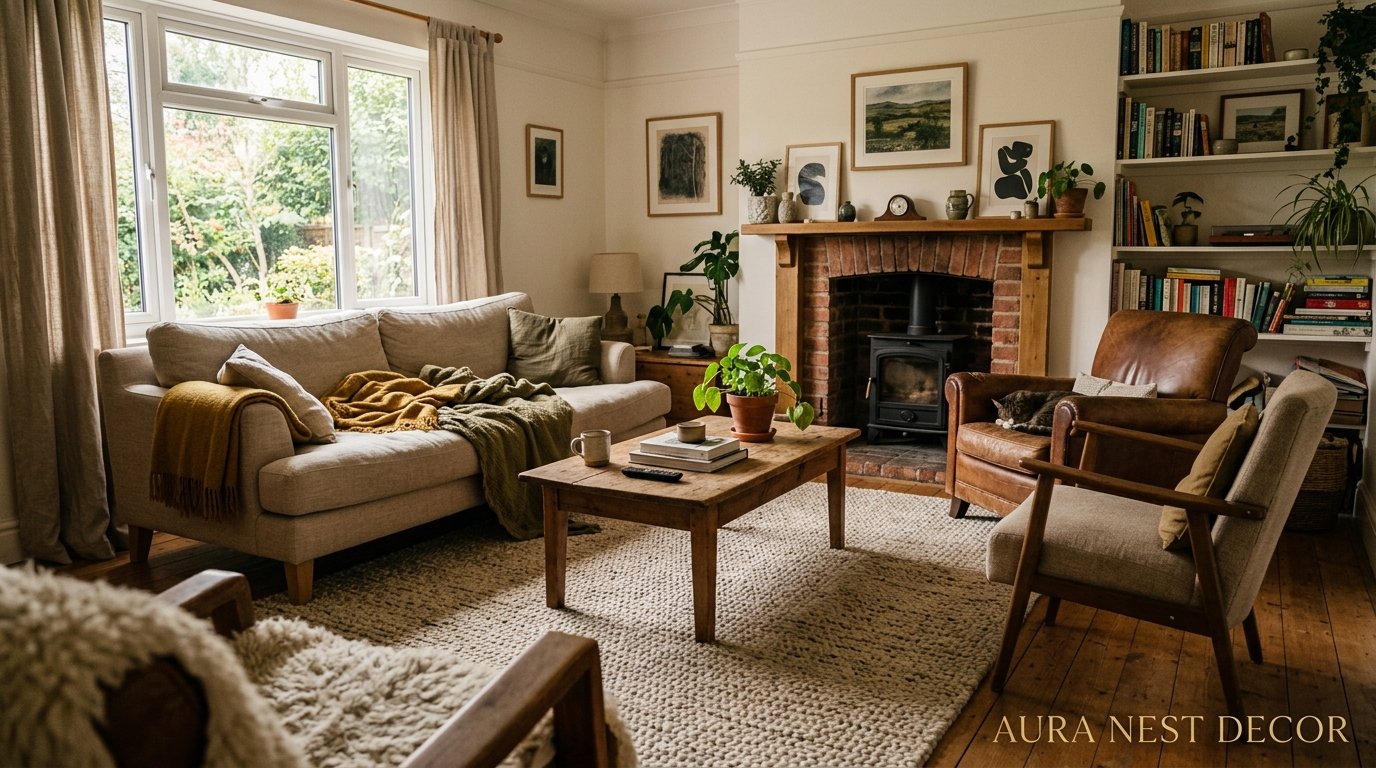
The Rug Placement Mistake Almost Everyone Makes (And How to Fix It Without Buying Anything New)
You pull the rug back six inches. Then forward. Then back again. Nothing looks right and you can’t figure out why. Here’s the thing — it’s almost never the rug that’s wrong. It’s where you put it.
—
1. The “Floating Furniture” Problem Nobody Talks About
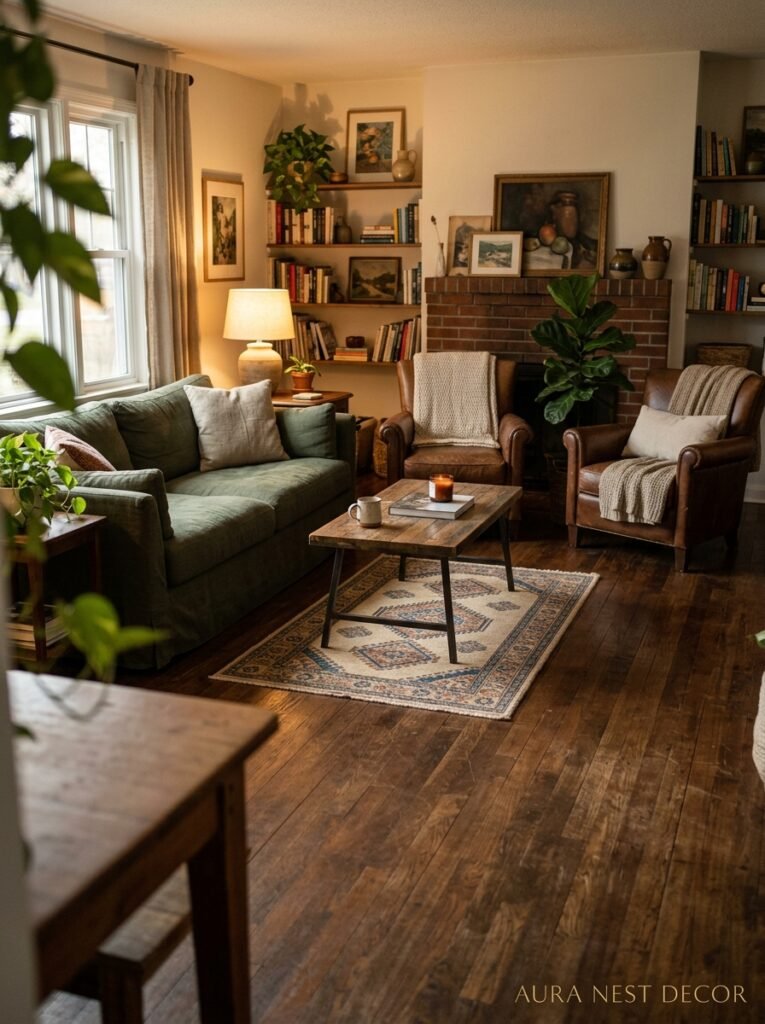
Okay so this is the big one. The single most common rug mistake I see on Pinterest, in real homes, everywhere — furniture that’s sitting completely off the rug, like it’s afraid of commitment. The rug becomes a little island in the middle of the room and everything feels… disconnected. Untethered. You can’t explain it but the room just doesn’t sit right.
Here’s what’s actually happening: when furniture floats off the rug entirely, your eye has nowhere to land. The rug reads as a decorative mat instead of an anchor. And the whole room feels smaller because of it, not bigger.
The fix is so simple it’s almost annoying. You don’t need a new rug. You just need to slide things forward. Front legs on the rug. That’s it. Sofa, armchairs — front legs on, back legs off. Your eye reads it as intentional immediately. The furniture is connected to the space, the rug does its job, and suddenly the whole room looks like someone who knows what they’re doing lives there.
It works in small rooms, it works in big ones. Side note — it also works when your rug is genuinely a size too small, which buys you time before you invest in a bigger one.
“Front legs on the rug. Two inches of change. Whole different room.”
2. The Rug Size That’s Actually Too Big (Yes, This Is Also a Thing)
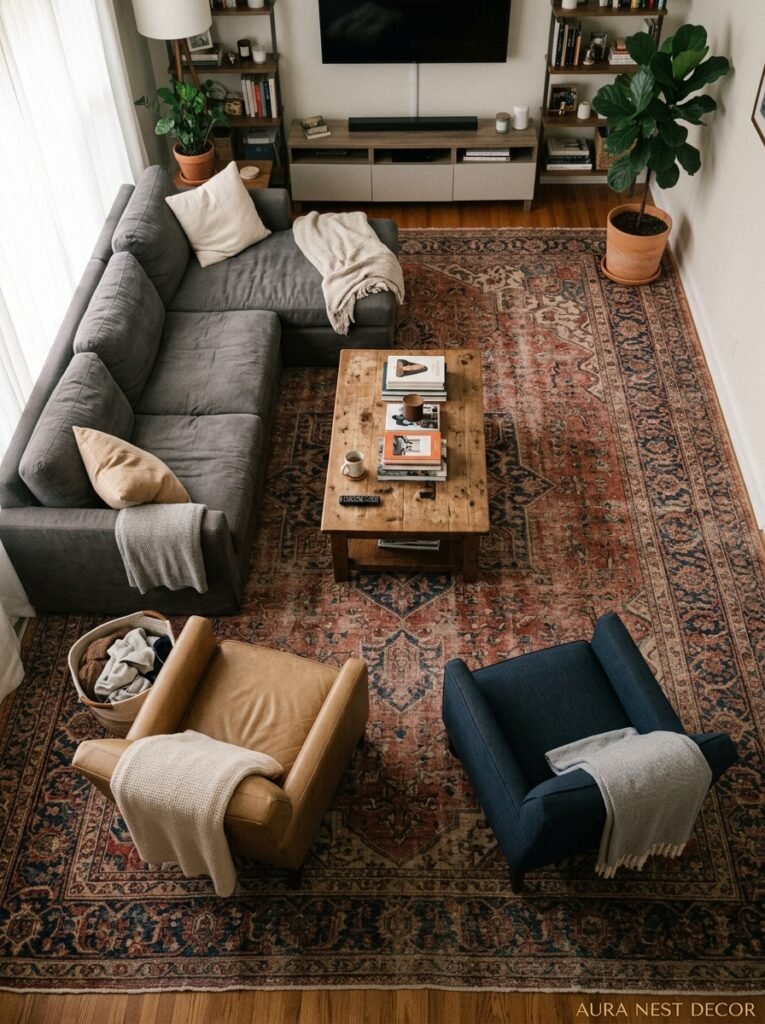
Everyone talks about rugs being too small. And yeah, that’s usually the problem. But I’ve walked into living rooms where the rug goes ALL the way to the walls and it looks like carpeting. It loses its identity entirely.
The sweet spot? Six inches to eighteen inches of bare floor showing between the rug edge and the wall. In a smaller British terraced house sitting room, six to eight inches is plenty. In a large open-plan American living room, you can push toward a foot and a half. That gap is doing a lot of work — it defines the rug as a design choice, not a mistake. It frames the space like a painting in a gallery. Without that breathing room around the edges, the whole thing collapses into beige sameness.
So before you order a bigger rug, actually measure. Tape out the dimensions on your floor first. Because I’ve done the thing where you order the 9×12, it arrives, you unroll it, and you realize you needed the 8×10 all along. Returns are a whole thing. Save yourself the hassle.
3. Why Your Living Room Might Actually Need Two Rugs
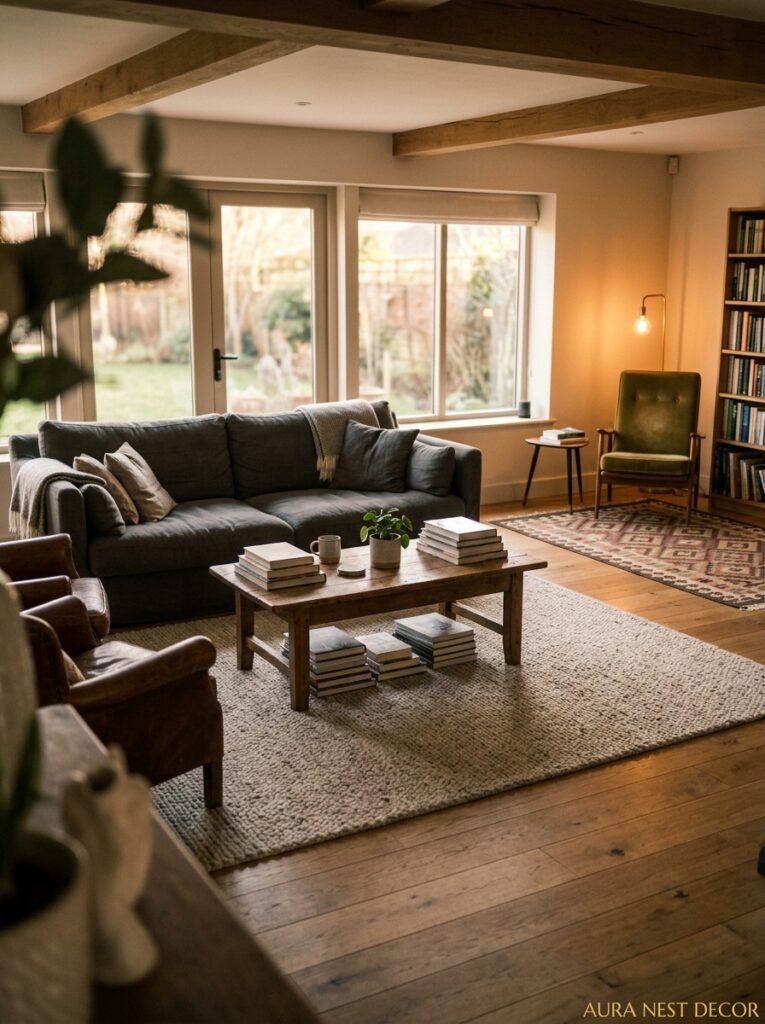
This sounds wrong. I know. Stay with me.
In open-plan living spaces — which are everywhere in American new builds and increasingly common in UK homes that’ve knocked walls through — one rug rarely covers enough ground. You’ve got the sofa area on one side and maybe a reading chair or dining table on the other, and a single rug just sort of… sits there apologetically in the middle while the rest of the space goes unacknowledged.
Two rugs, layered or side by side depending on the layout, can actually zone a big space more elegantly than one giant rug ever could. A large jute or sisal base rug under the main seating, and a smaller printed rug layered on top or placed by the reading chair. Different textures, similar tones or complementary ones. It’s intentional. It’s good.
Don’t panic about them matching perfectly. Honestly, the slight contrast is the whole point. A flat-weave or low-pile patterned rug layered over a thick natural-fiber rug looks like something out of a Scandinavian interior shoot. And it’s actually cheaper to do two smaller rugs than one enormous one most of the time.
4. The Direction Thing Nobody Mentions Until You Can’t Unsee It
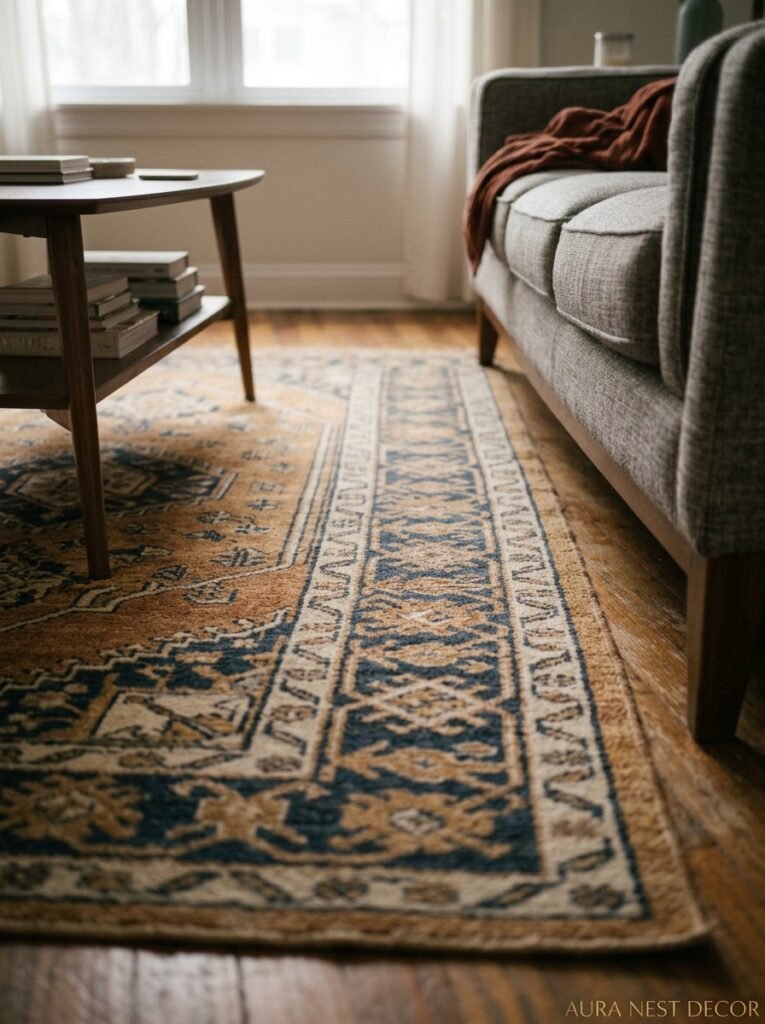
Rug direction. This is going to bother you once you start noticing it.
Most rectangular rugs get placed the “obvious” way — length running parallel to the longest wall. Which is fine. Completely fine. But sometimes rotating a rug 90 degrees completely changes the energy of a room. A longer rug running away from you as you walk in makes a room feel deeper. Wider. The eye follows the length and the space opens up.
In a narrow living room — I’m thinking of those typical UK Victorian terrace layouts where rooms are almost twice as long as they are wide — running the rug lengthwise instead of across can make the room feel even longer and somehow more intentional, like a hallway that decided to become a sitting room and committed to the bit.
In a square room, honestly? You’ve got freedom. Diagonal placement is an option too, though it reads as maximalist, which not everyone is going for. Try it before you dismiss it. Sometimes a room needs a little chaos.
“Rotating a rug 90 degrees costs nothing. It’s also occasionally the only thing a room needs.”
5. What to Do When Your Coffee Table Lives in a Weird Spot
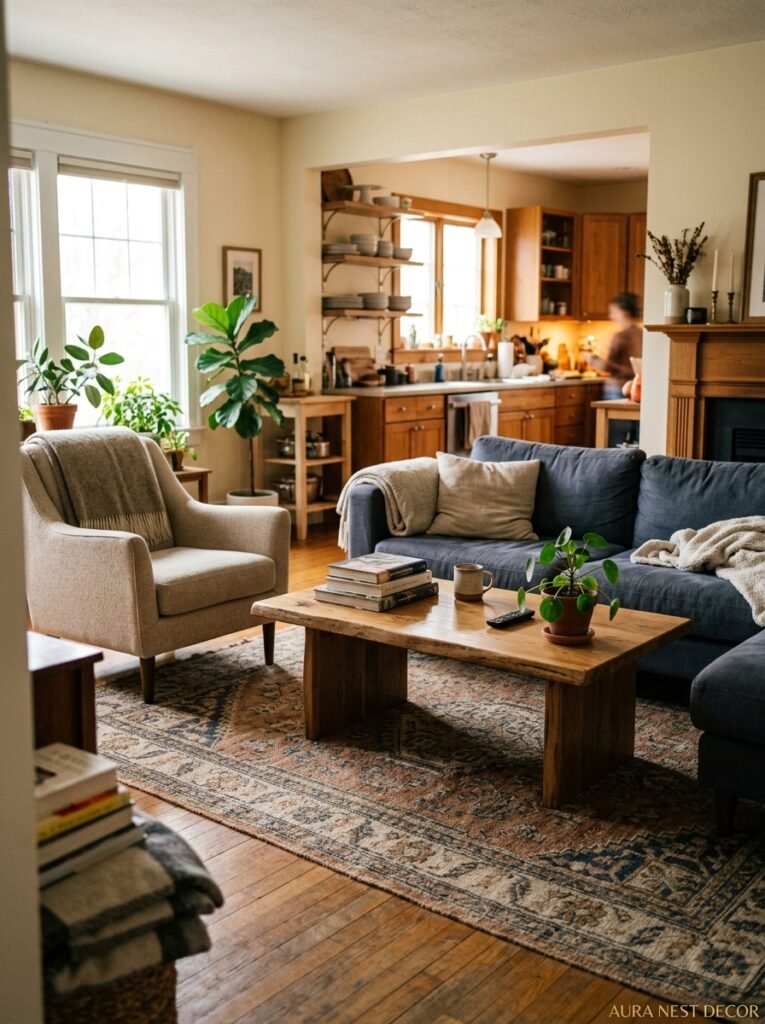
Not every living room has a neat sofa-faces-fireplace setup. Some rooms are awkward. The coffee table is off-center because the window’s in a strange place, or the TV is mounted in a corner because of where the aerial socket ended up (very British problem, that), or the sofa is angled because otherwise you’re staring at a wall.
The rug still needs to anchor something. When the layout is weird, anchor the rug to the coffee table, not the sofa. Center the rug under the coffee table, and let the furniture arrange itself around that. It creates a focal point that makes even odd layouts look deliberate. Like you placed things where you did ON PURPOSE, which in a way you did, sort of.
A round rug works especially well for irregular layouts because it doesn’t have a “wrong” direction. It just… sits there and looks good from every angle. Round rugs are genuinely underused in living rooms and I’ll die on that hill.
6. The Color Placement Thing That’s More Important Than the Color Itself
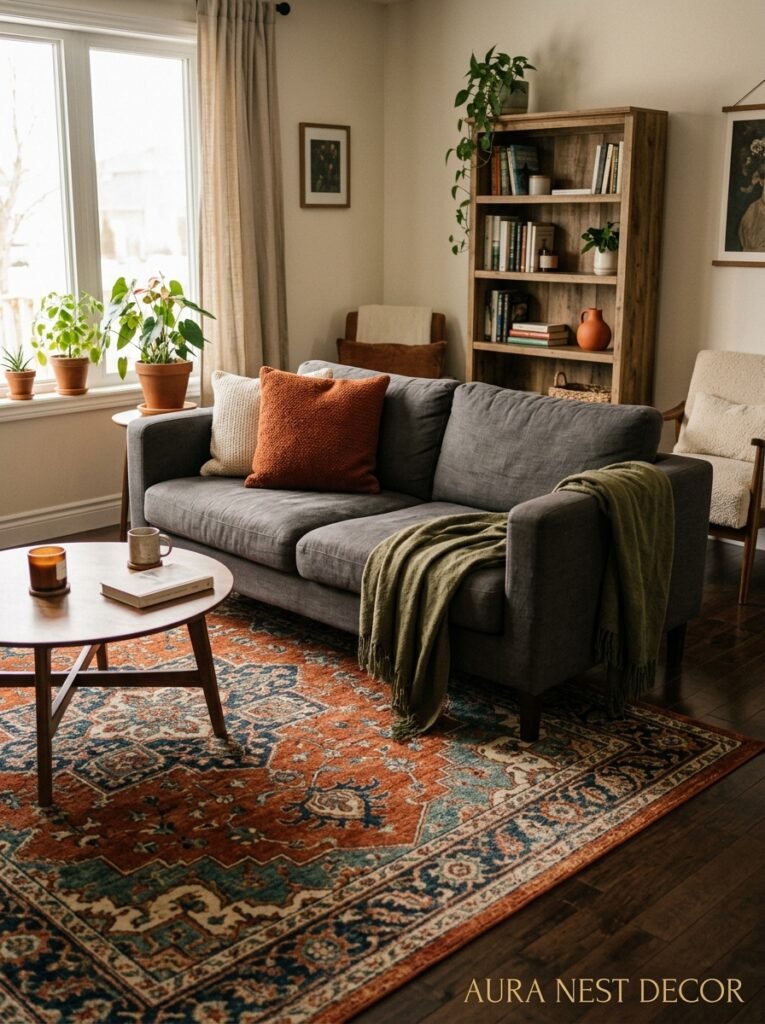
Here’s something that took me embarrassingly long to figure out: the same rug can look right or completely wrong depending on what’s on the floor around it. Not the walls. Not the furniture. The floor.
A warm-toned rug on cool grey flooring creates contrast that can feel jarring if the rest of your room isn’t also playing with contrast. A cool blue-grey rug on warm oak flooring can feel really elegant OR really cold depending on what’s happening in the rest of the room. Same rug, two different outcomes.
So when you’re thinking about rug color, don’t swatch it against your sofa. Put the swatch on your actual floor, in your actual light, and look at that combination first. Your floor is what the rug is in direct conversation with. Everything else is secondary. This sounds obvious when you say it out loud and yet most of us (me included, more than once) do it the wrong way around.
Also — and I’m going to be firm about this — if your floors are already very busy or very textured, go simple on the rug. If your floors are plain, the rug is your opportunity to do something interesting. Don’t fight yourself.
7. The Specific Gap That Separates a Pulled-Together Room from a Catalog Shot
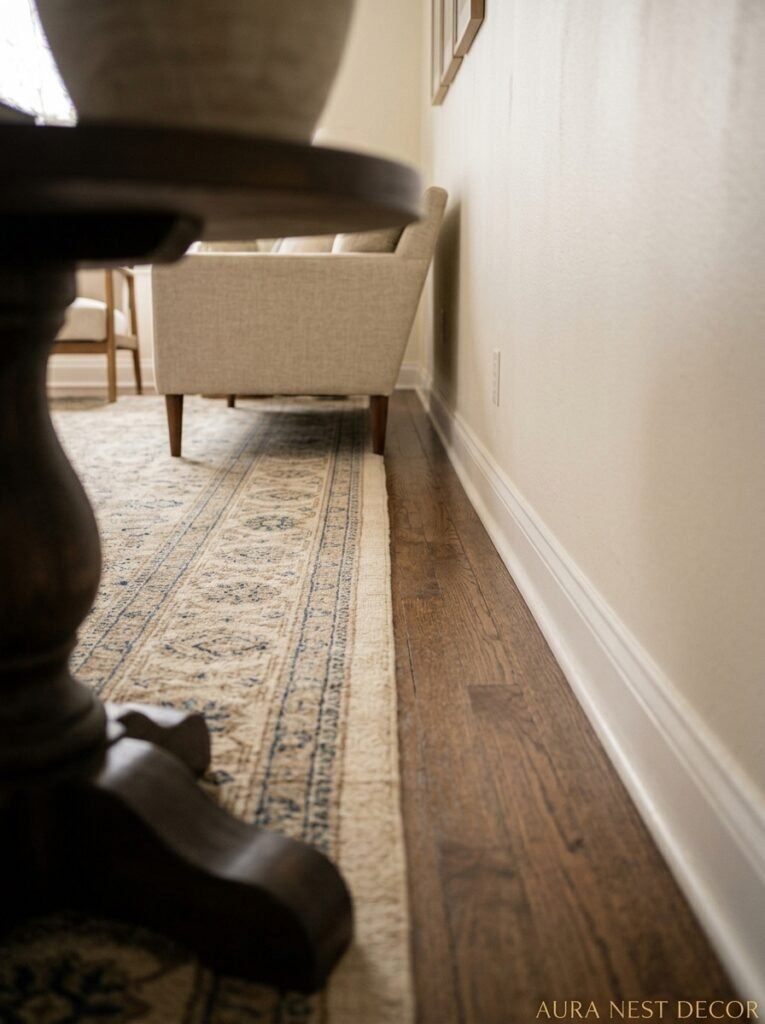
There’s this gap. It comes up in every single piece of professional interior design advice and somehow still surprises people when it actually works. The gap between the sofa legs and the rug edge.
If you’re going with the “front legs on” approach (which, again — do this), the back legs of your sofa should sit on the bare floor behind the rug. Fine. But the distance between the front of your sofa and the front edge of the rug matters too. You want the rug to extend past the coffee table on all sides, ideally six to twelve inches beyond the table edge. So if you’re centering the rug under the coffee table, make sure the rug is generously sized enough that it doesn’t end abruptly right where the table ends.
When a rug extends generously past the coffee table, the whole seating area feels like a room within a room. Cozy. Contained in a good way. Like someone designed it, not assembled it.
“A rug that’s just barely big enough looks like an accident. A rug with room to breathe looks like a decision.”
8. High-Traffic Living Rooms and the Rug That Actually Survives Them
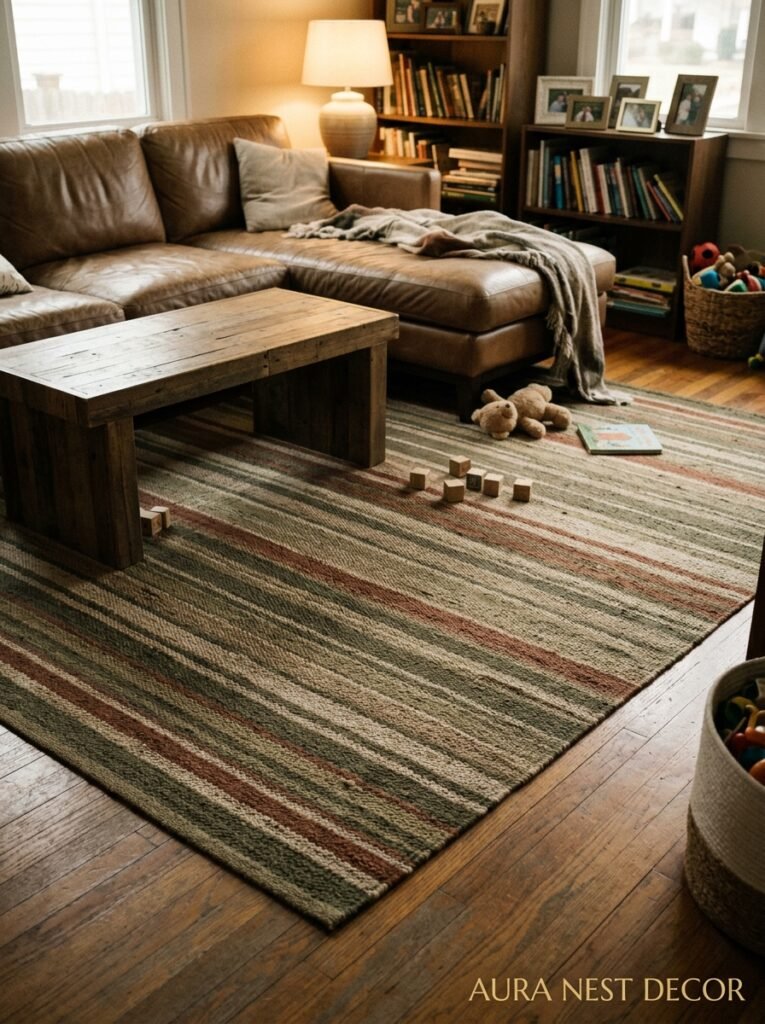
Right. Practical talk. Because placement is only one piece of it. If you’ve got kids, a dog, a partner who thinks shoes are an indoor accessory — you need a rug that can handle life AND look good in its spot.
Low-pile rugs show less footprint traffic. Darker tones and patterns hide more dirt between vacuums. But here’s the placement piece: don’t put a delicate rug in a pathway. If someone walks straight from your front door to your kitchen and that path crosses your living room, the rug that sits in that line is going to take a beating.
Rotate your rug every six months — literally pick it up, rotate it 180 degrees, put it back. Wear patterns even out and the rug lasts years longer. Nobody talks about this. It takes five minutes. Do it.
And if you’ve got a high-traffic corner — like where the kids dump everything when they come in — just… leave that corner bare. Anchor the rug to the part of the room that sees calmer use. The seating area, not the thoroughfare.
9. The British Living Room Problem: Small Rooms, Big Rug Energy
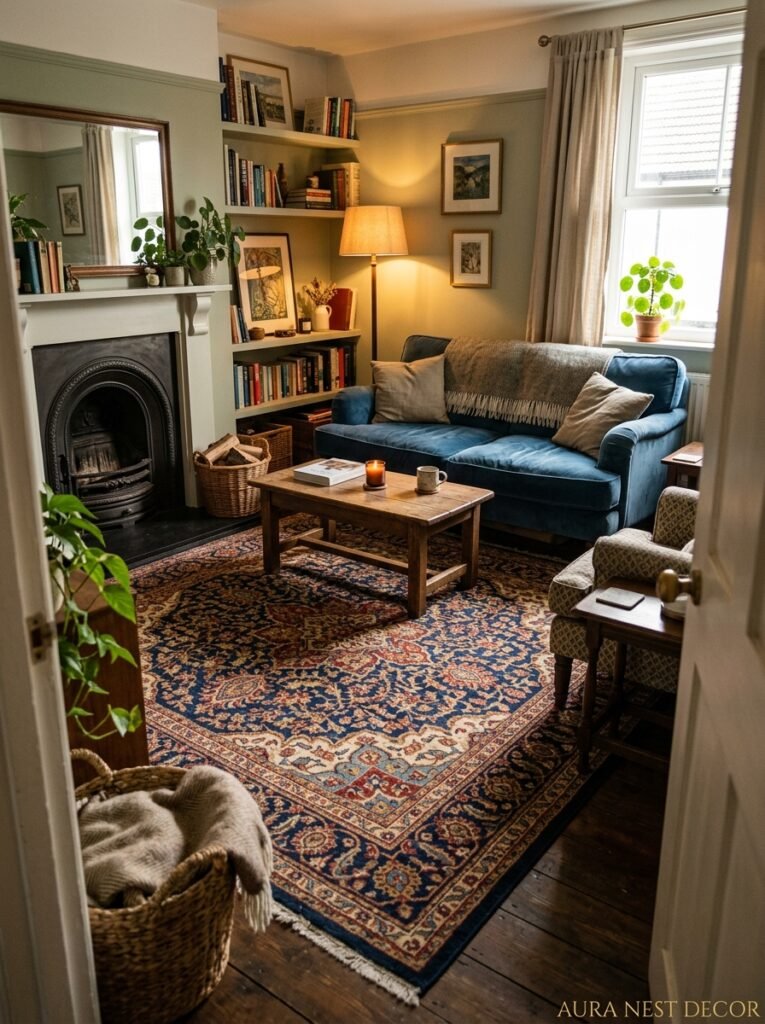
UK homes are often smaller than American ones. Not always, but often. Victorian terrace rooms, cottage sitting rooms, flat living rooms with one window and a radiator under it — these spaces have real constraints and the rug advice you find online is often written for a 20-foot American great room.
So here’s what actually works in smaller spaces. A rug that’s proportional to the seating group, not the room. Measure your sofa and chairs in their arrangement, then choose a rug that’s roughly the same dimensions or slightly larger. You’re creating a seating zone, not trying to cover the floor.
Pattern-wise — contrary to popular belief, a bold patterned rug doesn’t always make a small room feel smaller. A contained, medium-scale pattern can actually draw the eye in and make the room feel more intentional. What does make a small room feel smaller is a rug with a very thick, shaggy pile that fills visual space too heavily. Keep the pile low and the room breathes.
10. Why the Rug Pad Is Not Optional (I Know, I Know)
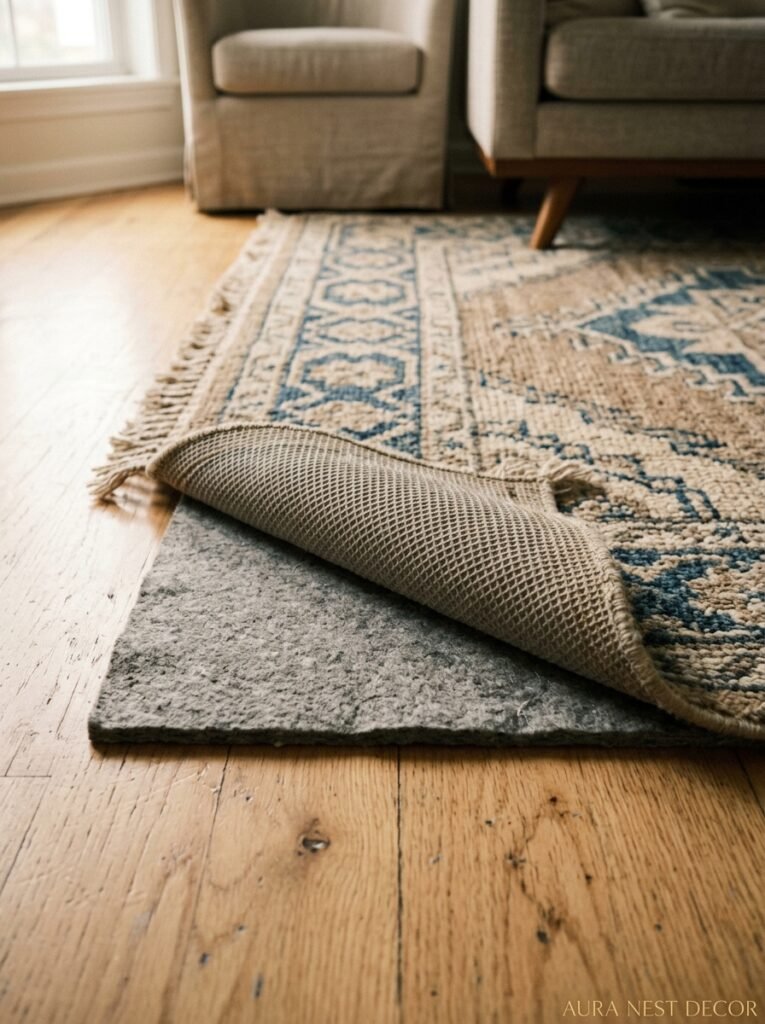
Nobody wants to hear about rug pads. They’re unglamorous. They cost extra money. You already spent a lot on the rug.
But a rug without a pad shifts. It bunches. It slides. The front legs of your sofa creep forward over weeks and then you’re back to the floating furniture problem. The rug pad keeps everything exactly where you placed it so all that careful arrangement actually sticks.
Get a pad that’s slightly smaller than your rug — about an inch in on each side — so it doesn’t peek out from under the edges. Felt and rubber combined is the best option for hard floors. Rubber-grip mesh works for carpet-on-carpet situations. And honestly, a good pad also makes a cheaper rug feel more substantial underfoot, which is sort of a bonus.
11. The Rule for Angled Sofas and Awkward Living Room Layouts
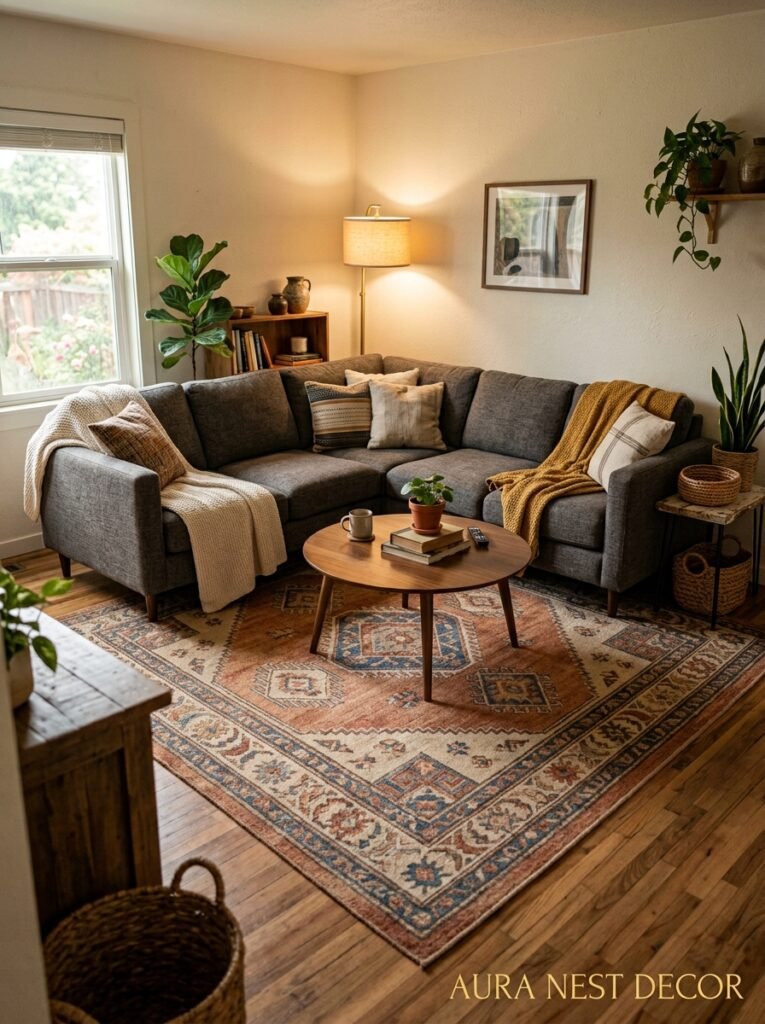
Okay. Angled sofas. Someone put their sofa on a diagonal and now everything feels like a visual argument.
If the sofa is angled, the rug should still be placed square to the room or to the main architectural feature (fireplace, window wall, TV). Don’t angle the rug to match the sofa. The rug provides the grounding point that the angled sofa plays against — it’s the contrast that makes both elements work. An angled sofa on an angled rug is too much. It just spins.
Same goes for rooms with bay windows that create awkward angles. The rug sits square, the furniture responds to the architecture, and everything makes sense to the eye even if the room itself is a bit unusual. The rug is the calm. It doesn’t need to be complicated.
12. The One Test That Tells You Immediately If Your Placement Is Right
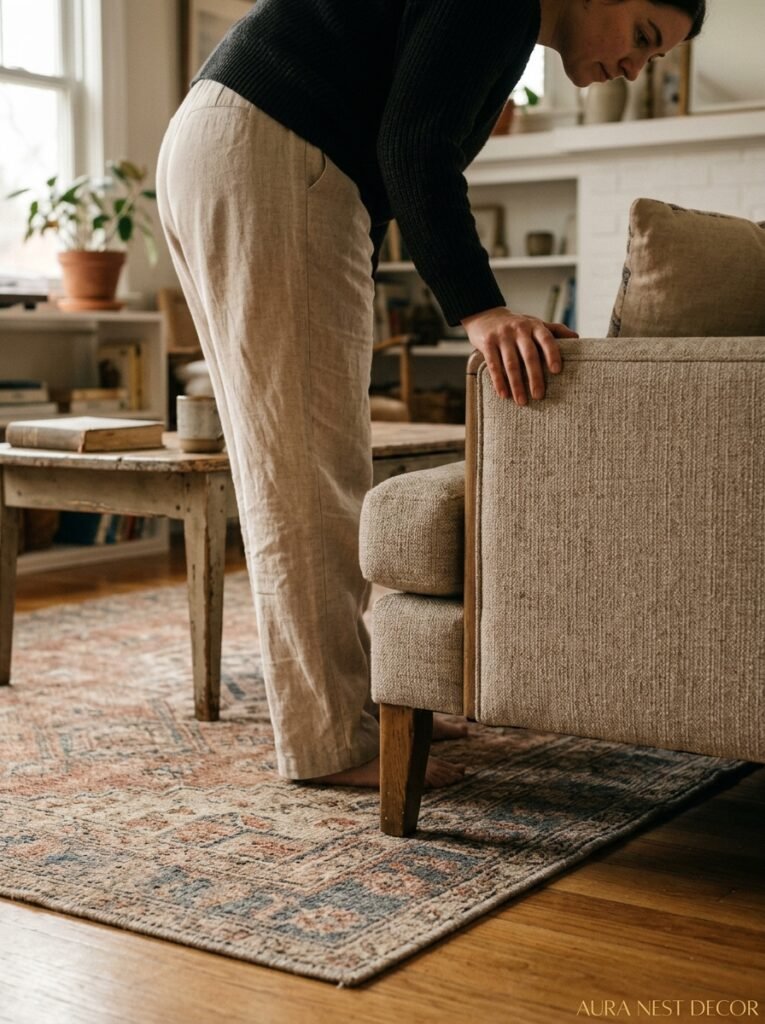
Stand in the doorway of your living room. Don’t rearrange anything yet. Just stand there and look.
Does the rug look like part of the room? Or does it look like something sitting on top of the room? There’s a difference you can feel immediately. If the furniture looks like it’s growing out of the rug, like it belongs there — you’ve got it. If the rug looks like a mat that snuck in from somewhere else, something’s off.
Walk to the other side. Stand in the opposite corner and look again. Same question. A rug that’s placed correctly looks anchored from every angle. Not perfect — real homes aren’t perfect and don’t need to be — but anchored. Settled. Like it’s been there forever, which is exactly the feeling you’re going for.
If it doesn’t pass the doorway test, move it before you decide anything else. Two inches forward. Ninety degrees rotated. Six inches of floor showing at the wall. These tiny adjustments cost nothing and sometimes fix everything.
—
❓ FAQ
Q: What size rug do I need for a living room with a standard three-seater sofa? A: For a typical setup with a three-seater sofa and two armchairs, an 8×10 rug is usually the right starting point in an average-sized room. If your room is larger or you want all front legs comfortably on the rug, size up to a 9×12. Always tape out the dimensions on your floor before buying — it’ll save you a return.
Q: Can you put a rug on top of carpet in a living room? A: Yes, and it works better than people expect. Choose a flat-weave or low-pile rug so it doesn’t bunch up on the carpet underneath, and use a rug pad designed for carpet-on-carpet grip to keep it from shifting. Contrasting texture and pattern makes the layered look feel intentional rather than accidental.
Q: Should a rug go under the TV unit as well as the sofa? A: Generally no — you want the rug centered in the seating area, not extending under the TV unit or media console. The rug’s job is to anchor the furniture you sit on, not every piece of furniture in the room. Letting the TV unit sit on bare floor actually helps define the visual boundary of the space.
—
💭 Final Thoughts
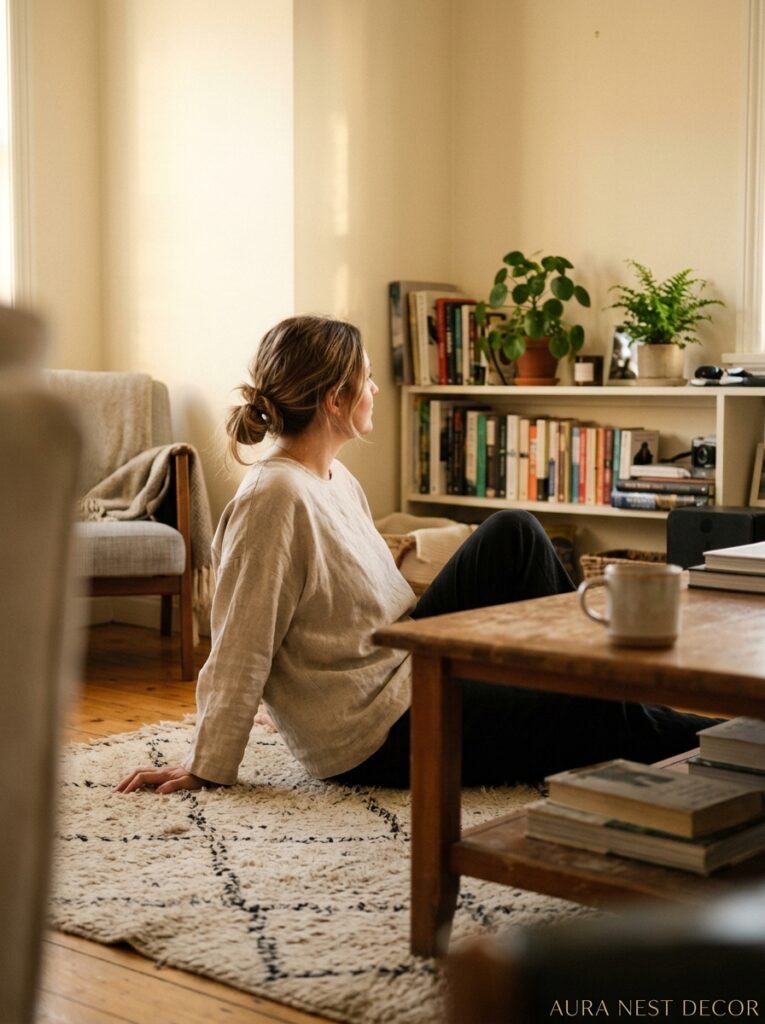
Rug placement is one of those things where the difference between “fine” and “that’s the room” is genuinely about two inches and a bit of confidence. You don’t need a new rug most of the time. You don’t need new furniture. You need to stand in the doorway, look honestly at what’s happening, and move the thing.
What’s the one placement change you’ve made in your living room that you wish you’d done years earlier?