The Living Room Floor You’ve Been Ignoring Is Actually the Most Important Decision in the Whole Room
You repaint the walls, swap the cushions, redo the gallery wall — and somehow the room still doesn’t feel right. I’ve been there. Sometimes the answer is literally beneath your feet.
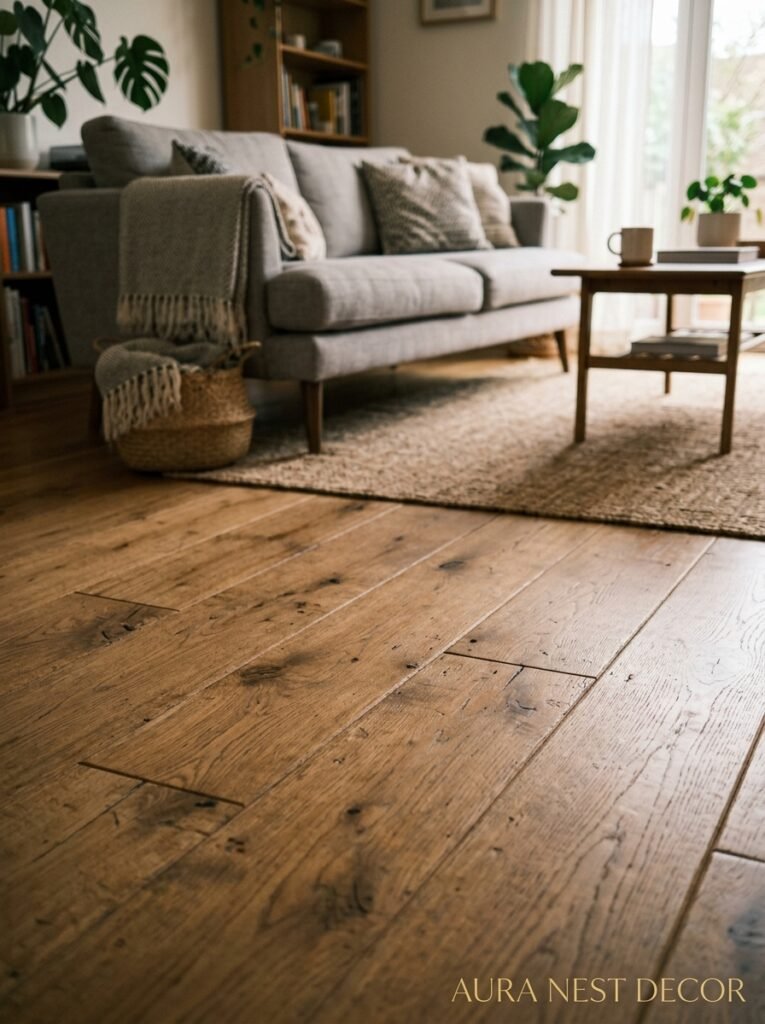
—
1. Why Everyone Starts With Walls and Ends Up Wishing They’d Started With the Floor
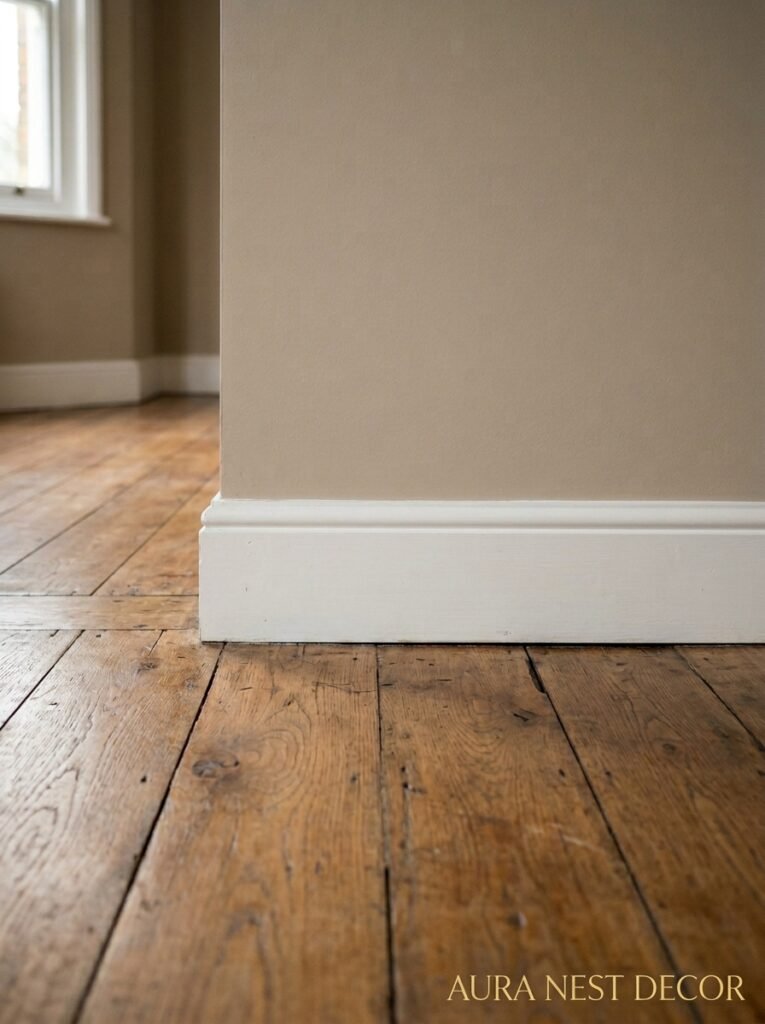
This is the thing nobody tells you when you’re deep in a Pinterest spiral at midnight. Floors set the ENTIRE tone. Not the sofa. Not the lighting. The floor. Because it’s the largest continuous surface in your living room, every single other decision gets filtered through it — warm or cool, light or dark, hard or soft. Everything responds to it.
And yet most people treat it like an afterthought. They choose a sofa they love, a rug they love, paint they love — and then look down and go, “hm.” That “hm” is expensive to fix after the fact, not gonna lie.
The good news? Once you actually look at the floor as the design foundation rather than the background, things click into place really fast. You suddenly know what rug would work. You know what furniture legs would look right. You know whether the room wants to feel like a Cotswolds cottage or a Manhattan loft. The floor tells you.
So before you do anything else — before you order a single thing — figure out what you want your floor to do. Not just look like. Do.
“The floor isn’t the background of your living room. It’s the whole conversation.”
—
2. The Case for Wide-Plank Hardwood (and Why Narrower Boards Are Making Me Tired)
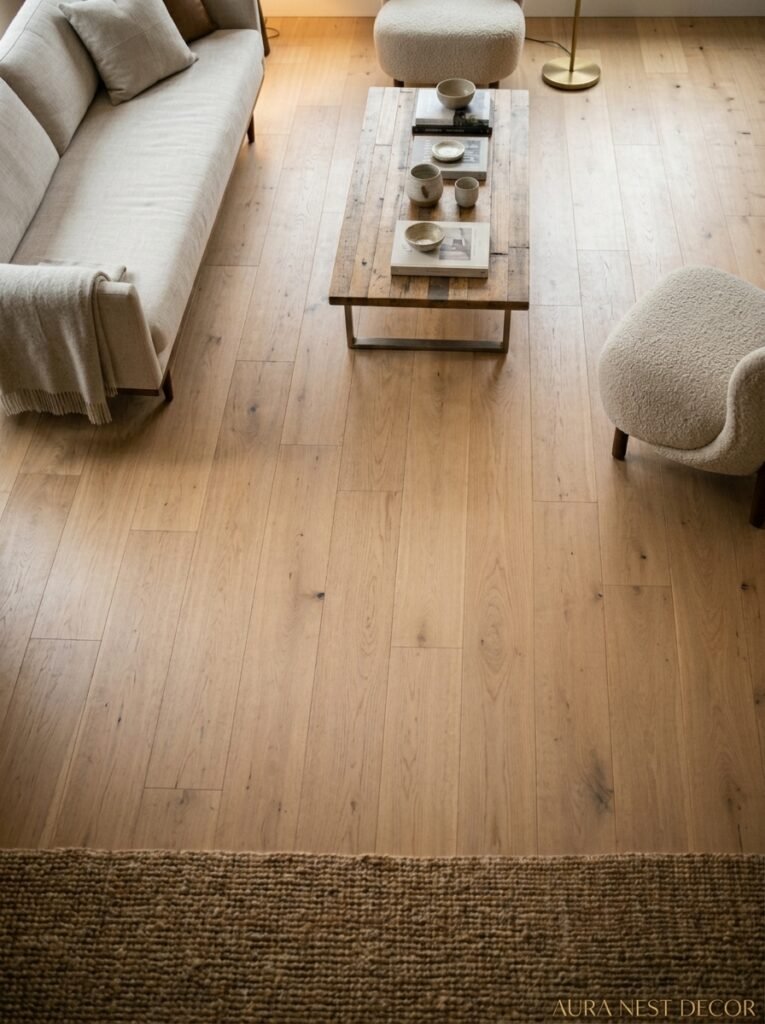
Wide plank. I’m just going to say it. The 5-inch-and-under hardwood floor had a great run and I don’t want to be mean about it, but wide plank is doing something that narrow strip floors simply can’t: it makes a room breathe.
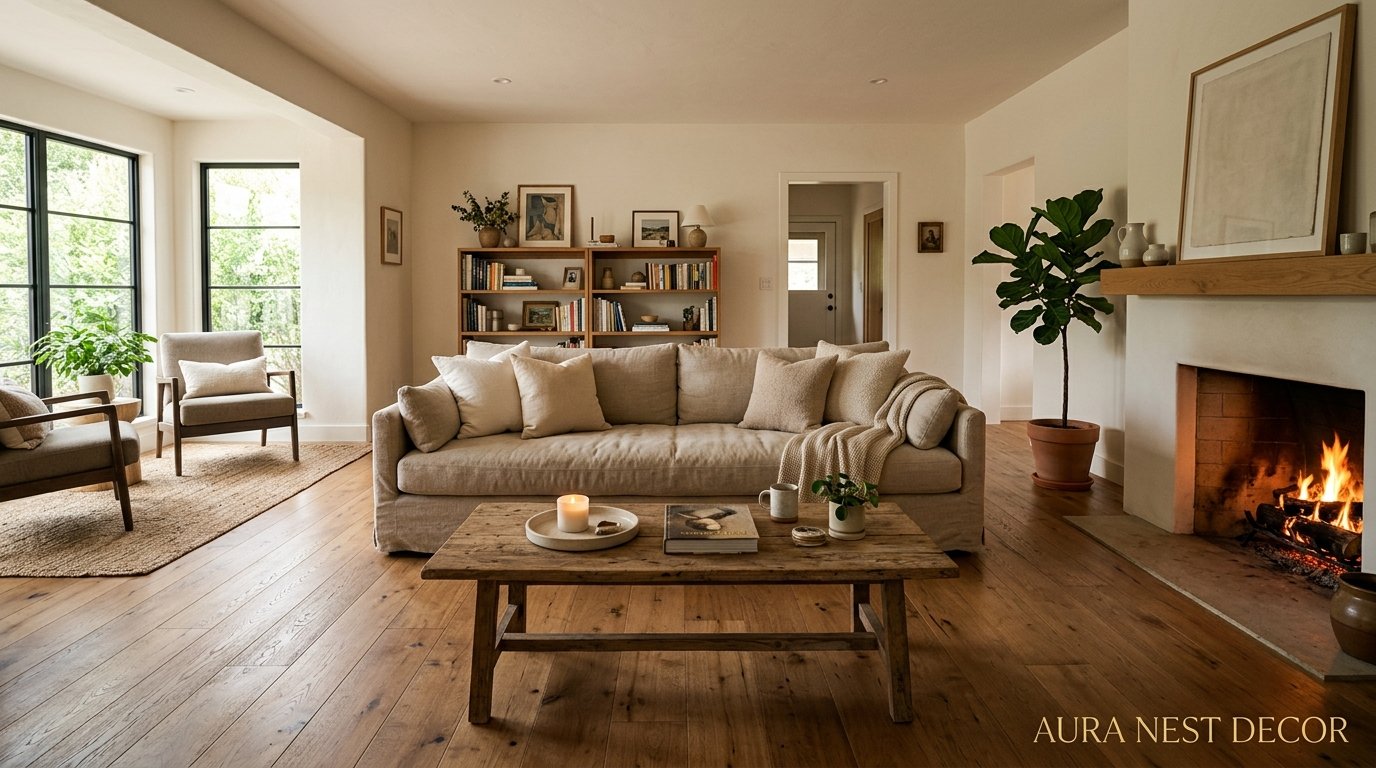
When you’ve got boards that are 6, 7, 8 inches wide — oak being the classic choice here, especially the warm, slightly rustic European white oak that’s everywhere right now — the room looks bigger. Calmer. It reads as intentional rather than builder-grade. And the grain patterns get to actually show off instead of being chopped into tiny ribbons across the floor.
In the US, wide-plank hardwood has always had that New England farmhouse association, that sort of Vermont-in-autumn energy. In the UK it slots right into the kind of Georgian or Victorian terrace living room where everything’s already got good bones — aged oak boards feel like they’ve always been there.
The one thing I’ll say: go lighter than you think you should. A really dark walnut stain sounds dramatic and beautiful until it’s in your living room showing every single piece of fluff your dog has ever shed. Light, natural, wire-brushed — that’s the finish that photographs beautifully and also survives real life.
—
3. Concrete Floors Aren’t Cold, They’re Just Misunderstood
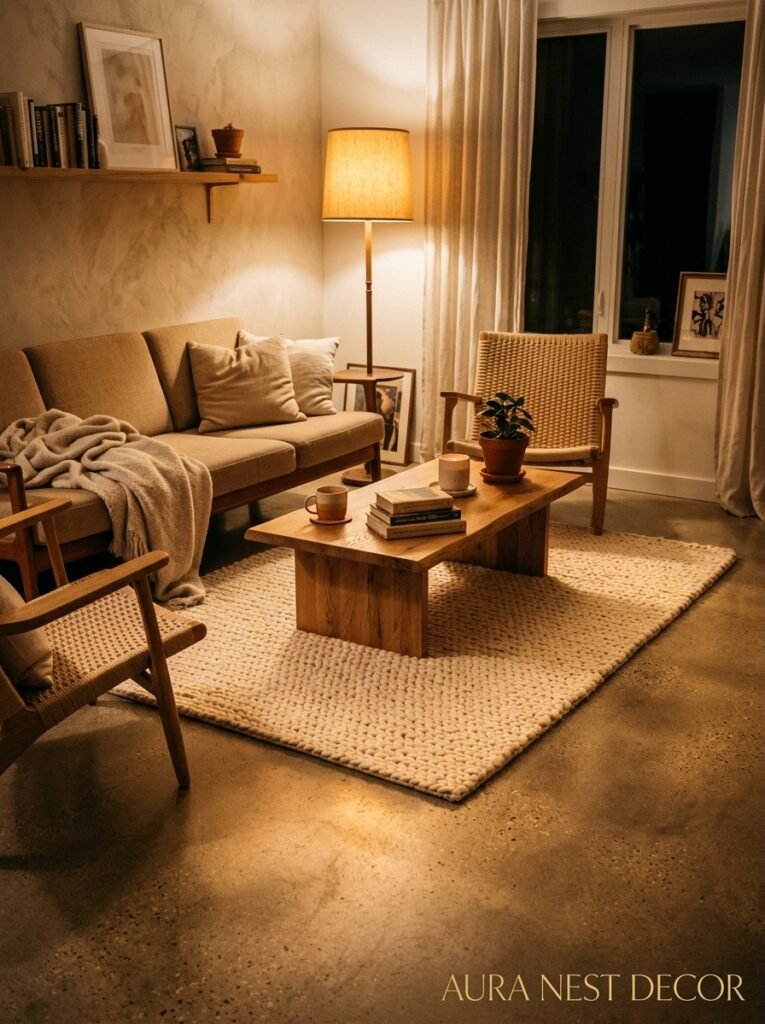
I know. You think “concrete floor” and you picture a parking garage. Bear with me.
Polished or microcement concrete in a living room is one of those things that looks intimidating in theory and then you see it in person and you get it immediately. It’s not cold-looking if you style it right. A chunky jute rug, a linen sofa, a wooden coffee table — suddenly the concrete isn’t harsh, it’s a canvas. The room feels modern without feeling clinical. This works really well in UK Victorian properties that are being renovated with a more contemporary interior, where you want that contrast between old architecture and clean finishes.
What people don’t realize is that concrete isn’t actually cold to the touch in a heated room. It retains warmth. And if you’re adding underfloor heating anyway — which, if you’re renovating, please just do it — concrete is genuinely the BEST surface to pair it with because it conducts and holds heat so well.
The maintenance thing does require a bit of upfront honesty with yourself. Sealed concrete scratches. It can stain if you’re not careful. A glass of red wine left on a porous concrete floor is a moment of drama. But for people who don’t have young kids or pets that skid around, it’s an incredibly rewarding surface. That matte grey-beige tone makes everything on top of it look expensive.
—
4. Herringbone: The Pattern That’s Been Around for 2,000 Years Because It’s Just That Good
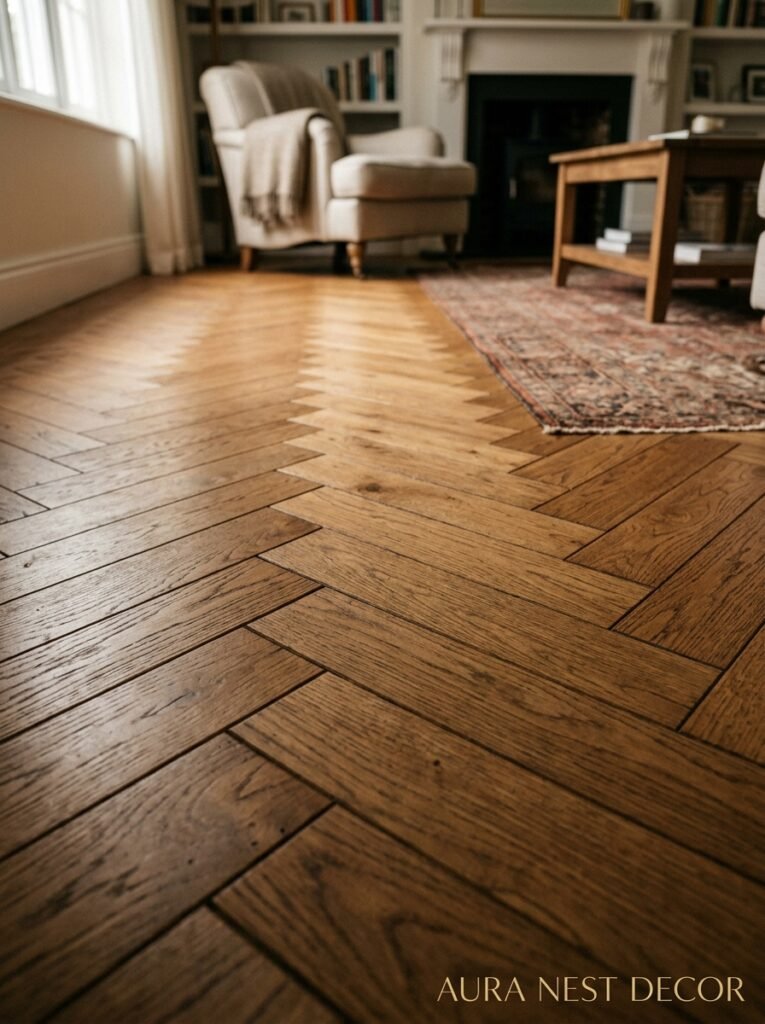
Herringbone floors keep “coming back” in trend pieces — which kind of misses the point. They never actually left. People just occasionally forget how much they love them and then see one and go, “oh, right.”
Here’s what herringbone does that a straight-lay floor doesn’t: direction. It pulls the eye in, creates movement, makes a square room feel dynamic. It’s not a quiet floor. It has something to say. And I personally think that’s a good thing, especially in a living room where you want the space to feel considered rather than safe.
You can do herringbone in hardwood, engineered wood, LVT (luxury vinyl tile), or even ceramic tile. The material changes the personality completely. Pale oak herringbone is that dreamy Nordic-influenced look that makes a living room feel like a Swedish home magazine. Dark walnut herringbone is old-school London townhouse. A grey wood-effect LVT herringbone is the practical version that costs about a third of the price and honestly looks great.
Side note — if you’re doing herringbone in a smaller living room, go with a smaller block size. The scale of the block relative to the room matters more than most people think. A big chunky herringbone block in a small room looks busy rather than beautiful. Tighter blocks in a smaller space keep it elegant.
“Herringbone doesn’t follow trends. It sets the tone and waits for you to catch up.”
—
5. The Rug That Tricks Your Brain Into Thinking the Room Is Bigger Than It Is
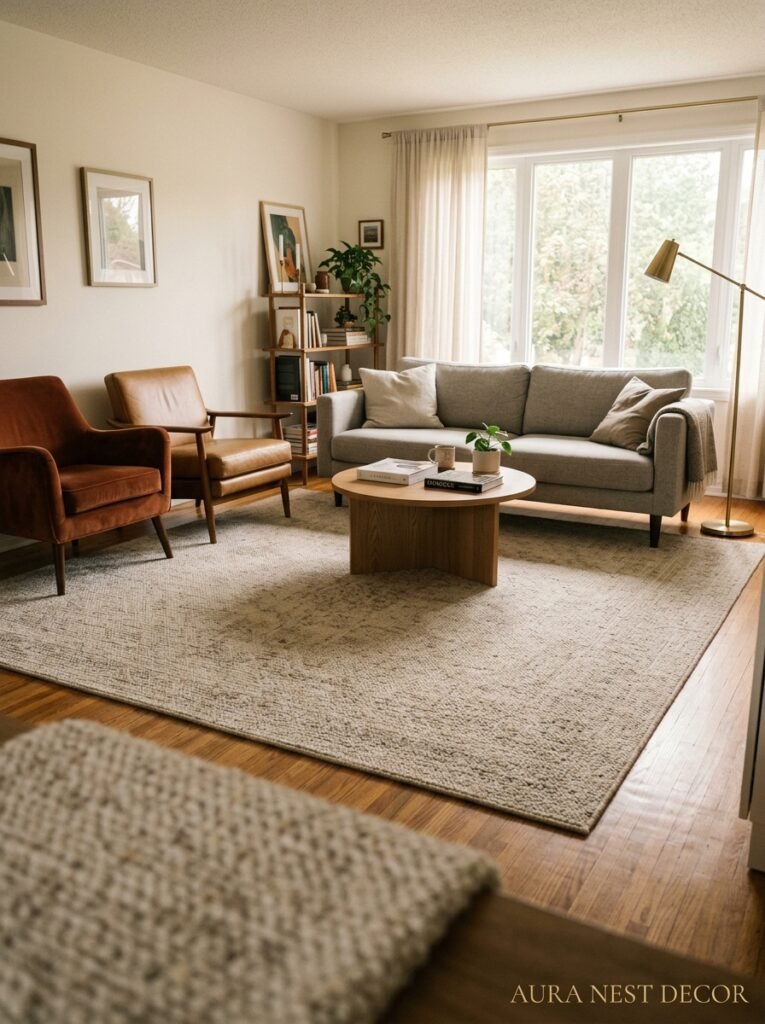
Okay so technically this is a flooring conversation, not a rug conversation — but you cannot talk about living room floors without talking about rugs because they work together, always. A rug isn’t an accessory you plop on top of a floor. It’s a decision about where the room lives.
The number one mistake? Going too small. I see it constantly on home tours. A tiny rug floating in the middle of a living room with all the furniture legs off it, just sitting there looking lost and a little sad. A rug should be large enough that at least the front legs of your sofa and chairs sit ON it. Ideally all four legs on, especially on a bigger rug.
In the US the standard advice is 8×10 or 9×12 for most living rooms, and honestly that’s right. In UK homes where rooms tend to be a bit smaller and more oddly proportioned, you might go 200x290cm or thereabouts. The principle is the same: big enough to anchor the furniture grouping, big enough to define the space as its own zone.
On hard floors — hardwood, LVT, tile — the rug is doing a lot of acoustic work too. Hard floors in a living room can make conversation feel echoey and a bit cold emotionally, not just physically. The right rug softens that completely. Wool rugs especially.
—
6. LVT Is Not “Fake Flooring.” It Is, In Fact, Brilliant.
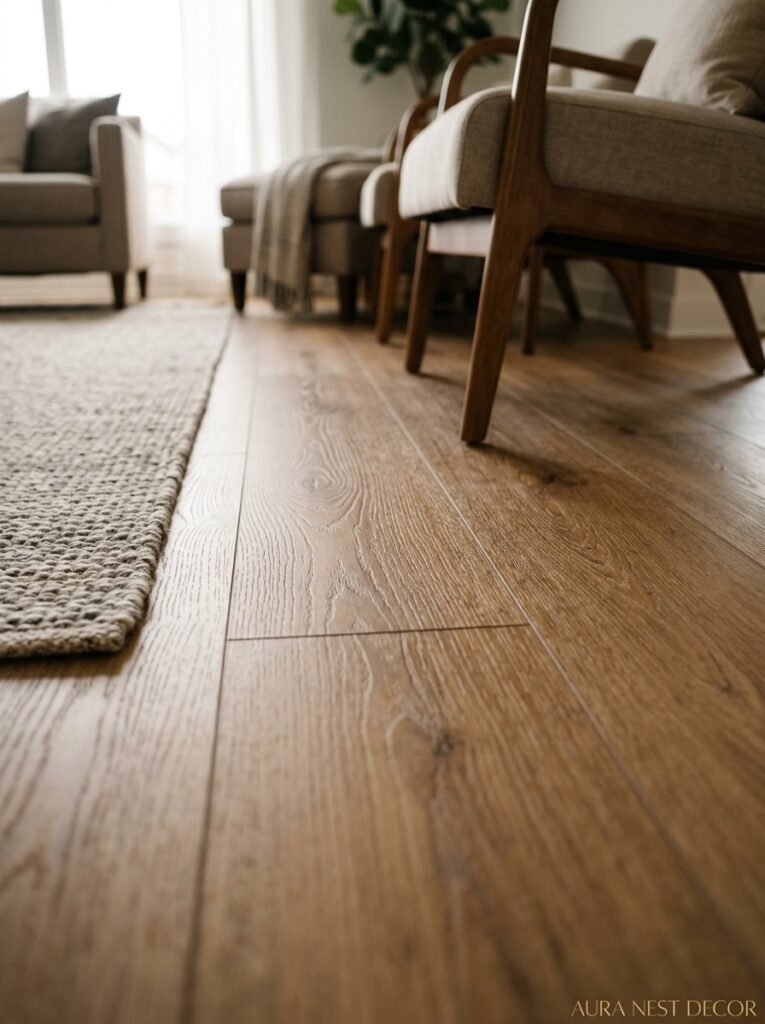
Someone in your life has probably been a bit snobbish about luxury vinyl tile. Maybe it was you, in an earlier version of yourself. I’m not judging, I thought the same thing. And then I saw it installed properly in a good living room and immediately had to reassess.
Modern LVT — specifically the thicker, click-system, wood-effect planks from brands that have put real effort into the embossing and texture — genuinely doesn’t read as fake in person. The good stuff has actual texture that mirrors the grain of wood. It feels slightly warm underfoot. And it handles pet claws, water, heavy furniture, and a dropped cast iron pan without flinching.
For UK homes, especially in areas with older plumbing or damp-prone ground floors, LVT is SMART. It’s dimensionally stable, which means it won’t warp the way solid hardwood will in a room with fluctuating humidity. For US homeowners with dogs, kids, or both — same argument. It’s the floor that lets you actually live your life without being precious.
The styling key is going for longer, wider planks in a muted, realistic color. Avoid anything too orange or too grey-blue, those are the tones that age badly and read as dated fast. A warm taupe or natural ash tone in a longer plank format looks genuinely lovely and works with almost everything.
—
7. Stone Tile in a Living Room — Reckless or Genius?
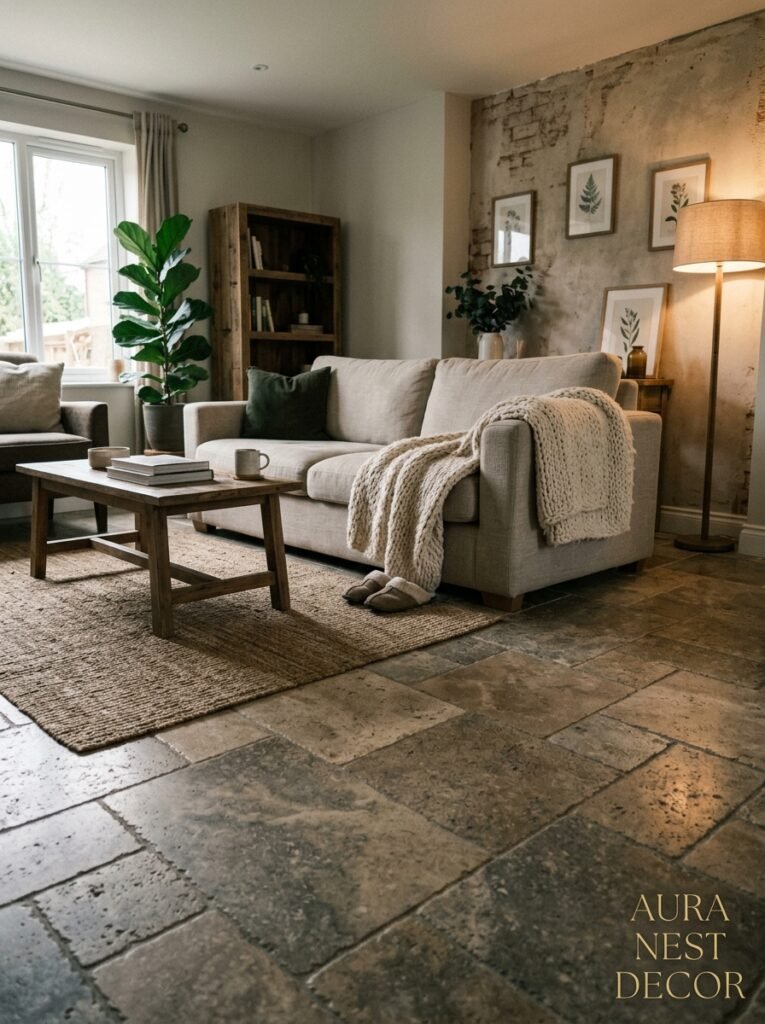
In a colder climate? Feels slightly reckless. In a room with underfloor heating? Absolute genius.
Stone — travertine, limestone, slate, even tumbled marble — brings something to a living room that no other surface does. That sense of weight. Of permanence. Like the room has always been there and always will be. You get this especially with travertine, which has that warm ivory tone with natural variation that makes it feel ancient in the best possible way.
This is much more common in the UK than people think, especially in older homes where the ground floor may have originally been flagstone anyway. Restoring or adding large-format stone in a country cottage living room is one of the best decisions you can make — it’s connected to the architecture of the house in a way that laminate simply isn’t.
In the US this tends to work best in homes in warmer states — Texas, California, the Southwest — where the thermal mass of stone doesn’t fight against the ambient temperature. In a Minnesota winter? You’d want your underfloor heating doing serious work.
The care side of things: natural stone needs sealing. Some stones like limestone are quite porous and will stain with red wine or olive oil if not properly treated. It’s not a high-maintenance floor, but it requires a bit of respect. Which honestly feels appropriate.
“Stone floors don’t try to impress you. They just quietly outlast everything else in the room.”
—
8. The Color Temperature of Your Floor Is Secretly Running the Room’s Whole Vibe
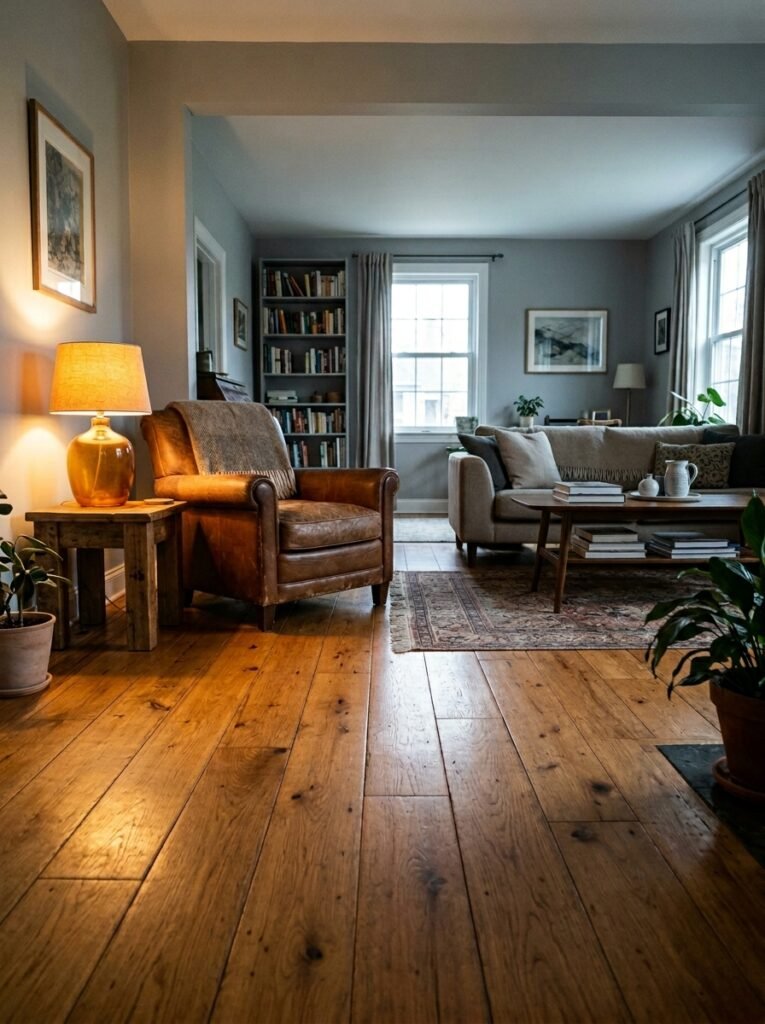
This sounds more complicated than it is, I promise. All it means is: does your floor pull warm (yellow, amber, red undertones) or cool (grey, blue, white undertones)?
And the reason it matters is that it’s going to have an opinion about everything else in the room. A warm honey oak floor is going to fight with a cool grey linen sofa in a subtle but real way — not in a “this is a disaster” way, more in a “why doesn’t this room feel quite right?” way. Whereas a warm taupe wall with warm wood floors and warm brass hardware? That room is going to feel effortlessly cohesive.
Cool grey floors — which were everywhere from about 2015 to 2021, those very grey-washed wide plank styles — are now feeling slightly dated, or maybe it’s just that warm tones have come back so hard that grey looks a bit bleak by comparison. Either way, if you’re choosing now, warm tones are where it’s at. Natural oak. Warm walnut. Creamy travertine.
The exception is if you’re doing a very intentionally cool, contemporary, modern room — all whites and greys and black accents — in which case a cool-toned floor is doing exactly the right thing. Context, always.
—
9. Parquet Blocks: The Floor That Instantly Makes a Room Feel Like It Has History
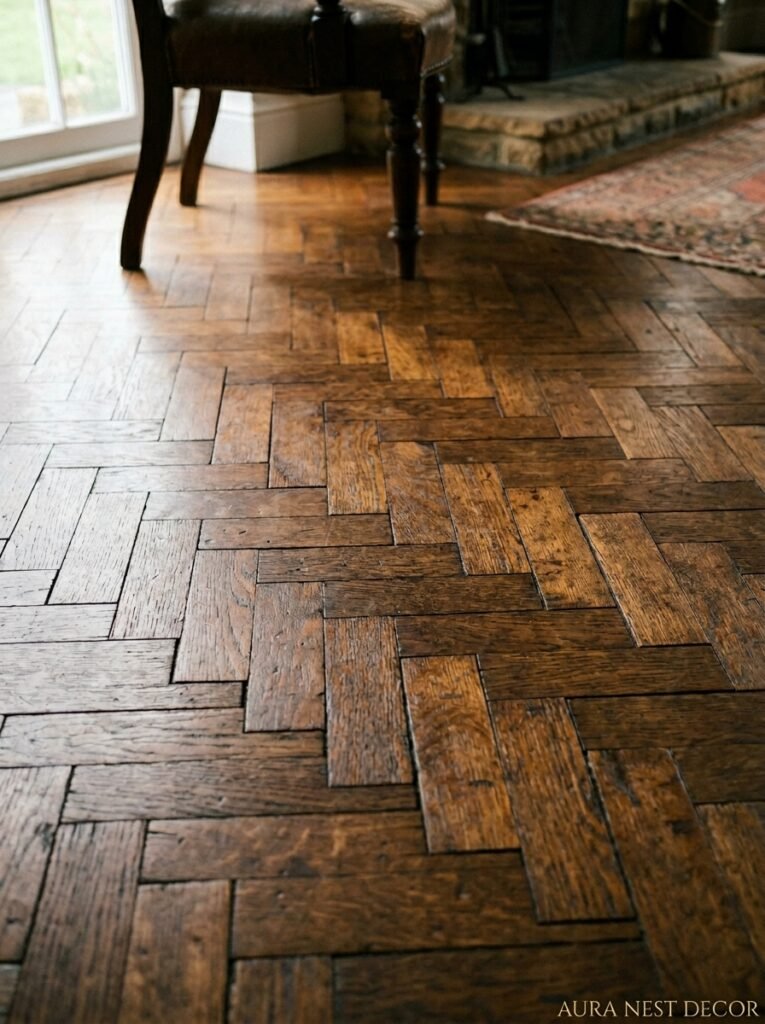
Different from herringbone. I know people use the terms interchangeably and that’s fine for casual conversation, but technically parquet refers to the small geometric block arrangements — basket weave, Versailles panel, Hungarian point — while herringbone is specifically that V-shape interlocking pattern.
Parquet floors feel distinctly European. There’s something about them that says “this flat has been here for a hundred years.” If you’ve got a period property in London, Edinburgh, Paris-influenced design, or any kind of pre-WWII building with good architectural detail, parquet blocks are a natural fit. They add visual richness without adding color, which is a very useful trick.
The Versailles pattern — the large square panel with the diagonal inner squares — is probably the most dramatic of the parquet styles. It’s almost too beautiful for some rooms. But in a large living room with high ceilings, it does something extraordinary. It’s the kind of floor that makes people come in and say absolutely nothing for a second. Just look down. Which is exactly what you want.
—
10. What Carpet in the Living Room Gets Wrong (and How to Do It Right Anyway)

Carpet has had a rough decade in the design world. Blamed for being old-fashioned, hard to clean, bad for allergies — and some of that’s fair. But there’s a version of carpet in a living room that’s actually really lovely and that I think we’ve thrown out with the bathwater.
Deep pile, neutral, quality wool carpet in a living room has a coziness that no hard floor can fully replicate with a rug. You sink into it. In winter it holds warmth in a way that’s almost physical. Underfoot at 6am on a cold morning — there’s simply no comparison. If you’ve got a room that’s cold-facing, north-facing, or just generally a bit chilly, carpet is not a backward choice. It’s a comfort choice.
The key to doing it well is: go neutral and go quality. Pale oatmeal, warm stone, soft greige — all excellent. The sculptured patterns and bold colors of the 90s? Let them stay there. A simple, tight-pile or low-pile carpet in a quality wool blend, wall to wall, instantly feels considered and warm rather than dated.
UK buyers in particular tend to be much more comfortable with living room carpet than American buyers and honestly I think they’re right about it.
—
11. The Finish That Nobody Talks About Enough: Matte vs. Satin vs. Glossy
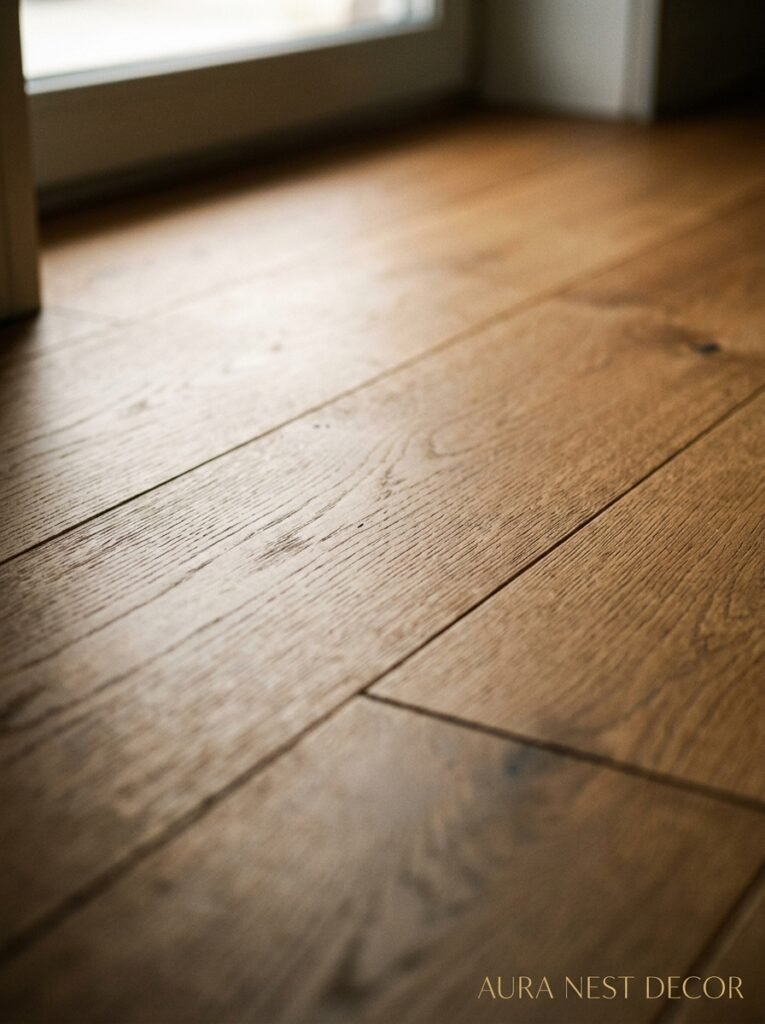
You could choose the most beautiful floor in the world and wreck it with the wrong finish. Not kidding.
High-gloss hardwood shows every single footprint, every microscopic piece of grit, every dog paw. It looks incredible in a showroom at 2pm with professional lighting. It looks like a crime scene in your actual living room on a Tuesday morning. Matte or satin finishes are where real life happens.
For LVT, same principle. The best brands offer a matte or lightly textured finish that reads much more like actual wood. Anything too shiny looks synthetic immediately.
For stone, a honed finish (matte) reads far more naturally than a polished finish in most living rooms. Polished travertine is very 2005 hotel lobby. Honed travertine is beautiful and timeless. The surface feels different too — honed stone has a softness to it that polished doesn’t.
Wire-brushed finishes on hardwood are genuinely the best of all worlds right now. They hide scratches by introducing intentional texture, they have a matte look but with depth, and they feel slightly warm underfoot. Worth the extra cost almost always.
—
12. The One Thing That Will Make Any Floor Look Better Immediately
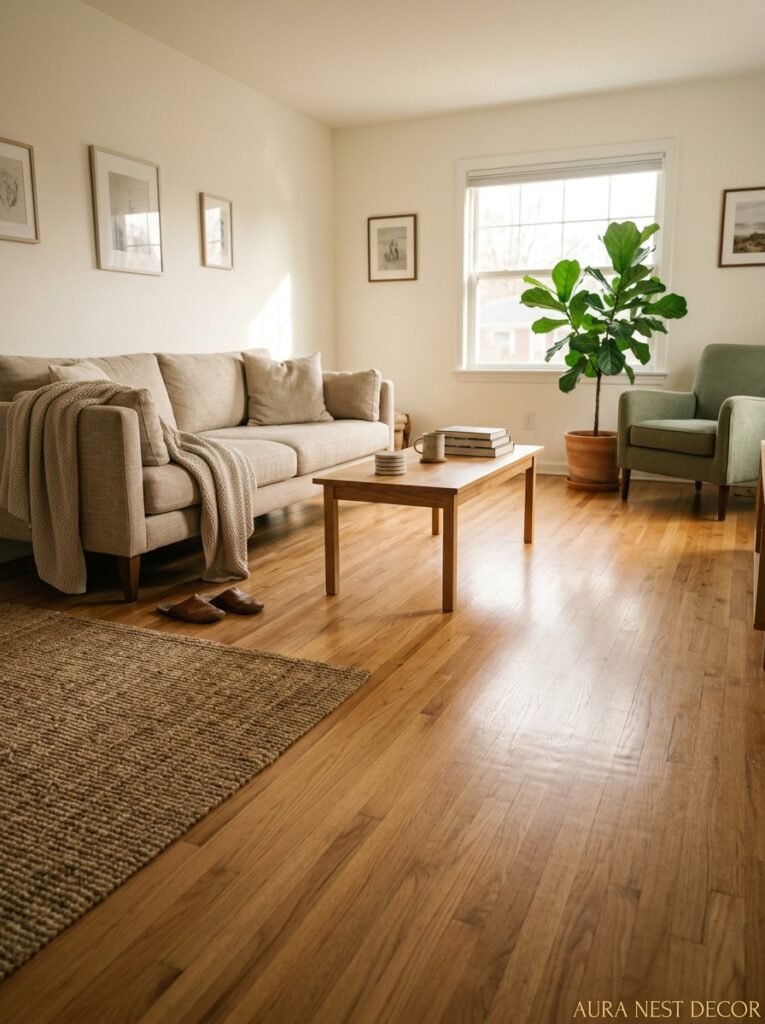
It’s not a product. It’s not a cleaning hack. It’s light placement.
The way light hits a floor changes EVERYTHING about how it reads. Low, warm, directional light — a floor lamp at one end of the room, the amber glow of a lamp at dusk — makes a mid-range wood floor look like something out of an architectural digest spread. Overhead lighting, especially harsh cool-toned ceiling lights, makes even the most expensive floor look flat and uninspiring.
This is why living rooms with nice floors always look better in the evening. The light is lower, warmer, and more directional. The floor catches it at an angle. The grain shows up. The texture shows up.
If you’re not happy with how your floor looks, I’d seriously try rearranging your lighting before you decide to replace anything. Switch to warm-toned bulbs (2700K is the sweet spot), get a couple of floor lamps in opposite corners, and take the overhead light down to a lower setting or cut it out entirely in the evening. Then look at your floor. I’d bet it looks significantly better.
—
❓ FAQ
Q: What’s the best flooring for a living room with dogs or pets? A: LVT (luxury vinyl tile) is genuinely the most practical option — it’s scratch-resistant, waterproof, and doesn’t absorb smells the way carpet does. If you want the look of hardwood, go with a wire-brushed engineered wood with a hard-wearing finish, which disguises scratches better than a smooth surface would.
Q: Is engineered wood better than solid hardwood for a living room? A: In most cases, yes — especially in the UK where older homes can have humidity fluctuations and ground floors that aren’t always bone dry. Engineered wood has a real wood top layer so it looks identical to solid, but the layered core makes it dimensionally stable and far less prone to warping. For most living rooms it’s the smarter call.
Q: How do I make a small living room feel bigger with flooring choices? A: Lay planks lengthwise down the longest wall — this pulls the eye forward and makes the room feel longer. Lighter floor tones read as more spacious than dark ones. And keep the rug large enough to anchor the furniture rather than floating in the center, which tends to make the space feel chopped up and smaller.
—
💭 Final Thoughts
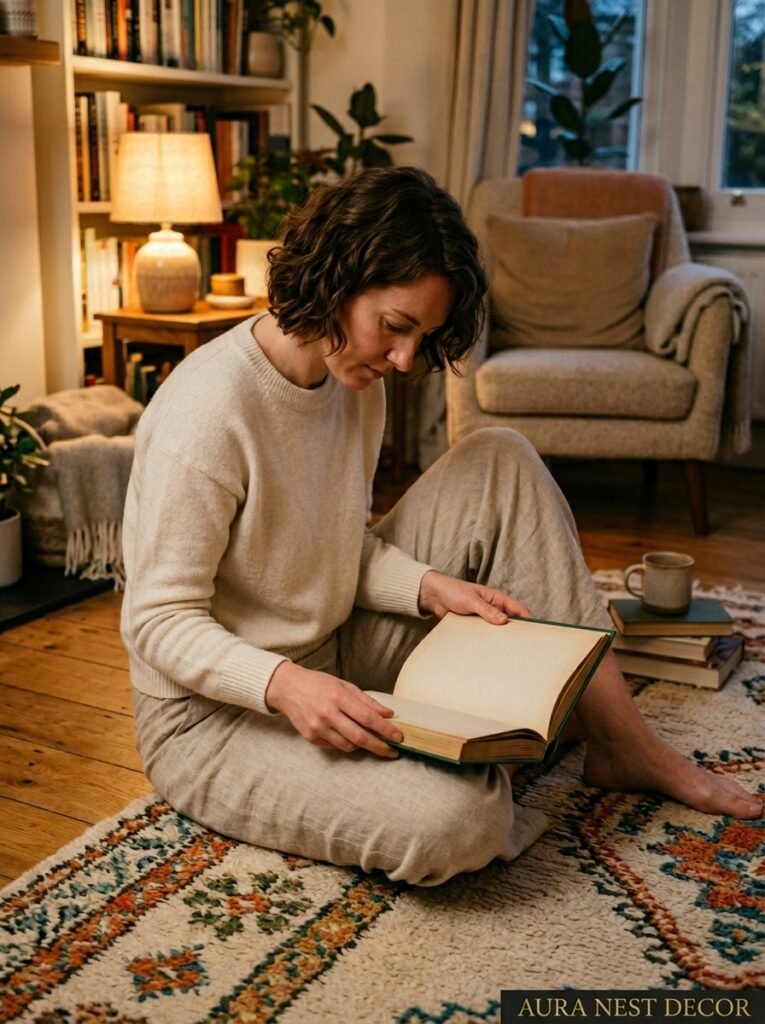
The right floor won’t just make your living room look better — it’ll make it feel better in that quieter, harder-to-describe way. You’ll notice it when you walk in on a cold evening and the light’s on and everything just… settles. It’s not magic, it’s just good decisions working together.
Don’t rush it. Don’t pick from a three-inch sample tile under fluorescent lighting at a warehouse showroom. Bring samples home, put them on the floor, live with them for a few days.
What’s the one thing about your current living room floor that’s been quietly bothering you — and what do you think it’s actually trying to tell you?