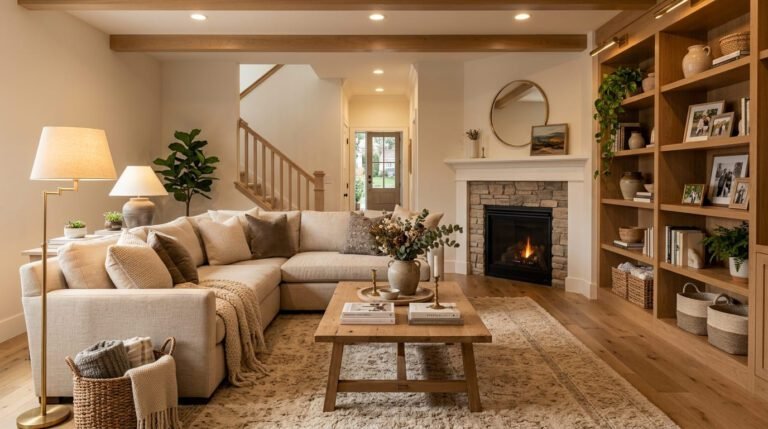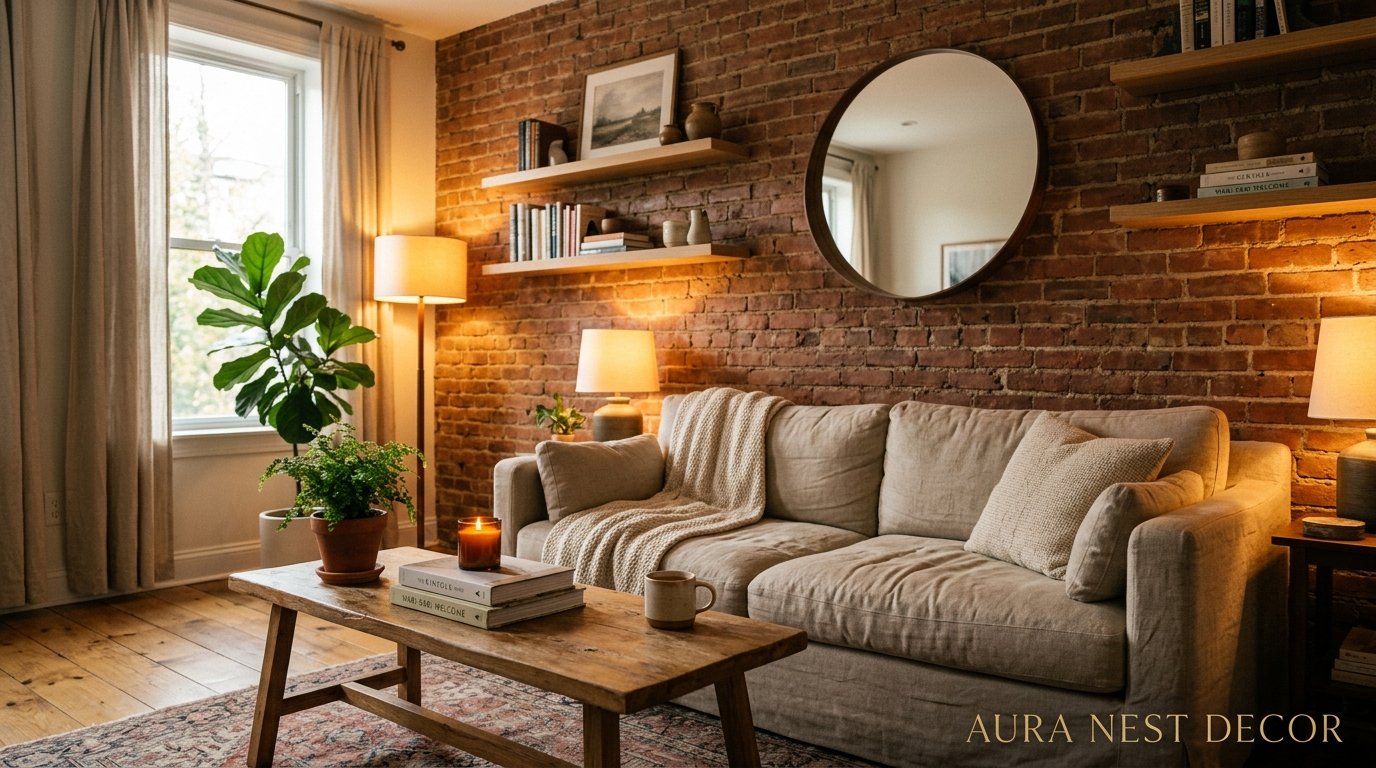
Why a Brick Wall Living Room Is the Only Design Trend That Never Actually Trends
You walk into a room and there it is — raw, warm, a little rough around the edges — and you immediately feel something settle in your chest. That’s what exposed brick does. It doesn’t ask for your attention. It just has it.
—
1. The Reason Brick Walls Feel So Good (And It’s Not Nostalgia)
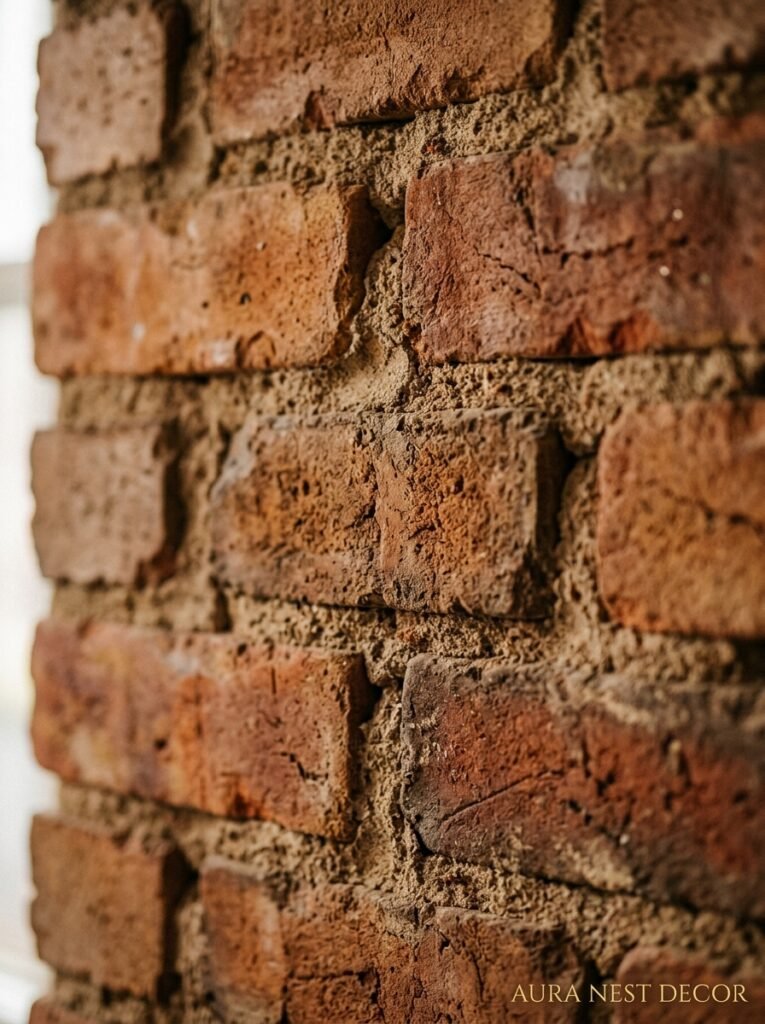
There’s a psychology here that nobody talks about enough. Brick has texture you can almost feel just by looking at it. That matters more than most people realize, because our brains process textured surfaces differently than smooth ones — they feel warmer, more alive, less clinical. Walk into a room with white plaster walls versus one with exposed brick and your nervous system genuinely responds differently to each.
It’s not about trend cycles. It’s about something older than that — something almost primal about the look of hand-laid stone and mortar, the idea that someone built this with their hands and it’s been holding itself together for decades. Maybe longer. That story is embedded in every room with a real brick wall, and people can feel it even if they can’t articulate it.
What’s interesting is that brick walls work in almost any living room style. Genuinely. I’ve seen them in ultra-modern spaces, in cluttered maximalist rooms stuffed with vintage finds, in spare Scandinavian interiors with nothing but a grey linen sofa and a single plant. The brick doesn’t fight any of it. It just anchors the room. Gives it something to lean on.
And if your brick is original to the house? Don’t touch it. Don’t paint it. Don’t do anything except clean it carefully and let it breathe.
“Brick doesn’t set the tone of a room. It IS the tone of the room.”
—
2. What to Actually Do If Your Brick Is Ugly (Because Not All Brick Is Beautiful)
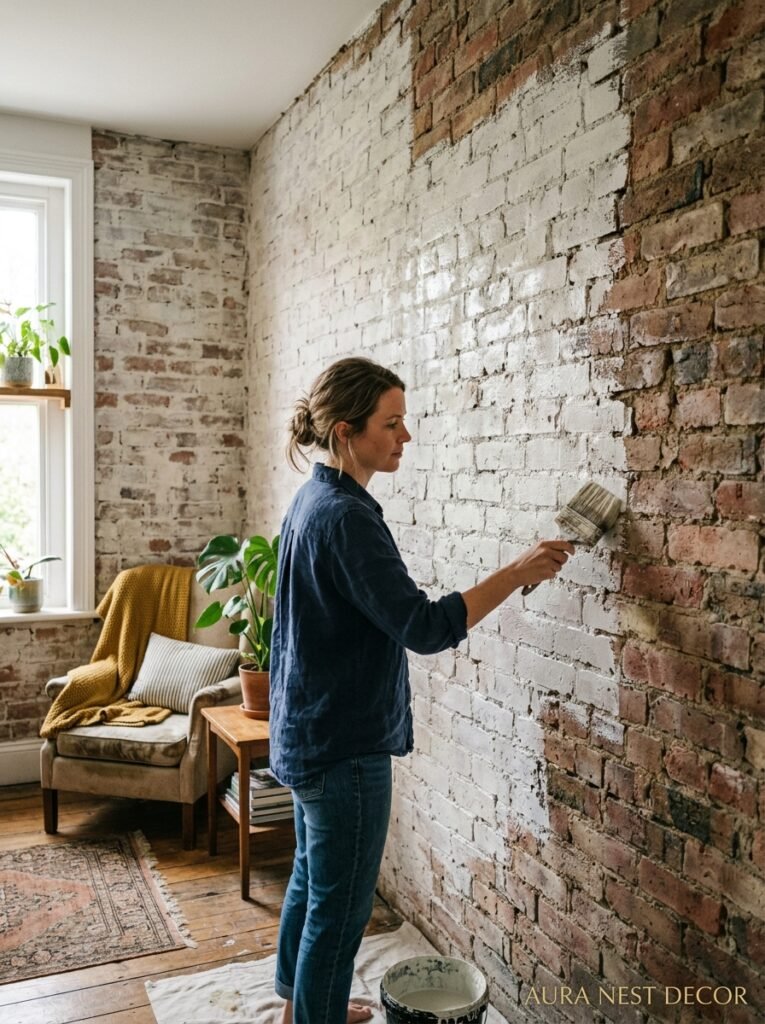
Let’s be honest. Not every exposed brick wall is the warm, caramel-toned dream you see on Pinterest. Some brick is orange. Like, aggressively orange. Some is painted over badly, or patchy, or covered in old white lime wash that’s half peeling. Some of it has been rendered and you can see where someone took a hammer to it in a fit of DIY enthusiasm and stopped halfway through.
So. What do you do?
If it’s painted brick in a color you hate, limewashing is genuinely one of the best things you can do. It’s different from paint — it soaks into the brick rather than sitting on top of it, so you still get texture and variation. You can do it in white for that Italian villa effect, or in warm greige, or even a pale terracotta if you want to lean into the warmth of the original brick underneath. The result looks old in the best possible way.
If your brick is just ugly in color — that too-orange, too-uniform look — a tinted limewash can cool it down or shift its undertones without killing the texture entirely. Some people do a very diluted grey wash for this. I’ve seen it work really well in north-facing rooms that needed to feel a little lighter without going full white.
If the brick is genuinely damaged or missing sections, a plasterer who specializes in restoration is worth the money. Patched brick done badly is worse than just leaving it imperfect. And honestly? A few missing bricks here and there can look incredible if the rest of the wall is solid.
—
3. The Color That Keeps Showing Up Next to Exposed Brick in Every Beautiful Living Room
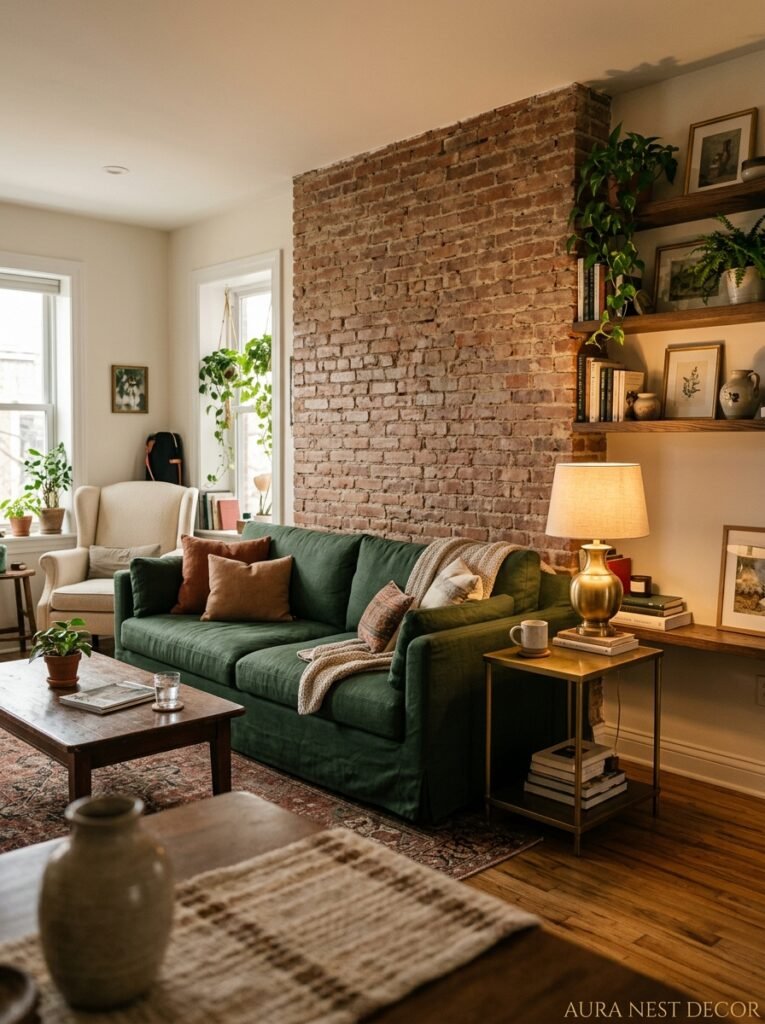
Forest green. Every time.
I don’t know who decided this first but they deserve some kind of award. Deep, moody forest green — on a sofa, on an accent wall on the opposite side of the room, on a velvet armchair tucked into the corner — it’s the perfect counterpoint to warm brick. The brick brings heat and age, the green brings something cool and almost alive. It shouldn’t work as well as it does.
But if green isn’t your thing, here’s what else actually works: warm cream (not white — cream, there’s a real difference), navy that leans slightly warm rather than icy, rust and terracotta which obviously rhyme with the brick itself, and a very specific shade of dusty lavender that I’ve seen exactly three times in person and every single time it was breathtaking.
What doesn’t work? Cool greys. They fight the warmth of the brick and make a room feel confused. Bright white can work but only if it’s a really warm white — think linen white, not brilliant white from a tin. Cold blues, cold greens, anything with too much blue undertone tends to make brick look garish rather than warm.
The trick isn’t matching the brick. The trick is complementing what the brick is already doing to the temperature of the room.
—
4. Furniture Placement Rules That Actually Apply to Brick Wall Rooms
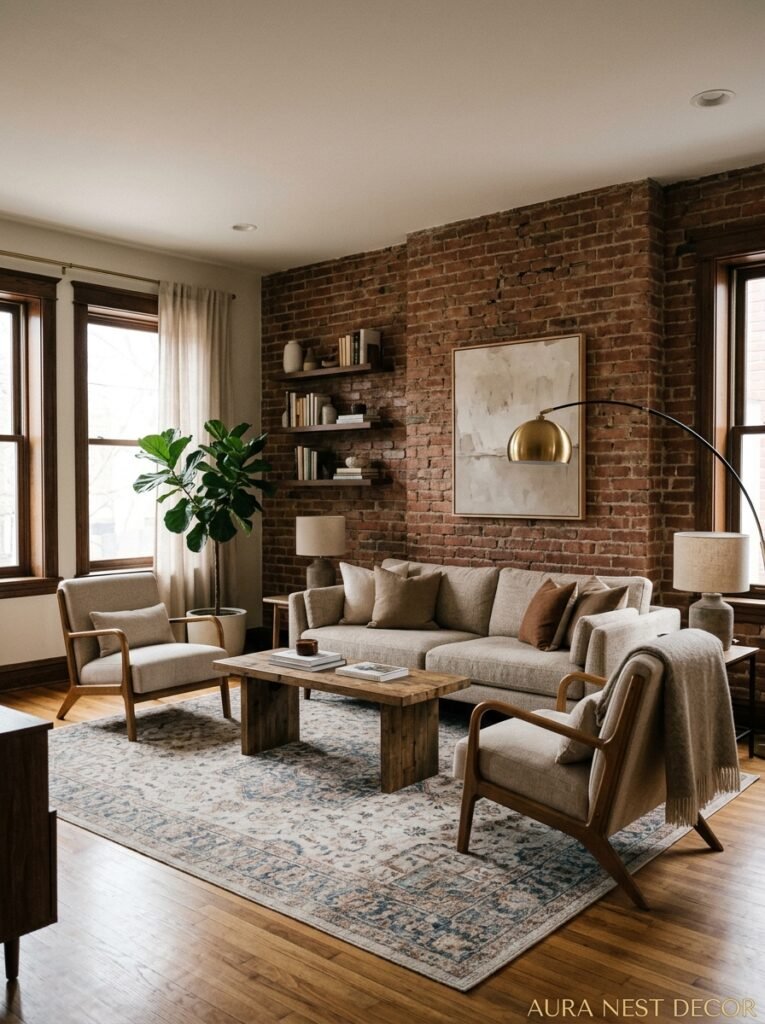
Here’s the one that most people get wrong. They put the sofa directly against the brick wall.
Don’t do that.
The brick wall is a feature. It needs breathing room to do its job. When you push furniture flat against it, you lose the shadow play, the depth, the whole layered quality that makes a brick wall interesting in the first place. Pull the sofa at least a foot away. Even six inches makes a real difference. You want to see the wall working behind the furniture, not smothered by it.
The second thing — and this is less obvious — is that brick walls are incredibly good as statement walls that you sit FACING rather than sitting against. Position your main seating so people are looking at the brick. Make it the thing they see when they walk in. It becomes a backdrop that frames the whole room rather than just one wall you happened to keep.
Low furniture tends to work better than tall furniture in brick wall rooms, because it lets the full height of the wall show. Tall bookcases directly in front of exposed brick are a waste. A low credenza, a long flat coffee table, cushions on the floor — all of these feel right in a way that’s hard to articulate but very easy to see.
“The brick is doing the heavy lifting. Your job is to get out of its way.”
—
5. Lighting a Brick Wall Living Room Without Making It Feel Like a Medieval Dungeon
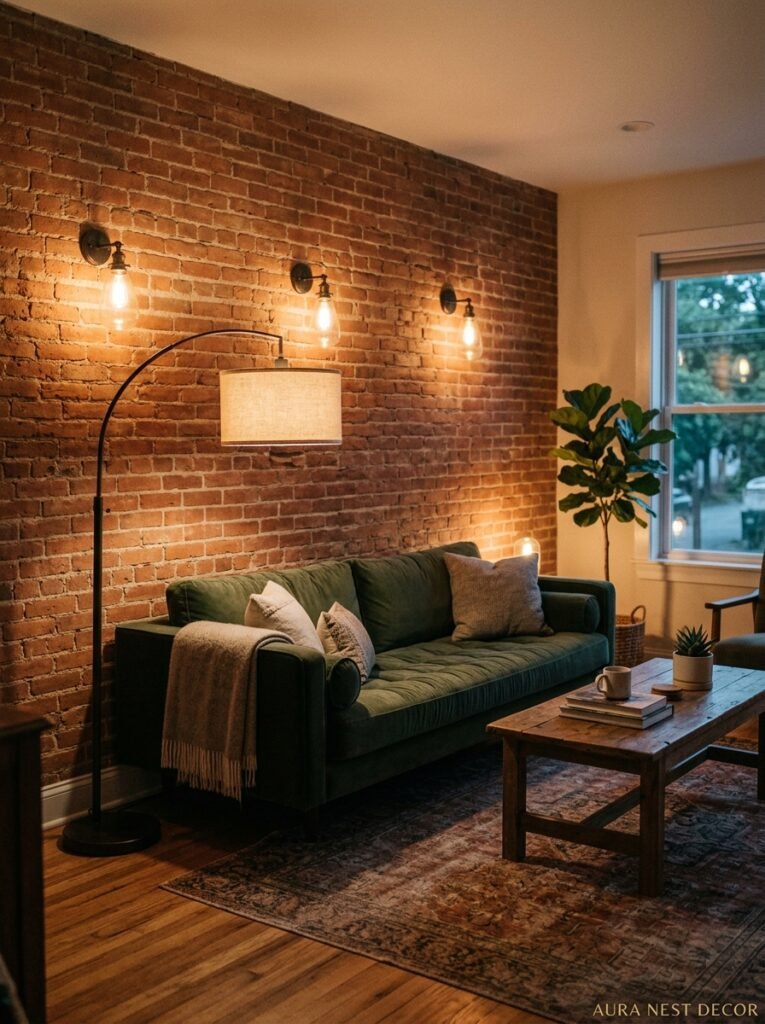
Bad lighting ruins everything. And brick, specifically, is VERY unforgiving of overhead lighting.
If you have a single ceiling light in the center of a brick-walled room, your living room looks like an interrogation room. Or a dungeon. Neither is what we’re going for.
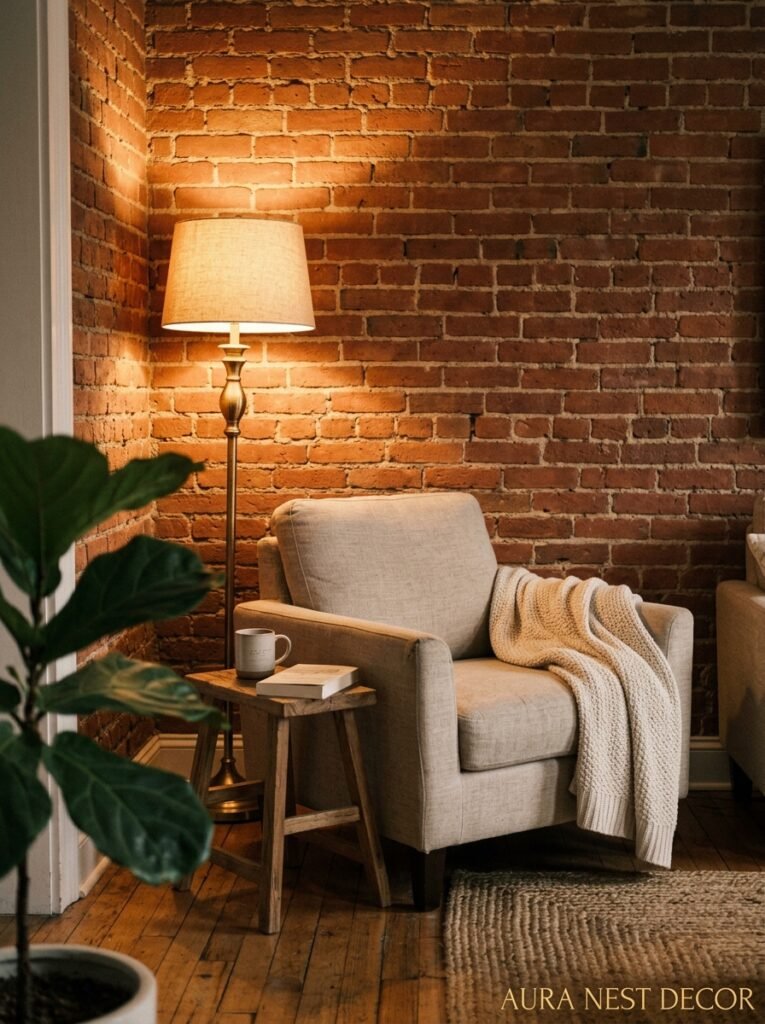
The fix is layers. You want a light source that actually hits the brick — a directional wall light, a picture light aimed at the wall itself, or uplighters on the floor positioned so the light grazes upward across the surface. This is called grazing light and it’s transformative for any textured surface. (Okay, I said I wouldn’t use transformative. It is, though. The word fits here.) What it does is pull out all the shadows in the individual bricks and mortar lines, making the wall look three-dimensional and alive rather than flat.
Beyond the wall itself: table lamps at low heights, a floor lamp in the corner, maybe some candles if you’re the candle type. Edison bulbs work here — the warm amber filament picks up the redness in the brick in a way that LED daylight bulbs don’t. Not saying never use LEDs, but pick warm ones. 2700K or below.
Side note — dimmer switches cost about $20 and they will completely change how your living room feels at night. If you have brick, you need dimmers. Non-negotiable.
—
6. What to Hang on a Brick Wall (And What Looks Terrible No Matter What Anyone Tells You)
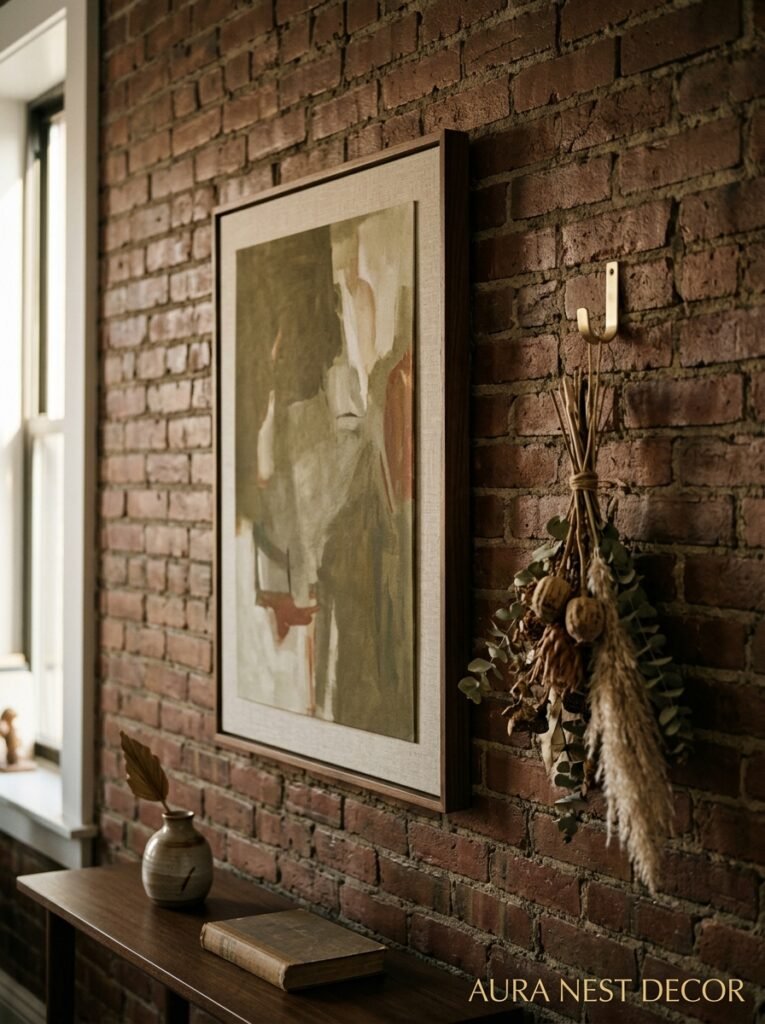
Hanging things on brick is a whole thing. You need masonry drill bits, wall plugs, the right rawl bolts, and slightly more patience than drywall requires. But once it’s up, it’s SOLID. Nothing wobbles, nothing shifts. That part is actually satisfying.
What looks good: large-scale art in simple frames. One big piece looks better than a gallery wall in most cases — brick already has so much visual texture that adding lots of smaller frames creates noise rather than interest. Mirrors work incredibly well, especially aged or foxed ones where the glass has a slight antique quality to it. Woven wall hangings in natural fibers — jute, cotton rope, macramé — pick up on the organic roughness of the brick without competing.
What looks bad: photo ledges with lots of small frames. Picture-perfect symmetrical gallery walls where every frame is the same. Anything too polished or too corporate. Abstract art that’s very cool-toned can fight the warmth, though this depends on the specific piece.
The most underrated thing you can hang on a brick wall? Nothing. A big empty stretch of good brick is a design choice. It takes confidence but it’s almost always right.
—
7. The Fake Brick Question — Because Not Everyone Has the Real Thing
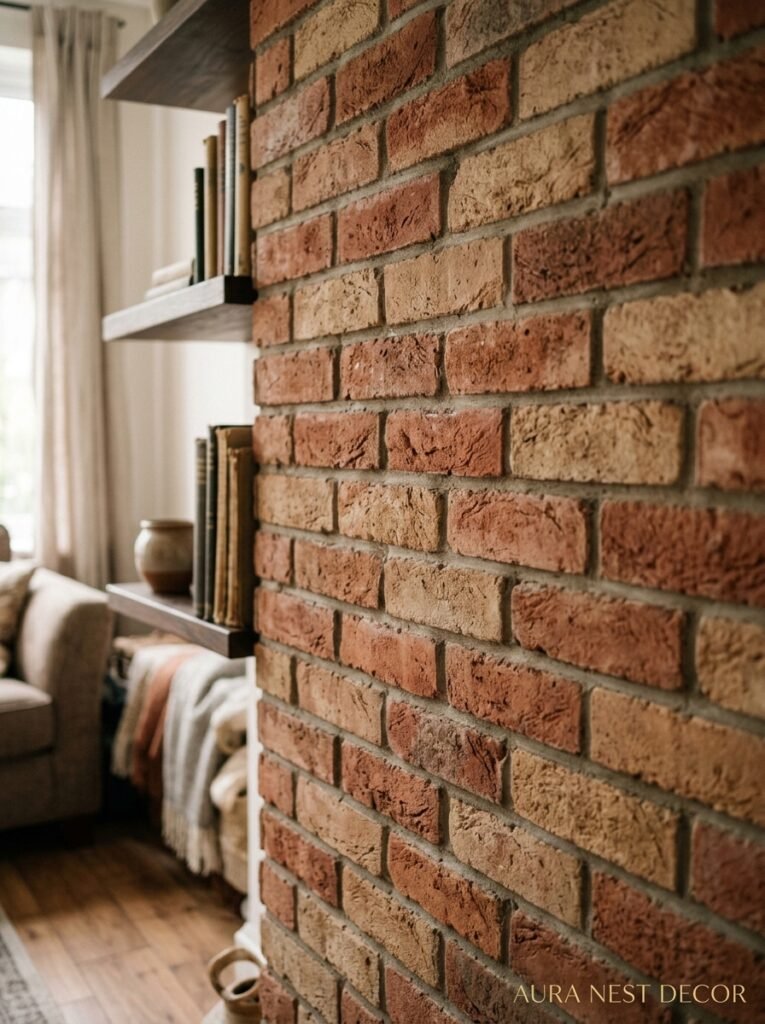
Real talk: exposed brick panels, brick veneer, brick effect wallpaper. Do they work?
Sort of. Here’s where I’ll be honest with you.
Brick effect wallpaper is very hard to do well. The seams show, the repeat is obvious up close, and in a living room where people are sitting and staring at the walls, they WILL notice. I’ve seen it work in hallways and powder rooms where nobody lingers. In a living room? It tends to disappoint.
Brick veneer — actual thin slices of real brick or concrete cast in brick form — is a completely different story. Done properly, it’s genuinely hard to tell apart from real brick, especially once it’s aged a little and you’ve got furniture and lighting doing their thing around it. The installation is more involved and more expensive than wallpaper but the result is worth it if you’re committed to the look.
There are also some really good 3D wall panels now that give you texture without trying to replicate brick exactly — they’re their own thing, which somehow makes them feel more honest. Worth exploring if you want warmth and depth but don’t want to commit to the brick aesthetic fully.
“The best fake brick is the kind that stopped trying to be real brick and became something else entirely.”
—
8. How Victorian and Edwardian Brick (A UK-Specific Situation) Behaves Differently
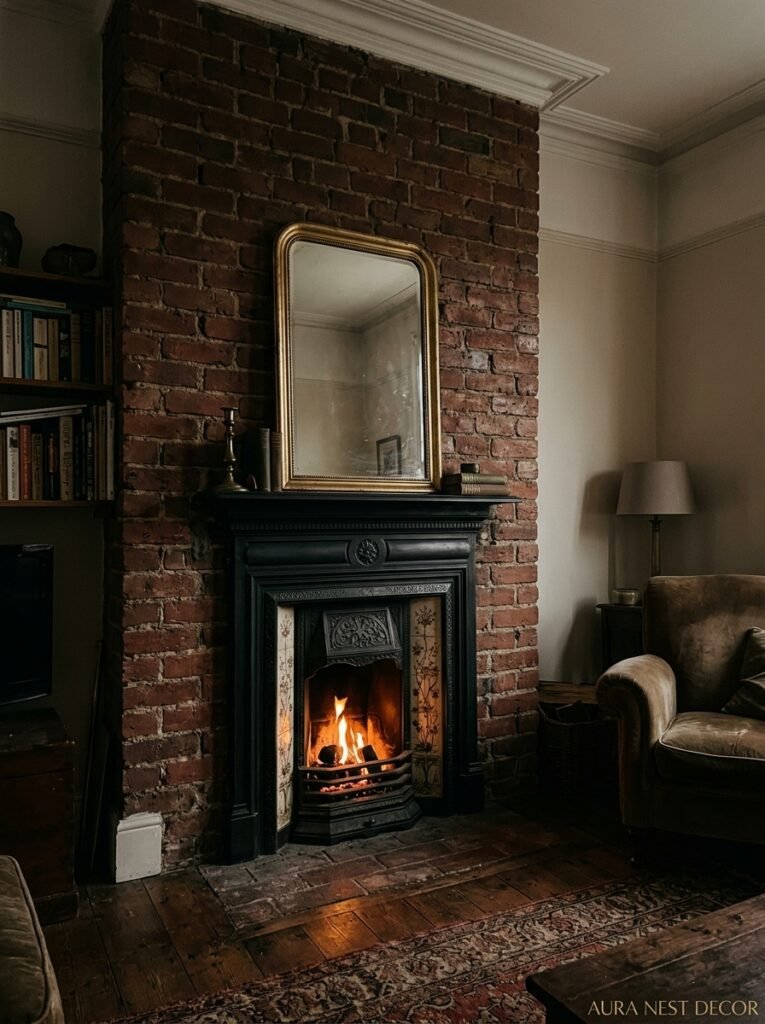
If you’re in the UK and you’ve uncovered brick in an older terraced house, you’re dealing with something specific. Victorian and Edwardian brick is often London stock brick — that warm yellow-grey color rather than the red brick most people picture. It’s softer, more varied in tone, and honestly even more beautiful in person than the red stuff, but it’s also more fragile and more porous.
It needs sealing before anything else. A breathable masonry sealer — not a plastic-y film-forming one — will protect it from moisture while letting the wall breathe, which matters enormously in older UK homes that weren’t built with modern damp-proofing. Skip this step and you’ll have damp problems by winter.
The yellow-grey of stock brick means the color rules I mentioned earlier shift slightly. Warm greens still work beautifully. But you can also go much cooler — dusty blues, soft sage, even a warm mid-grey — in a way you can’t with red brick. The cooler tones of the brick give you more flexibility.
If you find lime mortar in the joints — the kind that crumbles slightly and has an almost sandy texture — don’t replace it with modern cement. Cement mortar is harder than the brick and can cause structural damage over time in old buildings. A specialist lime mortar repoint is the right move, and your local conservation officer can often advise for free.
—
9. Rugs That Belong in a Brick Wall Living Room (This Is Specific for a Reason)
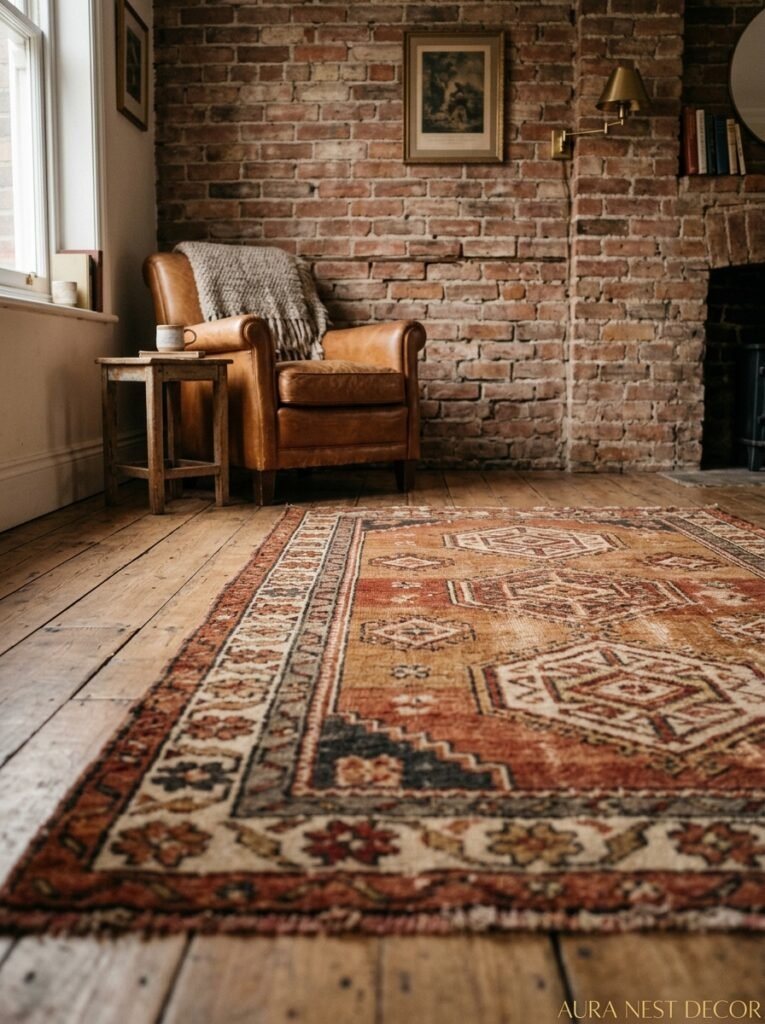
The floor matters enormously in a brick room. More than people expect.
You want warmth and softness underfoot to balance the hardness of the wall. That means thick rugs — not flat weaves, not jute (jute looks good but it’s not soft to sit on and that matters in a living room). A deep-pile wool rug or a thick Persian or Moroccan-style rug in worn, muted tones does something genuinely beautiful in a brick room.
Colors: again, warm. Aged reds, dusty pinks, warm ochres, deep navy. Rugs with age and patina look intentional next to brick. Brand new, perfect, bright rugs look wrong — they make the brick look dirty by comparison rather than characterful.
Size matters enormously and most people go too small. You want the rug to sit under at least the front legs of all your seating. Too small a rug floats in the center of the room and looks lost. Go bigger than you think you need. Seriously. Then go one size bigger than that.
—
10. Plants That Look Absolutely Right Against Exposed Brick
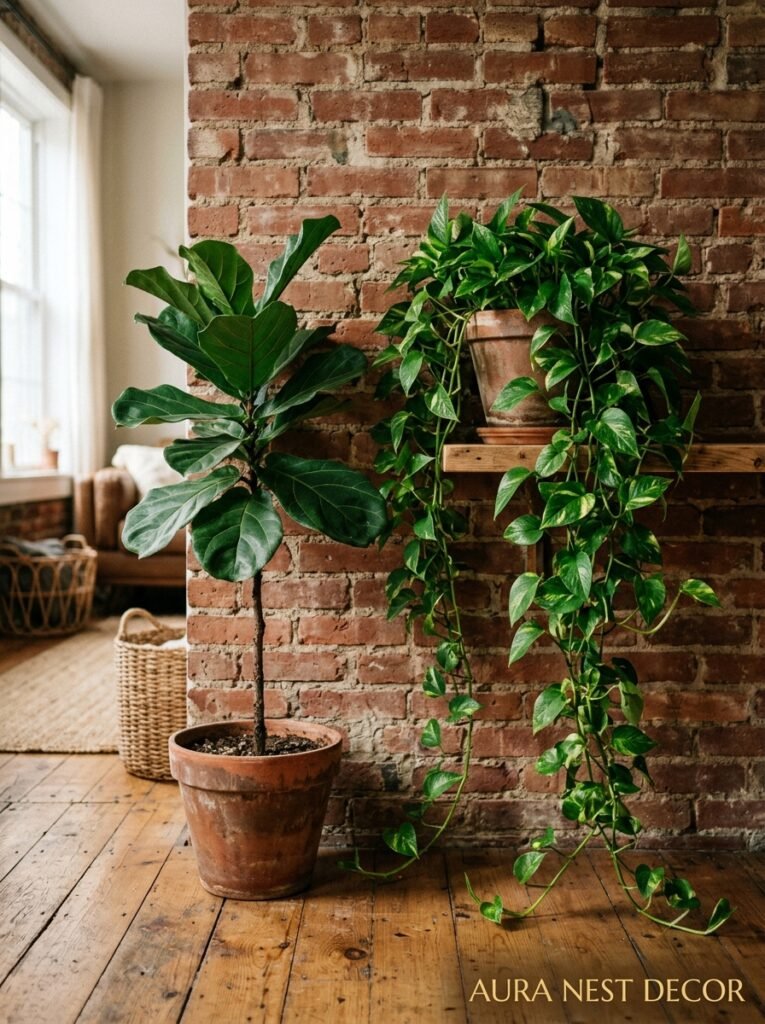
Plants and brick are a natural pairing. Something about the green against the warm red-orange — it works the same way the forest green furniture does, but softer and less planned.
Trailing plants are especially good here. A pothos or devil’s ivy on a high shelf, trailing down the wall, looks incredible. Fig trees — fiddle leaf or regular ficus — in terracotta pots on the floor feel completely at home. Snake plants in their sculptural geometry make a great contrast to the irregular texture of the brick.
The one I keep coming back to: a climbing plant on a trellis leaning against the brick. Not trained into the wall itself — that causes moisture and damage — but a freestanding trellis with a philodendron or a hoya trained up it, leaned casually against the brick. It looks like something from an Italian courtyard and it takes almost no effort.
Avoid very tropical-looking plants with huge graphic leaves if your brick room leans rustic or traditional. They work in modern, design-forward spaces but can feel jarring in a warm, lived-in room.
—
11. The Case for Leaving One Wall Brick and Everything Else Plain
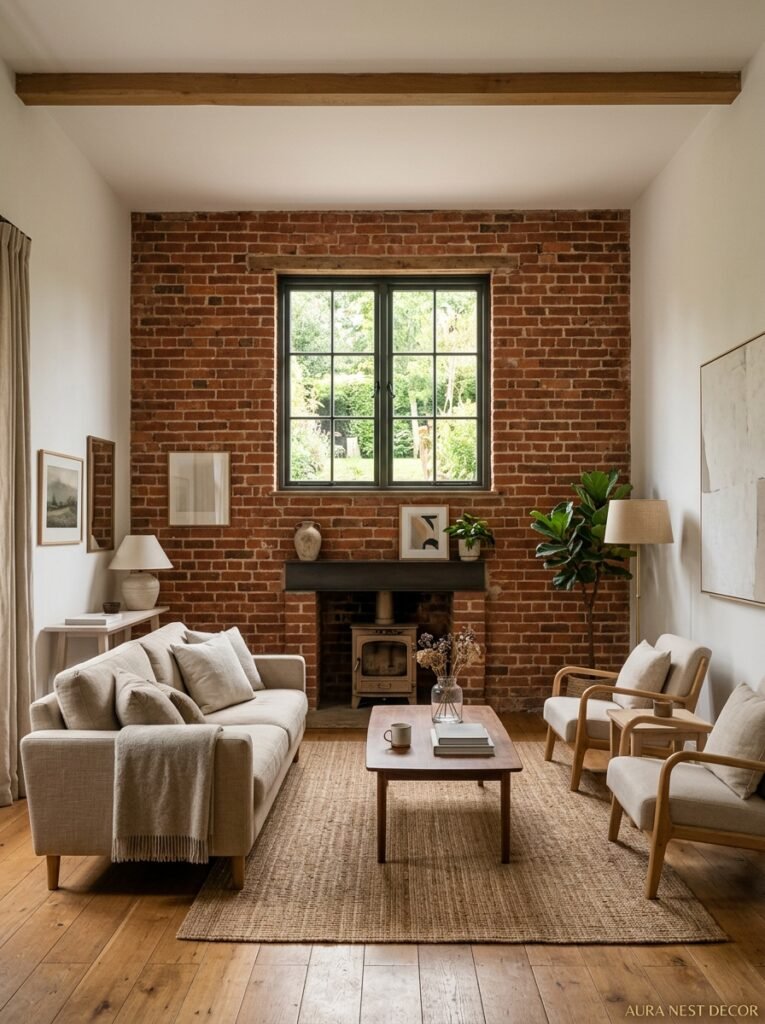
This is something people don’t always consider because they think more brick = better. But one wall of brick in an otherwise plain room is often MORE powerful than brick everywhere.
When every wall is brick, the eye gets used to it and the texture stops registering as special. When one wall is brick and the others are plain — smooth plaster in warm cream or soft white — the contrast makes BOTH surfaces more interesting. The smooth walls feel calmer and more spacious, the brick wall feels more dramatic and alive. They make each other better.
This is also a much more livable approach for everyday life. A room with brick on every surface can start to feel heavy and cave-like, especially in smaller living rooms. One feature wall keeps all the warmth and character without the claustrophobia.
If you’re choosing which wall, go for the one your sofa faces. The one people look at when they’re settled in and relaxing. That’s the wall that’ll get the most appreciation and do the most work for the room.
—
12. The Small Details That Make a Brick Living Room Feel Curated Instead of Accidental
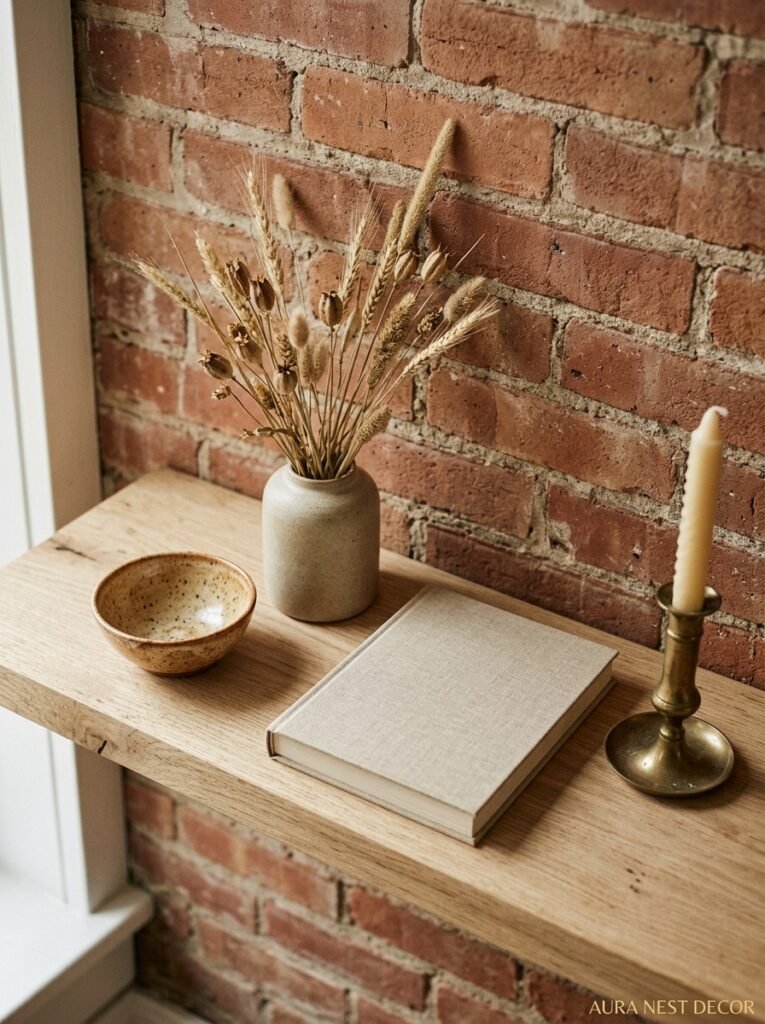
Here’s the thing nobody tells you: exposed brick on its own doesn’t automatically look good. It needs company. Specifically, it needs materials that echo what it’s already doing — roughness, warmth, age, honesty.
Leather. Raw wood. Linen. Cast iron. Aged brass rather than polished gold. These are the materials that belong in a brick living room. They have the same quality of being slightly imperfect, slightly worn, slightly human.
Ceramic vessels in earthy glazes on a coffee table. A stack of actual books with worn spines. A wool throw folded imperfectly over the arm of the sofa. A tarnished brass lamp with a linen shade. None of this is complicated or expensive. It’s just intentional. And intentional is the difference between a room that looks like a ruin and a room that looks like somewhere someone actually lives and loves.
That last part matters most. Brick walls are warm because people have lived alongside them. Your job is to continue that.
—
❓ FAQ
Q: Can I paint over exposed brick in my living room if I hate the color? A: Yes, but don’t use regular wall paint — it seals the surface and prevents the brick from breathing, which can cause moisture problems in older homes. Limewash or mineral paint are much better options. They soak in rather than coating, so the texture stays visible and the wall can still breathe properly.
Q: How do I clean a dirty exposed brick wall without damaging it? A: Start gentle. A dry stiff-bristled brush gets rid of dust and loose debris. For staining, a mild solution of washing-up liquid in warm water and a scrubbing brush works for most grime. Avoid anything acidic or bleach-based — they can damage both the brick and the mortar. If it’s heavily stained, a specialist brick cleaning product from a masonry supplier is worth it.
Q: Is exposed brick bad for a living room if the house gets cold? A: Brick is a thermal mass material — it absorbs heat slowly and releases it slowly, so it can actually help regulate temperature. That said, an uninsulated external brick wall is a source of heat loss. Internal exposed brick walls (i.e., walls that divide rooms rather than face outdoors) are fine. For external walls, it’s worth talking to an insulation specialist before fully exposing the brick.
—
💭 Final Thoughts

Brick doesn’t really go out of style because it was never in style to begin with. It predates interior design trends by about five centuries, which gives it a quiet sort of confidence nothing else in a room can match.
The best brick wall living rooms I’ve ever seen weren’t the most decorated or the most Pinterest-perfect. They were the ones where you could feel that someone understood what they had and chose to work with it instead of against it.
What does your brick wall need — more space to breathe, or more company to belong with?