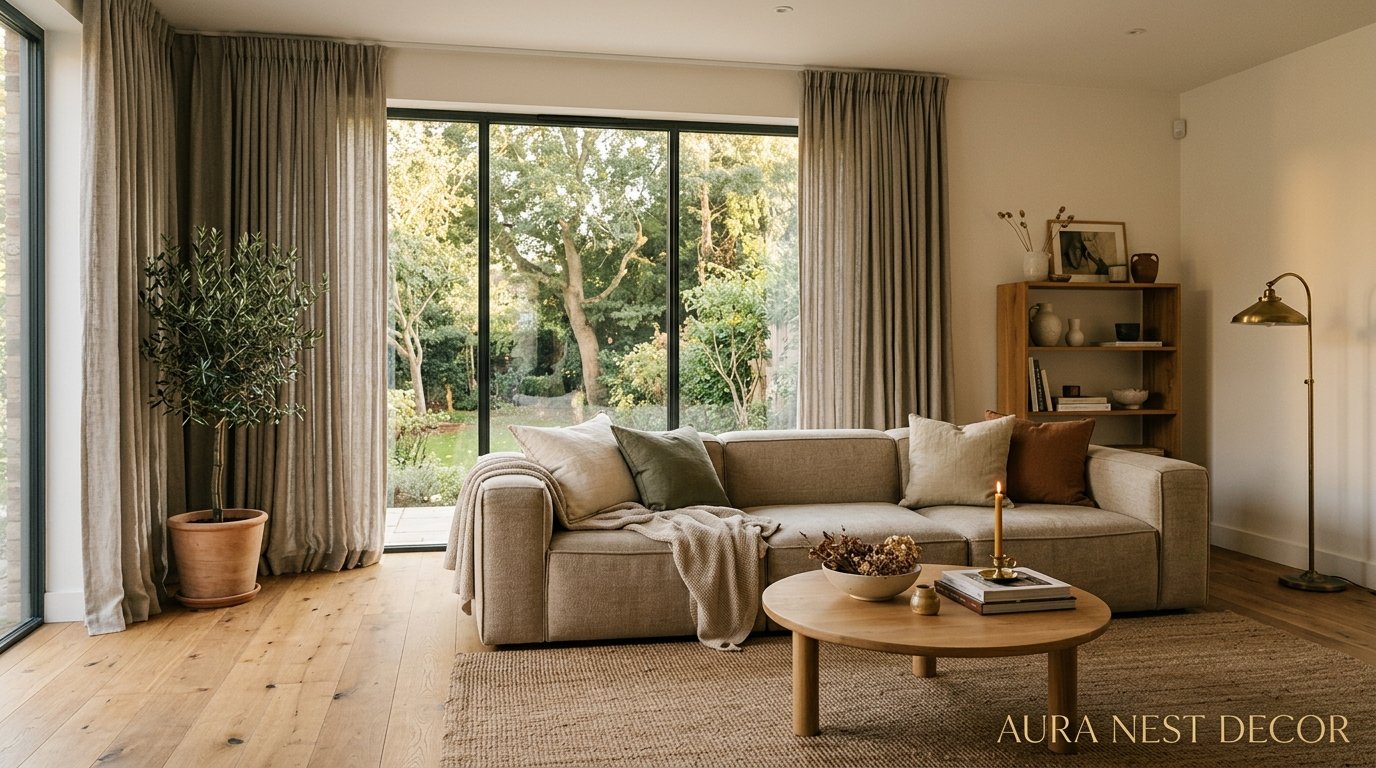
The Curtain Rules Everyone’s Breaking Right Now (And Why Your Living Room Finally Looks Outdated)
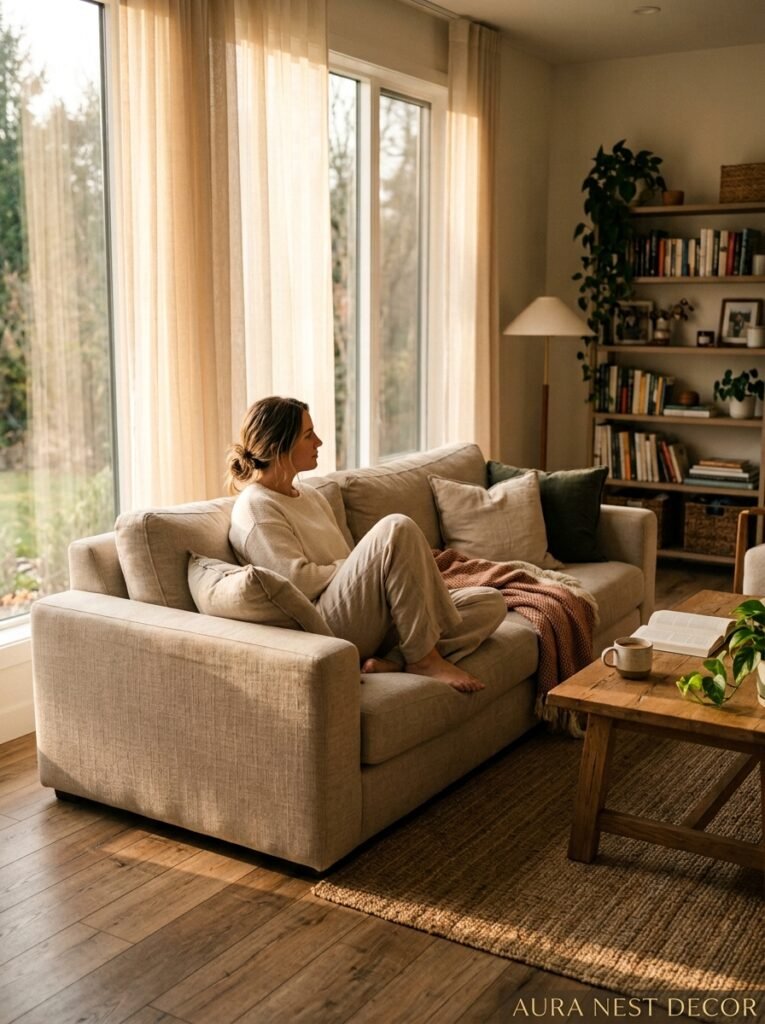
You walked into someone’s home last month and couldn’t figure out why it looked so good. The furniture wasn’t fancy. The walls weren’t some unusual color. But something about that room felt finished in a way yours doesn’t. I’d bet money it was the curtains.
—
1. Why Hanging Curtains at Window Height Is the Biggest Mistake in Your Living Room
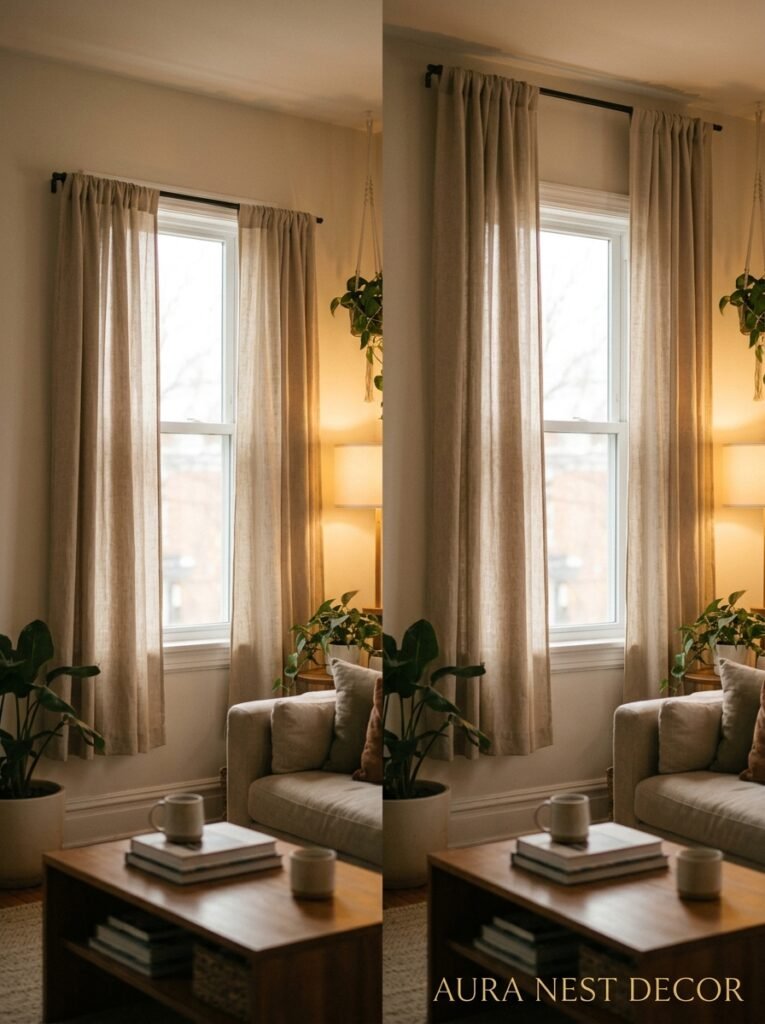
Stop. Before you do anything else in this article, go look at where your curtain rod is. If it’s sitting right above your window frame — maybe two inches above it — that’s the problem. That’s been the problem the whole time.
Hanging curtains at actual window height is one of those things that’s technically correct and visually wrong. It caps the room. It makes your ceilings feel lower than they are and your windows feel smaller than they actually are. What you want is the rod mounted close to the ceiling — like four to six inches below the crown moulding, or as high as the wall allows if you don’t have moulding. And then the curtain drops all the way to the floor.
The difference is genuinely shocking. Same curtains. Same window. Same room. But suddenly the ceiling is taller, the light feels more generous, and the whole space looks like someone who knew what they were doing put it together.
I’ve seen people do this in small terraced houses in South London and poky apartments in Chicago and the effect is the same every single time. It just works. It’s one of those tricks that sounds simple until you realize almost nobody’s doing it.
“Mount your rod at ceiling height and your living room gains a foot of visual height overnight — without touching a single wall.”
2. The Fabric That Keeps Showing Up in Every Beautiful Modern Living Room Right Now
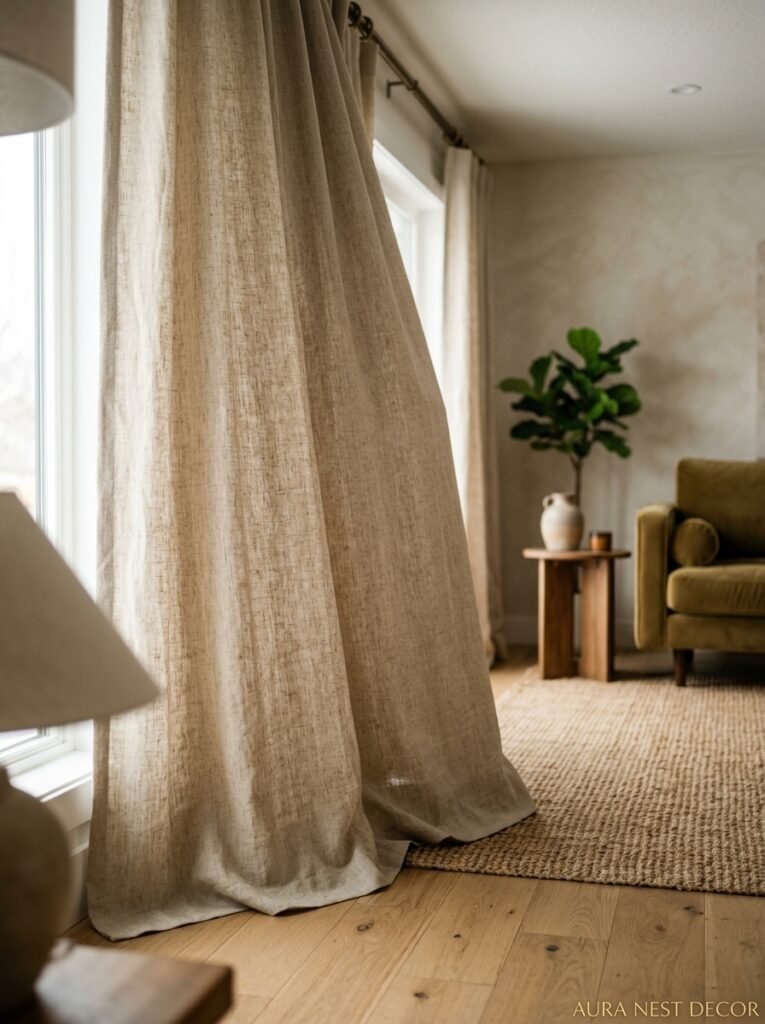
Linen. It’s linen. Not velvet, not blackout polyester, not those weird semi-sheer synthetic things that bunch at the hem. Linen.
But here’s what’s actually interesting about it — it’s not the fabric itself that looks good, it’s how linen behaves. It has this natural slubby texture that catches light differently throughout the day. In the morning it looks almost pale and washed out in the best way. By late afternoon when the sun’s coming in sideways, you get these warm shadows running through the folds and it looks incredibly expensive. It isn’t. A good linen or linen-look curtain panel from somewhere like IKEA or John Lewis won’t wreck your budget, and it photographs beautifully if you’re saving things to Pinterest (which, same).
Linen also doesn’t look too perfect. And that’s the point. Modern living rooms that feel cold and over-styled usually have curtains that look too precise, too shiny, too deliberate. Linen has a kind of casual authority. It says “I put thought into this” without screaming about it.
The only thing I’d say — get them dry-cleaned rather than machine-washed if you can. They do shrink. I learned this the hard way on a pair I’d had for eight months.
3. The Color That Keeps Appearing in Every Stunning Living Room on Pinterest Right Now

Not white. Not grey. Not beige. Well — off-white, maybe. But the one that’s everywhere right now, the one I keep seeing in homes that stop me mid-scroll, is a warm greige that photographs like pale clay. Some people call it mushroom. Some call it oat. Whatever you call it, it’s the color that reads as neutral without feeling sterile.
What it does in a room is kind of subtle. It doesn’t compete with anything. You can have a terracotta sofa or a navy wall or a room full of warm wooden furniture and this color just… sits there being calm and pretty. It’s not demanding. But it’s not boring either — it has enough warmth to feel considered.
That said — I think there’s something to be said for knowing when to go bold. A room that’s already very neutral sometimes needs curtains in a dusty sage or a deep charcoal to give it an anchor. The clay-and-linen combo is gorgeous. But if your sofa is already cream and your walls are off-white and your rug is beige, you might actually want something that pushes back a little.
Trust your instincts here. You know your room better than any article does.
4. How Wide You’re Making Them Matters More Than You Think
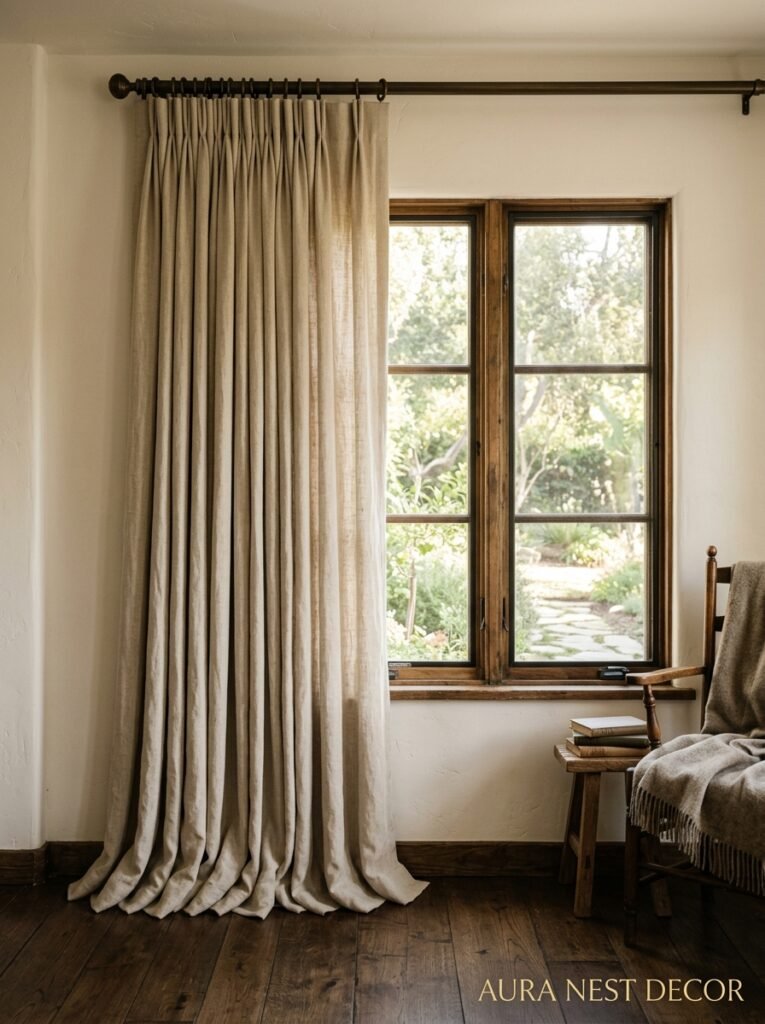
Here’s something most people genuinely don’t know: your curtains should be wider than your window. A lot wider.
The general rule — and it’s a solid one — is that your curtain panels should collectively measure somewhere between two and two-and-a-half times the width of the window. So if your window is 48 inches wide, you want about 96 to 120 inches of curtain fabric in total, split across your panels.
Why? Because when curtains are open, you want them to stack off to the sides of the window frame — not IN front of the glass. That way you get the maximum light coming in and the window looks bigger. And when they’re closed, they have that full, gathered, luxurious drape instead of that sad flat look where you can see daylight around the edges because there just wasn’t enough fabric.
In the UK especially I see this done wrong constantly. People buy one pair of 66-inch-wide panels for a 60-inch window and wonder why they look flat. You need MORE fabric than logic tells you. It feels wasteful, I get it. But this is genuinely where the money goes in rooms that look expensive.
“Curtains should be twice the width of your window. If they’re not, they’ll always look a little wrong — even if you can’t pinpoint why.”
5. The One Thing Minimalist Modern Curtains Are Getting Wrong (And How to Fix It)
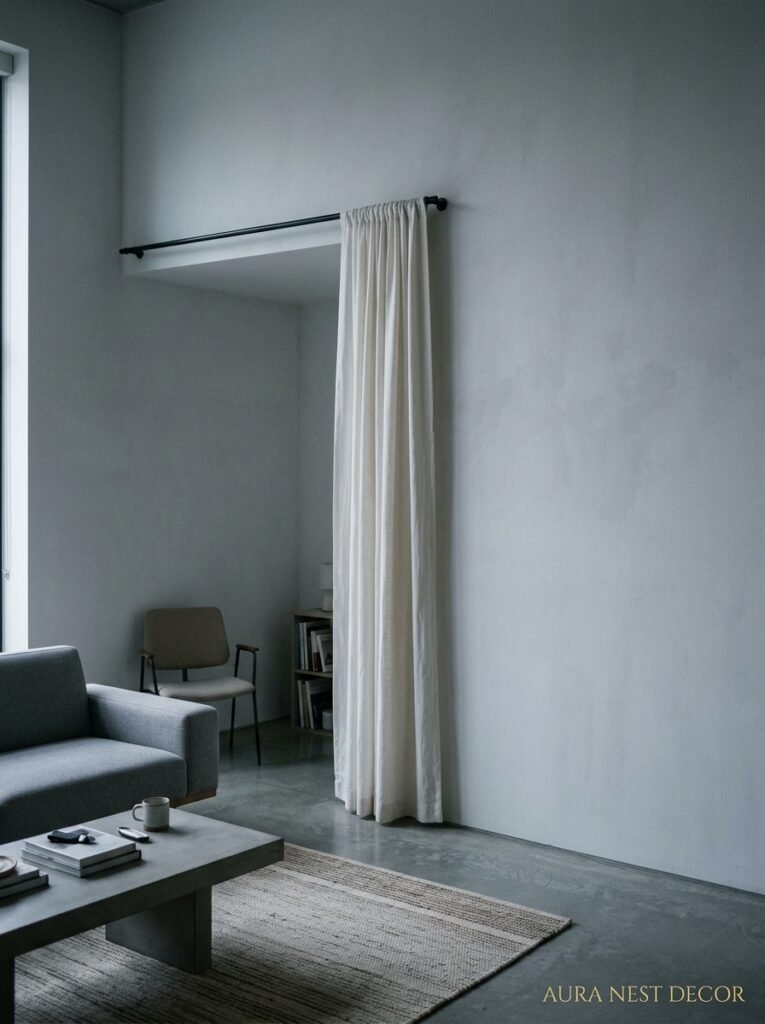
Minimalism in curtains — which basically means solid-color, simple panels with clean lines — is genuinely beautiful done right. But there’s a version of it that’s everywhere right now that just looks cold. And the reason is always the same. No weight at the bottom.
Weighted curtains — ones that have a thin chain or tape sewn into the hem — hang completely differently. They don’t flutter, they don’t swing weirdly, they don’t bunch up in the center when you close them. They just fall. Straight and clean. And that straight clean fall is what makes a curtain look intentional instead of accidental.
If you’ve got panels you already love but they’re doing that annoying thing where they kind of billow at the hem? You can buy curtain weights — little metal discs — from most fabric shops or Amazon for almost nothing, and stitch them in yourself. It’s fifteen minutes of work. The difference is immediate.
The other thing that’s getting minimalist curtains wrong: the iron. Or the lack of one. Wrinkles in a linen curtain look charming. Wrinkles in a smooth cotton panel look neglected. Know which one you have and treat it accordingly.
6. The Curtain Length Debate That Nobody Wants to Admit Is Complicated
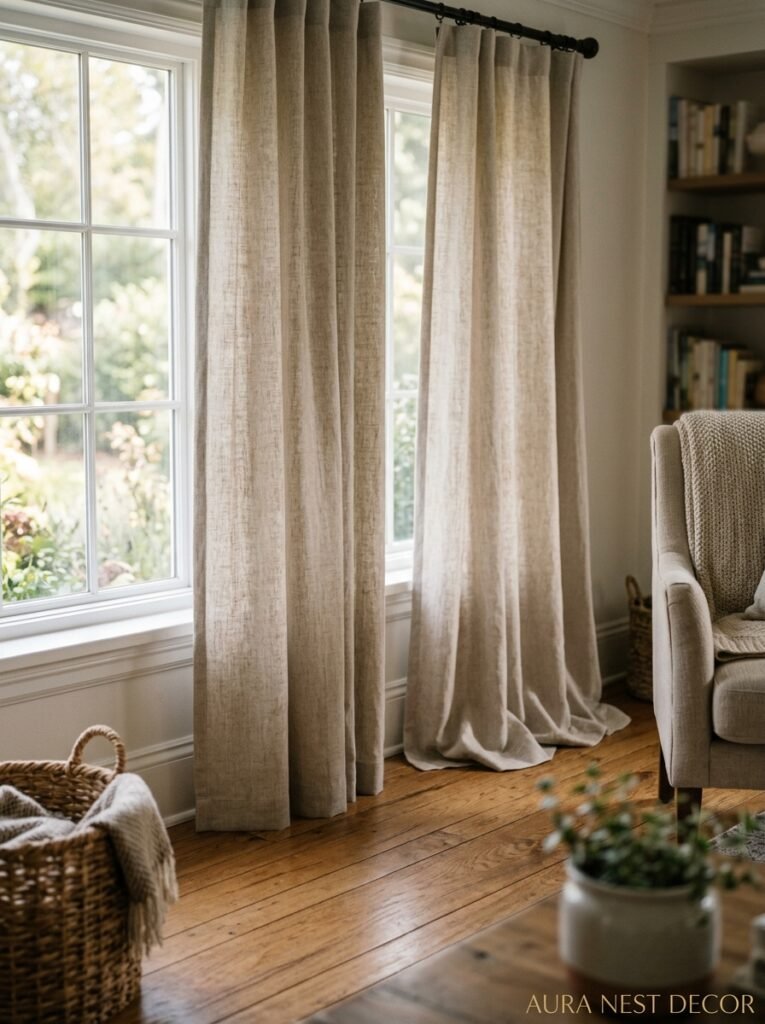
Floor-length. Puddle. Hover. These are your three options and they all have opinions attached to them.
Floor-length — which means the curtain just grazes the floor, maybe half an inch of clearance — is the most practical and the most widely recommended. It works in almost every room, reads as polished, and you don’t have to worry about it gathering dust.
Puddle — where the curtain has six to twelve inches of extra length that pools on the floor — looks INCREDIBLE in photos. It also looks a bit impractical in real life because it collects dust, you have to arrange it each time you open or close the curtains, and if you have pets or kids it’ll be destroyed within a season. I’m not saying don’t do it. I’m saying go in with eyes open.
Hover is what happens when the curtain doesn’t quite make it to the floor. About an inch or two gap. I know some designers defend this as intentional. I can’t be convinced. It always looks like someone measured wrong. Avoid it.
For most modern living rooms in a real house that real people live in? Floor-length. Go a smidge long rather than a smidge short. You can always hem them up; you can’t add fabric back.
7. What Nobody Tells You About Curtain Rings, Rods, and Hardware
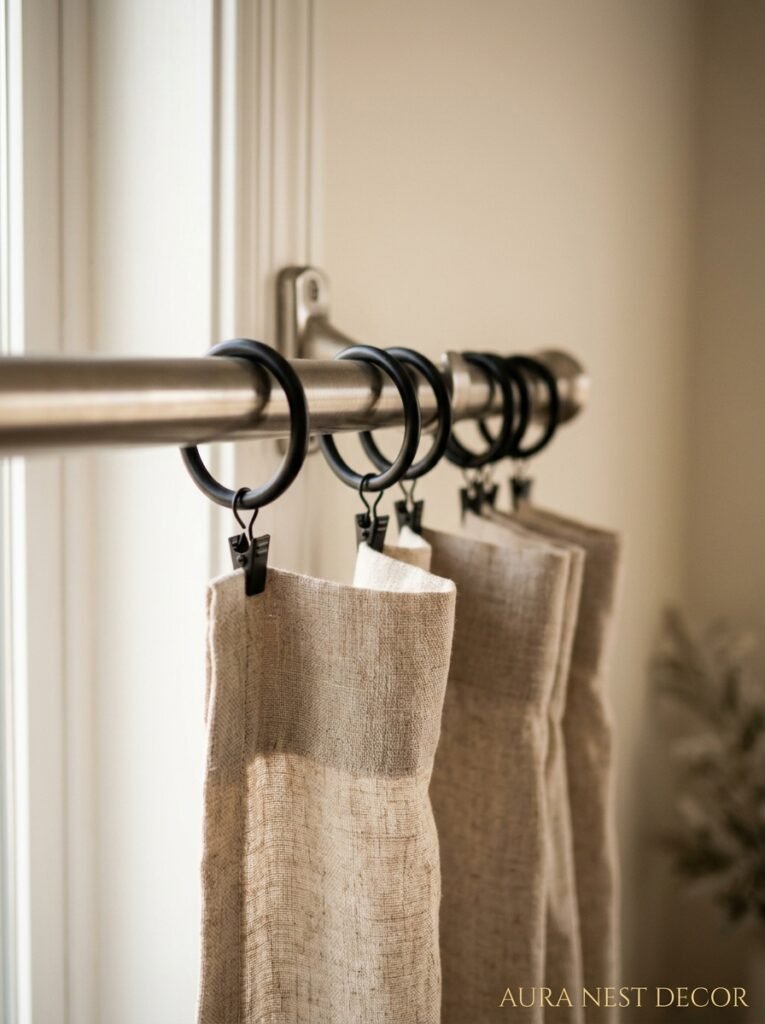
The curtain rod is furniture. I think this is the part people don’t really internalize. Your rod is visible — sometimes quite a lot of it — and it has a finish and a weight and a presence in the room. And yet most people buy whatever’s cheap and available.
In a modern living room, the rod hardware matters. Brass is huge right now — not shiny gold brass, but the slightly warmer, slightly aged brushed brass. Matte black is also still strong and works particularly well in rooms with darker walls or a more masculine edge. Chrome reads a bit cold, a bit eighties, and I’d generally steer away from it unless your whole room is going in that direction.
The rings deserve a mention too. Eyelet curtains (the ones with the metal circles punched into the fabric at the top) hang beautifully and are incredibly easy to open and close — they glide. Pinch pleat curtains look more formal and architectural. Tab tops look casual but actually don’t hang as well and are harder to open smoothly.
“The curtain rod isn’t an afterthought. It’s the last piece of jewelry the room puts on.”
8. The Small-Living-Room Move That Makes the Space Feel Like a Decision Instead of a Compromise
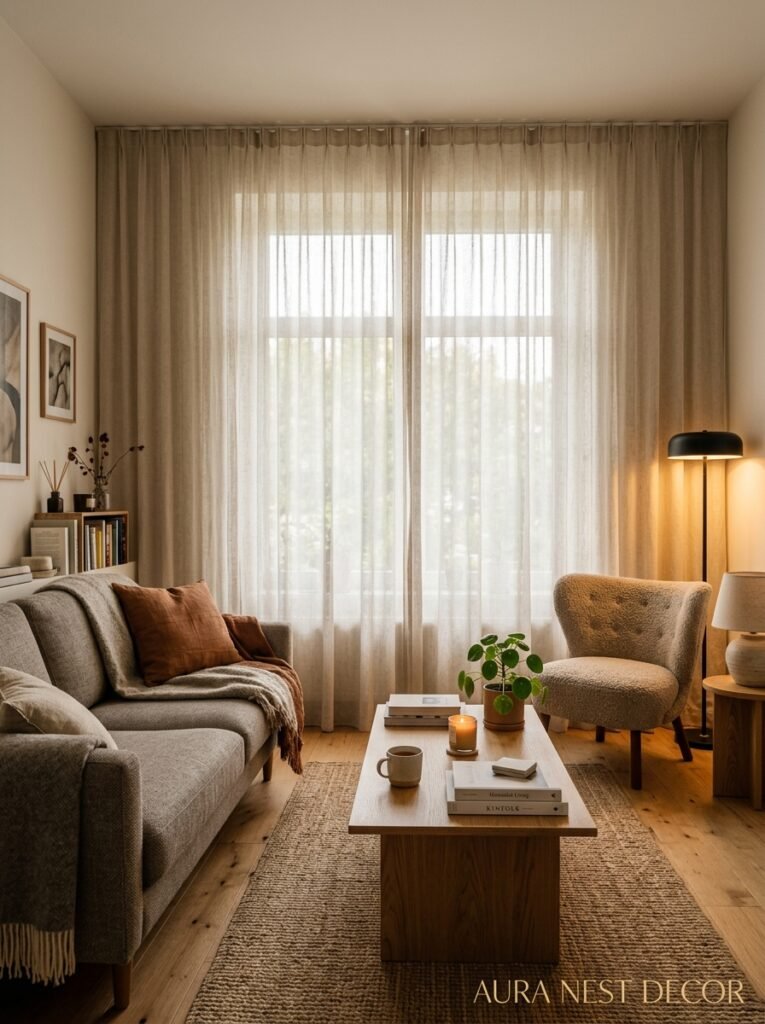
Small living rooms often try to disappear curtains — going for sheers or very pale panels in an attempt to make everything feel less cramped. And sometimes that’s right. But sometimes the braver move is the better one.
A deep, moody linen curtain in a dark sage or a dusty teal in a small room creates enclosure that feels cozy rather than cramped. It changes the feeling of the room from “trying to look bigger” to “deliberately intimate.” And there’s a real difference between those two things. Rooms that try to look bigger often just look uncertain. Rooms that lean into their scale and make it feel intentional look collected.
Side note — in small rooms, the ceiling-height rod trick I mentioned in section one is even more important. Because even if you’re going dark and cozy, you still want that vertical draw. The tall curtain in a small room is everything.
This is also where pattern can work. A small room doesn’t have to mean a neutral curtain. A small-scale geometric or a subtle woven stripe can add so much life without overwhelming a room. The key is small scale. Big pattern in a small room is a different problem entirely.
9. Sheers: Still Relevant, or Actually Over?
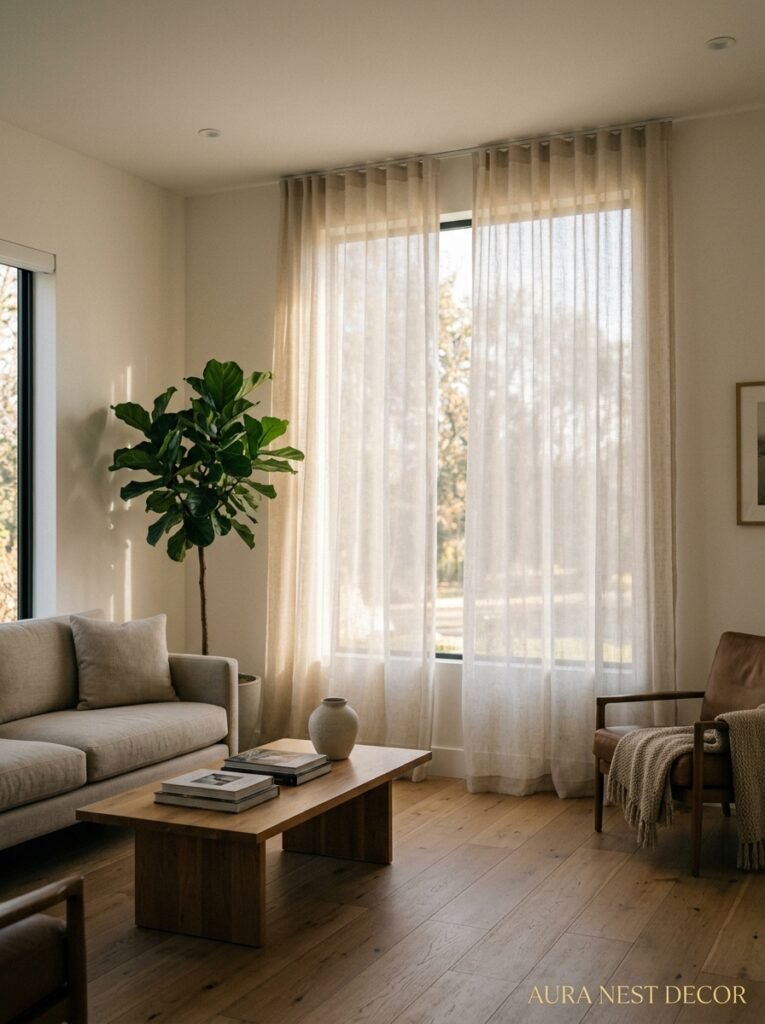
Sheers aren’t over. But the way most people use sheers is over.
The dated version: sheer panel behind a heavy drape, hung on a double rod, sitting limply in the middle of the window doing not much of anything. Slightly yellowed. Definitely not doing its best work.
The current version of sheers that still feels modern: floor-length, slightly textured gauze or muslin hung on their own, with no layered drape over them. In a room that gets beautiful natural light, a single layer of soft, floaty sheer is genuinely gorgeous. You get privacy without darkness. You get that milky filtered light that makes the whole room feel like a soft-focus photograph.
The other version that’s working: sheers layered BEHIND a proper linen panel, but both in the same color family. So it’s not the contrast that dates it — cream sheer behind cream linen, both hung high, both floor length. The texture difference between them is subtle and beautiful.
What doesn’t work is the contrast between a white sheer and a dark or colorful heavy drape where the sheer reads as an afterthought. If you’re layering, keep the palette close.
10. The Curtain Detail You Notice in Every High-End Room That Nobody Mentions
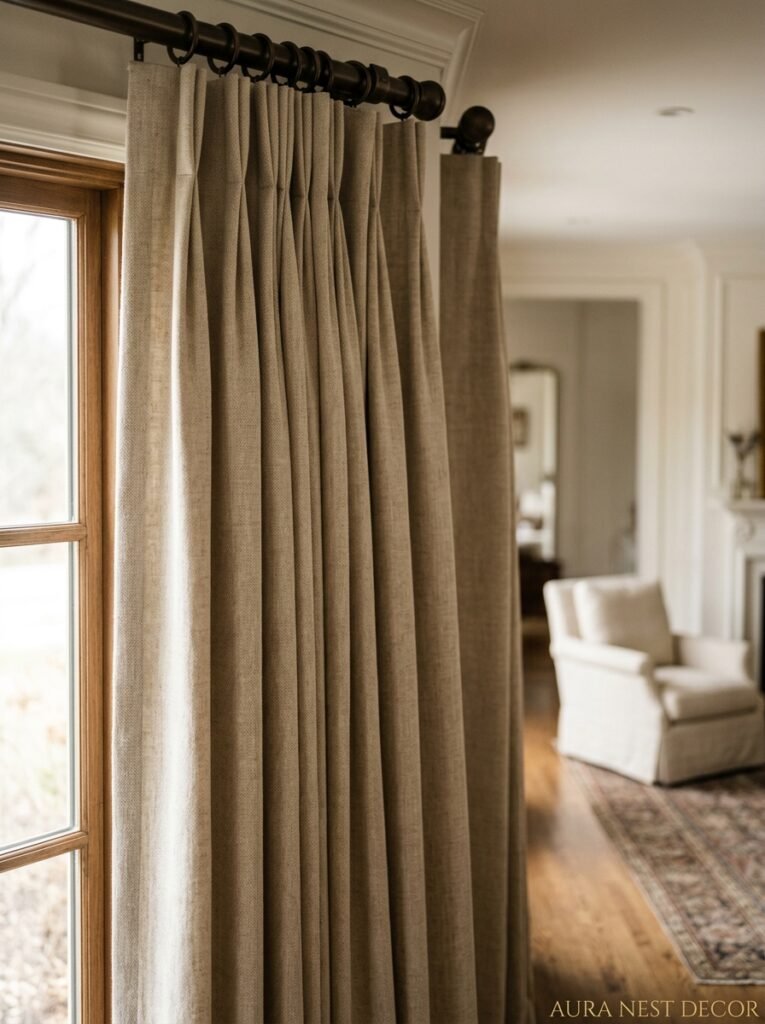
Blackout lining. But not for the blackout — for the way it makes the curtain fall.
Unlined curtains are fine. Lined curtains look better. And a curtain with a good quality interlining or blackout lining looks genuinely luxurious. The weight is different. The way they hang is different. They have a kind of substance to them that unlined panels just can’t replicate.
If you’re in the UK, many curtain makers — even mid-range ones — offer lining as standard or for a small upcharge. Take it. Always take it. If you’re in the US and buying ready-made panels, check if they’re lined. The ones that aren’t are often cheaper but they’ll look cheaper forever.
The other detail: hems. A proper weighted hem that’s been let down and pressed neatly is invisible and important. Raw hems, especially on linen, will fray. And there’s something about a fraying curtain hem that makes a whole room look like it’s coming undone.
11. What Modern Actually Means for Living Room Curtains Right Now
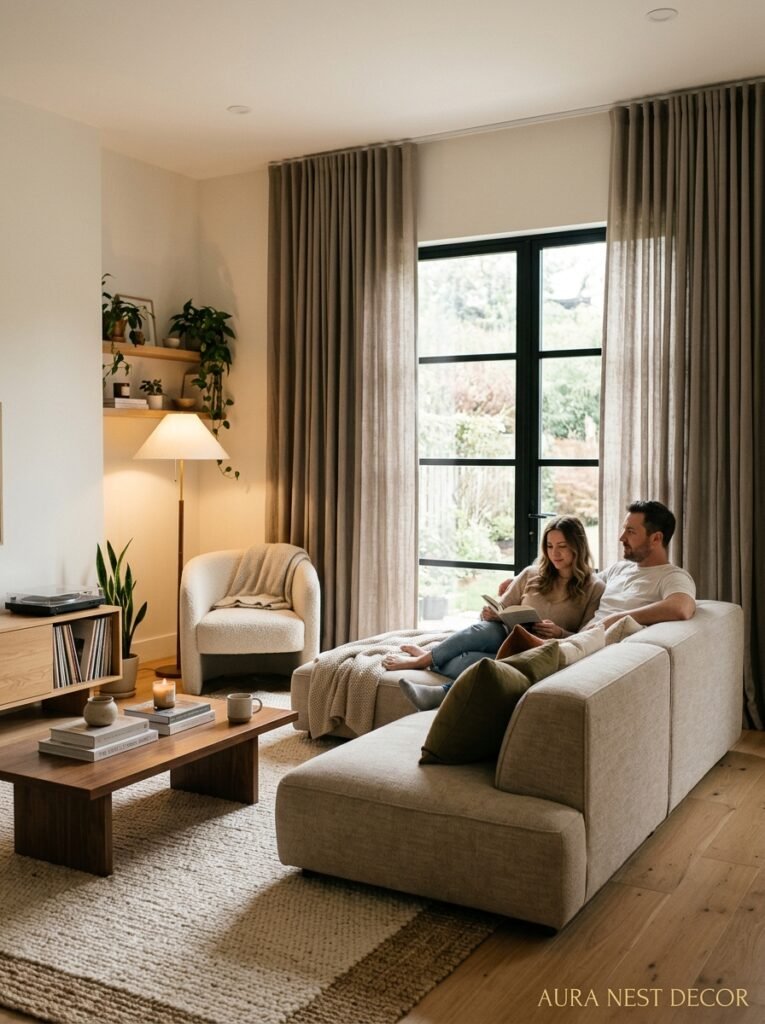
“Modern” is doing a lot of work as a word. So let me be specific about what’s landing in 2024 and 2025.
Natural fibers. Relaxed, slightly imperfect textures. Warm neutrals with enough personality to feel chosen. Hardware in brass or matte black that’s visible and intentional. Floor-length panels hung high. Usually unadorned — no tassels, no fringe, no tie-backs except in very specific situations. Clean and considered.
What’s NOT modern anymore: very heavy formal drapes in rich jewel tones hung at window height. Swags and valances. Anything with a pelmet that’s just there to hide the hardware (though some architectural pelmets are genuinely cool — different thing). The look where curtains were obviously chosen to match the sofa fabric exactly.
The modern living room curtain isn’t a statement piece. It’s more like a background note — present, purposeful, beautiful in context. It doesn’t try to be the main character. But when it’s done right? You’d notice immediately if it was gone.
12. The Curtain Mistake That’s Hardest to Talk Yourself Out of (But You Should)
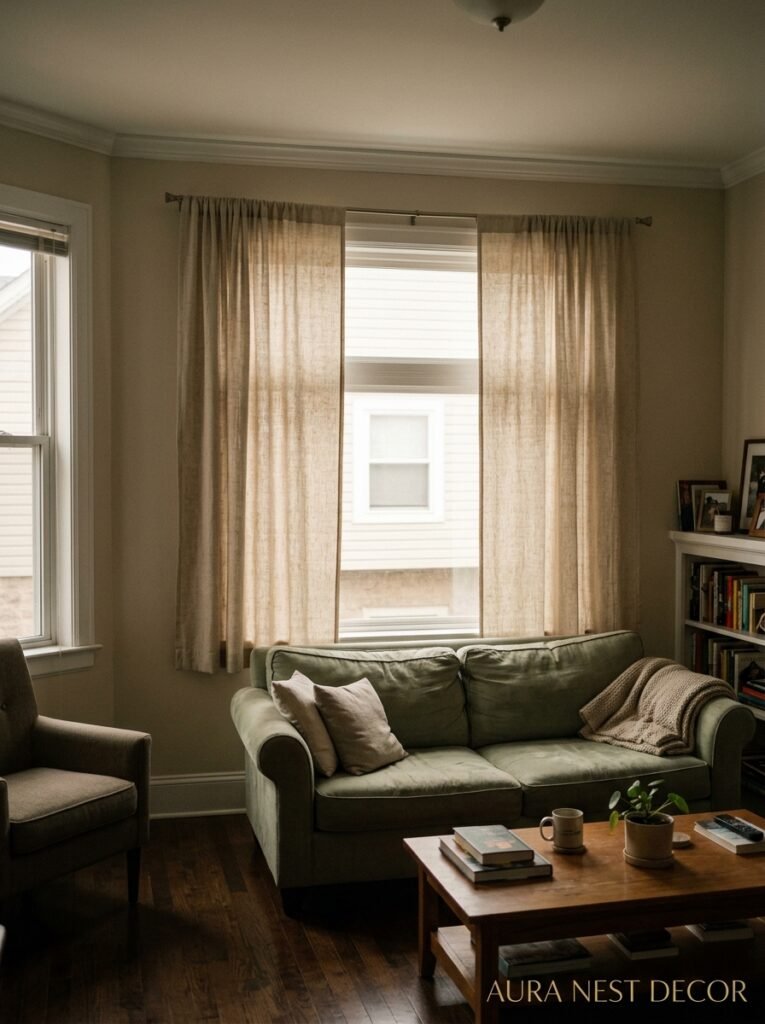
Buying curtains from the same collection as your other soft furnishings.
I know. It feels safe. It feels coordinated. But matching your curtains to your throw cushions or your sofa fabric or your rug is one of those choices that reads as very… assembled. Like someone handed you a room in a box. Which, not judging — sometimes that’s exactly what you need. But if you’re trying to create a room that feels like a real place with a real point of view, you want your curtains to have a slightly separate identity.
They should belong. They shouldn’t match.
The difference is in how you think about it. Your curtains can share a COLOR FAMILY with your other soft furnishings without sharing the exact material or weight or shade. A warm cream linen curtain and a warm cream boucle sofa are related but distinct. They’re in the same conversation. They’re not wearing the same outfit.
That’s the feeling to go for. Cohesion, not uniformity. A room that feels thoughtfully layered over time — even if you put it all together in a weekend.
—
❓ FAQ
Q: How high should curtain rods be hung in a living room? A: As high as you can reasonably go — typically four to six inches below the ceiling, or just below crown moulding if you have it. The closer to the ceiling, the taller and more generous the room will feel. Don’t overthink the exact measurement, just go up.
Q: What’s the best curtain fabric for a modern living room? A: Linen or a linen-look fabric is the current frontrunner — it’s textural, warm, and hangs beautifully. If you need more structure, a lined cotton or cotton-linen blend works really well. Avoid anything overly shiny or stiff-looking if you’re going for that relaxed modern vibe.
Q: Can you mix curtain styles in an open-plan living room? A: Yes, but keep the fabric and color consistent. If your living area runs into a dining area, using the same curtain fabric throughout reads as intentional and pulled together. You can vary the pleat style or length slightly, but the material should stay the same.
—
💭 Final Thoughts
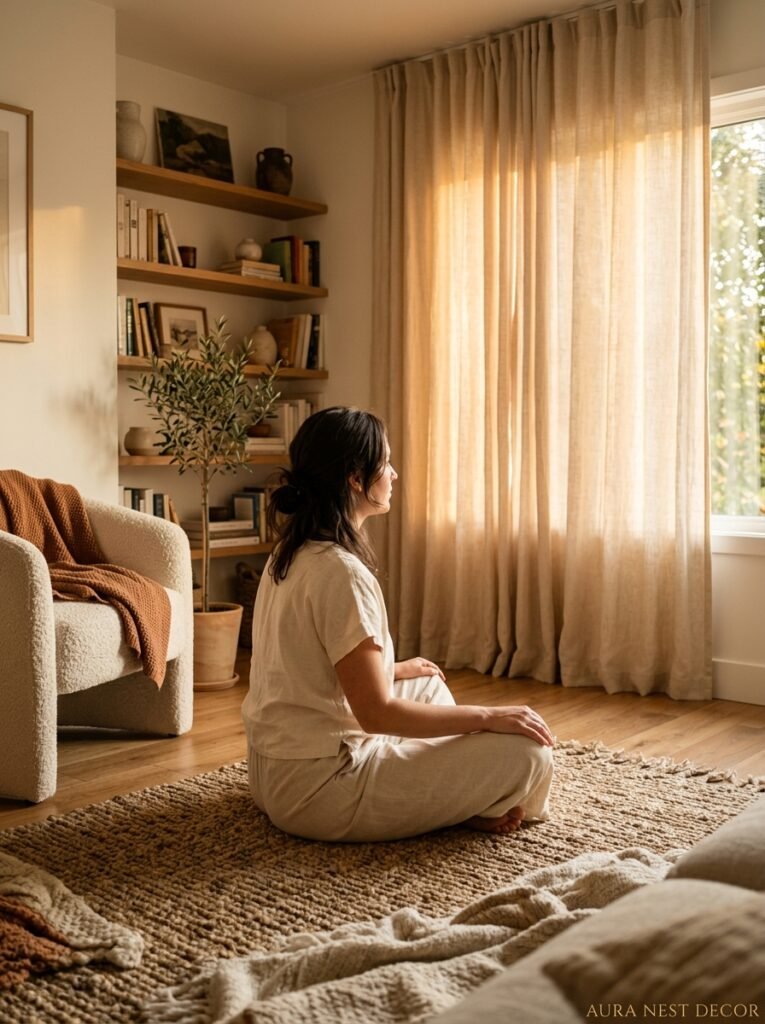
Good curtains don’t announce themselves. They just make everything else in the room settle. You’ve probably walked into spaces where that was true — where something was working so well you couldn’t quite identify it — and now you know what it might have been. The question I’d leave you with is this: what would your living room feel like if the curtains stopped apologizing for being there?