The Long Living Room Problem Nobody Talks About (And 12 Ways to Finally Fix It)
You’ve got the space. Square footage isn’t the issue. But something about a long, narrow living room just… resists you. It fights every furniture arrangement you try, swallows rugs whole, and turns into a hallway with a sofa if you’re not careful.
Here’s what actually works.
—
1. Stop Treating It Like One Room — It Isn’t
This is the single biggest shift, and once you see it, you can’t unsee it.
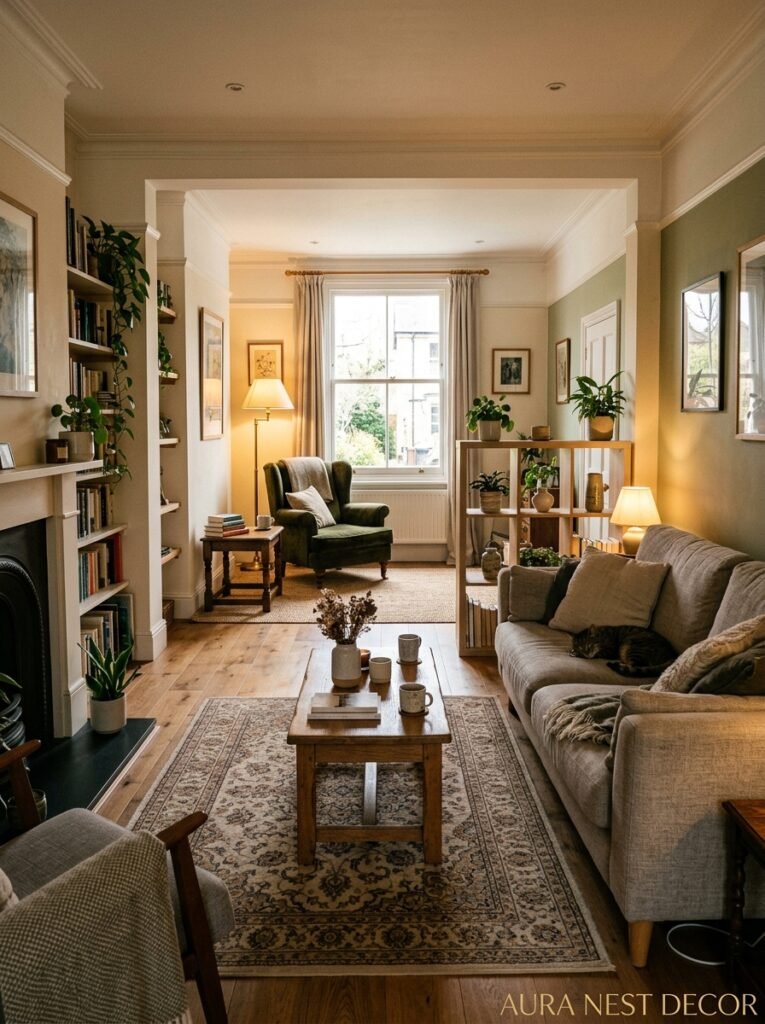
A long living room isn’t one room. It’s two zones sharing a floor plan. The moment you stop trying to make it all make sense as one cohesive blob of furniture and start designing two distinct areas — a seating zone, a reading nook, a TV area plus a conversation corner, whatever fits your life — the whole room exhales.
I rearranged a friend’s living room in London last year. It was this long Victorian terrace setup, gorgeous bones, but the sofa was pushed against the back wall facing a TV at the far end and you basically had to shout to talk to someone across the room. We pulled the sofa away from the wall, floated it in the middle, added a little accent chair situation near the window at the other end, and suddenly: two rooms. Both of them felt intentional. Neither felt like a corridor.
Don’t anchor everything to the walls. That’s the default and it’s almost always wrong in a long room. Floating furniture in the center feels scary but it’s the move.
“A long room doesn’t need more furniture. It needs a reason to stop walking.”
2. The Rug Math That Nobody Gets Right the First Time
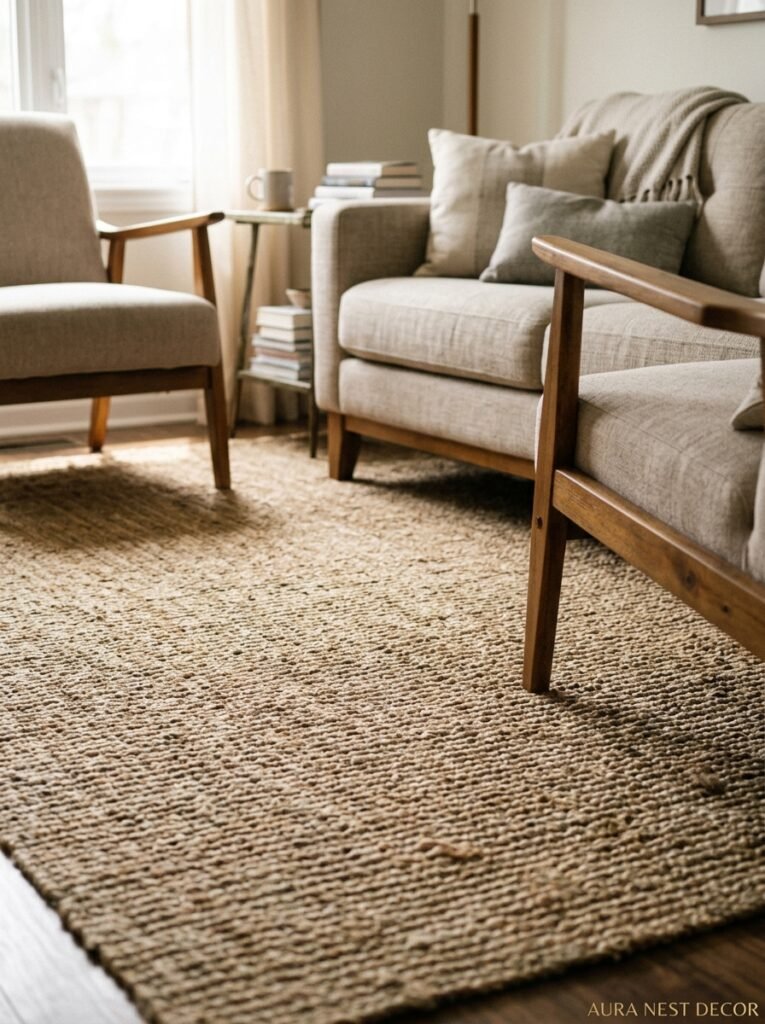
Here’s what happens: you have a long room, you buy a rug that feels big in the store, you get home and it looks like a bath mat.
Long rooms eat rugs. And the instinct is to go bigger on one rug, but that’s not always the answer. Two rugs — one per zone — can completely transform how the space reads. Each rug anchors its own area. Each area suddenly has an identity. And the space between the rugs? That visual gap actually helps the eye understand that these are two separate moments in the room.
Size matters though. A rug that’s too small is worse than no rug. In a US standard living room, you’re probably looking at 8×10 minimum per zone, maybe 9×12 if the room is particularly wide. In a British terrace, you might scale down slightly but the principle holds — front legs of the sofa should sit ON the rug. Always. If the furniture is floating off the rug, the whole thing looks like it’s sliding away from itself.
And honestly, the rugs don’t need to match. They shouldn’t be chaotic and clashing, but two rugs in the same tonal family with different textures or patterns? That’s actually beautiful. A jute and a printed wool, for example. Try it.
3. The Color Trick Designers Use to “Shorten” a Long Wall
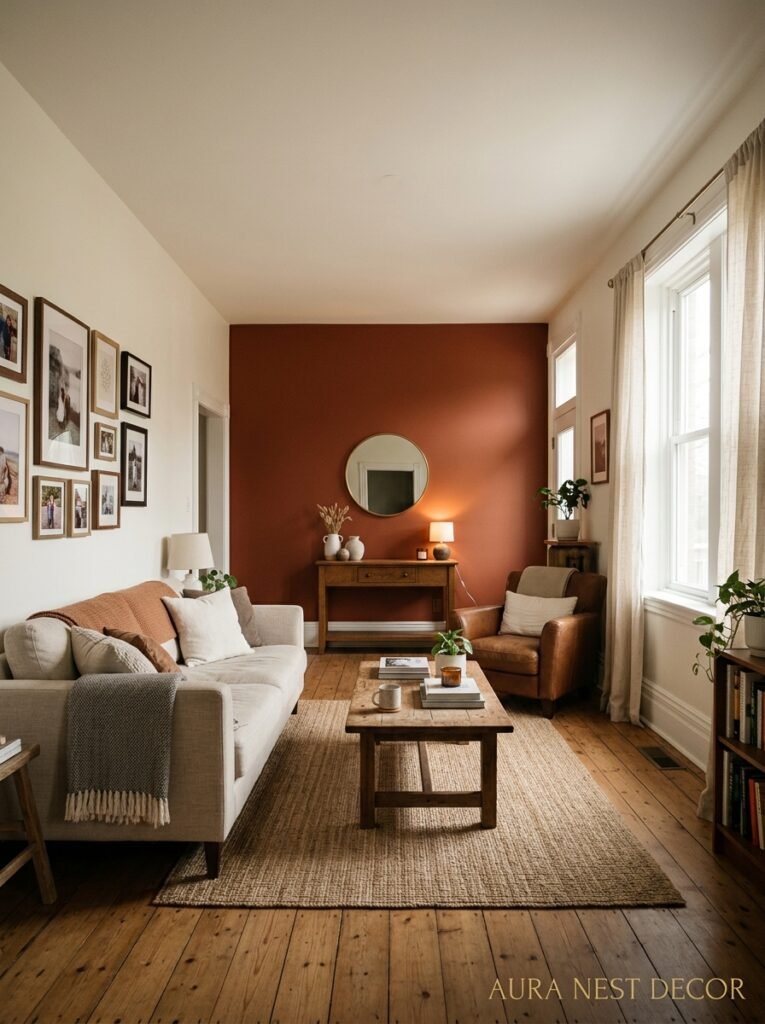
Long rooms have a wall problem. Specifically, the two short walls at either end tend to disappear, and the two long walls seem to go on forever.
Paint the far short wall a deeper or warmer tone than the rest of the room. Not necessarily dark — though dark can be incredible — but something with more visual weight. A deep terracotta, a dusty sage, a warm clay. It visually pulls that wall closer. The room stops feeling like a runway and starts feeling like it has a destination.
In the UK, I’ve seen this done brilliantly in a lot of older homes where the end wall gets a color that reads almost like a feature wall without being aggressively “feature wall” about it. In American homes, it works especially well when the far wall also has a fireplace or a bookcase — you’re essentially just emphasizing what’s already there.
What you don’t want: painting both long walls a different color and leaving the end walls neutral. That just makes the tunnel effect worse.
4. The Furniture Arrangement Everyone Pins But Few People Actually Try
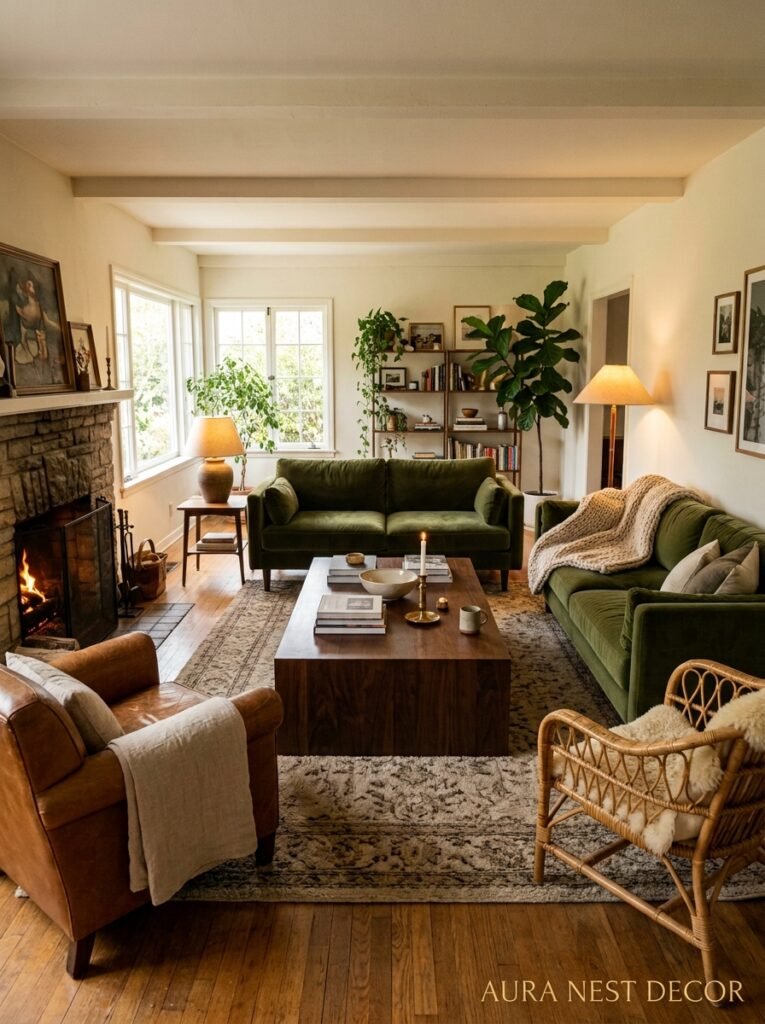
You’ve seen it on Pinterest a hundred times and thought yeah but that won’t work in my actual house.
Two sofas facing each other.
Not two sofas pushed against opposite long walls — that’s a waiting room. Two sofas facing each other, perpendicular to the long walls, with a coffee table between them. It’s one of those arrangements that works SO much better in a long room than it does in a square one, because you’re essentially cutting across the length of the room rather than running parallel to it.
Add a console table or a low sideboard behind one of the sofas if you need to divide the zone even further. That piece of furniture acts like a wall — it signals “this seating area ends here” without actually blocking anything. And it gives you storage and a surface for lamps, which you will need because —
5. Why Long Rooms Always Feel Dark in the Wrong Places
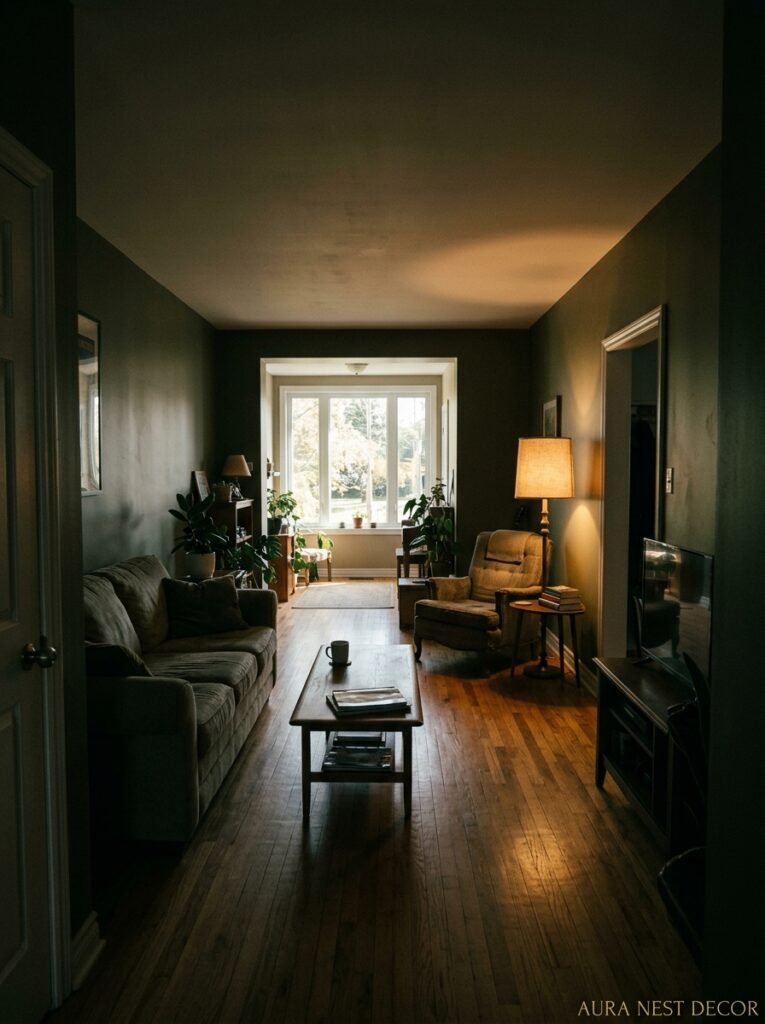
The windows in a long room are almost never where you need them. In a lot of UK terraces, you’ve got a bay window at the front and maybe a small window or a patio door at the back, and the entire middle section is basically a cave.
Lamps. Not one or two. Several.
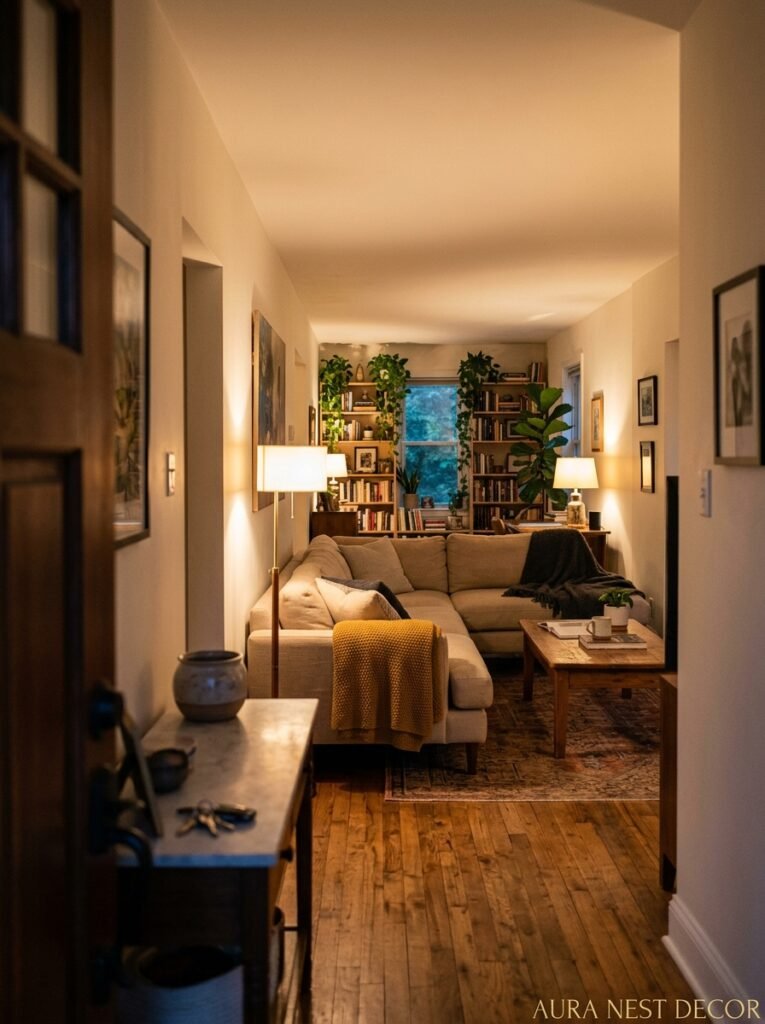
The key in a long room is layering light across the full length of the space so it doesn’t drop off. A floor lamp in each zone. Table lamps on consoles and side tables. Under-shelf lighting if you’ve got built-ins. The goal is that at 7pm with all the overhead lights off, the room glows continuously from one end to the other without any dead dark patches.
The amber glow of an Edison bulb at 7pm is genuinely one of the most flattering things you can do to a room. Warm bulbs, not cool — 2700K maximum. Cool light in a long room makes it feel clinical and even longer.
“Lighting a long room is like lighting a film set — it’s all about where the dark goes, not just where the light does.”
6. Bookshelves Are Load-Bearing (Visually Speaking)
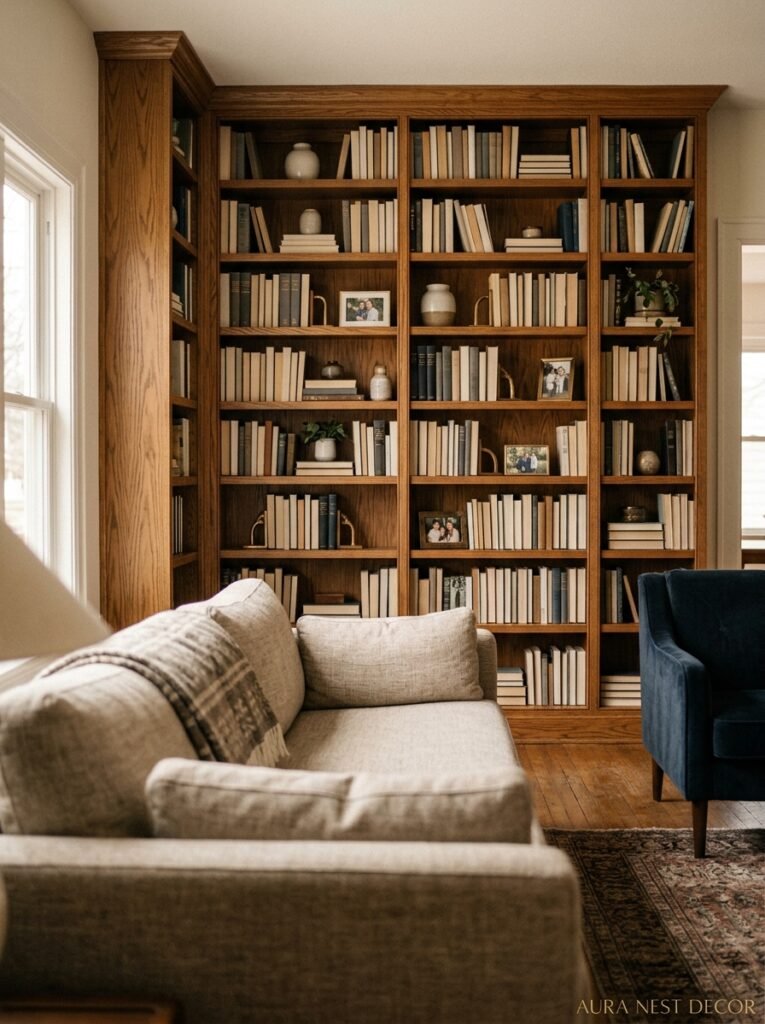
If you have the wall space — and in a long room, you definitely do — built-in or freestanding bookshelves along one of the long walls do something genuinely incredible to the proportions.
They add vertical interest. They break up that endless horizontal stretch. They give the eye something to move UP rather than just along. And they create storage, which, let’s be real, every living room needs.
But here’s the thing about shelving in a long room specifically: you don’t have to do the whole wall. A run of shelves that fills two-thirds of one long wall, stopping before it reaches the far end, actually does MORE for the room than going edge to edge. It creates asymmetry, which reads as intentional and designed. Edge-to-edge shelving in a long room can feel heavy, like the room is caving in.
Shelves styled loosely — books, some objects, some breathing room between things — feel much lighter than packed-tight shelving. Leave gaps. Let it breathe.
7. The One Rule About TV Placement Everyone Argues About
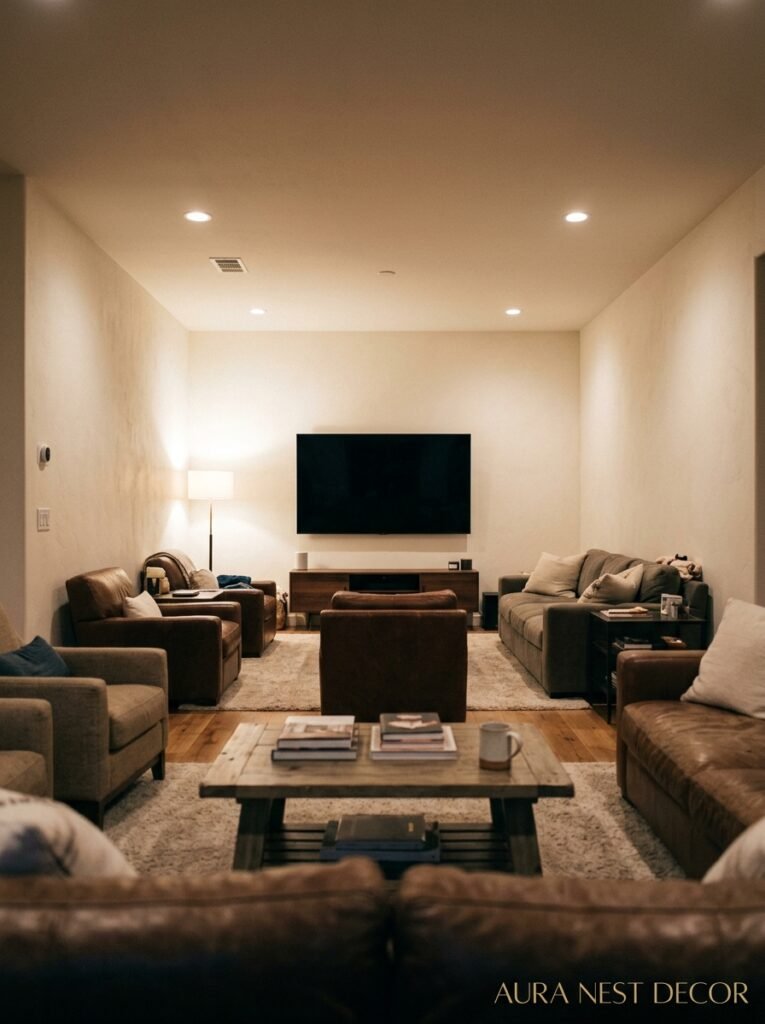
Where does the TV go in a long room? This is genuinely contested and the answer depends on your room.
Option one: short wall, centered. Classic, works, clean. The whole room orients toward one end.
Option two: long wall, mid-section. More controversial, but in a long room where you’ve created two zones, mounting the TV on the long wall facing the main sofa means the TV zone and the conversation zone are actually separate. People who don’t care about what’s on can sit at the far end and actually have a conversation without competing with a 65-inch screen.
What almost never works: TV at the very far end of the room with the sofa all the way at the other end. You’ll either crane your neck or you’ll give up and watch from the kitchen.
Side note — TV gallery walls are having a huge moment and they’re actually PERFECT for long rooms. Build out a picture wall around the TV, so it becomes part of the wall display rather than THE thing on the wall. It reduces that “screen as altar” feeling and makes the whole space look curated instead of assembled.
8. Plants Are Doing More Structural Work Than You Think
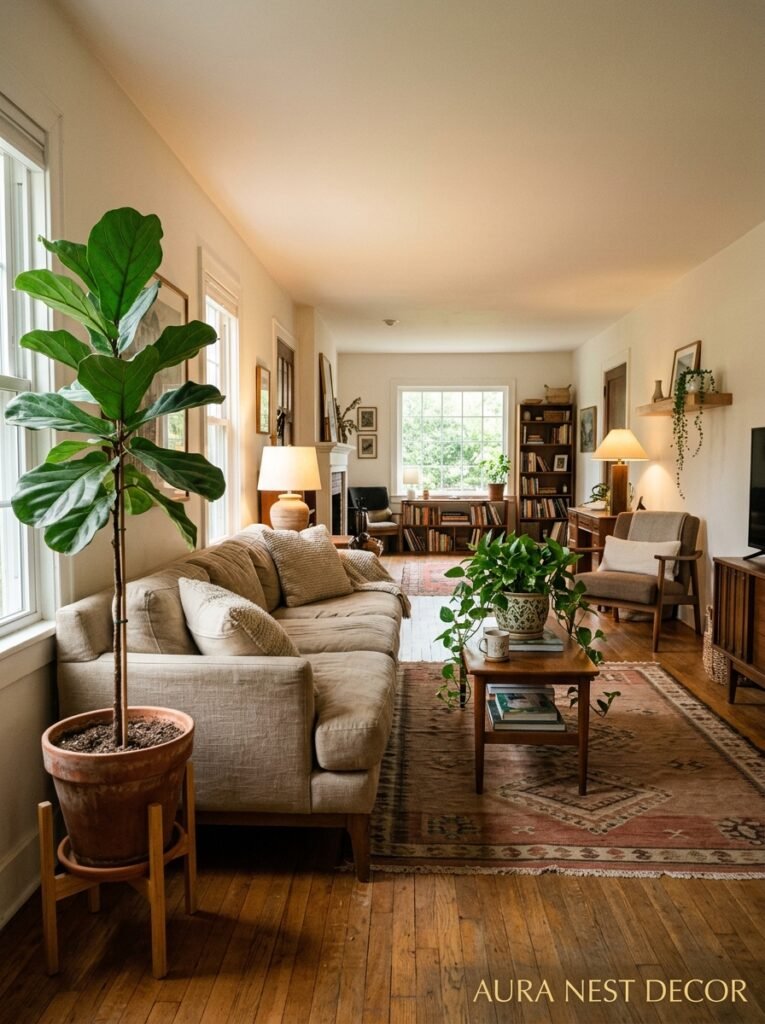
Not gonna lie, I came to plant styling late. I thought it was aesthetic fluff. Then I saw what a tall fiddle-leaf fig or a big trailing pothos does to a long room corner and now I can’t stop.
Plants interrupt the eye. They break up the horizontal monotony of a long room in a way that furniture can’t, because they’re living, irregular, vertical things. A tall plant at the far end of a room makes the eye travel to it purposefully — it’s a destination, not just an endpoint.
Two tall plants flanking a sofa or a TV unit anchor that arrangement. They frame it. Suddenly the furniture grouping looks intentional instead of just… placed.
In terms of what actually survives in UK vs US living rooms: snake plants, pothos, and ZZ plants will handle low light and mild neglect. If you’ve got decent light, a monstera or an olive tree (yes, OLIVE trees inside, they’re stunning) will do genuinely interesting things to a long room’s atmosphere.
9. Curtains From Floor to Ceiling, No Exceptions
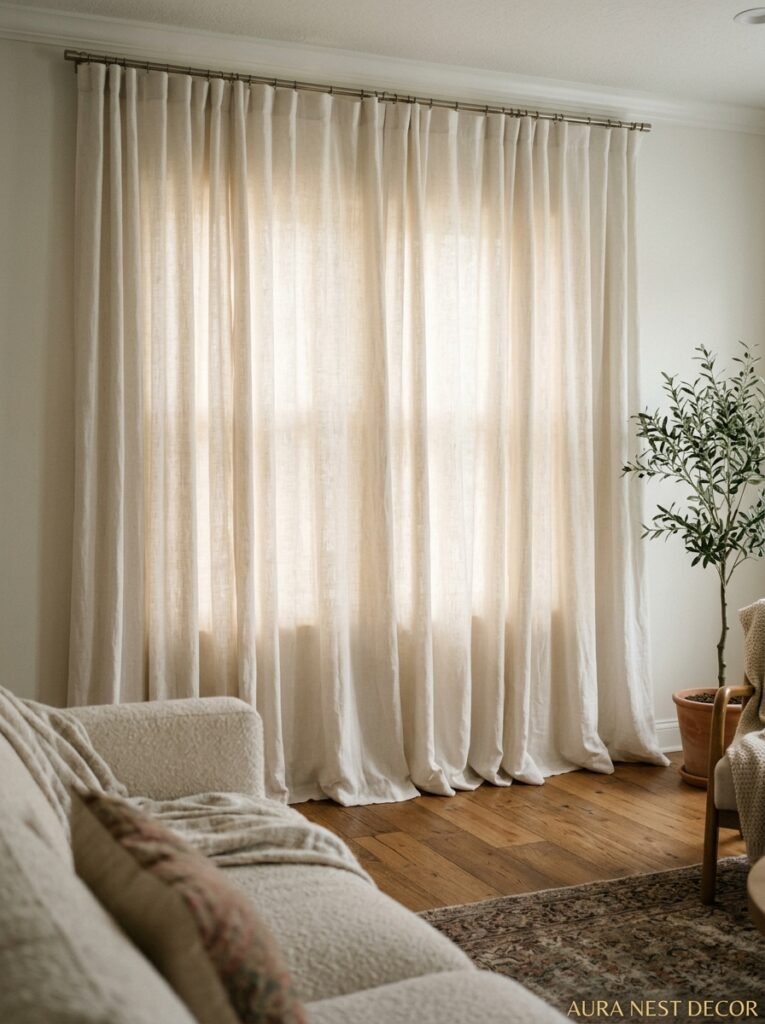
If your windows are mid-wall height and your curtains hang in a neat little window-width panel, you are making the room feel shorter, narrower, and more cramped than it needs to be.
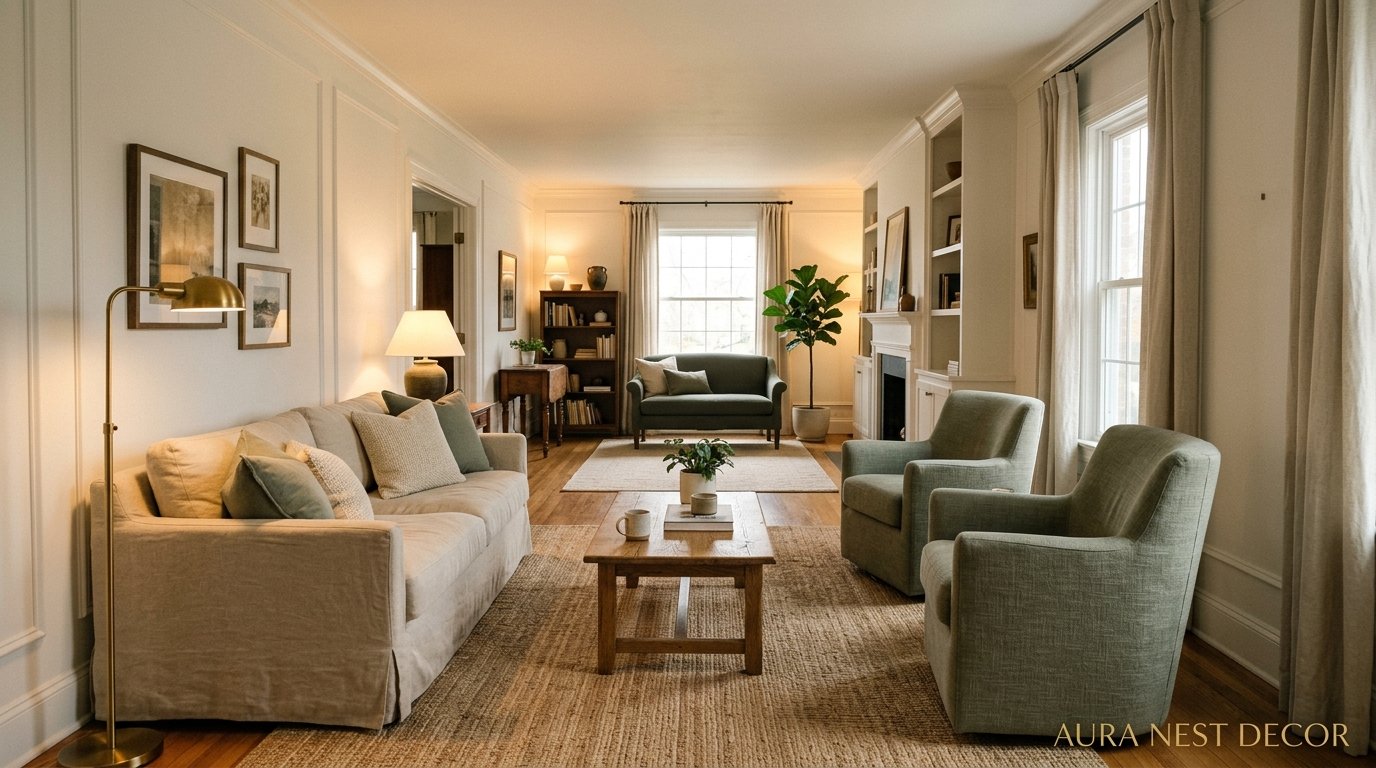
Floor-to-ceiling curtains hung as close to the ceiling as possible make ceilings feel higher, walls feel taller, and rooms feel wider. In a long room specifically, they provide vertical rhythm along what otherwise reads as one endless horizontal space.
Width matters too. The panels should extend well beyond the window frame — 6 to 12 inches on each side — so that when they’re open, they barely cover the wall at all, and almost all the window is visible. Maximum light. Maximum height illusion.
Linen in a warm neutral is my go-to. It moves. It catches light. It doesn’t try too hard. But honestly — whatever fabric you love, just go floor to ceiling with it and it’ll work better than it did.
“Curtains that just cover the window are just… curtains. Curtains that go from ceiling to floor are architecture.”
10. The Console Table Trick That Divides Without Destroying Flow
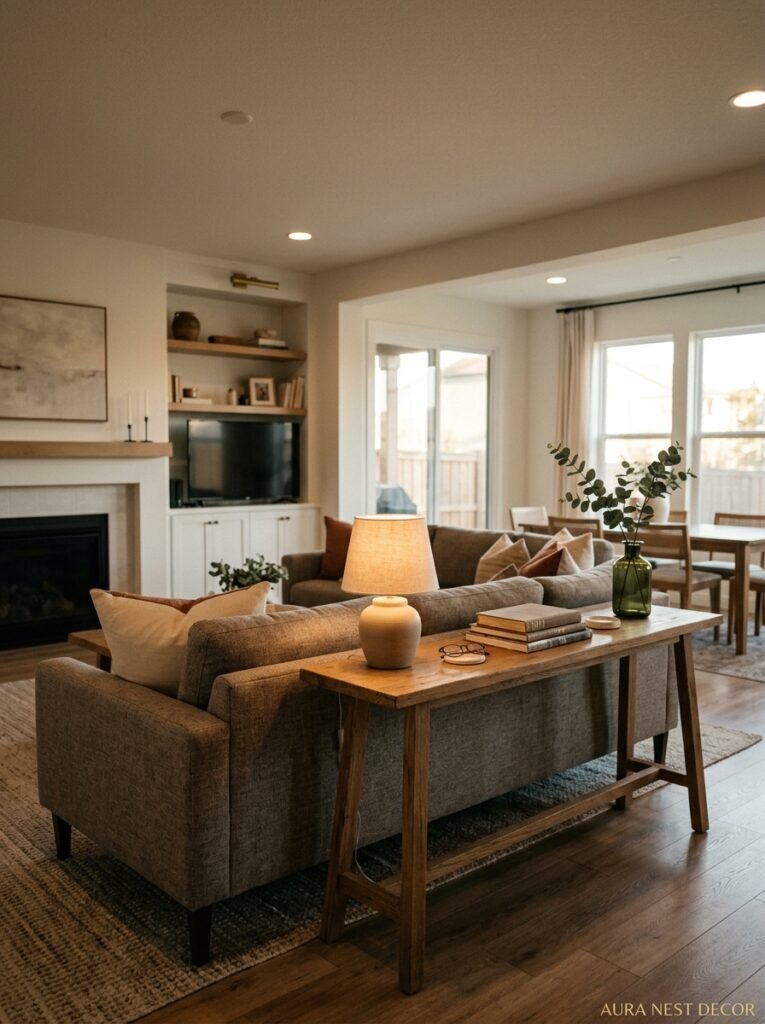
A long room that has NO visual breaks between zones ends up feeling like a race track. But a wall — even a half wall — is obviously too drastic.
Console tables are the answer. Low, narrow, usually around 30-32 inches high — they tuck behind a sofa perfectly and create a kind of soft room divider without blocking sightlines or light. Style the top of the console with a lamp, a small plant, a candle or two, and it becomes a little vignette that signals “this zone ends, that one begins.”
In a long open-plan living-dining room (which is common in both US homes and UK new-builds), a console behind the sofa creates a back-of-room moment that separates the lounge from the dining end without the need for any actual walls or screens. It’s one of those things that costs relatively little and does disproportionate work.
11. Mirrors: Which Walls and Why the Long Wall Is a Trap
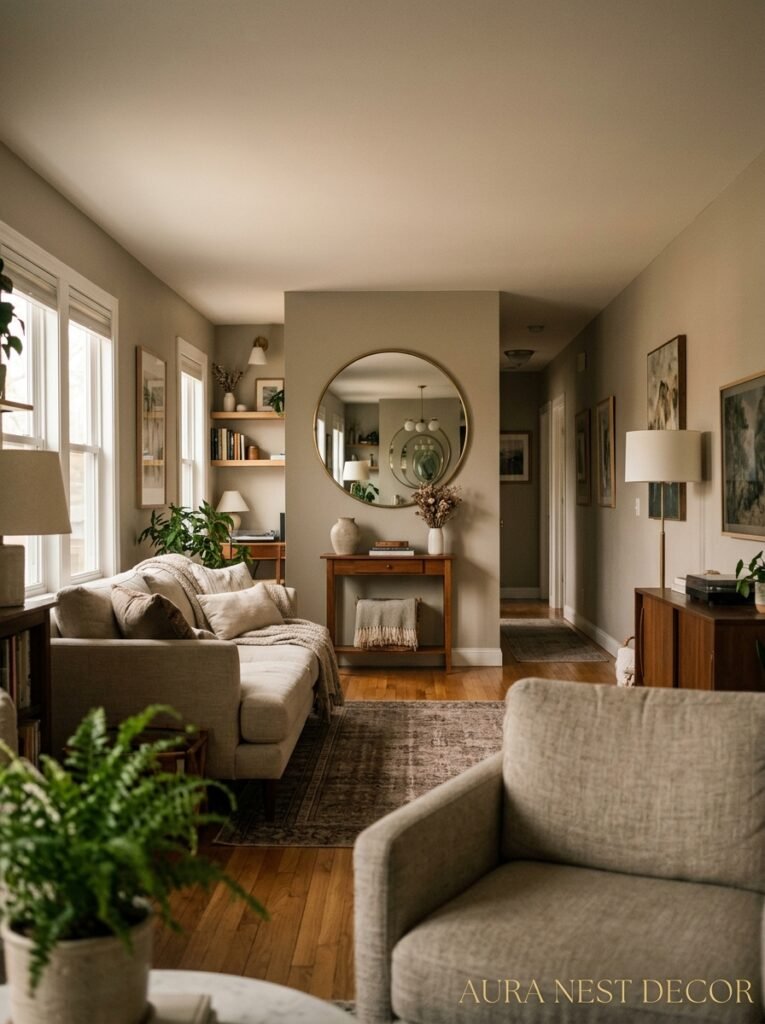
Everyone says “put a mirror in a small space to make it feel bigger.” And yes, that’s true. But in a long room, WHERE you put the mirror matters enormously.
A large mirror on one of the long walls reflects the opposite long wall. Which makes the room look longer. Which is almost certainly not what you want.
A mirror on the short end wall — the far wall especially — does something unexpected. It reflects the room back at itself and creates the illusion that the room continues past that wall. Used carefully, with something interesting in the room to reflect (a lamp arrangement, a nice piece of art, a plant), it can make the far end of a long room feel less like a dead end and more like an opening.
Lean it rather than hang it if you can. A leaned mirror adds a slightly relaxed, editorial feeling that a hung mirror sometimes doesn’t. It’s a small thing but it changes the energy.
12. The One Piece of Furniture That Unlocks Long Rooms
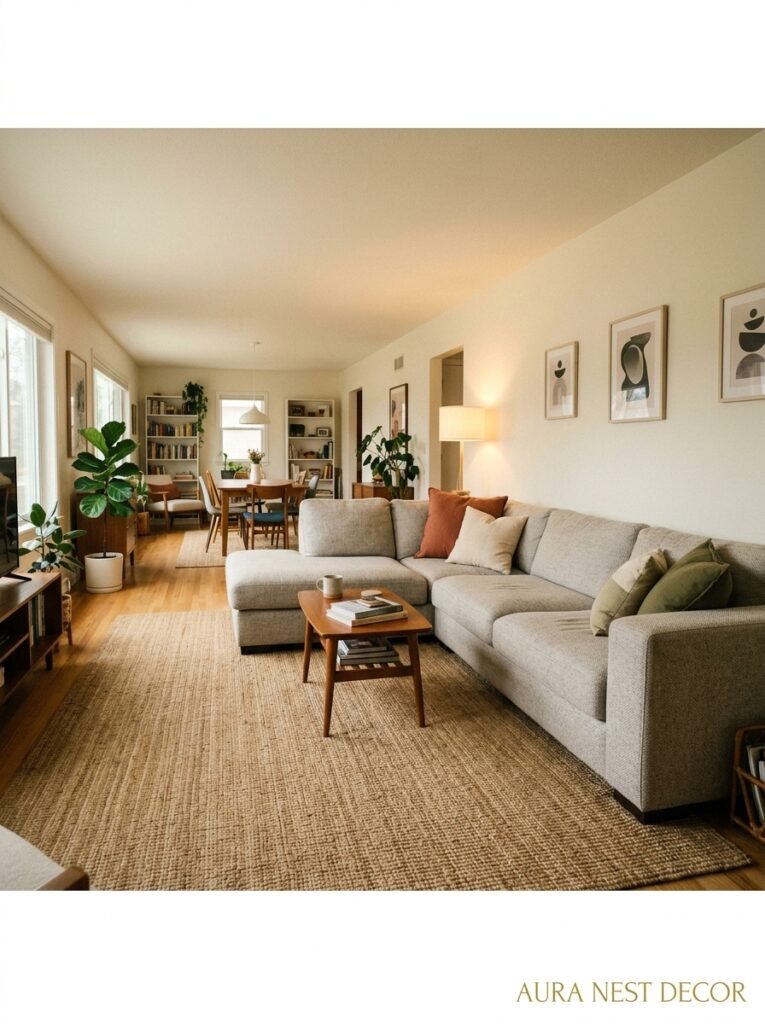
Chaise lounges. An oversized armchair with an ottoman. A loveseat positioned at a 45-degree angle to everything else.
Long rooms are linear by definition, and most furniture plays into that linearity — sofas parallel to walls, coffee tables parallel to sofas, everything marching in neat perpendicular order. Introducing ONE piece at an angle breaks the grid. It’s slightly surprising to the eye. It makes the room feel like it was arranged by someone who just decided in the moment, not someone following a diagram.
An armchair at 45 degrees to the corner of a room, with a small side table and a floor lamp? That’s a reading nook. It takes up almost no extra space. But it completely changes the room’s character. From a room you pass through to a room you stay in.
That’s the goal, isn’t it. Not a beautiful corridor. A place you actually want to be.
—
❓ FAQ
Q: How do I make a long narrow living room feel wider without knocking down walls? A: Horizontal stripes — in rugs, wallpaper, or even curtain patterns — actually make a narrow room feel more narrow, so avoid those. Instead, keep the long walls as light and uncluttered as possible, use floor-to-ceiling curtains to add height (which shifts the proportions), and float your furniture away from the long walls to create breathing room between the sofa and the wall.
Q: What size rug should I use in a long living room? A: In most US living rooms, go with at least an 8×10 per zone. In UK terrace-style rooms, a 200x300cm (roughly 6.5x10ft) is a good starting point. The front legs of your sofa must sit ON the rug — if they’re floating off it, size up.
Q: Should I use the same color scheme throughout a long living room or use different colors for each zone? A: Same base tones, different accents. If you go wildly different in each zone it can feel chaotic rather than designed. Keep your wall color and flooring unified, then differentiate the zones through cushions, rugs, and accessories. The end-wall trick (painting the short far wall a deeper tone) is the one place where you can introduce a deliberately different color and have it work structurally.
—
💭 Final Thoughts
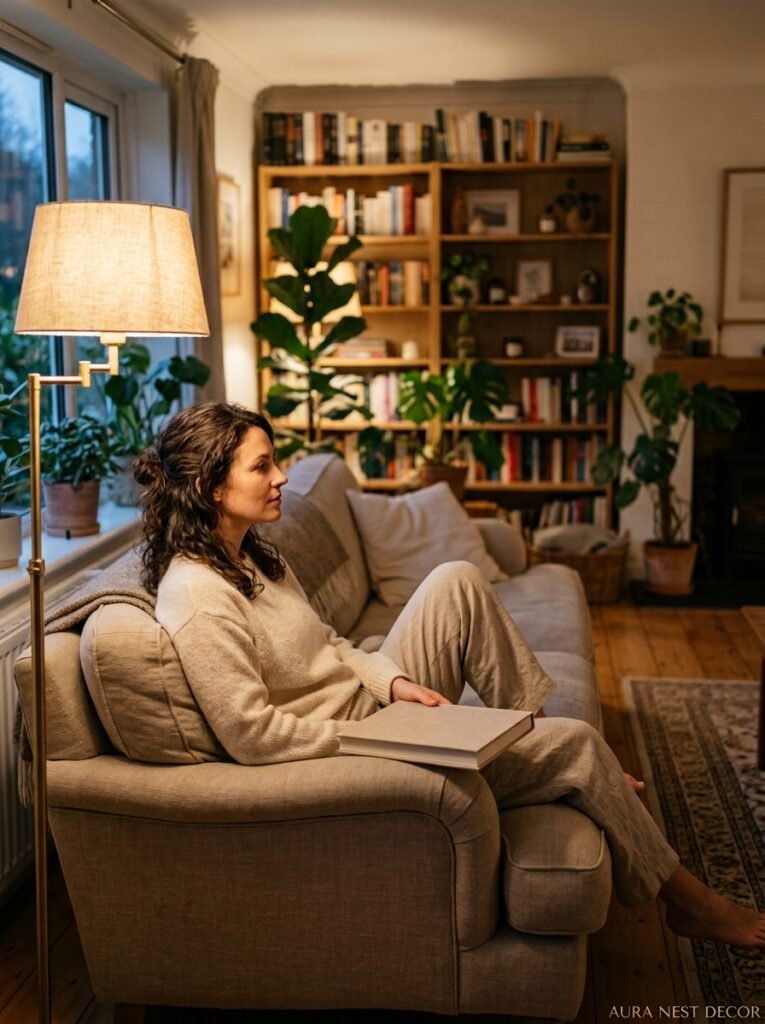
Long living rooms reward patience more than any other layout. They resist the quick fix and the first instinct, and they get better slowly — one good lamp at a time, one zone defined, one corner suddenly feeling exactly right. The bones are good. They always were.
What’s the hardest part of your long living room that no one arrangement has fixed yet?