The Living Room Christmas Decorations That Don’t Look Like Everyone Else’s
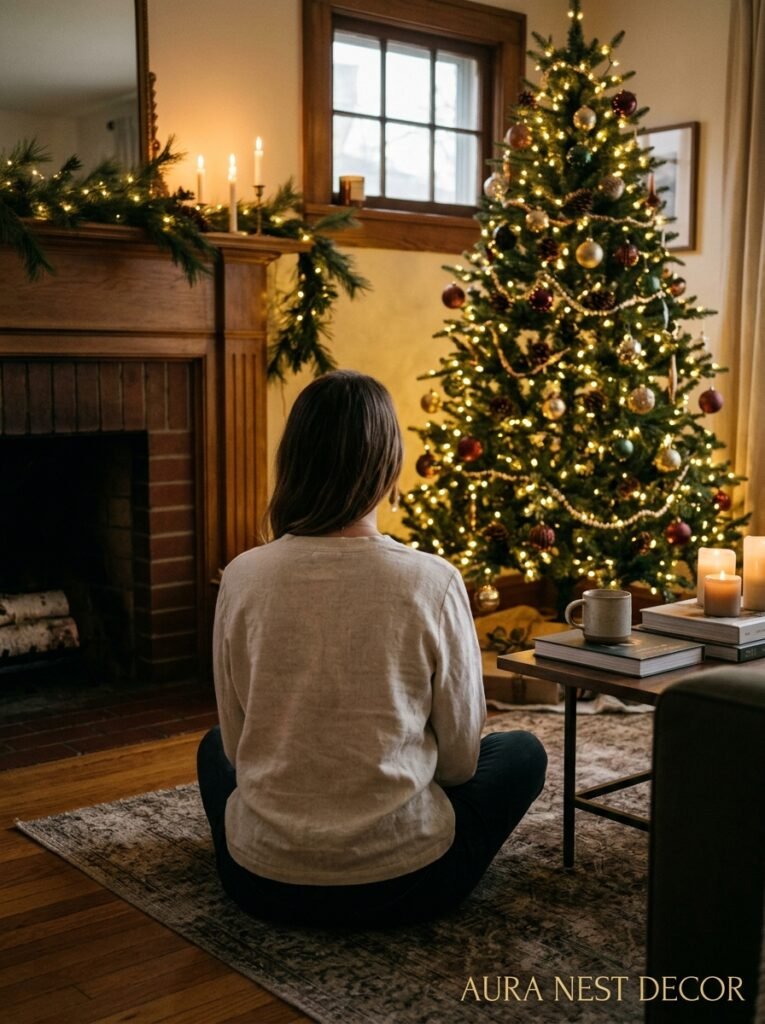
You know the feeling when you walk into someone’s home in December and something stops you? Not the tree. Not the wreath. Just — the whole thing. Like they cracked some code. That’s what we’re going for.
—
1. Why Your Mantel Is the Most Powerful Thing in the Room (And Most People Waste It)
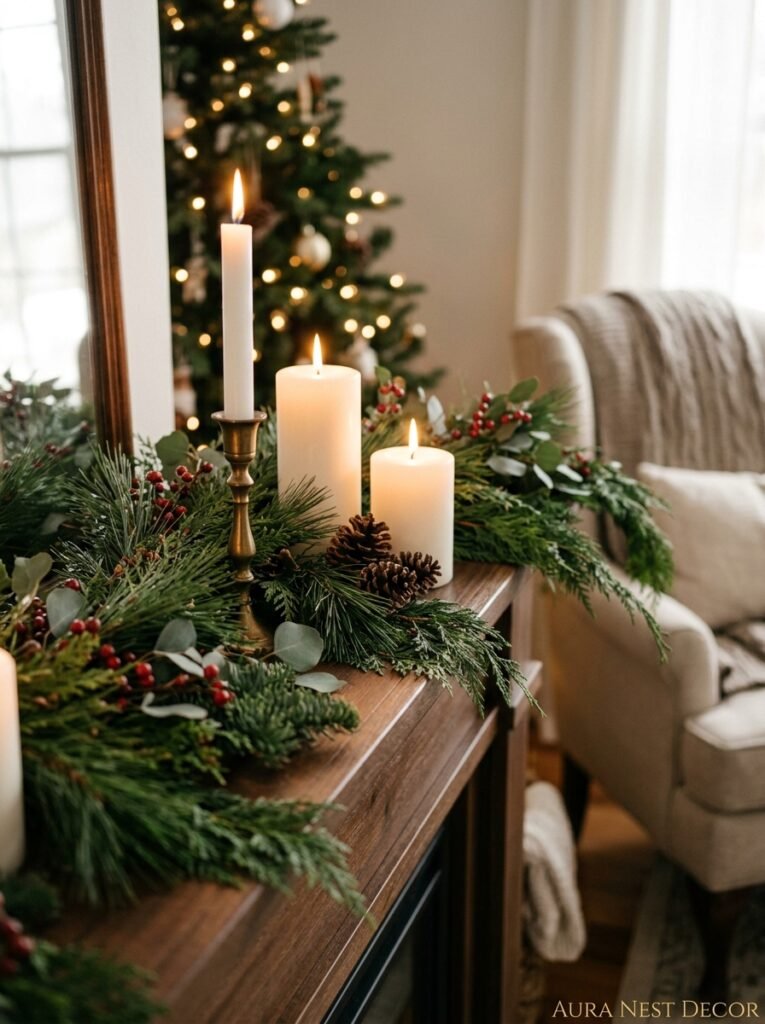
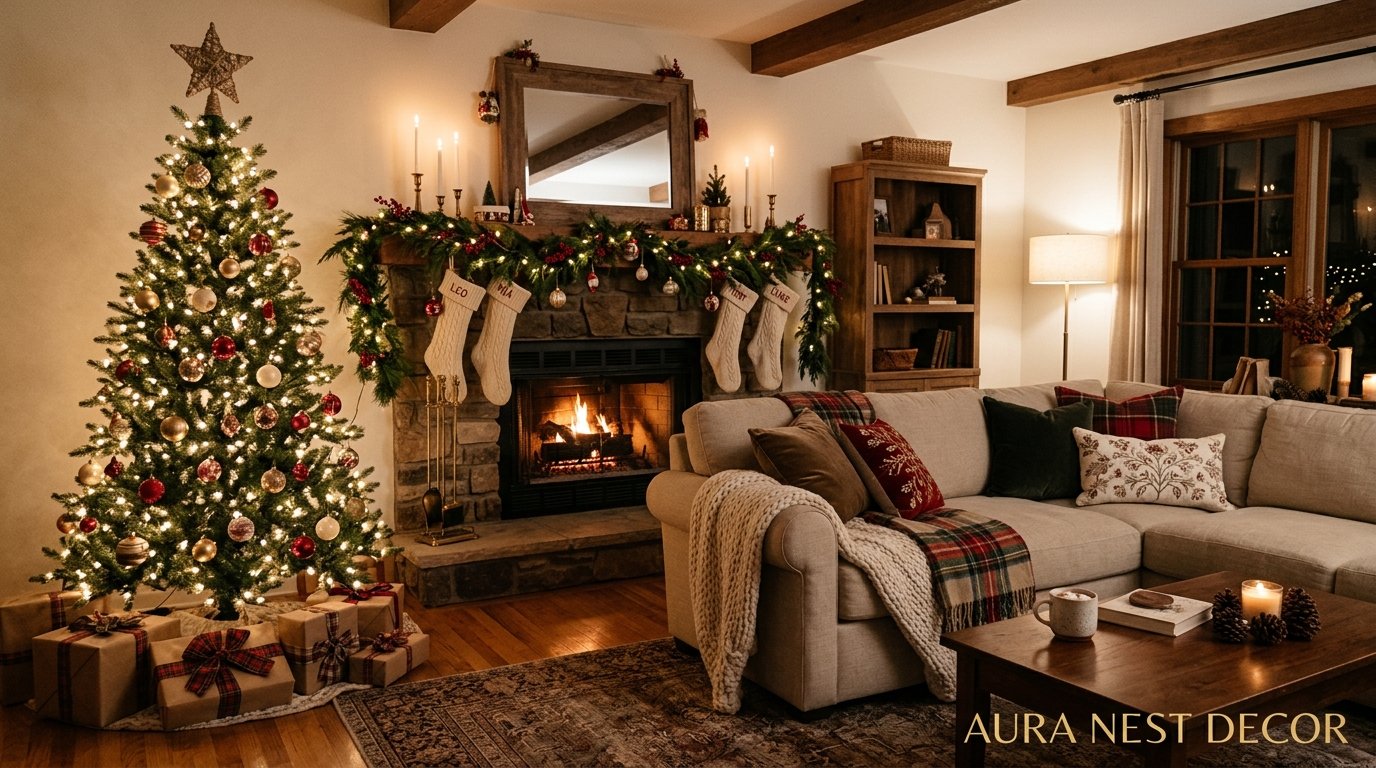
The mantel is basically the face of your living room at Christmas. And yet so many people just line up a few candles, shove some garland across it, and call it done. Which, fine! But there’s so much more it can do.
Here’s what actually works: layers. Not stuff — layers. Start with greenery that hangs over the edge slightly, like it’s about to drip onto the floor. Then add one thing that’s tall (a candlestick, a small lantern, a vase), one thing that’s low and horizontal, and one unexpected object. A single brass bell. An old book with a red ribbon. A small framed photo from last Christmas.
The unexpected object is the one that makes it feel personal rather than catalog-bought. And honestly? That’s the whole secret. Anyone can buy the same garland from the same shop. Nobody else has your grandmother’s brass deer figurine or that market candle you found in Edinburgh three years ago.
British homes with original fireplaces have such an advantage here — that original Victorian or Georgian tiling underneath does half the decorating for you. American homes with wide, flat mantels have room to go bigger. Use whatever you’ve got.
Don’t match everything. Seriously. The moment every single piece coordinates, it starts to look like a display, not a home.
“The thing that makes it feel personal is always the thing that doesn’t quite match.”
2. The Specific Green That’s Taking Over Every Beautiful Christmas Living Room Right Now
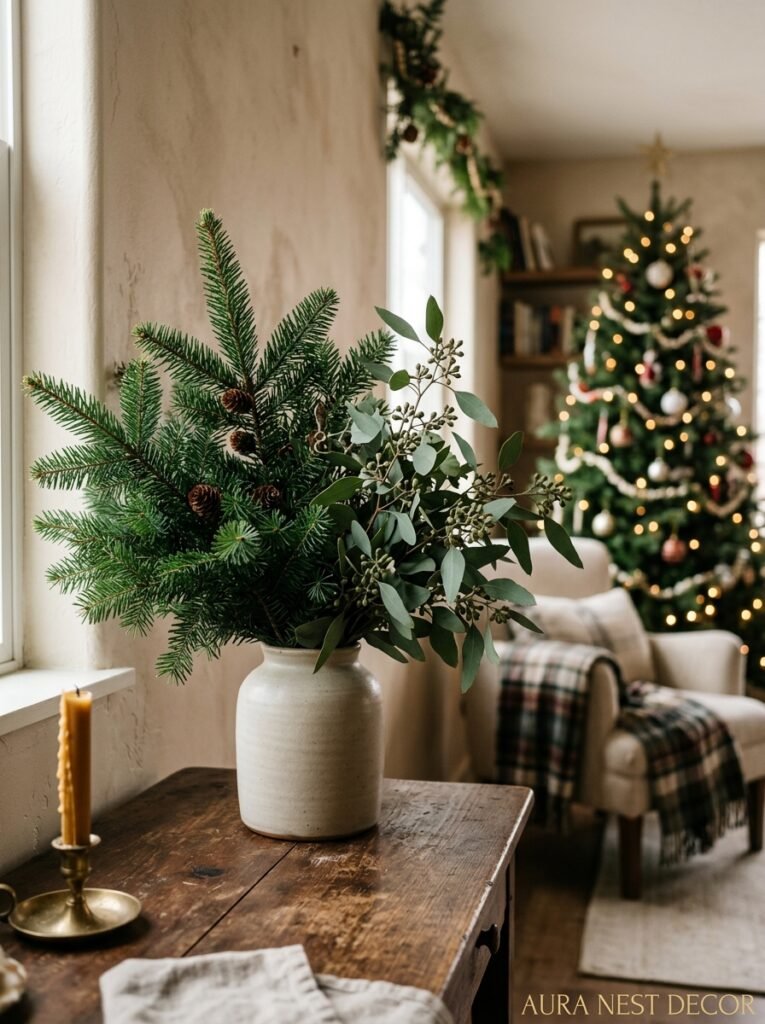
It’s not the bright, plasticky Christmas green. We’re past that. What’s everywhere right now — and I mean EVERYWHERE, from Brooklyn brownstones to Cotswolds cottages — is deep, moody eucalyptus green. Sometimes called sage, sometimes called forest, sometimes it’s just… dark green with grey in it.
It works on walls. It works on throw pillows. It works as the color of your velvet ribbon on the wreath. If you’ve got cream walls, this green makes them look richer. If you’ve already got dark walls, a green-tinted throw picks up the depth.
The reason it works at Christmas specifically is that it bridges the gap between “festive” and “sophisticated” without trying too hard. You’re not screaming red and green like a candy cane. You’re nodding at the season while still having taste. (Okay that came out snobby. But you know what I mean.)
Pair it with natural wood, raw linen, and either warm brass or matte black hardware and you basically have the aesthetic that’s going to dominate every Christmas home account until at least 2027. Which is fine. Some trends last because they’re just genuinely good.
Not gonna lie, I painted a whole accent wall this color last November and I haven’t wanted to change it since.
3. What to Do With Your Coffee Table That Isn’t a Bowl of Ornaments
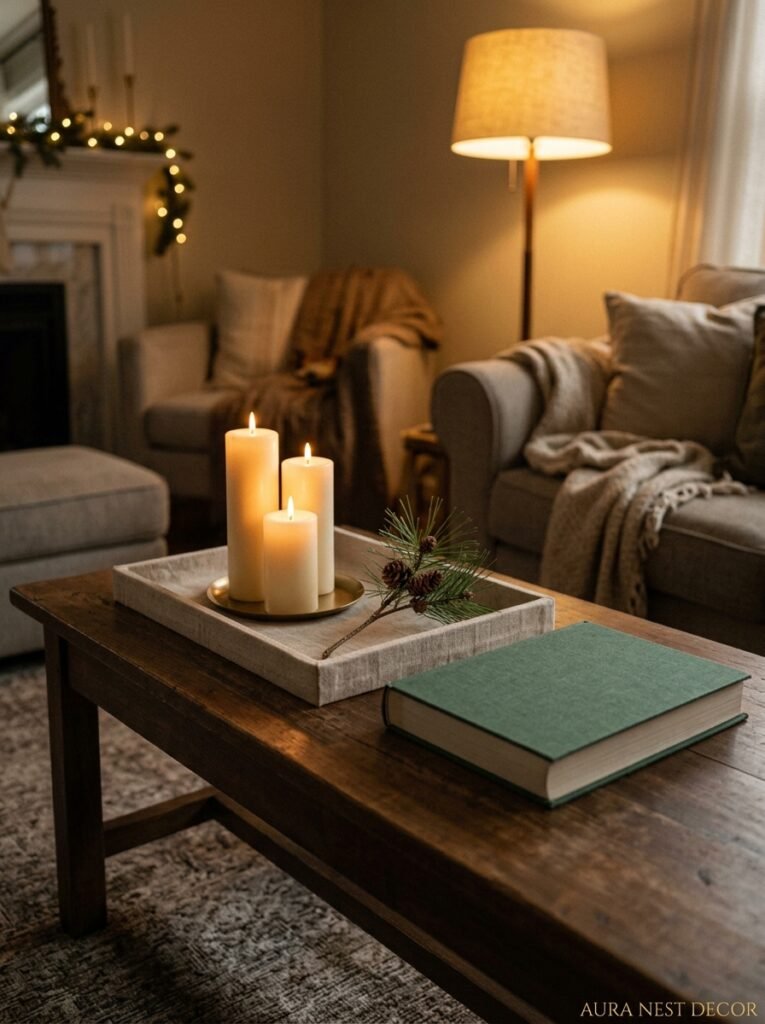
The bowl of ornaments is fine. I’m not here to shame the bowl of ornaments. But there’s a version of a Christmas coffee table that’s actually kind of breathtaking, and it doesn’t involve buying a single new thing.
Start with a tray — doesn’t matter what kind, wood, rattan, lacquered, whatever you have. Put it in the center of the table. Now fill it with things that are already in your house but have texture: a candle in a heavy glass jar, a small stack of hardback books with good spines (turn them face-out if the spines are ugly), one plant cutting in a bud vase, a small dish.
The dish is for the one festive element. One pine cone. A handful of cinnamon sticks. Two clementines. That’s it. The restraint is what makes it look styled rather than cluttered.
This works because the human eye relaxes when it can move across a surface without hitting something every two inches. The tray creates a visual boundary. Everything inside it gets to feel intentional, even if you assembled it in four minutes before guests arrived.
Side note — cinnamon sticks near a warm candle actually do release a faint scent into the room. So you get decoration AND atmosphere. Small win but a real one.
4. The Lighting Trick That Changes Everything After 4pm
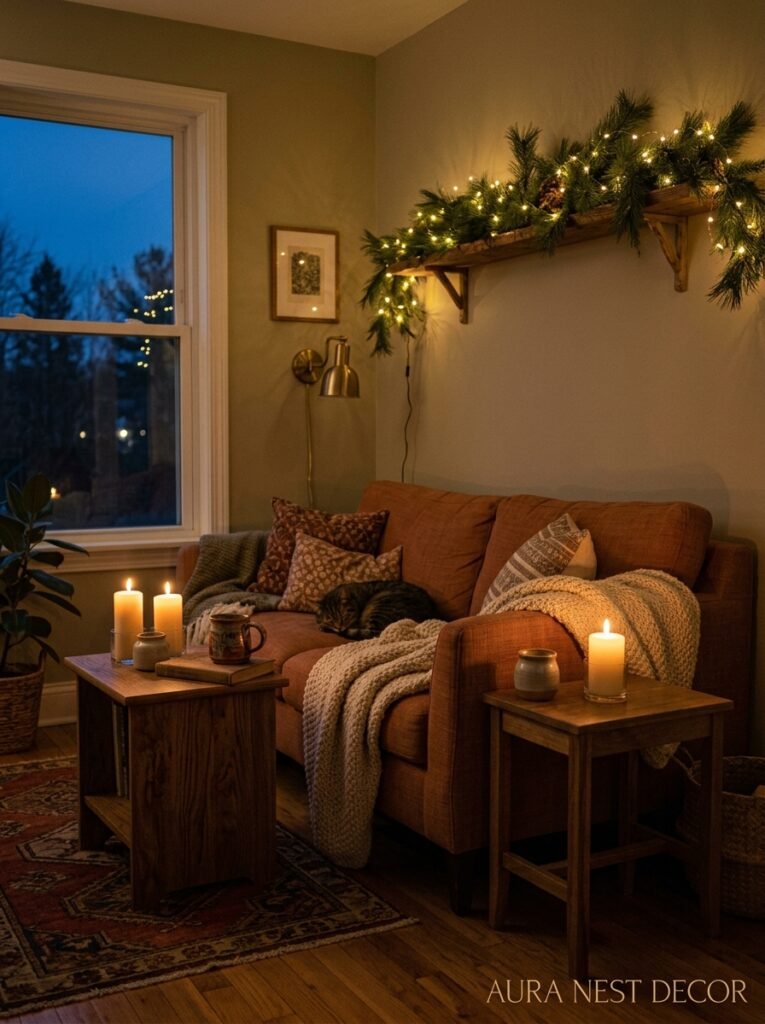
This is the one I want to shout. Because it costs almost nothing and makes a DRAMATIC difference.
Turn off your overhead lights.
That’s it. I mean, obviously there’s more to it — but that one decision, the choice to rely on lamps and candles and string lights instead of the big ceiling fixture, is what separates a living room that looks “decorated for Christmas” from one that feels like Christmas.
The overhead light flattens everything. It shows every imperfection. It makes your carefully styled shelves look like a storage unit. The amber glow of a lamp at 5pm in December, with a candle or two and some fairy lights reflected in the window? That’s the photo you see on every Pinterest board that makes you want to throw out your whole life and start over.
In the UK especially, where daylight is gone by half three in December, this matters enormously. The dark is actually a gift — use it. Layer your light sources. A floor lamp in one corner. A table lamp on the console. Fairy lights in a glass jar on the shelf. Two candles on the mantel.
Different heights, different warmths, and suddenly your living room looks like a film set for something cozy and Scandinavian that you’d watch on a Sunday. And you didn’t buy a single decoration.
“Turn off the overhead light. You can thank me later.”
5. Why the British “Less Is More” Approach Actually Wins at Christmas
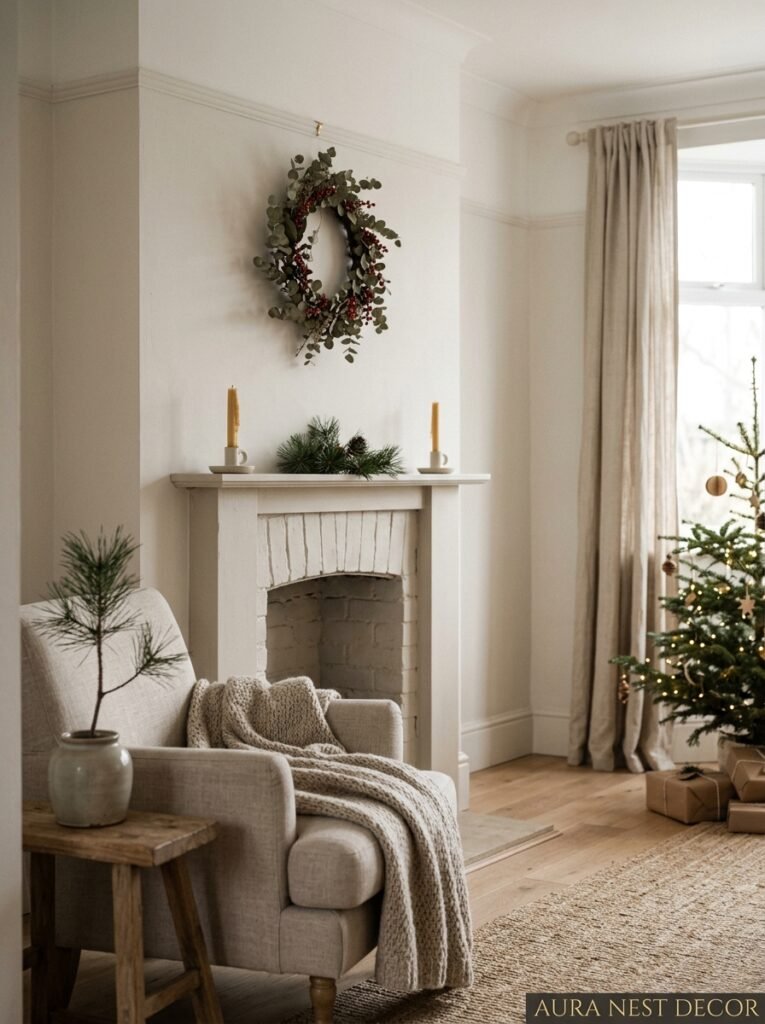
There’s a kind of Christmas decorating that happens in the UK — especially in older homes, in the countryside, or just in households that have strong aesthetic opinions — that’s very quiet and very deliberate. One beautiful wreath. One really good candle. Greenery from the garden. A stocking hung with actual intention rather than just jammed on a hook.
It wins because it trusts the materials. It trusts that a branch of holly from the back garden is actually beautiful and doesn’t need tinsel around it. It trusts that a wool throw in a deep red is festive without being loud about it.
American Christmas decorating has a whole different energy — bigger, louder, more maximalist, and honestly more fun in its own way — but there’s something worth stealing from the quieter British approach. Which is: editing. Going back after you’ve put everything up and taking ONE thing away. Then another. Until what’s left feels chosen rather than accumulated.
I’ve done this for years now. Put everything up on the first of December, live with it for three days, then walk in like a stranger and ask what doesn’t need to be there. The answer is usually about a third of it.
6. The One Corner of the Room That Most People Ignore Completely
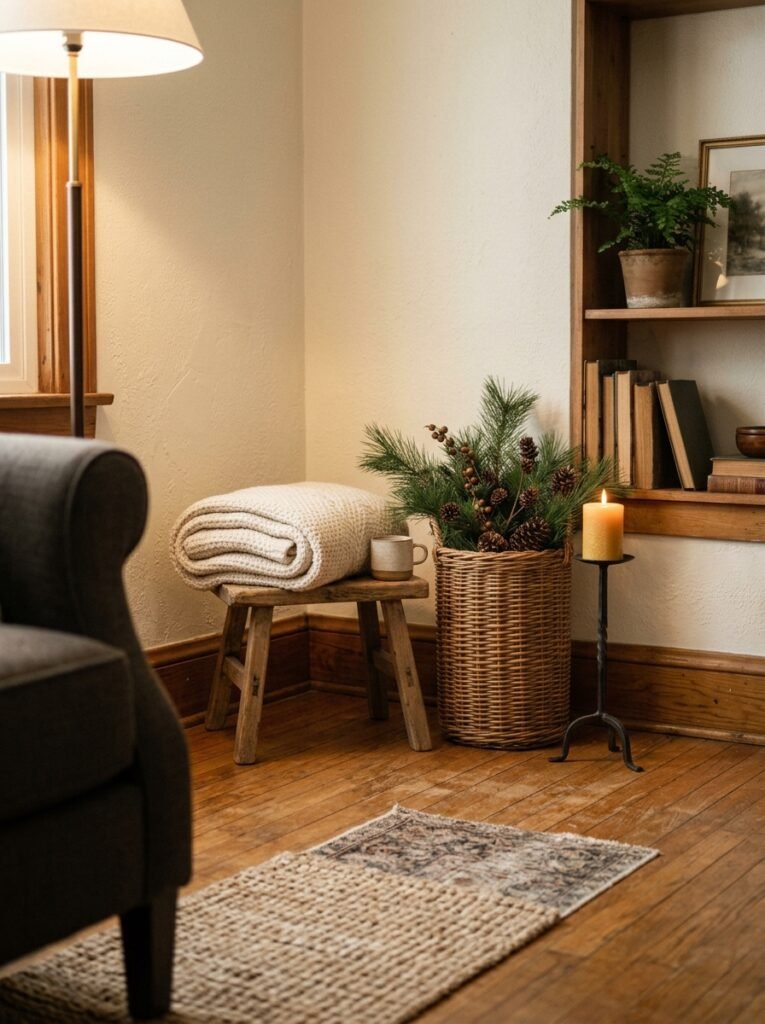
Not the tree corner. Not the fireplace. The corner by the door, or beside the bookcase, or under the window — the one that currently has a slightly sad plant and maybe a coat you haven’t put away.
That corner could do SO much work.
A floor lamp plus a basket of rolled blankets plus one big branch of eucalyptus in a tall vase. That’s it. That’s a vignette. It takes fifteen minutes to assemble and it looks like you spent three hours on it. The eucalyptus dries beautifully, so you can leave it up past January without it looking dead. The blankets are practical. The lamp creates that warm pool of light that makes the whole corner feel intentional.
If you’re in a smaller space — a London flat, say, or a US apartment — this kind of corner vignette is often more impactful than trying to decorate an entire room. It gives the eye somewhere specific to land and rest. Which makes the whole space feel more considered.
And it photographs SO well. Not that that’s the point. But.
7. The Colour Nobody Thinks to Use But Always Looks Incredible
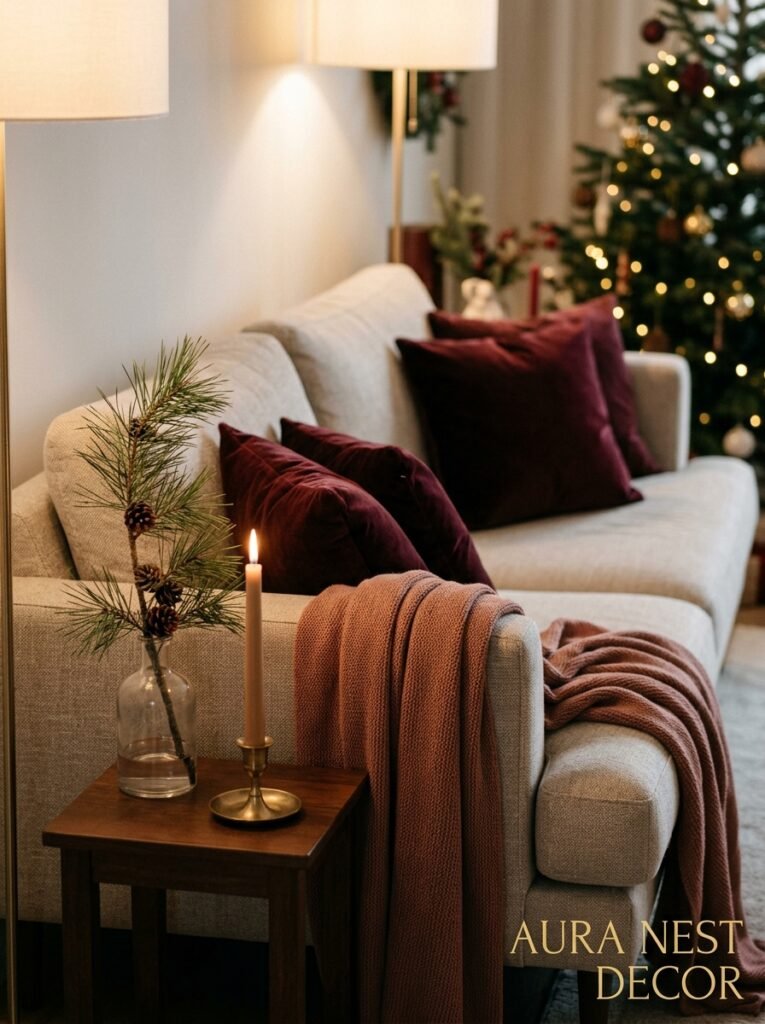
Burgundy. Deep, wine-red, almost purple burgundy. Not Christmas red. Burgundy.
It works because it’s adjacent to festive without screaming at you. It pairs beautifully with the dark greens we already talked about. It looks incredible against cream, against grey, against natural wood. A burgundy velvet cushion on a beige sofa turns the whole sofa festive. A burgundy throw draped over the arm of a chair costs about £18 at most UK high street shops or under $25 at HomeGoods.
The other thing about burgundy is that it reads as BOTH Christmas-y and just… nice. So you don’t have to take it down in January. Which, honestly, is half the appeal of anything at this point.
“If you’re only buying one new thing for Christmas this year, make it something burgundy and velvet.”
8. How to Make a Christmas Tree That Doesn’t Look Like It Came Pre-Packaged
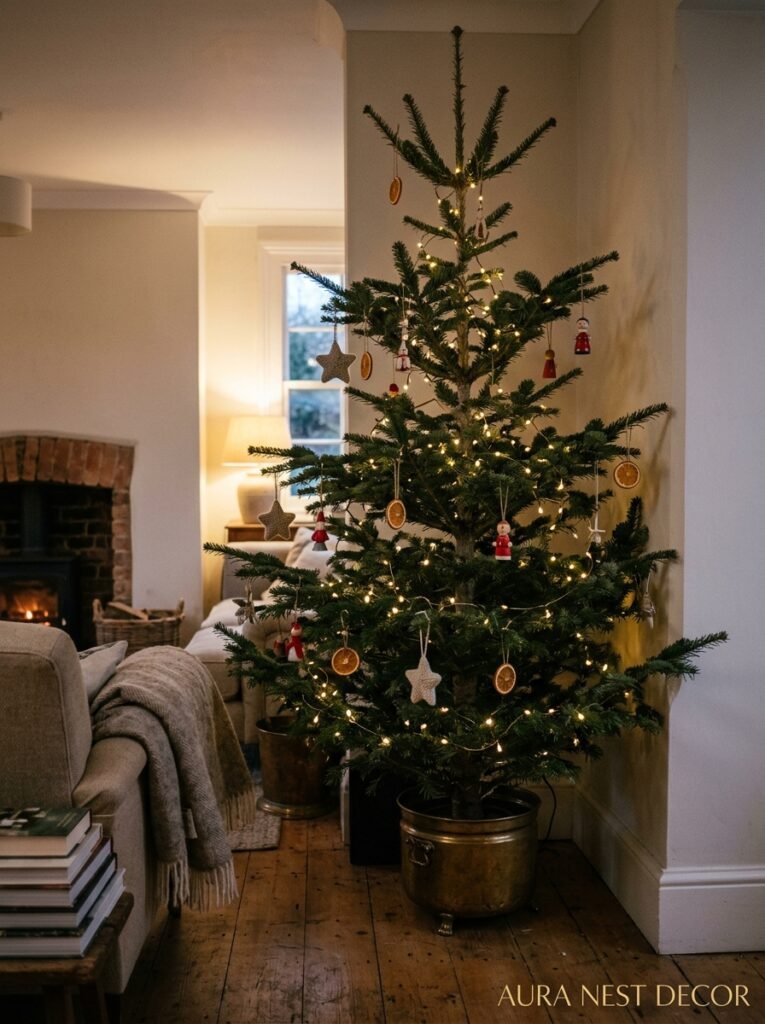
Here’s my honest take on Christmas trees: the most beautiful ones I’ve ever seen weren’t the most decorated. They were the most edited.
The trick is to add lights first — and I mean really add them, wrapping each branch individually rather than just draping strings from top to bottom. This takes time. It’s worth it. The light comes from INSIDE the tree when you do it properly, and the difference is unreal.
Then add your largest ornaments first, pushed deep into the tree so they catch the inner light. Medium ornaments next, a bit more outward. Small ornaments and any delicate things last, on the tips of branches where they’ll catch the light from outside.
The final touch — and this is the one most people skip — is to add one or two natural elements. A few sprigs of dried orange. A sprig of real holly if you have it. One small bird ornament. Something that wasn’t mass-produced.
American trees tend to go bigger and more abundant. British trees often go more minimal and elegant. Both can be spectacular. The key is committing to one direction instead of trying to have both at once.
9. The Shelf Situation Nobody Talks About
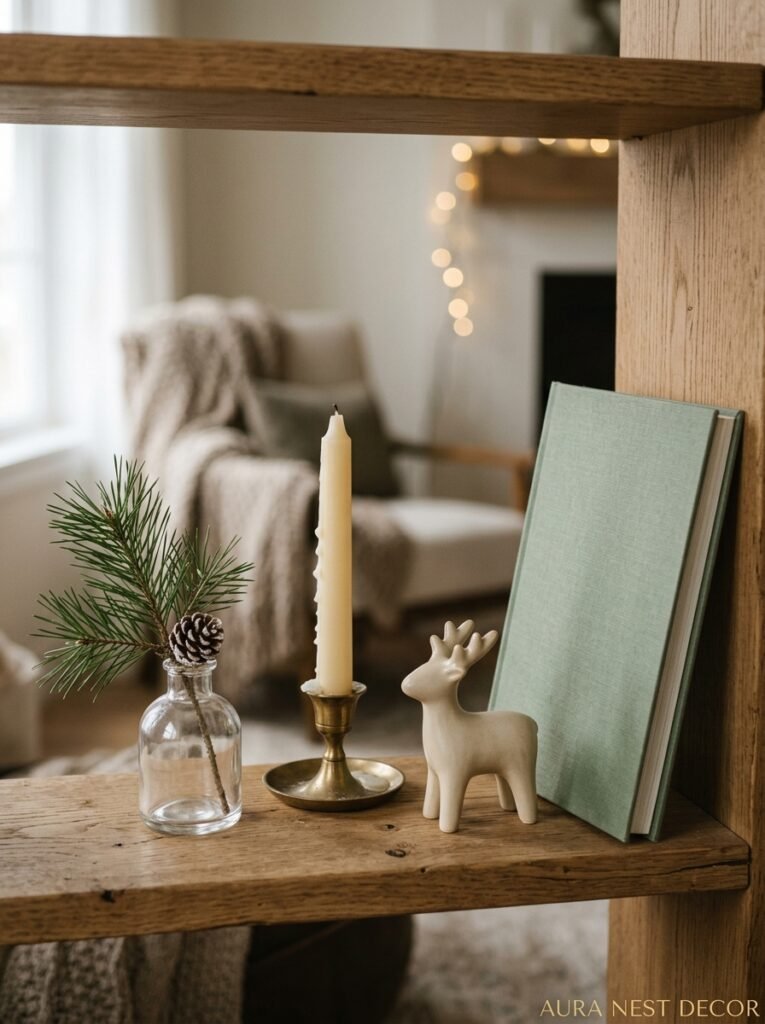
Bookshelves and built-in shelves at Christmas are either completely ignored or completely overwhelmed with stuff. The middle ground — a bit of greenery, a few candles, your existing books — is where the good stuff lives.
Tuck a small sprig of pine or a few artificial stems of berry behind an existing book stack. Don’t remove the books. Don’t clear the shelf. Just add one small Christmas-adjacent thing per shelf and let the existing objects do the rest.
It takes ten minutes. It looks deliberate. And it means your shelves still feel like YOUR shelves — just with a little December in them, not like a Christmas shop exploded in your living room.
One candle per shelf, maximum. Taller ones at the back, shorter at the front. That’s the rule I live by.
10. What Scent Actually Makes a Room Feel Like Christmas (And It Isn’t Cinnamon)
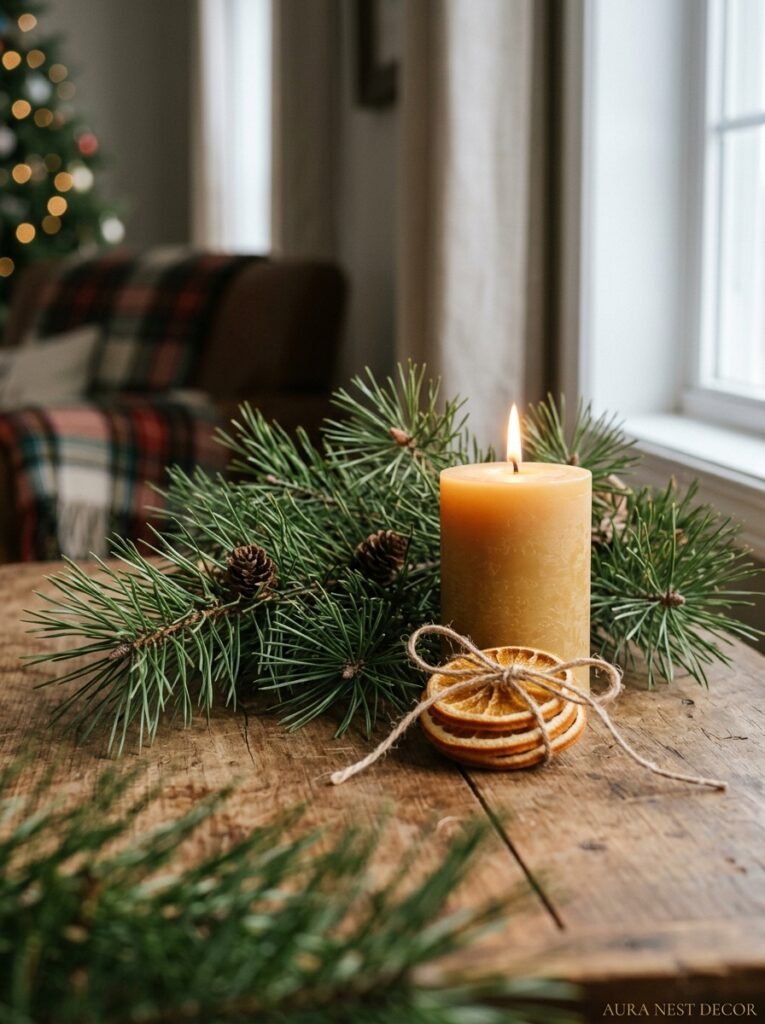
Okay, hot take: cinnamon is the OBVIOUS answer and it’s a bit much by itself. What actually smells like Christmas — like the version of Christmas you’d smell in a really nice hotel lobby or a house that knows what it’s doing — is a blend.
Clove, orange, a tiny bit of pine. That combination hits something deep in the brain. You can get it from a single good candle (look for “winter spice” or “spiced orange” rather than just “cinnamon”), or you can make a simmer pot on your stove: a sliced orange, a few whole cloves, a cinnamon stick, a bay leaf, and a cup of water on the lowest heat. Your entire downstairs will smell extraordinary within twenty minutes.
The scent of a room is the thing guests remember even when they can’t name it. Which is maybe the sneakiest, best-value Christmas decorating tip there is.
11. The Part of the Floor You’ve Been Ignoring
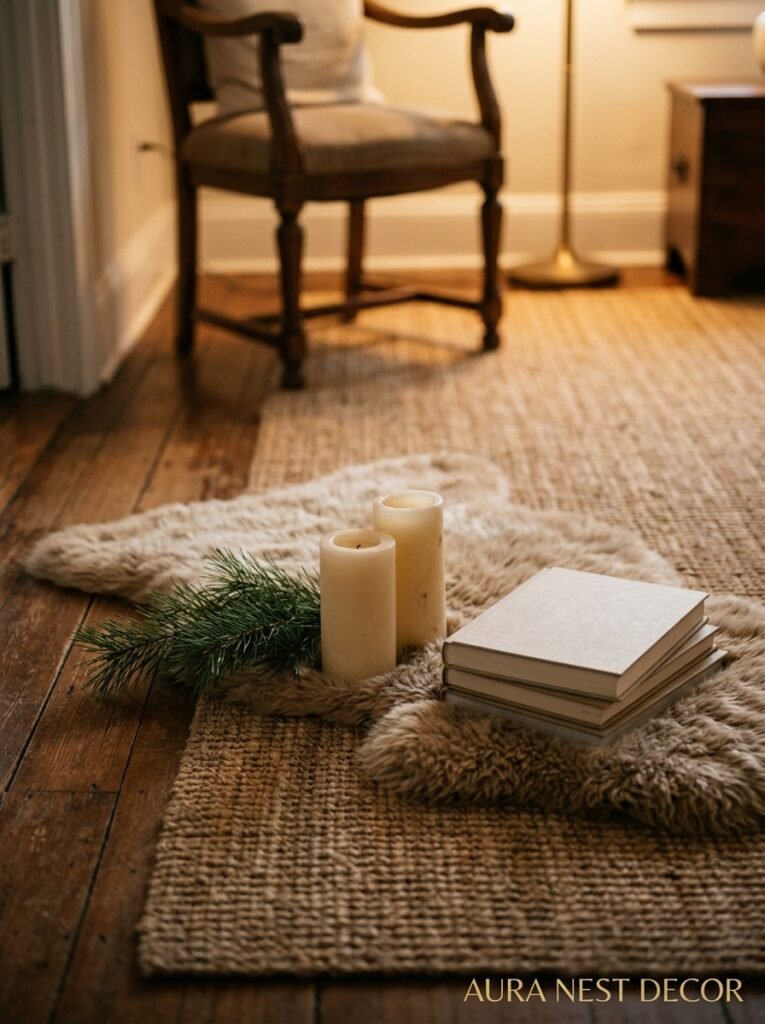
The floor. Specifically, what you put on it, near the tree, under the coffee table, or beside the fireplace.
A good rug anchors the whole Christmas living room setup. But more specifically: what you put DIRECTLY on the floor matters. A stack of wrapped gifts is decorative even before they’re opened — pile them intentionally rather than just dropping them under the tree. A wooden crate with pinecones and a candle on the floor beside the fireplace takes up dead space and adds texture and height variation. A sheepskin thrown over the floor near the hearth invites people to sit there, which is honestly the cosiest thing in the world.
The floor is the most under-used surface in any room and at Christmas it’s a wasted opportunity. Use it. Get low. Think about what the room looks like from the perspective of someone sitting on the sofa looking around.
12. The Rule I Break Every December (And Why You Should Too)
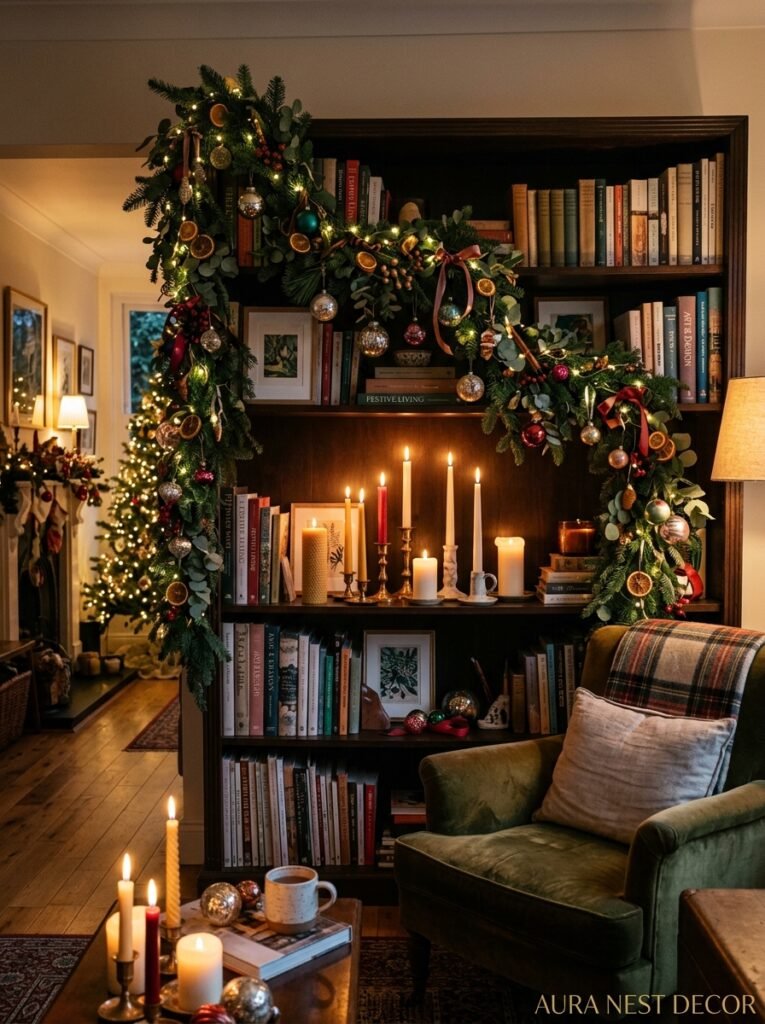
More is more. Sometimes.
I know I’ve spent this whole article talking about editing and restraint and taking things away. And I stand by all of it. But there’s also a version of Christmas decorating that just goes FOR it — that fills every surface, hangs things from every ceiling hook, strings lights literally everywhere — and it works. Not in spite of the excess but because of it. Because it’s JOYFUL. Because it’s December and the year has been a lot and sometimes you want to walk into your living room and feel like you’ve fallen into a snow globe.
If that’s your instinct? Follow it. Pile on the tinsel. Hang the paper chains. Put the ceramic snowmen EVERYWHERE. Maximalism done with love and genuine enthusiasm doesn’t look cluttered. It looks like someone lives there and they love Christmas, and that’s actually the most beautiful thing any living room can look like in December.
The only rule is that it should feel like you. Not like a magazine, not like a showroom, not like what you think you’re supposed to want. Your living room at Christmas should make YOU happy when you walk in. Start there.
—
❓ FAQ
Q: What’s the easiest Christmas decoration change that makes the biggest difference in a living room? A: Honestly? Swap out your lightbulbs for warm-toned ones (2700K or lower) and turn off your overhead lights in the evenings. Combine that with one or two candles and your room immediately looks more atmospheric than any decoration could achieve. Costs almost nothing.
Q: How do I make Christmas decorations look cohesive without everything matching exactly? A: Pick one or two anchor colors and let everything else be neutral. Deep green and burgundy, for example, or navy and gold. Repeat those colors in at least three places in the room — a cushion, a candle, a ribbon on the wreath — and your eye will read it as cohesive even if the individual pieces are totally different styles.
Q: When should I start decorating my living room for Christmas? A: In the UK, the first of December is pretty standard and widely accepted. In the US it tends to creep earlier — lots of people start after Thanksgiving. There’s no rule. If putting decorations up in mid-November makes you happy, do it. Anyone who has opinions about your decorating timeline is redirecting energy they should spend on their own house.
—
💭 Final Thoughts
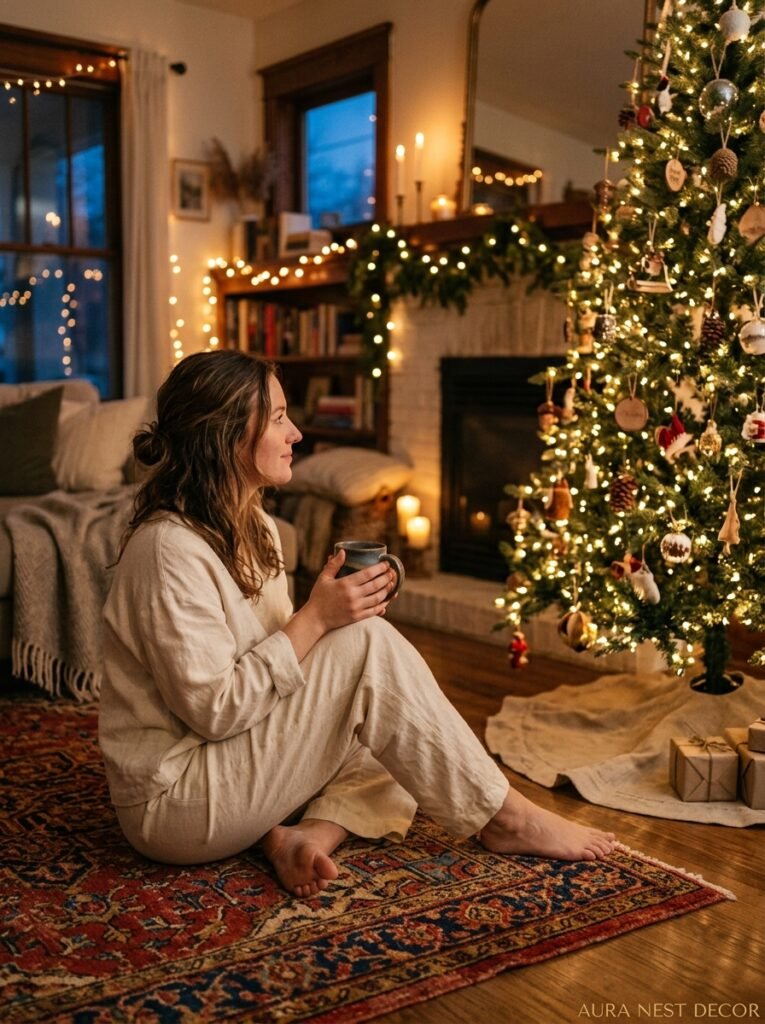
Christmas decorating should feel like a gift you give yourself, not a project you have to execute perfectly. The rooms that feel the most magical are almost never the ones that look the most “done” — they’re the ones that feel like someone actually lives in them, loves them, and wanted to make them beautiful for a few weeks in the darkest part of the year. Start with one corner. See how it feels. What’s the one thing in your living room right now that, with just a little December around it, could become the spot everyone wants to sit near?