Why Your Living Room Feels Off — And How Going Natural Finally Fixes It
You know that feeling when you walk into someone’s home and everything just… settles? Like your shoulders drop and you breathe differently? That’s not an accident. And once you understand what creates it, you can’t stop seeing what your own living room is missing.
—
1. The Thing About Natural Materials That Nobody Actually Explains
Let’s start here, because I feel like this gets glossed over constantly. When people say “natural living room,” they mean different things. Some mean plants everywhere. Some mean neutral colors. Some mean expensive linen sofas they’re terrified to sit on.
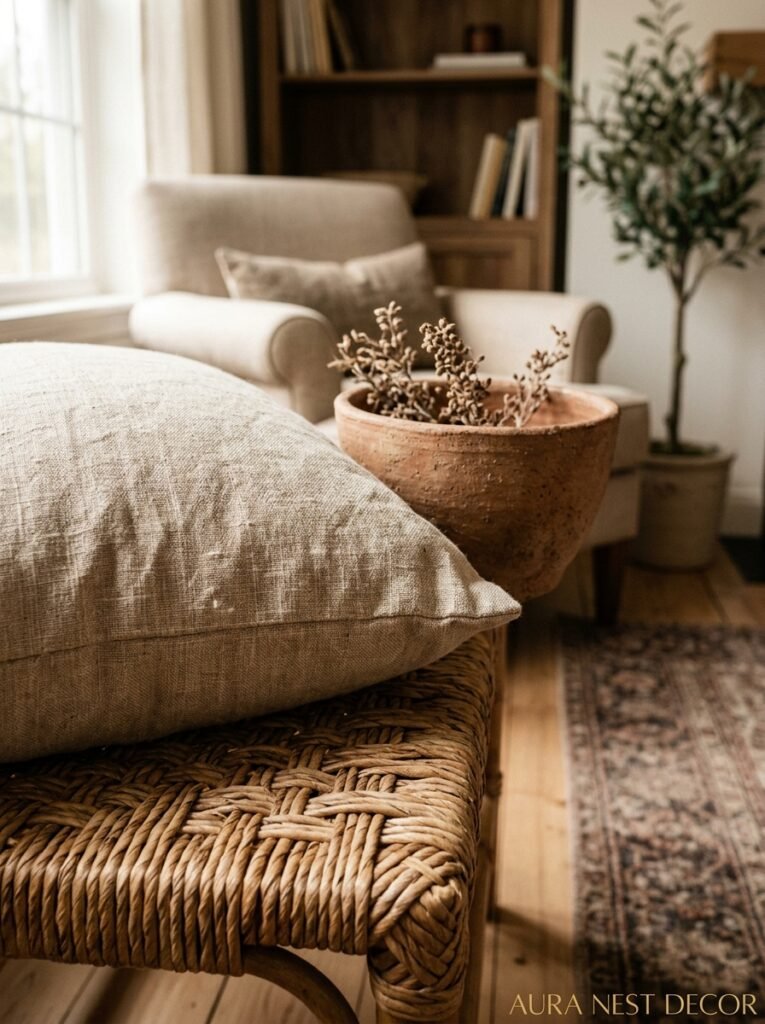
But what it ACTUALLY means — what makes a room feel genuinely natural and not just beige — is materials that came from the ground. Wood with grain you can trace with your finger. Stone that’s cool to the touch. Wool that pills a little after a few years because it’s real. These materials don’t just look different. They behave differently. They age. They absorb sound in a way that makes a room quieter without being dead. They pick up light differently at different times of day, which means your room literally looks different at 8am than it does at 4pm, which is honestly one of the most underrated things a living room can do.
There’s a reason people photograph these rooms obsessively. It’s not just the aesthetic. The materials give the camera something real to work with.
2. The Color That Actually Looks Natural (It’s Not What You Think)
Everyone assumes natural means white walls and oatmeal everything. And sure, that can work. But some of the most beautiful natural living rooms I’ve ever seen have had walls in deep moss green, or aged terracotta, or a particular shade of smoky blue-grey that looks like the inside of an oyster shell.
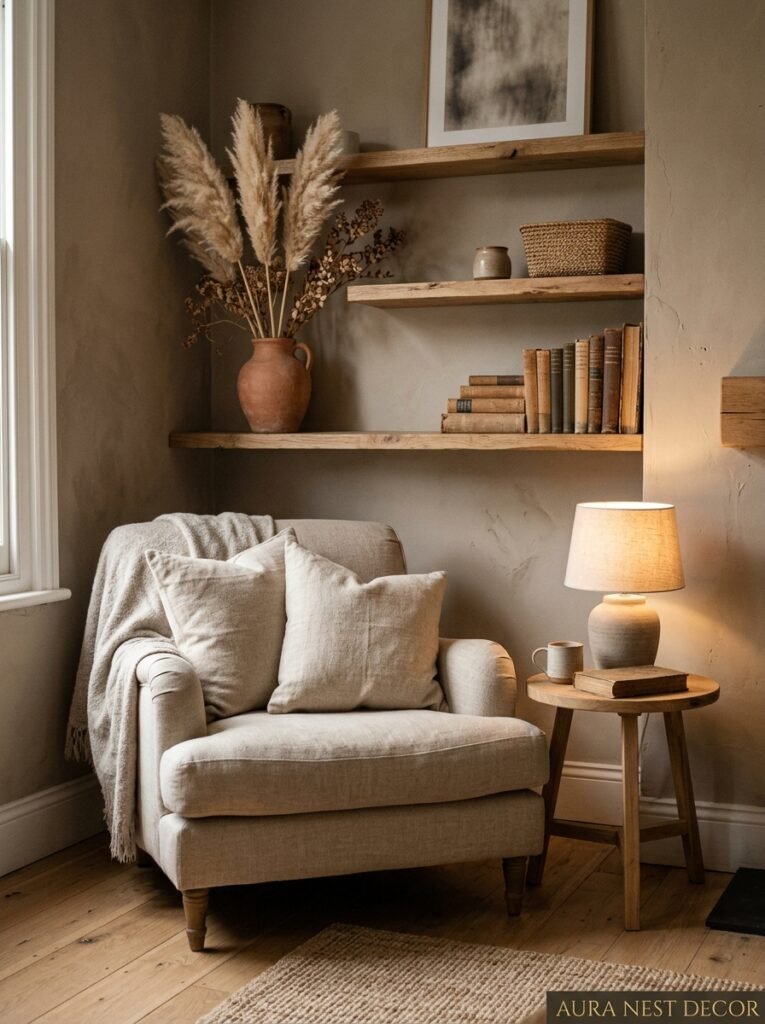
The actual rule — if there is one — is that natural colors are complex. Not flat. Not the bright clean white of a freshly painted wall, but the slightly-warmer, slightly-dirtier version. Aged linen rather than bleached cotton. Sage rather than lime. The kind of colors that look like they’ve been sitting in sunlight for a while.
In the UK especially, I’ve noticed this tendency toward chalky, almost matte tones that absorb light rather than bounce it. Farrow & Ball built an entire empire on exactly this. And it works because those colors feel like they belong to the earth, not to a paint manufacturer.
In the US, I think there’s sometimes more boldness — a deeper ochre, a richer terracotta — and honestly I love that too. The point is: don’t limit yourself to pale because you’re worried “natural” means minimal. It doesn’t.
“Natural color isn’t about being quiet. It’s about being complex.”
3. Why Wood Grain Matters More Than Wood Finish
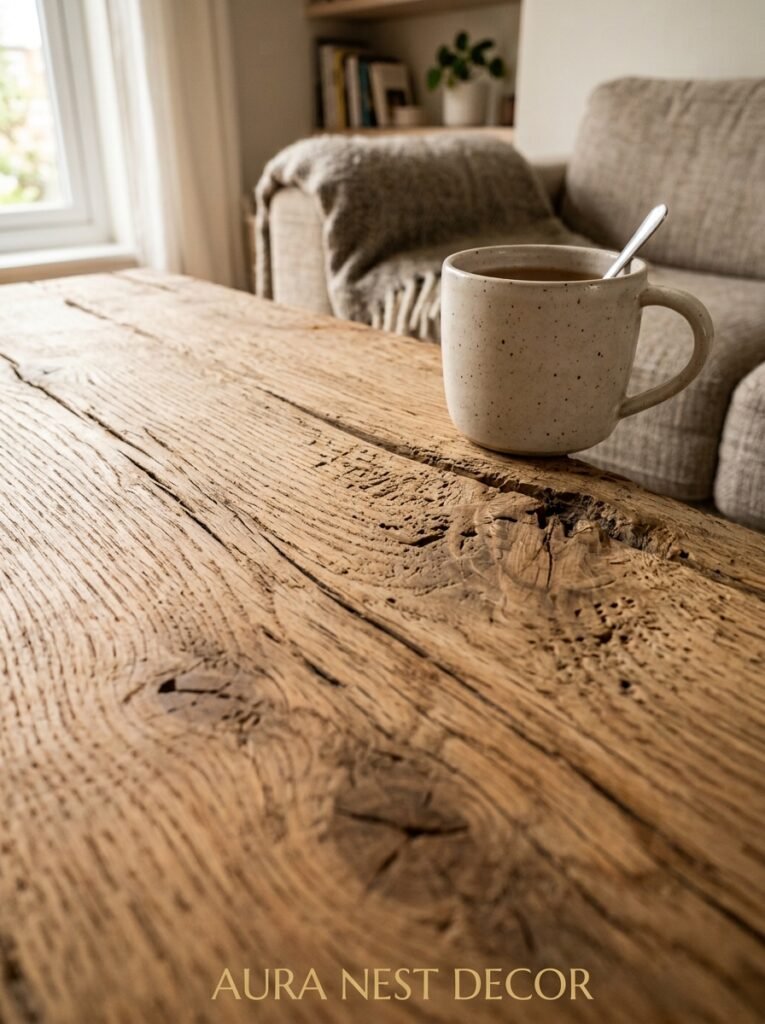
Oak. Walnut. Ash. Pine with its soft yellow warmth. These aren’t interchangeable, and picking the right wood for your room is something worth actually thinking about.
Dark walnut reads moody and grounded — perfect if your room gets a lot of light and you want to balance it. Oak is warmer and more forgiving, it works with almost everything, which is probably why it’s everywhere right now. Ash has this incredible silvery quality that makes it feel slightly Scandinavian. And reclaimed wood — any species — brings something none of the others can, which is history. The surface irregularity of old wood from a barn or a factory floor adds texture that you genuinely can’t fake.
What I’d push back on: the overly smoothed, overly sealed, lacquered-to-death finish that makes wood look like a photograph of wood rather than actual wood. You want to feel the grain. You want to see the knots. A light oil or wax finish lets the material breathe instead of trapping it under plastic. Side note — this also means your furniture actually improves with age instead of just scratching and looking sad.
4. The Rug Rule That Will Change How Your Room Feels Underfoot
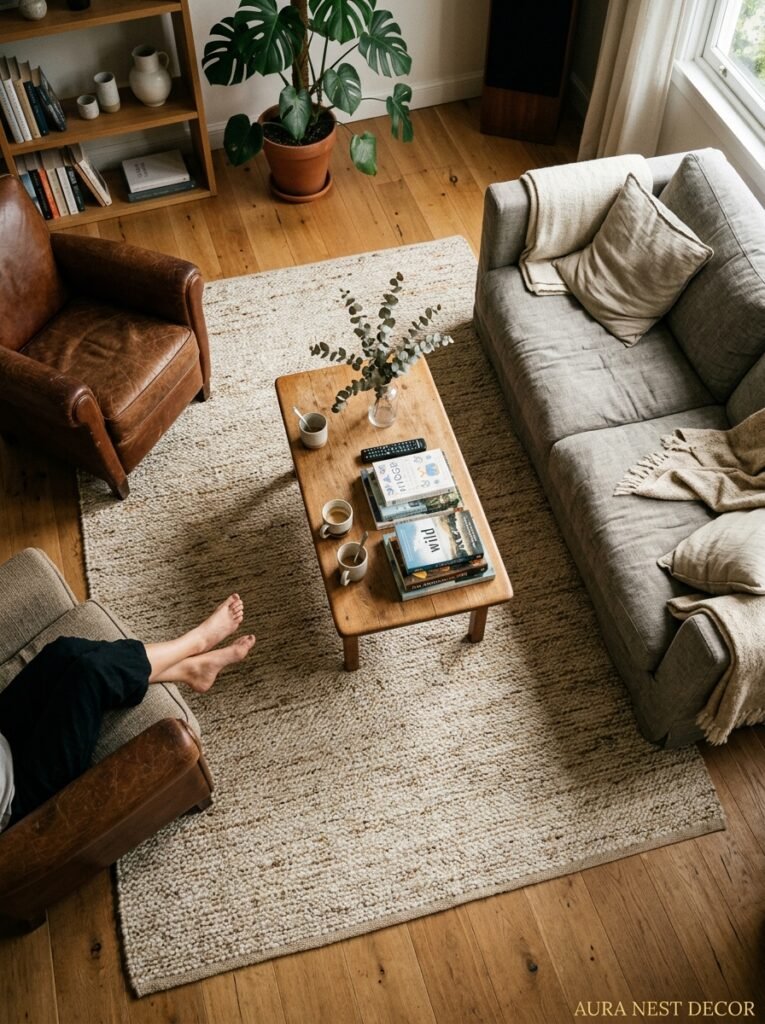
I cannot stress this enough. The rug is doing more work than any other single element in your natural living room.
Here’s why: it’s the biggest surface your eye sees when it scans the floor. It’s also the thing you physically TOUCH, constantly, whether you notice it or not. A synthetic rug in an otherwise beautiful natural room is like wearing polyester to a cashmere party. You can feel it’s wrong even if you can’t explain it.
Wool rugs are the gold standard. Jute and sisal are great for a more casual, coastal-ish feeling, though they’re a bit scratchy underfoot — probably not for rooms where people sprawl on the floor. Cotton flatweaves are underrated and wash beautifully. Layering a smaller wool rug over a jute one has been a trick that’s worked for years and still doesn’t look tired.
The other thing about natural fiber rugs: they have texture that shows. The shadow in the weave, the variation in the pile — it gives your floor visual interest without pattern, which somehow makes the room feel calmer and more complex at the same time. Or maybe it’s the opposite, honestly — maybe “calm but complex” is just what natural looks like.
5. Plants That Actually Work Hard in a Living Room (And the Ones That Are Just Pretty)
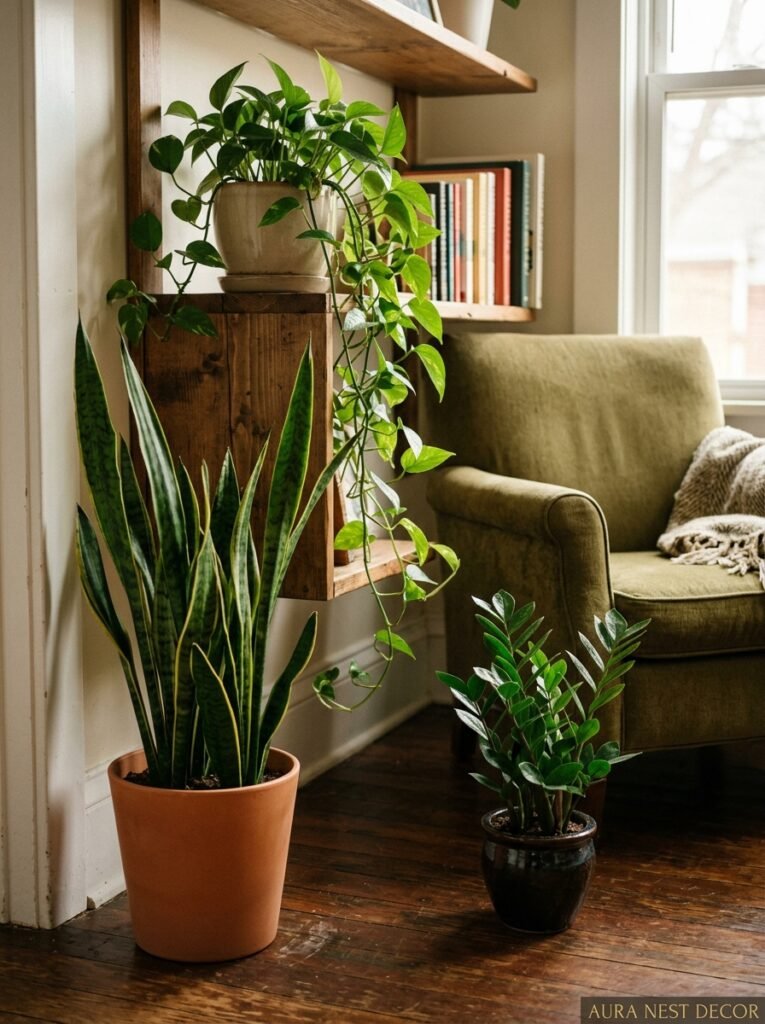
Let me be honest: some plants are genuinely functional in a living room context and some are just decorations you have to water.
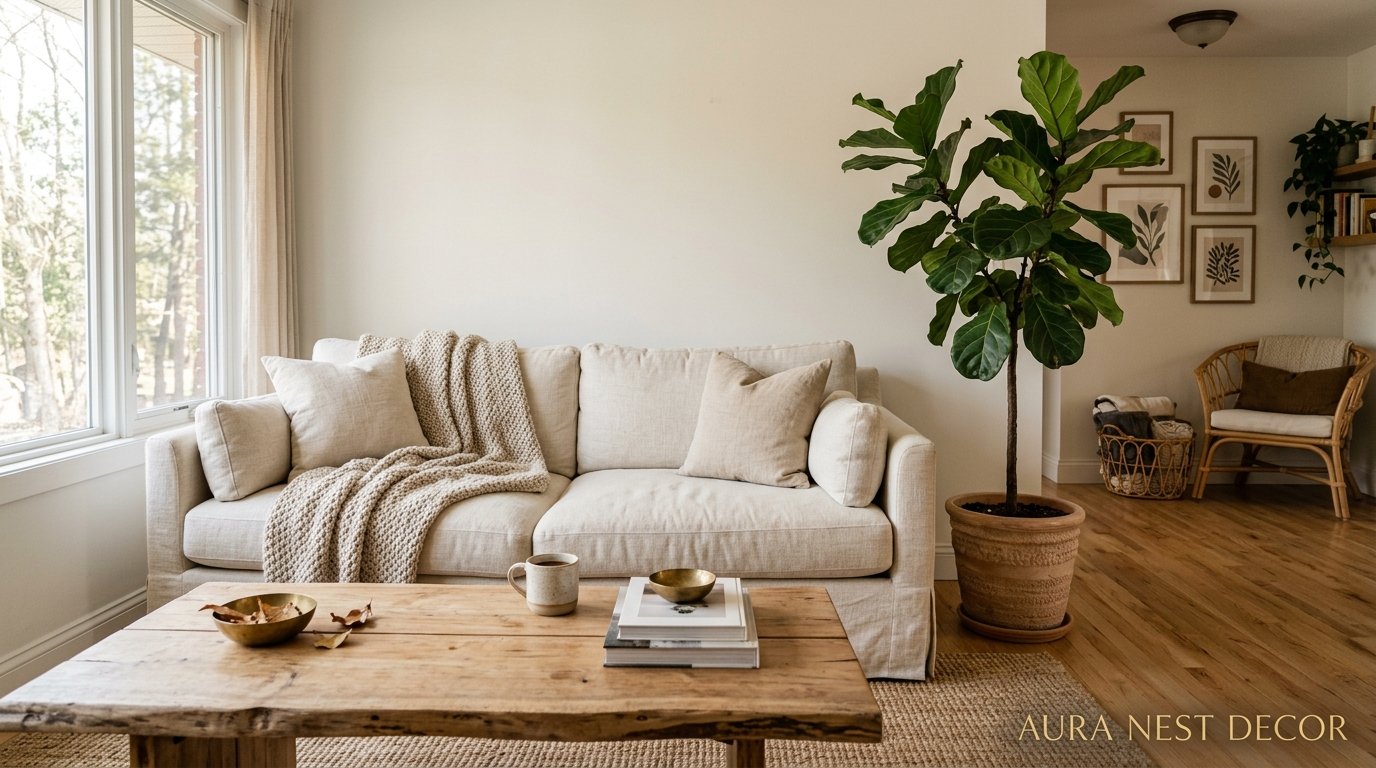
The ones that work hard: large-leafed tropicals like monstera or rubber plants that add architectural interest and fill corners without cluttering. A fiddle leaf fig is a cliché at this point but it’s a cliché BECAUSE it works. Trailing pothos from a high shelf. A single olive tree in a terracotta pot by a bright window.
What doesn’t work as hard: tiny succulents dotted around (they get visually lost), aggressive floral arrangements that fight with everything else in the room, plants in white plastic nursery pots that someone forgot to repot. The pot matters AS much as the plant. A beautiful snake plant in a plastic pot is a missed opportunity. The same plant in a simple terracotta or a matte ceramic and suddenly it’s a design decision.
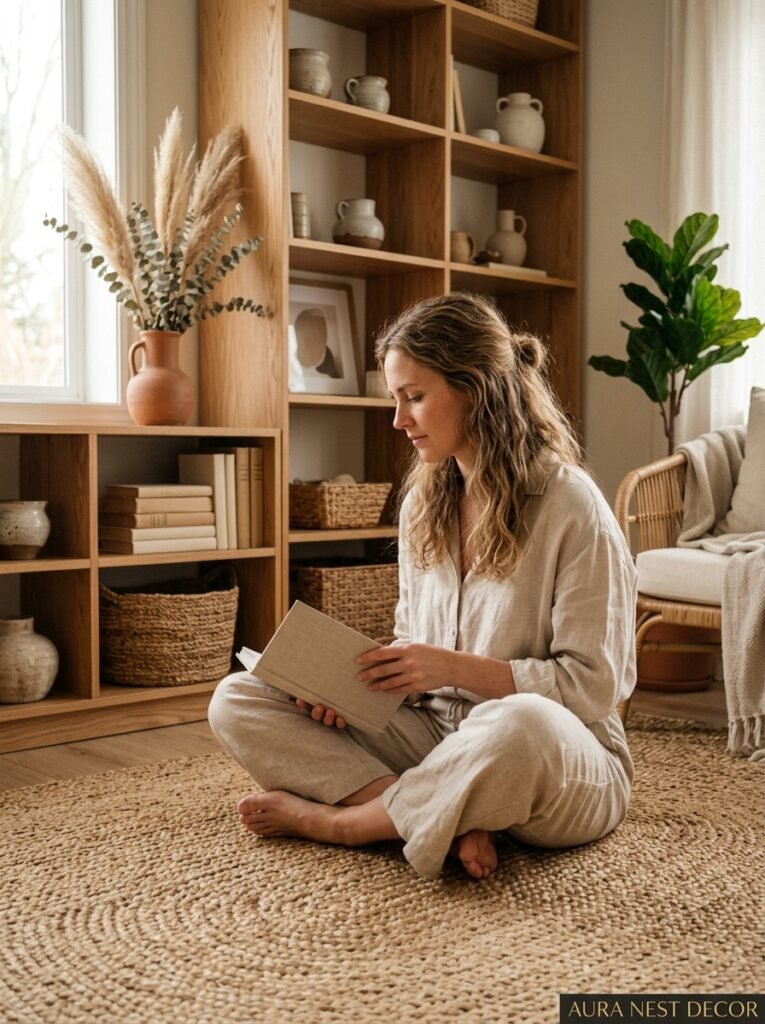
And don’t underestimate dried botanicals. Dried pampas, dried grasses, preserved eucalyptus — these add incredible texture and they don’t need watering, which, I’m just saying, is very appealing if you travel or simply forget.
“A plant in a bad pot is just a task. A plant in the right pot is a room feature.”
6. The Sofa Conversation Nobody Wants to Have But Needs To
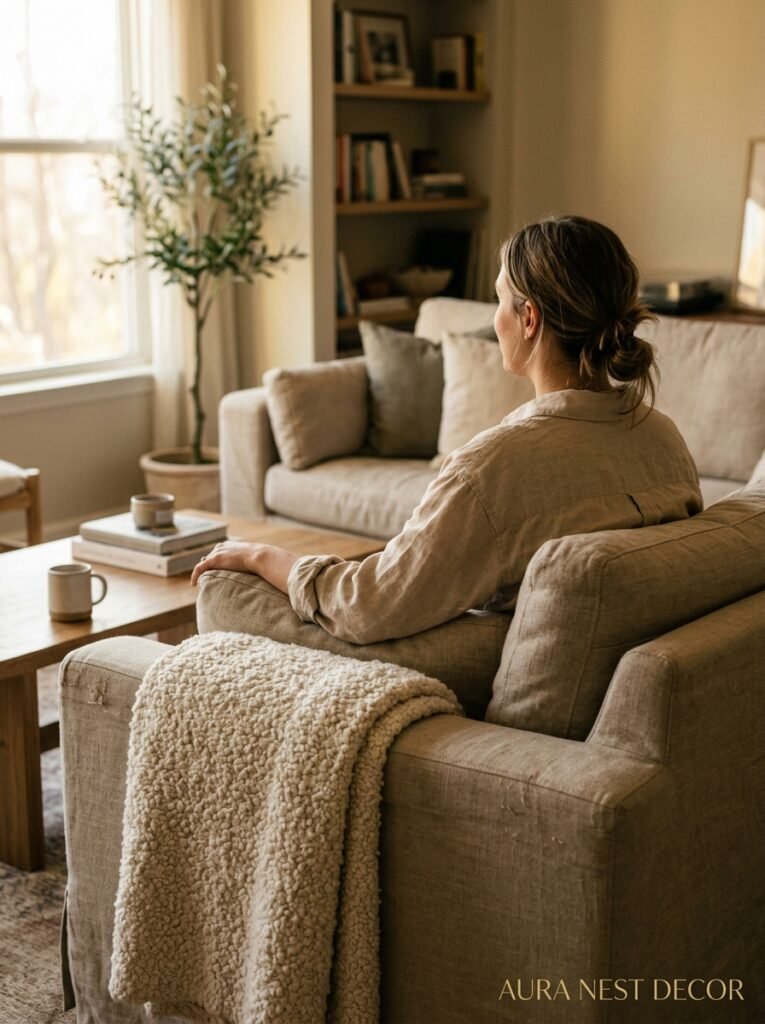
Linen sofas. Boucle sofas. Natural cotton covers. We’ve all saved them on Pinterest. But here’s the thing — this is where a lot of natural living rooms fall apart in real life, because the sofa is the single most expensive item and the one you’ll second-guess the most.
Linen is incredible for a natural room because it creases, which makes it look lived-in and human and NOT showroom. But it stains easily, and the creasing that looks romantic in photos looks chaotic in a tight apartment. You’ll need to commit to either covering it with throws or accepting the texture.
Boucle — that chunky, loopy fabric that’s been everywhere for three years — is actually quite durable and hides mess well. It also photographs beautifully, which is why it’s taken over Pinterest. The downside is it attracts pet hair like nothing I’ve ever encountered. If you have a cat or a dog, I’d think hard.
Undyed or natural cotton is maybe the most honest natural fabric. It breathes. It softens with washing. The color evens out over time. And it doesn’t cost as much as Belgian linen. Not as glamorous but genuinely good.
The other option nobody talks about enough: a wooden-framed sofa with removable cushion covers in any natural fabric you like. You can swap the covers seasonally, and the exposed wood becomes part of the room’s natural material story.
7. Lighting That Does the Heavy Lifting When the Sun Goes Down
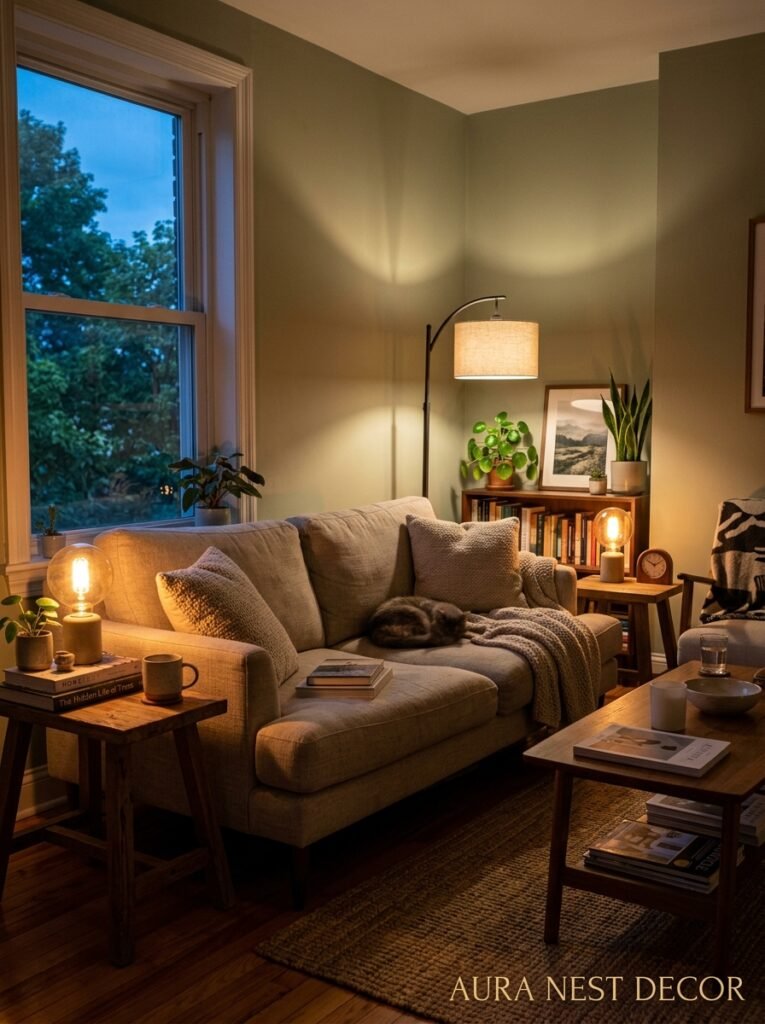
During the day, a natural living room basically lights itself if you’ve done things right. Big windows, sheer linen curtains, pale walls that bounce light. Fine.
But at night? This is where most natural rooms go completely wrong.
Overhead lighting is the enemy. Or rather, ONLY overhead lighting is the enemy. One central ceiling light pours flat, even brightness over everything and kills every shadow — and shadow is what gives natural materials their texture. The grain disappears. The weave of the rug flattens. The warmth of the wood goes cold.
What you want instead: layers. A low floor lamp in the corner. Table lamps at eye level when you’re sitting. Candles, obviously — always candles. And if you do want a pendant, make it a low-hanging one over a side table or a coffee table area, so the light pools downward rather than flooding everything.
The specific warmth of the bulb matters too. We’re talking 2700K maximum, ideally 2400K. That amber color. The kind of light that makes the room look like it’s glowing from inside. A daylight bulb in a natural room is genuinely upsetting.
8. The Shelf Styling Approach That Doesn’t Look Like a Styled Shelf
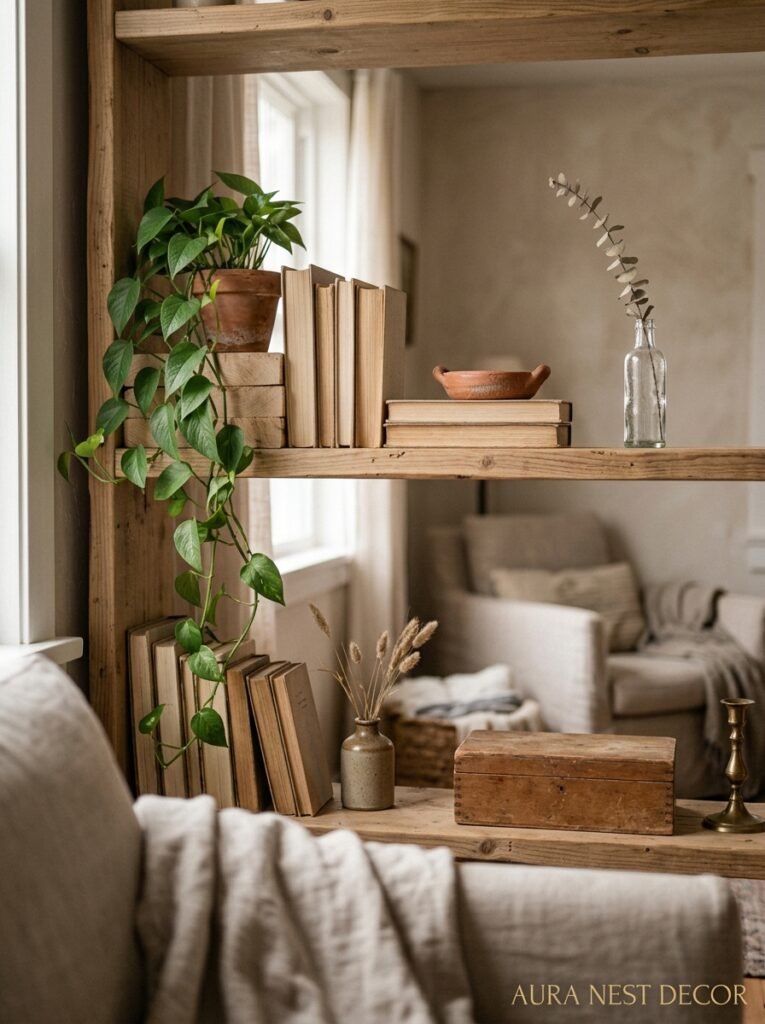
Here’s where I’ll get slightly opinionated: most shelf styling in natural living rooms looks exactly like shelf styling. Books arranged by color, three-piece vase groupings, a dried botanical leaning just so. You can FEEL the effort.
The shelves that look actually natural? They look slightly accidental. A mix of things that don’t quite match but all happen to be made of the same kinds of materials — stone, wood, clay, paper. Books stacked horizontally because there wasn’t space standing up. A single object that’s clearly meaningful (a piece of pottery someone made, a rock from somewhere specific) sitting among things that are just functional.
The trick is thinking about the shelf less as a display and more as a surface that accumulated over time. Because that’s what natural is, really. Things accumulating. Things being used. Things not being perfect.
“The most beautiful shelves look like no one styled them. That’s the whole trick.”
9. Texture Layering — the Difference Between “Nice” and “You Can’t Leave”
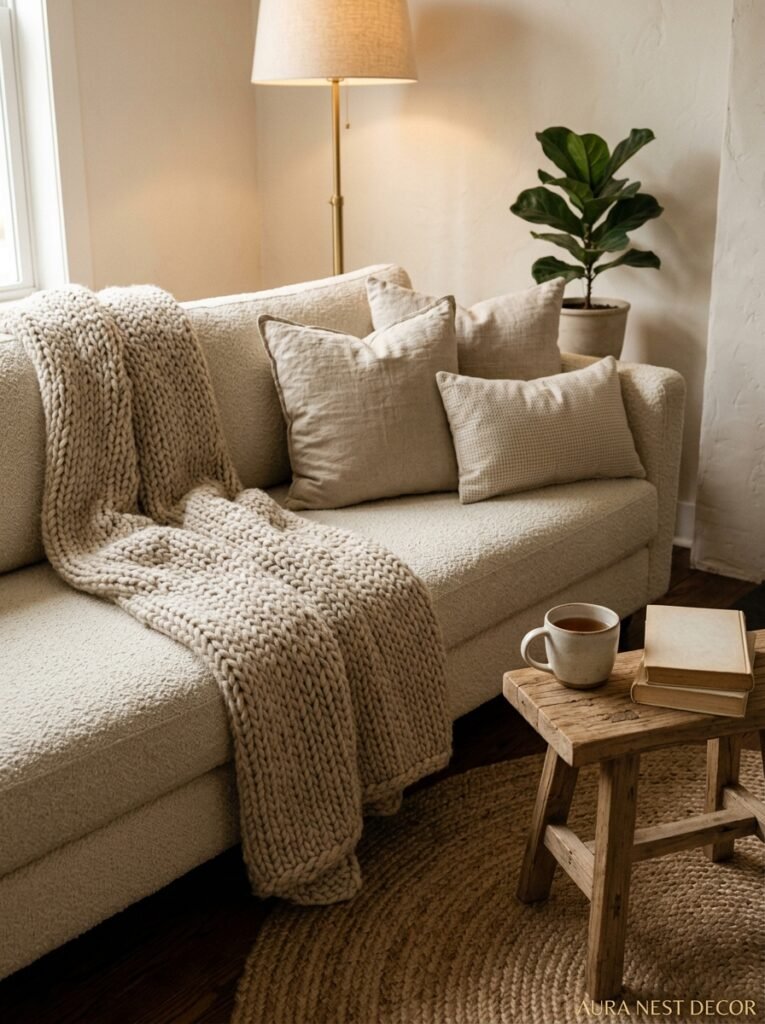
Texture is the thing that separates a living room that photographs well from a living room that you physically don’t want to leave. I genuinely believe this.
Think about every cozy room you’ve loved being in. There was probably something smooth and cool — a stone or ceramic surface. Something rough — maybe the grain of a wooden table. Something soft — a chunky knit throw, a plush cushion. Something flat — a smooth linen panel or a painted wall.
The contrast between textures is what makes you reach out and touch things. And when a room makes you want to touch it, you feel connected to it in a way that’s almost physical. Which is — kind of weird to say about a room, but also completely true.
Layer deliberately: a smooth wooden coffee table with a rough jute tray on top. A flat linen sofa with a boucle cushion and a waffle-knit throw. A matte painted wall with a woven basket or a textured ceramic sconce. None of these things are expensive individually. The layering is the skill.
10. What Clutter Means in a Natural Living Room (It’s Not What Minimalists Think)
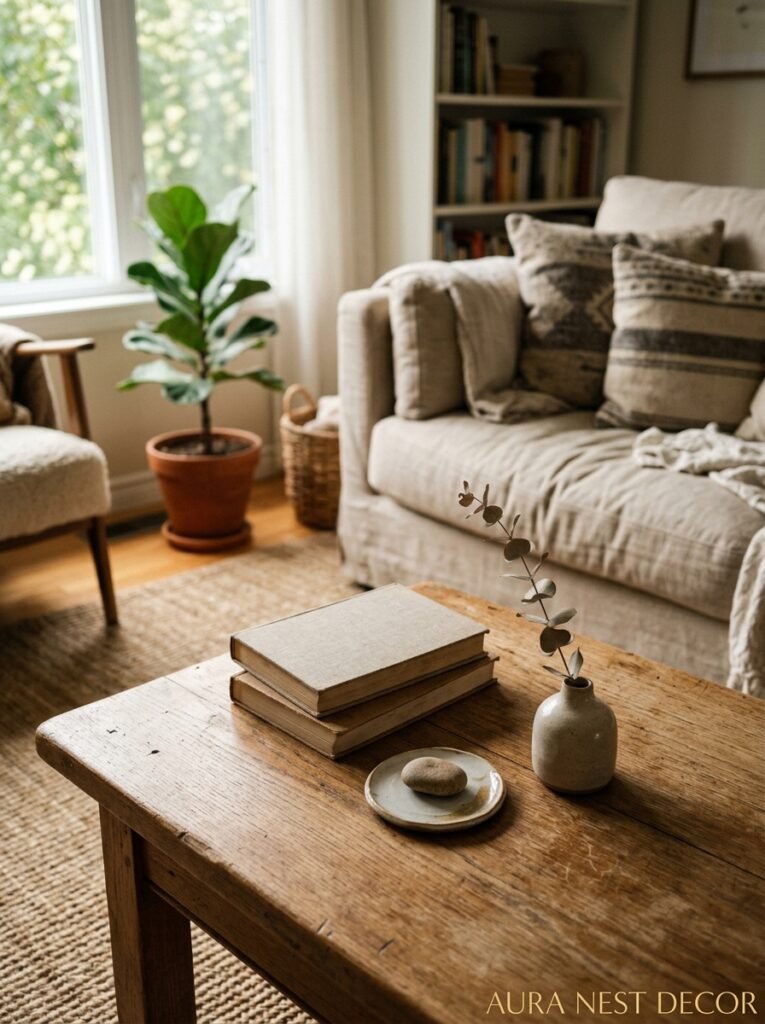
Natural and minimal are NOT the same thing. I want to be clear about this because I see them conflated all the time.
Minimalist rooms aim for emptiness — deliberate, considered emptiness where every object earns its place by standing alone. That’s a valid aesthetic. But it’s not inherently what natural looks like.
Natural living spaces often have more stuff, actually. A basket of things by the fireplace. Books on every surface. A bowl of fruit. Seeds and branches in a jar on the windowsill. The difference between this and clutter is whether the things are USED. Clutter is stuff that’s there by default, that nobody chose, that doesn’t get touched. Natural accumulation is different — it’s the visual evidence of a life happening in a space.
So don’t strip your room bare thinking that’s the natural approach. It might just feel cold.
11. The One Mistake That Makes Natural Rooms Feel Sad Instead of Cozy
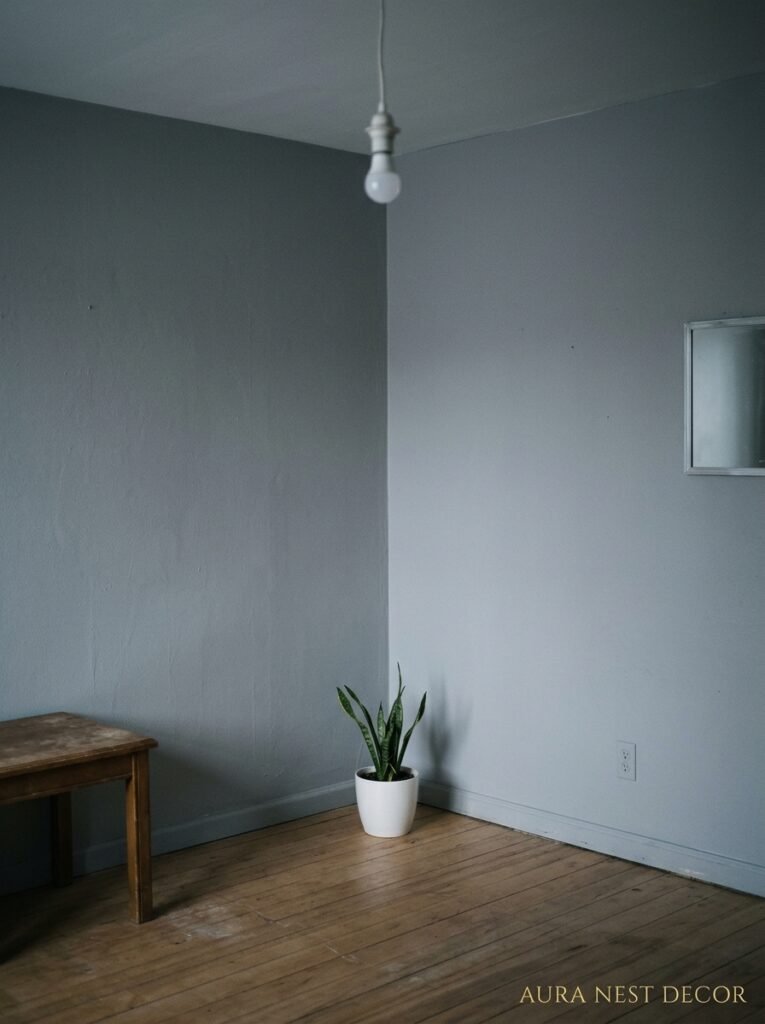
I see this constantly, and I always feel a little sad on behalf of the room: someone does everything right — the linen, the wood, the plants, the textures — and then the room still feels flat and a bit depressing.
Usually it’s because everything is the same tone. The rug is natural beige. The sofa is natural cream. The walls are natural white. The throws are natural oatmeal. There’s no contrast anywhere. Nothing jumps. Nothing creates tension.
You need one element that surprises. A deep green velvet cushion on the linen sofa. A piece of dark wood against all the pale. A single lamp with a terracotta-glazed base. Something that gives the eye somewhere to land and rest.
It doesn’t have to be dramatic. But it has to be different enough that you’d notice if it was gone.
12. The Part That Costs Nothing and Changes Everything
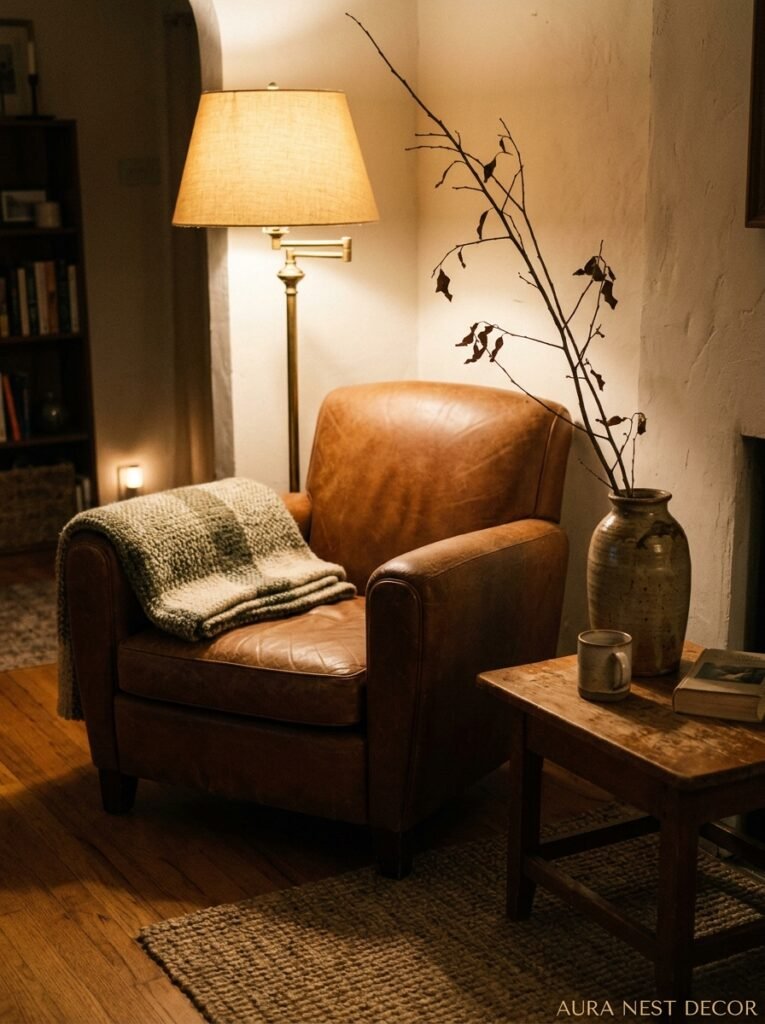
Scent. Smell.
I know this sounds strange in an article about how a room LOOKS. But your living room isn’t just visual — it’s a whole sensory environment, and the smell is doing more to create that “natural” feeling than you might expect.
A room that smells of beeswax candles and old wood and something faintly herby — cedar, eucalyptus, dried lavender — feels natural before you’ve even properly looked at it. That smell hits you at the door and your brain categorizes the whole room as “real, warm, connected to the outside” before your eyes have processed anything.
You don’t need expensive diffusers. A beeswax candle burning for an hour. A bowl of dried lavender on a shelf. Beeswax wood polish on your furniture. A branch of eucalyptus tucked behind a lamp. These things cost almost nothing and they work in a way that’s genuinely hard to explain until you experience it.
—
❓ FAQ
Q: What’s the best natural material to start with if I’m redecorating on a budget? A: Honestly, the rug. A good wool or jute rug transforms a room faster than almost anything else and doesn’t require any other changes — it just quietly upgrades everything around it. Look for end-of-line sales from Dunelm, Ruggable, or Wayfair, and don’t be afraid to size up.
Q: Can you do a natural living room in a rented home where you can’t paint the walls? A: You can get 80% of the way there without touching a single wall. Layered textiles, real wood furniture, plants, and strategic lighting do most of the heavy lifting. The wall color matters less when the room has enough texture and warmth at furniture level.
Q: Is boucle fabric actually practical or just beautiful in photos? A: Both, mostly. It hides everyday dirt and wear better than smooth fabrics, and it’s more durable than it looks. The big caveats are pet hair (it’s magnetic) and anything with a sharp edge catching on the loops. If you have pets or kids who treat furniture aggressively, linen or treated cotton might age more gracefully.
—
💭 Final Thoughts
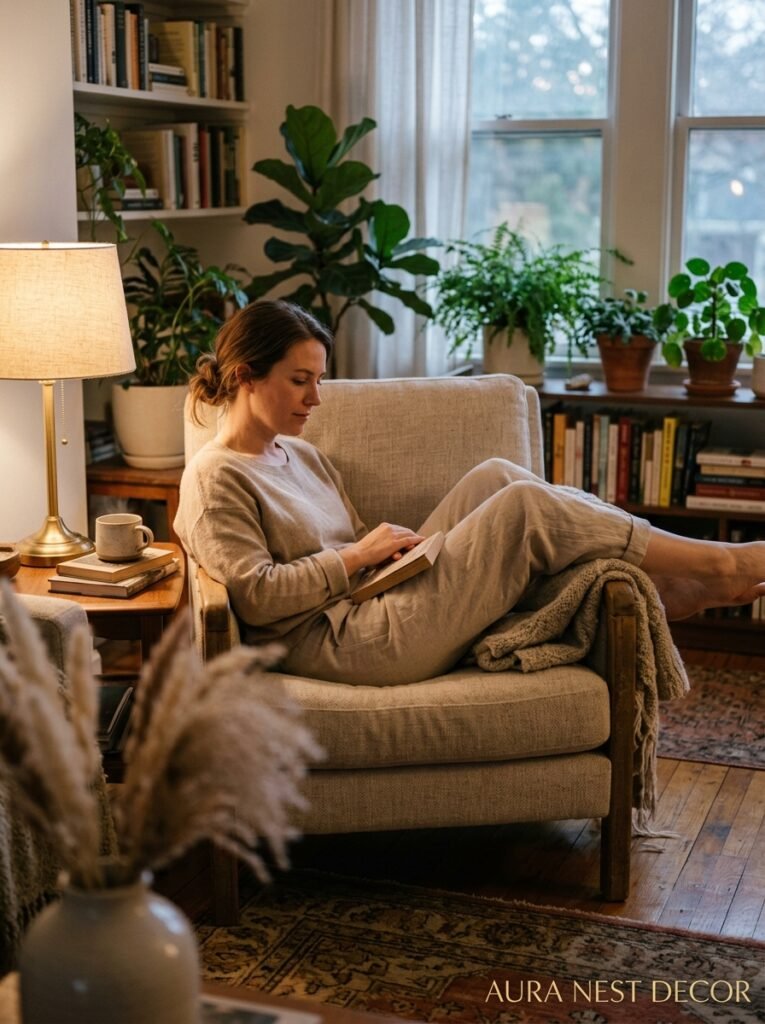
A natural living room isn’t a look you achieve once and photograph. It’s a room that keeps changing — with the light, with the seasons, with the things you bring into it. The materials get better as they age. The plants grow. The throws get softer.
Maybe that’s the thing that makes these rooms feel so different from rooms that are just decorated. They’re actually alive.
So — what one thing would you change in your living room tomorrow if it cost nothing?