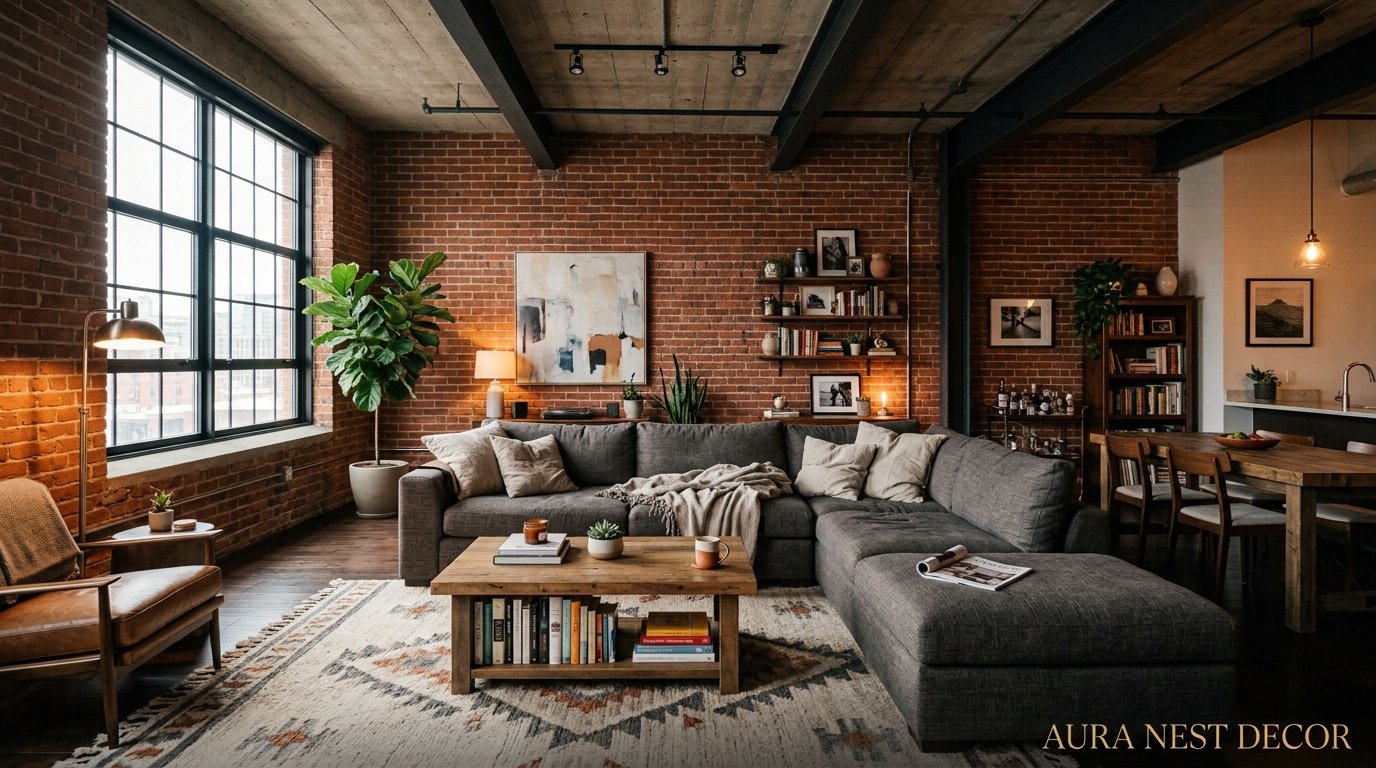
The Loft Living Room Guide That Actually Gets What You’re Working With
You’ve got high ceilings, exposed brick or concrete, maybe a big steel-framed window that floods the room with light at 9am. And yet somehow it still feels… not quite right. Too echoing. Too cold. Too much like a trendy restaurant and not enough like somewhere you’d actually want to spend a Sunday afternoon.
That’s the thing about loft living rooms — the bones are incredible, but the styling? That’s where people get lost.

—
1. Why Loft Living Rooms Feel “Off” Before You Fix This One Thing
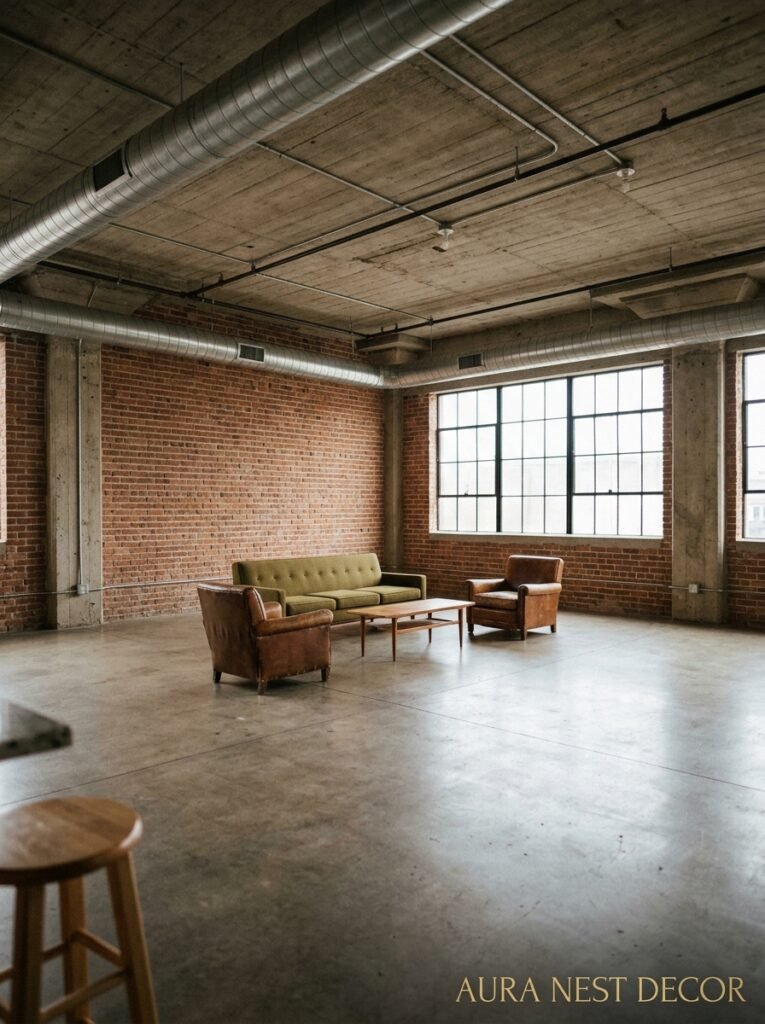
It’s the ceiling-to-furniture ratio. That’s almost always it.
People move into a loft, they’re blown away by the height, and then they buy furniture that’s just… normal size. A regular sofa. A standard coffee table. A floor lamp that gets absolutely swallowed by 14 feet of vertical space. And the whole room ends up feeling like a furniture showroom that someone forgot to finish.
The fix isn’t buying everything oversized — that’s going overboard. But you do need to think vertically in a way you wouldn’t in a regular room. Floor-to-ceiling bookshelves. A pendant light that drops low, like really low, maybe 5 or 6 feet down from the ceiling. Curtains hung as high as possible, even if your actual windows aren’t that tall. Your eye needs to be guided UP and then gently brought back down, or the room just feels empty at the top and cluttered at the bottom.
Side note — this is also why art placement matters so much in lofts. A single framed print at eye level looks lost. A gallery wall that starts lower and climbs upward? That works.
2. The Exposed Brick Dilemma (Painting It Isn’t Always the Villain)
Here’s an opinion that will lose me followers: not all exposed brick needs to stay exposed.
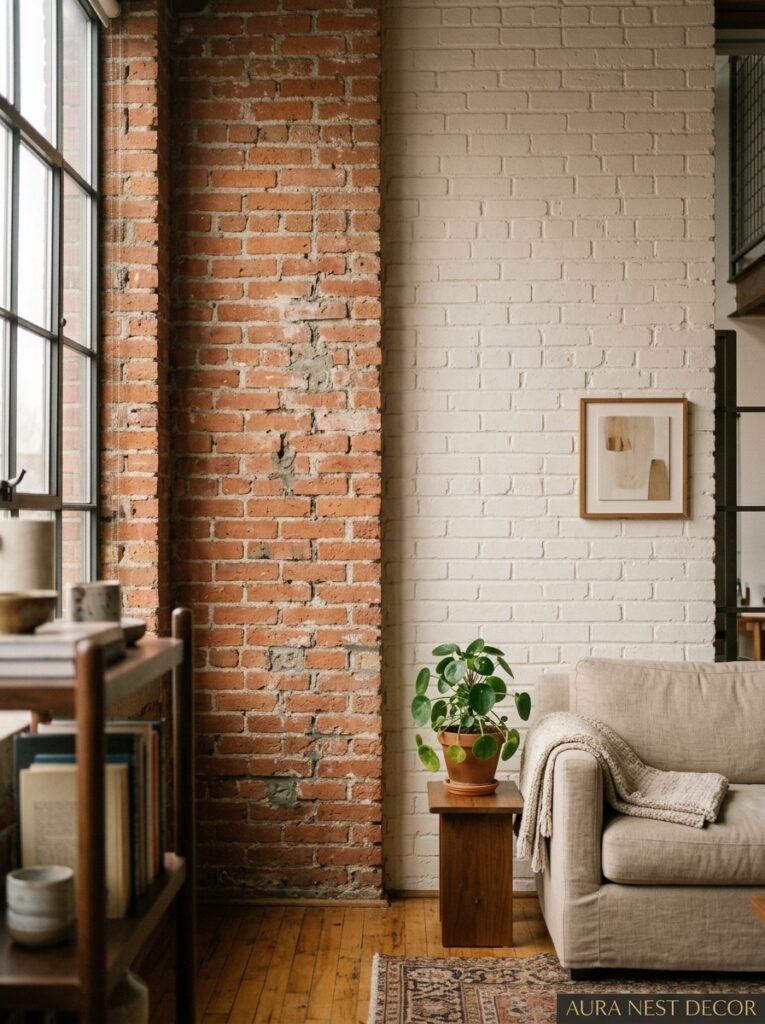
I know, I know. But hear me out. There’s a version of exposed brick that’s warm and gorgeous — dark red, varied texture, the kind with old mortar and a bit of character. That brick? Keep it. Please.
But there’s another version. The kind that’s orangey-pink, uniformly textured, and slightly dusty-looking no matter what you do. The kind that clashes with warm tones and fights with cool tones and just sort of… exists there, being difficult. That brick? Limewash it. Or paint it the same white as your walls and let it quietly do its job as texture without demanding visual attention.
Limewashing is genuinely the middle ground that more people should try. It softens the color, keeps the texture visible, and turns problematic brick into something that actually plays well with your furniture. Benjamin Moore’s White Dove works well for this. So does Farrow & Ball’s Elephant’s Breath if you want something with a bit more grey.
The goal is a loft living room that feels cohesive, not one that’s fighting itself.
“Your brick doesn’t have to be the main character — sometimes the best thing it can do is support the scene.”
3. The Rug Size That Makes Or Breaks the Whole Room
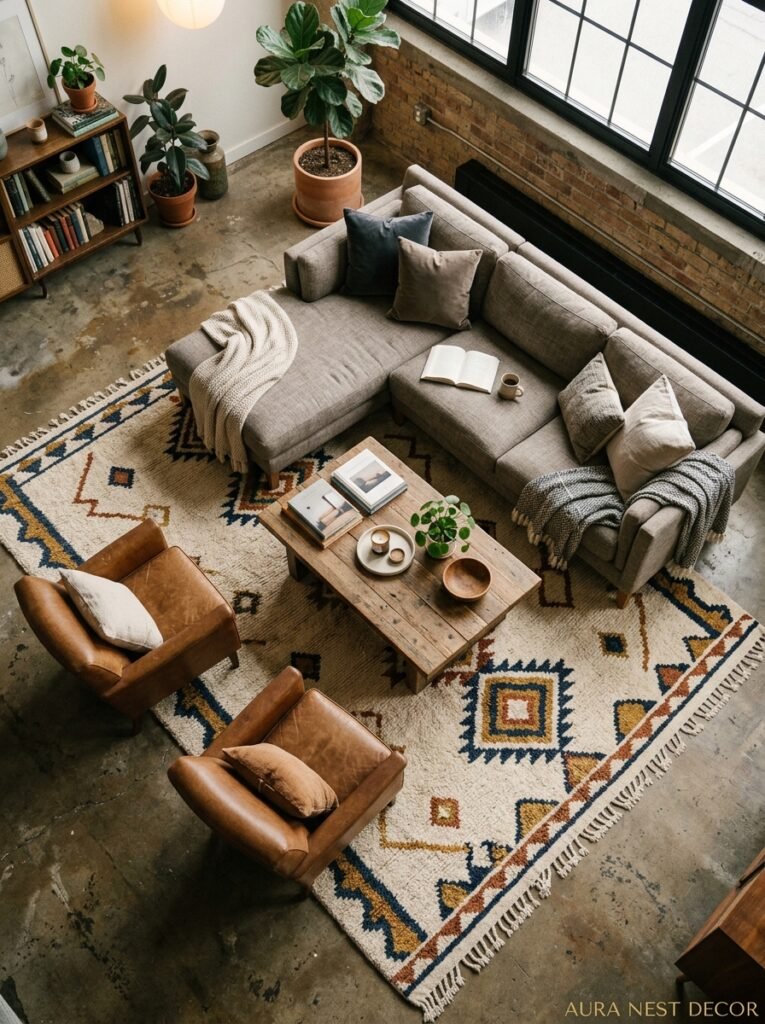
Too small. Every time. Every single time I see a loft living room that feels “not quite right,” I check the rug, and it’s too small.
In a regular room, a 8×10 rug is usually a safe bet. In a loft? That’s a starter rug. You’re probably looking at a 9×12 minimum, and honestly if your space can handle a 10×14, consider it seriously. All your main seating — sofa, chairs, everything — should have at least its front legs on the rug. Ideally more.
The rug anchors the seating area, and in a large open-plan loft space, that visual anchor is doing a LOT of heavy lifting. Without it, your furniture grouping just floats in the middle of a concrete or hardwood floor and the whole thing looks like you just moved in. Even if you’ve been there for three years.
Natural fiber rugs — jute, sisal, a chunky wool weave — tend to work really well in lofts because they add warmth without competing with the industrial elements. A pale, flat-woven cotton rug in an urban loft can feel weirdly clinical. You want something with pile or texture. Something you can feel.
4. What the Lighting Is Actually Doing to Your Space (And It’s Not What You Think)
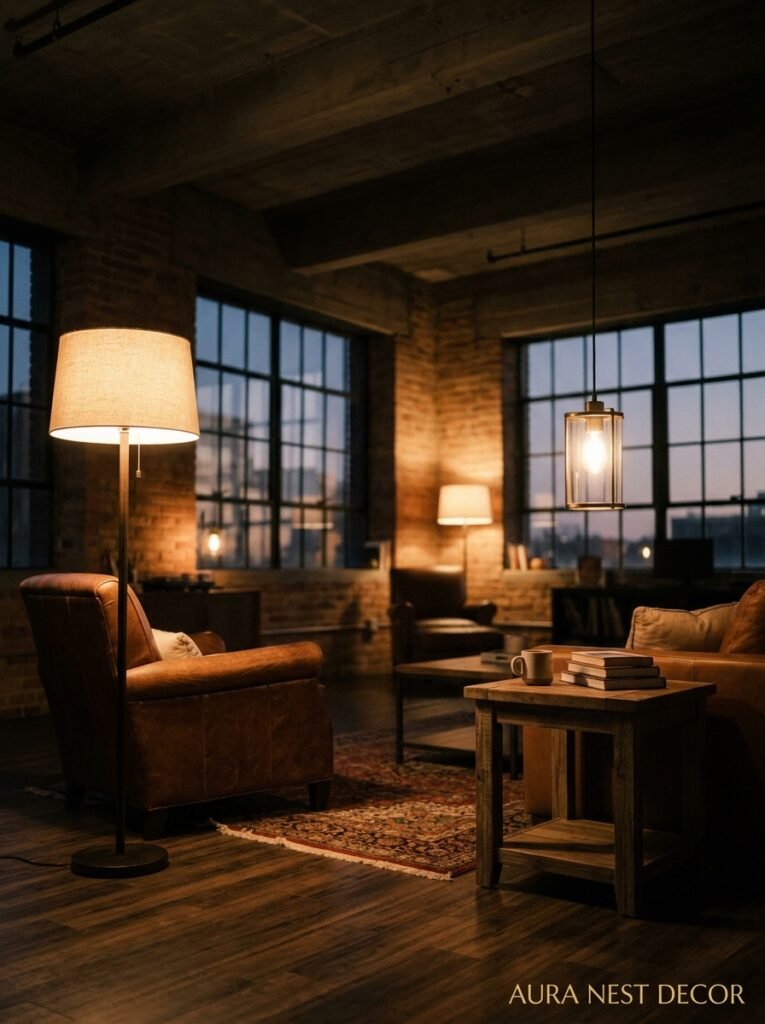
Lofts have this problem where the ceiling is incredibly high, so the light source is incredibly far away from the people in the room. Which means you can have a powerful pendant up there and the room still feels dim at sofa level.
Layers. You need layers.
The overhead pendant or track lighting is the skeleton — it handles the structure. But the personality comes from lower down. A floor lamp tucked behind a sofa. A table lamp on a sideboard, set to a warm bulb, maybe 2200K color temperature, which is that really golden honey light rather than the cooler white. Candles on the coffee table (flameless or real, I’m not fussy). Even a low plug-in lamp on the floor near a bookshelf creates this little pocket of warm light that makes a huge difference at 7pm when you’re actually in the room, living in it.
Don’t rely on a single overhead source in a loft. You’ll be cold-lit and miserable and you won’t even know why.
“The light at sofa level is the light that matters. Everything else is just architecture.”
5. The Sofa Choice That Doesn’t Get Enough Credit
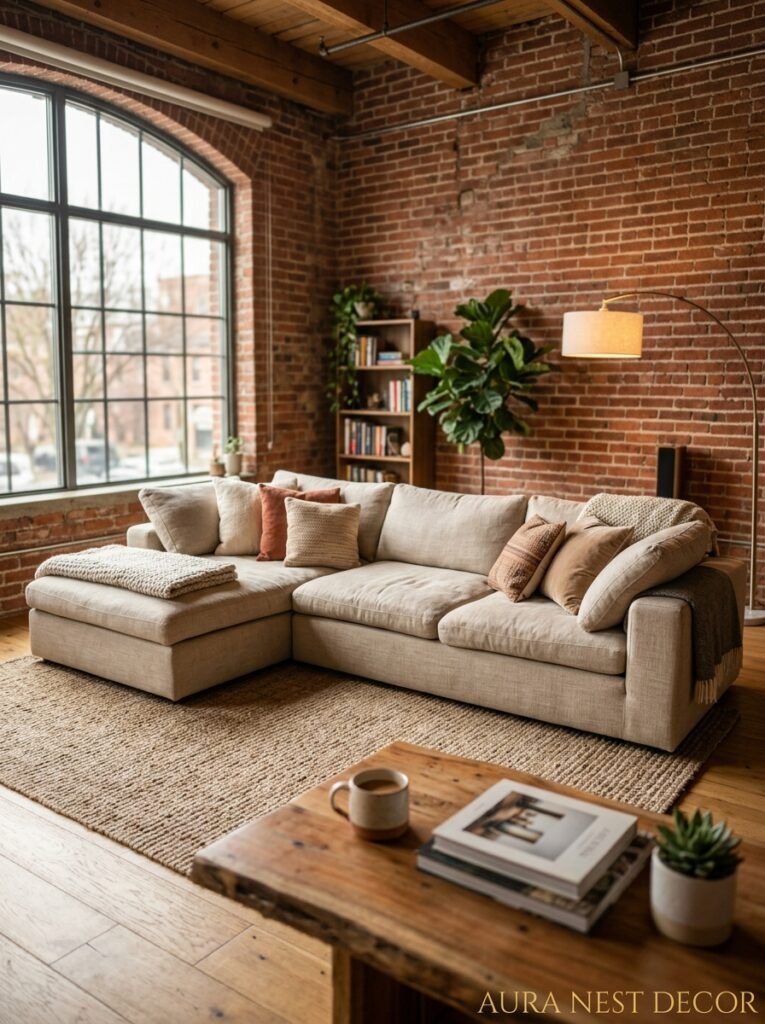
Here’s what I didn’t expect when I started writing about loft spaces — the sofa back height matters more than almost anything else.
In a room with high ceilings and long sight lines, a low-back sofa can look weirdly small and disconnected. Not always, but often. A sofa with a slightly higher back — maybe 32 to 35 inches — reads better from across the room and creates a more defined “zone” within the open space. It gives you something to see, something to understand.
The deep, oversized sectional is obviously a classic loft choice and it does work, but only if your layout can actually support it. If you’re putting a giant L-shaped sectional in a long, narrow loft space, you’ll end up blocking the flow entirely. In that case, a large 3-seater with two chairs opposite creates a more flexible grouping that still feels substantial.
Velvet sofas. I keep coming back to them for lofts. Especially jewel tones — a deep teal, a dusty plum, a dark forest green. Against concrete or brick, those colors glow. They soften the hard edges. And they look a THOUSAND times better in photos, which let’s be real, matters to anyone reading this.
6. Concrete Walls and Floors: How to Stop Them from Eating Your Warmth
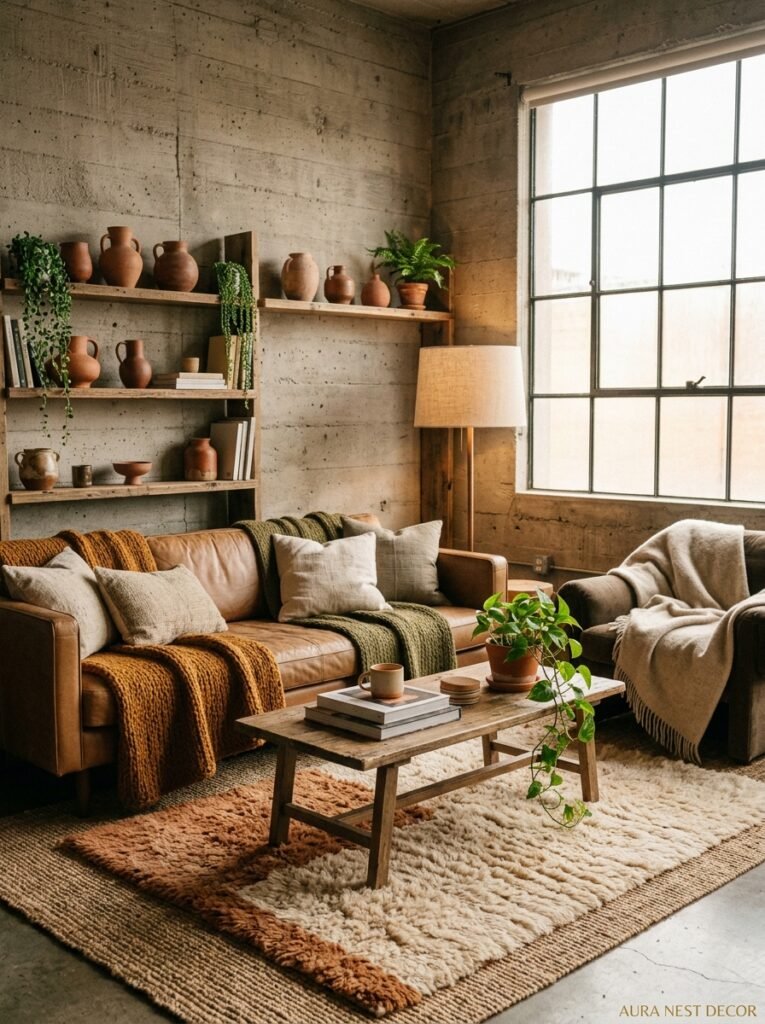
Concrete is beautiful. It’s also basically a giant temperature and sound sponge that will absolutely drain any coziness from your room if you let it.
The trick is counterbalancing with organic materials in your soft furnishings. Chunky knit throws. Linen cushion covers. Raw wood on your coffee table or shelves — not smooth lacquered wood, but something with visible grain and weight to it, something that looks like it came from a real tree. Leather (or a good vegan alternative) in a natural tan or cognac color warms up concrete like almost nothing else does.
Plants help more than people realize. Not just as decoration — the actual greenery, the irregular organic shape of a big leafy plant, is the visual opposite of a smooth concrete wall. A fiddle leaf fig in the corner. A trailing pothos on a high shelf. Even a few small succulents on a window ledge. They break up the industrial hardness and make the room feel alive in a way that no cushion quite manages.
And layered textiles on the sofa — different textures, different weights, not a matching set — that’s the move for a loft that feels warm rather than styled.
7. The Industrial Element Nobody Talks About Enough: Windows
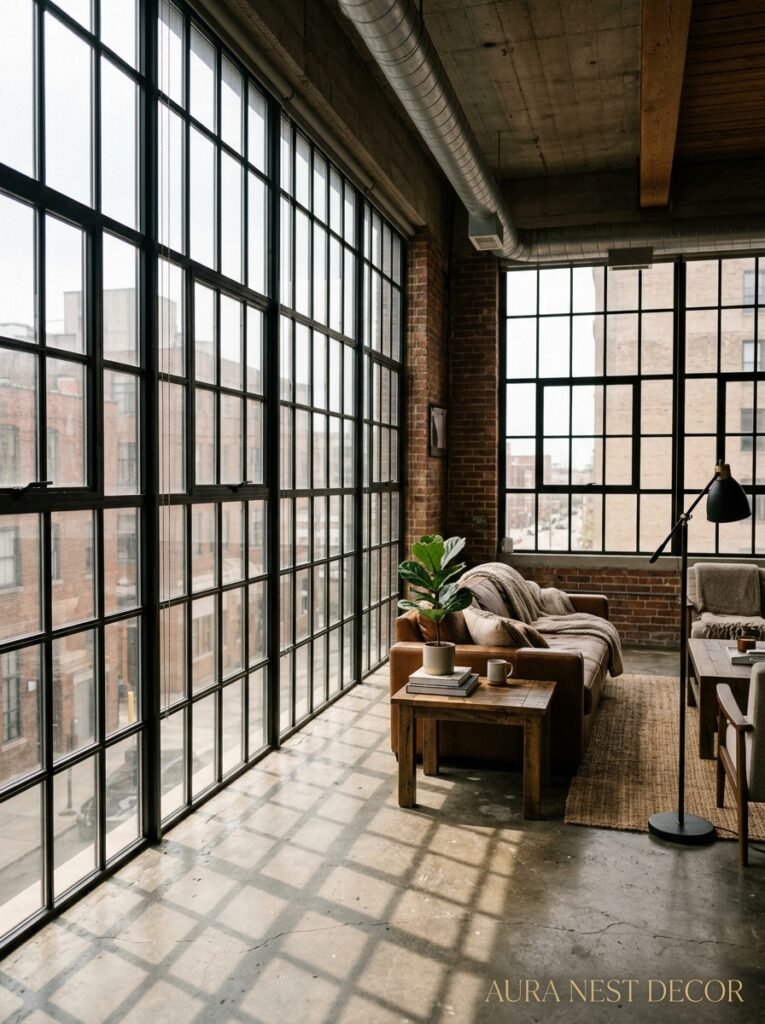
Loft windows are often the most extraordinary thing in the room and people treat them like an afterthought.
Steel-framed Crittal-style windows (the black metal grid ones you see everywhere on Pinterest right now) are obviously iconic. But even regular large windows in a loft deserve serious attention. What you put on them — or choose NOT to put on them — shapes the whole feel of the space.
Roman blinds in a natural linen: clean, textural, lets the window frame read properly. Long floor-length curtains in a neutral heavyweight fabric: dramatic, soft, makes the window feel even taller. Sheer panels that you leave half-drawn: casual, hazy, gives you that soft filtered light thing at mid-morning that looks absolutely incredible.
What doesn’t work — those short curtains that hang to just below the windowsill. They’ll cut the height of your window visually and make the whole room feel shorter, which is the one thing you cannot afford in a loft.
“You moved somewhere with those windows for a reason. Don’t cover them up with the wrong thing.”
8. The Gallery Wall Formula That Doesn’t Look Like a Formula
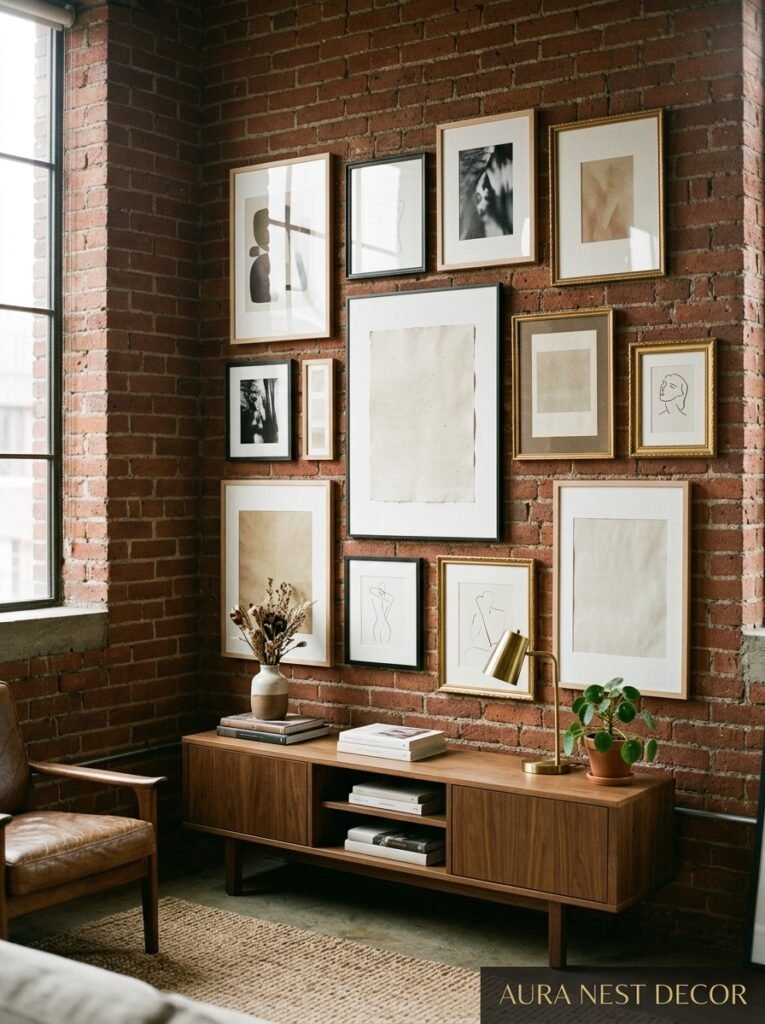
Loft walls need something. They’re too big and too interesting to leave completely bare, but a random collection of frames just looks messy at scale.
Here’s what actually works: pick a consistent framing style (all black frames, or all natural wood, or all white) and then let everything inside the frames be varied. Mix photography and illustration and maybe one or two pieces of original art. Mix sizes. Have one piece that’s genuinely large — like 24×30 or bigger — and let the smaller pieces orbit around it rather than all competing equally.
Hang it lower than you think. Gallery walls in high-ceilinged rooms often get pushed up too high because the wall is so generous. Keep the center of the gallery at roughly eye level, maybe 57 to 60 inches from the floor. Let the large pieces extend above that, but keep the midpoint human.
And — this sounds weird but it works — lean a few large frames rather than hanging everything. A big framed print leaning against a brick wall, propped on a low shelf or just on the floor, has this deliberately casual quality that lofts really suit. It says “I live here, I didn’t just stage this.”
9. Zoning Without Walls: How to Make a Big Open Space Feel Like a Home
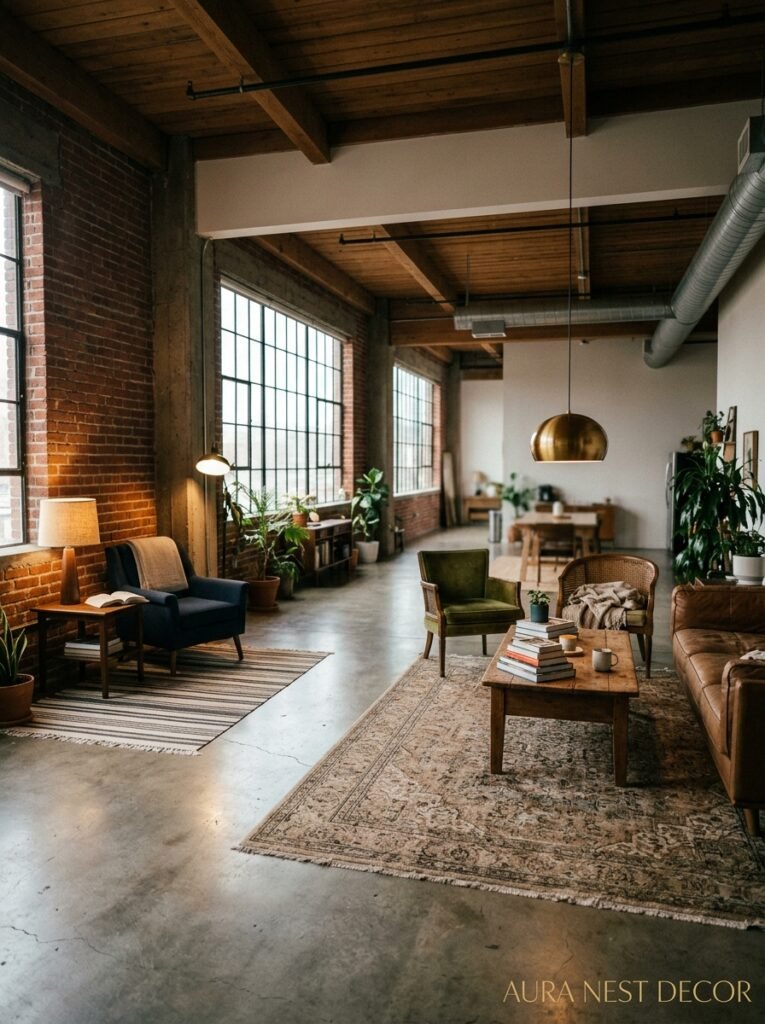
Open-plan loft spaces are fantastic and also genuinely hard to live in without zoning. You end up with this big room that’s sort of everything and sort of nothing.
Rugs are your first zoning tool — different areas get different rugs and that’s often enough to read as separate “rooms.” A large main rug under the living area, something smaller and more interesting near a reading nook or home office corner. The break in flooring coverage is a silent but clear signal to the eye.
Furniture placement does the rest. The sofa back creates a room boundary even without a wall. Turn it slightly away from the dining area if you have one, and those two spaces will feel like separate rooms. It’s sort of incredible how much a sofa back can divide space.
A bookshelf used as a partial divider — not going all the way to the ceiling, just a 5 or 6 foot shelving unit — is another trick that works really well in lofts specifically. Because you’ve got the vertical ceiling height to spare, a mid-height shelf reads as a room partition without chopping the space up visually. You can still see the ceiling and the light above it. The room still breathes.
10. The Color Story That Works for Almost Every Loft
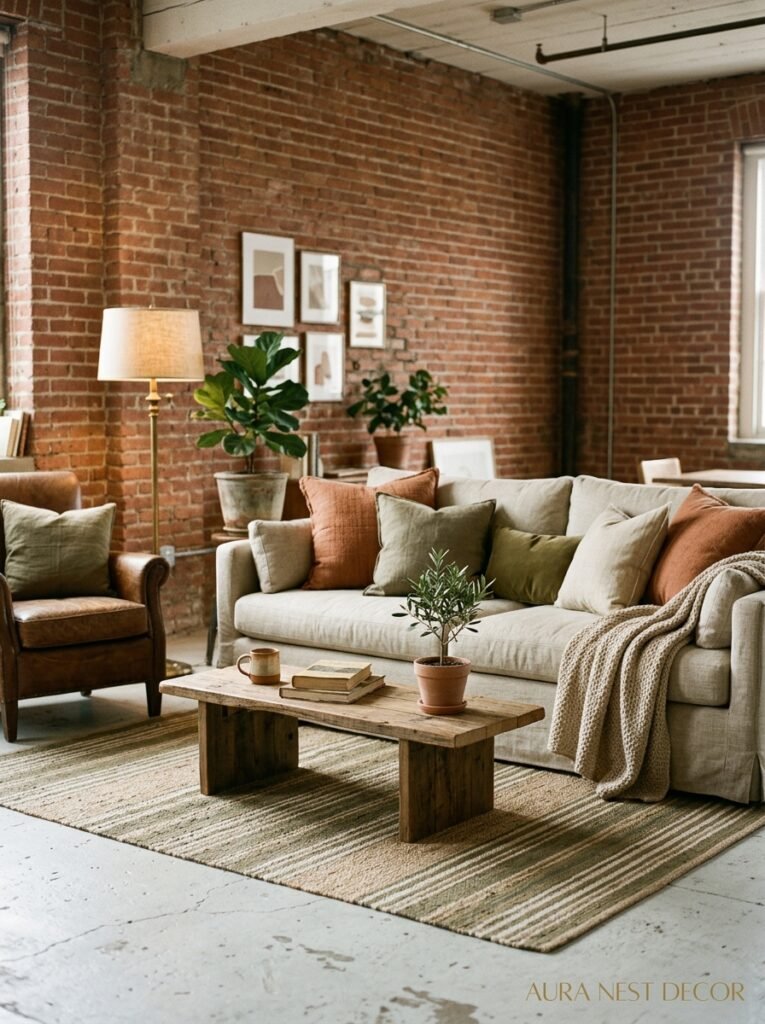
This isn’t “choose neutral colors” advice. That’s too vague and honestly a bit boring.
Here’s what I’ve noticed actually works in loft spaces: a neutral base with one really committed color repeated in three or four places. Not scattered randomly — repeated intentionally. The sofa might be that deep teal. Then a cushion picks it up. Then there’s a ceramic vase in a similar shade on the shelf. Then the lamp base. The color appears, disappears, reappears — it moves through the room like a thread rather than sitting in one place and shouting.
What doesn’t work as well is trying to do two or three accent colors. In a big open loft space, multiple competing accent colors just becomes noise. Pick one. Commit to it. Let everything else be a neutral.
For the neutrals themselves — warm whites and tones with a yellow undertone (think Farrow & Ball’s Cornforth White or Benjamin Moore’s Pale Oak) work far better than cool, grey-based neutrals in most lofts. Cool greys are beautiful in photography but they can make industrial spaces feel borderline clinical when you’re actually in them on a cloudy Tuesday.
11. The Ceiling Itself Is a Design Choice You’re Probably Ignoring
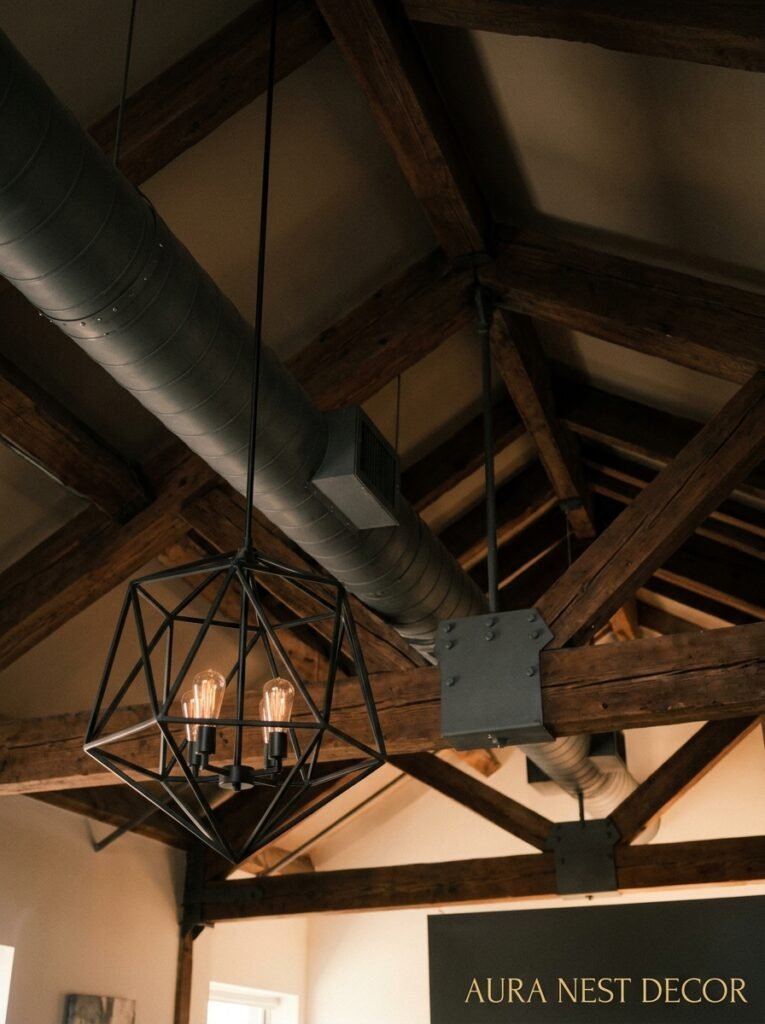
Most people leave the loft ceiling exactly as it is and while that can be fine, you’re actually leaving one of your biggest design surfaces completely unused.
Exposed beam ceilings — real or faux — add warmth and structure to the vertical space. Dark-stained beams against a white ceiling create a beautiful contrast that draws the eye upward without the space feeling empty. In a more industrial loft with ductwork and pipes up there, painting it all matte black is a genuinely brilliant move — it makes the mechanical stuff look intentional, like a restaurant kitchen you’d actually want to eat in.
Acoustic panels on the ceiling deserve a mention because lofts echo badly and most people suffer through it without realizing there’s a solution. Acoustic felt panels in a neutral color, hung in a geometric arrangement on the ceiling, reduce the echo significantly AND add a design element at the same time. Two problems solved at once.
Or, and this is my personal favorite option if you’re in a position to do any kind of decorating: a plaster ceiling painted in a deep, saturated color while the walls stay neutral. Dusty blush. Faded sage. Even a dark muted navy. The effect is cozy and dramatic and completely unexpected, and in a high-ceilinged room, it somehow doesn’t feel heavy at all.
12. The Small Stuff That’s Actually Not Small At All
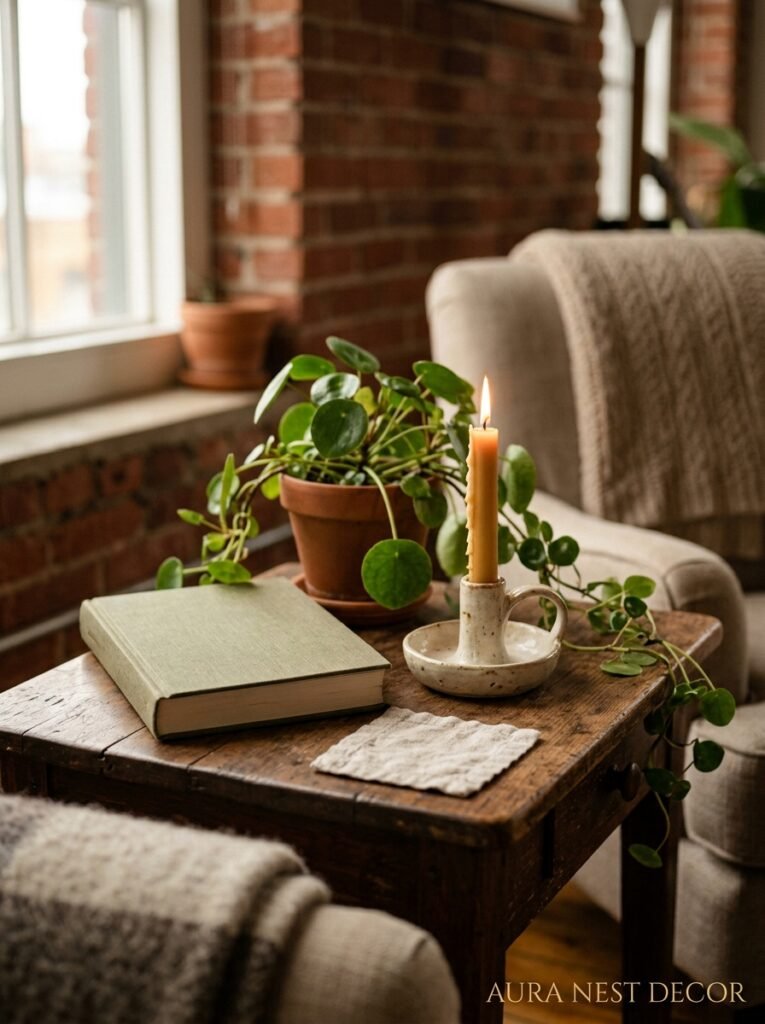
Coffee table books stacked in a rough pile, not fanned out neatly. A throw that’s half falling off the sofa, not folded into a perfect rectangle. A candle that’s been used, not a pristine pillar sitting in a glass container that’s never been lit.
These things sound tiny and they ARE tiny but they’re the difference between a room that looks styled and a room that looks lived in. And in a loft especially — with all those hard edges and industrial surfaces — the lived-in quality is what makes you feel like you can actually relax in the space.
Don’t style the life out of your room. The slightly imperfect thing, the one piece that doesn’t quite match, the book left open on the coffee table — that’s what makes people look at a photo of your space and think “I want to be there.” Not “I want to buy these exact products.”
Buy the mismatched candleholders. Mix the old with the new. Keep the plant that’s a little lopsided. Your loft living room doesn’t have to be perfect. It has to be YOURS.
—
❓ FAQ
Q: How do I make a loft living room feel cozy without losing the open, airy feel? A: Layer your textiles heavily — chunky throws, linen cushions, a large natural fiber rug — and switch to warm bulb lighting (around 2200-2700K) in your floor and table lamps. The goal is warmth at eye level and sofa level, not overhead. You can keep the ceiling high and open while still making the lower half of the room feel genuinely snug.
Q: What’s the best way to divide a large loft living space into zones? A: Use a combination of rugs and furniture placement rather than physical dividers. Different rugs signal different zones clearly, and the back of a sofa creates a surprisingly strong room boundary without closing off the space at all. A freestanding bookshelf placed perpendicular to the wall can also act as a soft divider while still letting light and air through.
Q: Can you actually make exposed concrete walls look warm? A: Yes, absolutely — but you have to fight back with organic materials. Raw wood, leather or suede textures, lots of plants, and warm-toned artwork all counterbalance concrete’s coldness. The key is making sure your textiles and furniture aren’t also cold in tone. Warm whites, earthy neutrals, and one rich jewel-tone accent color will do a lot of the heavy lifting.
—
💭 Final Thoughts

A loft living room is one of the most exciting spaces to style because the starting point is already remarkable. Those ceilings, that light, the bones of the place — you don’t have to manufacture character the way you might in a standard new build. But the styling asks more of you, not less. The scale demands decisions that regular rooms let you get away without making.
Get the rug right, get the lighting layered, and let the space be warm and imperfect and genuinely yours.
What’s the one thing in your loft living room that still doesn’t feel quite right?