Why Your Living Room Still Feels Cold (And the Small Shifts That Actually Fix It)
You walk in, flop onto the sofa, and something’s just… off. The room looks fine in photos. But it doesn’t feel warm. It doesn’t feel like anywhere.
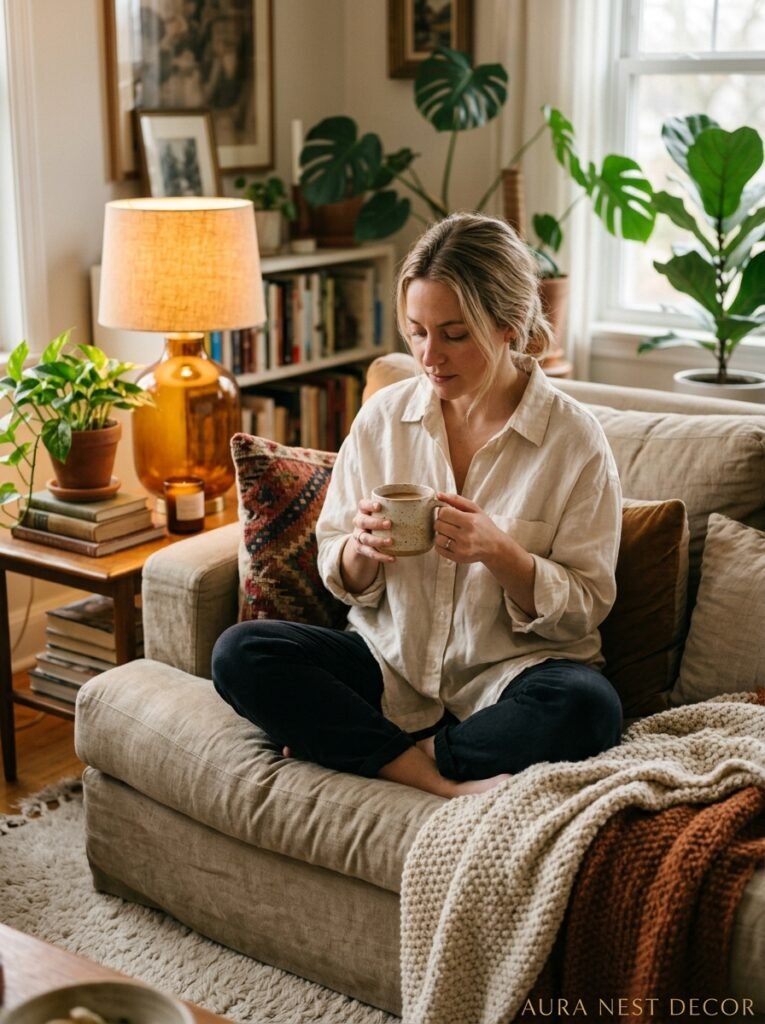
Here’s the thing — warmth in a living room isn’t a paint color or a throw pillow. It’s a feeling you build, layer by layer, usually without realizing you’re doing it.
—
1. The Lighting Mistake Almost Every Room Makes
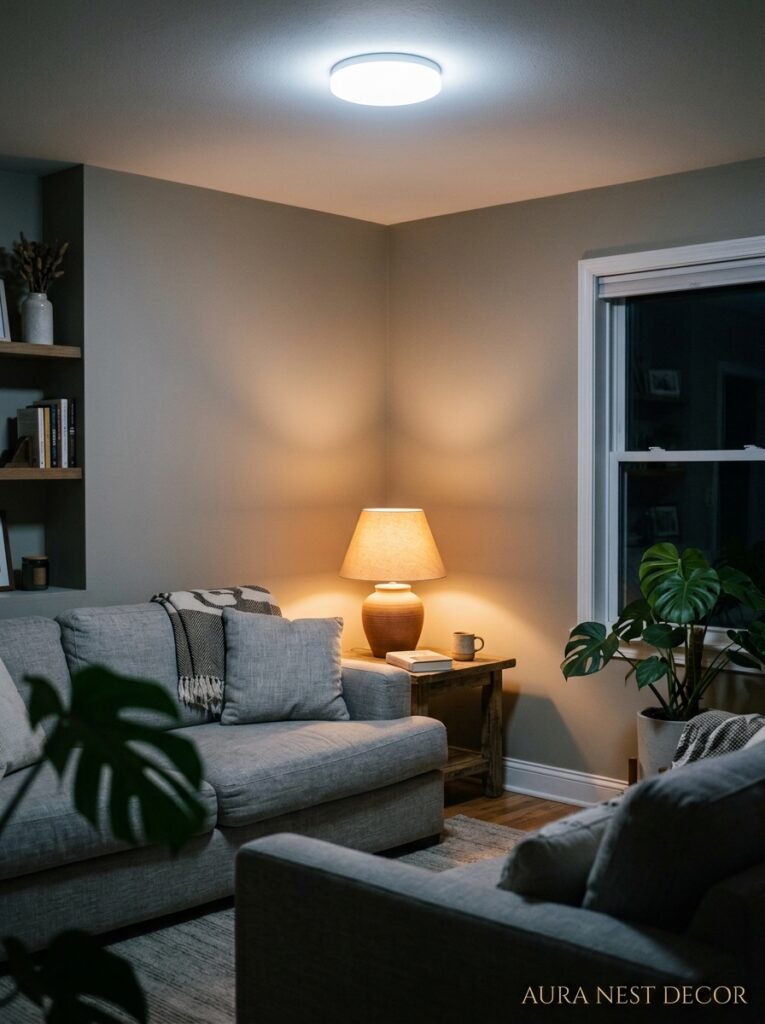
Overhead lighting is the enemy. I’ll just say it.
That single ceiling fixture blasting down at 6,000 kelvin is why your living room feels like a waiting room at 8pm. And I know, I know — you need SOME overhead light. But it can’t be the only light, and it probably shouldn’t be the main one.
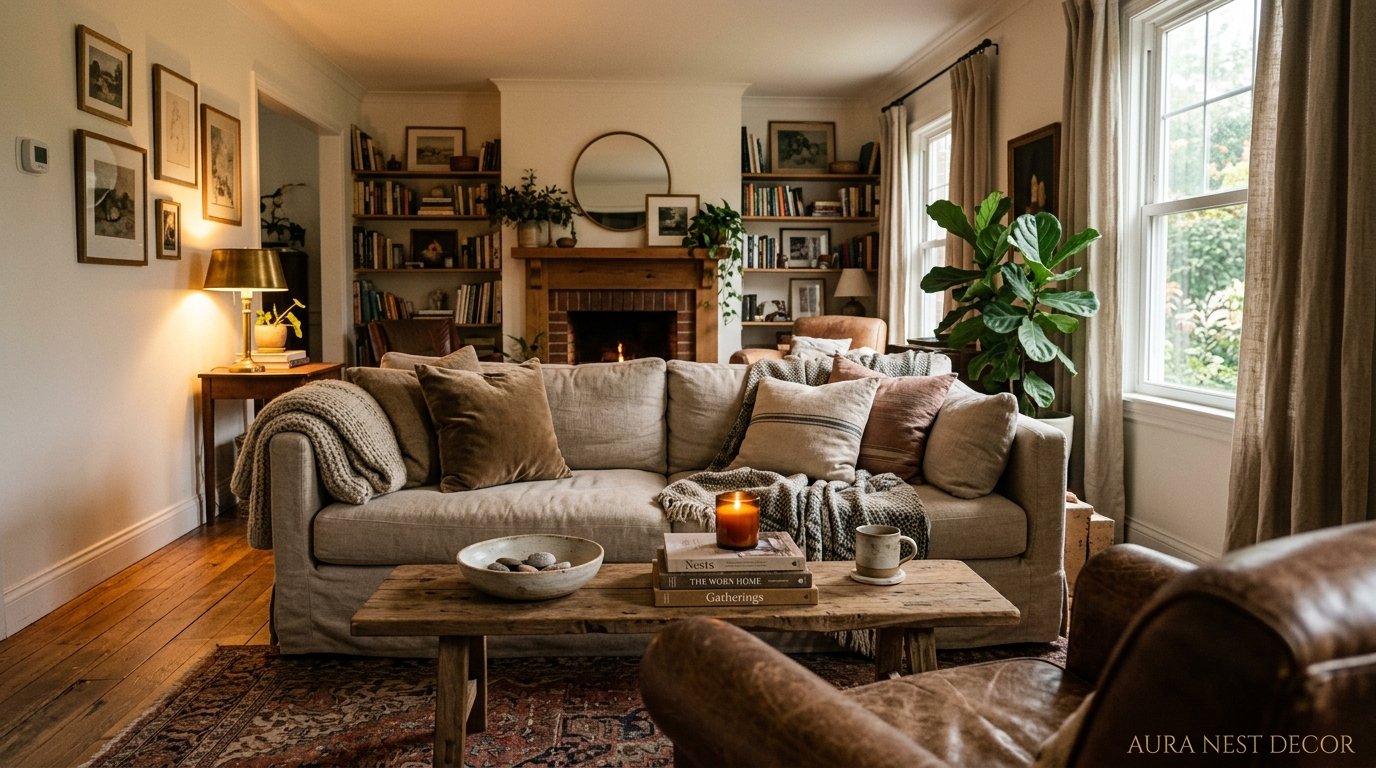
What actually makes a room feel warm is multiple light sources sitting low in the space. Floor lamps in corners. Table lamps at sofa height. A candle or two if you’re feeling it. The amber glow of a good Edison-style bulb at around 2700 kelvin — that’s the number you want on the packaging — does something completely different to a room than a cool white LED. It makes the walls look golden. It makes people’s faces look like they’re at a dinner party.
Side note: if you’ve only got one or two lamps right now, try turning your overhead off for an entire evening and just using those. You might be genuinely surprised by how different the room feels. Dimmer switches are also one of the cheapest upgrades with the biggest return. Not glamorous. Completely worth it.
The fix here isn’t expensive. It’s just intentional.
2. The Color That Keeps Showing Up in Every Cozy Living Room Right Now
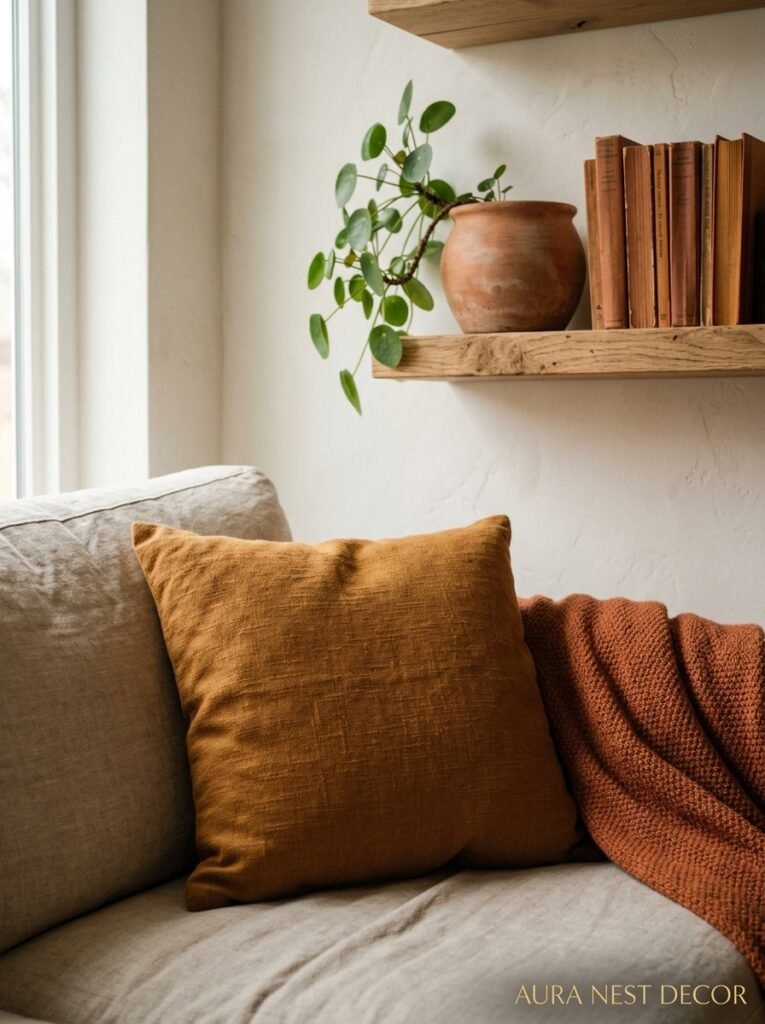
It’s not beige. It’s not greige. It’s this warm, earthy, almost clay-like terracotta-adjacent tone that sits somewhere between rust and sand, and it’s EVERYWHERE — and honestly? Deserved.
But here’s what I think people get wrong about it: you don’t have to paint your walls this color to get the effect. In fact, most of the rooms that feel genuinely warm don’t have terracotta walls at all. They have terracotta in a vase, or a rug with those rust undertones, or a single ceramic lamp base sitting on a side table. The color reads as warmth because your eye catches it and associates it with fire, with clay, with earth.
Warm rooms tend to lean toward yellow undertones rather than blue ones. So even if you’re sticking with neutrals — which is completely fine, I’m not here to make you repaint — just check the undertone. A warm cream like Farrow & Ball’s “Pointing” or Benjamin Moore’s “White Dove” reads entirely differently from a cool stark white. The difference on a chip might look minor. On four walls it’s a whole different room.
If you’re doing an accent, the colors that punch warmth right now are warm terracotta, aged ochre, deep forest green (surprisingly — it reads cozy when it’s dark), and this particular burnt sienna that kept appearing in every mood board I pinned last autumn.
3. Why Your Sofa Might Be the Coldest Thing in the Room
Hear me out on this one.
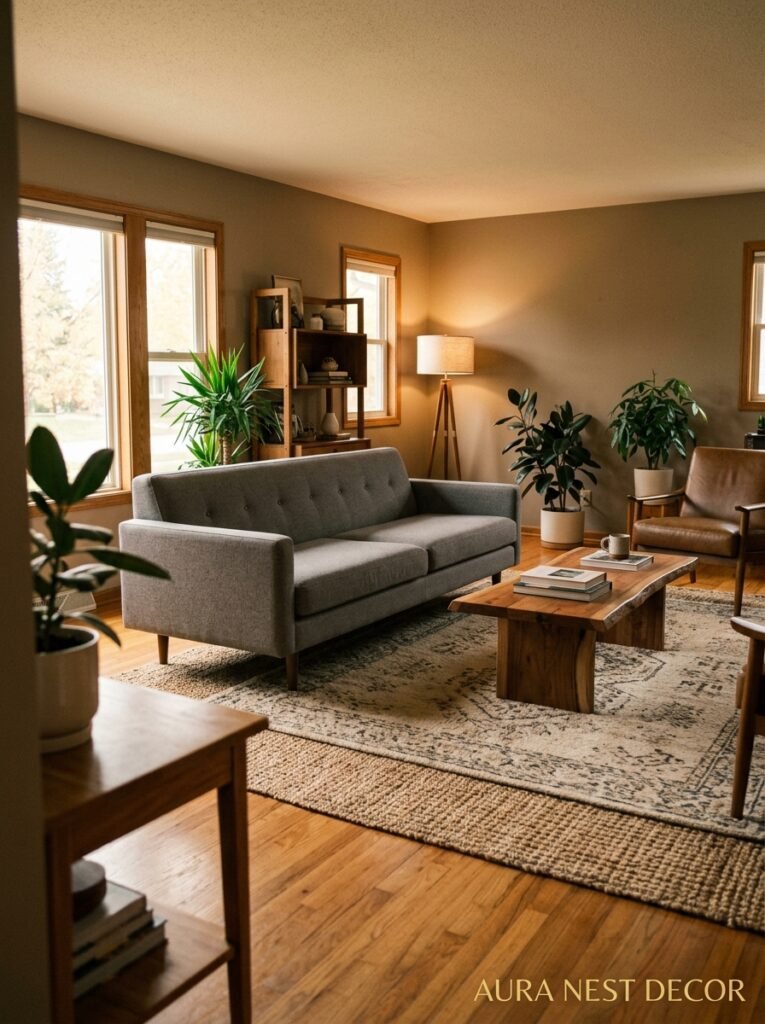
A grey linen sofa with clean lines and matching cushions looks incredible in a magazine. And it will look like a grey linen sofa in your living room too, but it might also feel like no one ever actually sits on it. That’s the trap of the “design-forward” sofa — it can actually work against warmth if there’s nothing to soften it.
The easiest fix is layering. I’m not talking about nine decorative pillows that fall on the floor every time you sit down. I mean one or two pillows in something with a bit of texture — boucle, worn velvet, chunky knit — and a throw that’s actually draped casually rather than folded to military precision. Honestly, you want it to look like someone just got up.
But the bigger thing? Sofa COLOR matters more than people admit. Cool greys and bright whites push warmth out of a space. If you’re buying new, a warm sand, a soft camel, a muted olive, or even a deep navy (which reads warm when it’s saturated) will do more for the room’s overall feel than almost any accessory you put around it.
Already have a grey sofa? Warm rug underneath it. Warm lamp beside it. The grey will recede.
“Warmth isn’t what you add — it’s what you stop keeping so far away.”
4. The Rug Rule Nobody Tells You About Until It’s Too Late
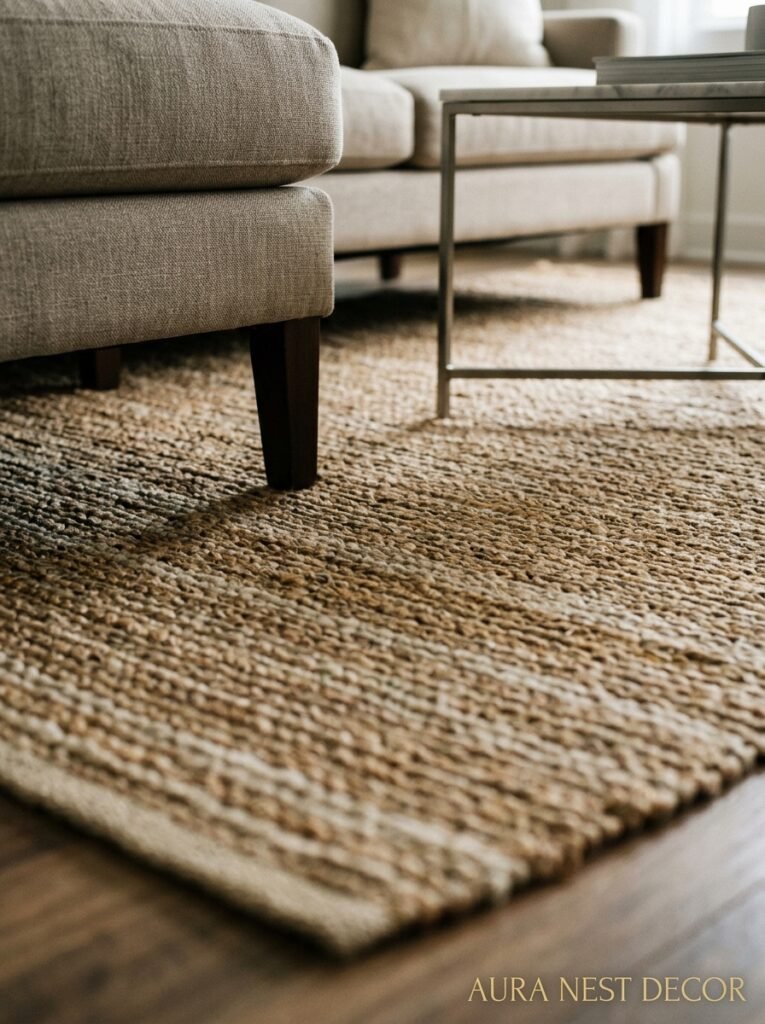
Too small. The rug is almost always too small.
This is one of those things where I’ve seen it a hundred times and I still have to fight the urge to do it myself when I’m shopping, because the right-size rug costs more and the smaller one looks fine in the store. But in the room? A rug that doesn’t get under at least the front legs of your sofa just floats there. It doesn’t anchor anything. The room looks unfinished and somehow colder for it.
For a standard living room, you’re usually looking at 8×10 feet minimum, often 9×12. If that sounds massive — it should. That’s kind of the point.
The OTHER thing about rugs and warmth: material genuinely matters. A flatweave cotton rug is fine. A deep-pile wool rug or a jute rug with some texture underneath you feels completely different when you walk into the room barefoot. There’s a physical warmth to it, yeah, but there’s also a visual warmth because textured rugs absorb light rather than reflecting it. Shiny floors, glass coffee tables, high-gloss everything — these all bounce light around and make rooms feel crisper. Sometimes too crisp.
Go bigger, go textured. Just trust me on this one.
5. What Happens When You Add One Piece of Wood and Why It Works
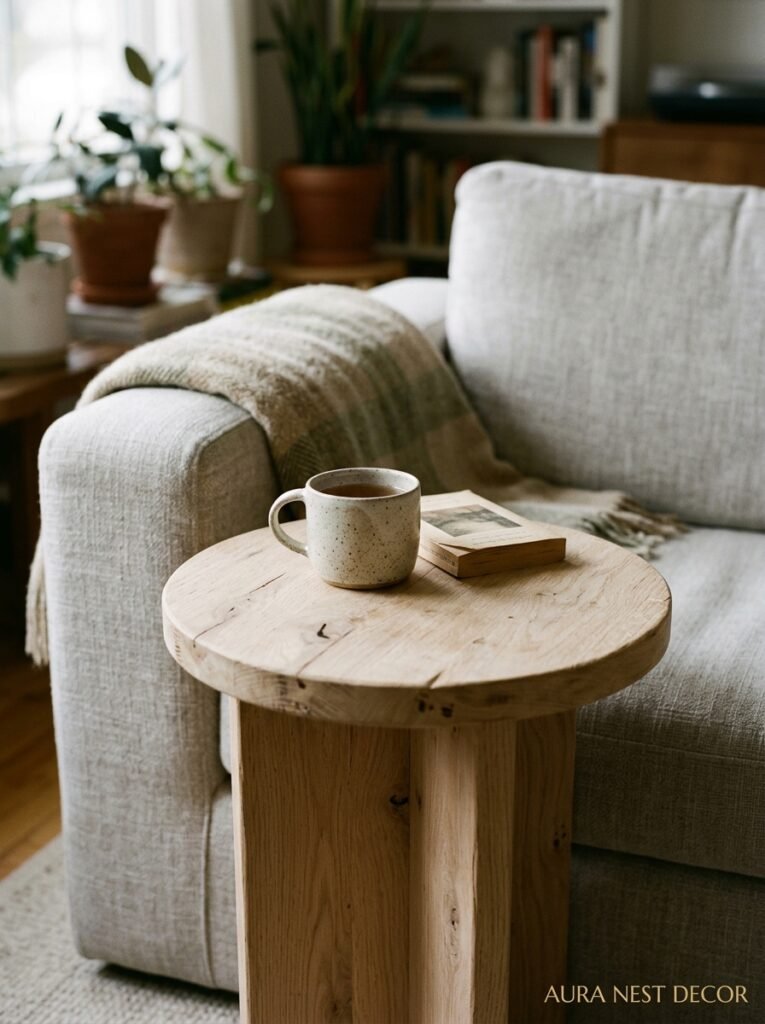
I’m not saying you need to go full rustic farmhouse. You don’t. But one piece of actual wood — not laminate, not faux wood vinyl, actual wood — changes the air of a room in a way that’s hard to explain if you haven’t experienced it.
Could be a coffee table with a live edge. A wooden bowl sitting on your sideboard. A vintage mid-century side table from a charity shop. Wooden photo frames clustered together. A cutting board left out (I know that sounds mad but it works in the right room).
Wood brings something organic into spaces that are otherwise all fabric and paint and metal hardware. It makes the room feel like it’s BEEN somewhere. Like it has history. And warm-toned woods especially — oak, walnut, cherry — have this natural reddish-brown warmth that reads as cozy almost immediately.
Also underrated: wooden shelving with stuff actually ON it. Not perfect Instagram-grid stuff. Real books. A few plants with some trailing leaves. A candle. That stack of magazines you keep meaning to read. The kind of shelf that looks like it belongs to a person.
6. The Curtain Height Thing That Interior Designers Quietly Judge You For
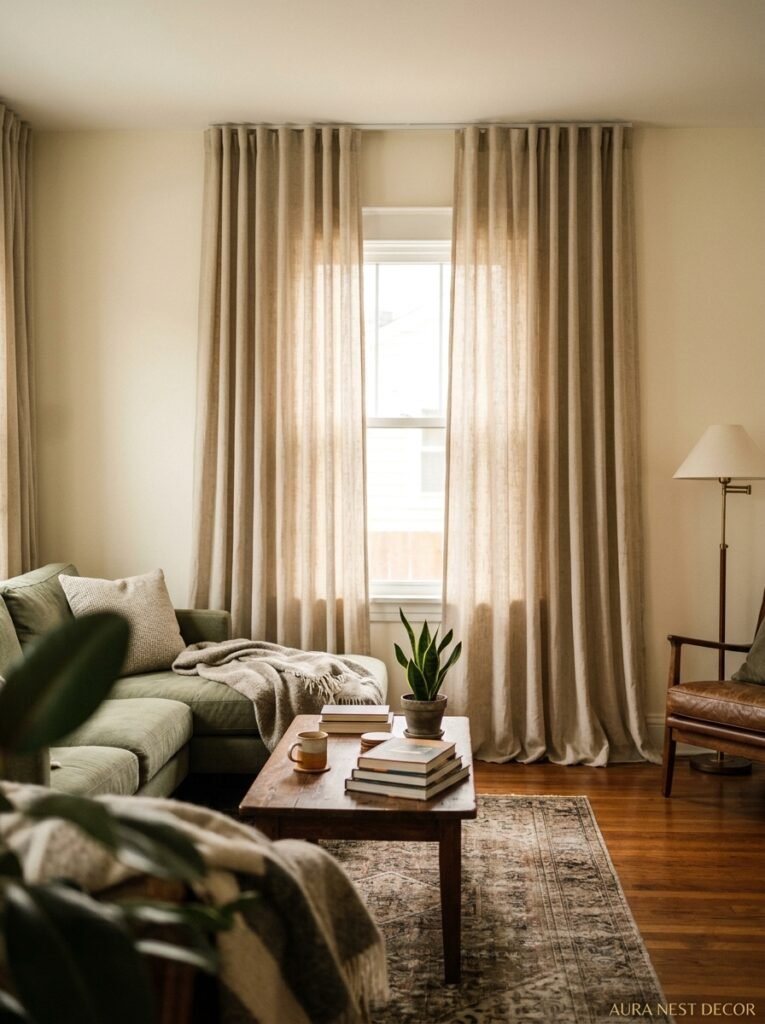
Curtains hung at window height look fine. Curtains hung near the ceiling, falling all the way to the floor, look like the room was designed by someone who meant it.
And here’s the warmth connection: floor-length curtains in a warm fabric — heavyweight linen, velvet, textured cotton — add softness and height and a sort of hug-the-room quality that nothing else really replicates. They muffle sound slightly. They make the windows look bigger. And when they’re in a warm color or a warm neutral, they frame the whole space differently.
In the UK especially, where so many rooms have those sort of short, sad curtains hanging just below the windowsill — I say this with love — the upgrade to full-length is life-changing. Genuinely.
They don’t have to be expensive. IKEA has options. Amazon has options. But go long, go warm in tone, and hang them HIGH.
“A curtain that touches the floor tells the room it’s finished. Everything else follows.”
7. Plants That Actually Make a Room Feel Warmer (Not Just Greener)
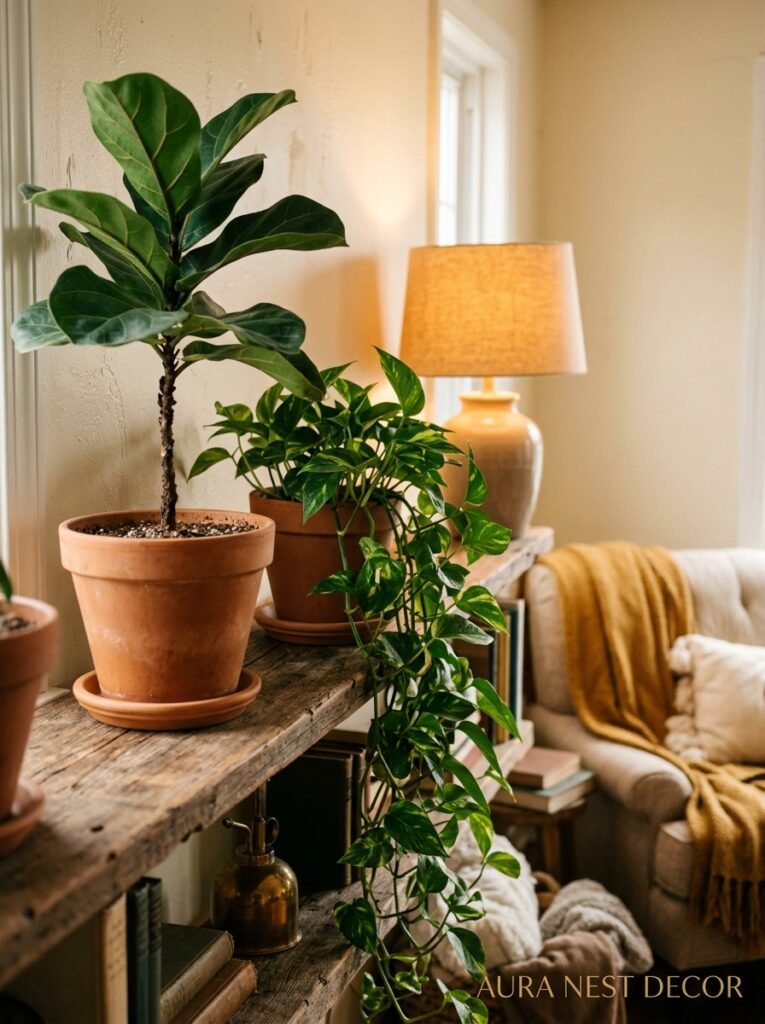
Not all plants do the same thing for a room. This is something I feel strongly about, possibly too strongly.
Small succulents on a windowsill? Lovely. Cool and modern and clean. Not particularly warm.
But a big trailing pothos cascading off a shelf? A fiddle leaf fig in the corner with those big, waxy, slightly dramatic leaves? A monstera that’s gotten out of hand and is sort of taking over? These plants have PRESENCE. They fill dead corners. They add height and movement and this quality of aliveness that makes a room feel inhabited.
The warmth also comes from the pots. A terracotta pot is — obviously — warm. A woven basket plant holder. Ceramic with earthy glazing. If your plant is in a black plastic nursery pot sitting in a white cachepot, swap the cachepot. Tiny change, noticeable difference.
And if plants aren’t your thing, or you kill every one you touch (solidarity), dried pampas or dried eucalyptus in a large vase does something similar. The dried-flower thing was everywhere for a while and I thought I was sick of it but honestly? Still working. Still warm. Still good.
8. The Specific Type of Clutter That Actually Helps
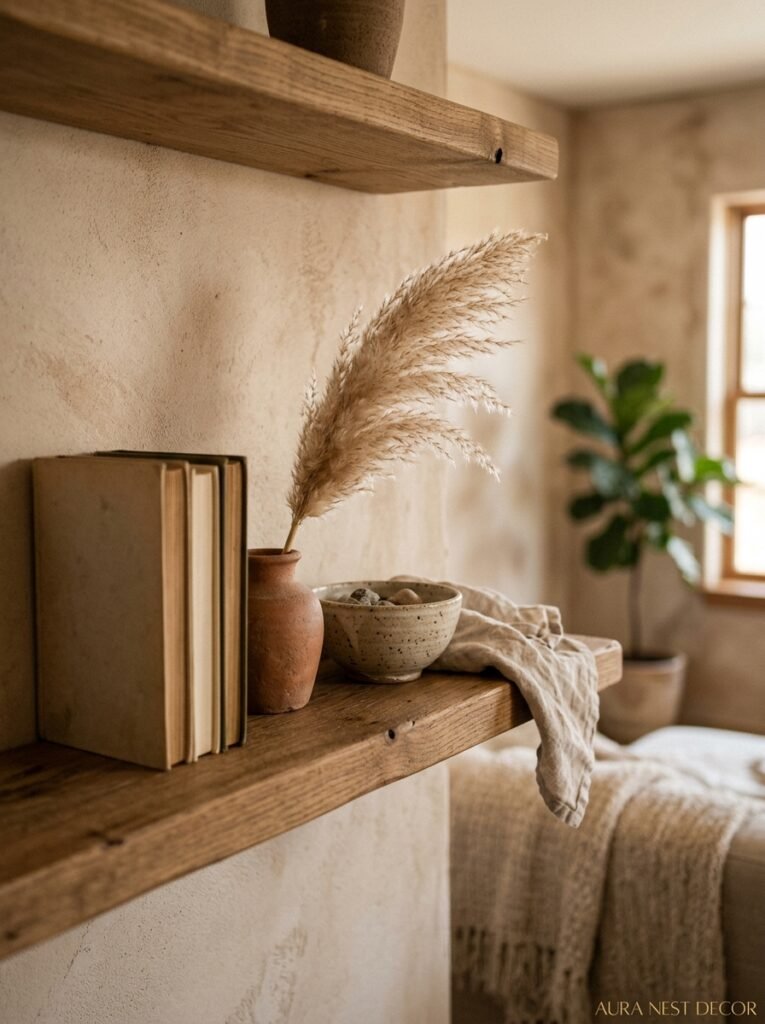
So you’ve probably heard “declutter to make a space feel better.” And yes, obviously, actual junk everywhere doesn’t help. But the overcorrection — the totally empty, perfectly minimal, nothing-personal room — often reads cold.
What warm rooms have isn’t clutter exactly. It’s EVIDENCE of living.
Books that look read. A favorite mug left on a coaster. A small stack of things on the coffee table — a candle, a little plant, maybe something with personal meaning. A gallery wall that actually reflects the person who lives there rather than generic line-art prints from an algorithm.
Or maybe it’s just one shelf with things on it that you actually love. The ceramic you bought on holiday. The photo of your dog doing something stupid. The small sculpture your friend made.
Personal objects, carefully chosen, make a space feel warm in a way no amount of styled throw pillows can replicate. It’s the difference between a room that LOOKS good and a room that feels like YOURS.
9. Why Smell Is a Decoration and You’re Not Using It Enough
This one sounds obvious and I’m going to say it anyway because people consistently undervalue it.
A warm-smelling room FEELS warmer. Not metaphorically. Like, your brain actually processes it that way.
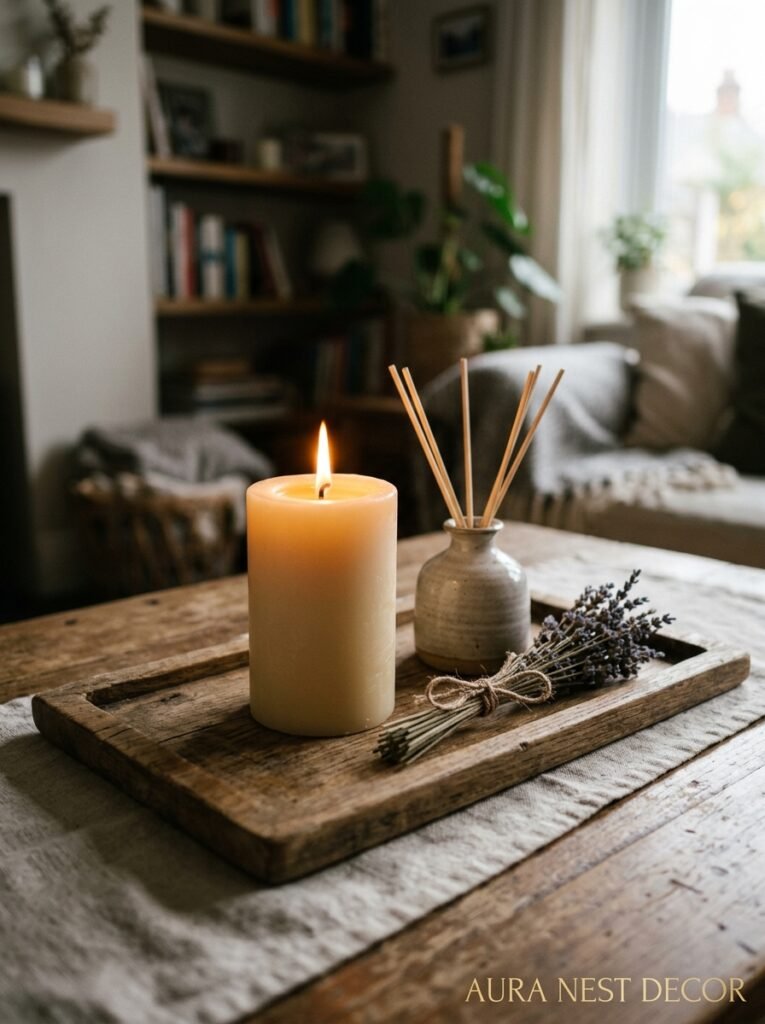
Candles are the easy answer — and yes, lit candles do make a room feel instantly warmer, both from the light and the scent. But wax melts work. A diffuser with cedarwood or sandalwood or a vanilla-amber blend. Even just a linen spray on your curtains or cushions.
The scents that read as warm: anything with vanilla, amber, sandalwood, cedar, cinnamon, clove, or tonka. Avoid super fresh or aquatic scents in winter — they make rooms feel wider and cooler. Go heavy and resinous when you want cozy.
This is not an expensive category. A good soy candle and a consistent habit of lighting it when you come home is genuinely one of the better quality-of-life purchases you can make for your living room. Maybe that sounds dramatic. It’s not.
“Scent is the one decoration you experience before you even sit down.”
10. The Coffee Table Styling Mistake That Keeps Rooms from Feeling Complete
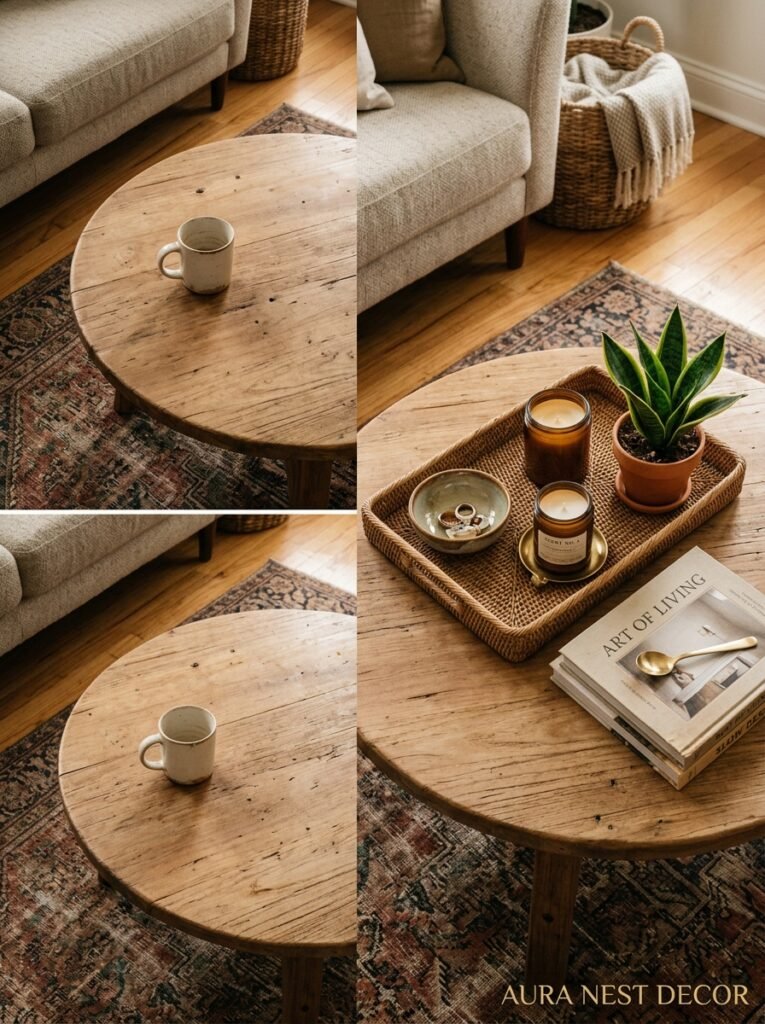
A completely empty coffee table looks like you’re still moving in. An overcrowded one looks frantic. But the thing that gets missed most often is HEIGHT.
Flat things on flat surfaces don’t create warmth. You need something to give the arrangement some variation in height — a stack of books, a candle in a taller vessel, a small vase with something in it. Even just a single pillar candle on a small wooden tray.
Trays are your friend here, by the way. A tray corrals things that might otherwise look random and makes them look like a DECISION. Gather your little objects, put them on a tray, suddenly it’s styled. I don’t know why this works but it does.
Also: round coffee tables read as softer and warmer than square or rectangular ones in most cases, particularly in smaller rooms. There’s no hard edge to trip over, visually or literally, and the curves do something nice to the geometry of the space.
11. Why That One Dark Wall Might Be the Bravest Warm Thing You Could Do
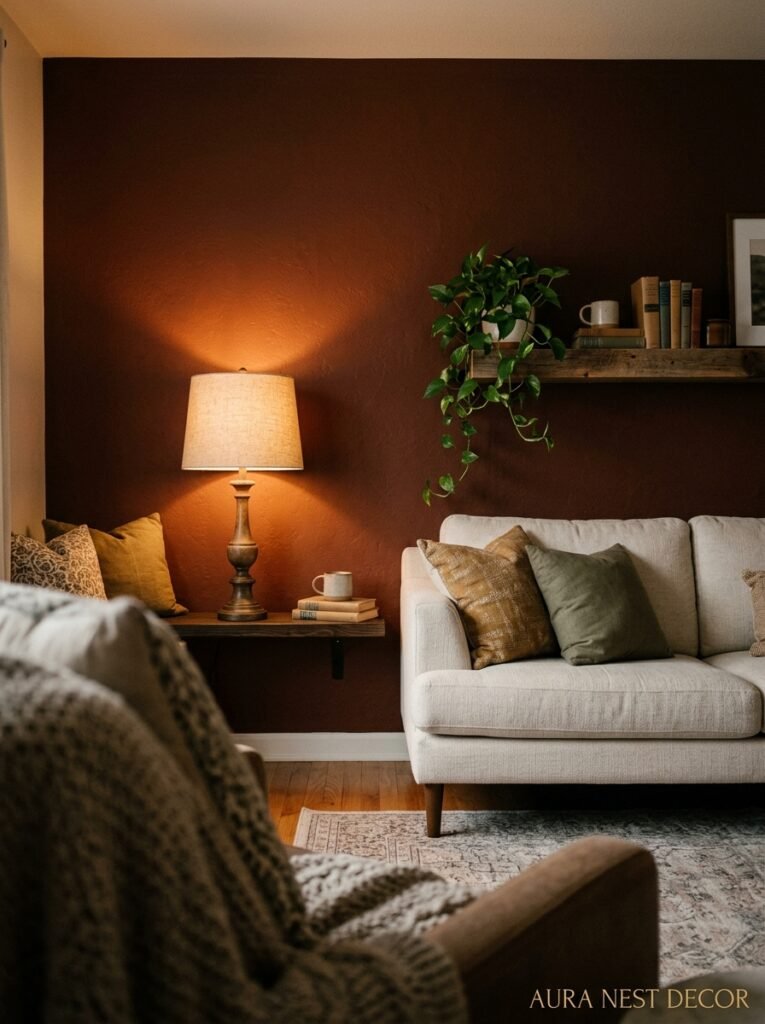
I’ve talked a lot of people off the ledge on this one — or rather, talked them back ONTO the ledge, because they were about to talk themselves out of it.
A dark accent wall, when done right, makes a room feel incredibly warm and intimate. Not oppressive, not cave-like — warm. The key is the tone. A dark forest green, a deep dusty blue, a rich chocolate or deep plum: these colors, in the right finish (usually matte or eggshell, which absorbs light rather than bouncing it), create depth. They make the room feel like it has a secret.
And you don’t need to do all four walls. One wall behind the sofa or the fireplace — what designers call the “anchor wall” — is usually enough. Pair it with warm-toned accessories and good low lighting and you’ve suddenly got the most interesting room you’ve been in all week.
People are scared of dark. Don’t be. Try it in a test patch first if you need to. But don’t let the fear of it stop you from the most character your room has ever had.
12. The Last 10% That Most People Skip Because They Think They’re Done
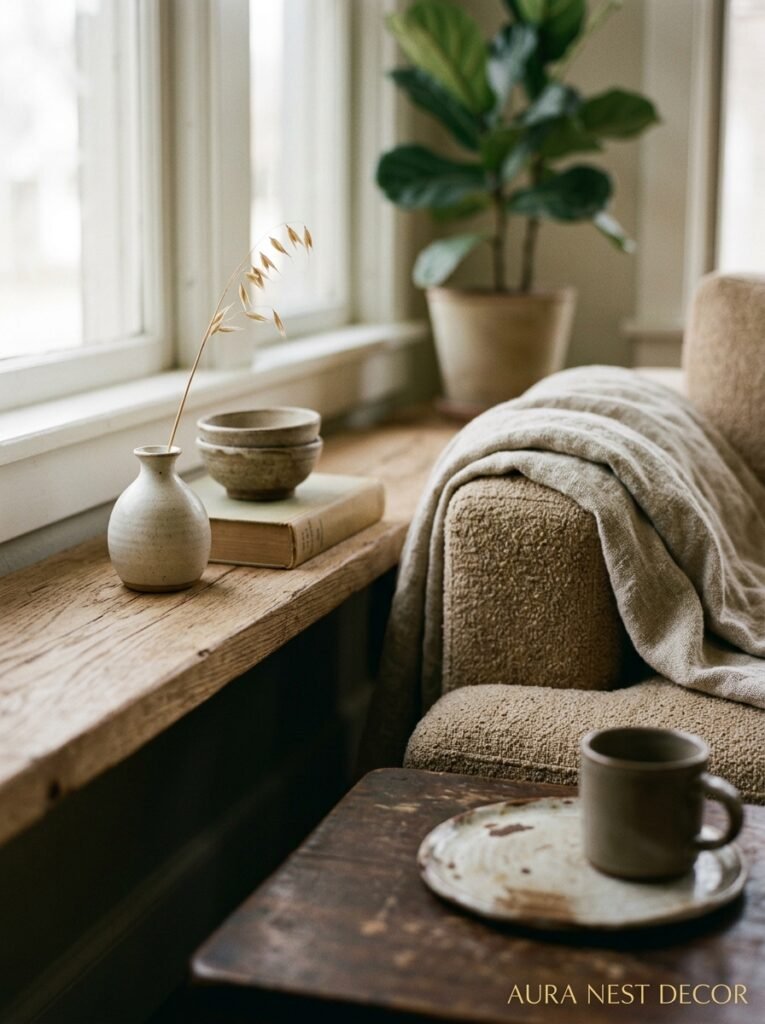
You’ve got the rug, the lamps, the curtains, the plants. The room looks good. You think you’re finished.
But there’s usually a 10% that’s still just a bit — thin. And it’s often something really specific: corners that are empty when they shouldn’t be, a wall that has one thing in the middle that’s slightly too small for the space, or a floating sofa with nothing behind it and nothing beside it.
Corners love a floor lamp plus something else — a plant, a small side table, a tall vase. They hate being empty. Empty corners bleed warmth out of a room like a slow draft.
And that one piece of art too small for the wall? Either go bigger or cluster more pieces around it. A single 8×10 print on a large empty wall looks like a mistake. Make it intentional or fix it.
The last 10% is just attention. Looking at your room like you’ve never seen it before. Noticing where your eye doesn’t land — because that’s usually where the warmth is missing.
—
❓ FAQ
Q: What’s the quickest single change I can make to a cold-feeling living room? A: Swap your overhead lighting for a lamp or two and light a candle. Seriously, do it tonight. The difference between harsh ceiling light and warm lamp light at eye level is almost unreasonable — it’s the fastest way to feel the change before spending anything significant.
Q: Does paint color really make that much difference, or is that just something designers say? A: It really does, but undertone matters more than the shade itself. A warm cream feels completely different from a cool white, even if they look similar on a chip. If your room feels cold, check whether your walls have blue or pink undertones — swapping to something with a yellow or red base can shift the whole feel without dramatic change.
Q: I rent and can’t paint or change much — what actually works within those limits? A: Rugs, lamps, curtains, and plants are your best tools — none of them are permanent and all of them matter enormously. A large warm-toned rug, floor-length curtains hung from a tension rod or removable hooks, and a couple of well-placed lamps will do more than almost anything requiring permission.
—
💭 Final Thoughts
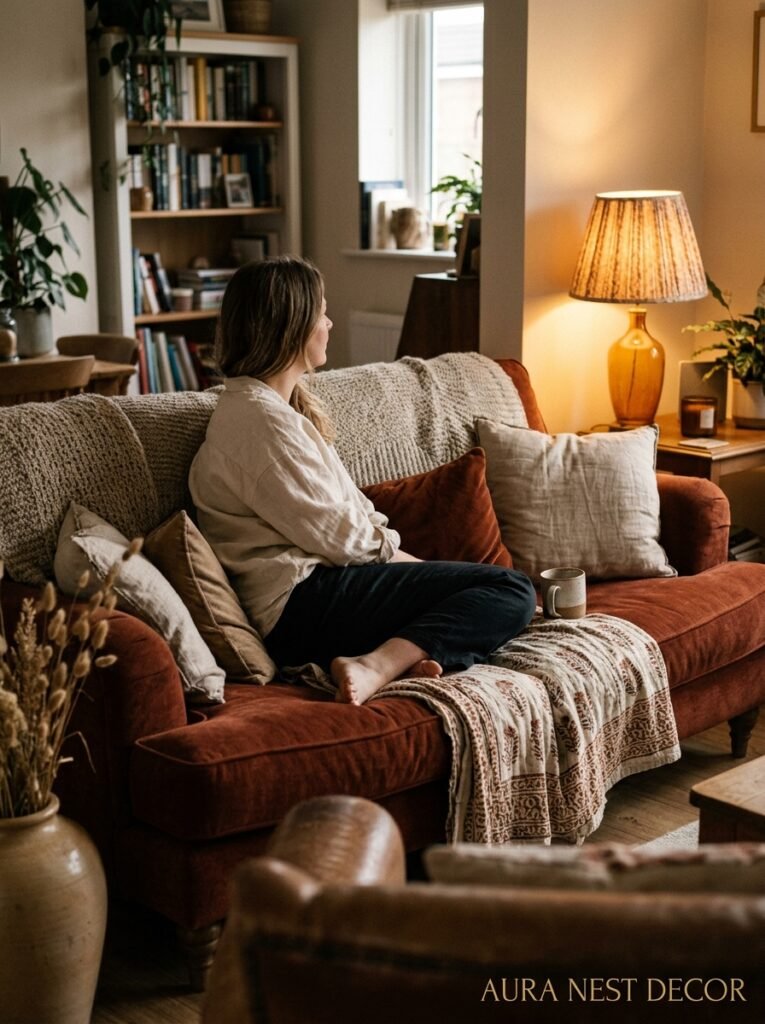
Warmth in a living room is really just the feeling of a space that’s been thought about — not perfectly styled, but genuinely considered. You don’t need to do all of this at once, and you probably shouldn’t. Pick one thing. The light, maybe, or the rug size. Live with it. See how the room starts to shift.
The best living rooms I’ve ever been in didn’t look like showrooms. They looked like someone actually lived there and liked it.
So what’s the one thing in your room that you’ve always meant to change — and kept putting off?