Why a Navy Blue Couch Might Be the Best Furniture Decision You’ve Ever Made
You walked into a showroom, or maybe you were just scrolling late at night, and you saw it. Navy blue. Bold and somehow completely calm at the same time. And now you can’t stop thinking about whether you could actually pull it off.
You can. And I’m going to show you exactly how.

—
1. The Reason Navy Keeps Winning When Every Other Trend Fades
Here’s the thing about navy blue — it doesn’t really follow trends. It just exists, confidently, in that sweet spot between formal and relaxed. I’ve watched blush sofas come and go. Mustard yellow had its big moment. Even forest green, which I genuinely love, feels like it belongs to a specific few years. But navy? Navy has been showing up in beautiful living rooms for decades and it still doesn’t look dated.
Part of that is because navy reads as a neutral. I know that sounds strange. It’s a dark, saturated color, but it sits next to almost anything without screaming for attention. Warm wood tones, cream walls, terracotta accents — navy absorbs all of it and just looks intentional. And there’s something about the depth of it. In morning light, a navy couch looks almost denim-blue, kind of casual and inviting. By evening, under warm lamp light, it goes almost inky and suddenly the whole room feels sophisticated without you doing anything differently. The color does the work for you.
It’s also incredibly forgiving, which nobody talks about enough. Dark upholstery hides so much. Crumbs, dog hair if it’s the right shade, the casual indignities of actually living in your house.
“Navy is the rare couch color that looks better the more lived-in the room becomes around it.”
—
2. The Wall Color Question Everyone Gets Wrong First
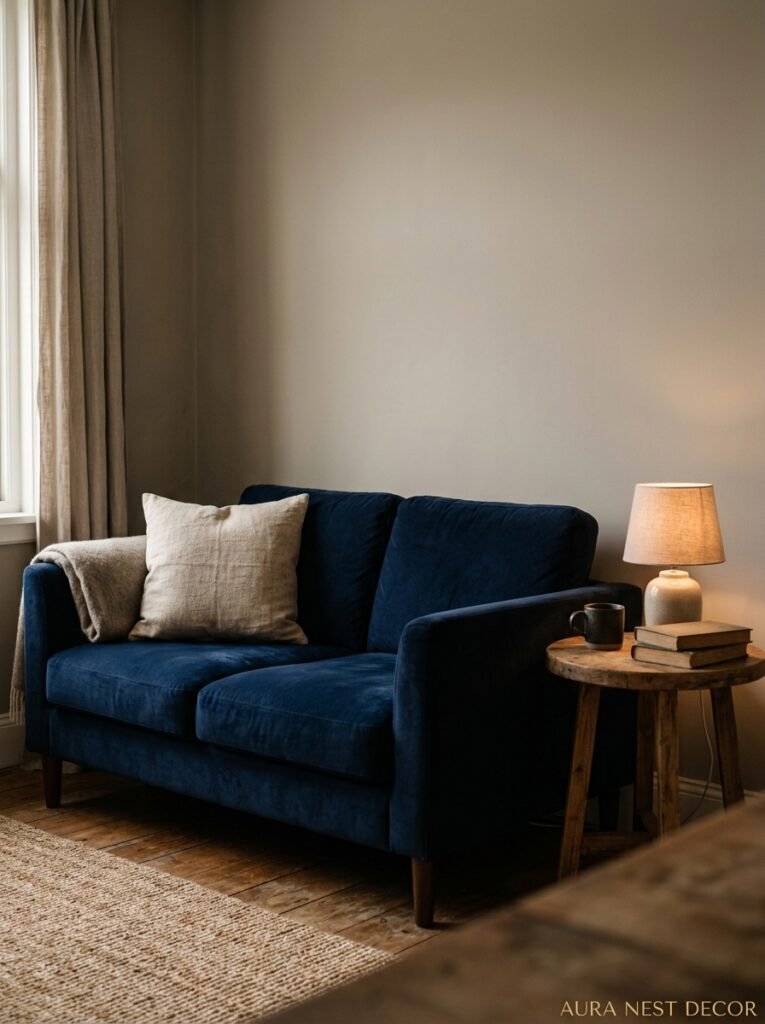
Most people assume they need white walls with a navy couch. And yes, white works — obviously it does. But it’s not the only answer, and honestly it might not even be the best one.
Warm white is different from stark white, and that difference MATTERS with navy. A crisp, cold white makes navy feel a bit corporate, a bit too nautical. But an off-white, something creamy and slightly warm, gives the whole room a softness that feels genuinely livable. Think warm linen, not printer paper.
But here’s where I’d push you: have you considered going deeper? A soft sage green behind a navy couch is stunning. The two colors don’t fight — they sit next to each other like they’ve always known each other. Dark charcoal walls with navy velvet is a move for the confident decorator, a little moody, a little dramatic, and it completely works in rooms that don’t get a lot of natural light where you’ve just accepted the darkness and leaned into it.
Terracotta walls with a navy sofa is probably my favorite combination right now. The warmth of the terracotta pulls out something almost jewel-like in the navy. It stops reading as a “blue couch” and starts reading as a design choice. Which it should.
Light grey, by the way, is the one I’d avoid. It tends to make navy look cold and a little flat.
—
3. The Fabric That Changes Everything About How Navy Feels in a Room
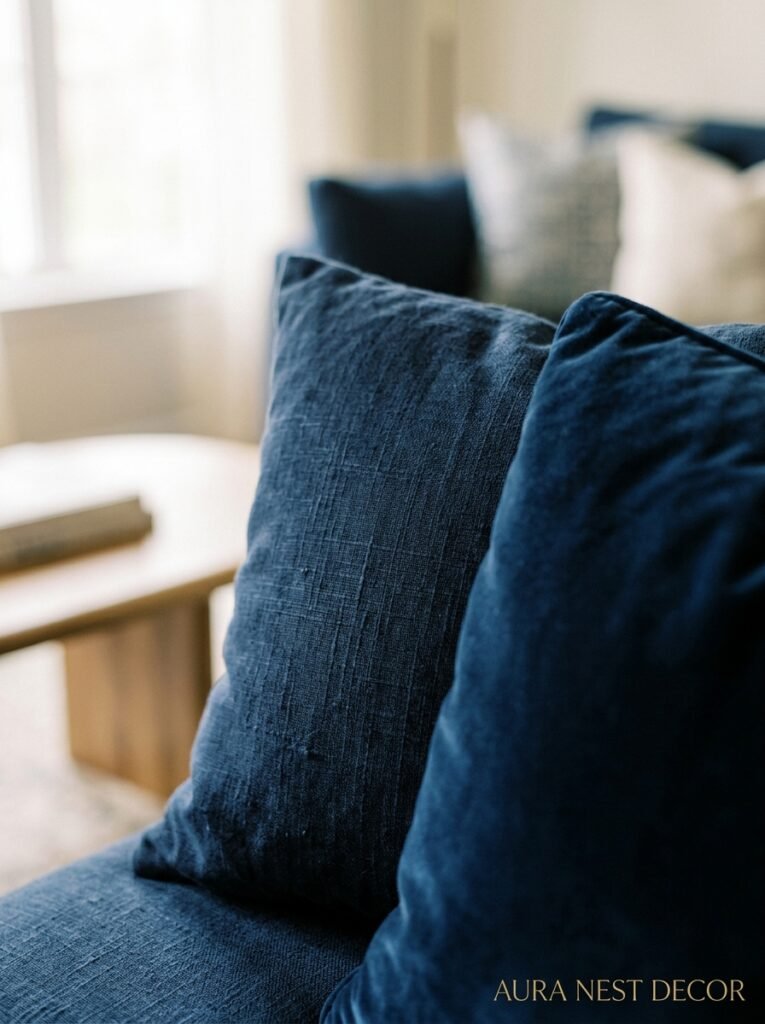
Not all navy couches are created equal, and the fabric does most of the heavy lifting in terms of how the room actually feels.
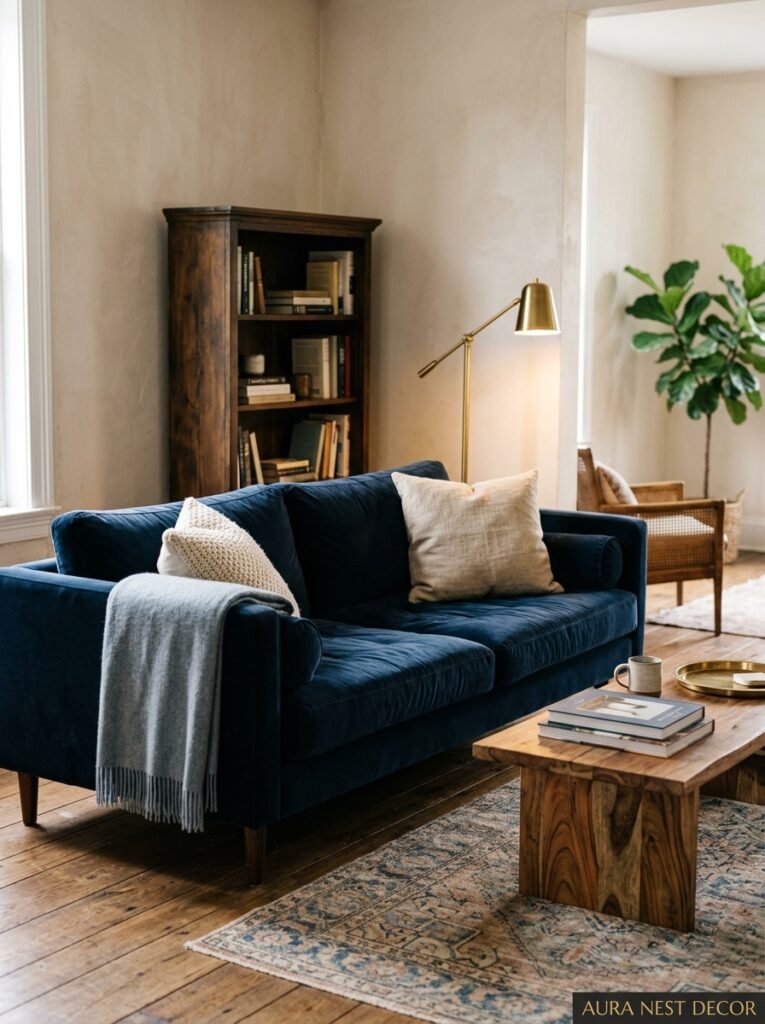
Velvet is the obvious choice for a reason. It’s lush, it photographs beautifully, and the way velvet catches light means the couch almost changes color depending on where you’re sitting in the room. The shadows in velvet folds look deeper, almost purple. In direct light it goes almost cobalt. It’s dramatic without trying to be. The downside — it shows pet hair clearly, and it can look a bit flat if you don’t keep it brushed. A velvet brush is genuinely worth buying.
Linen or linen-blend is the opposite energy. More casual, more relaxed. Good for bright rooms with a slightly bohemian or coastal feel. It’ll wrinkle, which some people find charming and some people find maddening, so know yourself before you commit.
Performance fabrics — and I know they sound boring — have gotten genuinely good. Some of the high-performance weaves now have actual texture and warmth to them. If you have kids or pets or you just live enthusiastically in your space, don’t dismiss them. A performance navy couch can handle the chaos and still look sharp.
Leather in navy is rare and a bit of a statement. More of a classic men’s club feel. Works beautifully with dark wood and brass, less so with a light, airy space.
—
4. The Throw Pillow Combinations Nobody on Pinterest Is Talking About
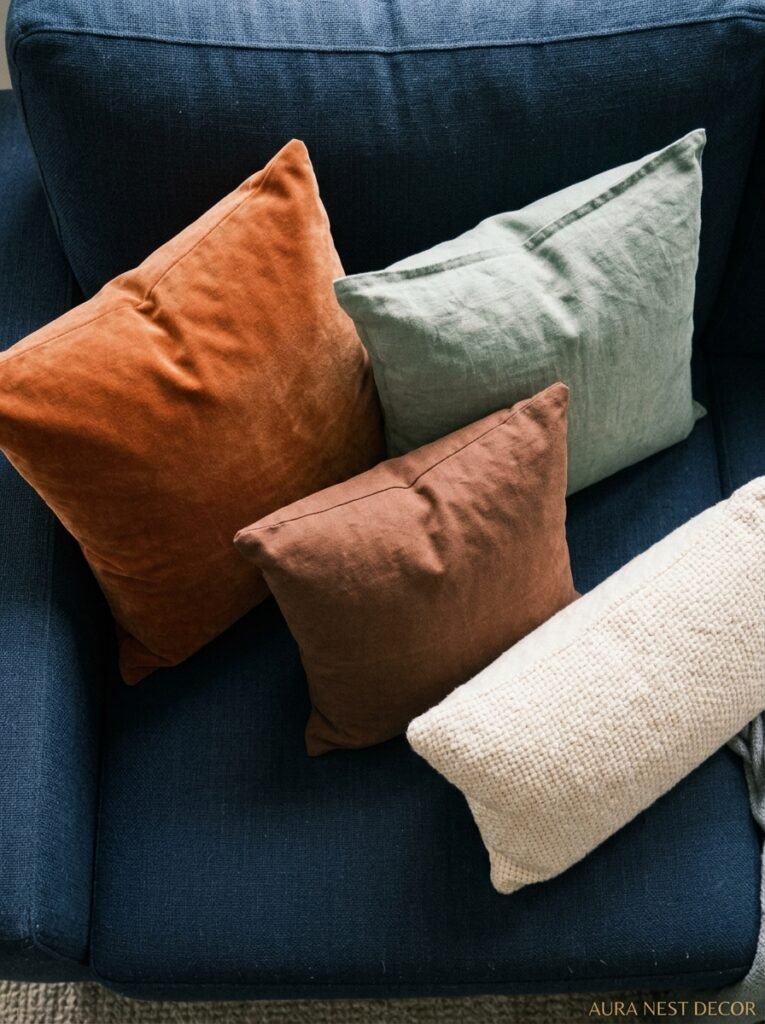
Okay so the navy couch + white and brass look has been done. Done and done and done. And it’s fine, it looks nice, but if you’re reading this article you probably want something with a bit more personality.
“The best pillow combination for a navy couch is the one that makes you forget the couch is even blue.”
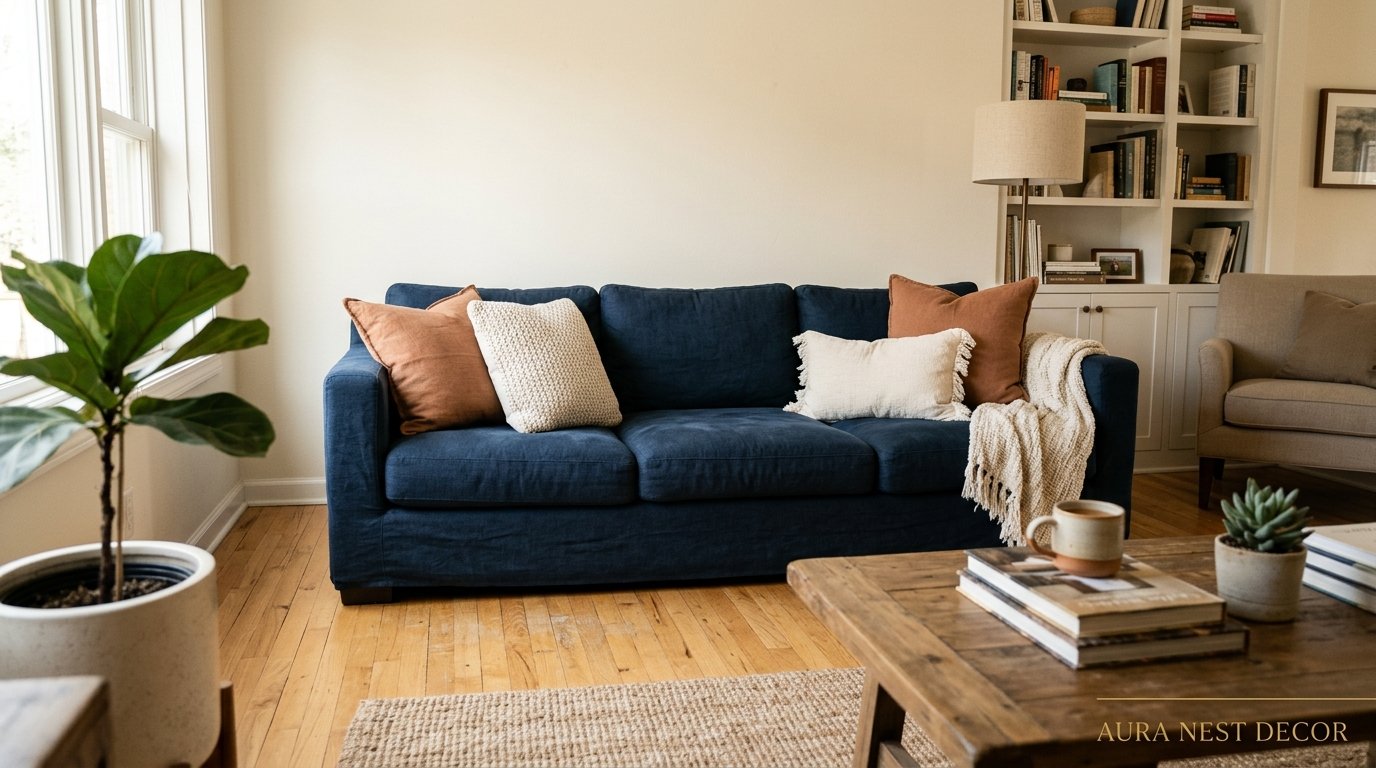
Rust and cream is incredible on navy. Burnt orange-adjacent shades pull something warm and almost Mediterranean out of the color. Add a cream or oatmeal linen pillow and suddenly the whole arrangement looks expensive and considered.
Dusty pink sounds wrong. Try it anyway. A muted, slightly grayed-out pink against navy creates this gorgeous contrast that feels feminine without being precious. It’s not baby pink, it’s more like the color of a faded rose. With a natural wood coffee table, this combination is genuinely stunning.
Sage green with off-white and maybe one deep burgundy pillow is my personal navy couch formula right now. The green ties to any plants in the room. The burgundy gives it drama. The off-white stops it from feeling too heavy.
And please — don’t pile on seven throw pillows. Three is usually the magic number. Or even two if they’re big and interesting enough. The couch should still be usable.
—
5. What Your Coffee Table Says to a Navy Couch

The coffee table conversation is one that will make or break the whole setup.
Light wood — oak, ash, pine — looks absolutely brilliant against navy. The contrast is natural and warm. There’s something almost Scandinavian about it, a bit cozy, a bit considered. This is probably the most Pinterest-friendly combination for a reason, because it genuinely works.
Rattan or wicker? Yes. Especially for brighter, more casual rooms. A rattan coffee table next to a navy velvet sofa is a beautiful tension — formal meets relaxed. It keeps the room from feeling too serious.
Marble or stone? Gorgeous, but commit fully. A marble-top coffee table with a navy couch wants a room that leans into the elegance — think good rugs, interesting art, some brass or gold hardware somewhere. Don’t do marble and then throw a Target throw over the couch. Or do, I mean, live your life — but the room will feel inconsistent.
Dark wood with navy can work but it’s HEAVY. You need light walls, big windows, and some natural material textures to stop it from feeling like a waiting room.
Glass top tables are always a safe call if you’re unsure. They’re practically invisible, which means the couch becomes the star.
—
6. The Rug Situation (This Is Where Most People Lose Me)
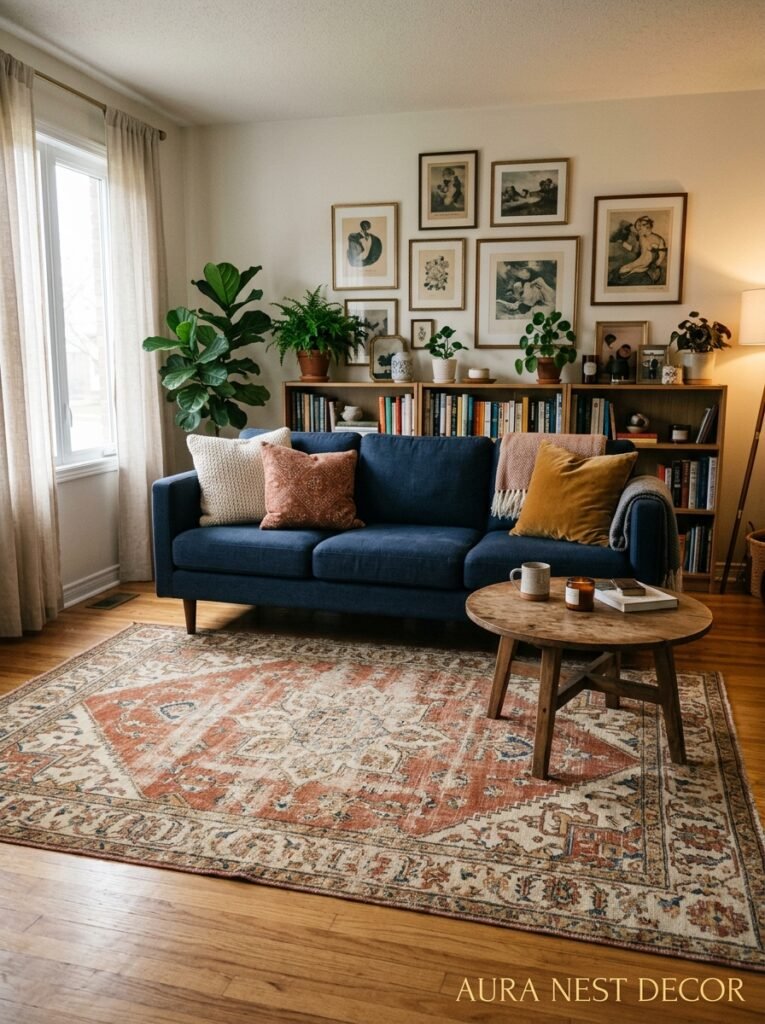
I’ve seen so many otherwise beautiful navy couch setups completely undermined by the wrong rug. It hurts.
The instinct with a dark couch is often to go lighter on the rug. And that’s not wrong — a warm cream or natural jute rug grounds a navy sofa beautifully, especially in rooms with lighter floors. The contrast reads clearly and the whole thing feels balanced.
But I want to talk about patterned rugs, because they’re underused with navy and they really shouldn’t be. A vintage-style Persian rug in reds and golds and creams? Absolutely perfect. Navy loves pattern, it has enough visual weight to anchor a busy rug without competing with it. A bold geometric in black and white gives the room a graphic, contemporary feel. Even a faded Beni Ourain with subtle pattern works if you want to keep things quieter.
What doesn’t work, generally, is a cool-toned rug. Blue-grey or blue-green rugs under a navy couch push the room into monotone territory. Everything starts reading as “blue room” rather than a designed, layered space.
Size matters, too — and people consistently go too small. The rug should be big enough that the front legs of the couch, at minimum, are sitting on it. Ideally all four. A tiny rug floating under the coffee table while the couch hovers above bare floor is one of the most common decorating mistakes I see.
—
7. Lighting That Does Something Actually Interesting With Navy
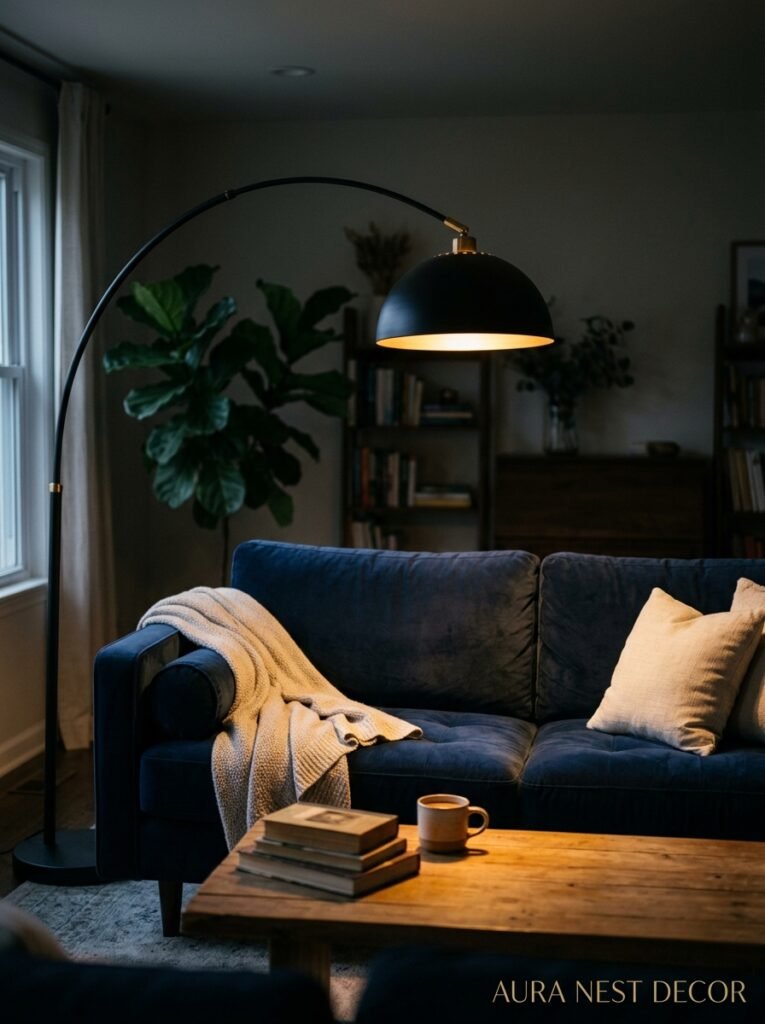
This one’s subtle but it changes everything once you know it.
“A navy couch at noon looks like a statement. A navy couch at 7pm with the right lamp looks like an invitation.”
Navy goes darker and moodier in warm light. This is a good thing. An Edison-style lamp, something with a warm amber glow, will push the couch toward almost midnight blue in the evening hours and it makes the whole room feel like somewhere you’d want to spend a long time. Cool daylight bulbs do the opposite — they flatten the color and bring out any blue harshness.
If you have a fireplace, lucky you. Firelight does extraordinary things to navy. If you don’t, a few strategically placed warm-bulb lamps will get you part of the way there.
Consider the light sources at different heights. Overhead lighting tends to flatten furniture color. A floor lamp placed beside or behind the couch creates shadows that make the sofa look sculptural. A small table lamp on a nearby console reflects warm light back from the side. Layer your lighting, don’t rely on one overhead fixture, and your navy couch will thank you.
—
8. The Plant Situation — Because Every Navy Couch Needs Green Nearby

This isn’t optional. Well, technically it is, but I’d argue strongly against skipping it.
Navy and greenery are one of those combinations that looks like it was planned by a professional even when it absolutely wasn’t. The cool depth of the navy makes green look extra vivid. A large fiddle leaf fig or a trailing pothos in a ceramic pot near a navy sofa is just a classic for a reason.
For smaller spaces, even a single plant on the coffee table or a trailing plant on a shelf nearby does the job. The key is having SOME living green in the frame. It stops the navy from reading as heavy or dark and keeps the whole room from feeling like it’s trying too hard.
Terracotta pots are ideal. They bring warmth, they tie into any warm accent colors you’ve got going, and they look brilliant against navy specifically because the orange-earth tone is almost complementary.
—
9. Small Room, Navy Couch — Here’s How You Don’t Ruin It
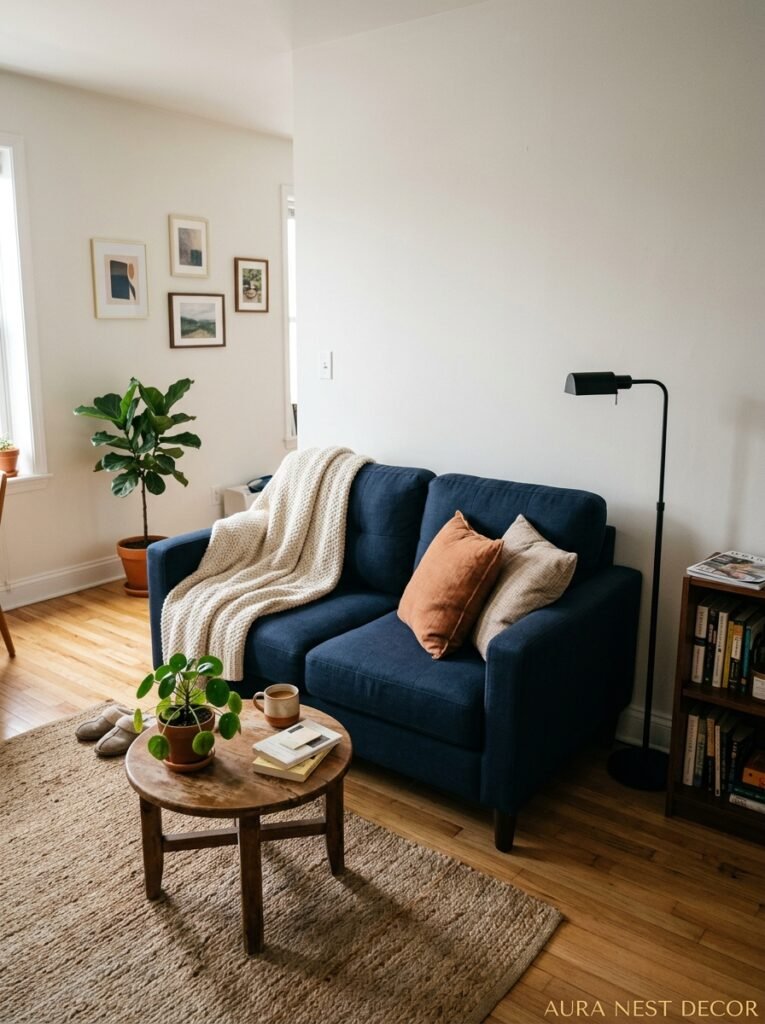
A lot of people are scared to put a navy couch in a small room. Understandable. Dark furniture in a small space feels risky. But the truth is more interesting.
A small room with light walls, natural light, and a single dramatic piece — a navy sofa — can actually feel bigger and more intentional than the same room with a beige couch and chaos everywhere. The navy anchors the space. Everything else can breathe around it.
The trick is keeping everything else lighter and simpler. If you’ve got a navy couch in a small room, you don’t need dark curtains, lots of dark furniture, and heavy art on every wall. Let the couch be the statement. Keep the rest calm.
Big mirrors help. A large mirror on the wall opposite the couch bounces light around and makes the navy look less like it’s absorbing all the darkness in the room.
And go vertical. Shelving, tall plants, floor-to-ceiling curtains hung high — all of these draw the eye up and make the ceiling feel higher, which immediately makes a small room feel more spacious regardless of what’s on the floor.
—
10. The Styling Detail That Makes a Navy Couch Look Expensive (It’s Cheap Though)
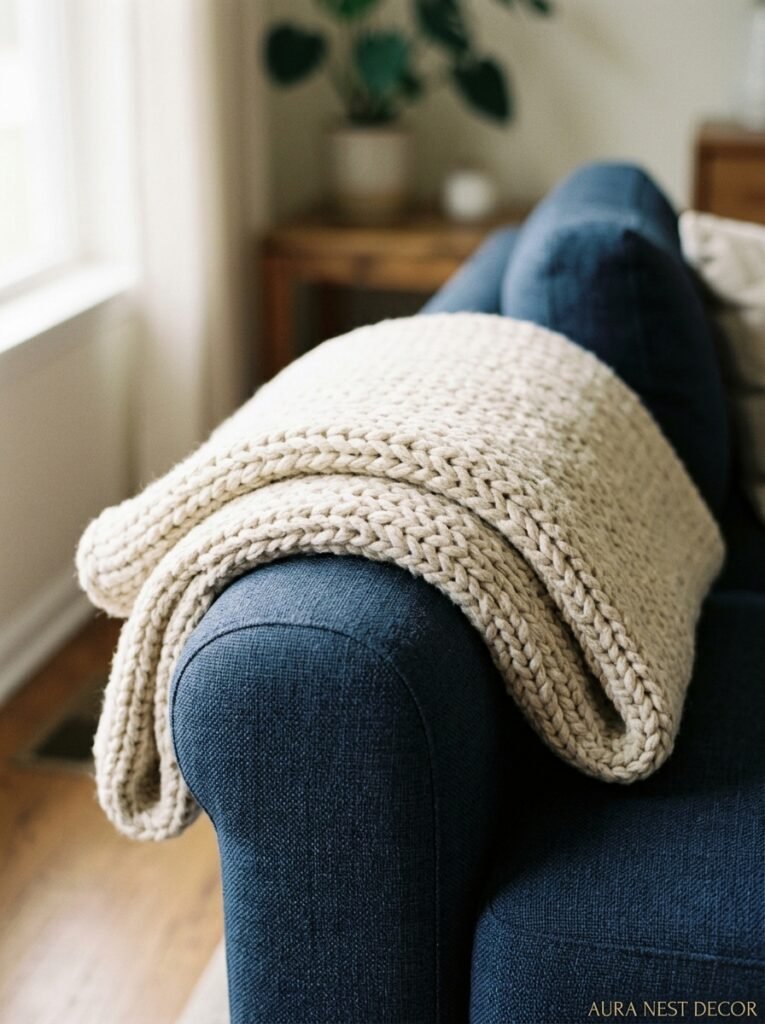
Okay here’s my one proper secret, the thing I tell everyone.
A casually draped throw blanket in a warm, chunky knit — something in a cream or warm camel or rust tone — laid over one corner of a navy couch makes the whole thing look like a magazine photo. It does three things at once: it adds texture, it adds a warm color accent, and it makes the couch look used in the best possible way. Like someone just stood up from sitting there.
That’s the feeling you’re after. Not showroom-perfect. Not untouched. Lived-in but deliberately so. That particular balance — which is honestly quite hard to fake — comes easily when you add one good throw. Bonus if it drapes a little unevenly.
—
11. The One Navy Couch Style That’s Having a Real Moment Right Now
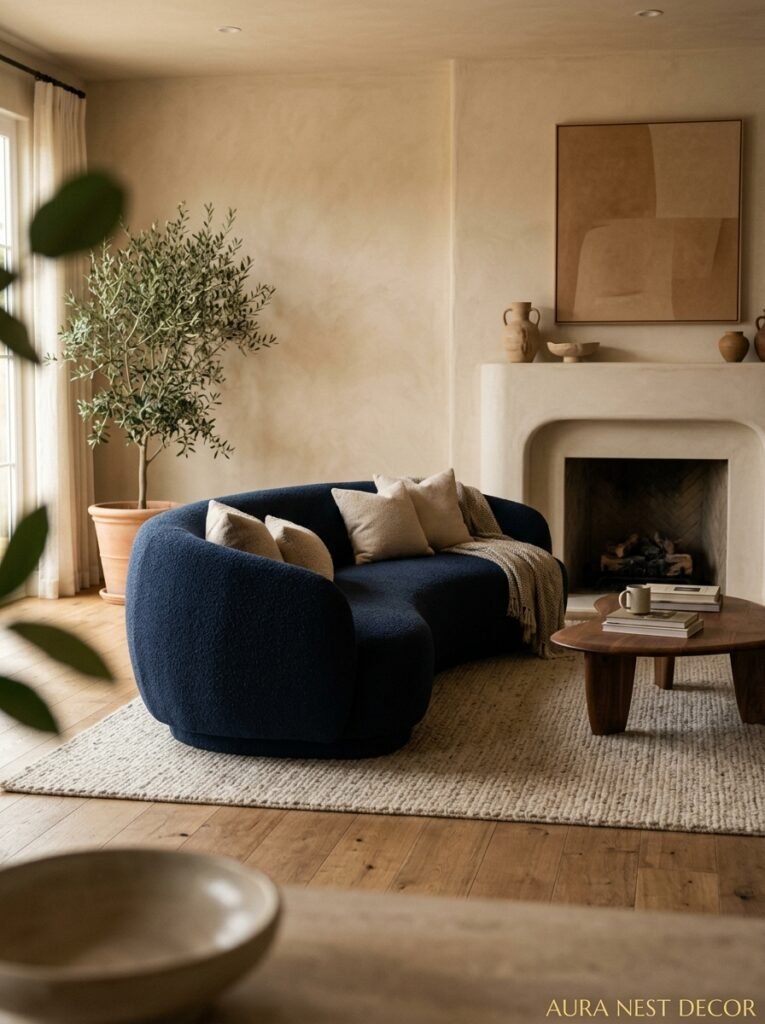
If you’re shopping right now or considering it, there’s one specific look that’s everywhere on Pinterest and for genuinely good reason: the slightly oversized, low-profile, square-arm navy velvet sectional. Not a giant modular thing that takes over the whole room — more like a generous L-shape that feels relaxed and modern at the same time.
Paired with light oak furniture, a cream textured rug, some warm linen curtains, and a cluster of earthy ceramic accents on the coffee table. That’s the room. That’s the whole look. It’s being replicated constantly and it keeps working because the proportions are right — the low, relaxed height of the couch, the warmth of the natural materials, the drama of the navy.
The tuxedo sofa in navy is also coming back in a more classic, structured form. It’s doing well in more formal sitting rooms, studies that double as reception rooms, the kind of British living room with cornicing and actual original features. A navy tuxedo sofa against original Victorian tile surround? Genuinely wonderful.
—
12. Before You Buy: The One Question to Ask Yourself
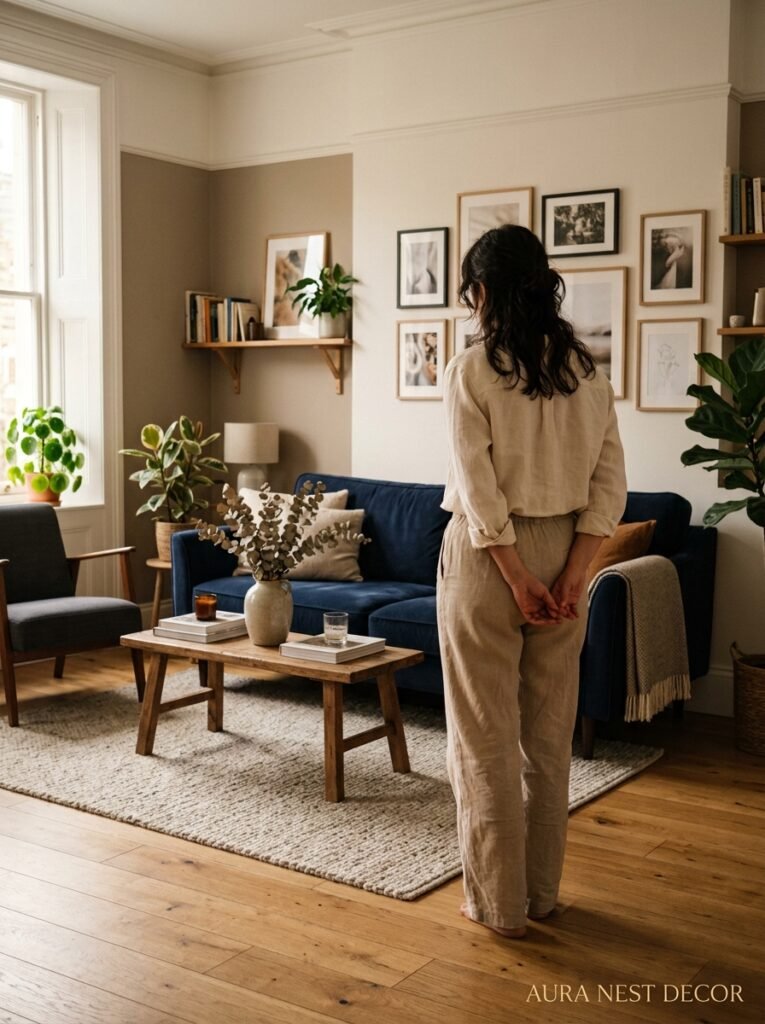
After all of this — all the fabrics and wall colors and throw pillow combinations — there’s really only one thing worth asking before you commit.
Do you actually LOVE it?
Not “do I think it’ll work.” Not “is it a safe choice.” Do you look at it and feel something? Because a navy couch is a commitment, and the rooms that look best are the ones where the person living in them made a genuine choice rather than an anxious compromise.
Navy is bold. Own that. Style around it with confidence. Don’t apologize for it with a dozen beige neutrals that try to pretend it isn’t there.
The rooms that stop people mid-scroll on Pinterest are the ones where someone made a decision and stuck with it. Navy is one of those decisions worth making.
—
❓ FAQ
Q: Will a navy blue couch make my living room look too dark? A: Not if you’re thoughtful about the rest of the room. Light walls, natural materials, and layered warm lighting offset the depth of navy significantly. It reads as grounding rather than dark when everything else is balanced.
Q: What’s the best way to clean a navy velvet couch? A: For everyday care, a soft velvet brush keeps the pile looking fresh. For spills, blot immediately with a clean cloth — don’t rub. Most velvet sofas these days have care labels recommending either water-based or solvent-based cleaning, and following that specific guidance is genuinely important since the wrong cleaner can leave marks.
Q: Is navy blue going out of style for sofas? A: It’s been a steady choice in interior design for long enough that I’d genuinely call it a classic rather than a trend. It’s not the thing everyone’s suddenly discovering this season — it’s the thing that’s been quietly appearing in beautiful rooms for years and keeps looking right. That’s not going away.
—
💭 Final Thoughts

A navy couch isn’t a safe choice disguised as a bold one. It’s actually bold — and that’s exactly why it works. Rooms with navy sofas tend to have a sense of intention that beige rooms have to work much harder to achieve.
If you’ve been going back and forth on it, let this be the nudge. Get the navy couch. Style it with warm textures and something living and green, and let yourself enjoy a room that actually has a point of view.
What’s the one thing holding you back from committing to it?