Why the Coziest Living Rooms on Pinterest All Have This One Farmhouse Thing in Common
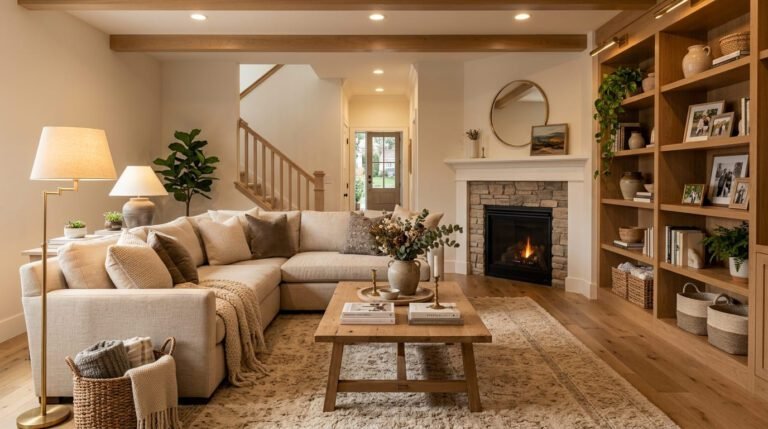
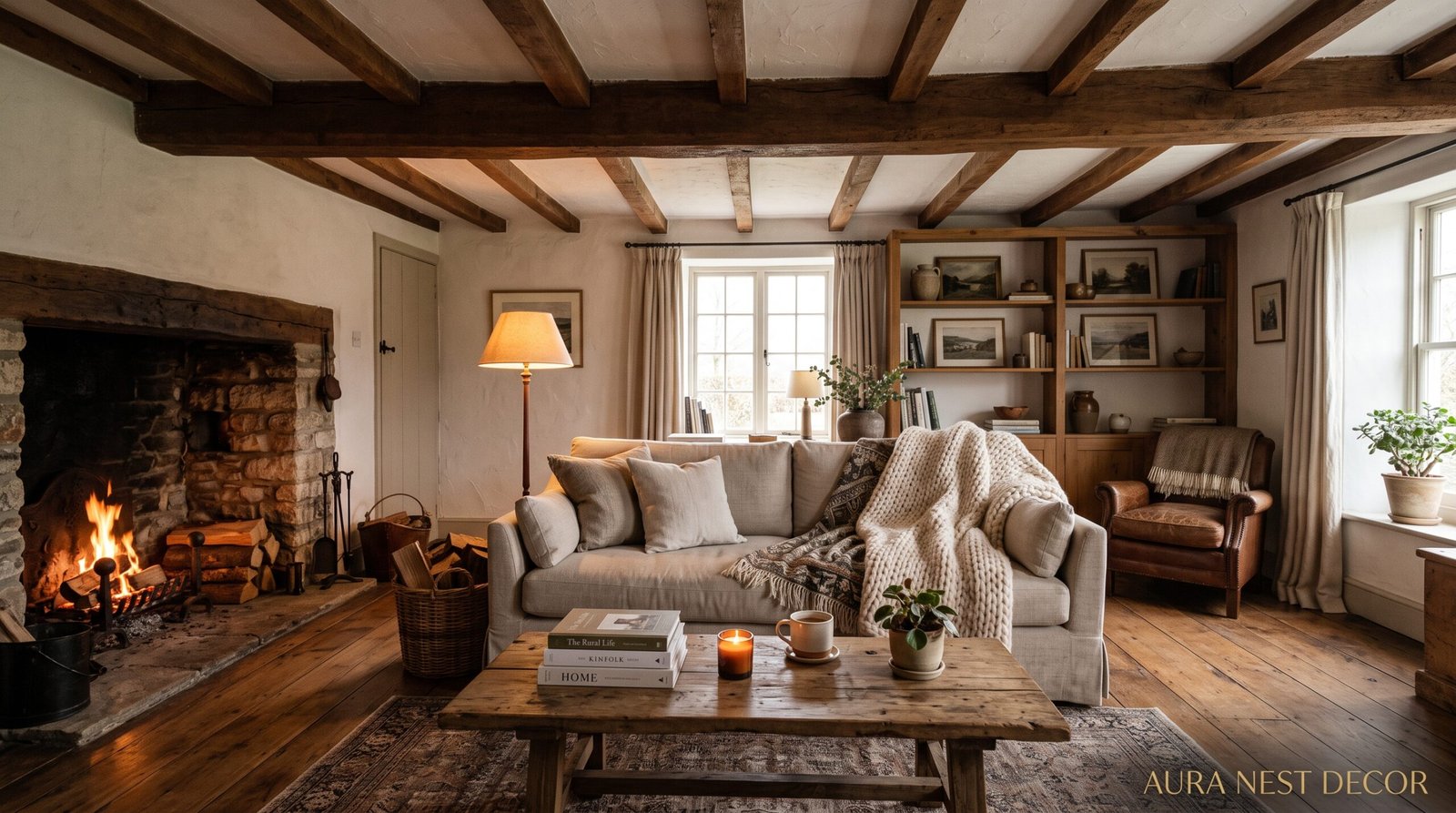
You’ve seen it. That living room that stops your scroll completely — the one with the chunky throw, the old wooden coffee table, the soft chaos of pillows that somehow looks intentional. It’s warm in a way that feels almost edible. And you think: I want to be in that room right now.
That’s farmhouse. Not the shiplap-and-rooster version. The real, lived-in, pull-your-knees-up-on-the-sofa version.
—
1. The Sofa Decision That Sets the Whole Tone (and Most People Get It Wrong)
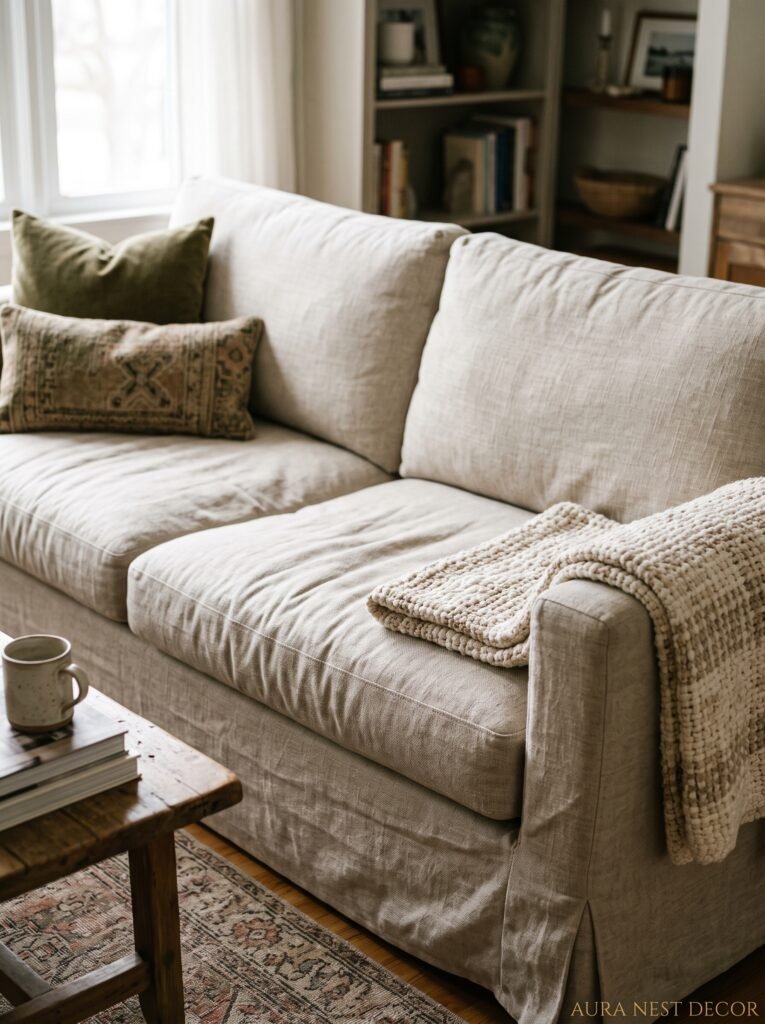
Here’s the thing about farmhouse sofas — it’s not about finding something that looks rustic. It’s about finding something that looks like it’s been loved for years, even if you bought it last Tuesday.
Linen and cotton slipcovers are your best friends here. Loose-fitting, slightly wrinkled, in oatmeal or stone or warm white. The kind of fabric that doesn’t punish you for sitting on it. Not a sleek velvet sectional, not a leather Chesterfield — something soft and a bit undone. British readers, you’re actually ahead here: those squishy, roll-arm sofas that cottage interiors are built around? That’s EXACTLY the energy. Americans, look for something with visible cushion texture and loose-back pillows, not tight-tufted perfection.
The color matters too. Warm neutrals only. Not grey — please, not grey, we’ve all seen enough grey — but sand, wheat, aged linen, the inside of a croissant. Something that absorbs afternoon light and gives it back softer.
And don’t rush this decision. The sofa is basically the personality of the room. Get the wrong one and every other styling choice you make will fight it.
“A farmhouse sofa shouldn’t look bought. It should look arrived at.”
2. The Color That Keeps Showing Up in Every Beautiful Farmhouse Living Room Right Now
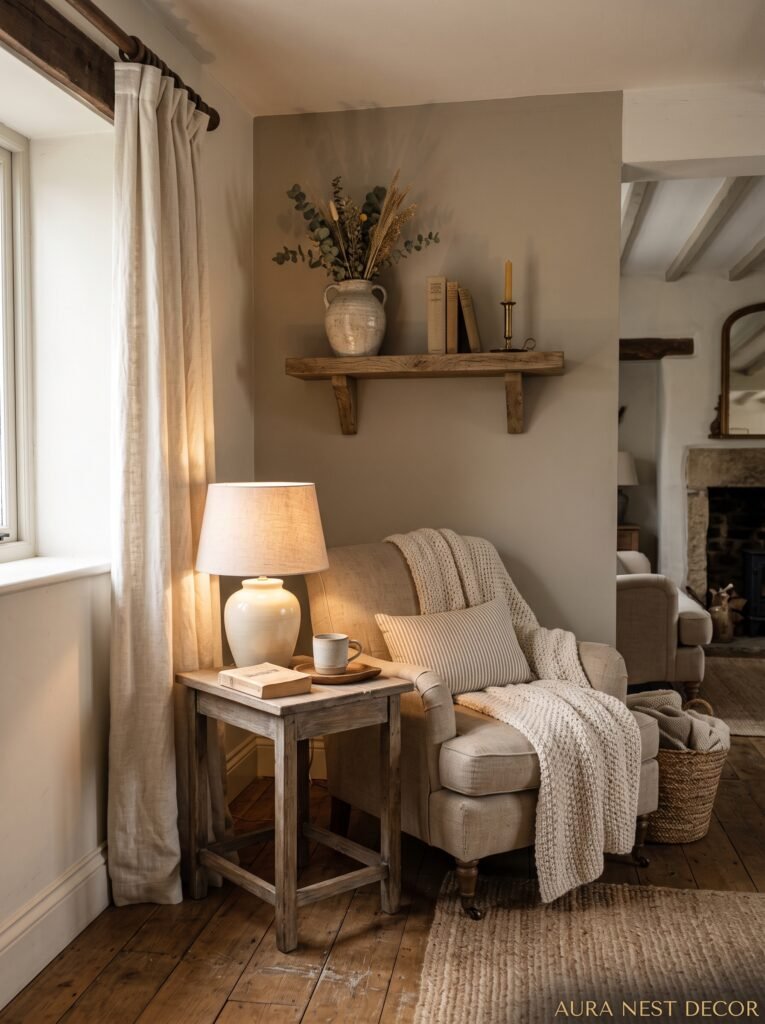
It’s not white. Well — it’s not JUST white.
The rooms that really work are layering warm white walls with something else: aged terracotta, warm sage, tobacco brown, a hint of rust. It’s that specific combination of pale background plus one deeply warm accent that creates the feeling everyone’s chasing. You see it on Pinterest constantly and maybe you couldn’t name it, but your eyes recognized it immediately.
If you’re in the UK, you’ve got Farrow & Ball at your fingertips and honestly, their palette was built for this. “Dead Salmon” sounds hideous and looks incredible on a chimney breast. “String” on walls with “Elephant’s Breath” woodwork is a combination that makes a room feel like it’s been there since 1887. Americans, Benjamin Moore’s “Pale Oak” and “White Dove” are your workhorses — warm, not clinical, and they play beautifully with natural materials.
The mistake people make is painting everything the same temperature. One warm wall or one deeply painted alcove changes the whole room’s depth. Even just painting the ceiling in a slightly different shade than the walls, like a creamy off-white above stark white walls, gives the room a sense of envelope. Of safety. Which is sort of the whole point, isn’t it.
3. What Farmhouse Lighting Actually Looks Like at 7pm on a Tuesday
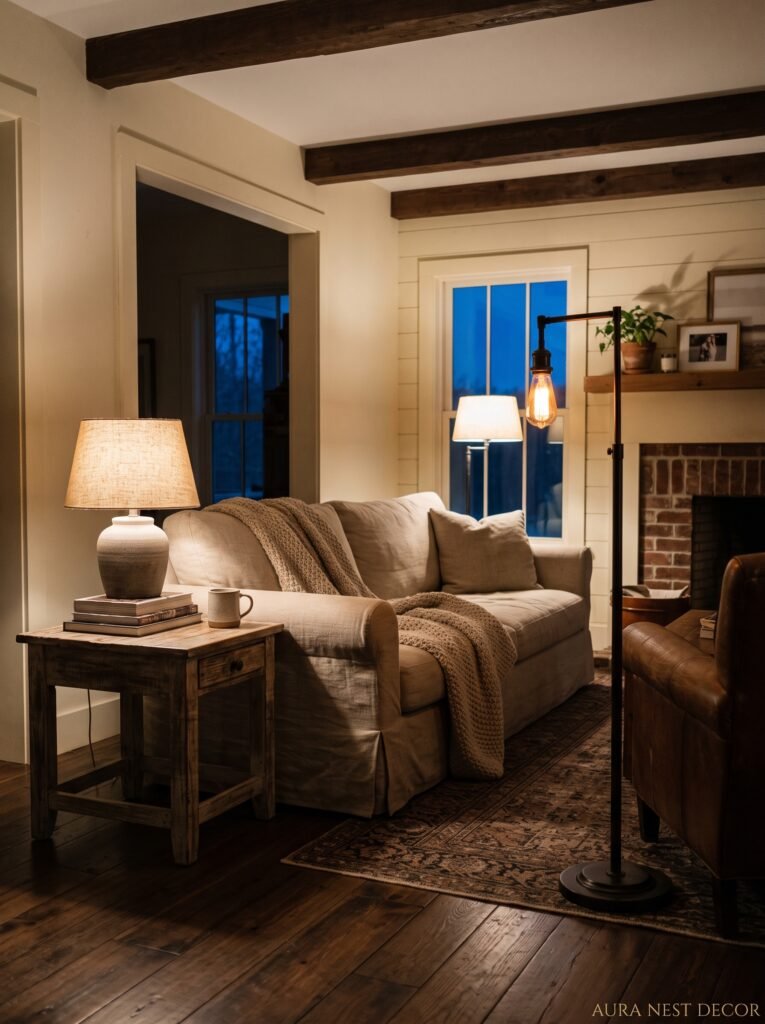
This is where most rooms fail. Not in the big choices. In the light.
Overhead lighting in a farmhouse living room should almost never be used alone. It flattens everything, kills the shadows that make texture interesting, and makes a cozy space look like a waiting room. What you want is layered light — a pendant or chandelier for structure, then lamps, then candles, and you’re dipping into all three depending on what you’re doing.
The fixtures themselves: wrought iron, aged brass, wood and metal combinations. A lantern-style pendant above a coffee table area works brilliantly. A pair of simple ceramic lamps with linen shades on either side of the sofa. And then — this is the detail that actually makes it — a couple of thick pillar candles on the coffee table or hearth that you actually light. Not battery ones. Real ones. The slight flicker changes everything.
Edison bulbs in warm amber, 2700K or lower. Not daylight. Not white. The kind of light that makes everyone look a bit like a Renaissance painting. That sounds ridiculous but I stand by it. You know that feeling when you walk into a candlelit room in winter and your whole body unclenches? That’s what you’re building. You’re engineering that feeling. It’s completely possible.
4. Texture Is the Whole Game — Here’s the Order to Layer It In
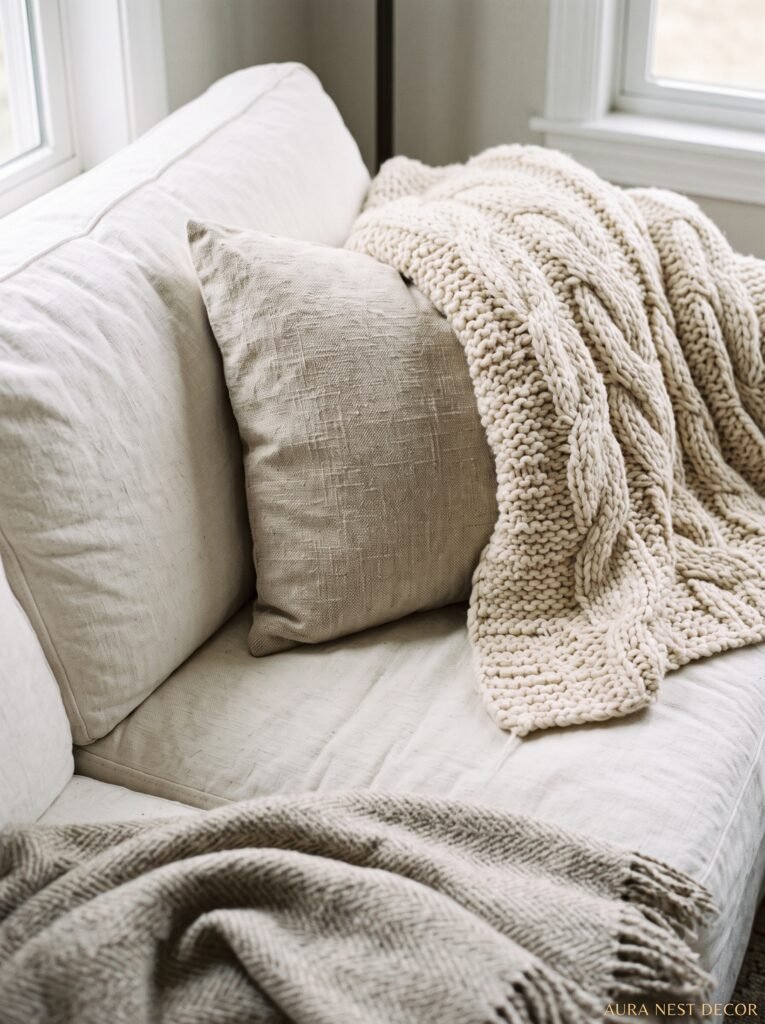
A farmhouse living room without texture isn’t a farmhouse living room, it’s just a beige room.
The layering has an order that works. Start with the rug — always the rug first. A jute or sisal base layer gives you that raw, natural ground. Not a flat weave, you want something with actual topography, something your bare feet notice. Then a woven cotton or wool rug layered on top if the space allows it, slightly off-center from the coffee table just to prove you’re not trying too hard.
Then textiles: the sofa throw, the pillow covers. Mix your textures here deliberately. Chunky knit next to smooth cotton linen. A velvet pillow in a muted rust or forest green against your loose linen cushions — that contrast is what makes the styling look considered. Then wood: the coffee table, side tables, maybe open shelving. Then something metal, something ceramic, something glass. By the time you’re done, the room should feel like it has several different temperatures happening simultaneously, and somehow they all work.
“Texture is what makes a room feel inhabited rather than installed.”
5. The Coffee Table Rule That No One Talks About Enough
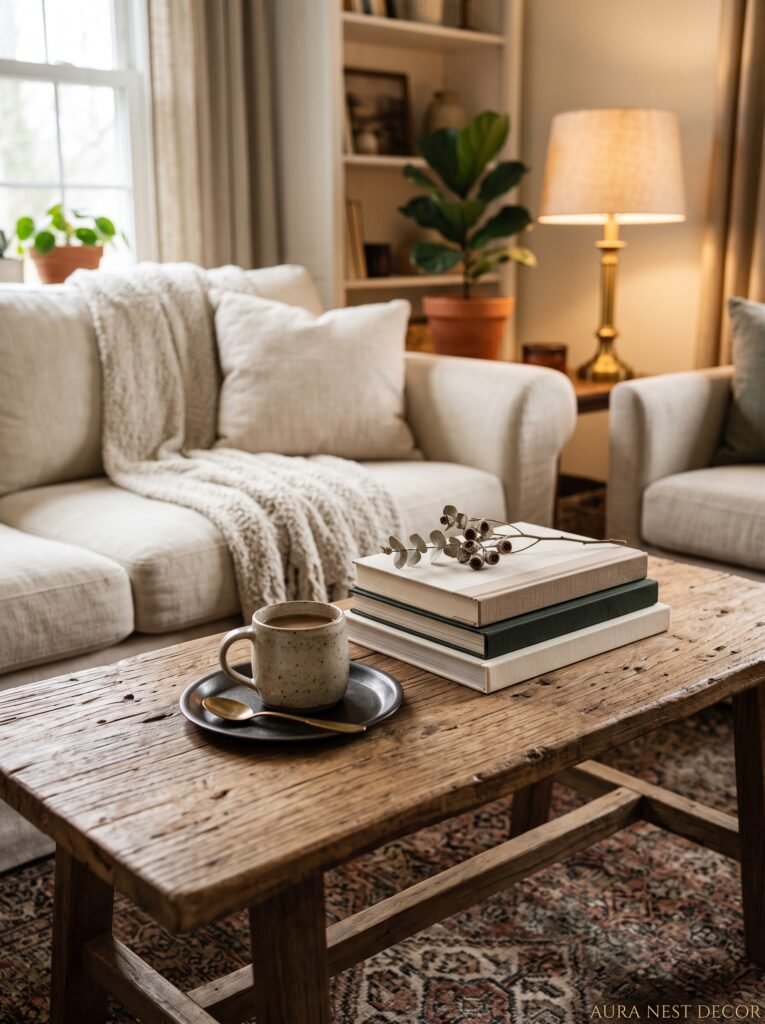
Stop buying matching sets. Seriously. Stop.
The farmhouse coffee table should look like it came from somewhere else and found its way into this room because it belonged here. A large reclaimed wood trunk. A vintage industrial spool. A battered wooden chest that doubles as storage. Something with patina, with a past, with the sort of surface that doesn’t panic when someone puts a mug down without a coaster.
What you style on it matters just as much. A stack of two or three oversized books (don’t arrange them by height — that’s too perfect), a small ceramic vase with a single stem or some dried botanicals, maybe a candle, a small tray corralling some objects you actually use. Not a styled vignette from a showroom. More like someone set things down naturally and it looked good that way.
And honestly? The stuff that lives on your coffee table reveals your personality more than anything else in the room. So let it be a little honest. A coaster with a tea ring stain. A remote that didn’t quite make it to the tray. That’s not mess, that’s a room that’s actually lived in, which is the whole point.
6. Shiplap, Beams, and the Architecture You Can Fake Convincingly
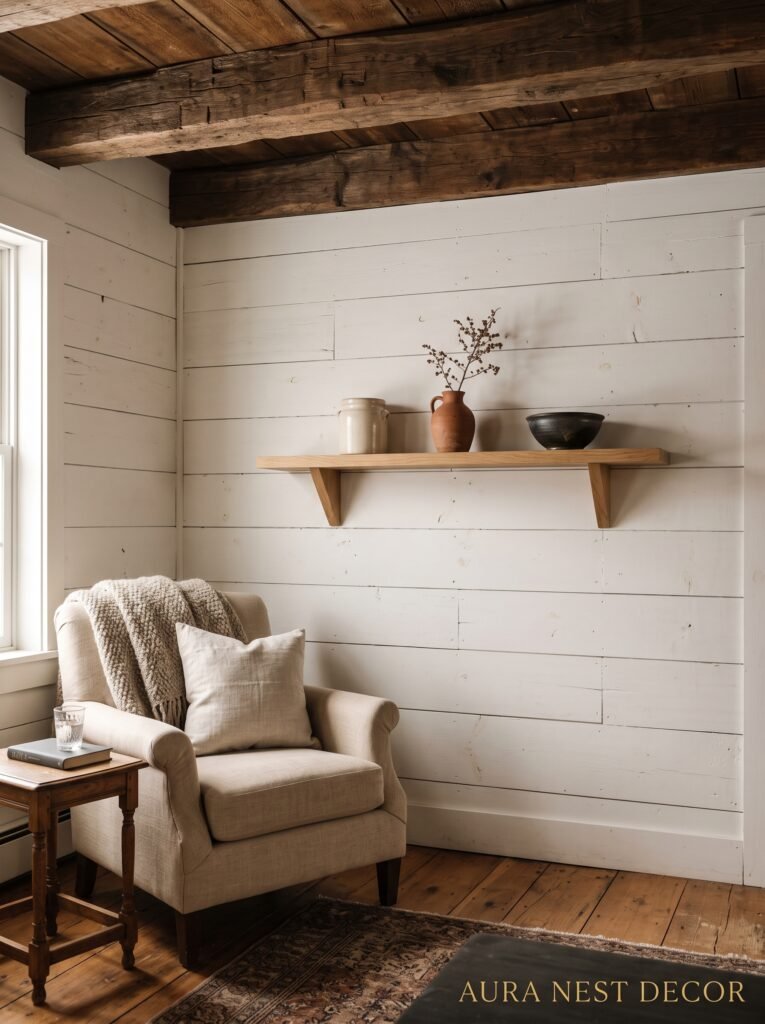
Look, not everyone has original ceiling beams and a stone fireplace. Most of us don’t. But you can create the suggestion of age and structure in a totally modern room, and when it’s done well, it reads as real.
Faux beams have gotten incredibly good. Lightweight polyurethane options that look genuinely wooden from any normal distance, and they add ceiling architecture that completely changes the scale of a room. If you’re in the UK and working with a newer build that’s got that flat, characterless ceiling, this is worth it. Americans in ranch houses or apartments — same story.
Shiplap is slightly more divisive now that it got overexposed, but used on one wall, behind a sofa or in a fireplace alcove, it still works. The key is painting it in something that isn’t bright white. Soft greige, warm cream, even a darker moody tone if you want drama. White shiplap everywhere is 2017. One thoughtfully painted shiplap accent wall is still quietly excellent.
Real brick or stone on a fireplace surround beats everything. If you’ve got it, preserve it. If you haven’t got it, faux stone panels around a modern fireplace are a legitimate move that reads farmhouse immediately.
7. Fireplaces: Real, Electric, or Cleverly Faked — What Actually Works
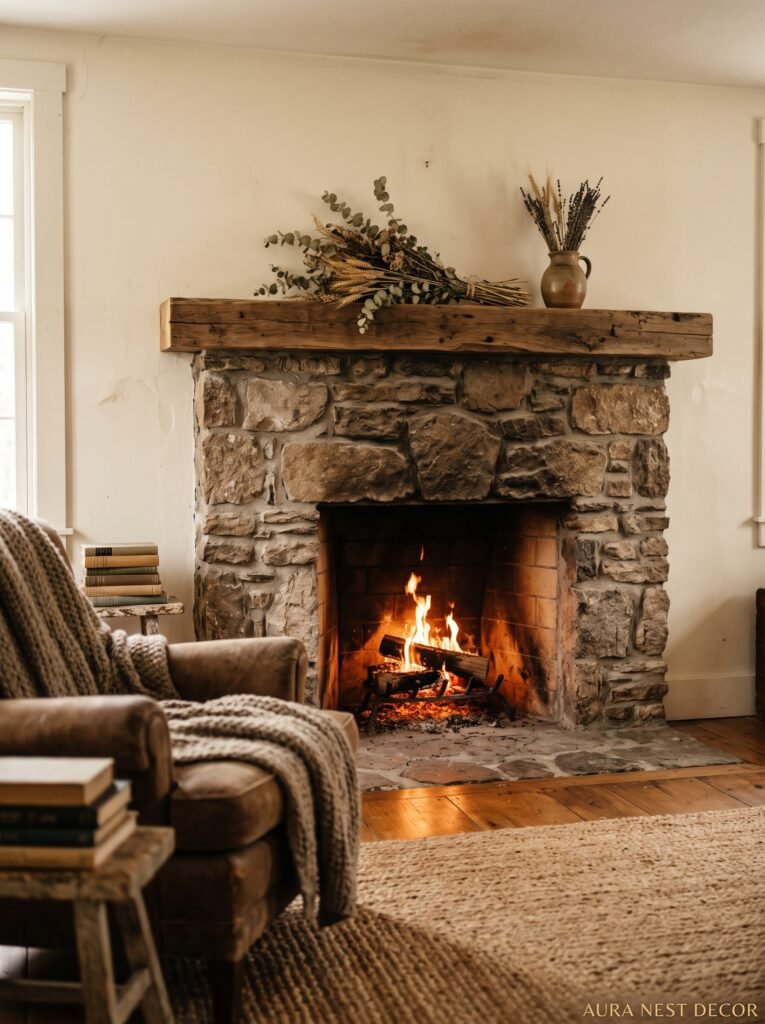
A fireplace is almost obligatory in a farmhouse living room. And I get that not everyone has one.
If you’ve got a working fireplace, everything about this is easy. Real fires in winter are basically an entire interior design strategy on their own — the sound, the warmth, the light. All you need to do is not mess up the mantel and the room largely takes care of itself. Keep it simple: one or two framed prints or a mirror above, some objects on the shelf with breathing room between them, maybe a few pillar candles in different heights. Don’t overcrowd it. Let it breathe.
Electric fireplaces have genuinely come a long way. The 3D flame effect ones, recessed into a wall or inside a built surround, can be completely convincing on a winter evening when the overhead lights are off. Not free, but worth it if you’re committed to the look and don’t have the real thing.
“The fireplace is the room’s heartbeat. Everything else just orbits it.”
The totally-fake option that works? A mantelpiece shelf mounted on the wall with a collection of candles arranged in the alcove below. Sounds like a workaround and it IS a workaround, but done with intention — real candles, some stacked logs for visual texture, maybe a lantern — it holds a lot of the same emotional weight. People do a double-take.
8. The Shelf Styling That Looks Effortless and Takes About Twenty Tries
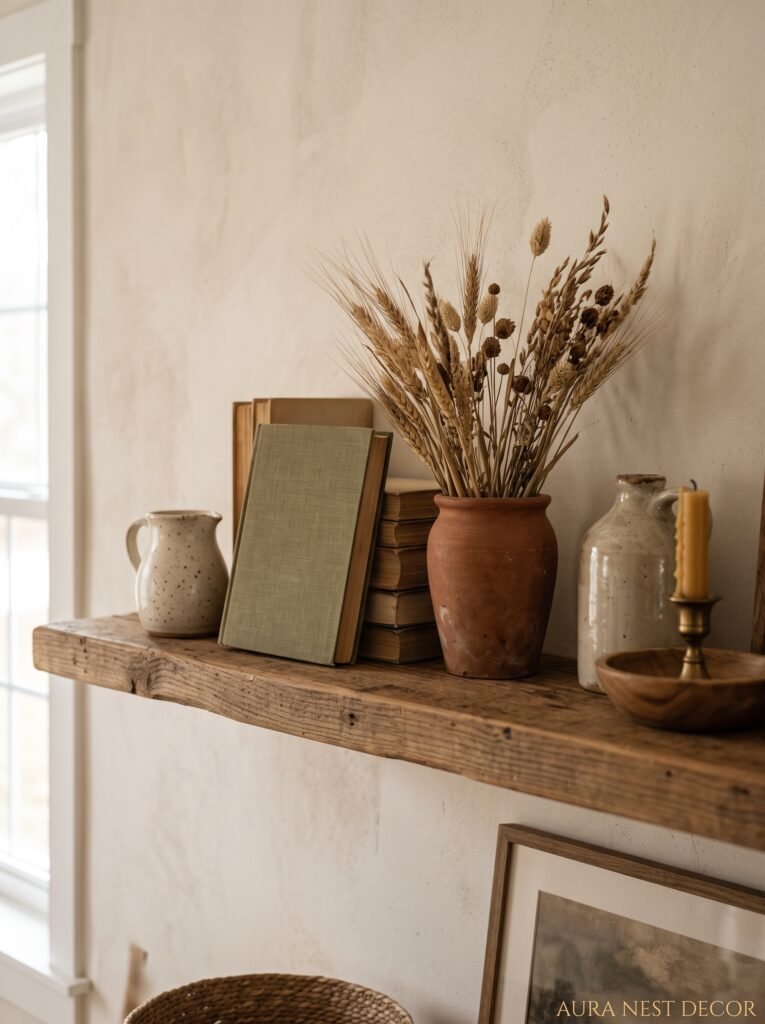
Open shelving in a farmhouse living room is one of those things that looks completely natural in photos and takes a small eternity to get right in real life.
Here’s what I’ve learned: the things that look best on shelves are almost always the things that already exist in your house. Old books with nice spines. Ceramic pitchers or jugs. Small baskets. Framed photos or botanical prints leaning rather than hung. A small trailing plant — pothos or ivy — tumbling over a shelf edge.
What doesn’t work is overstuffing. Every farmhouse shelf photo you’ve saved probably has negative space in it — that intentional emptiness between objects. That breathing room is doing more work than the objects themselves. Also avoid mixing too many colors. Keep the palette tight: natural wood tones, white or cream ceramics, green from plants, and maybe one or two warmer terracotta or rust pieces.
And keep the books horizontal in some places, vertical in others. Random stack of two here, a row there. The irregularity is what makes it look natural rather than designed. Or maybe designed — but designed by someone with taste rather than by someone following a rule.
9. Plants That Actually Survive in a Cozy, Low-Light Living Room
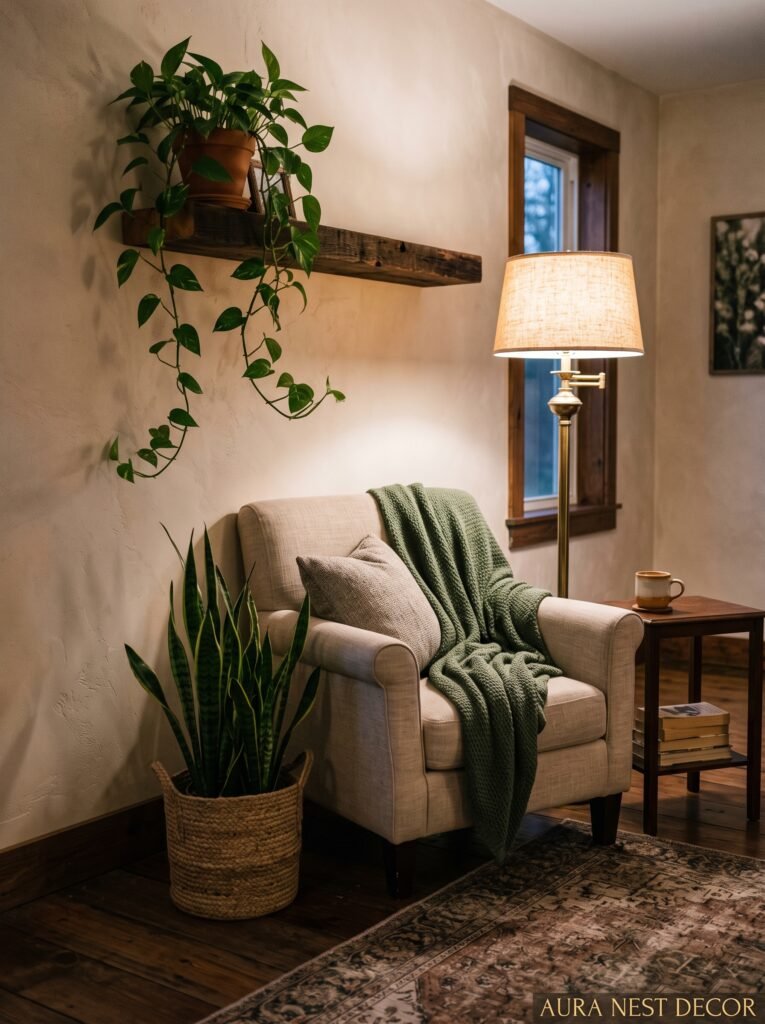
Plants are non-negotiable in a farmhouse living room. But let’s be honest about what survives in these spaces — which tend to be north-facing, or have small windows, or have the kind of filtered afternoon light that looks beautiful in photos and challenges most plants.
Pothos is the absolute champion and I’ll die on that hill. It trails, it grows in basically any light, and it looks abundant and lush within a season. In a ceramic pot or a hanging macramé planter, it’s perfect. Snake plants are indestructible and architectural. Peace lilies do wonderfully in low light and flower. And for something a bit more dramatic, a fig leaf or fiddle-leaf fig in a corner with a terracotta pot is still the most “Pinterest farmhouse” single plant choice available.
For UK readers: your light conditions in autumn and winter are challenging and you know it. Lean harder on snake plants, ZZ plants, and pothos. They’re genuinely okay. And dried botanicals — pampas grass, dried eucalyptus, dried lavender — are doing a lot of heavy lifting in British farmhouse rooms right now because they’re honest about what light you’ve got.
10. The Kind of Rug That Grounds Everything (Without Overpowering It)
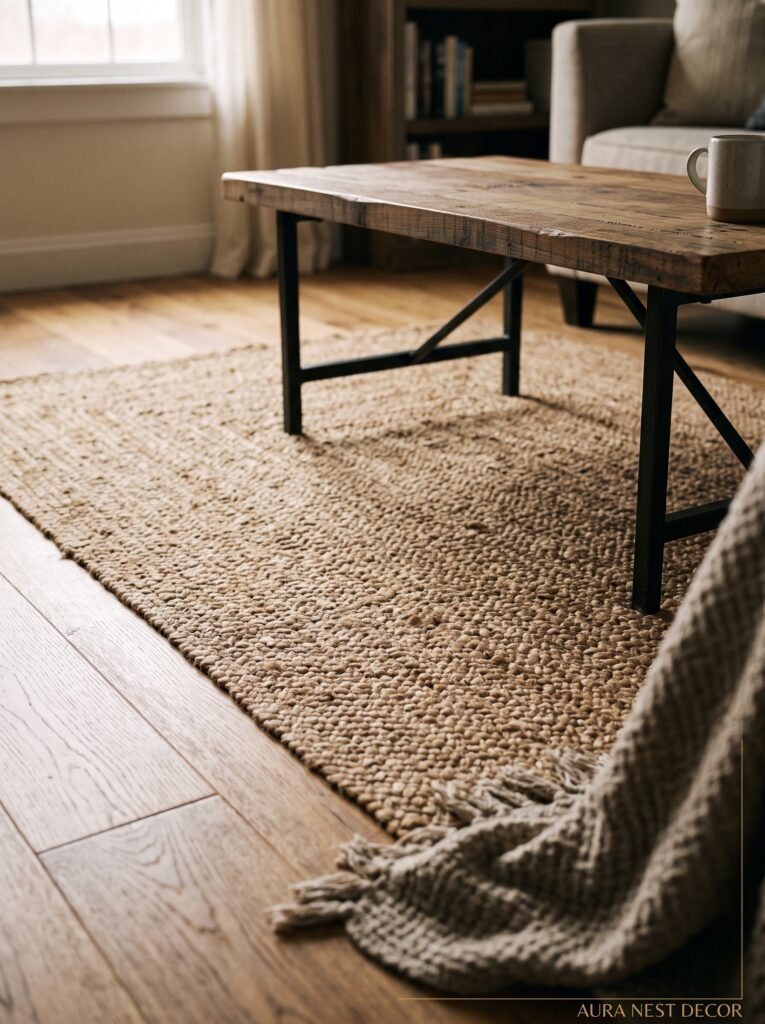
The rug mistake in farmhouse rooms is almost always going too small. A rug that sits only under the coffee table and doesn’t reach the sofa legs looks like a postage stamp in the middle of the floor. It disconnects everything.
Go bigger than you think you need. At minimum, the front legs of every seating piece should sit on the rug. Ideally all four legs of everything. This creates a defined conversation zone and makes the whole room feel intentional.
Natural fiber rugs — jute, seagrass, sisal — are the foundation. They’re warm in color, they’ve got that organic texture, and they age in a way that actually improves them. Layer a softer, more patterned rug on top if you want something a bit more plush underfoot. A vintage Turkish kilim or a faded Persian-style rug layered over jute is one of the best combinations in farmhouse decorating and has been for years — because it genuinely works.
11. The Small Additions That Do Disproportionately Heavy Lifting
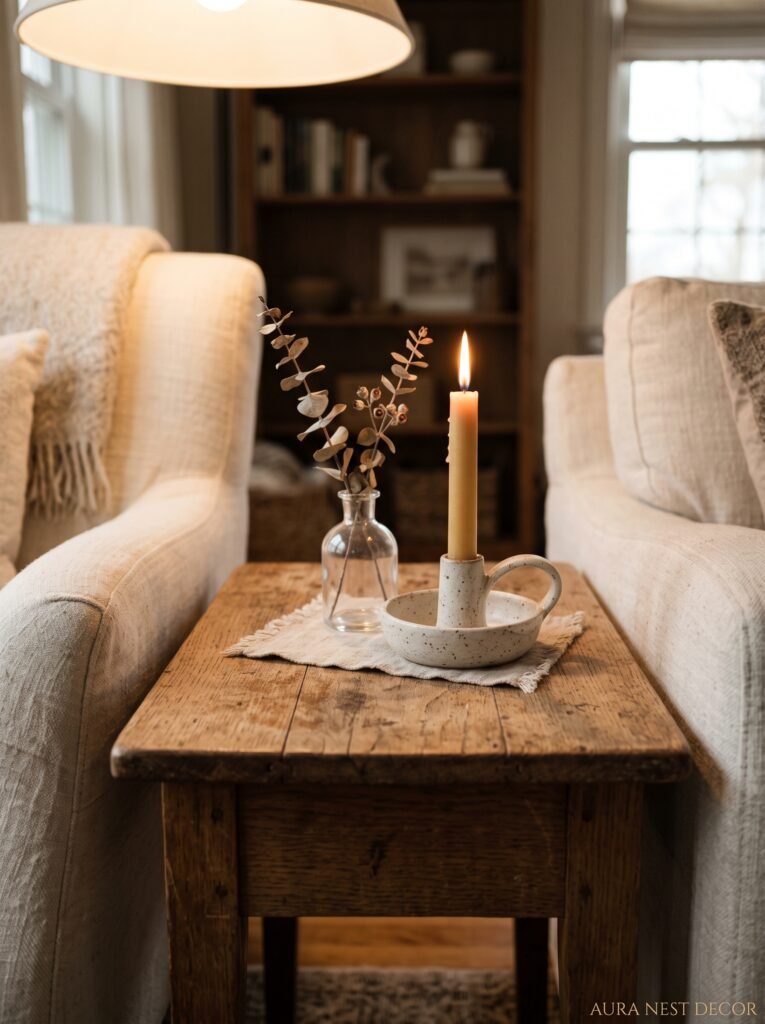
Okay, this is the section that doesn’t look like much in a pinned photo but makes the whole room feel like it does in one.
A wicker or rattan tray on the coffee table. An old wooden crate used as a side table or magazine holder. A vintage clock — either a large face clock on the wall or a small mantel clock that actually ticks. A bread board propped against the wall in an alcove. These tiny things, the ones that feel a bit random, are what make a room feel like it exists in a particular life rather than a catalogue.
And candles. Not scented candles necessarily, though those help — but pillar candles on every horizontal surface you can justify. In a cluster of three on a wooden board, or in lanterns, or in simple iron holders. When they’re lit, the whole room shifts mood completely. That’s not small. That’s EVERYTHING.
12. The One Thing British and American Farmhouse Rooms Do Differently (and How to Borrow from Both)
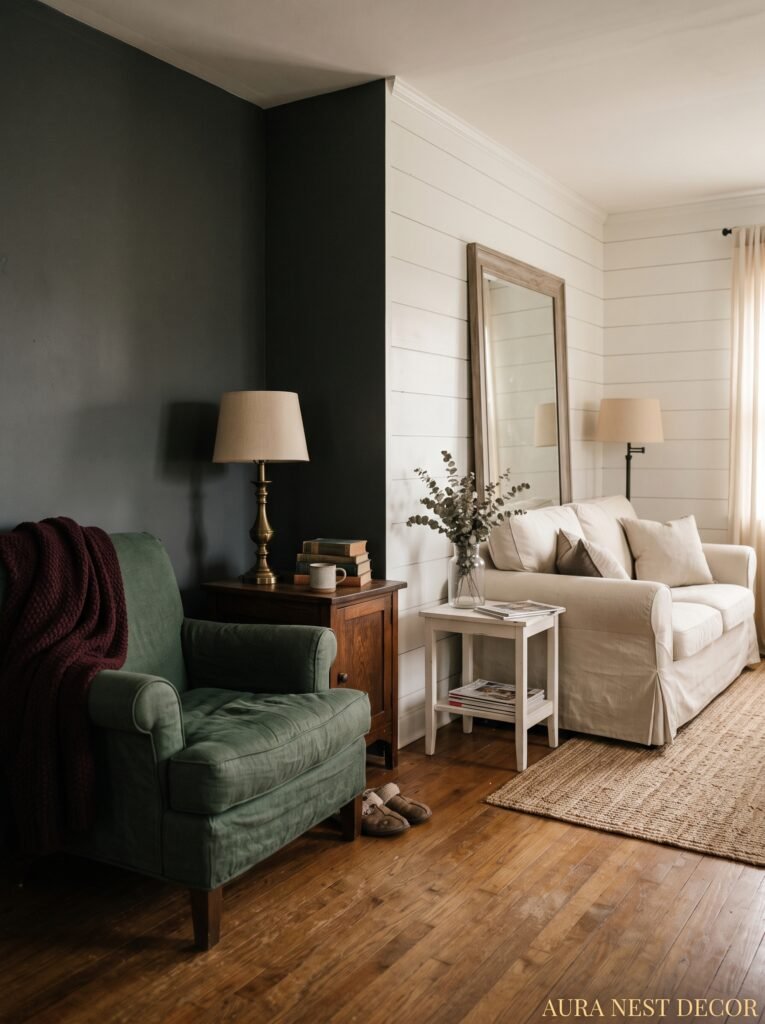
There’s a genuine difference and it’s worth acknowledging because you can steal from both traditions.
British farmhouse interiors tend to lean into imperfection more confidently. The slightly bowed shelf. The worn stone hearth. The old framed hunting print that nobody would call decorative but somehow fits. There’s an acceptance of age that Americans sometimes try to replicate with distressing and it doesn’t quite land the same way. UK farmhouse rooms feel like the past is actually present, not invited.
American farmhouse — particularly the Midwestern or Southern version — brings more warmth and softness. More quilts, more collected ceramics, more layered textiles. More sweetness in the arrangement of objects. It’s a slightly different emotional temperature: less stoic, more enveloping.
The best rooms steal from both. Take the British confidence in imperfect, aged pieces and the willingness to leave things as they are. Take the American warmth in textiles and layering. Put them together and you’ve got something that feels genuinely distinctive — not styled to a trend, but built over time by someone who loves this stuff.
—
❓ FAQ
Q: How do I make a modern or new-build home feel like a farmhouse living room without it looking like a costume? A: Focus on materials and texture before you touch any “rustic” decorative items. Natural fiber rugs, linen textiles, real wood furniture, and warm lighting do most of the work without screaming “theme.” The mistake is usually adding too many explicit farmhouse symbols — the signs, the galvanized metal, the word “gather” on a wall — when the feeling actually comes from quieter choices.
Q: What’s the difference between farmhouse style and shabby chic, because they look the same to me? A: Shabby chic leans feminine and romantic — think distressed white furniture, floral textiles, vintage roses. Farmhouse is earthier and more grounded. More raw wood, more neutral fabric, more functional-looking objects. Farmhouse rooms feel like they were used for something. Shabby chic rooms feel like they were decorated for how they look. The overlap is real, but the emotional register is different.
Q: Can I do farmhouse style in a small flat or apartment, or does it need space to work? A: It absolutely works in smaller spaces — you just prioritize ruthlessly. One great sofa in a warm natural fabric, a good rug that’s the right size, real lighting, and a few meaningful objects. Farmhouse style is actually MORE forgiving in small spaces because it’s built on texture and warmth rather than grand gestures. Don’t overfill. Let each thing breathe.
—
💭 Final Thoughts
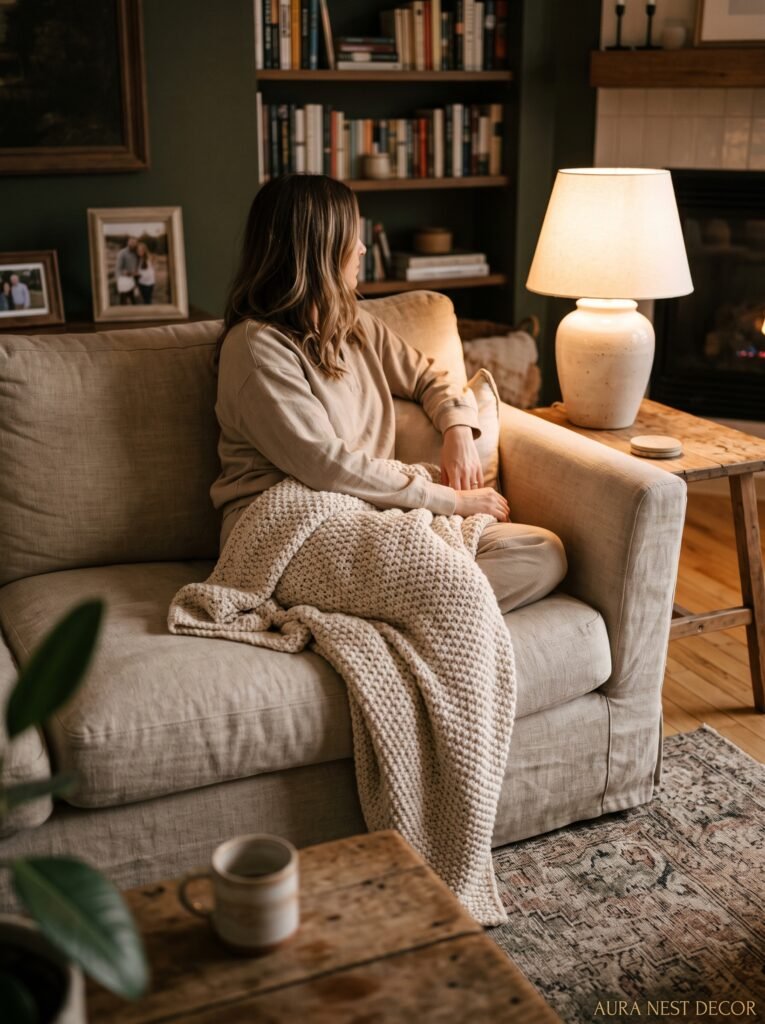
There’s a reason people keep coming back to farmhouse style even as trends come and go. It’s not really about shiplap or Mason jars or any specific object. It’s about rooms that feel like relief — like you can exhale when you walk in. Like time slows down just a little.
That’s a thing worth building. Whatever corner of the US or UK you’re decorating in, that feeling is absolutely possible.
What’s the one thing your living room is missing that would make you actually want to spend more time in it?