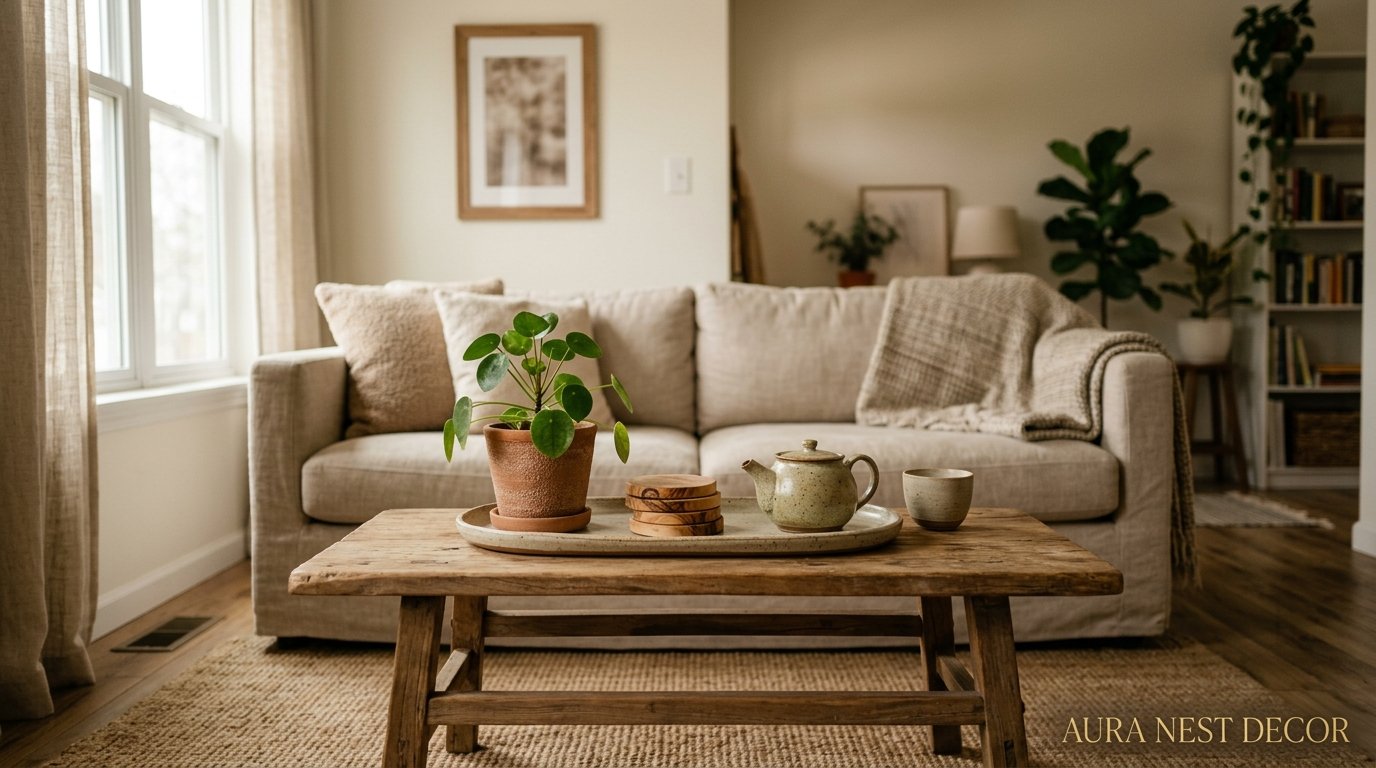
The Tea Table That Actually Pulls Your Whole Living Room Together (And How to Find It)
You know that moment when you walk into someone’s living room and something just works? You can’t name it immediately. Then you look down, and there it is — the table. The one that makes everything else make sense.
—
1. Why Most People Pick the Wrong Table (And Don’t Realize It for Months)
It’s not a dramatic mistake. Nobody buys a table and thinks “yes, this is terrible.” It’s subtler than that. You bring something home, it fits in the space, and you just… live with it. Six months later you’re rearranging cushions and buying new throw pillows trying to fix a feeling you can’t name. The table was the problem the whole time.
Here’s what usually goes wrong. People shop for tables by size first, vibe second. Which makes sense on the surface — it has to fit, right? But a table that fits the physical space and fights everything around it is worse than a table that’s slightly too small and feels completely right. I’ve seen this happen so many times, honestly.
The other trap is buying a table in isolation. You see it in the store, it’s beautiful, you picture it in your house. But you’re picturing it floating in some abstract “your house” that doesn’t have the specific green velvet sofa, the jute rug, the inherited oak dresser your grandmother left you. Every living room already has a personality. The tea table’s job is to fit into that personality, maybe even sharpen it — not compete with it.
So before anything else: look at your room with fresh eyes and ask what it’s ALREADY saying. Cozy and layered? Spare and architectural? Somewhere in the middle with confused energy? That answer should drive every choice that follows.
“The table doesn’t decorate the room — it either pulls it together or quietly tears it apart.”
—
2. The Size Formula Nobody Talks About (But Everyone Wishes They Knew Earlier)
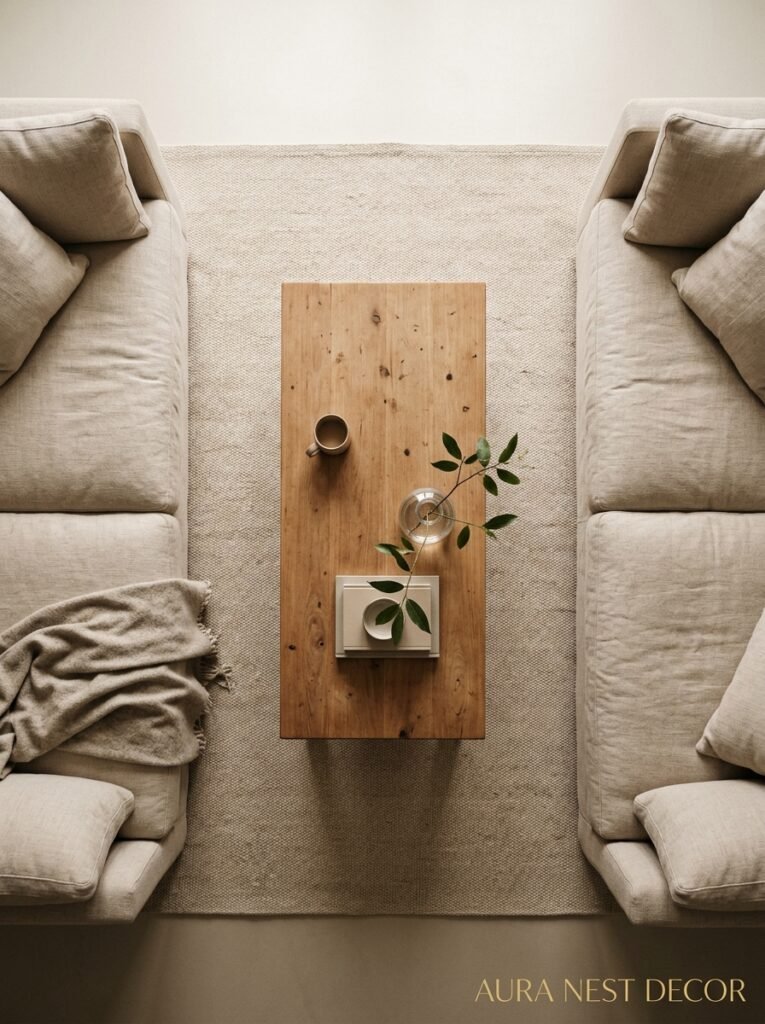
Standard advice says your coffee table should be roughly two-thirds the length of your sofa. That’s fine. But a tea table is different — or at least it can be, depending on how you use it. If you’re actually putting down a teapot, cups, maybe a small plate of biscuits, you need surface area that respects that ritual. Not a decorative object you’re afraid to USE.
The real test is this: sit on your sofa and hold your arm out. Can you reach a cup on the table without leaning awkwardly forward? Without nearly falling off the edge of the cushion? If yes, it’s close enough in height. If no, you’re going to stop using it within a week, and it’ll just become a place where old magazines go to die.
For most standard sofas, a table height between 16 and 18 inches works. Lower if you’ve got a very deep, sink-into-it sofa. Higher if you’ve got a more upright, formal piece. And honestly? For British sitting rooms where tea is a genuine daily event and not just aesthetic, I’d always lean toward something on the higher end of that range.
Width matters too. Narrower tables — under 24 inches — feel elegant but limit actual use. If you’re styling only, that’s fine. If you want to put a tray down and have somewhere left to rest a cup, aim for 28 to 32 inches minimum.
—
3. The Color That Keeps Showing Up in Every Beautiful Living Room Right Now
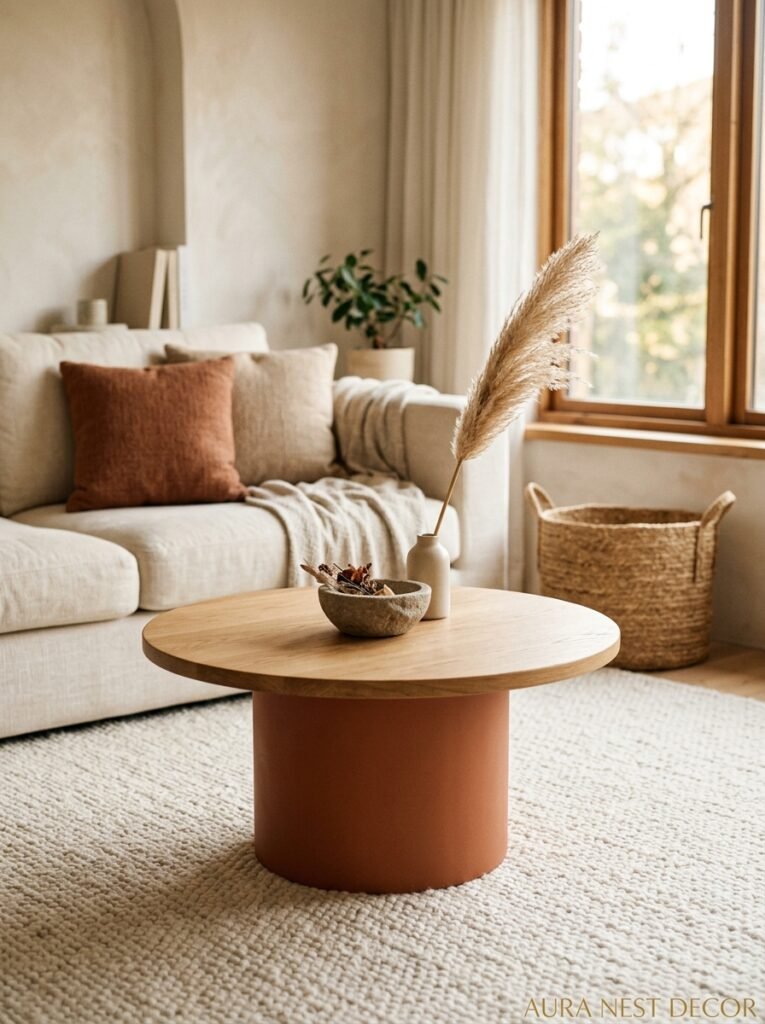
Warm walnut. That’s it, that’s the color. Not mahogany, not pale ash, not gray-toned anything. Warm walnut with actual grain visible — the kind that looks different in morning light than it does at 6pm with the lamps on.
There’s something happening right now in interior design where people are pushing back against the very cold, very gray aesthetic that dominated for most of the last decade. The white walls and pale wood era. People want their homes to feel lived-in again. They want some depth, some history in the materials.
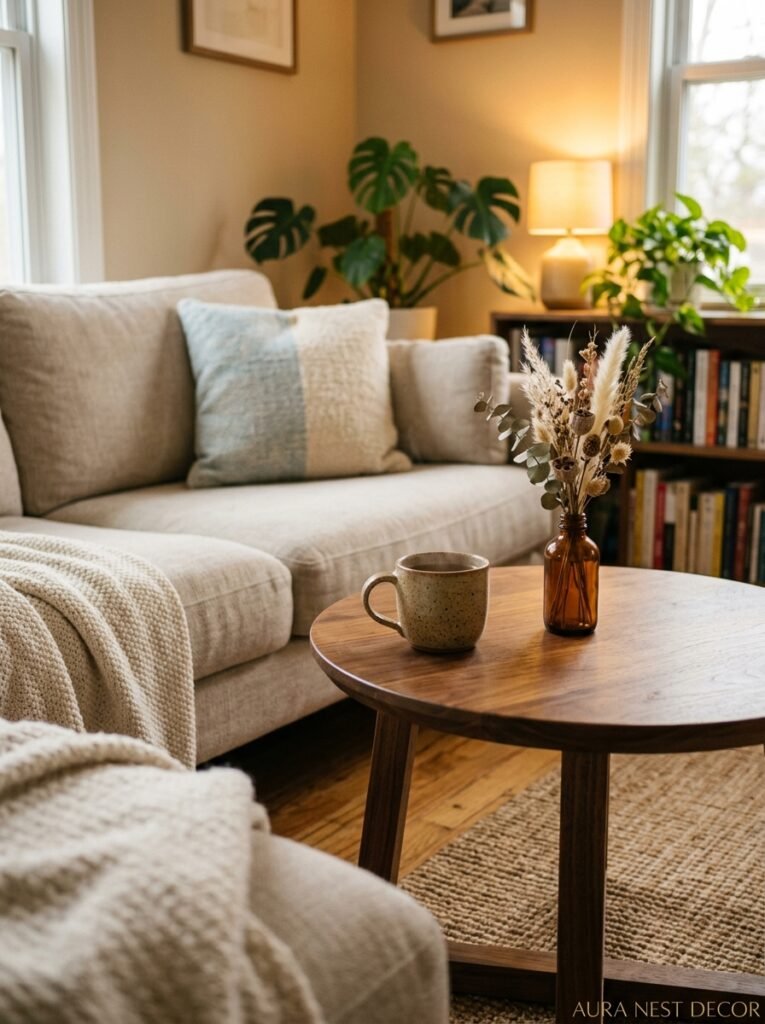
And walnut delivers that without being heavy or dark or oppressive. A round walnut tea table on a cream rug, next to a linen sofa, with a small ceramic pot of dried flowers on top — that’s practically a spiritual experience, not gonna lie.
But this isn’t the only option. Painted tables are having a moment, specifically sage green and deep cream. And black lacquer is still stunning if you’ve got the right room for it — somewhere with some contrast, some drama, art on the walls. Black lacquer on a sea of beige looks wrong. Black lacquer in a room with actual intention looks incredible.
For UK readers especially, pale oak and painted pine are old friends that still earn their keep, particularly in more traditional or cottage-style rooms. There’s no need to chase the latest trends if what you already have speaks to the rest of your space.
—
4. Round vs. Rectangular: This Is Actually an Argument Worth Having
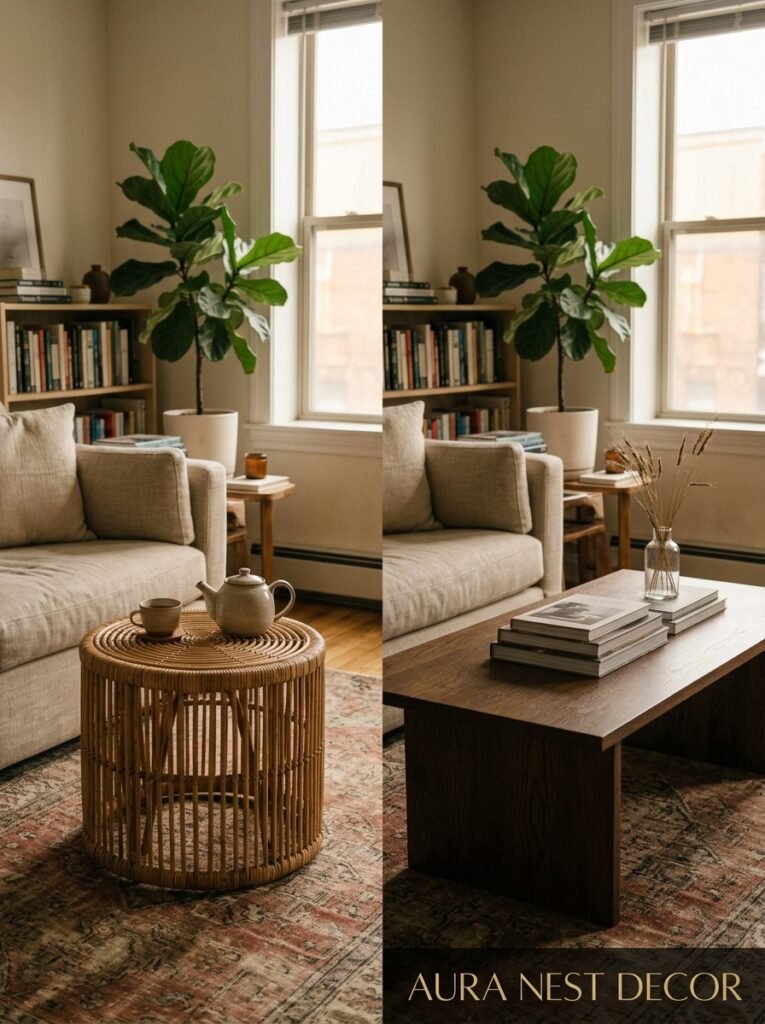
People have feelings about this. Strong ones.
Round tables feel more intimate, more conversational. There’s no corner to navigate around, no edge to bang your knee on at 2am. They work brilliantly in smaller rooms because the eye moves around them differently — they don’t cut the space into a shape the way rectangular tables can. And for a TEA table specifically, round feels right. It feels like gathering. Like someone’s about to pour.
Rectangular tables give you more surface. Full stop. If you’re a person who uses the table — remotes, books, a candle, an actual cup of tea, a snack — you need that real estate. They anchor the space more definitively too, which works well in longer, narrower rooms where you need something with a strong horizontal line.
Square tables are the underrated middle option. Not quite as warm as round, not as utilitarian as rectangular, but they suit a very specific kind of room: open-plan spaces, rooms where the sofa doesn’t run along one wall, or anywhere the living area has a more geometric feel.
My actual opinion? In most average-sized living rooms with a standard three-seat sofa, a round or oval table in the 36–42 inch range is going to look better than people expect. People default to rectangular because that’s what stores push front and center. But go try a round one. It changes the whole feeling.
“Round tables don’t just fill a space — they invite people into it.”
—
5. The Tray Trick That Makes Any Table Look Like It Was Professionally Styled
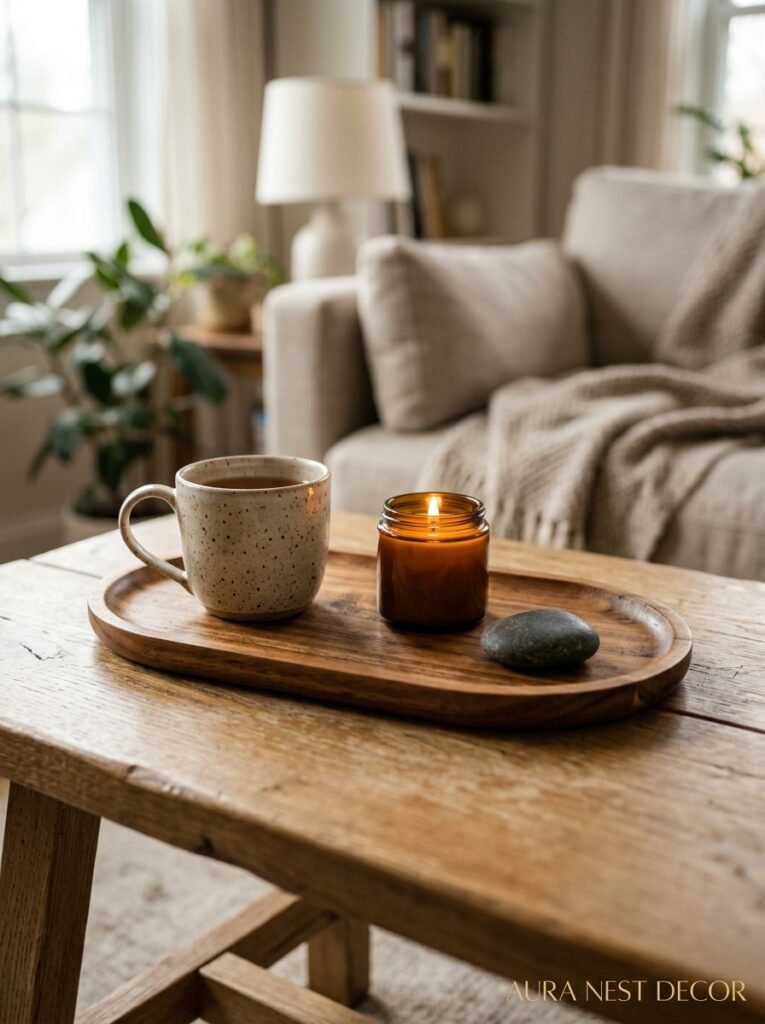
Okay, side note — I feel like trays are simultaneously one of the most talked-about styling tools and one of the most misunderstood.
A tray doesn’t just corral clutter (though it does do that). What a tray ACTUALLY does is create a visual boundary that tells your eye “this is intentional.” Without it, three objects on a table just look like you put three things down. With a tray, those same three things look curated. Same objects. Completely different feeling.
For a tea table specifically, a tray that lives permanently on the table changes your whole relationship with the space. You put the pot on the tray, cups on the tray, maybe a small book. And when tea time is over, you move the tray to the kitchen in one trip. The table is immediately clear. This is the kind of practical-meets-beautiful solution that I genuinely get excited about, which probably says something about me.
Materials matter. A brass tray on a walnut table is very editorial right now. A linen-wrapped tray on a lighter wood is soft and organic. A lacquered tray in a deep color adds drama without requiring you to commit to a dramatic table. And for UK readers who are going to be using this for ACTUAL daily tea — prioritize something with slightly raised edges. Spillage is real life.
—
6. The One Styling Rule That Makes a Tiny Room Feel Intentional
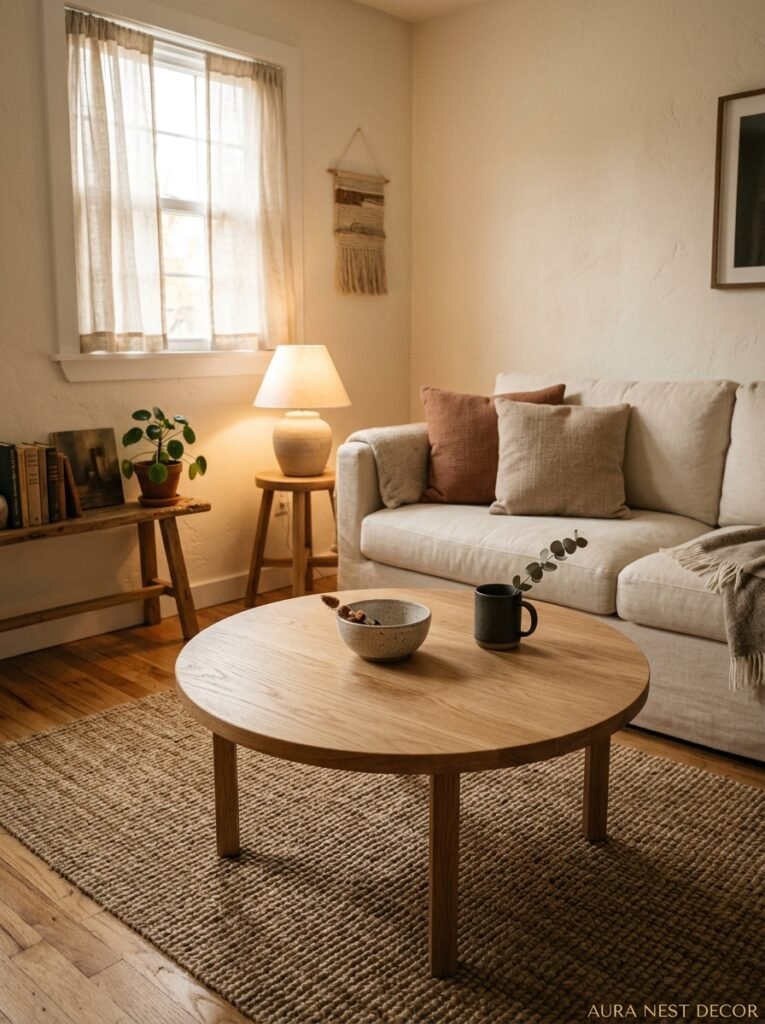
Scale is everything, and most people go too small when they’re nervous.
It seems counterintuitive. Small room, small table, makes sense right? But a table that’s too small for the space looks lost. It looks temporary, like a placeholder you forgot to replace. And ironically, it makes the room feel smaller, because your eye keeps searching for something to land on and keeps coming up short.
A table that’s appropriately sized — even just at the large end of appropriate — does the opposite. It anchors the room. It gives the space a reason to exist. Suddenly the sofa is in relationship with something rather than just floating.
The trick with smaller rooms is to choose a table that’s right-sized but visually light. Glass tops. Open shelves underneath instead of solid panels. Slim legs instead of chunky pedestals. Lucite if you’re really working with a tiny footprint. The table can be present and not feel heavy. Those are different things.
And please — one strong, considered table rather than two small stacked items trying to do the job of one real piece. That almost never works the way people picture it.
—
7. What Your Tea Table Should Look Like at 7pm on a Tuesday
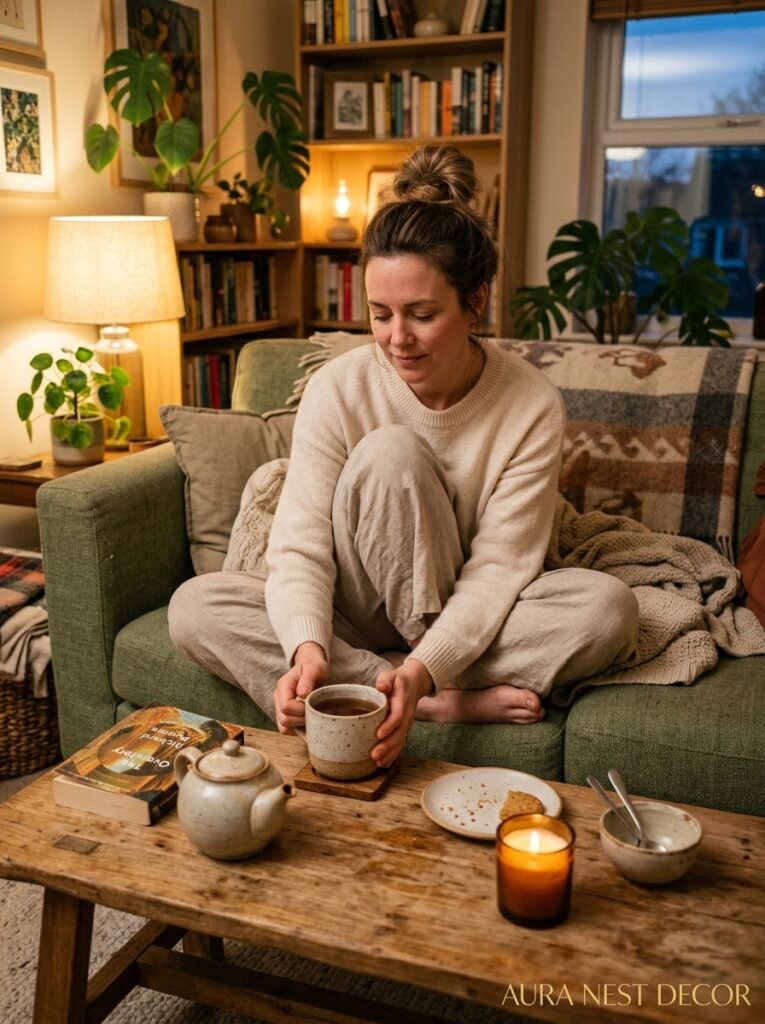
Not a Pinterest shot. Not a staged photo. A real evening in your actual house.
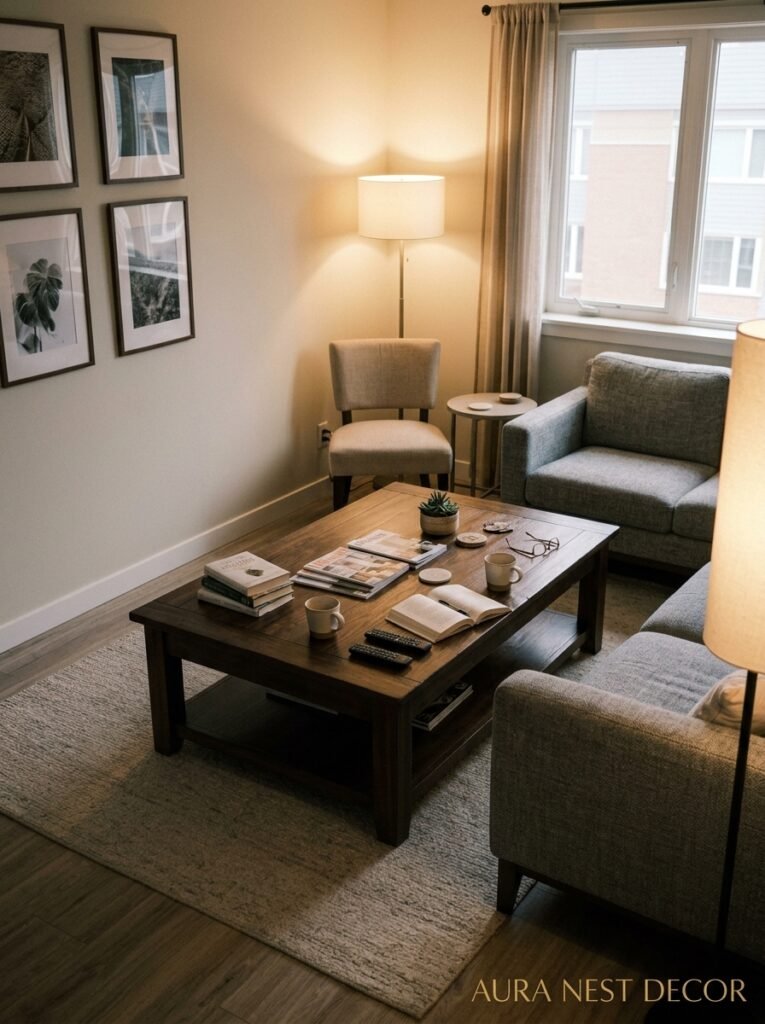
There’s probably a cup on it. Maybe a coaster that’s slightly off-center. A book you’re in the middle of. The remote. Possibly a dog-eared magazine or a phone charger that lives there because you’ve given up fighting it.
Your table has to work with all of that. And I think this is something design content doesn’t say enough — a beautiful table that makes you feel guilty about putting things on it is a BAD TABLE. Not for you, anyway. Some people have immaculate minimalist homes and they love them and it’s genuine. But for most of us, the table needs to absorb real life and still look good.
Dark, matte surfaces hide rings better than light, sheer ones. Open shelf storage underneath is incredibly practical — a little basket for remotes, a stack of books. Rounded edges forgive the way sharp corners don’t. These aren’t compromises, they’re smart choices.
“A table that survives real life is always more beautiful than one that doesn’t.”
—
8. The Leg Style That’s Having a Major Moment (And Why It Works)
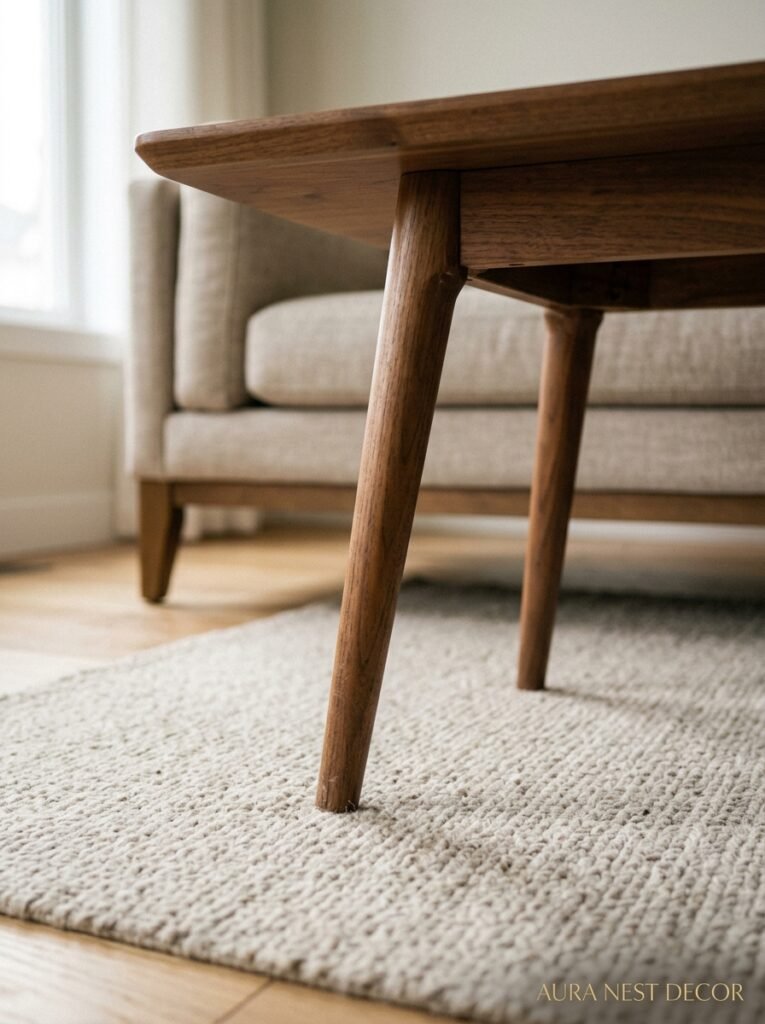
Tapered legs. Specifically, mid-century inspired tapered legs on a warm-toned wood. We’ve been here before as a culture — the 1950s and 60s gave us this aesthetic the first time — but the current version feels less retro-costume and more genuinely incorporated into modern homes.
Why does it work so well right now? Because tapered legs on a table create visual lift. The table looks like it floats slightly. And in a living room full of sofas and rugs and curtains and cushions — all these heavy, textile, grounded things — something that floats is a visual break. It gives your eye somewhere to breathe.
Hairpin legs are another version of this. More industrial, a bit more Brooklyn loft than Cotswolds cottage, but genuinely beautiful and incredibly versatile once you see them in the right space. They work on small tables especially.
What doesn’t work right now, in my opinion? Ornate carved legs that are trying to be traditional but aren’t quite committing. Very heavy turned legs on an otherwise simple table. And legs that match the top so completely that the table has no visual interest at all — no contrast, no dialogue between the parts.
—
9. Glass-Top Tables: The Truth Behind the Dream
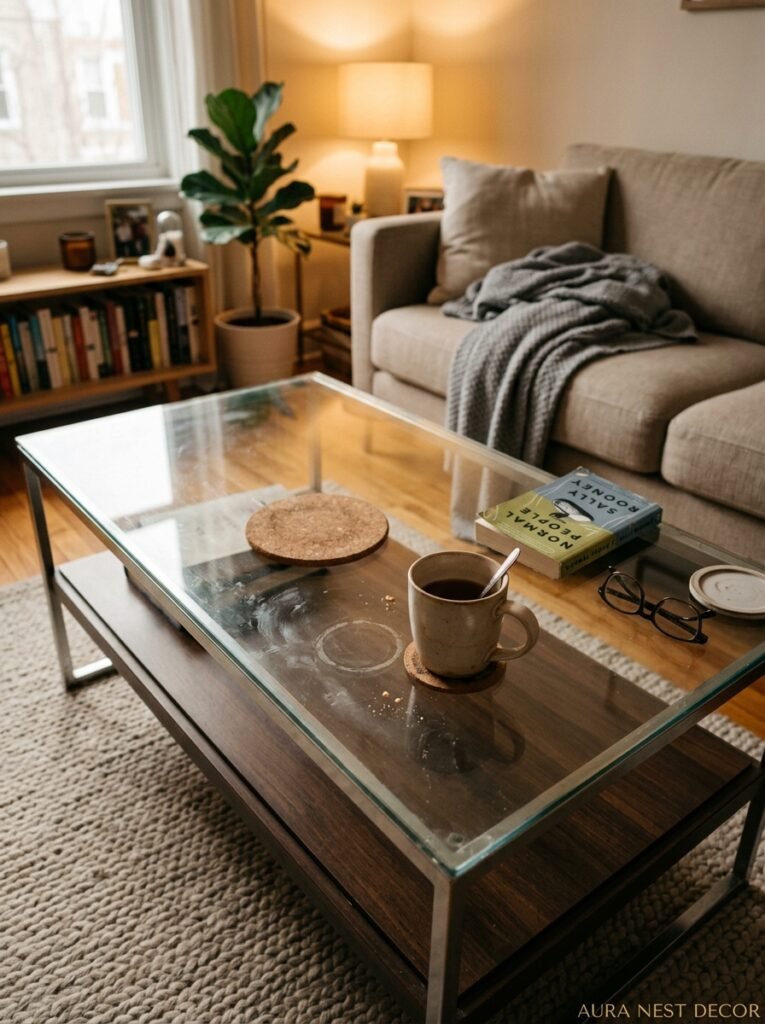
They look incredible in photos. Absolutely incredible. Light, airy, every object on them seems to hover.
Then you live with one.
The fingerprints. The watermarks. The way it shows every single grain of dust. The mildly terrifying feeling when someone sits on the edge of your sofa and puts their weight on the table by accident. Not gonna lie, glass-top tables require a specific kind of person — someone who wipes down surfaces instinctively, who doesn’t have children or large dogs, who genuinely doesn’t mind weekly cleaning as a non-negotiable.
If that’s you? Go for it. A thick-glass top on a brass or matte black frame is genuinely one of the most elegant things you can put in a living room.
If it’s not you — and honestly it’s not most of us — consider smoked glass as a middle ground. It hides more than clear glass, shows less than a solid surface, and still has that visual openness that makes glass-top tables appealing in the first place. Or go full solid surface and commit to it, because there are wood, marble, and stone tables that are every bit as beautiful and considerably more forgiving.
—
10. Marble and Stone: When It Works, When It Doesn’t
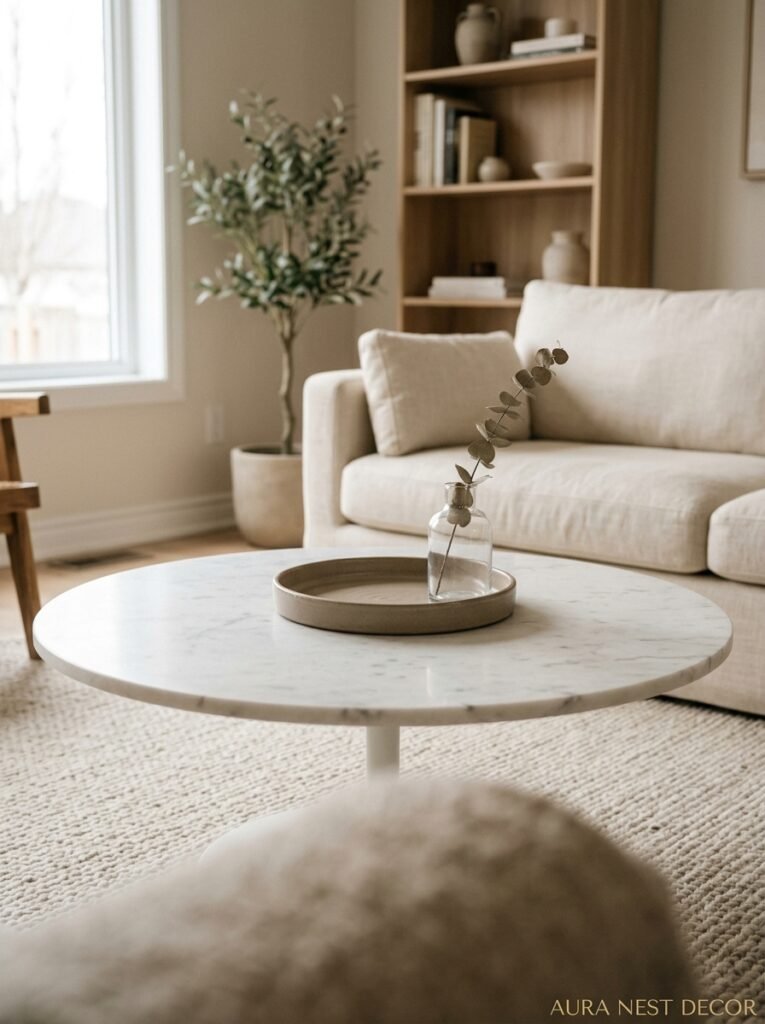
Stone tea tables are everywhere on Pinterest and I understand why. They’re dramatic. Even a small piece of marble carries a kind of authority that wood rarely matches.
But here’s the thing about stone: it’s cold. Literally cold to the touch. And visually cold in rooms that are already leaning minimal or pale. In a very warm room — lots of texture, lots of wood, some pattern, some personality — a marble table is a beautiful contrast. In a room that’s already sparse and cool-toned, it can push the space into “dentist waiting room” territory really fast.
Travertine is having a massive moment and I think it’s because it splits the difference — it’s stone, so it has that weight and authority, but the warm honey and cream tones feel organic in a way white marble doesn’t. And the natural variations and pitting in travertine mean it actually improves with light use and age, which marble absolutely does not.
For smaller budgets, there are some genuinely good sintered stone and ceramic top tables now that mimic marble convincingly. Not identical, but close enough that in a real-life room, most people won’t notice.
—
11. The Storage Situation — Because Life Doesn’t Happen on Empty Surfaces
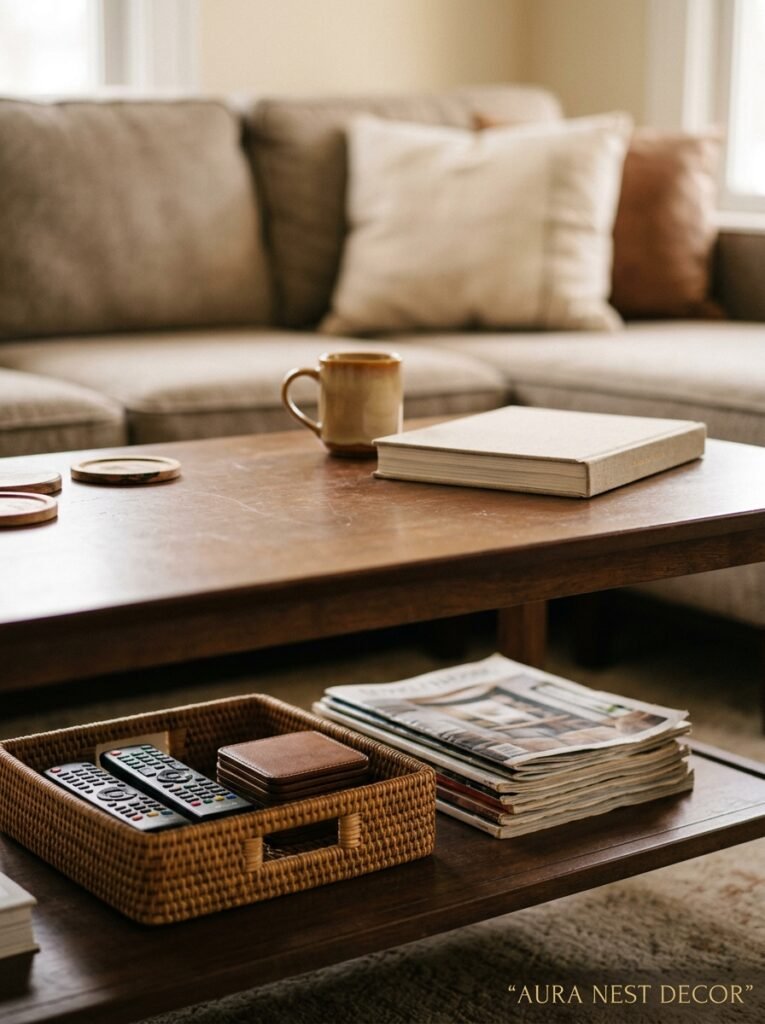
Lower shelf, drawer, or no storage at all. These are your three options and they matter more than most styling guides admit.
A tea table with a lower shelf is almost always the most practical choice for a real home. The shelf handles what would otherwise end up scattered across the surface — books, a plant, a box of tissues you don’t want to look at but need access to. It keeps things accessible without making the tabletop feel like a dumping ground.
Drawers on a tea table are genuinely exciting when you find one. Remote controls, lip balm, whatever small objects multiply in every living room. Out of sight, right where you need them. The risk is that the drawer becomes the drawer where everything goes, it gets stuffed, and eventually you can’t actually close it anymore. Discipline required.
No storage at all — just a clean flat surface or glass top — is a valid choice but works ONLY if you’ve genuinely solved the storage problem somewhere else in the room. A sideboard with drawers, an ottoman with storage, floating shelves with baskets. You can’t have no storage anywhere in a living room and expect it to stay calm-looking.
—
12. The Finishing Touches That Go ON The Table (And What to Actually Skip)
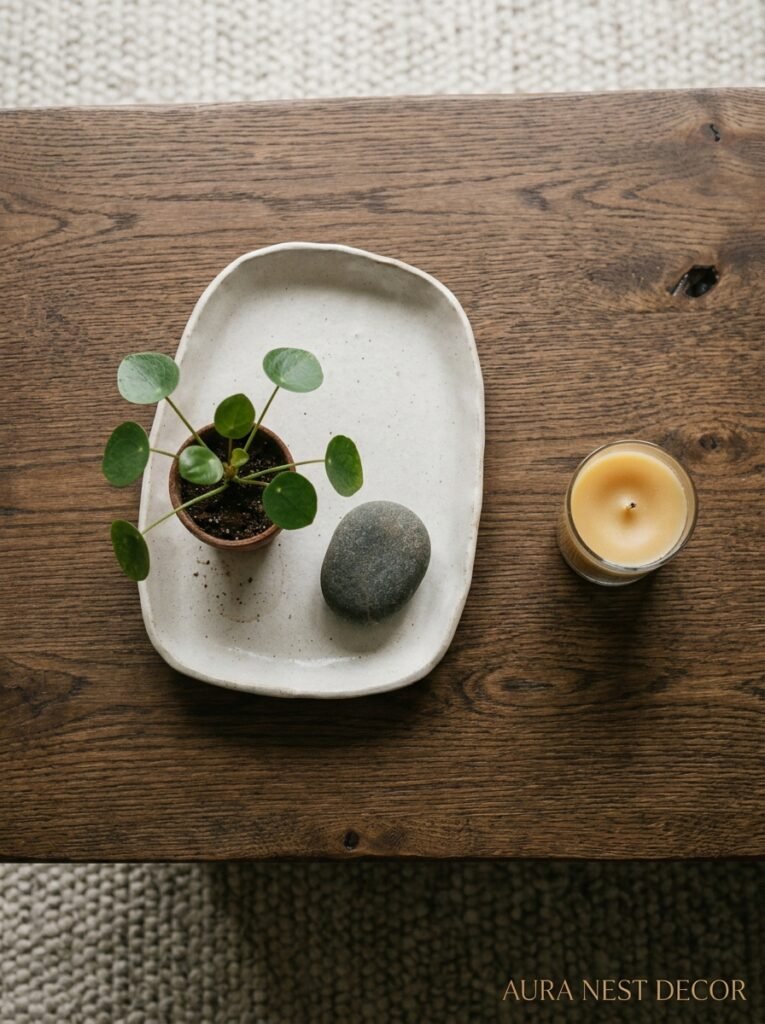
Candles: yes, always. But one or two, not a cluster of five. The cluster look peaked around 2019 and it’s past its moment.
Books: yes, but only books you’d actually read or are actively reading. Styling books that are obviously there for aesthetics tend to read as exactly that — aesthetic performance rather than genuine life. Which is fine, I’m not judging, I’m just saying people notice it.
A single plant or small vase: yes. Something with height, something organic. A bud vase with one or two stems is doing more work than a full bouquet because it doesn’t compete with anything — it just adds life.
Coasters: non-negotiable if you’re actually using this as a tea table. Get ones you like the look of — leather, stone, woven — so they don’t feel like a visual apology.
Decorative objects “for styling”: maybe. One interesting object — a small sculpture, a found stone, something with a story — adds character. More than one starts to look like you’re trying to make the table look interesting rather than it actually being interesting.
The remote: it’s going to live there. Just accept it. A small tray or dish makes it look intentional rather than abandoned.
—
❓ FAQ
Q: What’s the best tea table for a small living room? A: Go for something with slim or tapered legs and either an open shelf or no lower storage — this keeps the visual weight light. A round or oval shape in the 30–36 inch range usually works well in smaller rooms without disappearing into the space.
Q: How do I style a tea table without it looking too cluttered or too empty? A: The tray trick genuinely works — use one tray to anchor a small grouping, which creates one visual “event” rather than scattered objects. Aim for three items max on the surface: something tall, something low, something useful. Then call it done and don’t keep adding things.
Q: Can I use a coffee table as a tea table, or are they different things? A: In practice, they’re often the same piece of furniture. The distinction is more about use than design — a tea table is just a coffee table that you’re actually putting a cup of tea on, which means height and surface practicality matter slightly more. If the table is the right height to use comfortably from your sofa, it works.
—
💭 Final Thoughts
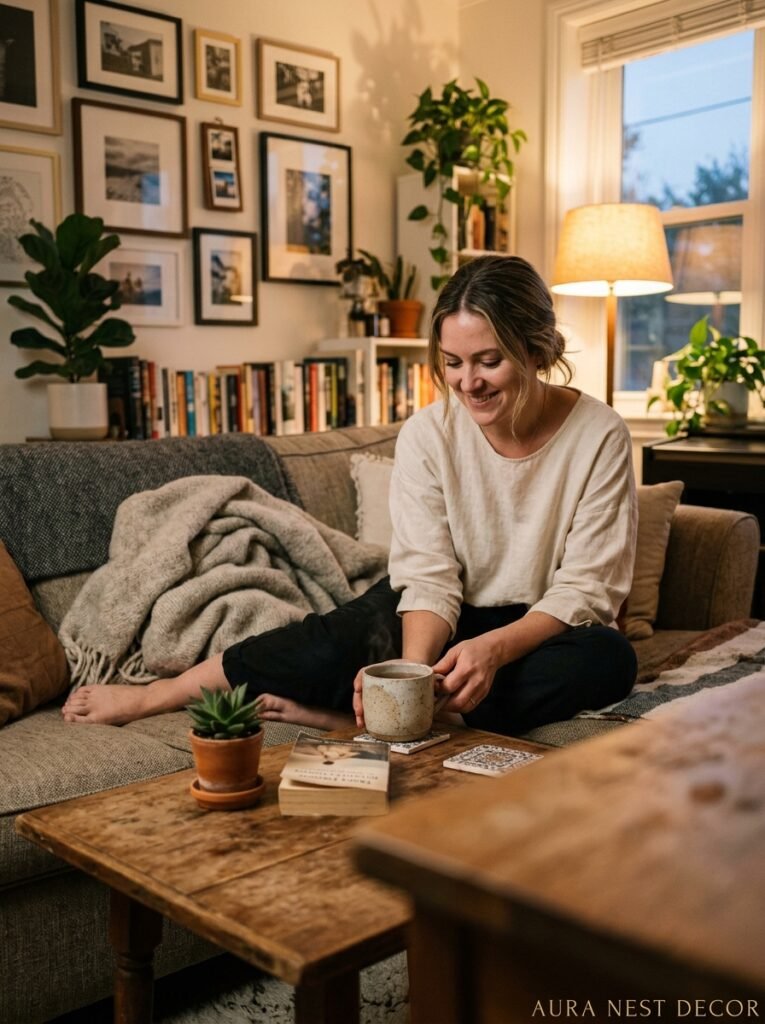
There isn’t a perfect tea table for every room — there’s a right one for YOUR room, your habits, your actual daily life. The rooms that feel genuinely good are the ones where every piece is there for a real reason, not just because it photographed well.
Get the size right. Get something you’ll actually use without worrying about it. And let the table do its quiet, anchoring, everything-clicks-into-place job.
What does your living room already want to say — and is your table helping it say it?