Toca Boca Living Rooms Made Me Rethink My Entire Lounge (And I’m Not Even Sorry)
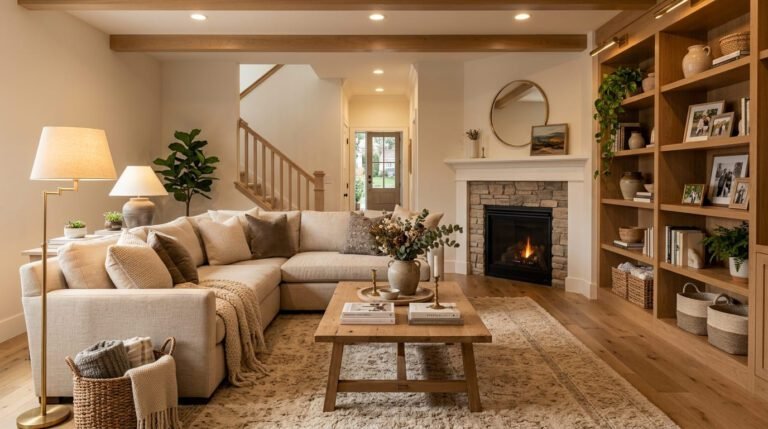
My daughter was playing Toca Boca on a rainy Saturday afternoon, and I glanced over and just… stopped. The little living room on the screen was so good. Like, genuinely better than mine. And I’ve been on Pinterest for seven years.
—
1. What Toca Boca Actually Gets Right That Most Interior Design Advice Gets Wrong
Nobody told Toca Boca’s designers to be safe. That’s the thing. There’s no beige couch “for resale value,” no neutral gallery wall that won’t offend anyone, no careful curation of nothing-in-particular. The game’s living rooms are BOLD. A teal sofa next to a mustard yellow lamp next to a green plant that’s almost comically large. And it works because nobody was scared.
Real interior designers say this constantly — fearlessness is the ingredient — but somehow it never trickles down into actual living rooms. We all end up with the same gray sectional and the same rattan mirror and the same three candles from the same place.
Toca Boca’s aesthetic is playful but not childish. That distinction matters a lot. It’s color-saturated without being overwhelming, it’s maximalist without being cluttered, and every single room feels like somebody actually lives there. Not a showroom. A home.
So if you’ve been doom-scrolling through Pinterest wondering why your own living room feels a little… flat, I think Toca Boca might genuinely have something to teach us.
“The game’s living rooms are BOLD. A teal sofa next to a mustard yellow lamp next to a green plant that’s almost comically large. And it works because nobody was scared.”
—
2. The Color Rule Toca Boca Uses That Interior Designers Charge £500 an Hour to Explain
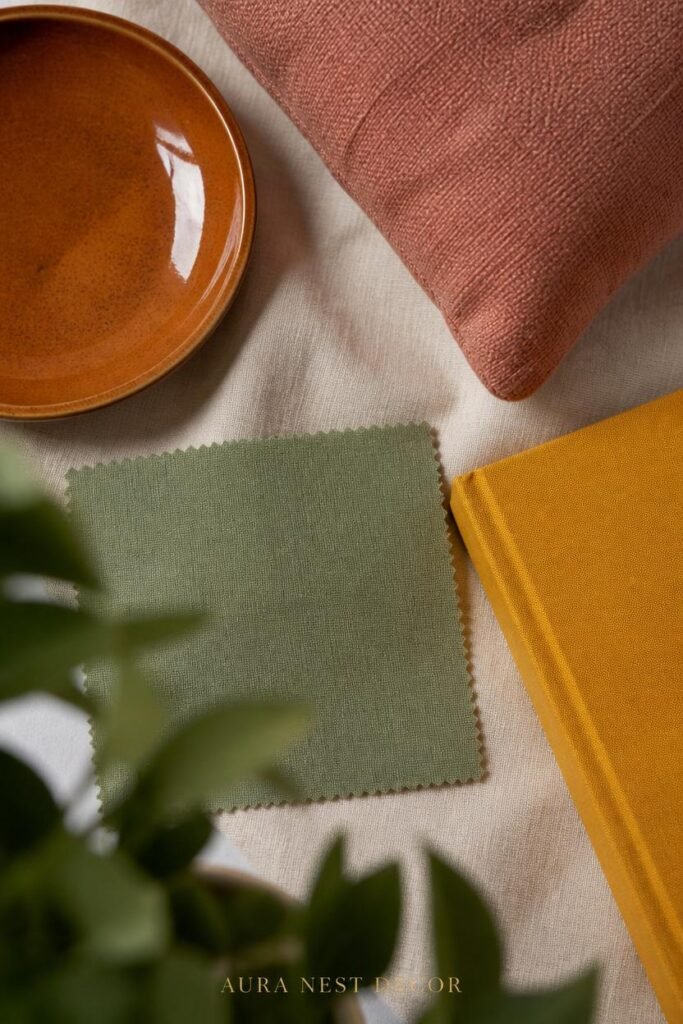
Here’s the formula, and I’m giving it to you free: pick one color that surprises you, then build everything else around it as if it’s normal.
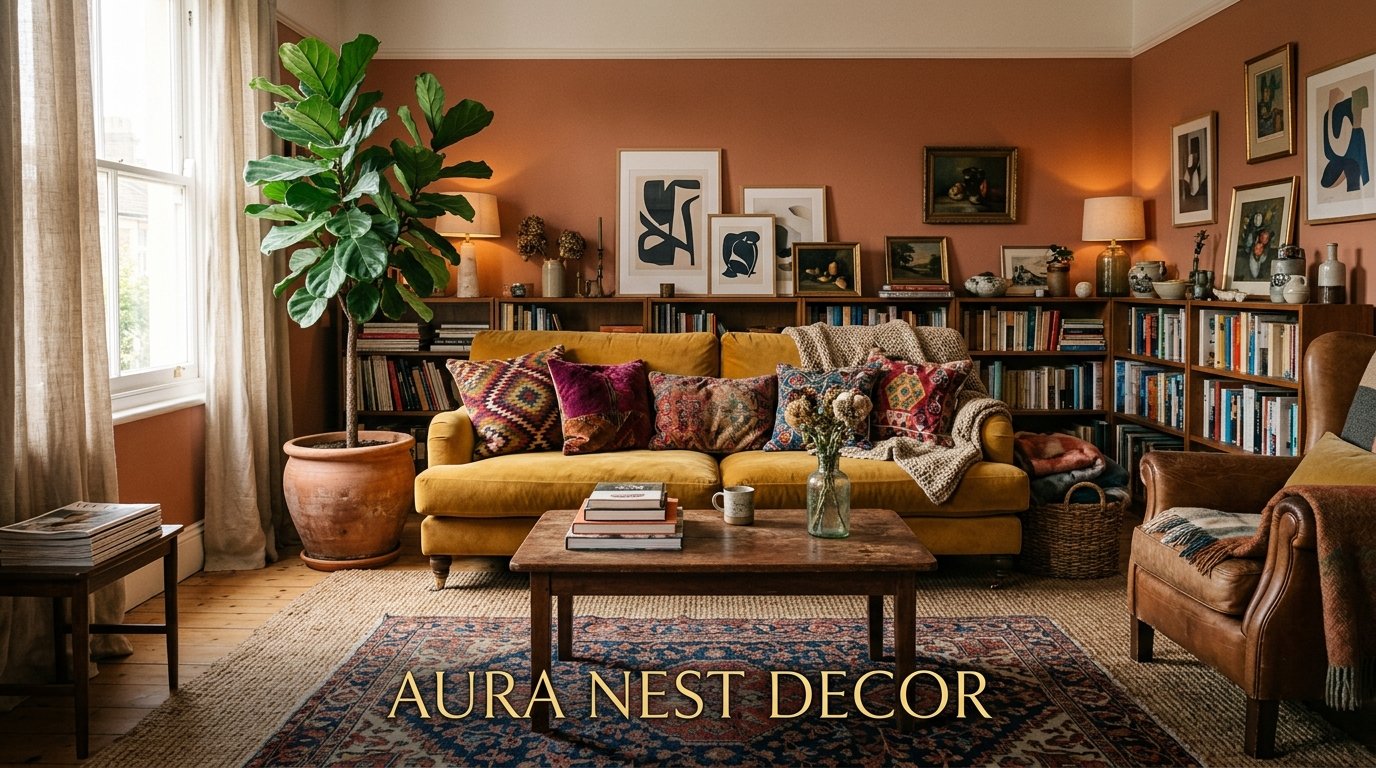
Toca Boca rooms don’t lead with beige and then “pop” with a throw pillow. They lead with the bold thing. A deeply saturated sage green wall. A rust-orange couch. A cobalt blue bookshelf. And then the surrounding pieces — rugs, cushions, lamps — respond to that anchor in quieter tones.
It sounds obvious. But in practice, most of us do it backwards. We pick the safe neutrals first, then panic at the checkout when we’re holding a bright yellow vase, and put it back. Don’t put it back.
If you’re doing this at home, try leading with your sofa or a statement chair. Pick something in a color you’ve been scared of — dusty pink, forest green, deep terracotta. Then pull the rest of the room toward it rather than away.
—
3. How to Get That “Collected Over Time” Look Without Actually Waiting Years
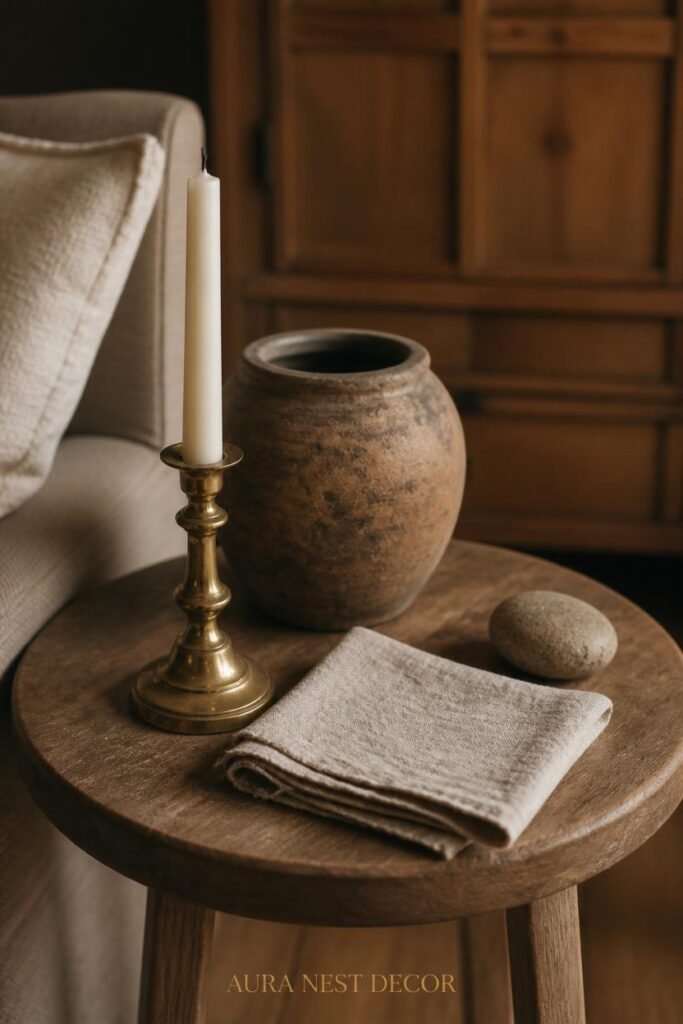
Toca Boca rooms feel like the person who lives there has accumulated things they love over a long time. Nothing matches too perfectly. There’s a lamp that’s a little too tall, a side table that’s a slightly different wood tone, a stack of books with mismatched spines.
The trick is intentional mismatch.
Not random mismatch — intentional. You’re choosing pieces that don’t match but share something. Maybe they share a color family. Maybe they share a general vibe — vintage, organic, playful — even when the actual styles differ. A rattan side table next to a velvet armchair sounds wrong. It isn’t. Try it.
In practical terms: stop buying things in sets. Stop shopping a single collection at IKEA or H&M Home or wherever and furnishing a whole corner at once. Buy one piece you love, live with it, then find the next piece that loves it back.
—
4. That Big Dramatic Plant Everyone Has in Toca Boca (And Why You Need One Too)
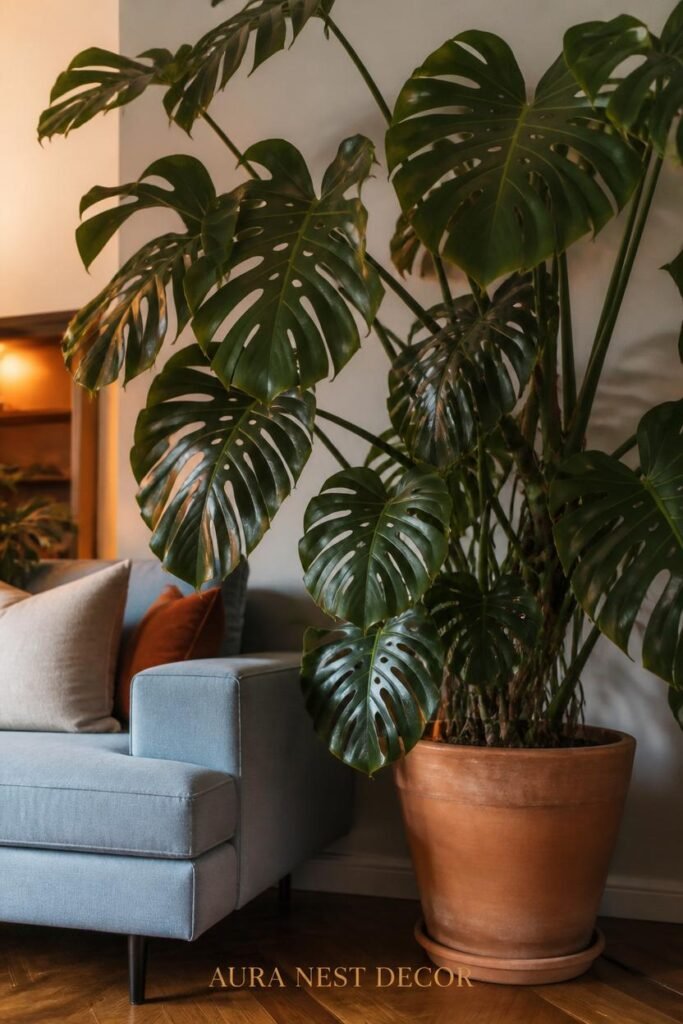
I’m not gonna lie, the plants in Toca Boca are kind of absurdly large. Like, person-sized. They take up corner real estate that most of us would dedicate to a floor lamp or a reading chair.
But here’s what those plants are doing: they’re making the room feel ALIVE in a way that furniture simply can’t.
A large Monstera deliciosa, a sprawling Fiddle Leaf Fig, a Bird of Paradise in a chunky terracotta pot — any of these in a corner immediately signals “this room has been thought about.” It adds height, texture, and something organic that breaks up all the hard edges of your sofa and shelves and coffee table.
If you’re in the UK, you know plants can be tricky in rooms that don’t get much light between October and March. Side note — a Kentia Palm is your best friend. It tolerates lower light better than most drama-plants, and it looks absolutely fantastic in a tall woven basket.
Don’t overthink the pot. Big, matte, and either terracotta or a dark green or a warm cream. That’s it.
—
5. The Toca Boca Shelf — Why Theirs Look Good and Yours Might Not
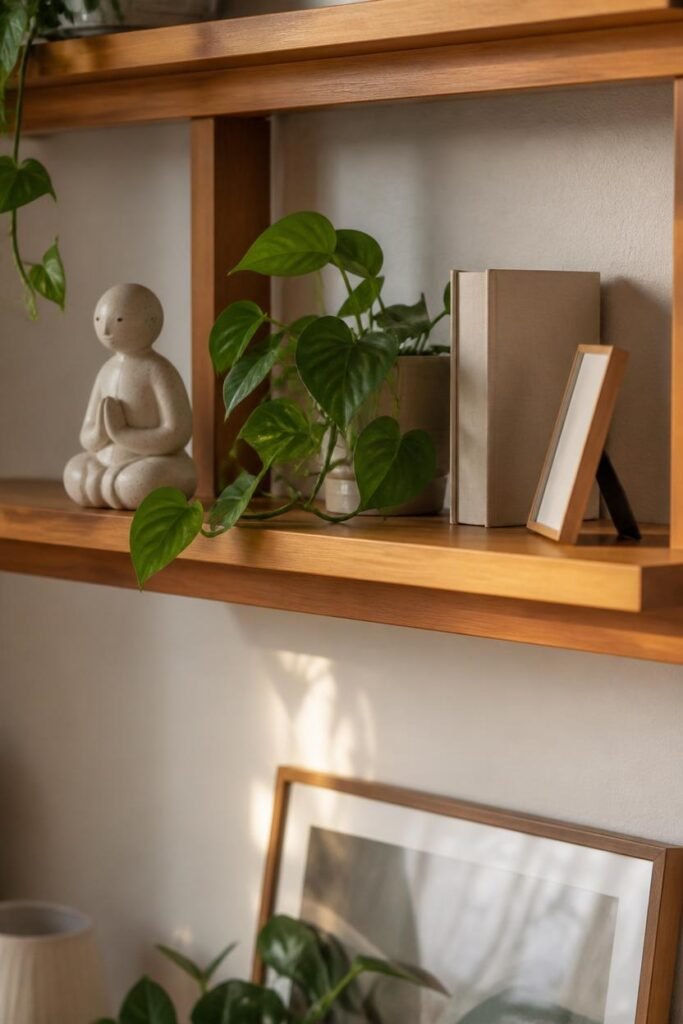
Okay, I’m going to say something slightly harsh here. Most real-life shelves look messy in a boring way. Books, random stuff, a candle, more random stuff. Toca Boca shelves look messy in a GOOD way — and there’s a difference.
The difference is variety of form. Their shelves mix tall things, short things, round things, and completely flat things. A tall vase next to a stack of horizontal books next to a small round object next to a trailing plant. The eye keeps moving because the shapes keep changing.
“Most real-life shelves look messy in a boring way. Toca Boca shelves look messy in a good way — and there’s a difference.”
The rule I use: never put two tall things next to each other. Never put two flat things next to each other. Alternate the silhouettes and you’re already 80% of the way there.
A few things that immediately improve a shelf: a small framed photo leaning casually (not hung, leaning), one object in an unexpected color, and at least one thing that drapes or trails over the edge — a string of beads, a small trailing plant, a ribbon bookmark from an old book.
—
6. The Rug That’s Always Slightly Too Big (And Why That’s Correct)
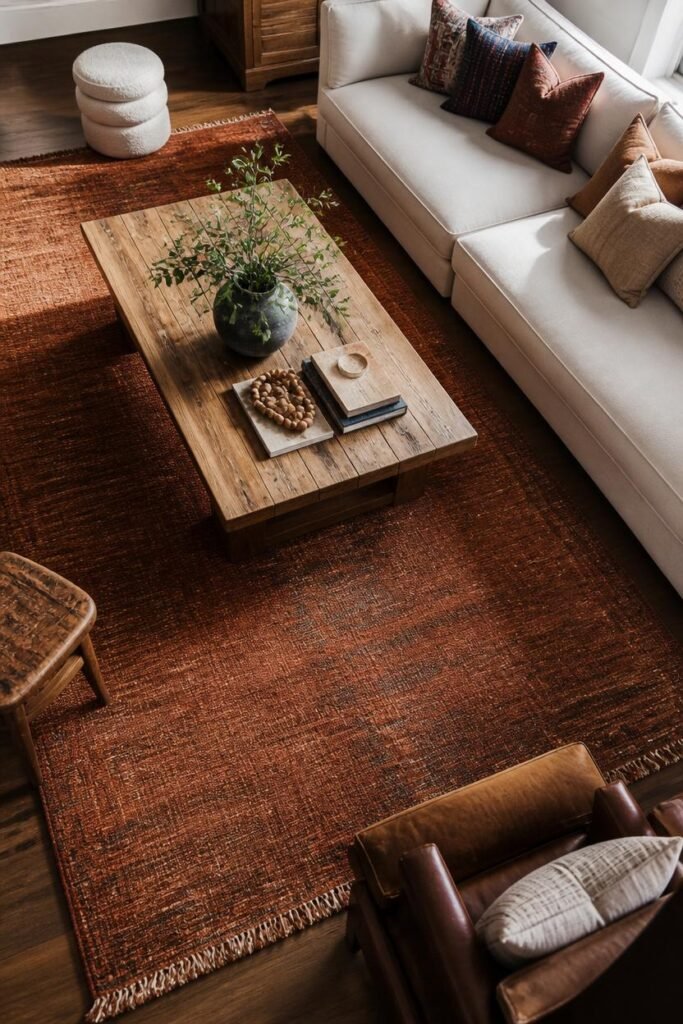
In Toca Boca rooms, the rug usually extends generously under the furniture. All four legs of the sofa are on it, or close to it. The rug feels like the foundation of the room rather than an afterthought placed in front of the couch.
In real life, most of us buy a rug that’s too small. It sits in the middle of the room like an island nobody wants to visit.
Size up. Seriously. If you think you need a 5×8, buy the 8×10. If you’re in the UK working in centimeters — go bigger than you think. A rug that’s too large almost never looks wrong. A rug that’s too small almost always does.
The patterns in Toca Boca tend to be geometric or abstract, which works because they add interest without competing with statement furniture. If your sofa is already doing a lot, go for a simpler rug in a texture-heavy weave — boucle, flatweave with a subtle pattern, or a classic kilim that’s not too busy.
—
7. Lighting That Actually Looks Like the Toca Boca Vibe (Not a Showroom)
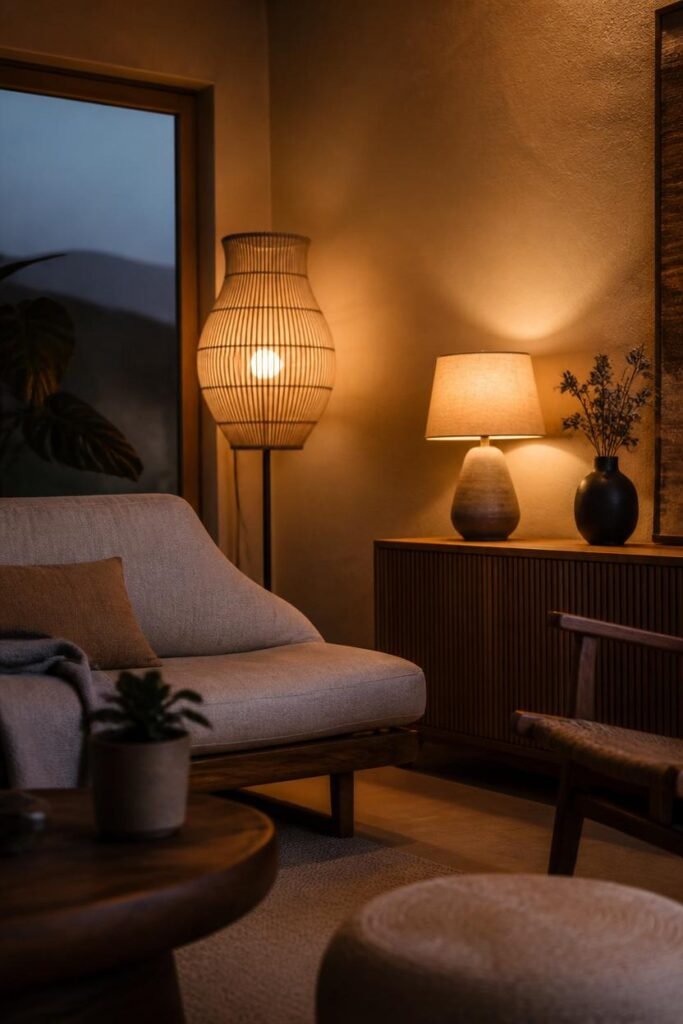
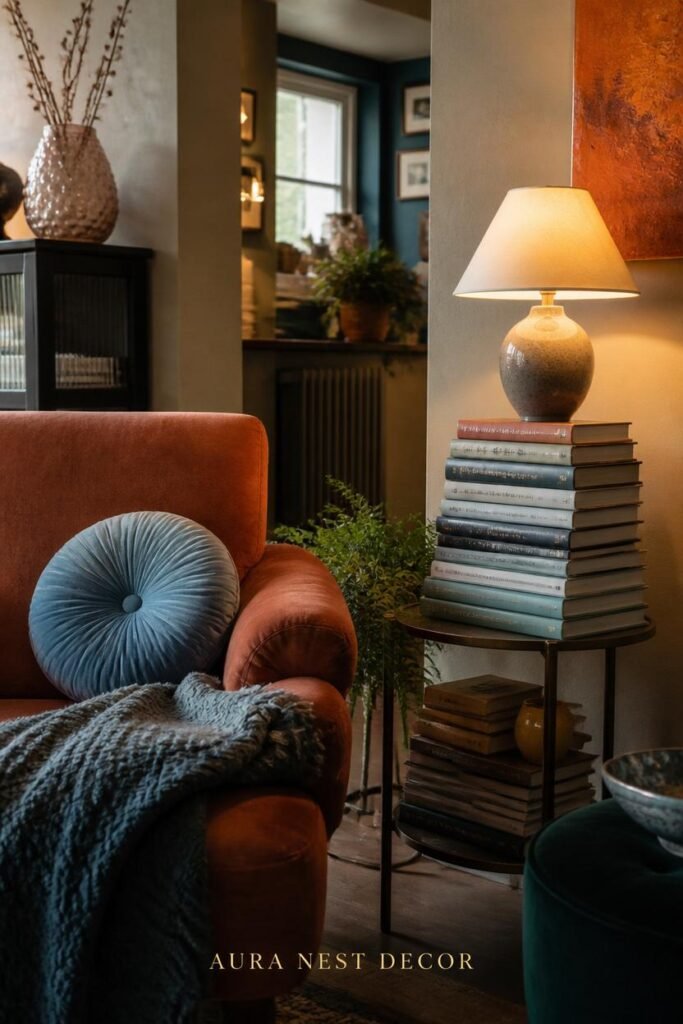
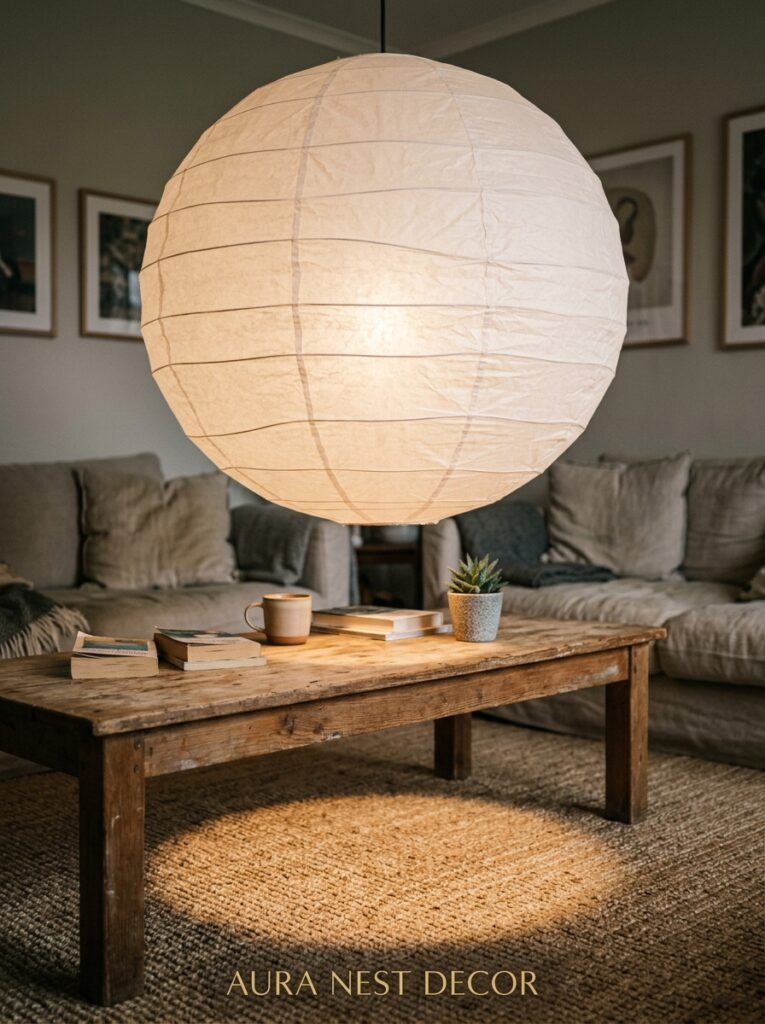
The thing about Toca Boca lighting is that there are multiple sources of it. Never one overhead light flooding the whole room with cold white brightness. There’s a floor lamp in the corner, a table lamp on the side table, maybe a little string of something glowing on a shelf.
This is layered lighting, and it’s the fastest thing you can do to make a room feel cozier and more considered.
For the Toca Boca look specifically, you want warm bulbs — 2700K or lower. The amber glow at 7pm when you’ve got three different lamps on at varying heights is a completely different room than the same space lit by one overhead LED. It just is.
A few specific lamp shapes that show up constantly in the aesthetic: mushroom lamps, arc floor lamps with a curved neck, and small architectural table lamps with interesting bases — stone, ceramic, something that looks handmade-ish. The shade matters less than the base, honestly.
—
8. The Sofa Color You’ve Been Avoiding That Toca Boca Keeps Proving Right
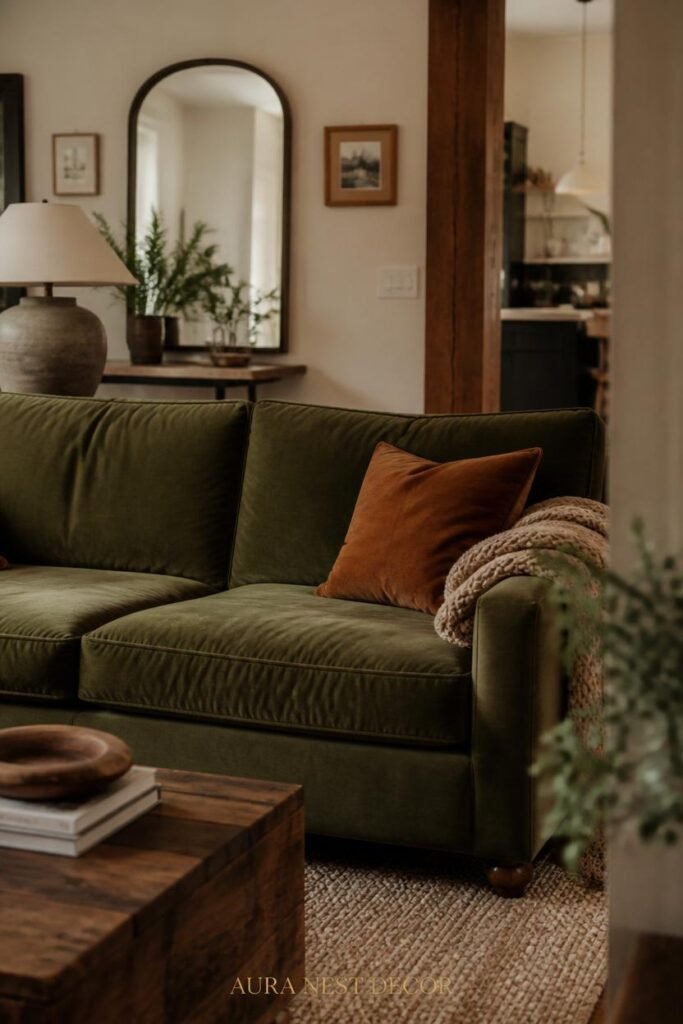
Forest green. Deep burgundy. Warm caramel. Rust. Slate blue.
Toca Boca doesn’t have many gray sofas. And I’ve started to think that’s a deliberate philosophy, not an accident.
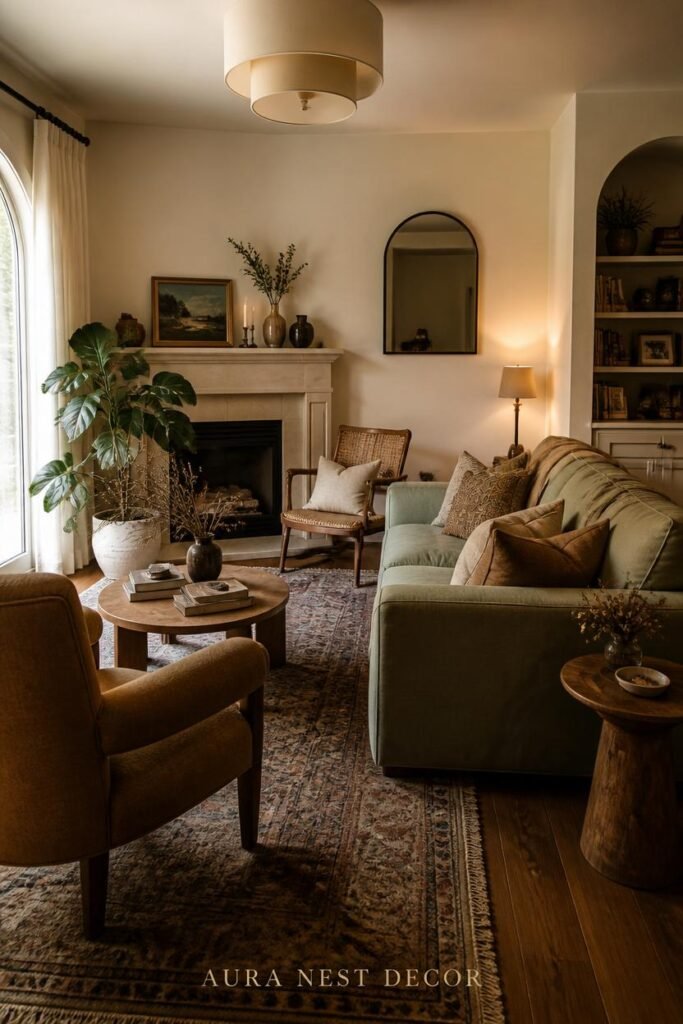
A colored sofa isn’t harder to style than a gray one — or maybe it’s the opposite, honestly. Because when your sofa has actual personality, everything else just responds to it. A forest green velvet sofa is going to tell you what cushions to buy, what side table it wants, what kind of lamp looks right beside it. A gray sofa tells you nothing. You’re on your own.
Obviously this is a big commitment for most people. But if you’re not ready to swap the sofa, a bold-colored armchair does the same work for a fraction of the price and the anxiety.
—
9. That Thing They Do With Curtains That’s So Simple It’s Almost Embarrassing
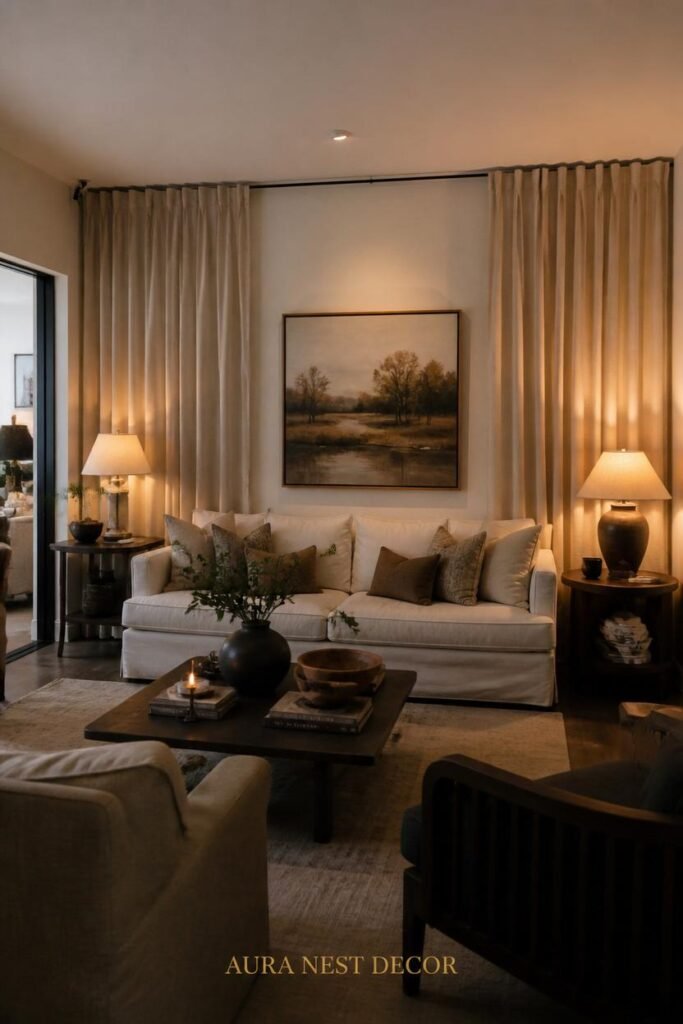
Hang them high. Hang them wide. That’s it.
Toca Boca living rooms have curtains that start near the ceiling and extend a few inches beyond the window frame on each side. The result is a window that looks dramatically larger than it actually is, and a room that feels taller.
Most people hang curtains on or just above the window frame, which makes a normal-sized window look small and a small window look like a porthole. It’s a rough situation.
The fix costs nothing extra. Just move the rod up — ideally within 4-6 inches of the ceiling — and let the curtains extend wider than the actual window. For a Toca Boca-friendly look, go for curtains in a solid earthy tone or a subtle texture rather than a print. The window treatment should be interesting but not shouty.
—
10. Mixing Patterns Without It Looking Like a Yard Sale
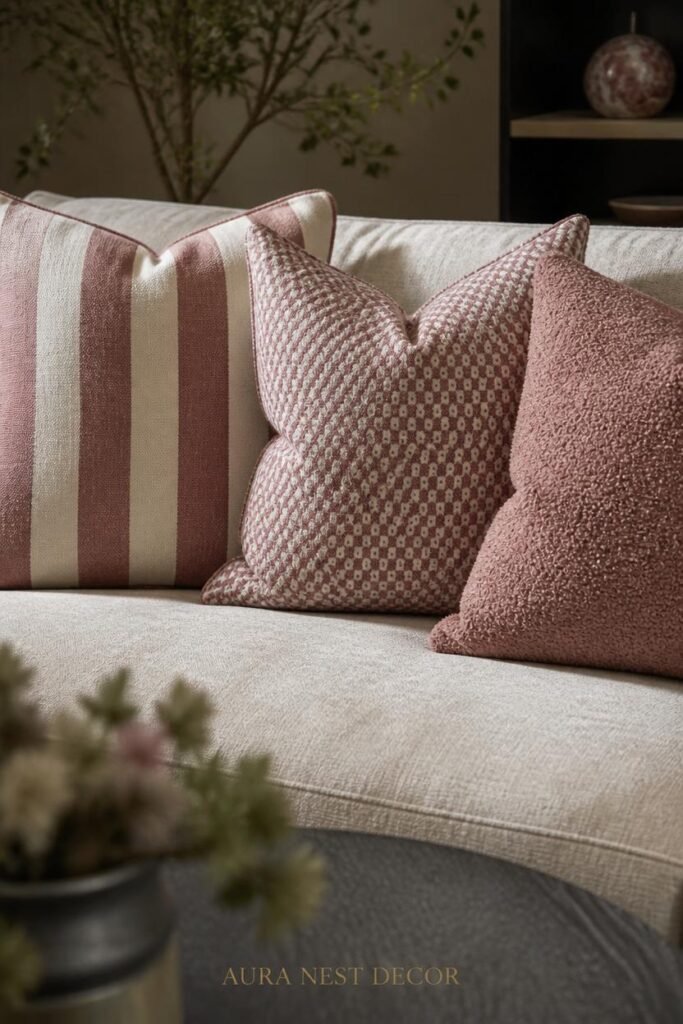
Toca Boca rooms are not afraid of pattern, but they don’t mix patterns recklessly either.
The general approach seems to be: one pattern that’s bold and geometric, one pattern that’s soft and organic (a floral or an abstract brushstroke print), and then a lot of solid colors keeping the peace between them.
Cushion combinations that work in this vibe — a graphic block-print cushion in terracotta, a solid velvet cushion in mustard, and one small striped one in a complementary tone. Not three florals. Not four geometrics. Balance and tension.
If you’re nervous, the easiest entry point is keeping patterns the same COLOR family even when the scales and styles differ. A large-scale leaf pattern and a small-scale geometric stripe in the same blue-green tones will feel cohesive even though they’re technically quite different.
“One pattern that’s bold and geometric, one that’s soft and organic, and then a lot of solid colors keeping the peace between them.”
—
11. The Small Details That Make Toca Boca Rooms Feel Like a Real Person Lives There
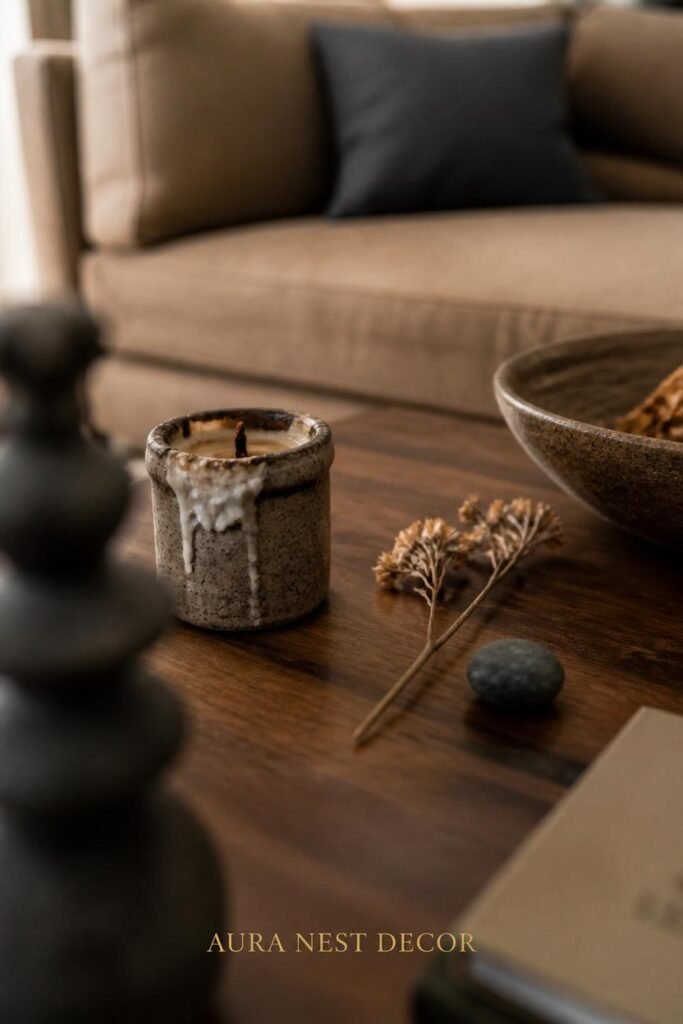
This is maybe the most important section and it’s the shortest.
The lived-in details. A throw blanket that’s actually draped messily over the arm of a chair, not folded like a hotel room. A small tray on the coffee table with a candle, a few little objects, maybe a coaster that’s seen some use. Books stacked horizontally with objects balanced on top. A basket that actually has stuff in it.
Toca Boca rooms feel inhabited. And the way to achieve that at home isn’t to add more stuff — it’s to let the stuff you have exist a little less perfectly. The throw doesn’t need to be symmetric. The books don’t need to be by height. The candle doesn’t need to be new.
Real homes have patina. Let yours.
—
12. The One Thing I’d Actually Take Directly From Toca Boca If I Could
A reading nook, or something that functions like one.
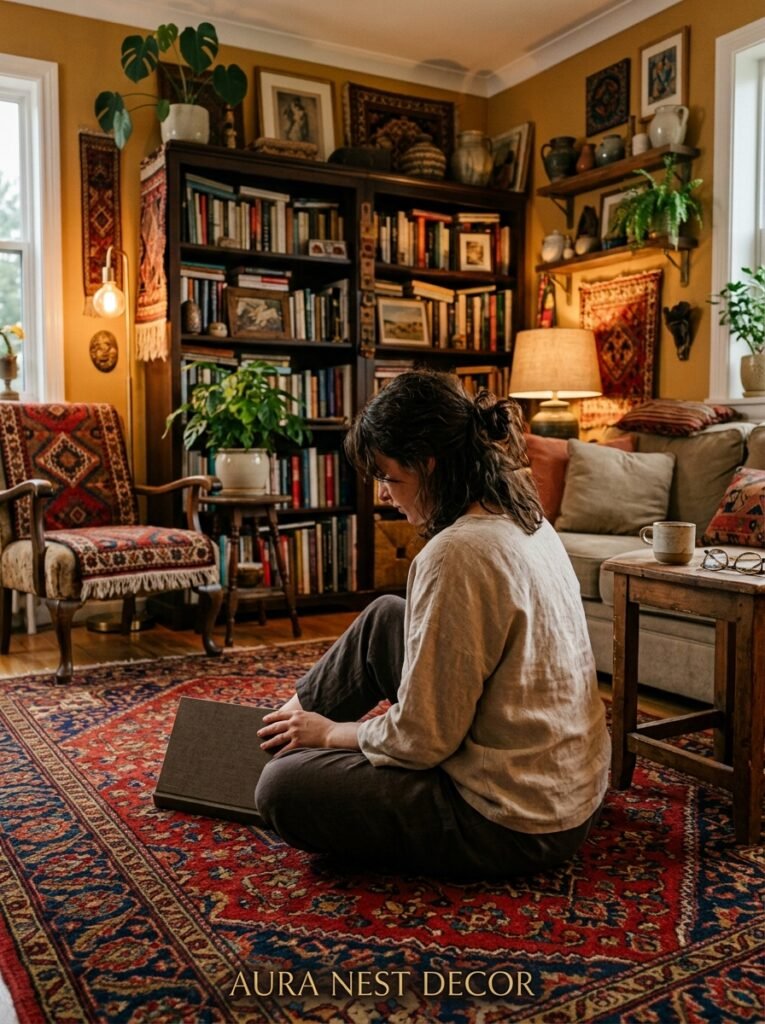
Almost every Toca Boca living room has a corner or a spot that’s clearly meant for one person to settle into. A chair that’s angled slightly away from the main seating. A lamp that’s positioned over it just right. A small side table within arm’s reach. Maybe a little stack of books or a plant nearby.
It’s not a formal room arrangement. It’s a corner that’s been thought about. And in most real living rooms, corners are just… where furniture goes to die. A forgotten floor lamp, a plant that’s not doing great, some boxes.
Claim a corner. Put a chair in it that you actually want to sit in. Add a lamp that creates a warm pool of light over that exact spot. Give yourself a place that’s yours, in a room that’s everyone’s.
That’s the whole Toca Boca ethos, honestly. Spaces that feel claimed and loved and a little bit specific to whoever lives there.
—
❓ FAQ
Q: Can adults actually use Toca Boca design ideas in a real home without it looking childish? A: Absolutely, and I’d argue most people wouldn’t even clock where the inspiration came from. The aesthetic is rooted in color theory, layered lighting, and eclectic styling — all of which are legitimate adult interior design principles. What Toca Boca does is apply those principles without fear, which is actually rare in real homes.
Q: What’s the easiest single Toca Boca idea to try if I don’t want to redecorate everything? A: Honestly, curtains hung high and wide. It costs nothing extra if you already have curtains, it takes twenty minutes, and the visual difference in your room is immediate and significant. Second easiest: add a large plant in a corner that currently has nothing in it.
Q: I love the color palette but I rent and can’t paint. How do I get that saturated Toca Boca feel? A: Your sofa, your rug, and your curtains are doing most of the color work anyway — walls help but they’re not everything. A forest green velvet sofa in a white rental flat looks incredible precisely because the white walls let it breathe. Lean into the contrast rather than fighting the neutrals.
—
💭 Final Thoughts
I didn’t expect a kids’ app to shake up how I think about my own living room. But here we are. There’s something genuinely useful in looking at spaces that weren’t designed around fear — not fear of resale value or landlord approval or what the neighbors might think. Just rooms that look the way someone wanted them to look.
Your living room doesn’t have to be for everyone. Maybe the most Toca Boca thing you can do is just ask yourself: whose room is this, actually?